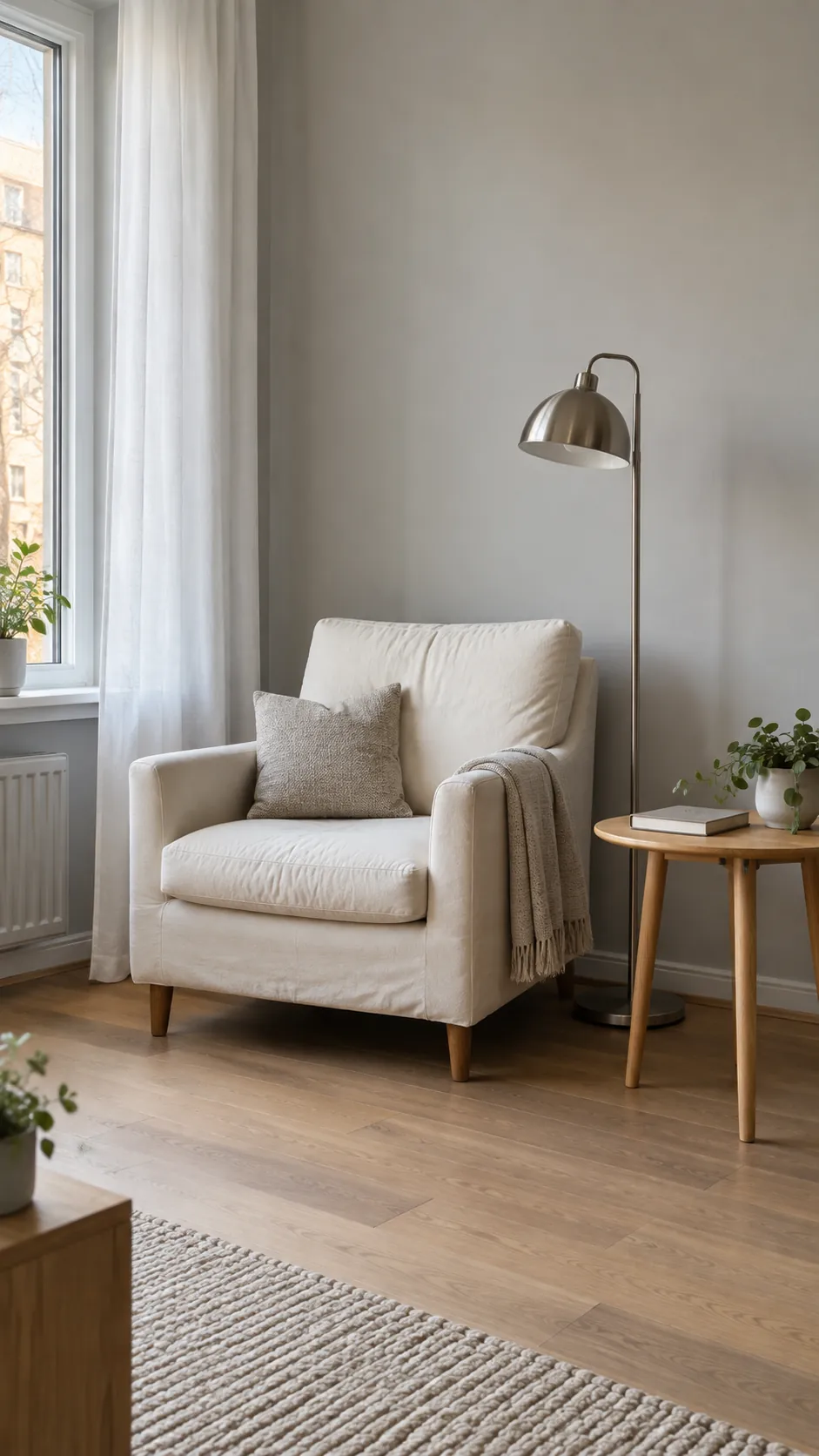
The spare corner often becomes the place where everything without a home lands. Styling it works best when you solve that habit first, then choose only what supports a useful pause in your day. A calm home nook should leave you room to move, sit, and clean without rearranging a collection of objects.
Give the corner one job
An empty corner does not automatically need furniture. Decide whether you want a place to read, a spot for a plant, or simply a quieter view from the sofa. Trying to combine reading, storage, and display in the same small footprint usually brings the clutter back.
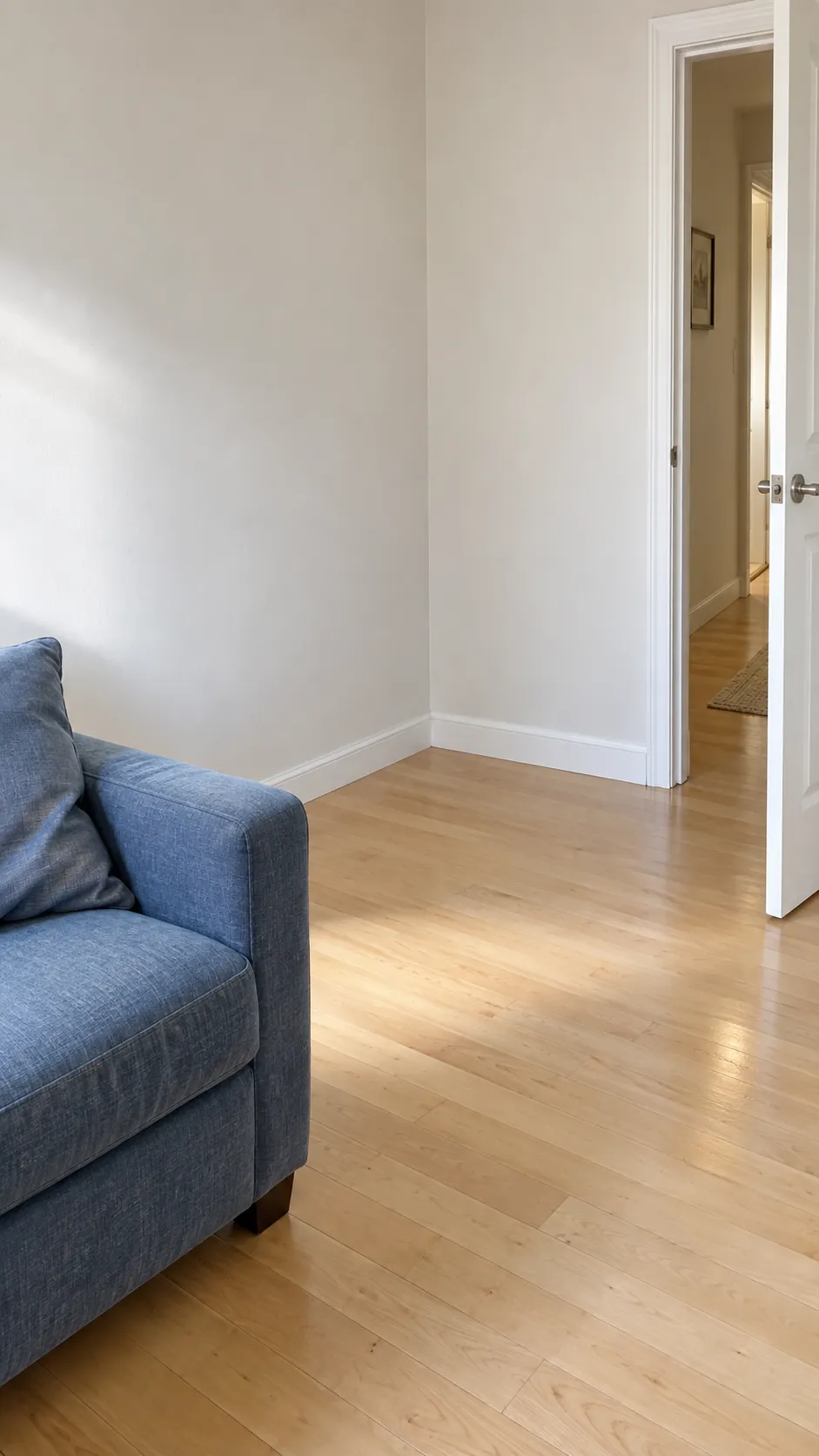
Clear the area first, including objects leaning against the wall. Move anything that belongs elsewhere to its actual home rather than hiding it behind a chair. Then leave the corner empty overnight so you can notice how people walk through it.
Test the footprint before choosing a chair
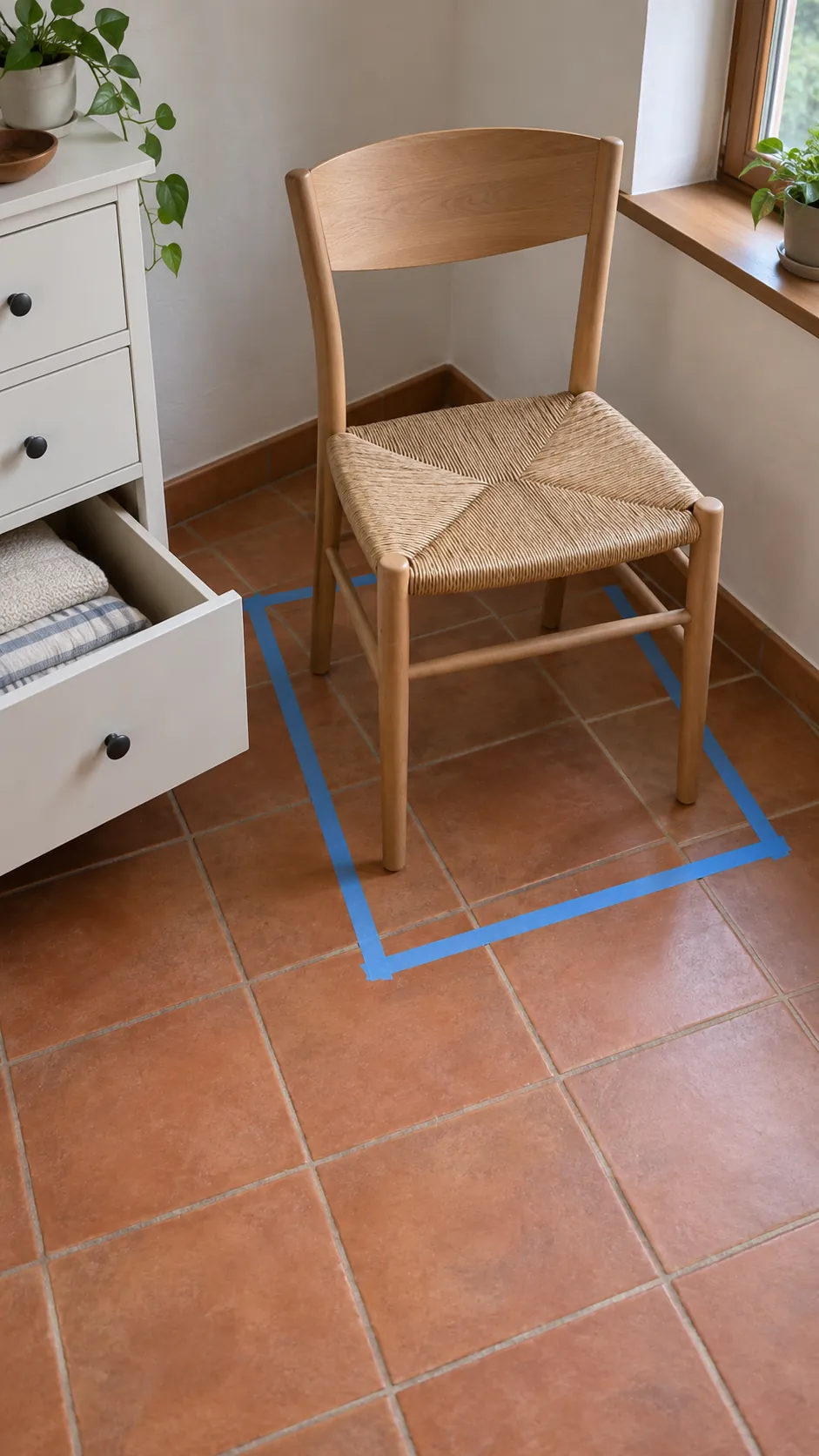
Measure both walls, then mark your proposed furniture footprint with removable tape that is suitable for the floor. Include the space occupied by a person sitting down and standing up, not just the chair legs. Open nearby doors and drawers fully before deciding that the arrangement fits.
A neutral accent chair with open arms can look lighter than a deep upholstered chair, but comfort matters more than the silhouette. Borrow a chair from another room and read there for twenty minutes. If your feet cannot rest comfortably or the seat blocks the route through the room, change the furniture rather than squeezing the walkway.
For a very narrow corner, skip seating altogether. A single stable plant stand may serve the space better than a chair nobody uses.
Build warmth with a small material palette
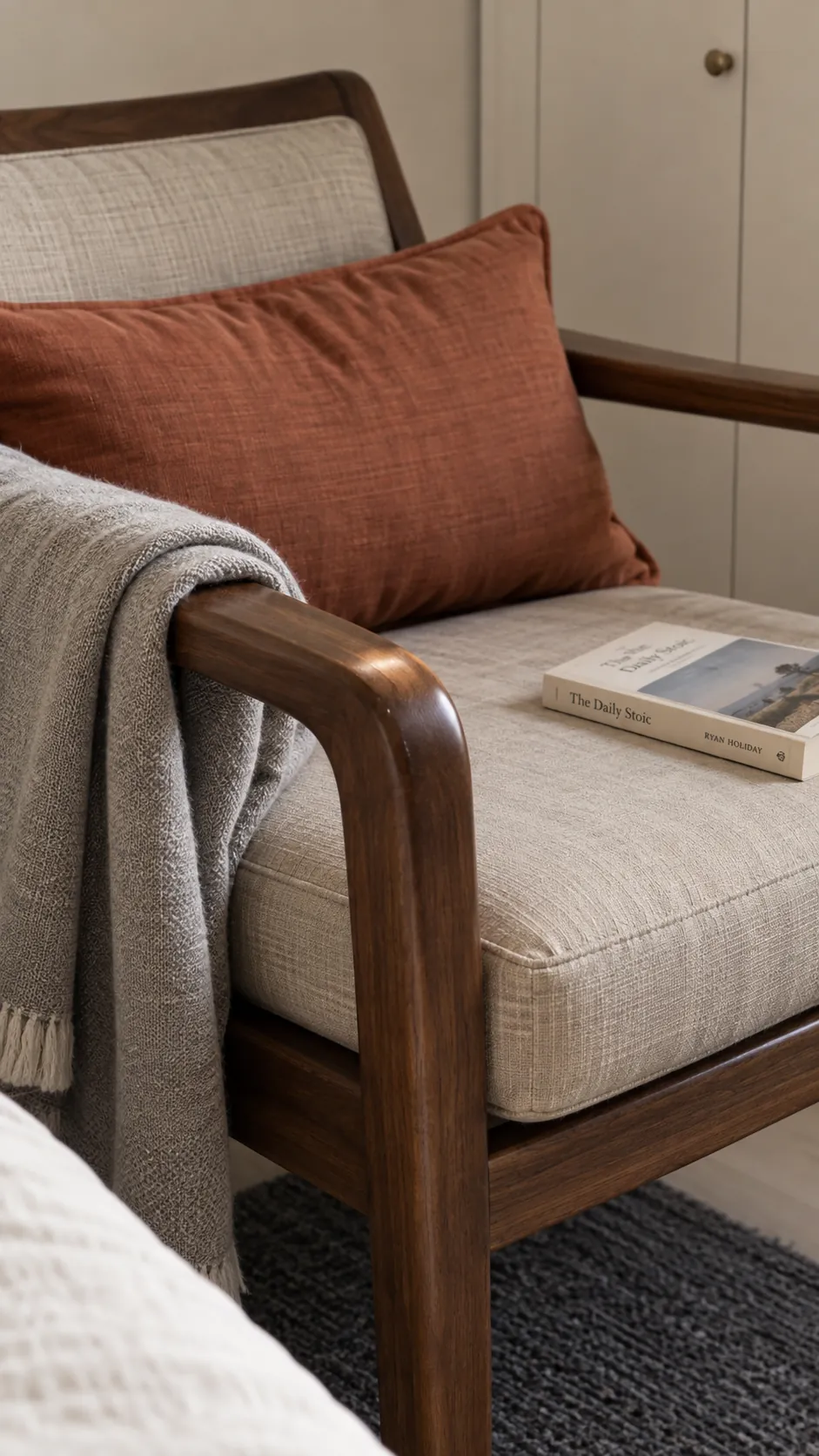
Minimalist corner decor does not have to be entirely white. Repeat one color already present in the room, then add a contrasting texture such as a cotton cushion against a wood chair. This connects the corner to the rest of the home without requiring a matching furniture set.
Choose the pieces you touch before buying decorative objects. A comfortable seat cover or washable throw contributes more to a simple reading nook than a collection of tiny ornaments. Keep enough of each surface visible that the materials, rather than the accessories, carry the composition.
Put the light where you actually read
Try the corner after sunset before choosing a lamp. A bright window can hide the fact that the seat becomes unusable in the evening.
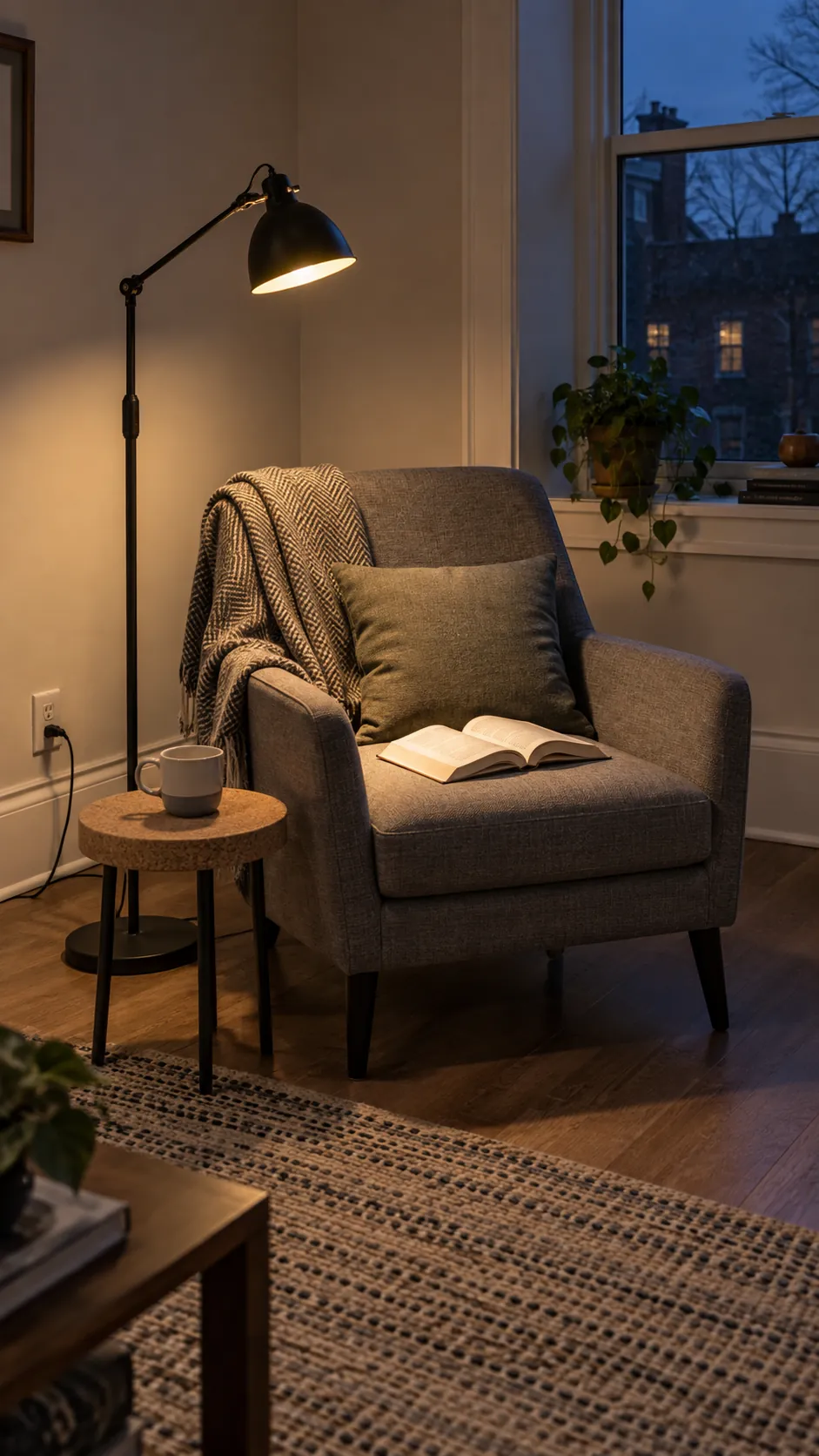
For floor lamp styling, place the base outside the walking route and position the shade so it lights the page without shining directly into your eyes. Check the angle while seated because a lamp that looks right from the doorway may glare at reading height. Follow the fixture instructions for the bulb and keep fabric clear of hot parts.
Route the cord along the room edge to a suitable outlet without pinching it under furniture or running it beneath a rug. If no safe route exists, reconsider the lamp location. A simpler arrangement is better than a trip hazard disguised as decor.
Let a plant follow the available daylight
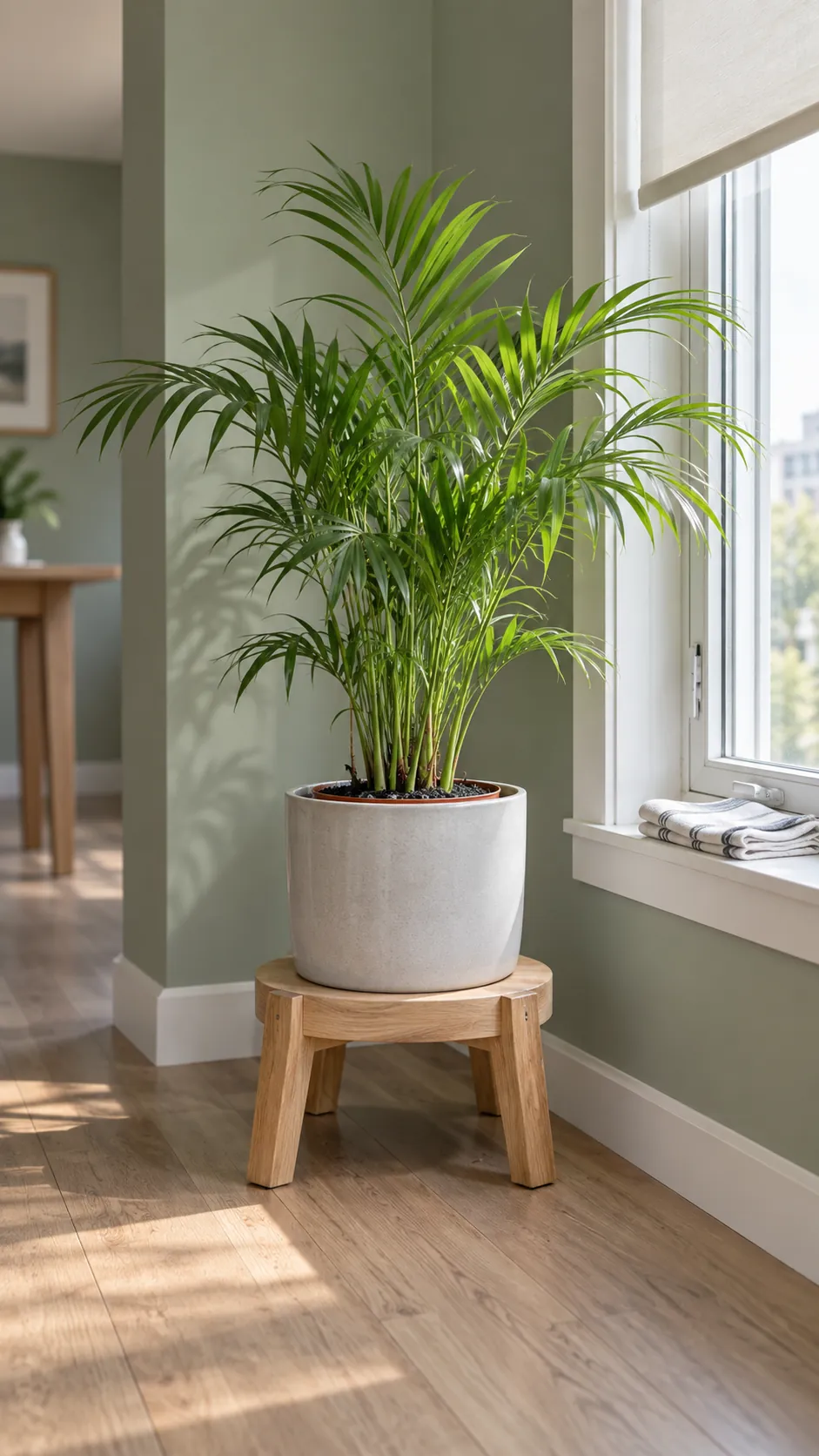
A small plant corner works when the plant suits the window, not just the photograph. Watch how light reaches the spot at different times of day and choose a species with matching care needs. A dim corner may be better with a useful object or nothing at all than a plant that steadily declines.
Place the nursery pot inside a watertight decorative container with room to remove it for watering. Empty standing water and protect wood floors from moisture. Check plant toxicity before bringing a species into a home with pets or young children, and avoid precarious stands beside an active walkway.
Keep the everyday version easy to reset
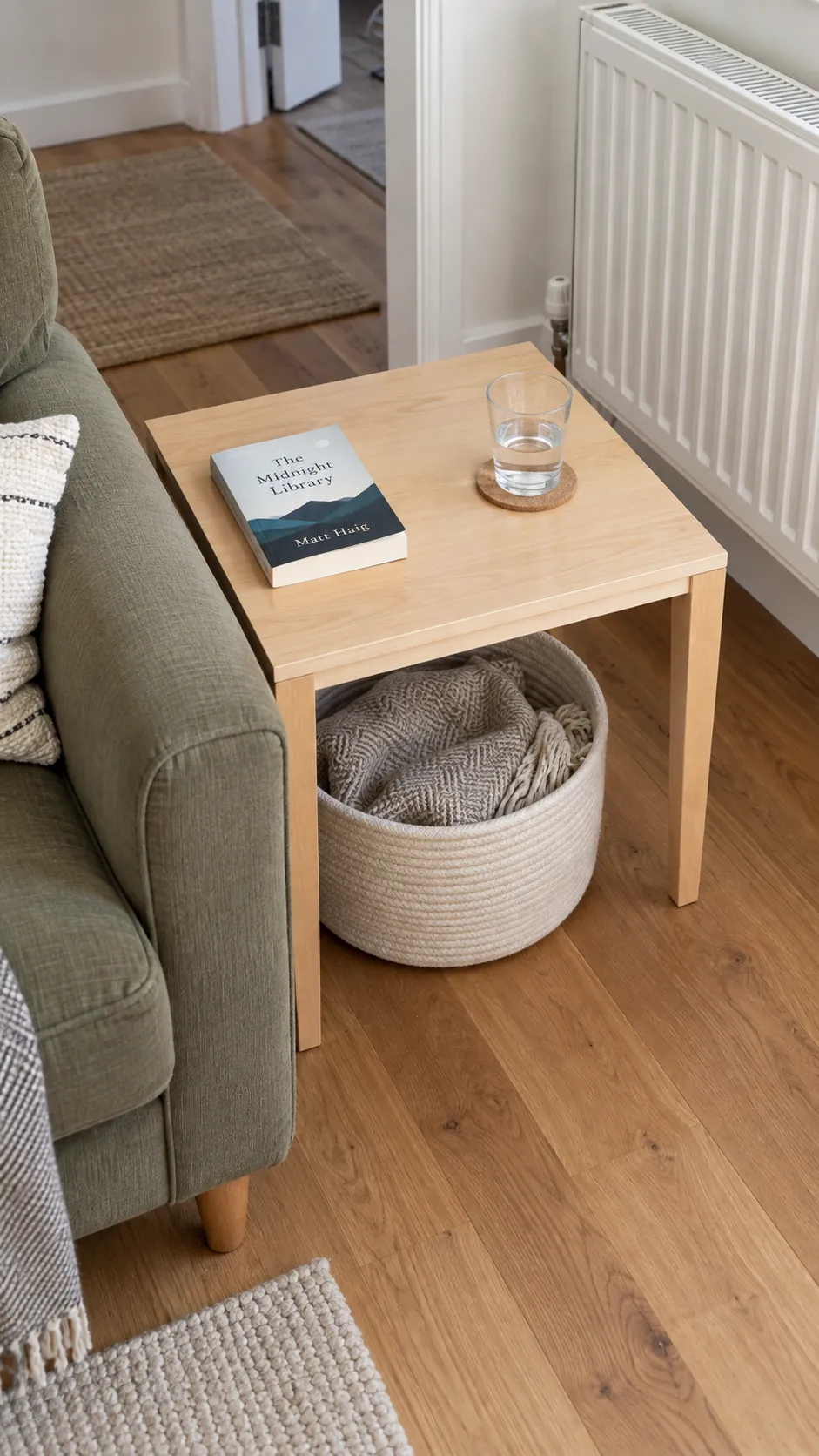
Give the things you use here a clear limit: one current book, one drink surface, and a place for a throw if needed. A small side table only helps if it can hold the cup securely without crowding your knees. When storage is necessary, choose a container for a named category rather than an open invitation for miscellaneous objects.
Live with the arrangement for a week before adding art or another accessory. Notice whether the chair becomes a laundry pile, the table collects mail, or the plant makes cleaning awkward; each habit points to a practical adjustment. Move the laundry basket closer to where clothes come off, route mail to an existing sorting spot, and leave enough access to wipe the floor.
Less is more decor succeeds when it reduces work. Before you add the last object, ask whether it makes this corner more useful tomorrow morning.