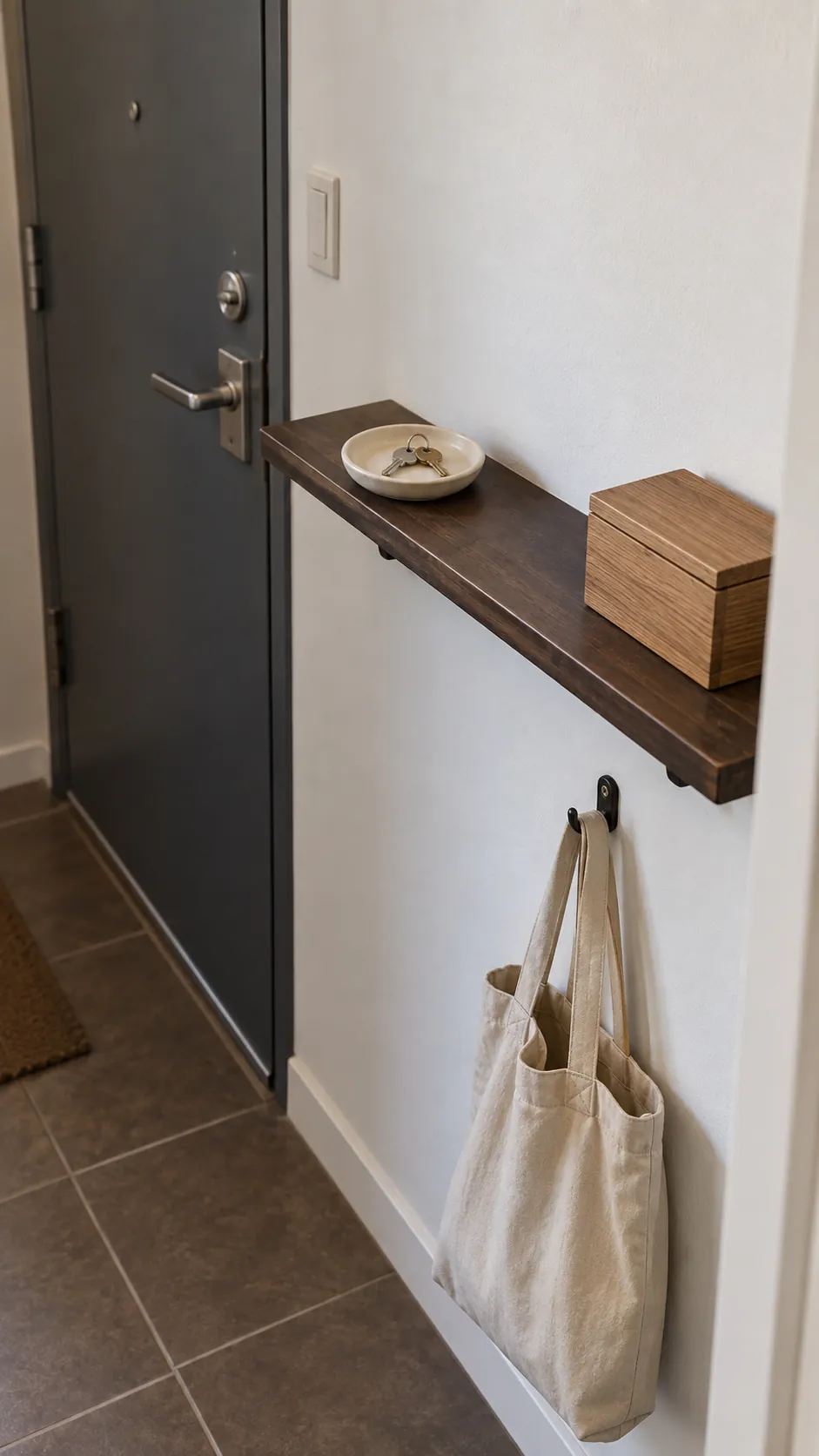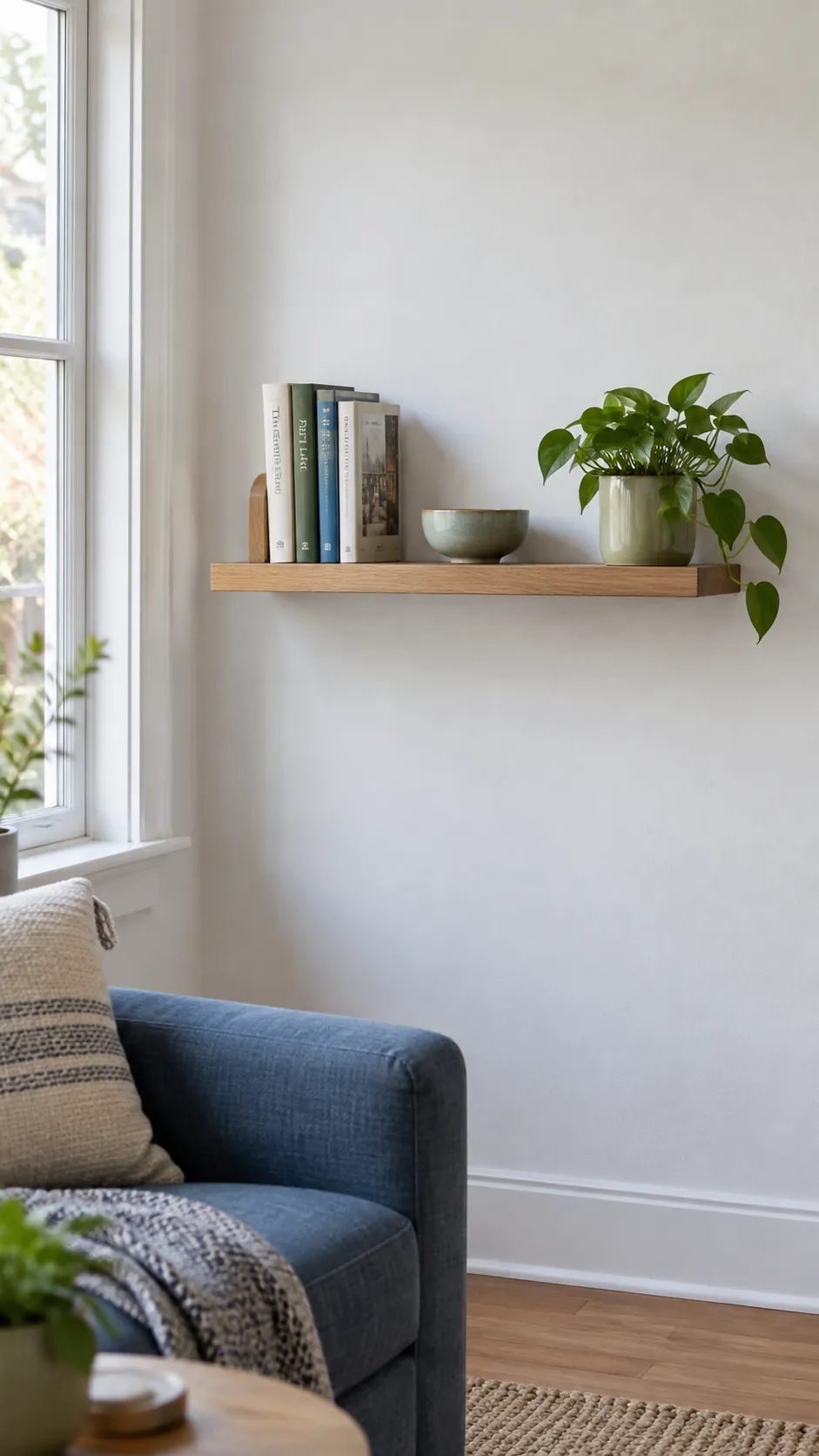
A shelf can look crowded even when every object on it is worth keeping. The solution is usually a clearer arrangement, not another decorative purchase. Start with the things you need or love, then give them enough room to be seen and used.
Start with what the shelf can safely hold
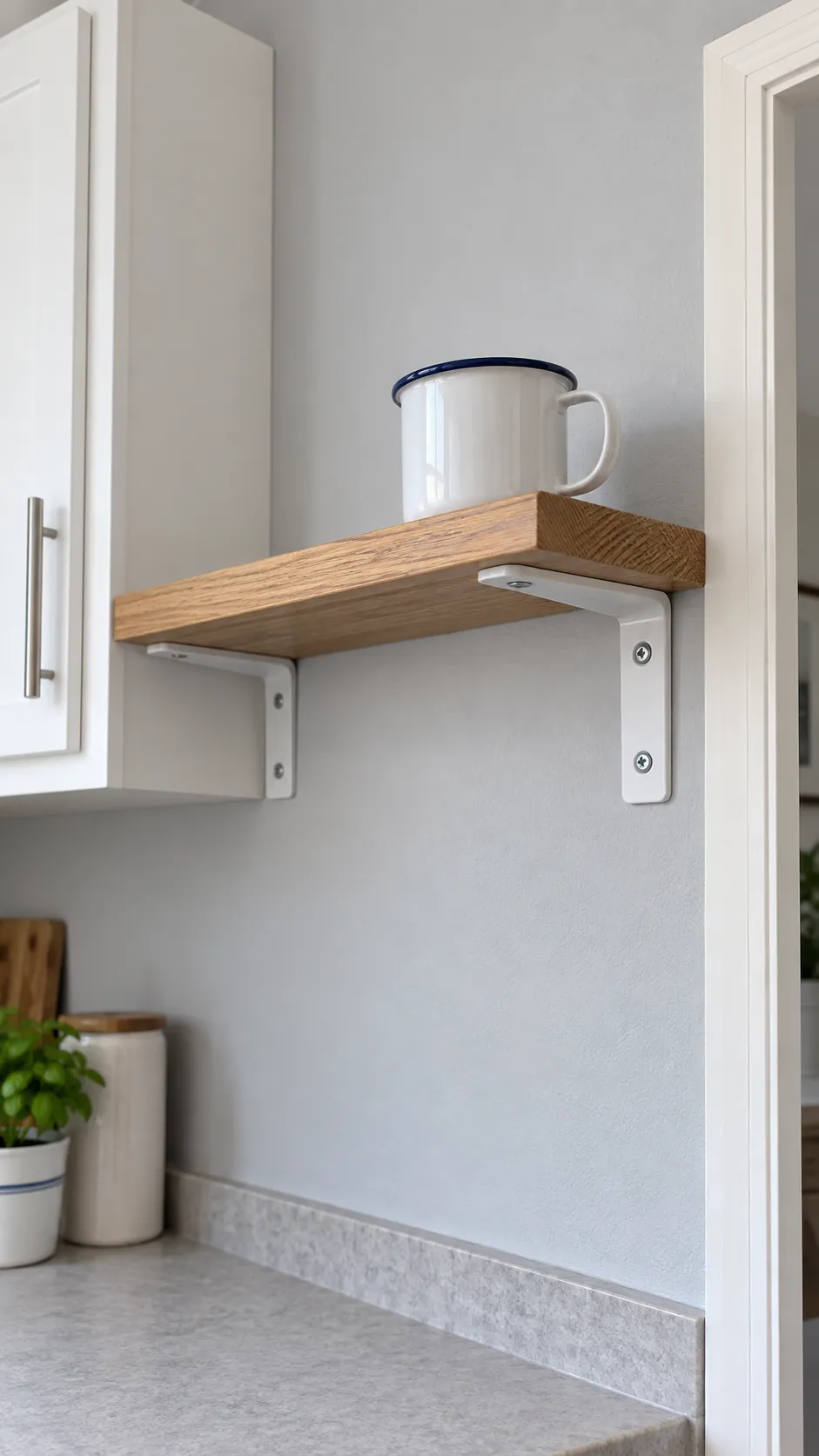
Empty the shelf and check its depth, mounting instructions, and stated load limit before arranging anything. A shallow picture ledge and a shelf intended for books are different pieces of hardware. If you do not know how a wall shelf was attached, resolve that before adding heavy books or a watered plant.
Keep every object fully supported by the surface. Avoid tall unstable pieces near doors, beds, or places where children can reach them, and use the manufacturer’s guidance for fixings suited to your wall. In a rental, an existing shelf can be styled without changing the mounting or adding new holes.
Choose one piece that deserves attention
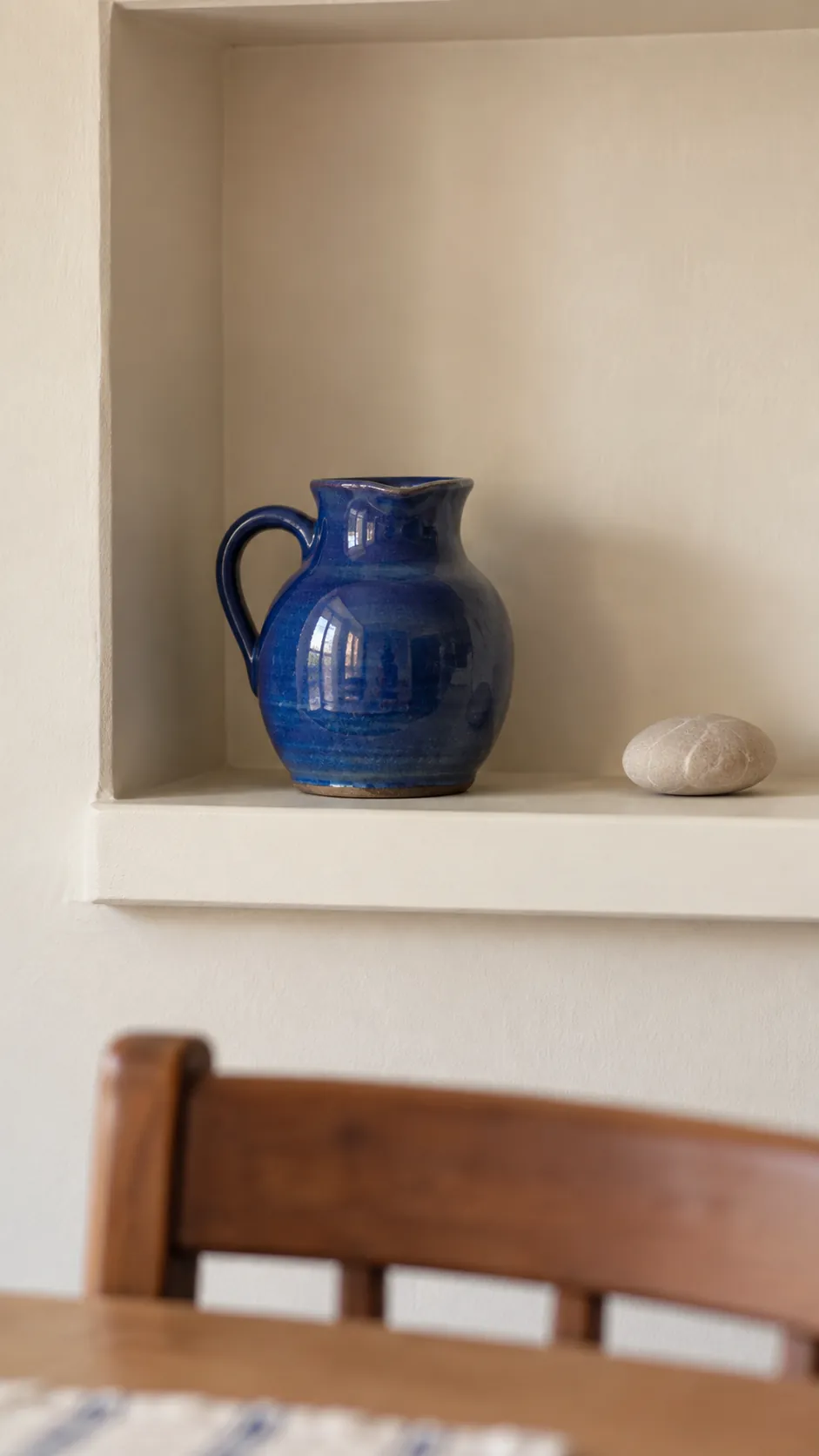
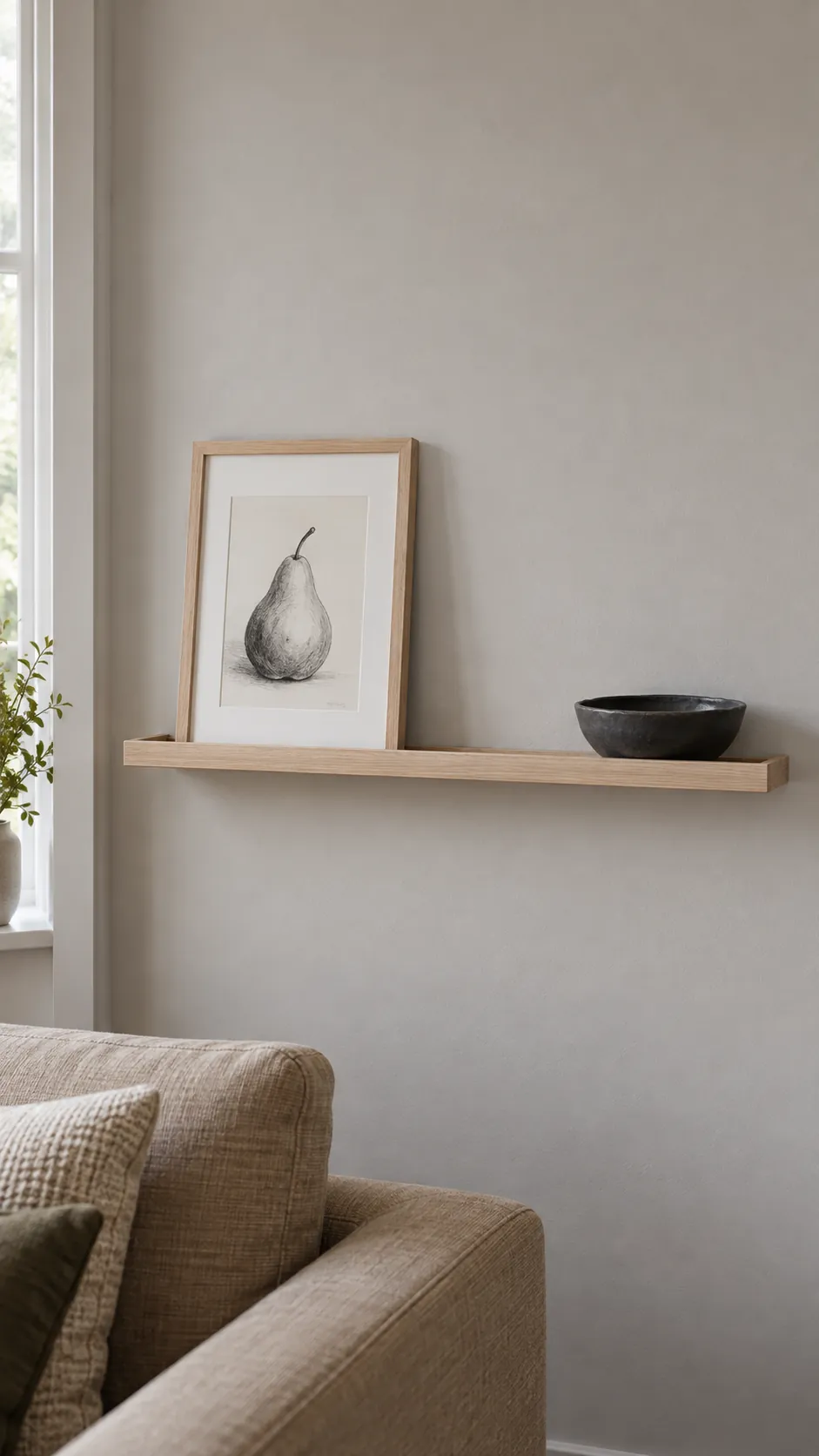
Give the eye a clear starting point: a favorite small ceramic vessel, a framed print, or a useful clock. Choose something you already enjoy rather than buying an assortment of tiny objects just to fill the shelf. Set it slightly off center and leave its outline easy to see.
For a mini shelf display, scale matters more than object count. A frame that nearly touches the shelf above can feel cramped, while a cluster of very small souvenirs may disappear into visual noise. Try your focal piece alone before adding a supporting object.
If a keepsake matters to you, it earns a place even when it does not match a strict palette. Rotate other keepsakes through that same spot instead of displaying every memory at once.
Arrange books so you can still find them
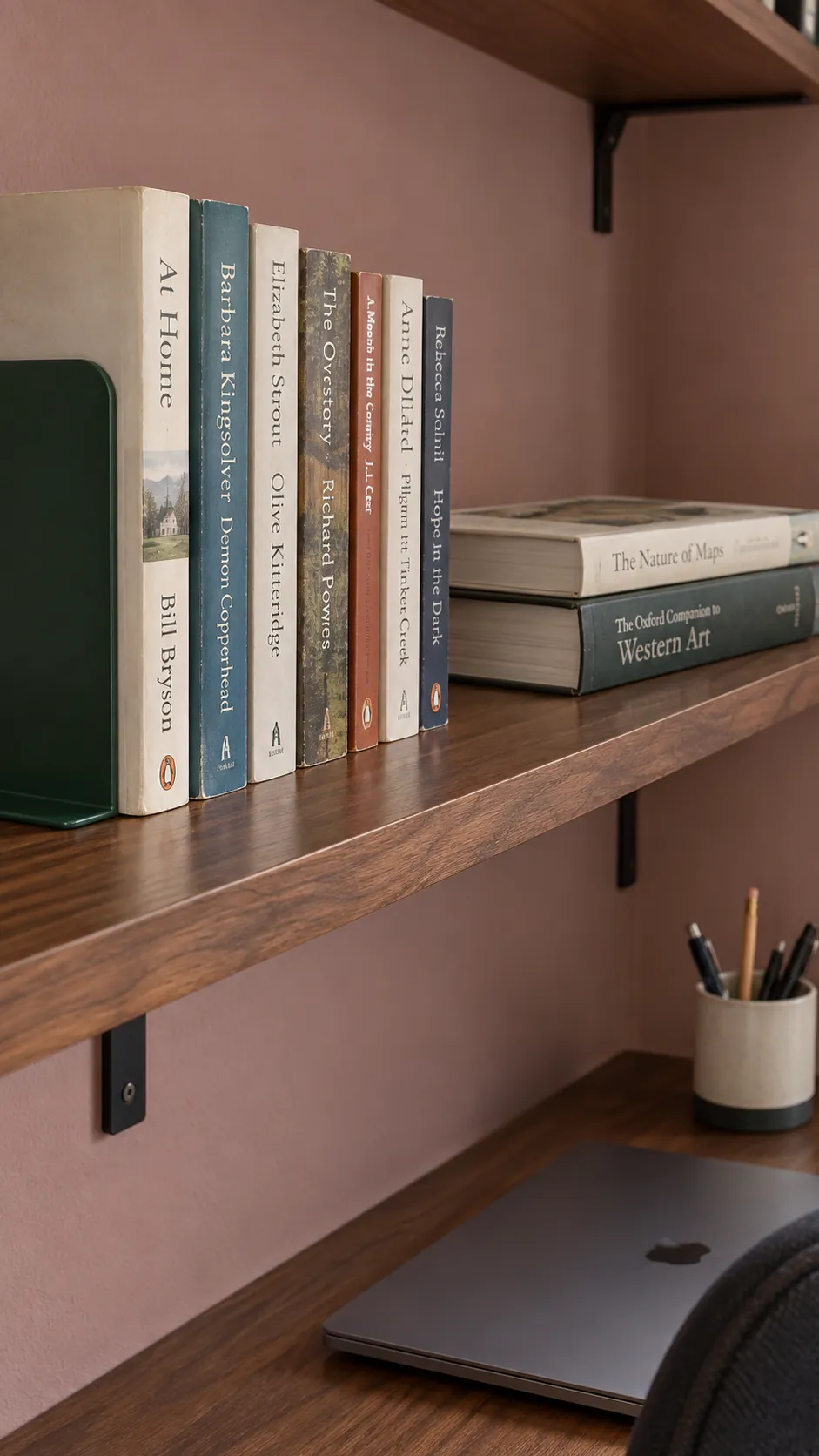
Books and plant shelf arrangements look appealing in pictures, but a book you use daily needs an unobstructed route out. Keep frequently used titles upright with their spines visible and support the group with a suitable bookend. Do not put a pot or fragile ornament on top of a book you regularly reach for.
A short horizontal stack can hold books you consult less often, provided it sits flat and stays within the shelf’s capacity. Keep the largest volume at the bottom and avoid towering piles. You can align the front edges for a calmer outline without wrapping every book in a matching cover or hiding its title.
Repeat a color, then leave a gap
Neutral shelf decor works through relationships, not through making everything beige. Repeat a color from one book cover in a nearby object, or connect a dark frame to a dark bookend. Two related elements can make the arrangement feel deliberate while keeping a personal mix of materials.
Leave a visible stretch of shelf between groups. The right amount depends on the size of the objects and the space around the shelf, so use the doorway view rather than a rigid percentage. If the display reads as one solid block, remove an item before buying anything else.
Add a plant only where it can thrive
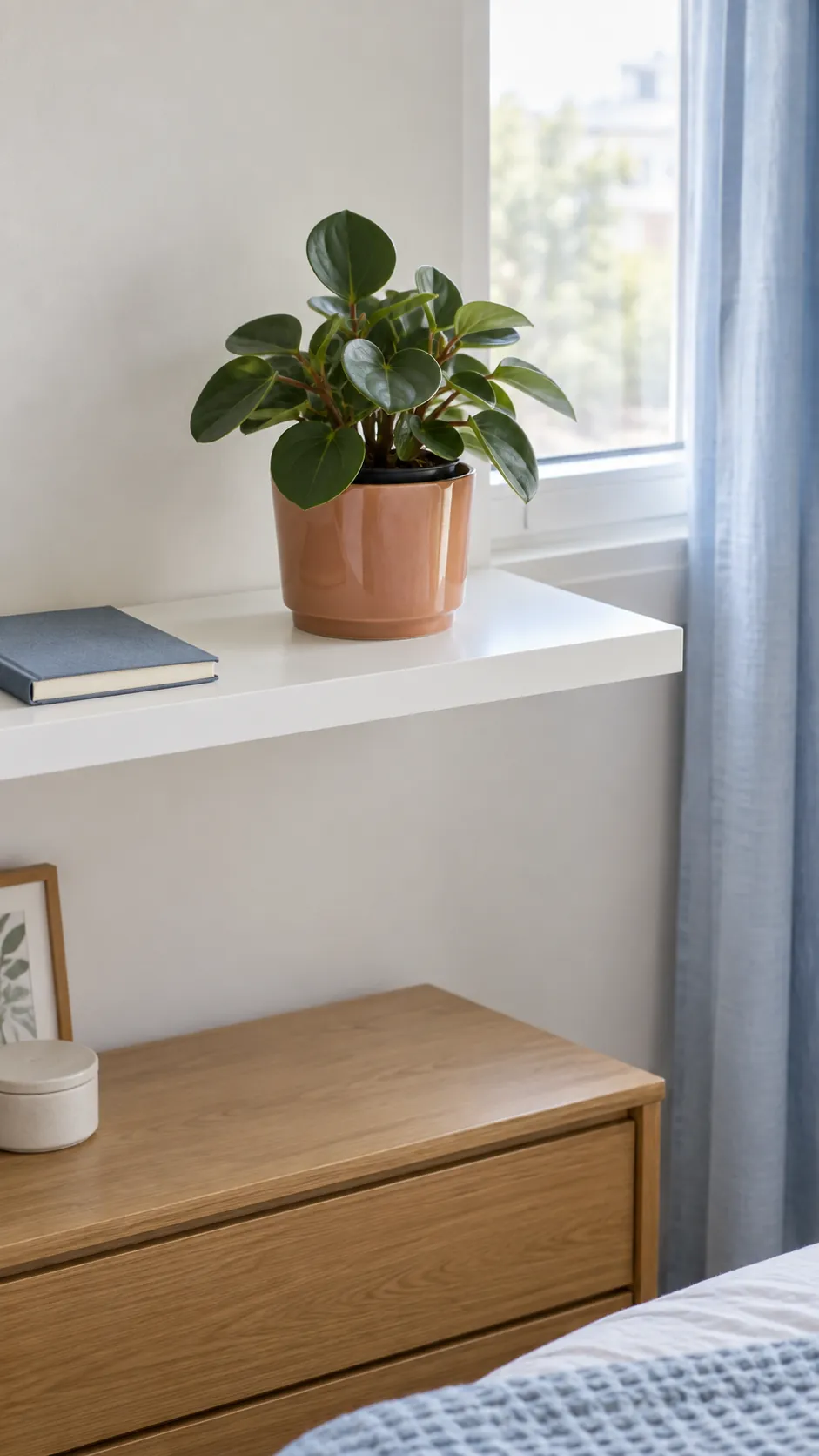
Check the light at shelf height before placing a plant there. A shelf beside a window can still sit in deep shade, and a high shelf may be difficult to reach for watering. Choose a plant for those actual conditions and check whether it is appropriate for the pets or children in your home.
Use a watertight outer pot and remove the inner pot to water elsewhere. Let it drain before returning it so the shelf and books stay dry. Leave growing room around the leaves and keep trailing stems away from lamps, outlets, and frequently handled objects.
One compact plant is enough on a small shelf. If maintaining it requires a precarious reach, choose a reachable location elsewhere and let the shelf hold something simpler.
Make the display easy to live with
Functional small shelves need a clear purpose beyond looking finished. Near the entrance, a shallow dish for keys can be the focal piece; above a desk, a small box for spare supplies may matter more than a vase. Keep those everyday objects within easy reach and leave room to put them back.
Take a photograph from where you normally see the shelf, then notice what competes for attention. Remove one object if the arrangement feels crowded, or move two related pieces closer if it feels scattered. Wipe the shelf during your regular cleaning and return only the pieces you still use or enjoy.
The useful test is simple: can you take down a book or set down your keys without moving the rest of the display? When the answer is yes, your wall shelf arrangement is doing its job.