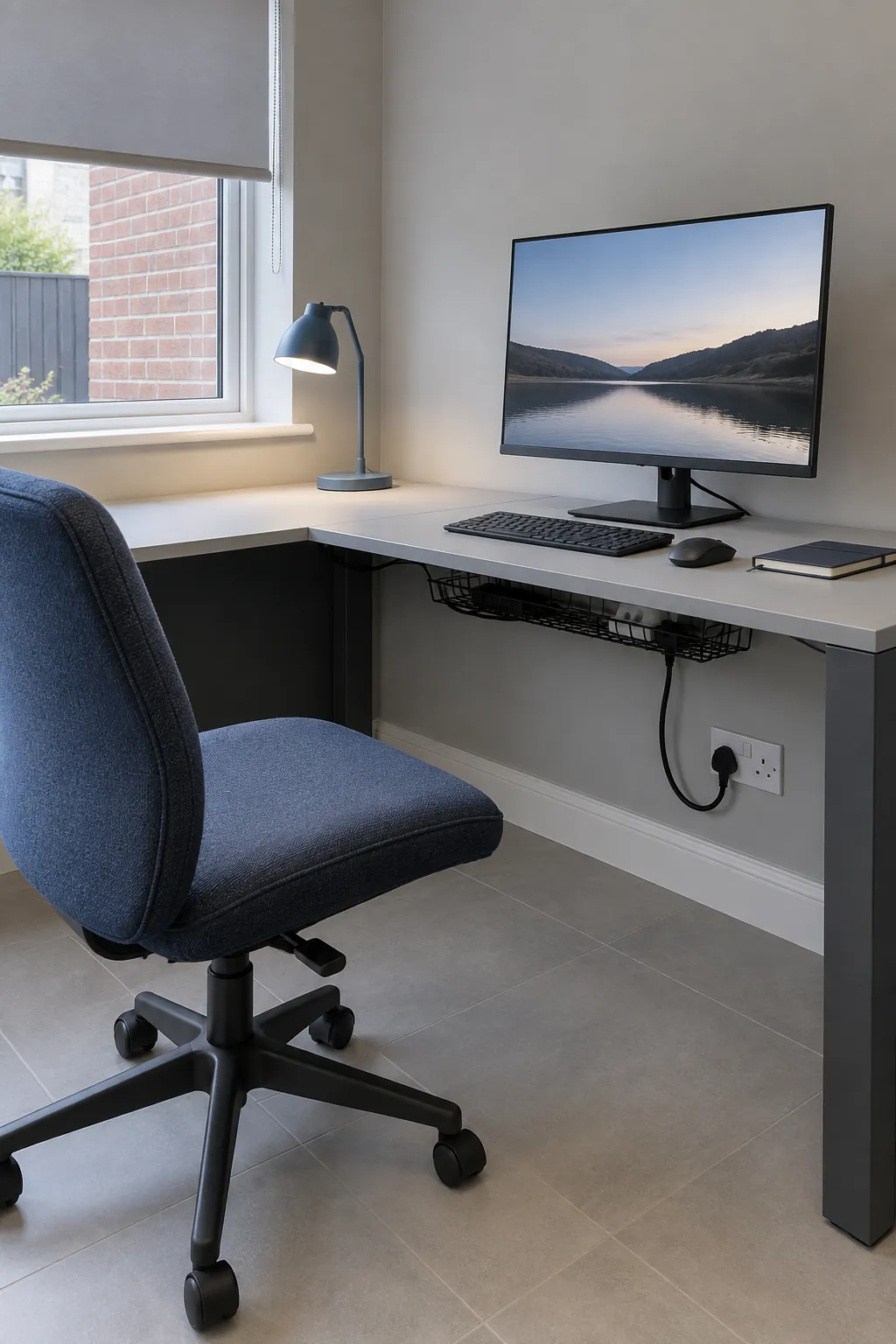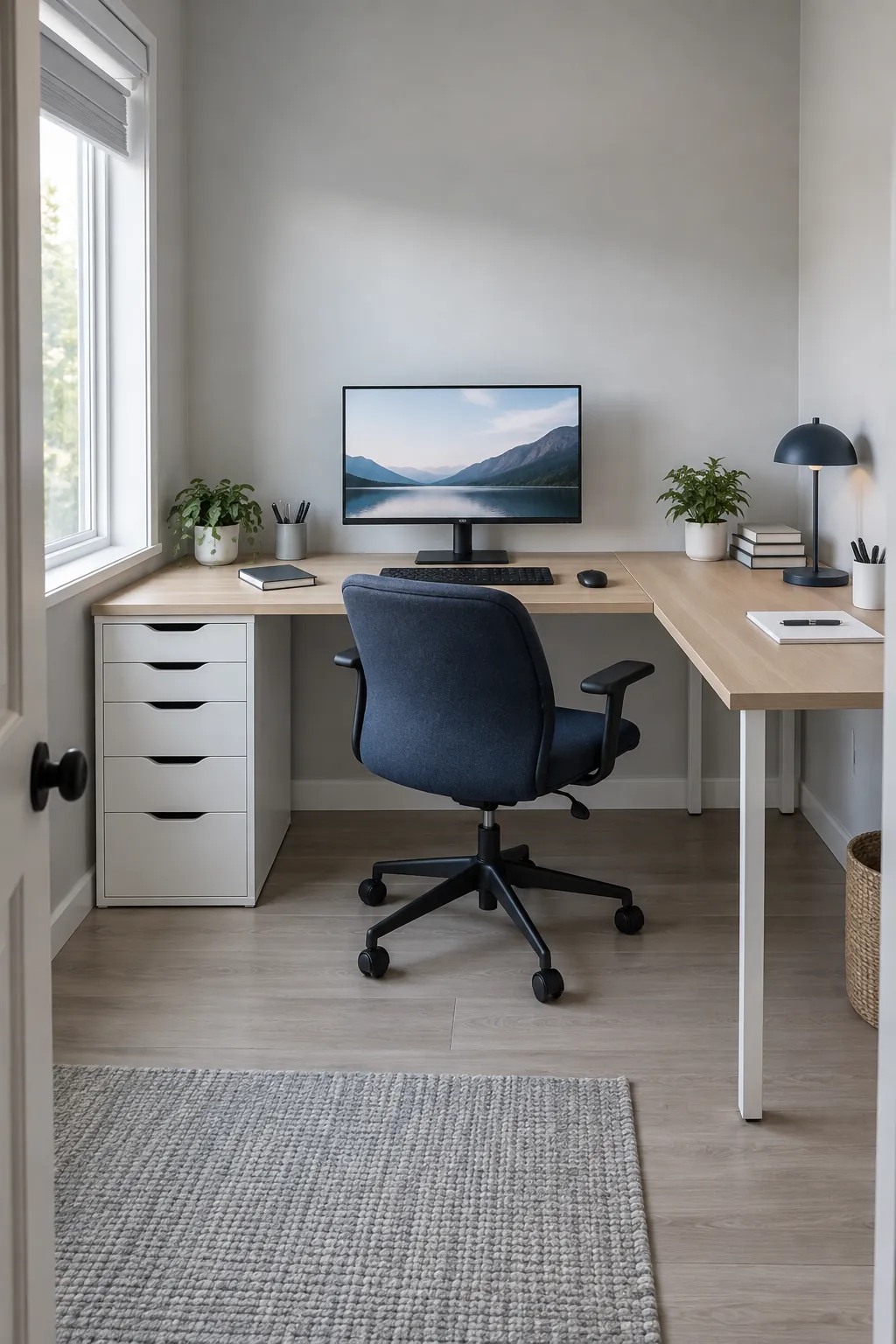
The awkward part of a corner desk is usually underneath it: a drawer blocking your knees, a support leg in the turning space, or a return that steals the path beside the bed. Start with how you sit and move, then choose the IKEA pieces that fit that footprint. A smaller, properly supported setup is often more useful than filling both walls.
Mock up the chair space before choosing the tops
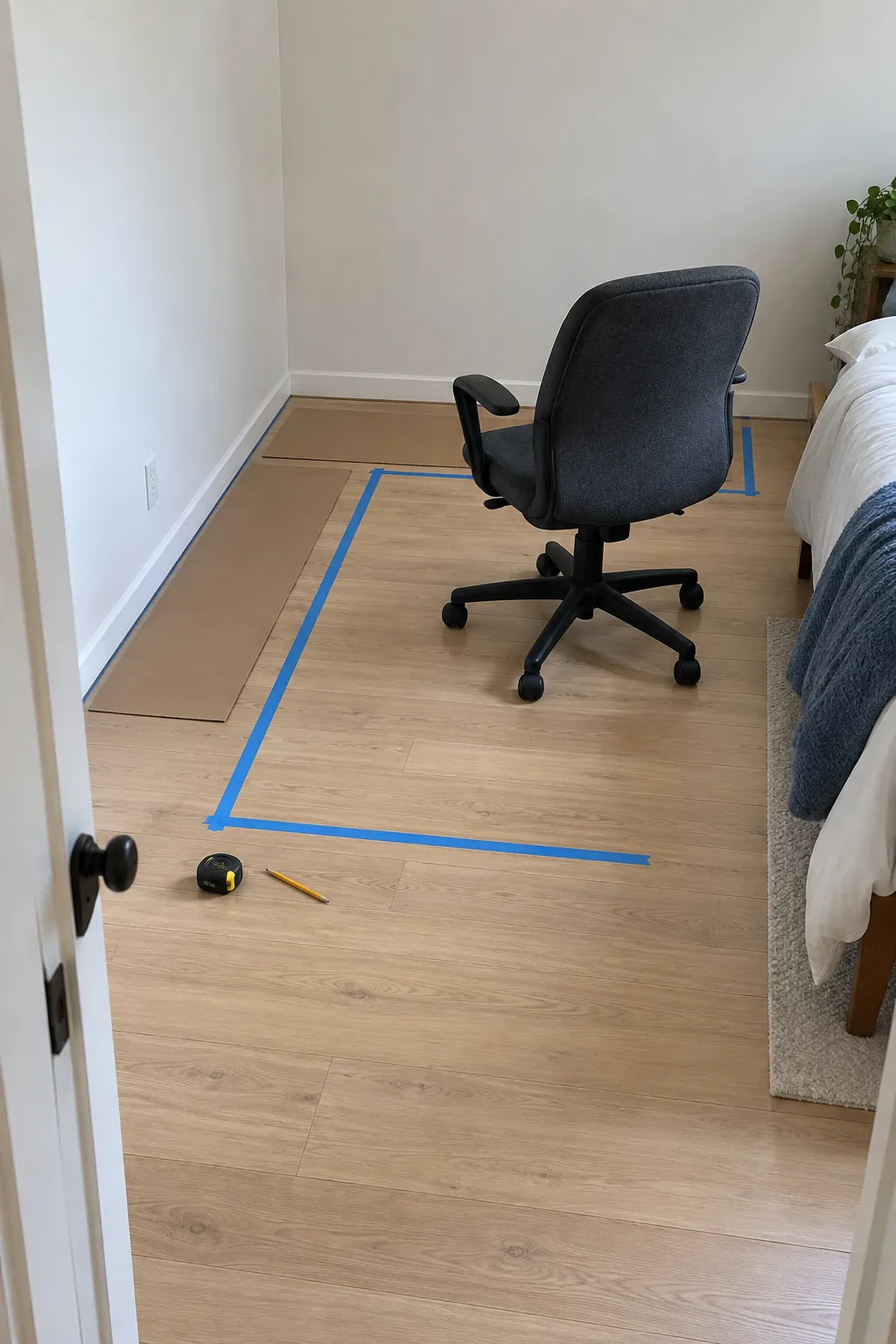
A corner can hold plenty of desktop while leaving almost nowhere to sit. Mark the proposed front edges on the floor with removable tape, then put your actual chair inside the outline. Pull it back as you would when standing up, turn toward the return, and open any nearby wardrobe doors. If this movement blocks the route to the bed, shorten the return before buying furniture.
For an office corner in a bedroom, reserve the longer run for the task you do most often. A shallow return can hold paperwork, but it should not force the keyboard into the joint between two tops. Measure skirting boards, sockets, window handles, and the height of the chair arms as well as the walls.
Use ALEX storage at the outer end
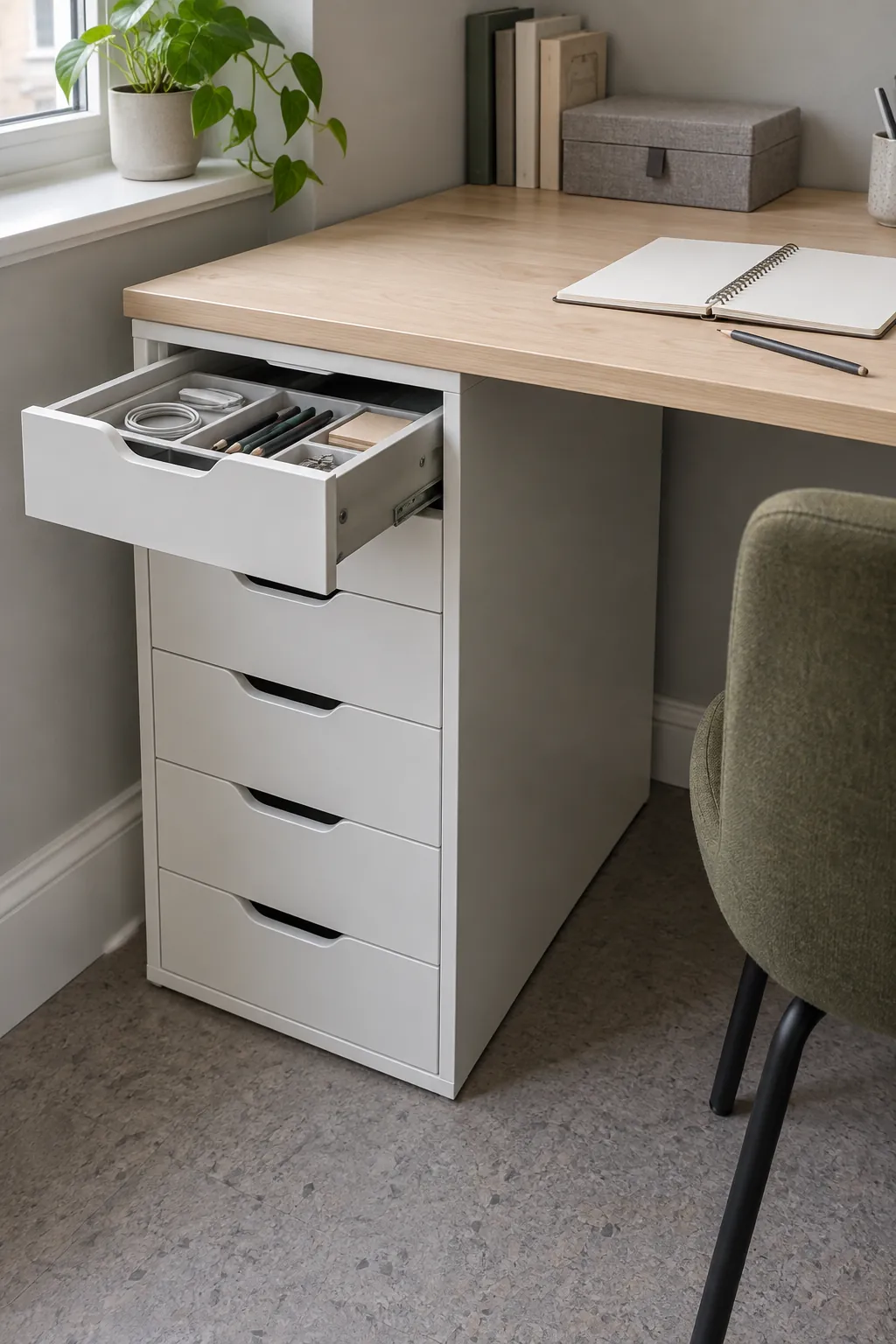
An IKEA ALEX desk hack works best when the drawer unit sits beyond your normal sitting position. Placing storage directly inside the corner can make a generous desktop feel cramped because your knees meet the cabinet before your chair reaches the keyboard. Test the drawer opening with the chair in place and allow access to the lowest drawer.
Check the current dimensions and assembly instructions for the exact ALEX unit and top you intend to buy. Drawer height plus tabletop thickness determines the working height, so visually similar combinations are not automatically comfortable or compatible. Use the specified attachment method rather than assuming that the weight of a loose top will keep it secure. Keep frequently used stationery in the upper drawer and leave the return clear for a notebook.
Give each desktop its own reliable support
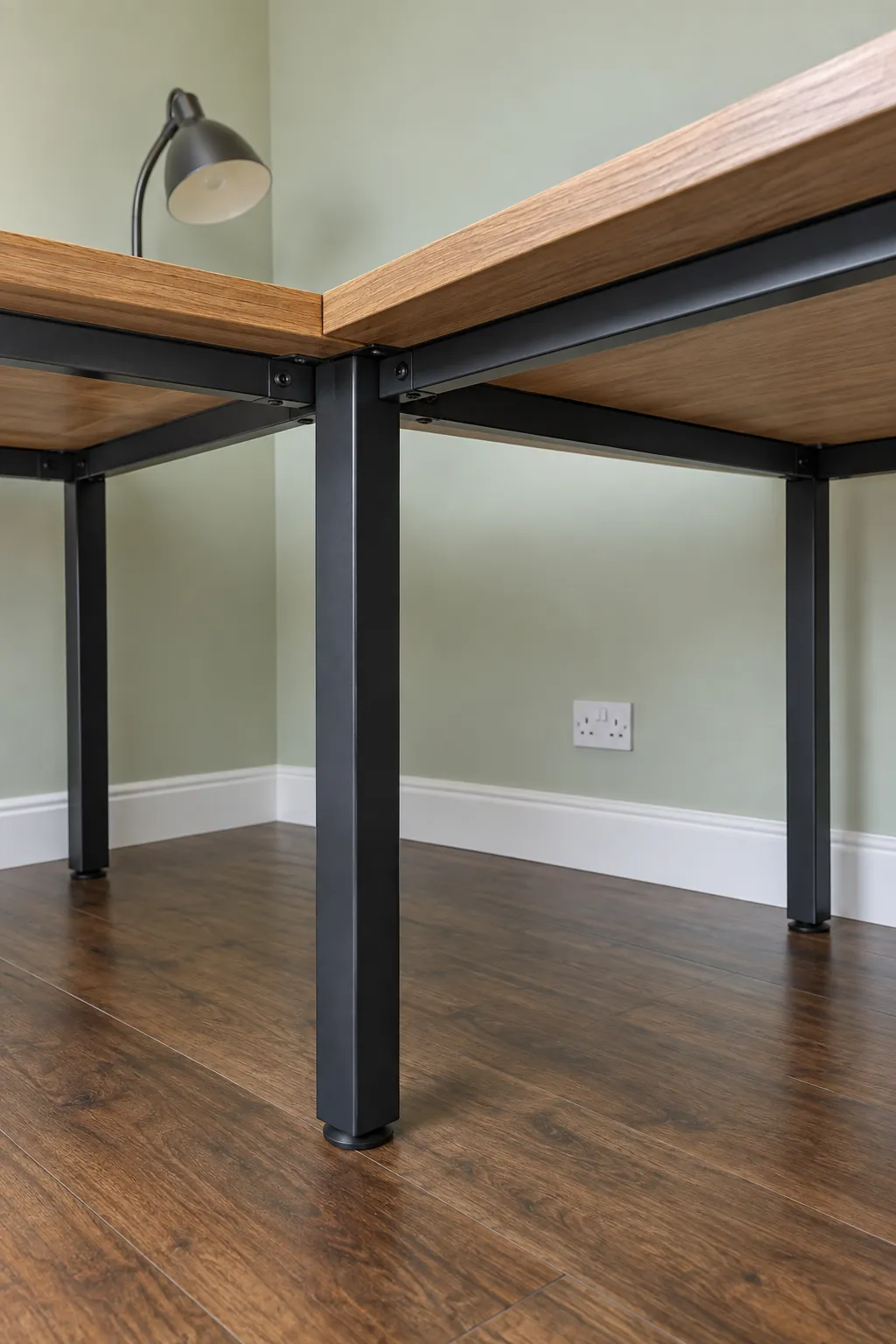
Two rectangles touching at a corner do not become one structural surface. Each top needs the supports required by its own construction and assembly guidance, including any support near the meeting edges. A small joining plate may help align suitable tops, but it is not a replacement for legs, a frame, or properly designed structural support.
LAGKAPTEN and other lightweight tops should not be treated like solid timber: confirm the construction, permitted fixings, and load guidance for your exact size. Do not cut into a hollow top or mount a heavy monitor arm wherever it happens to fit. Check compatibility with both the desktop and the arm manufacturer before clamping equipment to an edge.
If the support you need lands where your feet should go, change the layout or choose a purpose built corner frame. Hiding the leg for a cleaner photograph is a poor trade for a stable everyday workstation.
Make the short return a separate task zone
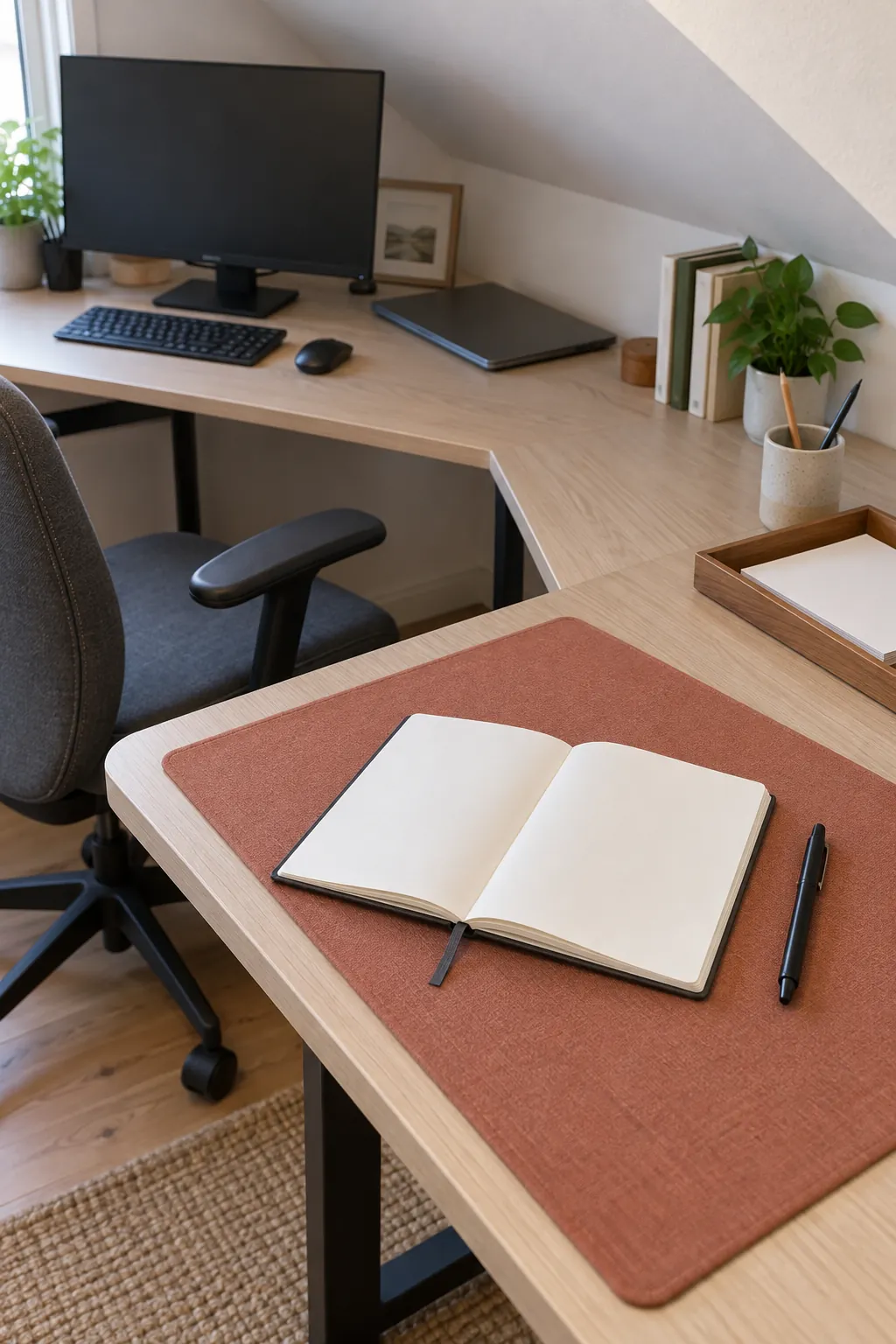
An IKEA L shaped desk hack becomes useful when the second surface has a job. Put the monitor and keyboard on one straight run, then use the return for sketching, sorting documents, or a compact printer. Keep the mouse on the main surface so your shoulder does not have to bridge the inside corner during every working session. A printer needs space for its paper trays to open, access to its controls, and ventilation specified by its maker.
Treat MICKE and KALLAX as distinct options
A complete MICKE desk can be a simpler starting point than assembling a large corner from separate parts. Check the actual model footprint and storage clearance rather than assuming that every MICKE configuration fits the same corner. You may only need a freestanding shelf beside the desk to gain the extra storage you wanted from a return.
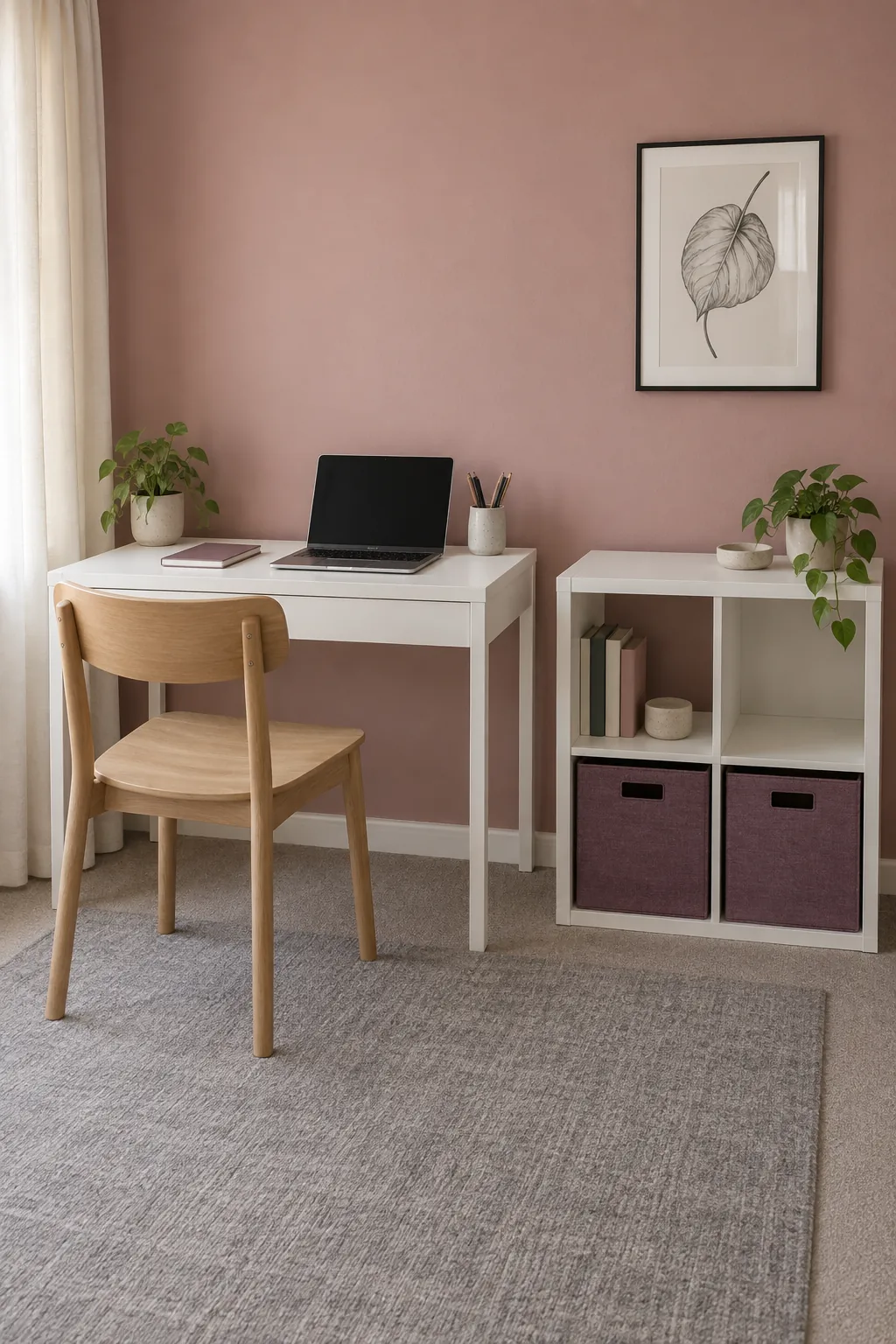
A KALLAX desk hack raises different questions because shelving dimensions, orientation, and attachment points affect the whole build. Do not assume a shelf unit is an approved desktop support or that its height matches your chair. Use an explicitly compatible desk attachment where available, follow the relevant anchoring instructions, or keep the shelving adjacent as independent storage. In a small bedroom, separating storage from the desktop can preserve the open floor area needed to move comfortably.
Finish the cables before adding decoration
Position the screen so daylight arrives from the side where possible, then check for reflections at the hours you actually work. Route cables along a compatible tray or channel without drilling into an unknown hollow section. Leave enough slack for the monitor and chair adjustments, and keep plugs accessible instead of trapping them behind a heavy drawer unit.
For an IKEA built in desk hack look, repeat the wall color in a small accessory and align the visible front edges carefully. Decorative trim should stay decorative; it does not solve a support problem. Add a task lamp, one container for loose items, and only the objects you reach for regularly.
Before calling the corner finished, sit down with your normal equipment and use both surfaces. A successful layout lets you type, turn, open a drawer, and leave the chair without rearranging the room.