A basket can fit perfectly in a corner and still make the room harder to use. If you have to move a chair to reach it, or unload everything to find one charger, the extra storage is costing you effort. Start with what you need to retrieve, then choose the smallest arrangement that makes that task easy.
Measure the space you can actually use
Empty the corner before measuring both walls, the available height, and the distance to nearby furniture. Include baseboards, window trim, outlets, vents, and the full swing of any door. A cabinet that fits between two walls may still prevent a drawer from opening.
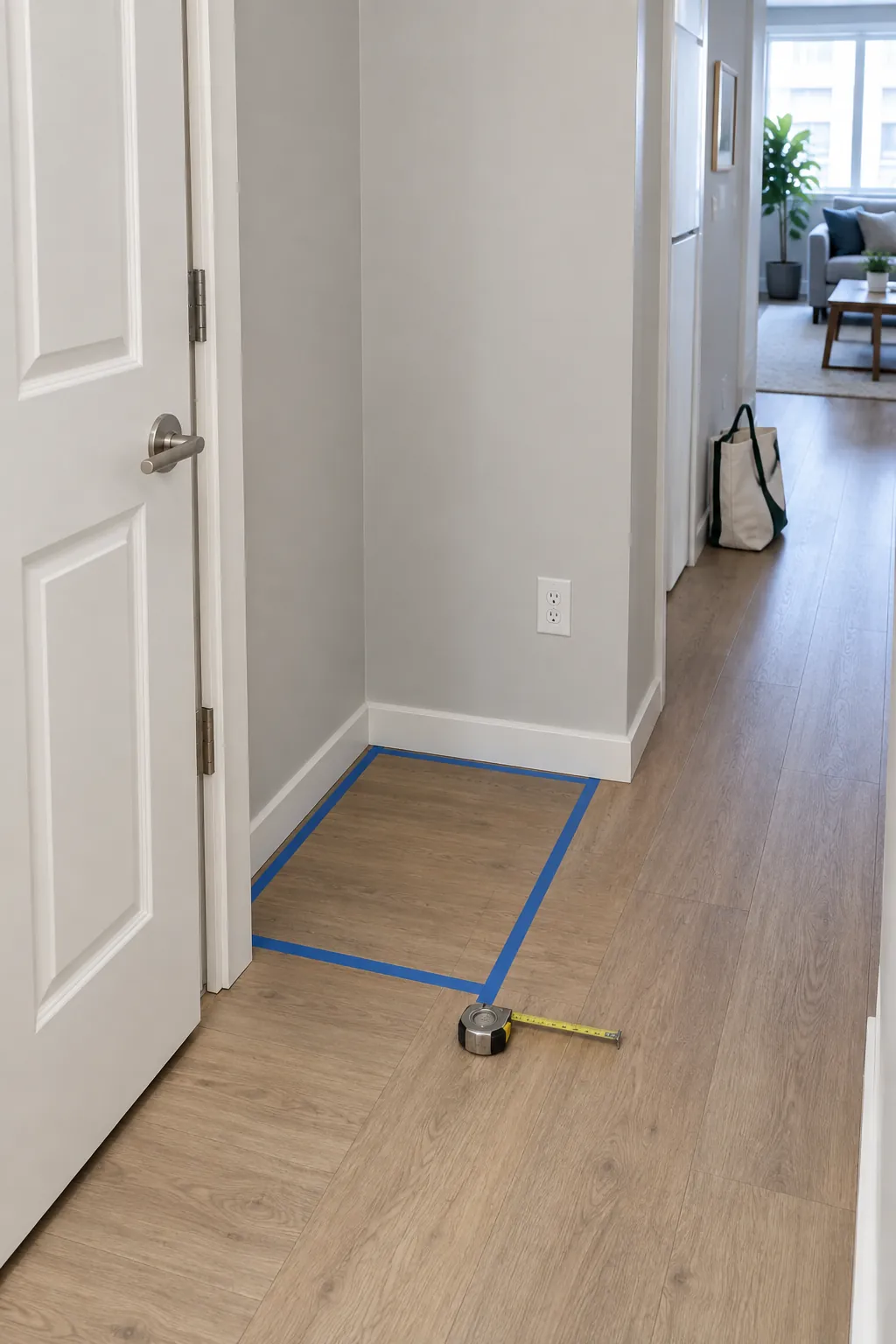
Mark the proposed footprint with removable tape after testing it on an inconspicuous patch of flooring. Walk past it carrying laundry and open the adjacent doors as you normally would. For a corner desk setup, test the chair pulled out as well as tucked in; that occupied footprint matters more than the desktop alone.
Give the corner one everyday job
Choose a task already happening nearby, such as returning library books, storing throws beside the sofa, or collecting bags near the entrance. Move unrelated objects to their proper homes before buying containers. A corner becomes a dumping spot when its purpose is simply to hold whatever has no other place.
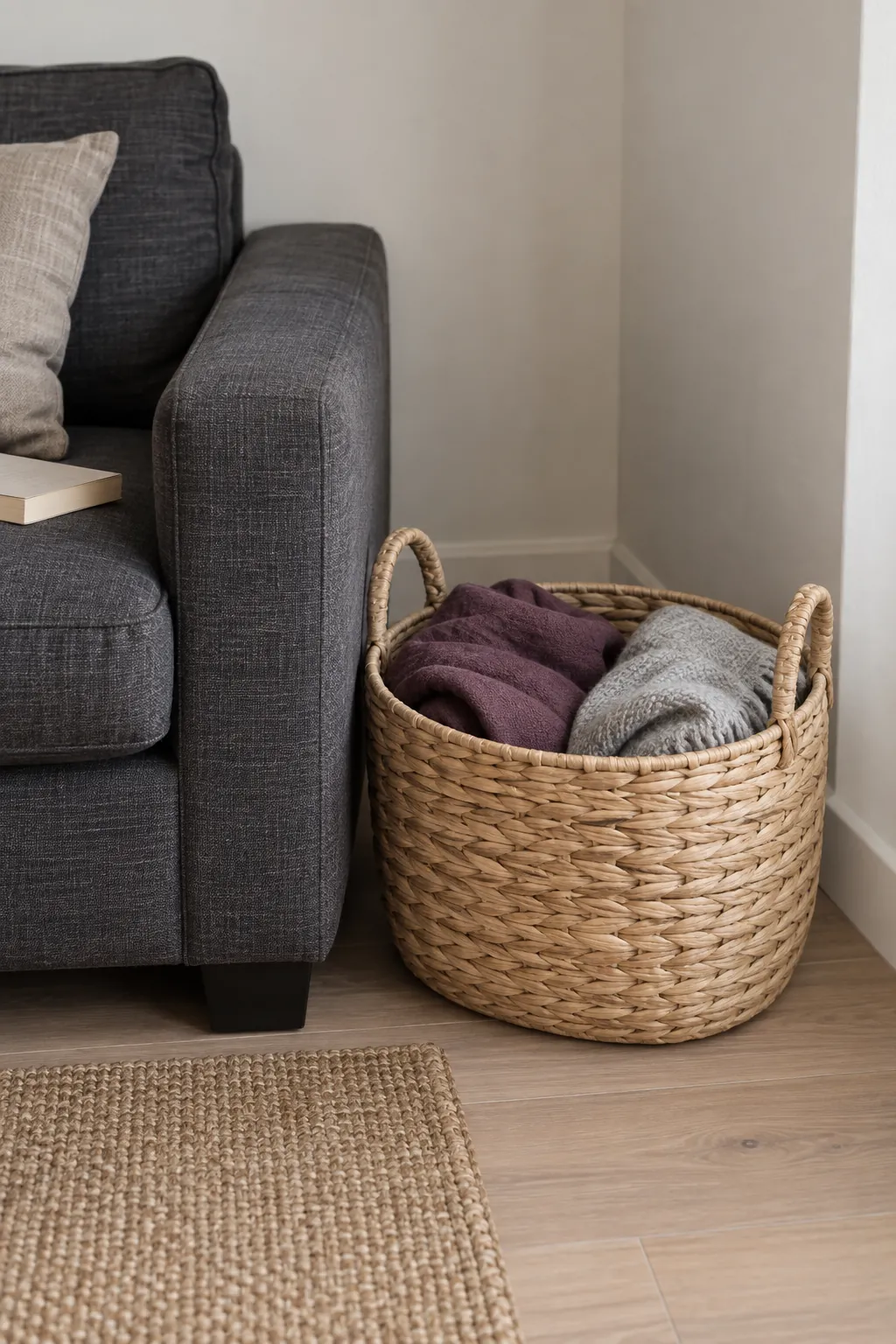
For corner basket storage, begin with one handled basket containing a single category. Keep its opening accessible without moving furniture, and leave enough space to lift the basket out. If the contents spill above the rim, reduce the category or choose a different location instead of hiding a second layer underneath.
Use shallow shelves when visibility matters
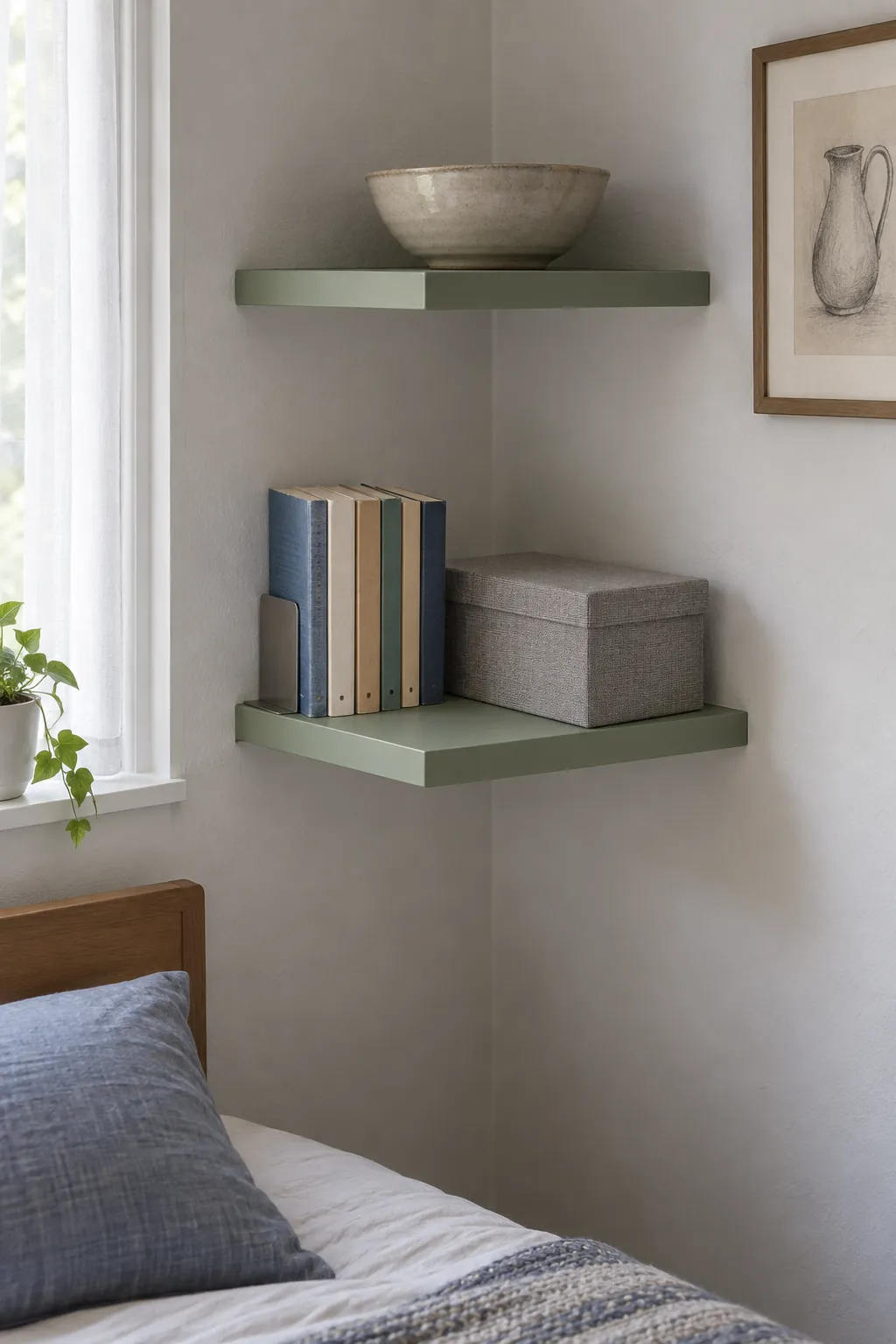
Corner floating shelves work well for light objects you want to see and reach, but a deep triangular shelf can conceal small items at its back point. Measure your actual books, boxes, or jars before choosing the depth. Place frequently used items near the front and keep the deepest point for one larger object that remains visible.
Check the shelf maker’s load limit and use fixings suitable for the wall construction. Heavy books need a properly supported shelf, and adhesive mounts are not a substitute for structural support. Renters should check permission before drilling and consider a stable freestanding unit when wall installation is unsuitable.
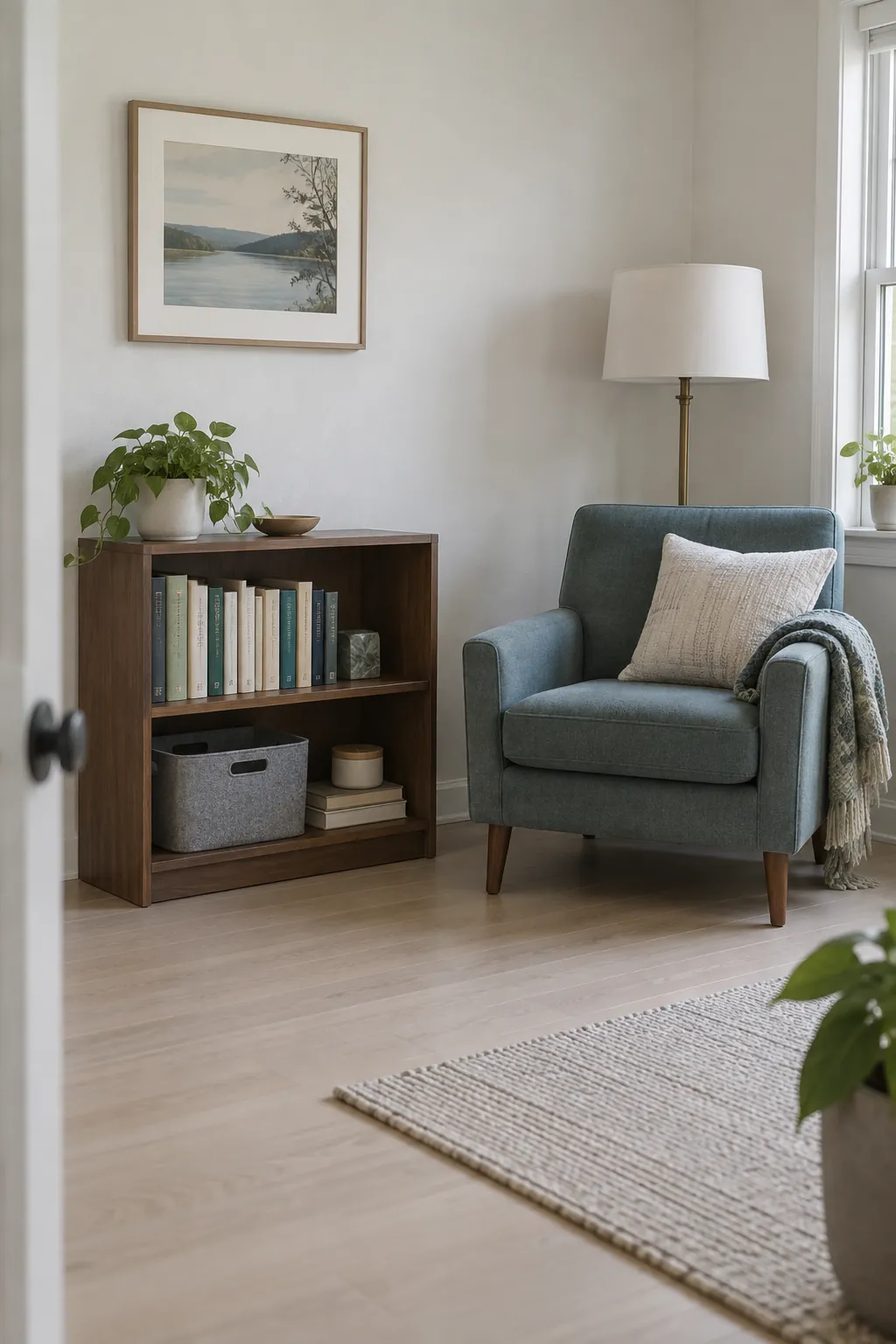
Leave enough clearance above each container to remove it without tilting its contents. This small gap makes vertical corner organization practical rather than merely tidy in a photograph.
Choose a cabinet for what needs hiding
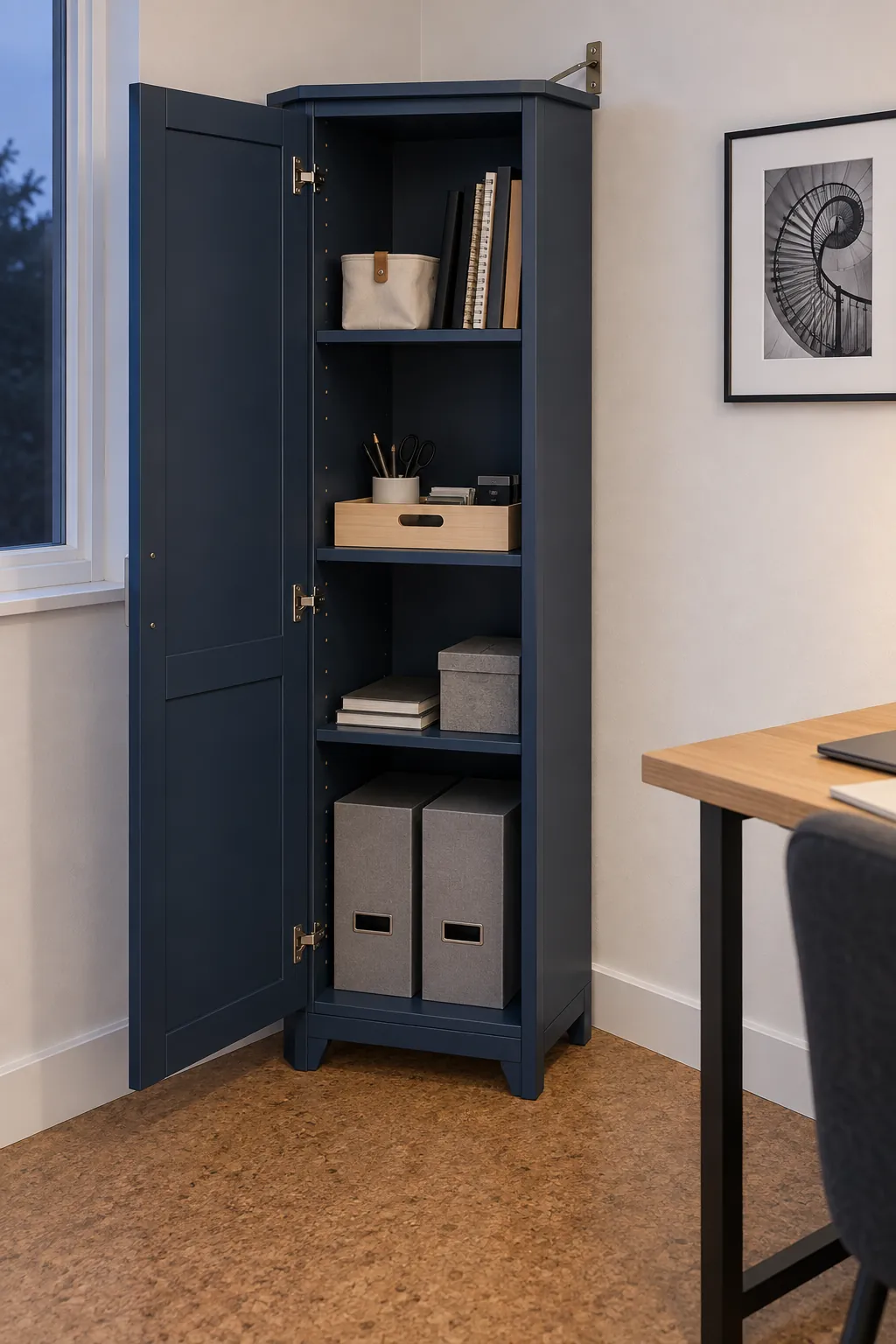
A tall corner cabinet can contain visually busy supplies, but its usable interior matters more than its outside dimensions. Measure the door opening and check whether a basket can pass through it while level. Adjustable shelves help when you are storing objects of different heights, while shallow removable bins make small supplies easier to retrieve.
Place heavy objects low and follow the manufacturer’s anchoring instructions, especially in homes with children or pets. Keep daily supplies at a comfortable reaching height and reserve the upper shelves for lighter, less frequent items. Do not cover vents or crowd heat sources; follow the appliance or heater clearances rather than treating every gap as available storage.
Bring the back of a deep corner within reach
Inside a kitchen corner cabinet, start by removing everything and grouping it by use. A turntable helps only when its diameter fits the opening and every item can rotate without hitting a hinge or wall. Test it with the objects you intend to store before committing to the arrangement.
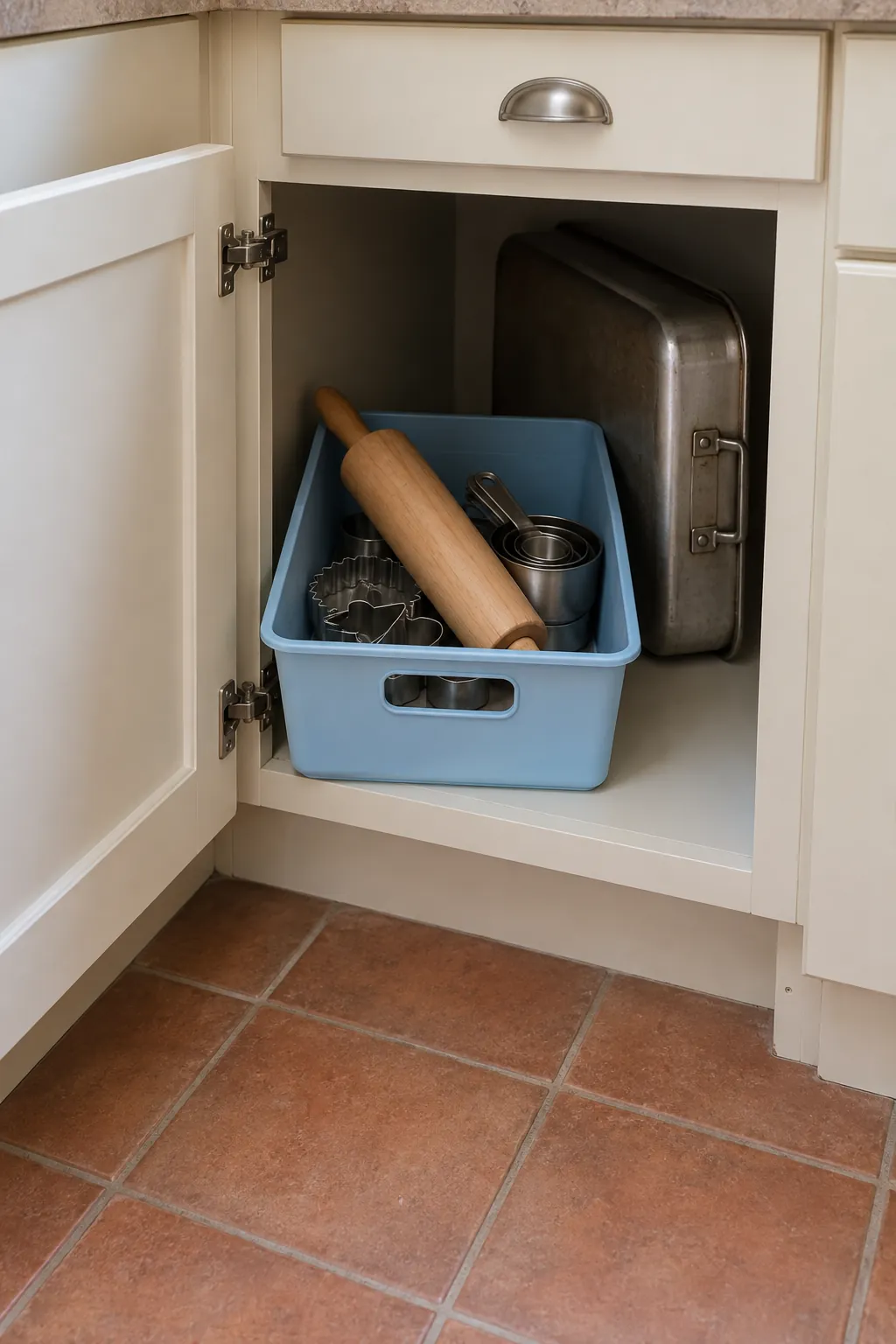
If rotation wastes too much room, try a removable handled bin for one category, such as baking accessories. Keep the bin light enough to lift comfortably and avoid placing loose objects behind it. Large occasional cookware can occupy the deepest area, provided you can retrieve it without dragging out your everyday supplies.
Specialized pullout fittings require compatible cabinet dimensions and installation. Check the opening, hinge position, internal obstructions, and load rating before ordering; a roomy cabinet does not guarantee that a particular mechanism will fit.
Test the arrangement before adding more
Use the corner for a normal week before expanding it. Notice what lands on the floor, which lid stays off, and whether anyone has to shift furniture to put something away. Those small failures tell you whether the container, position, or assigned category needs changing.
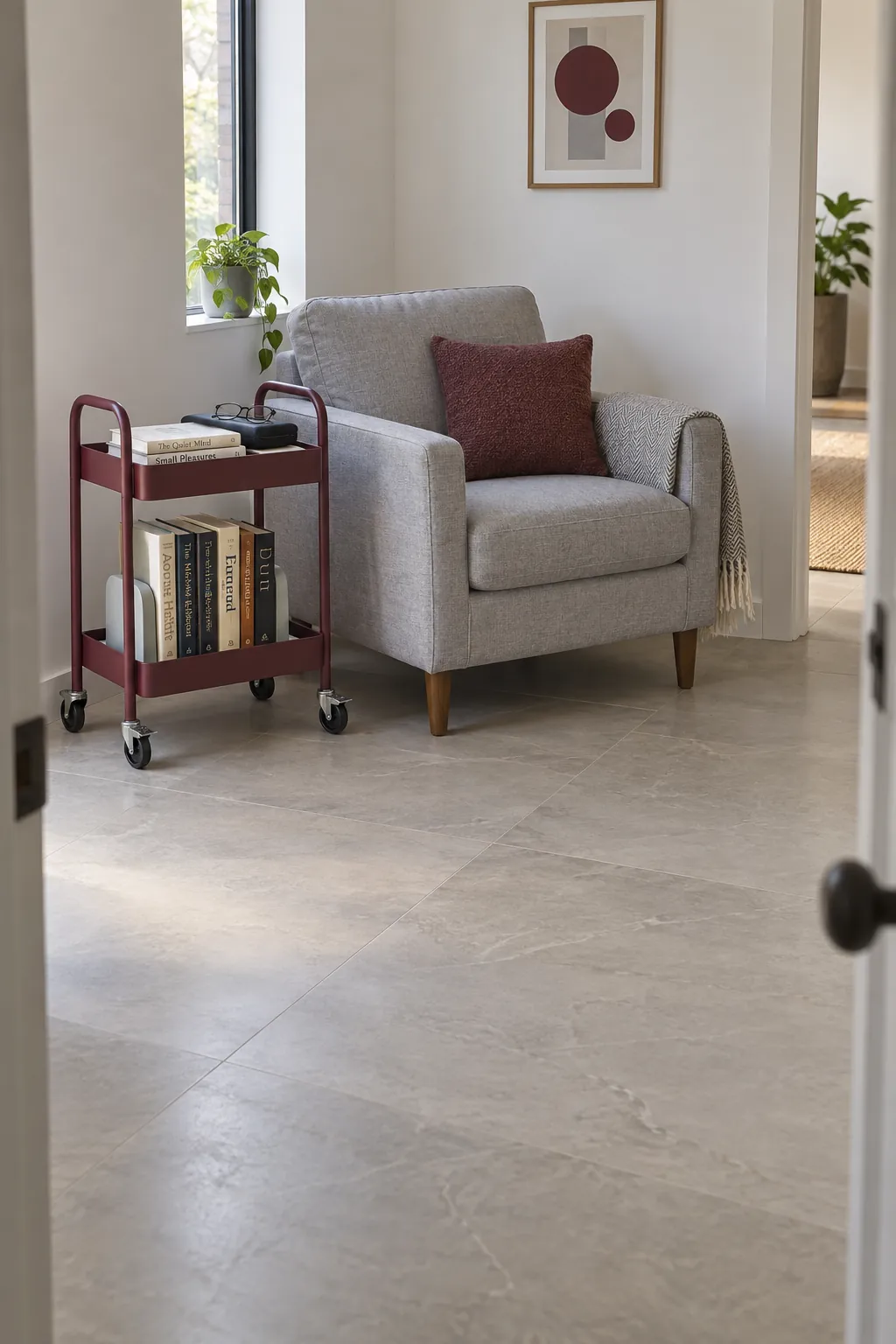
A compact book cart may suit a temporary reading corner better than fixed shelves, but only if it has a clear parking place and suitable wheels for the floor. Keep its heaviest books on the lowest shelf and lock the casters when available. Empty space is also a valid choice: if storage blocks movement or makes cleaning difficult, let that corner stay open.