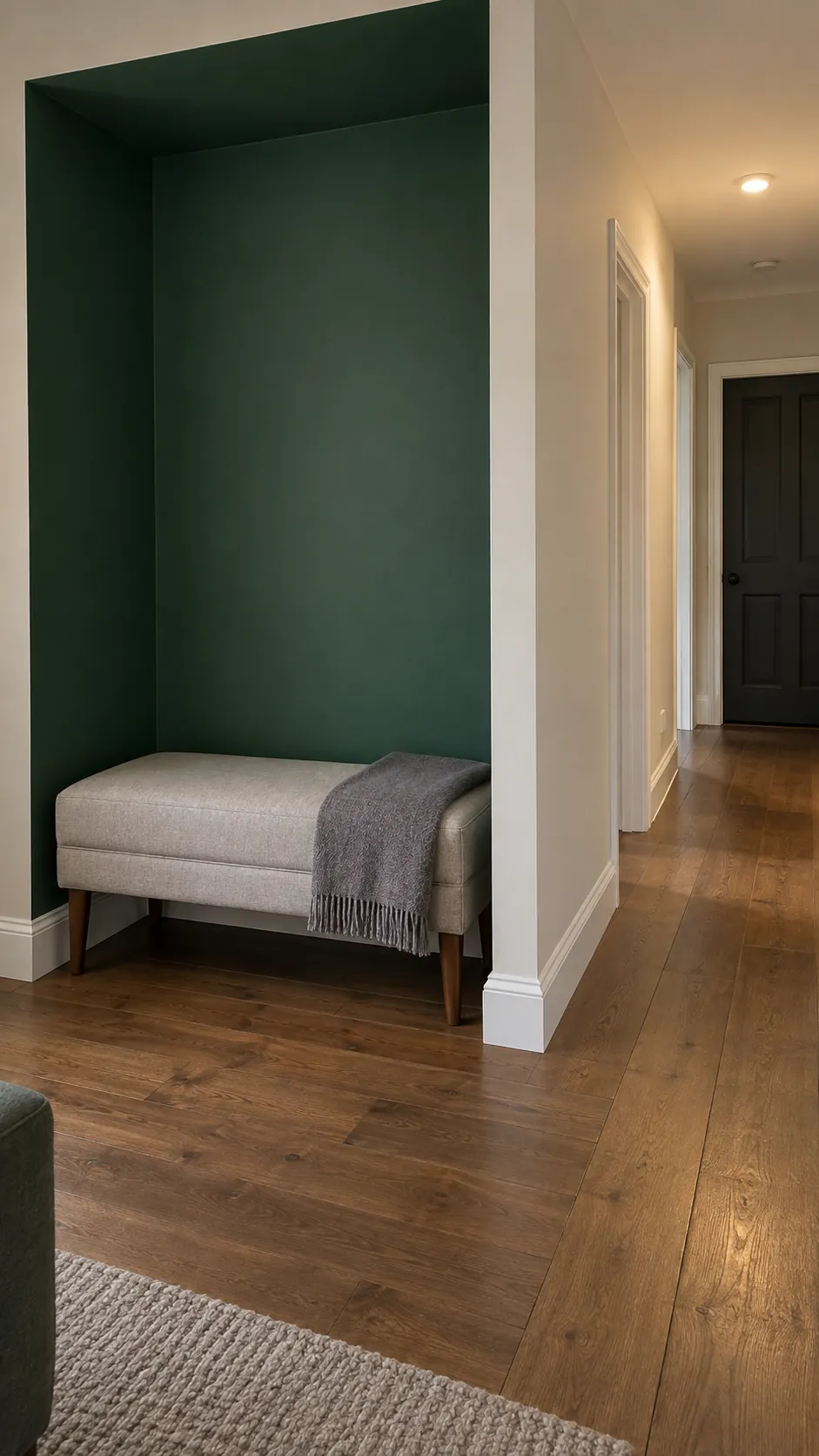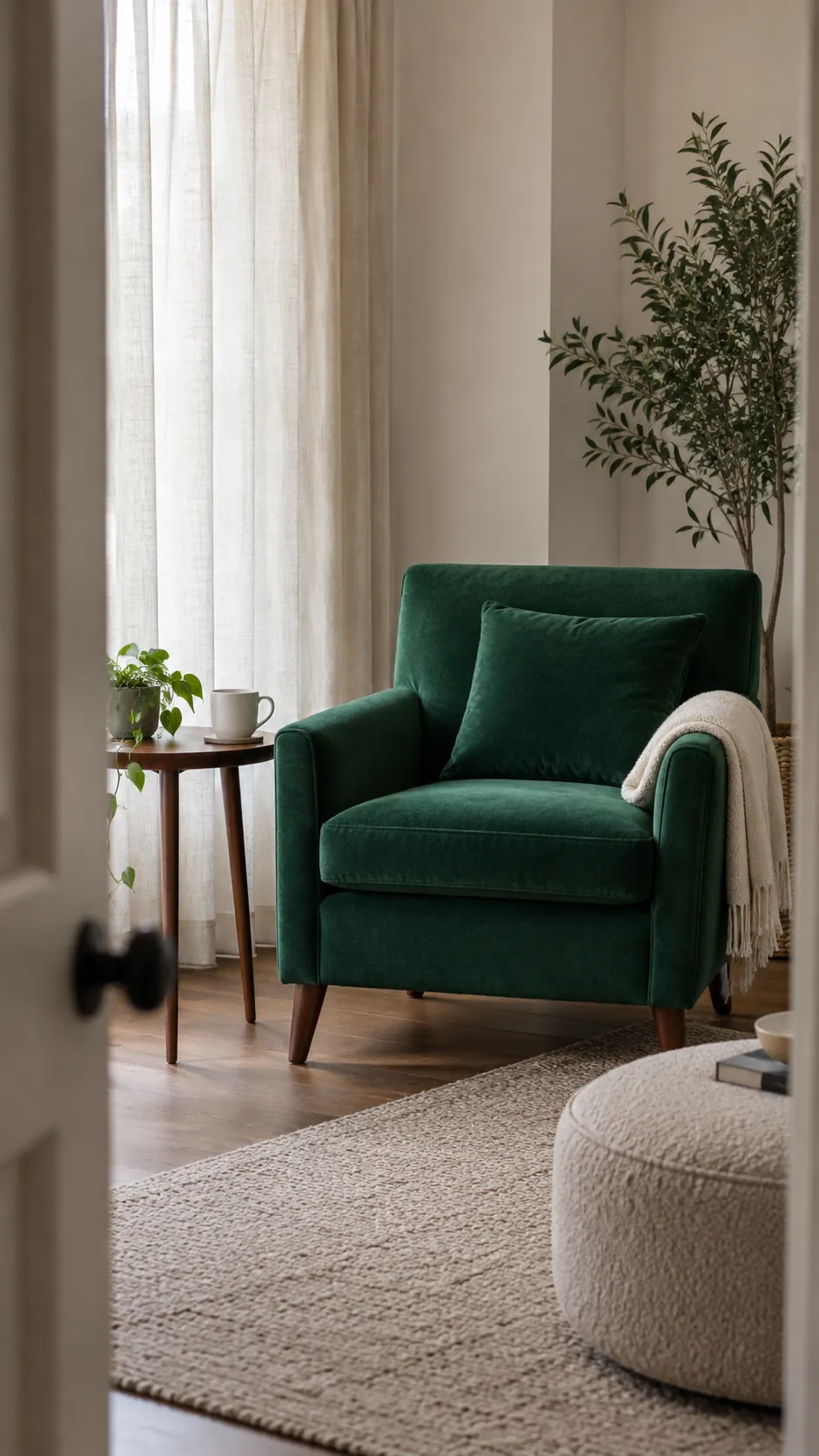
The sofa looked wonderful on its own. Then the matching curtains arrived, and the room began to feel like one large block of colour. A strong green usually needs a clear place to lead, a quieter background and enough contrast to keep the furniture readable.
Give emerald one main job
A saturated colour becomes easier to use when you decide where it should lead. In an emerald green living room, that might be the sofa, the curtains or one painted wall. Choose the feature you genuinely want to notice from the doorway, then let the other large surfaces support it.
If you already own a green sofa, resist ordering matching curtains before the sofa arrives. Fabric sheen, window light and the size of each surface can make nominally identical greens look unrelated. Try a neutral curtain first, then repeat green in a smaller object only if the room still needs a connection.
Build a background that suits your fixed finishes
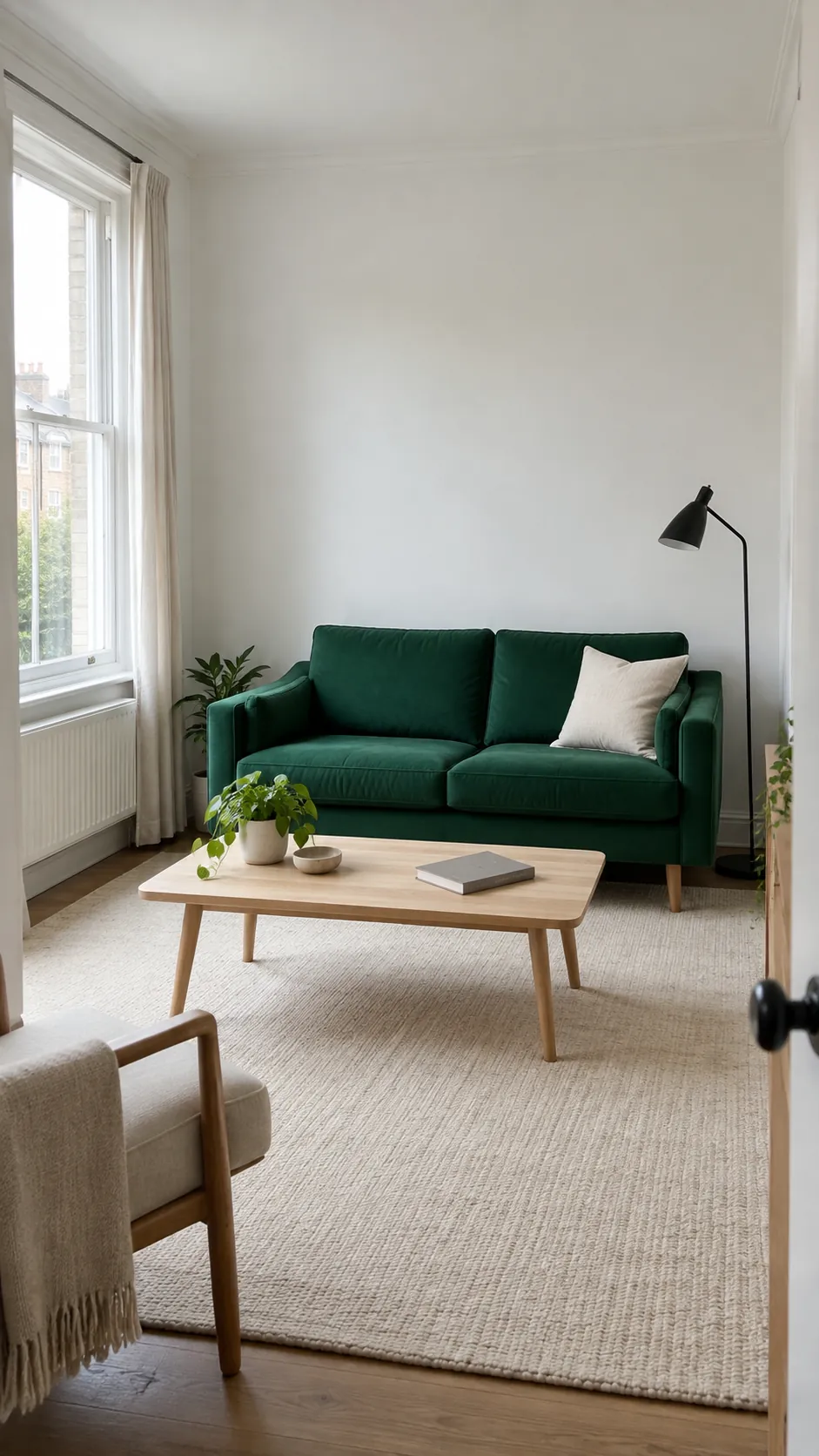
An emerald green color palette should begin with the floor, worktops and furniture you are keeping. Cream can soften the green, while a clean pale grey can produce a cooler effect. If a grey sample looks lilac beside the upholstery, or cream turns yellow under your lamps, that particular neutral is not doing the job.
Natural wood adds another useful dimension. Emerald green with natural wood can feel relaxed when oak or walnut is allowed to remain a broad visible surface instead of disappearing beneath decorative objects. Compare the green with the actual finish: pale oak and reddish timber will not create the same result.
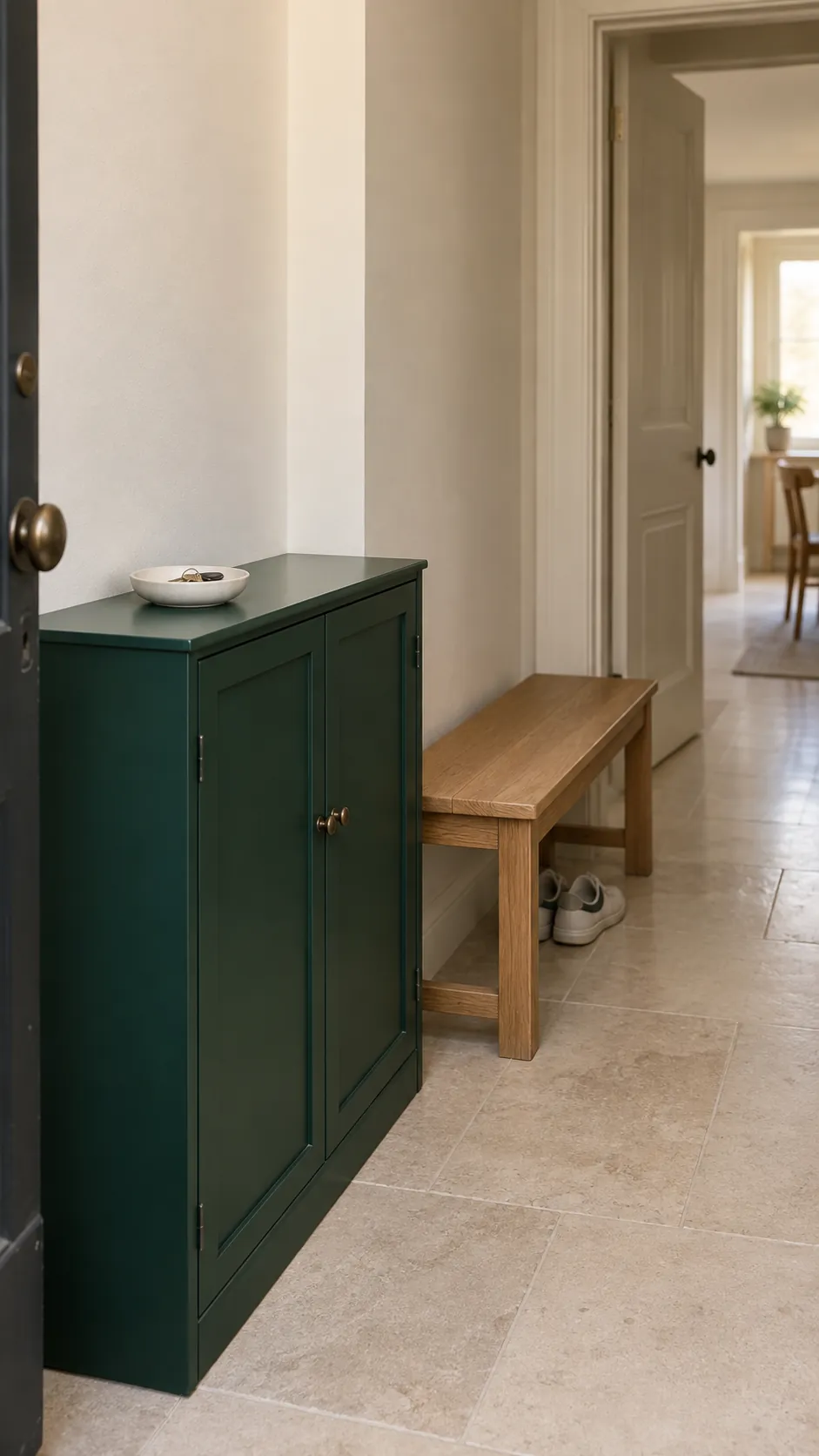
Pick a small set of supporting materials before choosing more colour. For example, ivory walls, oak and a quiet woven rug provide enough variety around a green cabinet without requiring a second jewel tone.
Check velvet from both sides of the room
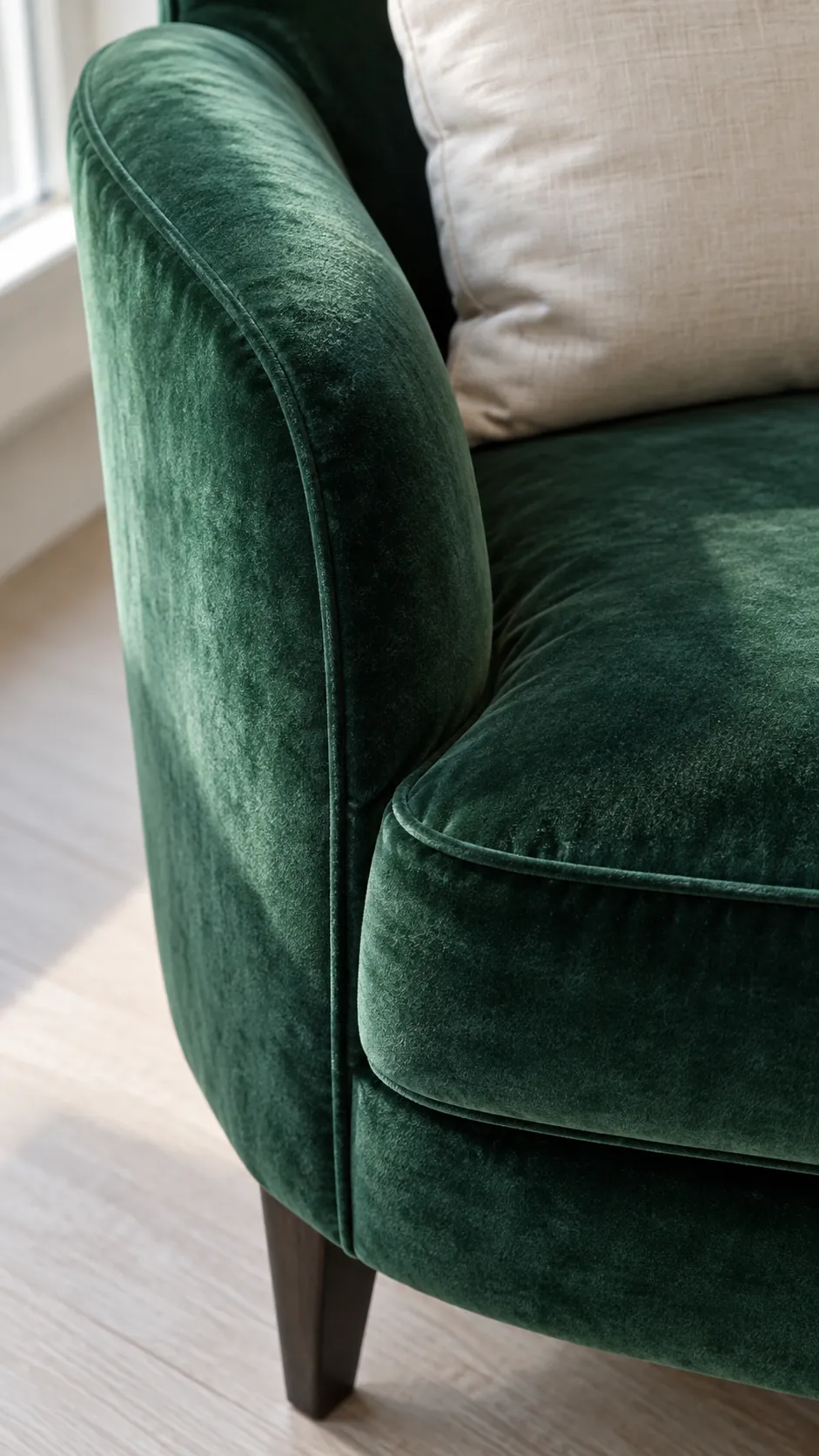
Emerald green velvet furniture can look bright where the pile catches light and almost black where it turns away. Ask for a fabric sample large enough to rotate and stroke in different directions. View it in the seat’s intended position rather than deciding only beside a bright shop window.
Touch and maintenance matter as much as colour. Check the maker’s care instructions, whether covers can be removed and how the fabric handles the wear expected in your home. A beautifully lit product photograph will not tell you whether the chosen upholstery suits pets, children or a sunny window.
Let curtains carry colour when paint is not an option
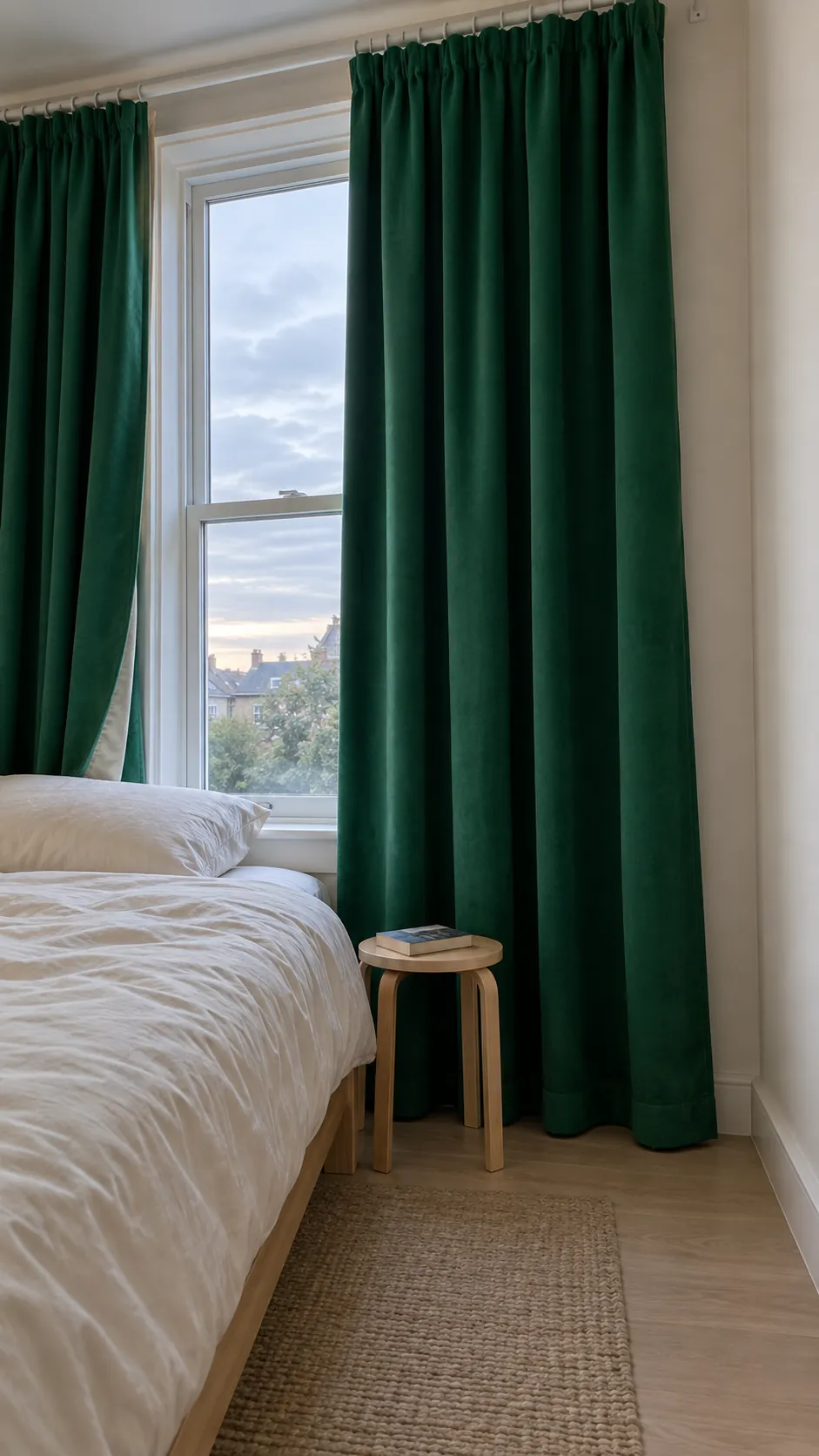
Emerald green curtains give a rental a strong colour statement while leaving the walls alone. Their effect changes when they close: two narrow side panels can become most of a wall at night. Look at the room in both positions before adding more green furniture.
Lining and fabric weight affect privacy, light and how luminous the colour appears. Measure around the existing rail and follow the curtain supplier’s fullness guidance rather than buying only enough cloth to match the window width. Check that the finished panels clear heaters and suit any nearby opening doors.
When the curtain is the main feature, a plain bedspread or pale sofa allows its folds to remain visible. In emerald green bedroom decor, a small matching cushion is optional, not a requirement to repeat the exact fabric everywhere.
Use gold as a detail rather than another large surface
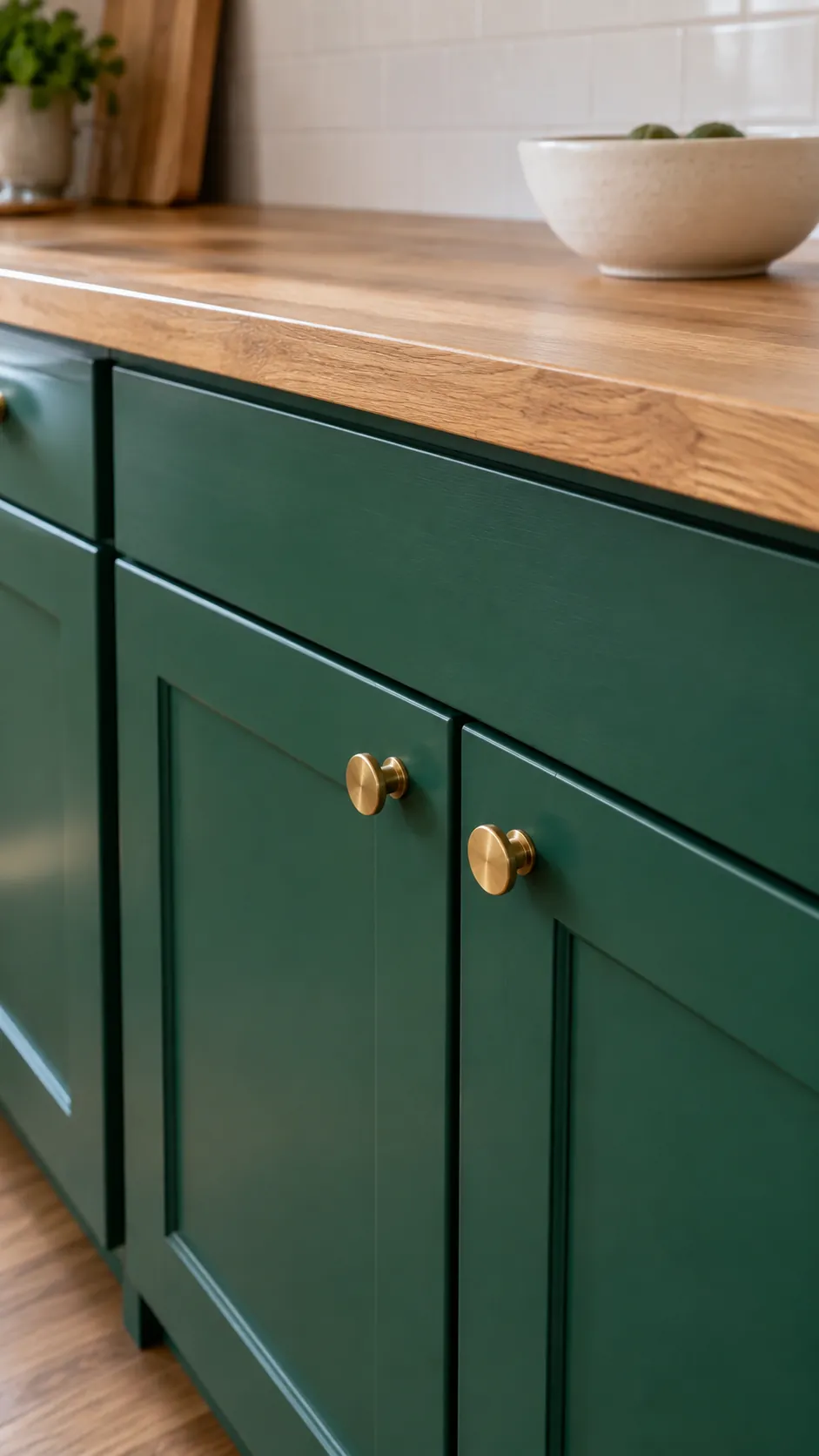
An emerald green and gold interior can become busy when every table, frame and lamp reflects light. Start with one useful metal detail, such as a reading lamp or cabinet handle. Brushed or aged brass usually creates a softer highlight than a large polished gold surface.
Keep the surrounding finishes quieter so the green still has a clear role. A timber table and plain ceramic bowl can balance a bright metal lamp without making the room feel like a matching set. If you prefer a cooler look, test chrome or pewter with the same green instead of assuming gold is compulsory.
Plan the edges before painting an accent wall
An emerald green accent wall needs a sensible stopping point. A corner, alcove or the wall behind a bed gives the colour a clear boundary. In an open stairwell, follow the wall with your eye before painting: the surface may continue much farther than the living room you intended to change.
Test a large movable sample in daylight and with your usual lamps, including the darkest time you commonly use the space. A room that is comfortable for evening reading need not look as bright as a midday photograph. What matters is whether you can still distinguish furniture edges, use the room easily and enjoy the colour.
If the room feels overloaded after painting, remove a repeated green layer before buying an entirely new palette. Swapping green curtains for a quieter fabric or moving a small accessory can restore contrast. Make the next change in response to the real room, not the urge to match one more item.