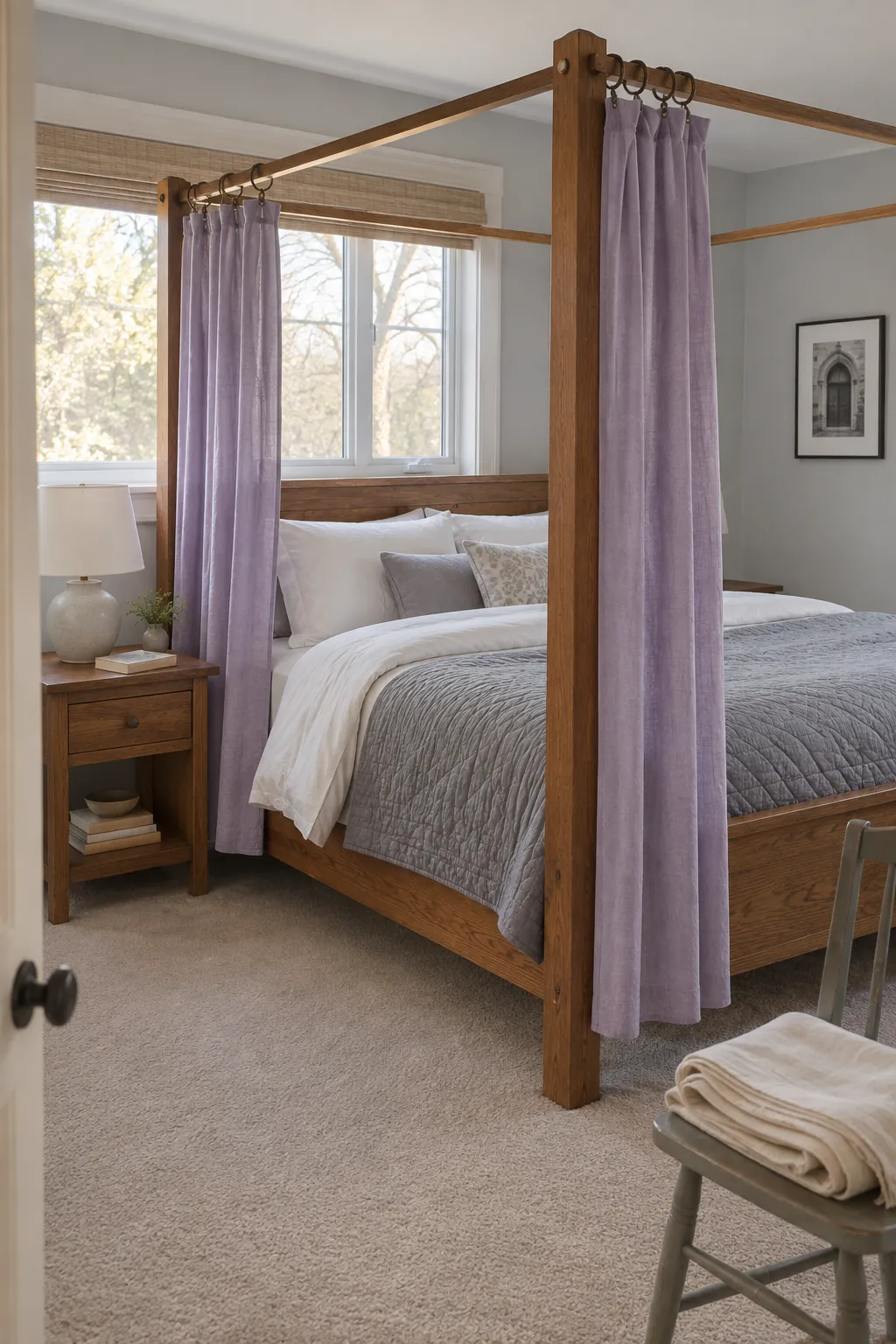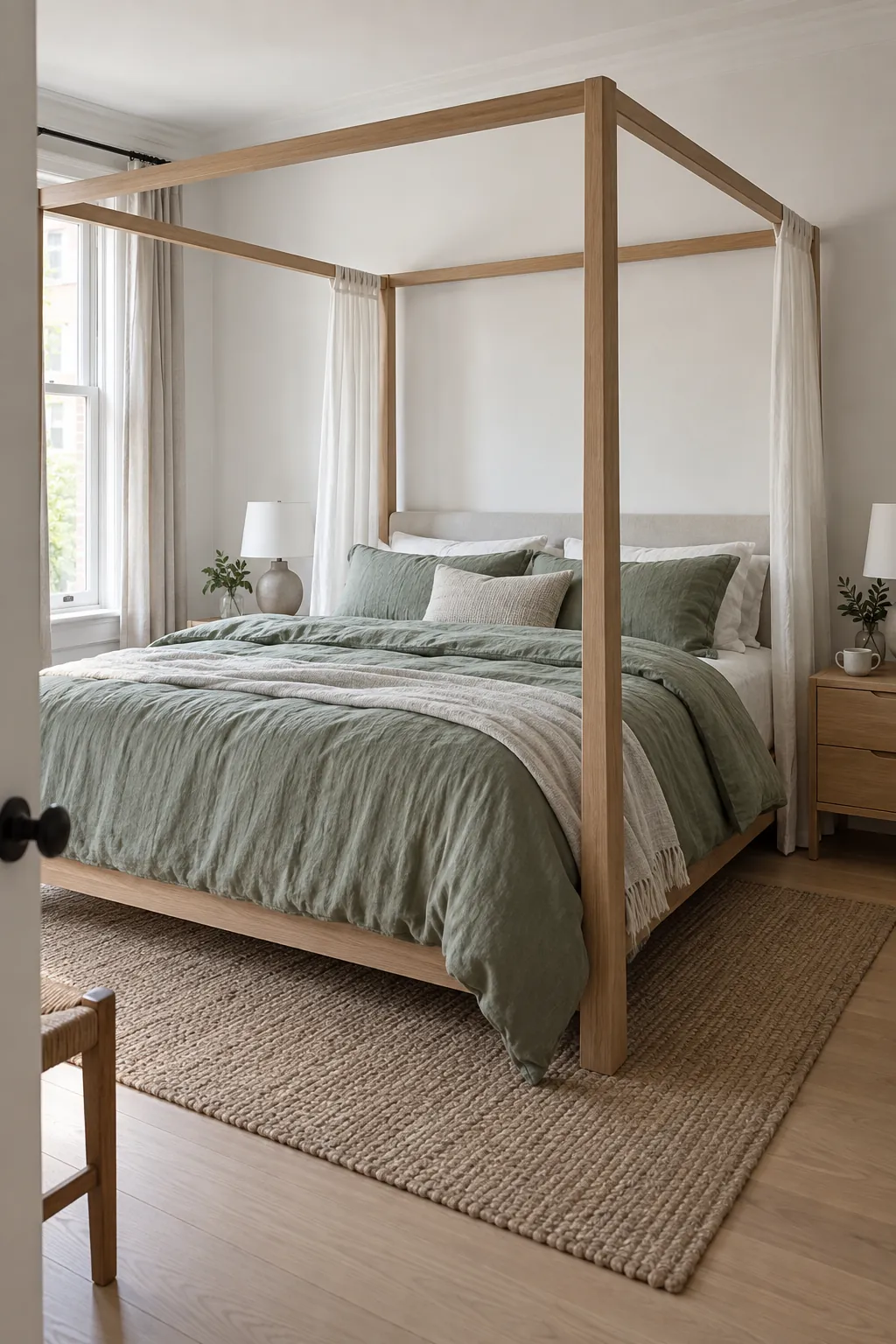
A canopy can make a bedroom feel intimate, but too much fabric or a bulky frame can swallow the space you need every day. Choose the part of the look you actually want: a strong outline, a soft backdrop, or a little privacy. Then adapt it to your ceiling, light, and walking route.
Bare oak rails with relaxed linen
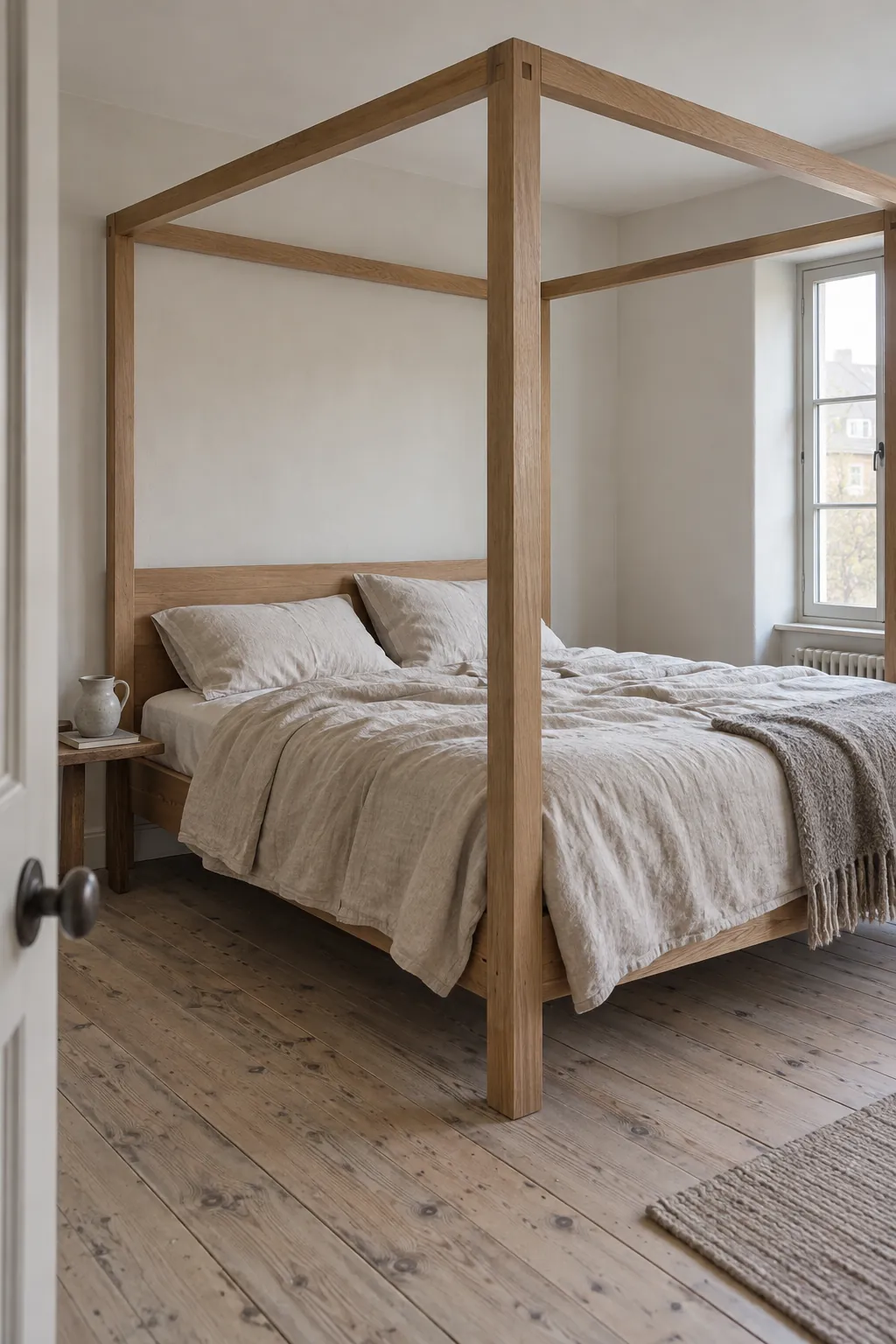
Let the canopy bed frame supply the shape while the bedding supplies the softness. Pale oak and slightly rumpled linen make a quiet pairing when you want height without a fabric enclosure. Keep the upper rails bare so the grain and joinery remain visible.
A sheer curtain at each head corner
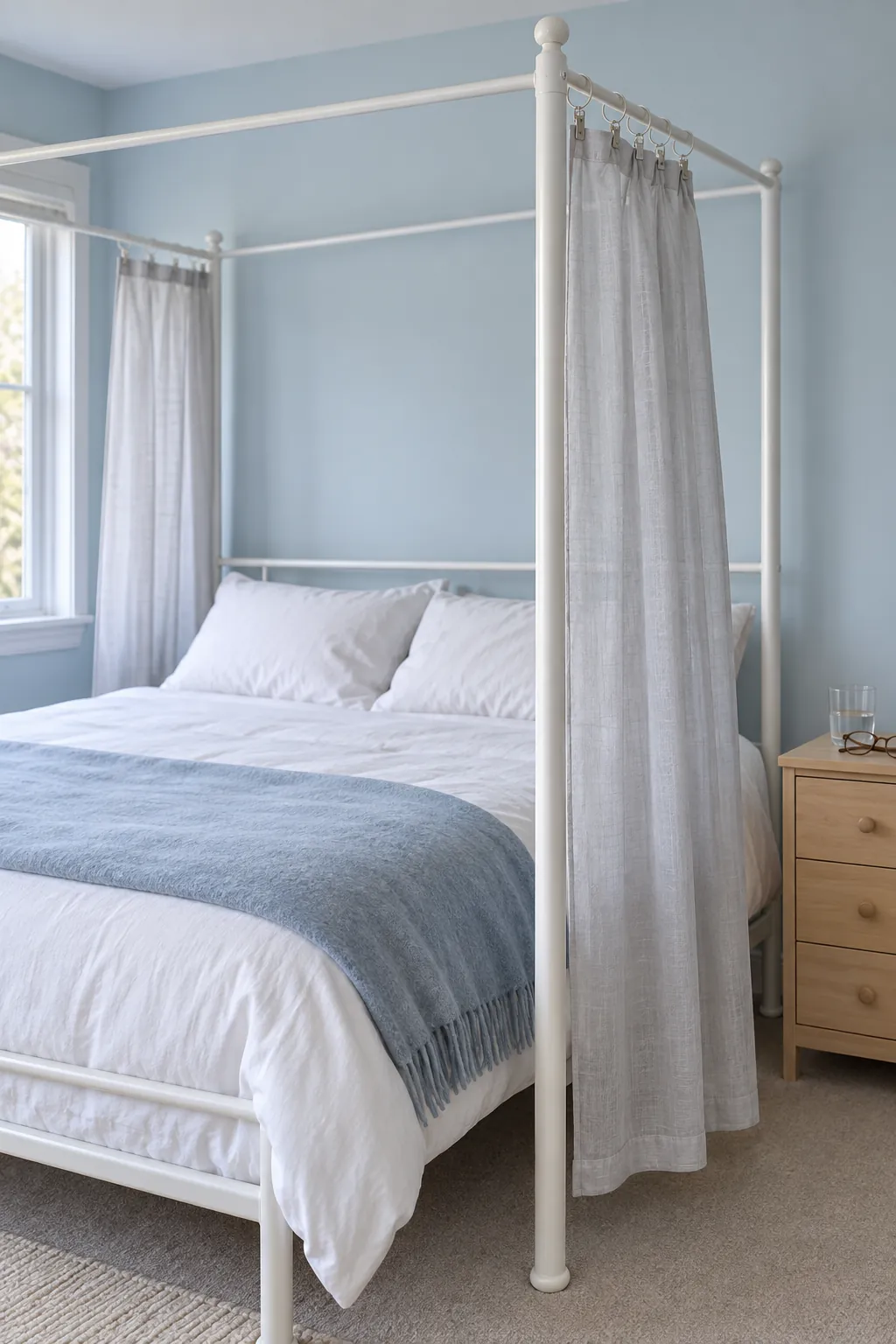
Two narrow panels can soften the head of the bed without surrounding the sleeper. Choose a washable sheer that gathers neatly and stays clear of the floor. Use attachments designed for your frame rather than balancing a loose rod across the rails. Leaving the foot open makes this version easier to approach in a compact bedroom.
A crown canopy above an existing headboard
A wall mounted crown gives an ordinary bed a canopy effect without replacing the whole frame. Its fabric falls from a small central support above the pillows, creating a more traditional outline. A restrained cotton fabric keeps the result from feeling overly ceremonial.
Mount the support according to its instructions and the wall construction. A decorative adhesive hook is not a substitute for a fixing rated for the load. Measure the drop with the pillows in place so the fabric does not bunch where you sit.
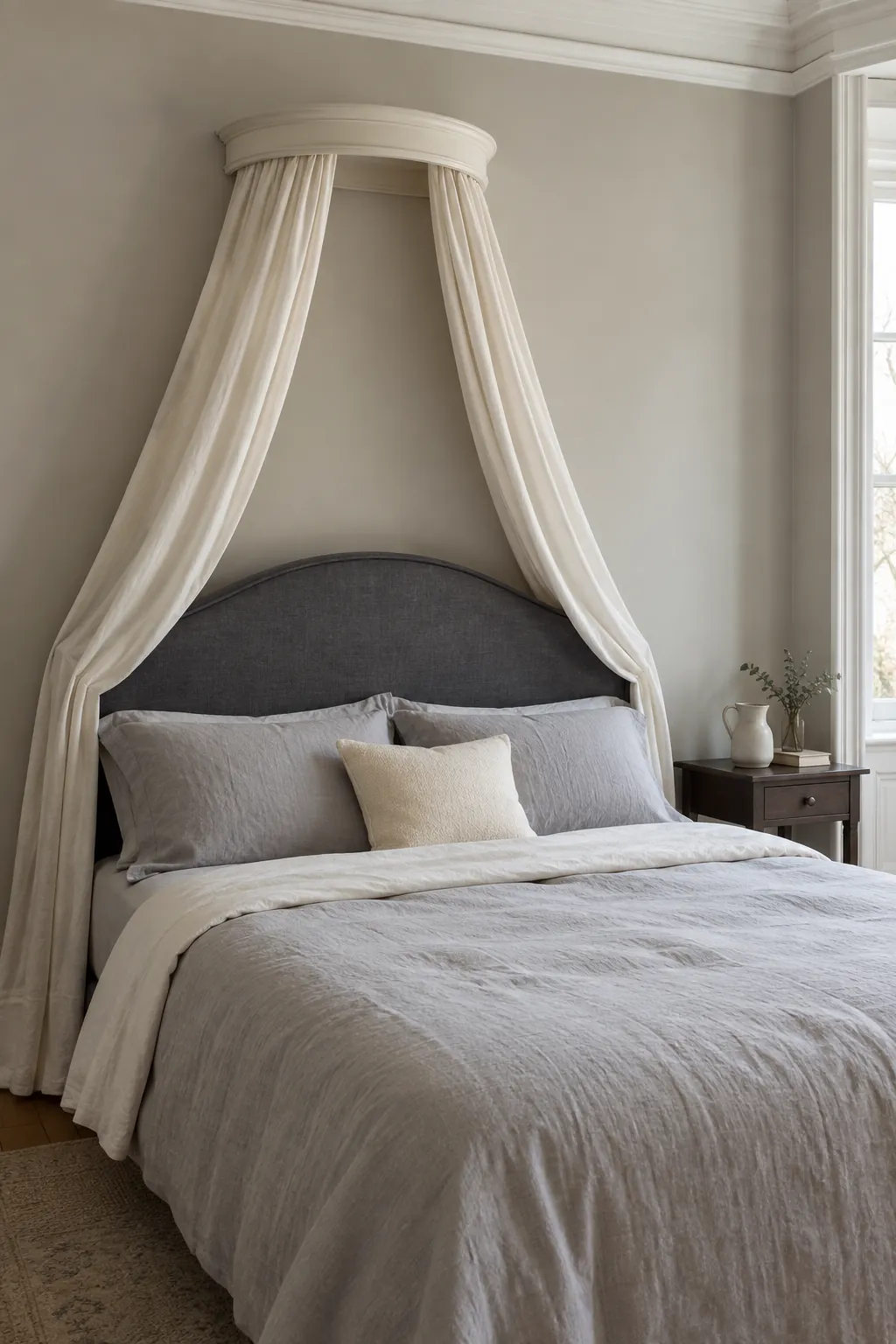
A ceiling track that follows the mattress
A slim ceiling track can create a canopy over a bed that has no posts. It suits rooms where the fabric itself should be the main feature. Check the ceiling material, suitable anchors, and any rental restrictions before installation. Keep a clear entry opening and choose panels that can be removed for washing. Window blackout curtains can handle darkness while lighter canopy panels provide the look.
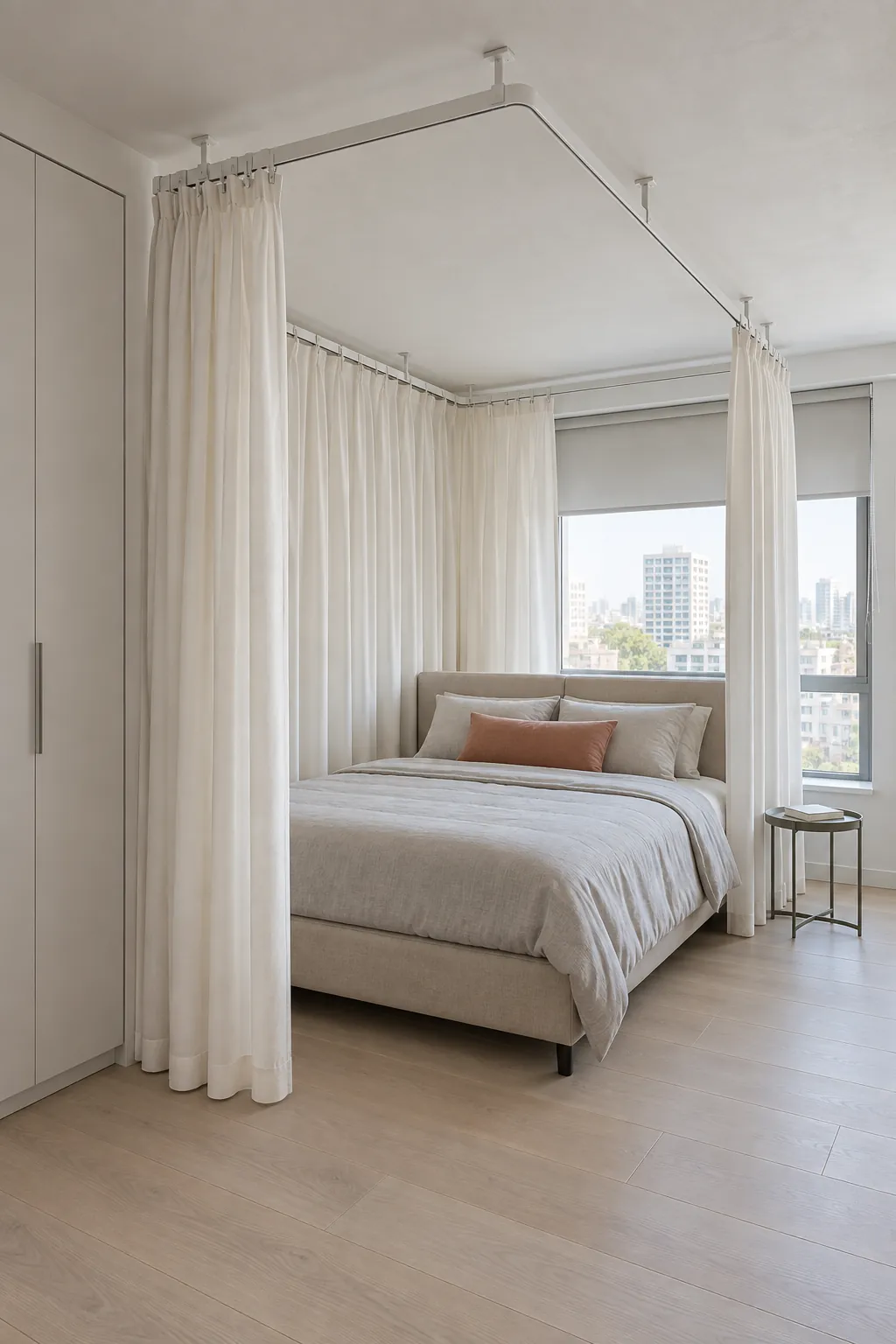
A pink bedroom with a simple white frame
For a pink bedroom that still feels restful, pair a white canopy with one muted rose surface. That surface might be the duvet rather than every wall. Plain bedding gives the frame a clean outline.
Bring in a small amount of another material, such as pale timber, to prevent a flat painted effect. Test pink fabric in your evening light because warm bulbs can shift its appearance. Save strong patterns for something easy to change, such as one cushion. A pale ceiling helps the white upper rails remain unobtrusive.
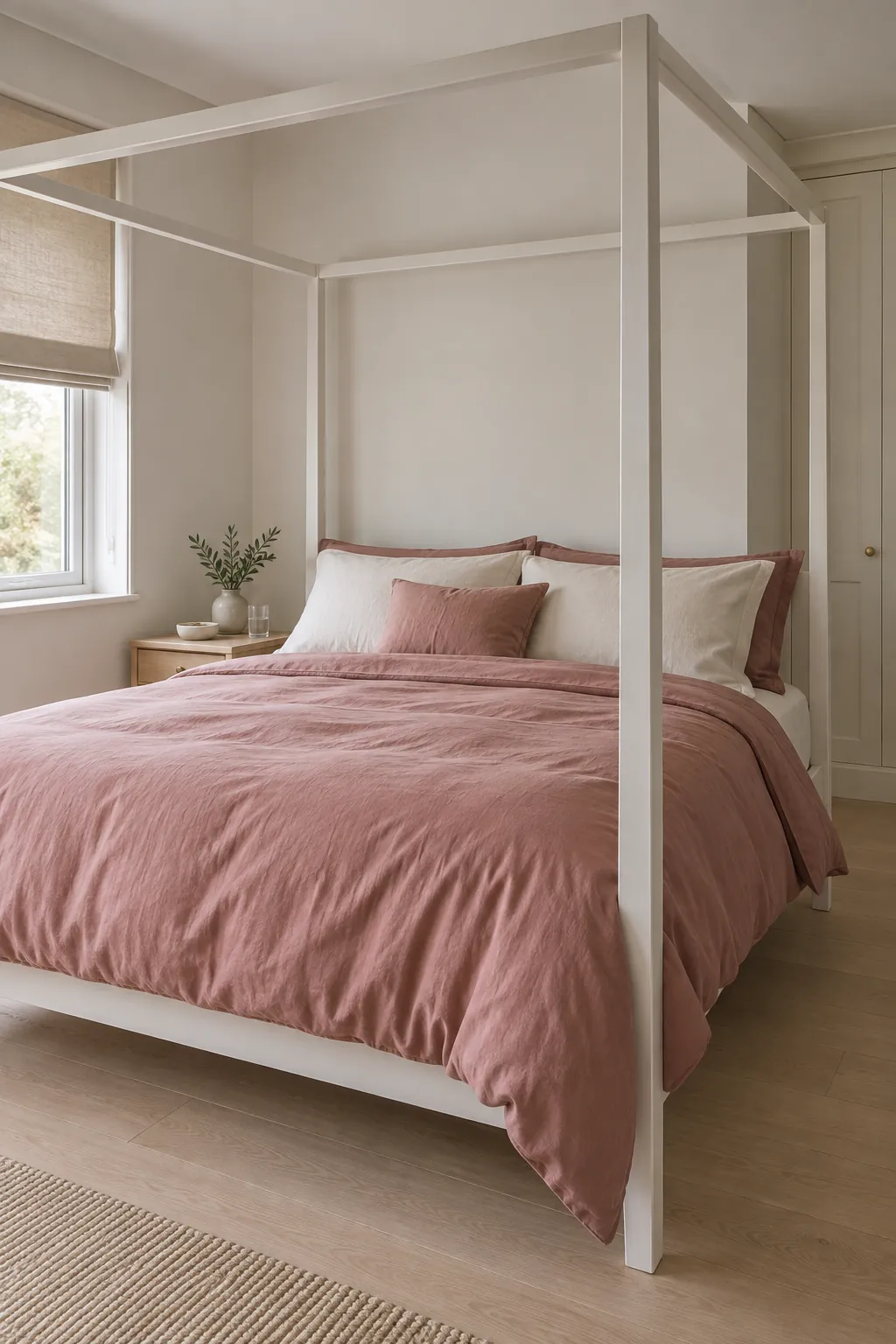
A black frame against pale plaster
A black canopy bed reads as a drawing in space when the background is quiet. Use pale plaster or a simple painted wall so the thin rails remain easy to see. Skip extra dark furniture at the foot if it interrupts the room’s open view.
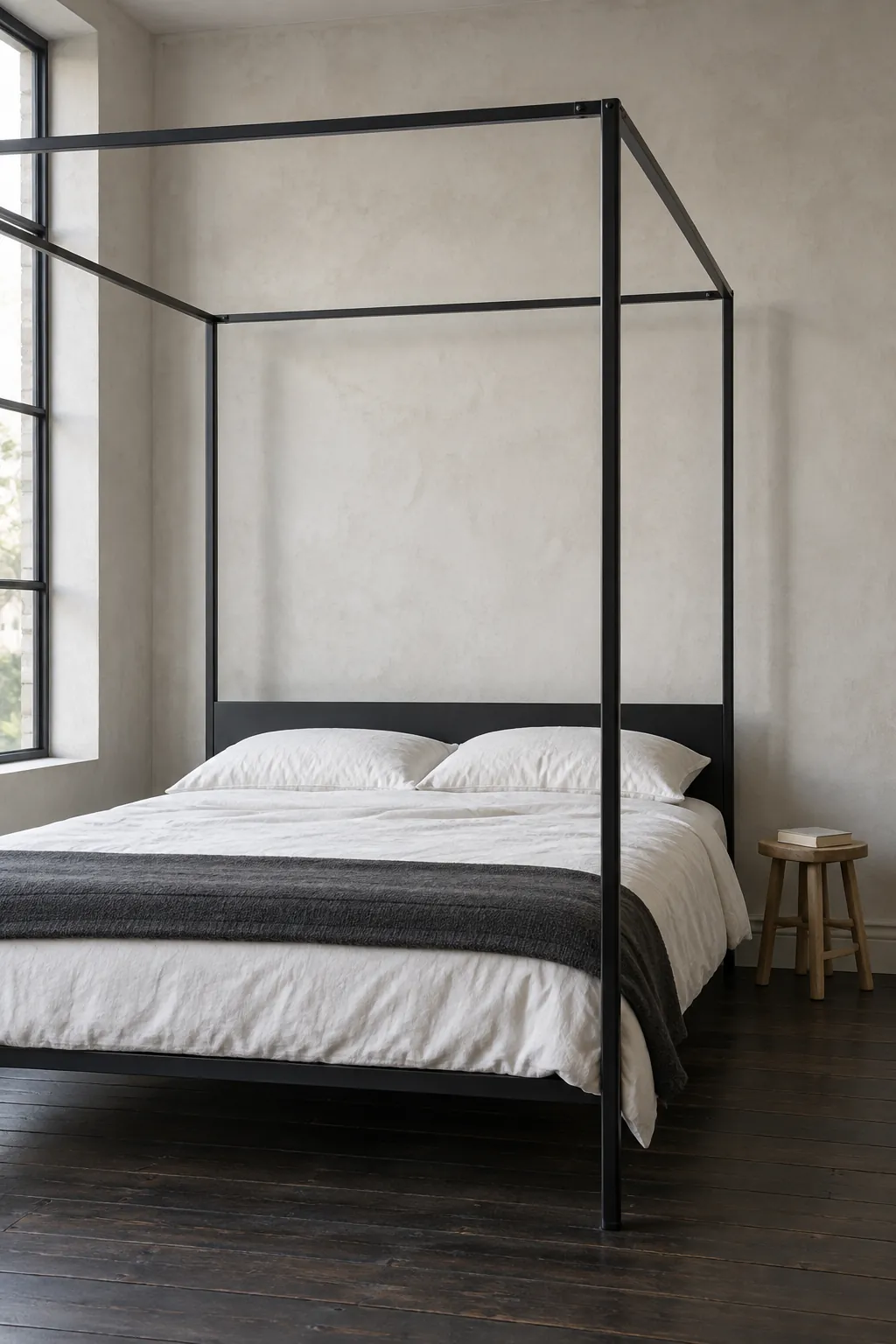
A half canopy beneath an attic slope
Attic bedroom ideas need to begin with the roofline. A canopy that rises only above the head end may fit where a full top rectangle would meet the slope. Check the manufacturer’s actual dimensions because half canopy designs vary. Keep the tallest structure within the higher part of the room and test sitting clearance before choosing the mattress position.
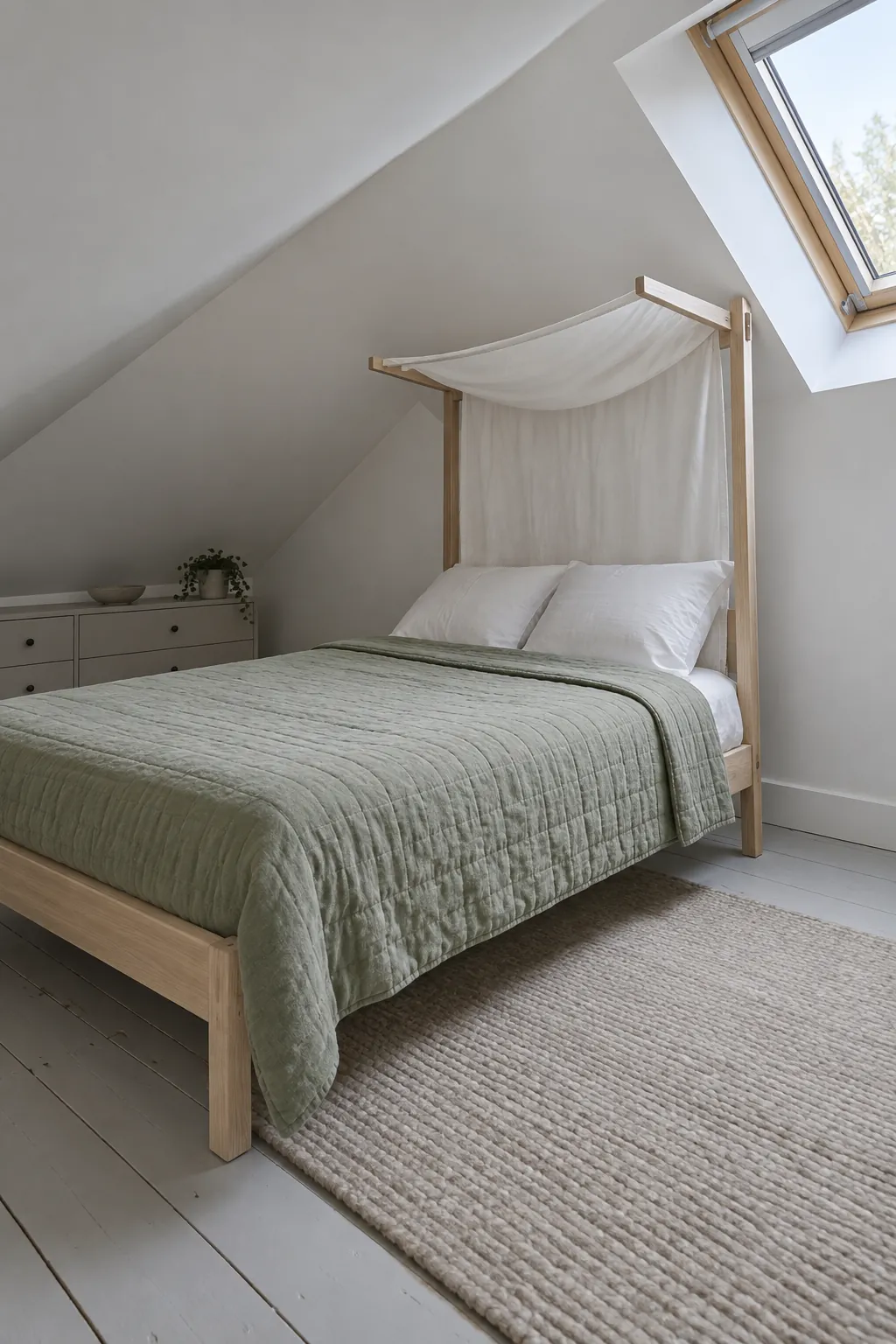
A single draped panel above the pillows
A shallow fabric drape across the head end introduces softness without enclosing the sides. A light panel with a generous but controlled curve looks more intentional than a tightly stretched sheet. Keep the fabric high enough to stay clear when you sit up.
Use a frame specifically suitable for that attachment and fabric load. Avoid hanging cloth near ceiling fans, heaters, or hot light fittings. The rest of the bed can stay plain because the overhead fold already attracts attention.
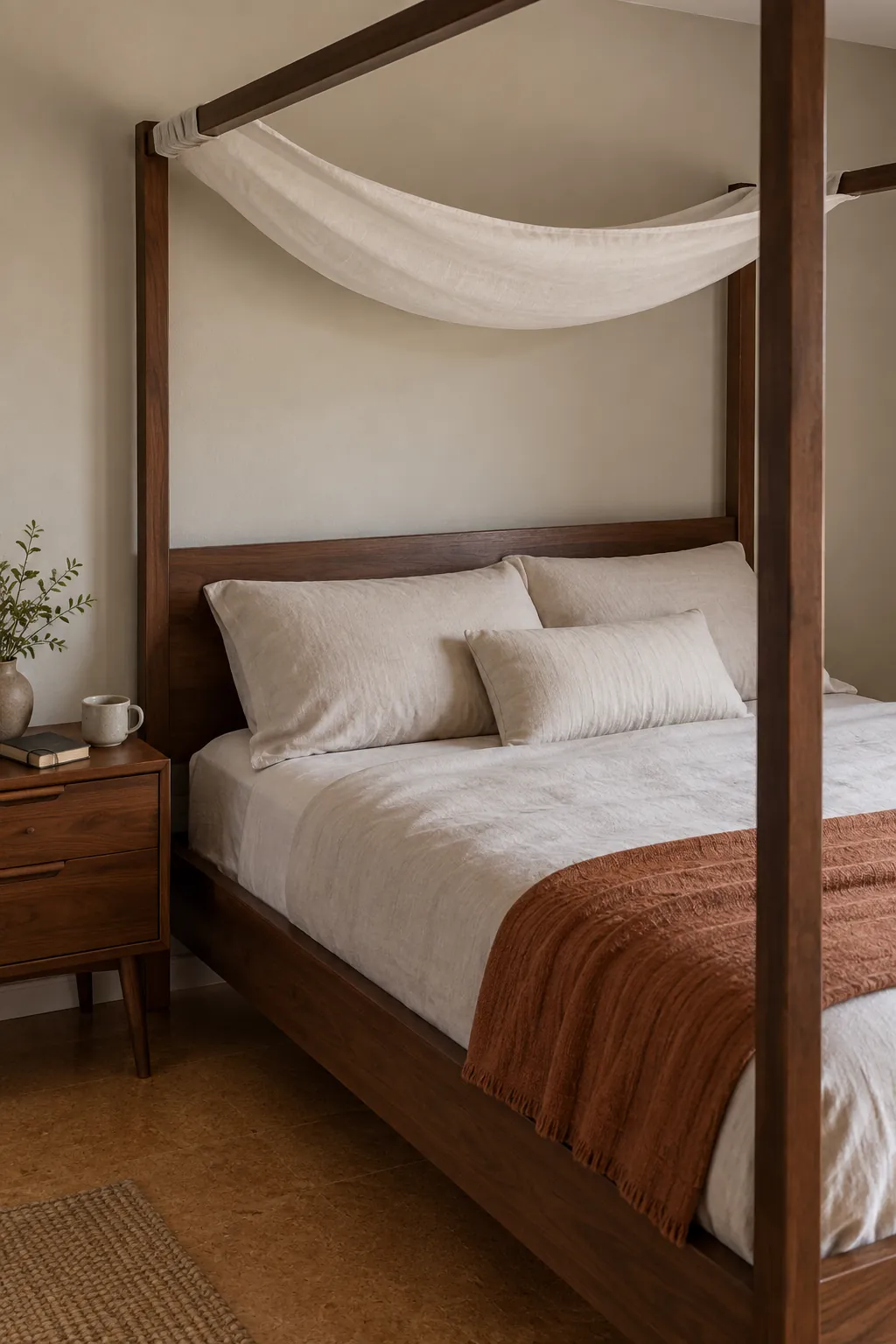
A linen backdrop for an uneven wall
A flat curtain behind the headboard can make an awkward wall feel calmer. Hang it from a suitable rear rail so the fabric creates one continuous surface behind the pillows. Let the bedposts remain exposed on either side. Choose a color close to the bedding if you want a quiet effect, or deeper linen for a stronger outline. Preserve access to outlets and ventilation rather than covering them indiscriminately.
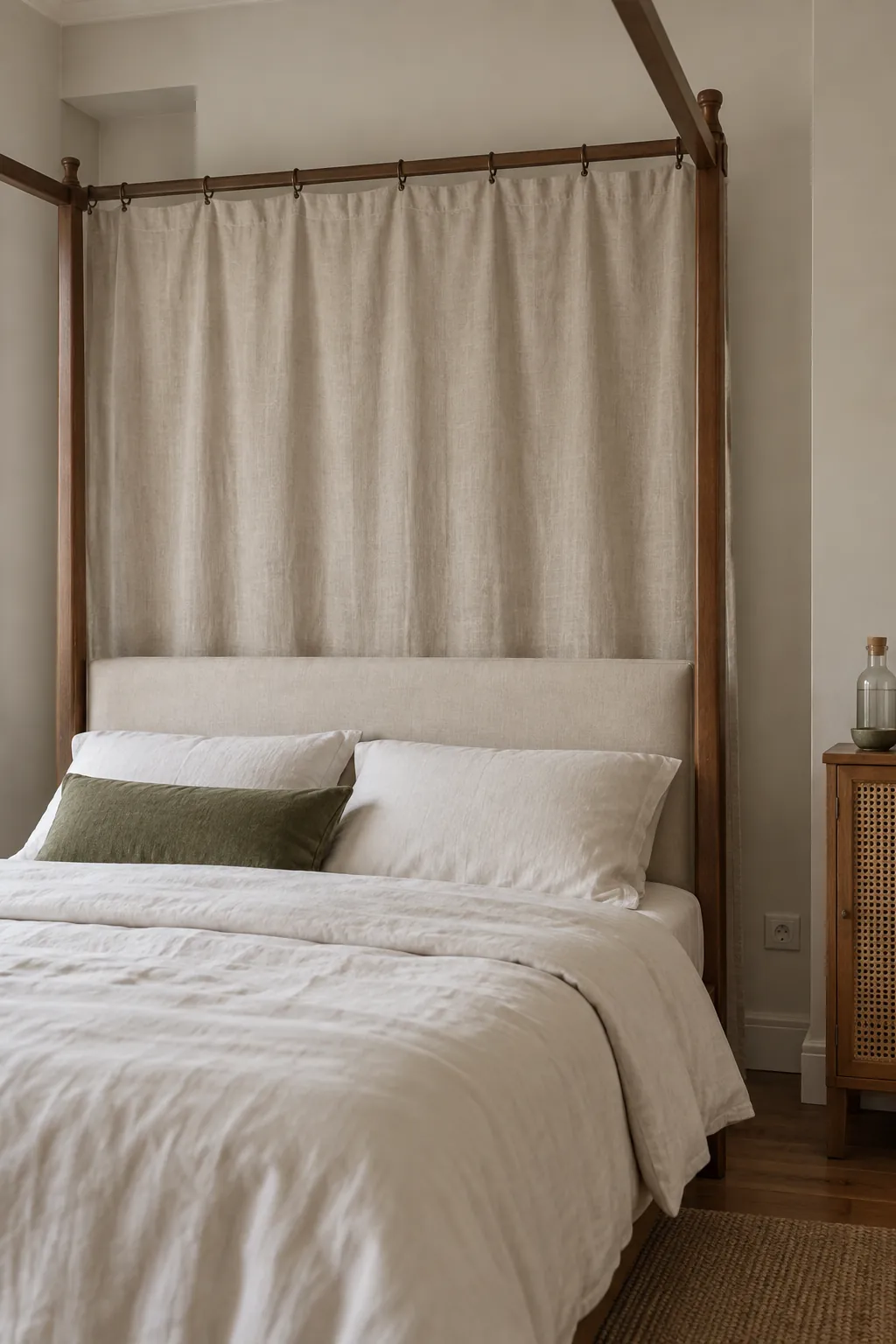
A rounded metal frame with vintage bedding
Curved iron details offer a softer alternative to a strict rectangular canopy. Pair them with a small floral quilt or an inherited coverlet rather than adding several competing patterns. A plain pillowcase gives the eye somewhere to rest.
Inspect a secondhand frame for missing hardware and ask whether assembly instructions are available. Confirm the support system suits your mattress before buying. Decorative age is one thing; loose joints are another. Keep any restoration work compatible with the original construction.
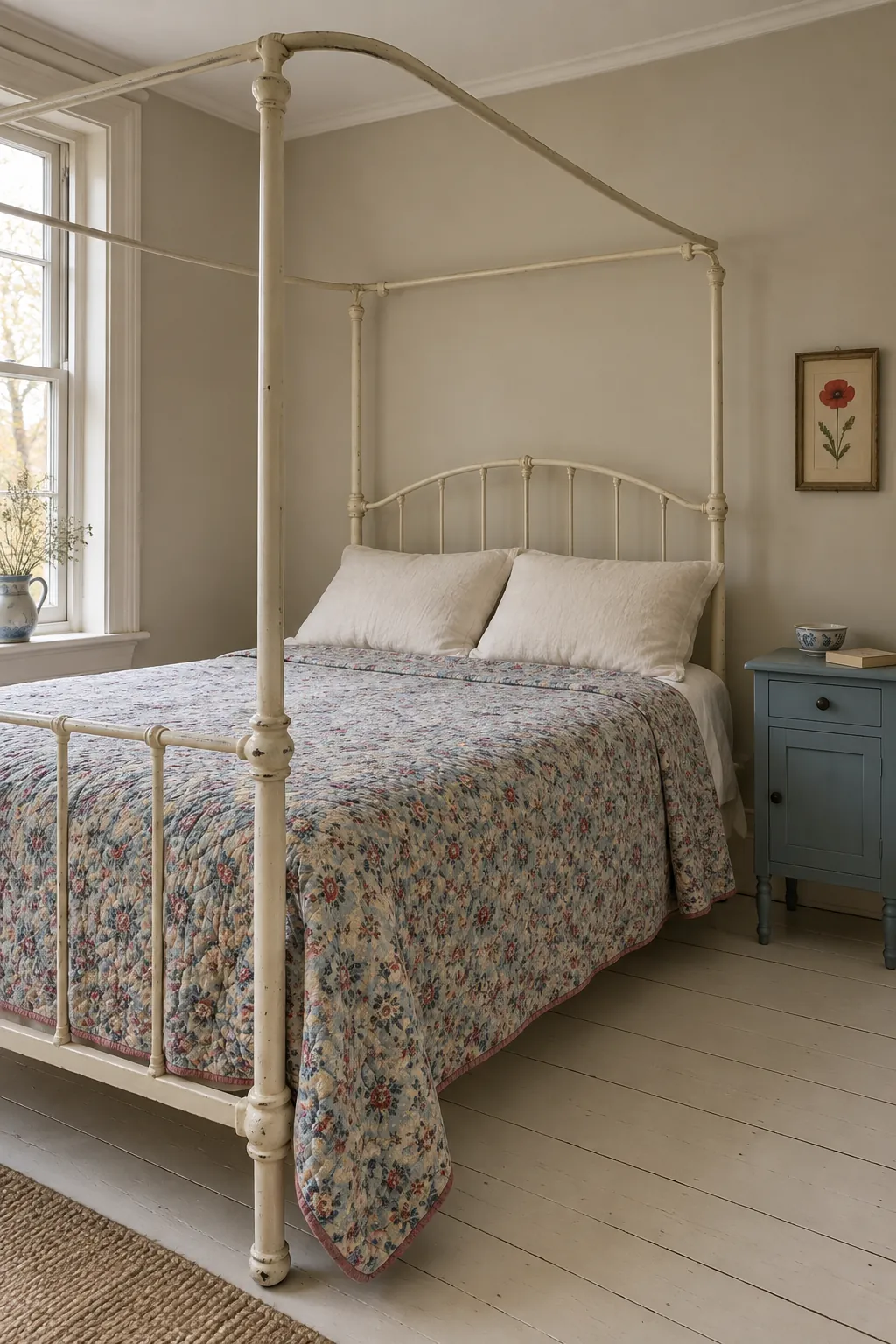
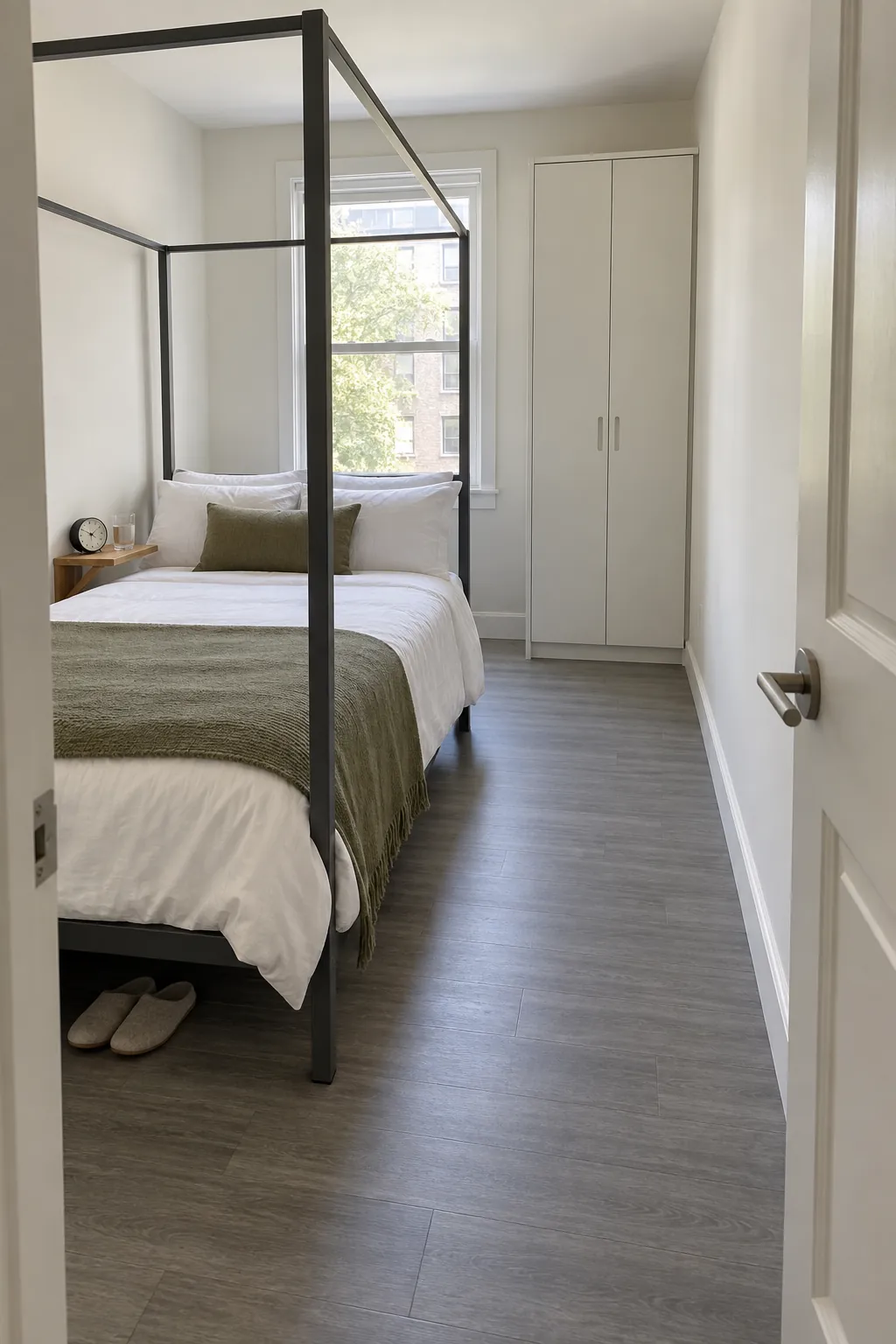
A narrow canopy in a room with one clear aisle
A canopy bed in a small room benefits from a deliberate route to the door. Use a modest mattress size and slim posts before sacrificing the only comfortable walking space. A narrow bedside shelf can replace a bulky cabinet where the wall construction and installation permit it.
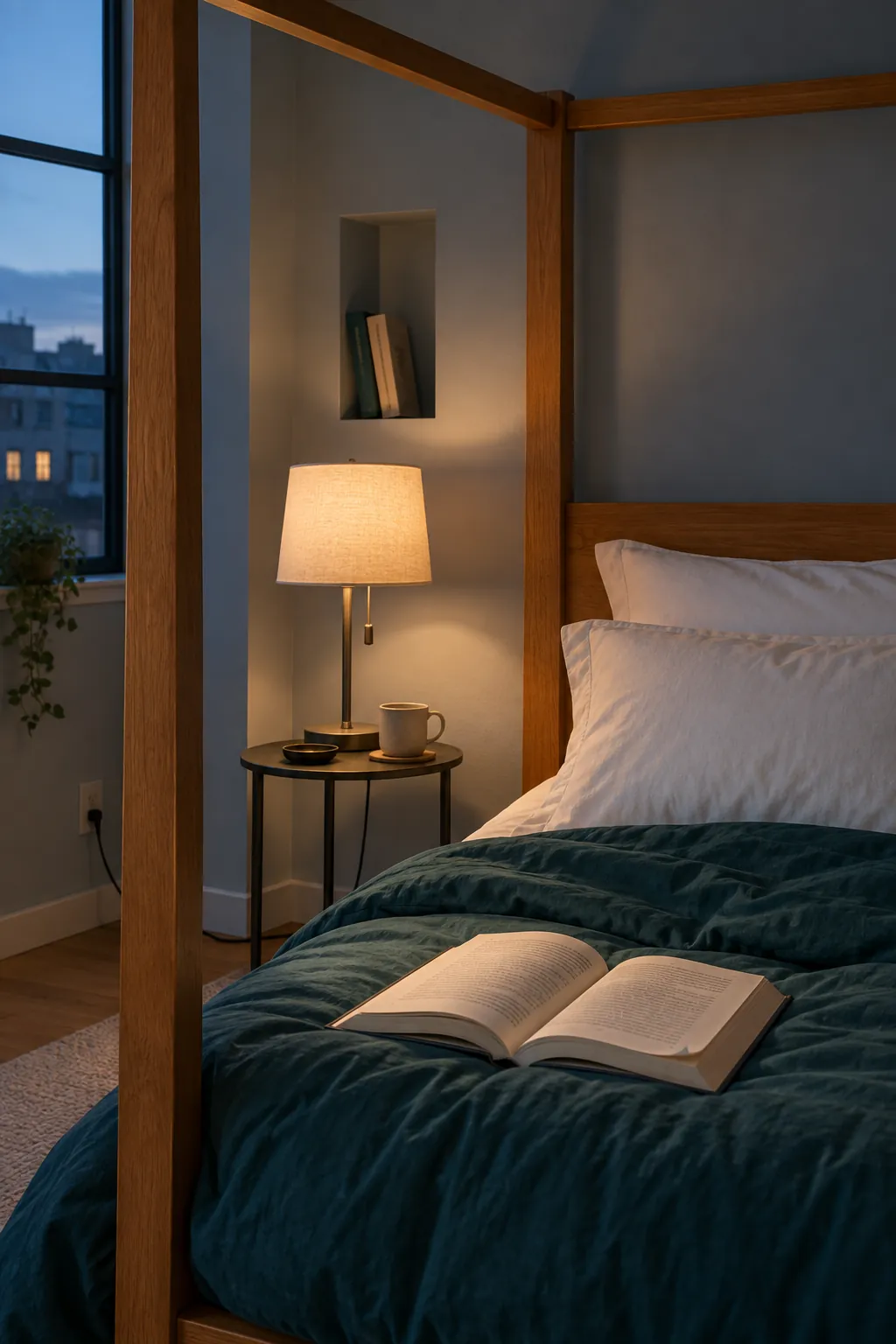
A bedside reading pocket inside the frame
Make cozy bedroom ideas work after dark by planning a place to read. A light placed outside the curtain’s path keeps the fabric separate from the fitting. Position its switch where you can reach it from the pillow. A small shelf for your current book is more useful than a crowded stack of decorative objects.
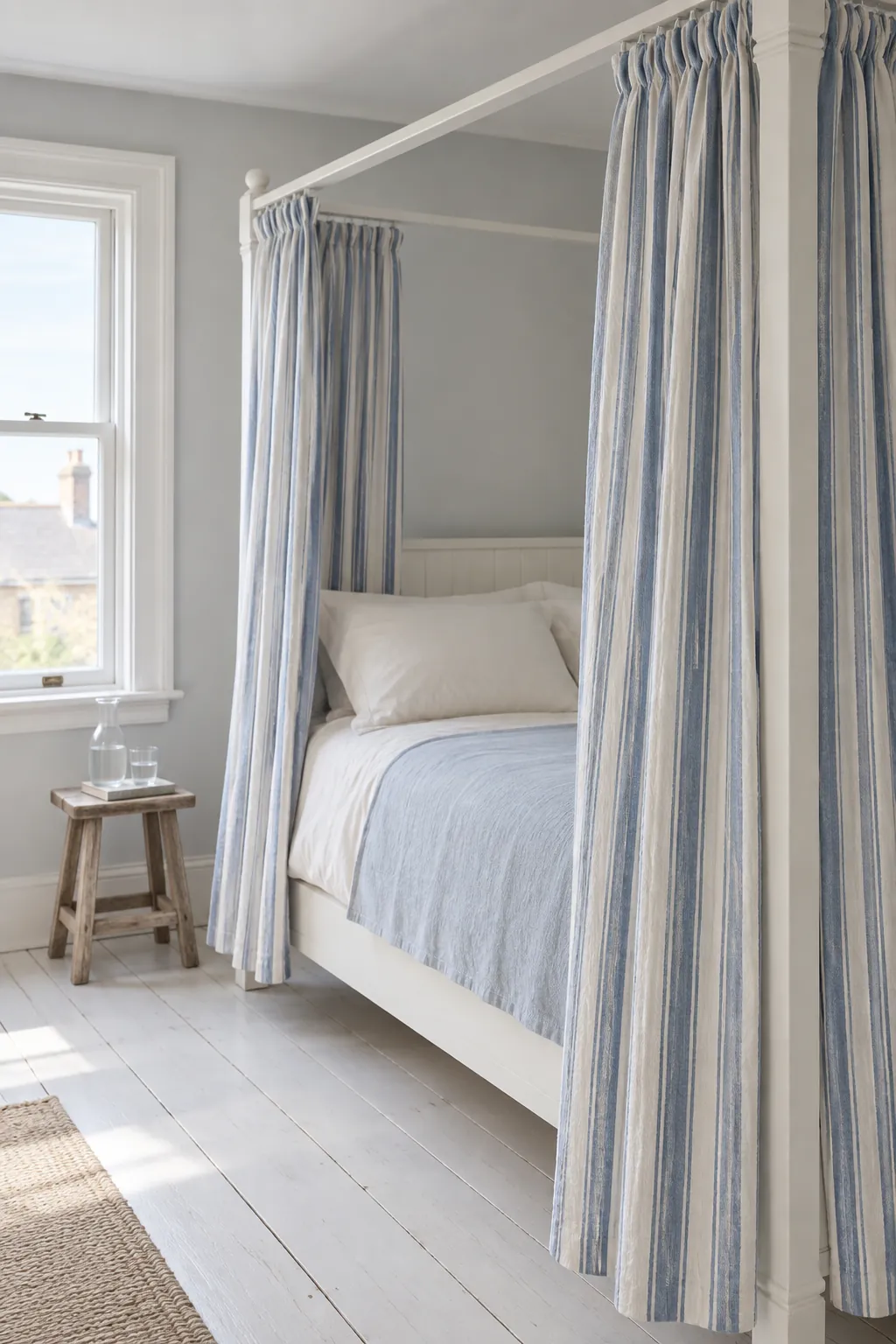
Soft blue stripes in a coastal room
Blue striped fabric can suggest a coastal mood without shells or themed ornaments. Keep the stripe on the canopy panels and choose plain bedding below. Narrow stripes feel quieter from a distance than broad alternating bands.
Check the panel pattern at the gathers before ordering several lengths. Heavy gathering can hide the stripe and create a busier edge than expected. A simple rail and pale floor keep attention on the textile.
A tall upholstered headboard inside open rails
An upholstered headboard gives a bare canopy a softer center. The upper frame can stay simple because the padded surface already supplies texture and comfort. Compare the headboard height with the canopy rails so the two forms do not crowd one another. Choose a fabric that suits how you actually sit in bed, especially if hair products or frequent reading will affect cleaning. A removable or easily maintained cover can matter more than an elaborate shape.

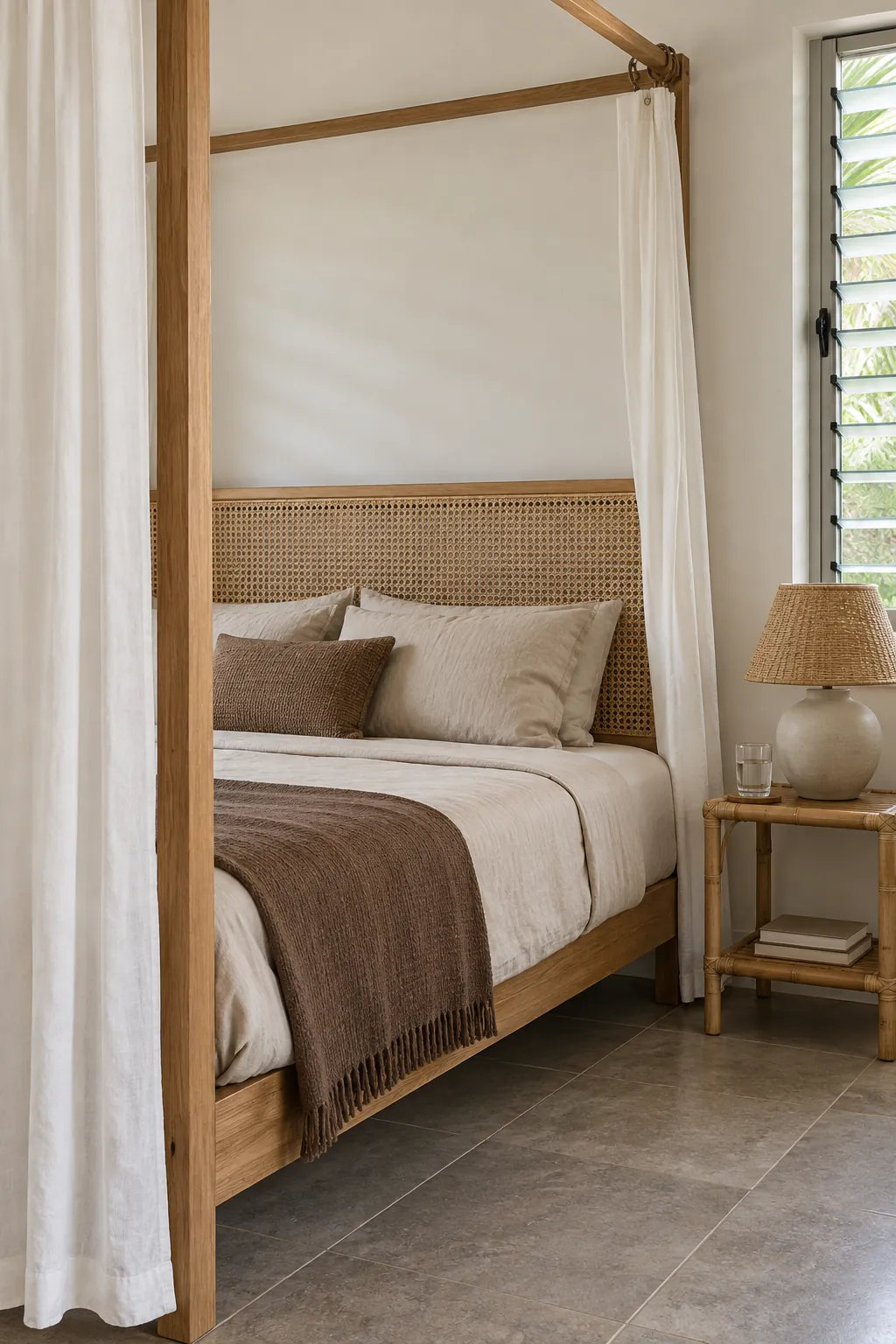
A woven headboard with plain cotton panels
Cane or woven detailing adds texture beneath a quiet fabric canopy. Keep the panel fabric plain so its folds do not compete with the woven pattern. A small ceramic bedside lamp completes the material contrast.
Check that the headboard is a structural part of the bed or securely fitted to it. Avoid treating a loose decorative screen as a headboard without a suitable installation. If the weave collects dust easily, allow enough space behind pillows to clean it. This combination works best when the room has only a few other textured objects.
A room divider that still admits daylight
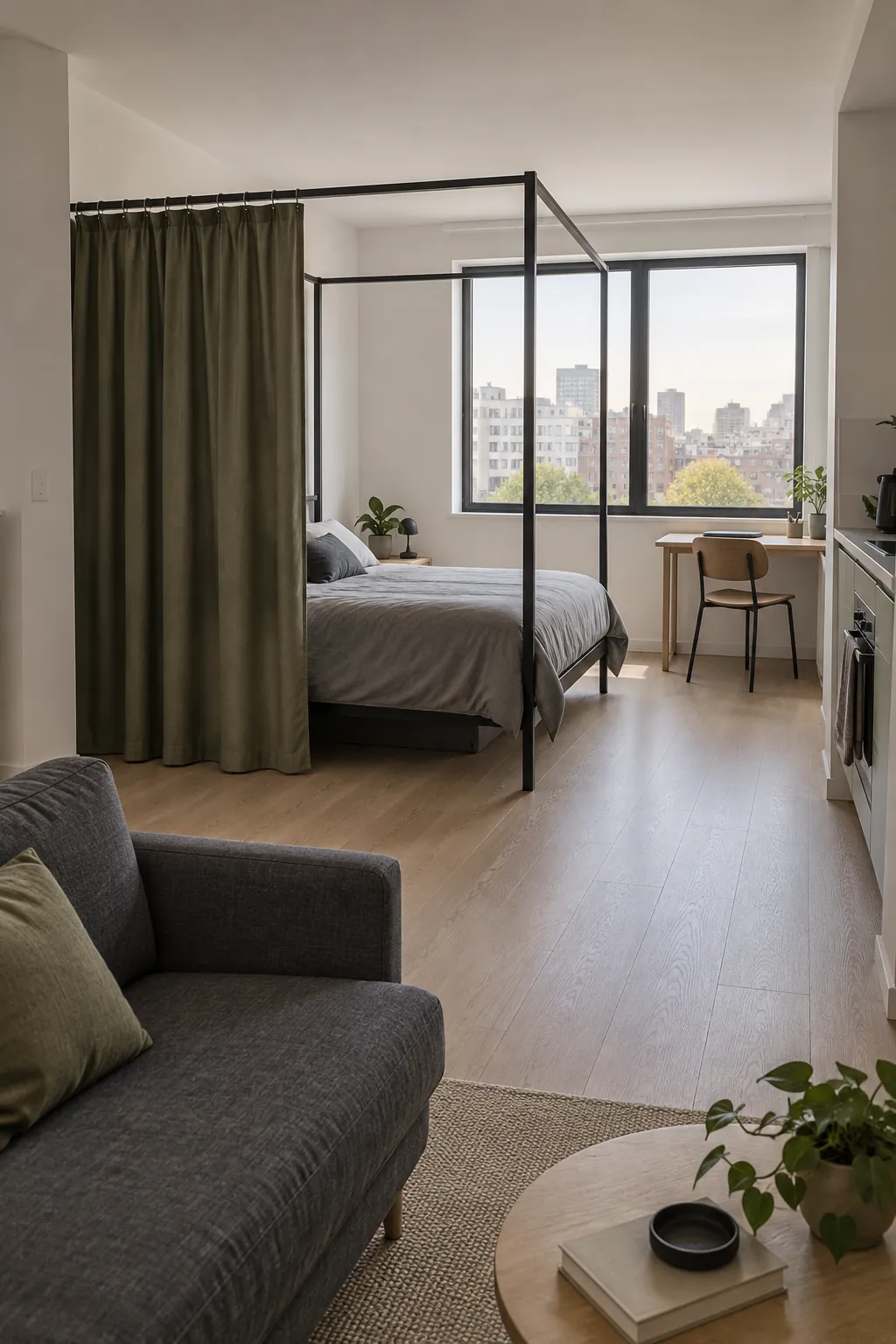
In a studio, an open canopy can suggest a sleeping zone without a solid partition. Orient the frame so its posts do not block the route between the entrance and the window. Use a single privacy panel only where it serves a real sightline, leaving the rest open to daylight.
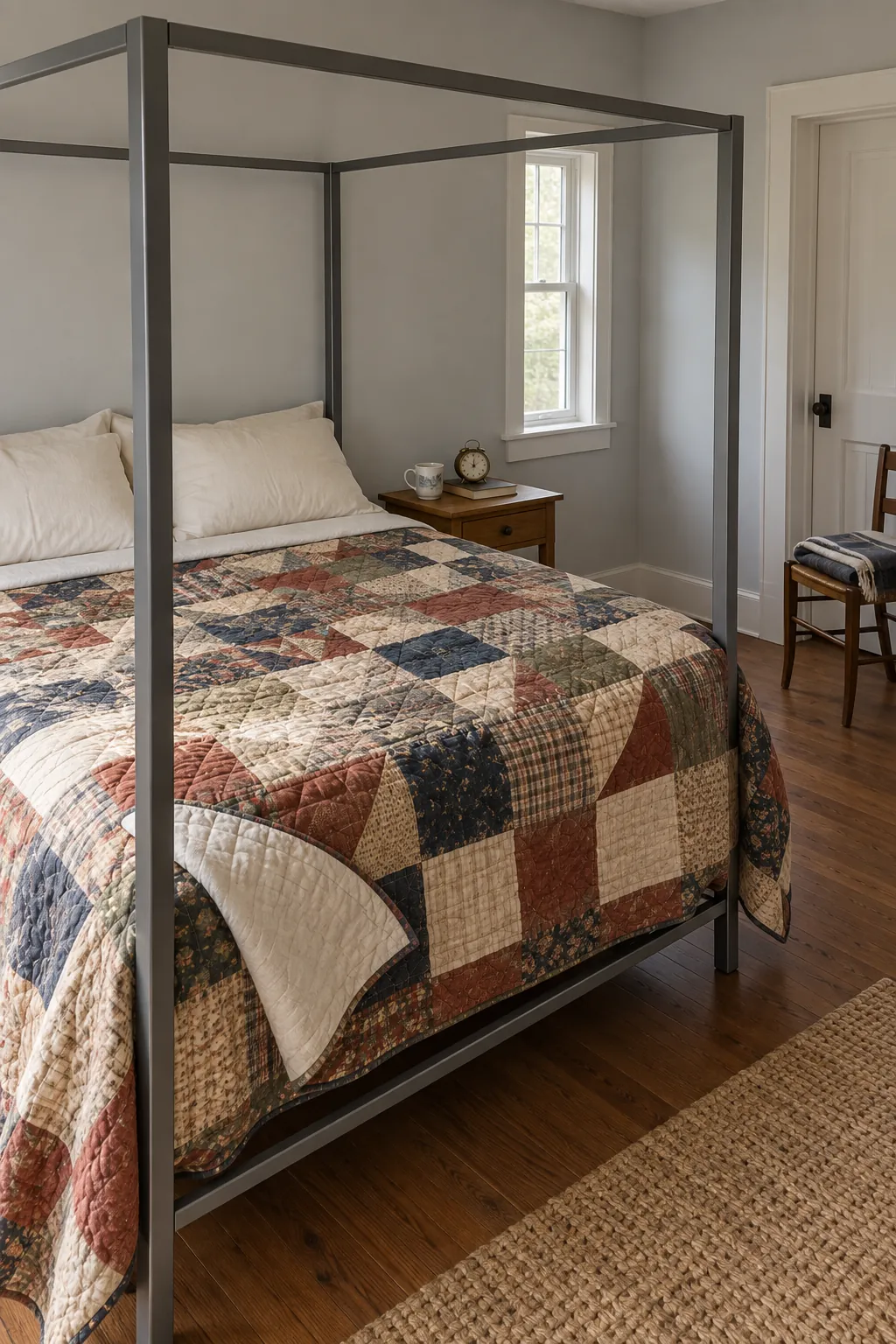
A warm quilt beneath a cool metal frame
A hand pieced quilt can keep a crisp metal canopy from feeling severe. Pull one quiet color from the quilt for the pillowcases, then leave the remaining textiles plain. Let the quilt sit low enough to show the bed’s lower structure. This is an easy canopy bedroom decor change when you like your existing frame but want a less formal mood.
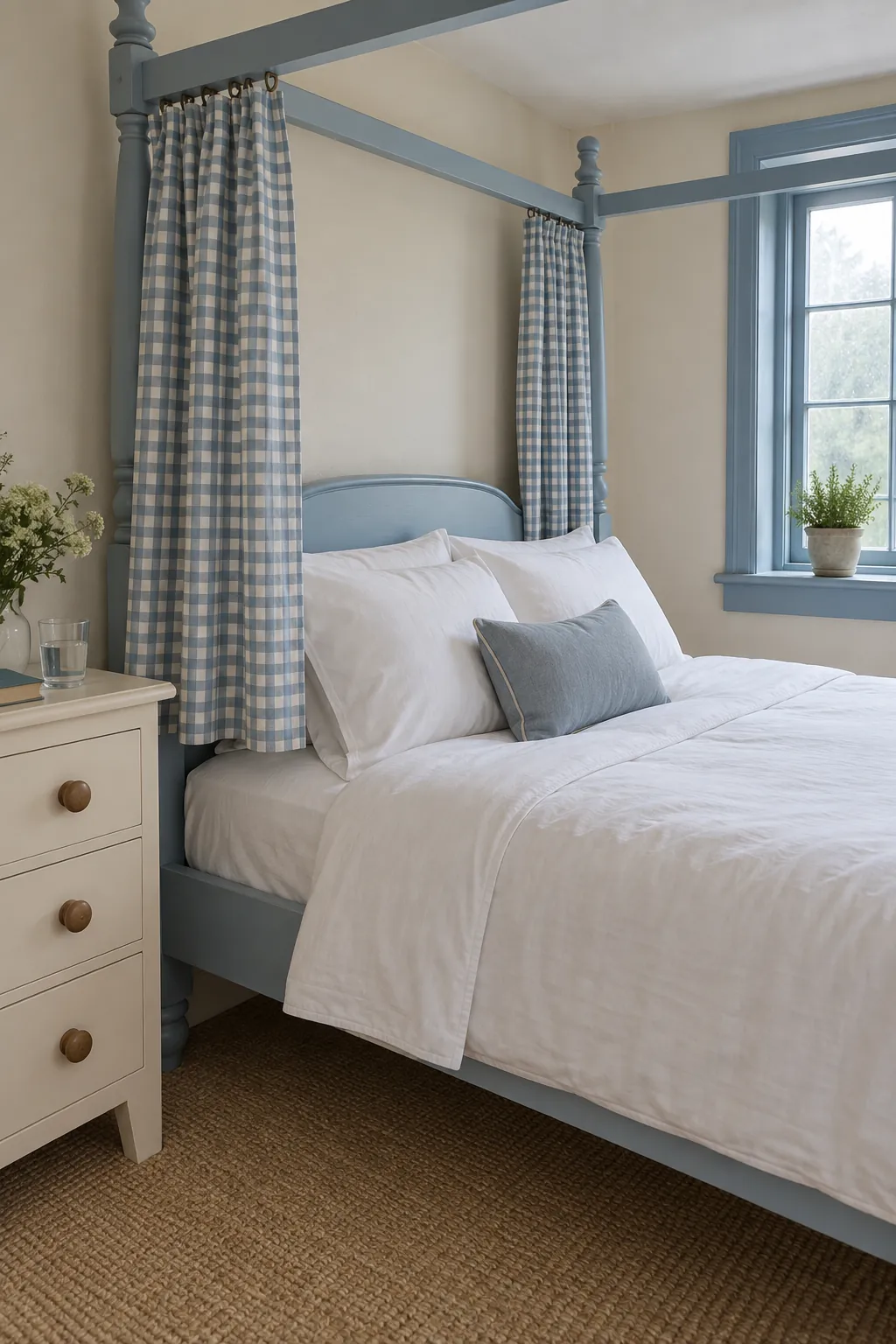
A small check curtain for a cottage bedroom
A tiny gingham check brings rhythm without the scale of a large floral print. It works especially well on short head end panels where the pattern stays contained. Pick a color already present in the room’s painted woodwork.
Check the reverse of the fabric because both sides may be visible from the bed. A lined curtain will hang differently from a single cotton layer. Keep the treatment light if the room receives little daylight.
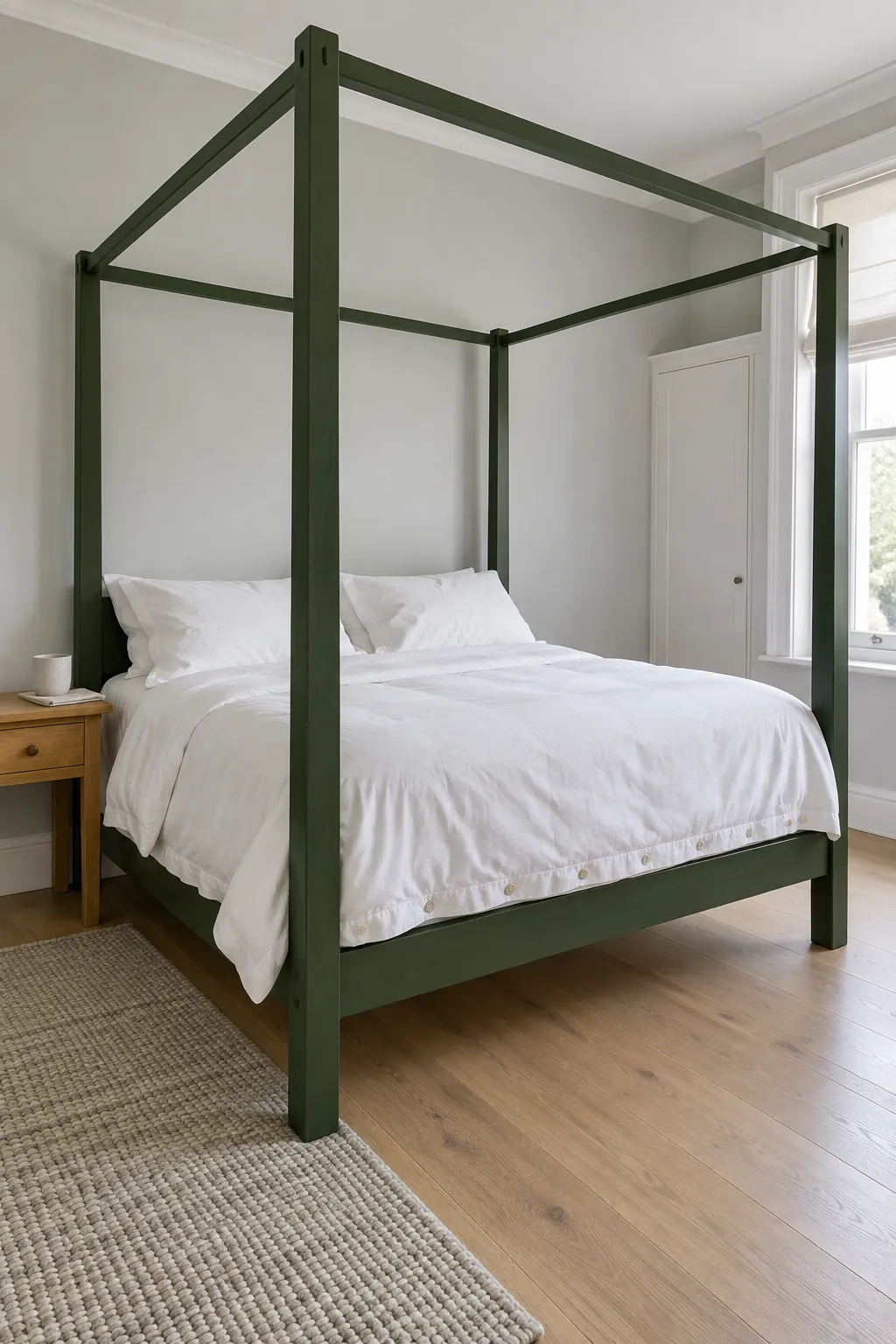
A deep green canopy with crisp white bedding
Painting a suitable wooden frame deep green can make the bed feel connected to the rest of the room. Follow the finish manufacturer’s preparation and curing instructions before putting the frame back into use. White bedding keeps the outline distinct and avoids a uniformly dark center. Use a small fabric sample beside the paint color to judge the combination. This project belongs on a sound frame, not one that needs structural repair.
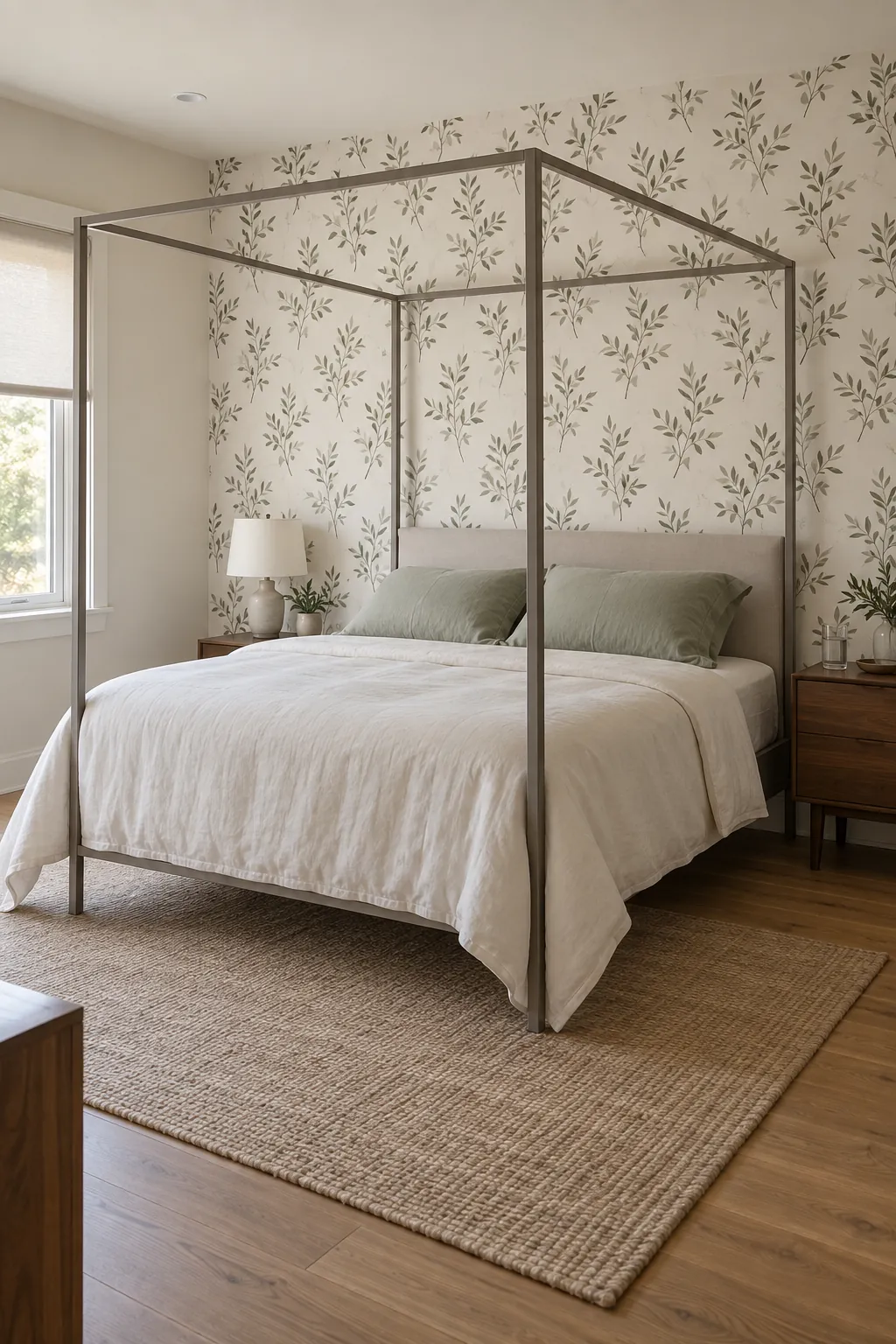
A subtle botanical wall behind an open canopy
An open frame lets a wall pattern remain visible through the bed structure. Choose a botanical print with enough empty background that the rails do not chop it into a busy grid. Keep the duvet plain to avoid competing motifs.
View a large sample from the bedroom doorway rather than judging only a small swatch. The pattern should still feel calm at the distance you normally see the bed. A removable wall covering may offer flexibility, but check its suitability for your paint and surface. Let this one wall carry the decoration instead of adding several framed pictures.
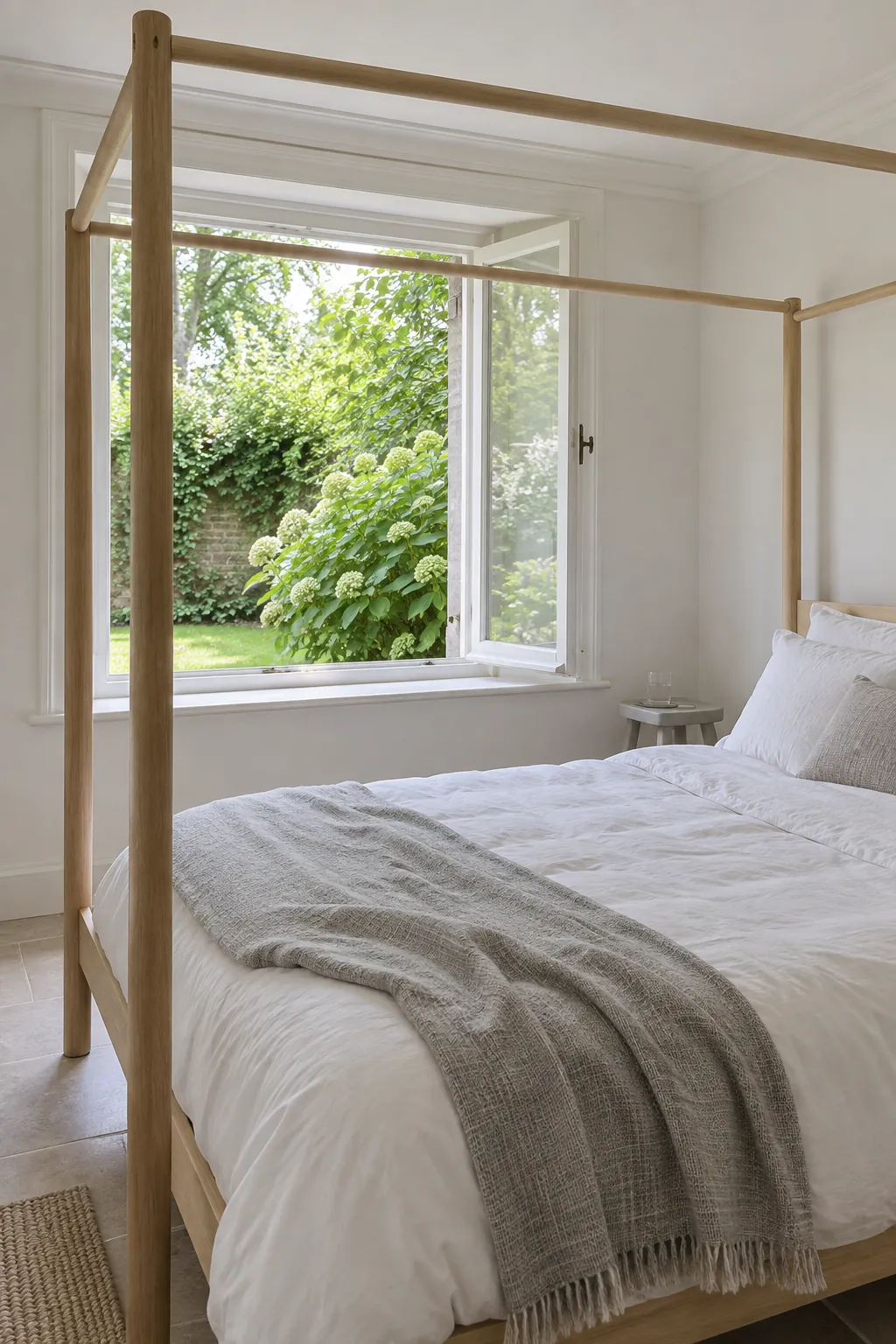
An airy canopy beside a garden window
When a bedroom already has a pleasant window outlook, leave the canopy side facing it open. Position the frame so a post does not sit directly across the strongest part of the view. Simple bedding and low bedside furniture allow daylight to remain the room’s main feature.
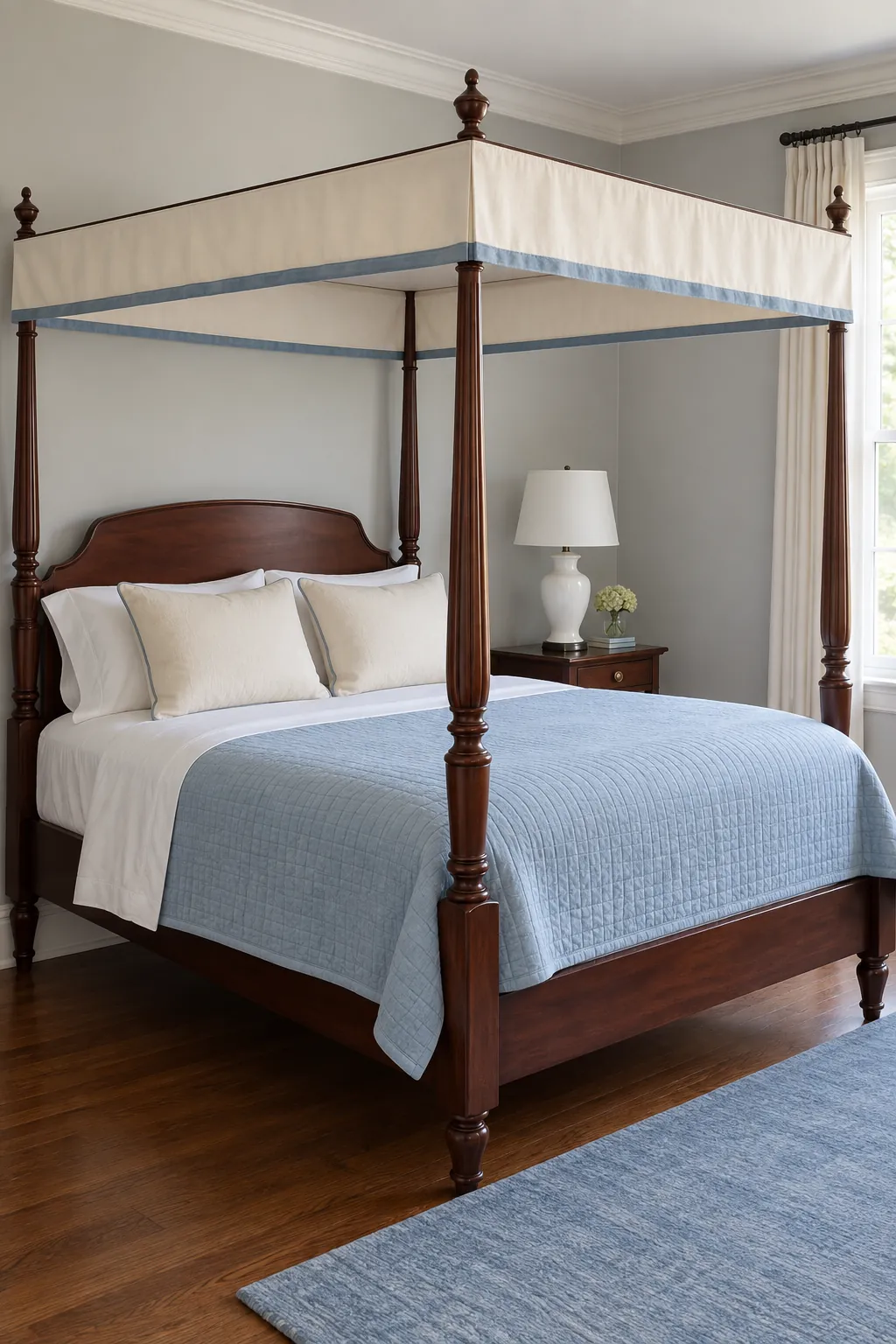
A tailored valance for a traditional room
A shallow fabric valance along the upper frame makes the canopy feel more architectural. Keep its depth proportionate so it does not hide most of the space above the pillows. A straight edge feels quieter than elaborate swags. Confirm that the frame can support the valance and that the fabric can be removed without an awkward dismantling process.
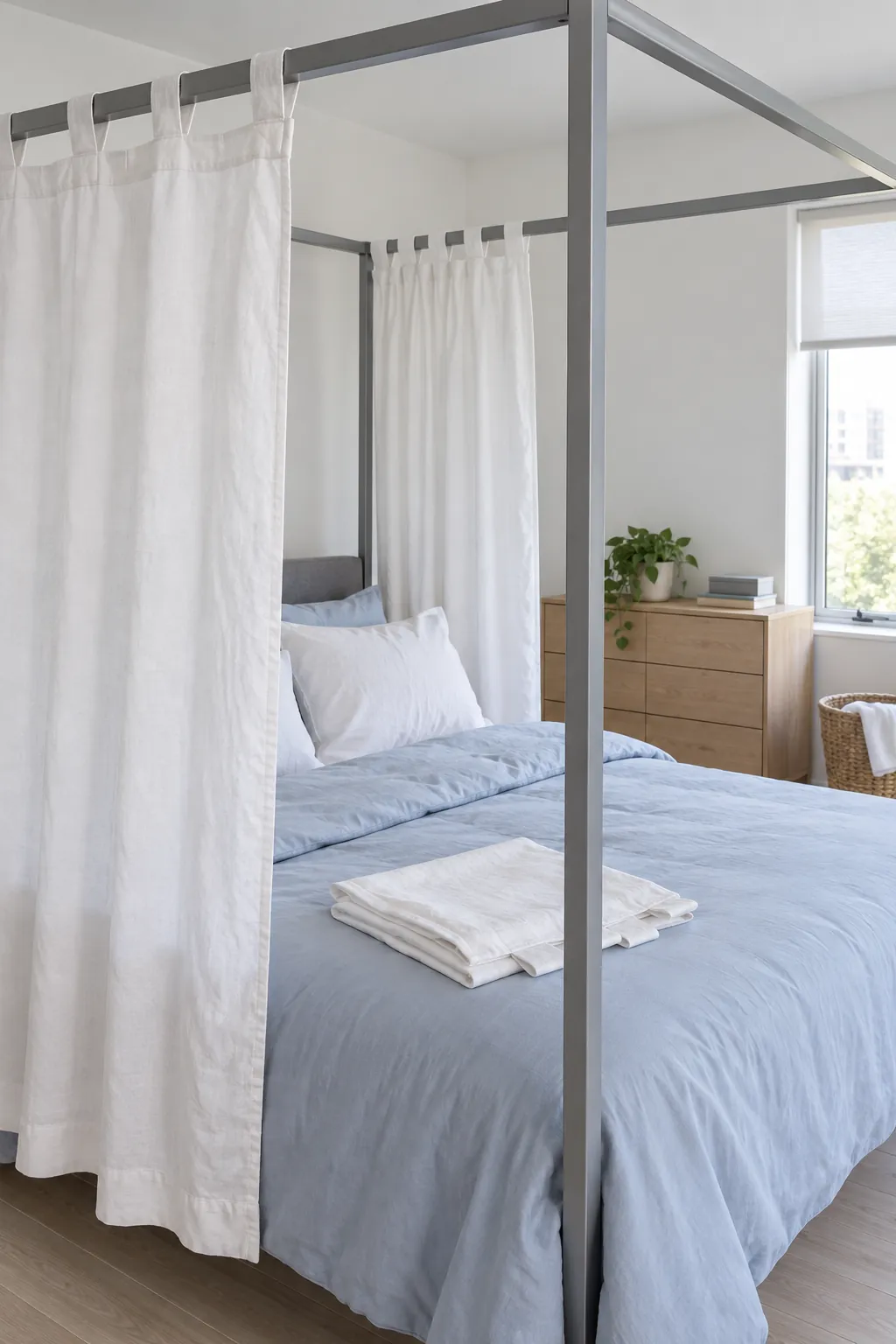
A washable cotton canopy for everyday use
Choose the washing routine before the fabric if the canopy will be used every day. Simple cotton panels with accessible fastenings are easier to take down than a complicated arrangement of knots. Read the care label and account for any stated shrinkage before settling on the hem length.
Keep spare attachments together so the canopy goes back up correctly after laundering. A pair of panels is usually less work to manage than an elaborate full enclosure. The best aesthetic is one you can maintain without turning every wash into a project.
A low bed with generous space above
A low mattress platform can make the canopy’s vertical space feel more pronounced. Check whether the height is comfortable for getting in and out, particularly if mobility is a concern. Follow the mattress maker’s ventilation and support requirements rather than placing it directly on the floor for appearance alone. A low nightstand keeps the proportions coherent. Leave room to reach underneath if the frame requires cleaning access.
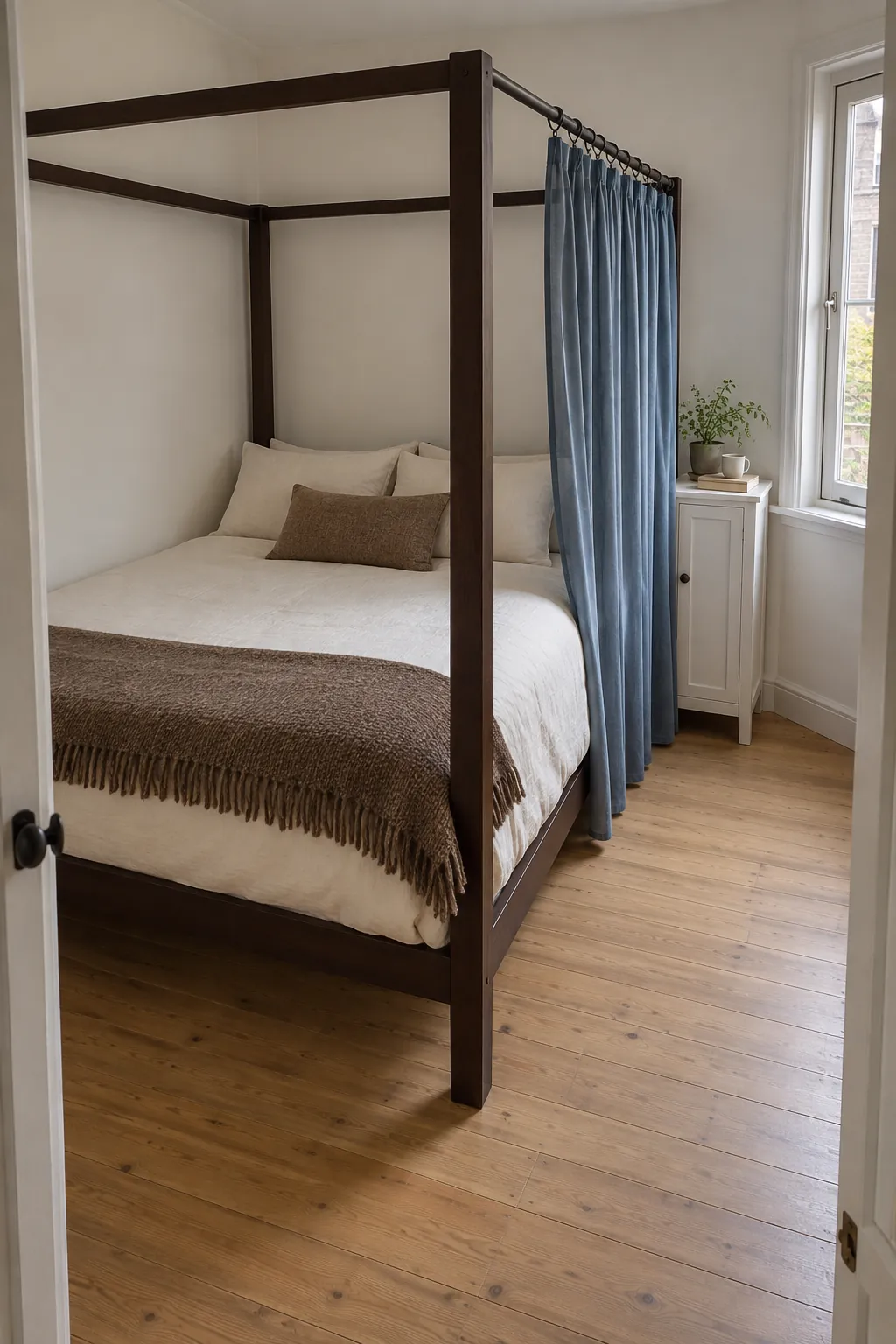
An asymmetrical curtain for a corner layout
A bed beside two walls does not need fabric on every side. Put the panel where privacy or softness is useful and leave the main entry side open. This makes the arrangement feel responsive to the room rather than copied from a symmetrical photograph.
Check that the curtain can move without catching on the post or furniture. Keep it away from window handles and any radiator. Use a compatible track or rail instead of improvising a loose line above the mattress. The uneven treatment looks deliberate when the bedding remains simple.
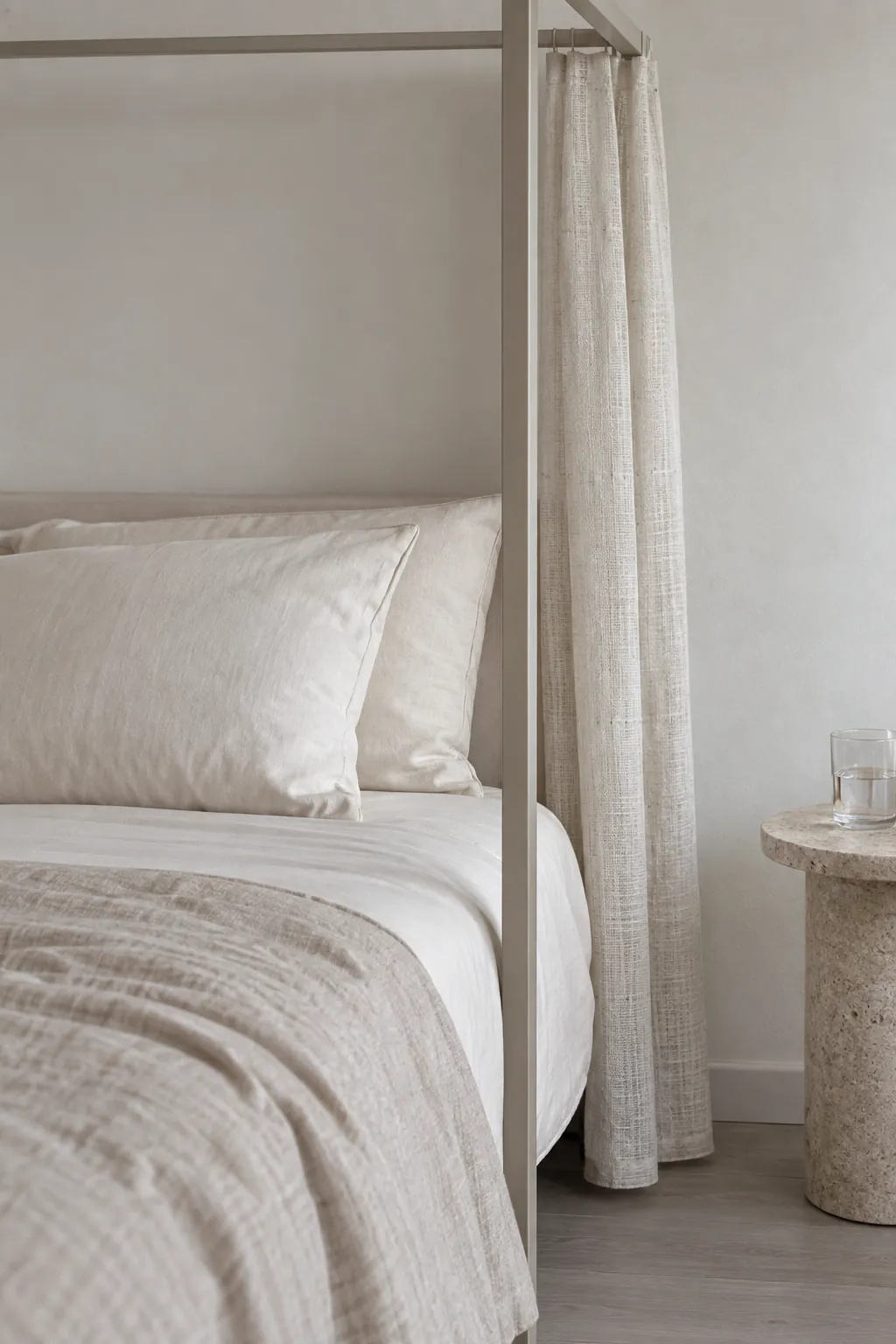
A textured neutral canopy without extra ornaments
A pale room can feel rich through weave and shape rather than more objects. Combine a smooth frame with a softly textured curtain and a flatter cotton sheet. Keep the biggest fabric surfaces close in color so the canopy looks settled instead of patchy.
A fabric change that refreshes the existing frame
For canopy bed ideas for adults who enjoy DIY, changing removable panels is often a more manageable project than building a bed. Start by recording how the current fabric attaches and measuring from that exact point. Choose a new material that the frame can safely support. Keep the room’s useful furniture arrangement, then decide whether the new fabric improves the view from the doorway and the experience from the pillow.