
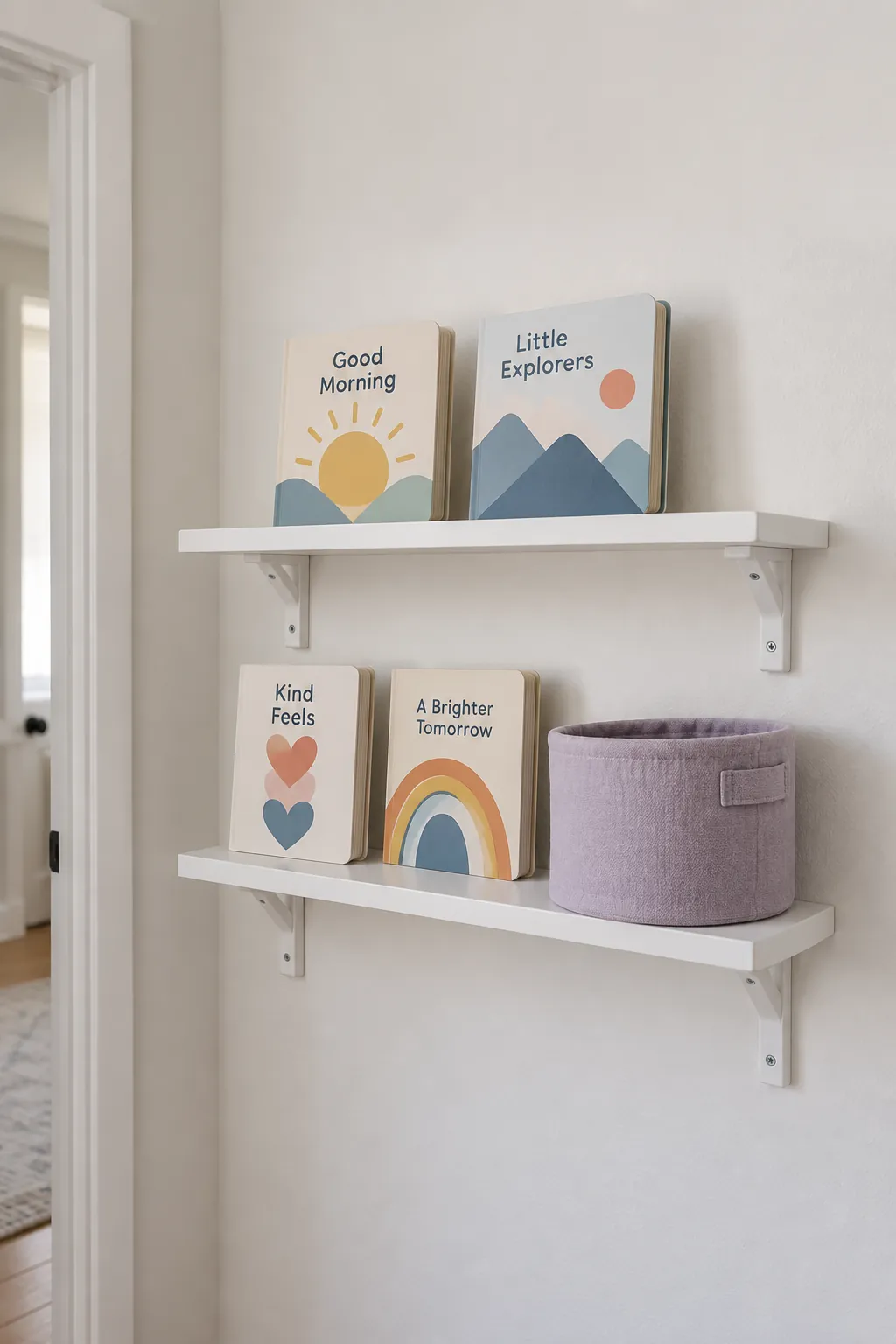
A shelf can look finished and still be awkward to use with a baby in your arms. Start with a suitable location, then give books and everyday storage most of the space. A few personal details will feel more intentional than a row of objects that must be moved whenever you need something.
Choose the location before the decorations
A nursery shelf should not sit above a crib or changing surface where a falling object could land on a baby. Choose a separate wall and consider what a child could reach after learning to stand or climb. Keep cords, hanging garlands, small detachable pieces, and breakable objects away from the child.
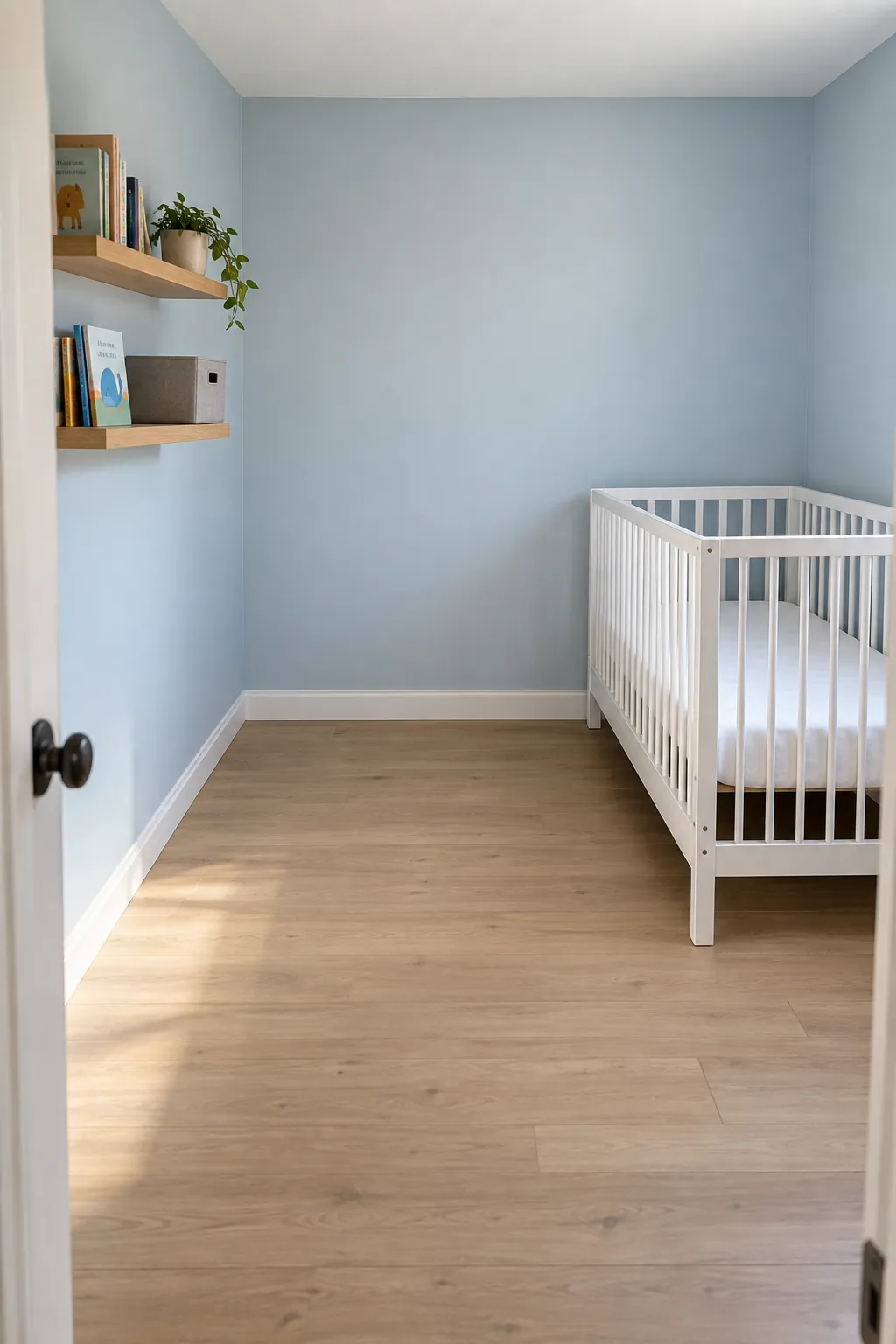
Follow the shelf manufacturer’s fixing instructions and load limits, using hardware suited to the wall construction. Floating nursery shelves still need a secure structural fixing even when their brackets are hidden. Anchor freestanding storage furniture as directed, and recheck the arrangement as your child’s reach and mobility change.
Let a few books provide the color
A baby books display can supply most of the shelf’s decoration without buying extra objects. Select a few books you actually read and display some covers facing outward on a ledge designed to hold them. Keep each book supported behind the retaining lip rather than balancing it on a narrow edge.
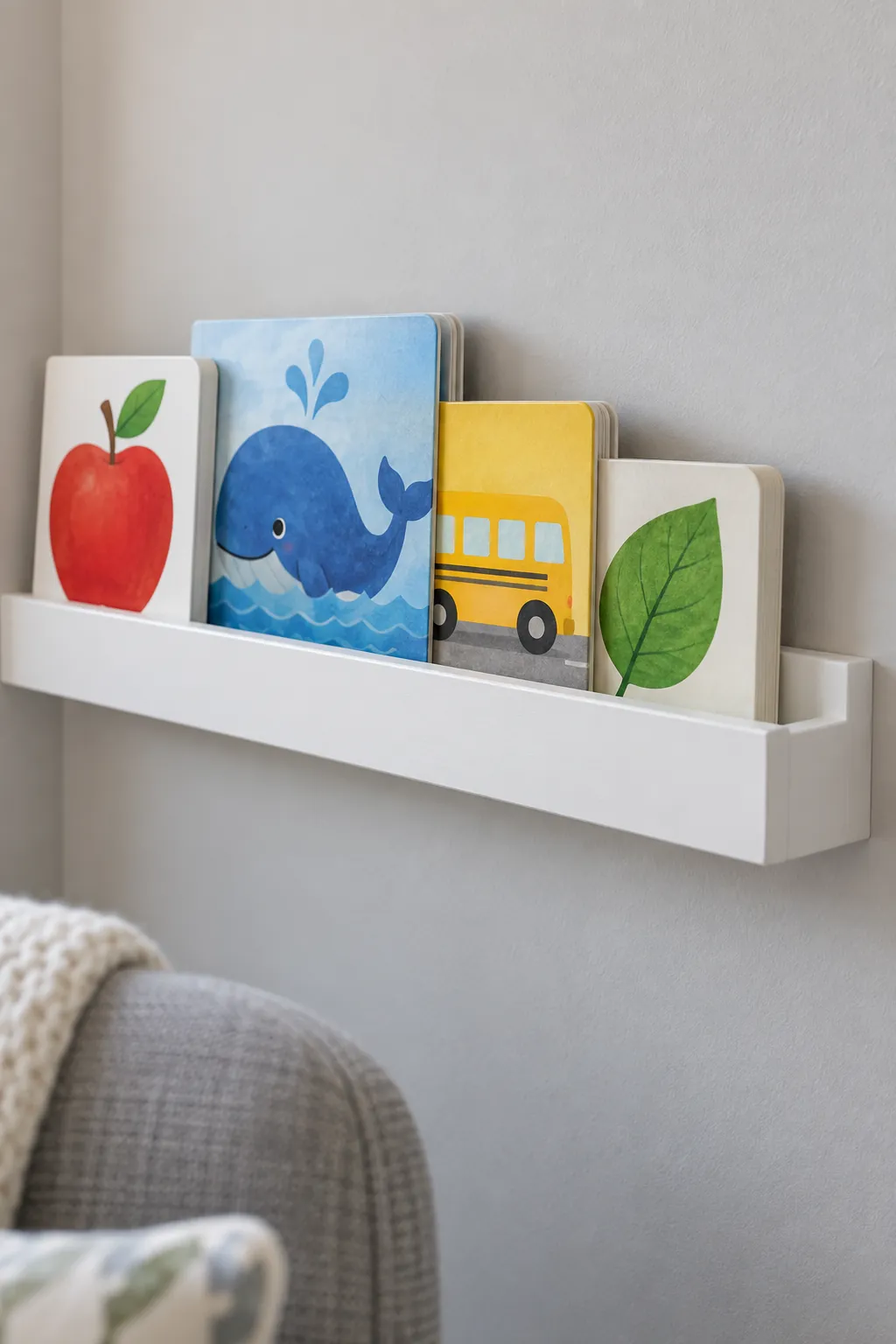
Rotate the selection instead of crowding every title onto one shelf. A low, securely anchored book unit can hold age appropriate board books for supervised access, while an adult display shelf serves a different purpose. Keep heavy bookends and decorative objects off the child’s accessible book area.
Use baskets for one kind of item at a time
Nursery storage baskets make a shelf useful when their contents are easy to understand. Give one basket a defined job, such as holding folded washcloths, rather than mixing spare clothing, toys, and keepsakes together. Measure the shelf depth and the space above the basket so you can remove it without dragging other objects forward.
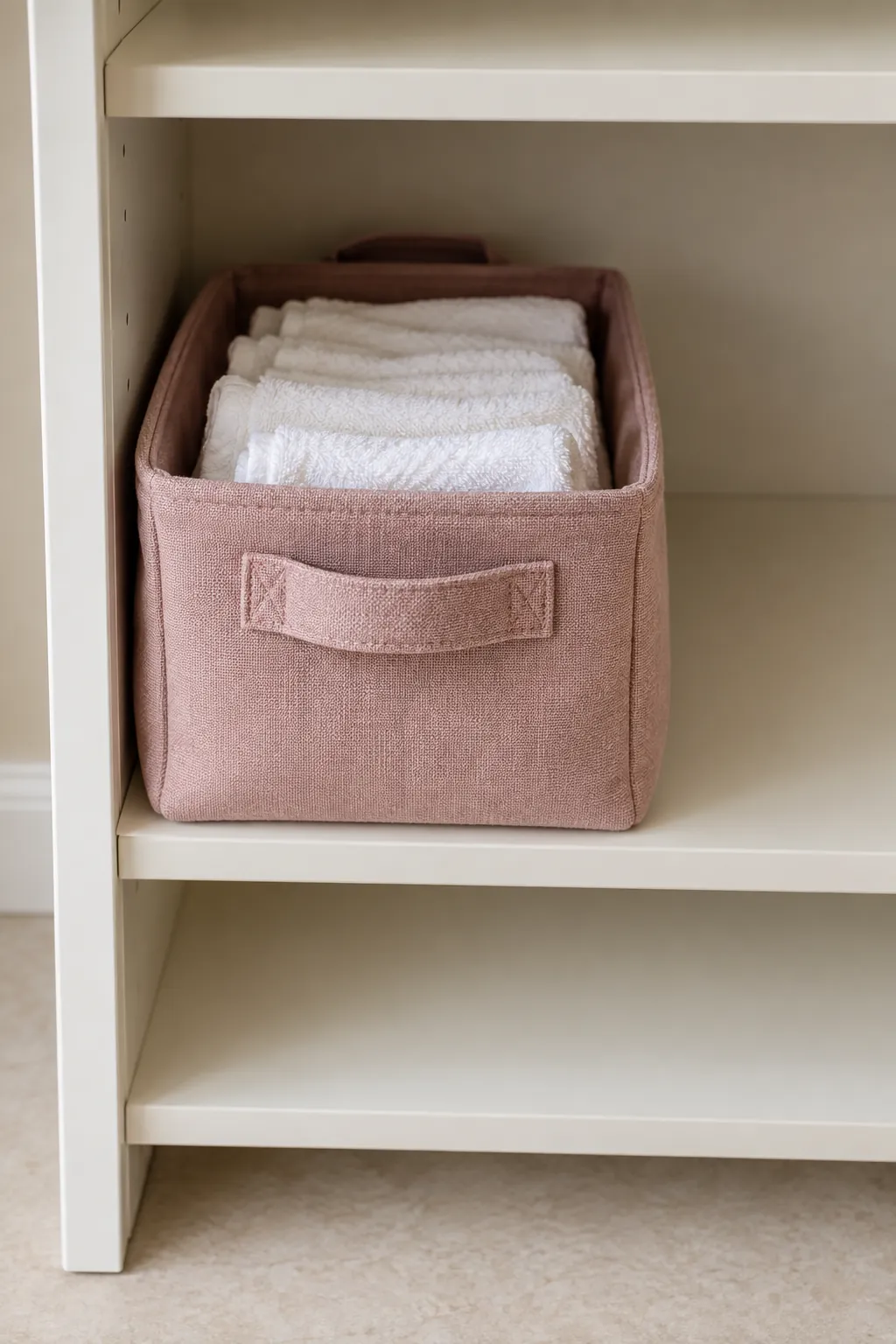
Choose intact, easy to clean containers without loose beads, long ties, or sharp broken fibers. Store heavy supplies low in suitable furniture and keep medicines, creams, and other hazardous products secured separately. Baskets tidy the view, but they do not make unsafe contents childproof.
Give one keepsake a clear place
A baby keepsake display looks more personal when one meaningful object has space around it. A small fabric memory box or a securely mounted lightweight illustration can mark a milestone without filling the entire shelf. Keep fragile heirlooms and objects with small parts in secure storage outside a child’s reach.
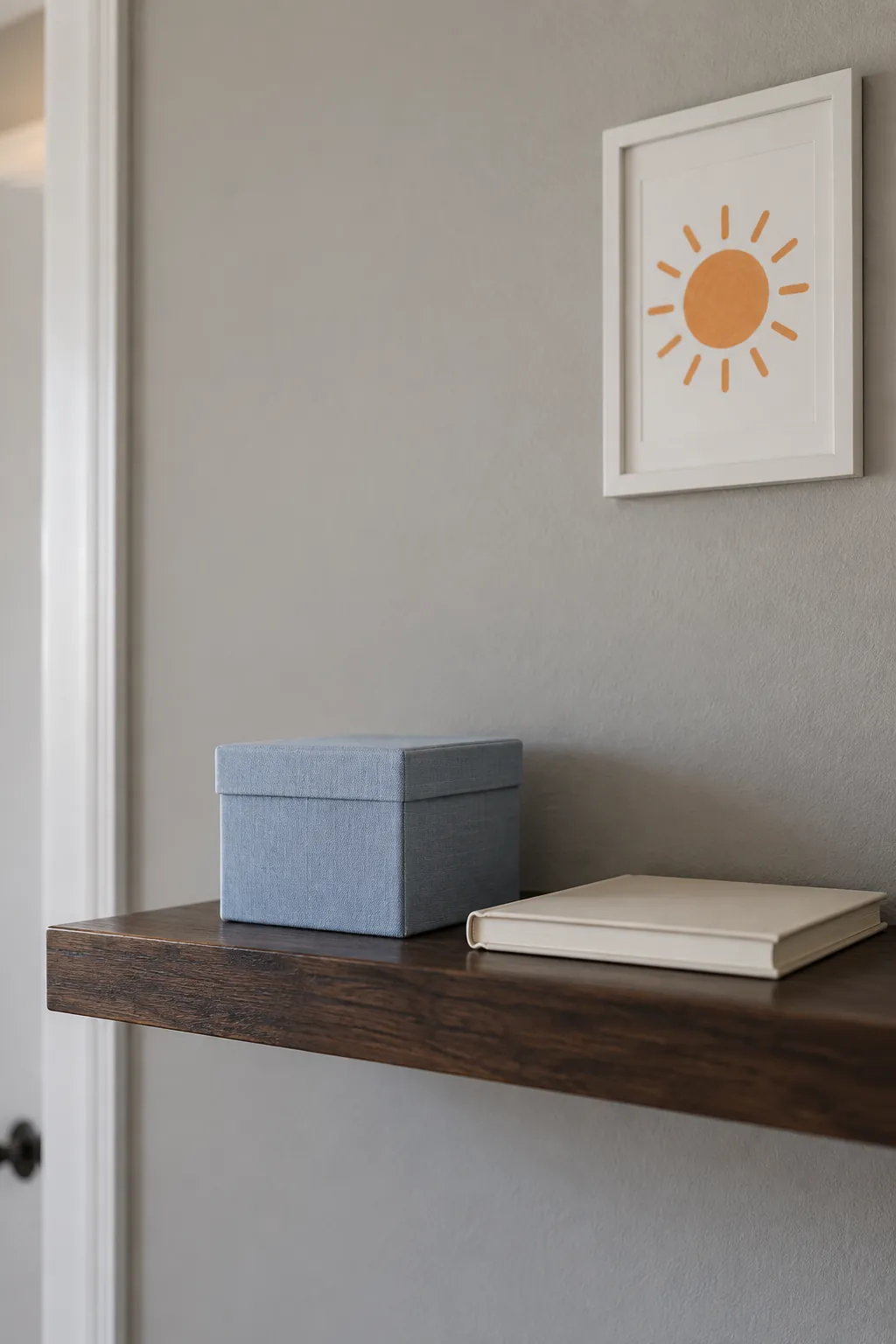
Avoid leaning a heavy glass frame where it can slide or be pulled down. If you want a framed picture, use a suitable lightweight option and secure it according to its mounting instructions on a wall away from the sleep and changing areas. The shelf should still have room for the useful things you remove every day.
Repeat a small theme instead of every motif
For a woodland nursery shelf, one fox illustration and a muted green accent can carry the idea. You do not need branches, pinecones, tiny animals, and a garland on the same ledge. Natural found objects and decorative miniatures may be unsuitable where a young child can reach them.
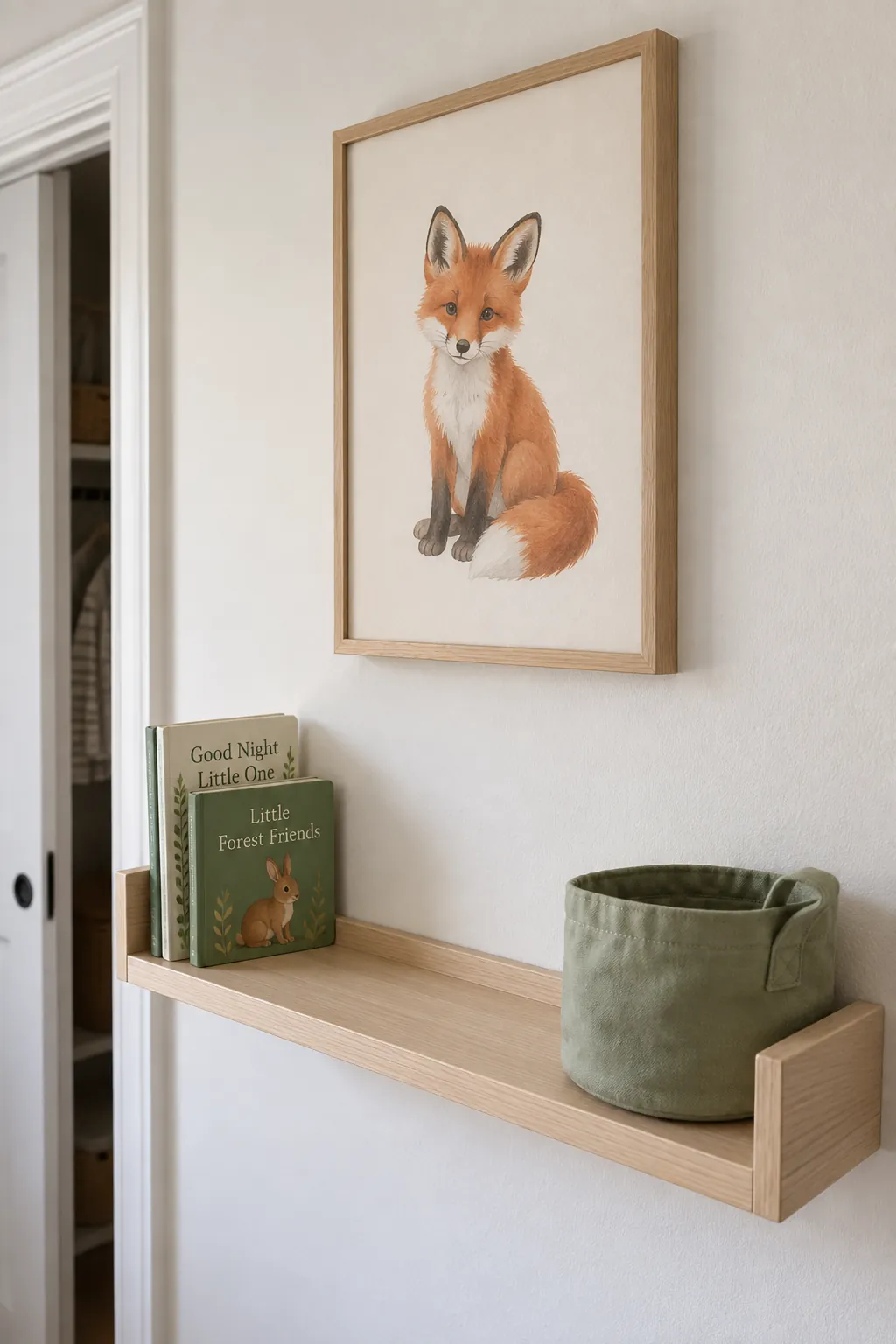
Choose two or three colors already present in the room and repeat them through book covers or a basket. Minimal nursery decor can still feel warm through a simple wood finish and soft fabric. Leave visible shelf space between groups so the objects are easy to recognize and remove.
Check the shelf during an ordinary day
View the arrangement from the doorway, then use it as you would during a normal routine. Remove a book or basket and see whether anything else shifts. If the shelf only stays attractive when nobody touches it, reduce the number of objects.
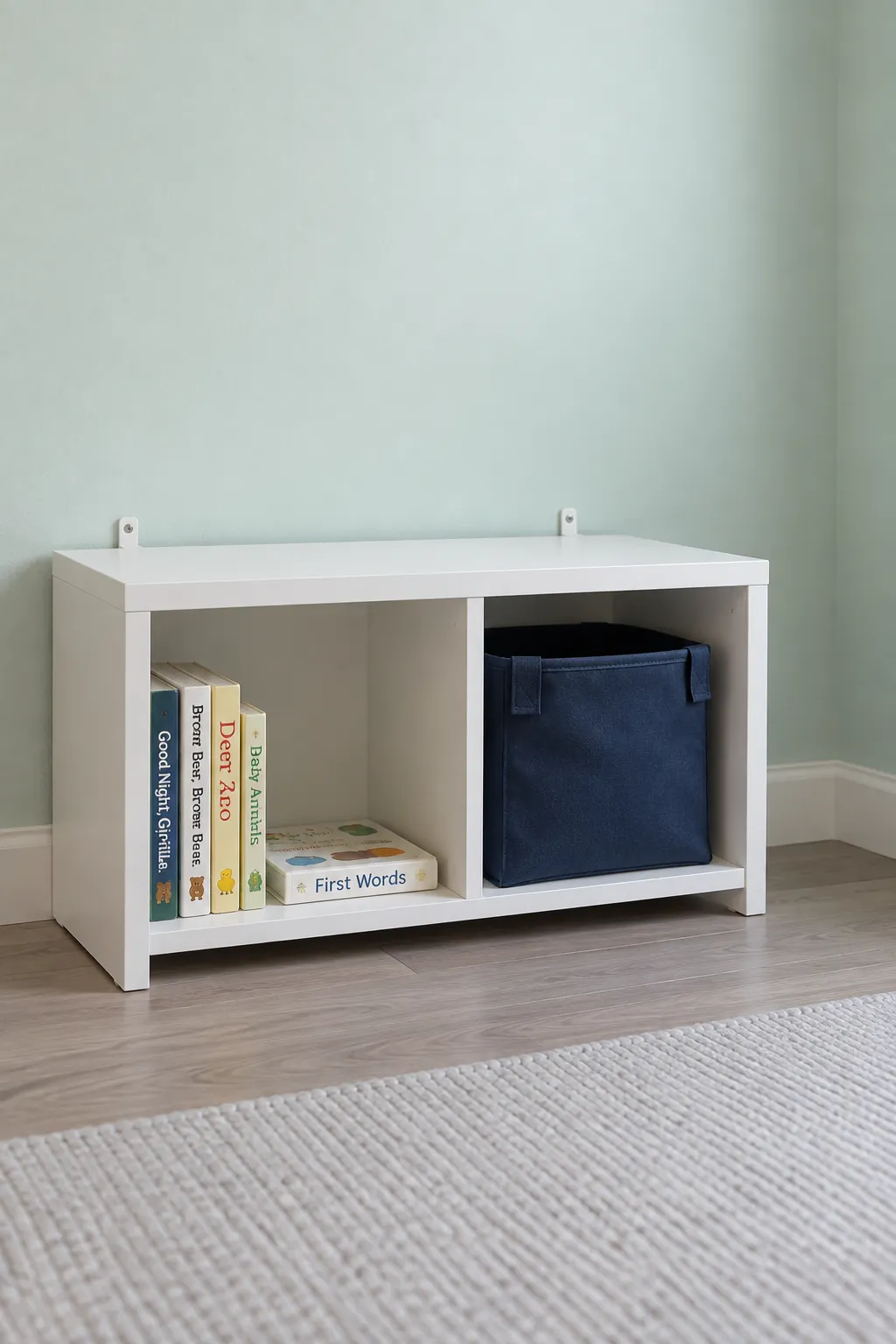
Dust the surface, check the fixings as directed, and inspect containers and toys for damage. Safe nursery shelf styling also changes as a baby becomes more mobile, so move tempting or unsuitable objects before they become reachable. Keep the crib’s sleep space clear of toys, pillows, loose blankets, and shelf decorations; the display belongs elsewhere in the room.