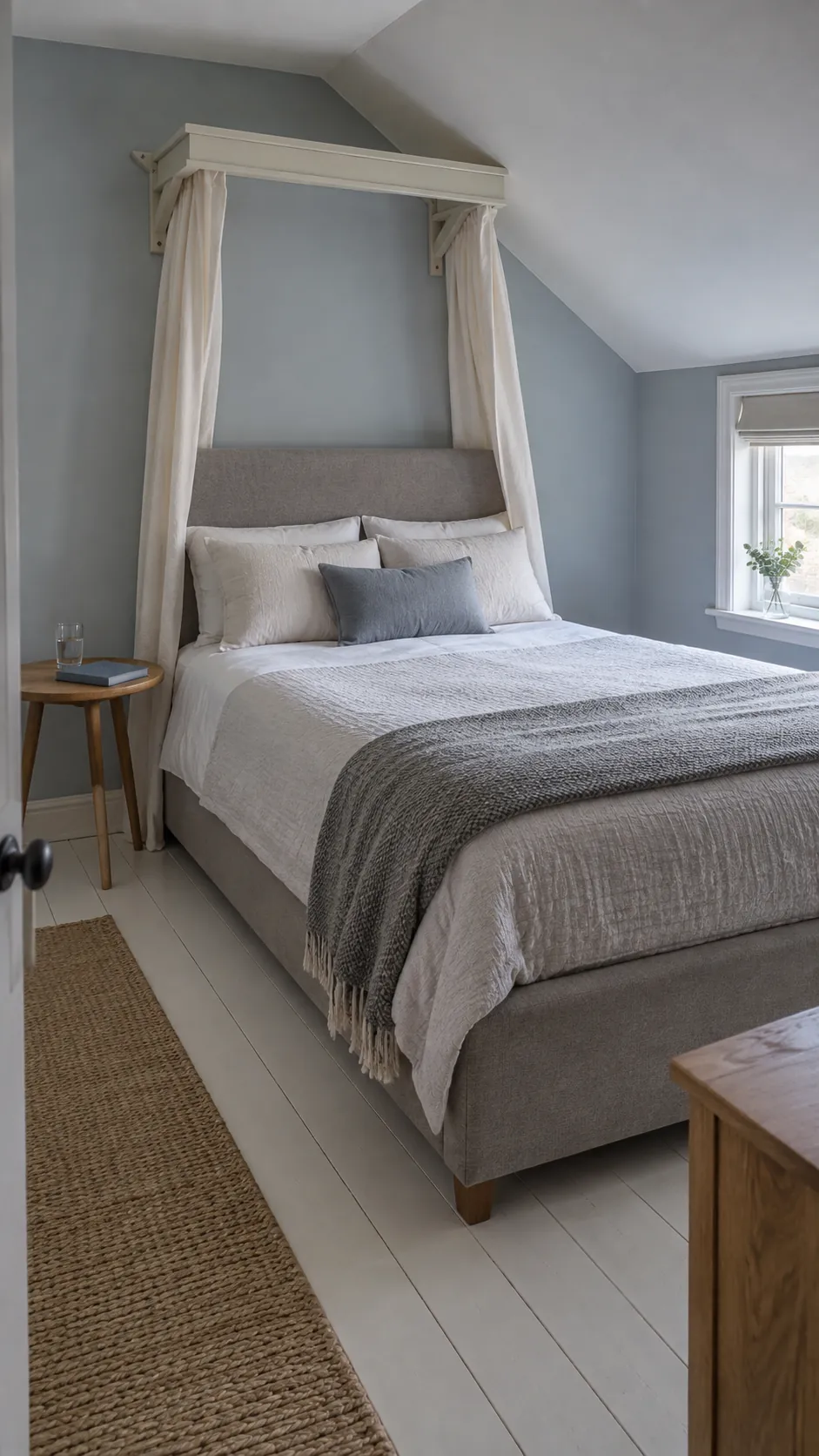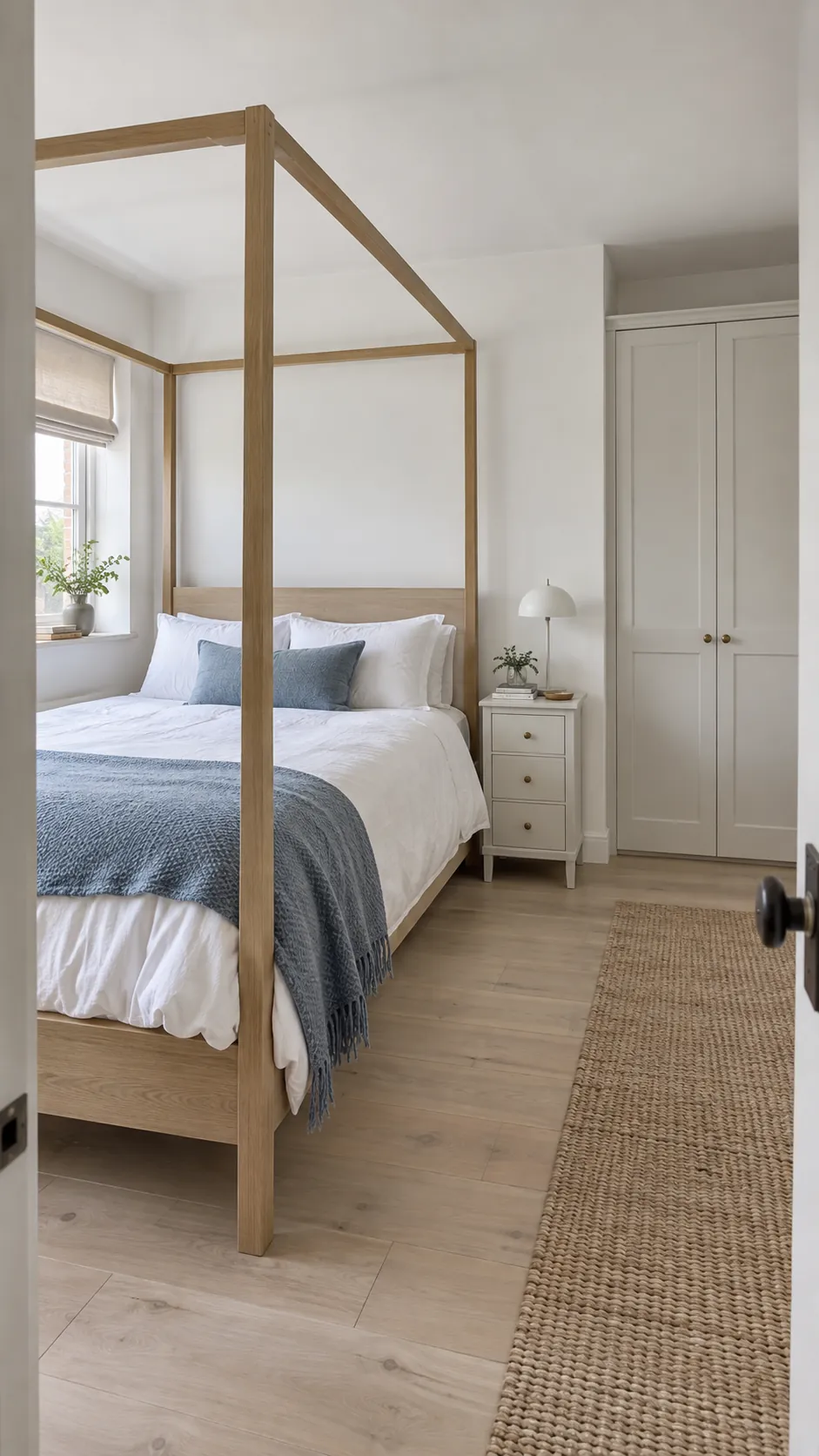
Tall furniture does not automatically make a compact bedroom feel smaller. Trouble starts when the frame interrupts the door, the window, or the route you use every morning. A good layout protects those everyday movements before it adds curtains or decorative details.
Test the route before you test the style
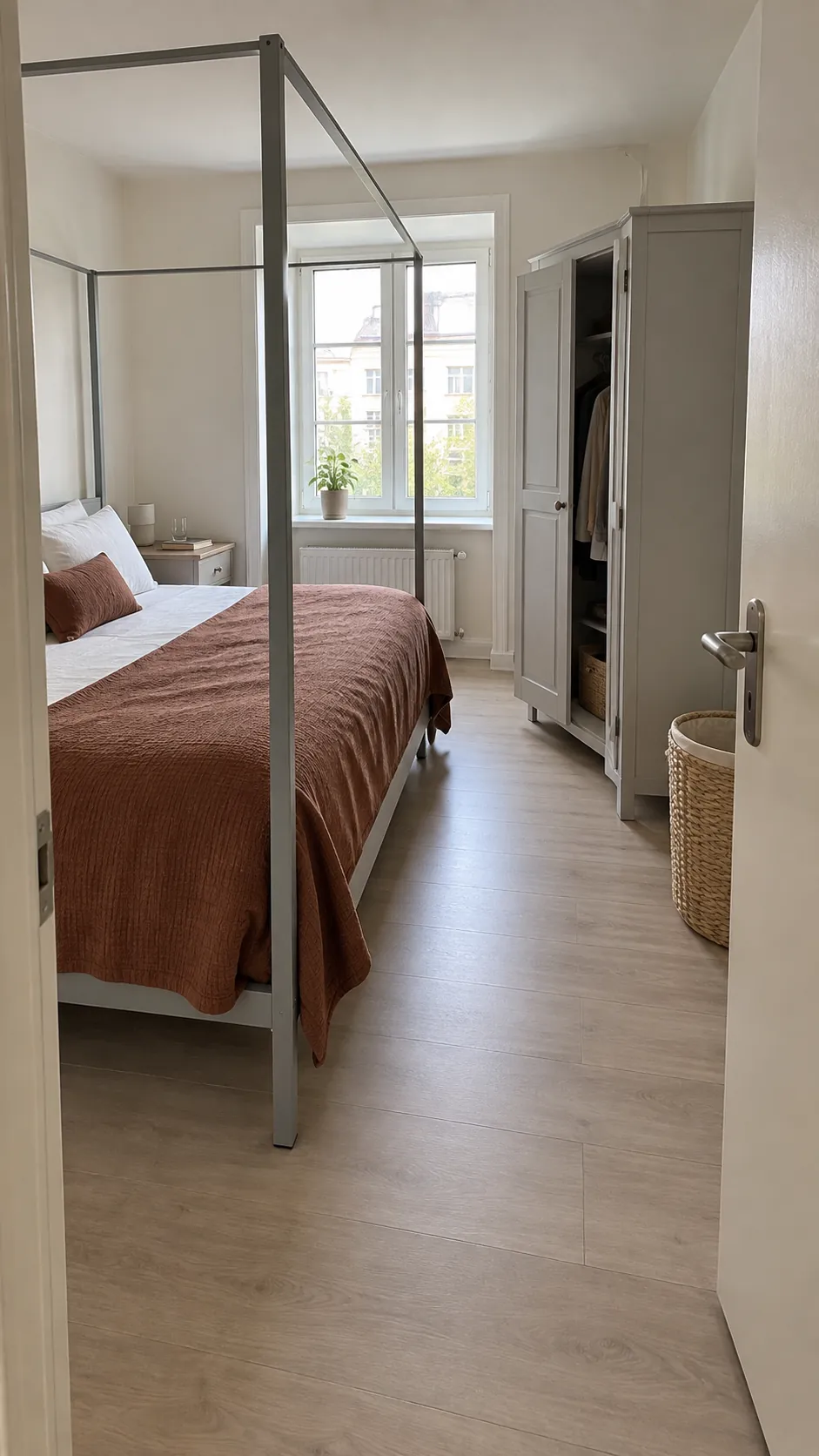
The useful question is not whether the mattress fits between the walls. It is whether you can still reach the wardrobe, open the door, and get into bed without a daily shuffle. Measure the complete frame, including projecting feet and the headboard, then mark that outline on the floor with removable tape.
Walk the route while carrying a laundry basket and open every drawer that faces the bed. If the room is shared, think about how each person gets out during the night. A slightly smaller mattress or a shallower headboard may improve the room more than a clever arrangement of accessories.
Keep the main exit route clear and account for any accessibility needs. There is no single decorative clearance number that suits every room, body, and door arrangement. Your actual movement through the taped layout is a better starting test than a photograph of someone else’s bedroom.
Read the ceiling as a second floor plan
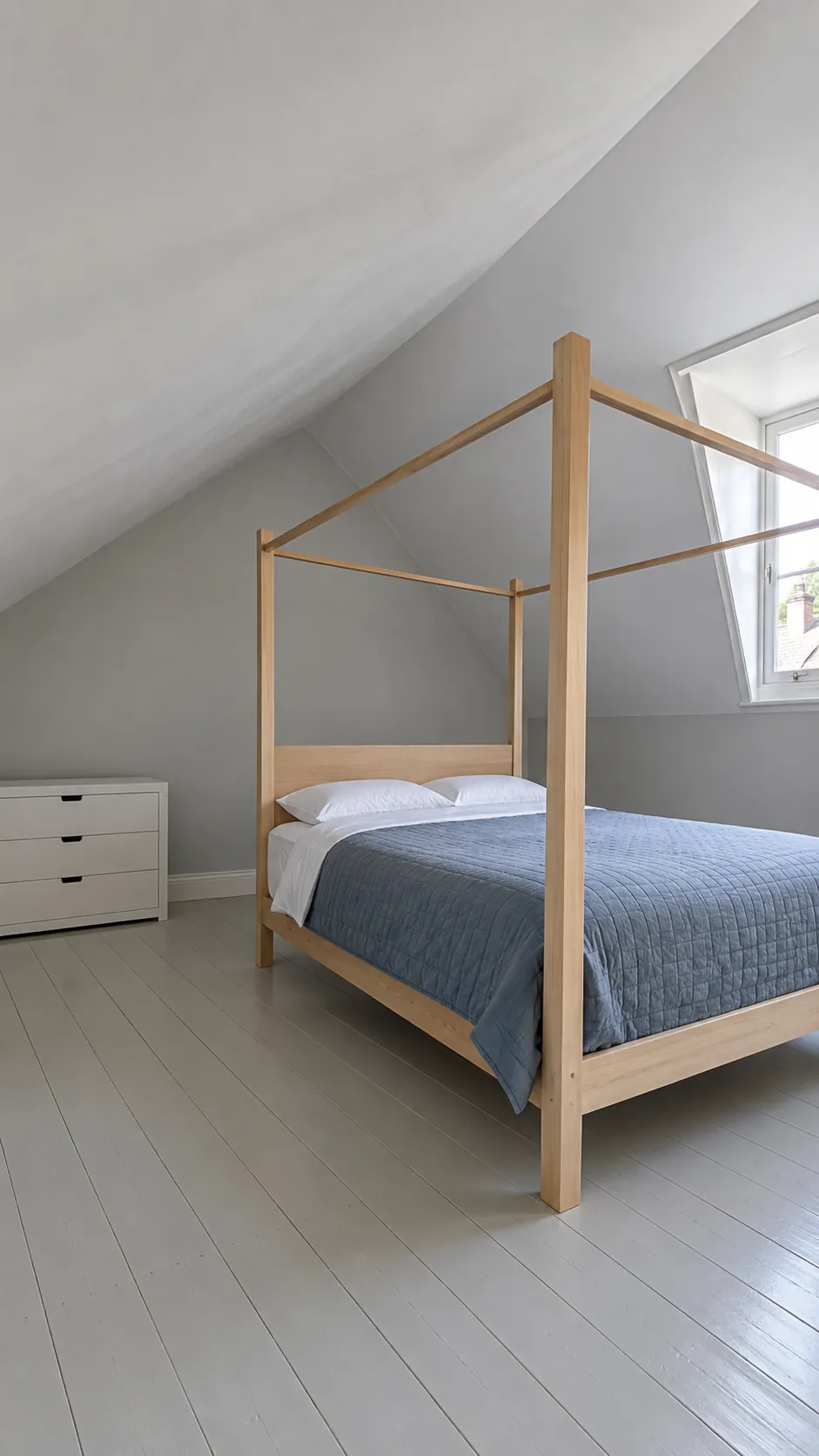
A canopy adds a rectangle above the mattress, so measure the room at rail height as well as floor level. Ceiling slopes, beams, pendant lights, and fan blades can occupy space that looks empty in a floor plan. Compare the exact frame height with those obstacles and follow the relevant manufacturers’ clearance requirements.
In an attic, the highest point of the roof does not tell you whether all four posts will fit. Check the ceiling above each proposed post and along the full rail path. Never shorten a structural frame casually to make it fit; choose a suitable design or seek qualified advice about an approved modification.
Pick a frame that lets the room remain visible
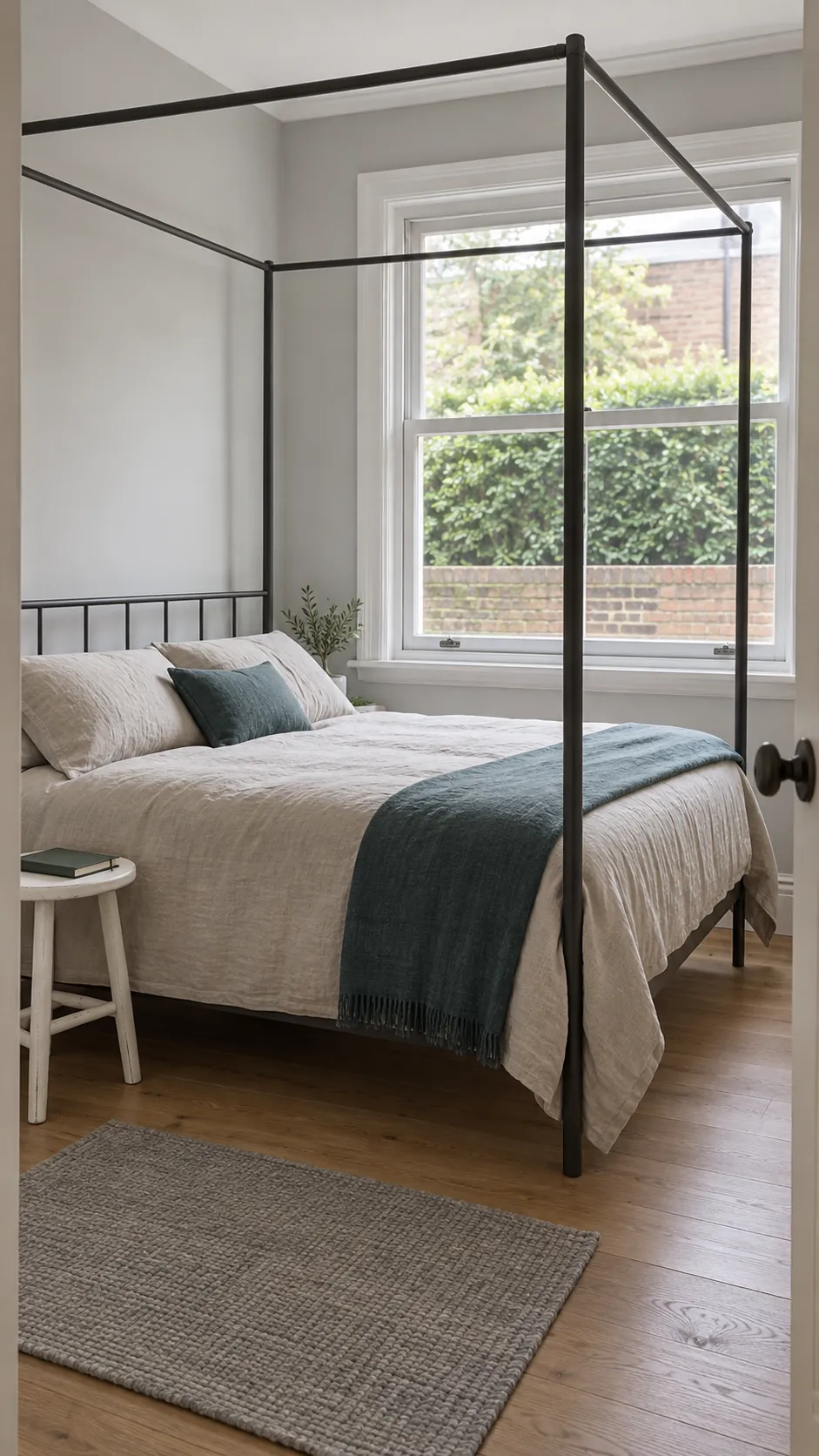
Thin posts and an open foot end often work well in a modern canopy bedroom because they preserve sightlines. A dark frame can still feel light when its bars are narrow and the wall behind it is quiet. A pale frame may blend into the room more, but bulky posts can remain visually heavy regardless of color.
Look at the bed from the doorway, not only from its side. A post directly in front of the window or wardrobe can make the layout feel more obstructed than the floor measurements suggest. Leave the rails bare at first so you can judge the frame before adding fabric.
Choose a headboard that supports the way you use the bed. Someone who reads upright may prefer upholstery, while a low open headboard can preserve more of the wall view. Keep the mattress support and ventilation requirements in the decision, even if a very low bed looks attractive in a reference image.
Use curtains where they solve a specific problem
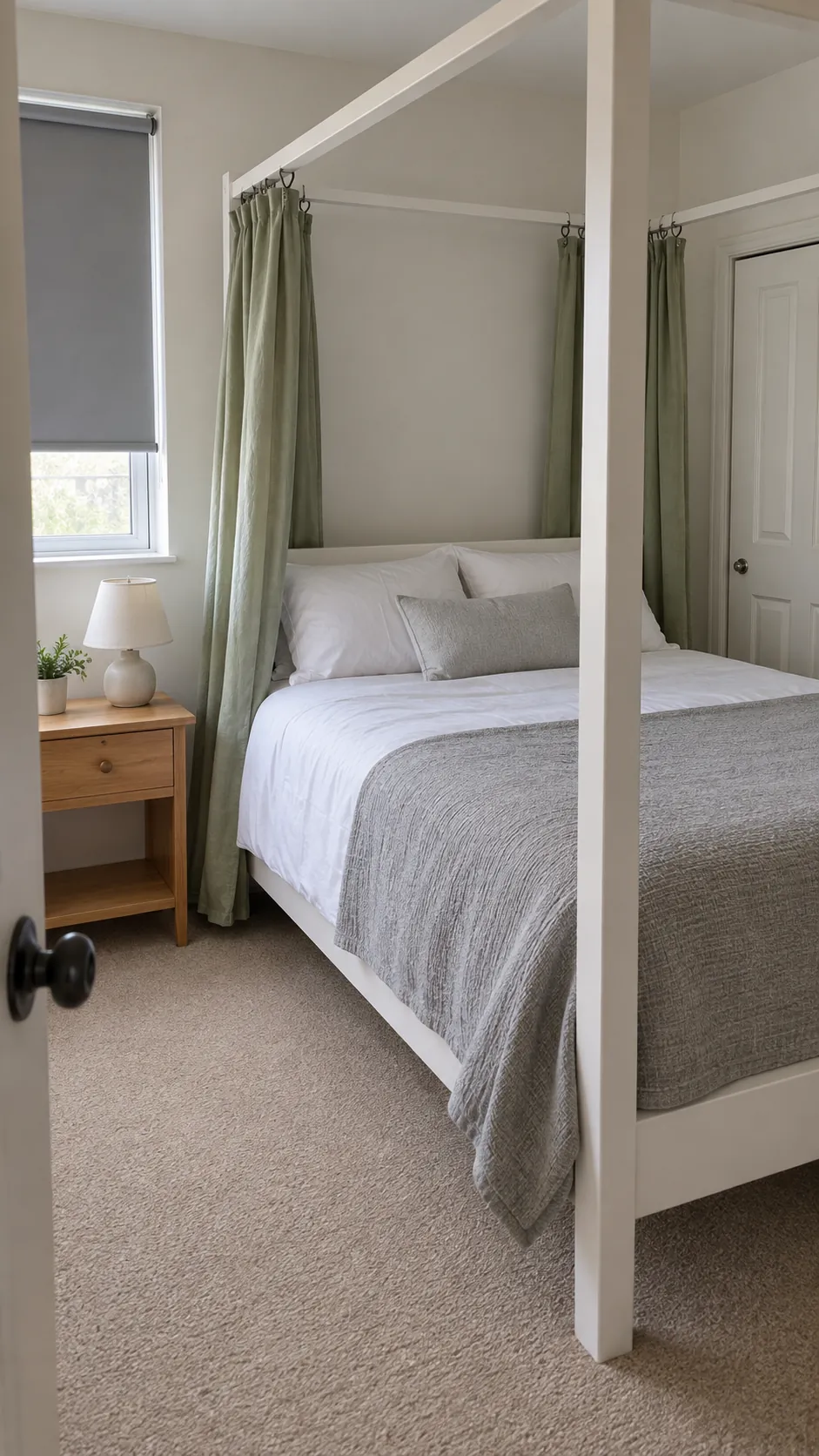
A canopy bed with curtains can feel cozy, but a full enclosure uses more visual space than a pair of panels. Decide which sightline needs privacy before choosing the fabric. If the aim is simply softness, try the head corners and leave the entry side open.
Light sheers will not provide the same darkness as a proper window blackout treatment. Heavy opaque panels may make a small sleeping area feel warmer or more enclosed. Check that the bed rails are designed for the fabric load, and use suitable attachments.
Keep hems off the walking surface and cloth clear of lamps, heaters, fans, and window mechanisms. Avoid long loose ties where children or pets could become tangled. A removable washable panel is easier to manage than fabric knotted around every rail.
Make storage open without moving the bed
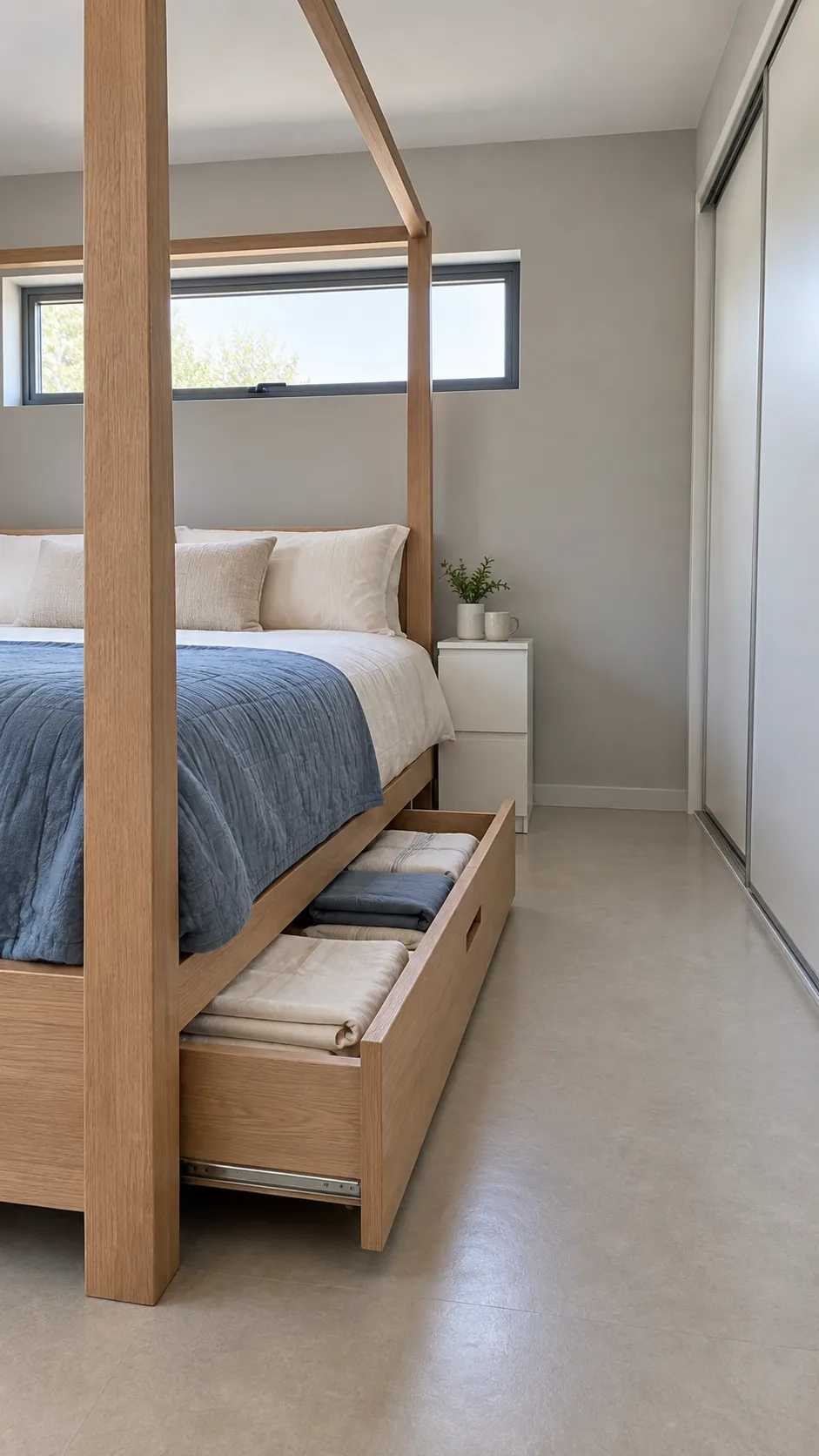
Under bed storage helps only if you can actually pull it out. Measure the opening movement of drawers or bins as part of the layout, and include the handles in that space. A drawer that hits the wardrobe turns useful storage into a frustrating compromise.
Try a narrow bedside cabinet or a properly installed shelf instead of a deep table. Keep its surface reachable from the pillow and check that the post does not block the drawer. Wall mounted lighting can free surface space, but a compact plug in lamp may be simpler when drilling is not permitted.
Choose a partial canopy when the full frame asks too much
A half canopy bed can concentrate the height around the pillows while keeping the foot end open. A wall mounted crown or a properly installed ceiling track offers another route when the existing bed is worth keeping. These are different structures, so assess their dimensions and fixing requirements individually.
For a corner canopy bed, preserve the easiest entry side rather than insisting on matching curtains on every edge. In a rental, check permission before mounting anything to the wall or ceiling. If the room still feels awkward after you remove extra fabric and unnecessary furniture from the plan, choose a simpler bed: the best cozy bedroom ideas should make everyday life easier.