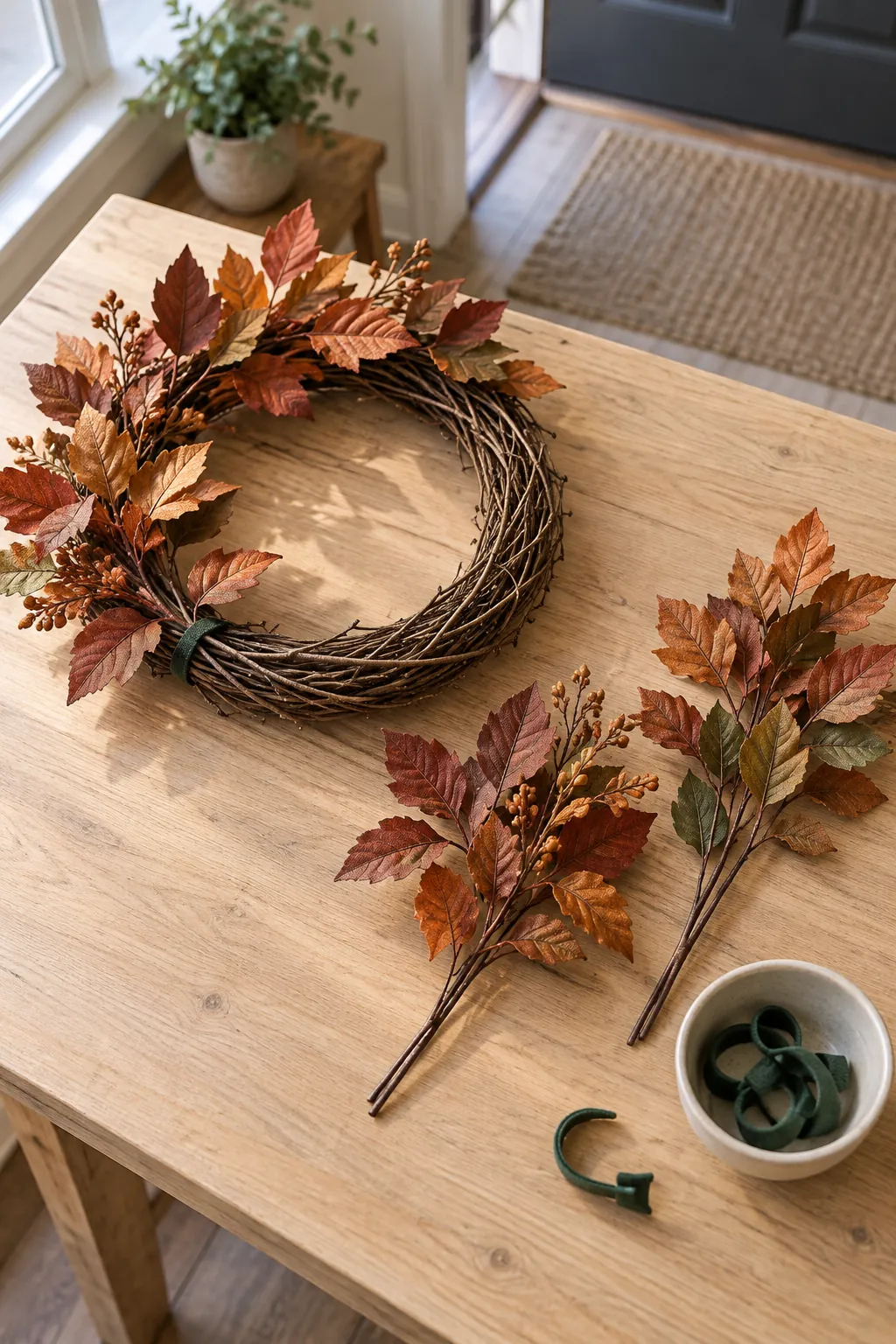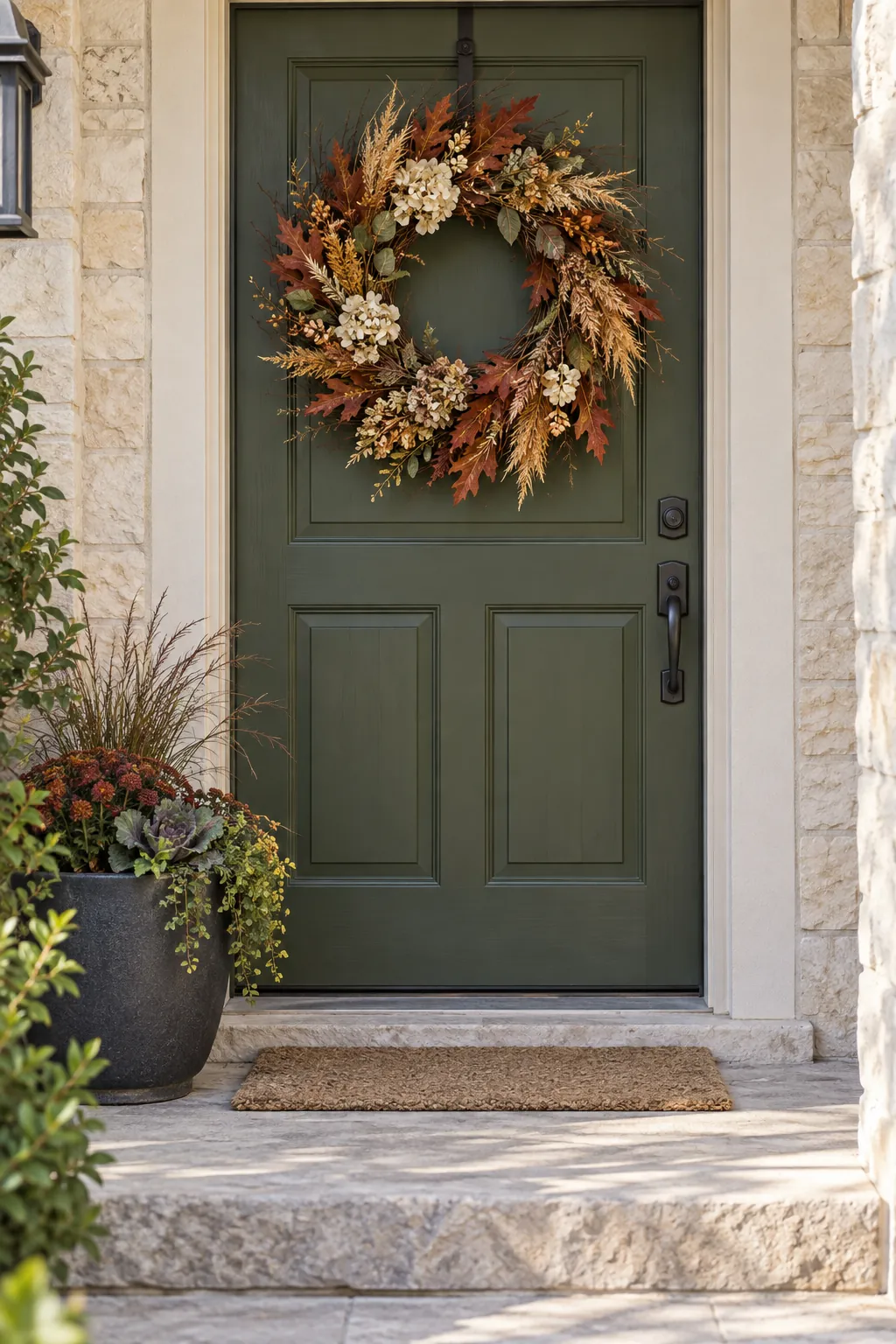
A wreath can look perfect on a craft table and still catch the handle, crowd the glass, or stop a storm door from closing. Start with the space your door actually offers, then choose materials for the amount of sun and rain that reaches it. The right base and hanging method make the decorative choices much easier.
Copper Leaves on Exposed Grapevine
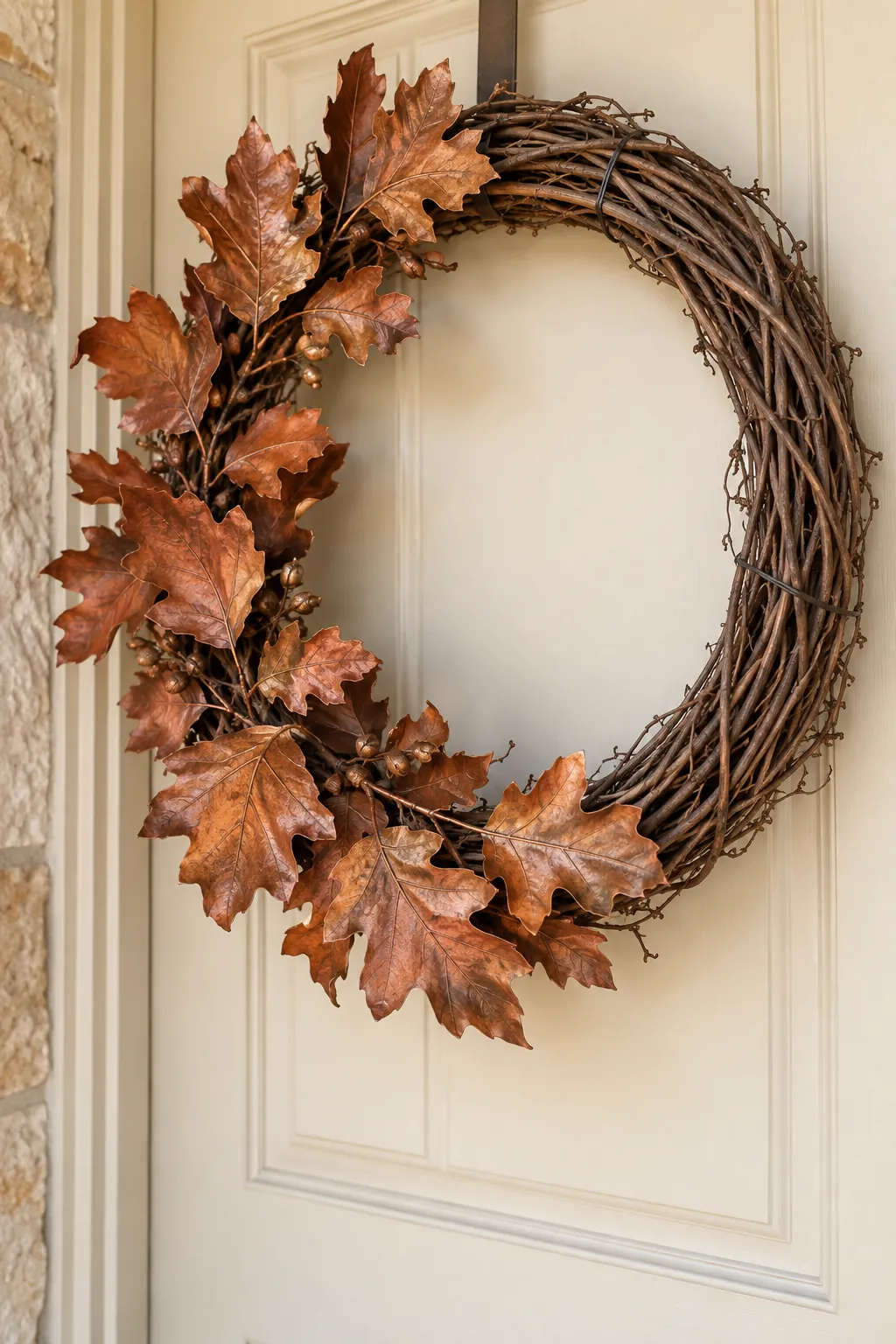
A loose sweep of copper leaves lets the twisted base become part of the design. For fall grapevine wreath ideas that feel natural rather than crowded, cover roughly one side and leave the opposite curve visible. Thread floral wire through the vine structure instead of relying on a few surface glue spots. Turn the cut wire ends inward so they cannot scrape the door.
A Wheat Sunburst
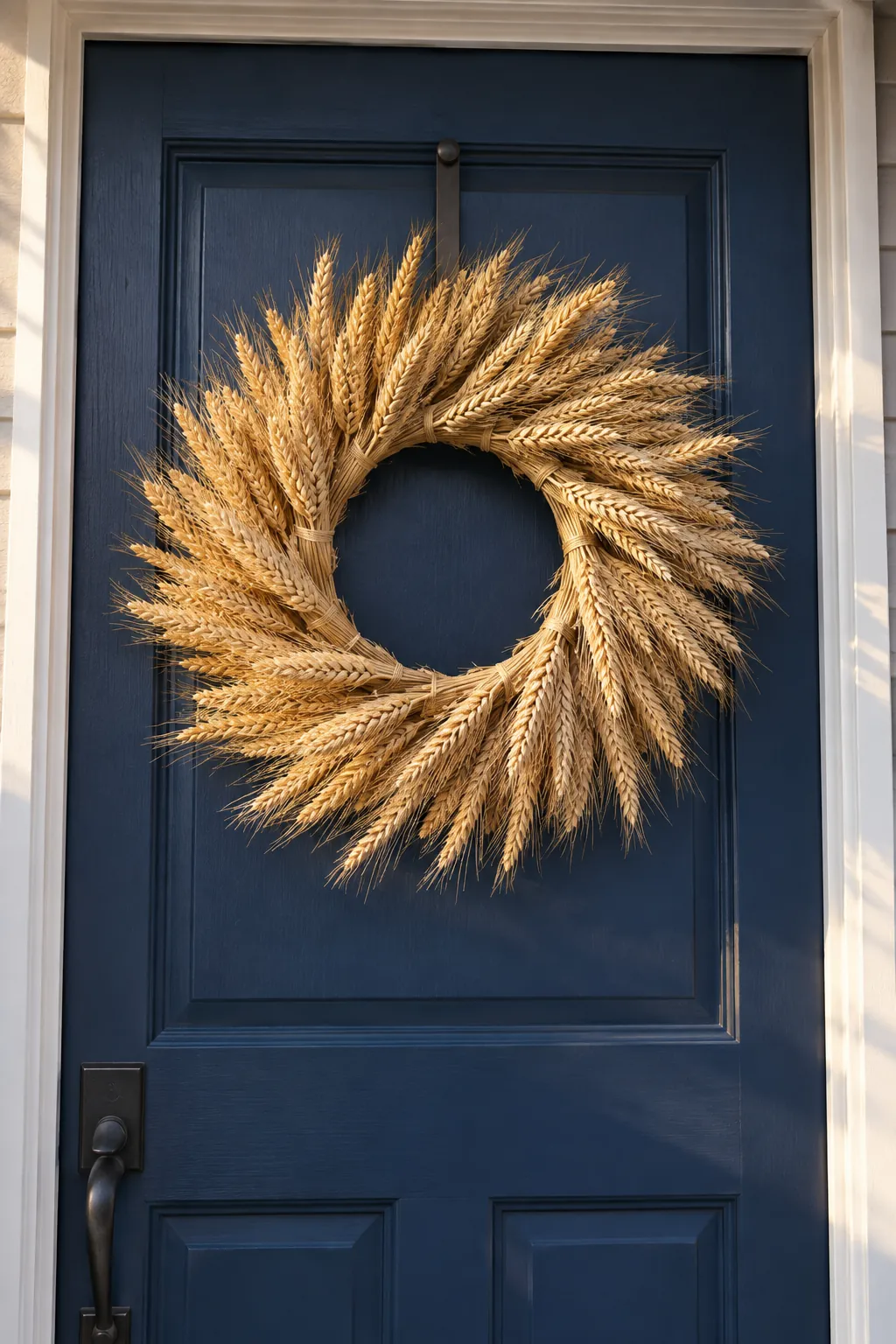
Wheat gives a plain entrance movement without needing a bright color. Lay small bundles in the same direction around a firm ring, overlapping the bindings with the next bundle. Keep the center opening generous so the finished wreath reads as a circle rather than a solid sheaf.
Real dried stalks belong in a dry, sheltered position and can shed when handled. If your doorway takes wind or rain, look for a suitable artificial version instead. Check the outer tips against the door trim before choosing the final diameter.
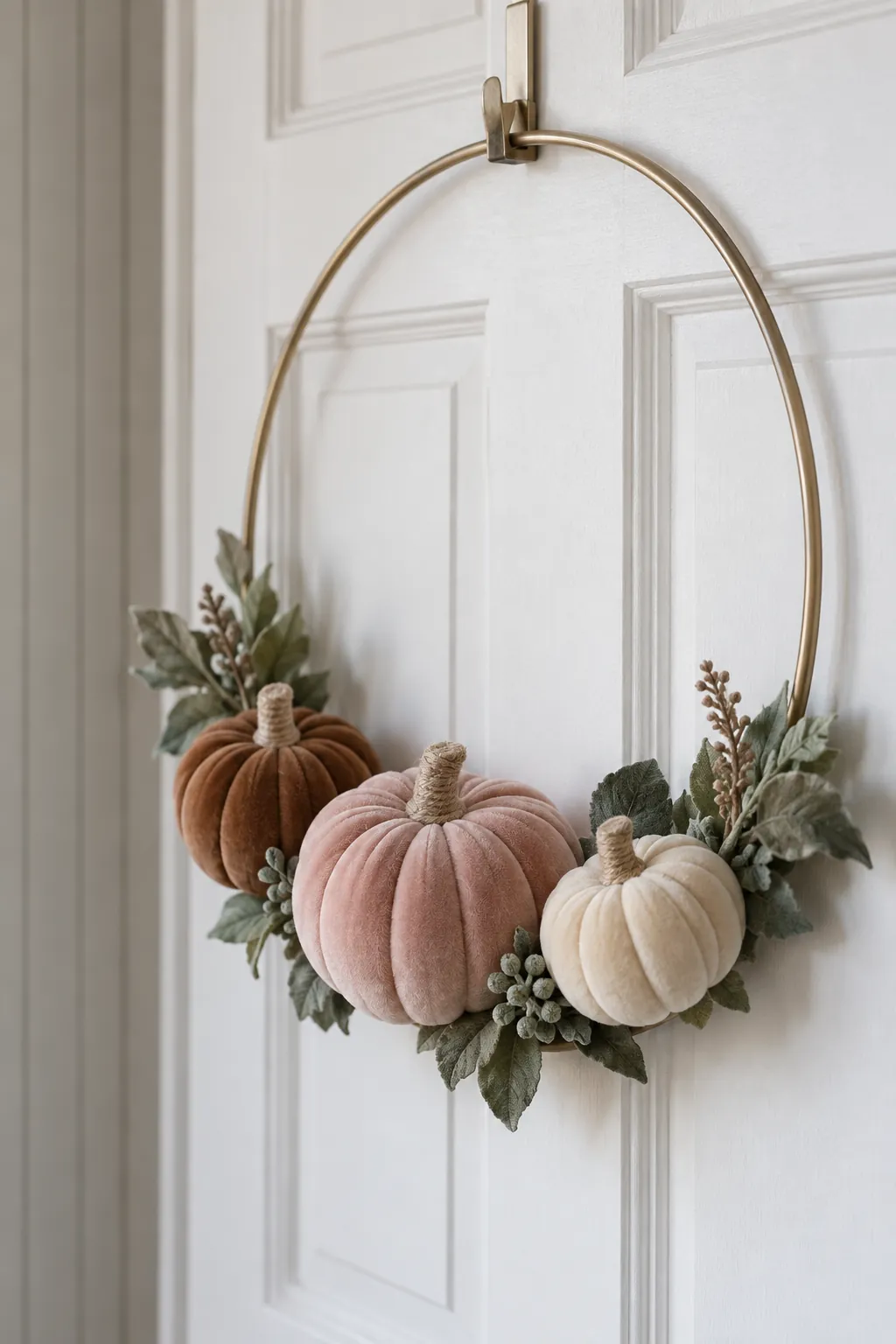
Velvet Pumpkins in a Soft Crescent
Small velvet pumpkins soften a dark door with fabric rather than shine. Group three lightweight pieces along the lower curve of a ring, then tuck short leaves around their bases to conceal the attachments. Use pumpkins designed for craft fastening and secure them to the frame, since a fabric surface alone makes a weak attachment point. This plush finish works best inside an enclosed entry or on a porch that stays dry. Store the wreath upright or in a deep box so the pumpkin shapes are not crushed.
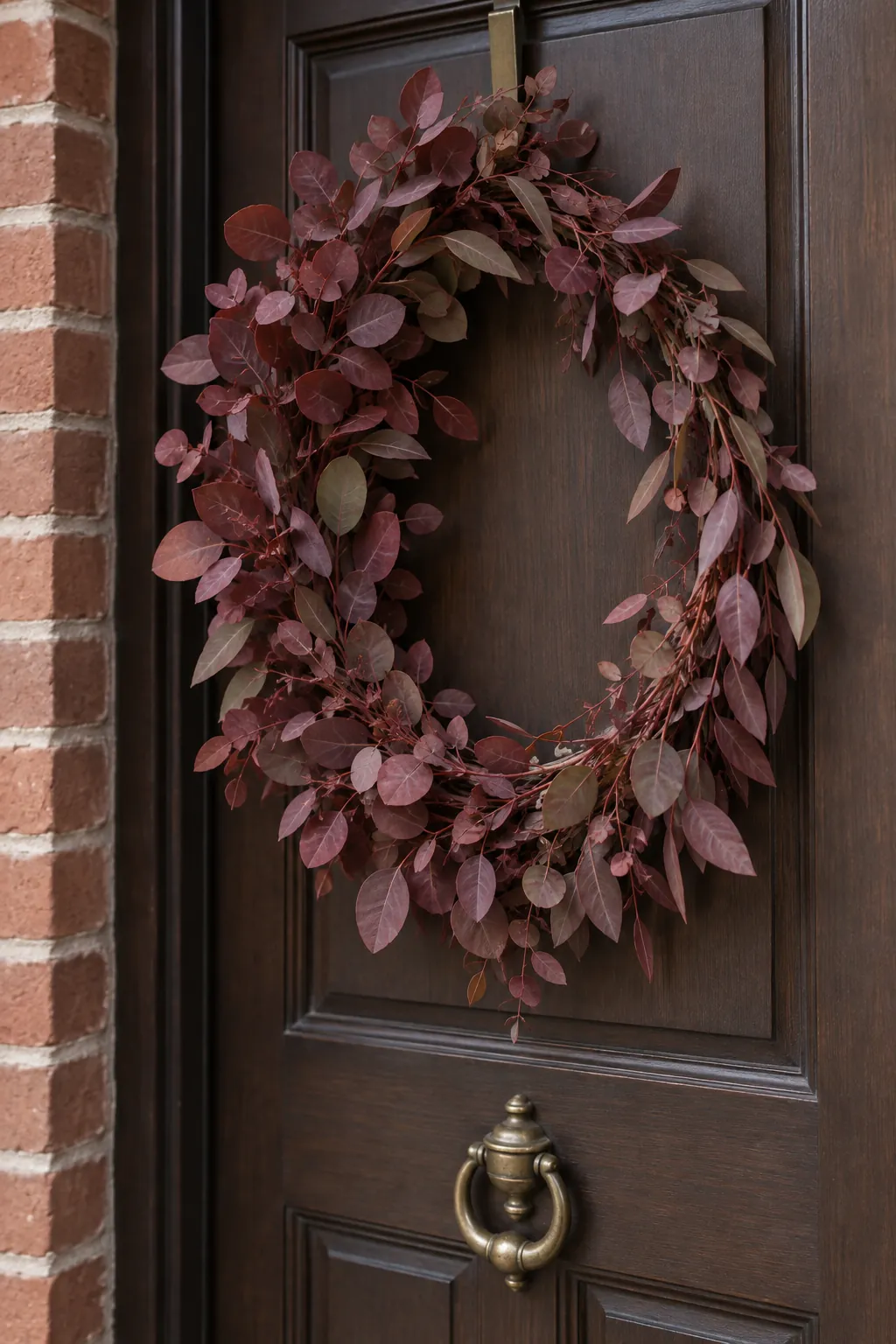
Burgundy Eucalyptus
Deep wine foliage creates an autumn mood even without an orange pumpkin. Choose branches with several leaf sizes and weave them in a single direction for a relaxed oval silhouette. Bend wired stems gradually rather than folding them at a sharp angle that exposes the core.
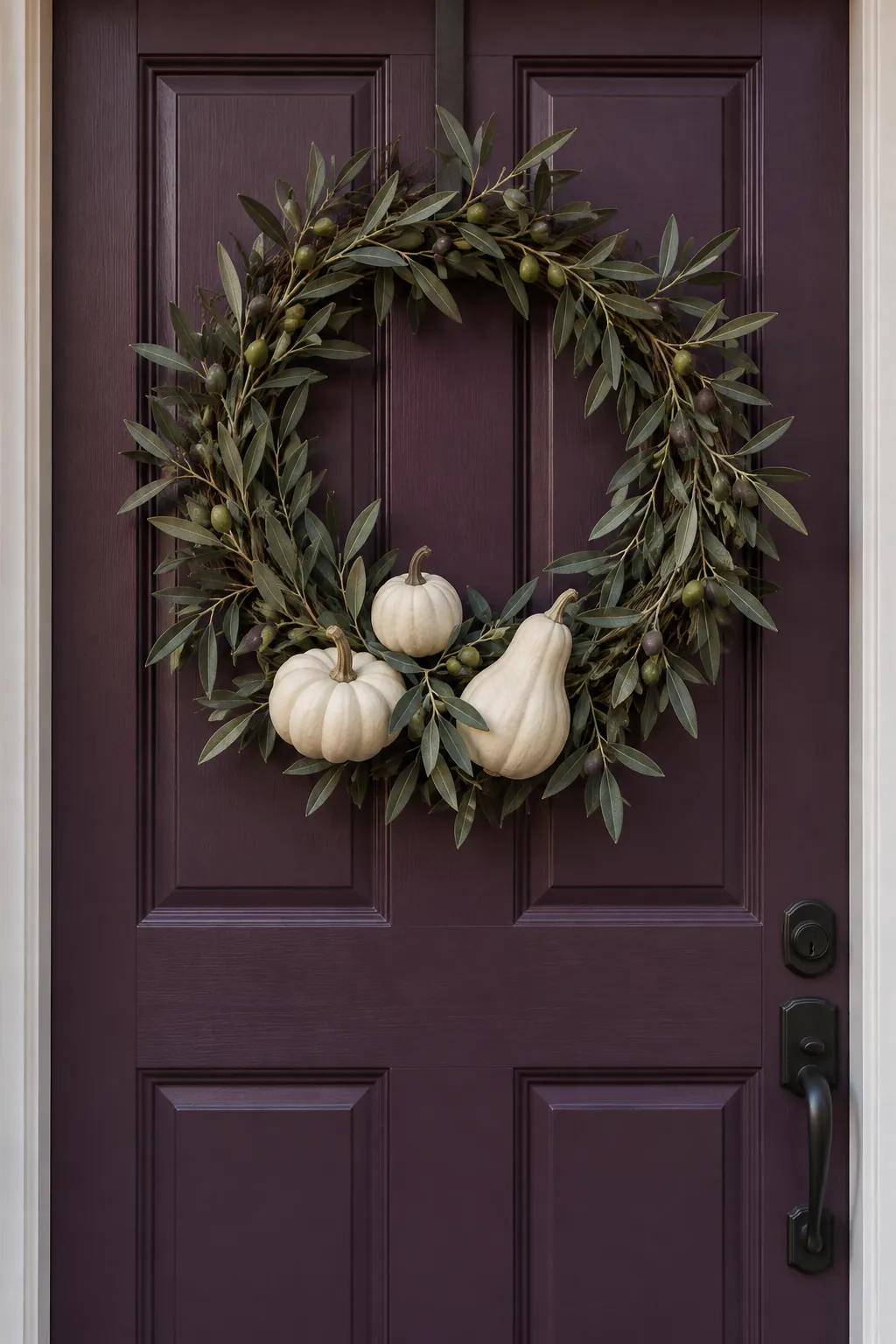
Cream Gourds and Olive Leaves
Cream gourds are useful when the door itself already supplies a strong color. Set a few lightweight faux gourds among olive leaves, with the smallest one slightly above the others to avoid a heavy bottom edge. Leave visible gaps between their shapes so they do not merge into one pale mass. Select components rated for the exposure at your entrance, since a neutral color does not make an indoor decoration weatherproof.
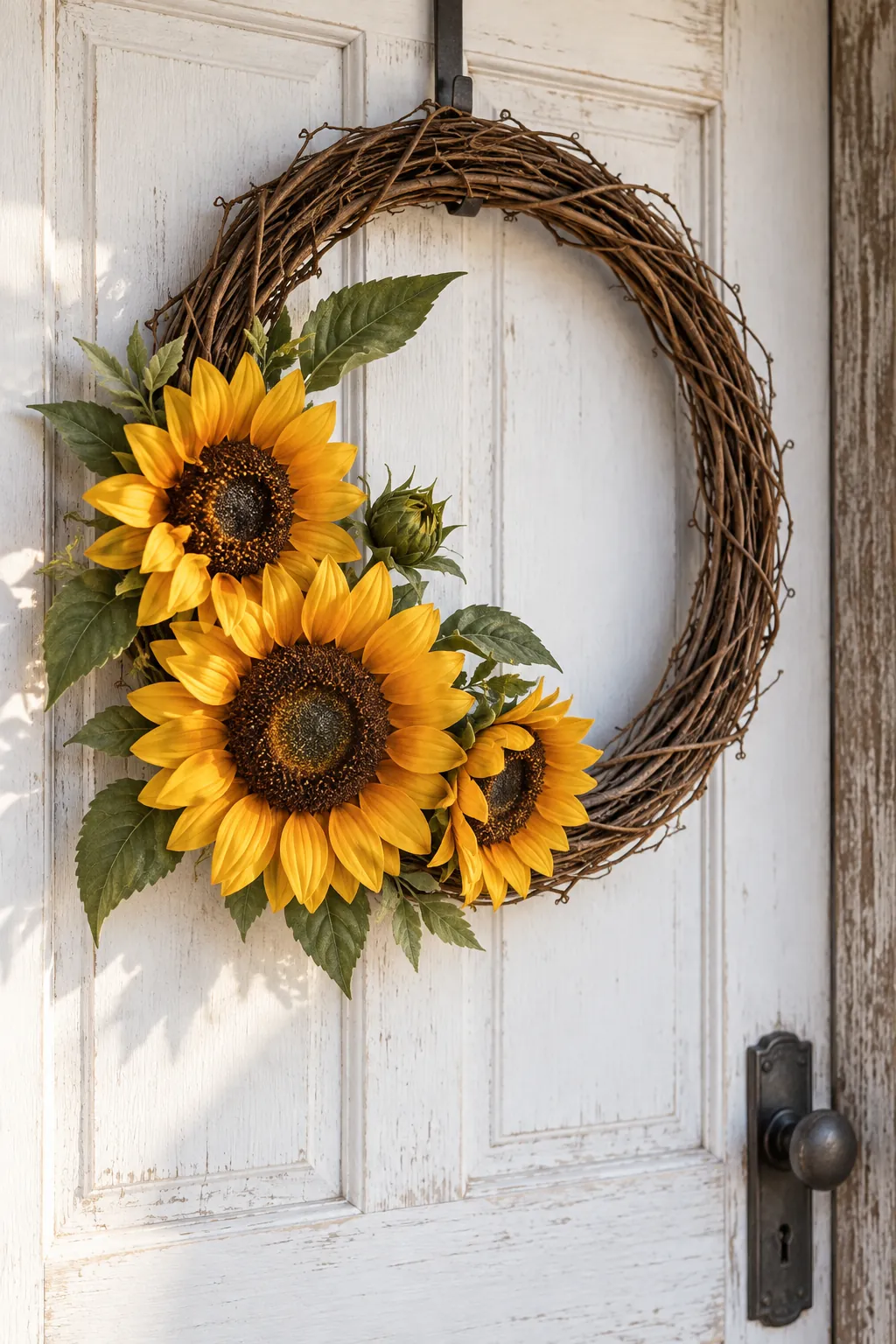
A Sunflower Cluster
One concentrated group of sunflowers can carry the whole wreath. Arrange the largest bloom first, angle smaller heads toward it, and extend a few narrow leaves outward to soften the cluster. A simple base gives the flower centers enough contrast to show up from the sidewalk.
Before adding more blooms, hang the unfinished ring and view it from the usual approach. Flowers that look sparse on the table may already fill the door panel well. Keep the handle side less bulky if visitors need to reach close to the wreath.
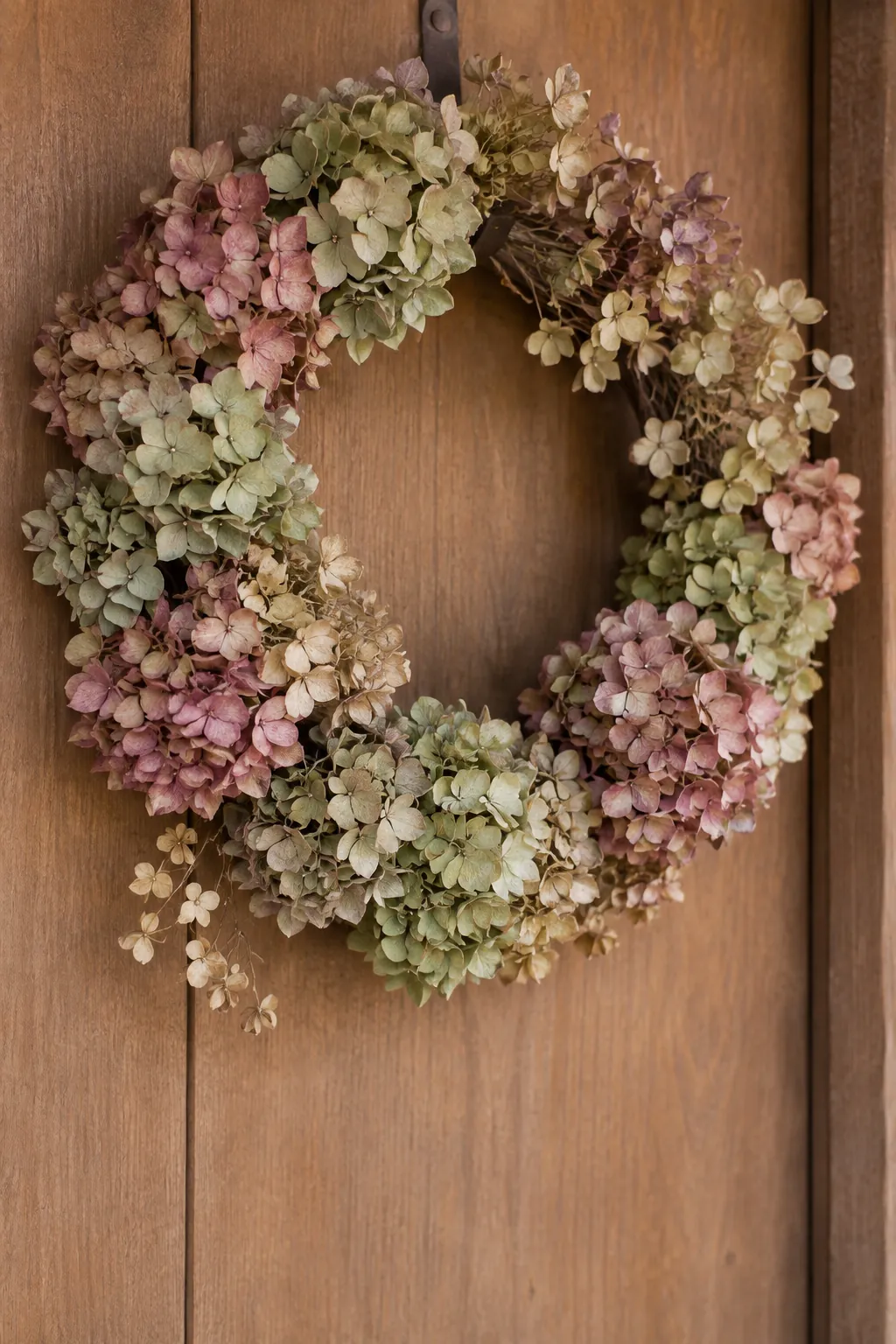
Hydrangeas in Faded Autumn Colors
Dried hydrangeas offer the soft green, dusty rose, and tan tones of a garden at the end of its season. Work with fully dried heads and attach small sections rather than forcing a whole fragile bloom into place. Handle the stems near their bases to limit petal loss. A recessed porch is a better home for this delicate wreath than an exposed gate. When packing it away, support the base without pressing tissue tightly against the flowers.
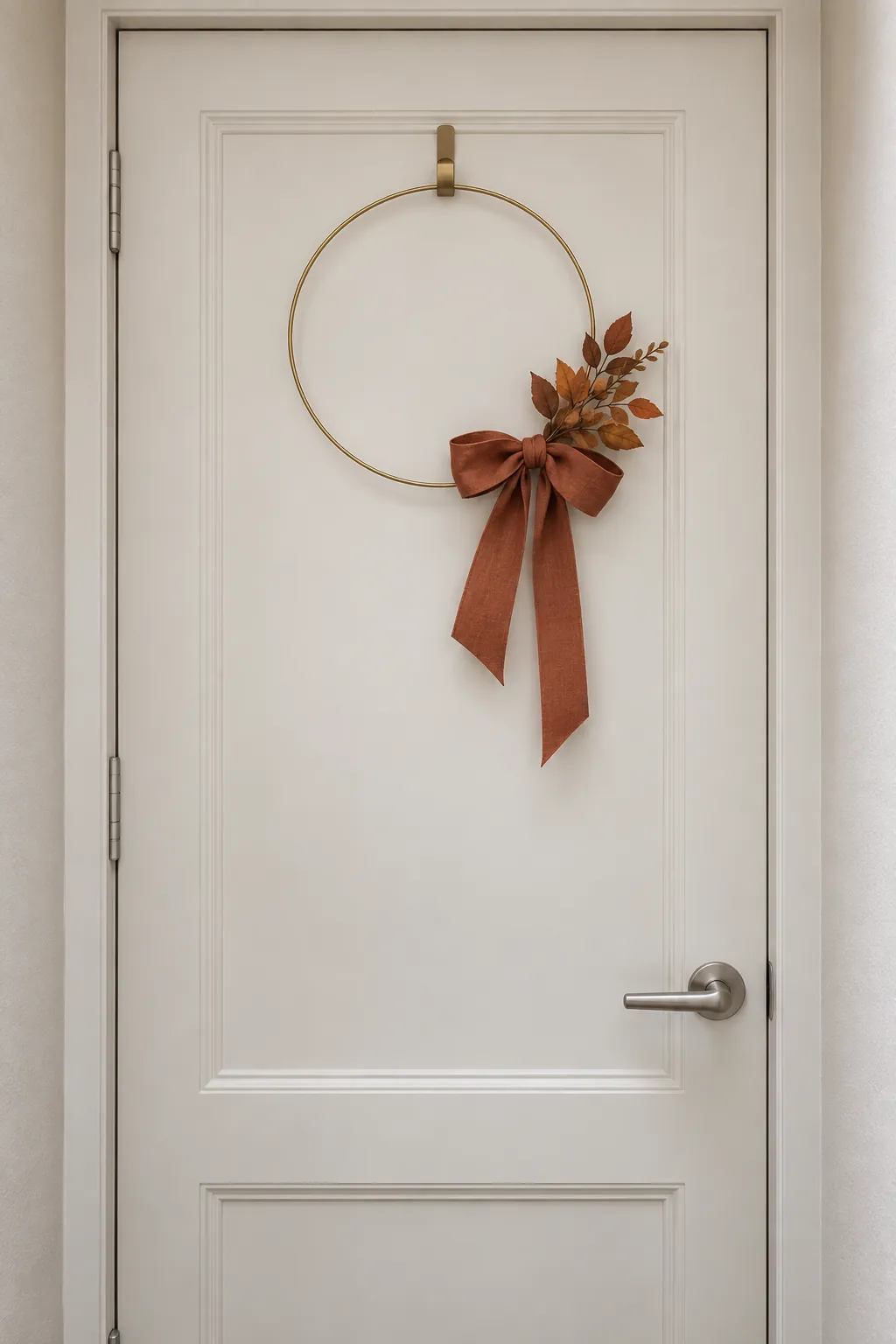
A Narrow Ribbon Hoop
A slim metal hoop with a single rust ribbon is one of the easy fall wreaths that suits a small entrance. Add a short spray of leaves at the ribbon knot to connect the fabric with the season. Measure the complete bow, including its tails, because the decoration can extend much farther than the ring itself.
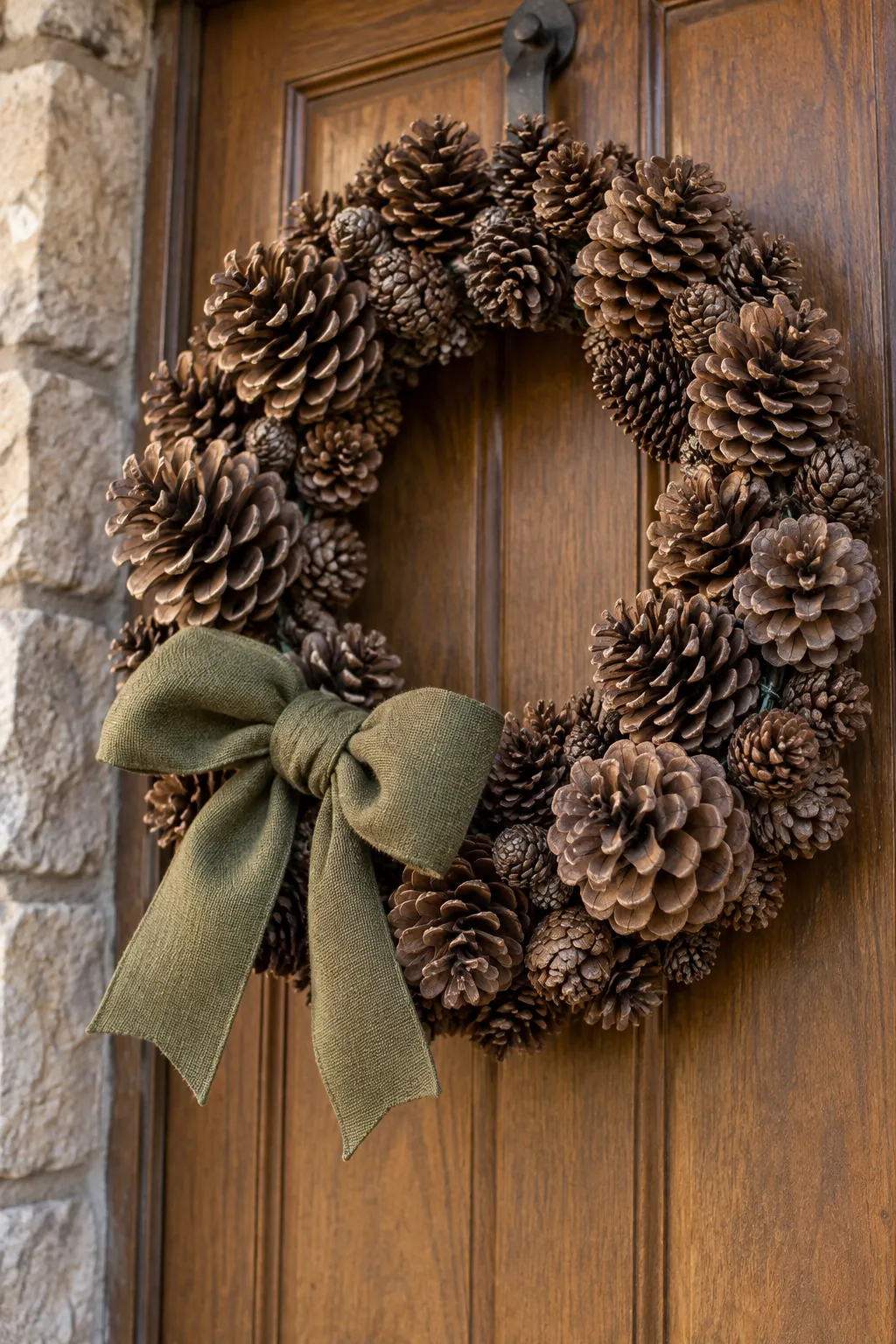
Pinecones with a Moss Green Bow
Pinecones bring enough texture that they need little extra decoration. Fasten each cone securely to a sturdy ring and distribute the weight evenly before adding a broad green bow. If you collect cones outdoors, clean and dry them thoroughly before bringing them into your decorating supplies.
Lift the finished wreath by its frame to check for shifting pieces. A heavy cone wreath needs hanging hardware matched to the actual finished weight and the door surface. A small pad behind the frame can reduce rubbing, provided it will not trap moisture against the finish.
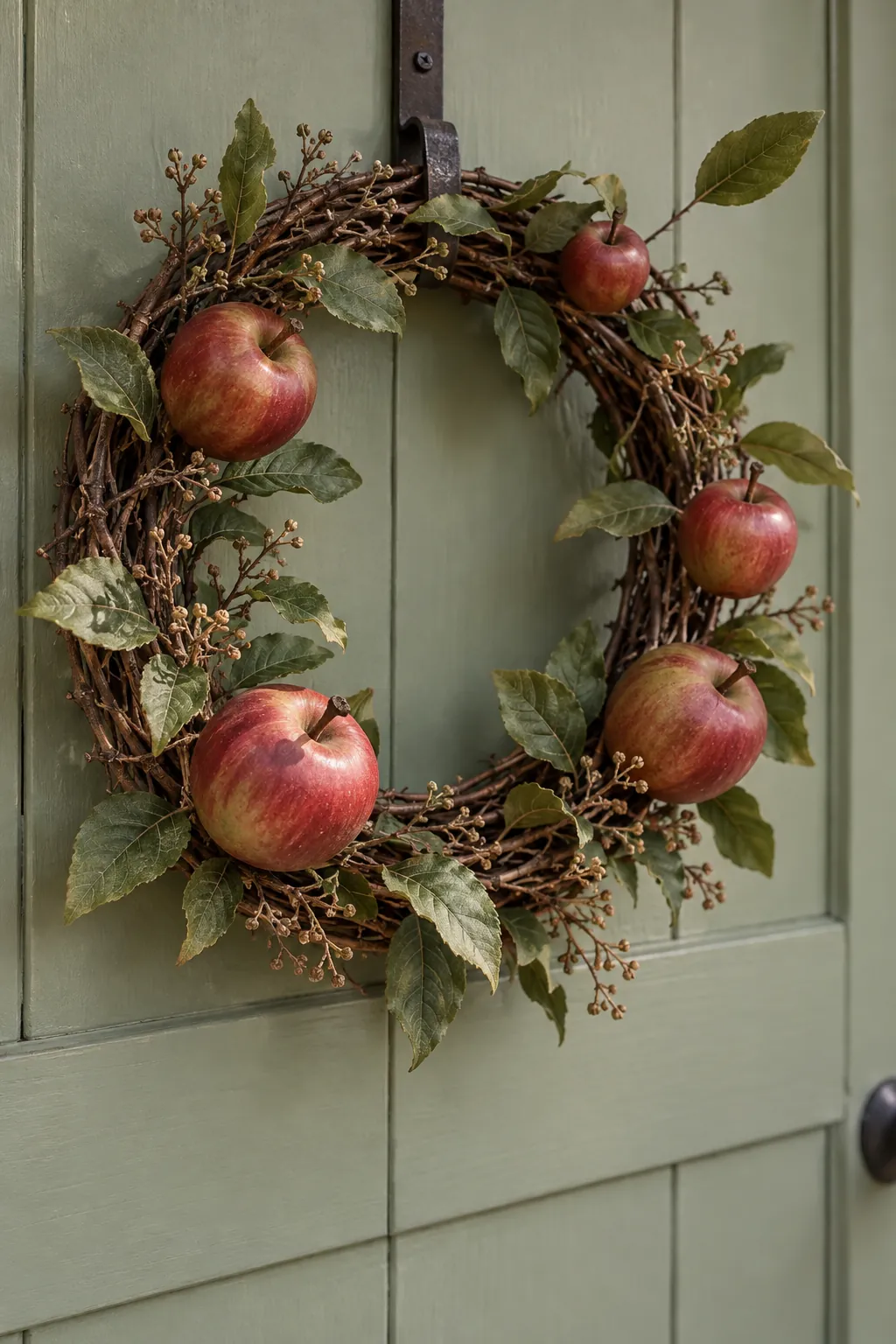
A Little Apple Orchard
Artificial apples give a wreath a harvest theme that can stay up beyond Halloween. Mix a few muted red apples with small green leaves and thin twig branches, keeping the fruit at different heights. Use lightweight ornaments with reliable attachment points rather than real fruit that will soften. A restrained apple count keeps the ring readable and reduces the load on its hanger.
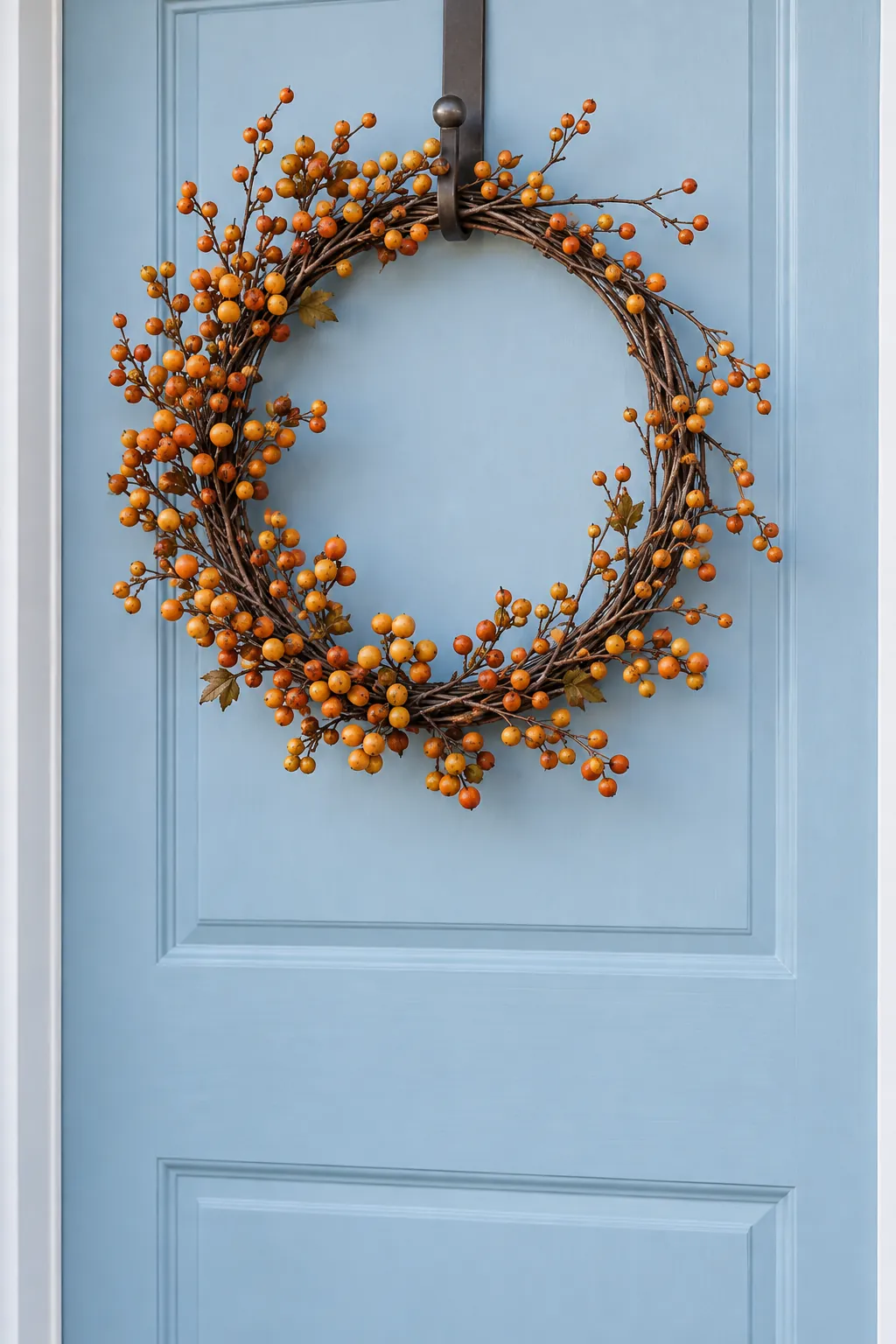
Amber Berries Around a Twig Ring
Tiny amber berries add color without taking up much depth. Follow the ring with several short sprigs, letting the woody base appear between them. Check artificial berries for cracked coatings before hanging, and choose outdoor suitable materials if moisture can reach the door. A few missing or damaged clusters are easier to replace when the sprigs are wired on separately.
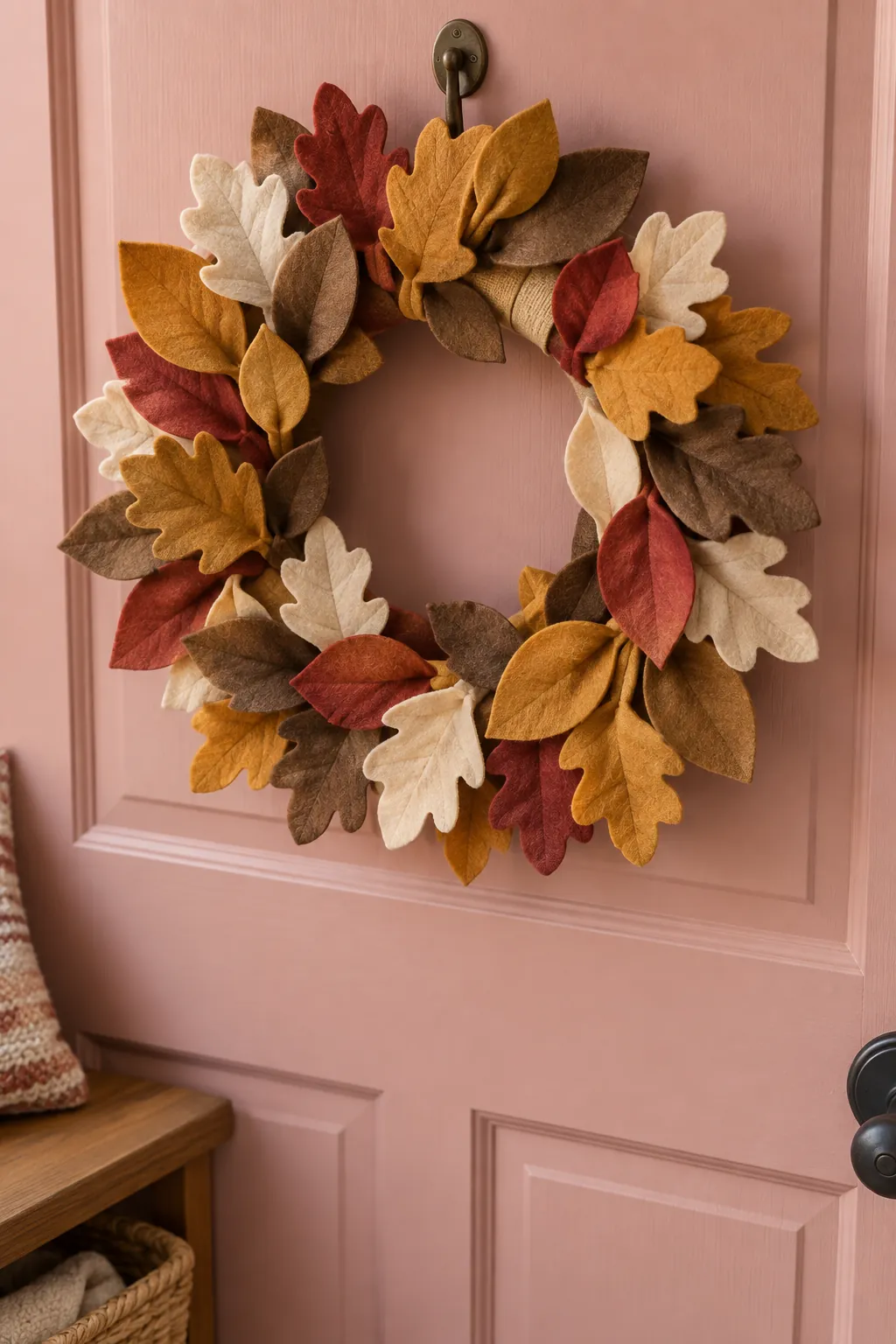
Layered Felt Leaves
Felt leaves are a forgiving choice for DIY fall wreath ideas because their edges do not need a sewn hem. Cut a few oak and oval leaf shapes in ocher, cream, and muted red, then overlap them on a fabric covered ring. Slightly pinch the base of each leaf before attaching it to create a shallow fold.
Keep this textile wreath in a protected entry where it can remain dry. Choose shorter leaves near the inner opening so the circle does not disappear. A lint roller used gently before storage can lift loose fibers without soaking the fabric.
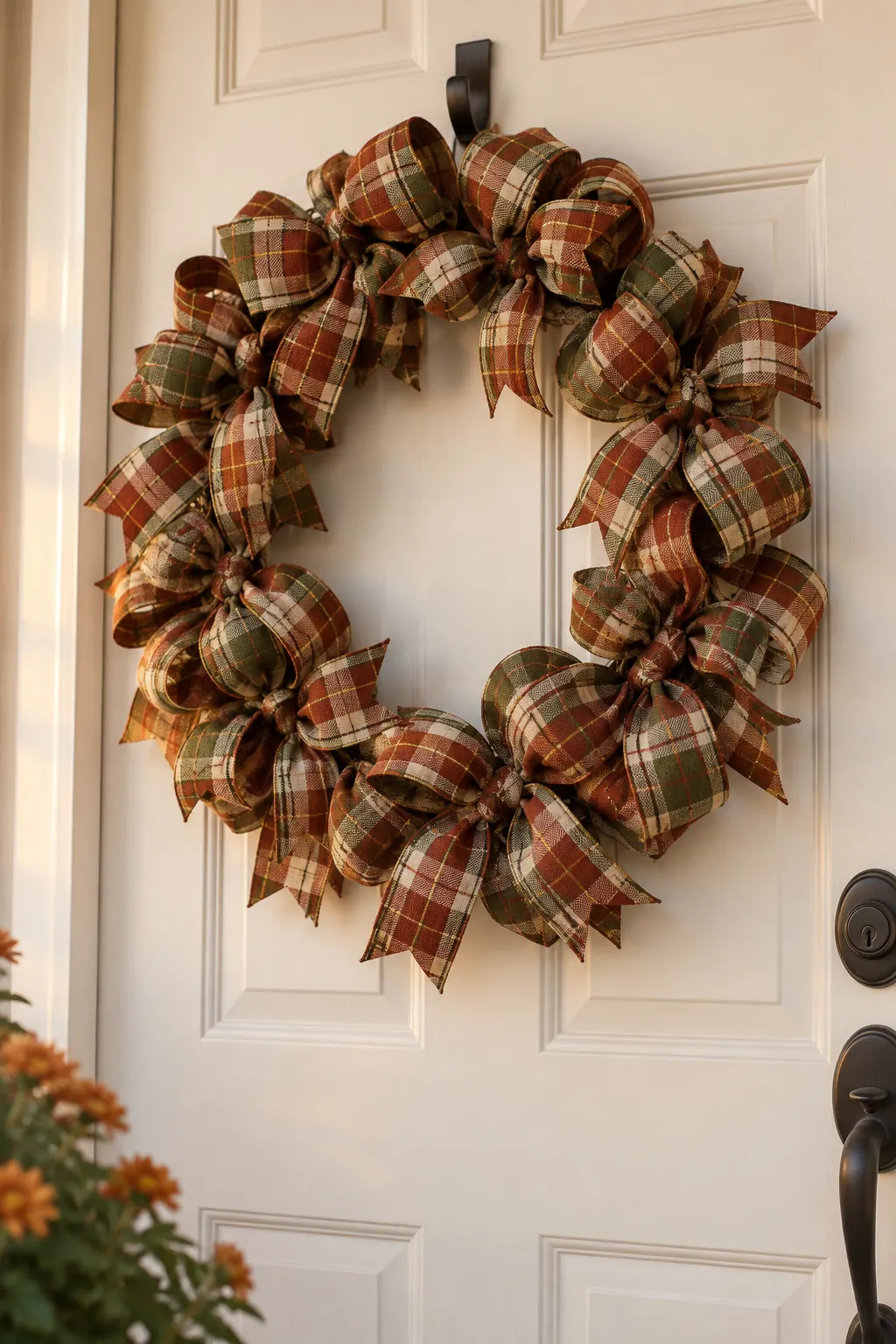
An Autumn Plaid Ribbon Ring
Plaid brings pattern to a door that has little architectural detail. Tie equal lengths of ribbon onto a wire frame, then alternate the direction of the tails to avoid a stiff fringe. A wired ribbon holds loops more firmly, while a soft woven ribbon gives a looser finish. Test the ribbon ends for fraying and use the finishing method recommended for that material. Keep the palette to a few related colors so the pattern does not compete with the rest of the porch.
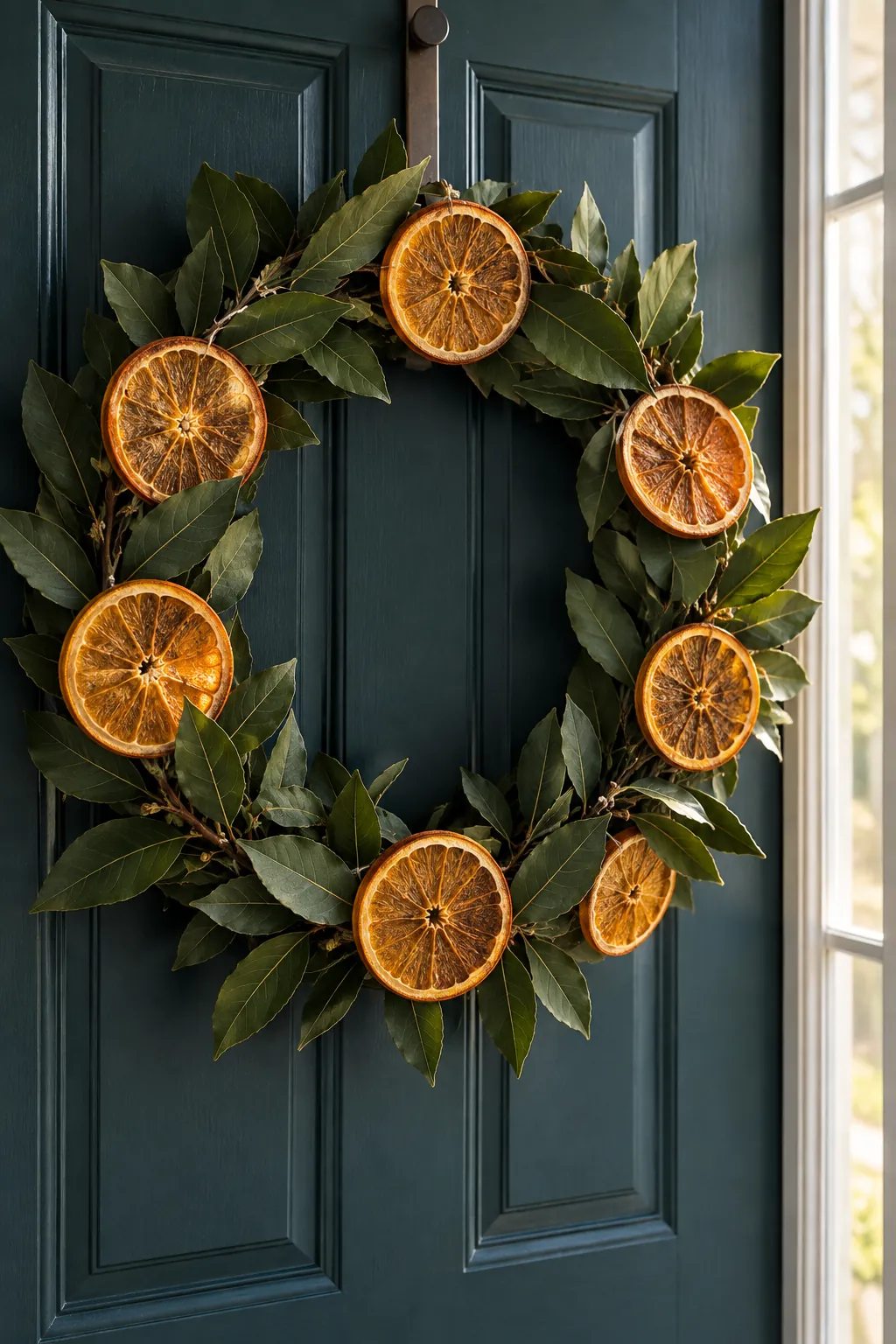
Dried Orange Slices and Bay
Orange slices glow warmly when paired with the deep green of bay leaves. Use slices that are completely dry, and attach them with discreet ties through sturdy points rather than pushing through a brittle edge. Leave some leaves uncovered so the fruit remains an accent. This natural combination belongs in a sheltered location, and any piece that develops moisture damage should be removed promptly.
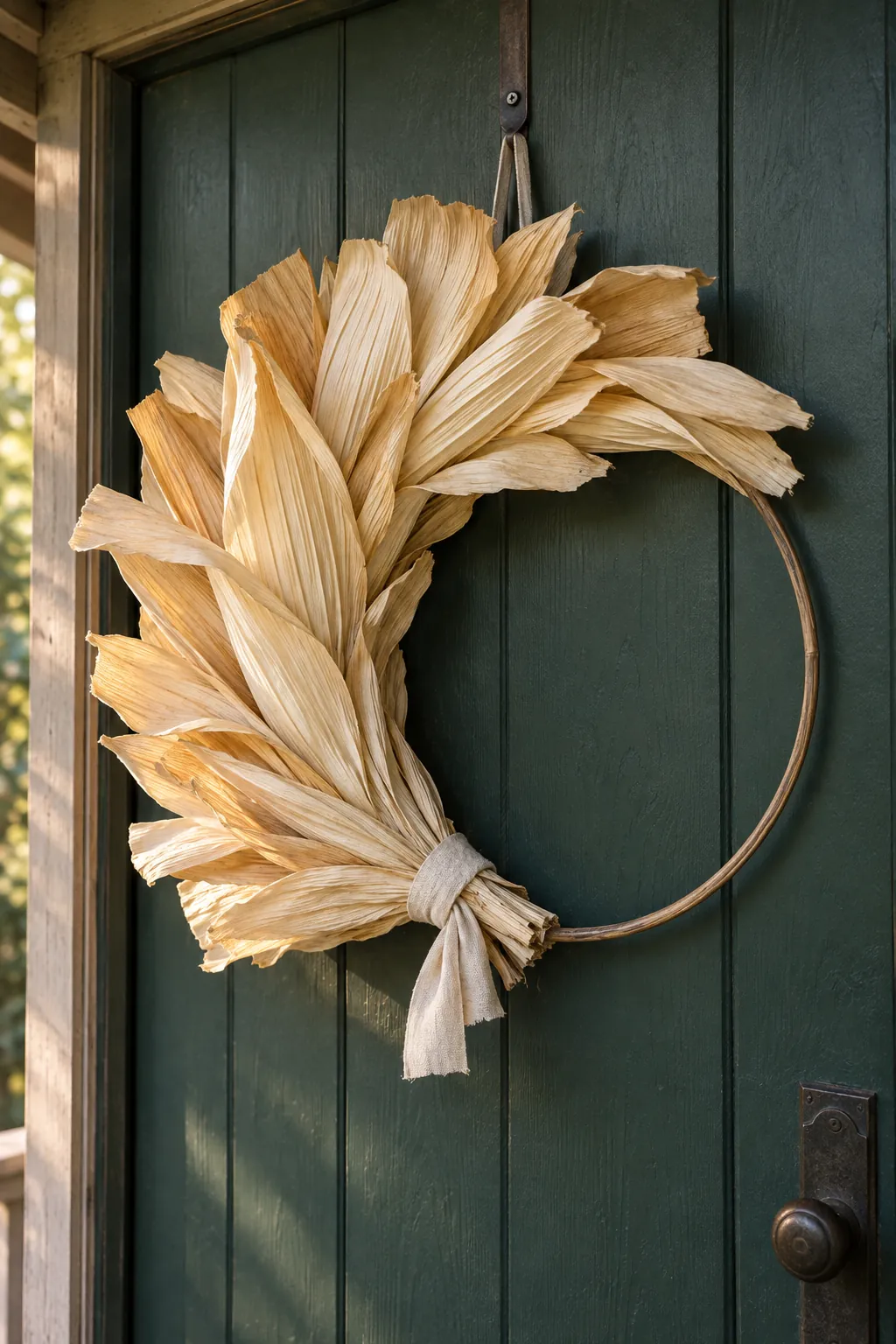
A Crescent of Corn Husks
Corn husks can form a sculptural wreath with almost no added color. Fan them along one side of a ring, keeping the folds irregular enough to reveal their broad shapes. Bind the narrow ends firmly, then cover that working area with a simple cloth tie.
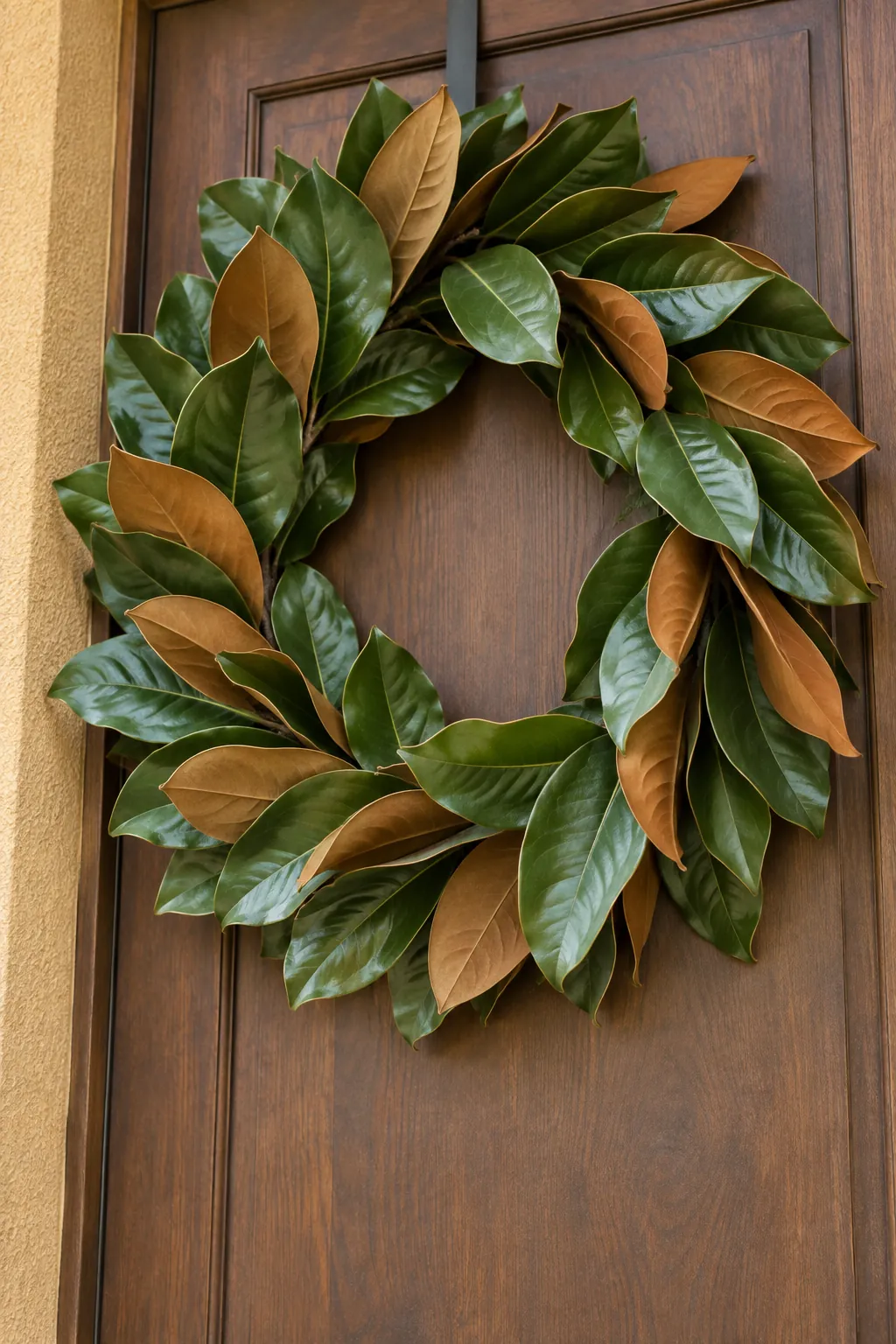
Magnolia Leaves with Copper Backs
Magnolia leaves offer two colors from a single material, glossy green fronts and warm brown undersides. Turn a few leaves outward as you build the circle so both surfaces remain visible. Overlap the stems in one direction and avoid burying every leaf tip beneath the next layer.
Fresh foliage changes as it dries, so expect some curling and color variation. An artificial magnolia wreath is easier to repeat from year to year, but its exposure rating still matters. A plain door provides the contrast needed to appreciate the leaf shape.
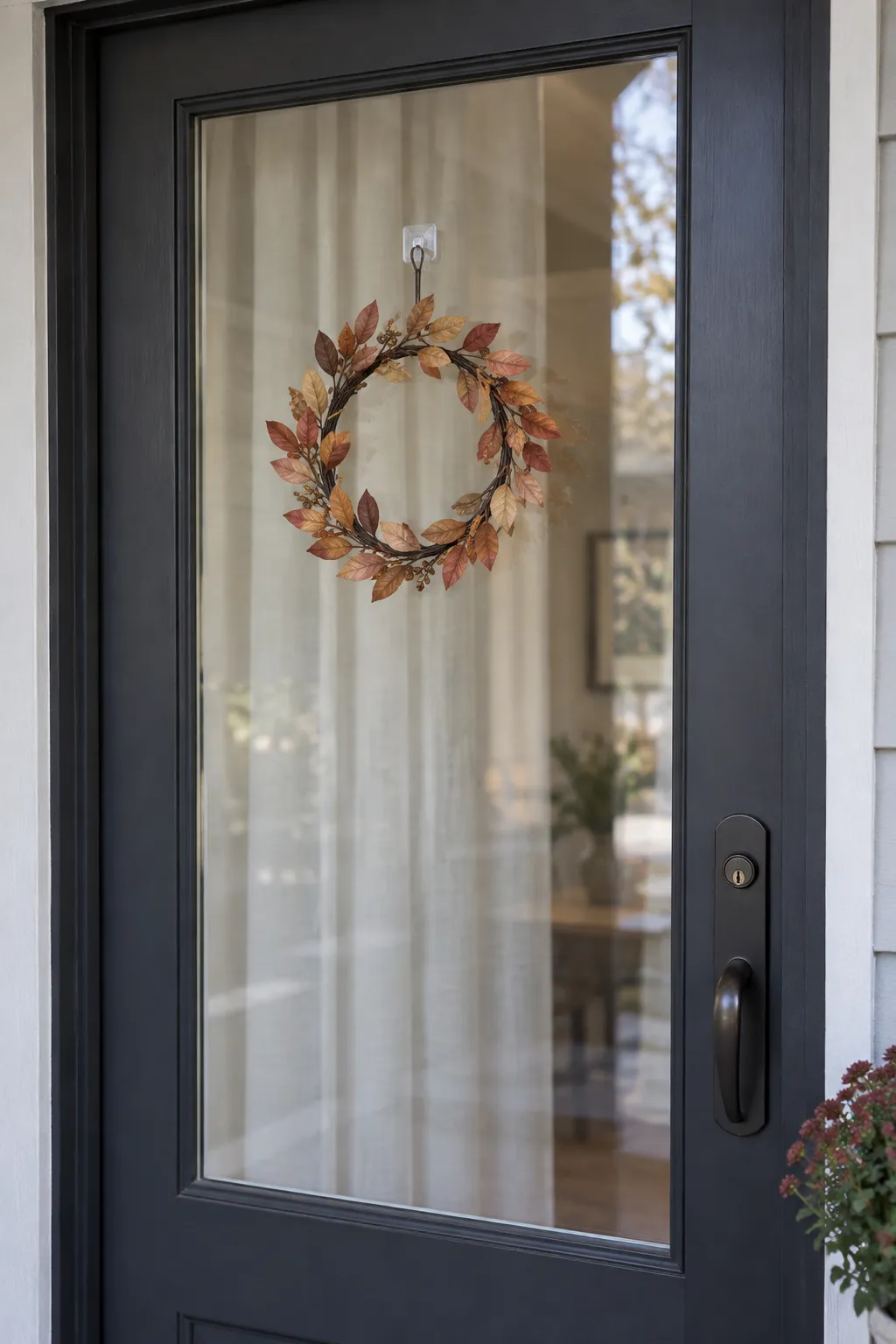
A Small Wreath for a Glass Panel
A compact wreath can decorate a glazed door without covering most of the view. Choose an open design with short leaves and measure it against the actual pane, including the space needed for its hanger. Use hardware intended for the glass surface and the finished weight, following its preparation and temperature instructions. Test the door movement before leaving the wreath in place. The hanging method should keep the decoration from knocking against the glass.
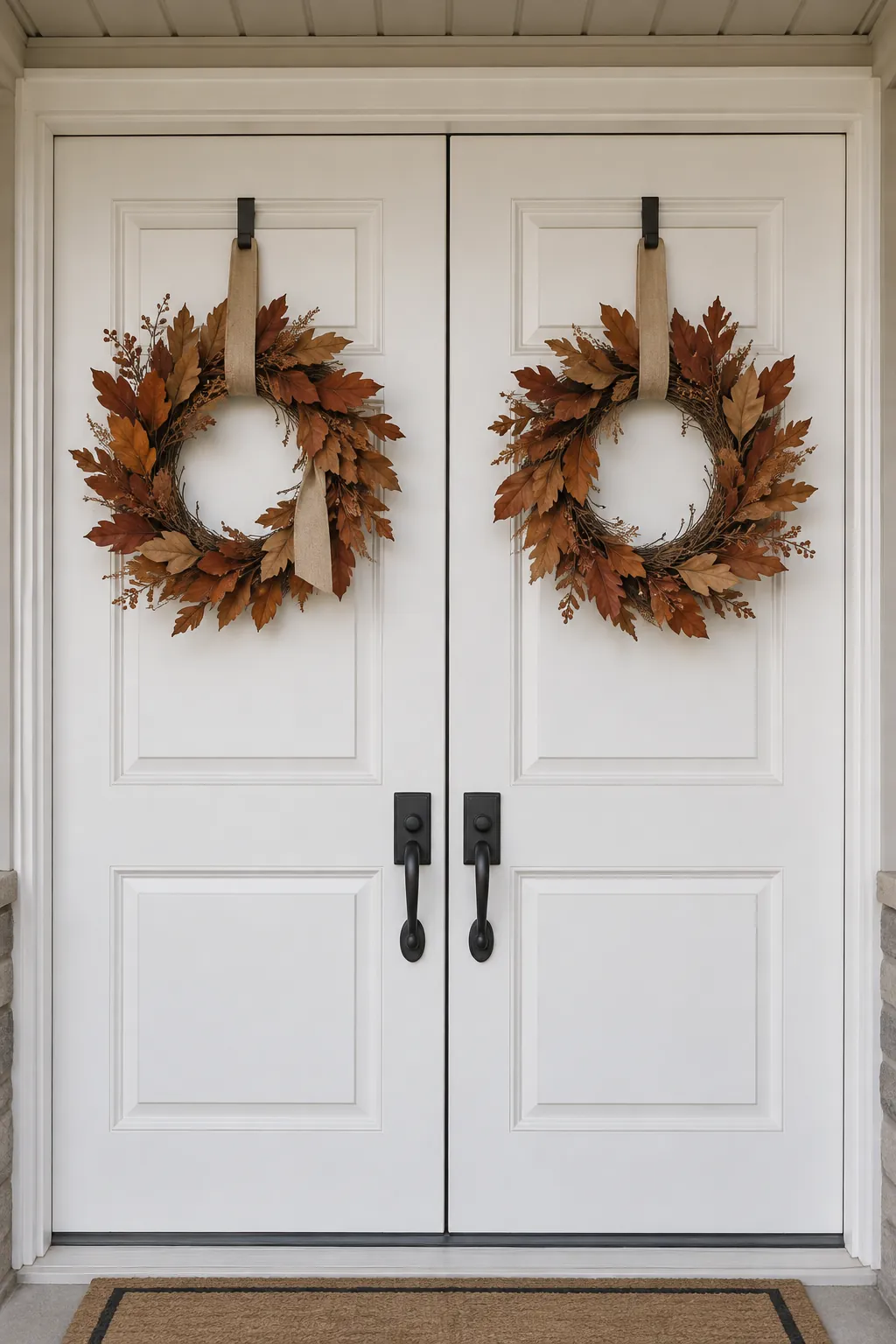
Matching Wreaths for Double Doors
A pair of modest wreaths often looks calmer than one oversized piece spanning double doors. Build the pair from the same materials, but allow small natural differences in leaf placement. Measure the hanging points from a common reference so the centers align.
Check that neither wreath crosses the gap between the doors. Open each leaf fully and watch the decorations near handles and trim. Keep both arrangements light enough for the chosen hardware instead of assuming two identical hooks have unlimited holding strength.
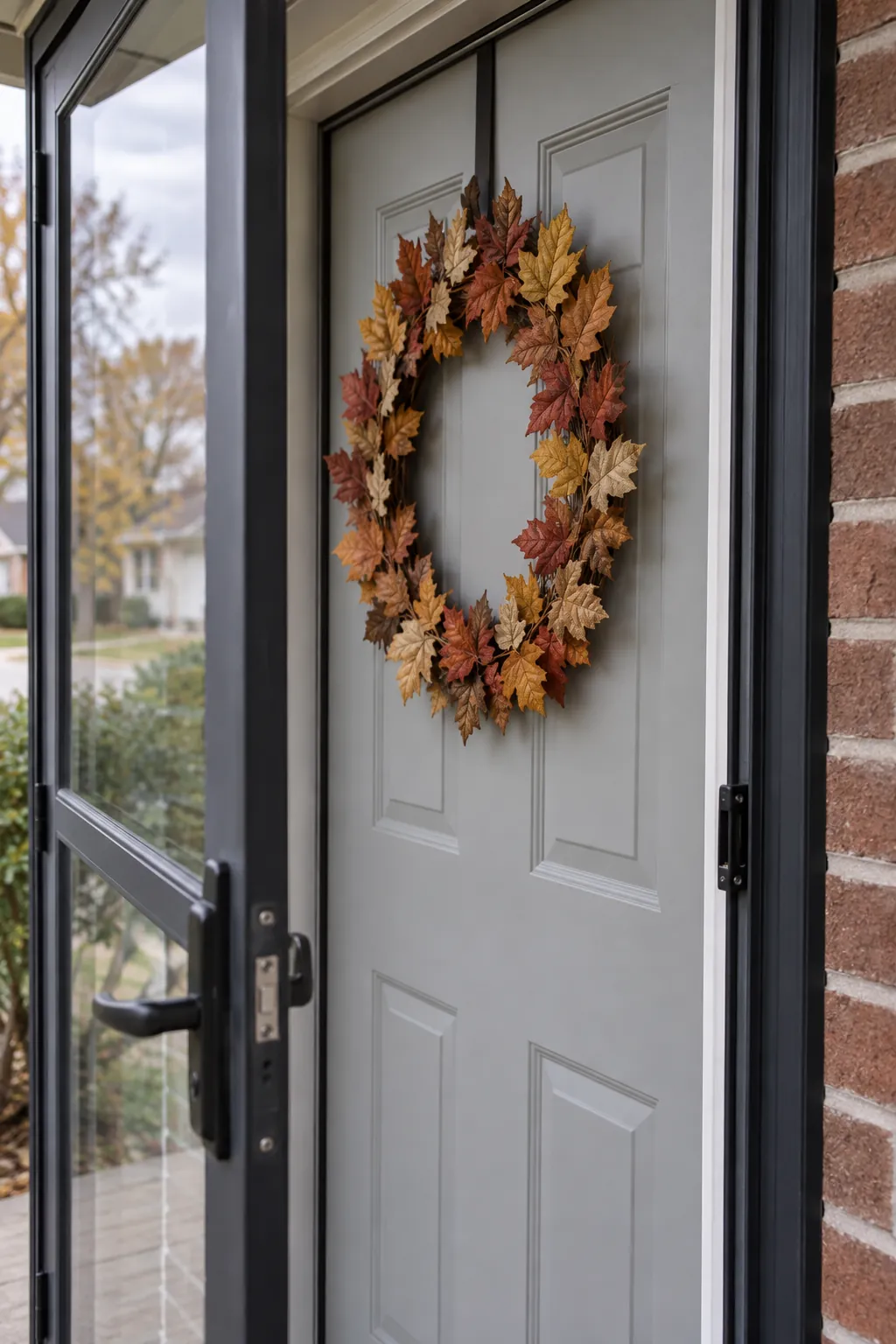
A Flat Leaf Ring for a Storm Door
Depth matters as much as diameter when another door closes in front of the wreath. Start with a thin ring and flat fabric leaves, omitting bulky pumpkins and large bows. Measure the available clearance while both doors are closed, and allow space for the wreath and its hanging hardware. Do not force a storm door shut against the decoration, because pressure can damage the wreath and interfere with normal closing.
Rust Dahlias on Black Wire
Rust colored dahlias stand out on a spare black wire ring. Place two large flowers low on one side and balance them with a small bud higher up. This arrangement lets the open frame provide contrast rather than filling every inch with greenery.

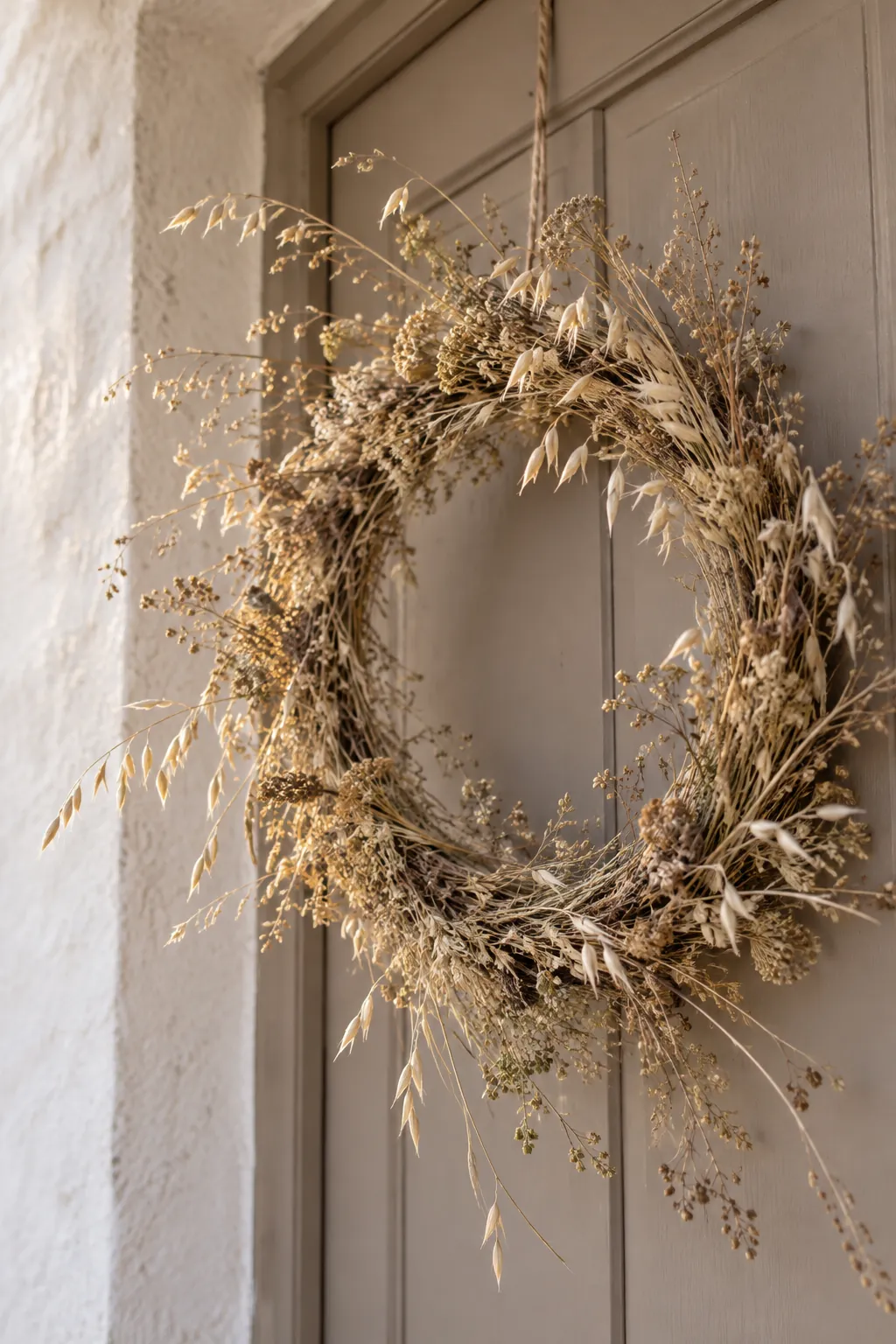
A Meadow of Seed Heads
A wreath of seed heads has a looser outline than one made from broad leaves. Use small dried bundles and vary their lengths, keeping most stems tangent to the circle so the result still feels intentional. Gather only where permitted, and avoid plants you cannot identify.
Dried meadow materials can shed seeds and attract unwanted attention from birds or insects. Keep the wreath in a protected spot and check it regularly rather than treating it as permanent outdoor decor. For a busy exposed entrance, a good artificial interpretation may be more practical.
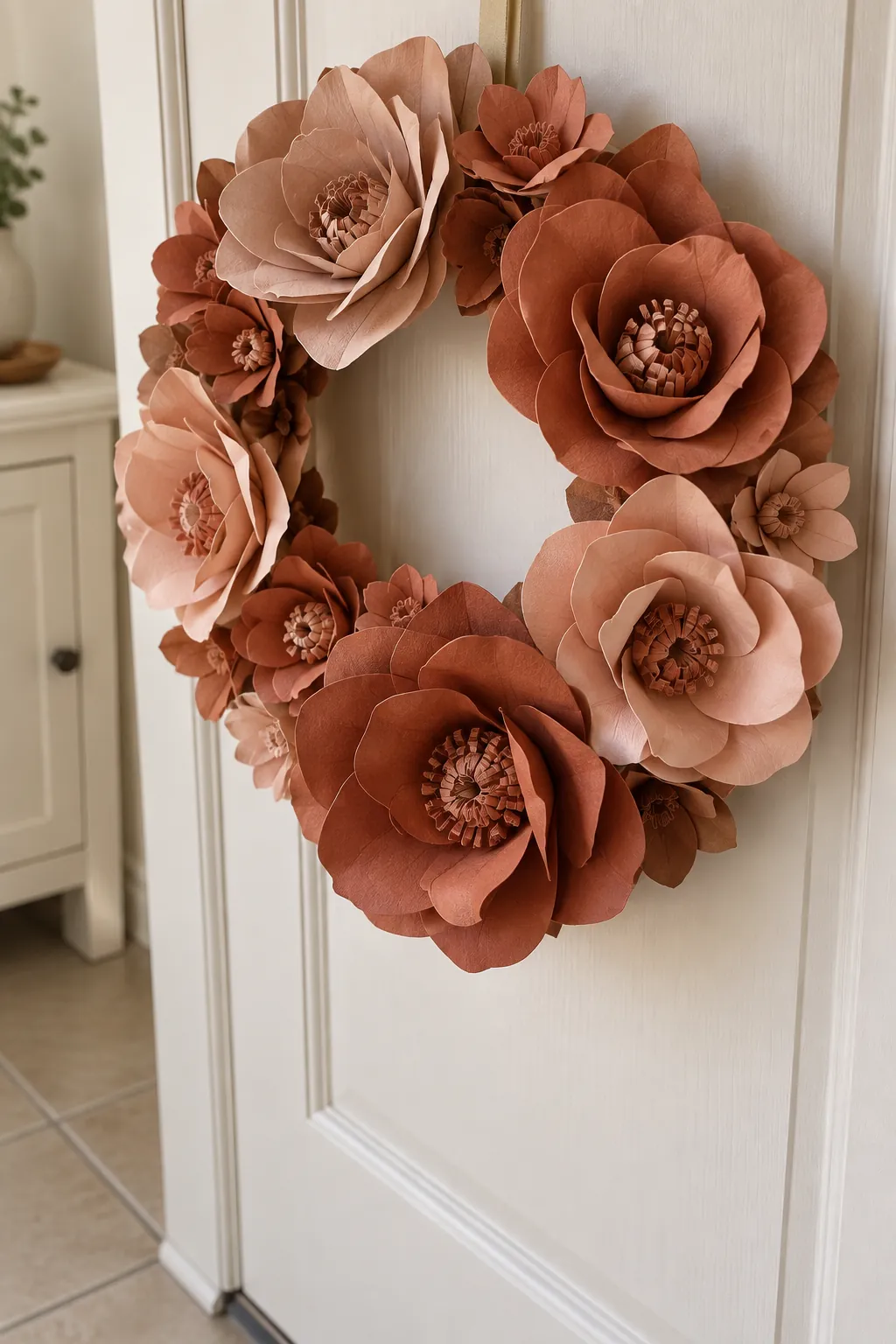
Terracotta Flowers Made from Paper
Folded paper flowers can supply a clay colored palette without the weight of ceramic pieces. Build a few generous blooms and tuck smaller ones into the gaps, leaving their folded centers visible. Attach the flowers to a lightweight base and keep glue hidden behind the petals. Paper belongs in a dry interior or fully enclosed entrance, since a protective spray cannot make every paper construction suitable for rain. This is a useful option when you want to experiment with color before buying permanent decor.
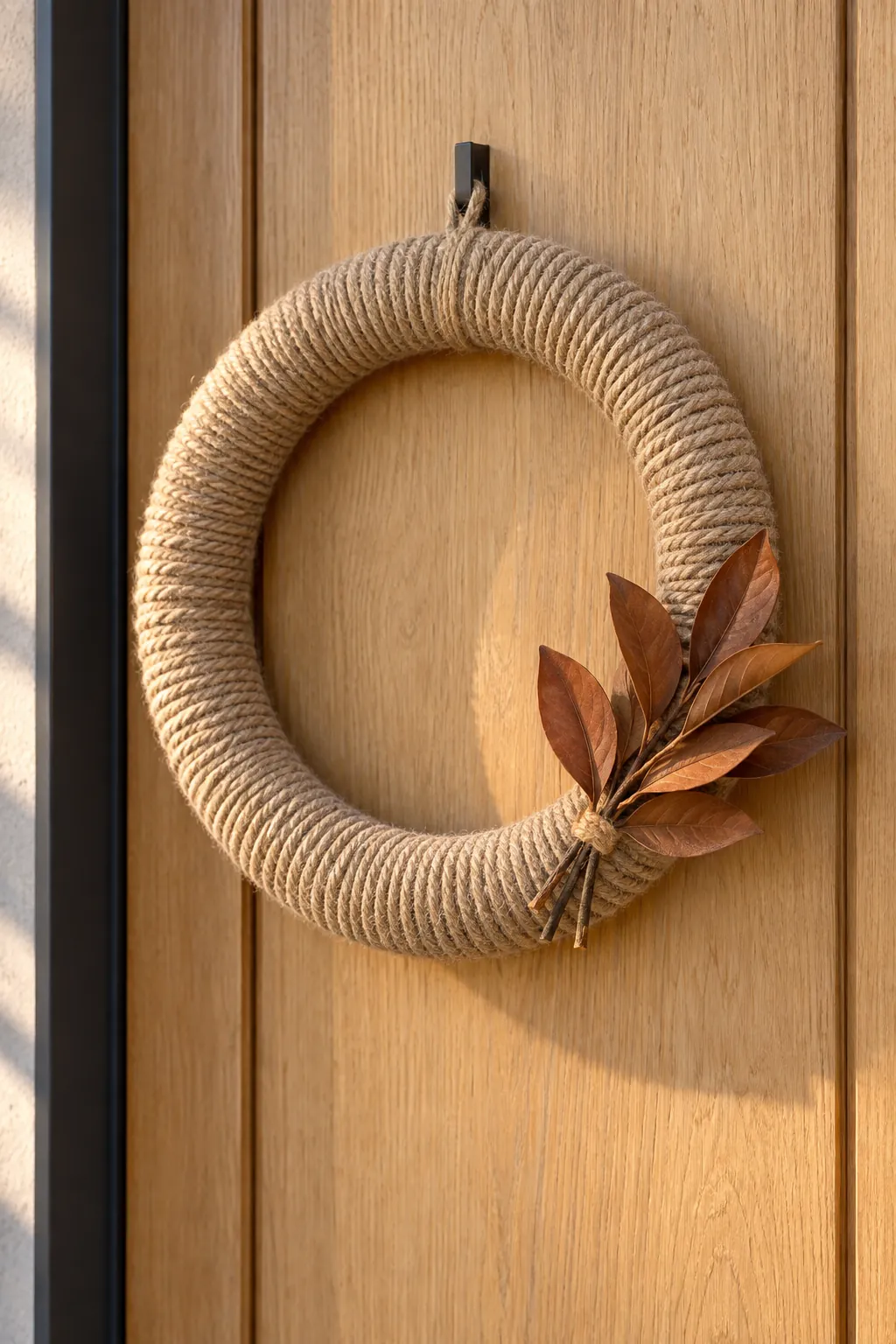
A Woven Jute Ring with One Sprig
A rope wrapped ring adds texture while keeping the silhouette quiet. Wrap the base closely enough to hide it, then attach one short spray of cinnamon colored leaves near the bottom. A narrow tie in the same tone as the rope keeps the fastening from becoming the focal point. Inspect the back for hard glue ridges or exposed ends before the wreath touches the door.
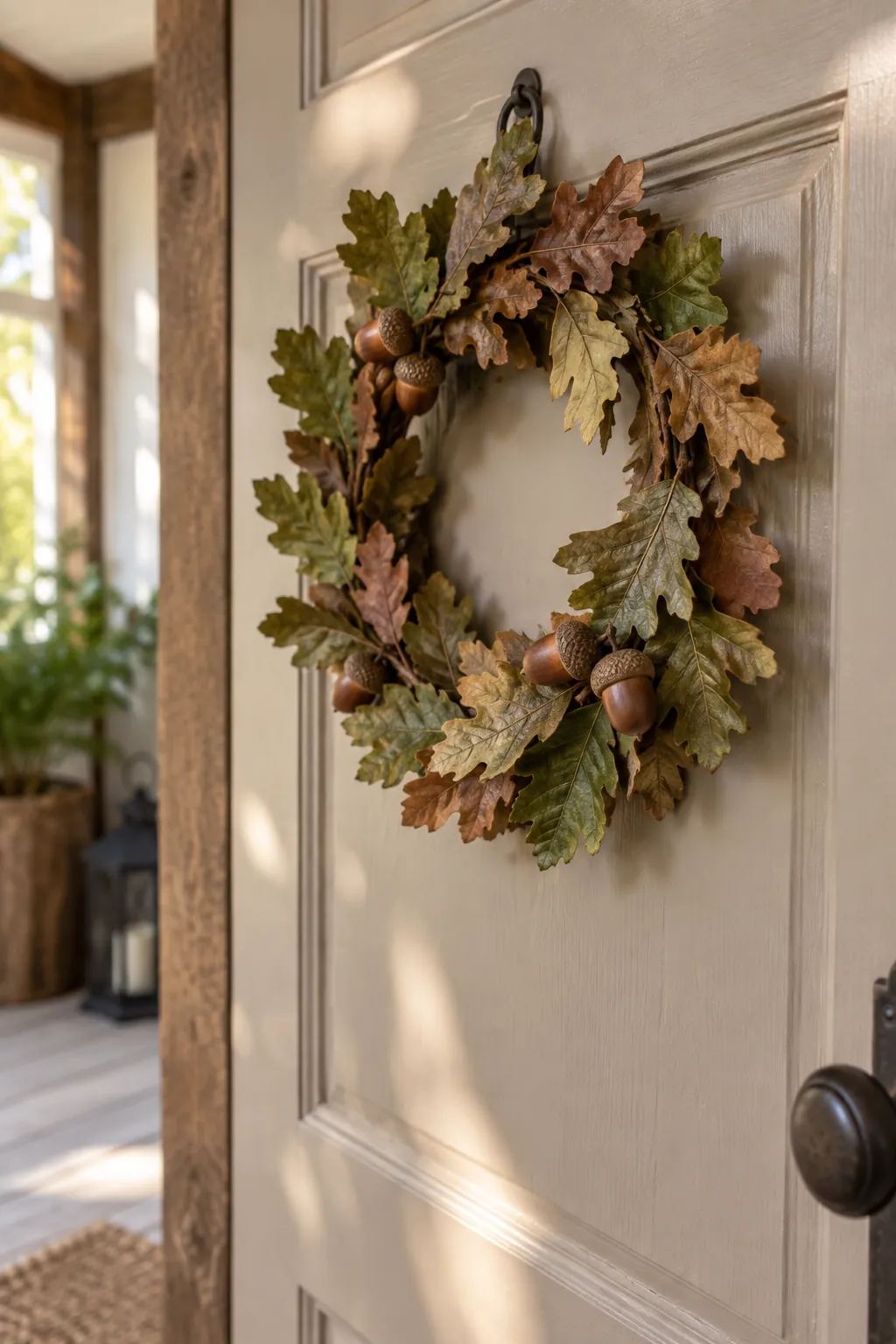
An Acorn and Oak Wreath
Acorns and oak leaves give a small wreath a woodland character. Use clean dry natural pieces in a protected location, or choose lightweight artificial acorns when you need a more predictable finish. Cluster the acorns near the stem junctions instead of spacing them like beads around the entire circle.
The cups and nuts can separate, so check both parts before attaching them. Keep small loose pieces away from children and pets while you work and during storage. A shallow box with a fitted support helps protect the oak leaf tips after the season.
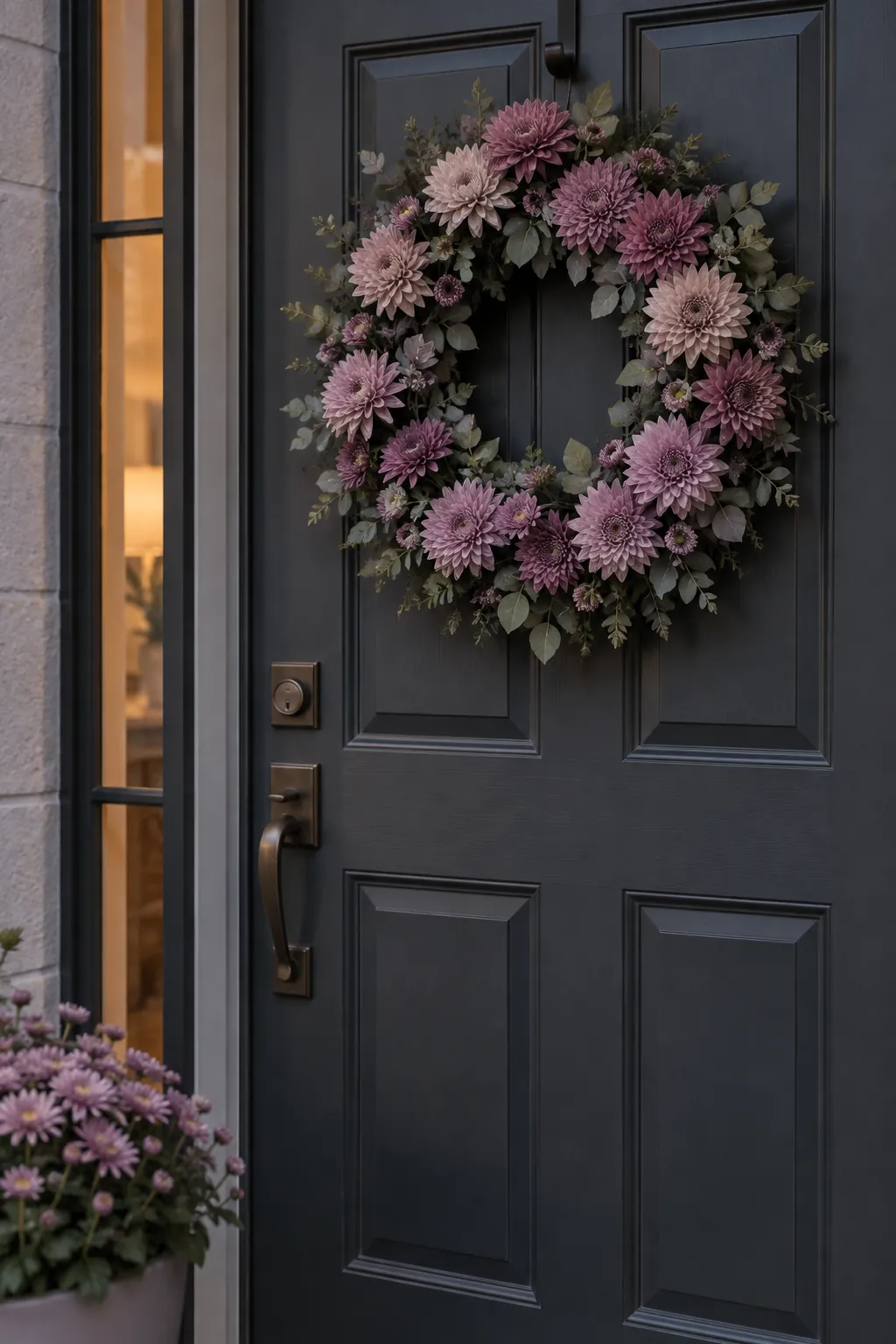
Muted Mauve Chrysanthemums
Mauve chrysanthemums offer a softer alternative to bright orange flowers. Combine several small flower heads with gray green foliage, allowing the petal texture to carry the design. Repeat the mauve in one nearby planter if you want the wreath to connect with the porch. Leave the door hardware visually separate so the pale flowers do not crowd the area people use.
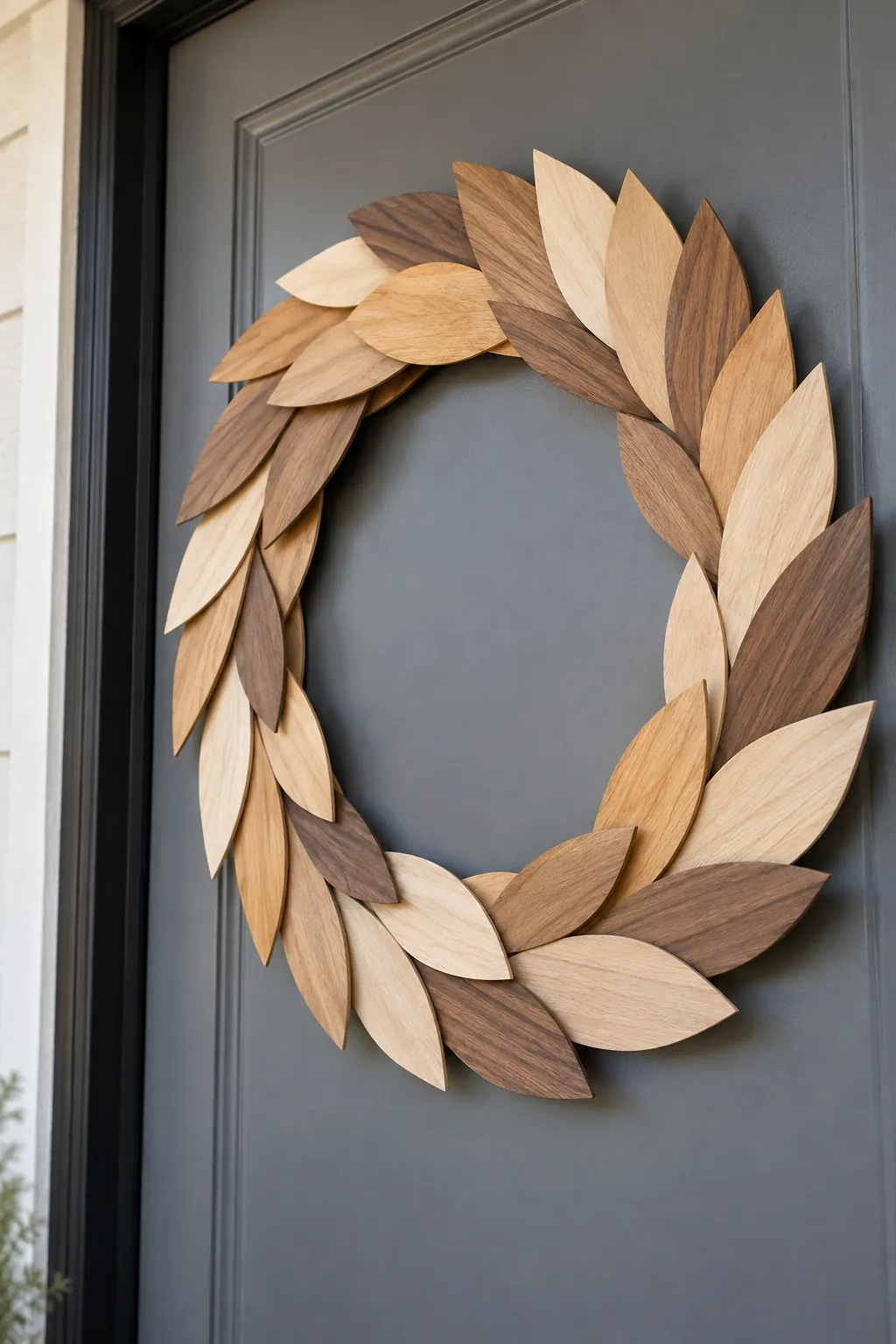
A Feather Shaped Wooden Leaf Ring
Thin wooden leaf cutouts create a crisp graphic wreath with a natural finish. Arrange the pieces like overlapping feathers around a flat base, turning the grain in slightly different directions. Use craft pieces with smooth edges and a finish suitable for their intended location.
Wood expands and contracts with moisture, and thin pieces can warp when exposed. Display this style under reliable cover unless the materials are specifically designed for outdoors. Check that the back of the ring is smooth before hanging it against painted trim.
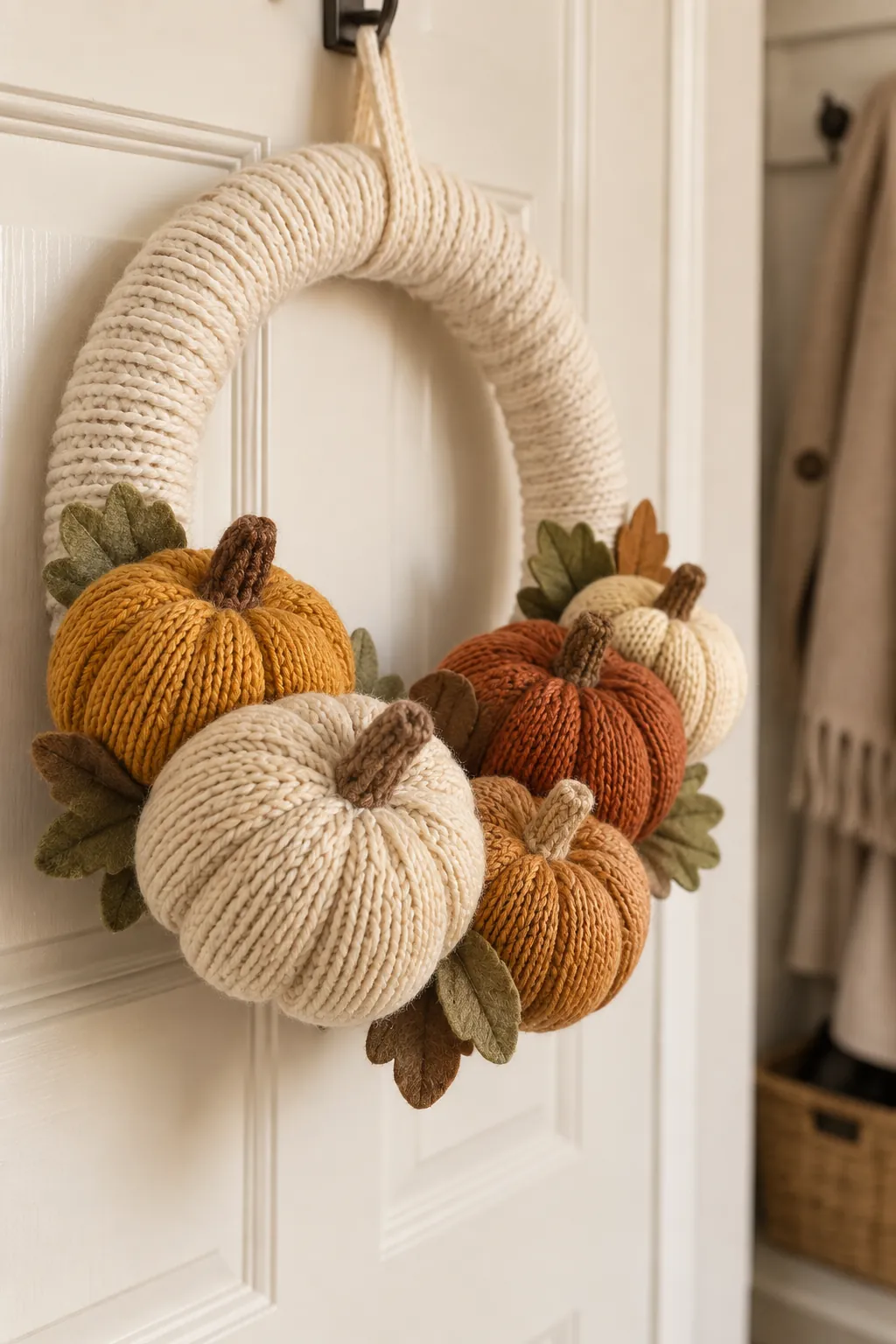
A Soft Knit Pumpkin Wreath
Knitted miniature pumpkins give an enclosed entrance a cozy autumn detail. Attach a small group to a yarn wrapped base and use a few felt leaves to separate their rounded shapes. Choose a deep storage container that will not flatten the yarn texture. This design is best kept away from damp air and direct splashes, and any removable fabric pieces should be cleaned according to their yarn and filling.
A Removable Thanksgiving Accent
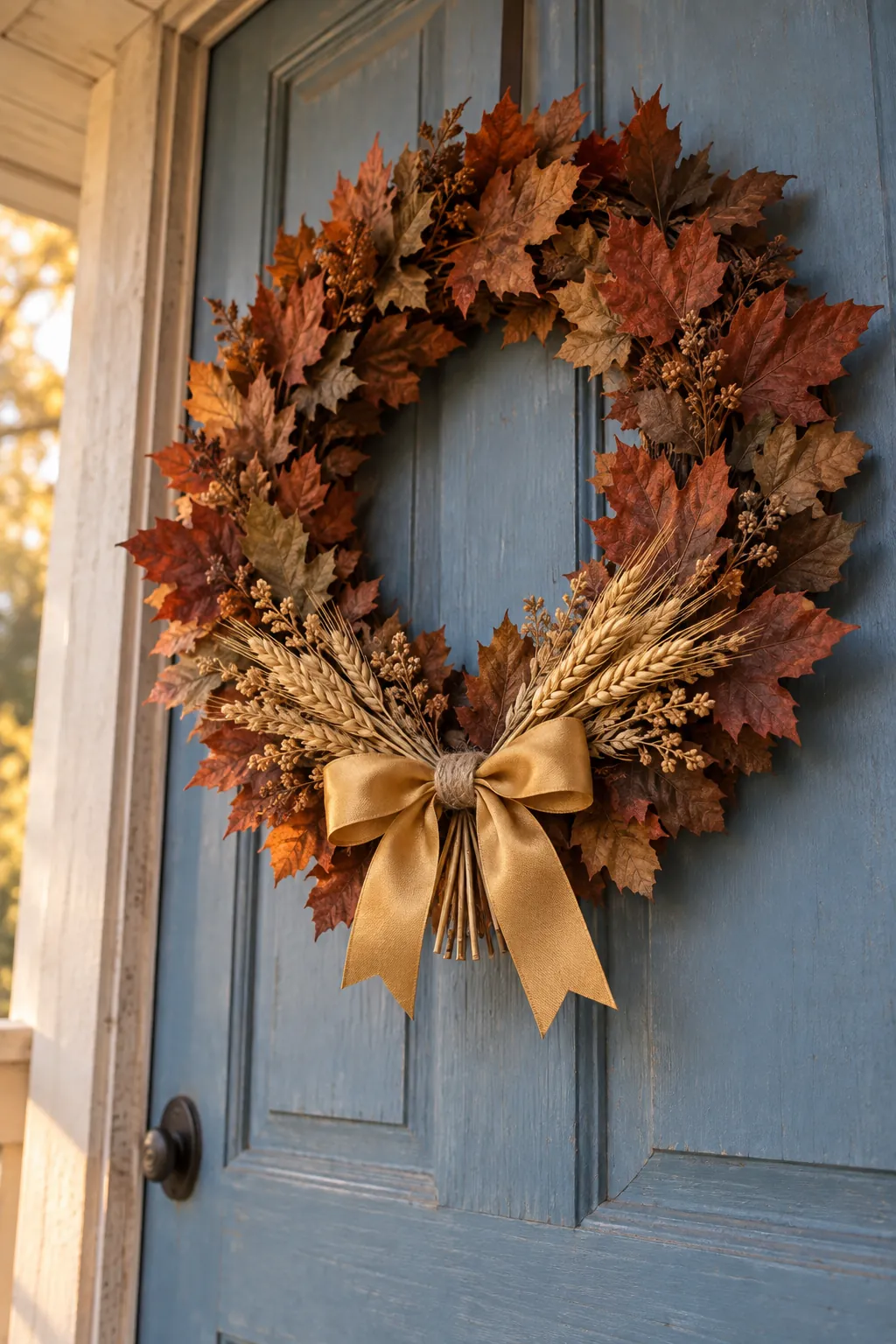
A simple leaf wreath can become a Thanksgiving wreath with one removable detail. Tie a small bundle of wheat and a warm gold ribbon to the bottom of an existing autumn ring, using a fastening you can undo without cutting the base. Keeping the addition compact preserves the original shape.
After the gathering, remove the accent and store it separately so the ribbon does not crease under the wreath. This approach lets one well made base serve more than a single occasion. It also makes it easier to replace a worn seasonal element without discarding the whole arrangement.
A Tiny Wreath on a Door Knocker
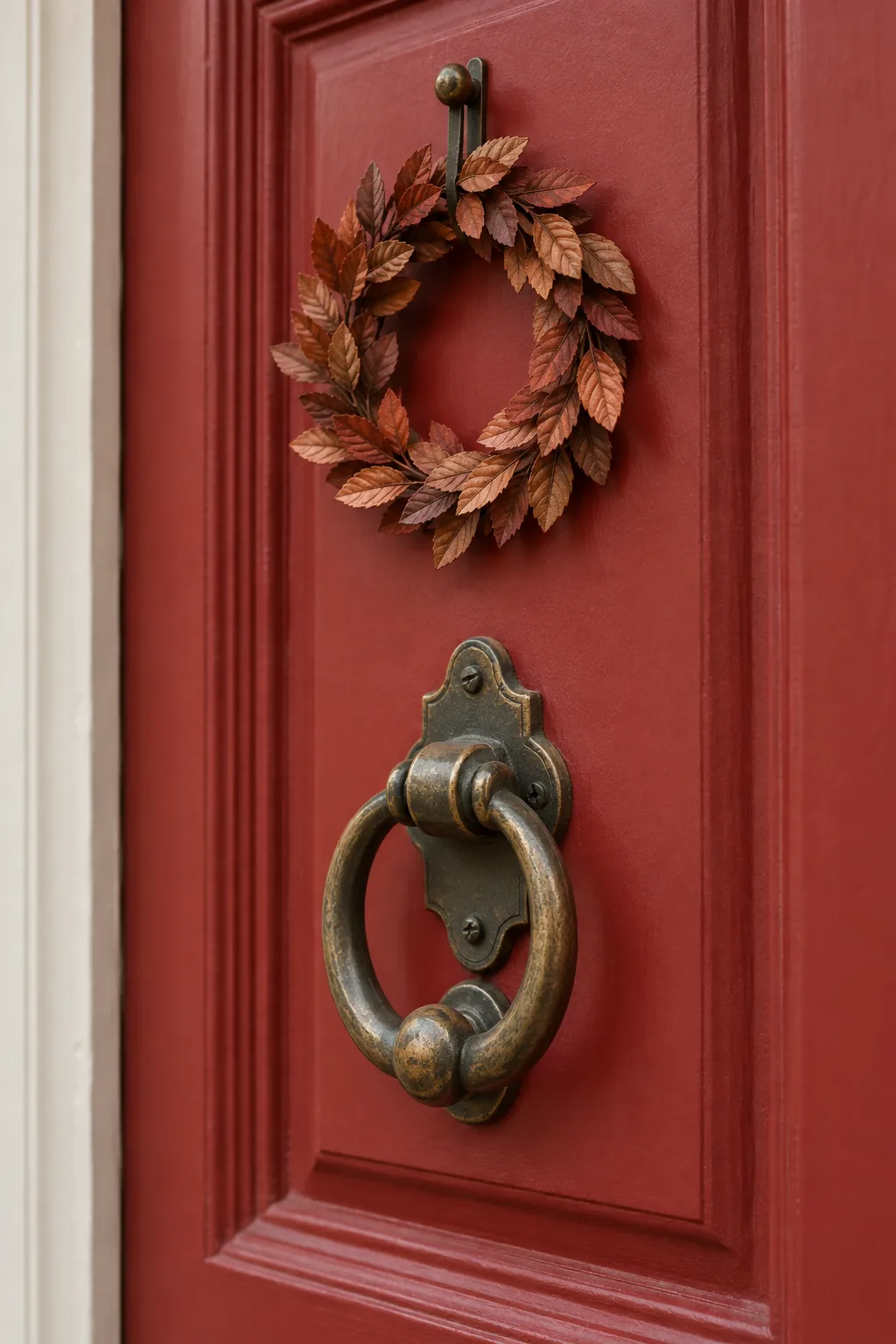
A small ring can frame a door knocker without filling the entire upper panel. Select short flexible foliage and keep every piece clear of the moving metal parts. Hang the wreath independently when possible so its weight does not rest on the knocker. Ask someone to use the door as a visitor would and adjust anything that catches a hand or muffles the hardware.
A Reusable Base with Swappable Branches
A plain twig ring with removable seasonal branches is a practical place to start if storage space is tight. Fasten a few autumn stems with reusable ties that stay hidden behind the leaves, then photograph the finished arrangement for next year. At the end of the season, remove the branches and place them in a labeled container with their fasteners. Keep the base dry and inspect it before reusing it, replacing weakened sections rather than covering them with more foliage. You can change the color story later without rebuilding the whole wreath.