
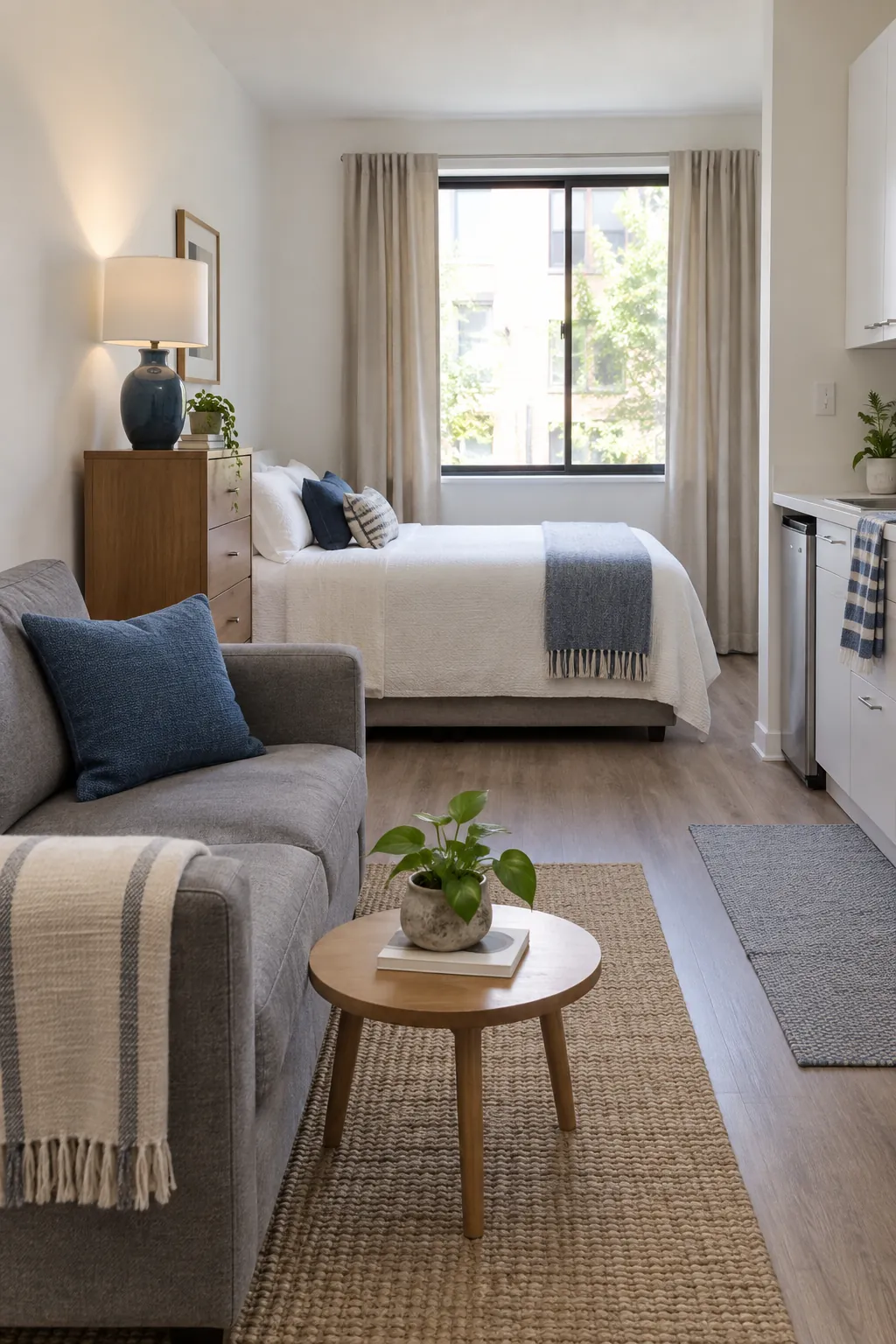
A bedspread, a sofa and a row of kitchen cabinets can each look good on their own and still feel unsettled together. In one open room, you see almost every decorating decision at once. Start by connecting what you already own, then add privacy and personality where they earn their space.
Choose a palette from the pieces you are keeping
Look at the fixed finishes first: the floor, kitchen cabinets, countertop and any large furniture that will stay. Choose a main neutral that sits comfortably beside them, then select one accent color you enjoy seeing every day. The goal is a shared visual language, not an apartment where every object matches.
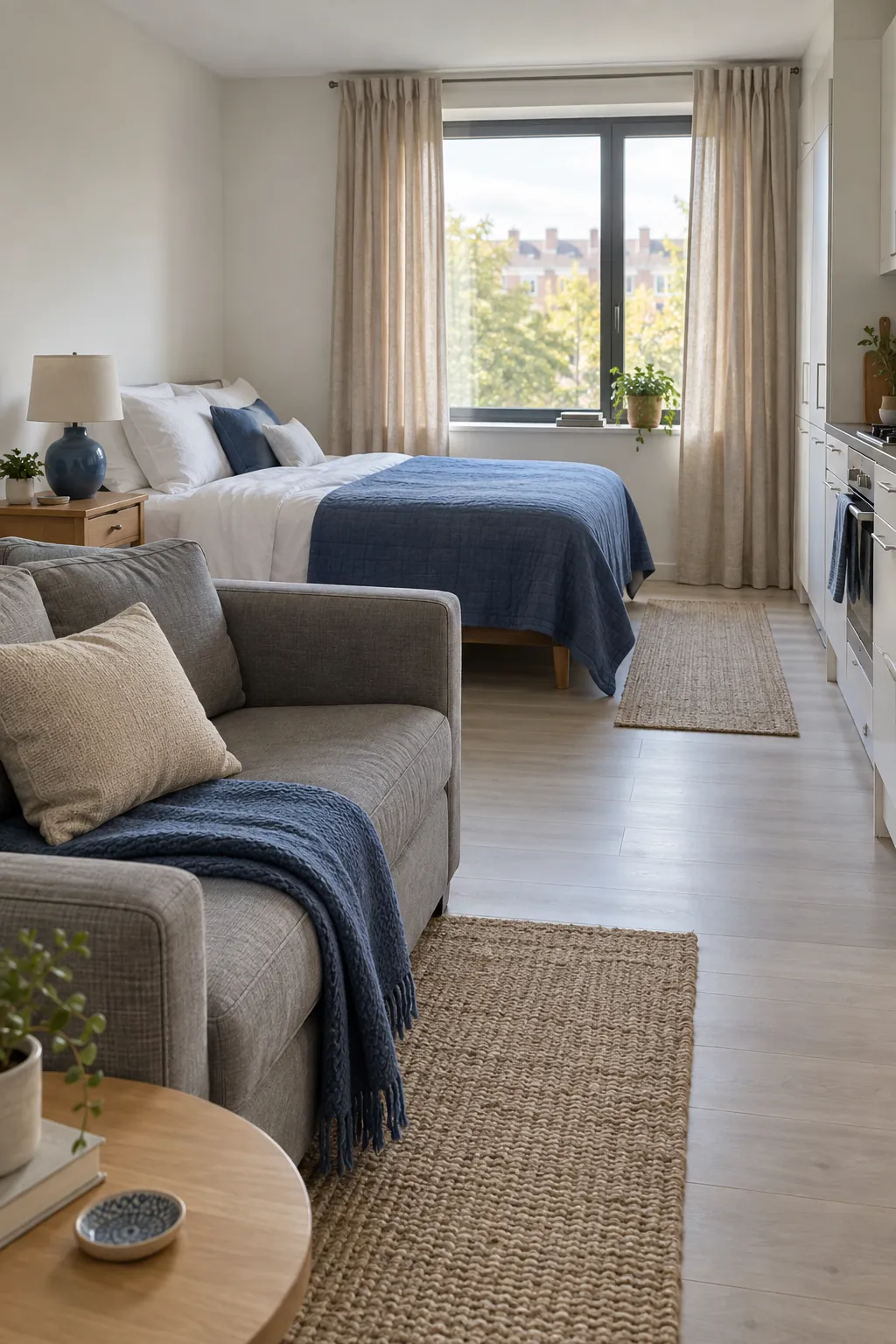
For example, a gray sofa and white cabinets can work with oatmeal curtains, a blue bed throw and a small blue ceramic lamp. Repeat the accent in different materials instead of buying a complete matching set. If an inherited wood table differs from the floor, a rug can provide a visual pause between the two finishes.
Check fabric samples in daylight and under your evening lamps before committing to large pieces. A color that feels quiet in a store can become surprisingly strong across an entire duvet. Keep most of the visual area calm if your books, art or belongings already supply plenty of color.
Make the bed belong to the living space
Treat the bed as one of the largest surfaces in your one room apartment decor. A simple coverlet that relates to the sofa or curtains helps it feel intentional during the day. You do not need a stack of decorative pillows that has nowhere to go at bedtime.
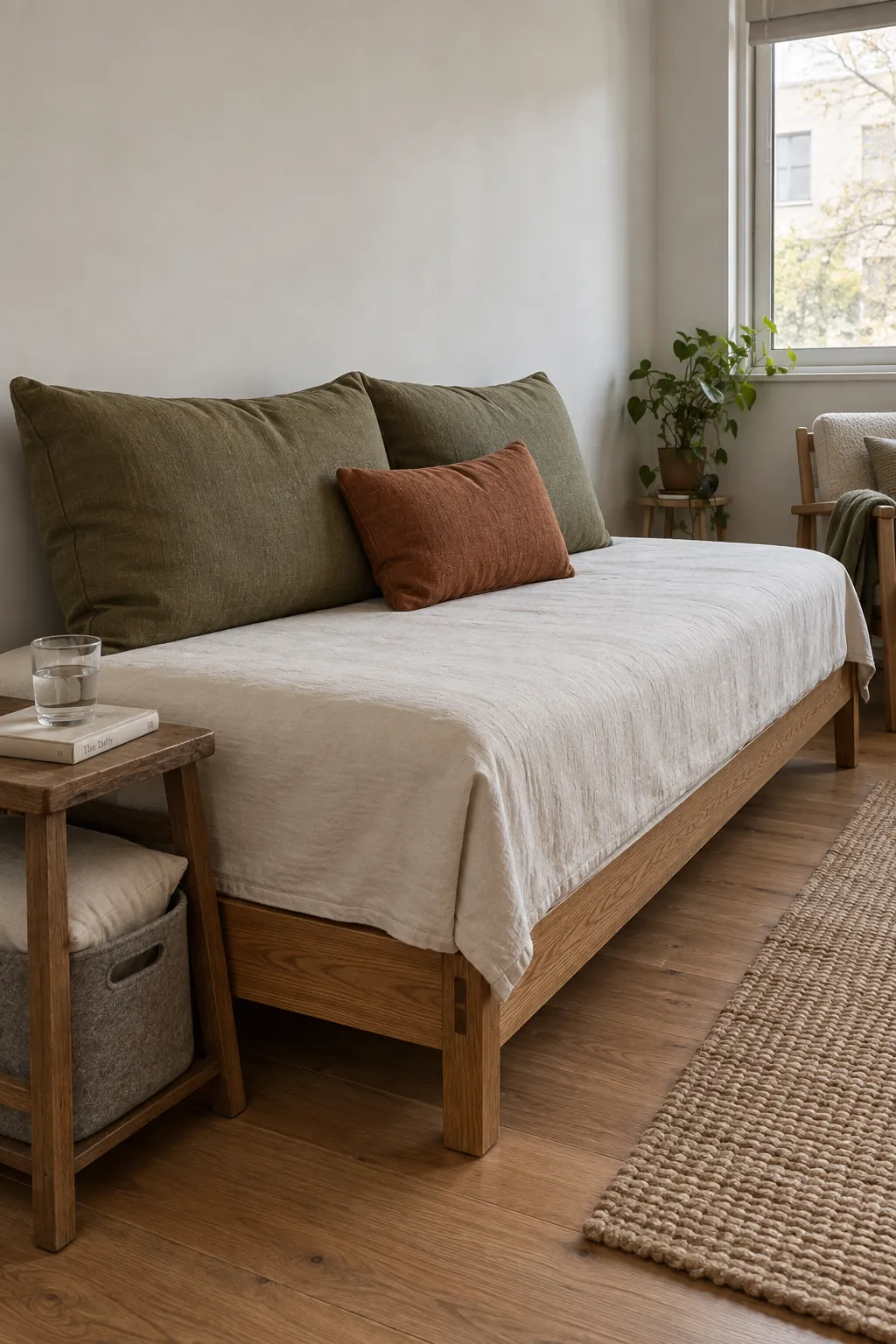
A daybed can suit someone who likes to sit and sleep in the same spot, while a permanent bed with a tidy cover often requires less daily effort. If you are exploring sofa bed ideas, plan both the open footprint and storage for the bedding. Choose for your sleeping needs first, because decorative neatness will not compensate for an uncomfortable night.
Mark zones with soft edges
Use a rug to give the sitting area a clear footprint, ideally with the main seating connected to it rather than floating around a tiny mat. Keep rug edges out of narrow walking routes and choose a suitable nonslip underlay for your floor. Let nearby dining or sleeping space keep some visible bare floor so the zones remain readable.
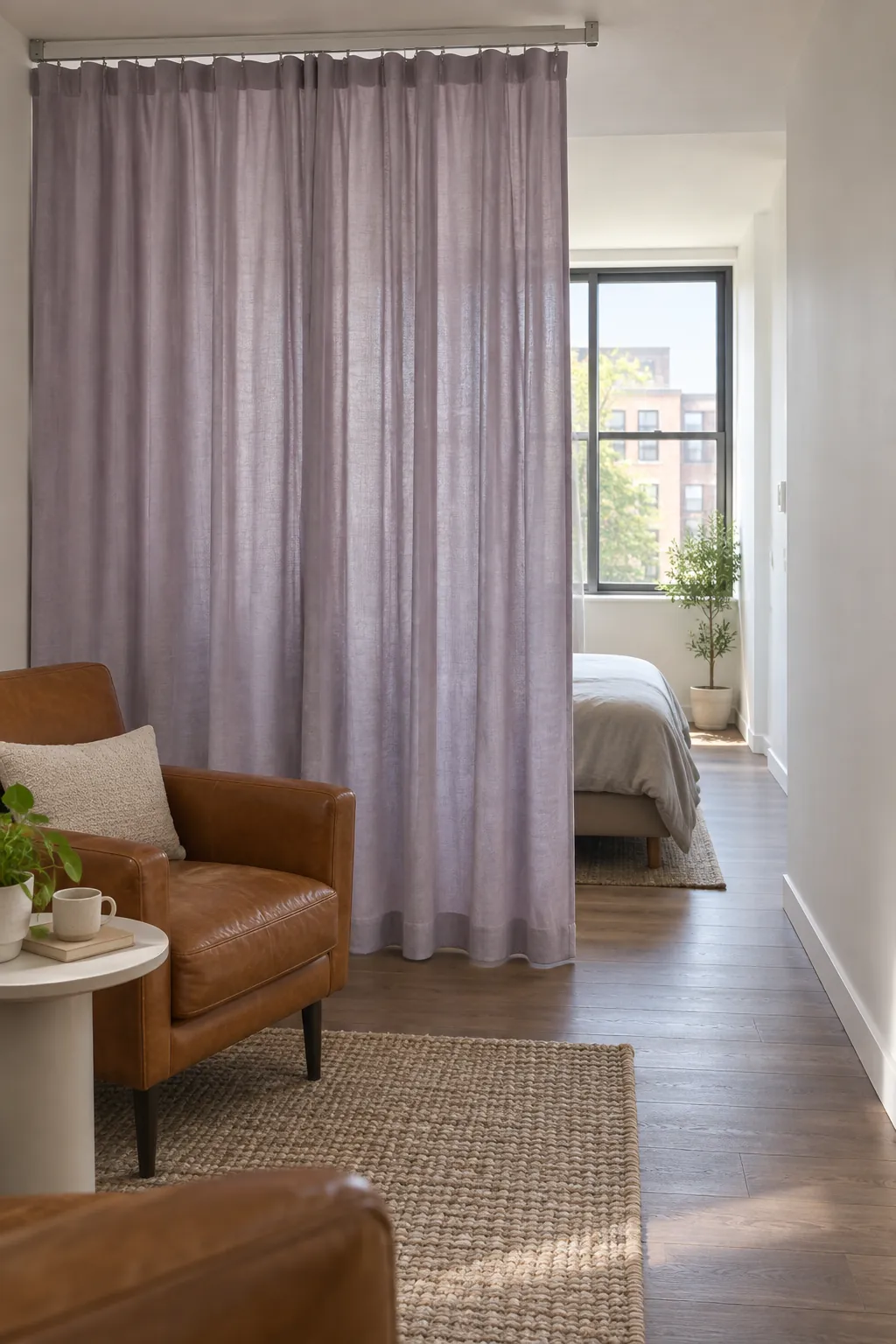
A studio room divider is helpful when a direct view of the bed makes you uncomfortable, but it does not have to close off the whole room. A curtain can draw across part of the sleeping area when needed. Check permission and fixing requirements before installing a track, keep fabric away from heat sources, and preserve light, ventilation and required exits.
Small apartment zoning can also come from furniture orientation. The back of a compact sofa can suggest a boundary if there is still enough room to pass it. Before adding a screen or shelf, test whether the arrangement already gives you the separation you want.
Use lamps to change how the room feels at night
One bright ceiling light can leave a tiny apartment interior feeling like a single work area. Add a reading light where you sit and a softer lamp near the bed, using separate switches so each activity has the light it needs. Select bulbs with compatible color appearance when the lamps are visible together, and check the fixture's permitted bulb specifications.
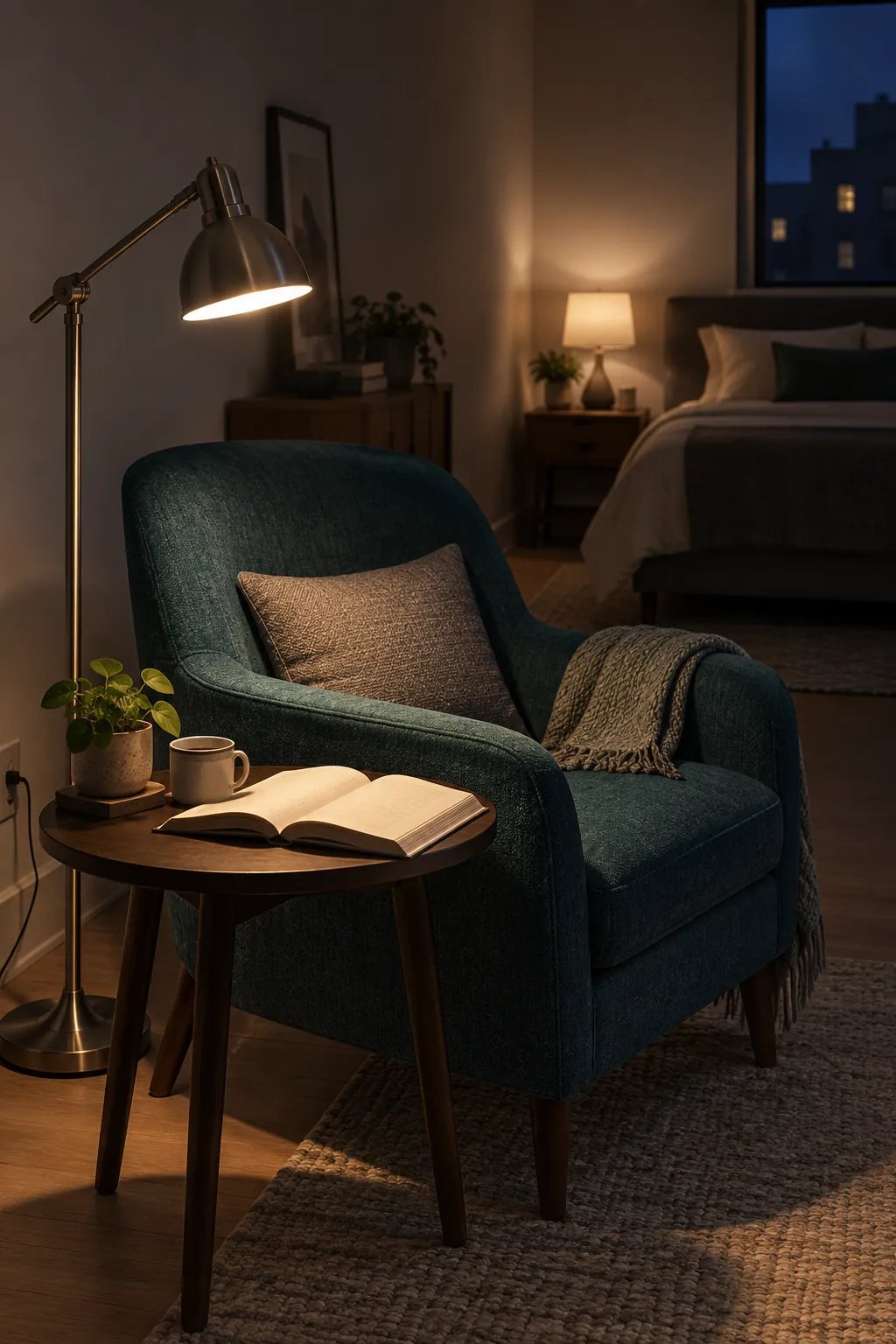
Aim task lighting at the book or work surface rather than into your eyes. A shaded lamp can make evening light more comfortable, while a brighter kitchen task light remains useful for preparing food. Keep cords along the wall and out of walking routes; never hide damaged leads beneath rugs.
Use the window as part of the lighting plan too. Curtains should open far enough to uncover useful glass rather than permanently reducing the room's daylight. If privacy requires a covering during the day, compare how a sheer or adjustable blind performs from outside before relying on it.
A mirror can reflect an attractive view or available light, but it also doubles whatever clutter faces it. Test the reflection from your usual seat before choosing its final position, and secure it with appropriate hardware.
Give everyday belongings a quieter background
Single room storage needs to contain the things that would otherwise remain visible from the bed and sofa. Closed cupboards or drawers are useful for papers, chargers and spare toiletries, while an open shelf can hold the books you actually reach for. Leave some empty surface rather than decorating every storage top.
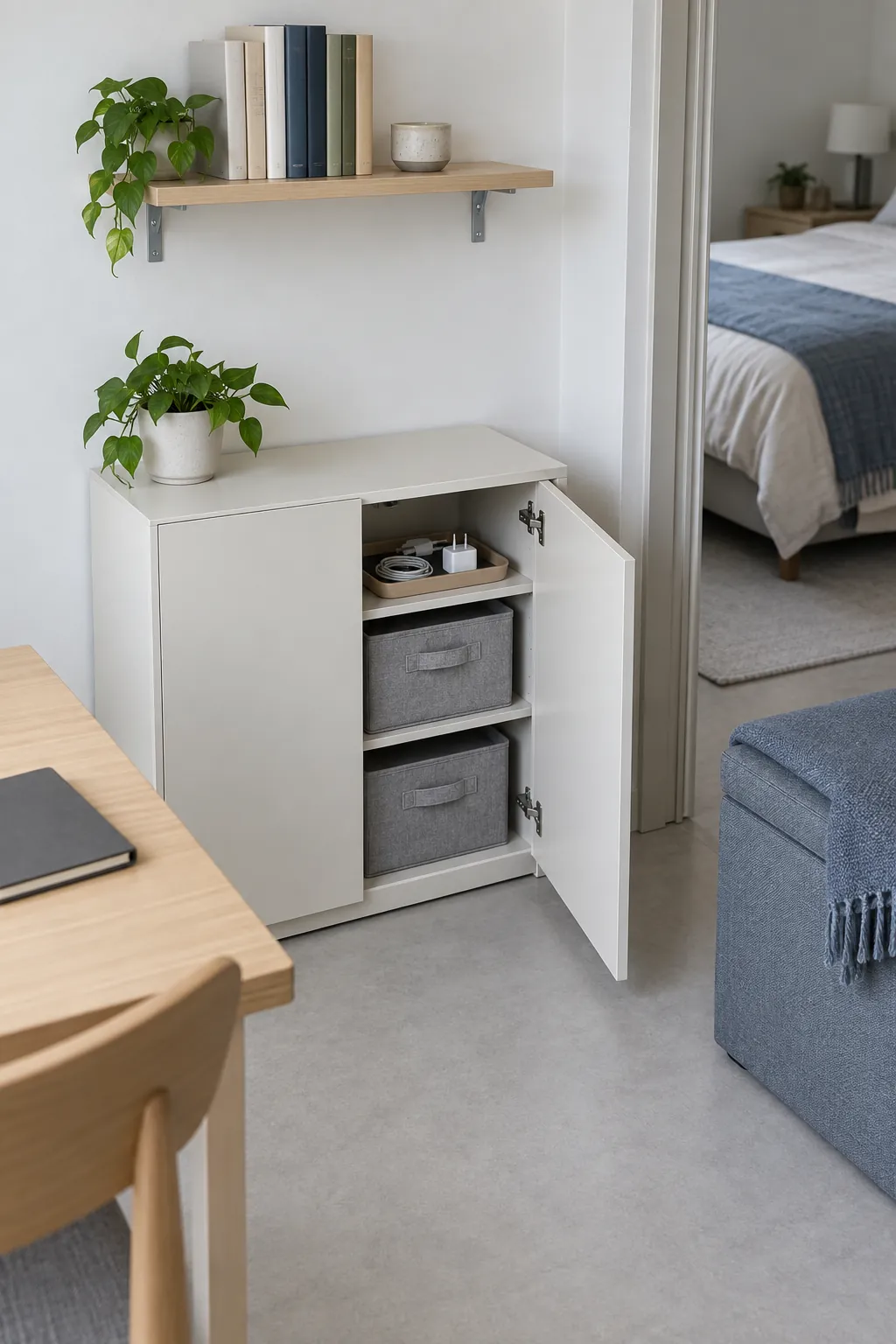
Choose compact apartment furniture by its usable capacity and access, not just its outside dimensions. A storage ottoman is helpful only if you can lift the lid without moving half the room. Underbed boxes need room to slide out, and a tall cabinet needs appropriate anchoring according to its instructions.
Try a small reset station for the objects you put down repeatedly: keys near the entrance, a tray for work materials beside the table, and a laundry basket near the dressing area. Matching containers can reduce visual noise, but buying them before sorting belongings often produces beautifully contained clutter.
Add personality in one place, then leave breathing room
Choose a focal point you want to see from the entrance or main seat. It might be a favorite botanical print over a low cabinet, a small group of family photographs, or a colorful textile on the bed. Give that choice enough empty space around it to read clearly rather than surrounding it with unrelated tiny accents.
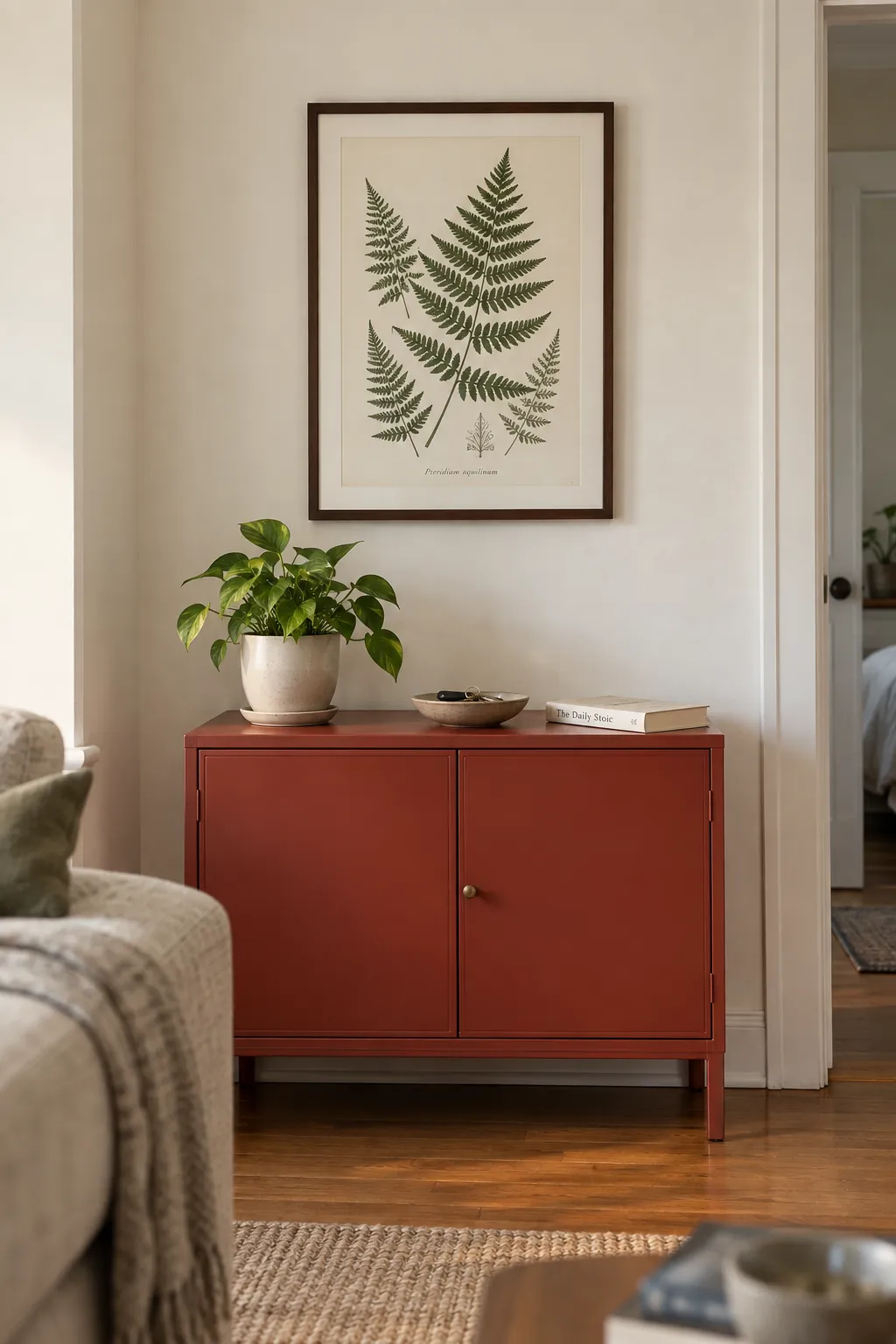
For a rental, check wall fixing rules and the condition of the surface before using adhesive products; removable does not guarantee damage free. Freestanding decoration can be a better choice where the wall finish is fragile. A plant is worthwhile only if the available light and your routine suit it, with a protected surface beneath the pot.
Spend first on the change that solves the strongest discomfort, such as curtains for privacy or a lamp for reading. Live with it before ordering the next layer. If the room looks calmer but still contains the things you care about, you have decorated enough for now.