
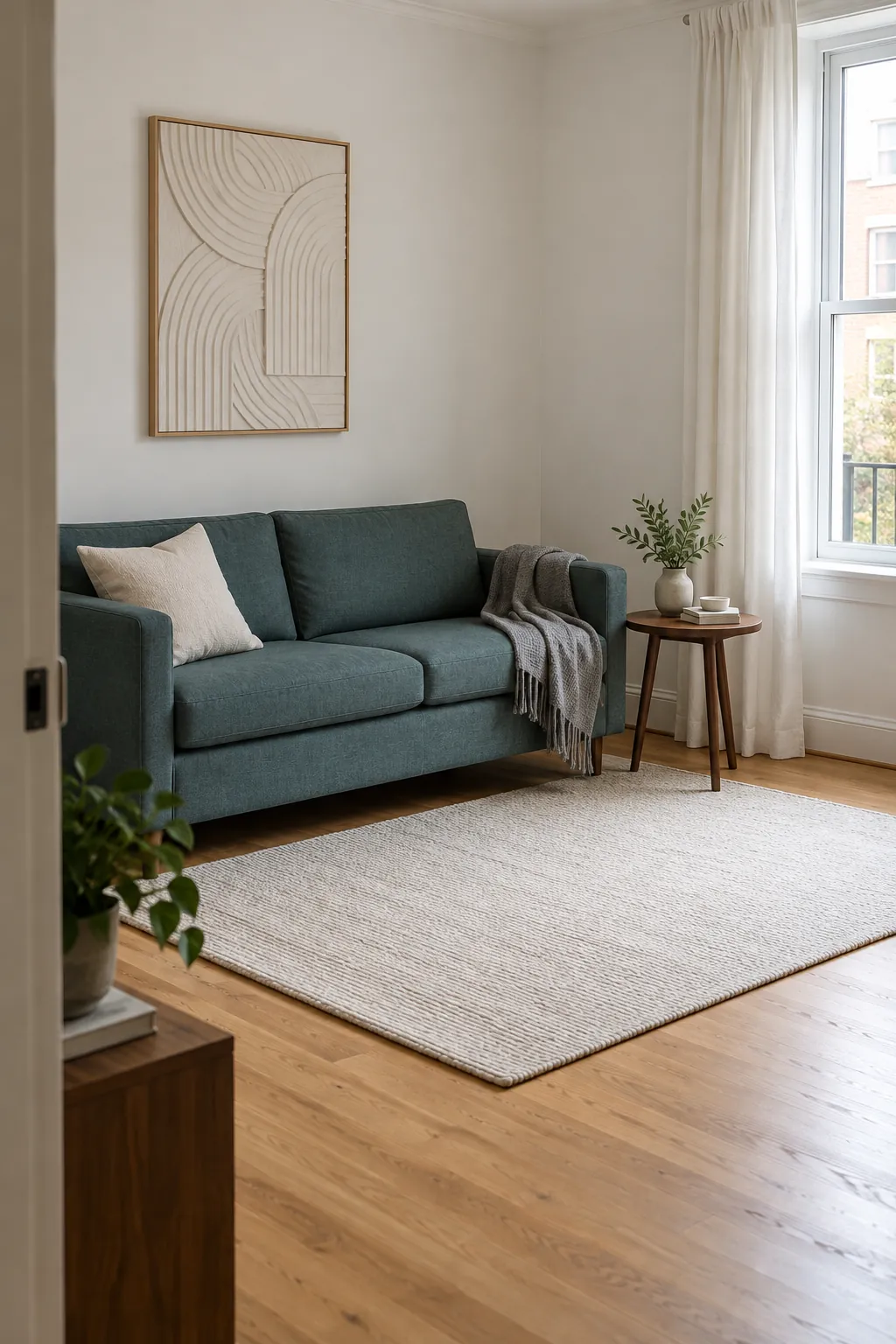
Buying more decor will not help if you still have to move a chair to open a cupboard. Start with the way you walk, sit, cook, and put things away, then spend on the details you actually notice. This approach gives a small rental a more personal feel while protecting useful floor space and leaving room in the budget for essentials.
Protect the route you walk every day
A room can look crowded even when it contains very little furniture. The problem is often a chair that interrupts the route to the kitchen or a coffee table that forces you to turn sideways. Before buying anything, measure the walls, door swings, windows, outlets, and furniture you plan to keep.
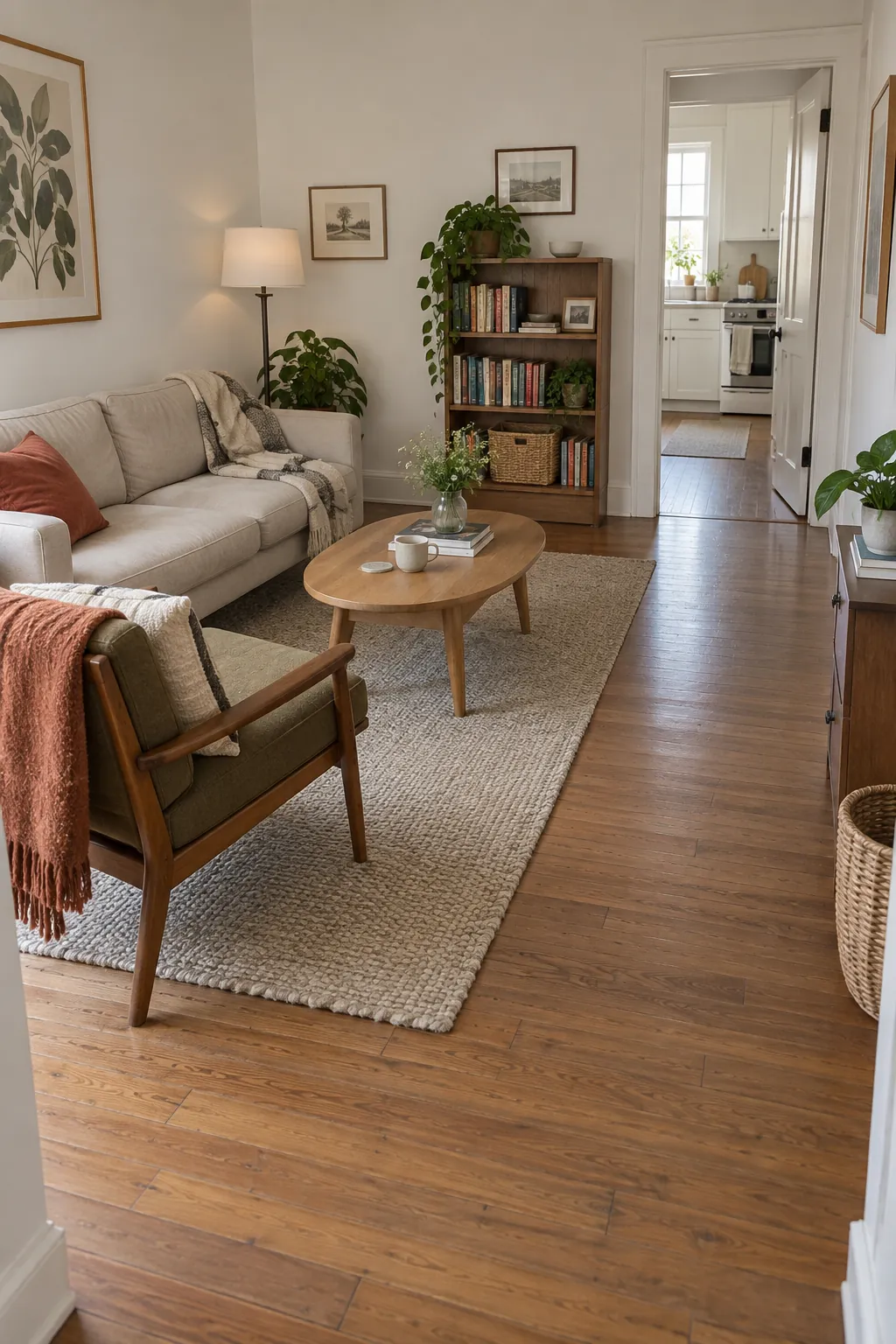
Mark proposed furniture footprints with removable tape that is safe for your floor, then walk through the room carrying a laundry basket. Open drawers and pull out dining chairs during this trial. Leave enough clearance for the people who actually use the home, including mobility aids when needed, rather than relying on how spacious a photograph looks.
Keep the easiest path along one side of a seating group where possible. A rug can connect the sofa and chair without adding a physical divider. If an unused accent chair blocks circulation, removing it may improve your small apartment decor more than replacing it with another object.
Build a color palette from what cannot change
Look at the floor, kitchen cabinets, and largest furniture piece before choosing accent colors. These fixed surfaces already occupy most of your view. Pick a quiet base that works with them, then repeat one or two accent colors in objects you can move.
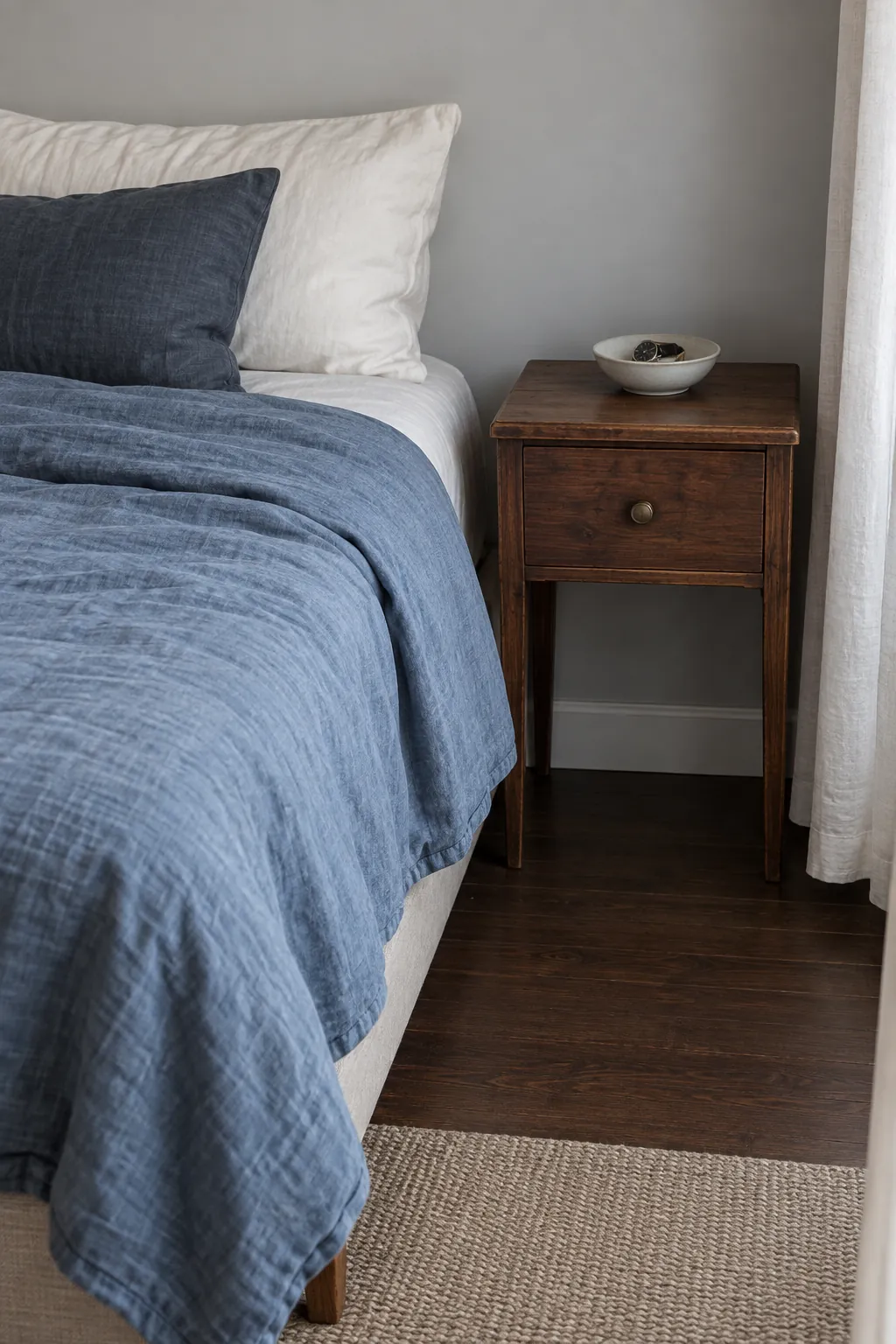
For example, a gray sofa and dark floor can sit comfortably with off white curtains, muted blue cushions, and a little warm wood. You do not need matching furniture sets or an entirely white room. A small apartment color palette feels connected when neighboring areas share some colors, while texture keeps those areas from looking flat.
Choose furniture for its working footprint
A table is only compact if there is room to use it. Measure its open dimensions, the space a seated person needs, and where the chairs go afterward. The same check applies to sleeper sofas, storage ottomans, and desks with drawers.
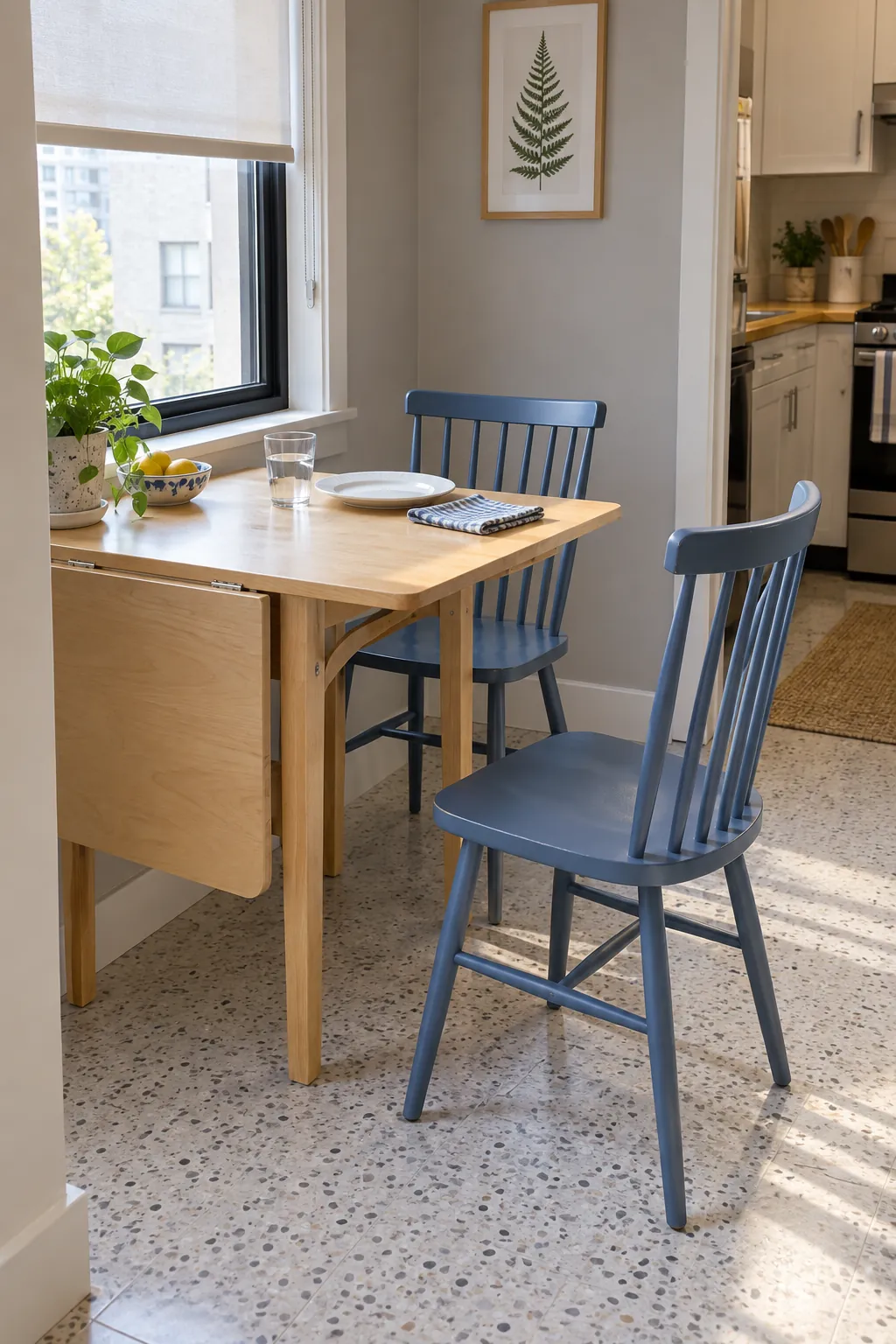
For a dining corner used by one person most days, a modest drop leaf table can offer an extra surface when a guest arrives. Check that the extended leaf does not block the exit and that the support mechanism locks securely. A nesting side table suits occasional drinks, while a larger stable surface is better if you regularly eat or work from the sofa.
Avoid buying several tiny pieces to replace one useful piece. Multiple stools, baskets, and miniature tables can create more visual interruptions and more legs to navigate. Space saving furniture earns its place by supporting a real routine, not by having the smallest dimensions on the product page.
If you are buying secondhand, inspect joints, upholstery, and moving parts before arranging transport. Include delivery and any necessary repair in your spending limit. Buying the right sized everyday seat first is usually more useful than filling every empty corner immediately.
Give everyday clutter a closed home
The most useful apartment storage ideas start with the objects that keep landing on visible surfaces. Put mail near the entrance, mugs near the kettle, and charging equipment where devices are used. Moving storage closer to a habit makes putting things away less of a separate task.
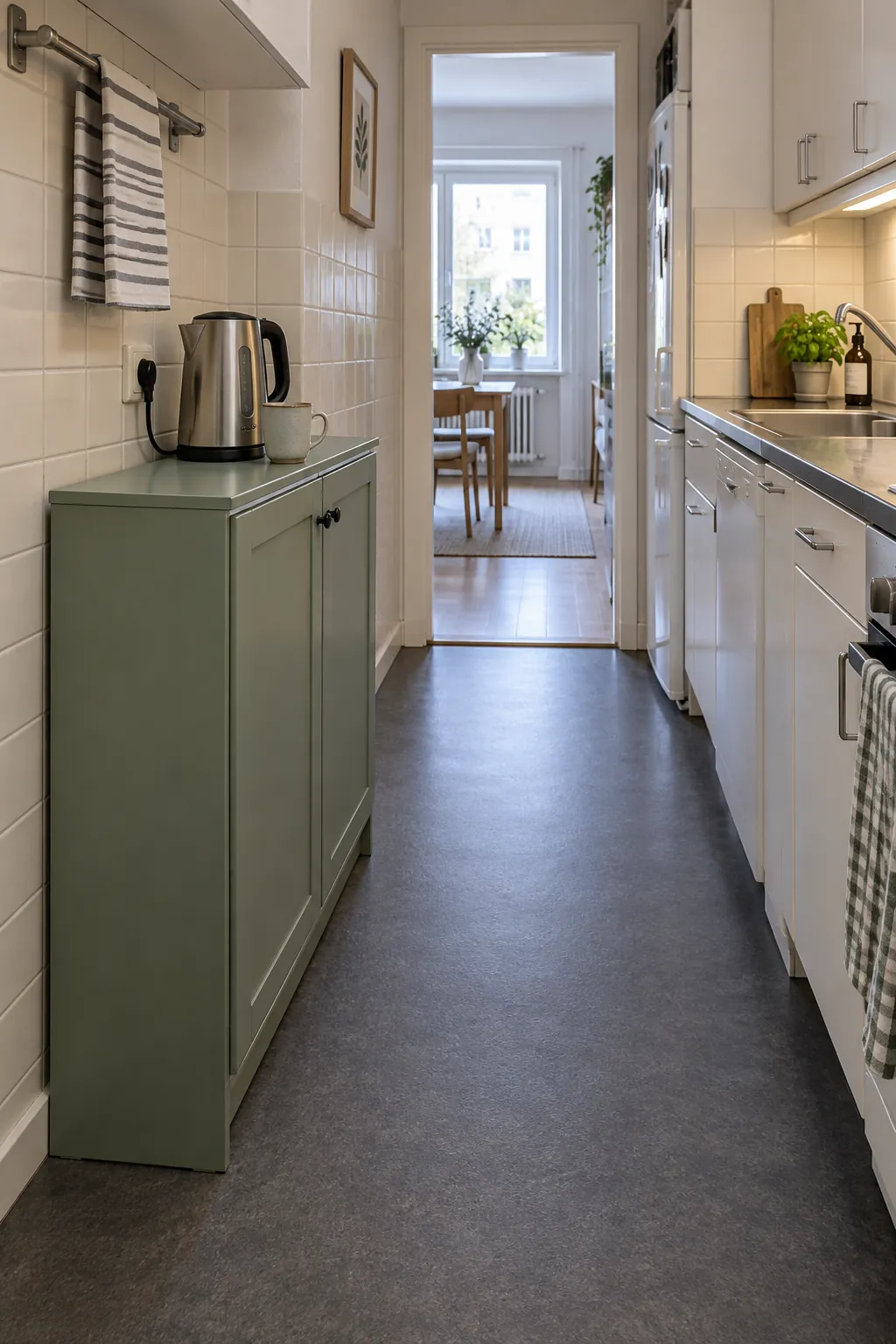
Use closed cupboards or opaque bins for visually busy supplies, and reserve open shelves for a smaller group of objects you enjoy seeing. In a tiny kitchen, a shallow cabinet may keep food and equipment out of sight without projecting far into the room. Check the depth against the walkway and follow the manufacturer’s anchoring instructions for furniture that can tip.
Leave some capacity unused instead of filling each container to the rim. You need space for tomorrow’s groceries and the belongings that return at the end of the day. If a new organizer merely moves clutter onto another exposed shelf, reduce the contents or choose a more suitable location before buying more containers.
Make evening light part of the plan
A single ceiling light can leave a rental feeling stark after sunset. Add light where you read, eat, or get ready, then check the room from its usual seated positions. A shaded lamp can make the sitting area comfortable without lighting every corner equally.
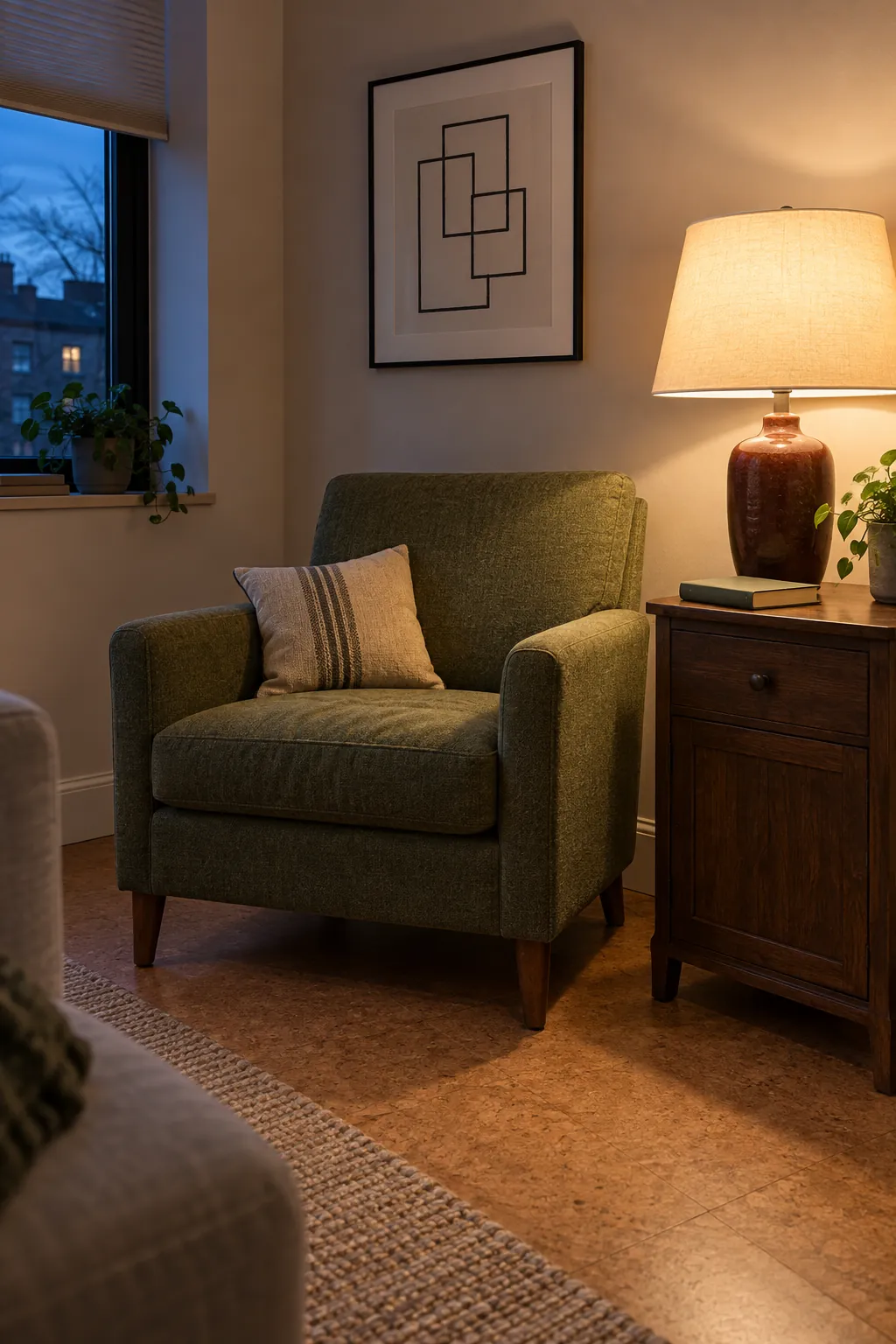
Choose bulb brightness for the task and use compatible dimmers when adjustment would help. Keeping nearby bulbs in a similar color temperature usually looks calmer than mixing very cool and very warm light. Avoid bare bulbs at eye level, and route cords along the wall so they cannot catch a foot.
Before purchasing a floor lamp, check the base as carefully as the shade. A wide base may compete with a small chair or door swing. A table lamp on furniture you already need can be a better fit, provided the surface remains stable and the shade stays clear of curtains.
Add personality where it stays easy to live with
An apartment gallery wall works best when it reads as one group from across the room. Lay the frames on the floor first and connect them through a repeated finish, color, or subject. Keep the group related to the width of the furniture below it rather than scattering small pictures across every available wall.
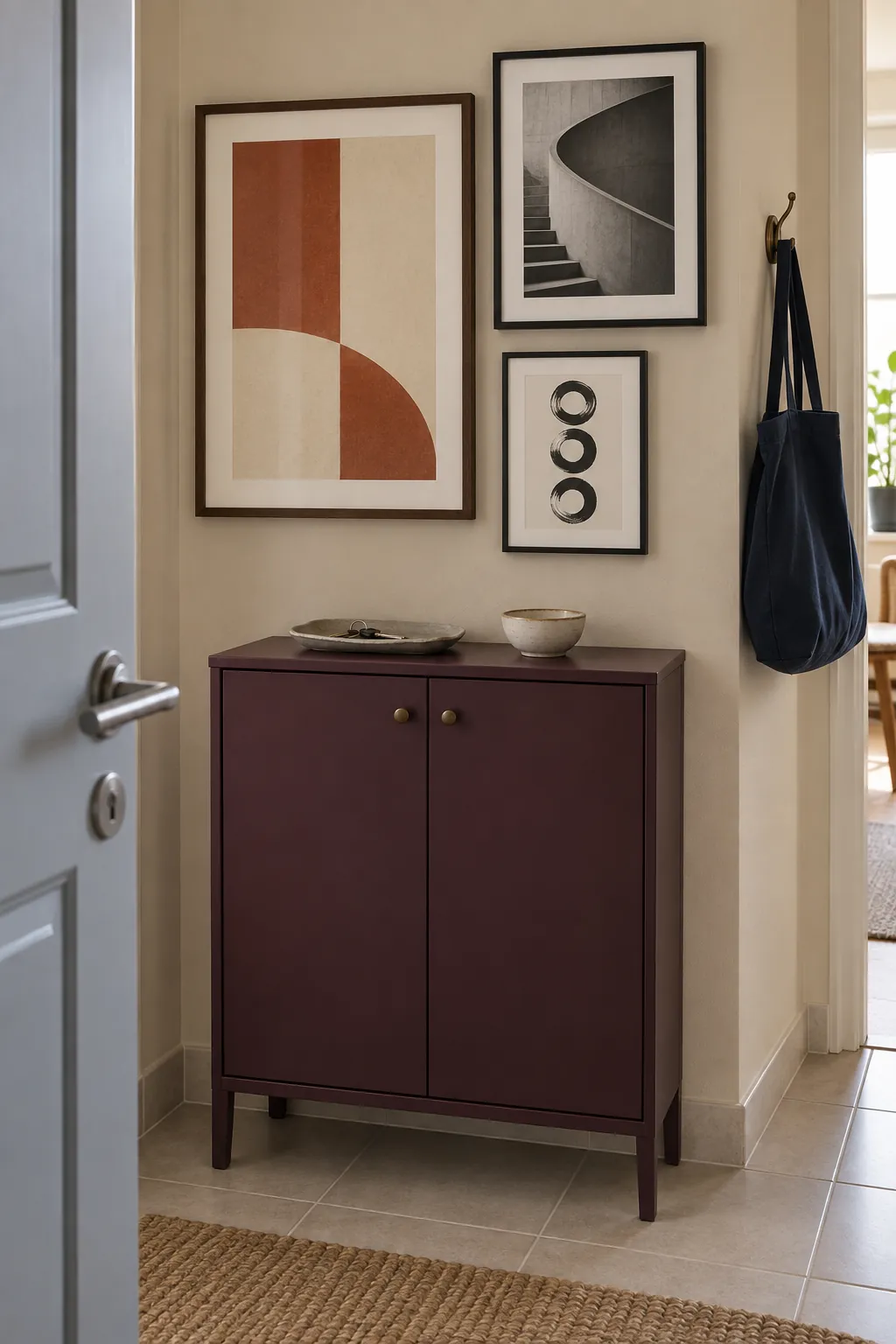
Renter friendly decorating still requires checking the lease and the surface. Removable adhesives can lift paint, and some walls cannot support the load claimed for a different material. Follow product limits and removal directions, get permission when needed, and choose freestanding displays if fixing anything to the wall is unsuitable.
Spend the remaining budget on the touchpoints you notice most: curtains that work with the existing fittings, a washable cushion cover, or a rug that lies flat and does not obstruct a door. Keep fabric away from heaters and ventilation openings. A plant belongs where its light and care needs can be met, not automatically in the darkest empty corner.
Finish one useful area before starting the next. Sit in it at night, clean around it, and live with the arrangement long enough to notice what still gets in your way. A cozy rental home is doing its job when you can set down your bag, find your things, and relax without rearranging the room first.