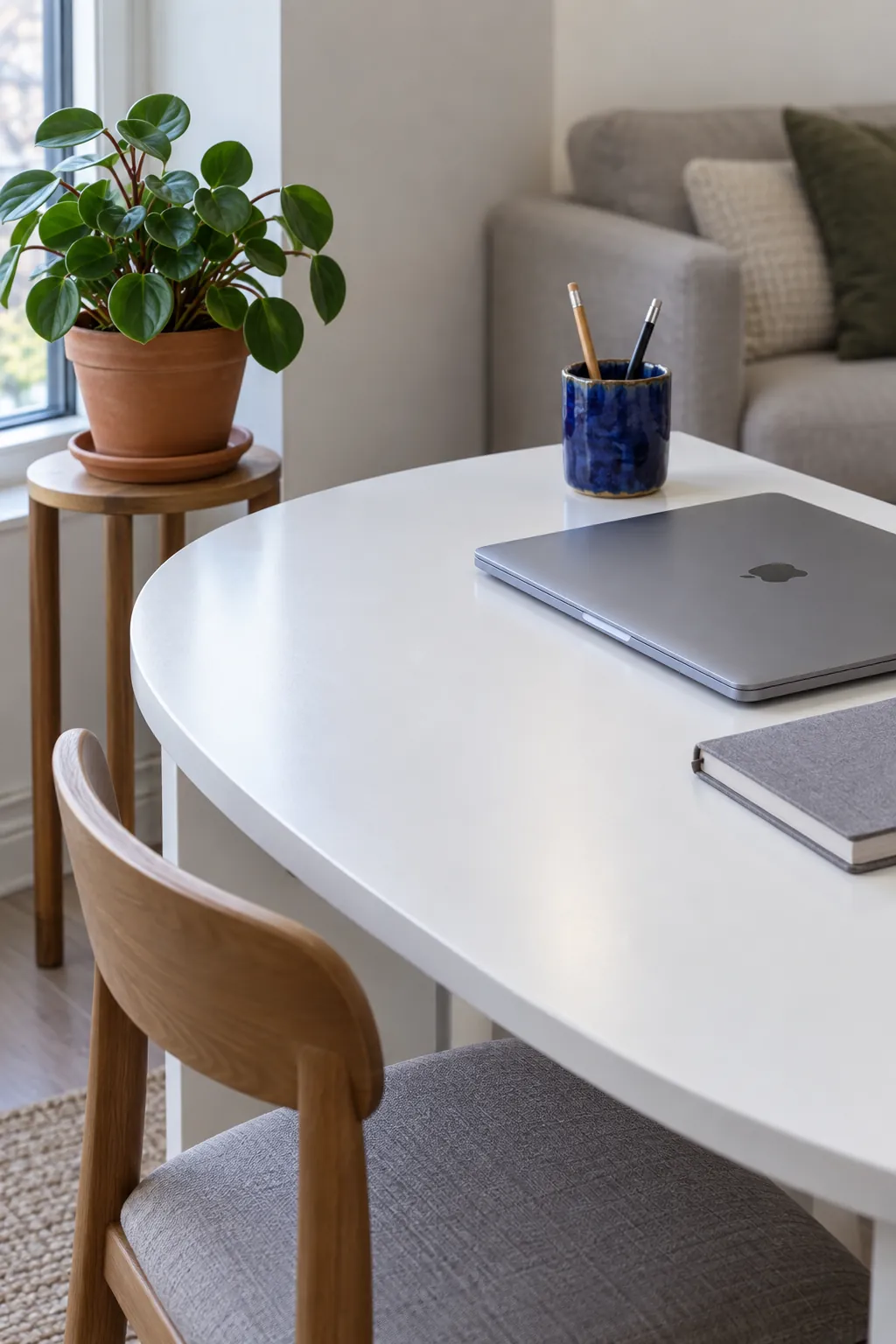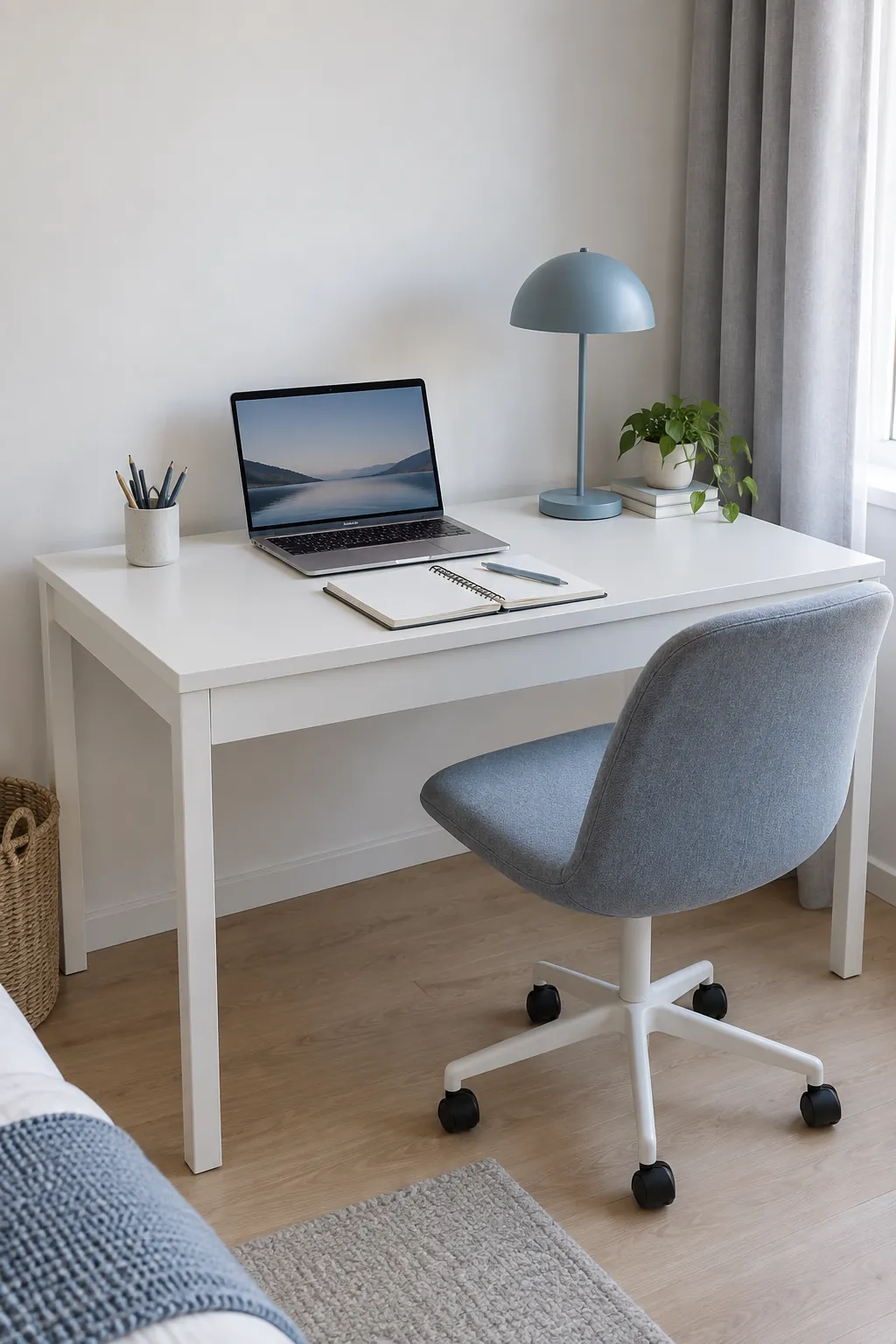
A saved desk photo rarely shows where the textbook goes once the laptop is open. That is the test your own workspace has to pass. Build the useful part first, then let color, light and a few personal objects give it character.
Leave room for the work you actually do
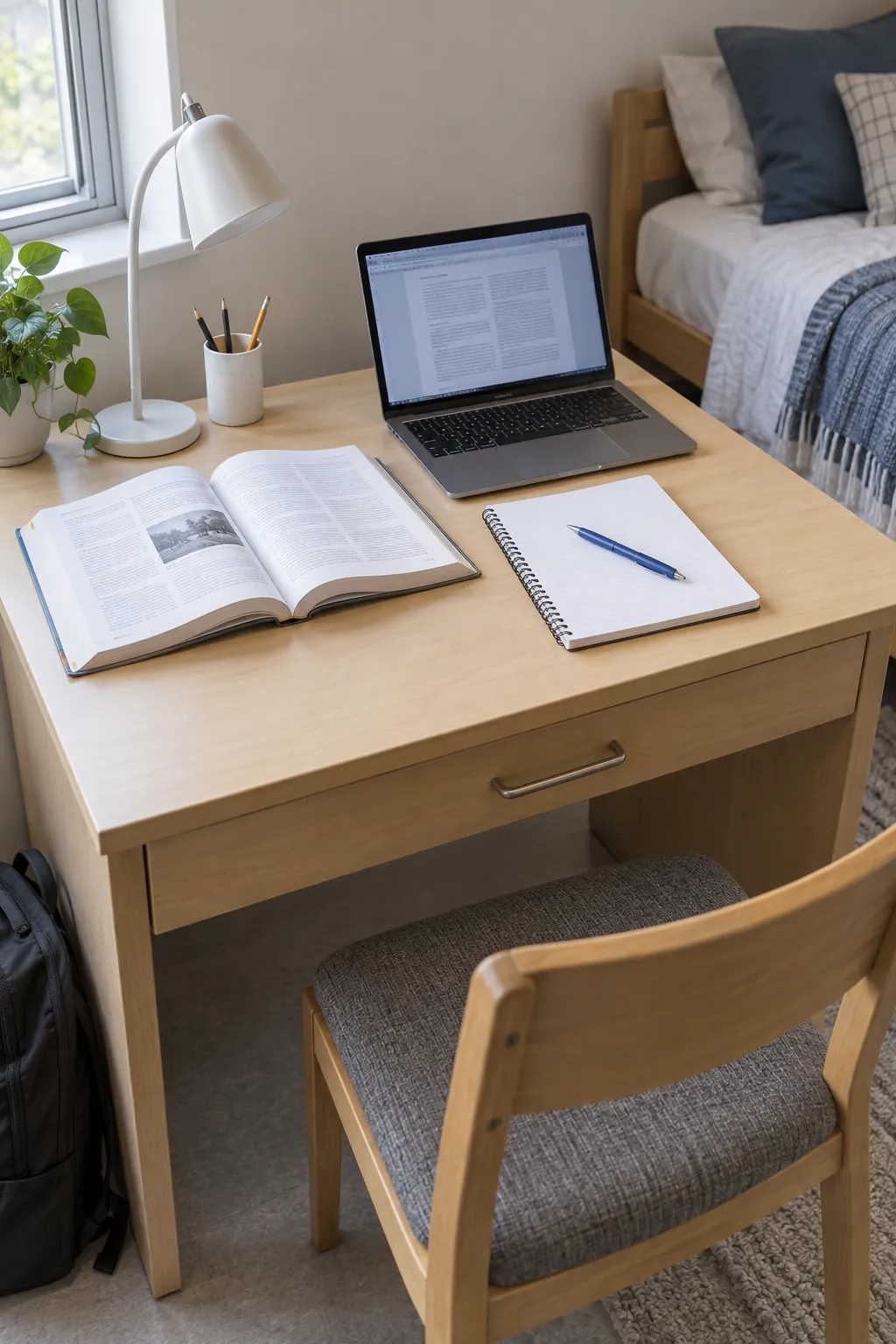
Before buying a lamp or another little tray, place your laptop, current notebook and usual drink on the desk. Pull out the chair and try writing a full page. Anything that blocks your elbow, hides the mouse or needs moving for every task belongs somewhere else.
Keep the central work area visually quiet and use one rear corner for decorative objects. On a shallow dorm desk, a slim lamp and a single pencil cup can do more than several small organizers. Measure the usable surface after your study materials are out, not when the desk is empty.
Build the palette from furniture you already have
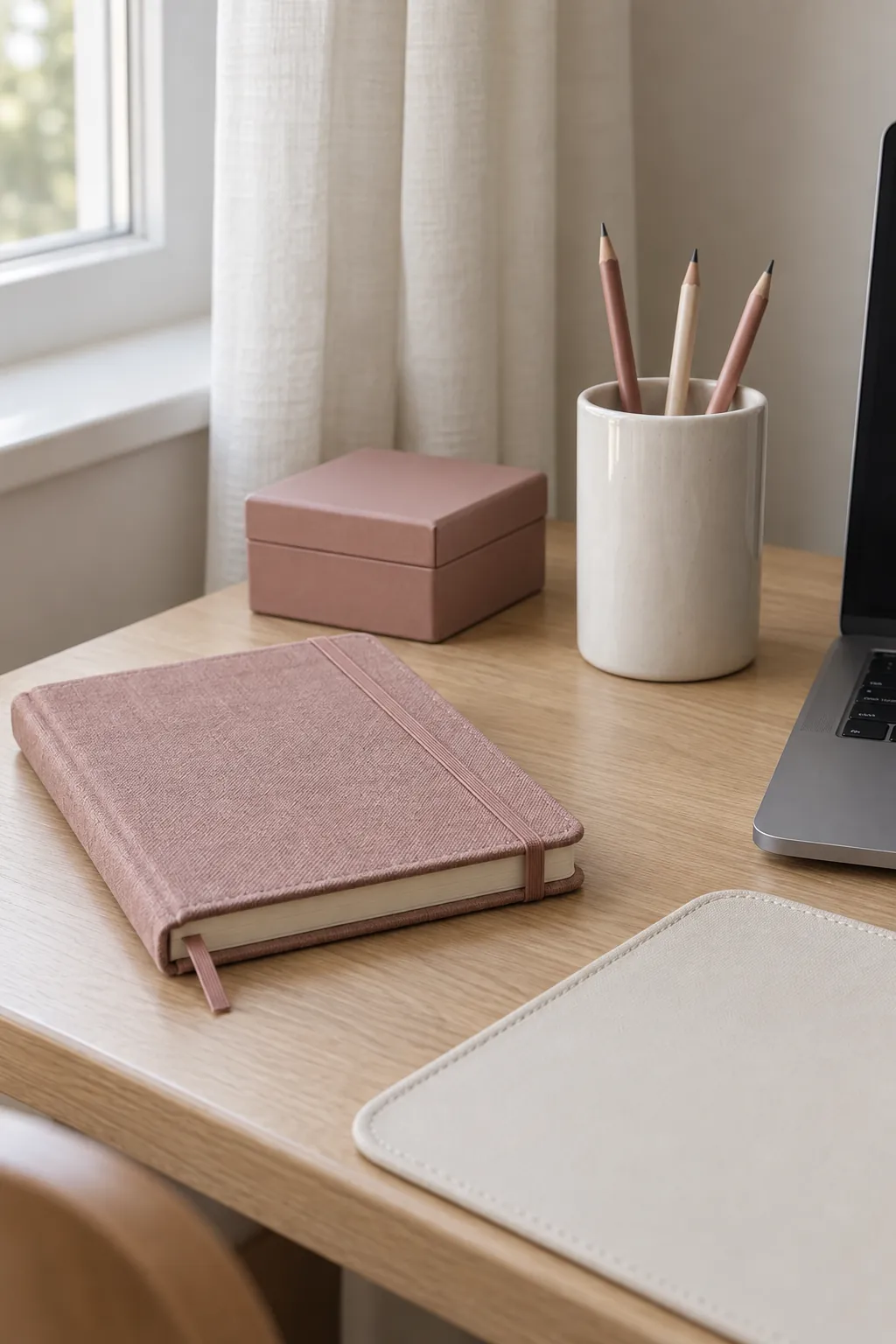
The existing desk finish is part of the color scheme, even when it is not your favorite. Start with that wood tone, white laminate or dark metal, then choose one supporting neutral and one accent. Repeating the accent in a notebook cover and a useful storage box is enough to make the arrangement feel intentional.
For a pink room aesthetic, dusty rose can sit beside pale wood and ivory without covering every accessory in pink. A cooler study corner might pair gray furniture with blue and white. Match the depth of the colors more loosely than their exact shade so secondhand finds can still belong.
A desk mat is useful when you want to bring a palette together, but check its size against your actual writing area. Choose a surface that works with your mouse and can be cleaned according to its care instructions. Skip the mat if it only gives you another object to straighten.
Make the light useful before making it cozy
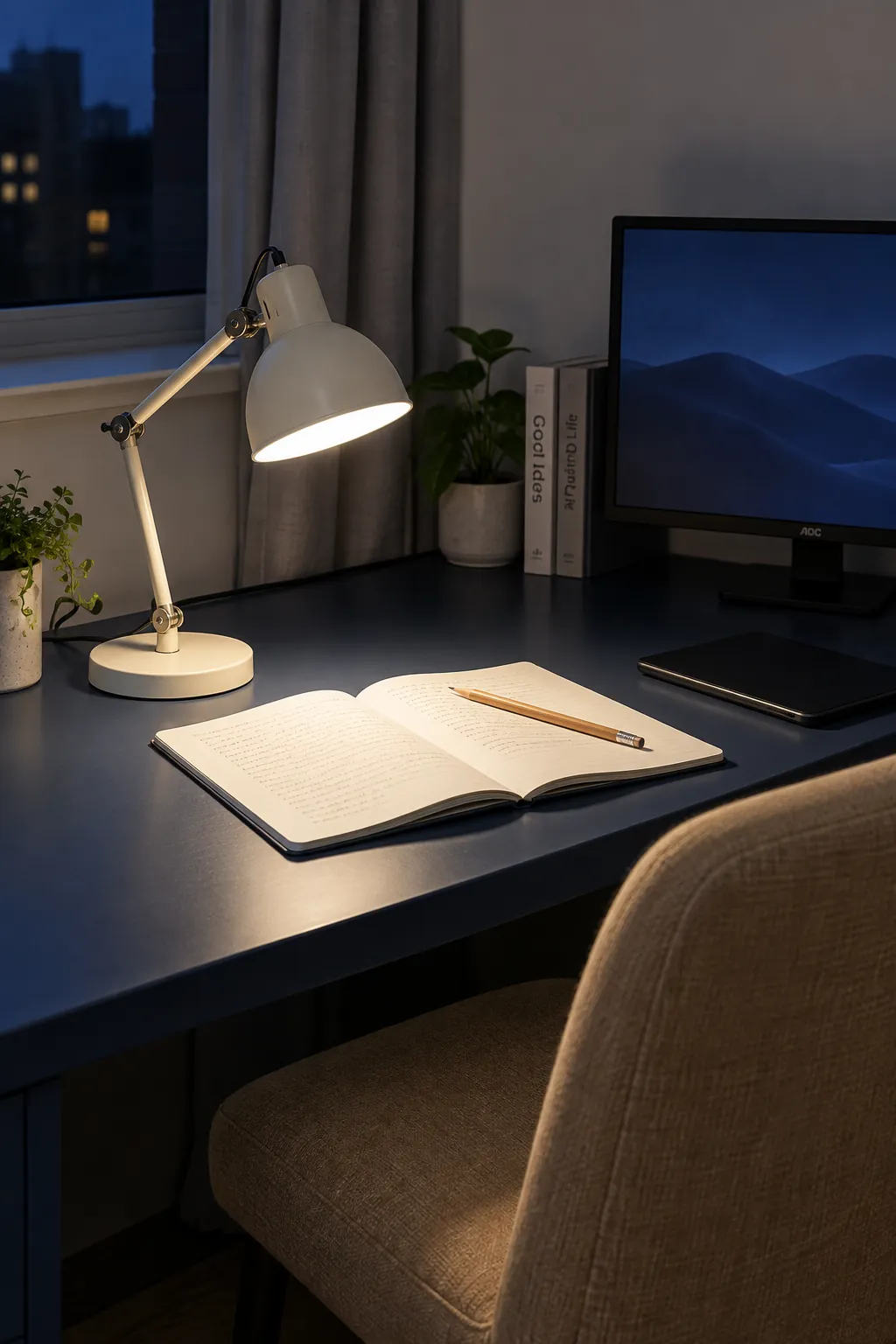
A cozy desk aesthetic still needs enough light to read paper comfortably. Position an adjustable lamp so your writing hand does not cast its strongest shadow across the page. Check the screen from your usual chair position and move the lamp if its bright reflection sits over your work.
A shaded lamp can soften the surrounding corner while a directed task light illuminates the page. Keep fabric, stacked paper and decorative garlands away from the fixture, following its clearance instructions. In a shared dorm room, aim the light toward your desk rather than your roommate’s bed.
Test the lighting after sunset before changing the rest of the decor. A setup that looks balanced beside a sunny window can feel dim once the main room light is off. Comfort comes from where the light lands as much as from the shape of the lamp.
Use vertical space without crowding the desk
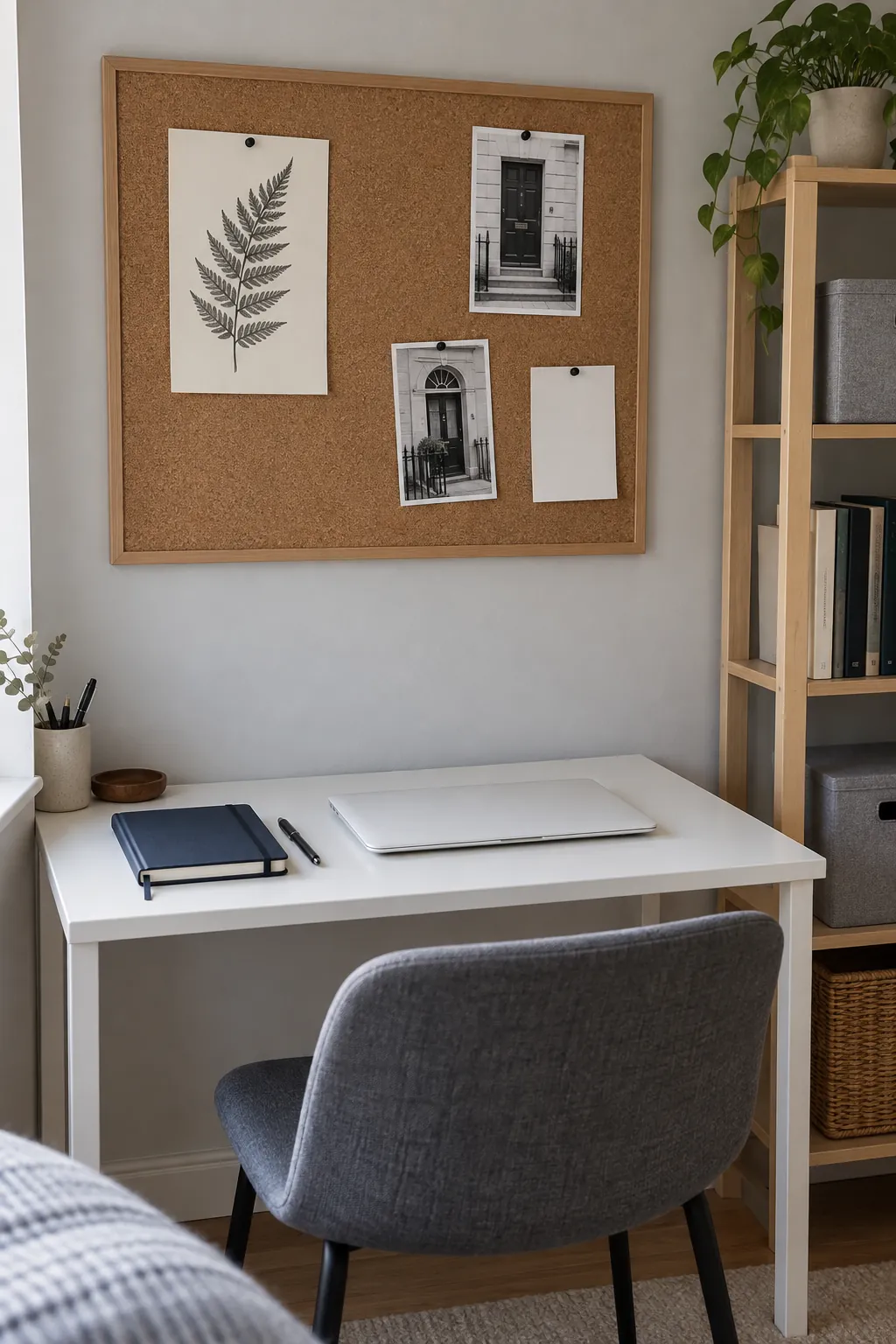
A small pinboard gives postcards, reference notes and personal details a defined place. Choose a board that fits above the work zone and leave some of its surface visible. One botanical sketch or a few photographs are easier to appreciate when every gap is not filled.
Check your lease or dorm rules before installing shelves, hooks or adhesive products. Use only the fixings, surfaces and load limits approved for the item, and keep heavy storage away from positions where it could fall onto you. A freestanding narrow shelf beside the desk can be a better option when wall mounting is restricted.
For college dorm room ideas, think about moving day as well as the finished photograph. Lightweight boards, stackable boxes and ordinary desk lamps are easier to pack than an arrangement built around permanent fittings. Give each vertical addition a job before adding another.
Let storage carry some of the style
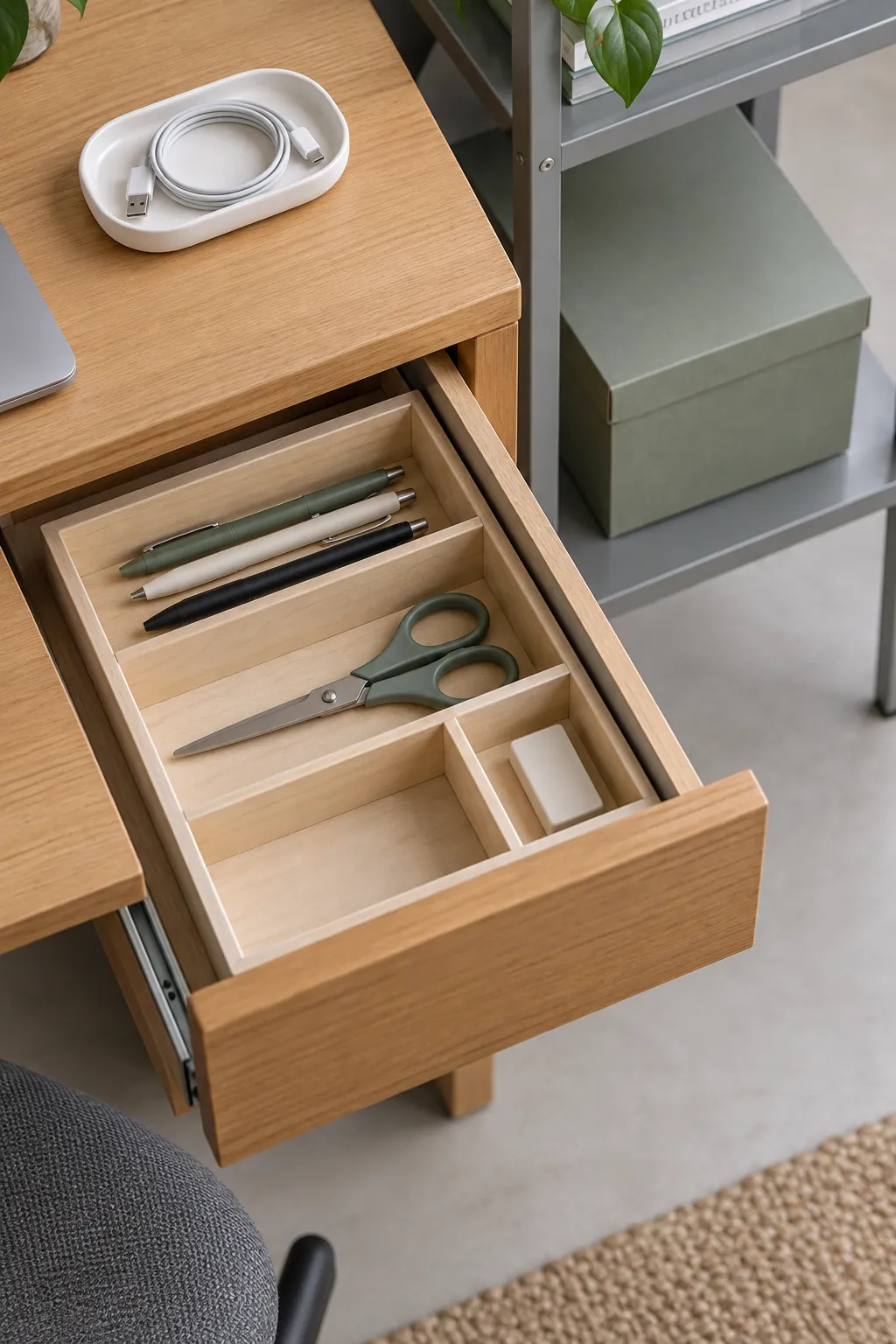
An attractive container should solve a specific problem, such as loose charging cables or stationery used every day. Separate frequently used tools from spare supplies before choosing boxes. A small pencil cup should not have to hold every pen you own.
Use an opaque box for visually busy extras and an open tray for the few things you reach for often. Place the closed storage on a nearby shelf or inside a drawer so it does not consume the writing area. If a lid or drawer cannot open without shifting the chair, change the location rather than accepting that daily obstacle.
Add personality you can easily reset
Choose a personal object that makes the corner feel like yours, then give it enough space to be seen. A handmade ceramic cup, a small plant suited to the available light or a favorite postcard can provide more character than a matching accessory set. Keep liquids and plant drainage safely separated from electronics.
Before calling the arrangement finished, put away the day’s loose papers and return your tools to their assigned places. Notice which objects still need to be moved before you can start tomorrow’s work. That friction is a better reason to revise the setup than whether it matches a saved inspiration photo.
Buy the missing functional piece first and live with the layout before adding more decor. A desk can reflect your taste while changing with a new class, project or hobby. Leave yourself enough clear surface for that change.