
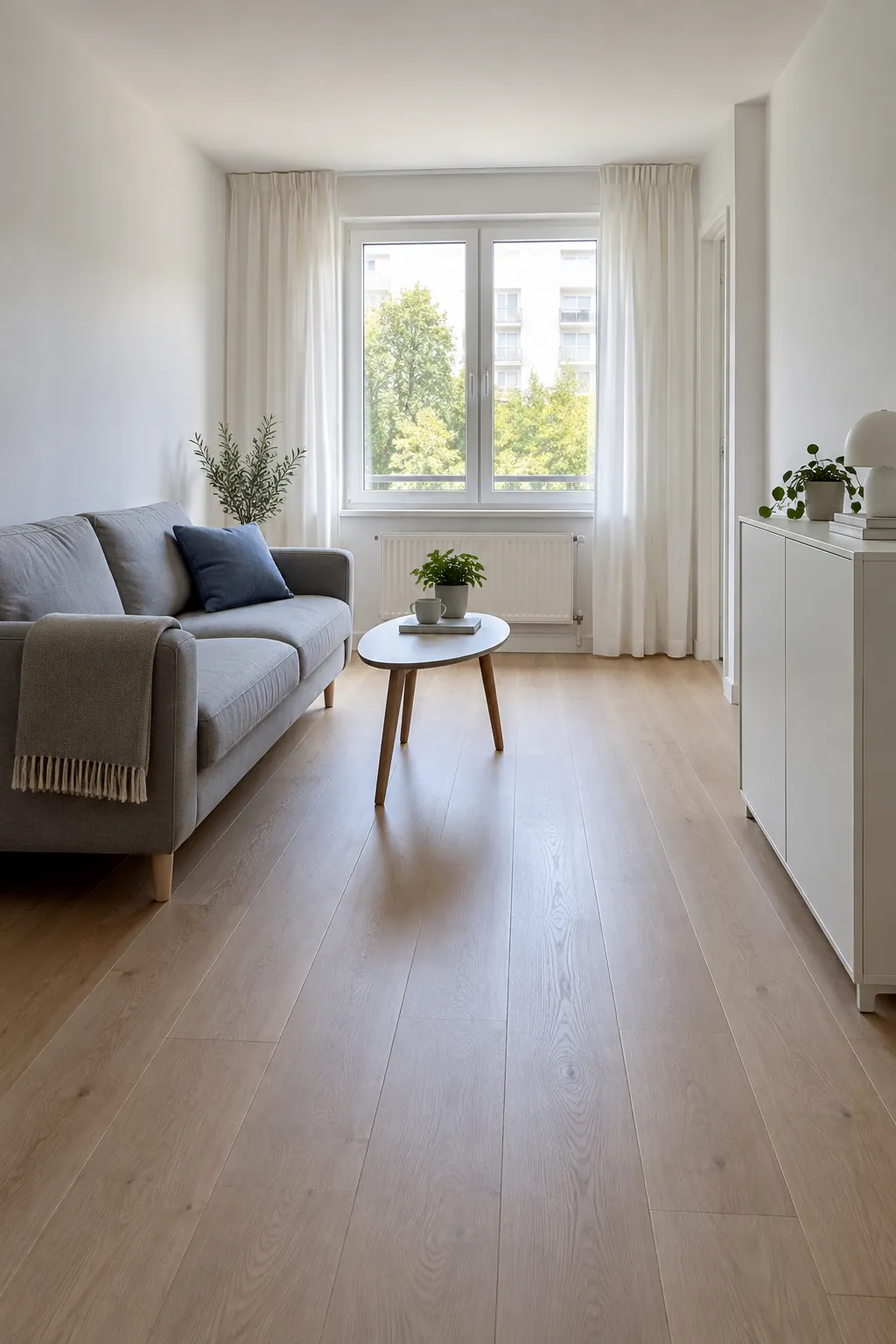
A room can have enough floor space and still feel crowded from the doorway. The problem is often what blocks the view, covers the window or breaks the room into too many little shapes. Before buying a mirror or replacing a sofa, make the existing layout easier to see through and easier to use.
Clear the view from the doorway
Stand at the entrance and notice the first thing that interrupts your view. A chair back, a tall shelf across the room or a pile on the dining table can make the usable space feel shorter than it is. Move loose items first, then test whether a furniture change opens a longer view toward the window or far wall.
Keep the main walking route direct enough that you do not have to turn sideways or step around a table. This is different from pushing every piece against a wall. A sofa moved a little to one side may improve circulation, while pulling it forward in a narrow room may make things worse.
Take a photo from the same doorway before and after each change. Compare the amount of visible floor and the number of objects breaking up the view. Leave exits, doors and required clearances unobstructed throughout the experiment.
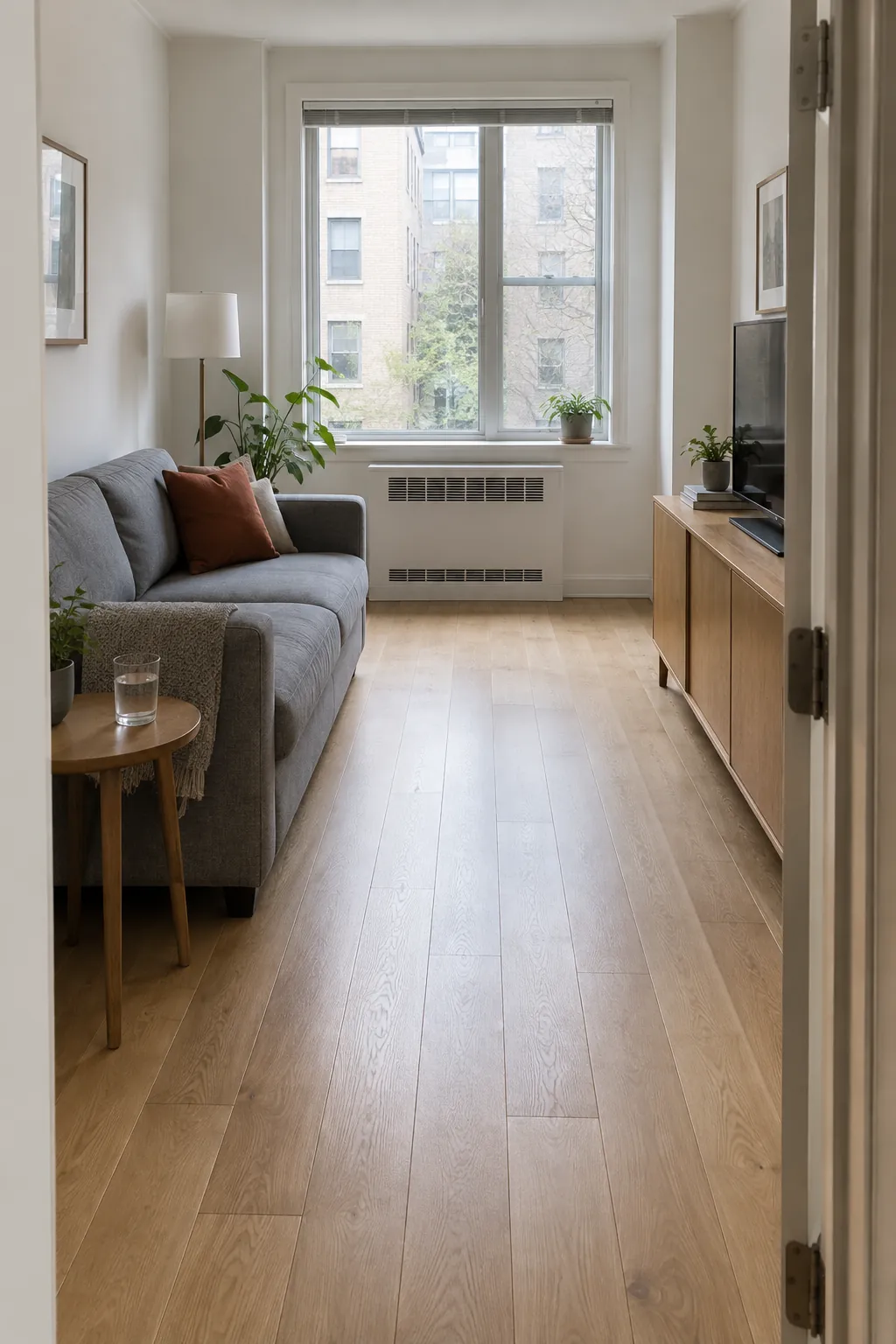
Choose fewer useful pieces with lighter outlines
Low profile furniture can preserve the view across a room, and open leg furniture lets you see more of the floor beneath it. Look at arm width, seat depth and back height as well as the total width. A compact sofa with thick arms may provide less sitting space than a slightly wider one with a simpler frame.
Do not replace one useful cabinet with five little storage units just because each looks smaller. More separate edges can make a room feel busier, and tiny surfaces often overflow quickly. Keep the pieces that hold what you actually use, then remove duplicates that have become landing spots for clutter.
Let the windows do more work
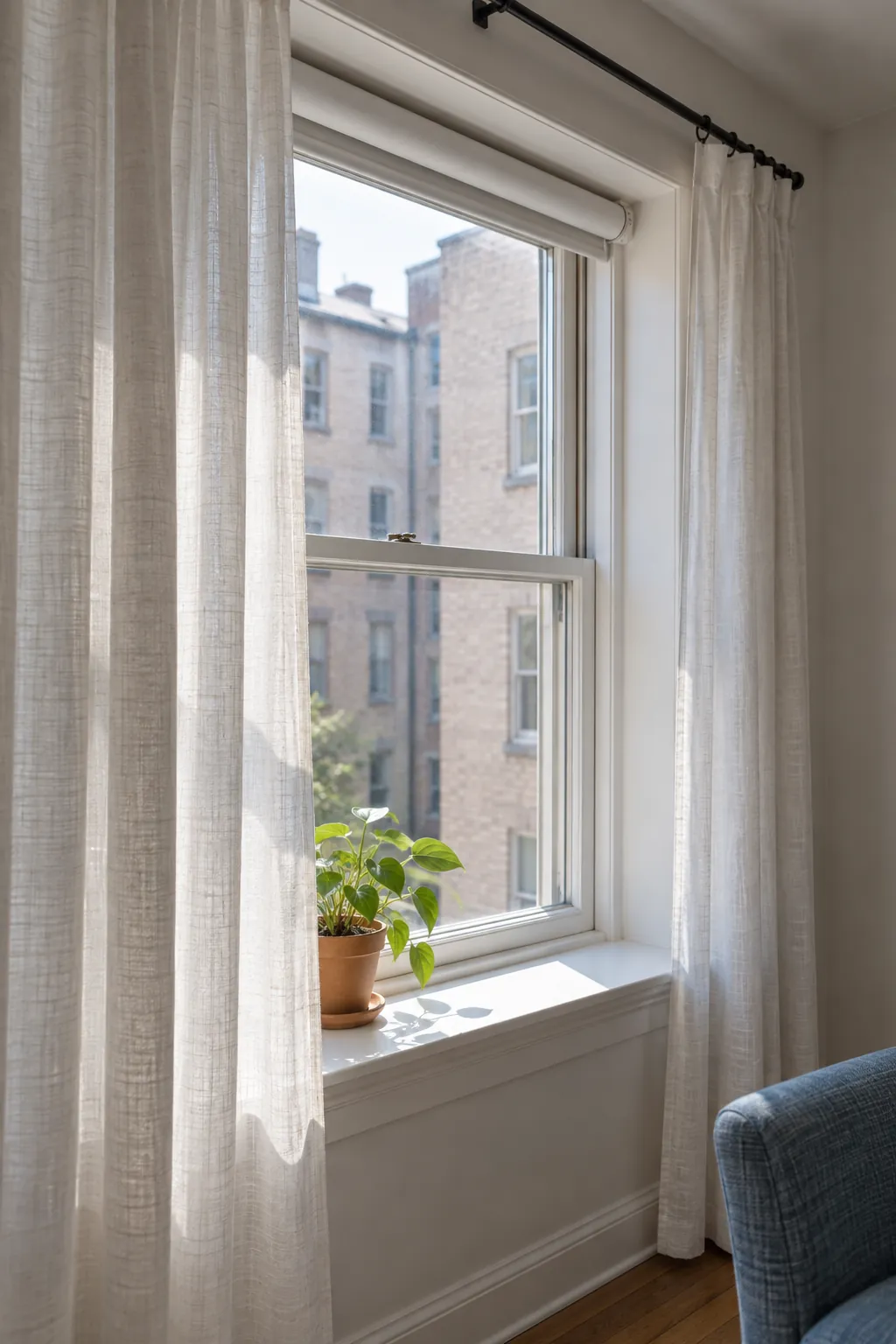
Open daytime curtains far enough that the fabric sits mainly beside the glass when the wall and hardware allow it. A curtain rod extending beyond the window can help, but check installation permission and suitable fixings before changing it. Keep fabric clear of heaters and moving parts.
Sheer curtains for apartments soften daylight without the visual weight of heavy panels. They do not reliably provide privacy after dark when lights are on inside. Use them with an appropriate blind or opaque layer when privacy is needed, and check the view from outside rather than assuming the fabric conceals everything.
Choose a length that hangs neatly without collecting in a pile on a busy route. Avoid adding furniture in front of the only window just to fill the wall. A small patch of daylight reaching the floor can make the room feel less enclosed.
Place a mirror for the view it reflects
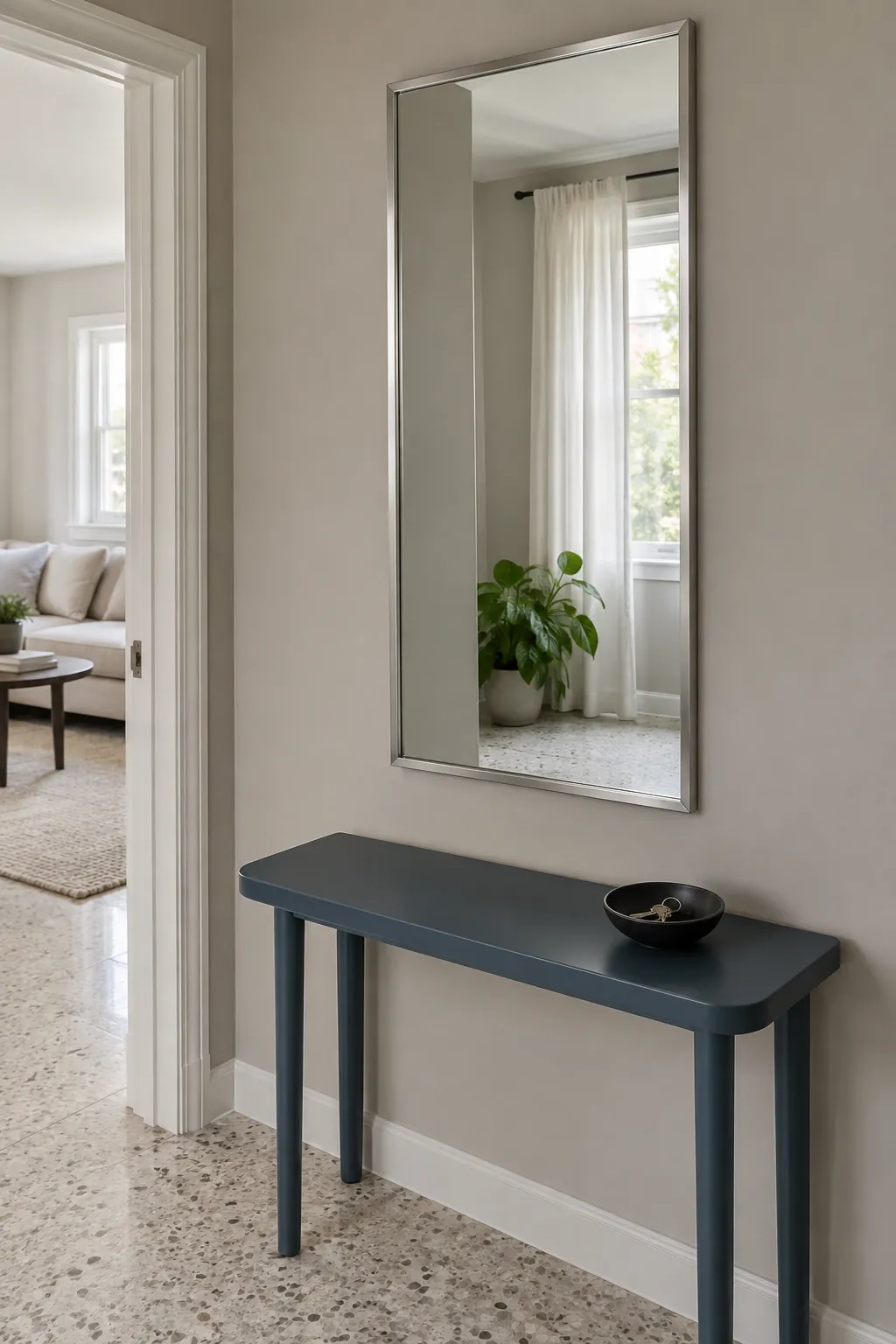
Large mirror placement starts with the reflection, not the empty wall. Hold a small mirror at the proposed position or check the angle before buying a larger one. Aim to reflect daylight, a calm stretch of the room or an attractive feature rather than a crowded shelf or the laundry pile.
A mirror near or across from a window may help distribute available light, depending on the angle. It cannot create daylight in a room that receives very little. Check for uncomfortable glare on the sofa or work screen at the times you use them.
Secure the mirror using hardware rated for its weight and appropriate to the wall, following the manufacturer’s instructions. A heavy mirror casually leaned in a narrow passage introduces a hazard and eats into circulation. If mounting is not permitted, choose a stable freestanding design intended for that use and secure it as directed.
Make large color areas feel connected
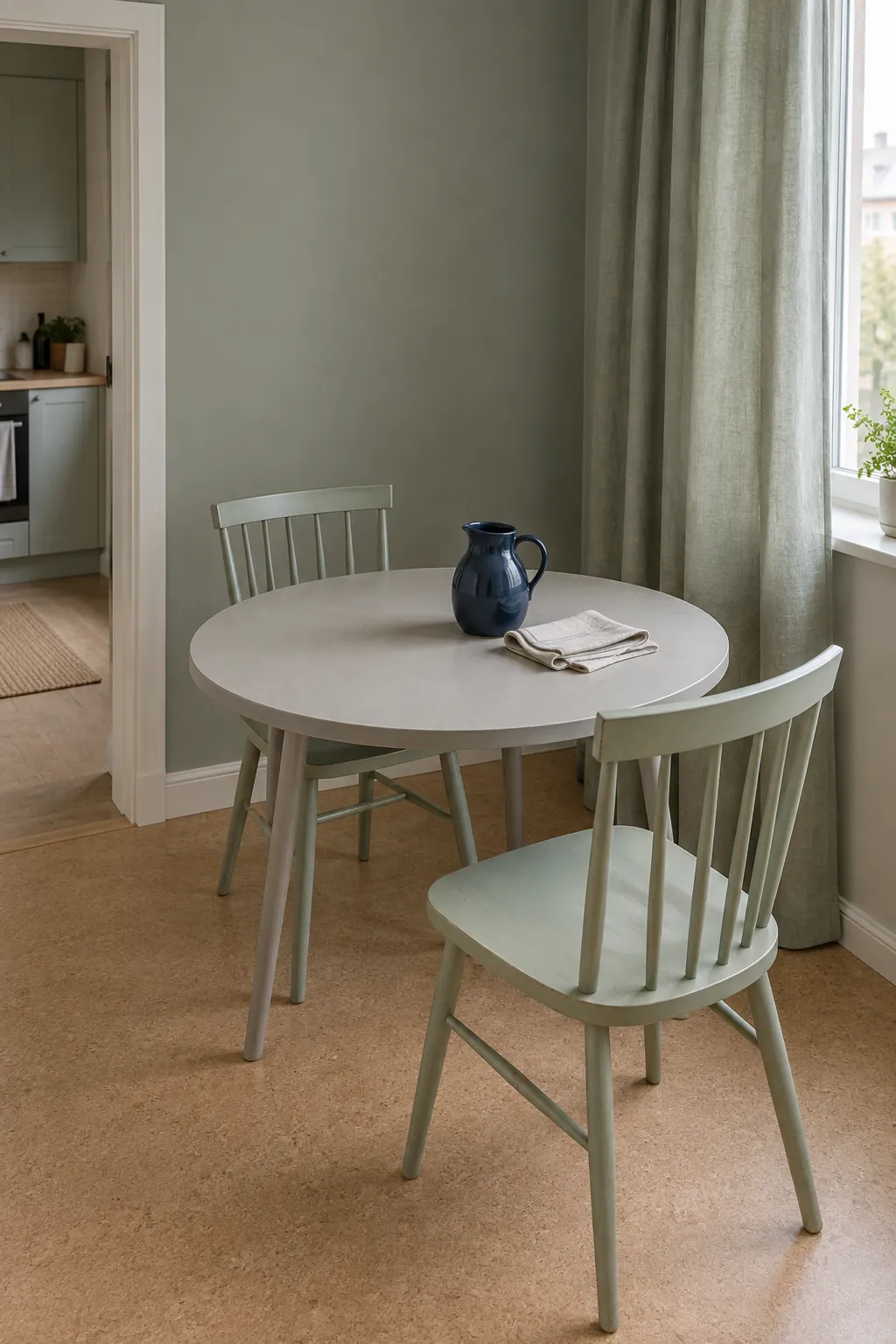
A light apartment color palette can reduce strong visual breaks between large surfaces, especially when curtains, walls and major upholstery sit in a similar tonal range. This does not mean everything must be white. Soft gray, muted green or warm off white can work if they suit the room’s existing light.
Test paint samples in daylight and under the lamps you actually use before committing, with landlord approval where required. White can look dull in a dim corner, and a pale color with the wrong undertone can fight the flooring. If paint is unavailable, repeat a compatible color through a cover, curtain or rug instead.
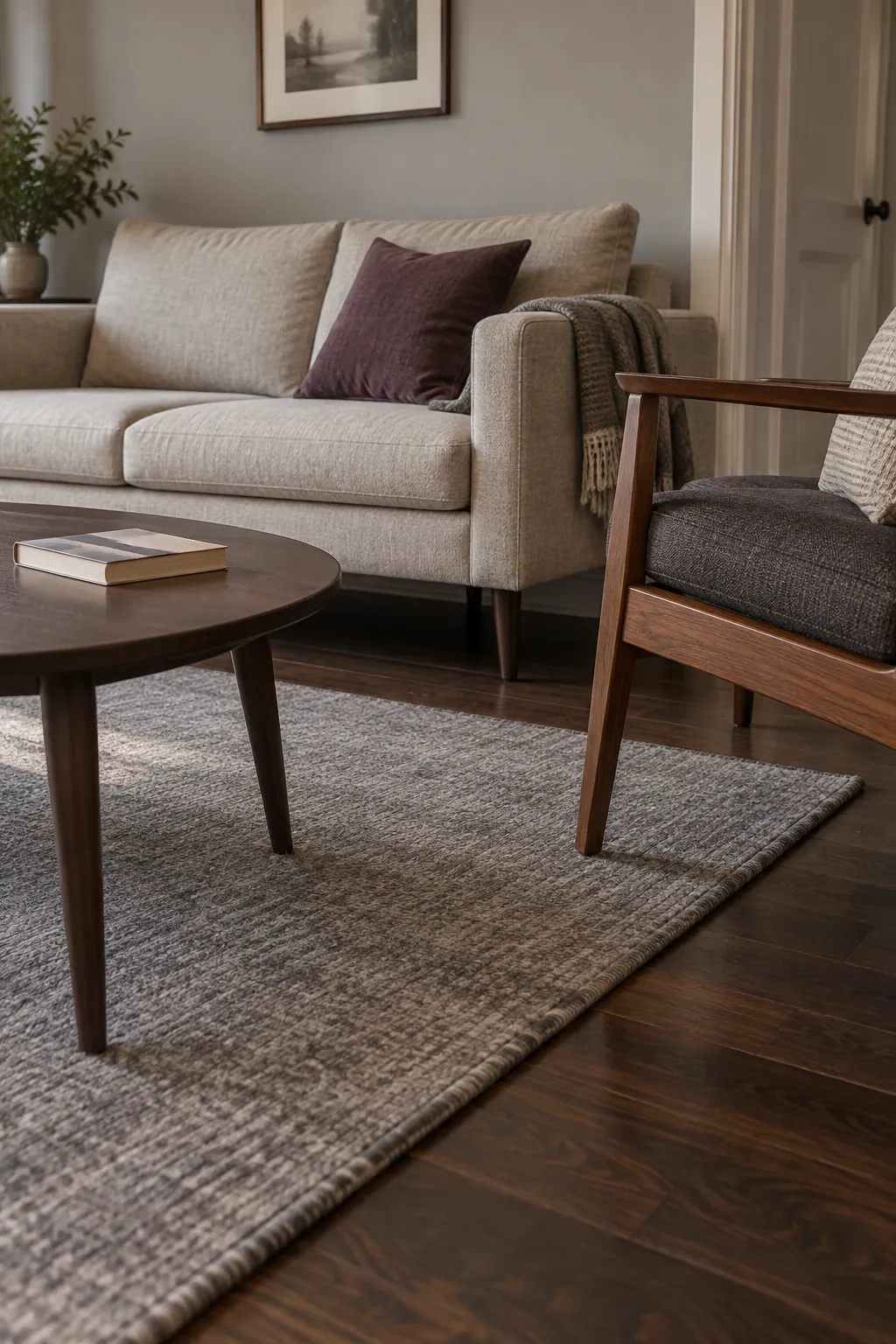
Keep stronger accents deliberate. One dark chair frame or a few blue textiles can give the eye something to settle on without turning every object into a separate focal point. The goal is coherence, not removing all personality.
Hide the busy things and give shelves breathing room
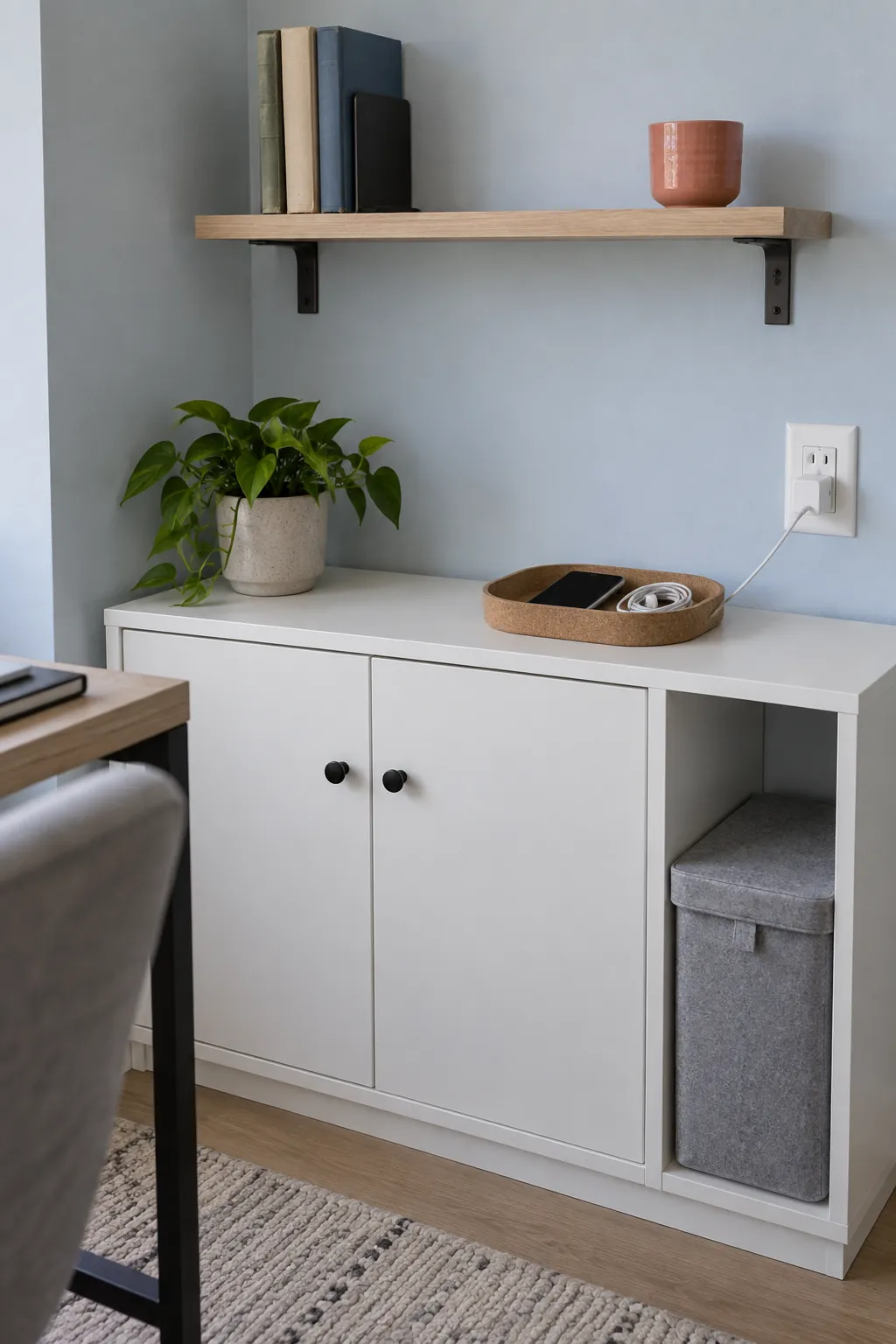
Decluttered apartment decor is easier to maintain when daily objects have convenient homes. Put charging accessories in one reachable compartment, paperwork in a single tray and spare supplies behind a door. Leave space inside each container so putting something away does not become a packing exercise.
Vertical apartment storage can free a useful floor area, but a tall open shelf packed with small objects may still look visually heavy. Combine closed storage below with a few easy to reach items above, and keep heavy belongings low. Anchor furniture as instructed and use proper wall fixings for loaded shelves.
You can start without buying anything: clear one surface, group similar items and remove objects that belong elsewhere. If that surface stays useful for a week, repeat the approach in the next zone. Empty space is doing a job when it gives your eyes somewhere to rest.
Use light in the corners you actually occupy
A single bright ceiling fixture can leave the edges of a room feeling dark. Add a reading lamp where you sit or a shaded light on an existing surface so the room has more than one usable pool of light. Route cords away from walkways, and follow fixture wattage and electrical ratings.
Choose bulbs with compatible color temperatures when the lamps will be visible together. You do not need the brightest possible bulb in every fitting. Glare and a patchwork of harsh colors can make the room less comfortable even if it is technically brighter.
Test one change before buying another
Start with the doorway view, then the window, then the surface that collects the most clutter. Each change should make it easier to see across the room or use it without shifting things out of the way. If an attractive new piece makes either task harder, it is working against the result you want.
Give the revised layout a normal day of meals, work and rest before judging it. Notice whether you can pull out a chair, reach storage and close the curtains without rearranging the room. An apartment feels more spacious when its everyday routines fit, even though the floor area has not changed.