
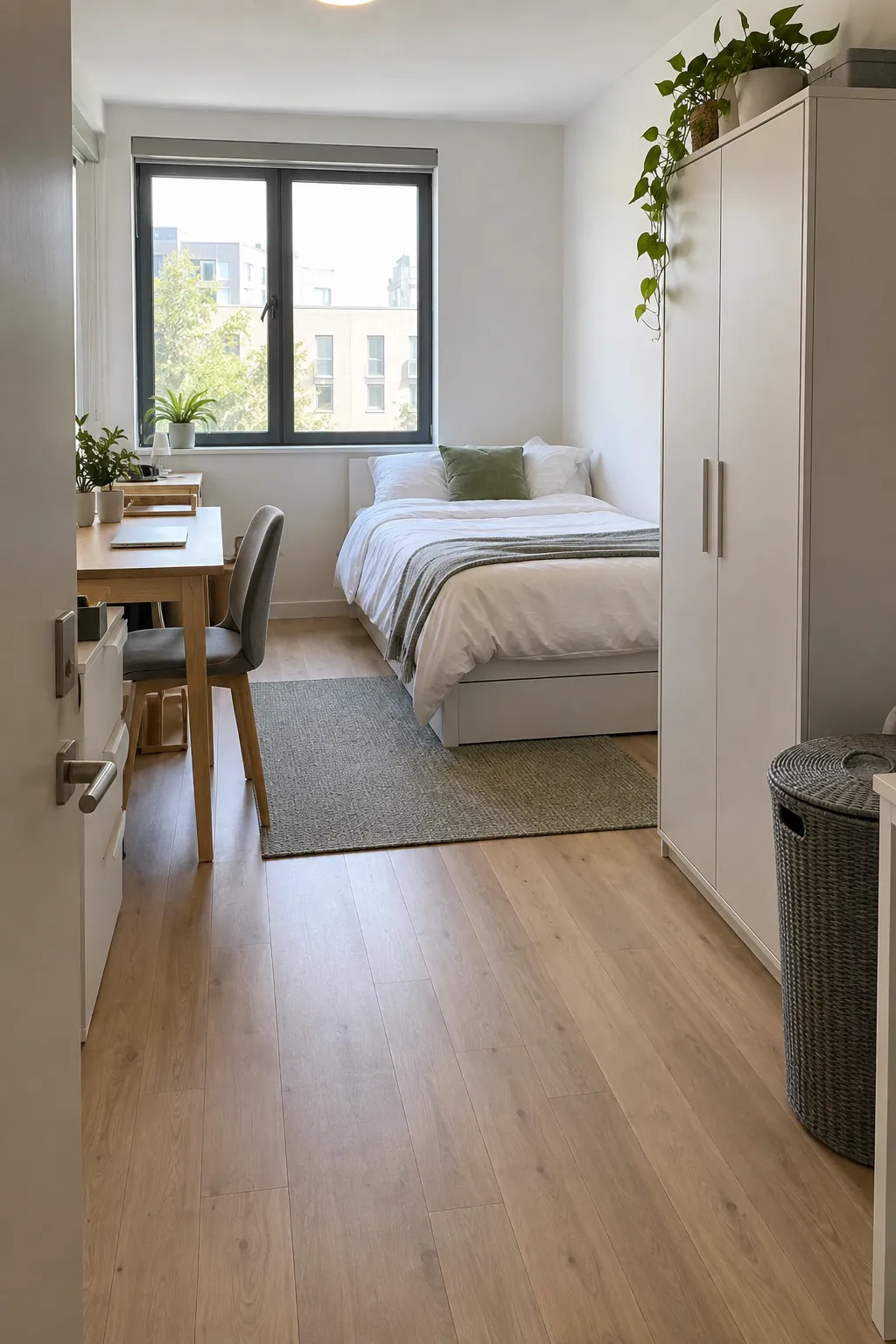
When the bed, desk and dinner table share one room, a few displaced objects can interrupt every part of the day. More baskets may hide the mess briefly, but they cannot decide where your work papers or clean laundry belong. Start by giving everyday activities and their belongings reliable homes, then add storage only where the system needs it.
Start with one category, not the entire room
Choose a small group that causes trouble every day, such as bags, papers or clean laundry. Gather those items where you can see them, remove obvious rubbish and separate anything that belongs elsewhere. Keep the bed and the route to the door usable while you work.
Decide what deserves space before choosing containers. Duplicates, broken things you will not repair and supplies for abandoned projects are different decisions from belongings you still enjoy. You do not have to strip the room of hobbies or personality to make it easier to live in.
Finish the category by assigning a home and removing donations or rubbish promptly. A sorted pile left on the floor is still a pile you must walk around. Then take on the next group instead of opening every cupboard at once.
Give the room activity zones without building walls
Identify where you sleep, eat, work, dress and arrive home. These apartment zones can overlap, but the belongings for each activity should be close to where you use them. Keep work papers near the table rather than distributing them across the bed, sofa and kitchen counter.
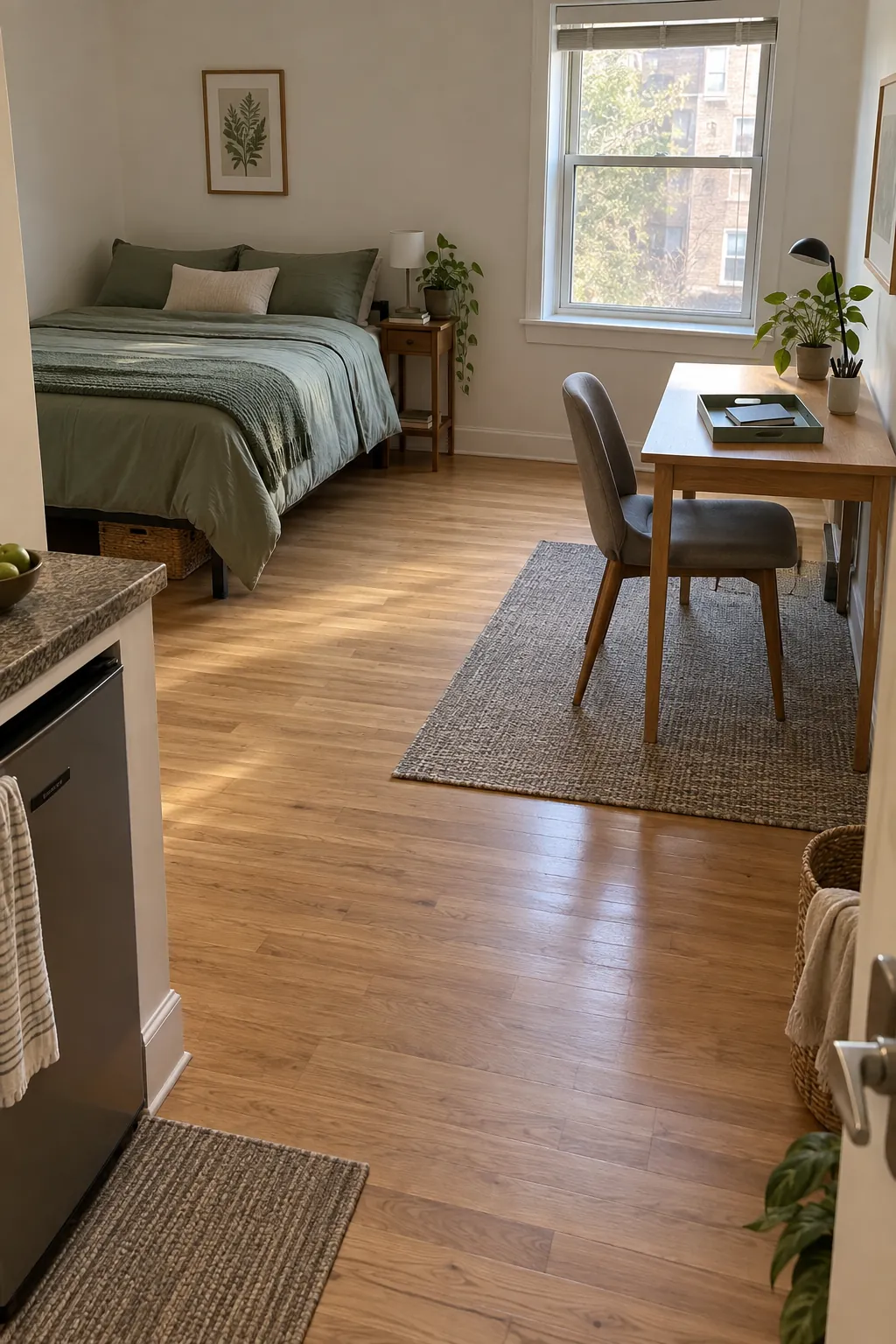
Use existing furniture placement to mark a boundary before buying a divider. A small rug can define a sitting area, while a bedside surface identifies the sleep zone. Tall dividers can reduce light and access, so test the layout before adding one.
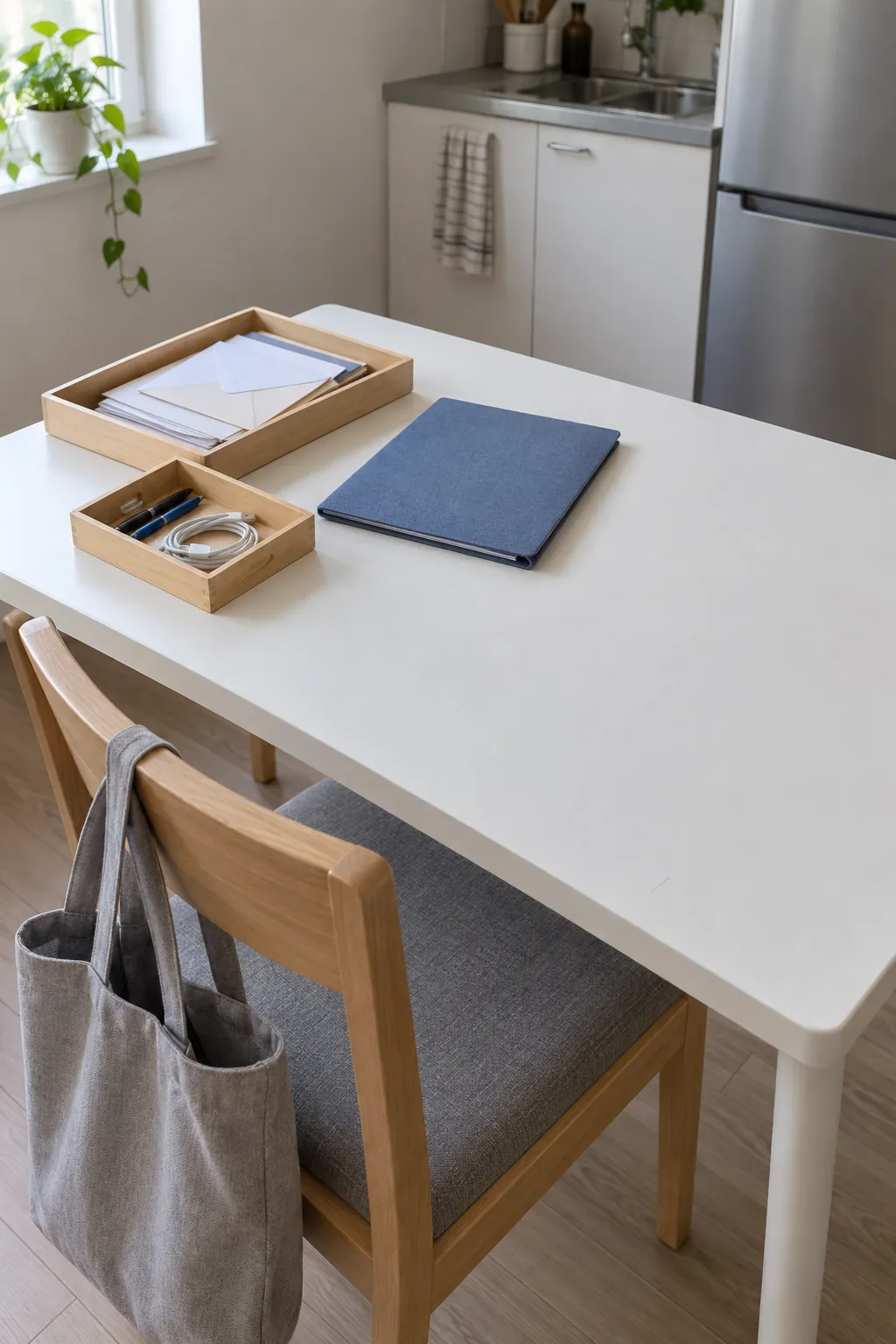
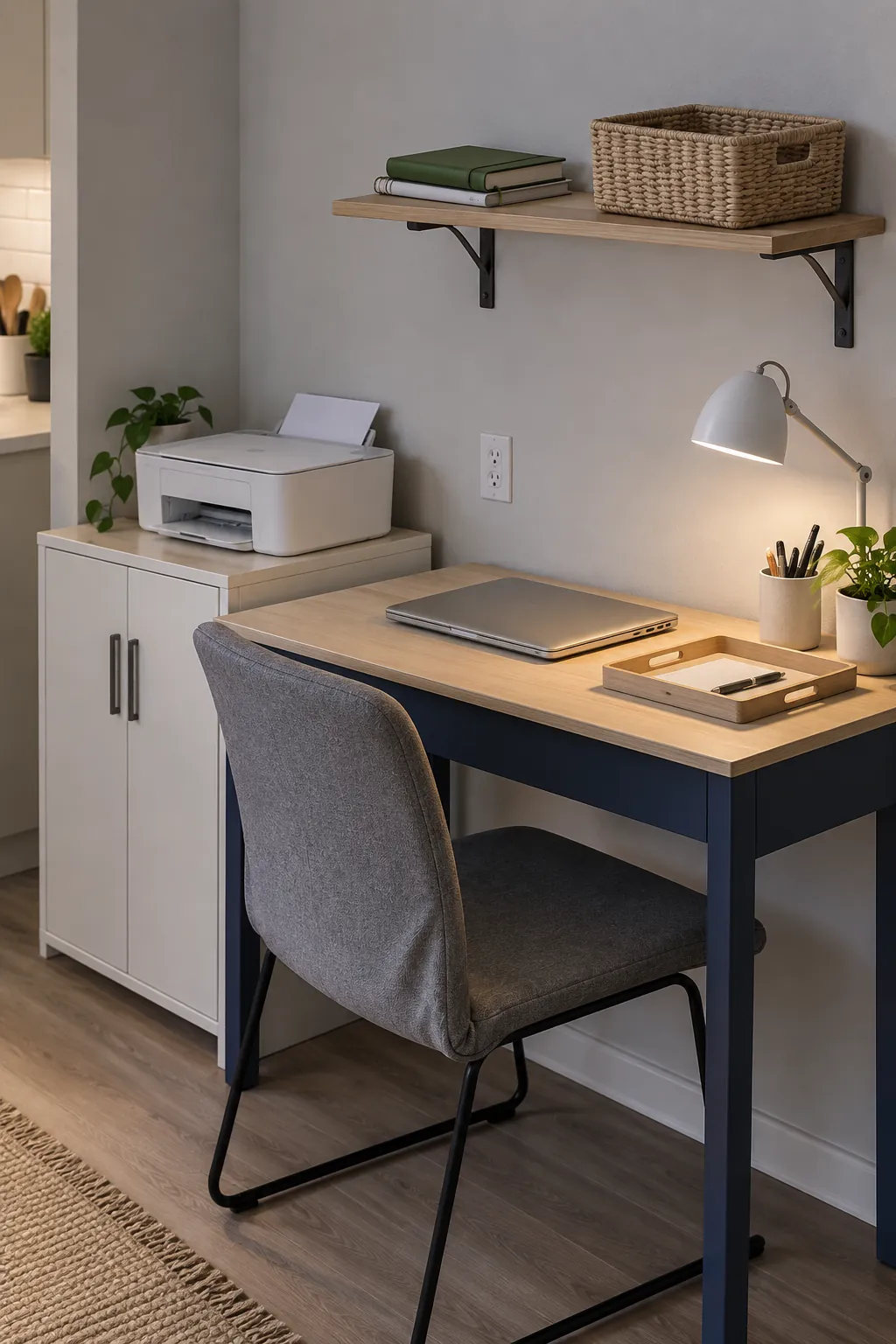
When one table serves several jobs, give each job a portable home. A shallow work tray can move to a shelf at dinner, leaving the table usable without forcing you to sort loose papers twice a day. Store the tray close enough that putting it away feels easier than leaving it out.
Set up a landing place for things that arrive with you
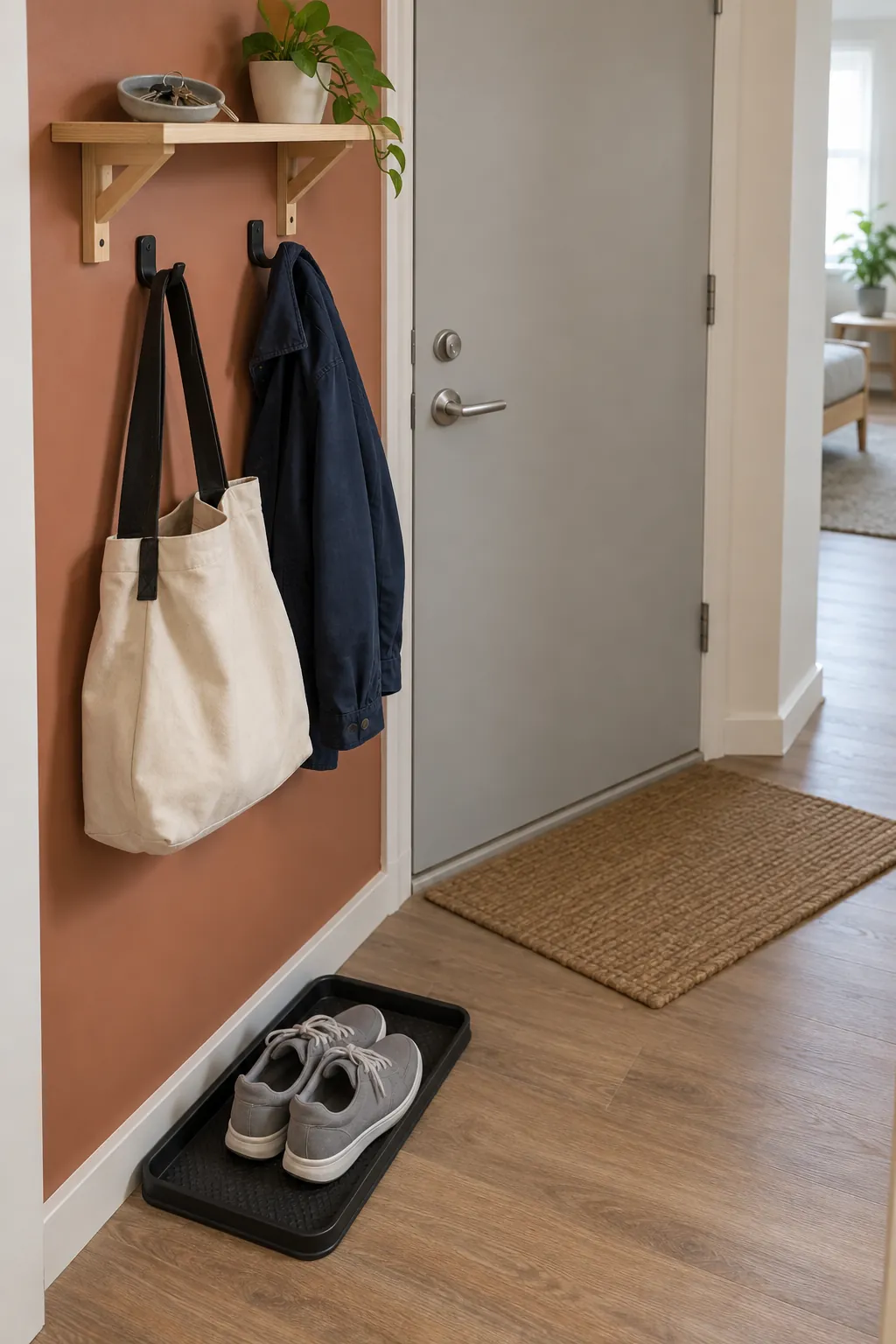
Place a small tray for keys and a bag spot near the entrance, outside the door swing and walking route. Keep only the shoes you wear regularly there; move seasonal pairs into your clothing storage. Mail needs one temporary holding place and a regular decision time, not several growing piles.
Choose hooks and shelves that suit the wall, the load and your rental rules. Adhesive products have specific surface and weight limits, and they are not a replacement for required furniture anchoring. If wall fixing is unavailable, a stable compact freestanding arrangement may suit the room better.
Build the closet around the clothes you actually wear
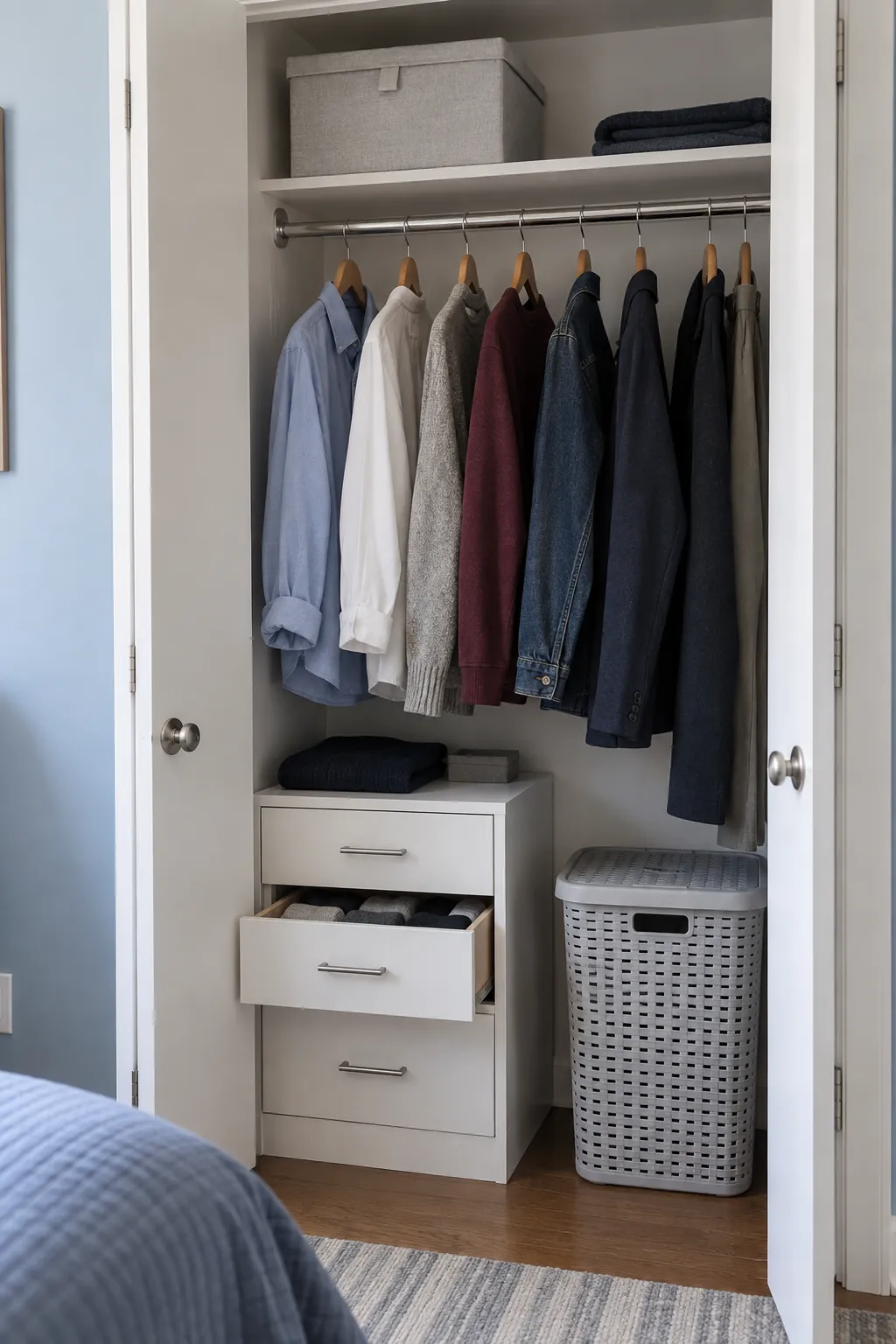
Group hanging clothes by use so you can find a work outfit or everyday jacket without searching every hanger. Put frequently worn items within easy reach and occasional pieces higher or farther back. A compact closet system only helps if it fits the closet opening as well as its interior dimensions.
Before adding a second rail, check that the clothes below it will clear the floor or shelf. Use a shelf divider for stacks that collapse, or a shallow drawer container for socks that disappear at the back. Leave enough space to return clean laundry without compressing everything.
Give worn but reusable clothes a limited home, such as one hook or a small designated section. Keep them separate from dirty laundry and cap that space so it does not become a second wardrobe. Put the hamper where undressing actually happens, with enough ventilation for its contents.
Use under bed space for things you do not need every hour
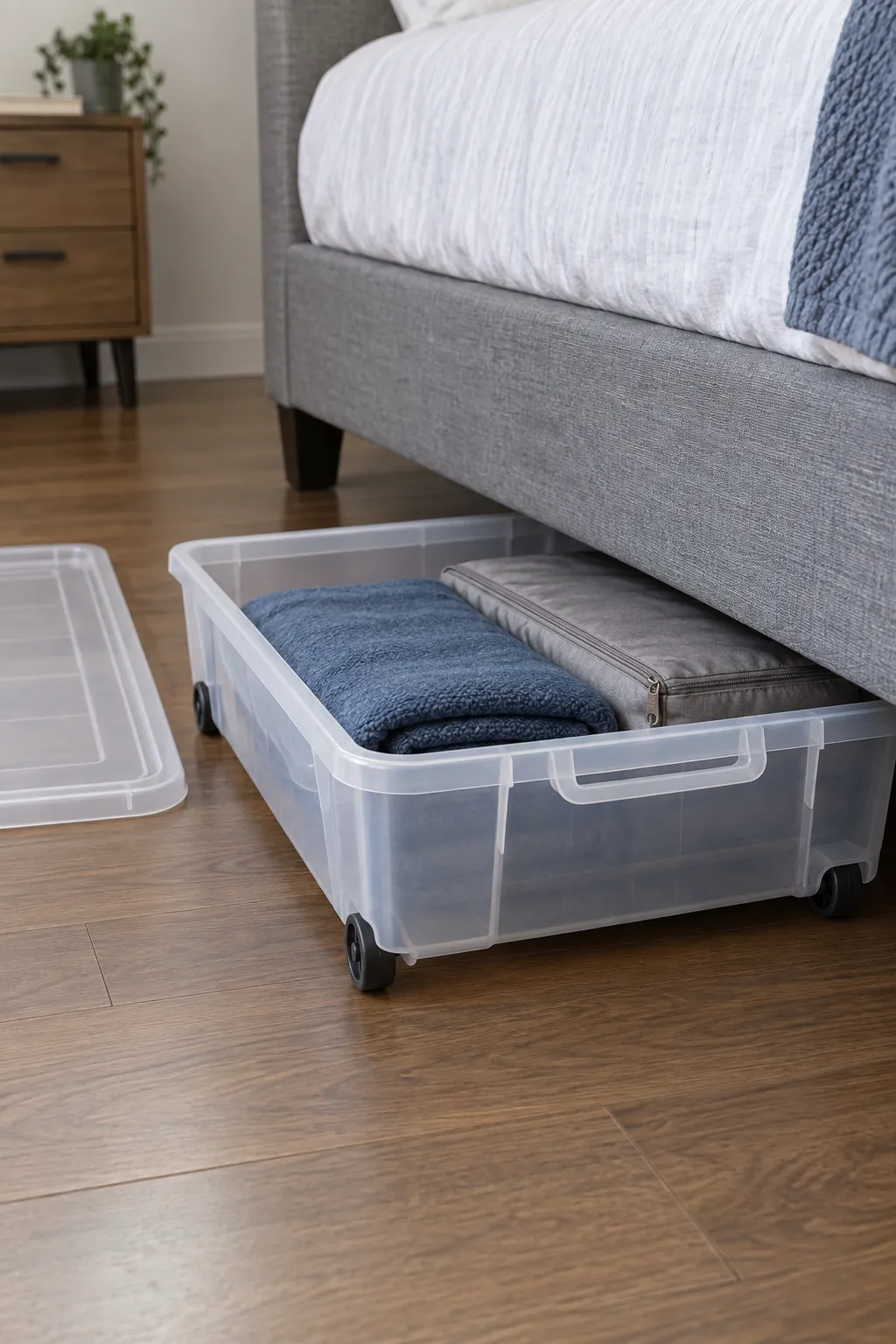
Under bed apartment storage works best for spare linens, seasonal clothing or occasional equipment. Measure the clear height, the space between supports and the room needed to pull a box out. A container that technically fits underneath can still be awkward if a nearby cabinet blocks retrieval.
Choose lids or covers suited to the items and keep everything clean and fully dry before storing it. Avoid packing containers so tightly that you cannot lift or slide them comfortably. If the bed frame is not designed for risers, do not improvise extra height with unstable supports.
Store upward without making everything hard to reach
Vertical wall storage can hold lightweight items near their activity zone, but heavy and frequently used belongings should stay lower. Measure book heights, file widths or kitchen containers before choosing shelf spacing. Follow load limits, use appropriate fixings and get rental permission where required.
A storage ottoman or cabinet can hide visually busy objects, provided its opening remains accessible. Hidden storage furniture is less useful when a rug, table or daily pile prevents the lid or drawer from opening. Choose fewer containers you can reach easily over more capacity you rarely use.
For cooking supplies, separate food from cleaning products and keep the preparation surface available. Store the utensils you use most near the work area, with knives secured safely. Adding a shelf does not help if it simply transfers countertop clutter into a crowded overhead row.
Give hobbies a storage boundary that protects them
A studio can support hobbies without leaving every project permanently spread out. Keep related tools and materials together in a container sized for the activity, and choose storage that protects fragile equipment. A camera bag belongs somewhere dry and stable, while long equipment needs a secure position where it will not fall into a path.
Keep the current project accessible and put backup materials farther away. If a hobby exceeds its available storage, decide which supplies you genuinely use before buying another cabinet. The boundary should make the hobby easier to start and put away, not make the home feel like a storeroom.
Reset the room around the next activity
At the end of a work session, put papers and cables into their assigned home so the table can support the next meal. Before bed, return stray items from the sleeping area and put laundry into the correct place. These small transitions matter more than making the room look perfect once a month.
Watch for the same object repeatedly landing in the same wrong place. Move its home closer, simplify the container or reconsider whether the item belongs in that zone. A maintainable studio apartment organization system follows your habits closely enough that putting things away stops feeling like a separate project.
Before bringing in a new item, name the space it will occupy and check what is already there. If the only answer is the floor beside the bed, pause the purchase. A clear surface is useful room capacity, and you do not have to spend it immediately.