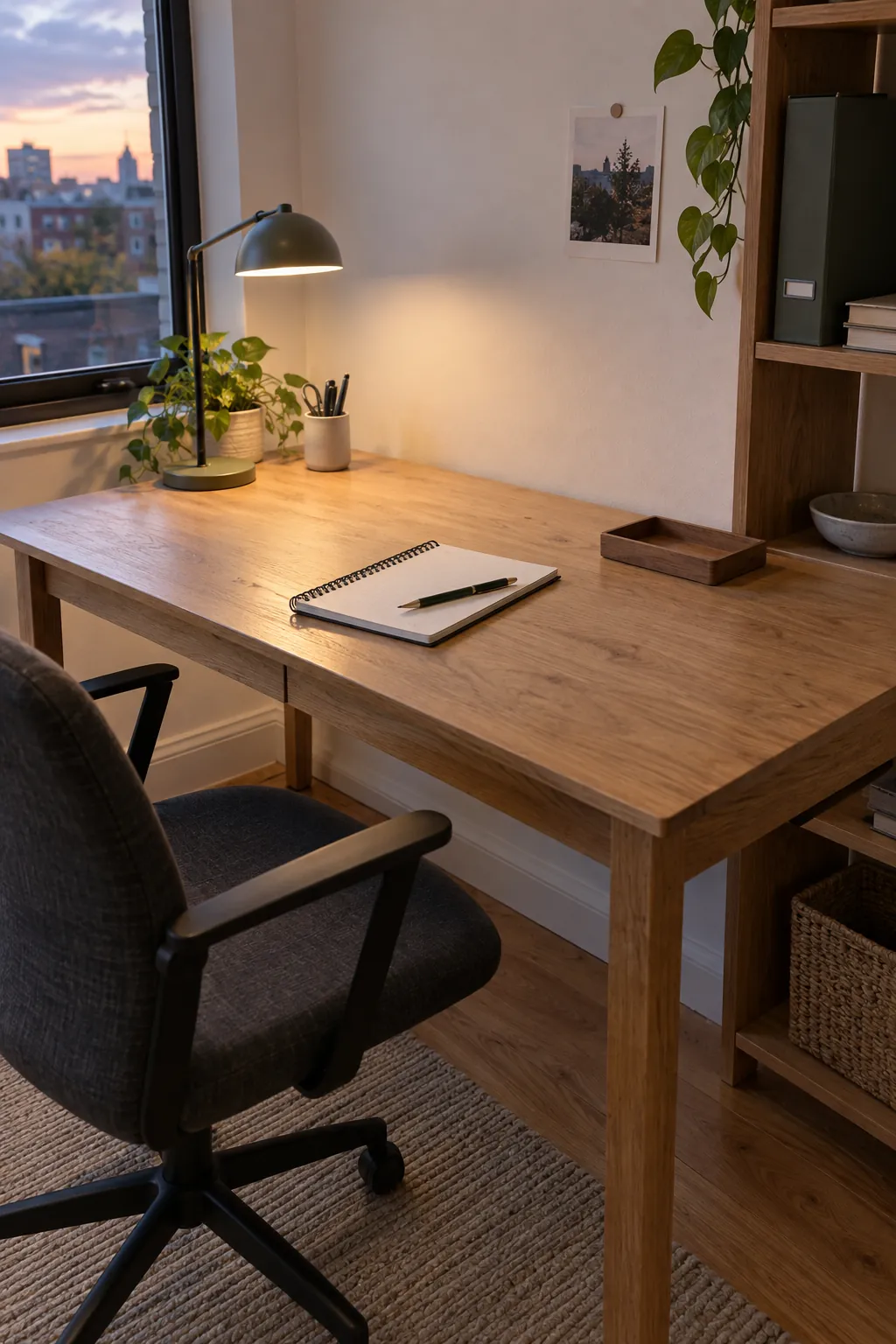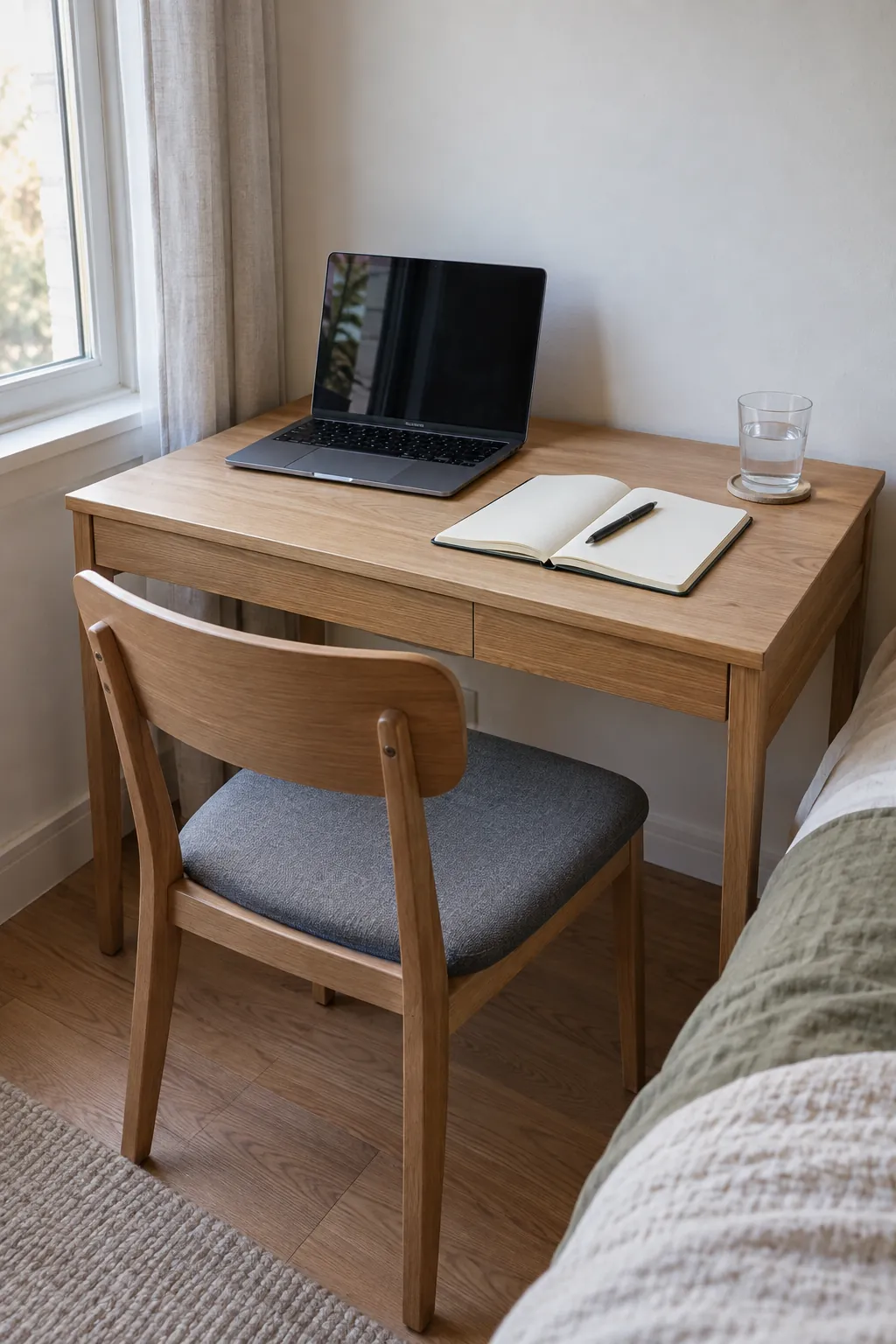
Clearing a desk can expose a problem: the surface is empty, yet the work still has nowhere to happen. A useful minimalist setup leaves breathing room around the tools you actually use. It also gives everything temporary a clear place to go.
Keep the tools your work needs
Minimalism fails when the desk looks empty but the tools you need live across the room. List what you reach for during a normal study or work session and keep those items close. A laptop, notebook, one pen, and water may be enough for some people; drawing or paperwork may require more. The goal is a clear working zone, not an arbitrary object count.
Try a full day before removing anything else. If you repeatedly retrieve the same item from storage, give it a sensible place nearby. This makes a minimalist desk aesthetic compatible with actual work rather than a temporary display.
Protect the space between objects
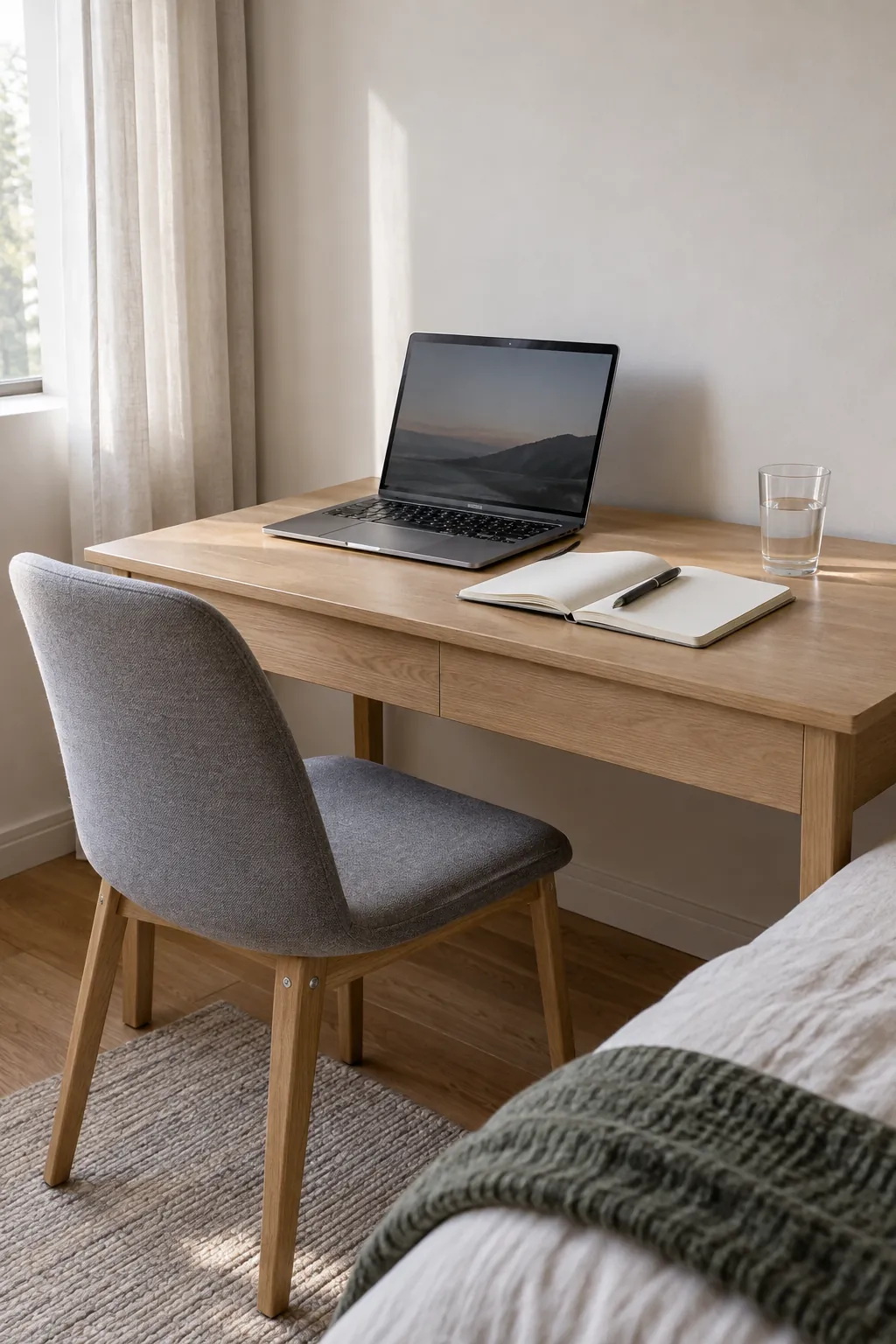
A small bedroom desk can feel crowded even when it holds only a few large things. Look at the open area where your hands move, then shift a lamp, speaker, or organizer to the back edge or a nearby shelf. The visible gaps between objects help the desk feel quiet, but they also give you room to work.
Do not buy a smaller desk just to force a sparse look. Measure the notebook, keyboard, or materials you use together. Choose a surface that fits those tasks, and let open space emerge from a realistic layout.
Use hidden storage with a clear purpose
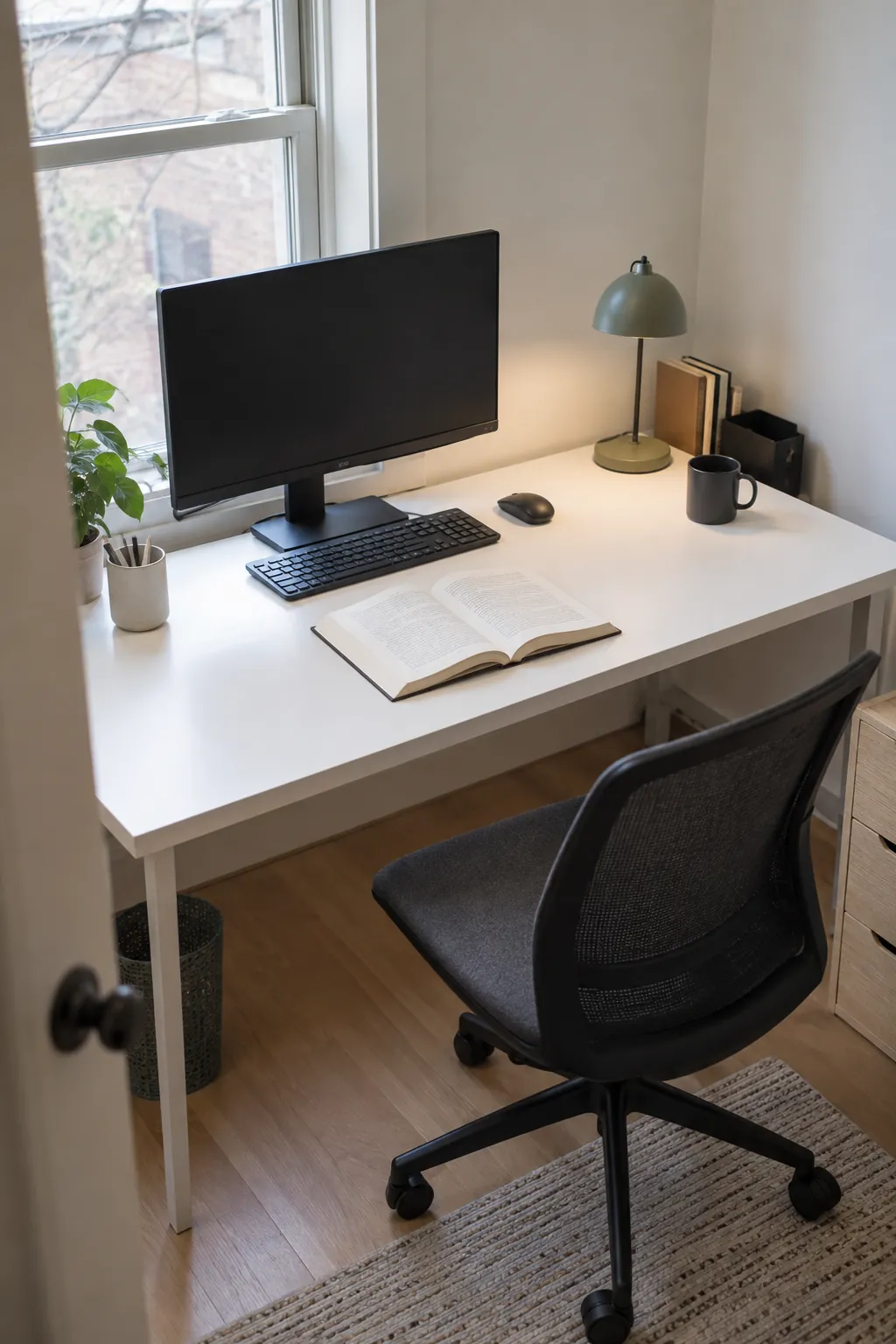
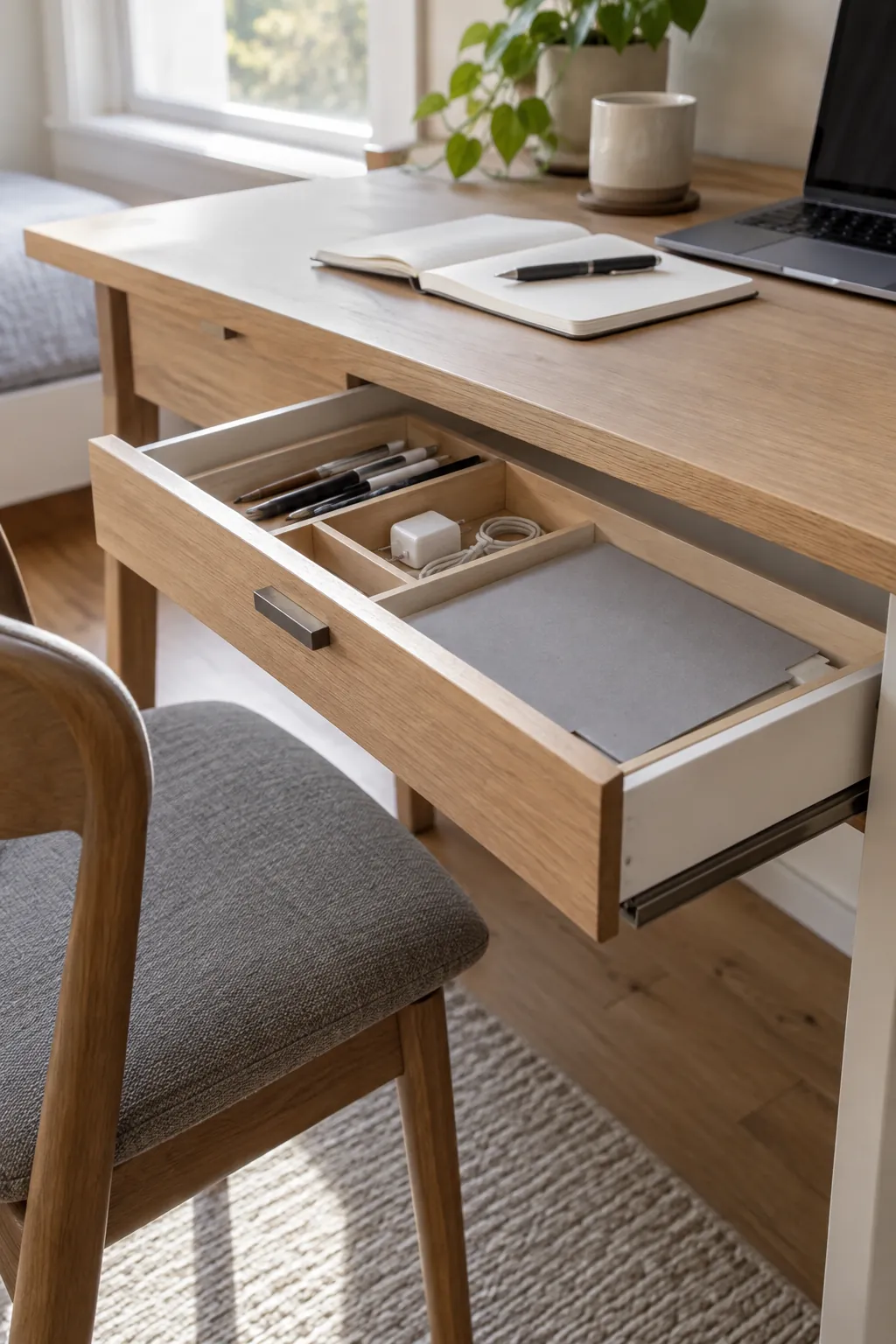
A drawer can hold spare supplies, charging adapters, and papers that are not part of the current task. Group them into simple categories so you can find them without emptying everything onto the desktop. One shallow divider often works better than a collection of tiny containers.
If there is no drawer, use a nearby closed box or a narrow shelf, then limit what stays on top of the desk. Hidden storage should make retrieval easier, not become a place where unwanted things disappear indefinitely. Review it when a category becomes crowded.
Choose a simple visual anchor
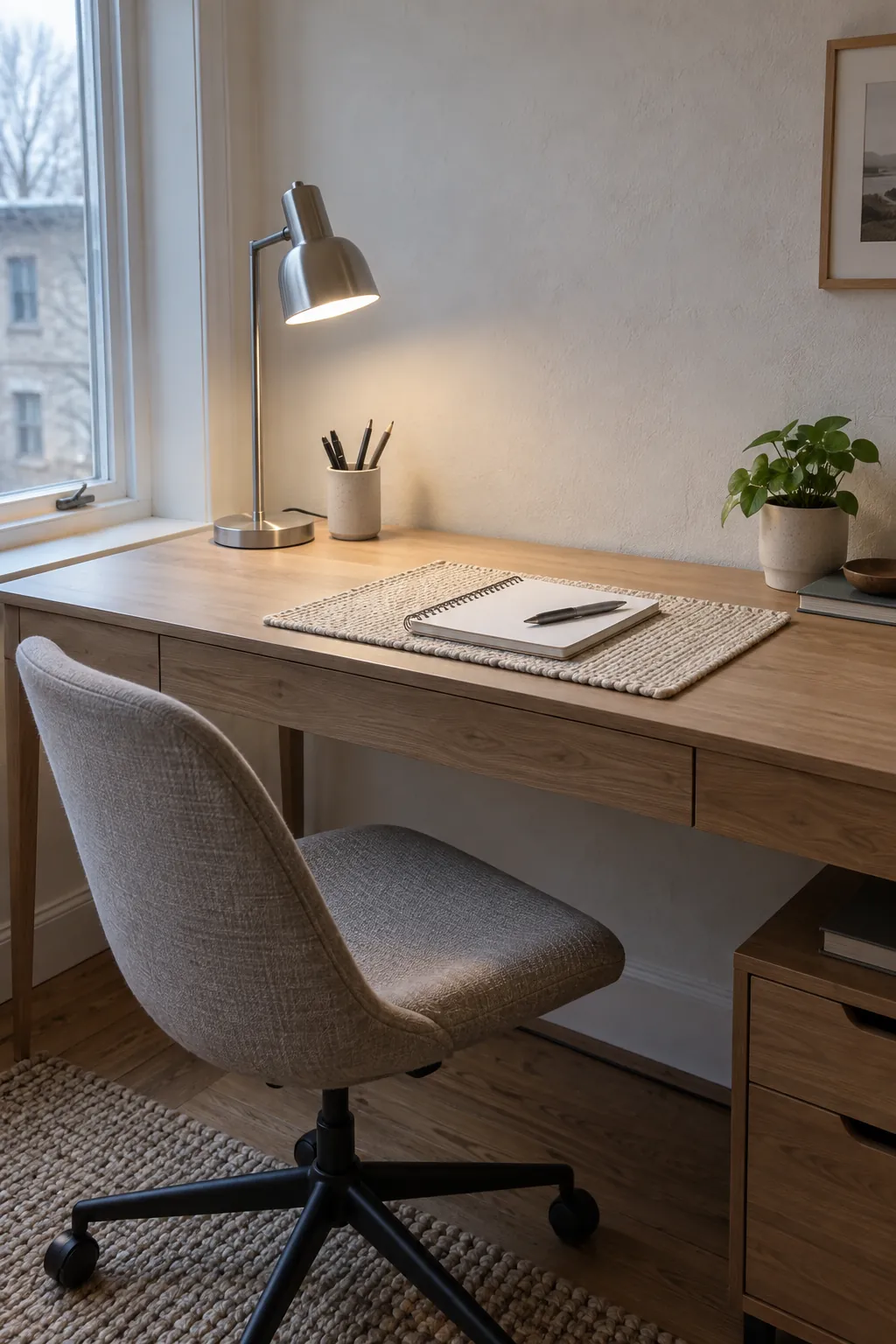
A restrained setup still needs a point of focus. A well placed lamp, natural wood surface, or single plant can give the area character without taking over the work zone. Let the anchor solve a practical need when possible, such as a lamp for reading or a mat that protects the table.
Keep the palette connected to the room. A warm neutral desk, one dark technology finish, and a small green accent can look coherent without forcing everything to match. A cozy desk aesthetic can remain minimal when comfort comes from light and texture rather than more objects.
Make cables part of the layout
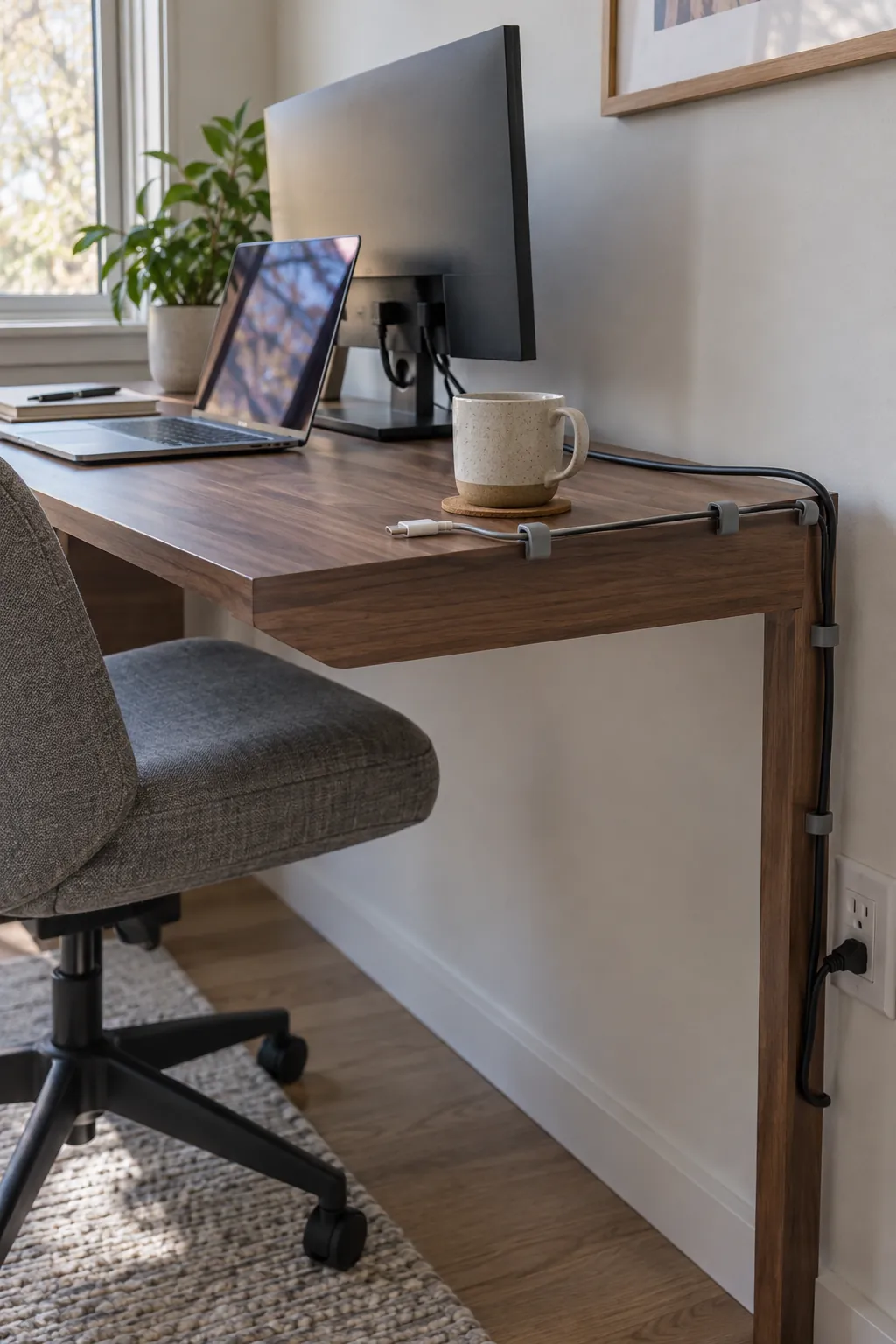
A desk can hold very little and still look busy when wires cross the open surface. Route fixed leads along the rear edge and keep only the cable you plug in regularly within easy reach. Use removable clips where drilling is not appropriate, and avoid tight bends at connectors.
Do not hide a power strip where it is difficult to access or where ventilation is poor. Check cable length before placing furniture against the wall. A tidy cable path works because it respects how the equipment connects, not because every wire vanishes.
Reset by removing the temporary layer
Receipts, dishes, and unfinished notes are often the temporary layer that breaks a minimalist look. Give each a destination before the end of the session, then leave the next task’s one useful item ready. If the same pile returns, change the destination or make the routine easier.
The right minimalist desk aesthetic is visible on a normal weekday. It leaves enough room to study or work and lets you put things away without a complete room cleanup. That steadiness matters more than a flawless photograph.