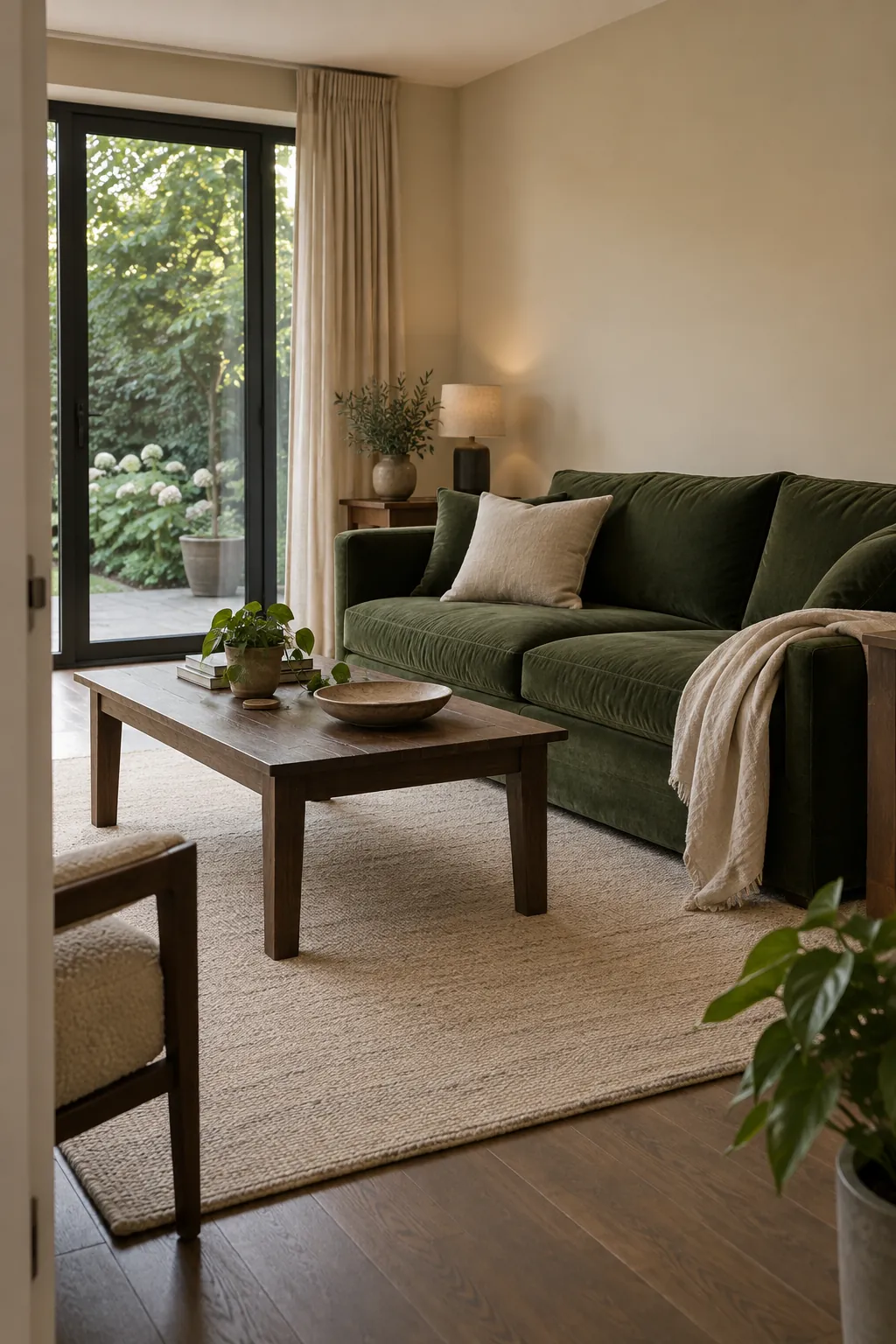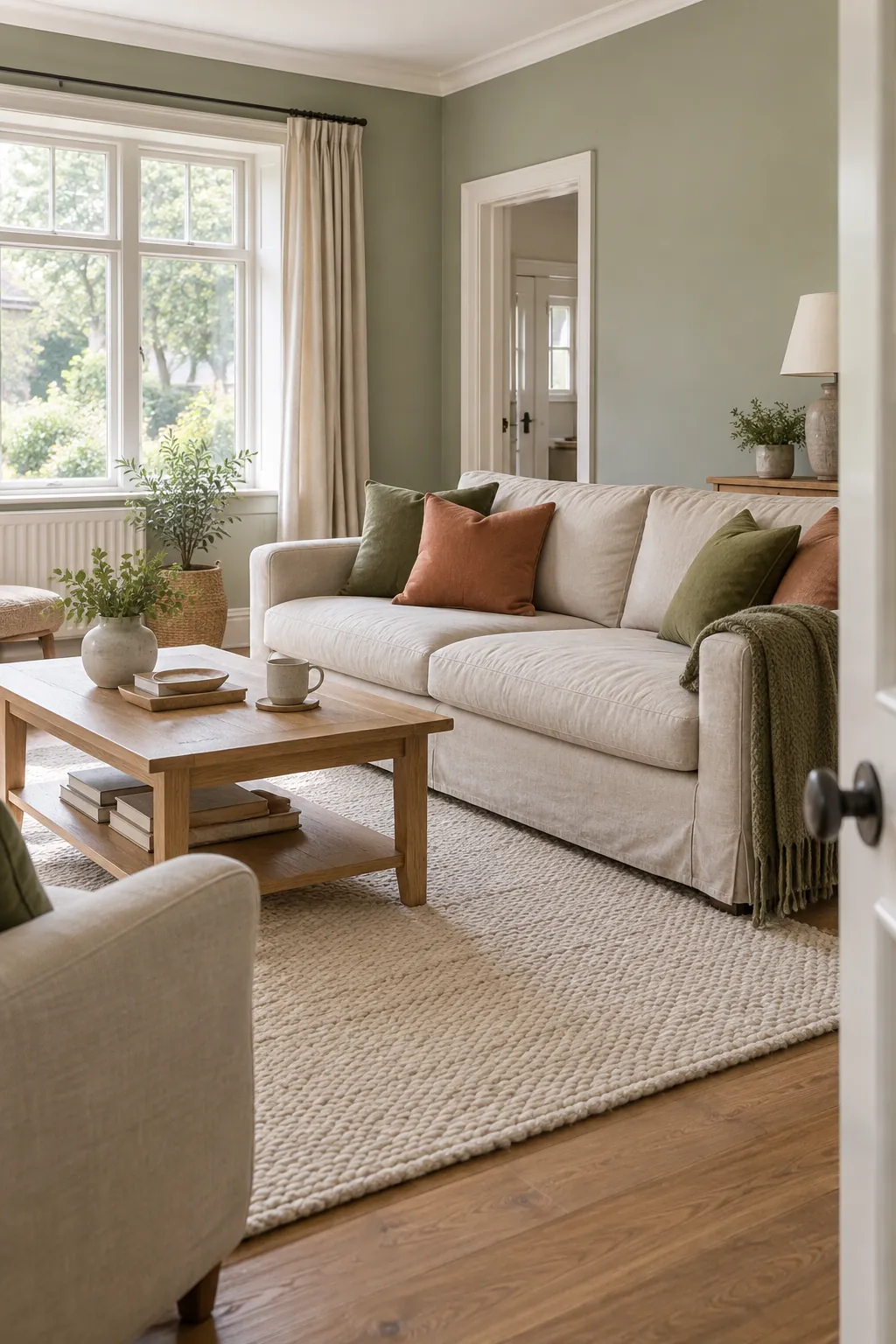
A colour palette that looks balanced on a screen can change when it meets your sofa fabric, floor, and actual daylight. The best starting point is the item you are keeping, followed by large paint samples viewed at several times of day. Use the combinations below as workable relationships between surfaces, then adjust their strength to suit your room.
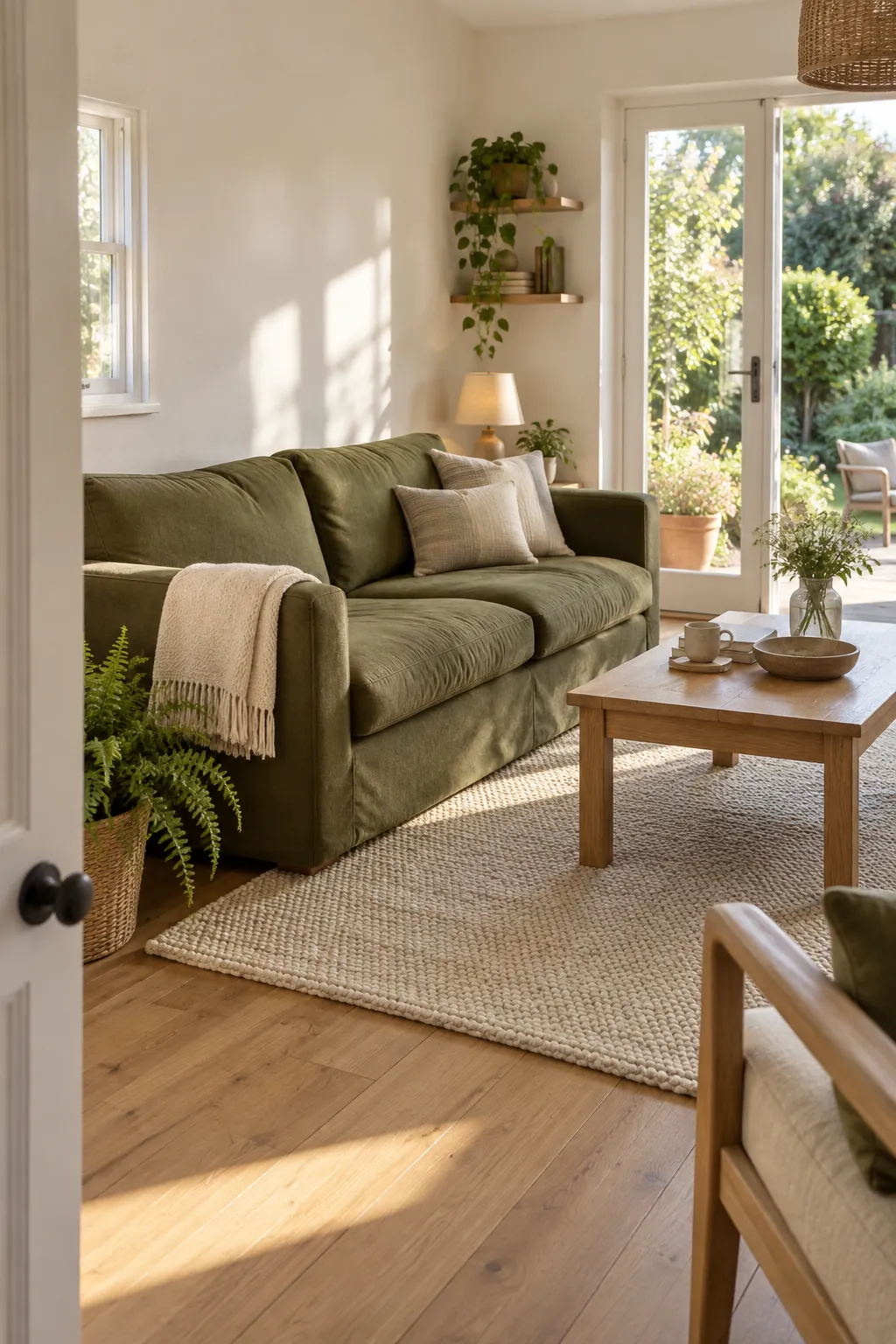
Warm White and Olive Green
Warm white walls let an olive sofa feel grounded without making the room dim. Repeat the green in one smaller textile and leave the main rug light. Compare paint samples beside the sofa in morning and evening light, since warm white can shift against green fabric.
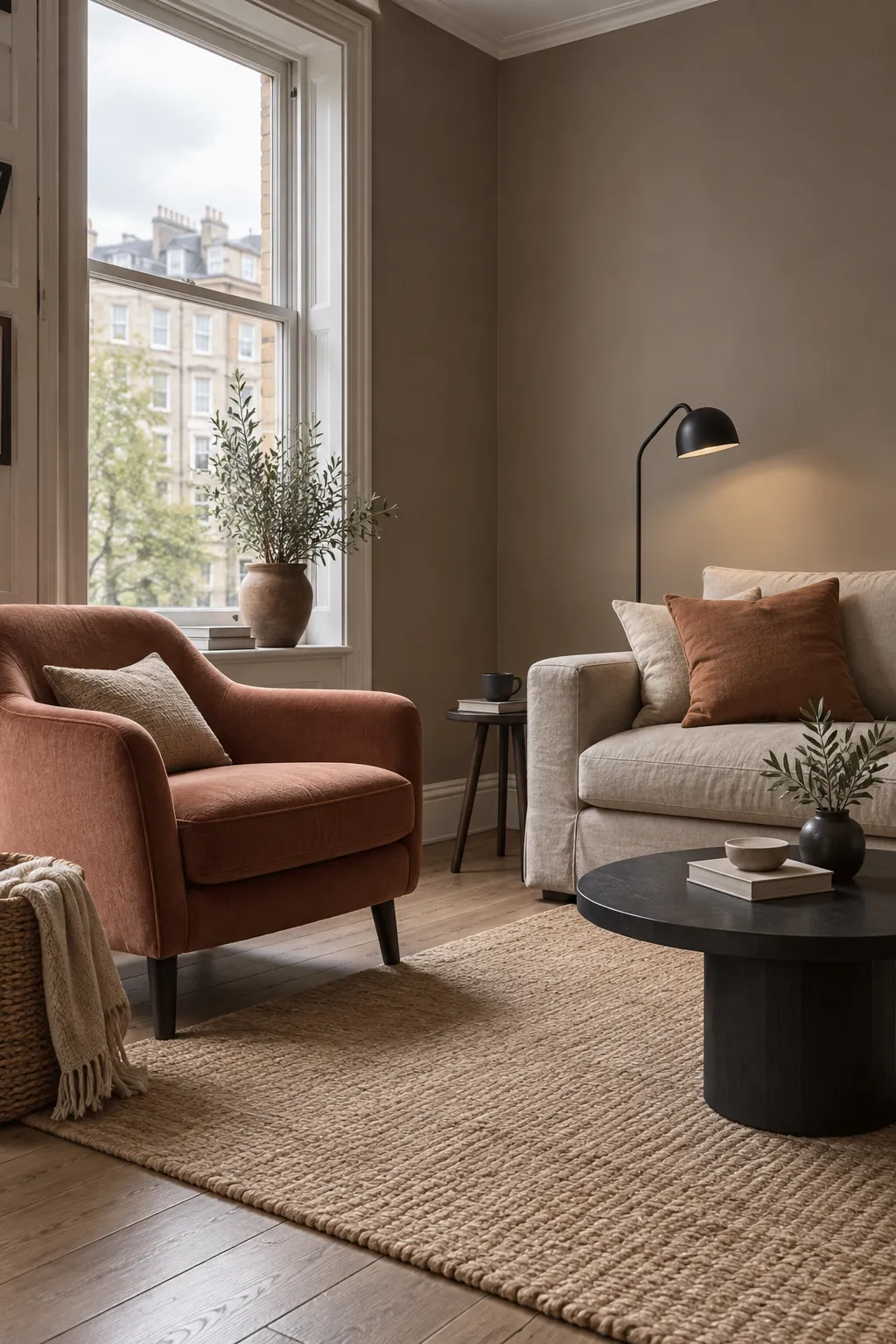
Taupe and Terracotta
Taupe creates a quiet backdrop for a terracotta chair or cushion. Keep the clay colour in a few distinct places rather than spreading it across every surface. A natural linen rug can bridge the warm accent and the softer wall tone.
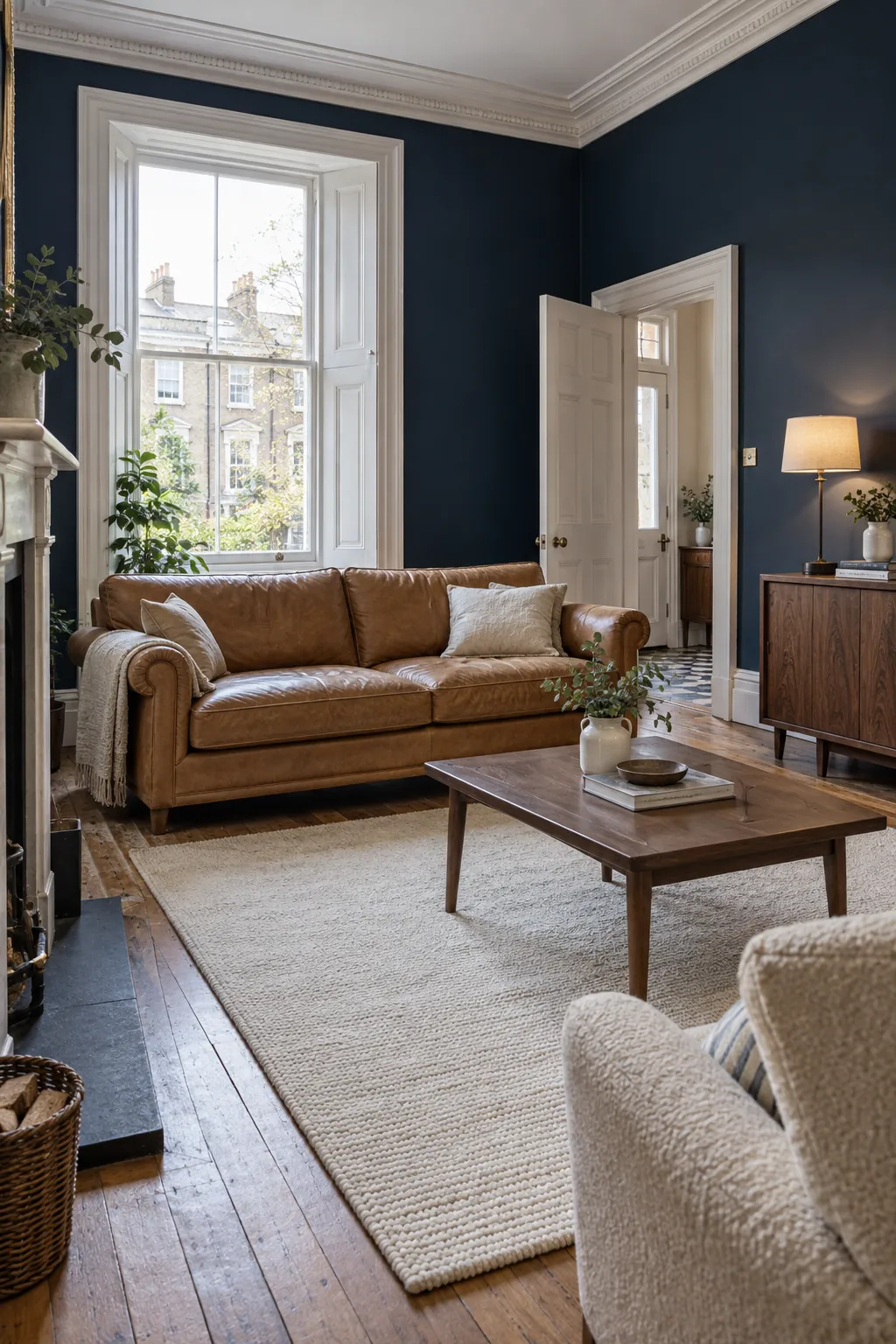
Deep Navy and Camel
Navy walls give a camel leather sofa clear contrast and a confident silhouette. Add pale trim or a light floor covering to keep the seating area readable. Test the navy on more than one wall because its depth changes dramatically after dark.
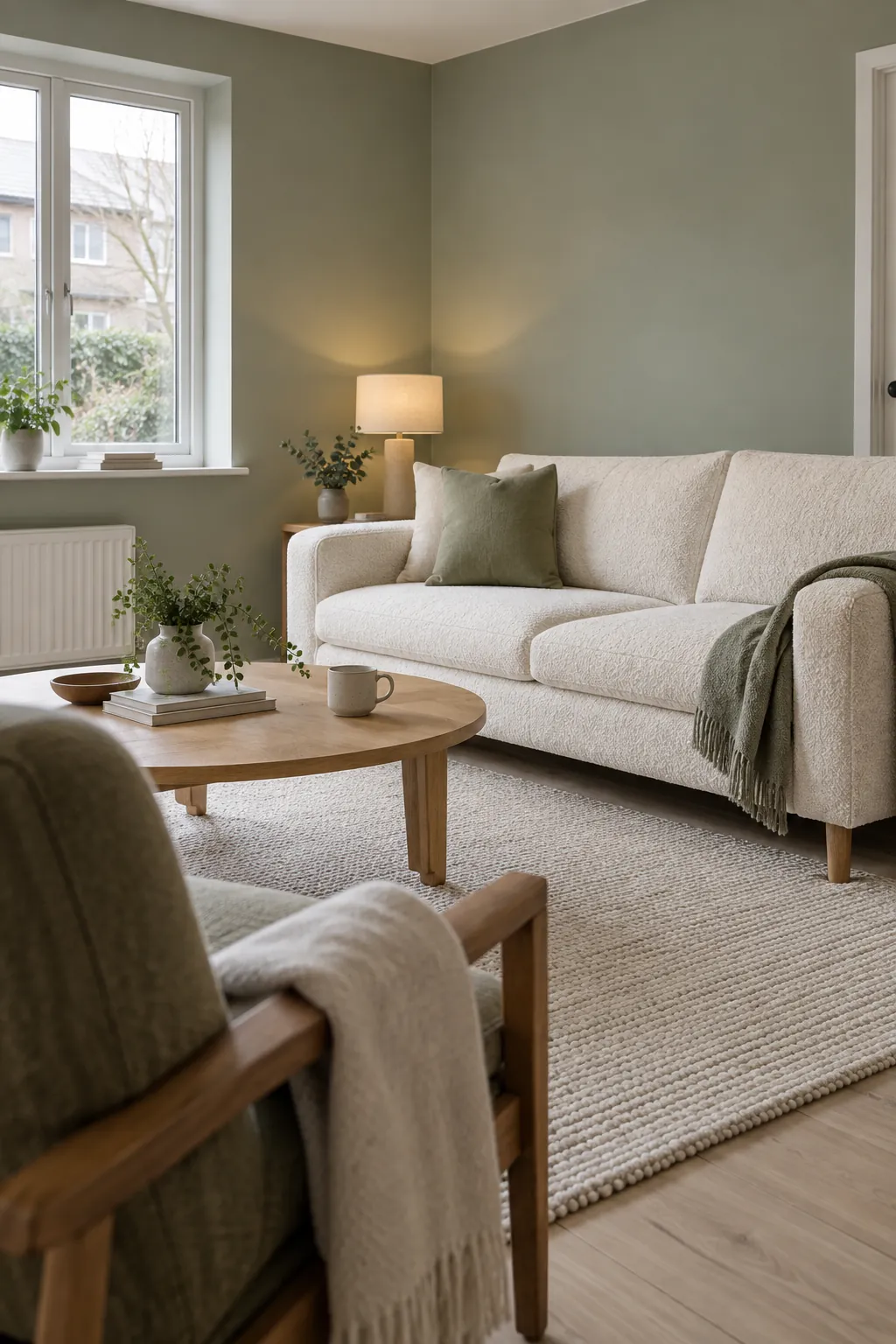
Soft Sage and Cream
Sage walls and cream upholstery make a gentle living room palette. Bring in medium wood so the two pale colours do not feel washed out. If the room faces north, check the sage sample for an unwanted blue cast before painting.
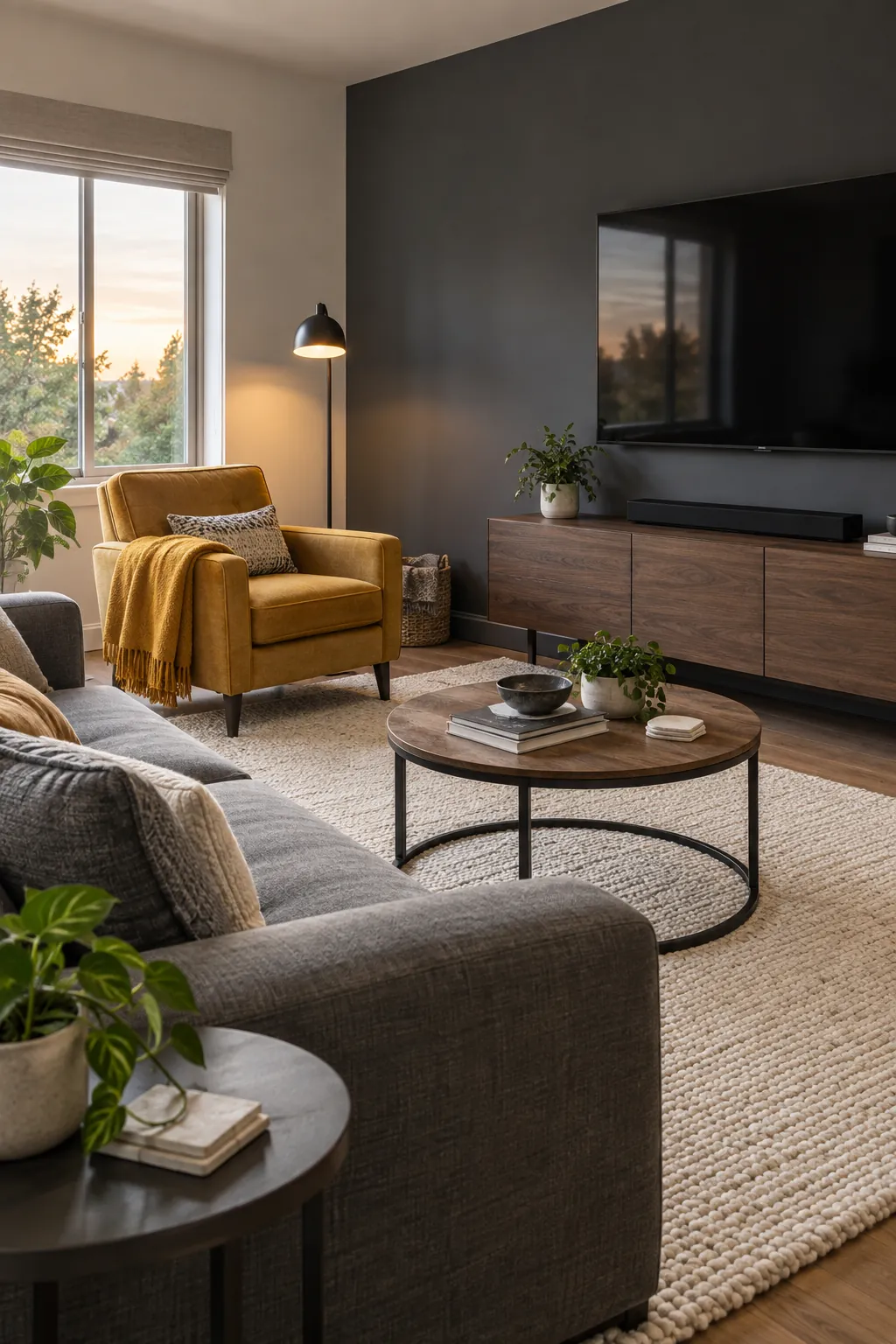
Charcoal and Muted Mustard
Charcoal can anchor a television wall while muted mustard warms a chair or throw. Keep the yellow subdued and repeat it sparingly so it does not overpower the screen area. A broad off white rug separates the dark wall from dark furniture.
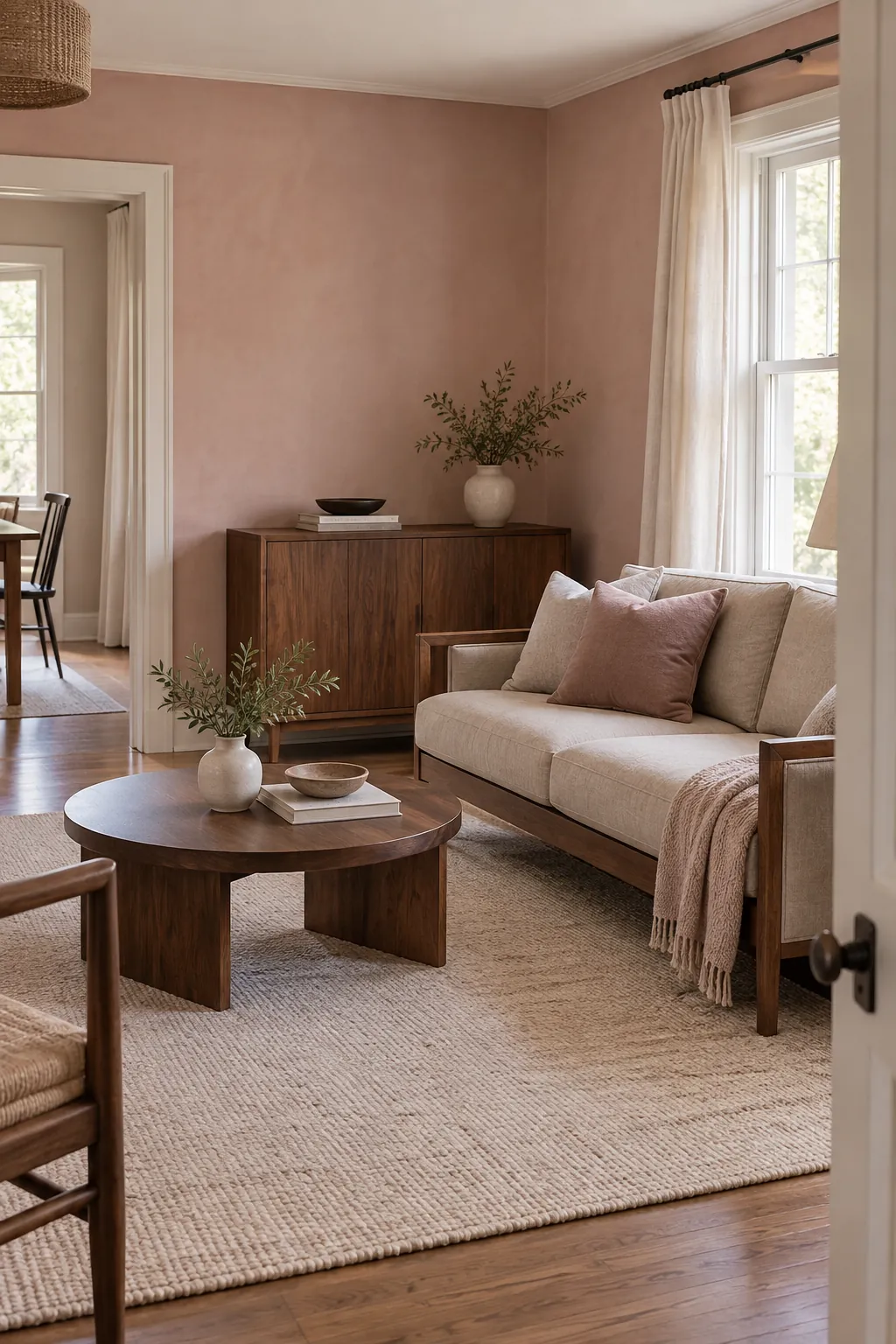
Dusty Blush and Walnut
A dusty blush wall pairs naturally with a walnut sofa frame or cabinet. Choose a pink with enough gray or brown in it to avoid a sugary effect. Linen and pottery in soft stone tones give the wood and wall a common ground.
Rust and Slate Blue
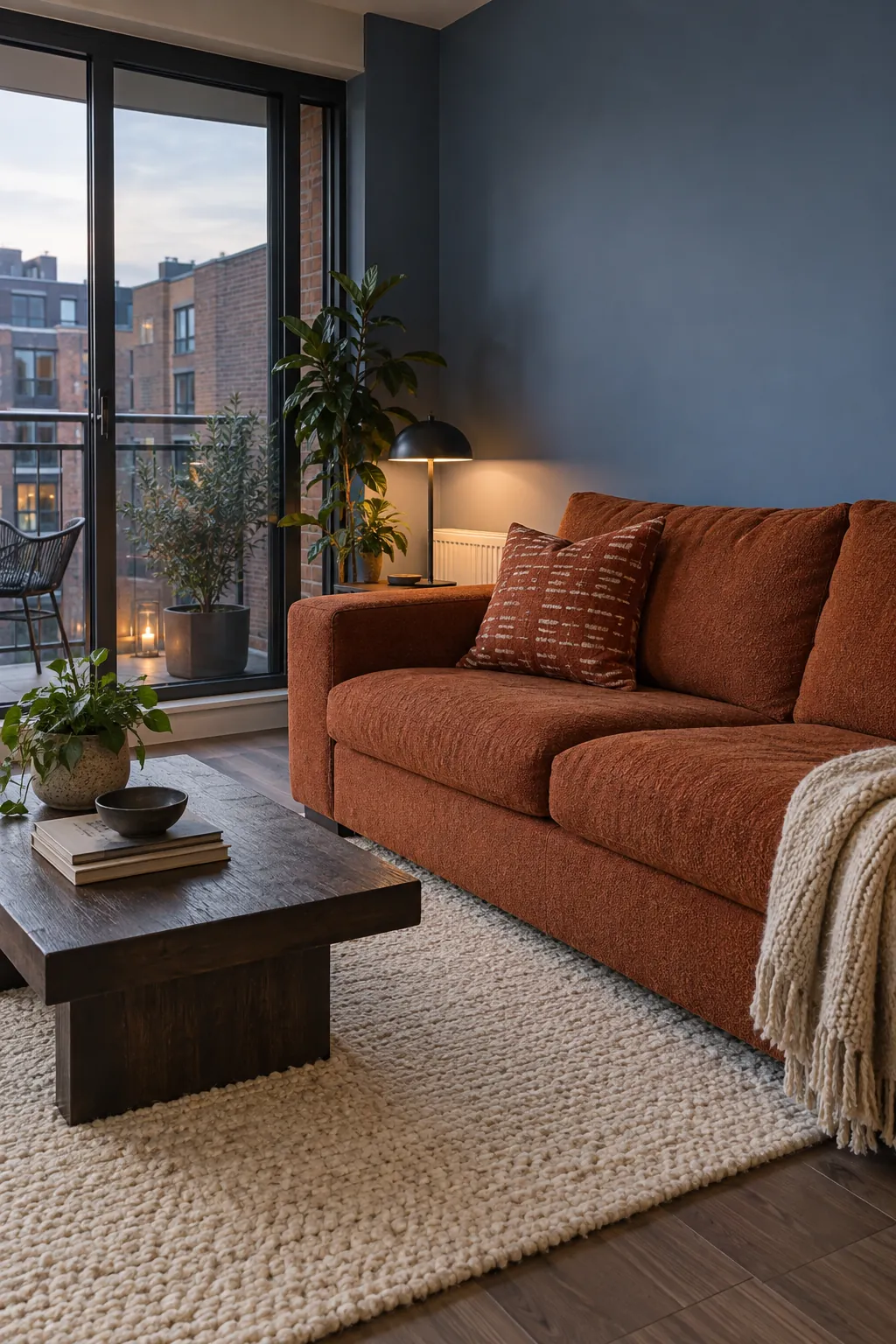
Rust upholstery feels livelier beside a slate blue wall than against another warm colour. Give one shade the larger area and use the other as the clear accent. A neutral rug prevents the pairing from turning into a set of competing blocks.
Plaster Pink and Burgundy
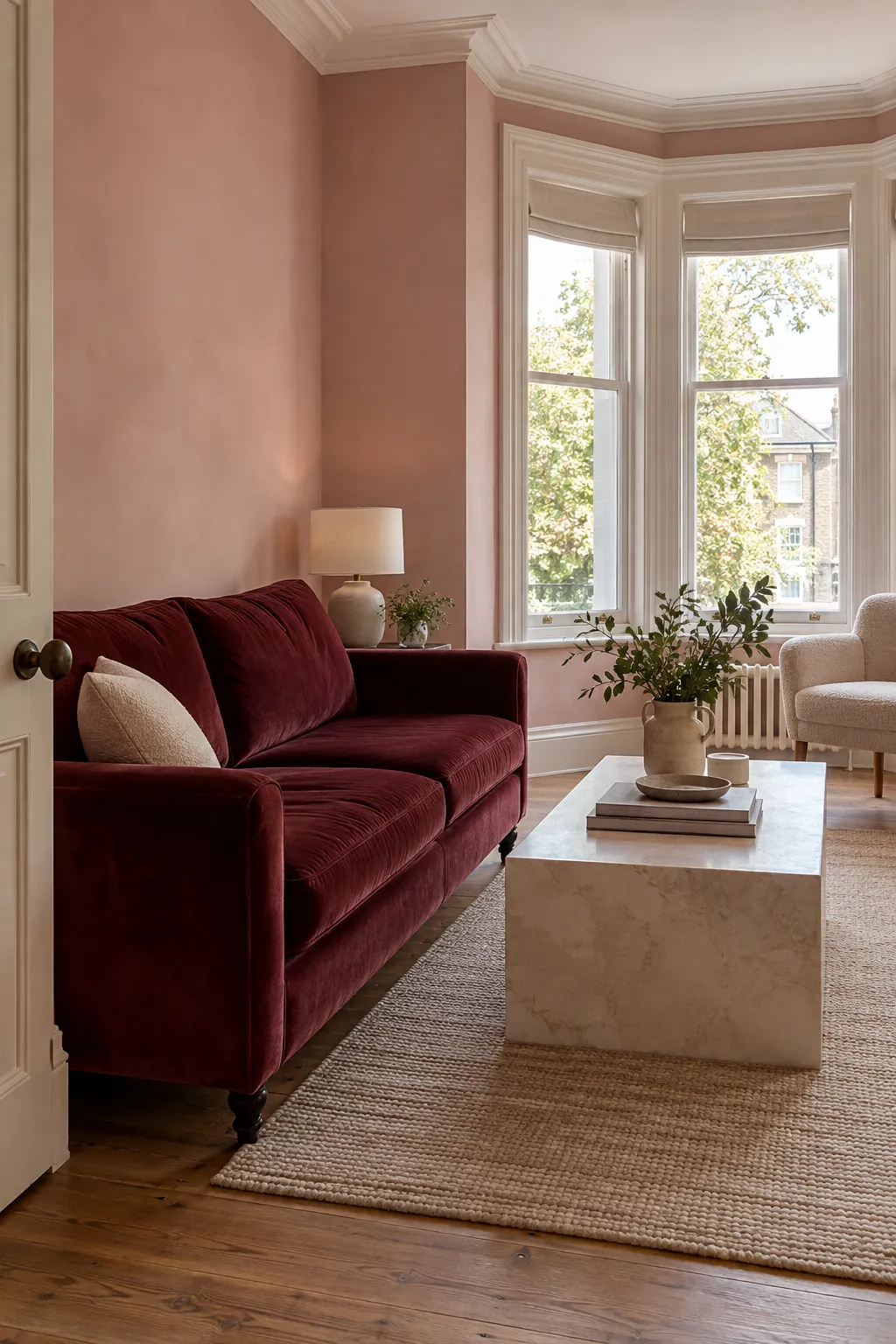
A muted plaster pink can soften the richness of a burgundy sofa. Keep trim pale and use dark red again only in a small object or textile. Review fabric and paint together in the same room, because burgundy undertones can lean brown or purple.
Pale Blue and Warm Ivory
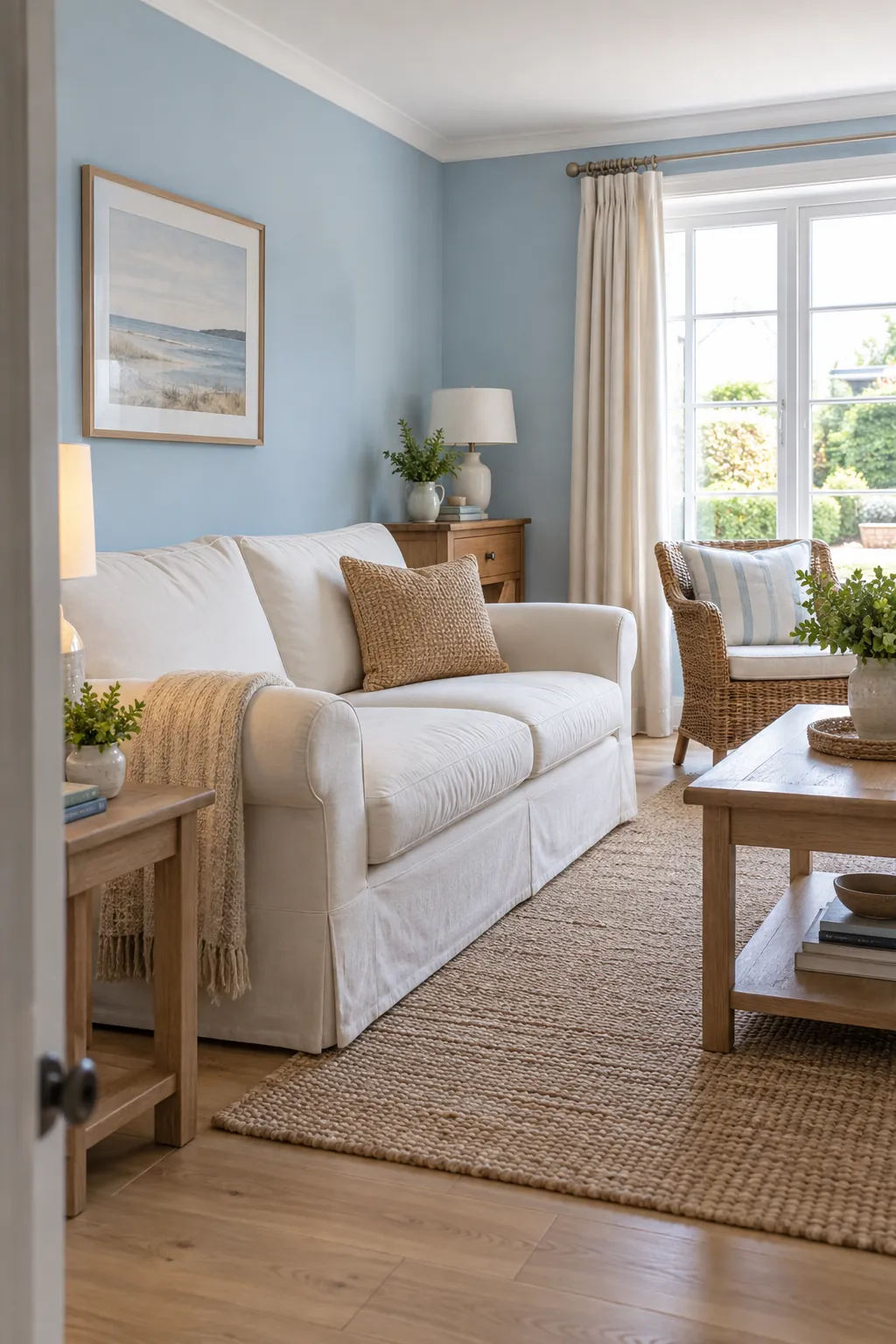
Pale blue walls feel fresher beside warm ivory seating than beside stark white. Add a tan or oak element to keep the palette comfortable in cooler light. View the blue over a large painted sample before committing, since a tiny card can hide how much colour will fill the room.
Teal and Soft Coral
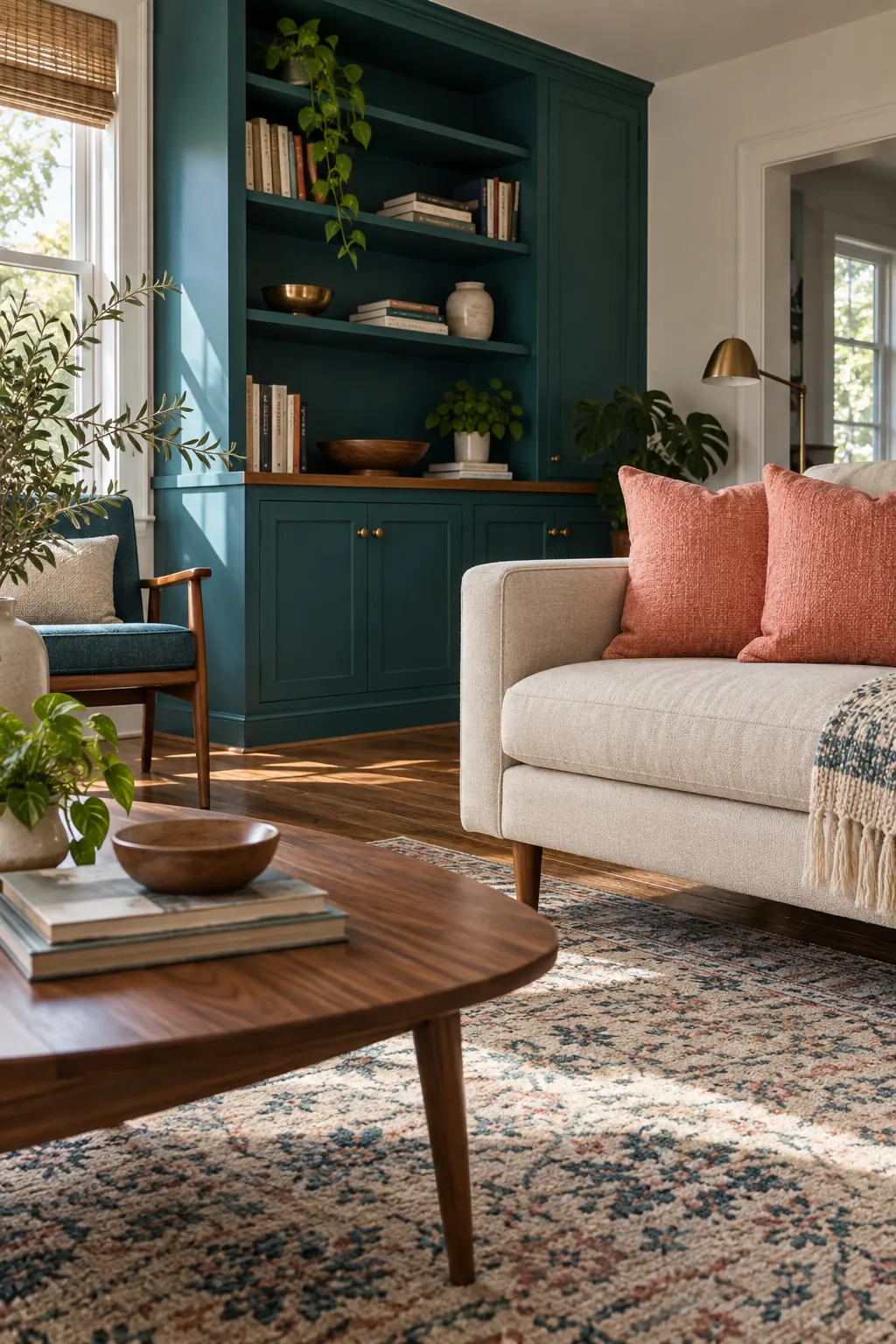
Teal on a cabinet or one wall can carry a modest coral accent without becoming tropical. Choose a muted coral textile and leave most upholstery neutral. Tie the two colours together with a rug that contains both at a low intensity.
Cream and Matte Black
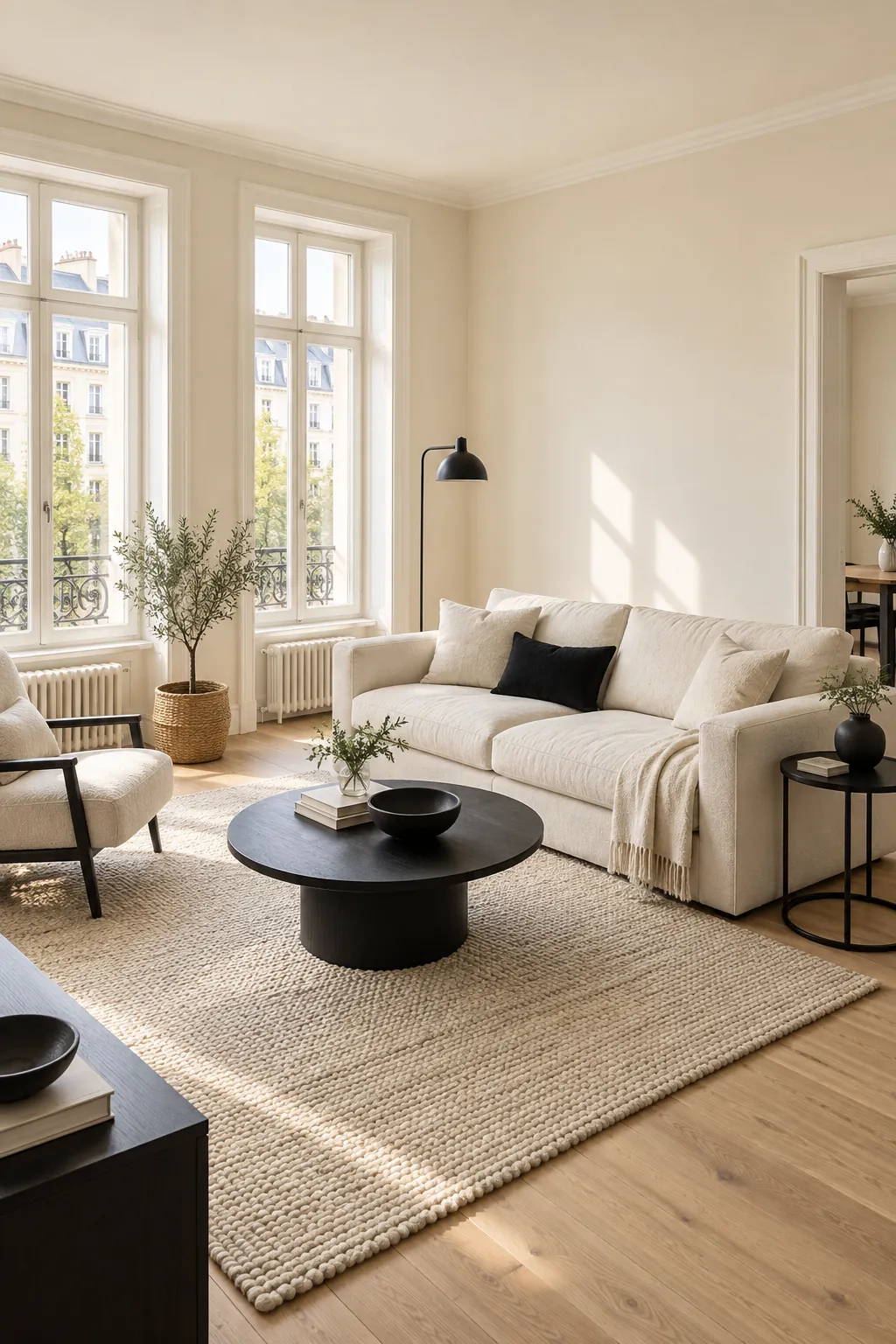
Cream walls and a cream sofa make room for black window frames, lamps, or a coffee table. Repeat black in at least two places so it feels intentional. Vary texture across the light surfaces to avoid a flat monochrome room.
Greige and Aubergine
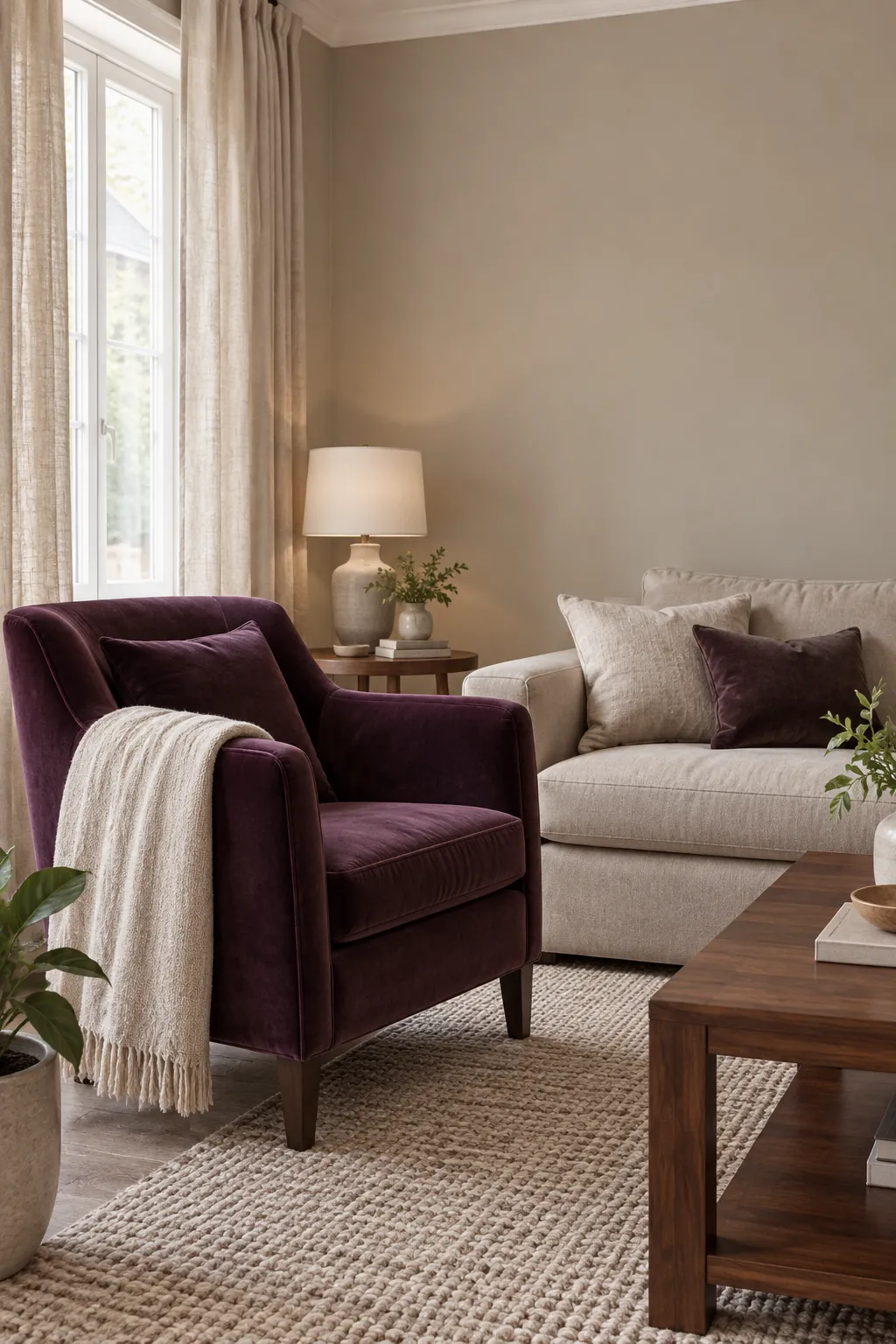
Greige provides a measured wall colour for an aubergine armchair. Choose a gray beige that shares the chair’s warm undertone, then add pale linen for relief. A sample board beside the chair will reveal a clash sooner than a digital palette will.
Forest Green and Aged Brass
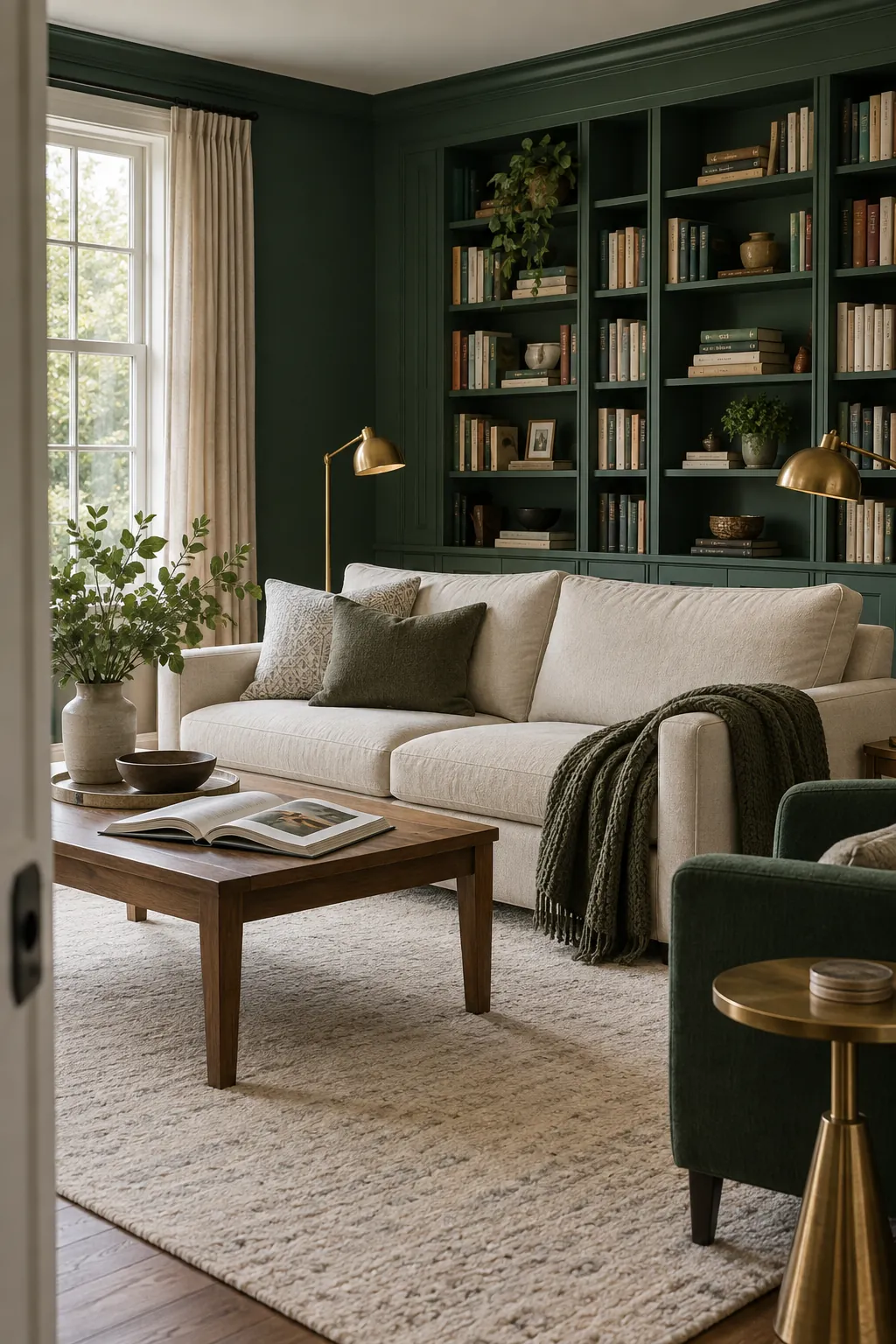
Forest green cabinetry or walls can make aged brass lamps feel warm and refined. Balance that depth with a light sofa or large pale rug. Use a soft metal finish rather than high shine so the room stays restful.
Clay and Soft Ivory
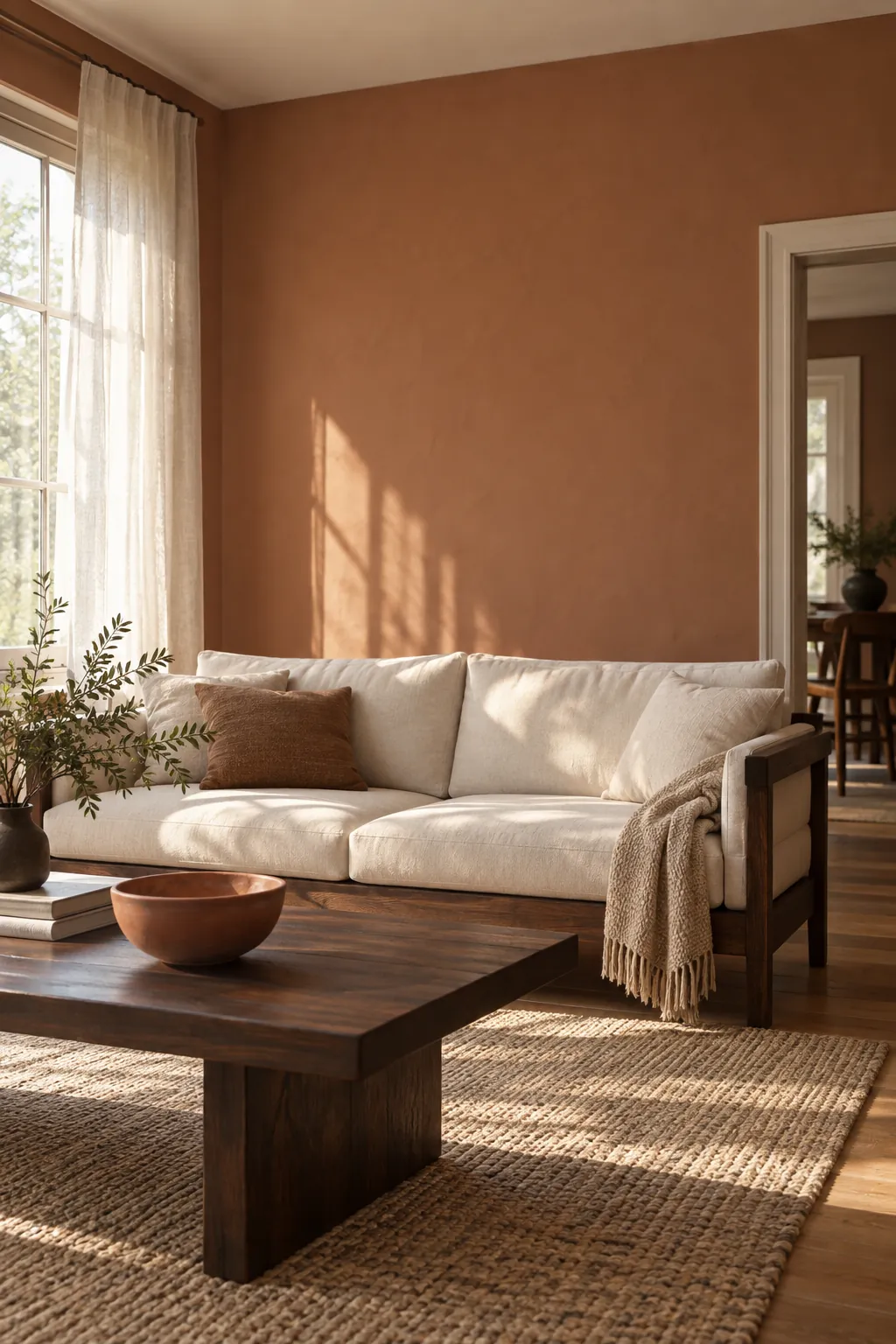
Earthy clay walls can create warmth around an ivory sofa. Bring a little dark timber into the room to define the pale upholstery. In strong afternoon sun, compare several clay samples so the chosen one does not become too orange.
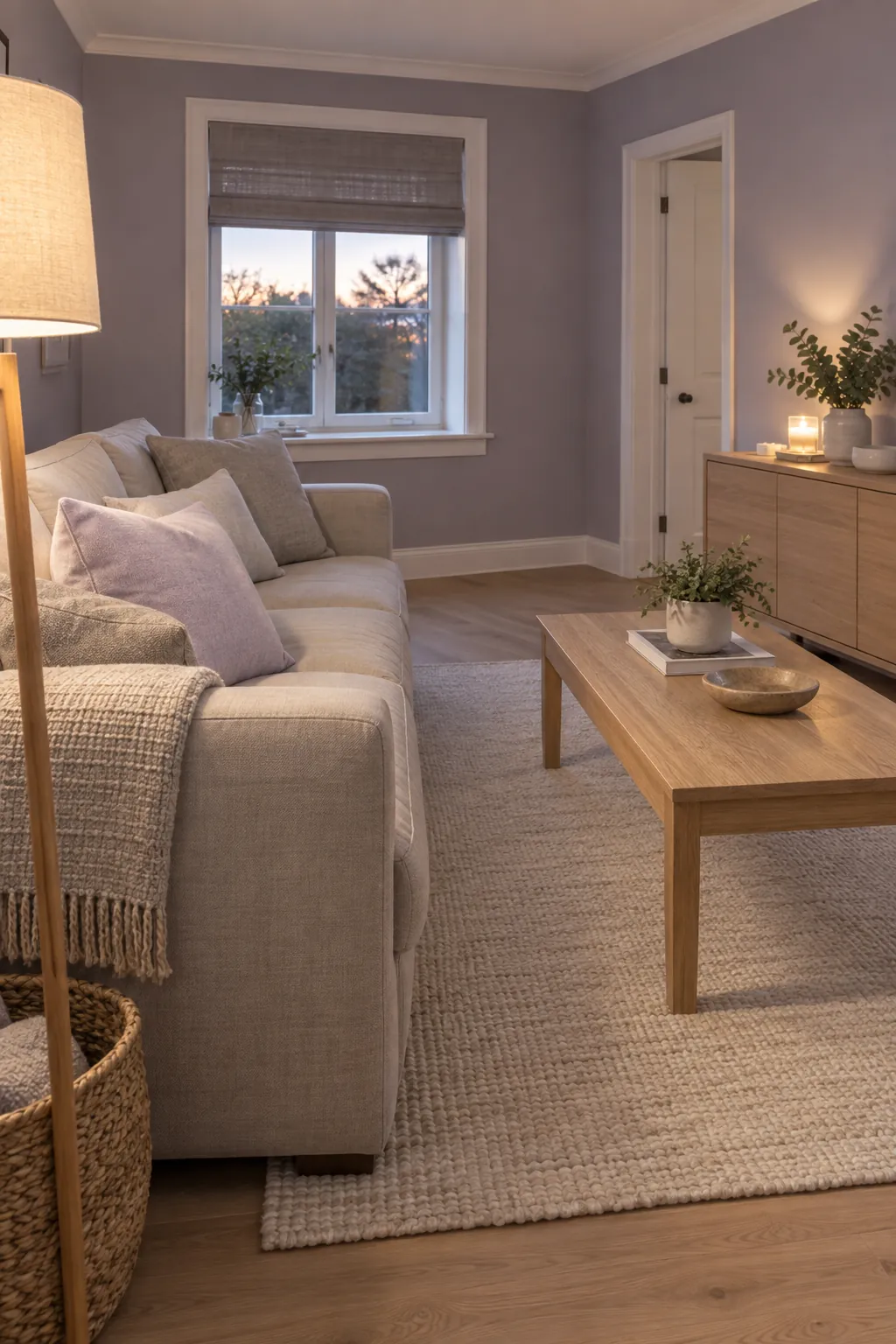
Lavender Gray and Light Oak
Lavender gray can read calm with light oak furniture when its purple undertone stays subtle. Keep the main sofa a soft neutral and let the wall carry the unusual colour. Test the wall at night under the actual lamps, when a delicate lavender may turn cooler.
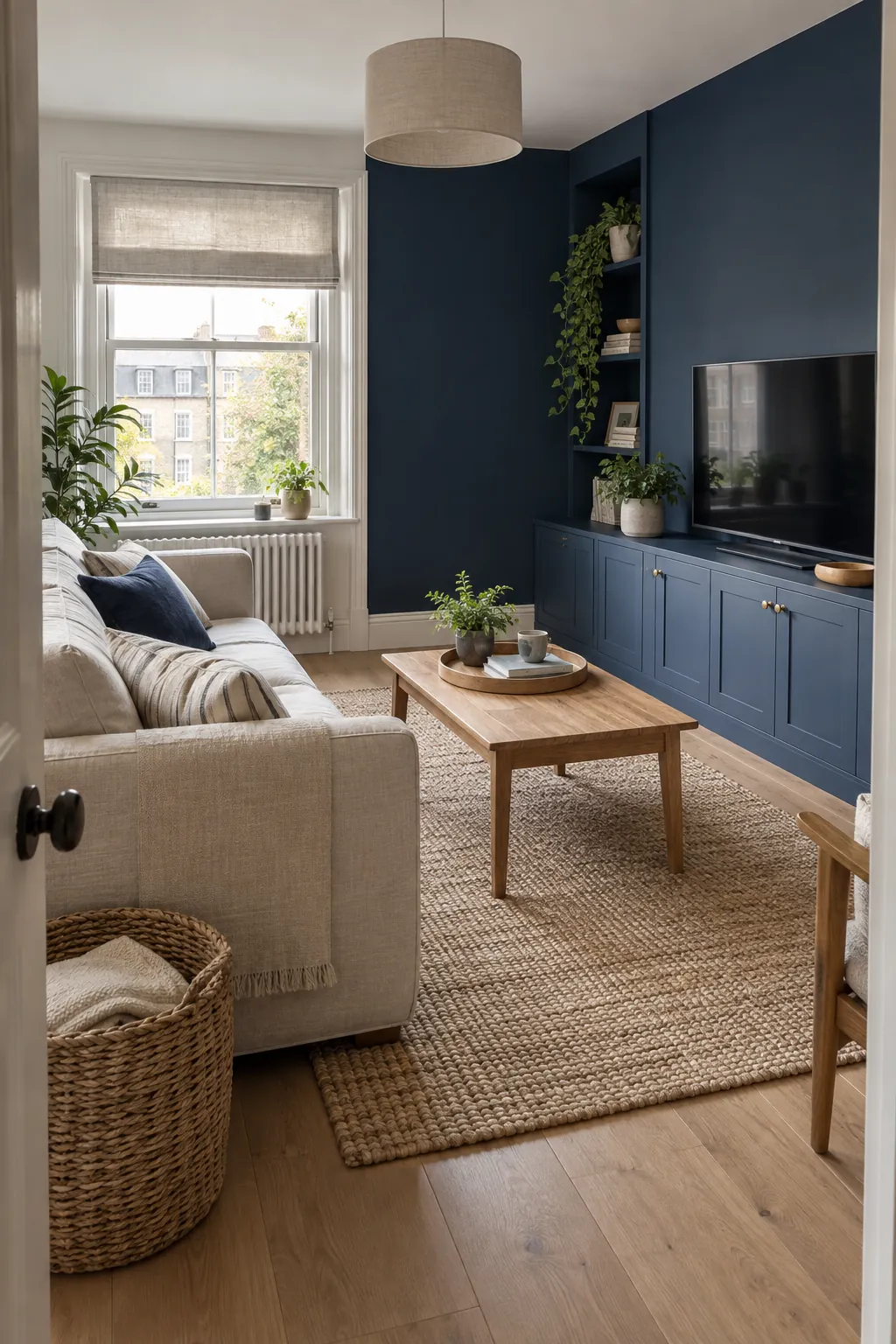
Indigo and Natural Linen
Indigo on a media cabinet or feature wall gives natural linen upholstery depth. Keep the ceiling and adjacent walls light if the room is small. A woven rug and a warm wood table stop the blue from feeling severe.
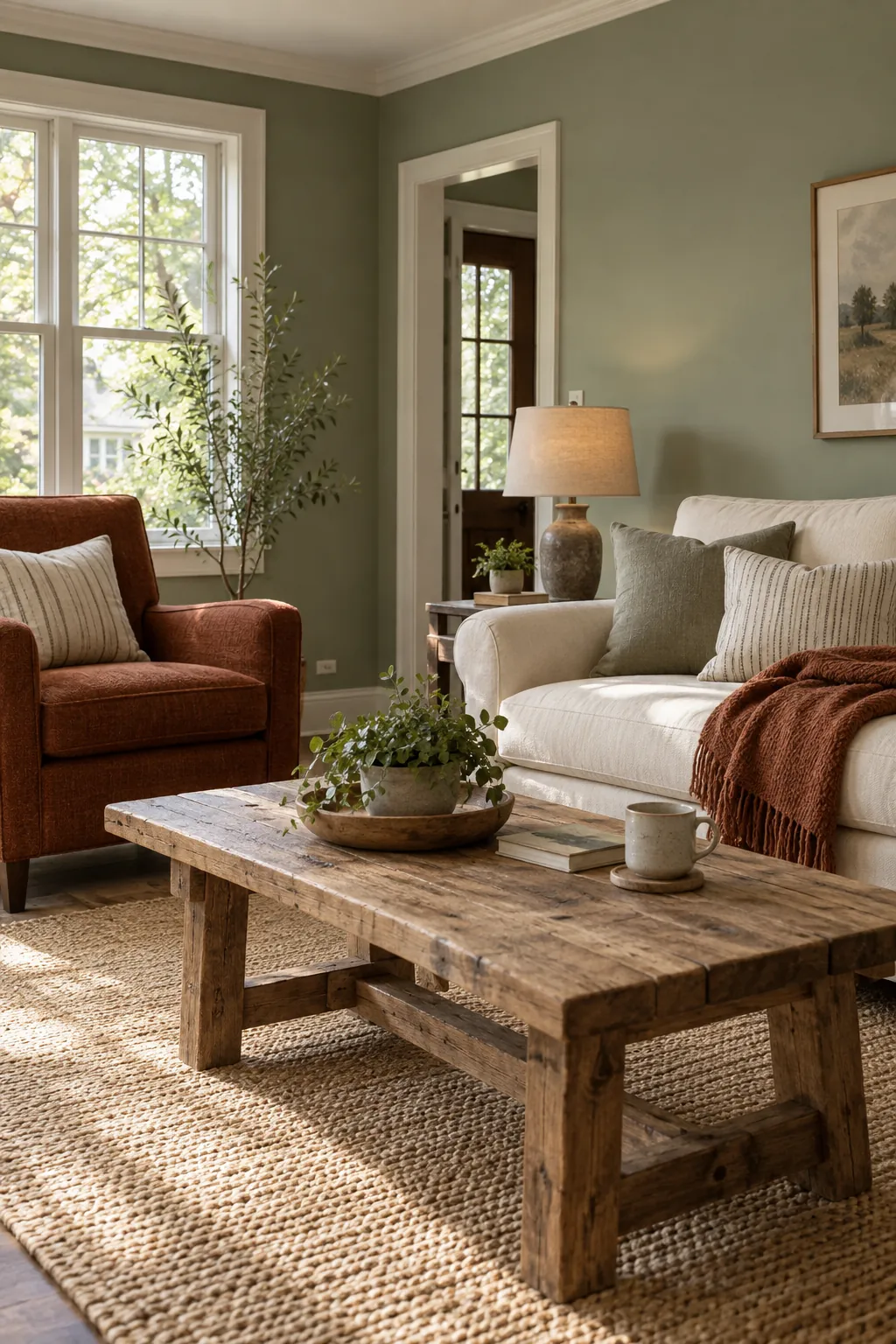
Burnt Sienna and Sage
Burnt sienna in cushions or a single chair can warm a sage room. Choose a sage with a muted gray base so the pairing feels earthy. Leave room for a cream sofa or wall area to keep the two colours distinct.
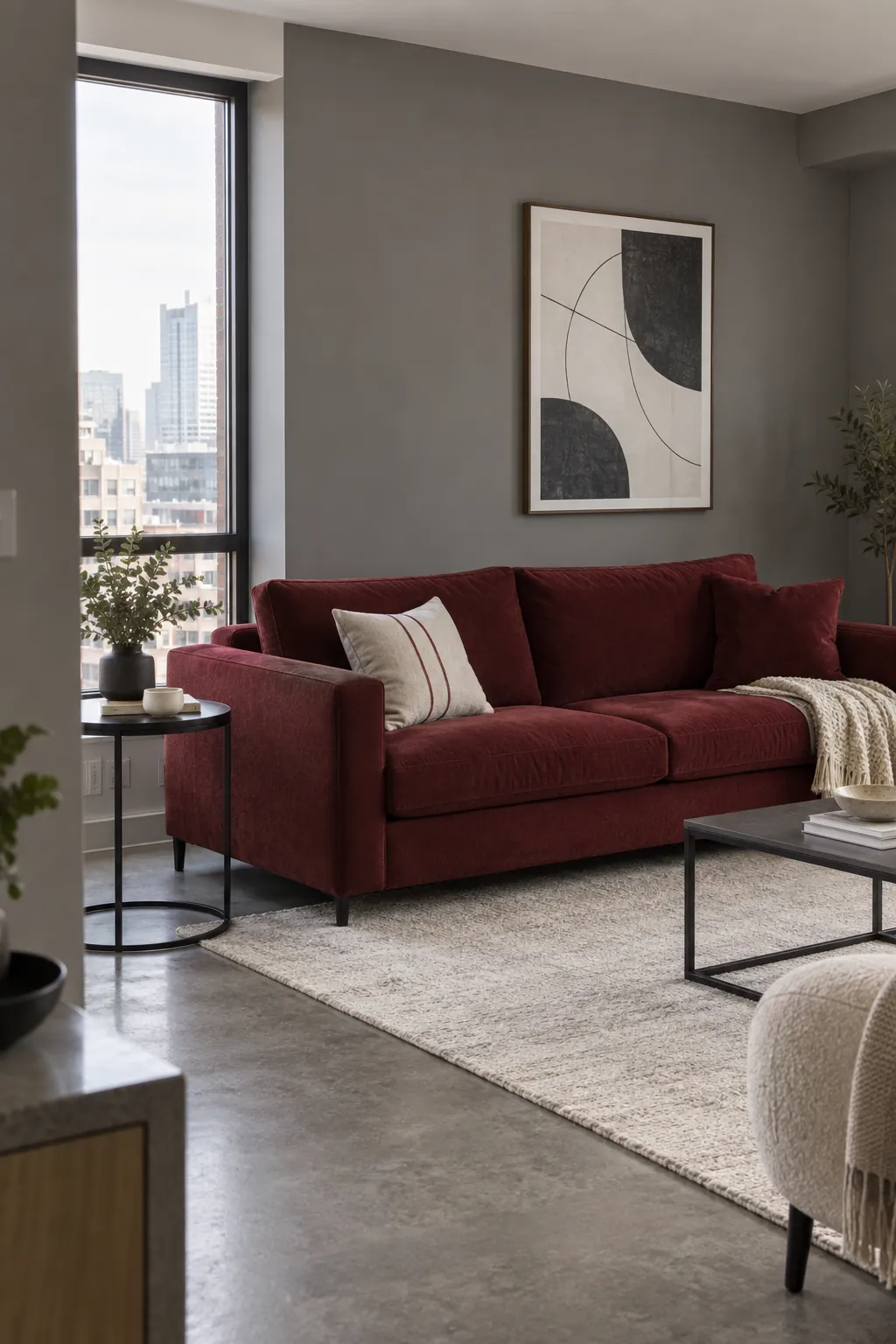
Stone Gray and Wine Red
Stone gray walls can support a wine red sofa without making it the only heavy object in the room. Repeat a smaller red note in a patterned cushion or artwork with a defined subject. Check the gray against the sofa fabric, since cool gray can make red appear harsher.
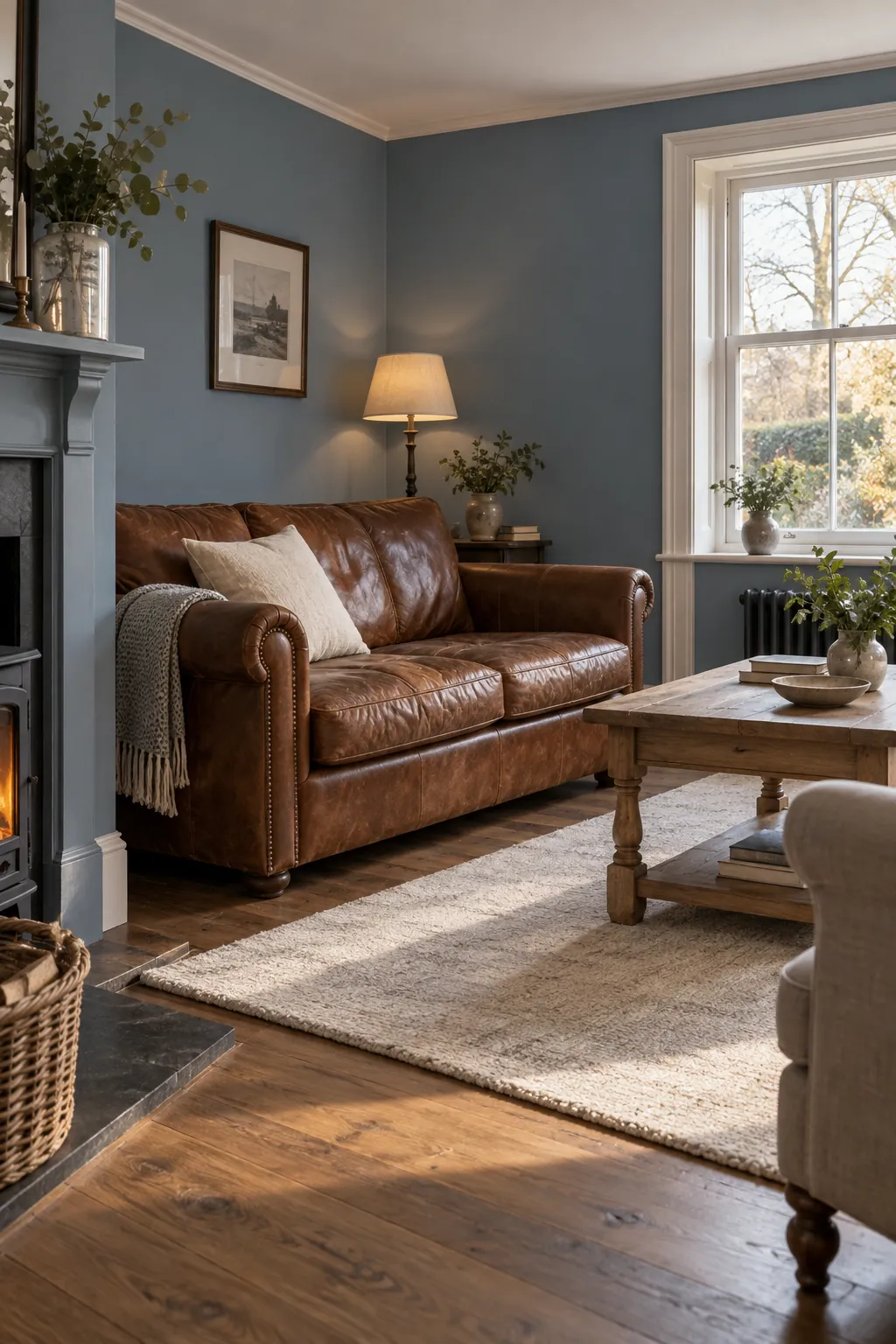
Dusty Blue and Tobacco Brown
Dusty blue paint gives tobacco leather a softer setting than pure white. Add a pale rug to maintain light near the floor. Let the leather’s natural variation provide texture instead of adding several competing patterns.
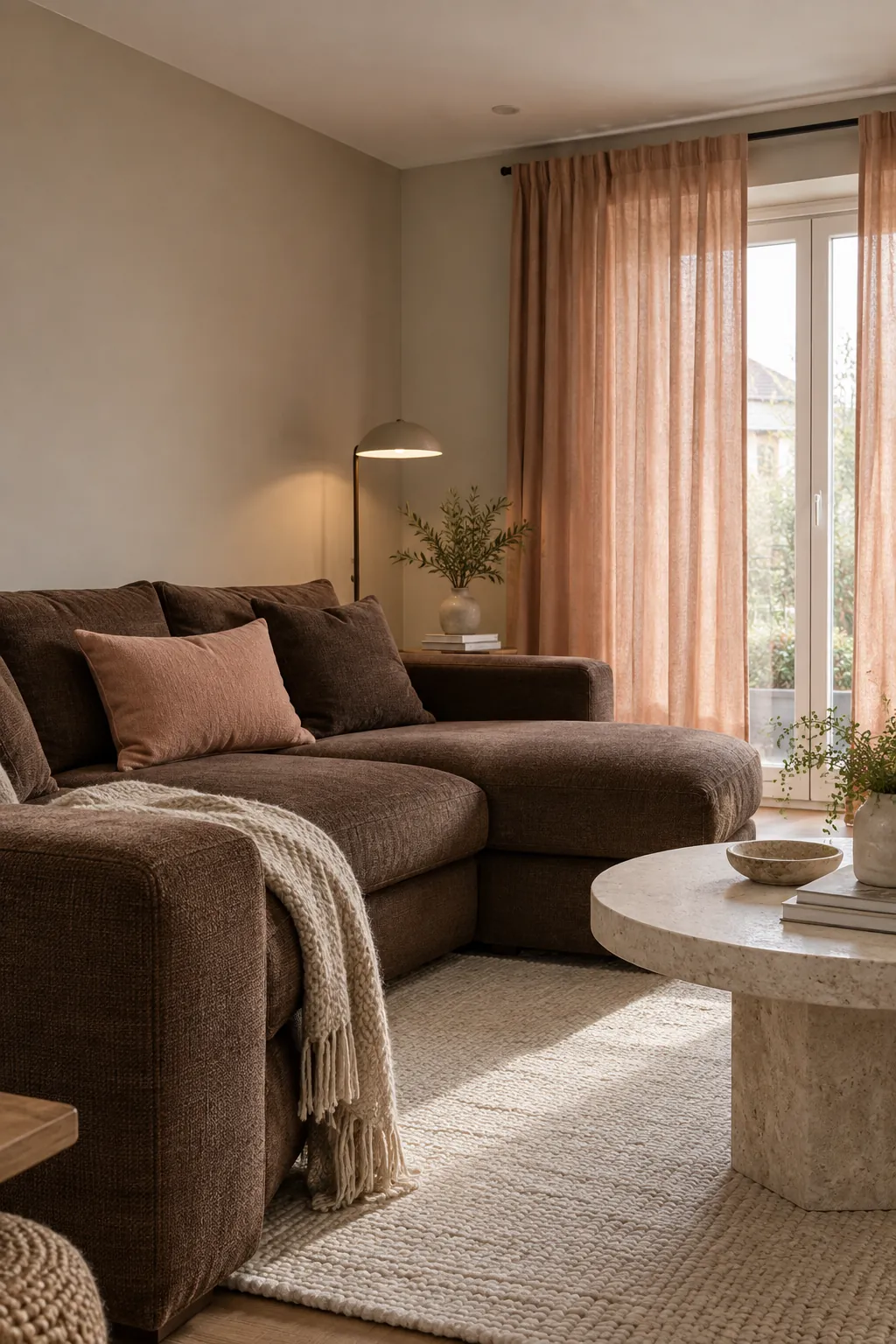
Cocoa and Peach
Cocoa brown seating gains warmth from a muted peach wall or curtain. Choose a peach with a little earthiness so it remains adult and quiet. A light stone table can give the two warm colours some breathing room.
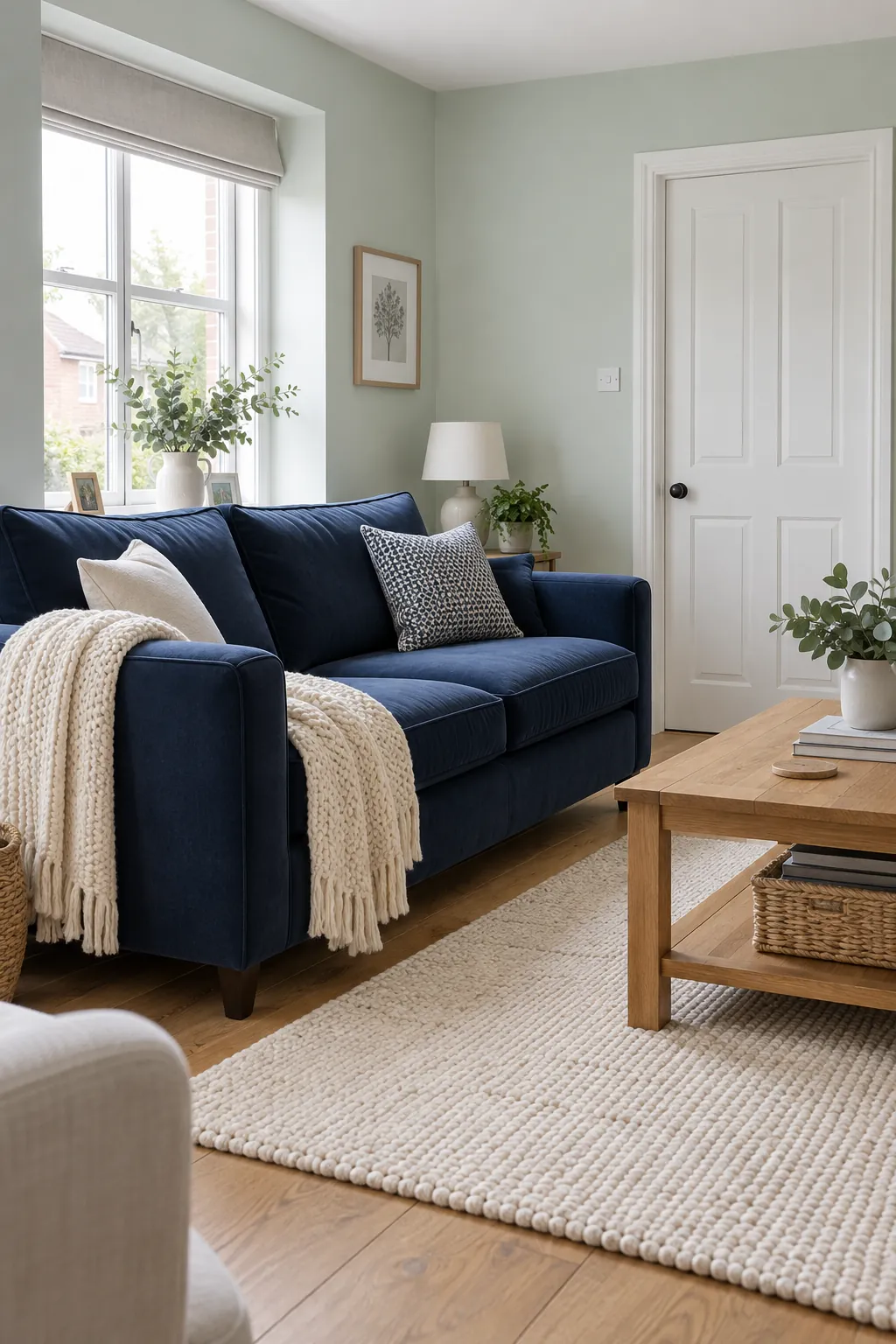
Pale Mint and Midnight Blue
Pale mint can brighten a living room with a midnight blue sofa. Keep the mint slightly gray rather than sugary and use simple white trim. In a room with little sun, sample the mint on the darkest wall before deciding.
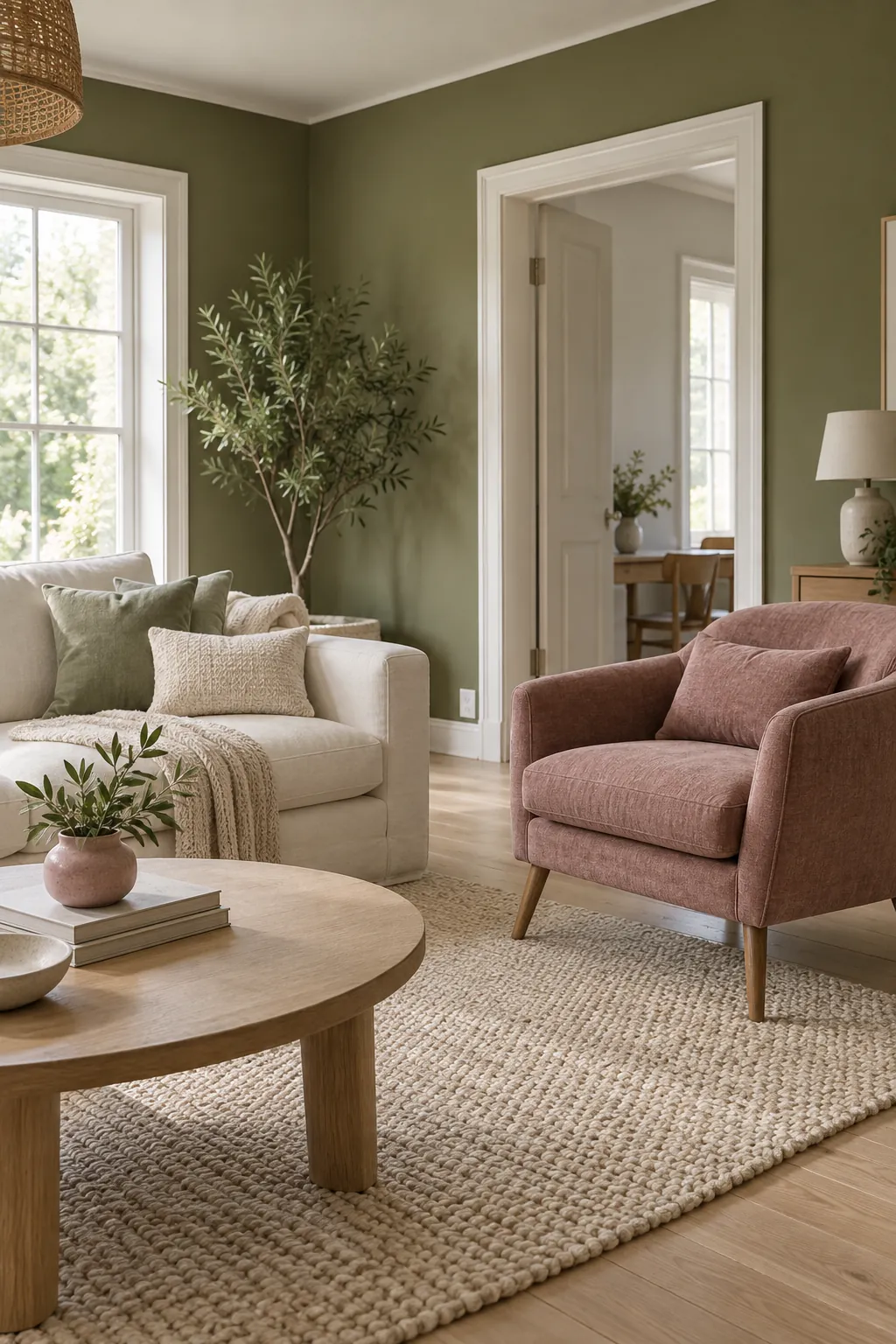
Olive and Antique Rose
Olive walls can support an antique rose chair when both colours are softened. Let oak and cream form the rest of the room so the pairing has space. Avoid matching every cushion to the rose, which can turn an accent into a theme.
Oxblood and Oatmeal
An oxblood sofa makes a strong focal point against oatmeal walls. Use warm lighting and a pale rug to reveal the sofa’s shape at night. Check the fabric swatch in the room because deep red can shift toward brown in dim light.
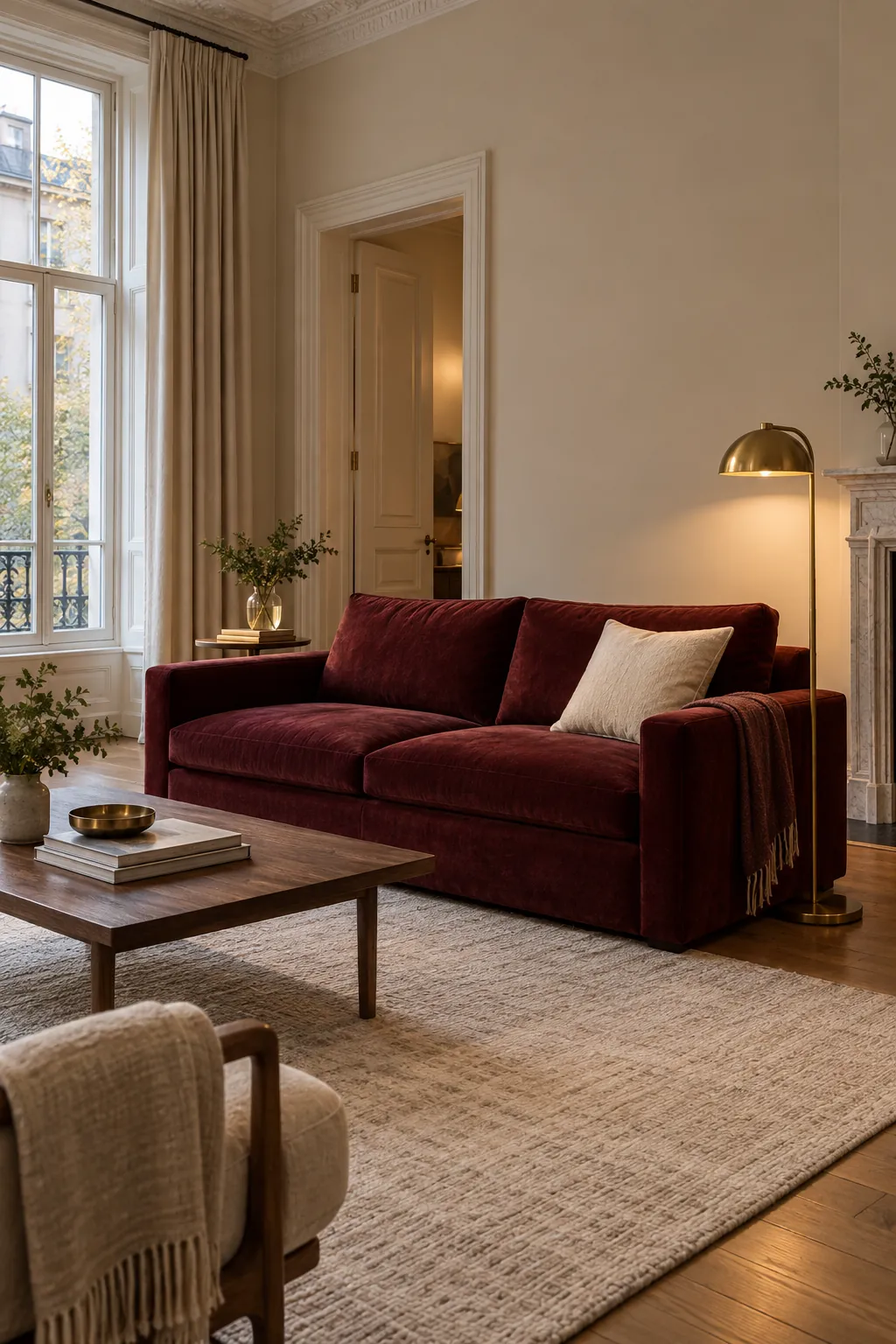
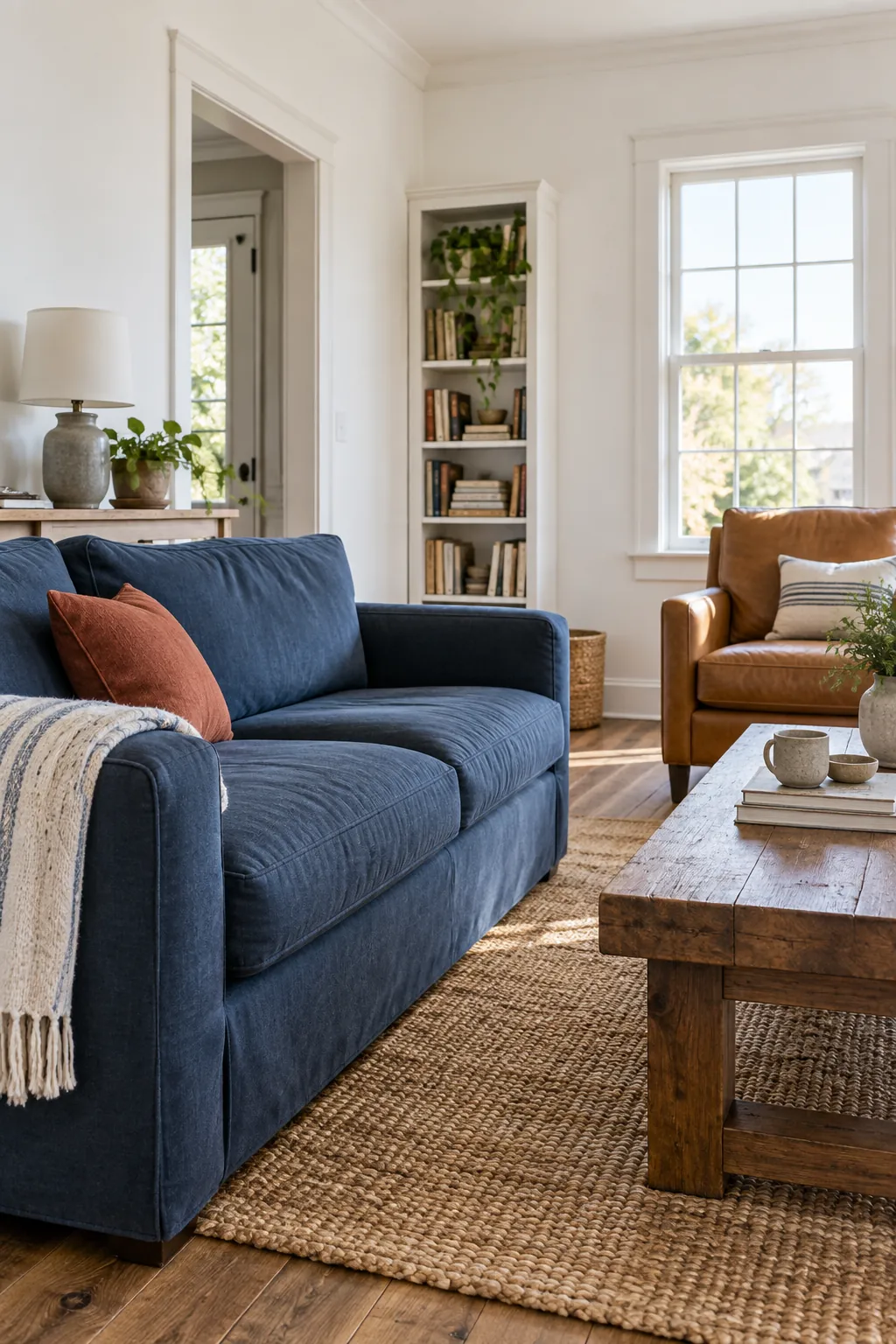
Denim Blue and Chalk White
Denim blue upholstery feels casual against chalk white walls and worn wood. Bring in a small rust or tan textile for warmth. Keep the white slightly soft so it does not make the blue appear overly cold.
Sand and Deep Moss
Sand coloured walls let a deep moss sofa look rich without closing in the room. Add darker timber only in measured amounts so the sofa remains the anchor. Compare sand paint against the fabric and floor to catch undertones that may drift pink or yellow.