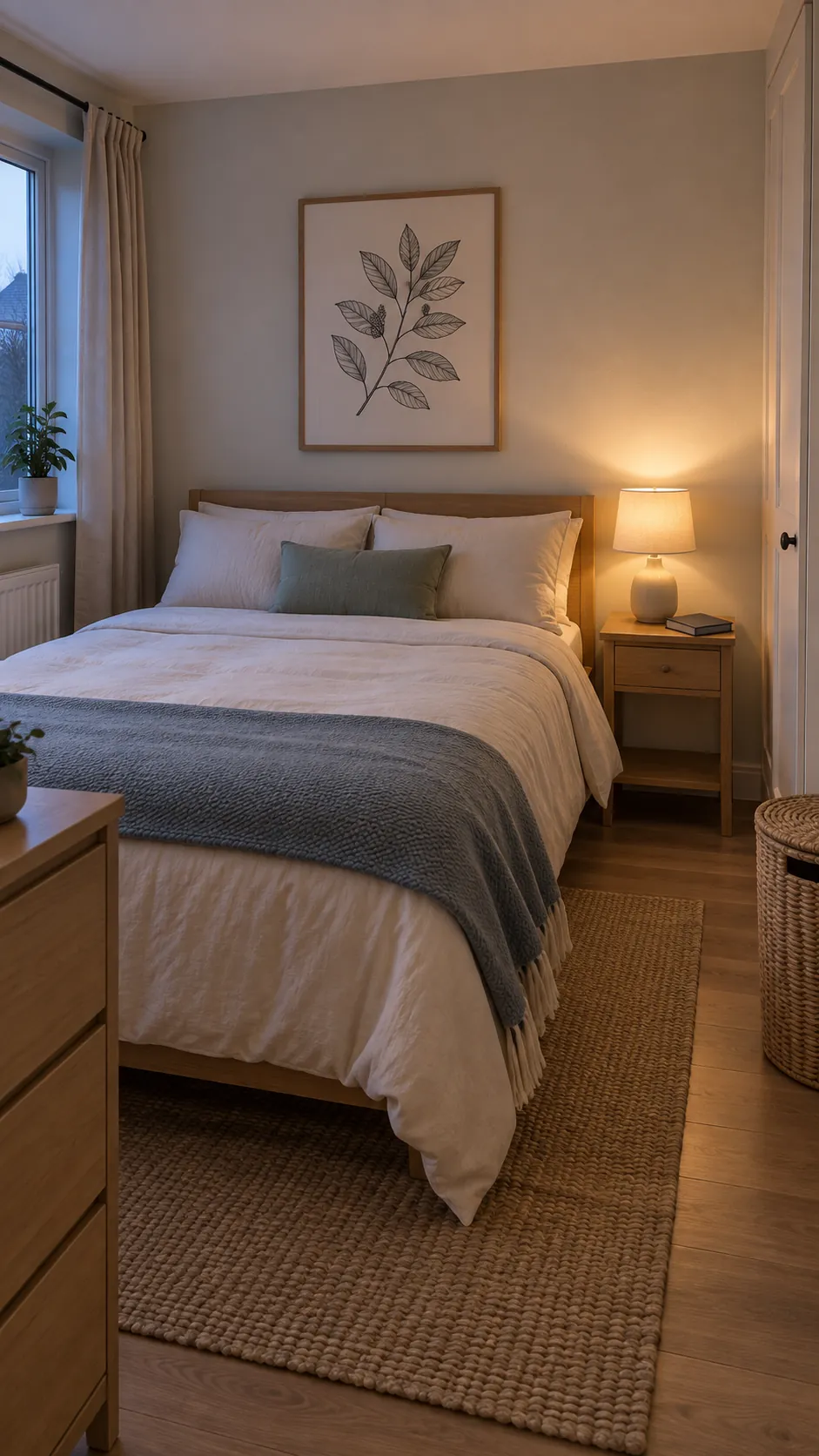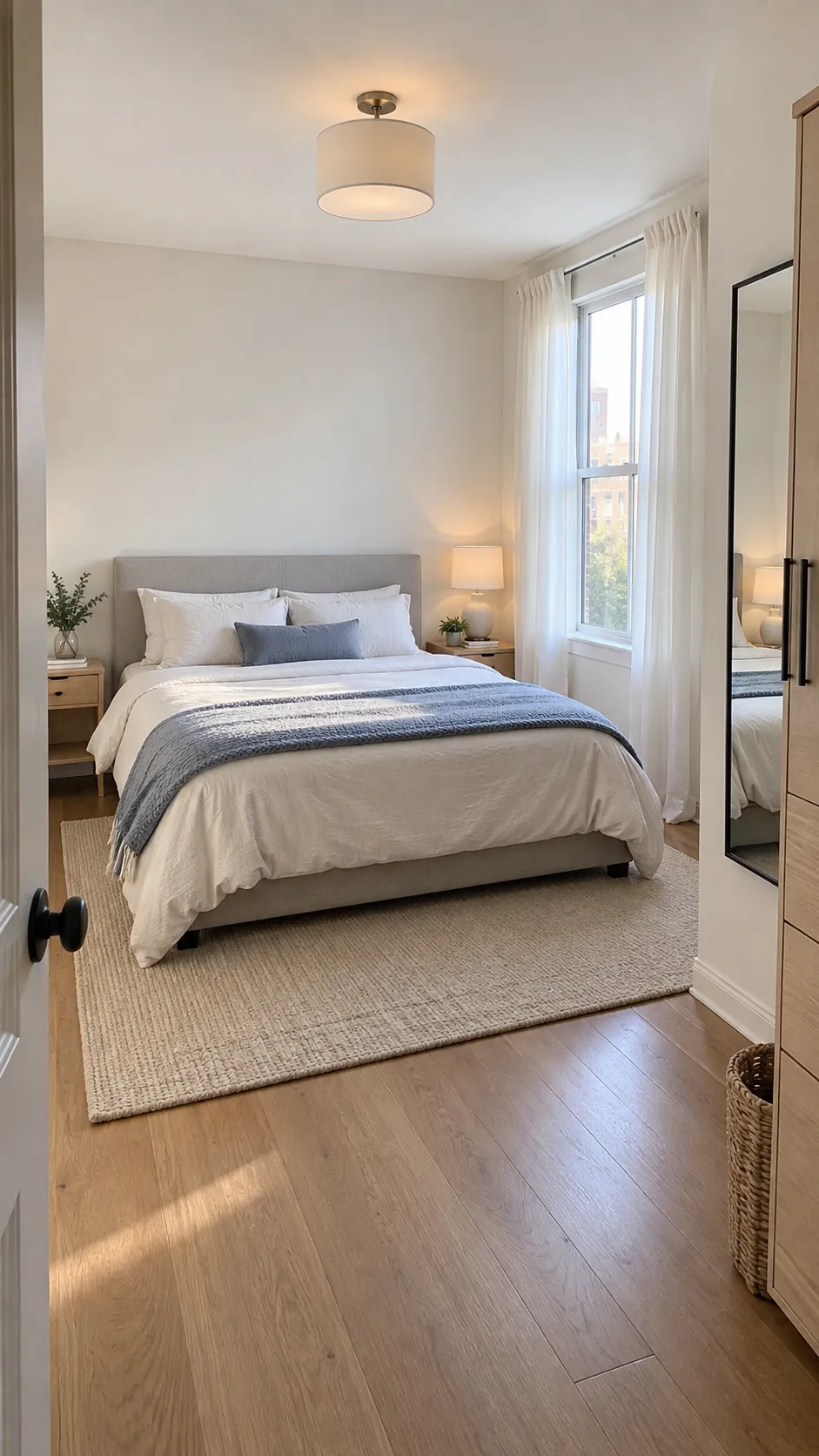
A room can hold the right amount of furniture and still feel compressed when the view from the door ends at a dresser, a dark curtain, or a pile of small objects. The goal is to let light travel and give the eye a clear route around the bed. Start by looking at the room from its doorway and from the pillow. Those two views reveal which changes will affect everyday comfort as well as appearance.
Open the view from the doorway
Move tall storage away from the first sightline if another wall can hold it. A bookcase immediately inside the door can make the room feel smaller than one placed along a side wall. Keep the path to the bed visible and leave enough room for doors and drawers to work. You do not need to push every piece against a wall; the useful test is whether you can walk naturally without stepping around furniture.
Try the layout before buying replacements. Shift the dresser or remove a redundant chair for a few days, then judge the room in morning and evening light. A clear patch of floor is especially effective when it leads toward the window rather than ending at another object.
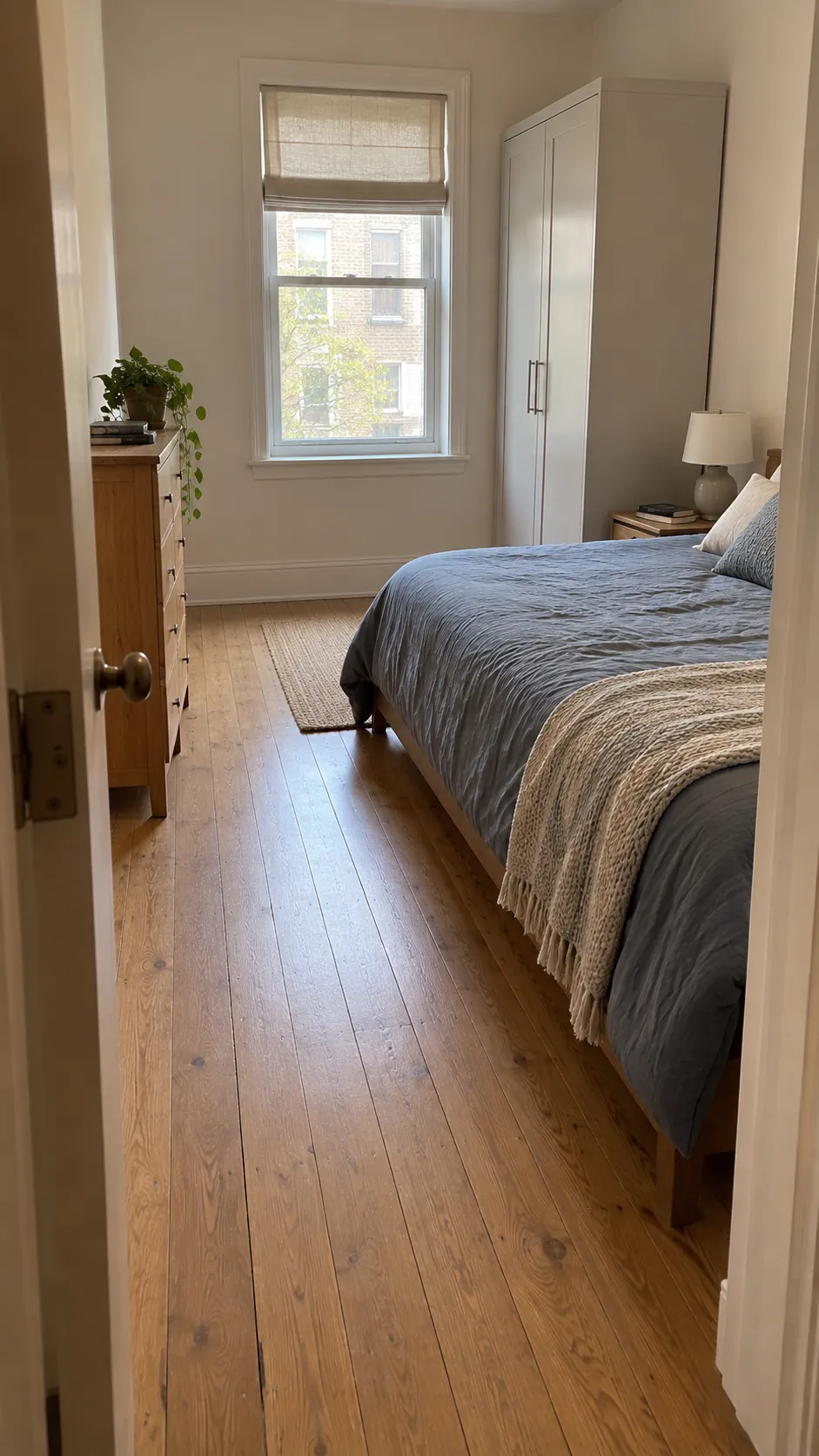
Let the window light reach the room
Sheer bedroom curtains can soften the window without blocking most daylight. Mount the rod so open panels clear the glass, and check that a dresser or bedhead does not cover the lower pane. Privacy and sleep still matter, so pair sheers with a suitable blind or lined curtain when needed. Use the window freely during the day and a darker layer at night.
Light bedroom paint colors are most useful when they suit the actual light. A soft warm white, pale gray, or muted color can reduce harsh wall contrast, but an extremely bright white may look cold in a shaded room. Test a large sample on more than one wall. Keep the ceiling and trim relationship simple so the boundaries do not compete for attention.
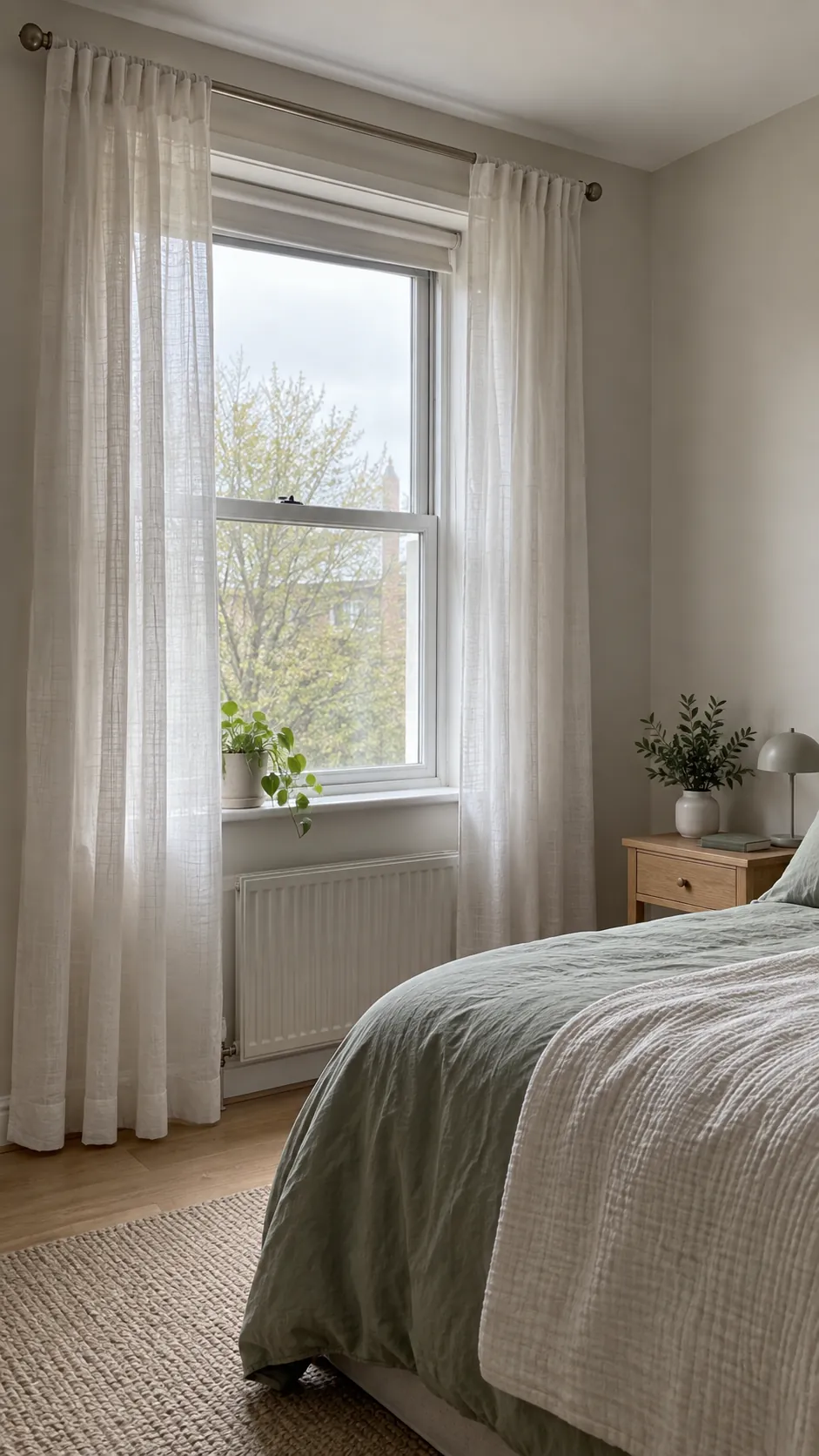
Give the bed the right visual weight
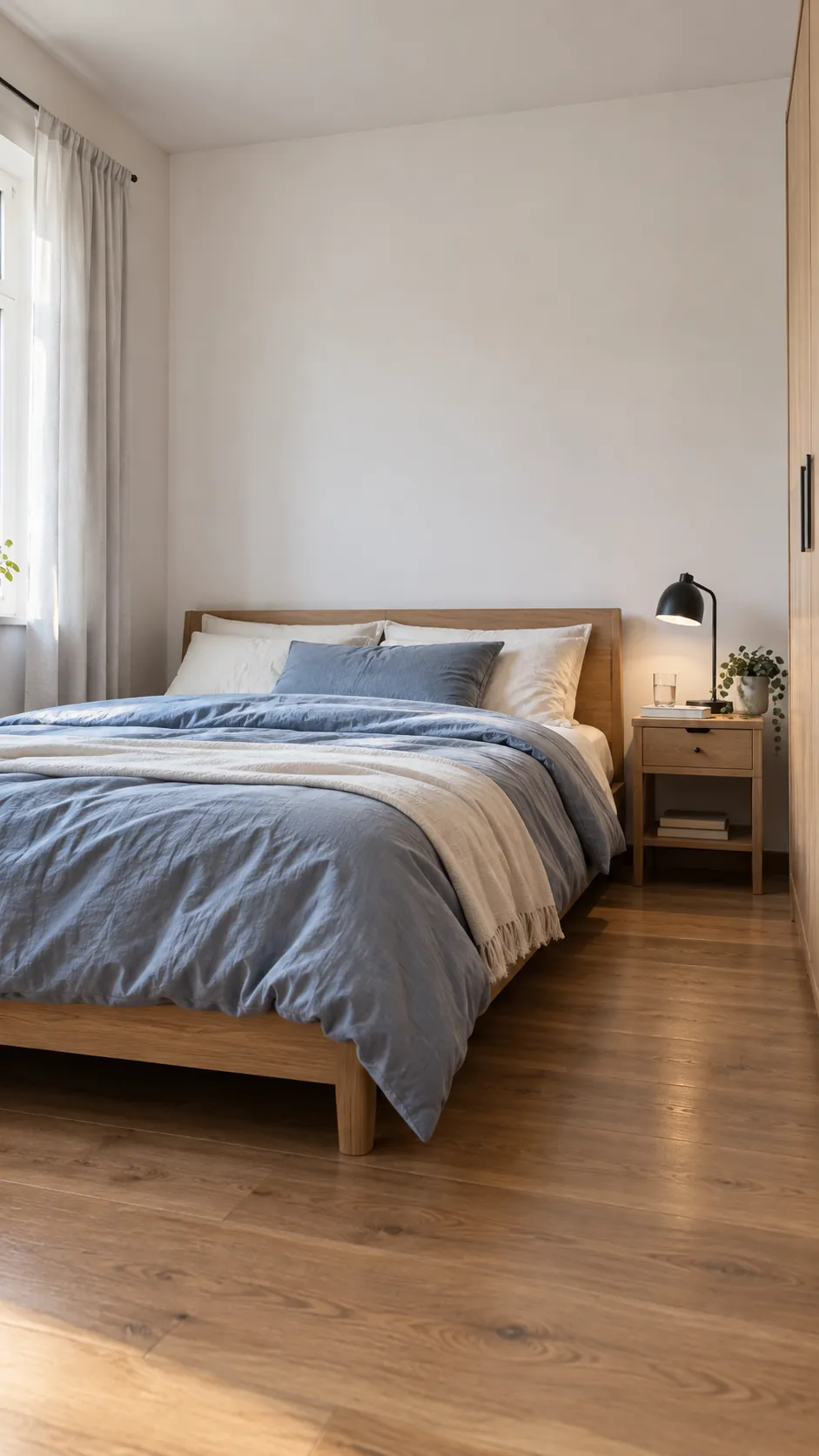
The bed is usually the largest shape in the room, so its height and surrounding furniture matter. A low profile bed frame can leave more wall visible above the mattress and make the ceiling feel less pressed down. Check the mattress height before buying, especially if getting up from a very low bed would be uncomfortable. A simple headboard can still give the bed a finished look without a tall, heavy surround.
Choose bedside surfaces to fit what you actually keep at night. A narrow table, wall shelf, or small open leg piece may be enough for a lamp and a book. If you need drawers, keep them rather than forcing a minimal look that moves clutter onto the floor. The bed should feel restful and useful, not reduced to a prop.
Place a mirror where it reflects calm
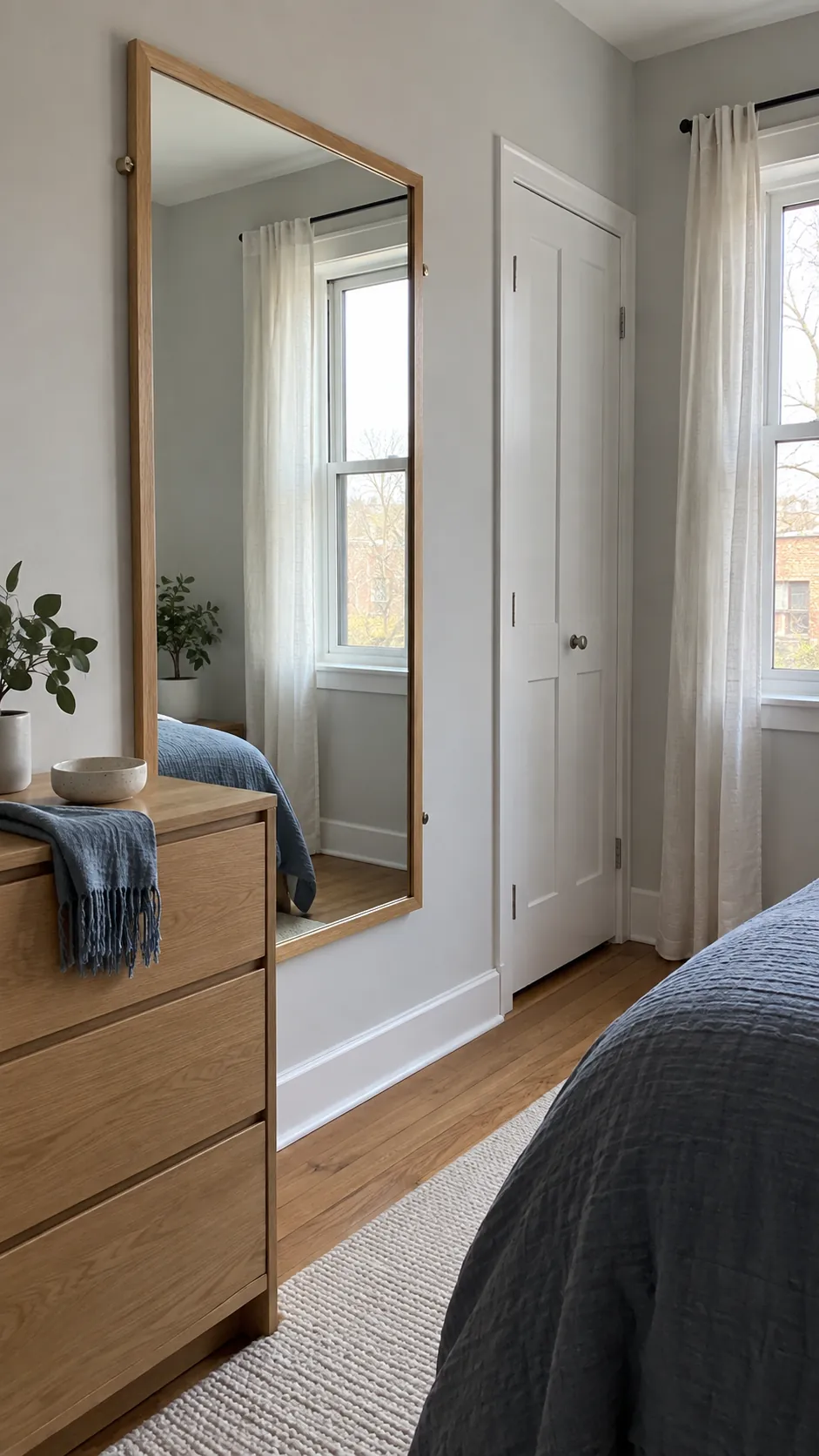
A large bedroom mirror can reflect daylight and add a sense of depth, but it also reflects whatever stands opposite it. Check the view before mounting one. A mirror facing the window or a quiet wall helps more than one facing an overloaded clothes rail. Secure a tall mirror properly, especially where children or pets may reach it.
Do not rely on mirrors to solve a layout problem. If the window is blocked or furniture crowds the door, correct those conditions first. Then use one well placed mirror rather than scattering many small reflective objects around the room.
Lift storage off the floor thoughtfully
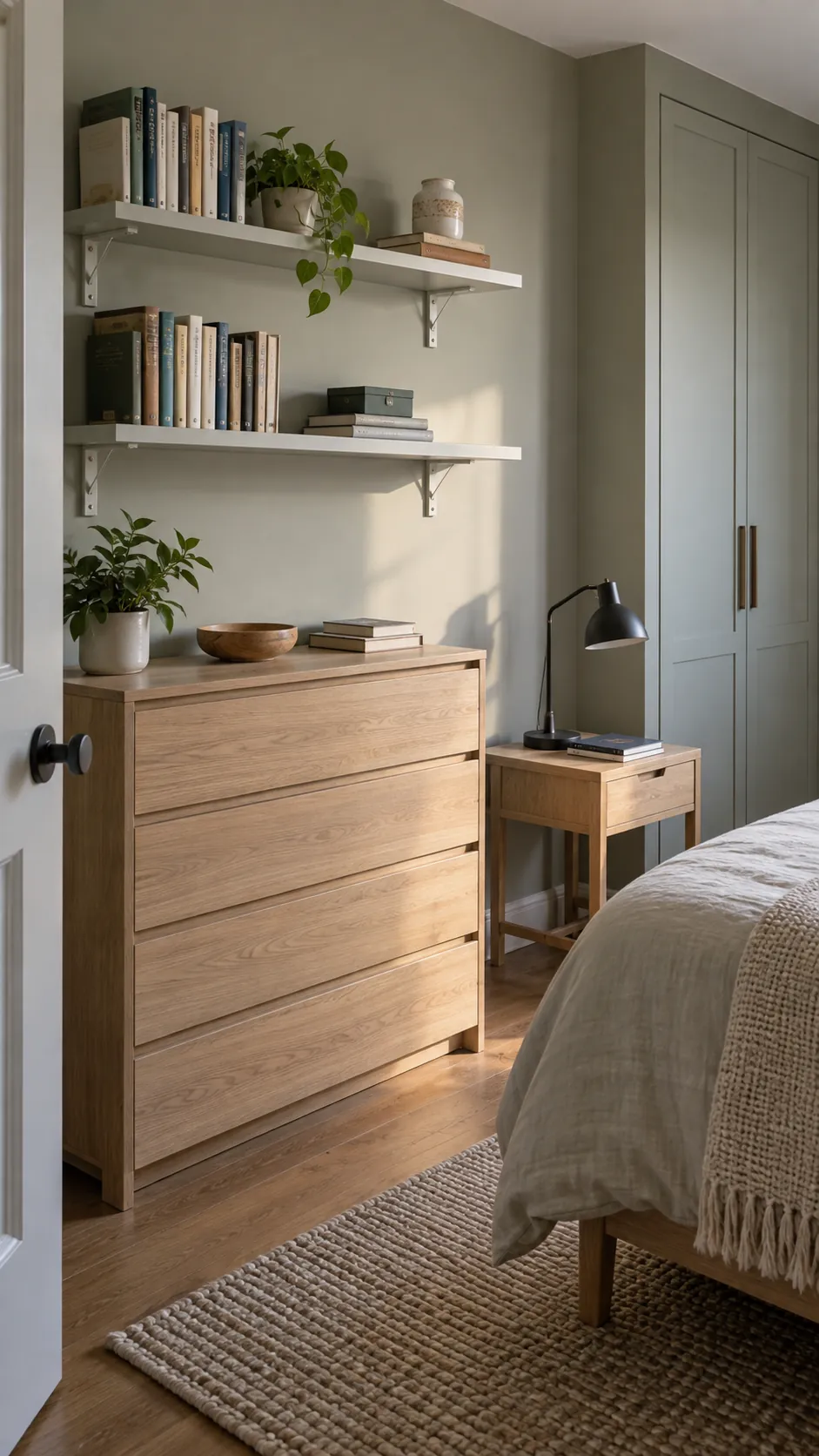
Vertical bedroom shelving can replace a bulky freestanding unit when the wall and mounting method suit the load. Place frequently used items within easy reach and avoid building a crowded tower beside the pillow. Open leg furniture can also reveal a little floor beneath a table or dresser, making its footprint feel lighter. Neither choice should cost you the closed storage you genuinely need.
Use drawers, baskets, or a closet for the less attractive everyday supplies. A few shelves that hold books and one useful object are easier to maintain than many shallow ledges that invite piles. Check that wall shelves do not interfere with the door, curtains, or bed access.
Edit the details that interrupt rest
Minimal bedroom decor does not mean an empty room. Keep the pieces that make the space personal, then give them enough room to be seen. A coordinated bed cover, one intentional wall piece, and a lamp with a useful light level can do more than many small accessories. Choose a wall piece with content you enjoy rather than buying art only to fill a blank space.
Make the bed and clear its nearby surfaces before deciding whether the room needs a new color or furniture. Textiles and loose items occupy a large share of the view in a compact bedroom. If the room still feels crowded, revisit the doorway sightline and furniture depth. Those are often stronger changes than another decorative purchase.