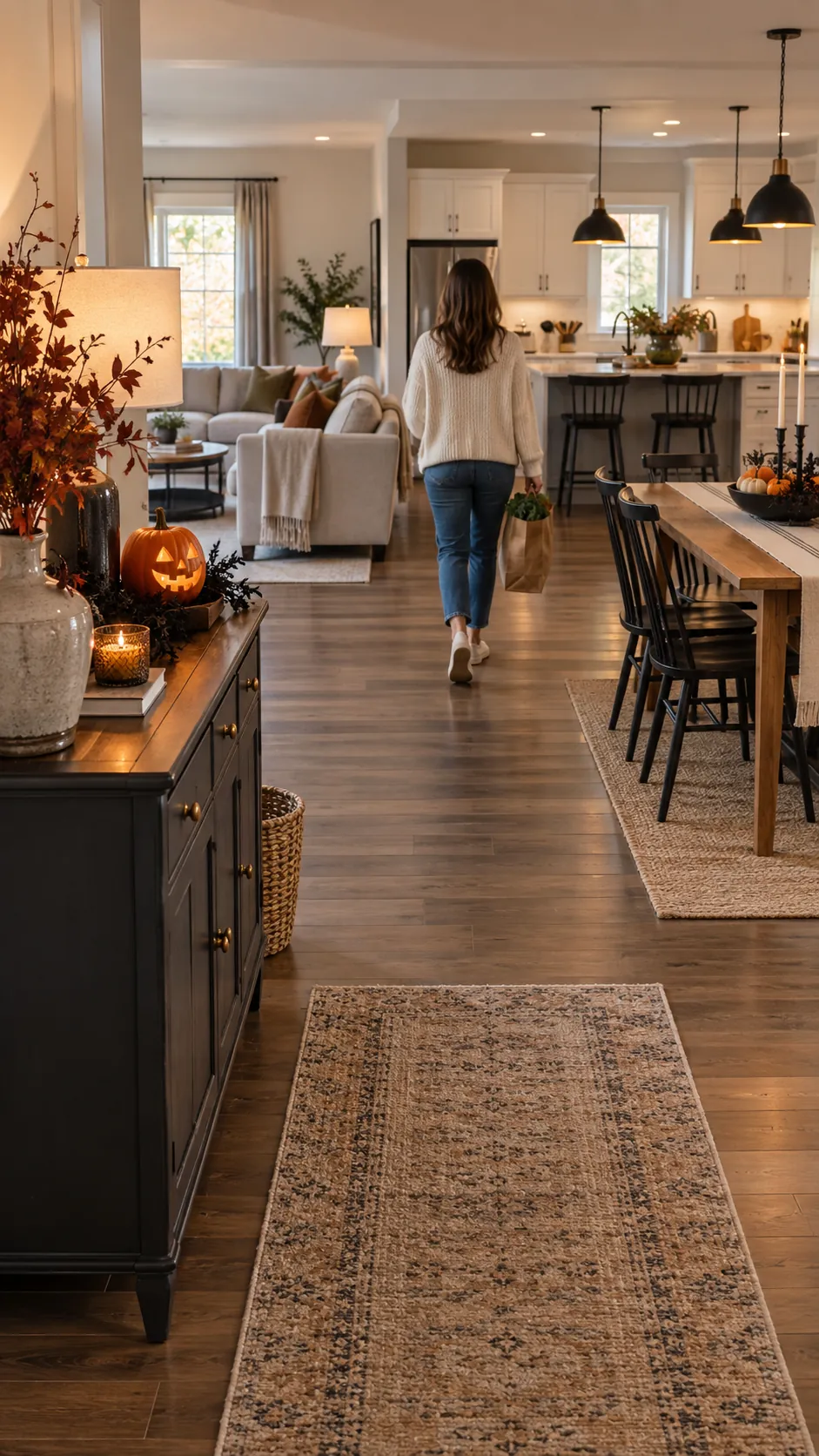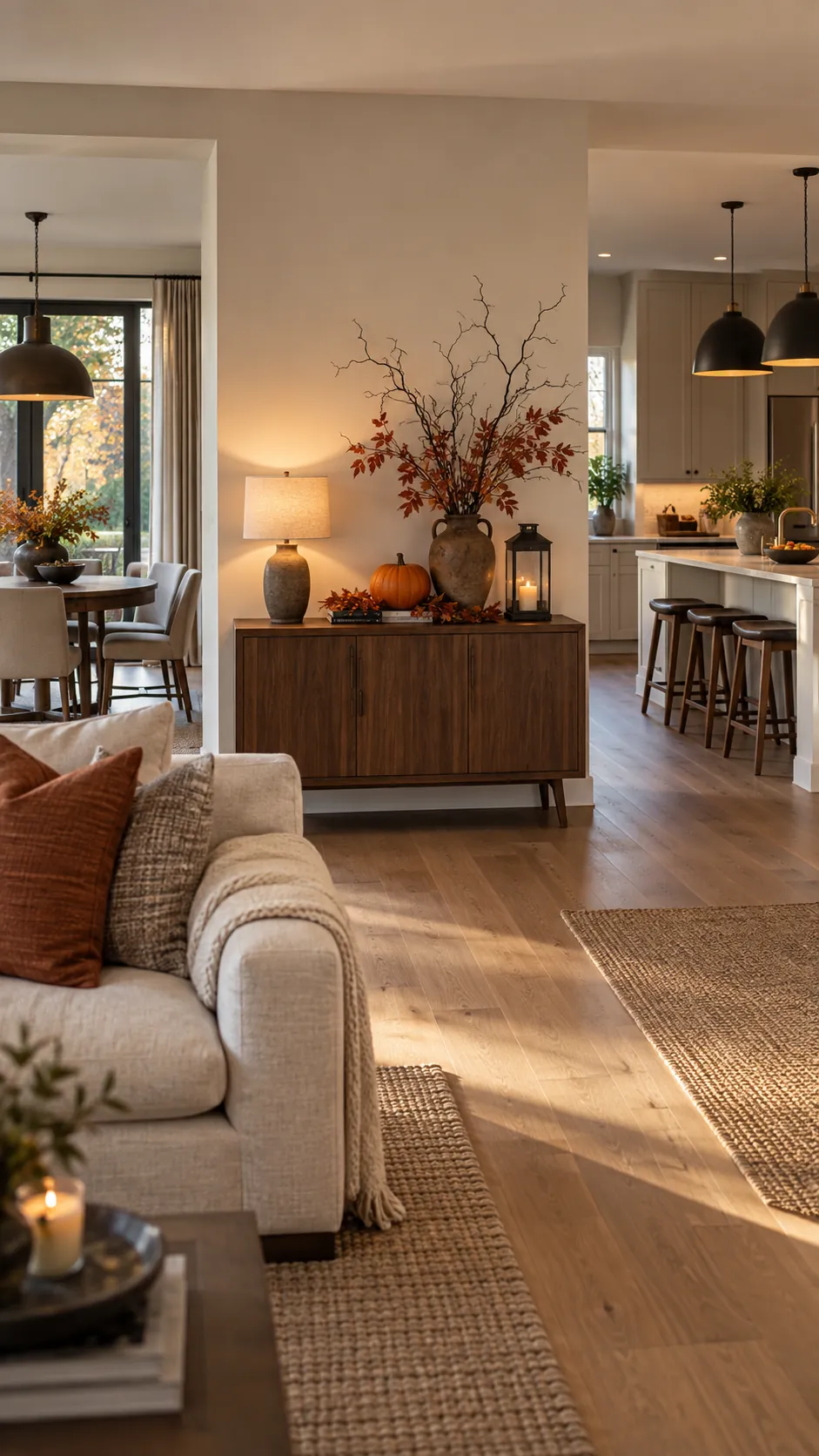
In one connected space, a few decorations can show up from several rooms at once. That visibility makes small styling choices more powerful, but it also makes clutter harder to hide. Start with the views people actually see while entering, cooking, eating, and sitting down.
A calm Halloween scheme uses chosen focal points, repeated color or shape, and plenty of useful surface left open. The aim is a home that still works on a normal weekday. Plan the route between zones before deciding where anything goes.
Choose the view that matters first
Walk into the main living area and pause where the kitchen, table, and sofa appear together. That first view shows which surfaces compete for attention and which one can carry the season. Choose a focal point that is visible from this spot without asking every corner to participate.
In many homes, the dining table or a low sideboard has enough presence to do the job. Clear ordinary clutter before adding decorations so the arrangement reads as intentional. Take a photo from the entry and check whether the eye lands in one place or jumps across several small objects.
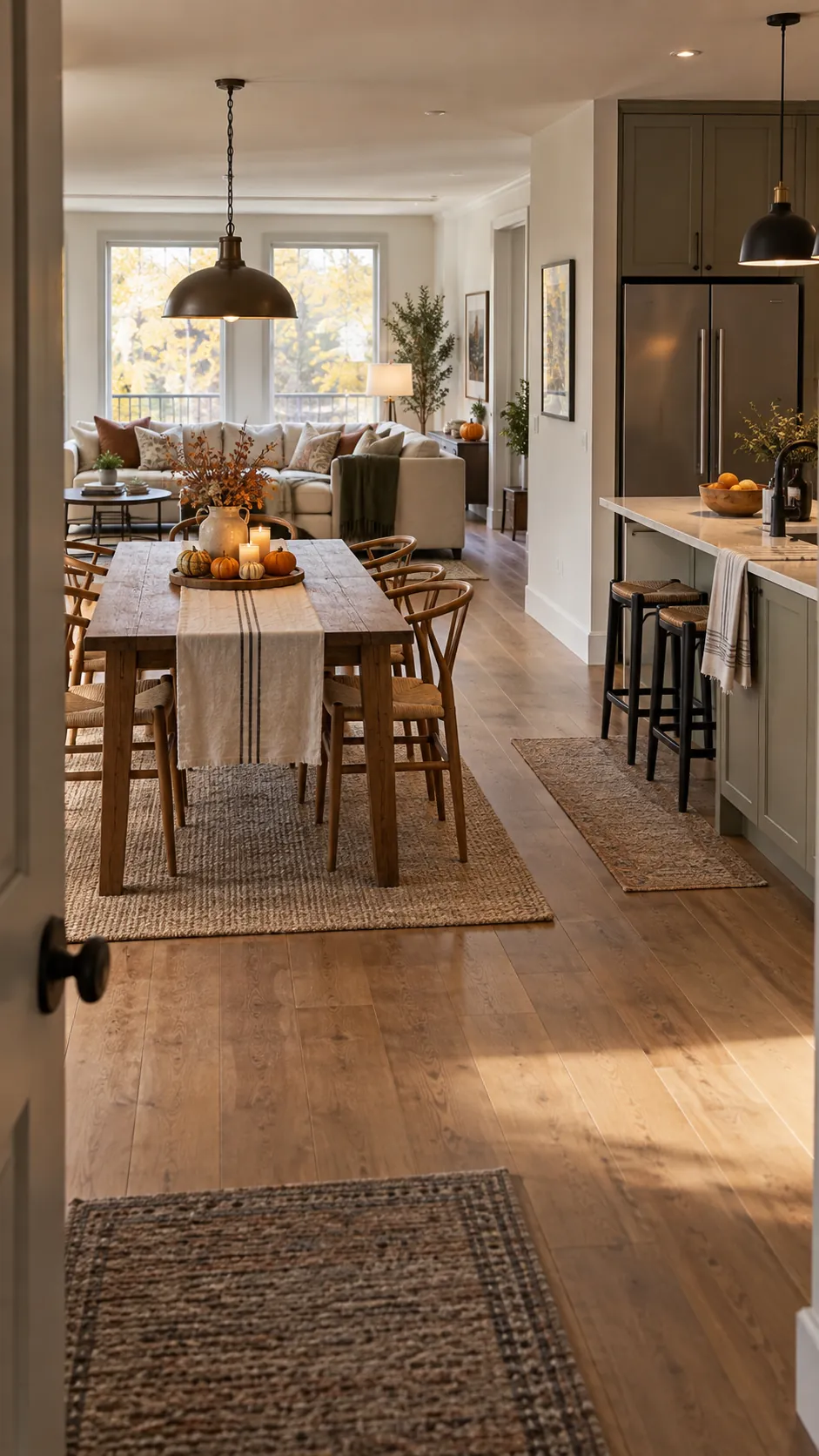
Give the season one anchor in each visible zone
An open plan layout needs a link between zones, but it does not need a matching object on every surface. Use one substantial anchor in the living area and one smaller echo near the dining table. Keep the kitchen counter mostly free so meal preparation still has space.
For example, a compact mantel arrangement can share a dark amber tone with a bowl of foliage on the table. The shapes can differ while the color repeats. Stop after those two anchors and judge the room from the main approach before adding anything else.
If the zones sit unusually far apart, repeat a material instead of another decoration. One brass candlestick in each area can create continuity without making the house feel staged.
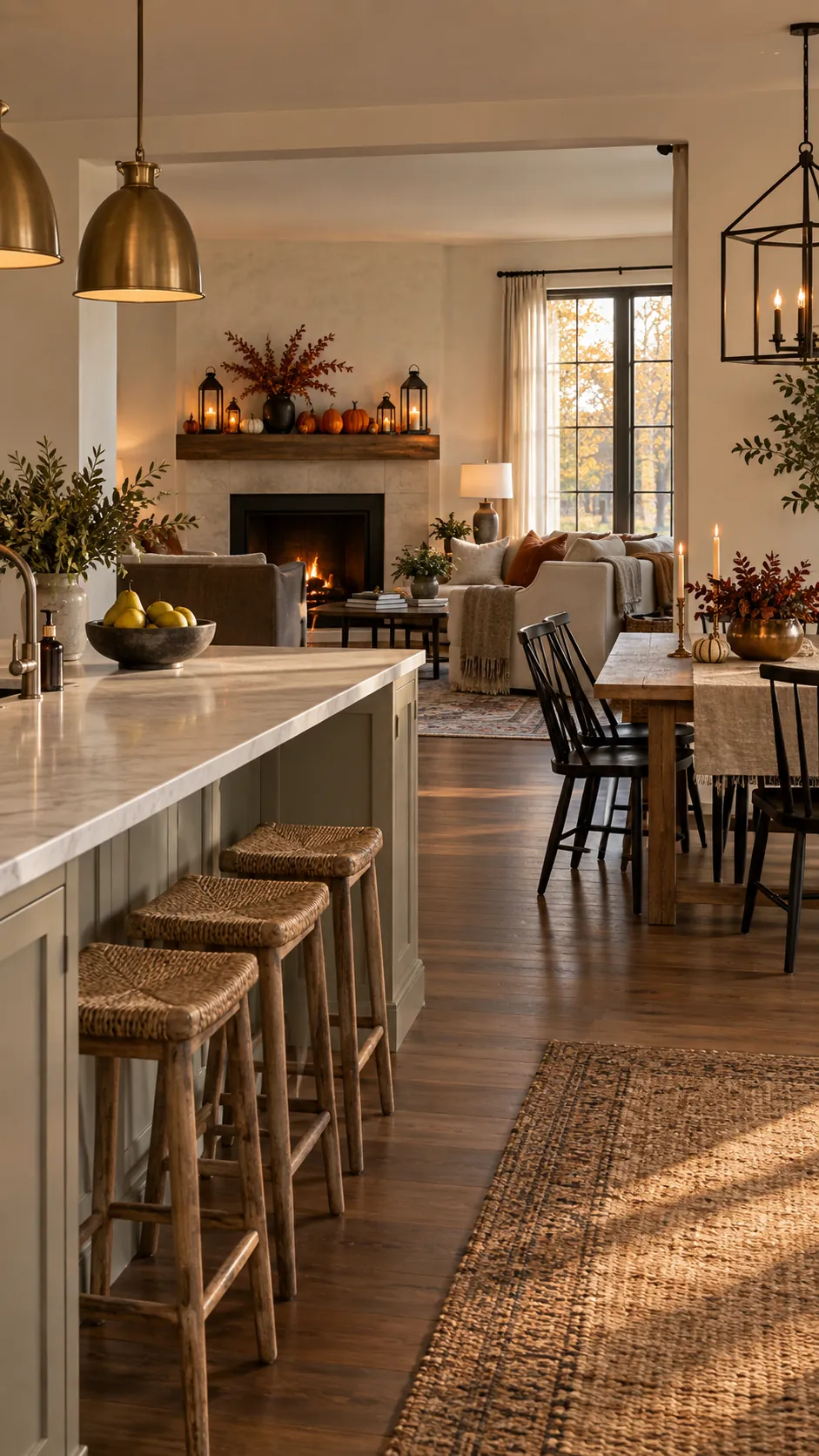
Set a small shared palette
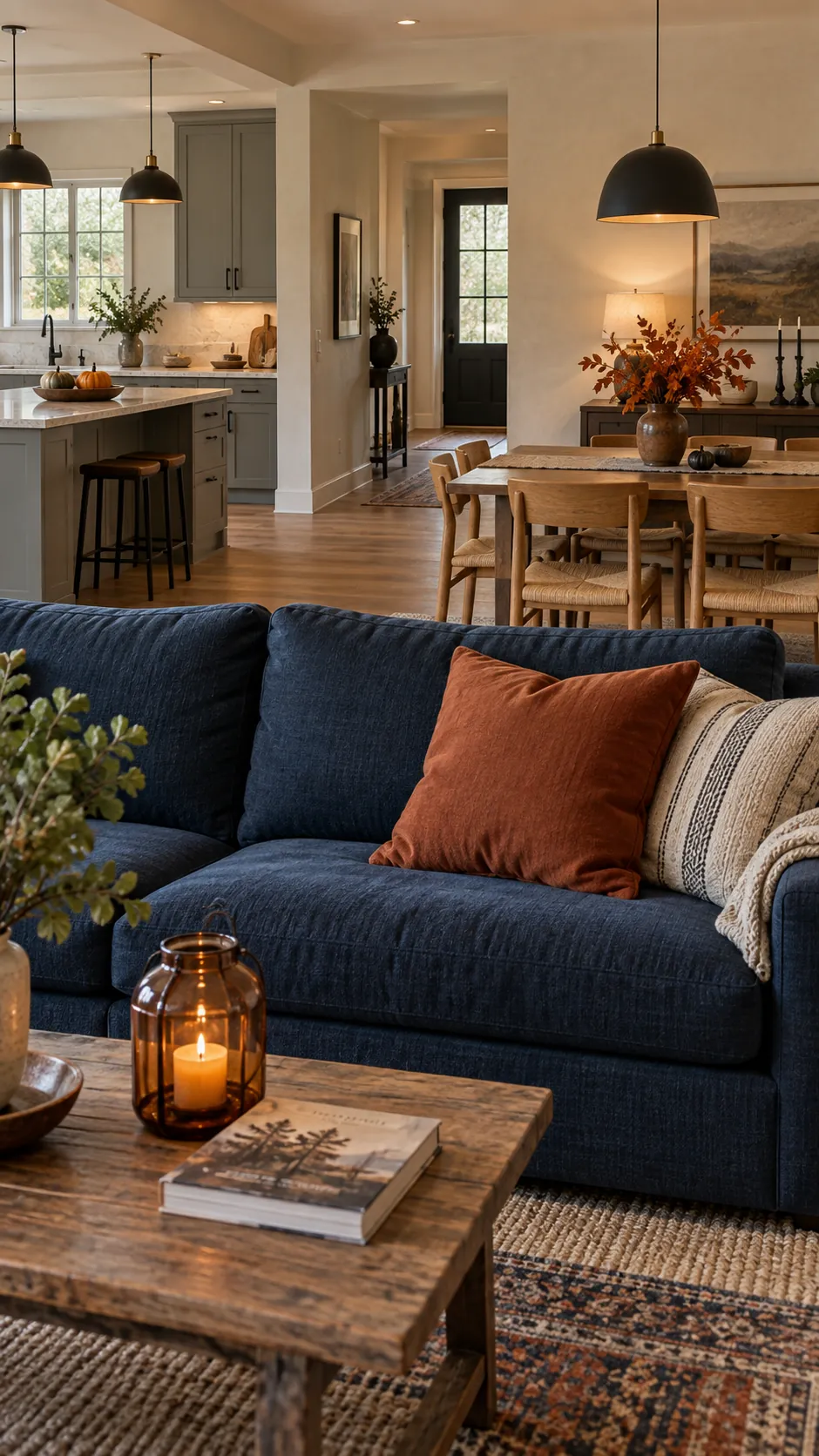
Pick two seasonal colors that sit comfortably with the finishes already in the home. A rust pillow in the lounge and a few rust leaves near the table create a connection without repeating the same object. Black can be a useful accent when it matches hardware or chair legs.
Keep the background colors stable. Covering every shelf with orange makes the connected space feel smaller and more crowded. If the home already has a strong blue or green, let that color remain visible and use the Halloween colors as accents.
Keep kitchen work surfaces useful
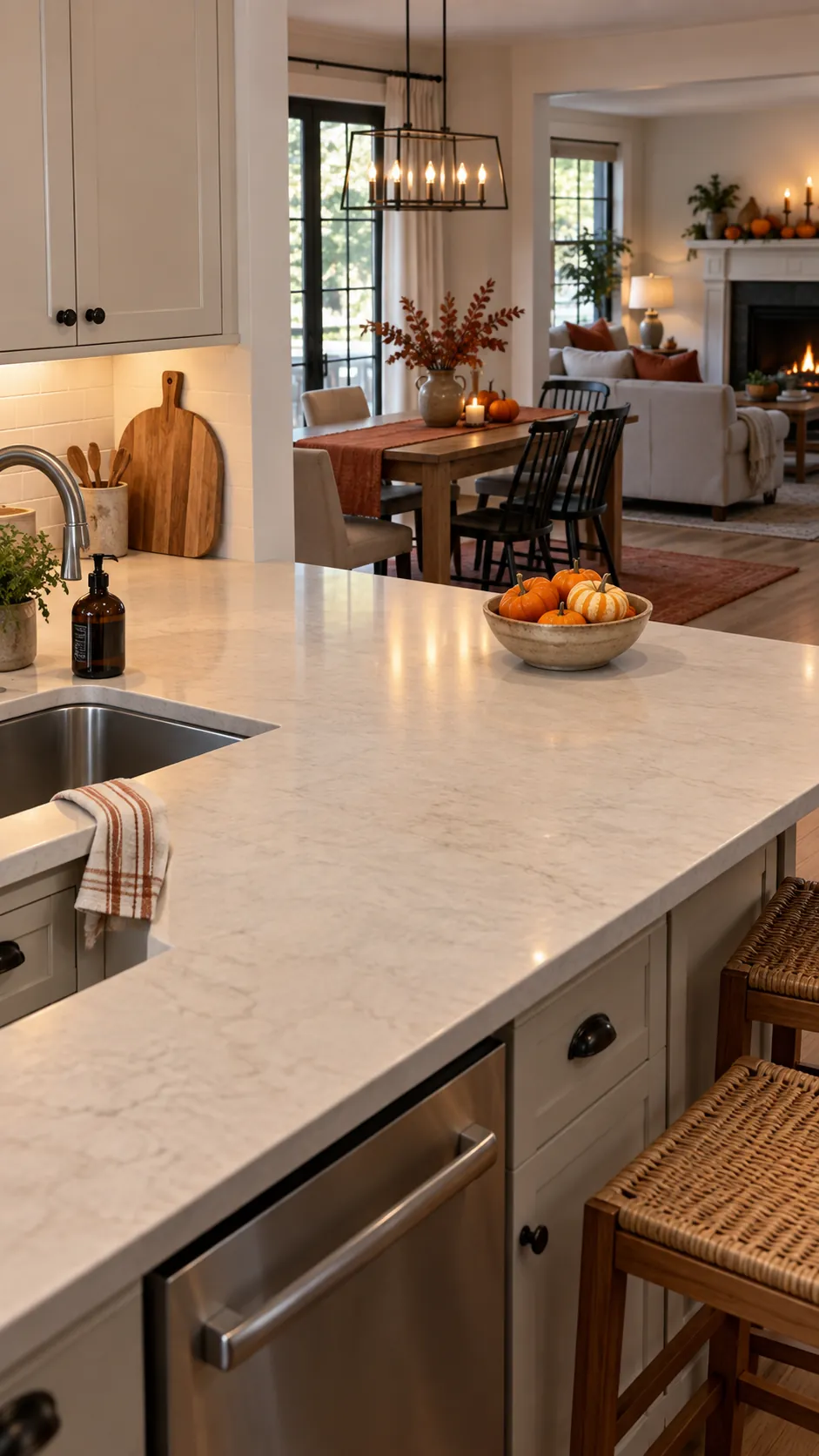
The kitchen is visible from much of an open plan room, so its everyday state affects the whole display. Clear the main preparation counter and keep decorations at the far end or on a narrow shelf. A single bowl of small pumpkins can be enough if it echoes colors used elsewhere.
Avoid placing fabric, loose paper, or dried stems close to the hob. Keep the sink landing and the route to the refrigerator open. A kitchen that still works makes the seasonal styling feel easier to live with.
At night, try ordinary task lights before adding novelty lighting. If the focal point already glows from the living area, the kitchen can stay quiet and practical.
Use a room boundary rather than a room full of props
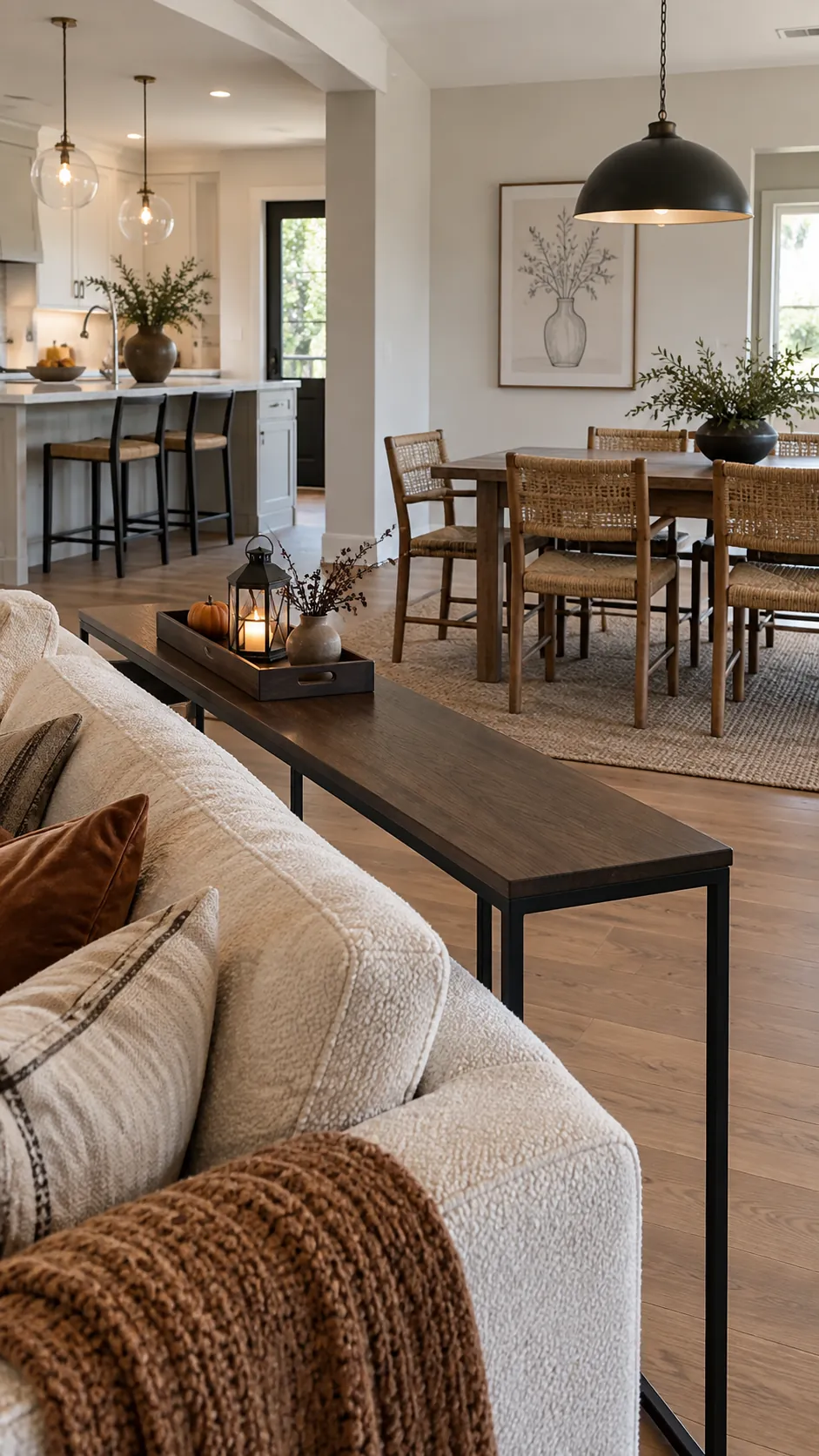
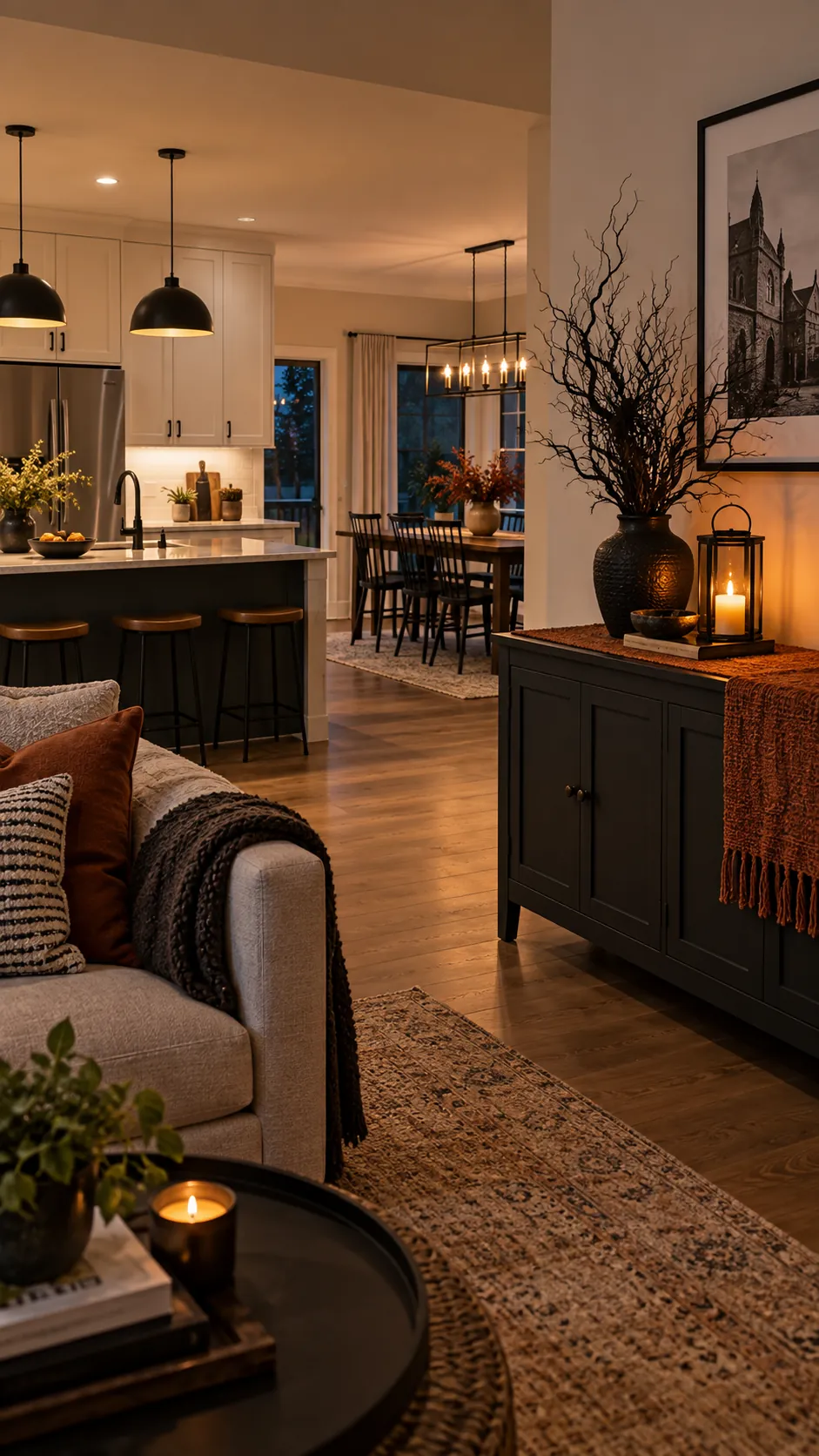
A sofa back, narrow console, or dining pendant can mark where one function gives way to another. Place a small Halloween detail at that boundary to make the connected space feel organized. A console arrangement is easier to see and maintain than objects spread across several shelves.
Leave the top mostly open if it holds keys, remote controls, or mail in ordinary life. Use a tray to contain one pumpkin, an enclosed light, and perhaps a short branch. The remaining clear surface is part of the design.
Check the view from both directions. A display at a boundary should look finished from the living side and the dining side, rather than exposing cords or an unfinished back.
Repeat a shape instead of adding more color
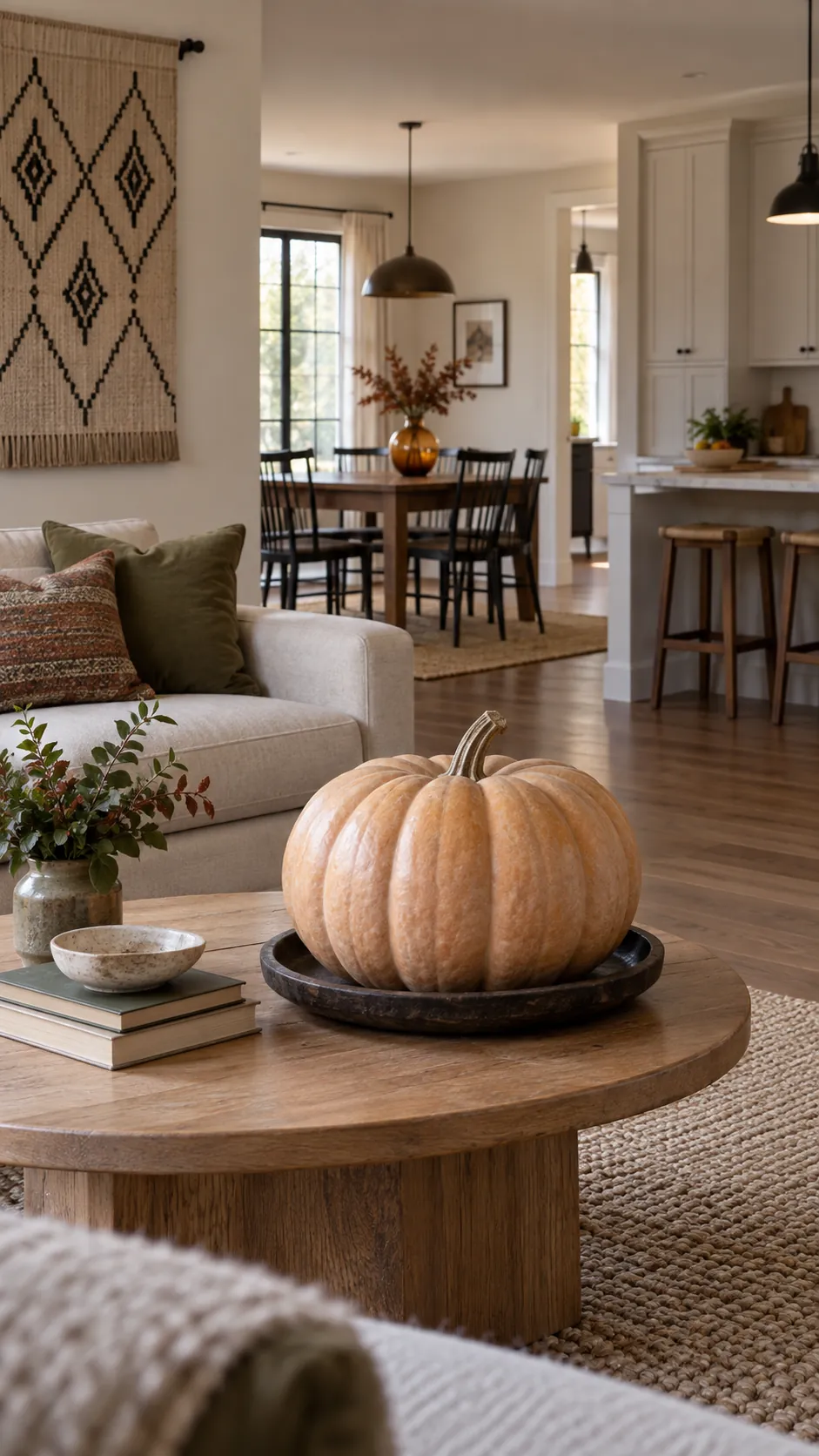
When the home already contains several colors, repetition of shape can be gentler than another bright palette. A round pumpkin in the living area can connect with a rounded vase on the dining table. The objects do not need to be identical to feel related.
Keep the scale different. One larger form can carry the focal point, while a smaller echo helps the eye move through the open space. Matching every accessory exactly is unnecessary and can make the room feel like a store display.
Move the drama into lighting and texture
A quiet arrangement can feel seasonal when the light changes around it. Use an enclosed battery candle or a warm lamp at the focal point, then leave circulation routes well lit. A textured throw, dark branches, or a coarse runner adds depth without spreading props through the house.
Keep task lighting in the kitchen and dining area bright enough for normal use. Avoid darkening the whole connected room just to make one display glow. The contrast works best when the decorated zone is a little warmer than its neighbors.
Test the room after sunset, since the daylight version may feel balanced while evening lamps create competing pools of light. Remove one accent if it pulls attention from the chosen anchor.
Do one final sight line and cleanup check
Return to the first view you chose and look for the clearest seasonal message. If several small accents compete, remove the weakest one and look again. The room should still make sense when a bag lands by the sofa or dinner is being prepared.
Walk the route from kitchen to table to seating while carrying something. Shift any prop that catches a sleeve or crowds a surface needed for daily tasks. Store removed pieces together so the next seasonal change is easier.
A connected interior usually benefits from a little empty space between decorated points. That pause is what lets one focal area carry Halloween across the whole home.