
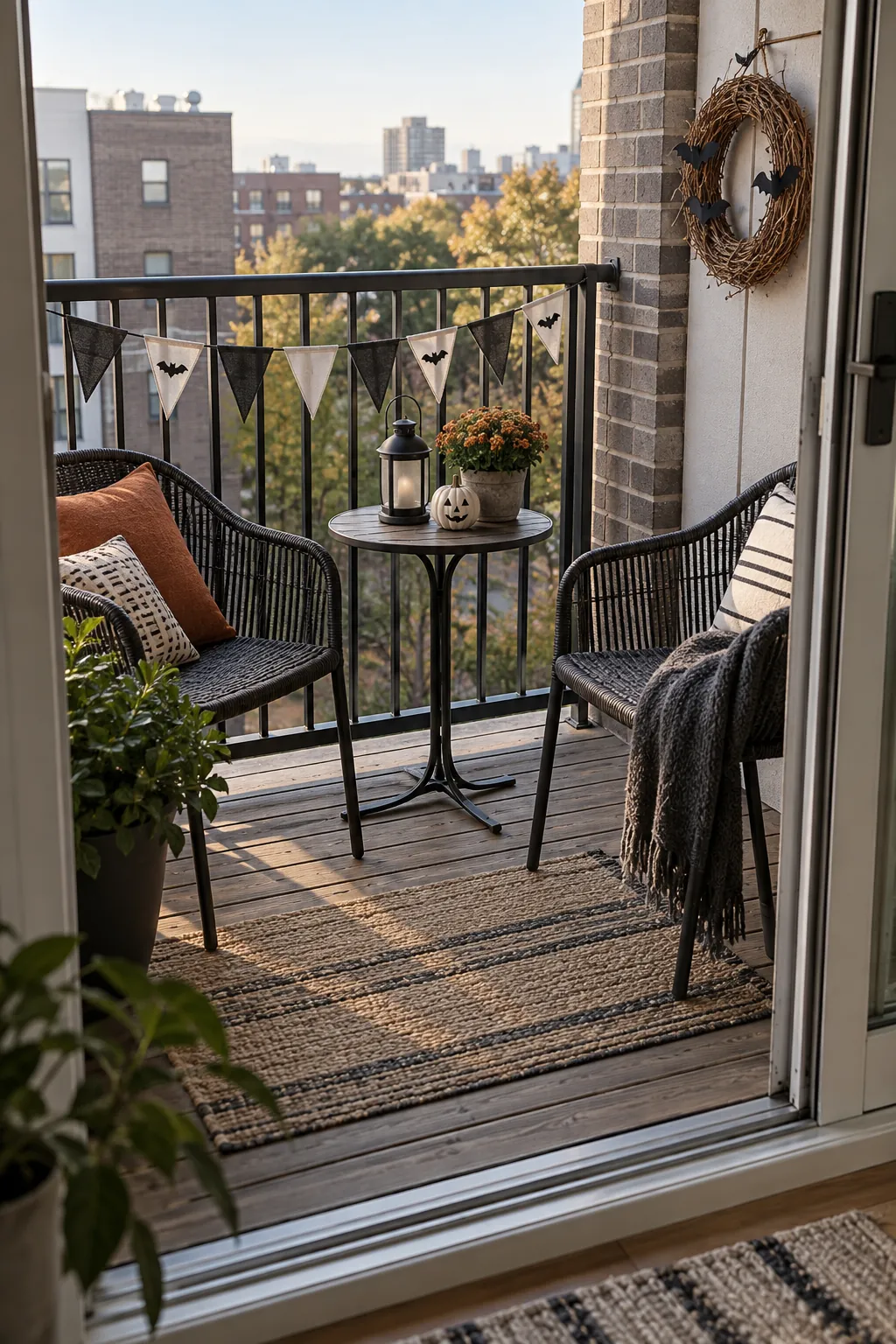
A chair that looks welcoming but cannot be pulled out is only a prop. On a tight balcony, the door swing, walking strip, and seat clearance set the real decorating budget. Start with those everyday movements, then place the seasonal details where they will not compete with them.
Measure the route from door to chair
A narrow balcony works only if you can step through the door, reach a seat, and turn around without moving a prop. Open the door fully and mark its swing before choosing a decoration. Pull each chair out as someone would while sitting, then check the space behind the knees and the path back indoors.
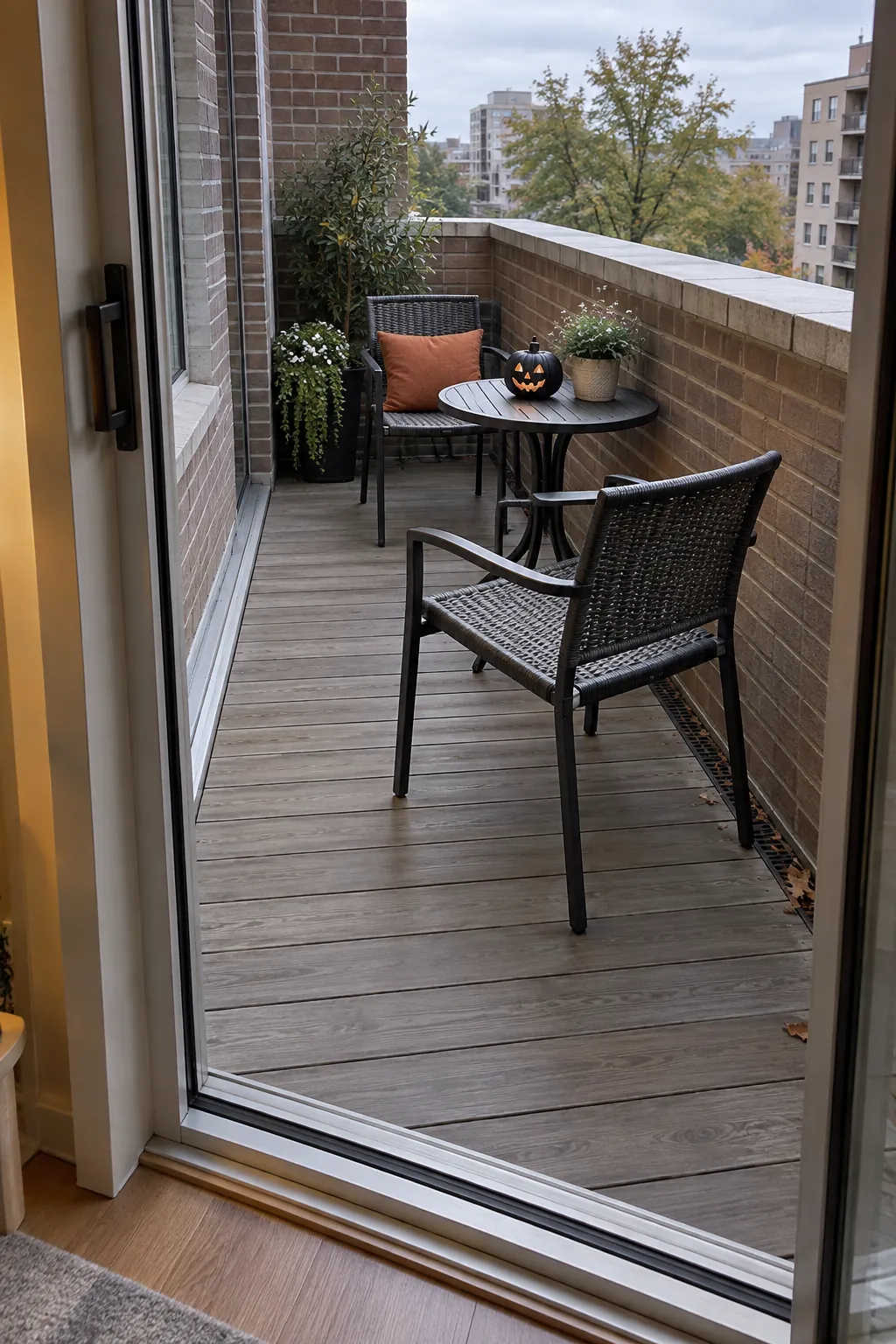
If the clear path is already tight, keep pumpkins and lanterns off the floor. A compact side table can hold one seasonal object if it still leaves room for a drink. This simple layout test matters more than a photo ready arrangement because it tells you whether the chairs will actually get used.
Give the railing one lightweight focal point
A railing offers visible Halloween color without using the walking strip. Tie a short strand of fabric pennants to the inside face with removable outdoor ties, leaving the top rail and any drainage openings clear. Check building rules first because some properties prohibit anything attached to or hanging beyond a balcony.
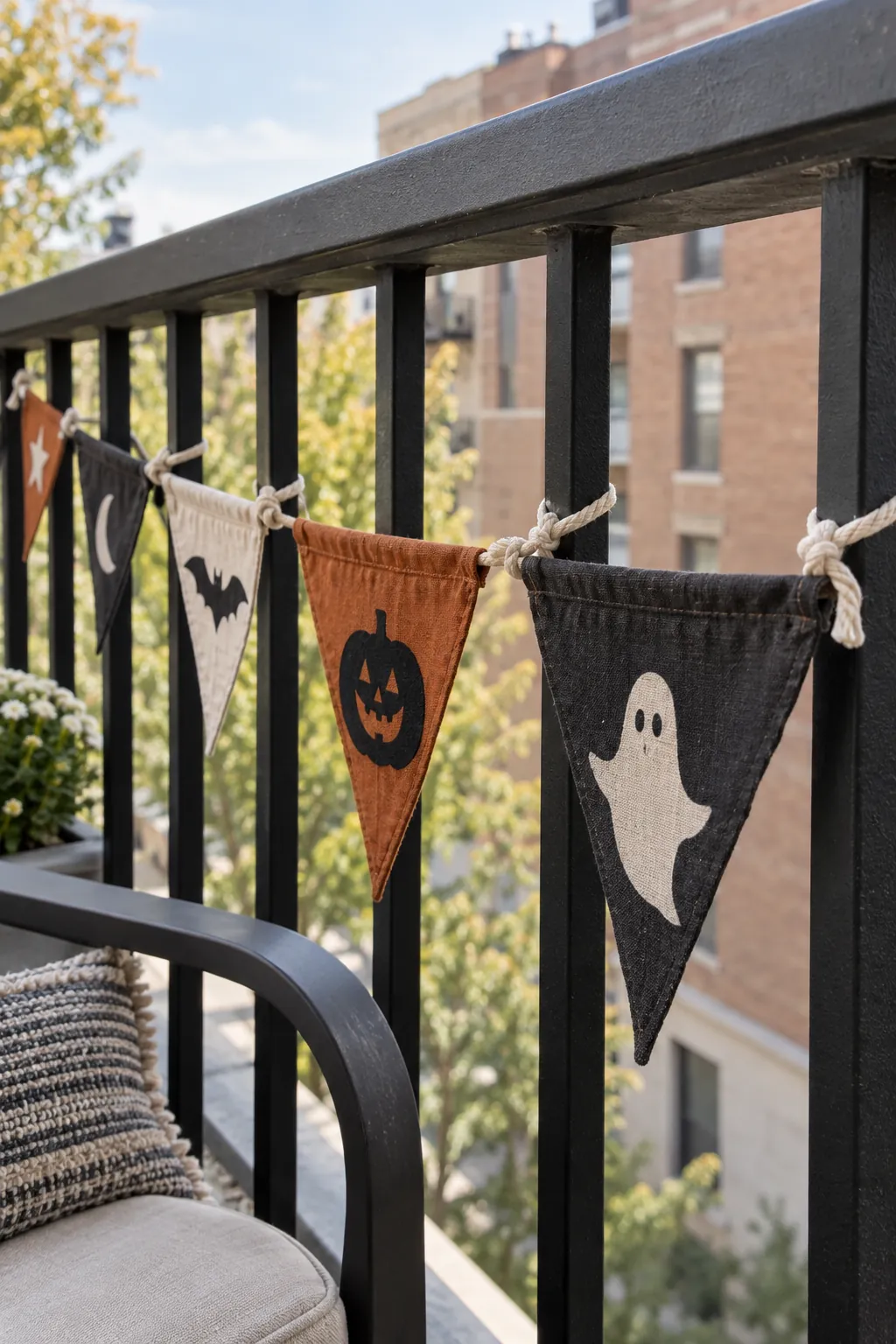
Choose fabric or weather suitable paper in a limited palette, such as charcoal, rust, and cream. A single restrained run reads clearly from the chairs without wrapping every spindle. Keep the ends inside the railing so wind cannot turn a decorative strand into loose litter.
Use the wall as a shallow backdrop
The wall beside a balcony door can carry a slim wreath or a small cluster of paper bats while the floor stays open. Use an outdoor rated removable hook only on a surface and under conditions the manufacturer permits. Avoid drilling into a rental facade or attaching anything to vents, alarms, or moving door parts.
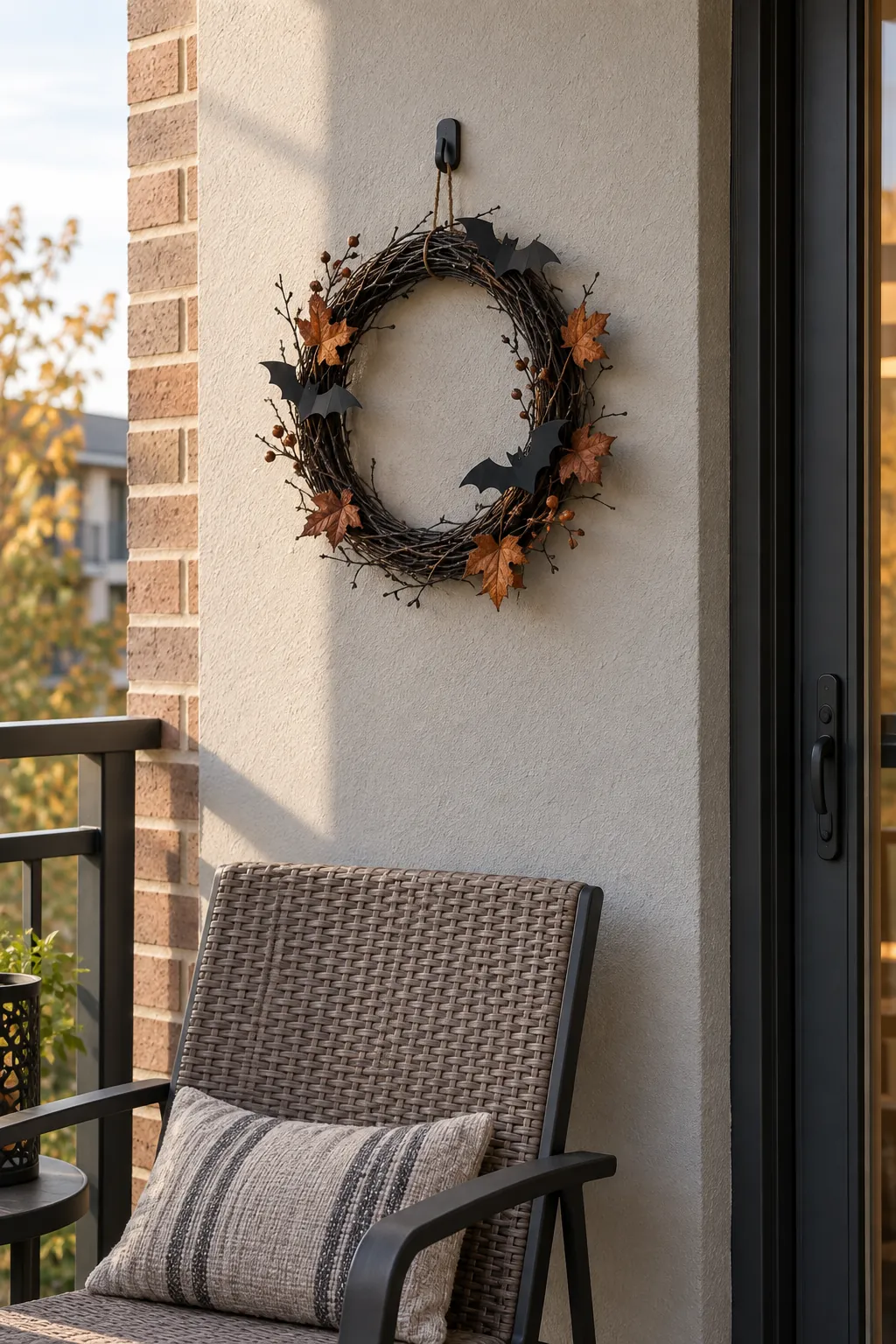
Place the decoration above chair shoulder height or beside the seating area, not directly where a person must lean back. Test the door and window after mounting it. One visible vertical detail gives the space a seasonal character without turning the seats into display platforms.
Keep lighting low glare and cord free
A small rechargeable lantern on a stable table adds an evening glow while leaving the route clear. Choose an enclosed, outdoor suitable light and protect it from rain according to its rating. Open flames are a poor fit near fabric decorations, wind, and a tight seating area.
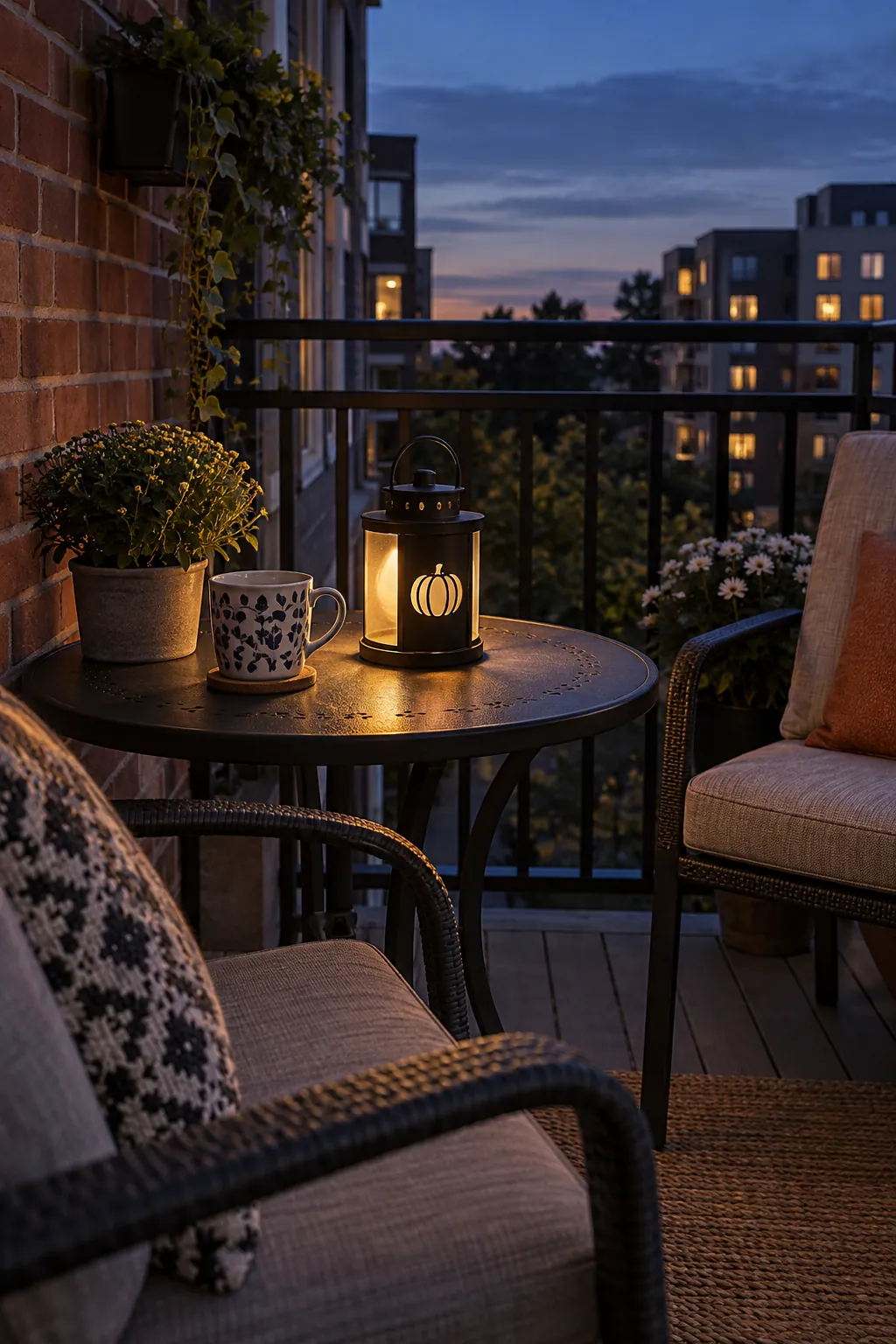
Aim the light toward the tabletop or wall rather than into a neighbor’s window. If the balcony has no safe outlet, skip string lights and exposed extension cords. A single warm point of light can make the chairs inviting without creating a trip line across the floor.
Let the chairs carry the season lightly
A washable cushion cover can make the chairs feel festive without narrowing the balcony. Use outdoor suitable fabric that dries promptly, and keep the back and seat comfortable enough for normal use. A thin plaid throw can wait indoors until someone actually sits outside.
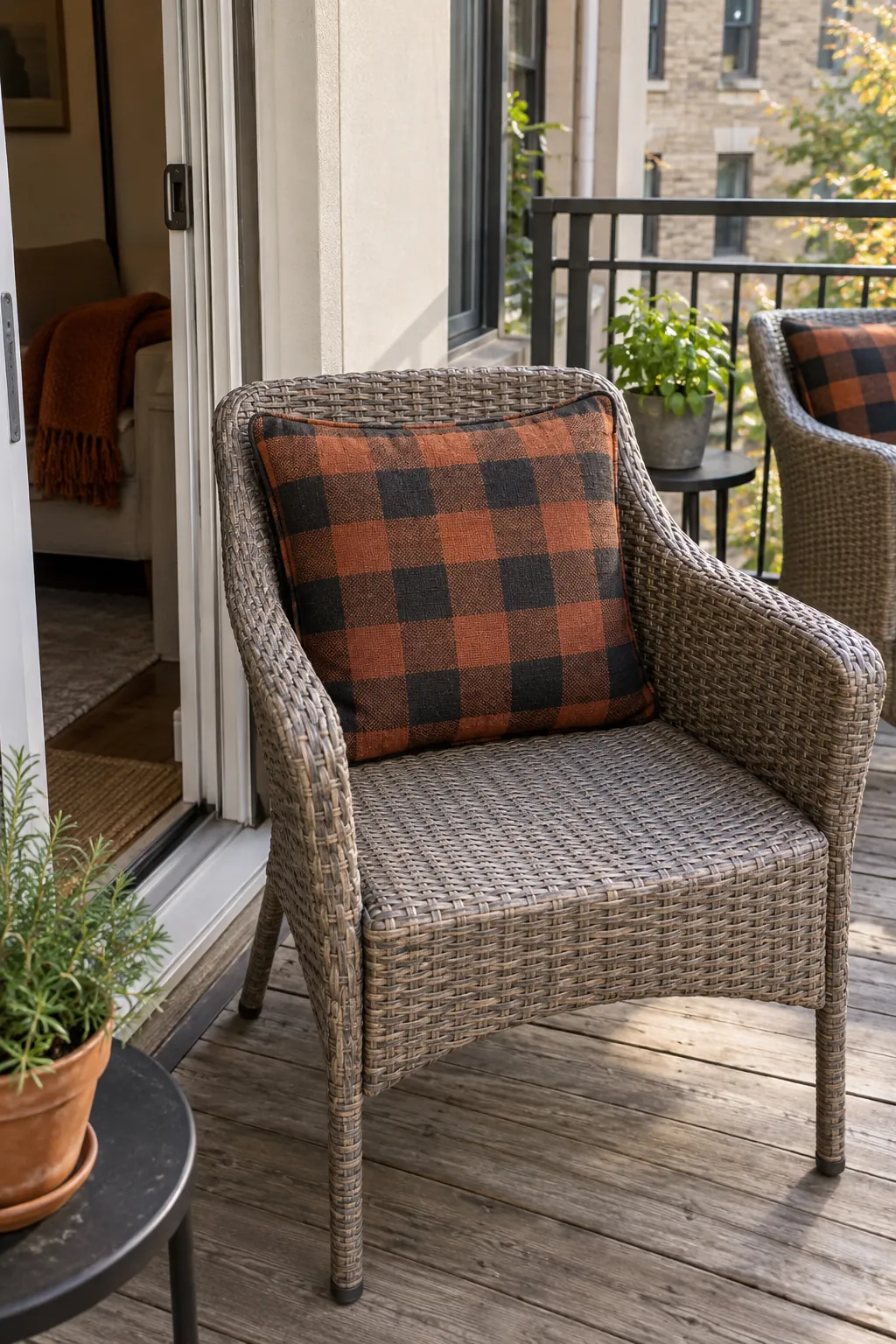
Avoid piling pillows onto small seats because each extra cushion needs somewhere to go when a person arrives. Pair one seasonal cover with the railing or wall detail already in place. This keeps the seating as seating instead of making it a storage surface for decorations.
Plan a fast weather reset
Wind and rain decide whether a small balcony setup remains pleasant after the first evening. Keep loose paper pieces in a shallow box indoors and choose a spot near the door for any fabric that needs to dry. When weather turns, bring the portable items in before they soak or blow away.
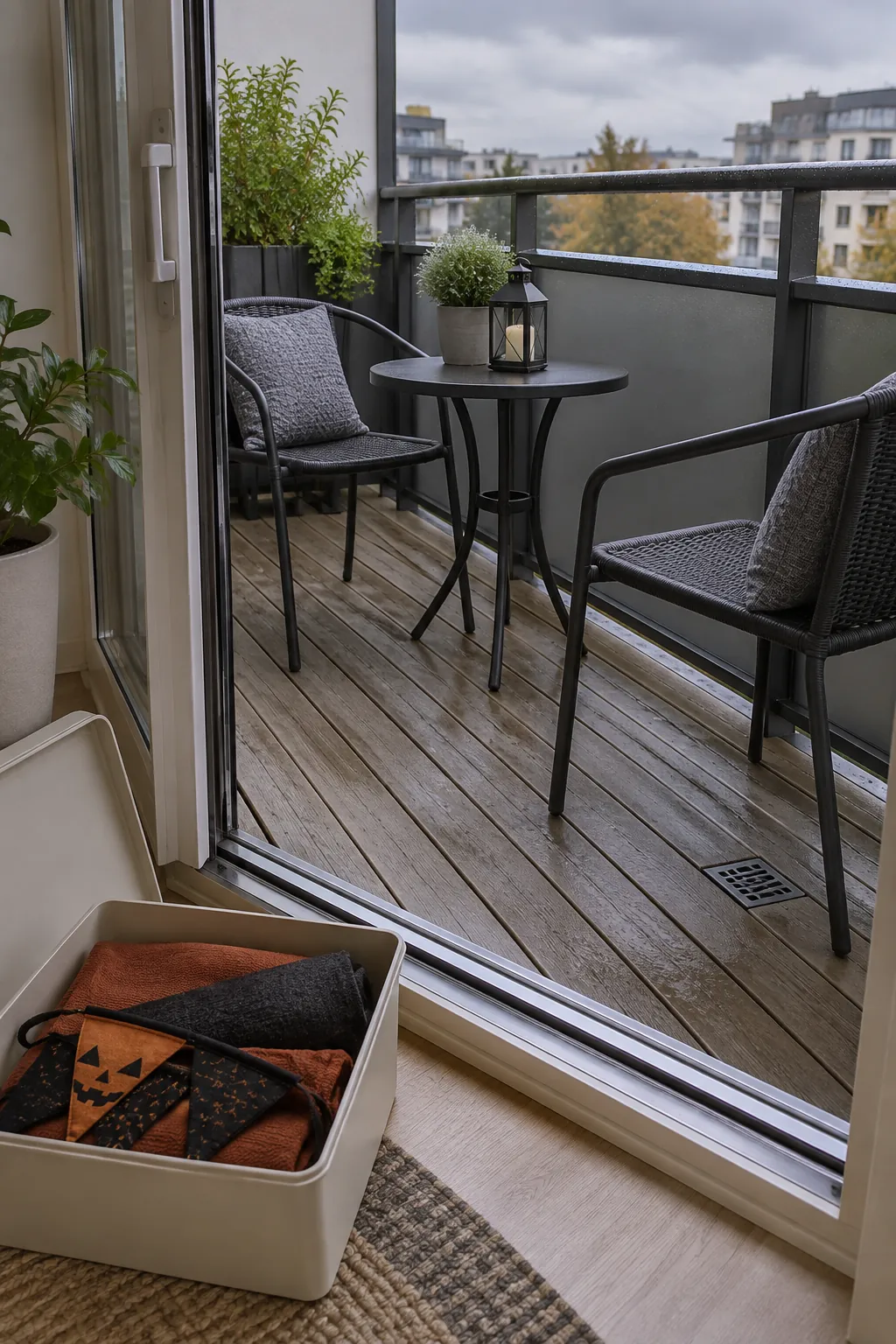
Check that water can still reach the drain and that no decoration presses against the door seal. After the season, let fabric dry completely before folding it flat for storage. The best narrow balcony arrangement is one you can clear in minutes and set out again without rearranging the chairs.