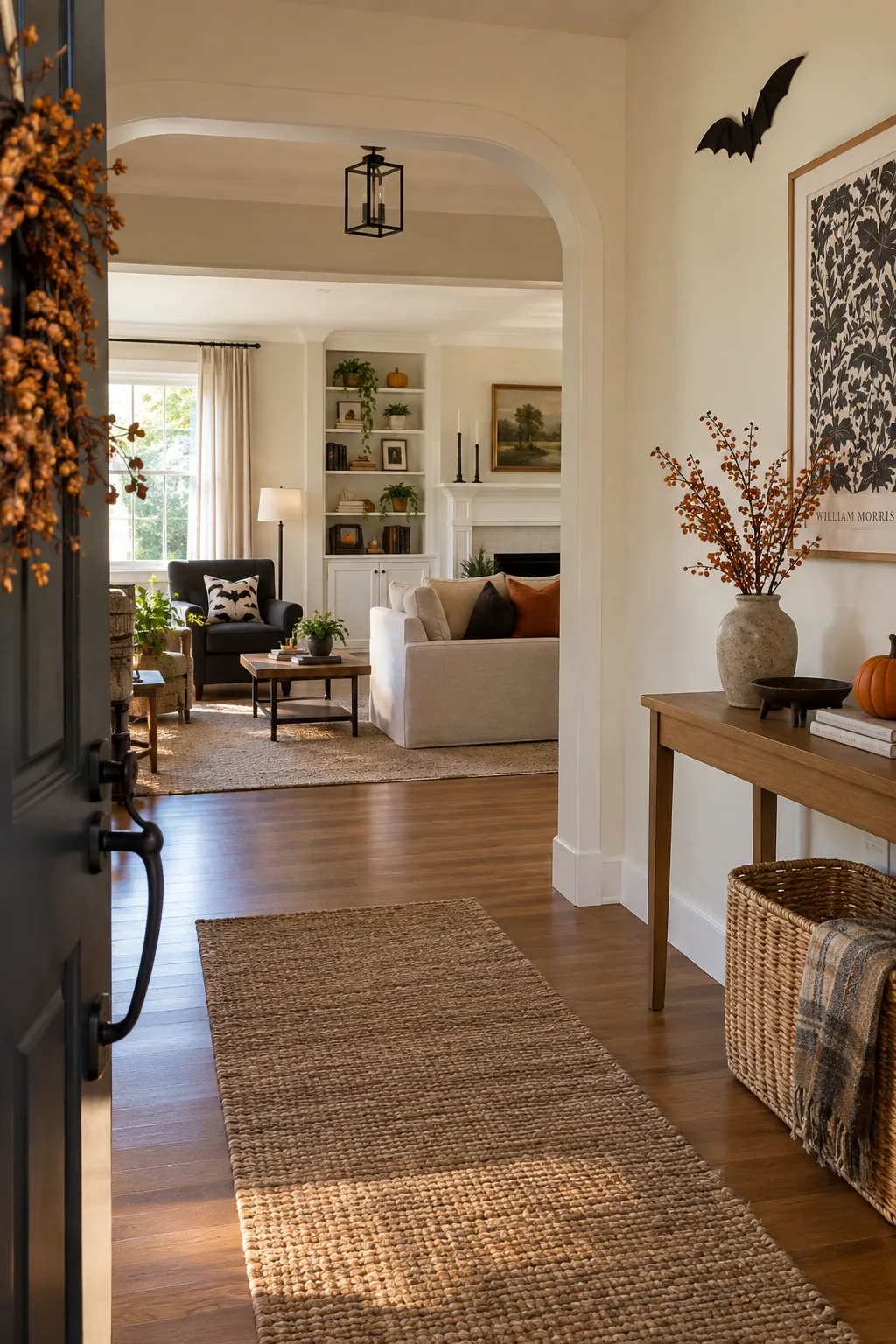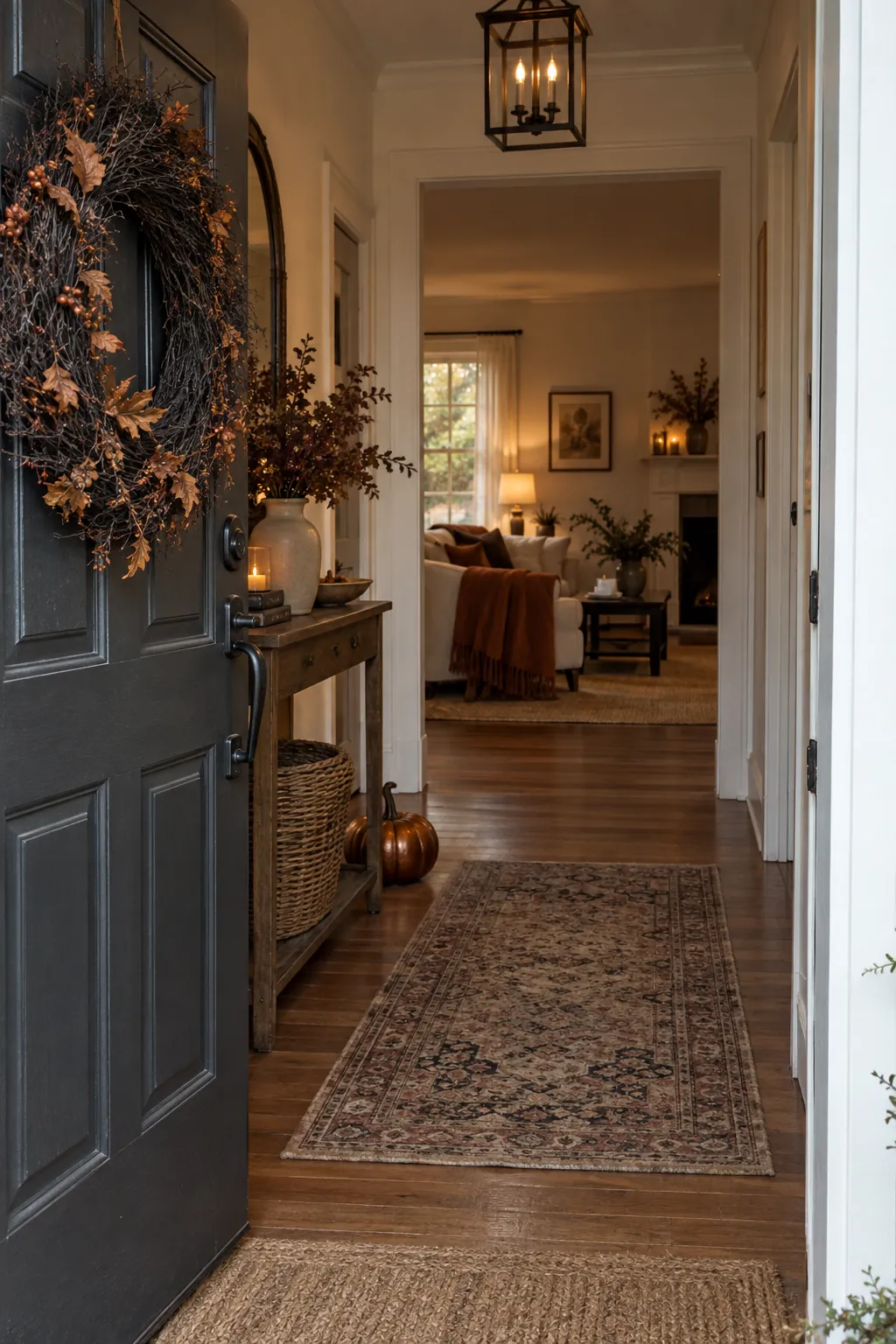
A guest notices the transition between spaces before noticing any single decoration. If the porch is theatrical, the entry is bare, and the sofa area uses a different palette, the house can feel like three unrelated displays. A few repeated choices can connect those spaces while each room still does its own job.
The easiest test is to stand at the front door and look toward the place where people will gather. Identify what can actually be seen from that position. Build the decorating plan around those visible links rather than buying a matching set for every surface.
Choose a Small Set of Connecting Cues
Pick one dark anchor, one warm accent, and one recurring form before placing anything. For example, charcoal paper silhouettes, muted copper pumpkins, and round candle shapes can travel from the doorstep to the sitting area. The choices need not match exactly because their relationships do the work. A black wreath and a black cushion belong together visually even when their materials differ.
Use the home’s existing finishes as a filter. Warm wood and cream upholstery often support rust or plum better than an electric orange flood. If a favorite Halloween object fights the chosen colors, give it one deliberate focal spot instead of repeating its clash through the house.
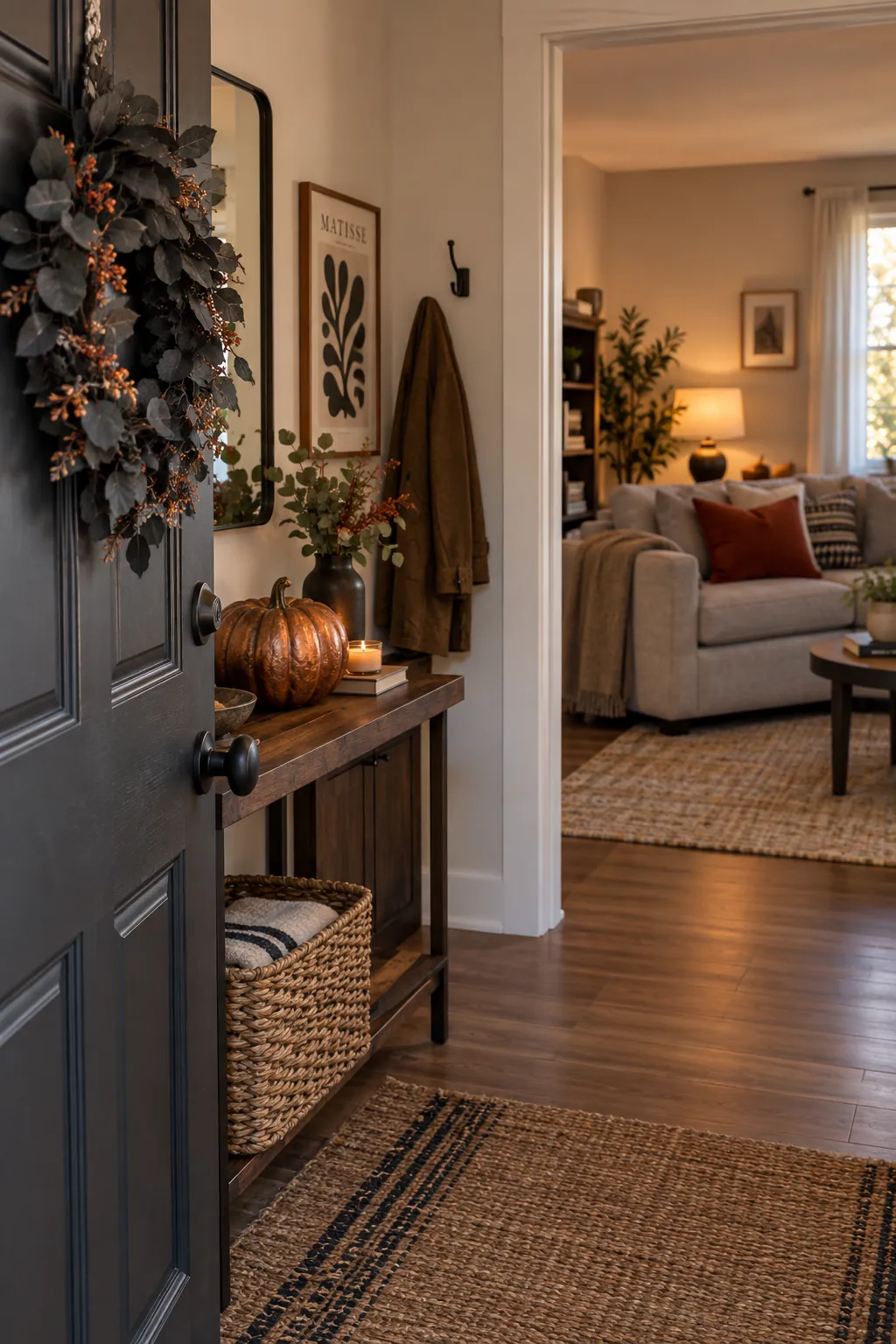
Let the Front Door Make the First Promise
Treat the door as a preview of the rooms beyond it. A wreath or hanging cluster can introduce the main shape, while a restrained planter or pumpkin repeats the accent color. Keep the handle and threshold easy to use, especially after dark. The entrance should feel inviting before a guest steps inside.
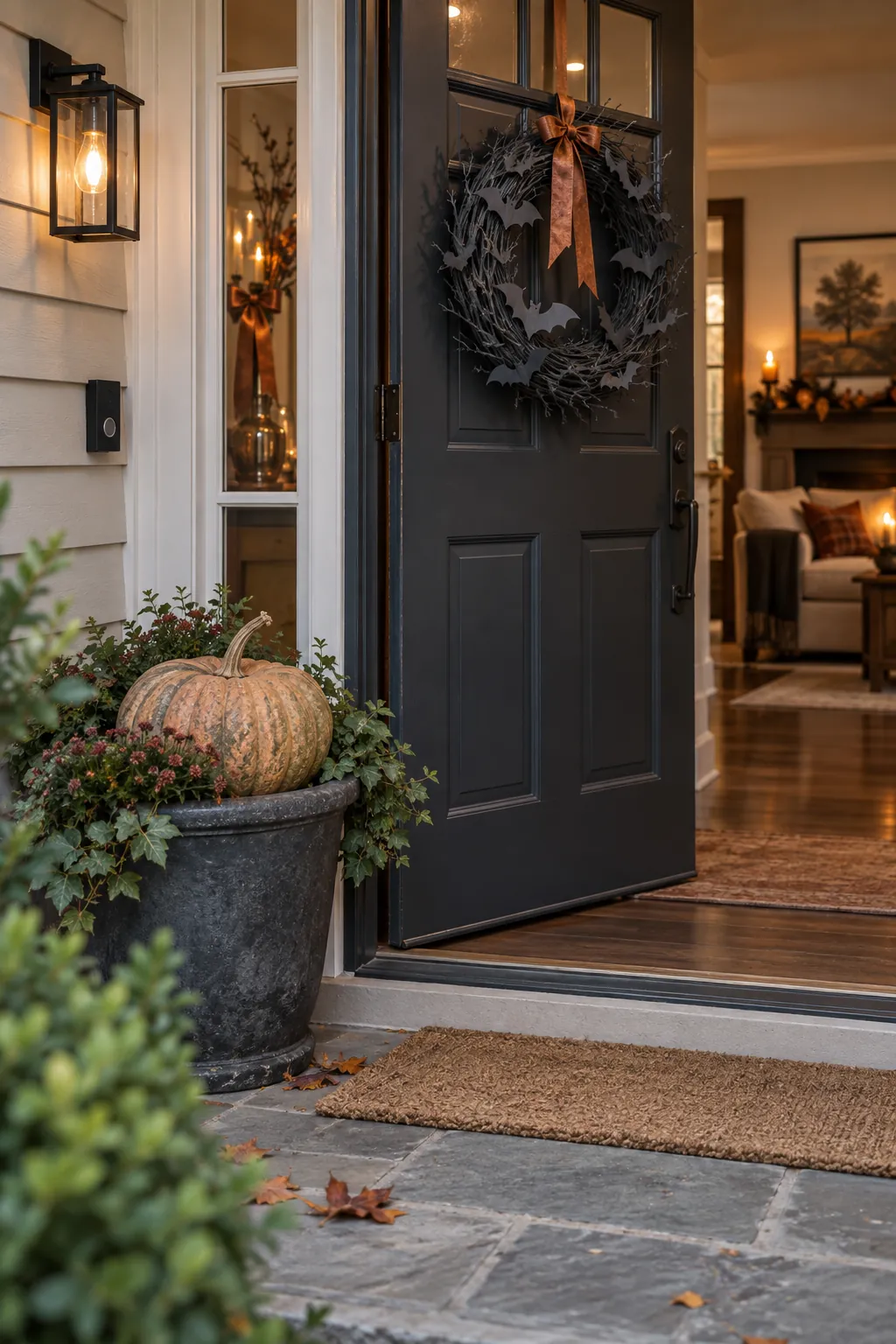
Look back at the door from the entry as well. If the exterior feature disappears completely when the door closes, place one related object on the interior side of the transition. A similar ribbon tone or a small paper motif is enough to keep the story moving.
Build a Bridge Through the Entry
The entry often has less room than the living area, so it should connect rather than compete. Repeat just one cue from outside on a tray, narrow console, or coat hook. Leave the rest of that surface useful for keys and bags. A crowded hall interrupts the visual flow because visitors have to navigate around the decor.
When the front door opens directly into the living room, use the first piece of furniture as the bridge. A side table near the door can carry the color or motif before the eye reaches the main seating area. There is no need to invent a hallway that the floor plan does not have.
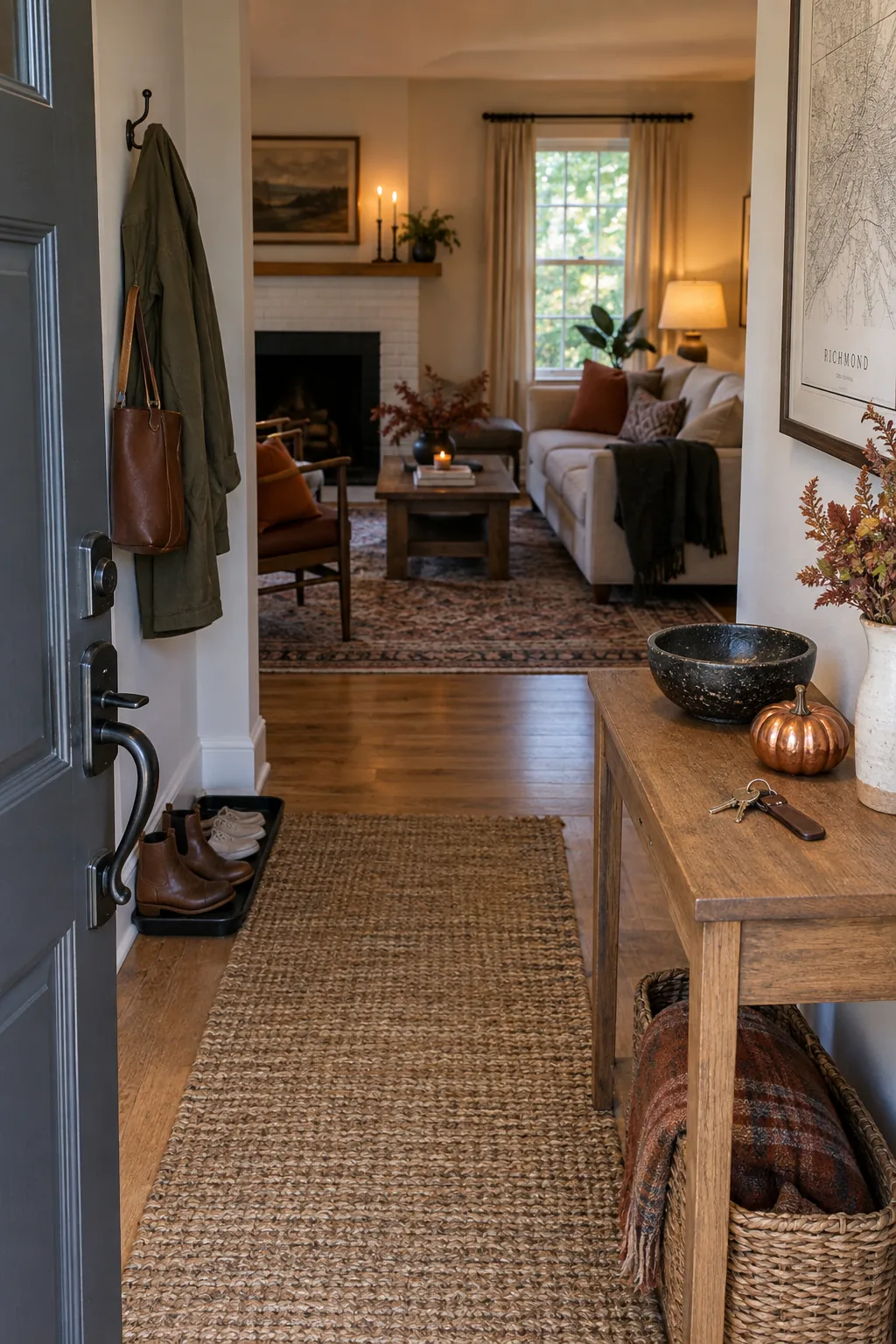
Check the floor from the open door to the first seat. Decorative branches, baskets, and fabric should stay clear of that route. A continuous walking path makes the rooms feel connected in use as well as appearance.
Repeat Color at Different Scales
Color creates continuity more effectively when it changes size between rooms. A strong copper pumpkin at the door might become a small copper candle cup in the entry and a rust cushion in the living room. Repeating the exact same object three times usually feels more staged than intentional.
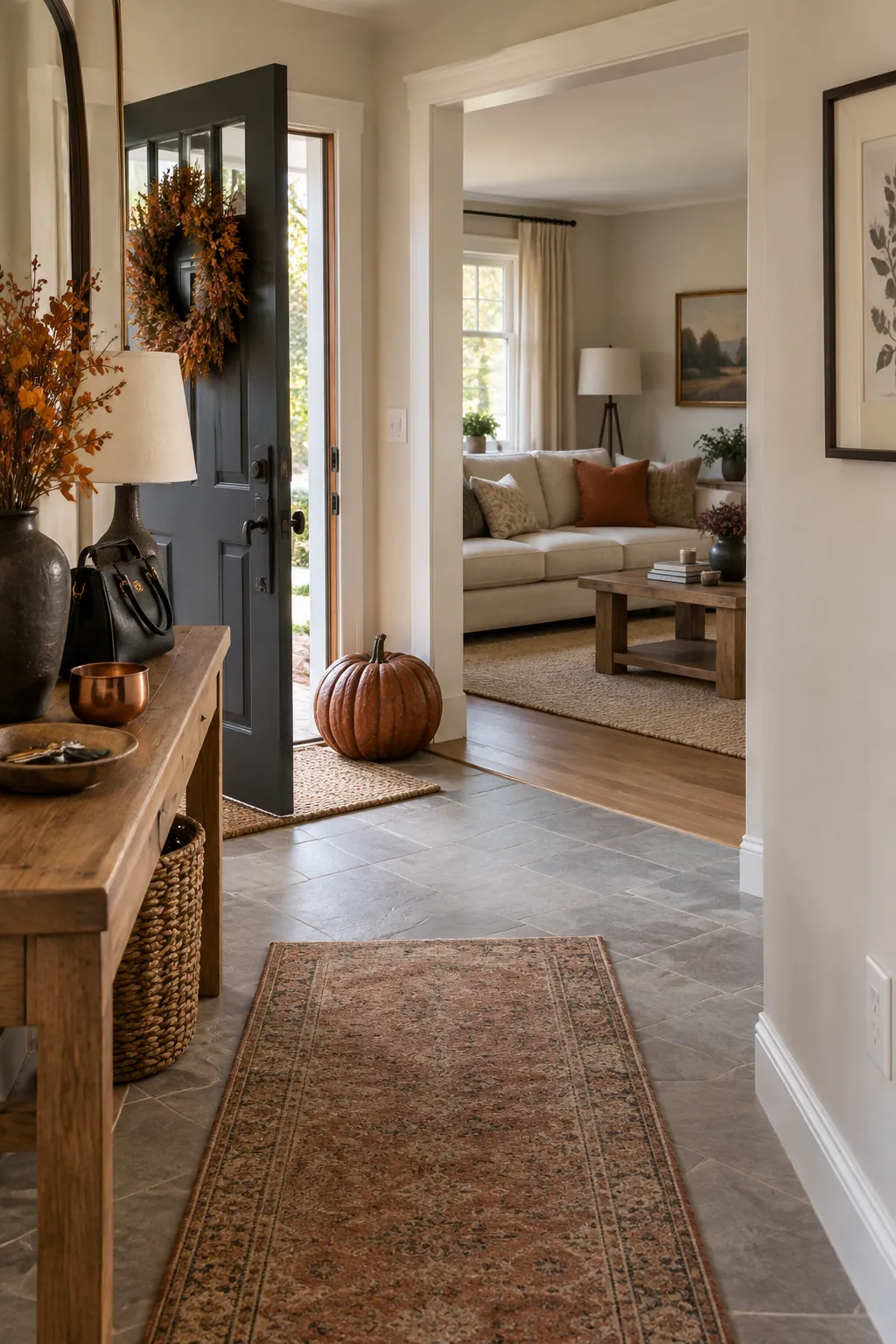
Balance the repeated accent against a stable background color. If the entry already has dark flooring, you may need less black decoration there than on a pale living room shelf. Photograph each view from a guest’s eye level and compare the amount of color rather than counting objects.
Carry One Material or Shape Into the Living Room
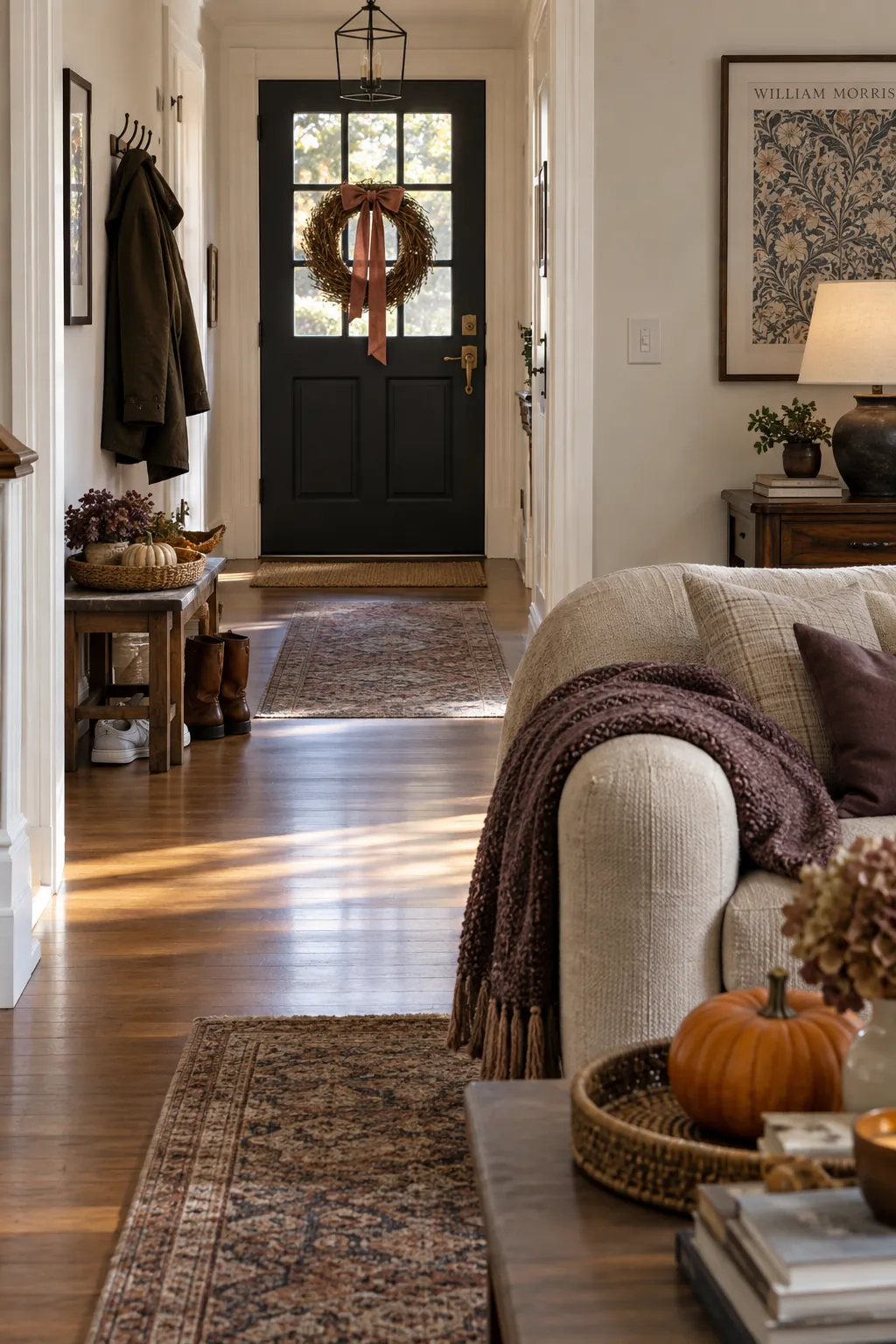
The shared thread can be tactile rather than literal. Woven ribbon at the door, a small basket in the entry, and a textured throw by the sofa all echo one another without forming a themed set. Curved pumpkins can similarly relate to a round tray or lamp base. Choose the connection that already fits the room.
Keep the material believable in its location. Paper belongs high and away from wet shoes, while a washable textile works near seats. This distinction lets the Halloween theme travel through the house without making every room perform the same task.
Coordinate Light Instead of Copying Props
Lighting can break a whole home Halloween scheme even when the colors match. A harsh blue porch light followed by a very dim entry and a bright white living room creates three separate moods. Start with safe, usable light at the step and door, then soften the transition through the hall. Keep enough light to see shoes, furniture edges, and food.
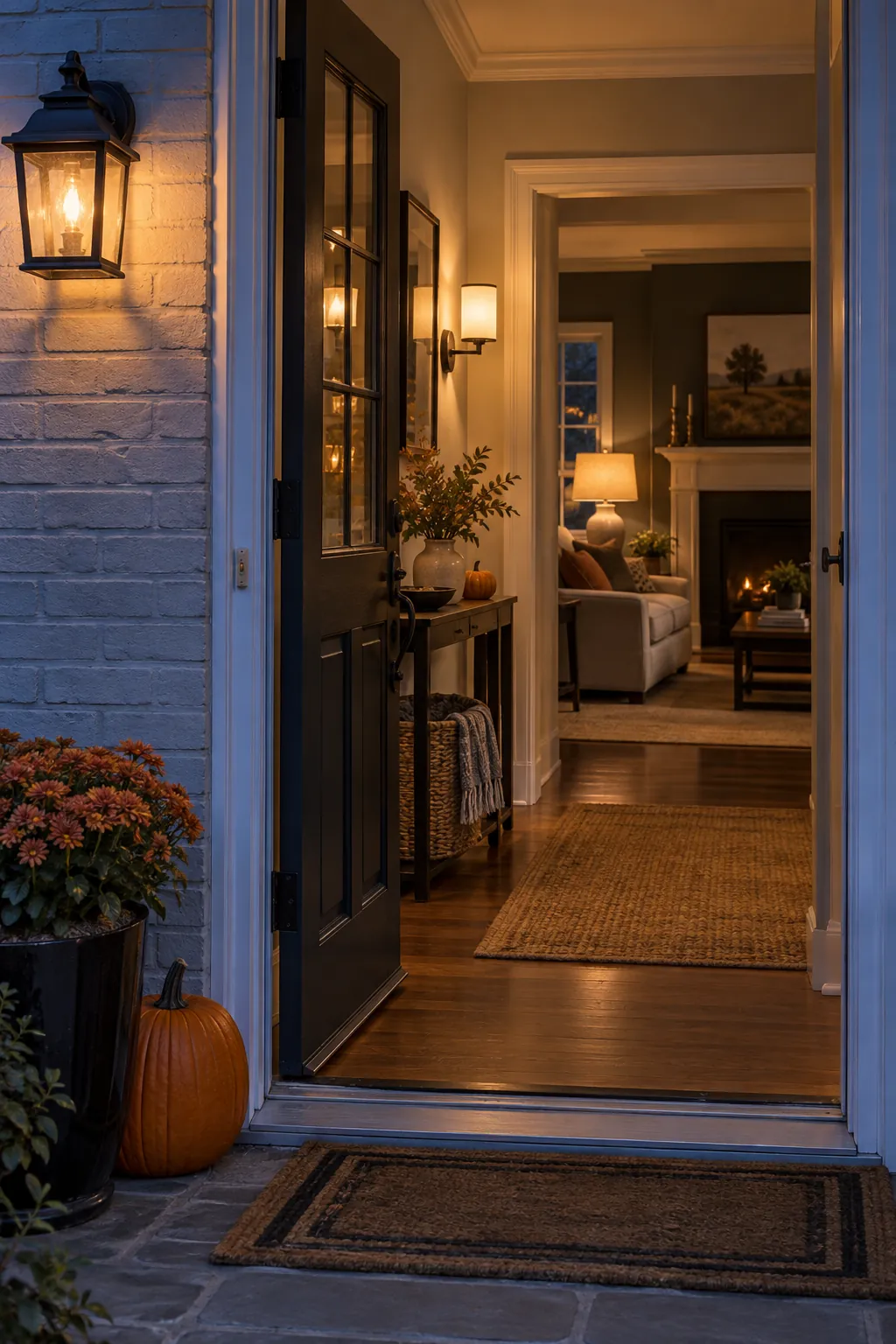
Warm lamps in the living room can relate to a sheltered lantern near the entrance. Battery candles can echo that glow on a shelf without bringing flame close to paper or fabric. Test the view at the actual hour guests will arrive; daylight planning can hide an evening mismatch.
Give the Living Room Its Own Focal Point
The living room should feel like the destination, not a copy of the porch. Concentrate its strongest seasonal arrangement at the mantel, coffee table, or one shelving bay. Then let smaller echoes appear near seating. Guests can enjoy the detail while still using the room comfortably.
If the entry already features a dramatic wreath, consider a different expression of the same palette inside. A dark ceramic bowl with rust foliage may make more sense than another wreath. The link remains obvious while the room gains its own reason to look around.
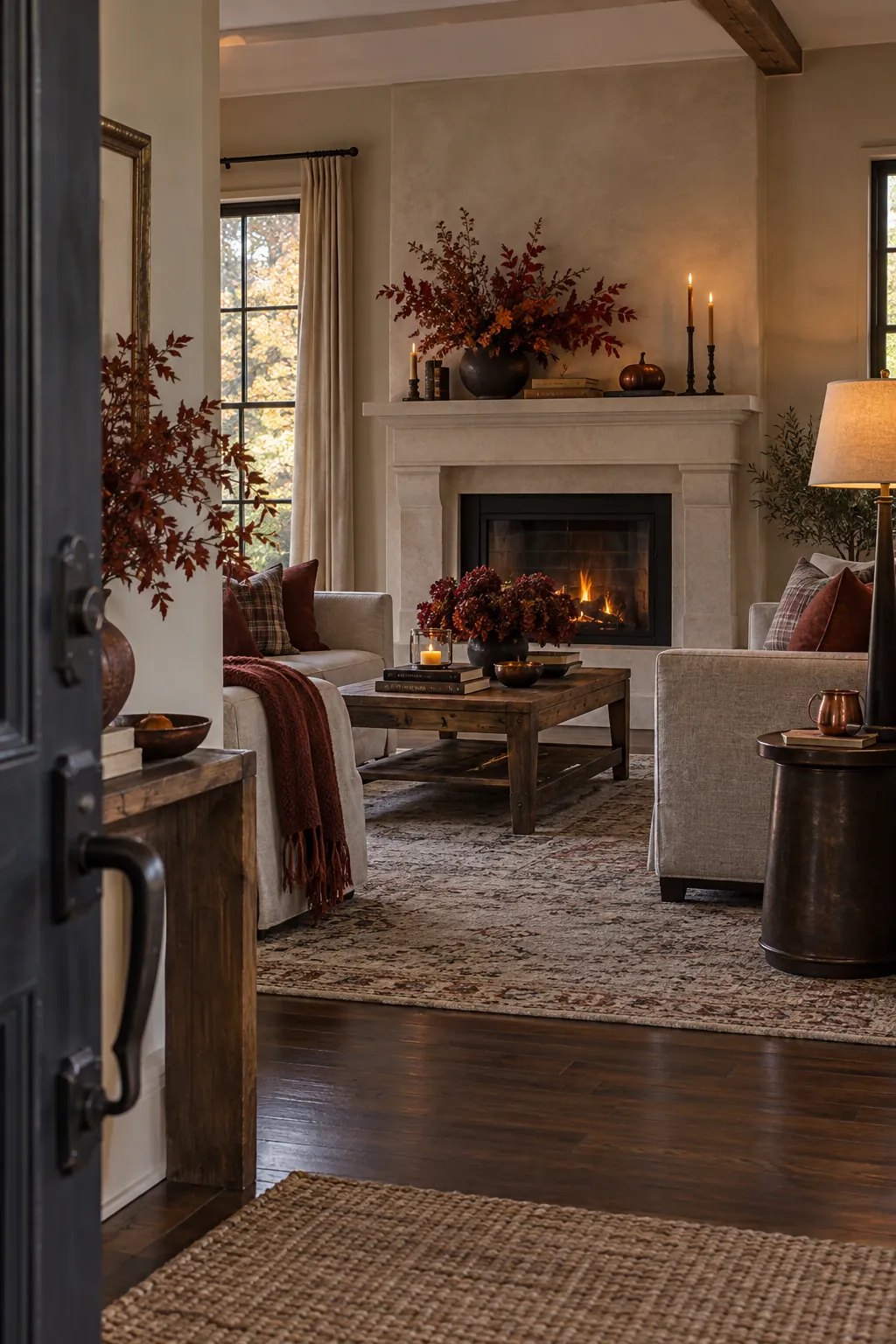
Watch the sightline from the door. The main living room piece should be visible enough to pull people inward, but it should not block a lamp, seat, or conversation route. An attractive focal point still has to share the room with daily life.
Walk the Route and Edit What Competes
Once everything is in place, enter the home as a guest would. Pause at the door, set down an imaginary bag, and move to a seat. At each stop, identify the one repeated cue you can see and any object that distracts from it. Remove competing pieces before adding more.
A coherent Halloween home does not require every surface to be seasonal. Quiet stretches of wall and useful empty tables help the repeated colors and forms register. If one room feels disconnected, move a small accent first rather than redecorating the whole space. The final test is whether the route feels natural when people actually use it.