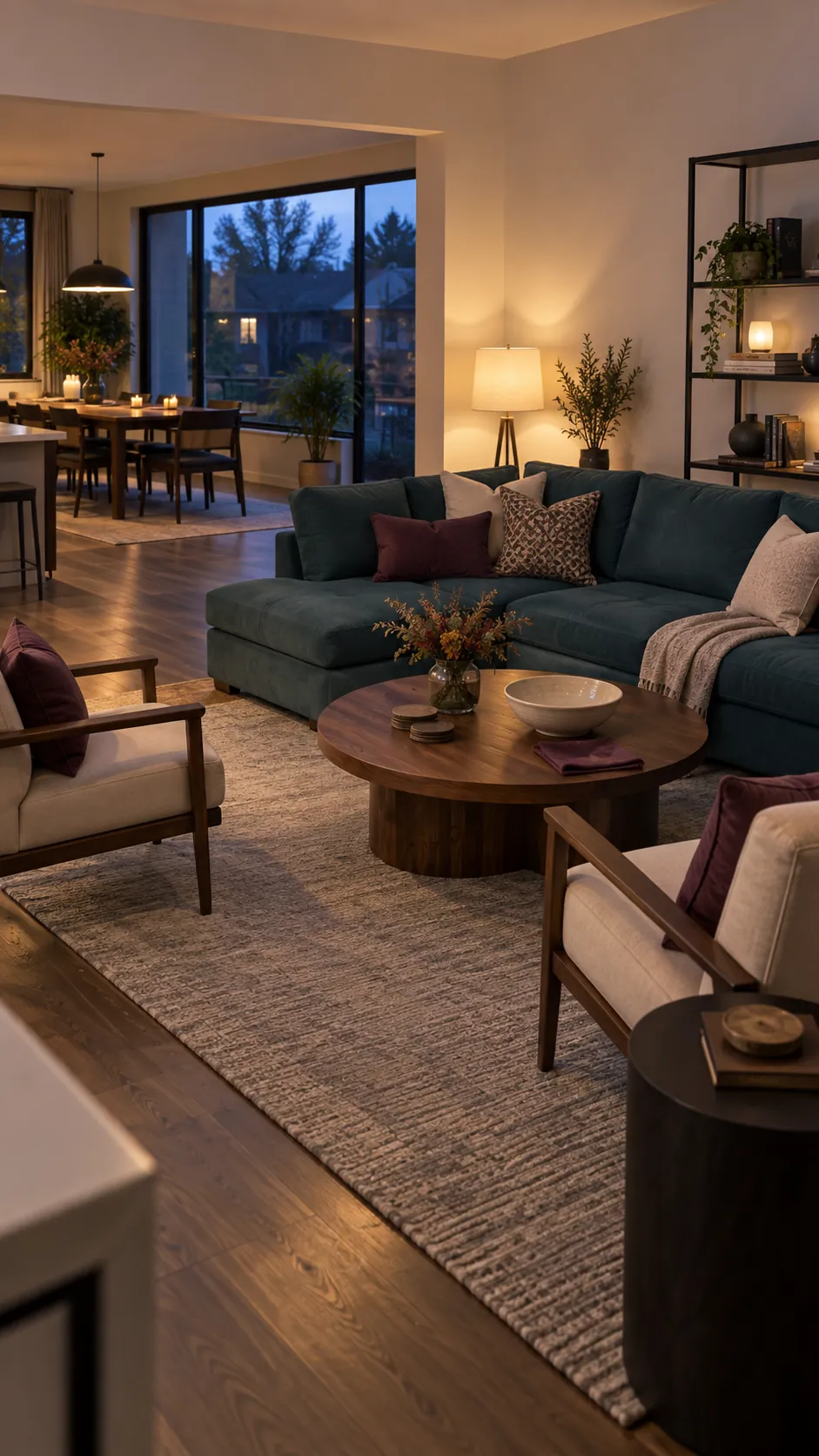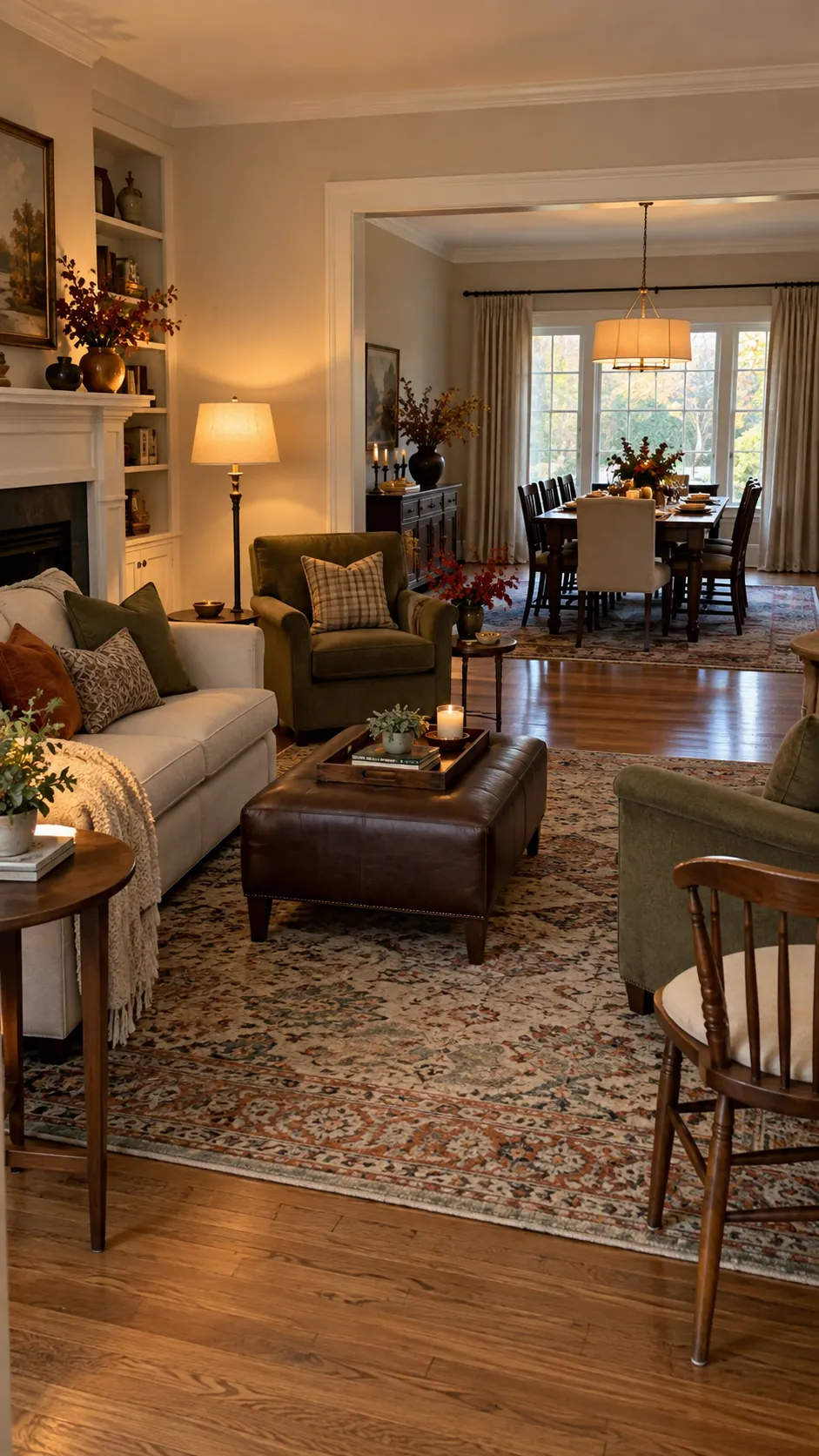
The guest list has grown, but the living room has not. The practical question is where people can sit, talk, and move between the meal and the gathering without feeling packed into a waiting area. Start with actual seats and walking paths, then bring in only the pieces the room can hold.
Count Real Seats Before Moving Furniture
Walk through the room and count places where an adult can sit comfortably for a full conversation. A narrow decorative stool and a firm chair do not serve the same guest equally well. Make a second count for short visits before and after dinner. The difference tells you how many temporary seats to borrow instead of filling the room with unnecessary furniture.
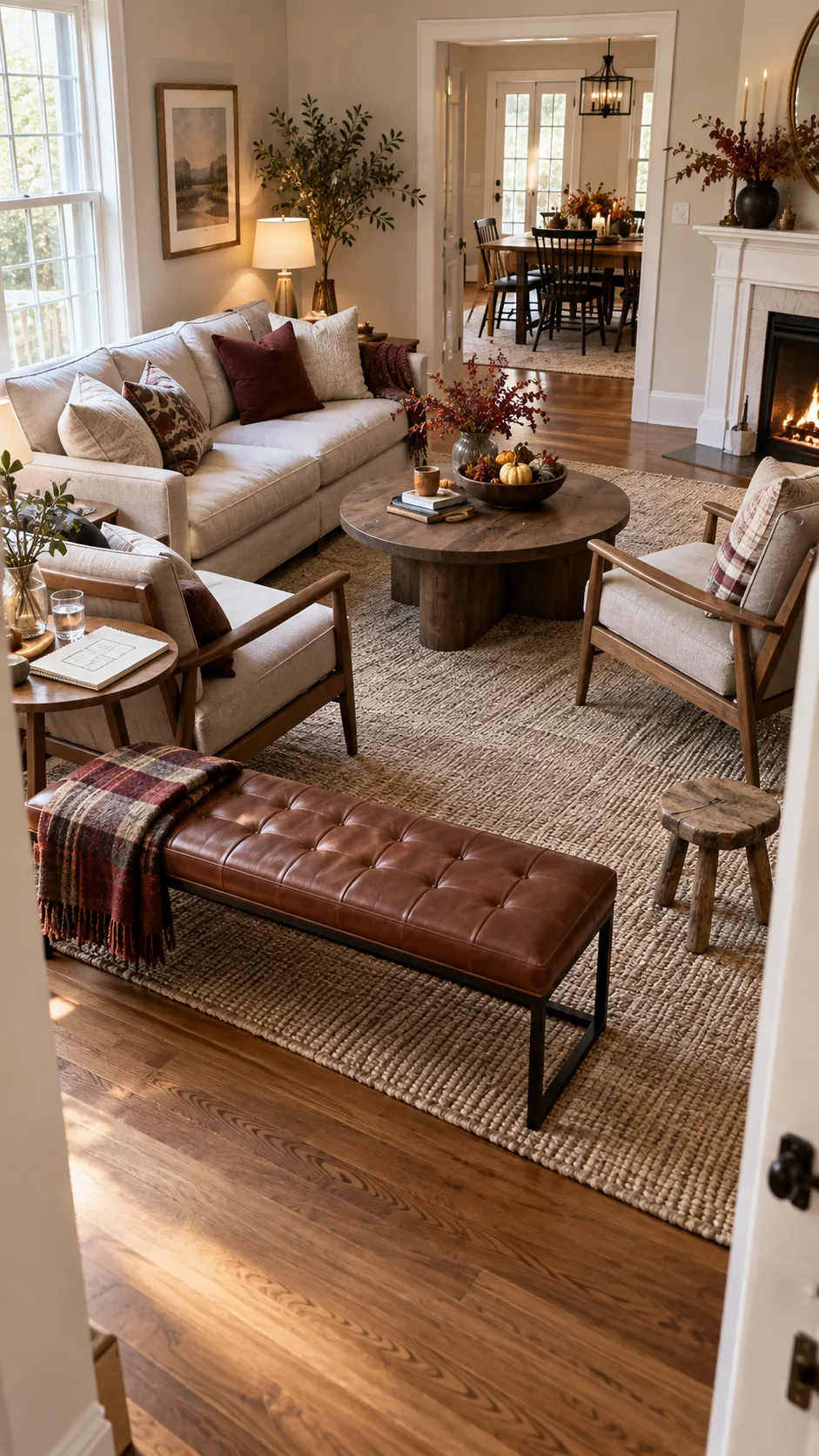
Float the Sofa to Open a Walking Lane
A sofa pressed against the longest wall is not always the best use of a crowded holiday room. Pull it forward only if a clear route can run behind or beside it. The change can make space for a chair at the far end without blocking the entrance. Test the position while carrying a plate to see whether the lane is genuinely usable.
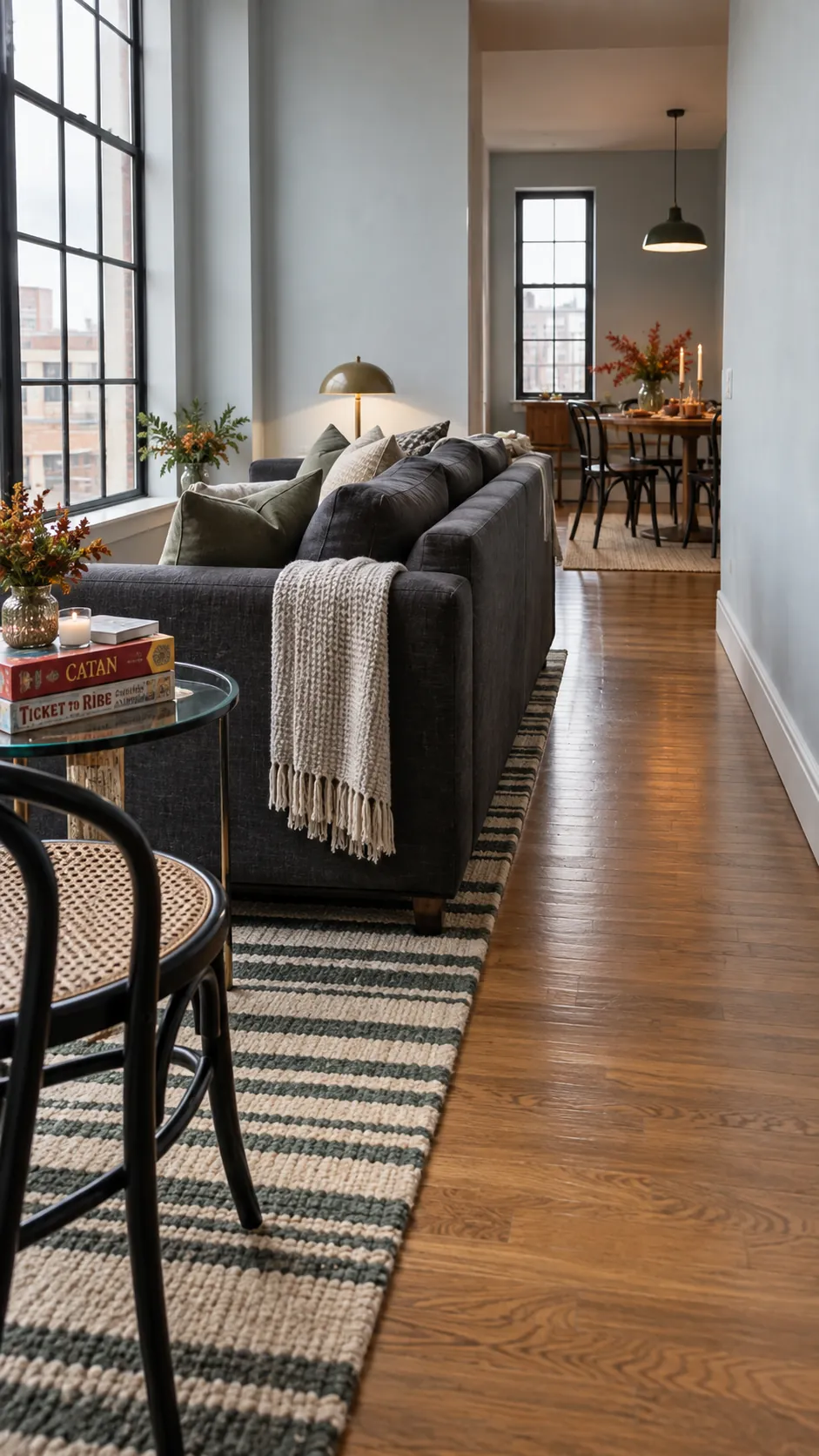
Turn Two Chairs Toward the Main Sofa
Place a pair of chairs opposite the sofa rather than lining every seat against a wall. Guests can hear one another without twisting toward a television. Keep enough space between chairs for someone to enter and leave the group. If one chair is heavier, angle it near a stable side table so it feels intentionally placed.
Borrow Dining Chairs for the Welcome Hour
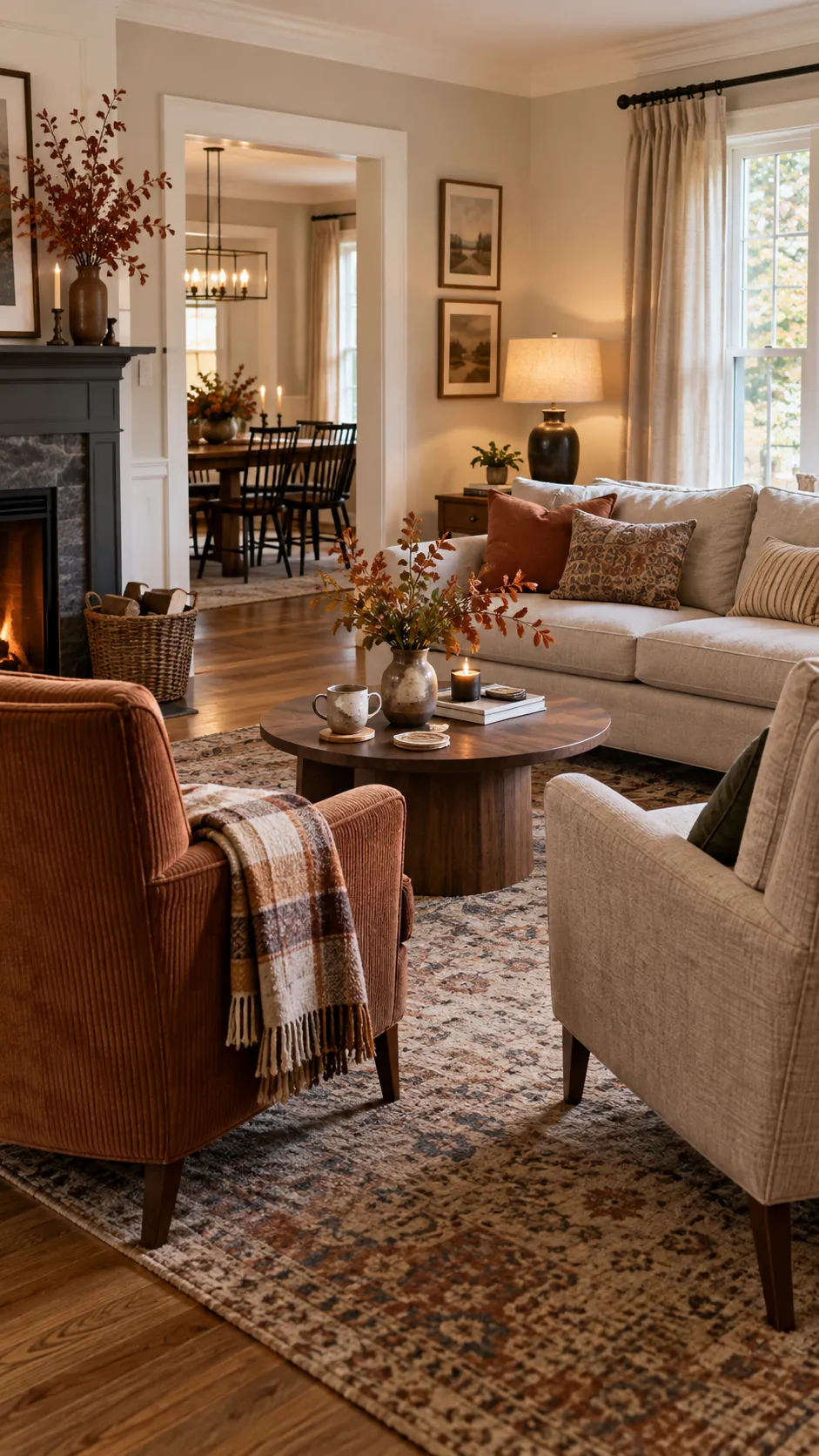
Dining chairs often provide the quickest extra seating before the meal. Bring only the number needed into the living room and leave the rest ready at the table. Choose the sturdier chairs for older guests and put a small cushion on a hard seat if it helps. Move them back before dinner so no one has to carry furniture through a crowd.
Use a Bench Where the Wall Is Straight
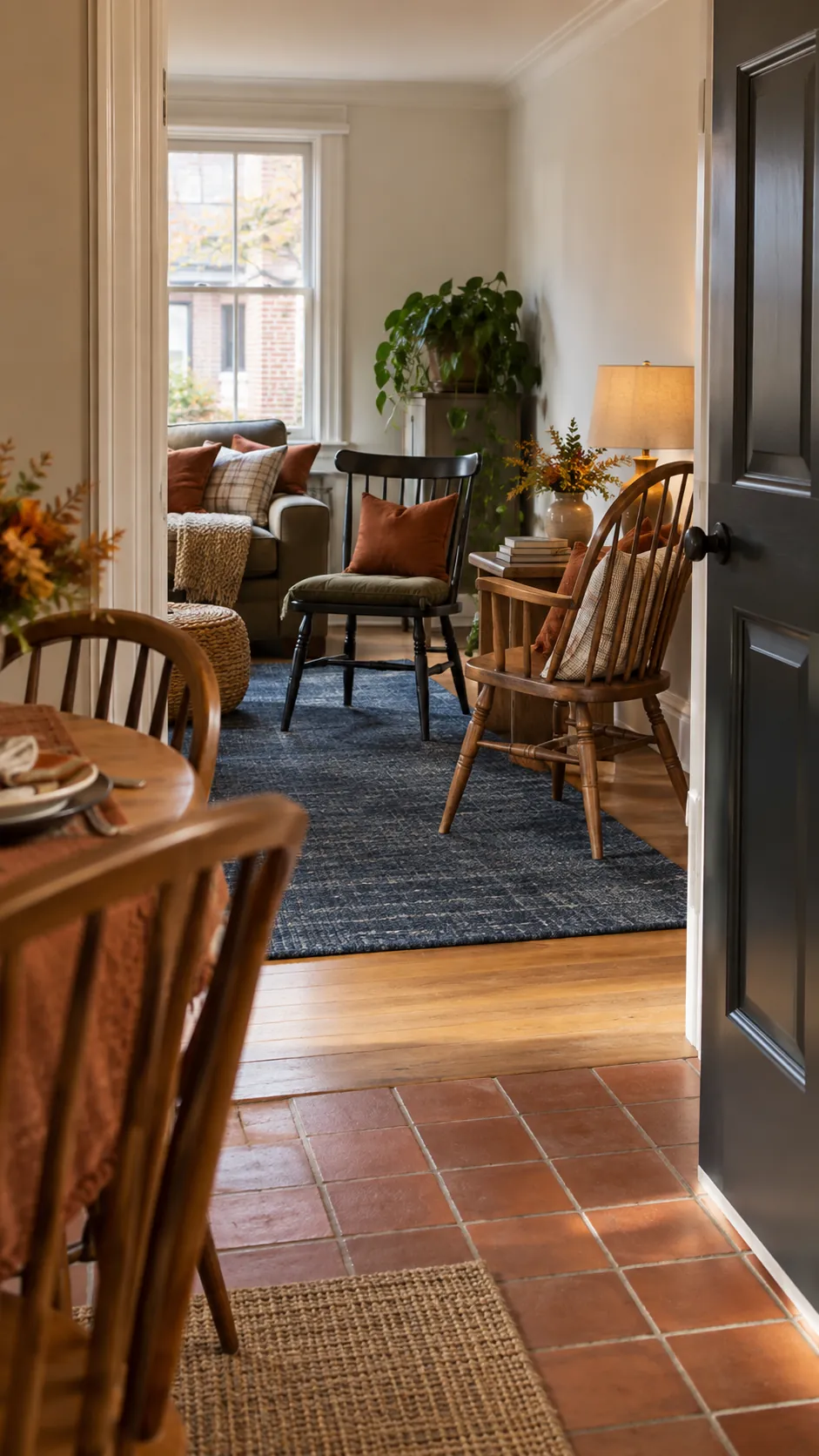
A backed bench can seat two guests along a clear wall without the visual bulk of two armchairs. Place it where people can join the main conversation rather than facing an isolated corner. Check that the bench remains stable when both people stand. Add a nearby table for drinks so the guests are not balancing cups on their laps.
Make an Ottoman Earn Its Place
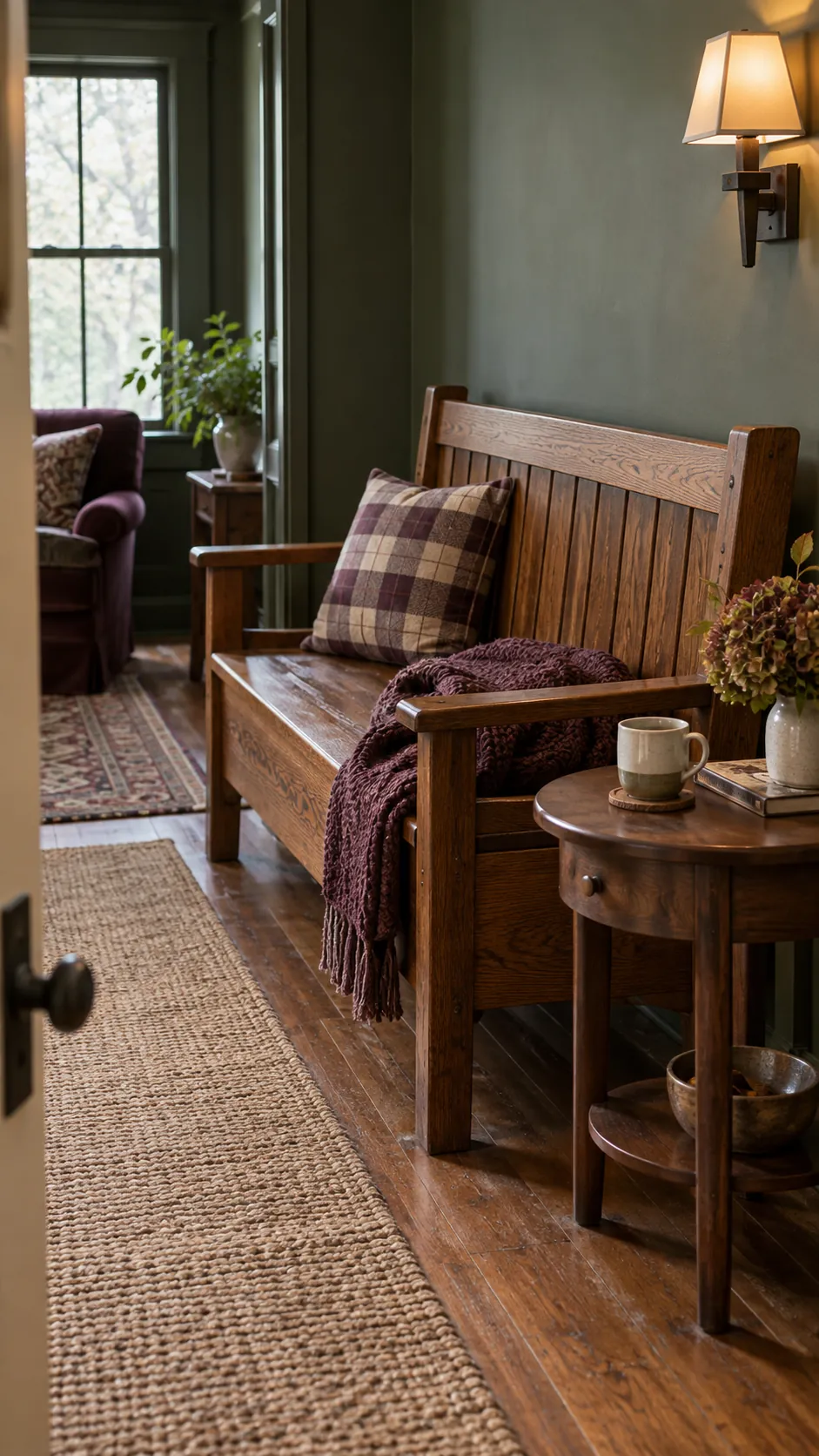
A sturdy upholstered ottoman can serve as a flexible perch when more relatives arrive. Choose one with enough support to sit on and a height that works beside the existing seating. Move trays and decorations off it before offering the seat. Keep it out of the circulation route once someone is using it.
Shrink the Coffee Table Footprint
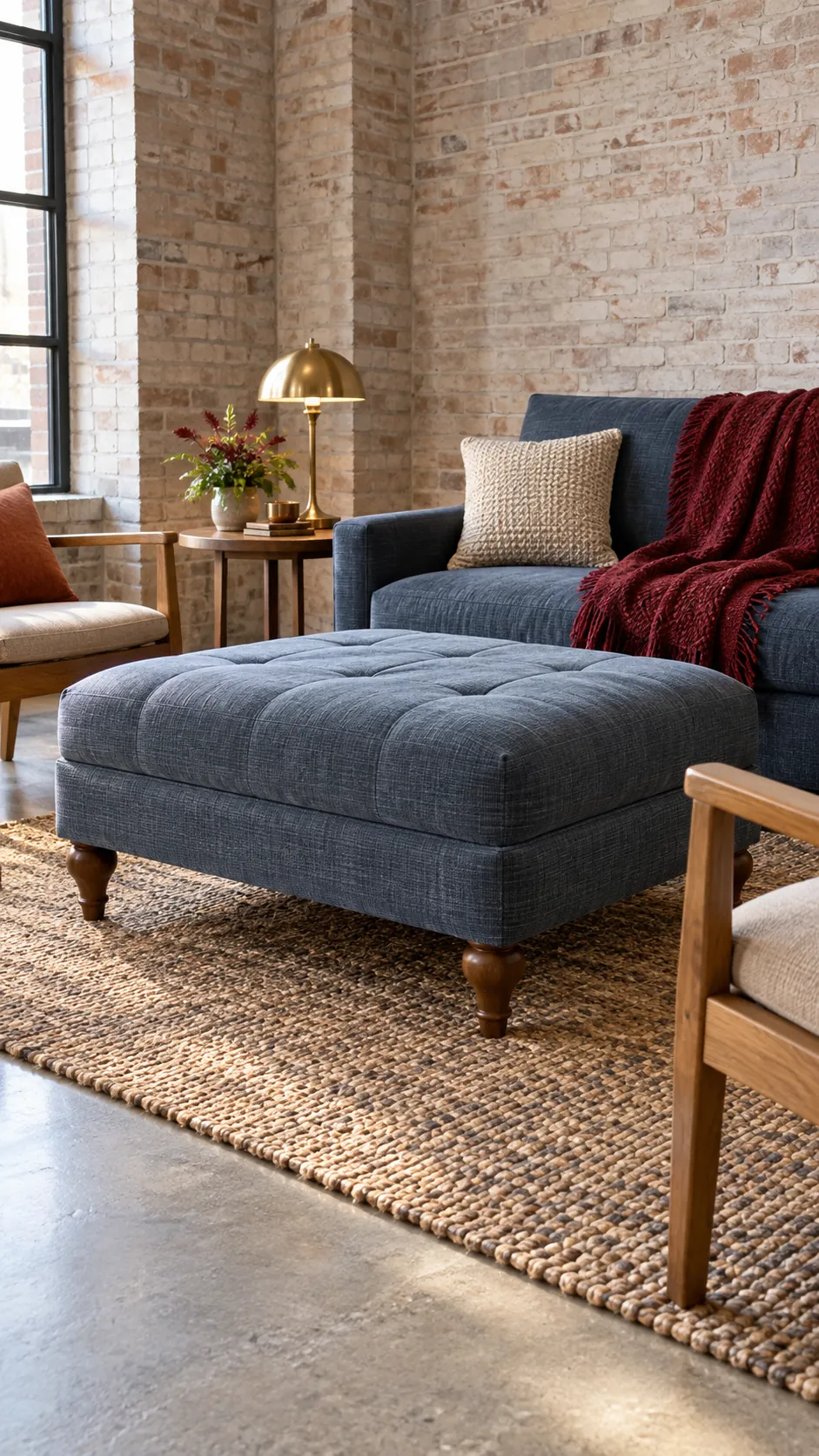
A large coffee table can consume the space needed for knees, chairs, and passing. Swap it temporarily for a smaller table or a pair of nesting pieces if the room allows. Guests still need a stable place for cups, so do not remove every surface. Watch the corners when adding extra chairs, especially if children will move between groups.
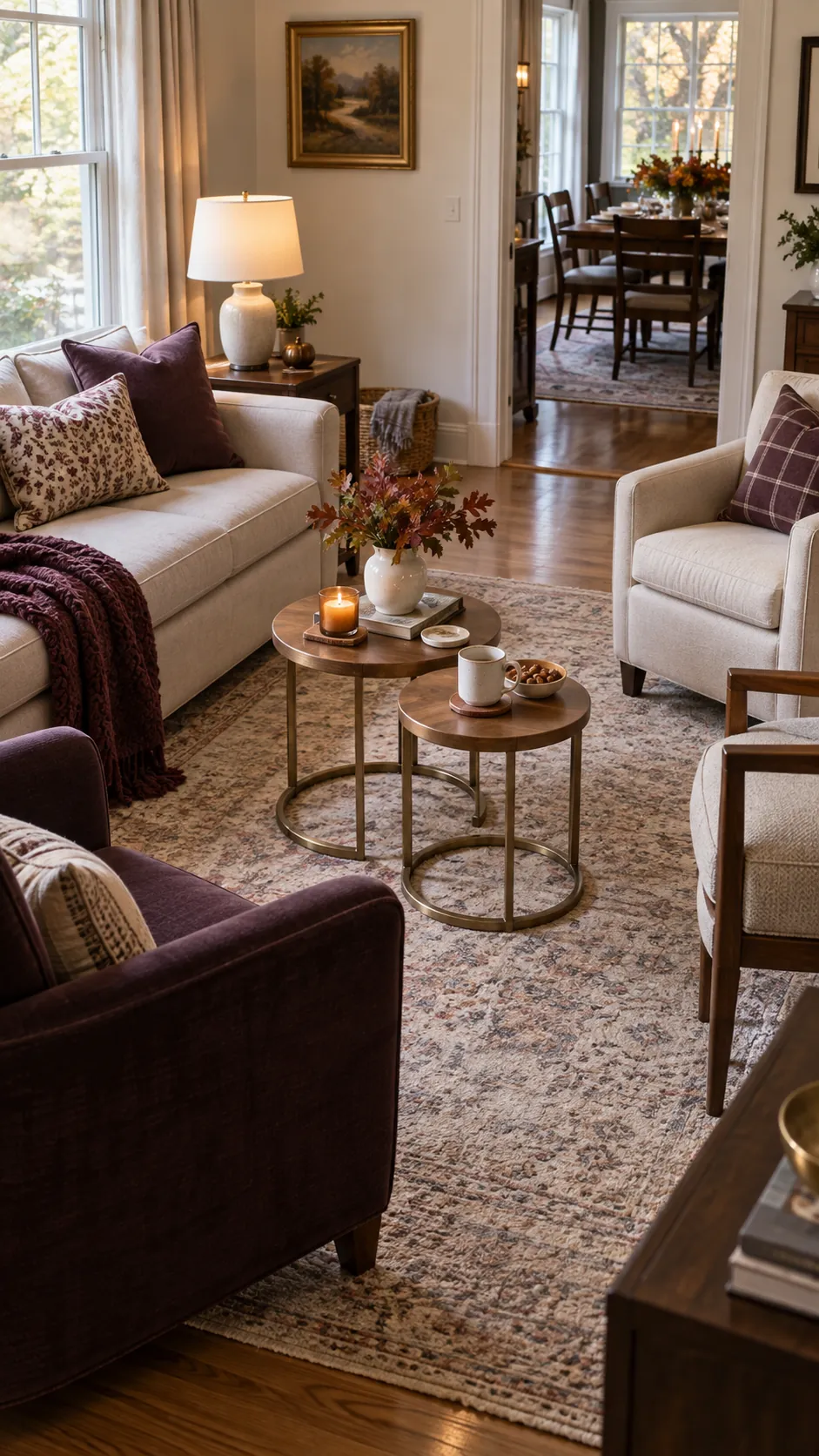
Create a Second Conversation Circle
An unusually large group rarely stays in one conversation all afternoon. Arrange a smaller cluster near a window or bookcase while keeping the main sofa group intact. Both areas should feel connected through sight and sound, not like a separate waiting room. Give the smaller circle at least one light and one table.
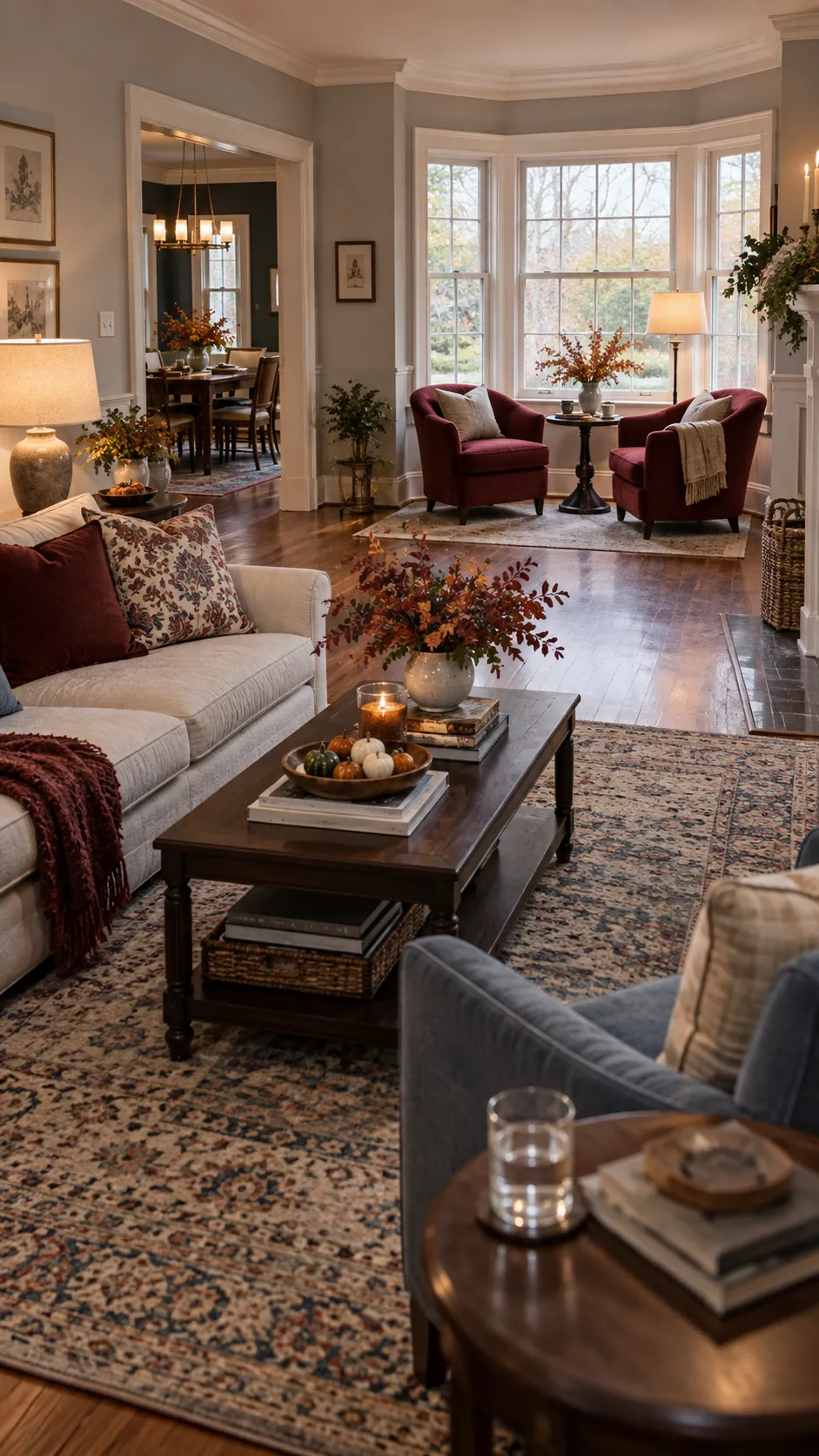
Keep the Route to Dinner Open
The busiest path runs between the sitting area and the meal. Mark that route with your own walk before guests arrive, then move side chairs or baskets that pinch it. A clear lane is especially valuable when someone carries a hot dish or helps a child. Leave the doorway itself free of decorative furniture.
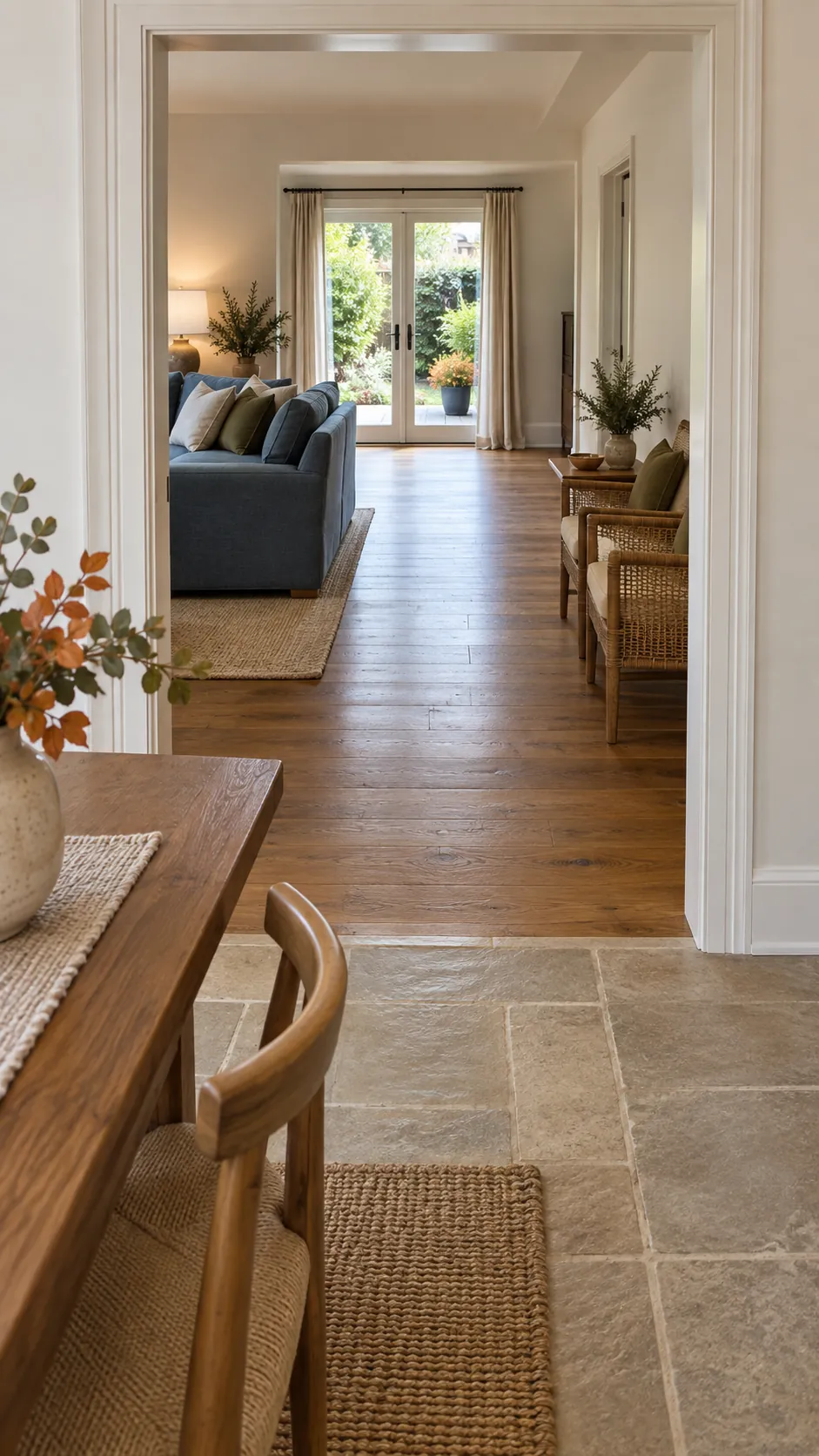
Set a Small Table Beside Every Cluster
When extra seats appear, drink surfaces become scarce. Add a compact stable table beside each conversation group rather than piling all cups on the coffee table. A stack of coasters and a small napkin supply can live there too. Keep tables far enough from chair arms that guests can rise easily.
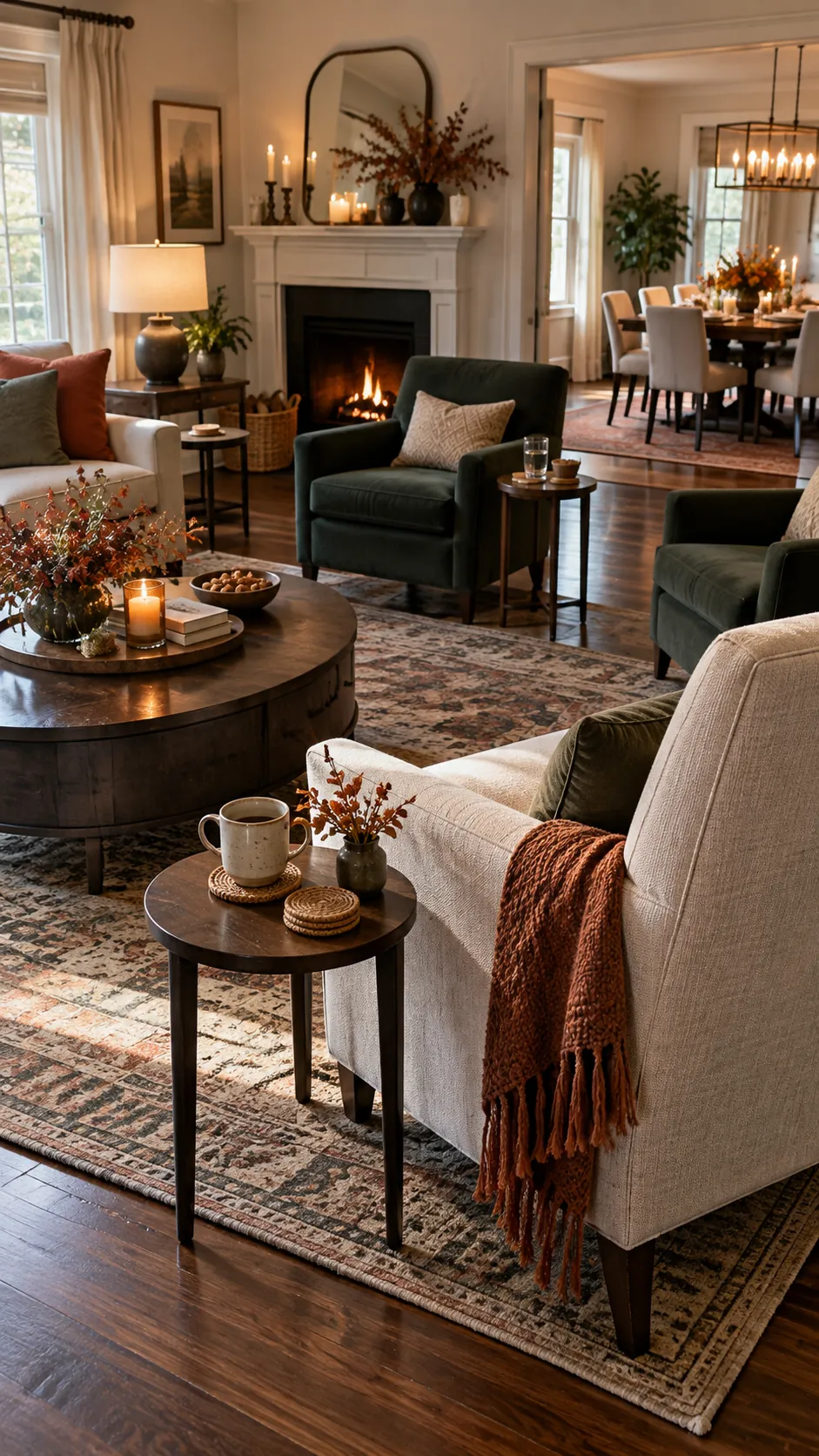
Place Drinks Outside the Seating Crush
A beverage station at the edge of the room keeps guests from gathering around the most crowded chairs. Use a surface that tolerates a spill and put cups before the dispenser. The station should be visible from the seating area without sitting in the main walking lane. Keep water available throughout the visit, not only at dinner.
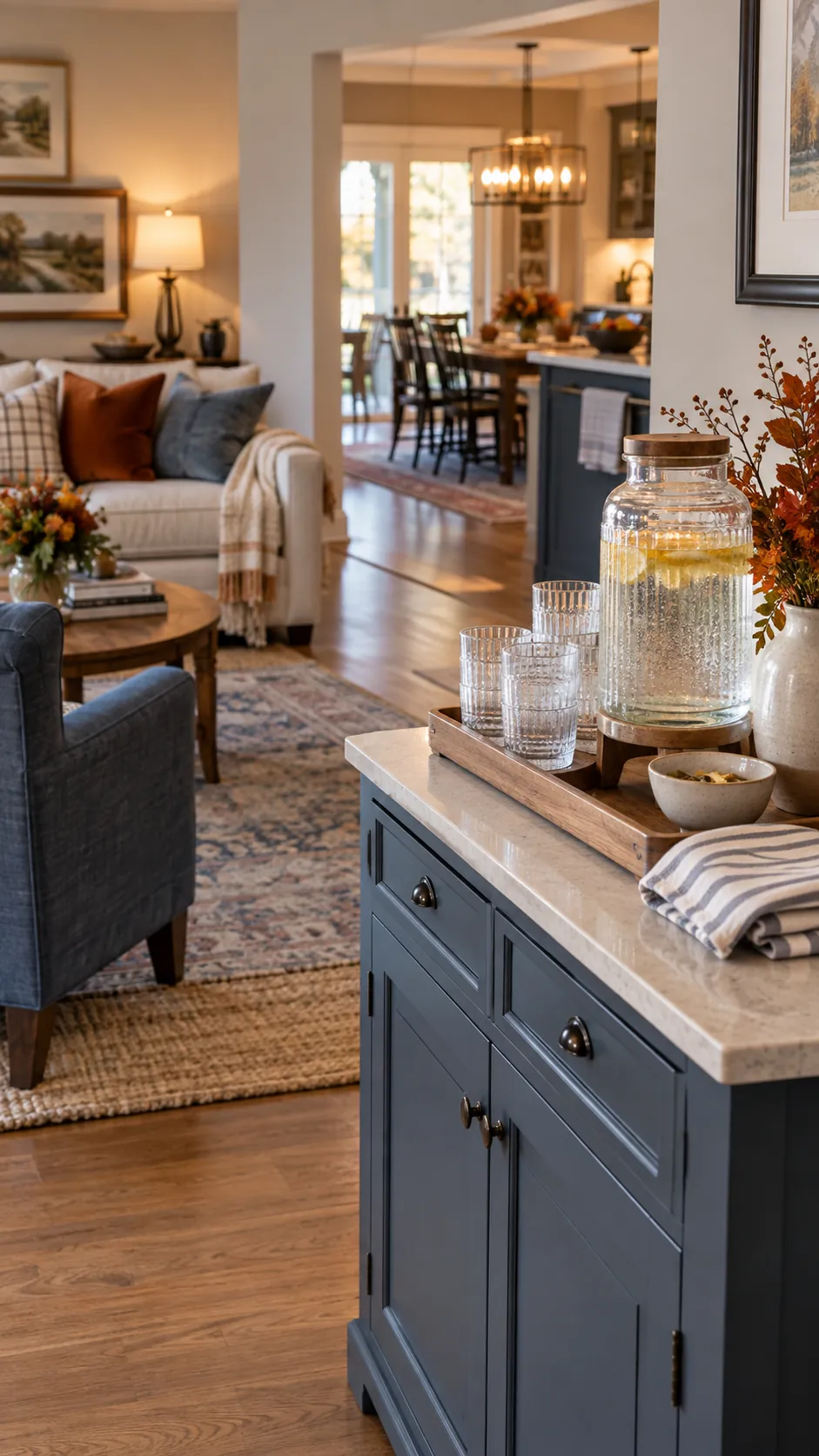
Move Coats Out of the Living Room
Coats draped over chairs quietly remove useful seating. Give outerwear a place near the entry or in a bedroom before anyone arrives. Provide a basket for small bags that would otherwise land on the sofa. A clear chair can then be offered immediately when the next relative walks in.
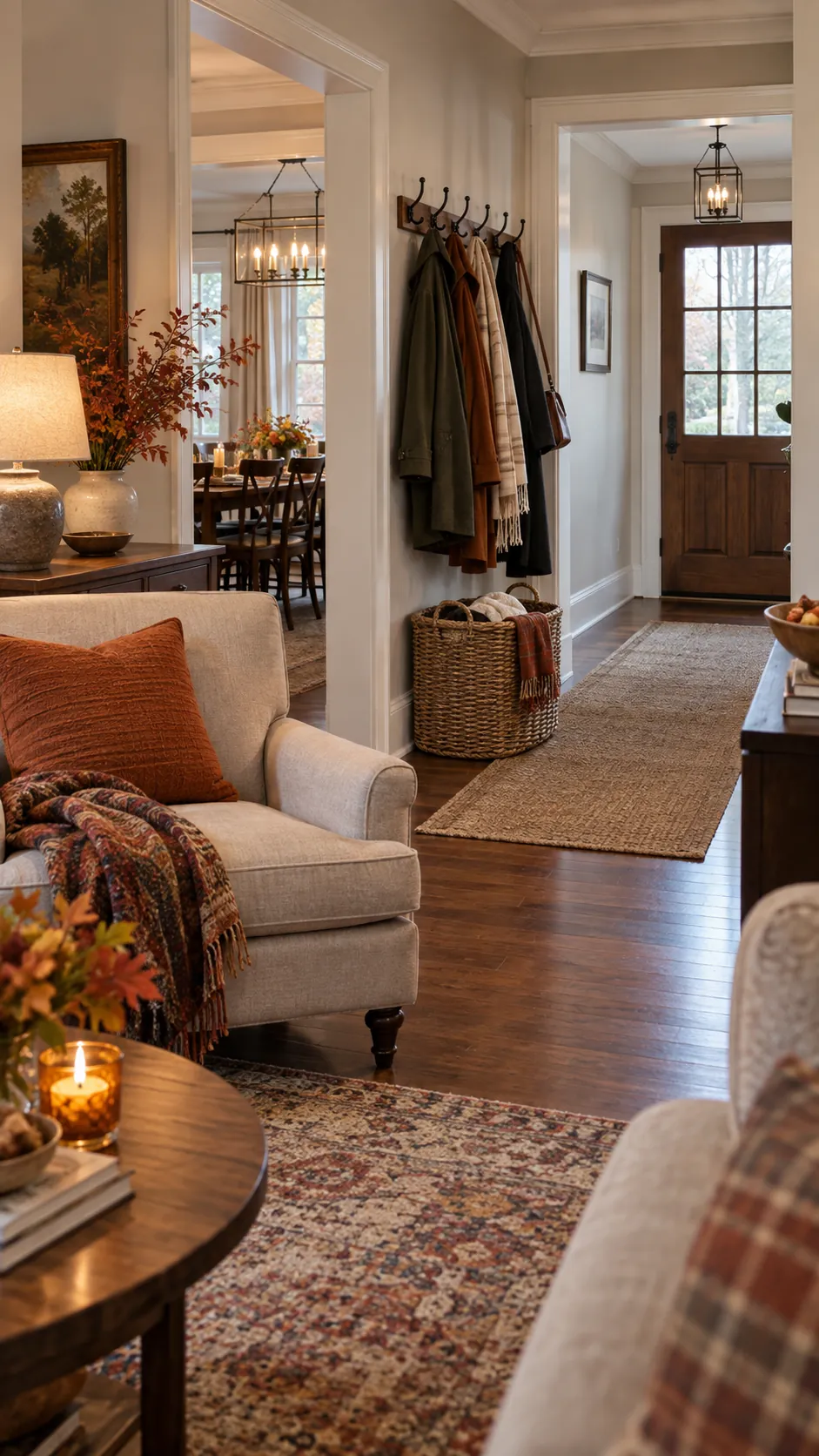
Let the Television Be Optional
Some households gather around a game or parade, while others want to talk. Angle one seat so it can face the screen without making every chair point toward it. Keep remote controls easy to find but do not let the television dictate the entire layout. The room should still work when the screen is off.
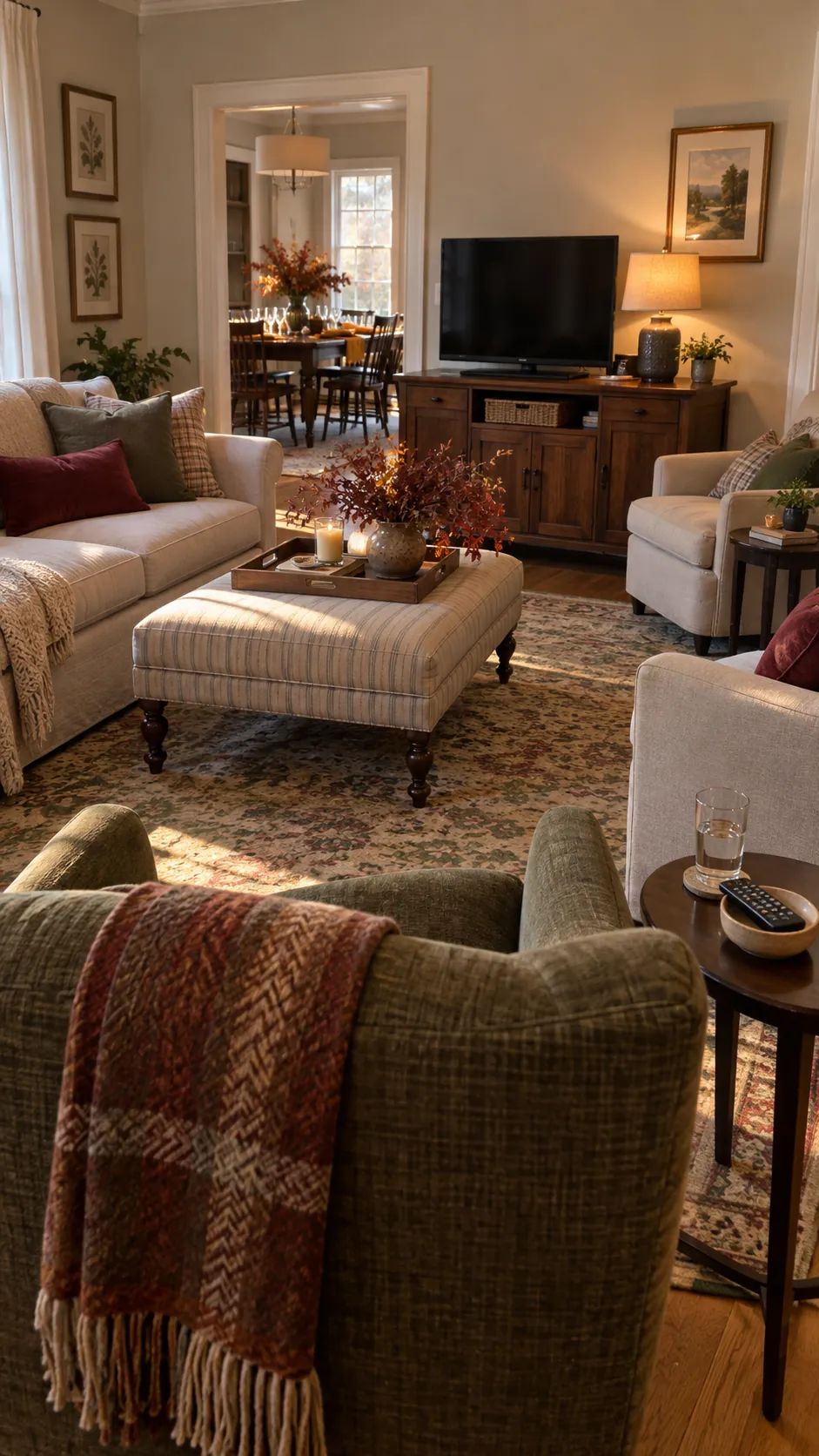
Light Faces as Well as the Room
One ceiling fixture may brighten the floor while leaving guests in shadow. Add a shaded lamp near the smaller seating group and another near the main sofa if needed. The light should let people read and recognize faces without glare in their eyes. Keep cords behind furniture where feet cannot catch them.
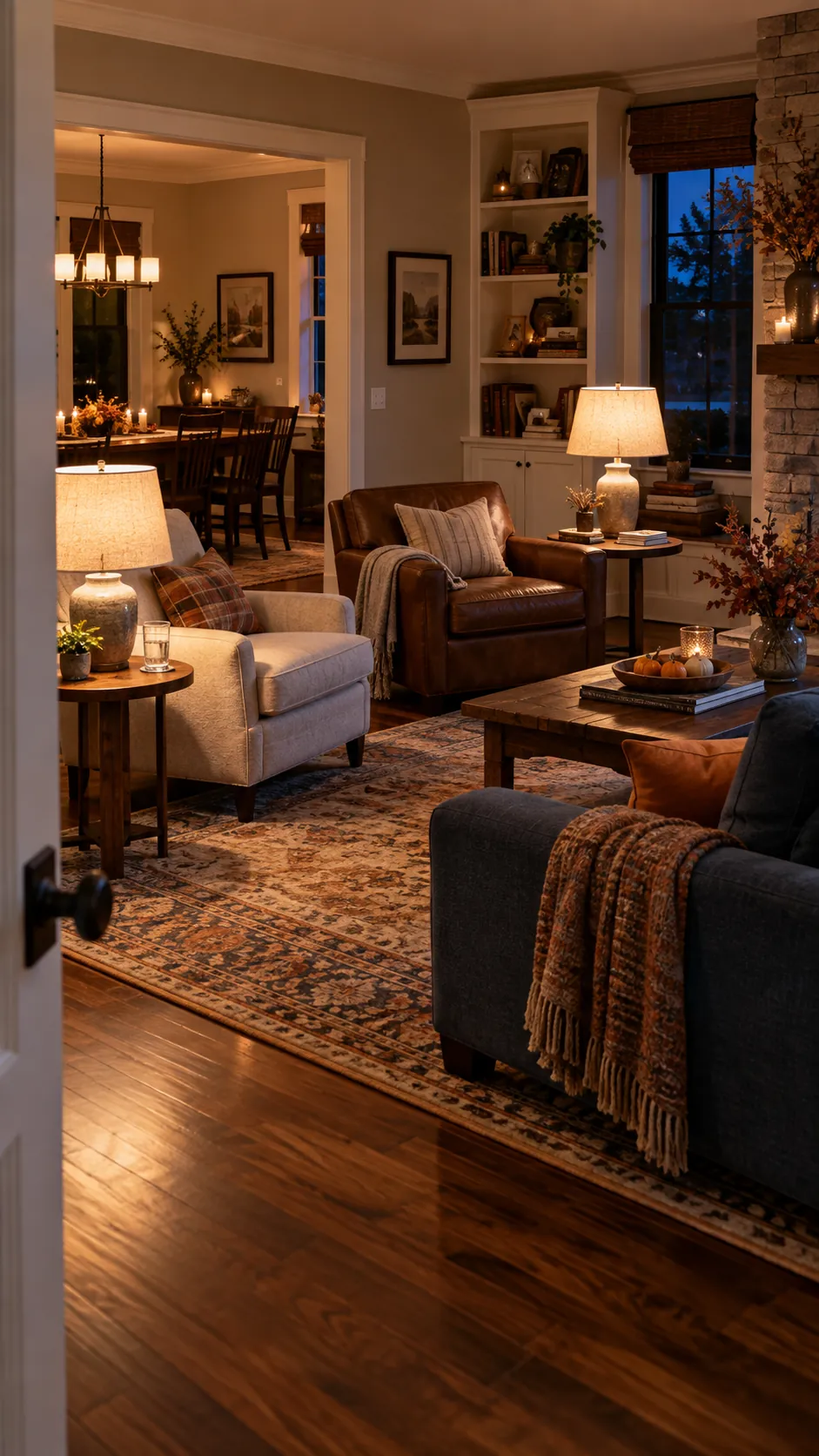
Offer a Throw Without Burying the Seat
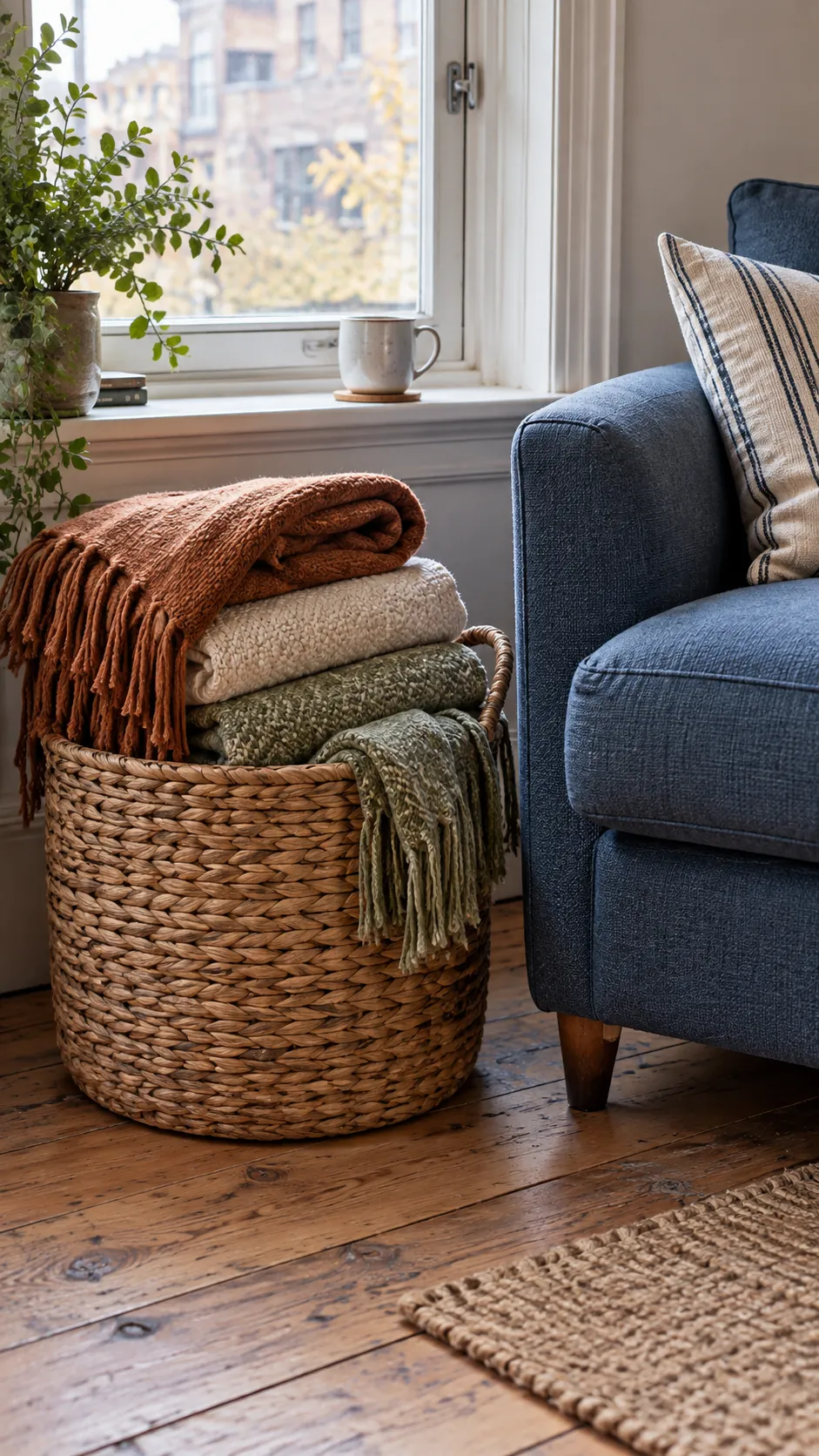
A folded throw can help a guest who feels cold, especially near a window. Keep it on an arm or in a basket rather than spread across a place someone might sit. Choose a washable fabric if children and food share the room. Leave the back of each seat available for an actual person.
Give Children a Safe Floor Spot
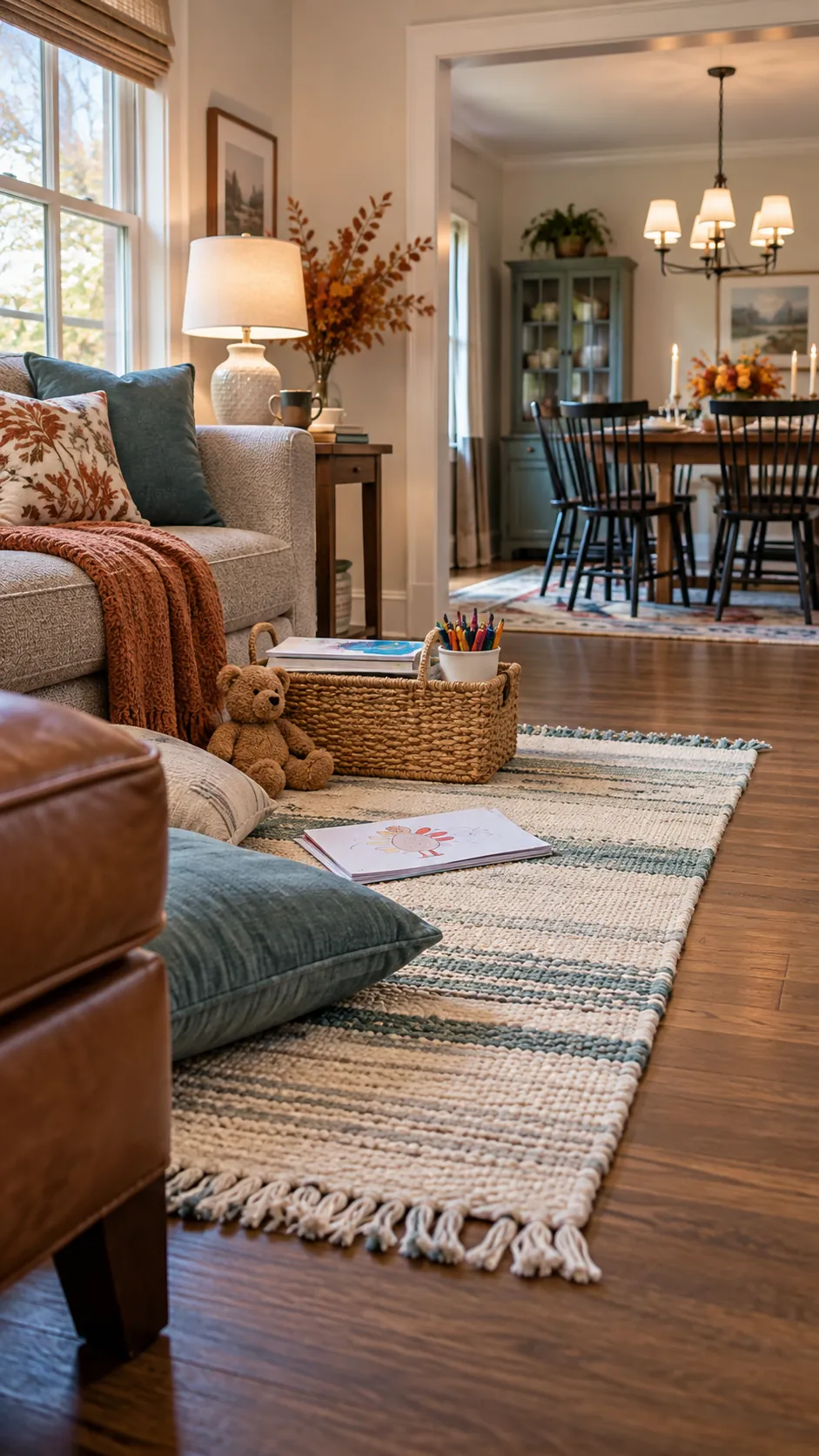
A small rug at the edge of the main conversation area can hold quiet games without taking over the path to dinner. Use a low basket for toys or drawing supplies and clear them before the meal. An adult should have a direct view of the spot from a seat. Keep small pieces away from very young children.
Choose an Easy Seat for Guests Who Need One
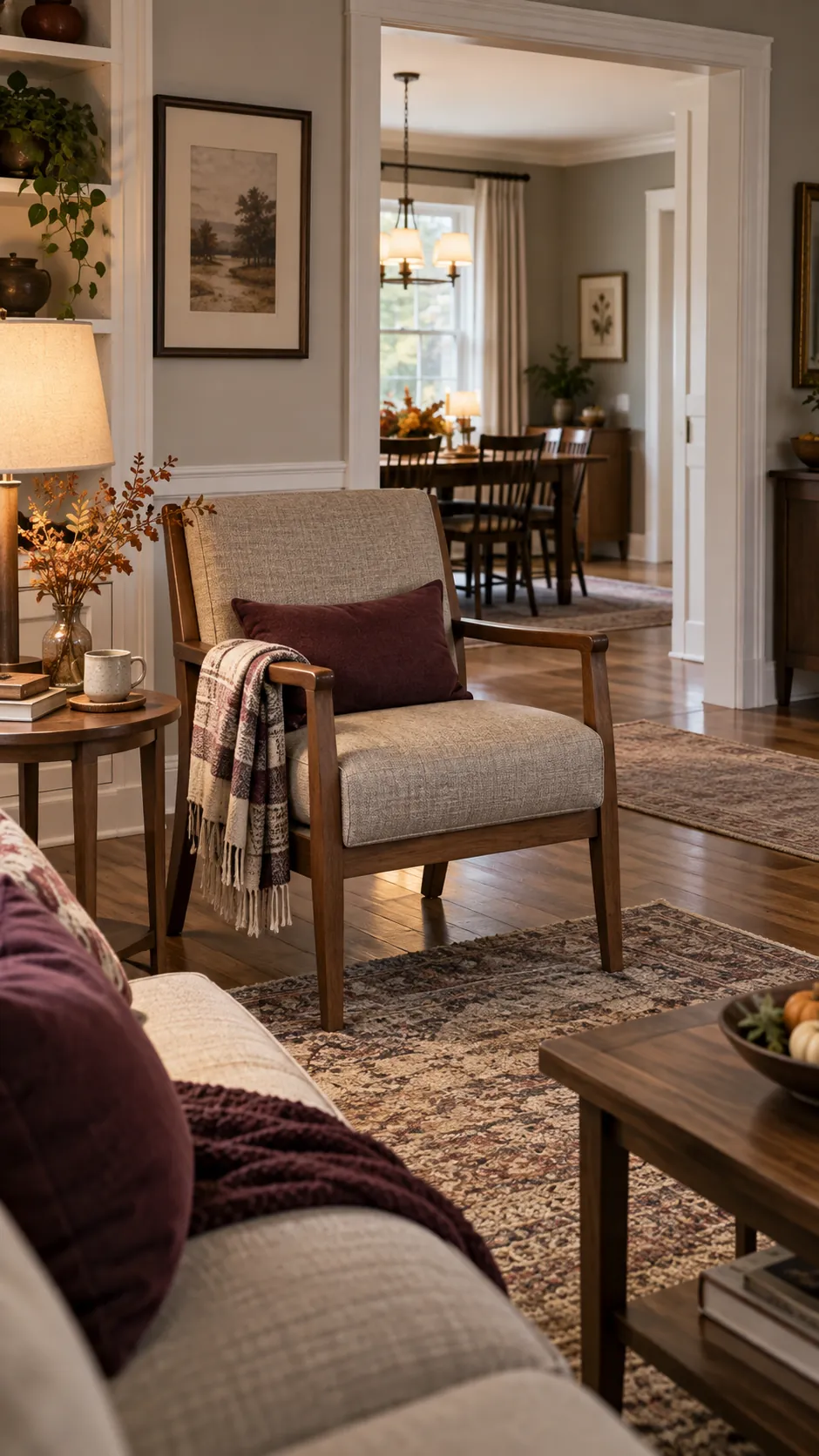
Set aside a chair with arms and a stable seat for someone who may find a low sofa difficult to leave. Put it near the conversation rather than in a distant corner. The route to a bathroom and the dining area should remain simple from that chair. A nearby table and good light make the seat comfortable for a long afternoon.
Keep One Quiet Chair Available
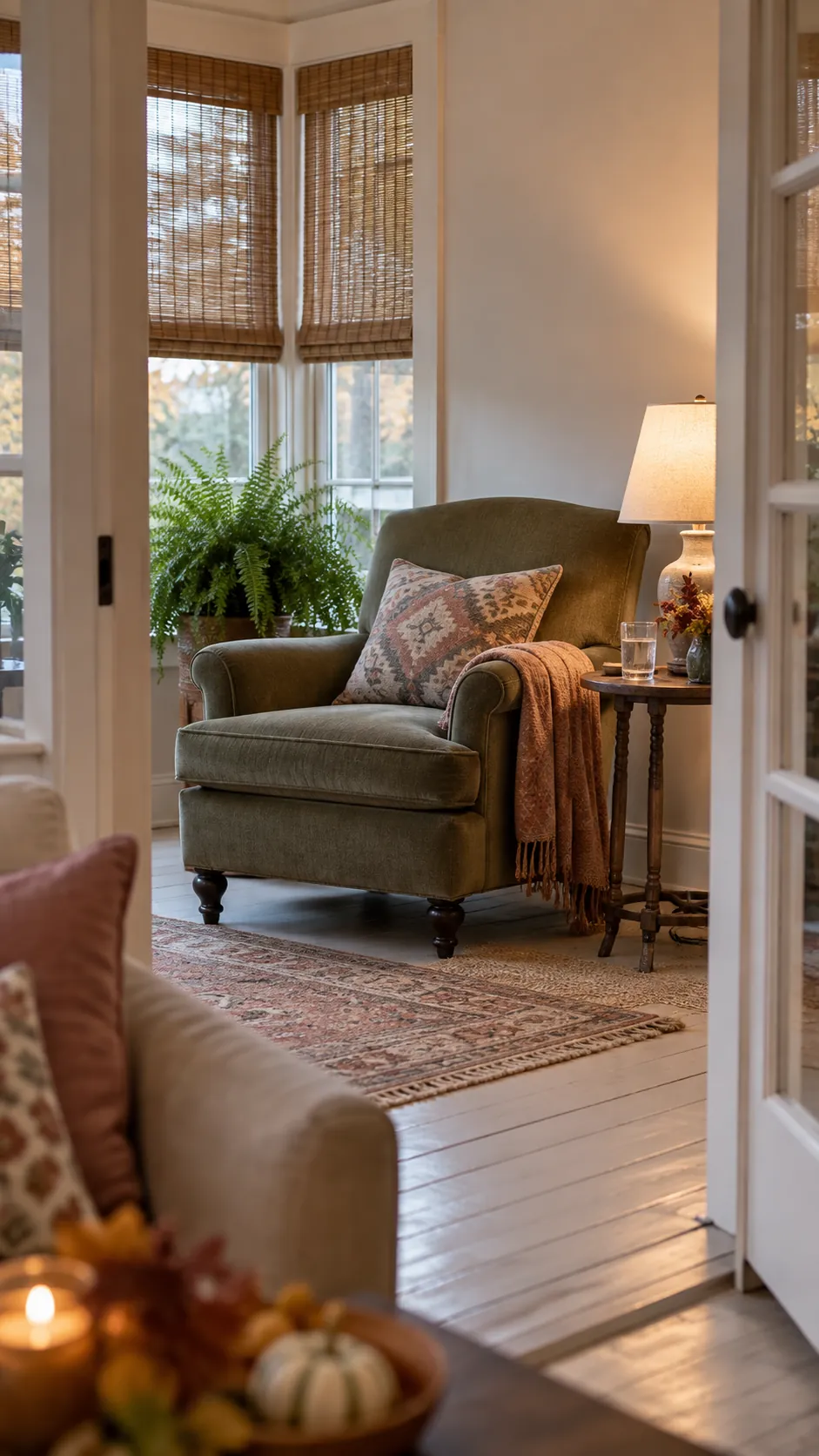
Large family gatherings can be lively even when everyone gets along. A chair near a lamp but slightly outside the main cluster gives someone room to rest. Turn it toward the group so a guest can still participate. Avoid treating it as overflow storage for coats or serving trays.
Add a Perch Near the Kitchen Connection
In an open plan home, a chair at the edge between kitchen and lounge lets the cook join conversation between tasks. It should not occupy the route used to carry dishes. A compact chair with a back works better than a wobbly stool for a longer visit. Give it a view of the main group rather than the sink.
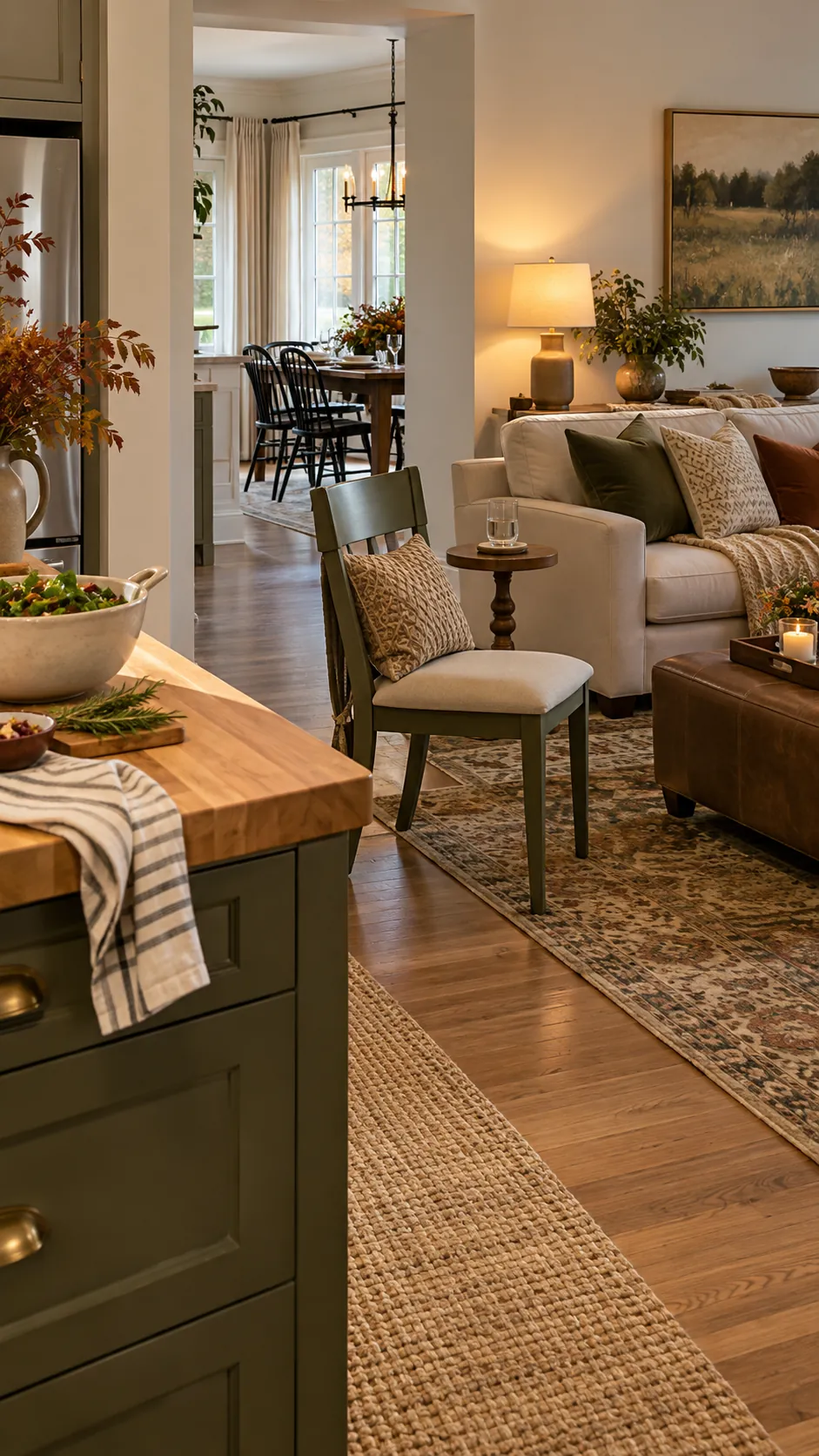
Plan the Reset After the Meal
The living room may need a different arrangement once everyone leaves the table. Keep one borrowed chair nearby and know where temporary pieces will return. Clear used cups and small tables before moving furniture. A short reset can open the room for dessert and conversation without asking guests to navigate a maze.