The refrigerator feels smaller when a holiday meal has to share it with a normal week of groceries. A covered roasting pan consumes an entire shelf, ingredients hide behind drinks, and leftovers arrive just when every slot is full. The fix begins before cooking: assign space by what must stay cold and by when you will use it.
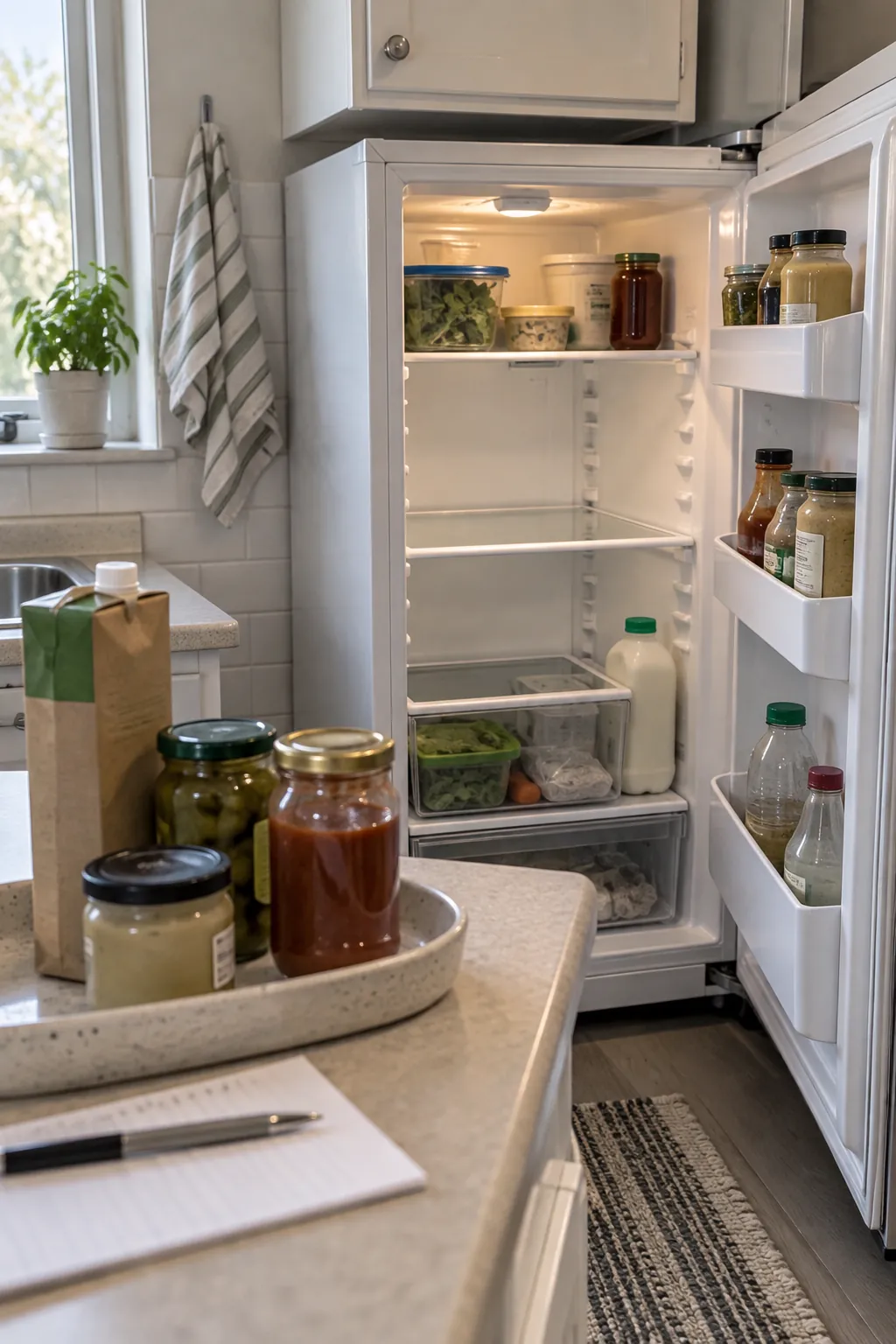
Measure the shelves and the food containers you already own. Keep the refrigerator at a safe cold temperature, leave room for air to circulate, and avoid treating the door or a crowded top shelf as a place for raw poultry. A little fridge space planning now is easier than trying to rearrange everything while dinner cools.
Clear space before the holiday grocery trip
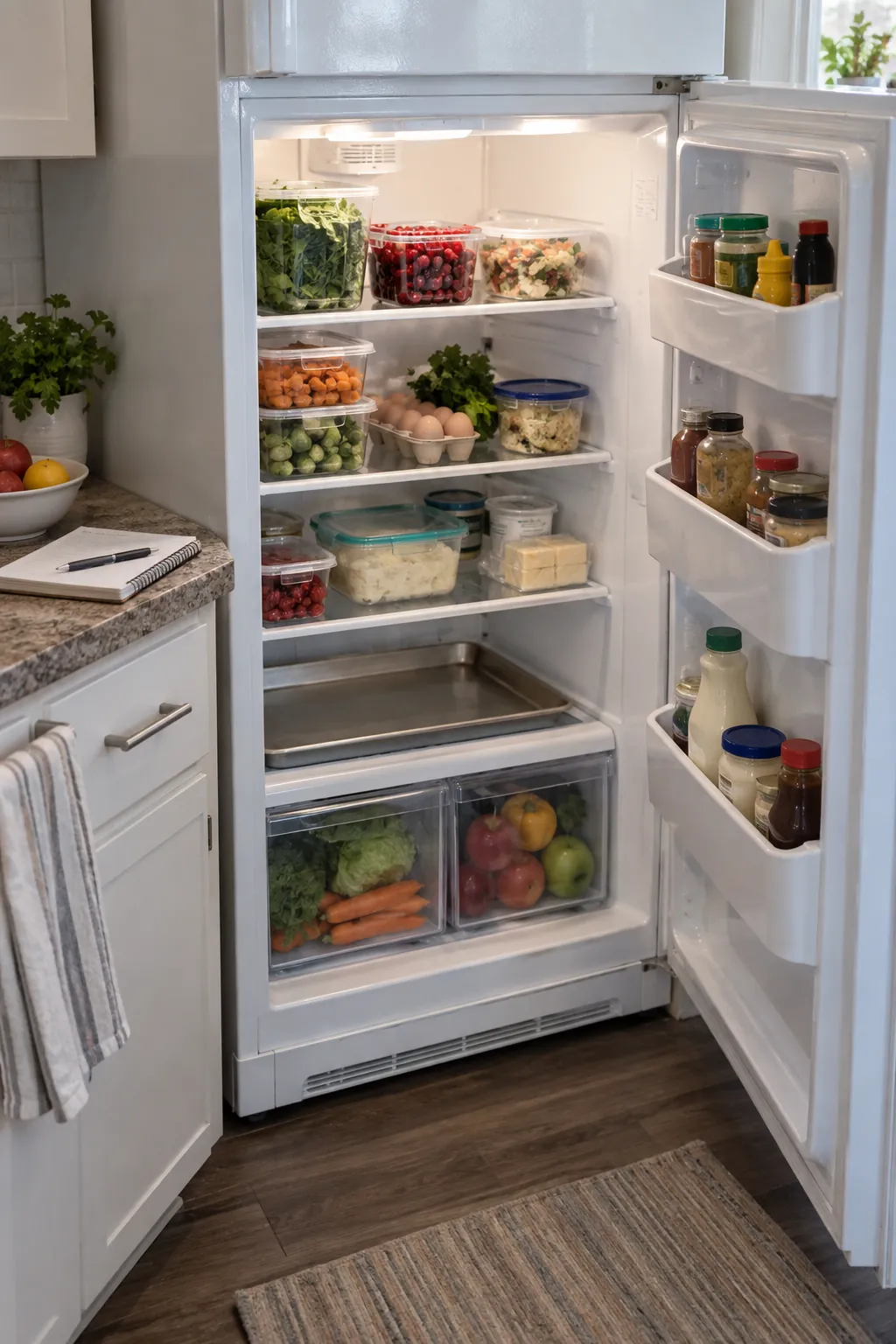
Take out one shelf at a time and check dates, condition, and what you will actually use this week. Discard spoiled food, consolidate duplicate condiments when safe, and return only items that belong in the refrigerator. Move unopened shelf stable drinks and pantry goods out of cold storage if their labels allow it, but keep foods that require refrigeration cold.
Wipe spills so a new tray or container can sit flat. Make a rough inventory of the space you reclaimed instead of filling it immediately with a large shopping trip. In small fridge organization discussions, people often identify pans, cartons and forgotten leftovers as the real space consumers; that is a useful prompt to inspect your own shelves.
Reserve a safe lower shelf for the turkey
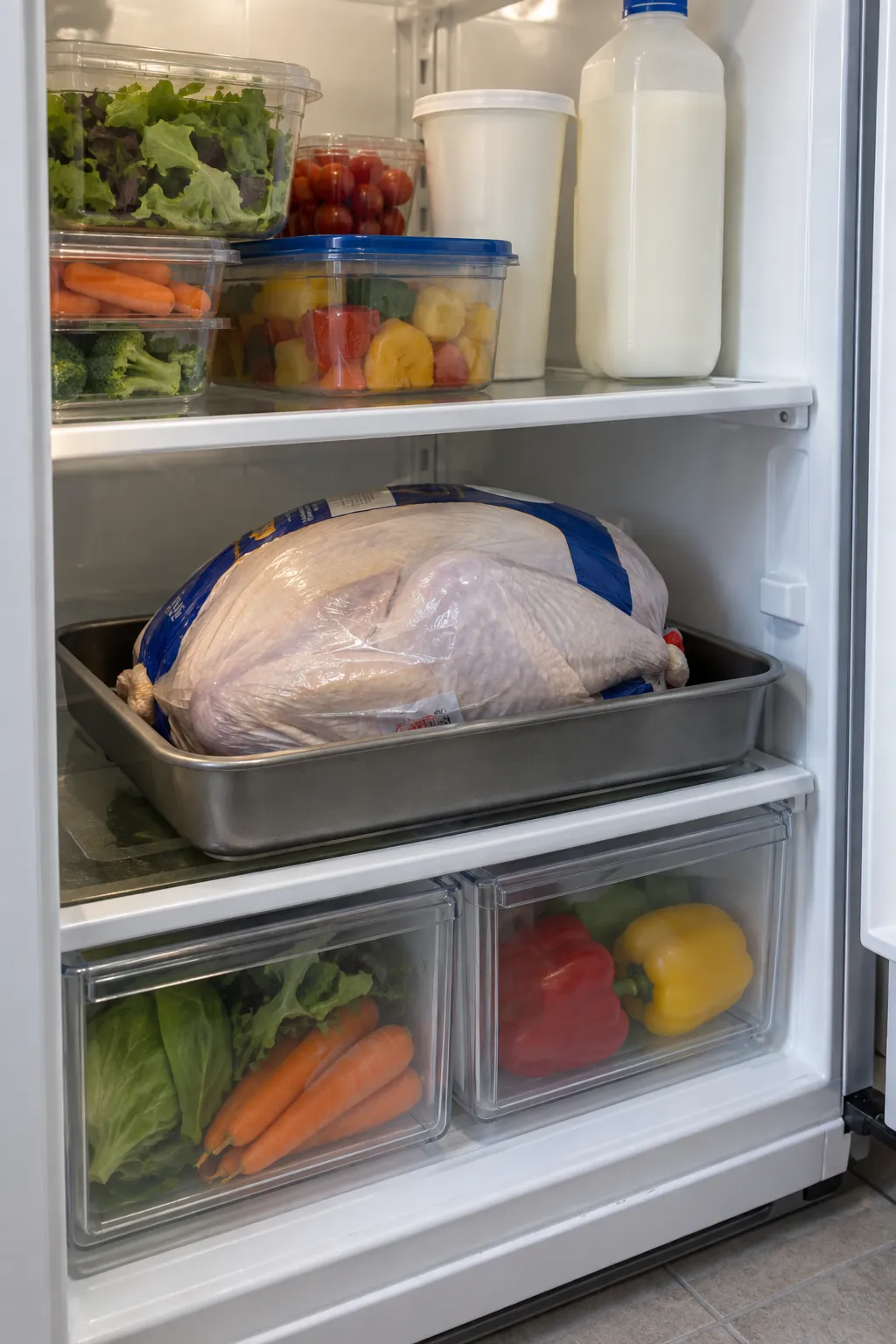
Check the package dimensions before shopping, then test whether the unopened bird will fit on a rimmed tray on a lower shelf. The tray should catch leaks, and the turkey should never drip onto produce or ready to eat food. If the shelf height is wrong, adjust it before the turkey arrives rather than balancing a heavy package at an angle.
Plan refrigerated thawing time from a reliable food safety guide for the bird you buy. A larger bird may require several days, so refrigerator space is a scheduling decision as well as a container decision. If the package does not fit safely, consider a smaller turkey or a different menu rather than storing raw poultry in an unsuitable spot.
Replace bulky pans with shallow covered containers
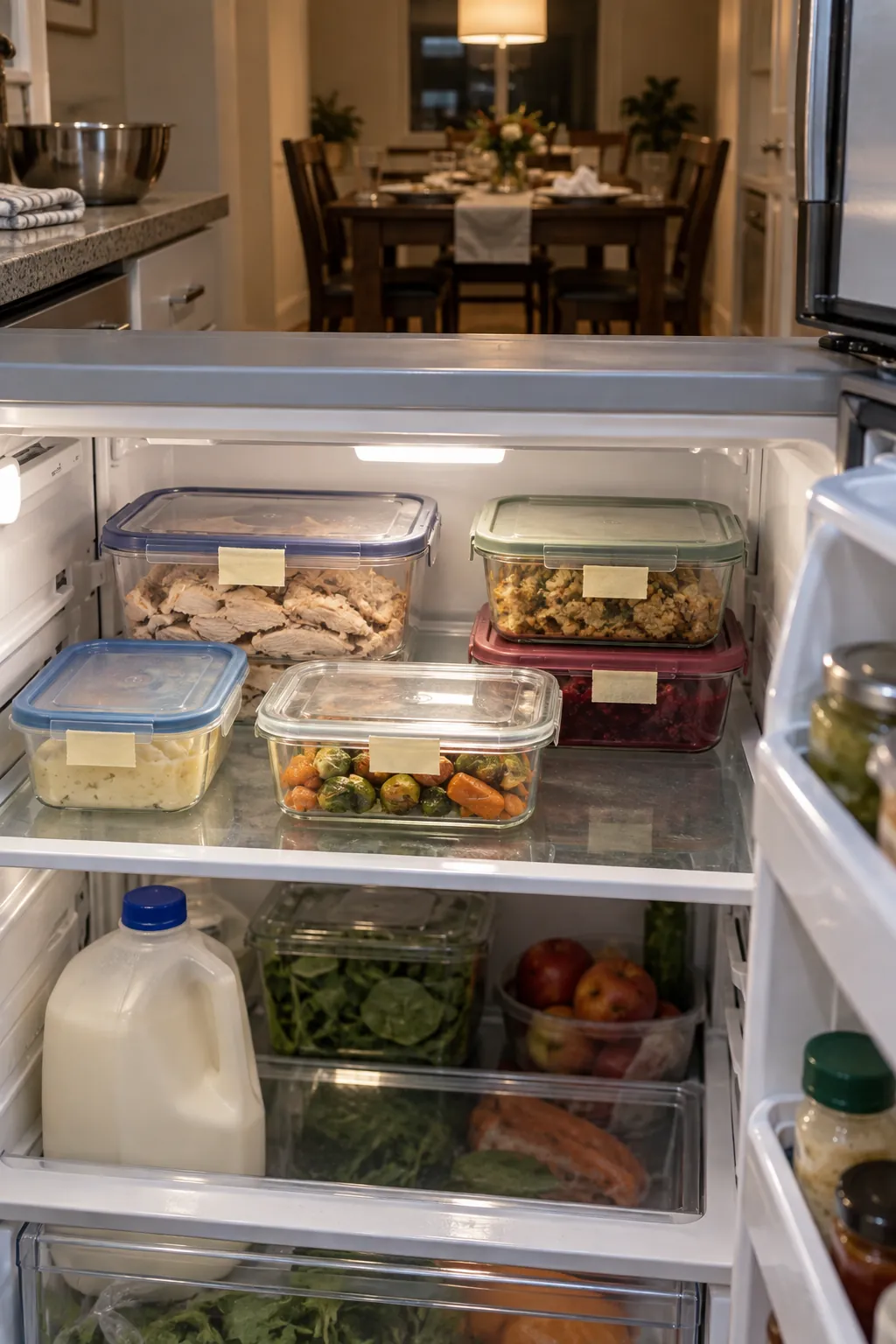
A saucepan with a long handle wastes usable shelf width, and a large casserole dish may leave a tall empty gap above it. Transfer cooked components into food safe shallow containers with tight fitting lids once they have been handled and cooled according to food safety guidance. Choose shapes you can stack without tipping or crushing delicate food.
Adjust a shelf to the height of the actual containers, then leave a little clearance to lift one out without disturbing the stack. Use transparent containers or simple labels so you do not repeatedly open several lids to find one ingredient. The goal is usable access, not a perfectly packed wall that blocks cold air.
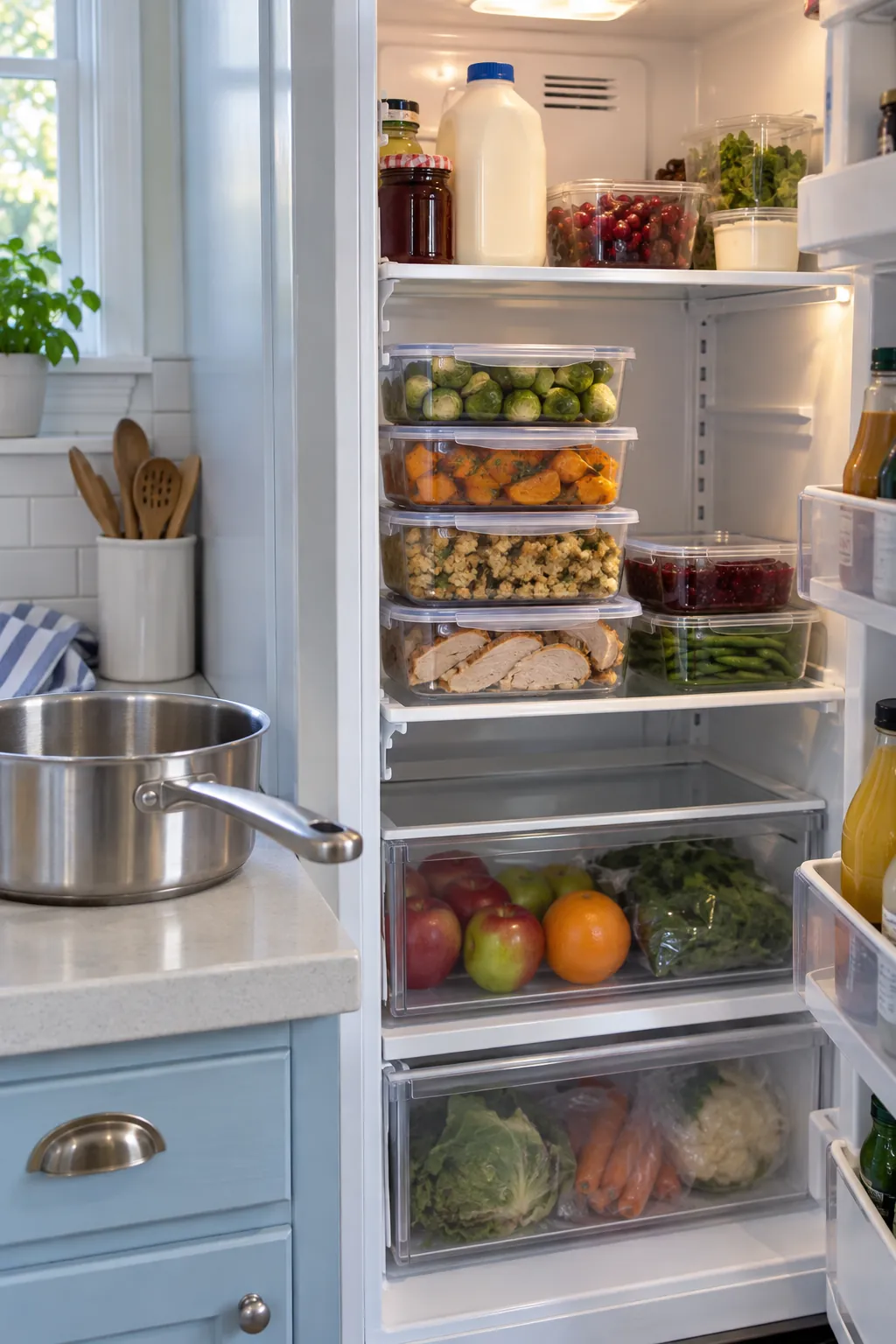
Give raw ingredients and ready food separate zones
Keep raw poultry and other raw meats sealed on a tray below foods that will be eaten without further cooking. Place washed produce, dairy, and prepared cold sides on shelves where they cannot receive drips. Use a small bin for ingredients needed together, but do not let the bin hide a spill or crowd the refrigerator vent.
Door shelves suit some condiments, not every perishable item. Check the refrigerator guidance and food labels for the best placement of milk, eggs and prepared foods, then leave the most temperature sensitive items on interior shelves. A zone is useful only when everyone in the household can find and return its contents.
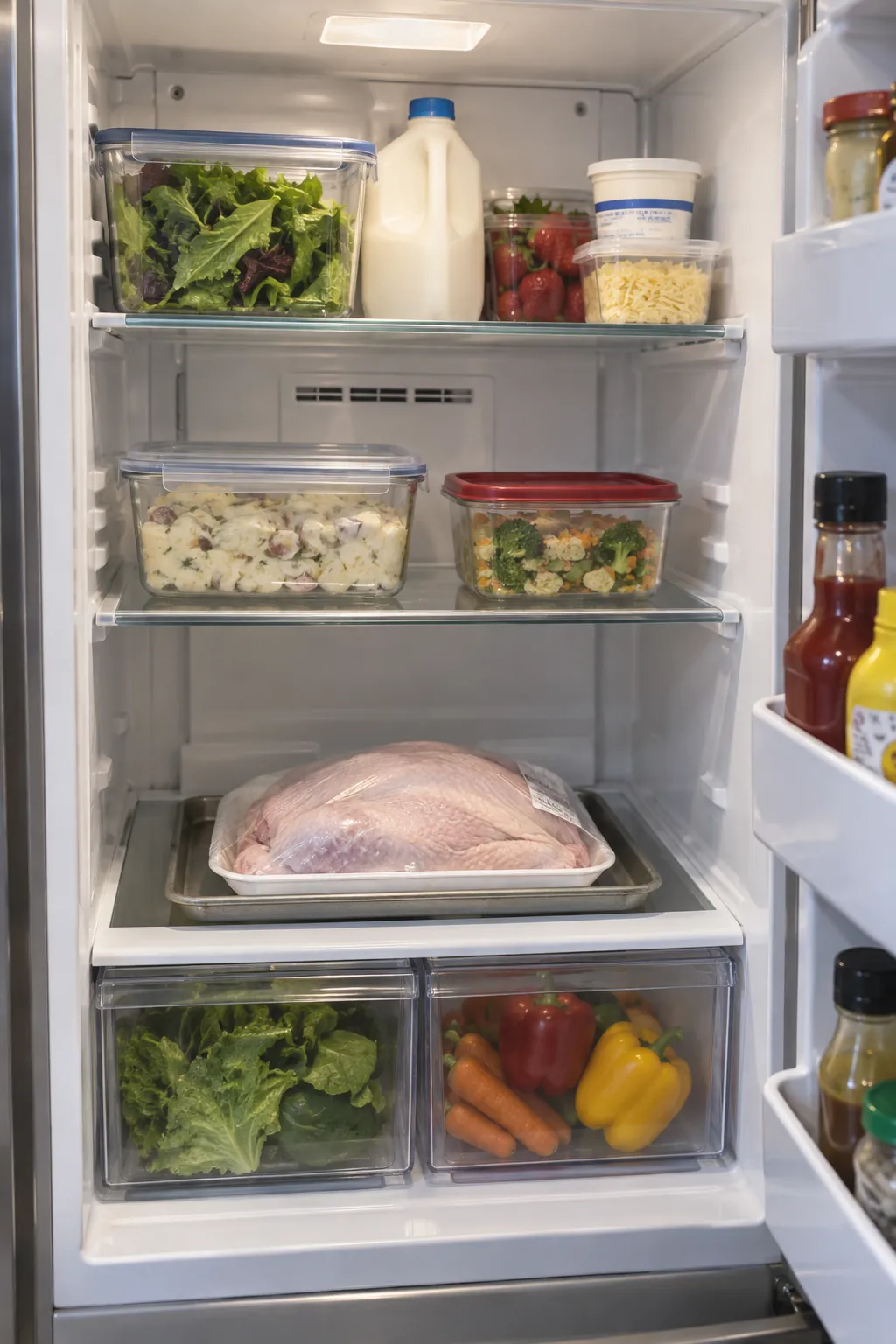
Stage groceries in the order you will cook them
Write down the dishes you will prepare ahead and the containers each one will occupy. Store items needed first at the front of their shelf so you do not remove half the refrigerator to reach them. Group a recipe set in a shallow bin if that saves searching, but do not create so many bins that their walls consume more space than the food.
Shop in smaller trips when your schedule allows, especially for produce that does not need to sit in the fridge all week. Make use of safe pantry storage for unopened ingredients whose labels permit it. Check the refrigerator temperature with an appliance thermometer when it is heavily stocked, and avoid blocking the vents that keep it cold.
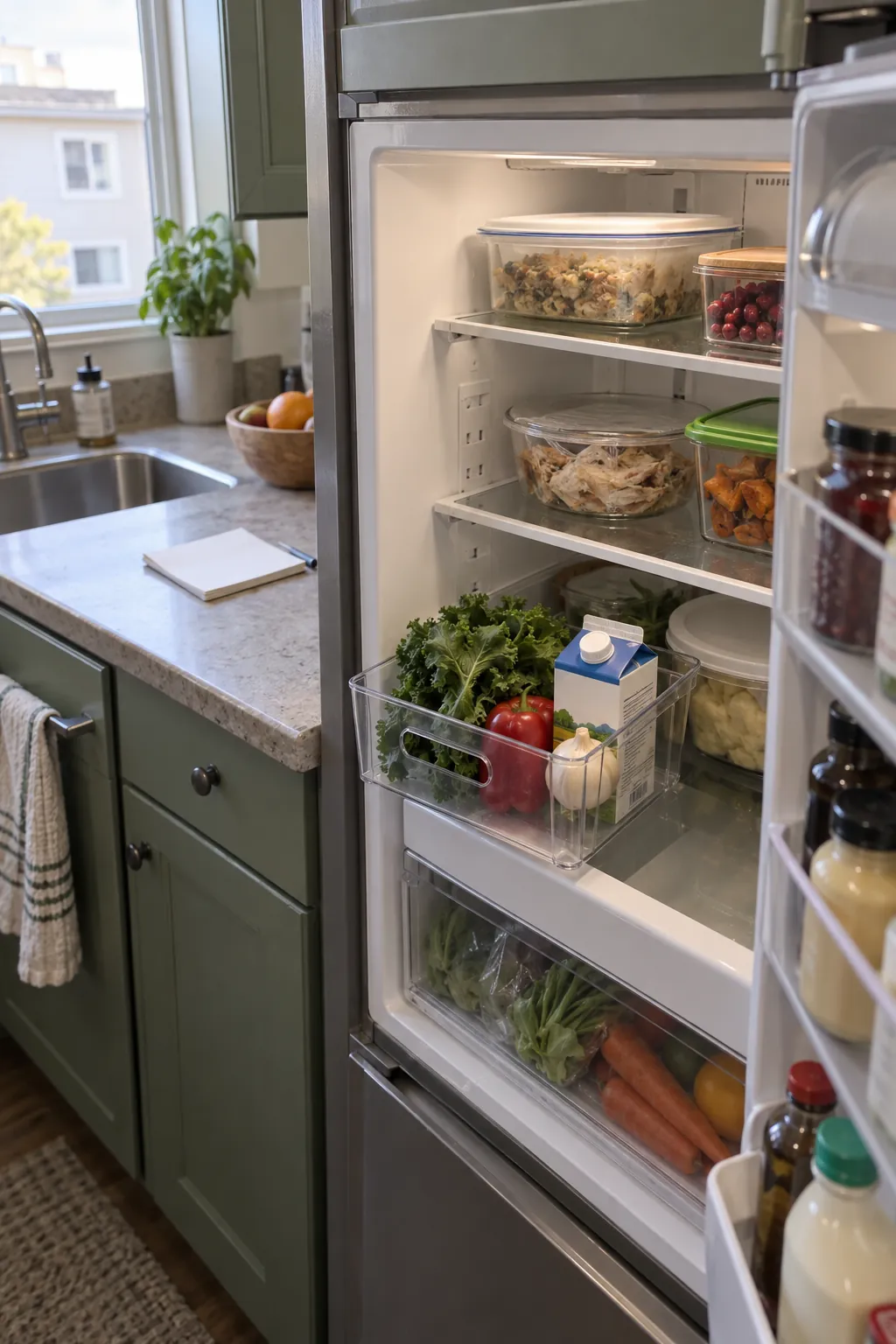
Protect room for leftovers before serving dinner
Set aside a specific shelf area and have shallow lidded containers ready before guests arrive. After the meal, divide perishable food into smaller portions so it cools promptly in the refrigerator. Follow current food safety guidance for how soon to refrigerate it, and do not leave a large covered pan on the counter while the household finishes visiting.
Clear the serving platters and move leftovers to the reserved zone in batches. Label containers with contents and date if several dishes look alike. Once the holiday food is gone, return the shelves to their everyday layout rather than leaving a special system that makes the next week harder.