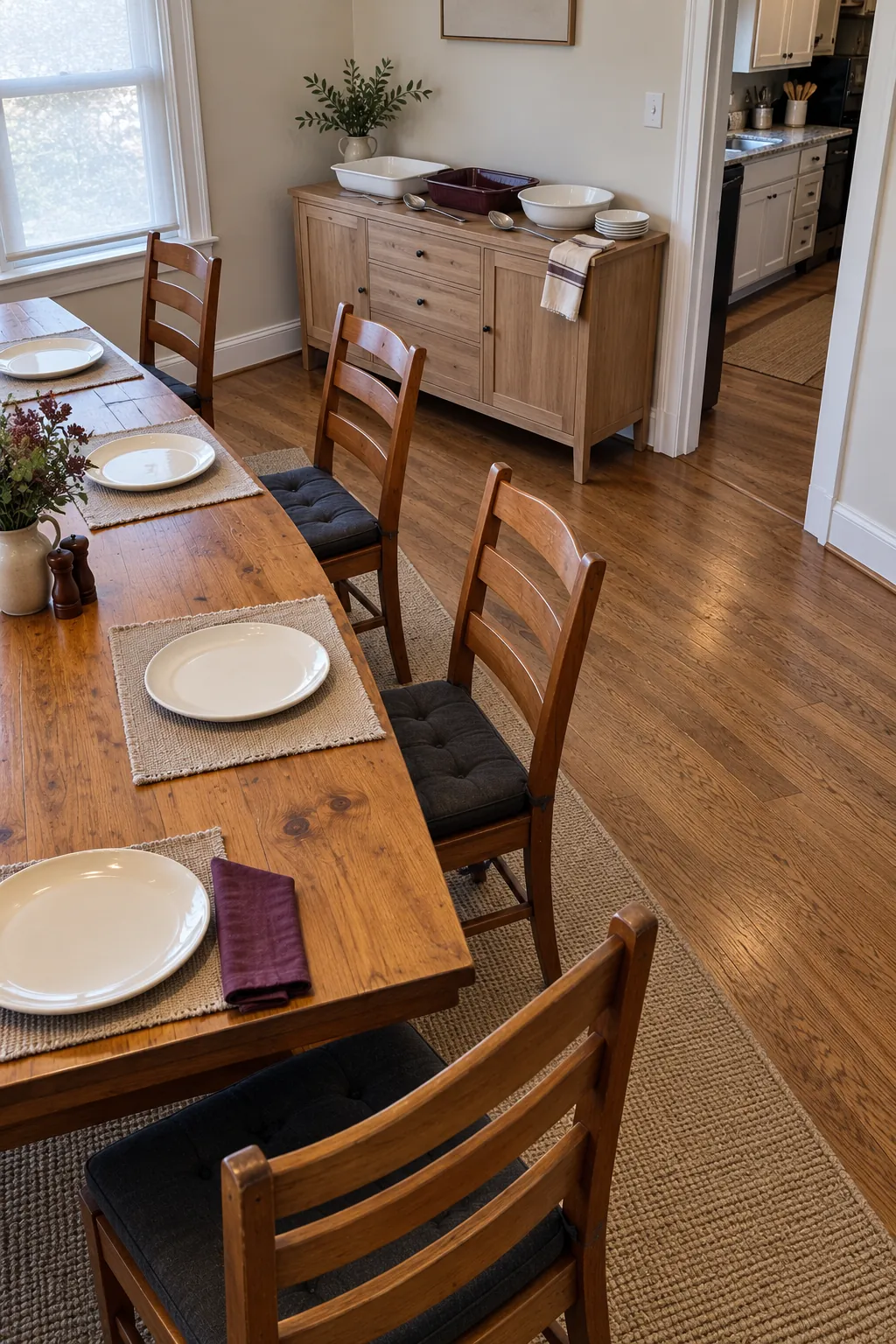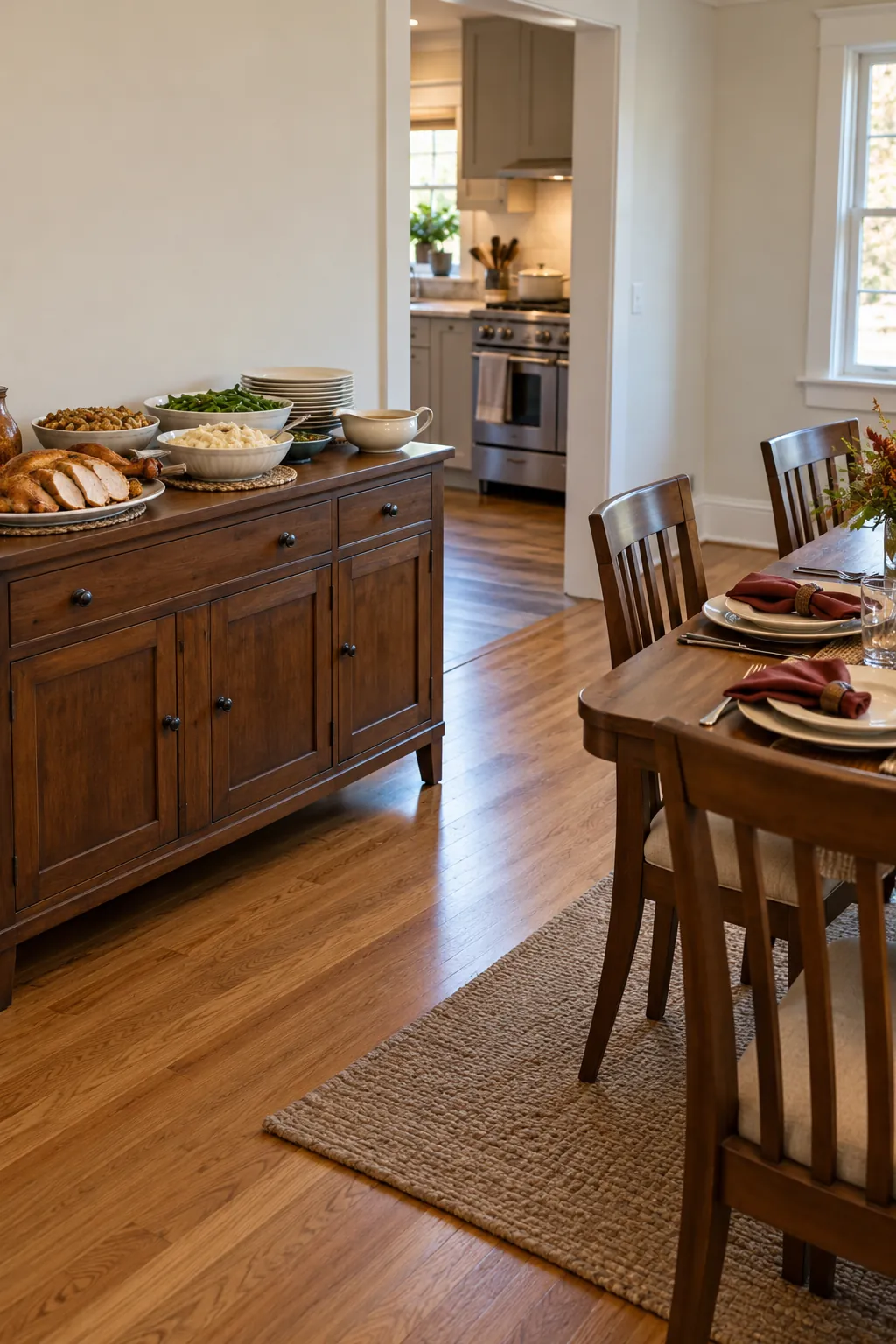
The fastest way to clog a Thanksgiving kitchen is to put the plates beside the stove. Every guest then needs to enter the room where someone is opening the oven, draining a pan, or carrying hot gravy. Give the meal a serving route outside that work zone, and the cook can finish dinner while everyone else finds a plate.
Choose the path before choosing the buffet furniture
Begin with where people will sit, then trace a route from those seats to a serving surface and back. A dining room sideboard, a sturdy table against a living room wall, or a cleared breakfast console can become the Thanksgiving serving area. The important test is whether guests can reach it without passing between the refrigerator, sink, and stove.
Choose a starting point that opens toward the waiting area and an ending point that releases people toward their seats. Keep the kitchen doorway beside the route rather than inside it, so a replenishment trip does not require pushing through a line. In an open-plan home, the dining-facing edge of a peninsula may work, but only if guests can serve themselves entirely from that side.
Look at the space with dining chairs pulled out, not tucked under the table. As a practical planning target, try to preserve roughly 36 inches of clear walking space and more wherever people need to pass, while recognizing that a particular mobility aid may need additional turning room. If the route only works when everyone stays perfectly still, move the buffet or change how dinner is served.
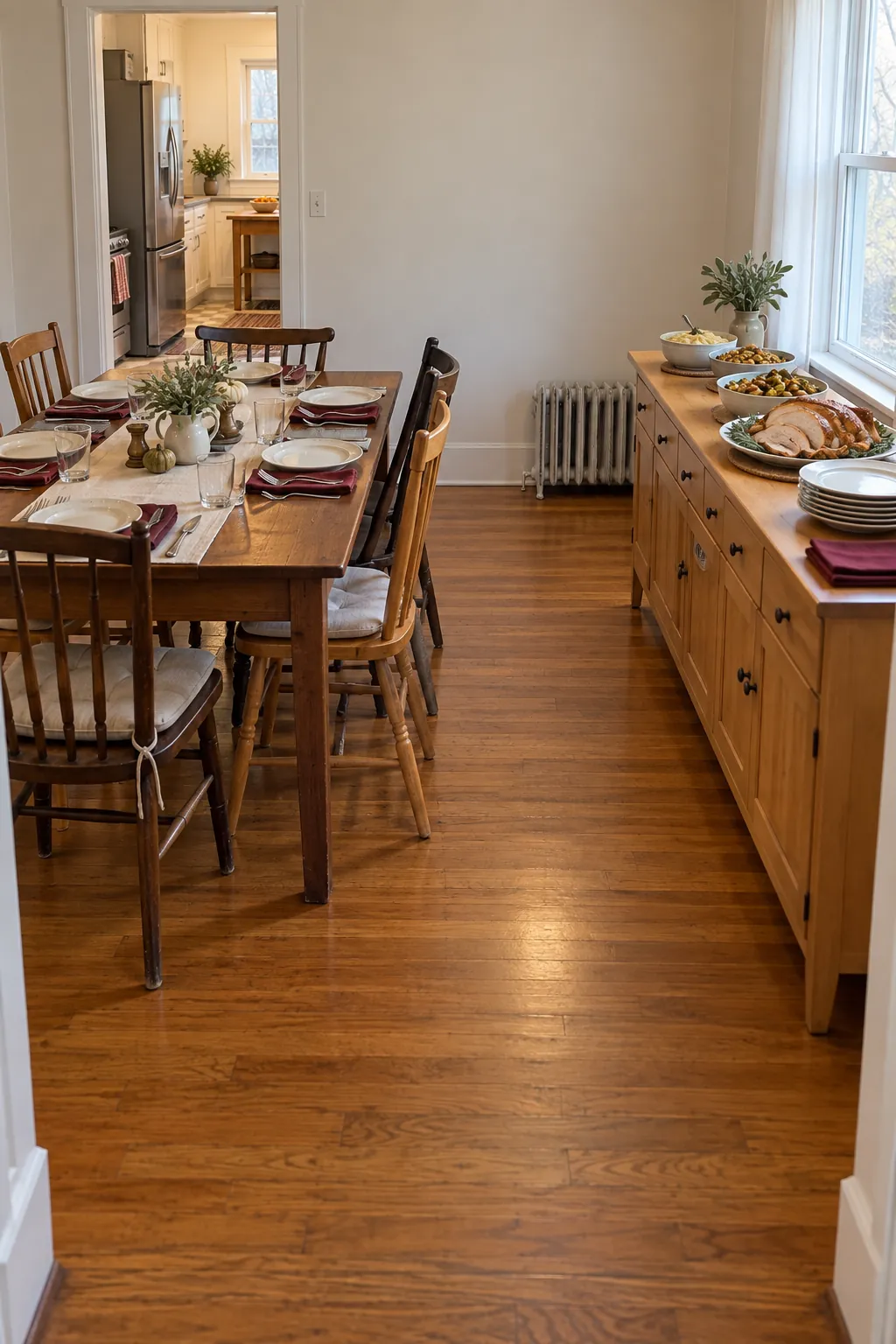
Put plates at the entrance and free hands at the exit
Stack dinner plates at the end where you want the line to begin, followed by the main dish and the sides in a clear sequence. Put gravy and condiments where there is a little landing space, since pouring is slower than taking a roll. Each dish needs its own serving utensil and a small rest so a dripping spoon does not become a reason to search the kitchen.
Set napkins and cutlery at the exit, or place them at the dining seats before dinner. Guests can then concentrate on holding a plate while serving instead of balancing a fork, a napkin, and a glass all at once. Keep the first stack modest and refill it from below or beside the buffet rather than creating a tall, unstable tower.
Leave small gaps between dishes so handles do not collide and elbows have somewhere to move. If two bowls look similar, use a concise food label and note relevant ingredients accurately; a label is not a guarantee against cross-contact. Make a separate plan with guests who have allergies instead of assuming a shared utensil line is suitable for everyone.
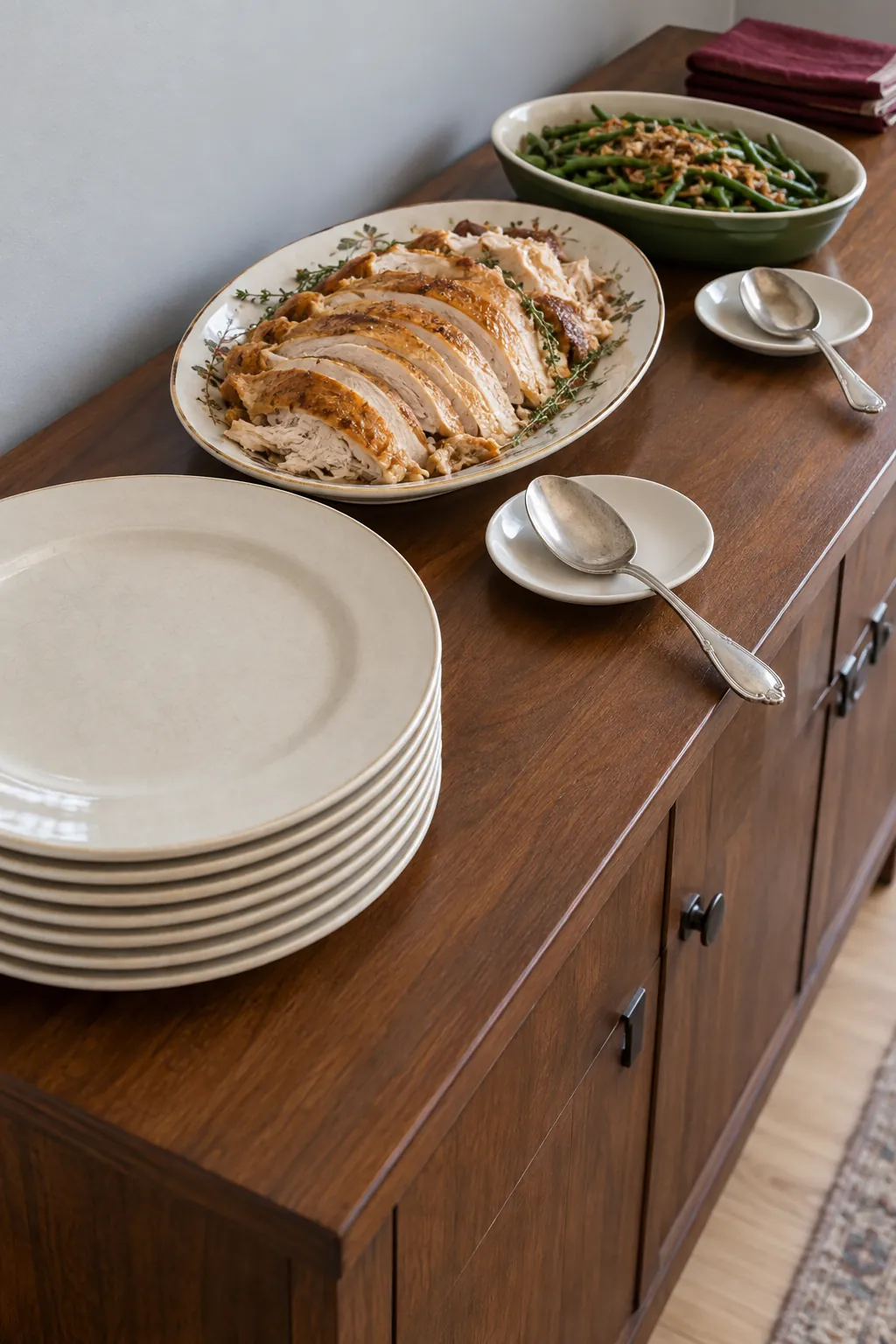
Keep replenishment short without turning it into guest traffic
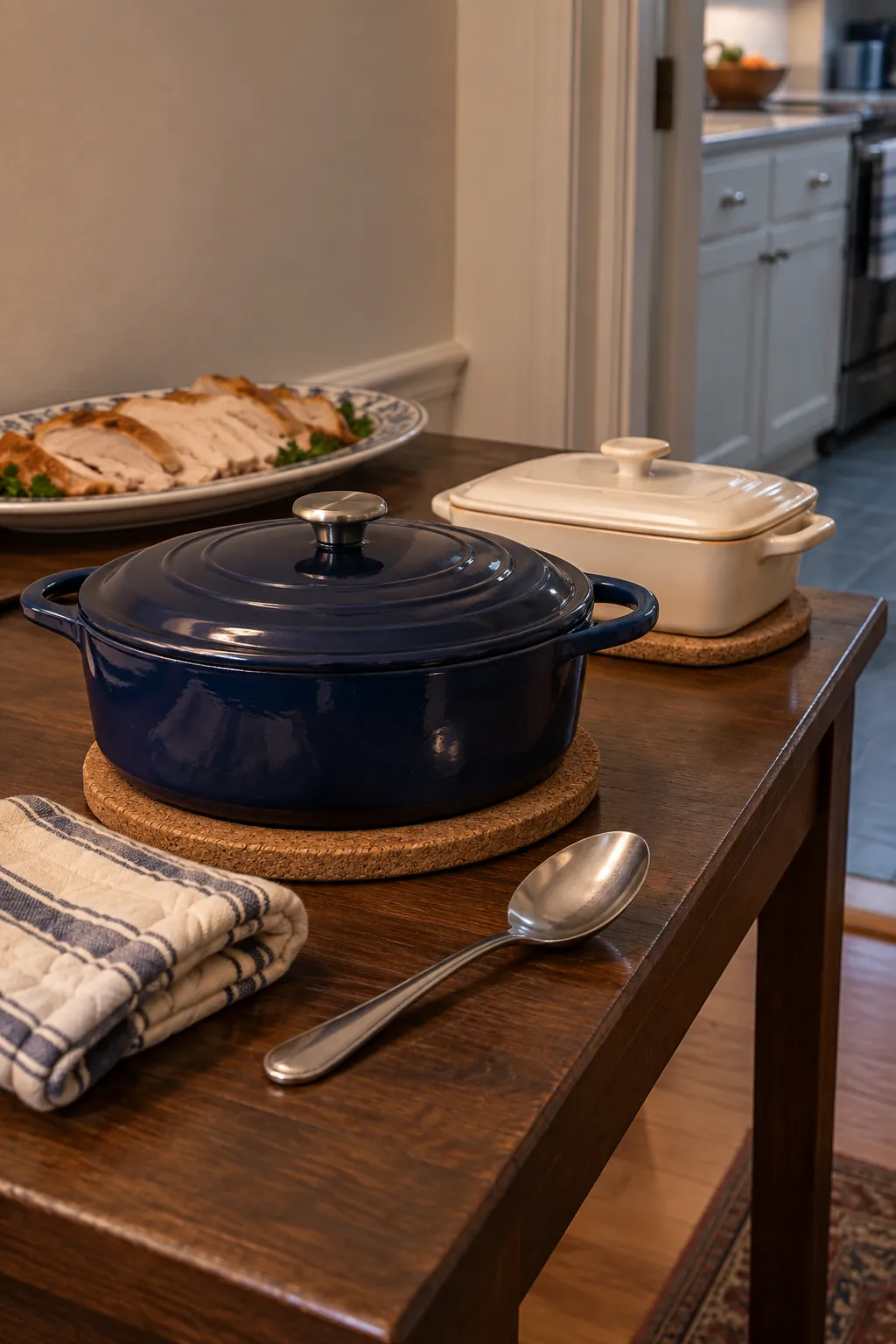
The buffet should be outside the kitchen, but it need not be at the farthest end of the house. Position the hot-food end near the kitchen-side access point, with a sturdy heat-safe landing spot for replacement dishes. That gives the person carrying a casserole a short trip while guests continue along the public side.
Carve the turkey and portion awkward dishes in the kitchen before taking them to the serving area. A platter of ready-to-serve slices creates fewer pauses than a carving station in the middle of the line. Keep a spare utensil and a clean replacement dish ready in the work zone so replenishing does not become a second cooking project.
Trivets protect the furniture but do not keep food at a safe holding temperature. Keep hot perishable food at 140°F or above and cold perishable food at 40°F or below, using suitable equipment and a food thermometer when holding it for service. Without temperature control, refrigerate perishables within two hours, or one hour when the surrounding temperature is above 90°F.
Use smaller portions on the buffet and replenish with fresh dishes rather than topping up an old dish indefinitely. Route appliance cords along the wall without stretching them across a walking path, and follow the equipment instructions for surfaces, power, and clearance. If there is no suitable outlet or safe holding setup, bring food out close to mealtime and keep the service brief.
Give drinks, dessert, and used dishes their own destinations
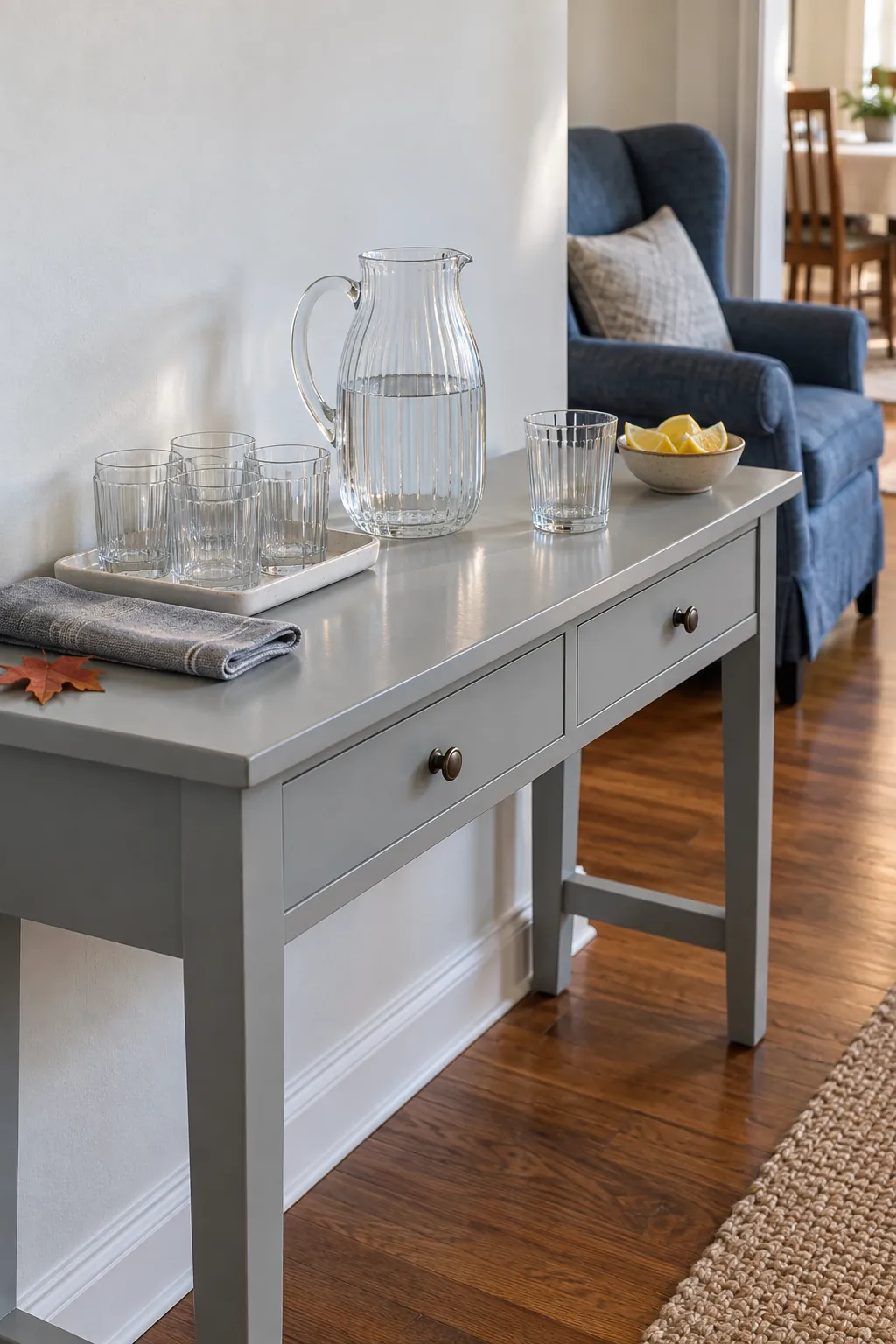
A drinks station on a living room console or another accessible surface lets someone refill water without joining the food line. Place glasses, a stable pitcher, and a towel together so the station works without a trip back to the sink. Leave room to set a glass down while pouring, and keep the station away from the kitchen entrance and the tightest chair aisle.
Keep dessert off the main buffet until the dinner rush has passed, especially if cutting pie would stop people at the exit. Chilled desserts can remain refrigerated until needed rather than sitting out as decoration. Once the dinner dishes are cleared, the same serving surface can become a dessert stop without occupying another room all evening.
Adapt the route when the dining room is small
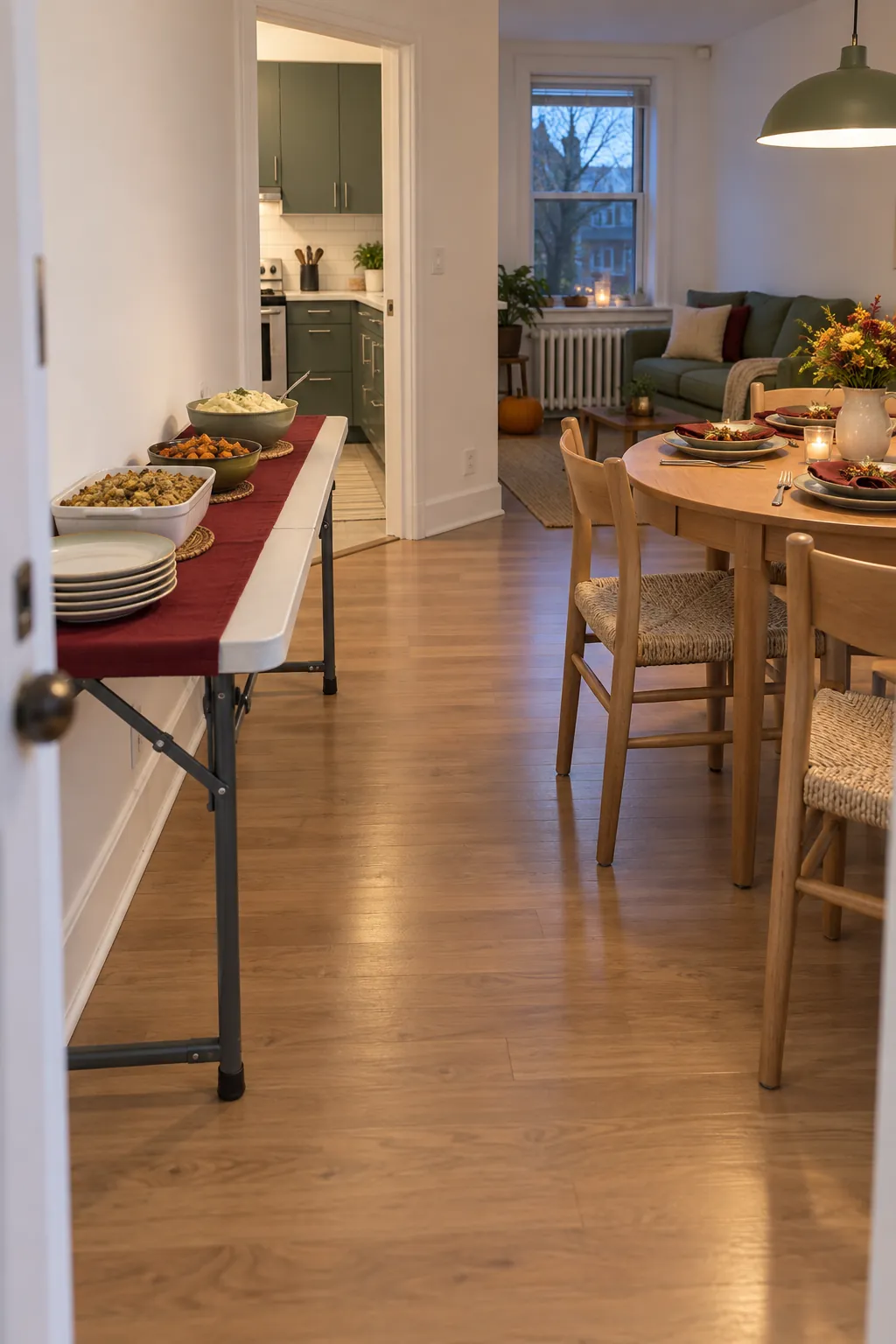
A narrow room may fit a shallow folding table against one wall better than a deep furniture piece across the end of the dining table. Open it fully, confirm that it locks securely, and test the weight and footprint of the actual dishes before adding food. Use a short cloth or runner that cannot catch under shoes, and reserve the adjacent floor for circulation rather than baskets and lanterns.
If people cannot safely pass, let one small group serve at a time and keep the waiting area in the living room. A single-door dining room may need a simple out-and-back route with a pause between groups, because a continuous loop is not possible in every home. When even that arrangement blocks a door or makes carrying plates awkward, serve plated main dishes at the seats and offer a few shared sides instead of forcing a buffet.
Rehearse the Thanksgiving route with the room in use
Before guests arrive, arrange empty serving dishes in their intended spots and walk the route carrying a dinner plate. Pull out the chairs, open the doors that will be used, and check where someone would wait if the gravy takes a moment. Remove the object that causes the hesitation, whether it is a plant stand, a low stool, or a tray hanging over the edge.
Test the return trip separately, including the route to the drinks station and a discreet place for used plates after the meal. Give guests a simple verbal cue about where plates start and where drinks are, rather than expecting them to decode the furniture arrangement. The useful Thanksgiving buffet layout is the one that still lets you open the oven while someone else goes back for potatoes.