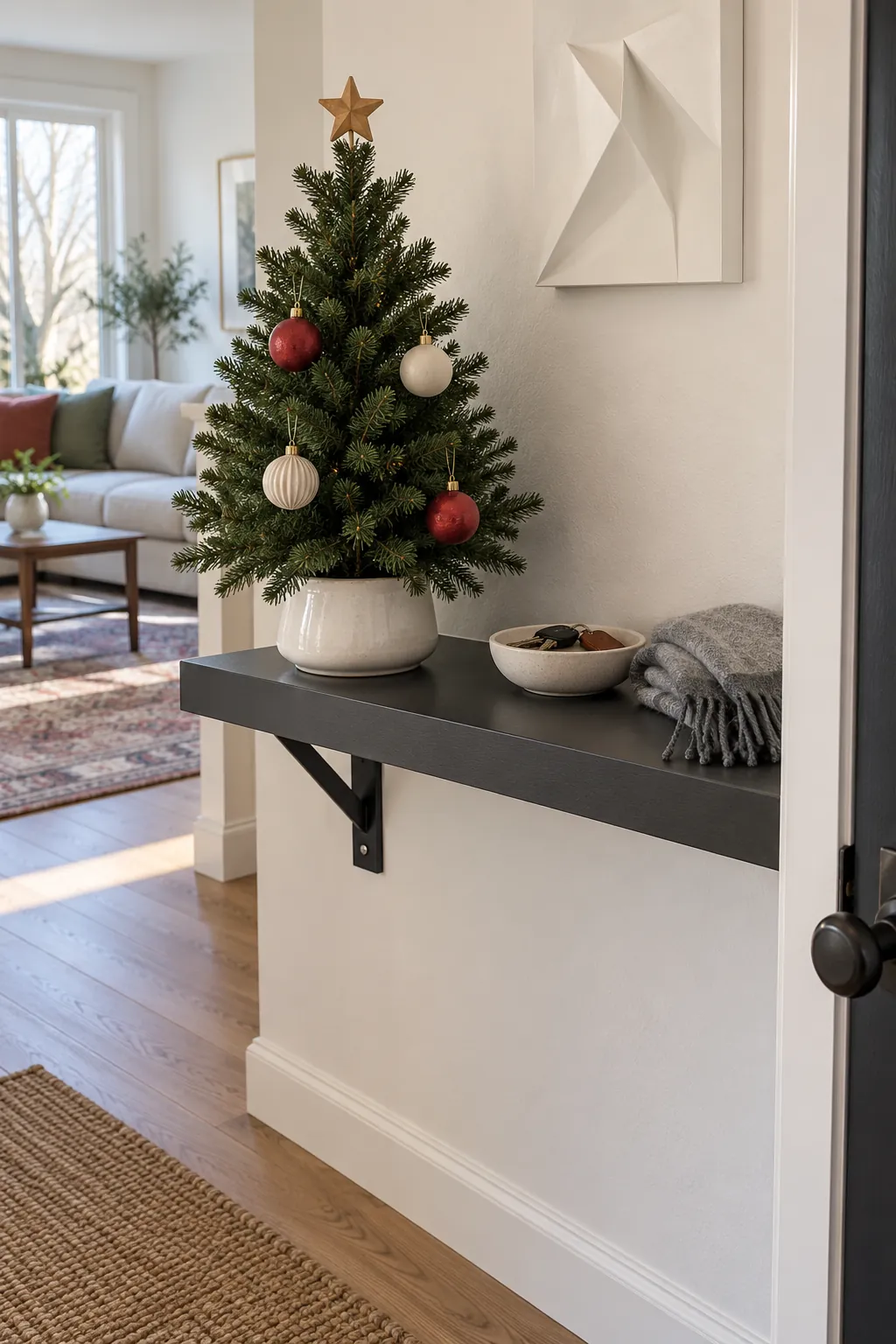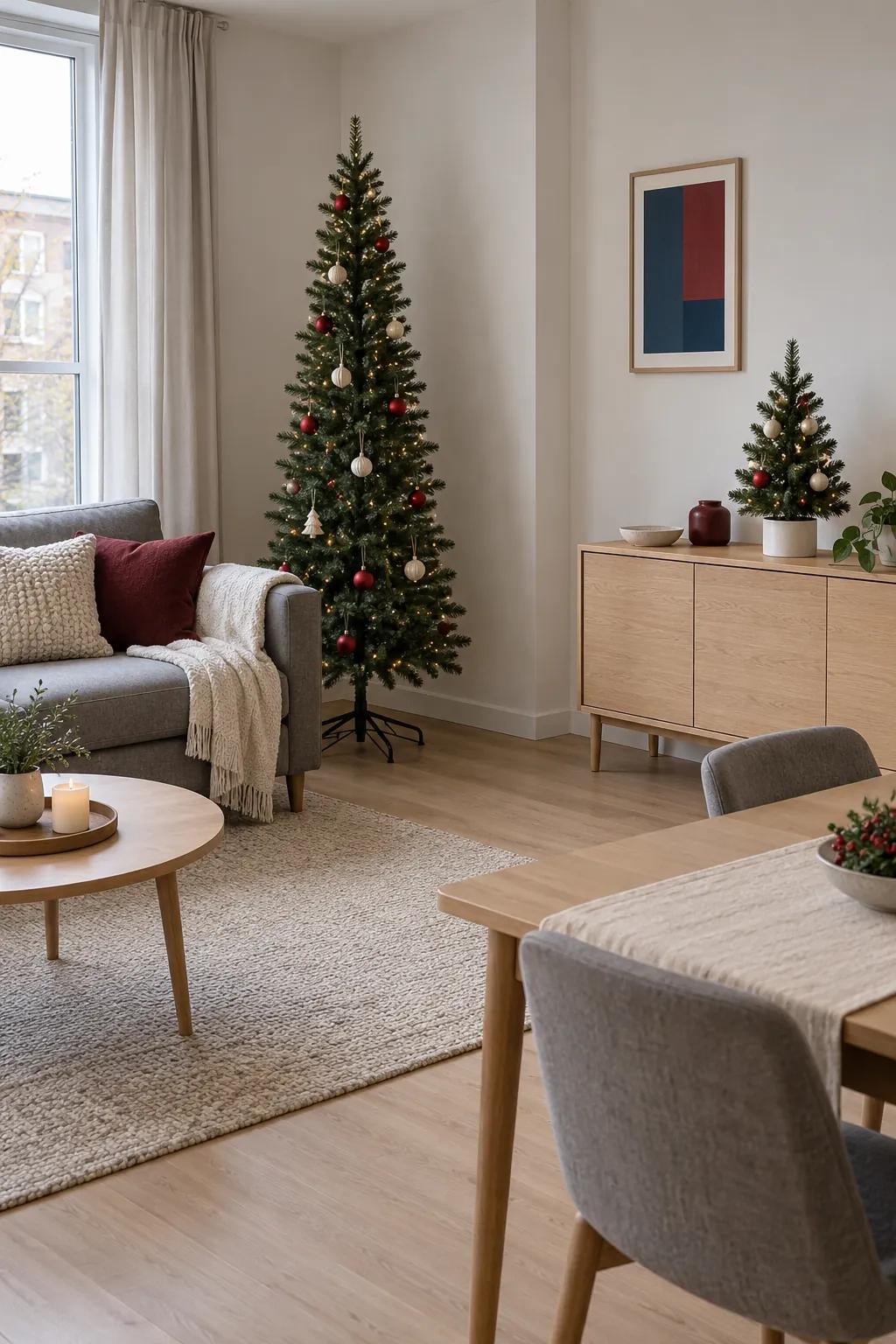
A tall narrow tree can fit beside the sofa and still steal the space you use to walk past it. A small tree on the table can save that route but take away the surface where you eat or work. The better choice depends on which kind of space your apartment can spare for the entire season.
Choose the space you can give up for a month
Choose a slim tree when you have a genuine floor position that leaves everyday movement intact. Choose a tabletop tree when a sturdy surface has spare width and depth without losing an essential job. In a studio, that may mean neither format fits the first spot you imagine.
Treat “small” as a description to verify, not a promise. Compare the fully opened branch width, stand footprint, tree height, and storage package. A pencil tree can be much narrower than a traditional tree while still needing a substantial patch of floor.
A slim tree keeps the tall silhouette but still uses floor
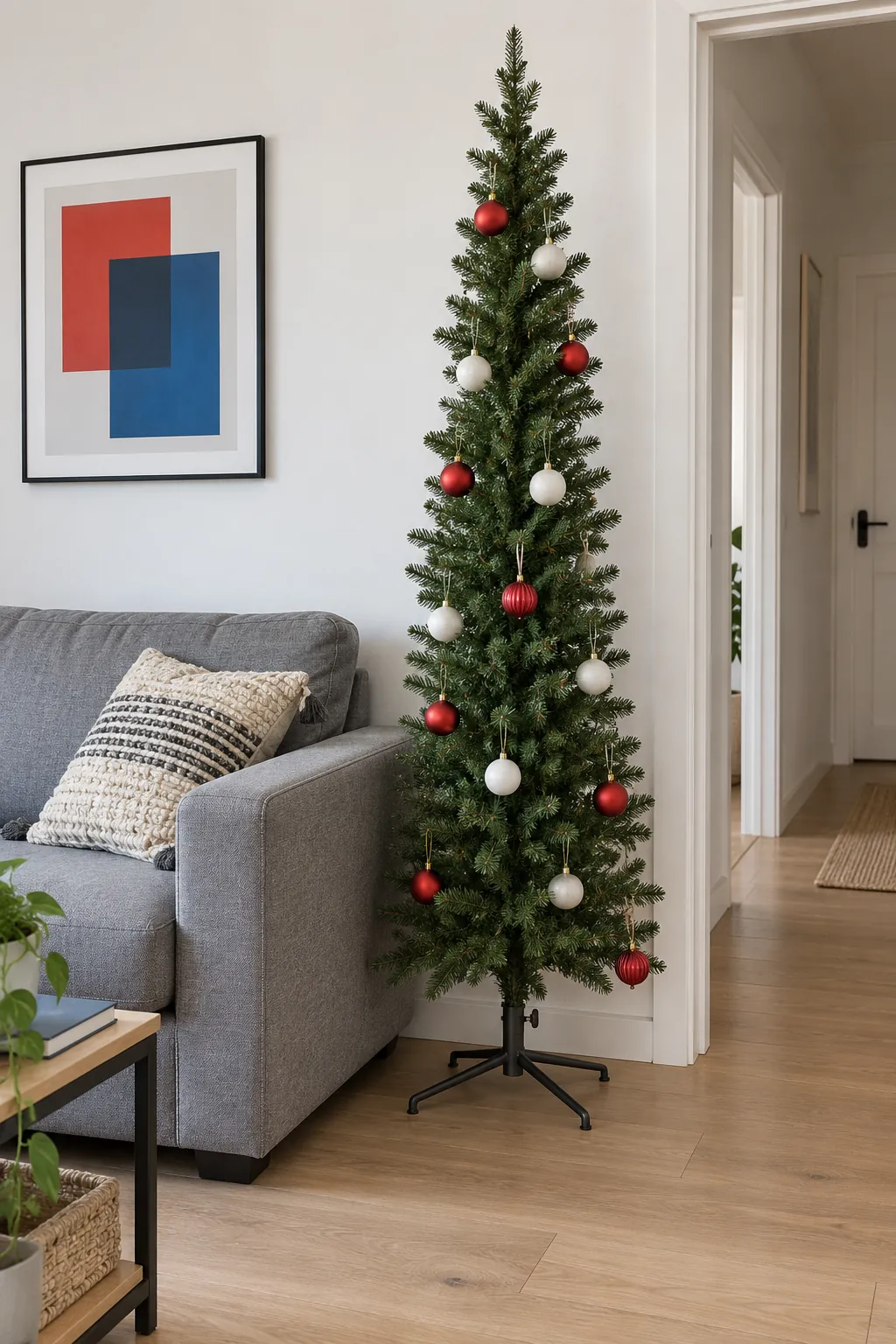
The strongest reason to choose a slim Christmas tree is the familiar height. It can make the room feel decorated from the doorway without occupying the broad spread of a regular tree. But its widest branch tier and stand determine where it can live, not its narrow trunk.
Measure the stand separately if the listing supplies that dimension. Low branches, hanging ornaments, and gifts can extend beyond the advertised width, so include them in your Christmas tree footprint. Keep the arrangement away from doors, heating equipment, and the space a chair needs when someone sits down.
A tabletop tree saves floor only if the surface already exists
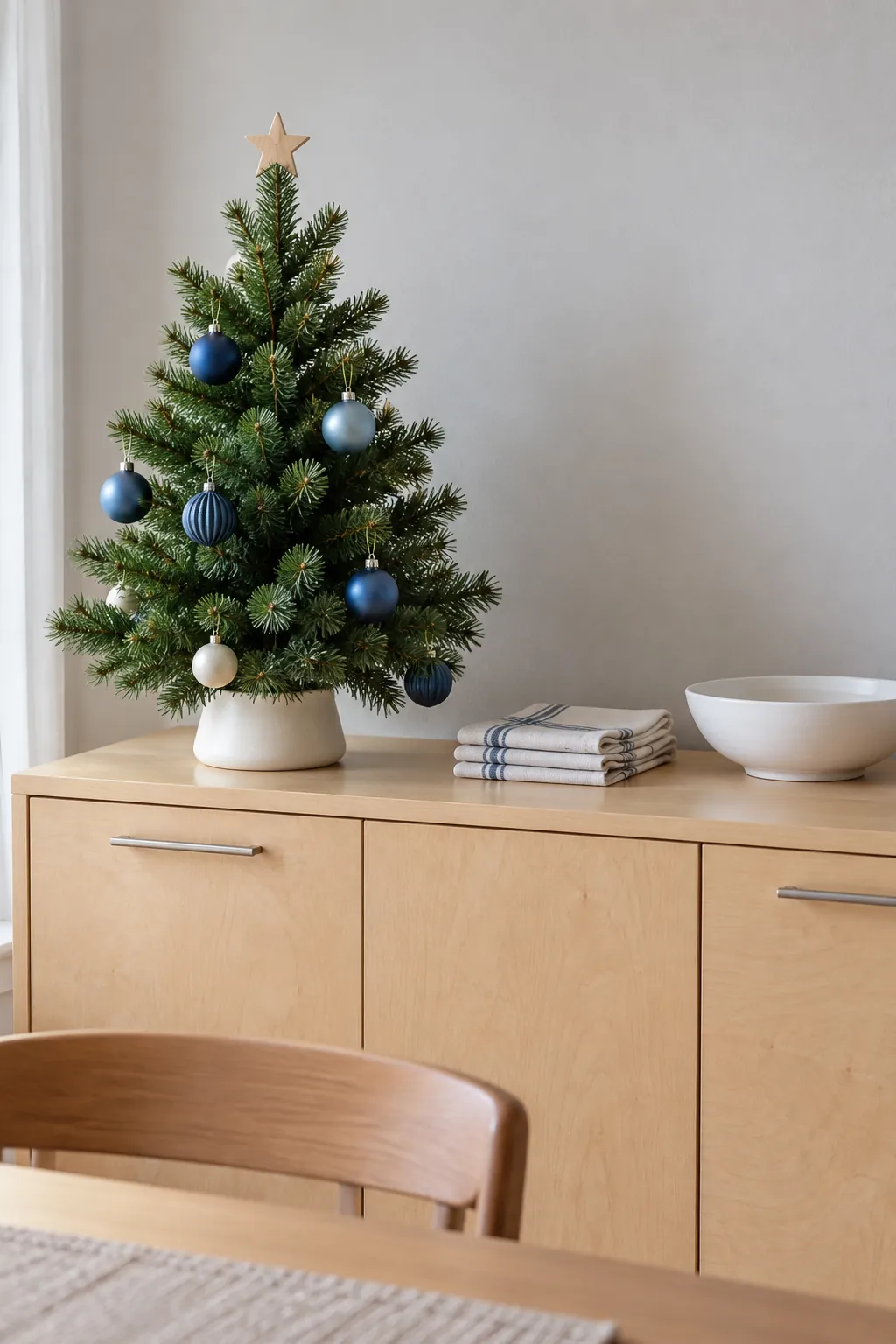
A tabletop Christmas tree is usually the stronger choice when every floor corner already holds useful furniture. Put it on an existing sideboard or deep shelf whose surface can spare the space. If you buy a new table solely to support it, count that table’s entire footprint when comparing the two options. A small tree on your only dining or work table may cause more disruption than a narrow floor tree elsewhere.
Test the actual position before ordering
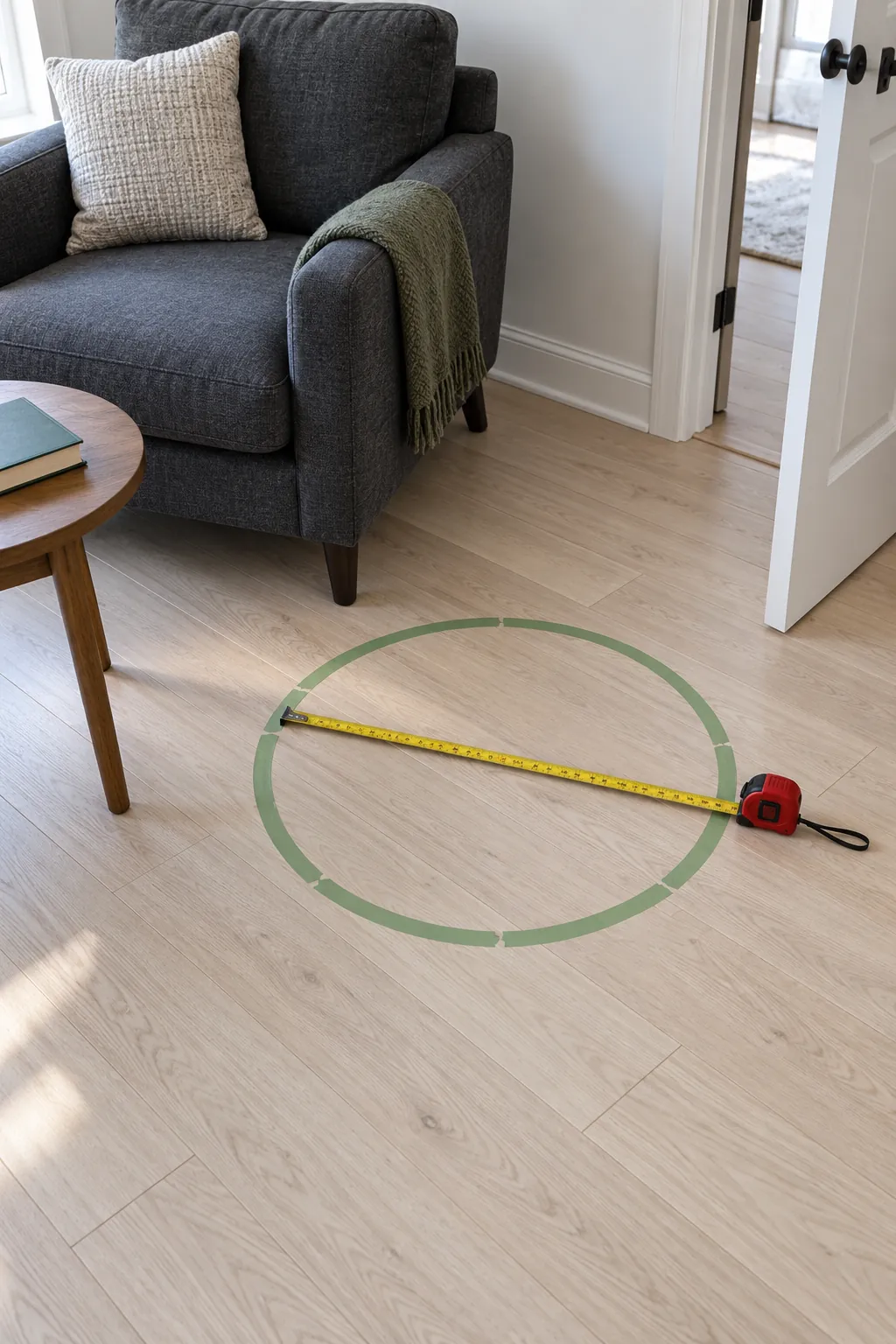
Mark the proposed tree width and stand area with removable tape suitable for your floor, or use paper that will not create a slip hazard. For a tabletop option, measure the supporting surface and compare it with the base and fully spread branches. Then check the height from that surface to any shelf, ceiling, or hanging light.
Open nearby doors and drawers, pull chairs out, and walk the normal route through the room. A position that works in a still photograph may fail during dinner or when the sofa bed opens. Check where power will come from too, keeping leads clear of routes and following the light set’s instructions.
Match the tree to the decorations you actually use
A slim tree usually gives a larger collection of ornaments more room than a compact tabletop tree. Its narrow outline still benefits from restraint, especially with large ornaments that extend far beyond branch tips. A tabletop model often looks best with smaller lightweight pieces suited to its branches.
Sort your favourites before buying. If a few meaningful ornaments are the whole tradition, a small tree may deliver everything you want. If displaying a broad collection matters, check branch strength and available hanging space rather than assuming a taller tree can carry any load.
Gifts do not have to spread around the base. A separate agreed gift spot can keep both formats from expanding into the walking route. Avoid balancing presents where they can knock ornaments or block cabinet access.

Storage can decide the comparison before Christmas starts
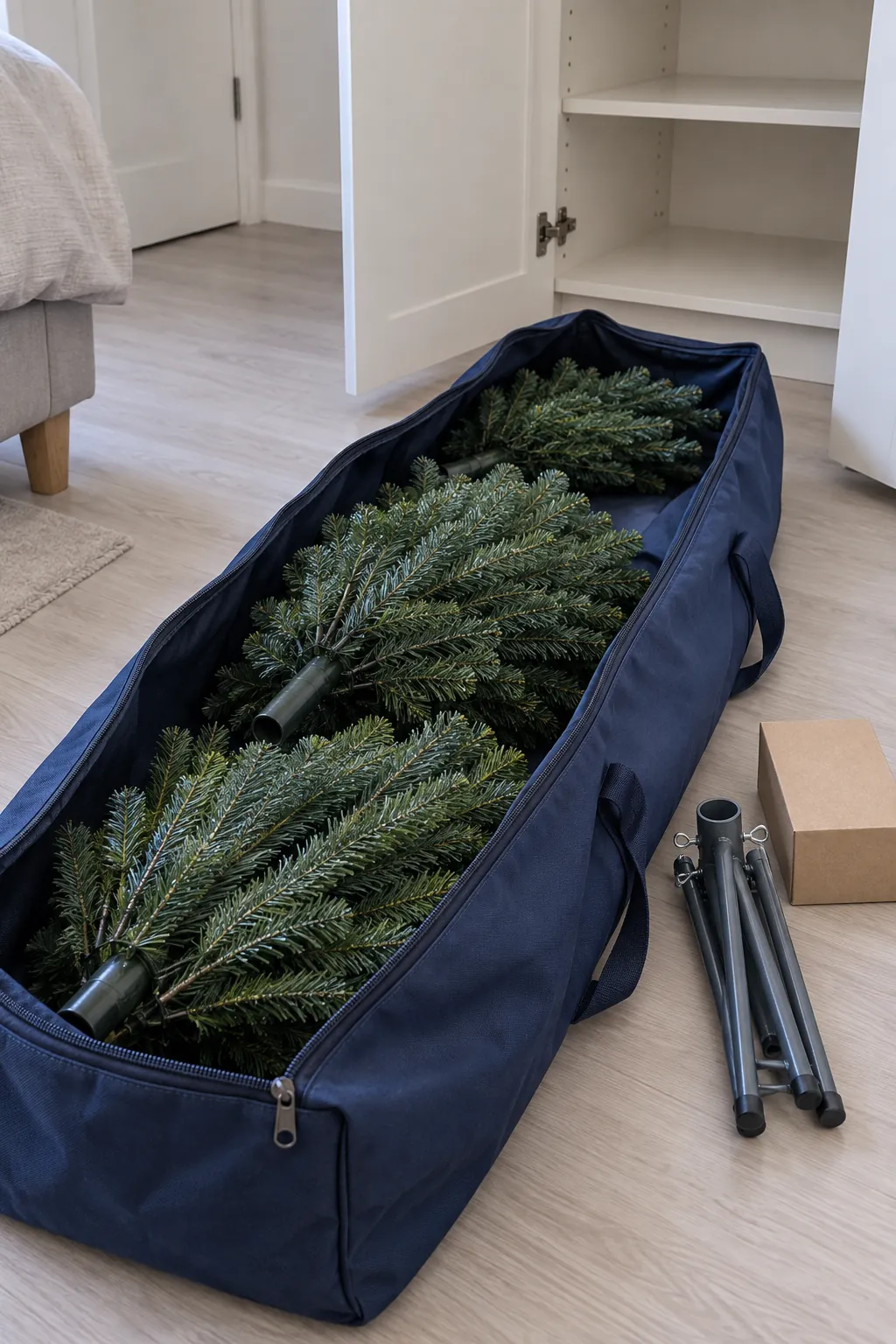
For artificial trees, check the packed dimensions before judging the space saving claim. A slim model may separate into several long sections, while a tabletop tree might store assembled or fit a smaller container. The actual packaging varies, so use the manufacturer’s measurements instead of guessing from the displayed tree. Include the stand, lights, and ornament box in your storage plan. A tree that fits in December but lives across the hallway for the rest of the year is the wrong size for your apartment.
Elevation does not solve every household or care issue
A tabletop tree is not automatically out of reach of a climbing cat or a child who can pull a cable. Both formats need a stable support, suitable decorations, and placement that fits the household. Follow the tree and light manufacturers’ guidance, keep heat sources clear, and do not overload electrical connections.
If you choose a real cut tree, water access and a suitable stand matter alongside size. Protect the supporting furniture under a tabletop version and check it regularly for spills. A living potted tree adds its own light, temperature, and longer term care requirements, which should be settled before the purchase.
Use a simple tie breaker: preserve the harder working space
If your floor route is tight but a sideboard has spare space, choose the tabletop tree. If every surface is already needed for meals, work, or daily storage and one safe floor position is available, choose the slim tree. When both positions work, let your ornament collection and packed storage dimensions break the tie.
Skip both formats if either would require stepping around a daily obstacle or giving up your only useful table. A wall hanging or a small seasonal arrangement on existing storage may fit better. The right apartment tree leaves the room comfortable to live in after the first decorating photo.