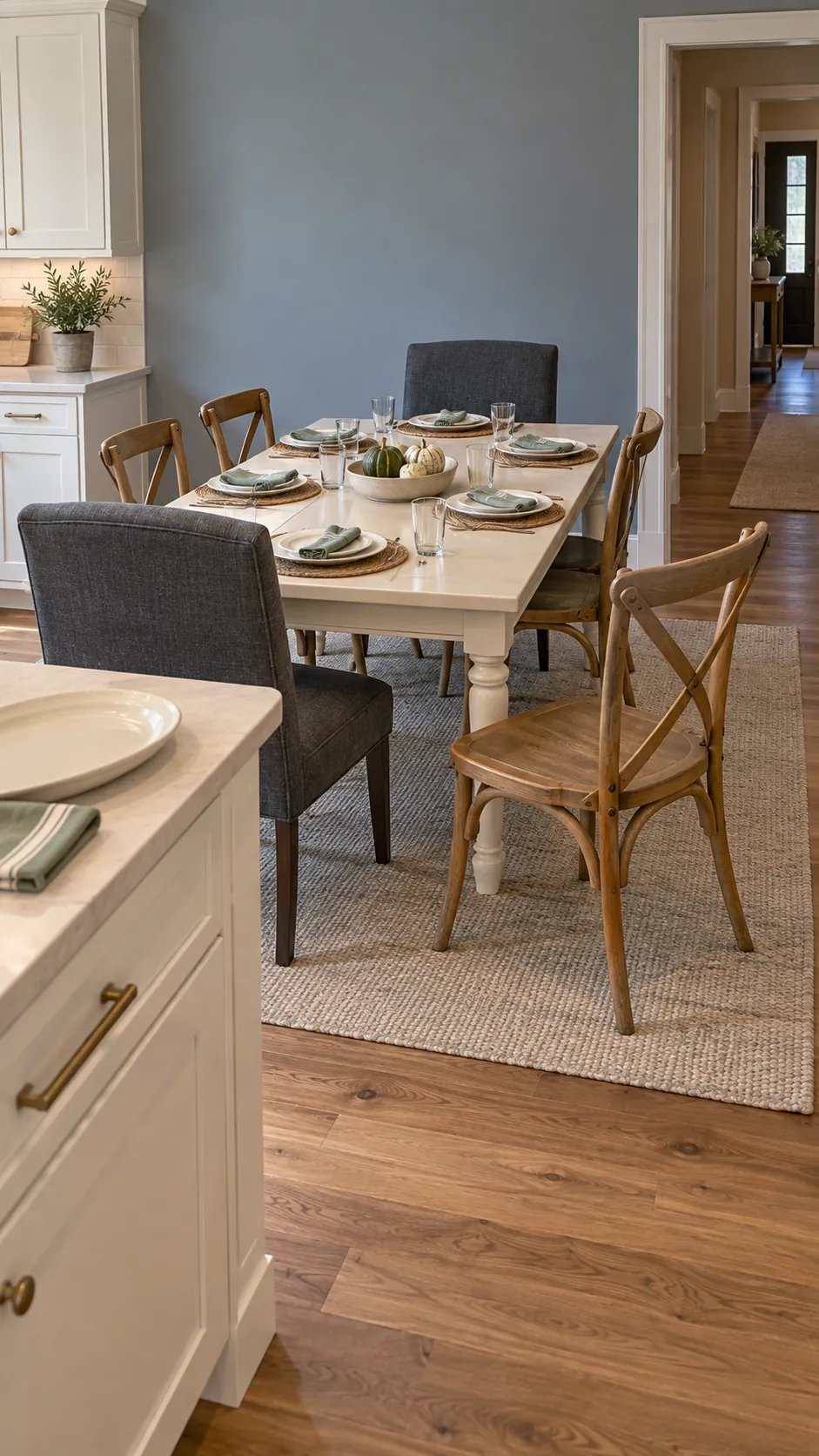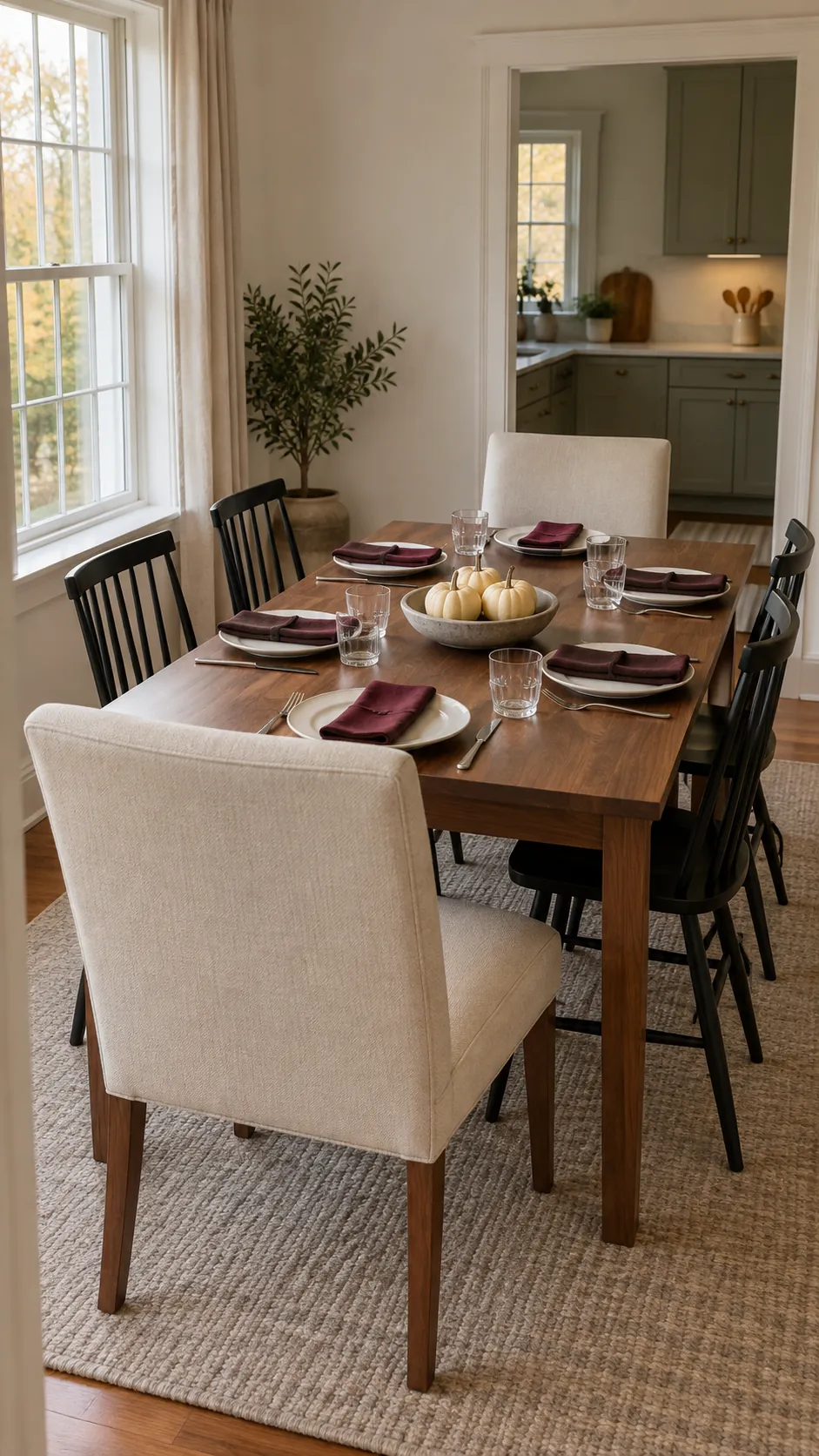
The extra chairs are often the last things brought into the dining room, and suddenly the table feels less settled than it did an hour earlier. A borrowed pair can work beautifully beside the chairs you already own, provided guests can sit comfortably and the arrangement has a visible reason. Start with fit and placement, then let the table linens connect the seats.
Check the seats before choosing a layout
Bring one chair from each set to the table before you unfold the tablecloth. Sit in both and check whether your forearms reach the tabletop comfortably, your feet have support, and your knees clear the apron underneath. Armchairs also need room for their arms to slide under the edge, or enough space to sit close without trapping the guest against the table.
Measure the actual seat height rather than judging by the chair back, because a tall back can hide a low seat. If one set leaves guests noticeably lower, use it at a suitable extra table or borrow a better fitting option. A cushion can soften a firm seat, but a loose stack of pillows is not a reliable solution to a large height difference.
Pull each chair out as someone would during dinner and check the route behind it. Keep a comfortable exit for every seat, especially beside a wall, doorway, or serving station. Give guests who need firmer support or easier access the appropriate chair even when that changes your decorative plan.
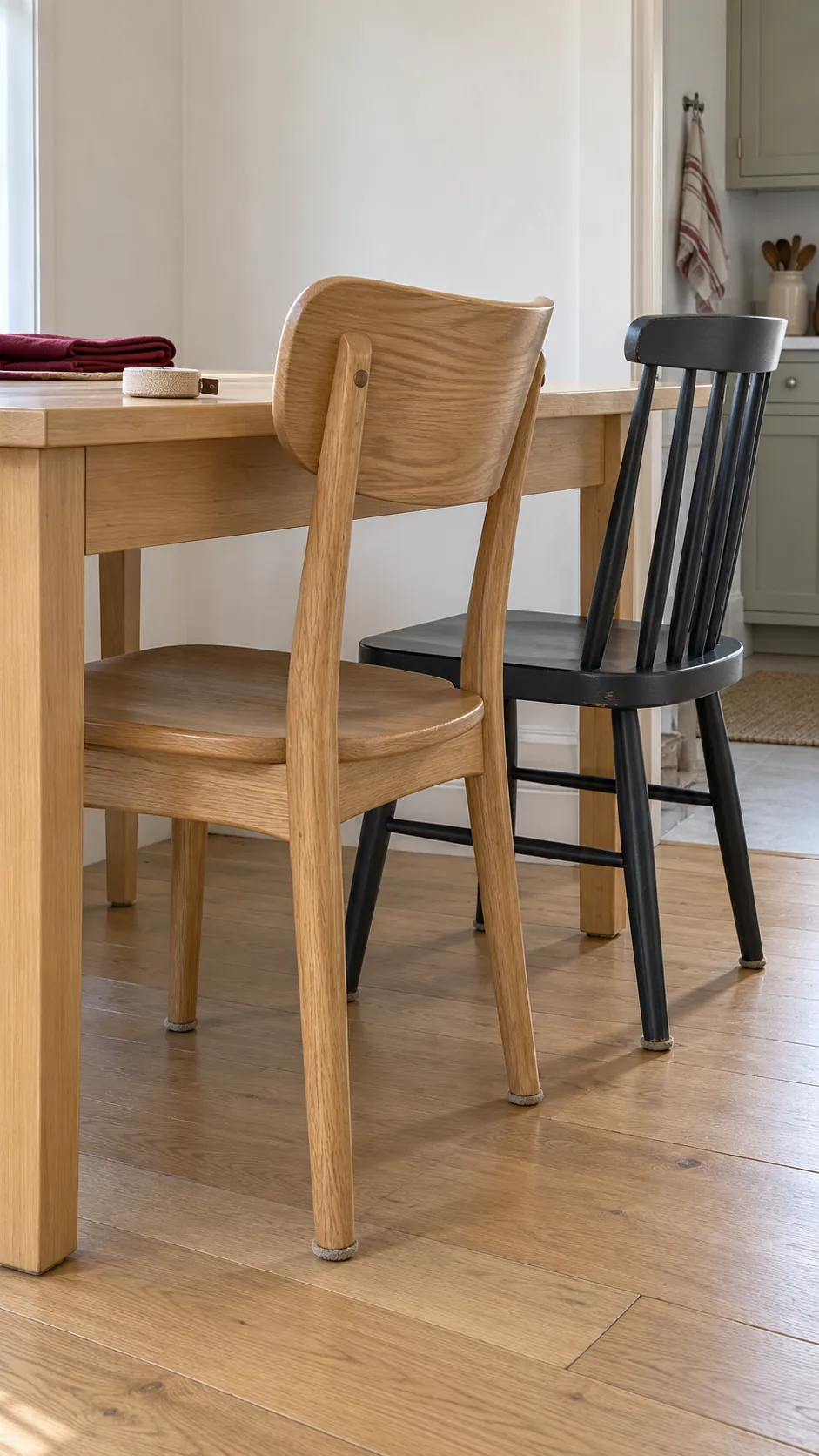
Let a matching pair anchor the ends
If you have two chairs from one set and four or more from the other, try the pair at the head and foot of a rectangular table. This gives the smaller set a clear role and makes the repeated side chairs feel deliberate. Upholstered chairs, armchairs, or chairs with broader backs often suit the ends, provided they fit the table and leave space to pass.
Place the end settings in line with the table center rather than moving them toward whichever corner has more room. Keep the same napkin fold and glassware at those seats so their different chairs do not imply a different level of importance. Check the table legs too, since a beautiful end chair is useless if a guest has nowhere comfortable to put their feet.
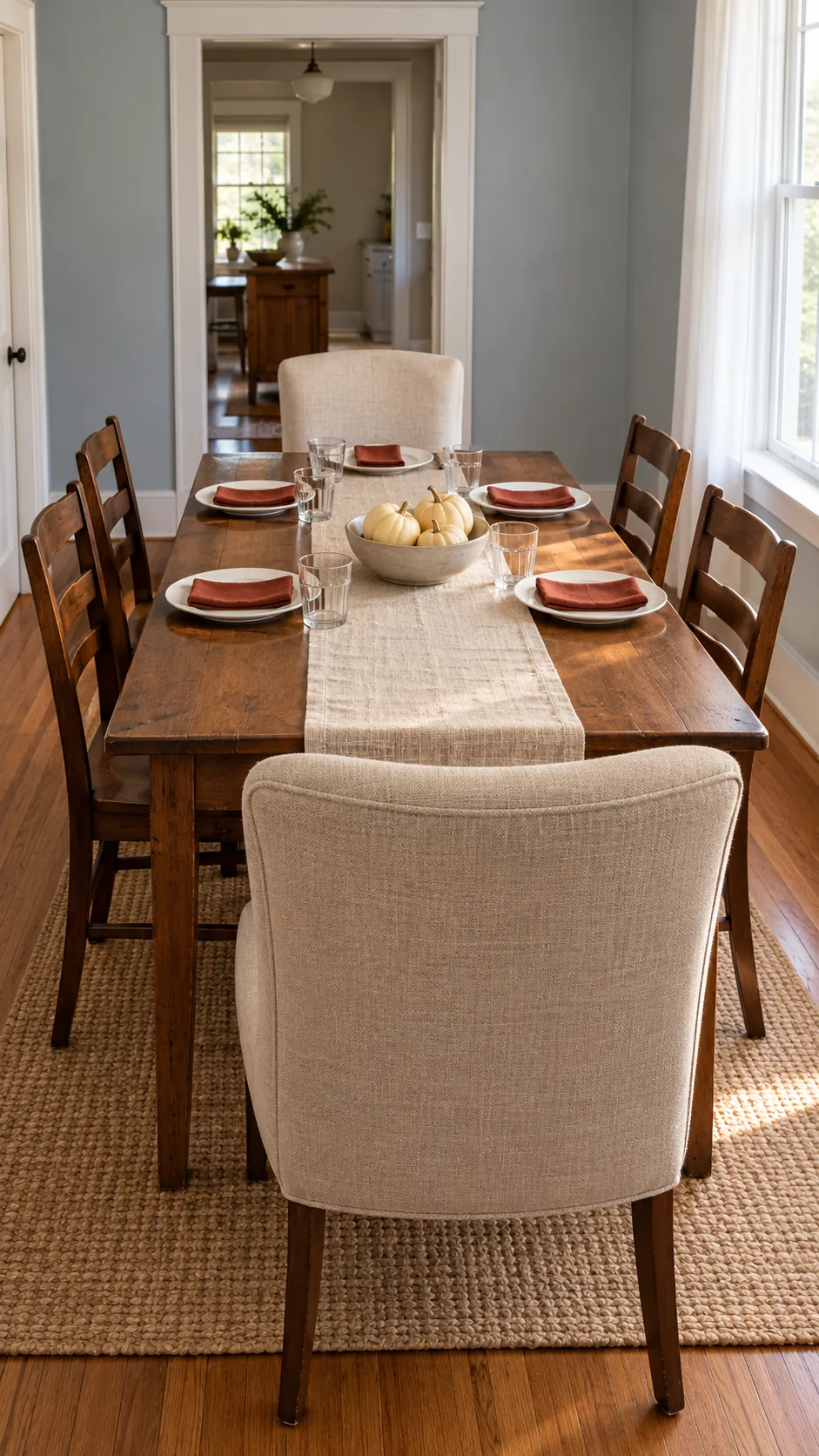
Use a repeatable pattern when the sets are equal
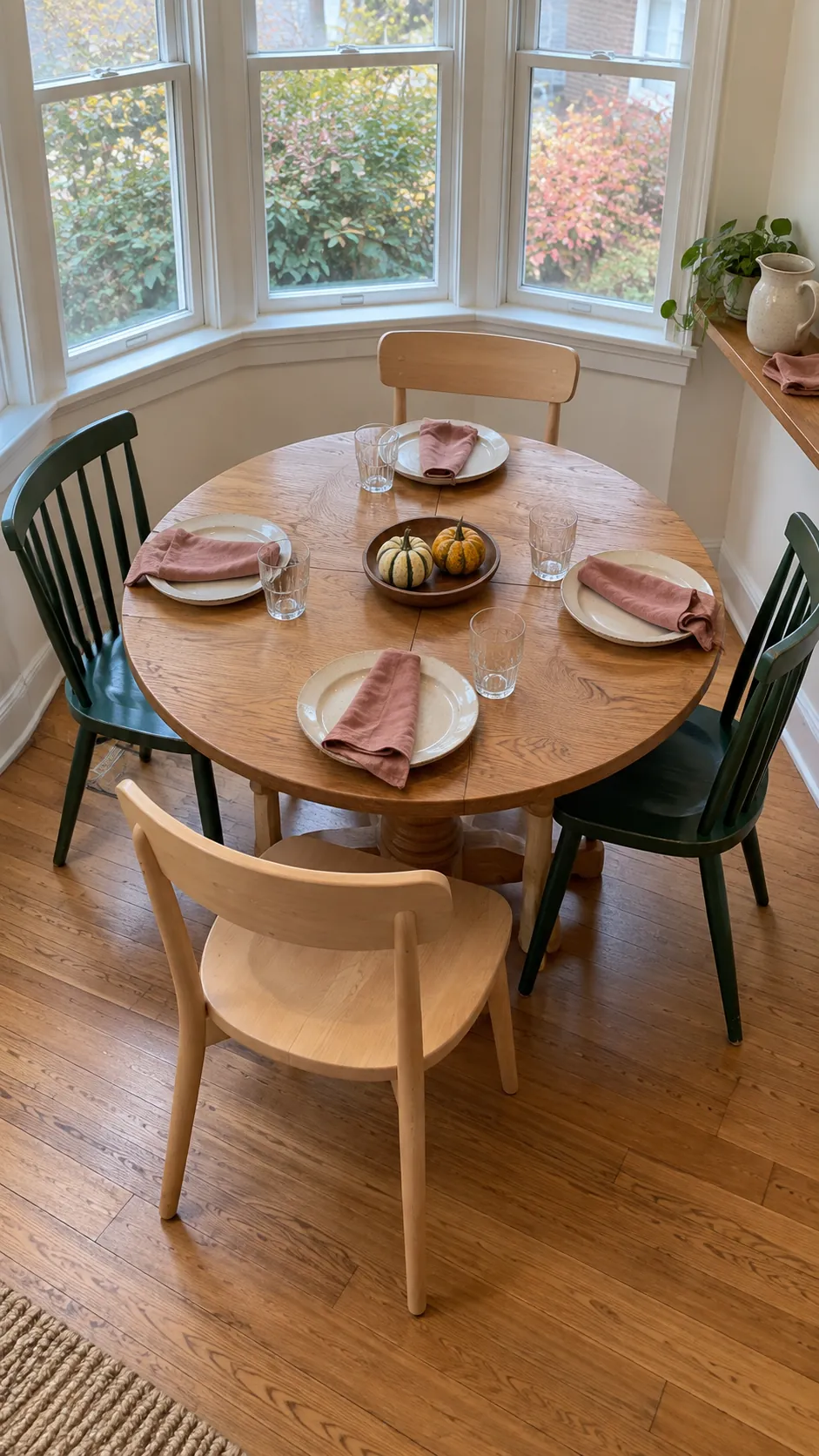
With equal numbers, alternating the sets can make the contrast look intentional instead of accidental. This works especially well around a round or square table, where the eye can follow a simple repeated rhythm. If bulky chairs crowd one another, keep each matching pair opposite its partner instead and choose the arrangement that gives everyone usable elbow room.
Choose one bridge color for the whole table
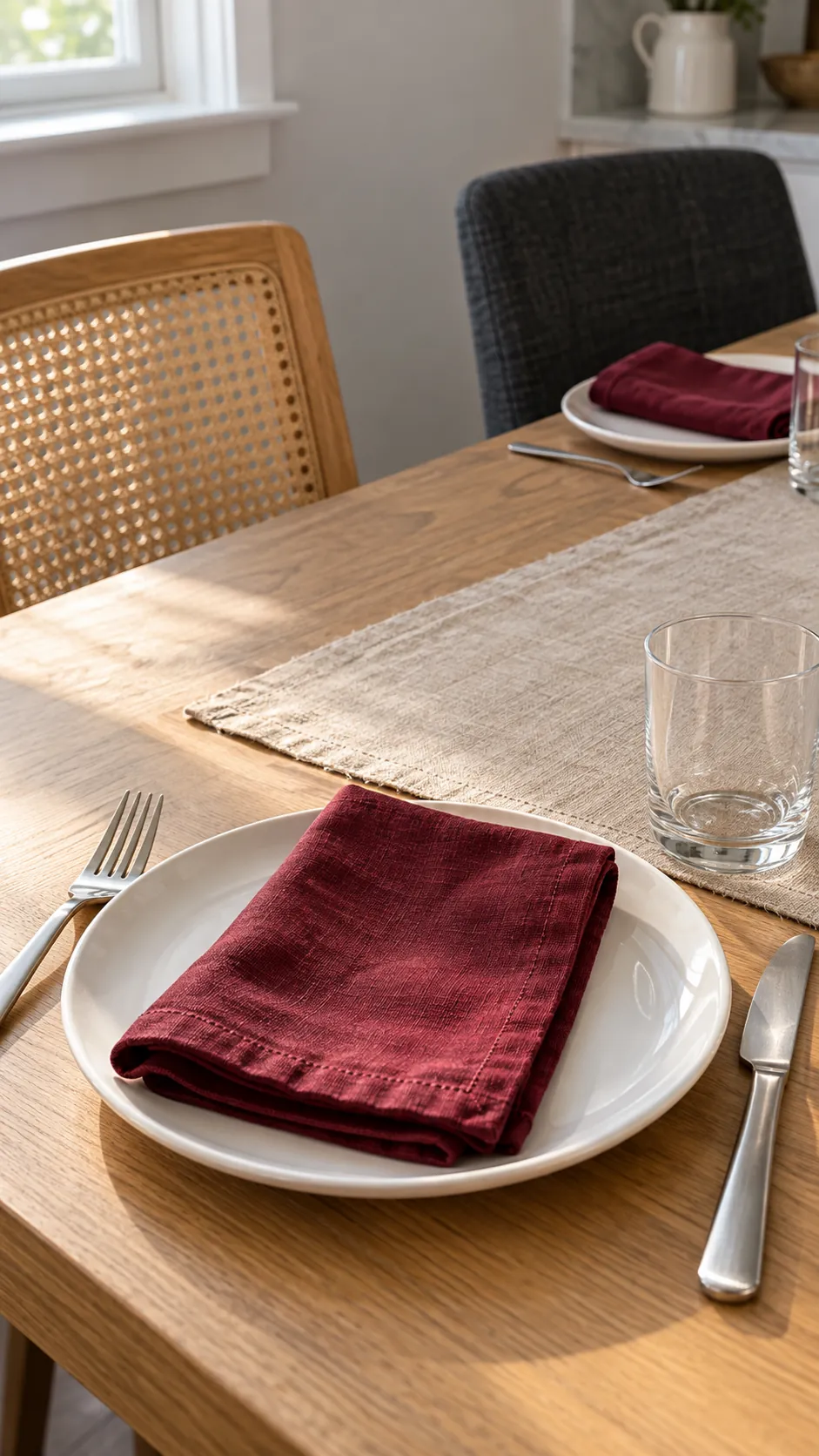
Look for something the chairs already share, such as warm wood, a dark frame, a woven seat, or a quiet neutral fabric. Repeat one compatible color in the napkins or runner rather than trying to reproduce every finish on the table. For example, pale oak chairs and charcoal chairs can sit comfortably beside white dishes, burgundy napkins, and a natural linen runner.
Keep most of the visible table surface calm when the chair shapes are strongly different. A patterned cloth, several colorful plate styles, and a dense centerpiece add more competing information than the seating needs. Choose the Thanksgiving color palette from your existing linens first, then add a small seasonal accent if the table still needs one.
Decide how much of the table to show
A runner keeps the table finish visible and can connect wooden chairs to the surface they surround. A full cloth is useful when the tabletop itself introduces another strong pattern or color, although it will not hide the differences in the chair backs. Spread the linen before decorating so you can judge the complete combination from the doorway.
Keep the drop clear of guests’ knees, chair arms, and places where the fabric might catch as someone stands up. If the cloth hangs unevenly, center it again before adding dishes rather than compensating with decorations. Table linen coordination works best when the linen feels like one continuous surface, with every setting sitting comfortably on it.
Add chair ribbon only where it belongs
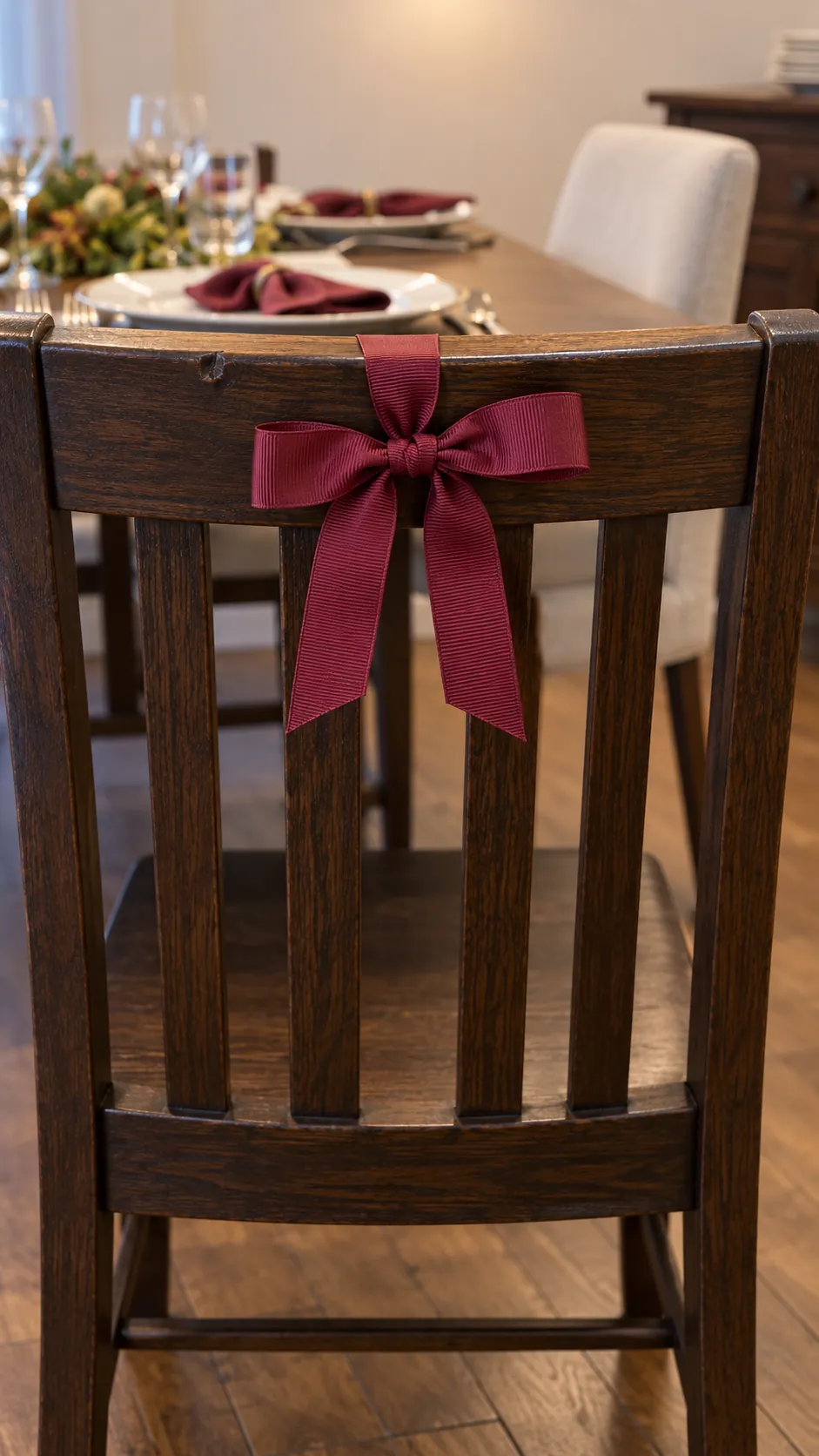
A short ribbon can echo the napkin color, but it should be an optional accent rather than a way to disguise the furniture. Tie it to a secure slat or rail on a chair that offers a suitable attachment point, and keep the knot on the outside of the back. Trim the tails so they cannot reach the seat, drag on the floor, or catch while the chair moves.
Repeat the place settings and keep the center low
Use the same basic plate, glass, and napkin arrangement at every seat, even when the dishes come from everyday cupboards. If you have mixed dishes too, repeat the same combination at each place rather than giving one chair set a separate plate style. That repetition lets the furniture provide character while the dining surface stays coherent.
Choose a low centerpiece that allows guests to see one another across the table. A shallow bowl of small pumpkins or a compact arrangement on a tray is easier to move than a long scattering of ornaments. Leave enough clear surface for the serving plan, and move larger dishes to a buffet if the centerpiece and place settings already fill the tabletop.
Walk through dinner before guests arrive
Set one place fully, pull out the adjacent chairs, and carry an empty serving dish through the room. This small rehearsal reveals whether a wider chair blocks a route, a ribbon catches, or the tablecloth slips when someone sits down. Make those corrections before finishing the other settings.
Look at the table from the entrance once more, then take a seat where a guest will sit. Keep the arrangement that makes the chair contrast legible and the meal comfortable, even if it is less symmetrical than your first plan. The borrowed chairs have done their job when everyone can settle in without rearranging the room.