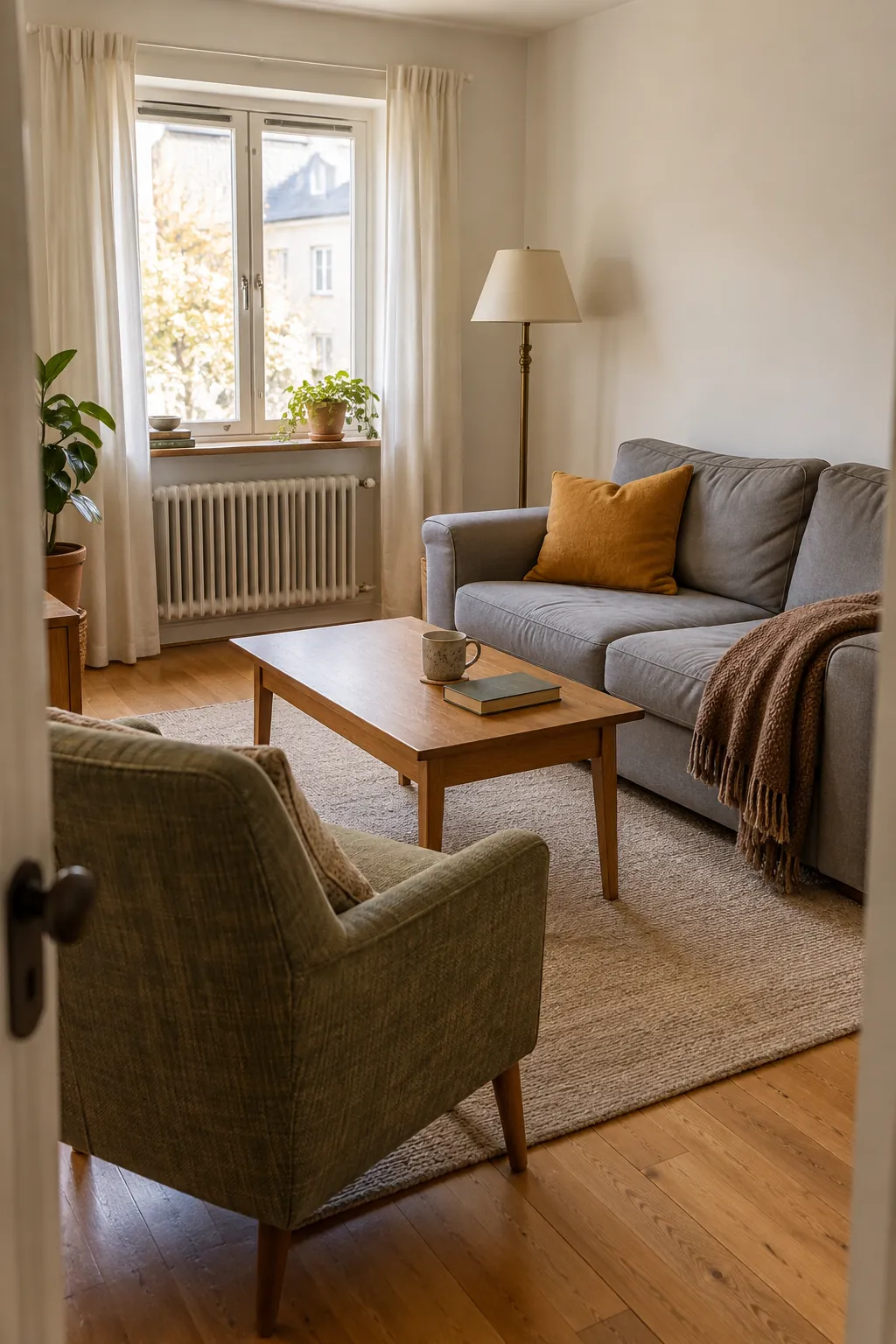
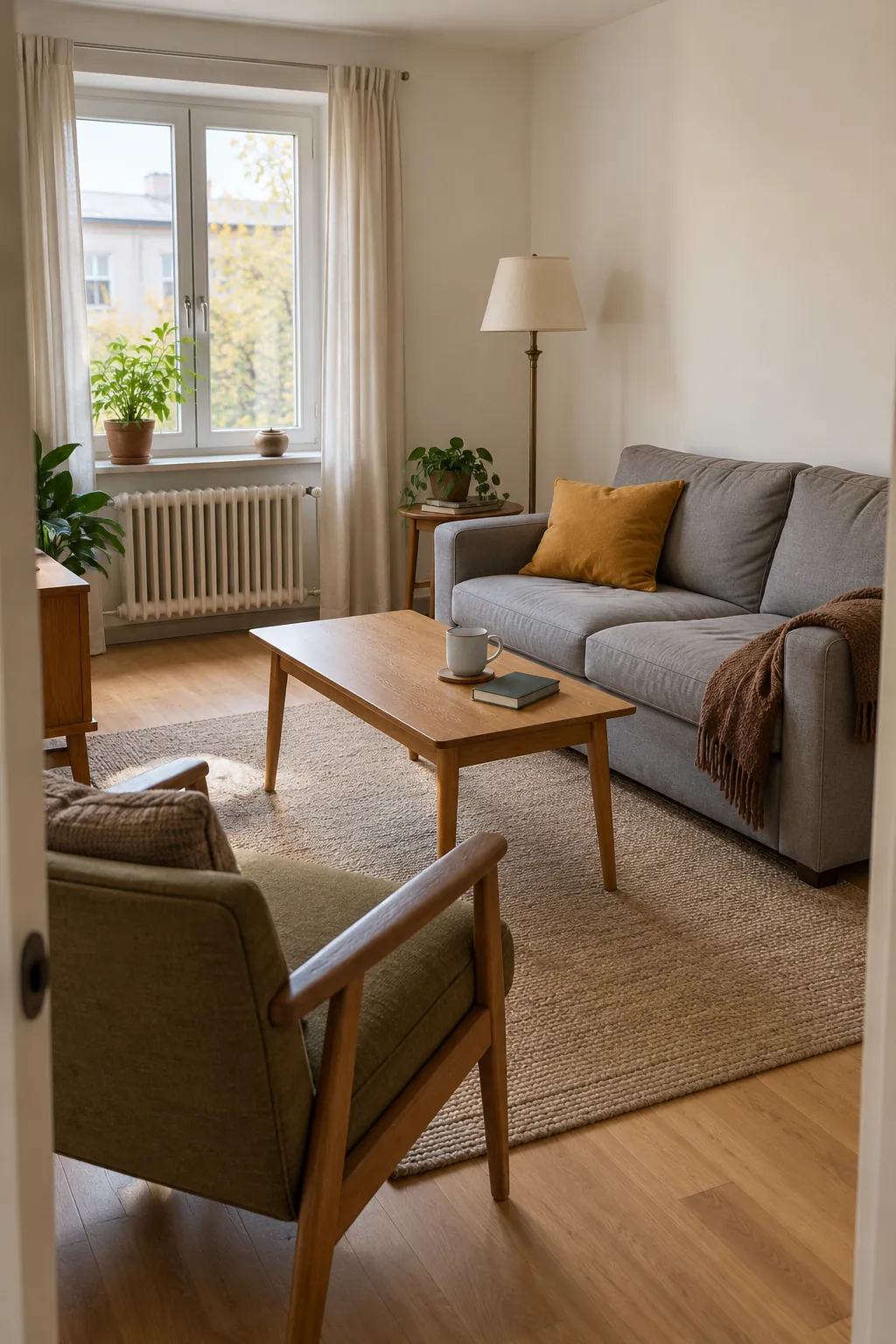
It is easy to buy a basket of seasonal objects and still dislike sitting in the room after dinner. Comfort comes from the seat, the light, and the things within reach. Work on those first, then let a few autumn colors do the decorating.
Start with what already feels good
A basket of new pumpkins will not fix a sofa you cannot stretch out on. Before shopping for autumn decor, sit in the room at the time you normally use it and notice the actual irritation: glare, nowhere for a mug, or a blanket that always slips onto the floor. Choose the comfort problem first, then decide whether it needs a purchase at all.
Bring useful pieces together before adding more. A lamp from the bedroom might work beside the reading chair, and a stored throw may already contain the warm color you want. Keep only changes that make the living room easier to enjoy rather than harder to tidy.
Change the covers, keep the inserts
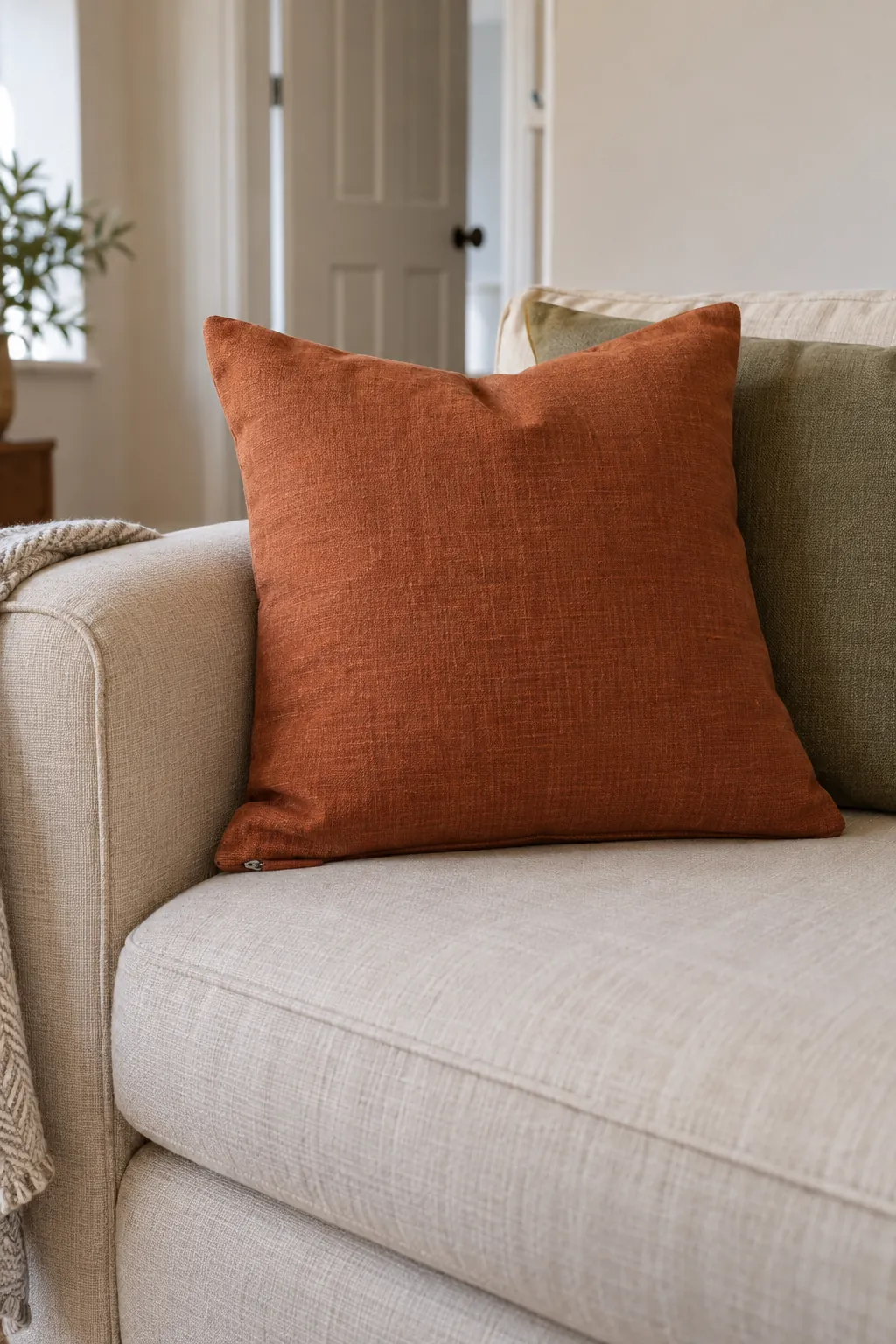
Pillow covers take less storage space than another set of filled cushions. Measure your existing inserts before choosing replacements, and start with one warm color that works with the sofa. Rust, olive, or cinnamon can read as seasonal without competing with a patterned rug.
Give the evening light a softer shape
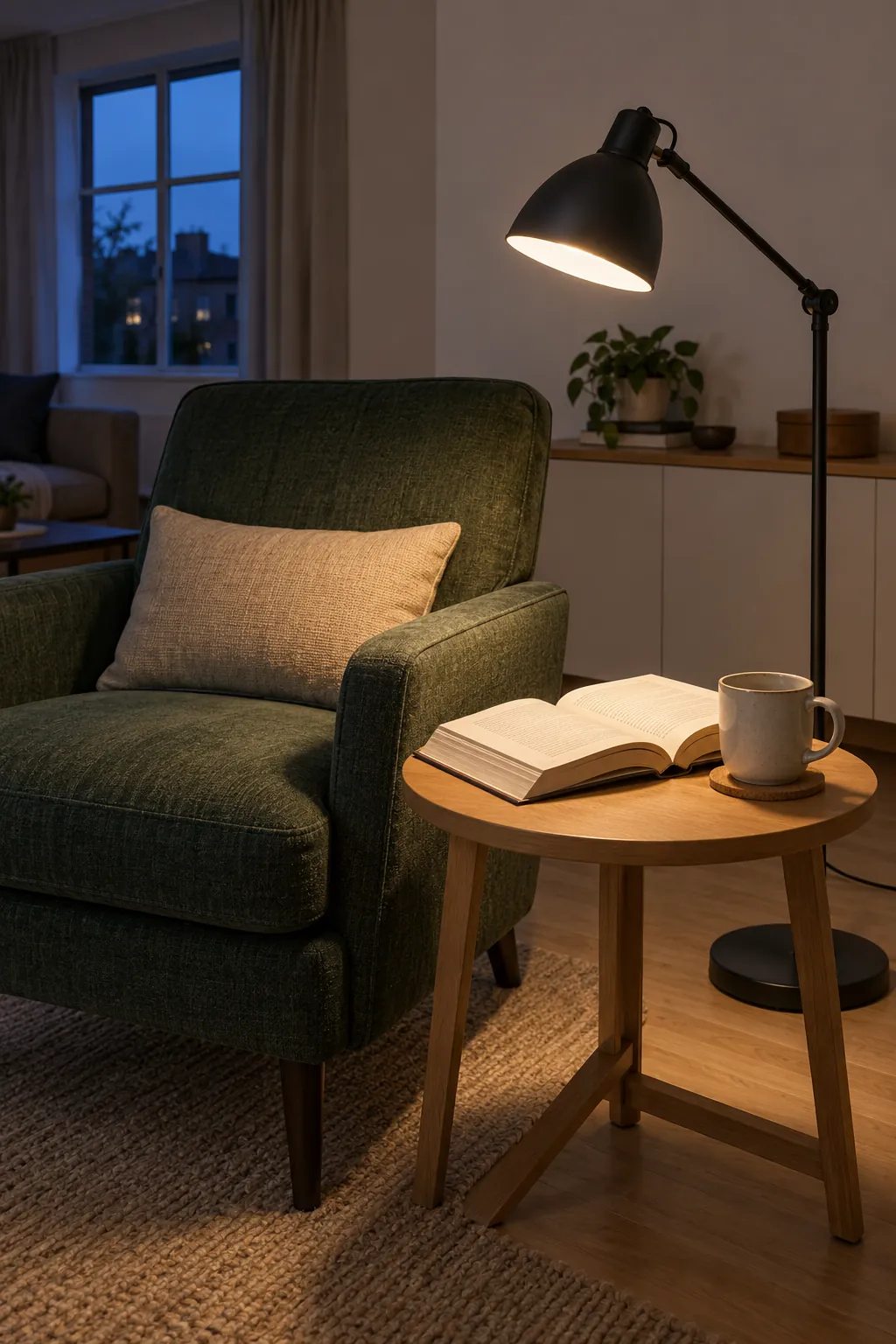
A cozy living room needs light where people sit, not just brightness overhead. Move an existing lamp beside the chair or sofa and check whether the shade hides the bulb from a seated position. Route the cord behind furniture so it cannot snag someone walking through.
Try the arrangement after dark before buying a second lamp. A warm bulb compatible with the fixture can make neutral furnishings look gentler, while a task lamp should still provide enough light to read comfortably. If the screen reflects the lamp, shift it sideways rather than making the entire room dim.
Bring texture within reach
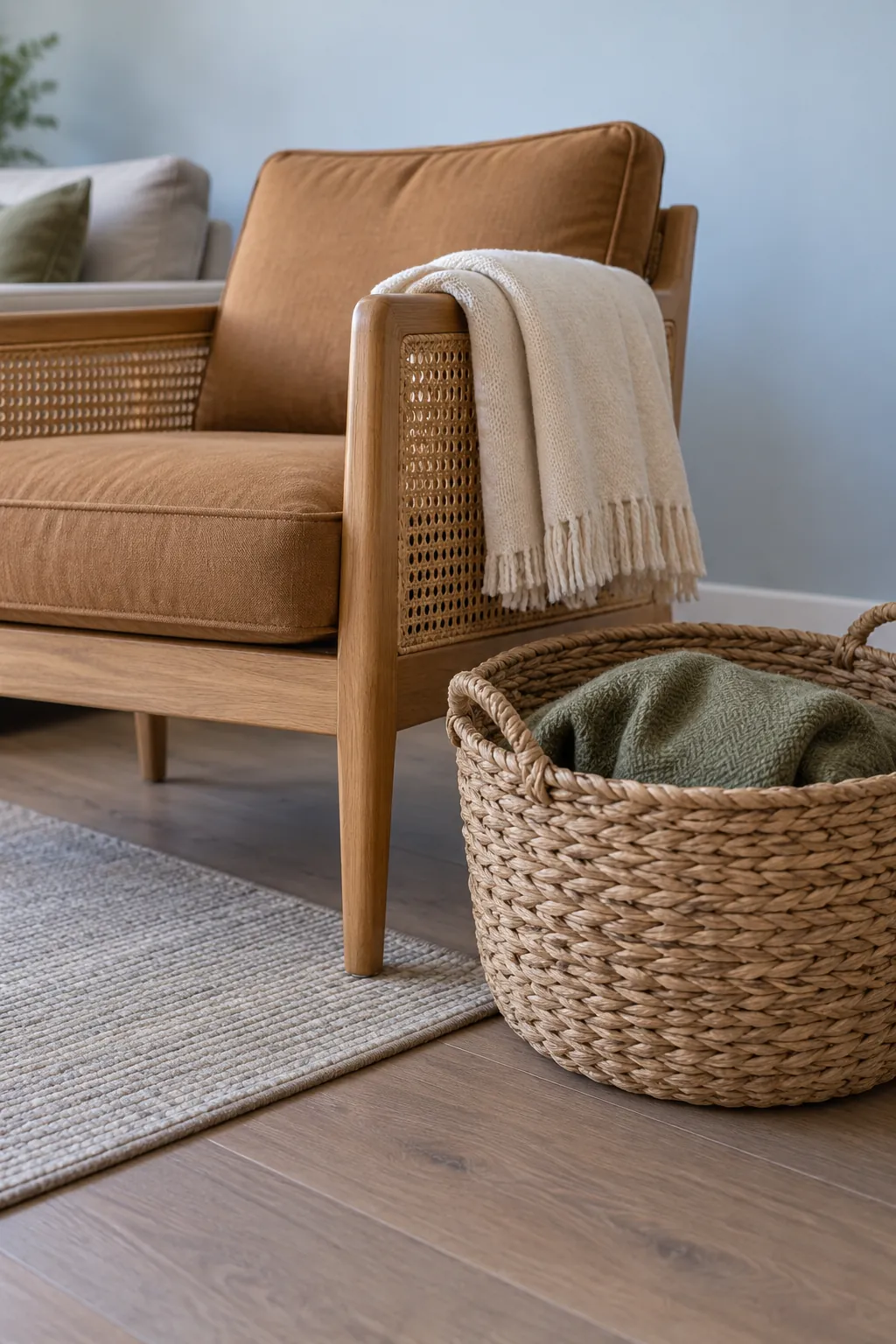
One soft throw earns its space when you can actually use it. Fold it over a sofa arm or put it in a basket beside the seat, rather than covering every cushion with blankets. Choose a fabric you can clean according to its care label, especially if pets share the sofa.
Balance that softness with an existing wooden table or a woven basket. Repeating one natural material is often enough to connect the room without buying a matching collection. Avoid adding a rough decorative textile where bare arms will rest.
If you already have a rug, check its edges and placement before looking for another. It should lie flat and help define the seating area without catching feet on the route through the room. Comfort has to survive normal movement, not just a photograph.
Style one small surface for the season
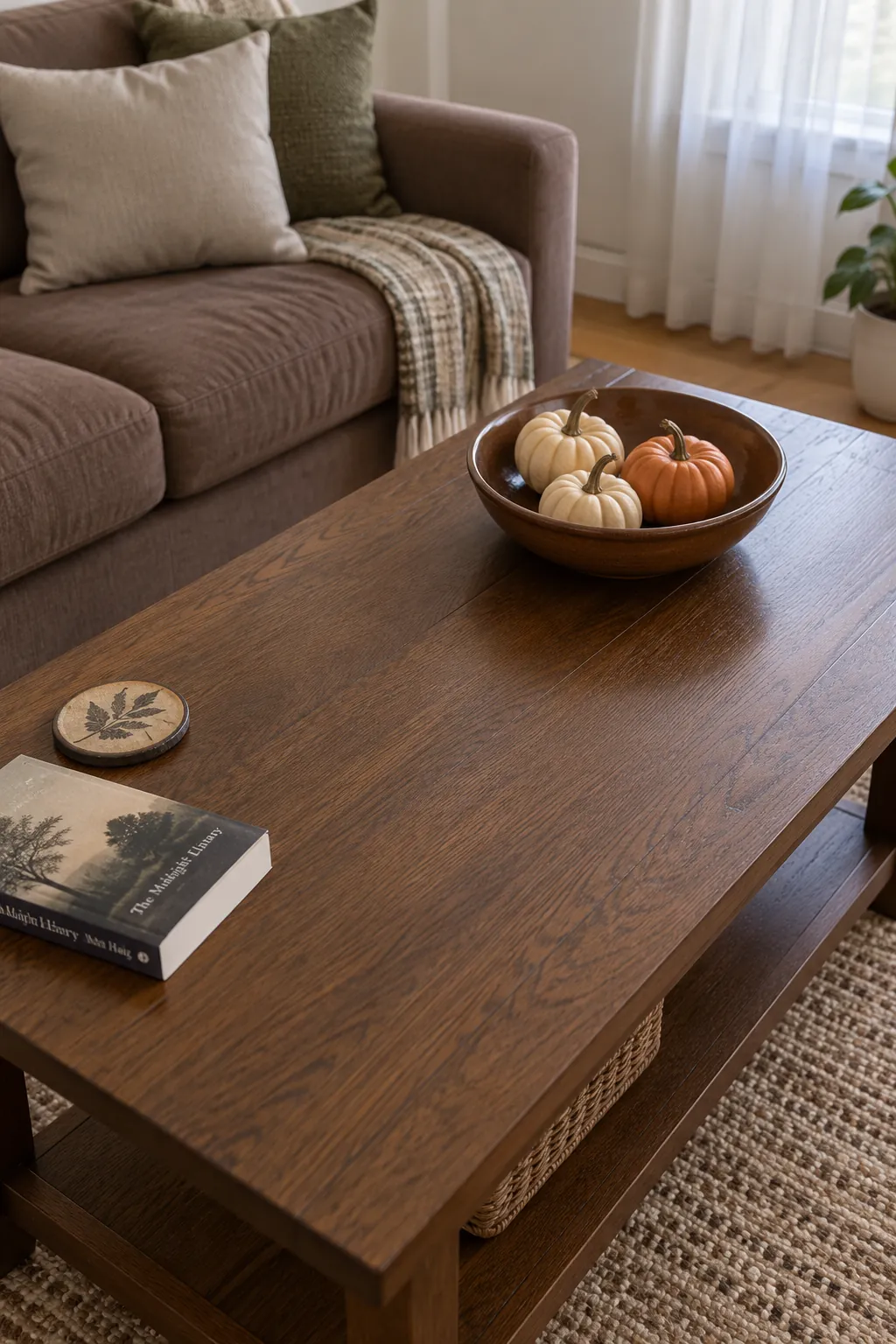
Choose a shelf or one end of the coffee table as the seasonal spot. A shallow bowl with a few small pumpkins gives autumn color while keeping the rest of the surface available for drinks and books. Keep tall stems away from sightlines between people sitting opposite each other.
Use a tray or washable dish beneath real produce and inspect it regularly for soft spots. If small children or pets can reach the table, choose objects that are suitable for that household and skip loose berries or fragile glass. A restrained seasonal centerpiece is easier to clean around than a display that occupies the entire room.
Let the room set the buying limit
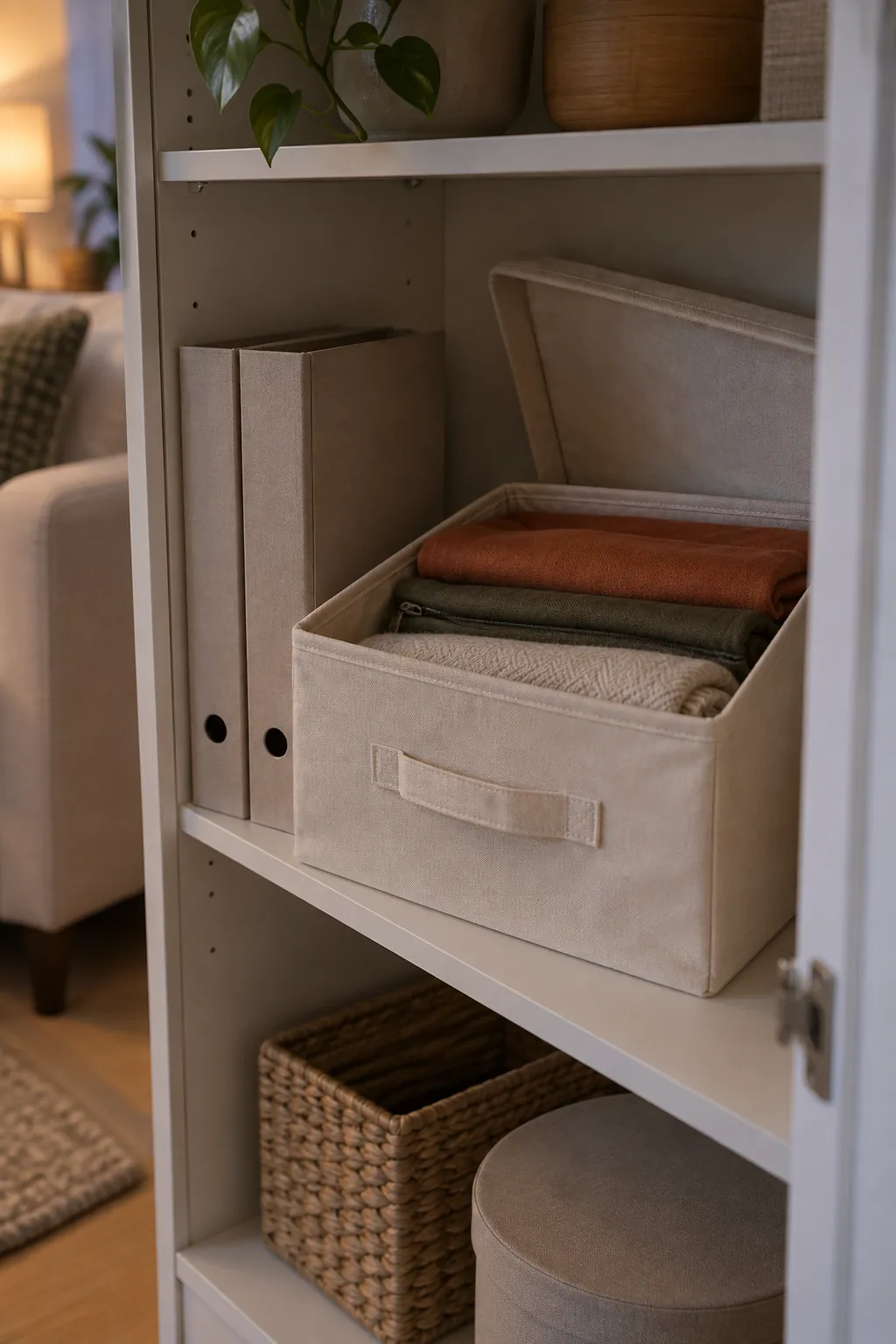
Before ordering anything, decide where seasonal pieces will live when the season ends. A small storage box can become a useful limit: once it is full, a new item replaces something rather than joining an expanding collection. Covers and foldable textiles are easier to store than bulky novelty ornaments.
Leave the room arranged for several evenings and notice what gets used. If the existing lamp and throw solve the comfort problem, there is no need to add another decorative layer. Spend on the missing practical piece only after you can name the job it will do.