A curtain can either calm a green bathroom or make every surface compete for attention. Begin with the fixed finishes, especially the tub and floor, then decide how much contrast you want. You do not need a matching set of green towels, mats, and fabric to make the room feel connected.
Start with the shade of green
White, ivory, oatmeal, blush, navy, and a restrained green pattern can all work, but the best choice depends on the green already in the room. For a crisp mint or blue leaning green, start with white; for sage or olive, compare ivory and oatmeal first. A shower curtain covers a large surface, so its background color usually matters more than a small accent in its pattern.
Hold a white towel beside the tile or paint to judge whether the green looks cool and blue or warm and yellow. Then check the curtain against the bathtub, grout, and floor, since those fixed surfaces can make a new neutral look unexpectedly pink or gray. Compare fabric in daylight and with the bathroom lights on before committing.
Choose white when the room needs breathing space
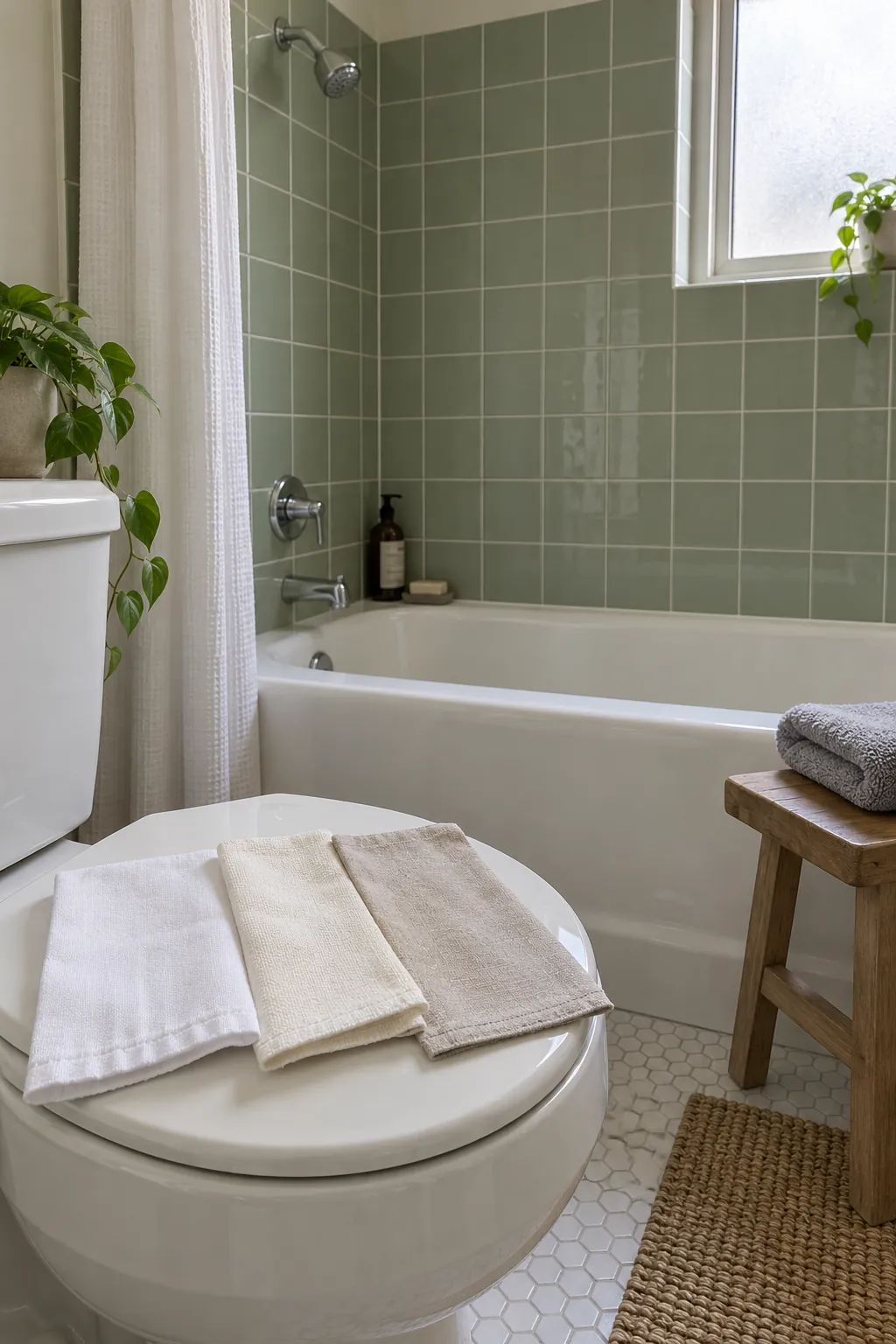
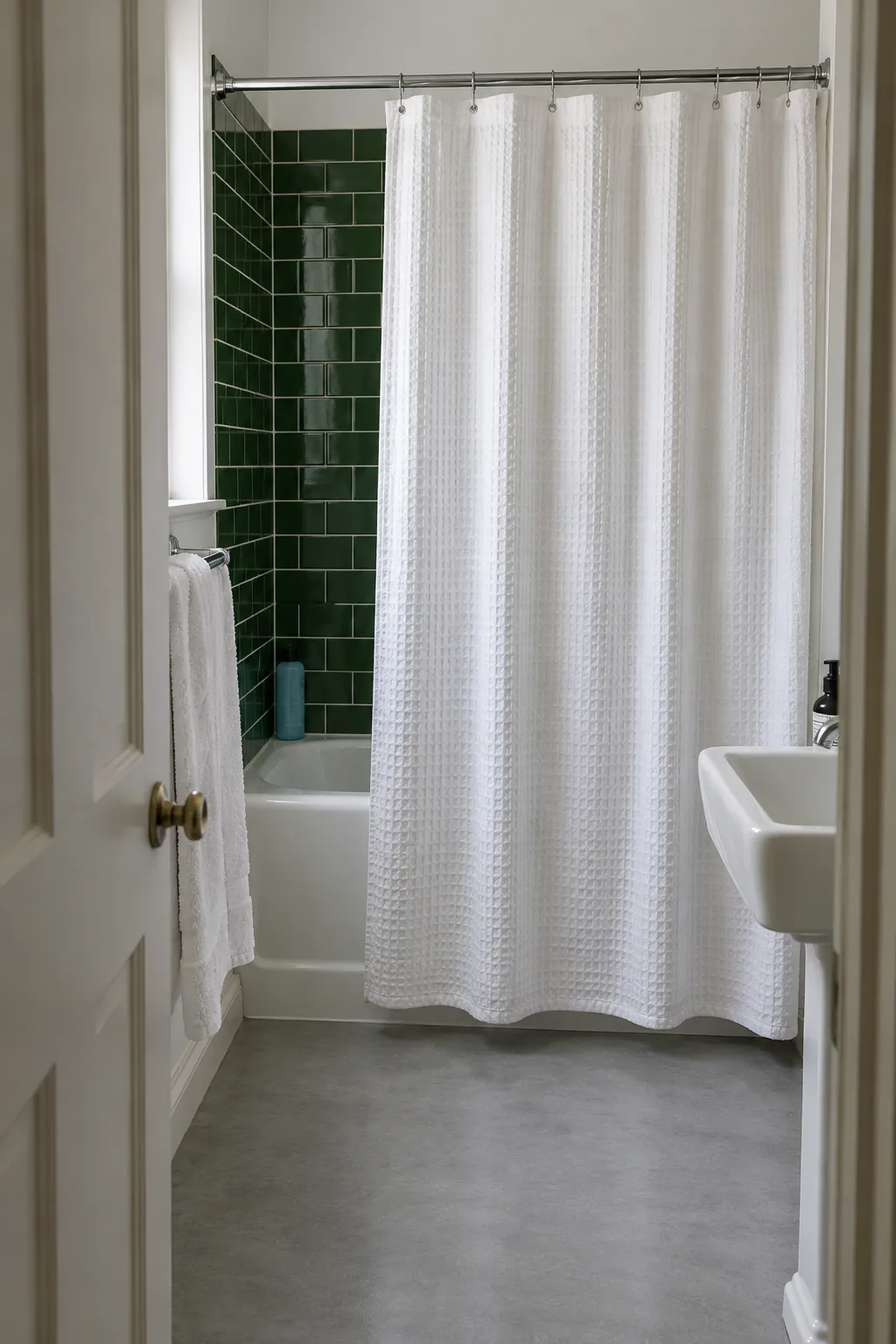
A white curtain is a strong starting point when the bathroom contains saturated green tile, several green surfaces, or a busy floor. It separates the shower from the walls and gives the eye a place to rest. A textured white weave can add interest without introducing another color.
Look at the tub first: a bright white curtain beside a noticeably cream tub may make the tub look more yellow. In that case, try a softer white rather than insisting on the brightest option. Keep towels white too, or repeat one small accent already present in the room.
Use ivory or oatmeal to soften sage and olive
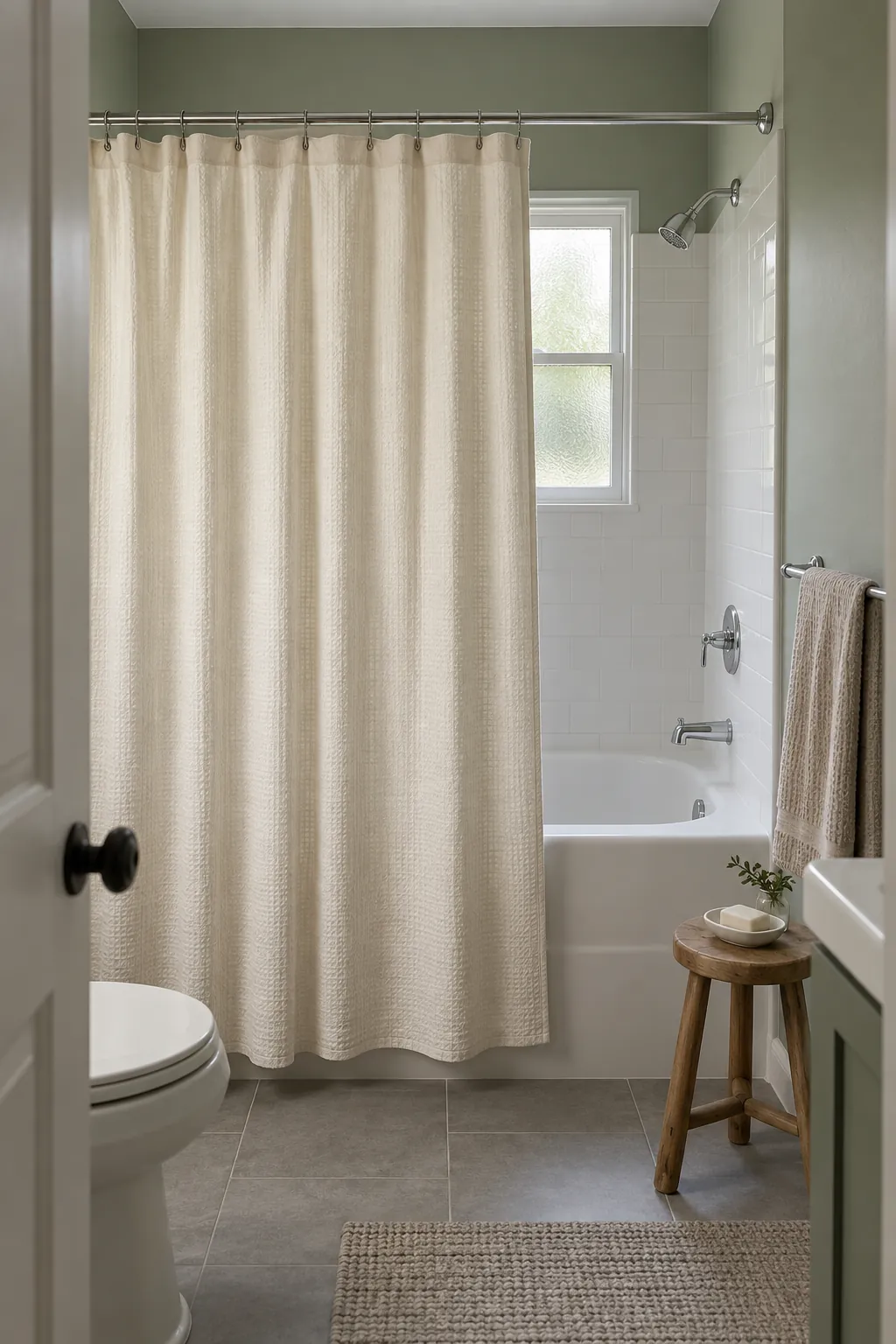
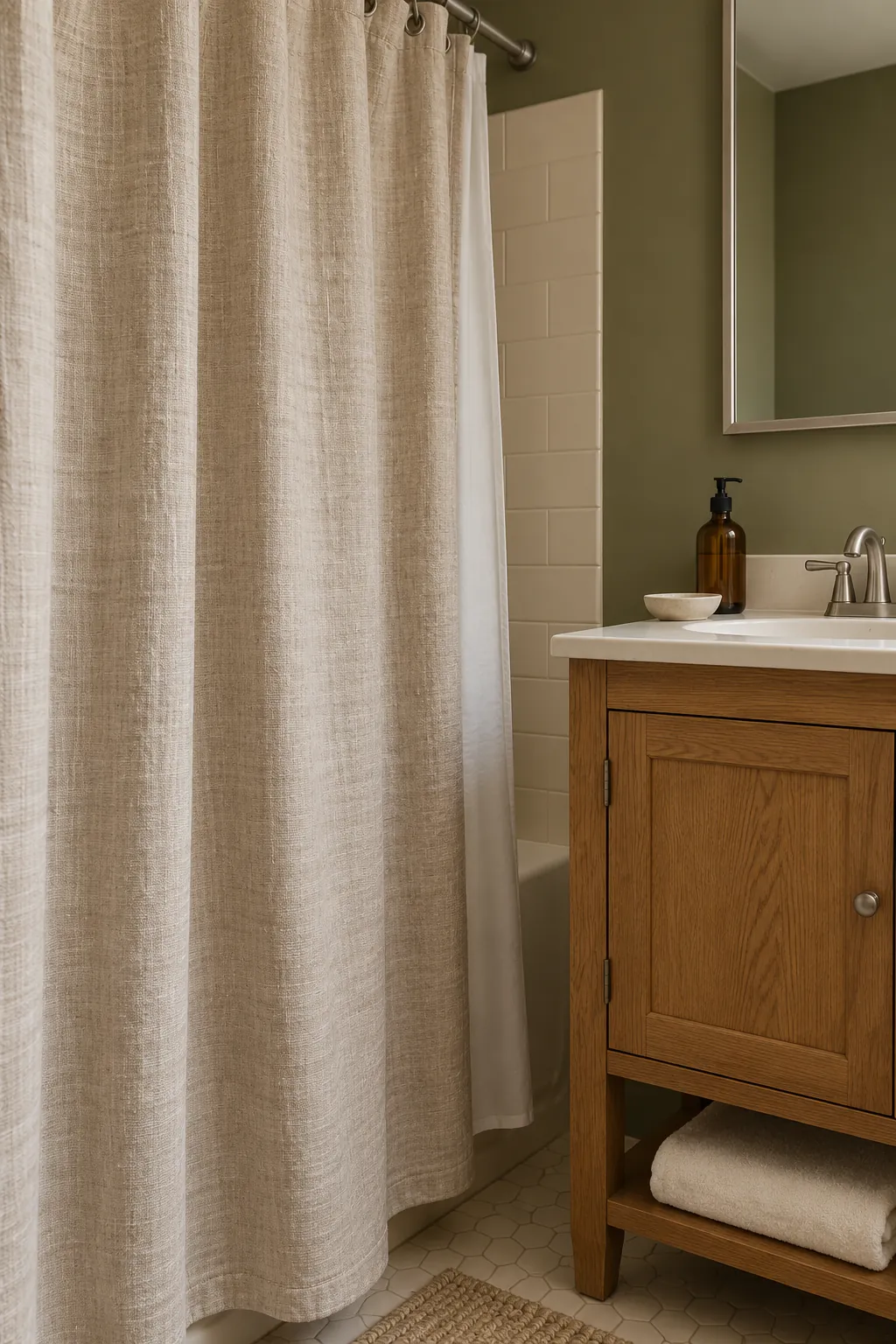
Ivory suits many warm greens, especially when the room also has brass, cream fixtures, or honey colored wood. Oatmeal gives a similar effect with more visible contrast against a white tub. These neutral curtains for green walls can make a room feel settled without matching every surface.
Cream curtains with green walls work best when the cream agrees with the other pale finishes rather than adding a new yellow tone. For a linen look, choose a shower curtain designed for the bathroom and follow its care label. Ordinary linen window curtains for green rooms do not automatically provide suitable coverage or water protection; use the appropriate liner and keep the decorative fabric outside the tub.
Try muted blush for gentle contrast
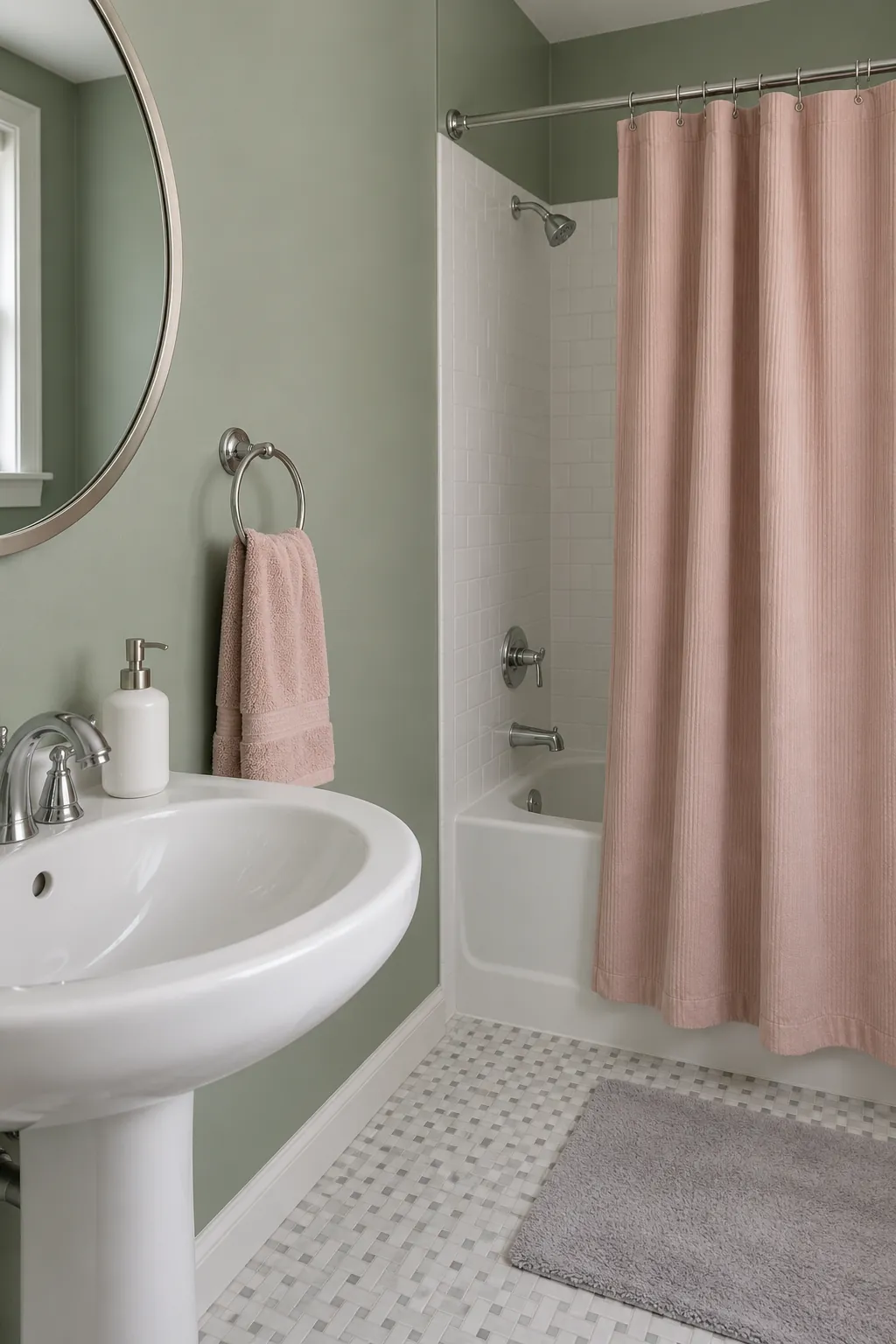
Dusty blush gives sage and deeper green a warm counterpoint without the sharp contrast of bright pink. Choose a muted shade that looks like a fabric color rather than a candy color. A solid blush curtain is easier to balance than a large pink floral print when the tiles already have a strong pattern.
Repeat the blush in one small towel or bath mat if the curtain looks isolated. Keep the remaining textiles neutral so the room still has a clear main color. Test this pairing carefully beside beige or peach fixtures, which can pull the palette in an unintended direction.
Keep navy and patterns deliberate
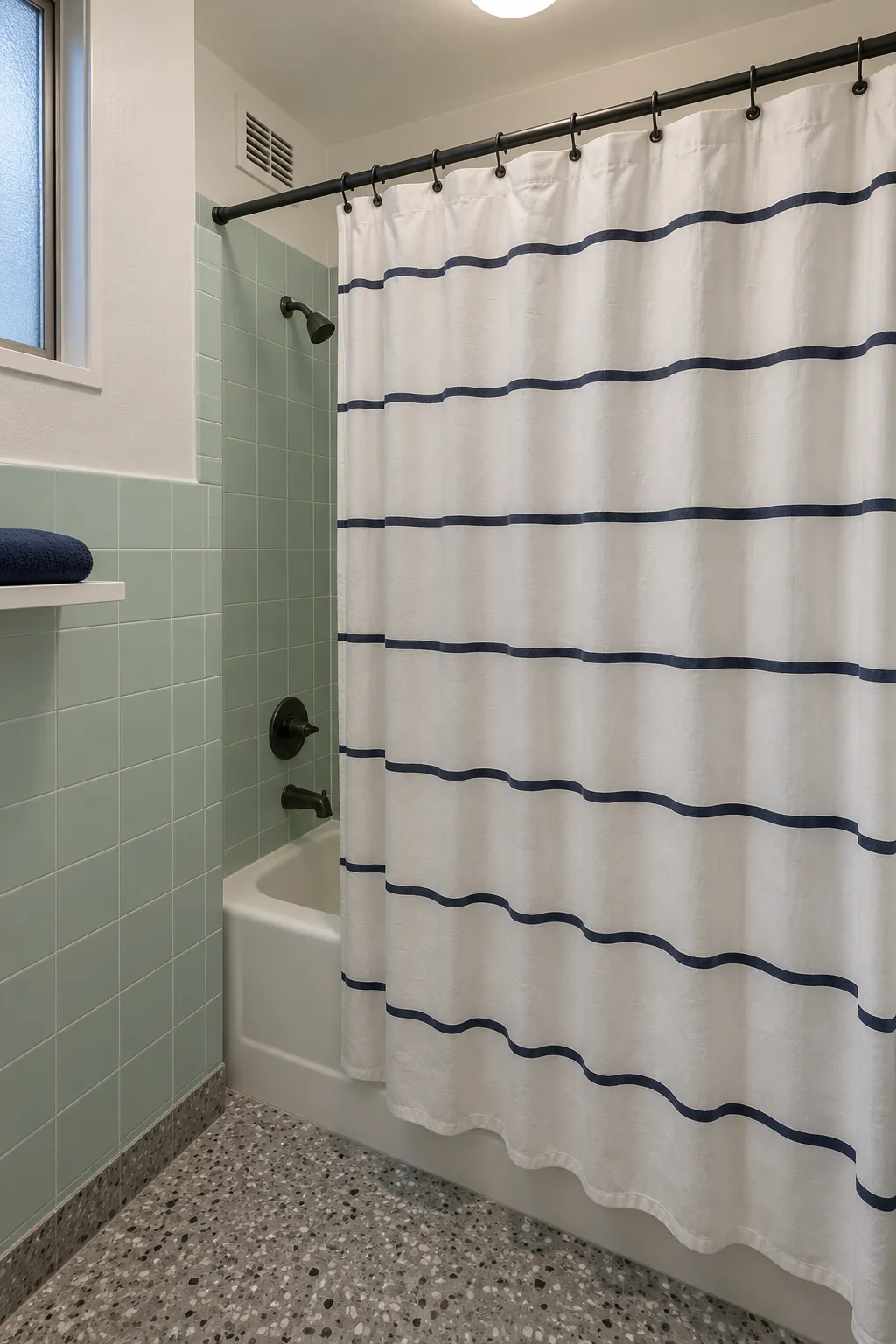
Navy can give pale mint or sage a stronger outline, especially when the room already has dark hardware or a dark floor. In a small room with little daylight, a full navy curtain may become the largest dark surface, so compare it with a white curtain that has navy stripes instead. This preserves the contrast while leaving more light color visible.
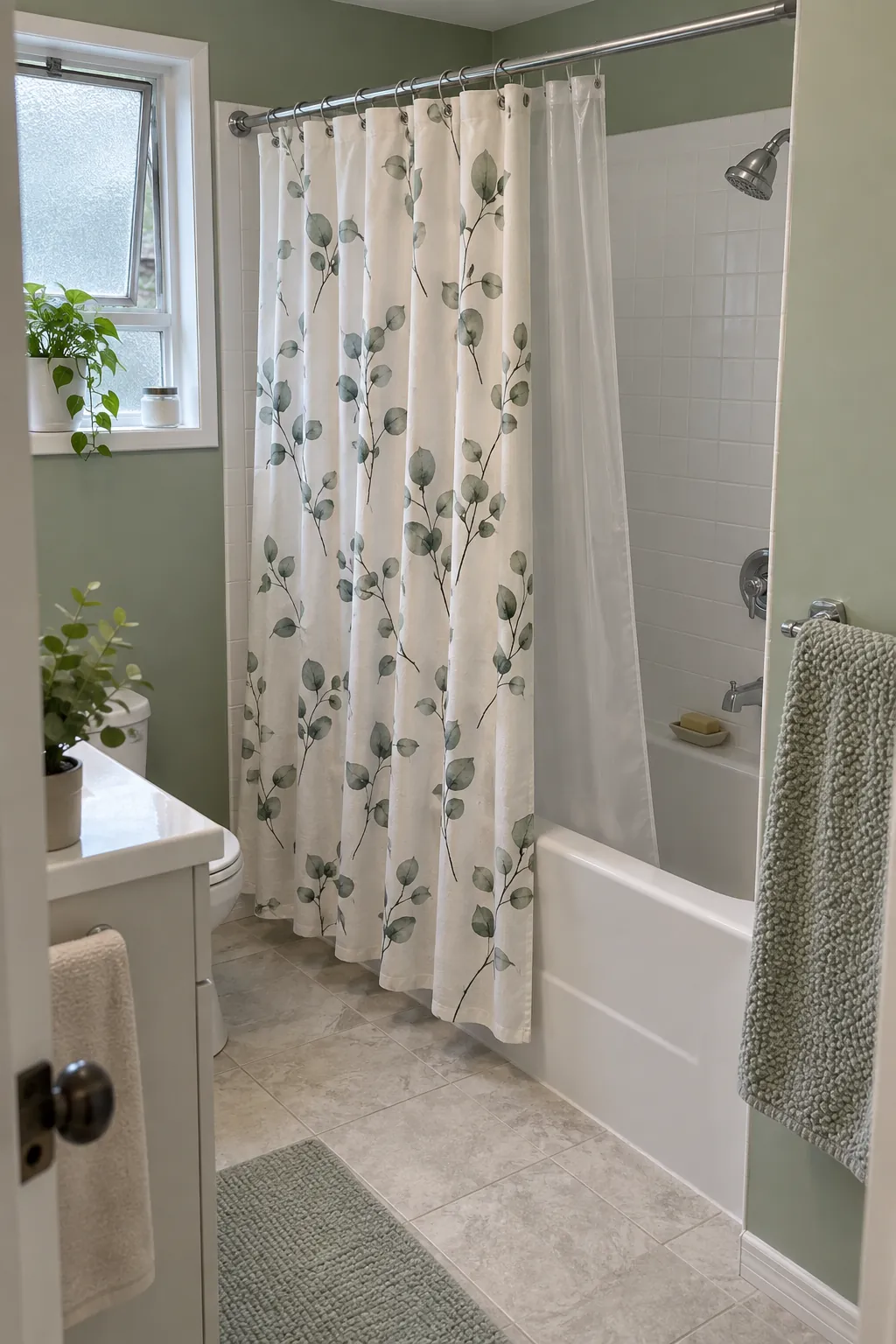
For a patterned curtain, select a pale background and a limited palette that includes the wall color or another existing finish. A botanical print can connect green walls to neutral towels, while widely spaced stripes give a simpler graphic effect. Avoid trying to match a printed green exactly to the tile unless you can compare the actual fabric, because a nearly matching green can look accidental.
Make the final choice with fabric and daily use in mind
Bring home samples or compare returnable curtains in the actual bathroom, keeping the shower curtain closed while you assess the full surface. Check whether the fabric hides the liner adequately, whether the length clears the floor, and whether its care instructions fit your laundry routine. A beautiful color is less useful if the curtain stays damp or is difficult to clean.
Let the curtain dry after use, keep the liner inside the tub as intended, and follow the manufacturer’s washing instructions. Choose towels after the curtain so you can repeat one color instead of buying several competing accents. If two options still look equally good, choose the one that agrees with the tub and floor under the light you use each morning.