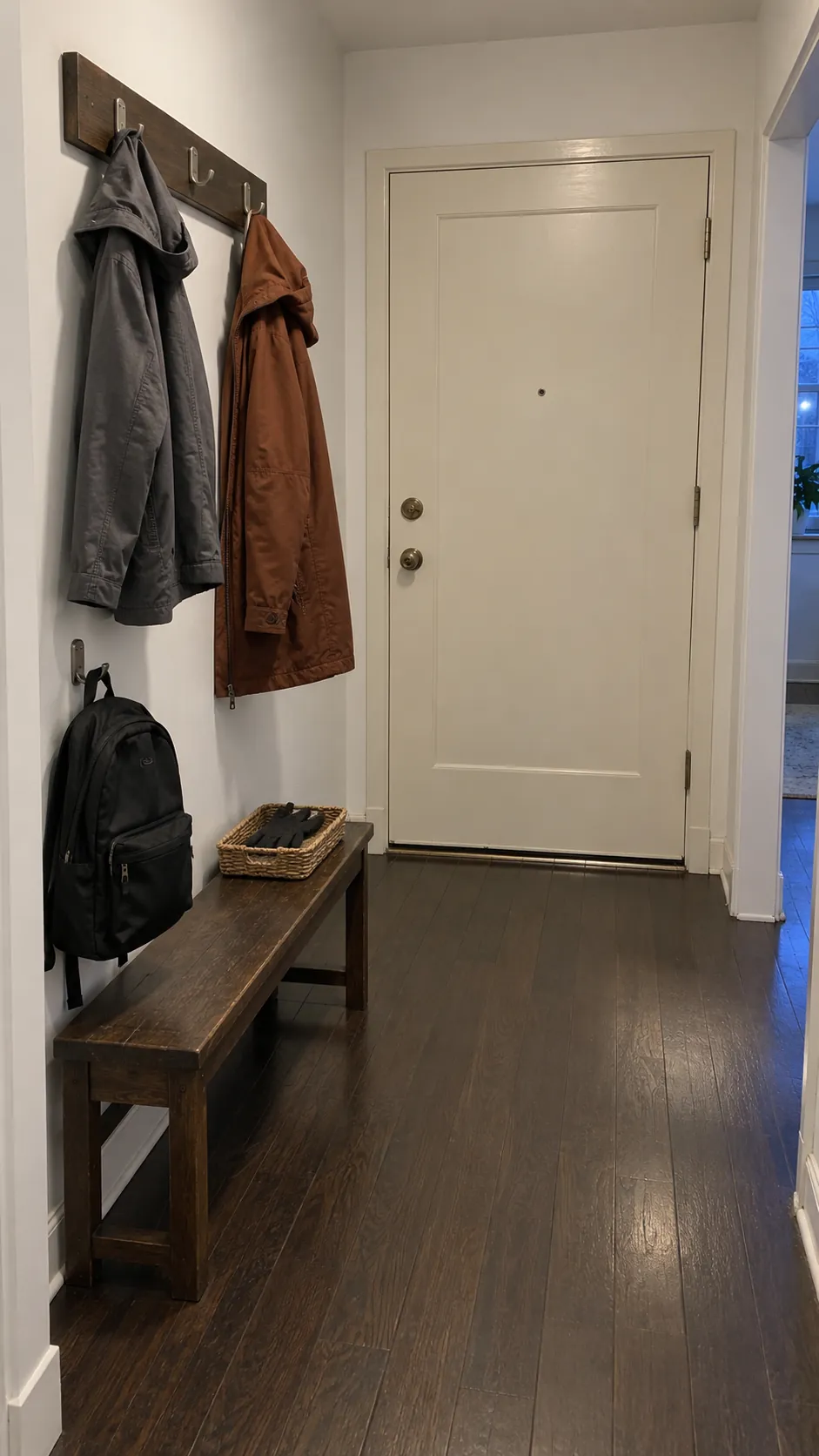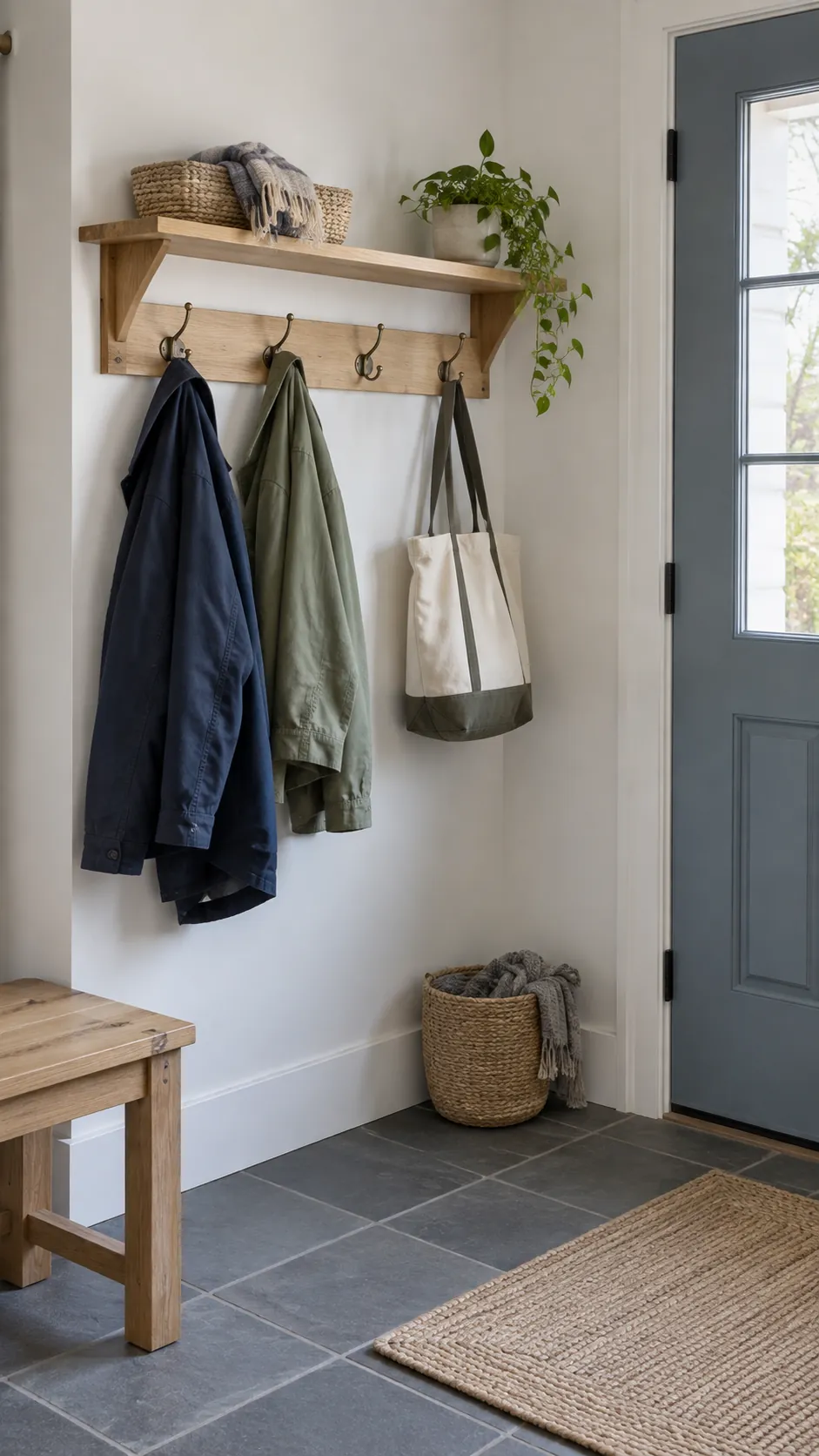
A rack stops helping when you have to remove three jackets to find the one you need. The fix starts with deciding what belongs beside the door and giving each daily item a place that is easy to use on the way in.
Empty the rack and decide what earns a hook
Take every coat, bag, scarf, and stray item off the rack before buying another organizer. Wipe the hooks and check for loose fixings or sharp edges that could catch fabric. Sort the items into what you use now, what belongs in another room, and what needs cleaning or repair.
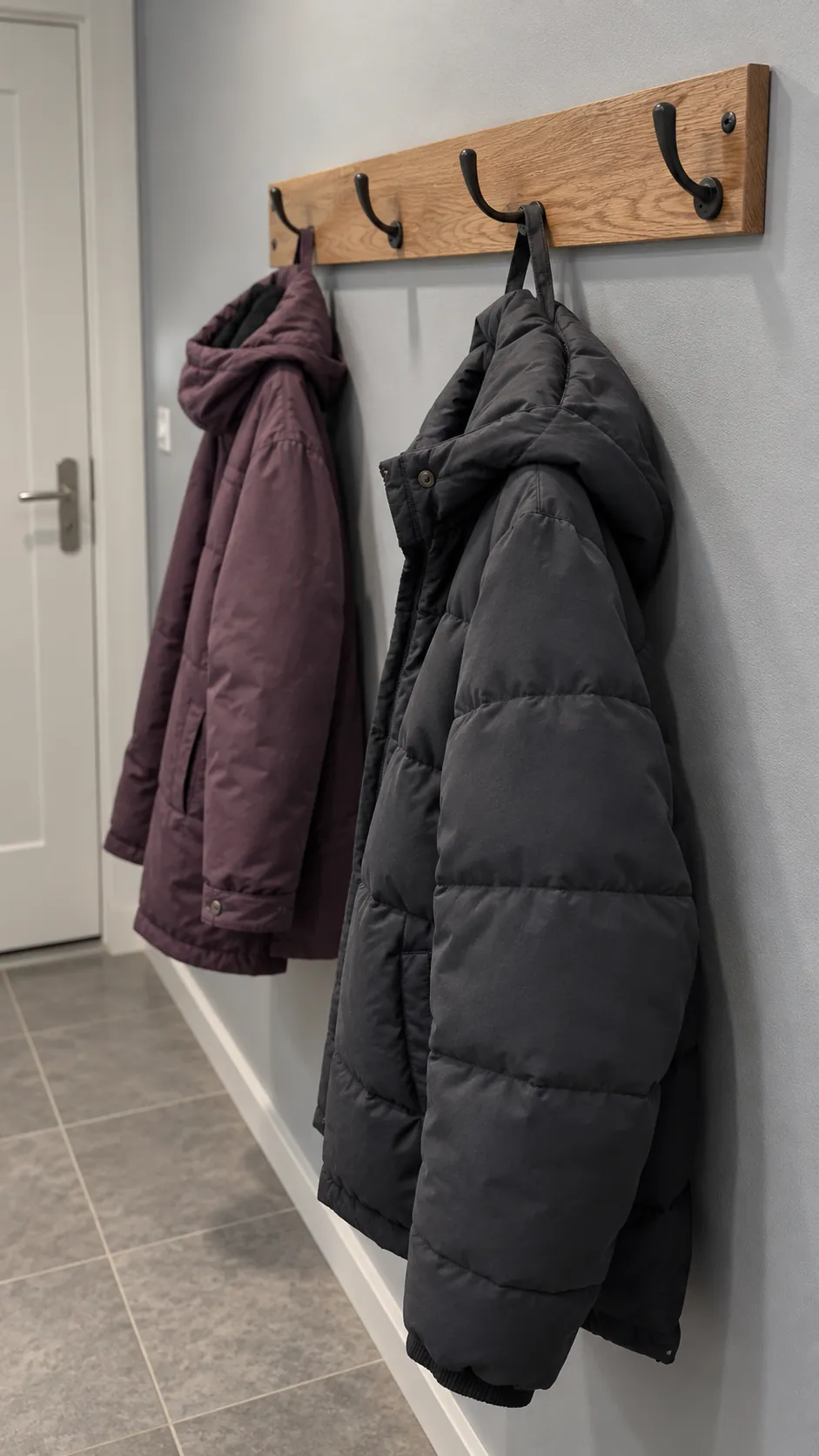
A useful starting limit is one current coat and one daily bag per person, adjusted to your actual hook space. Move spare jackets and seasonal coats to a closet, and keep clothing that needs shoulder support on suitable hangers. Hooks are a convenient landing place for everyday outerwear, but a heavy tailored coat can lose its shape if it hangs by one small point for weeks.
Give each person a place they can reach
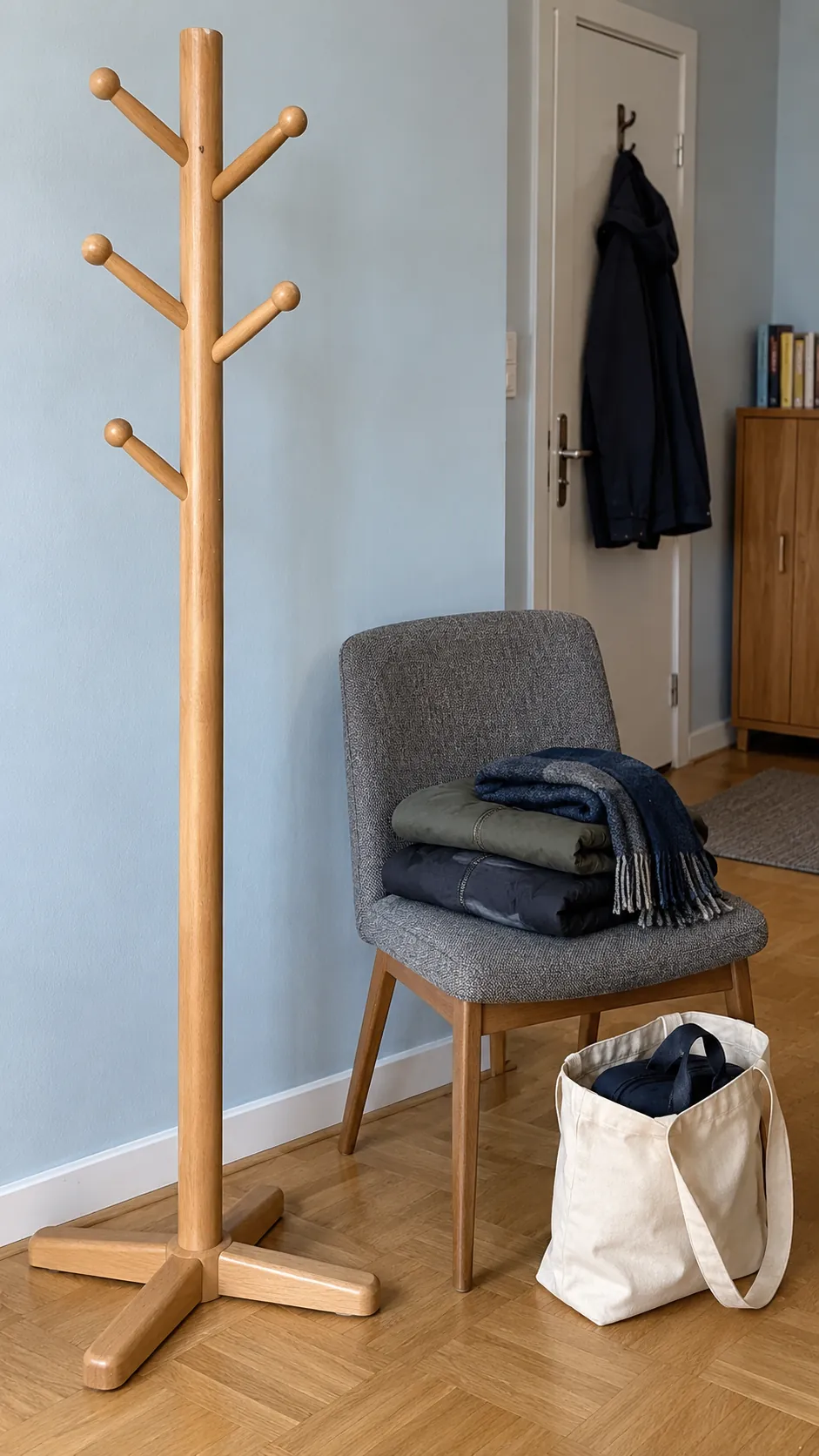
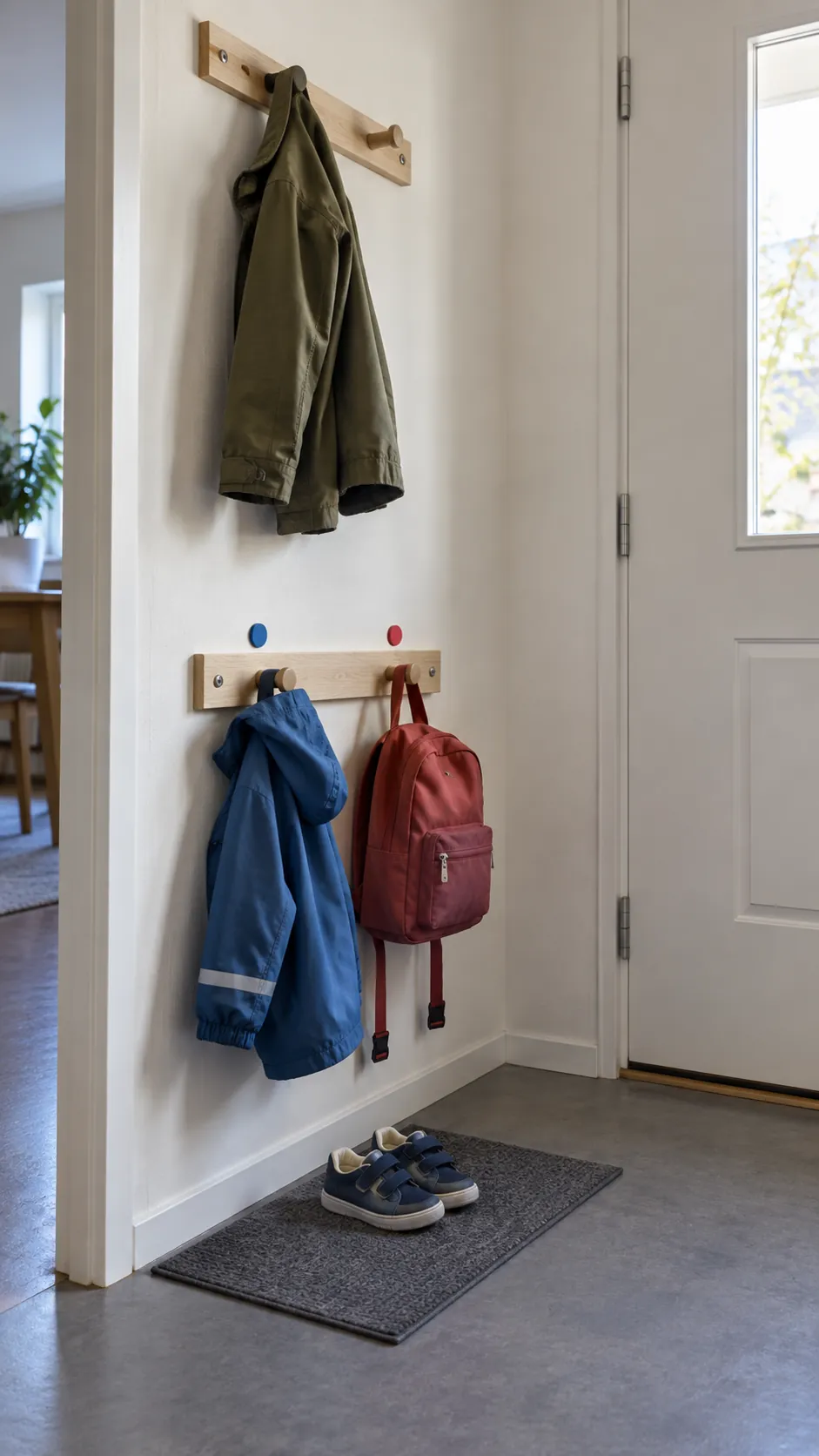
Assign a hook or a small group of hooks to each household member rather than mixing everyone’s belongings. Entryway hook labels can be names, initials, or simple color markers. Put labels beside the hook where a coat will not hide them, and use removable labels if assignments will change.
For kids coat hooks, choose a height the child can reach while standing on the floor. Test the position with the actual coat and backpack before mounting, because long straps can drag even when the hook itself seems well placed. Separate adult and child positions when bulky garments would overlap. Keep the lowest hooks away from narrow passage corners where they could catch clothing.
Make room for the garment, not just the metal hook
A wall mounted coat rack can have many hooks and still hold only a few winter coats comfortably. Hang your bulkiest coat first, then add the next one with enough space to lift either garment off without pulling the other down. If removing one item starts an avalanche, reduce the load or use a second storage location.
Check the rack’s stated capacity and follow its mounting instructions for your wall type. Use appropriate structural fixings, and get help if you cannot identify the wall or safe drilling location. Adhesive hooks are suitable only for loads and surfaces their manufacturer allows. On a freestanding rack, spread the weight around the base, keep heavy bags low, and stop using it if it rocks or leans.
Before calling the layout finished, open nearby doors and walk past while carrying your normal bag. A sleeve, strap, or projecting hook must not catch the door or narrow the route. Small foyer drop zones work best when the storage stays within the space people can safely pass.
Separate bags and small accessories from coats
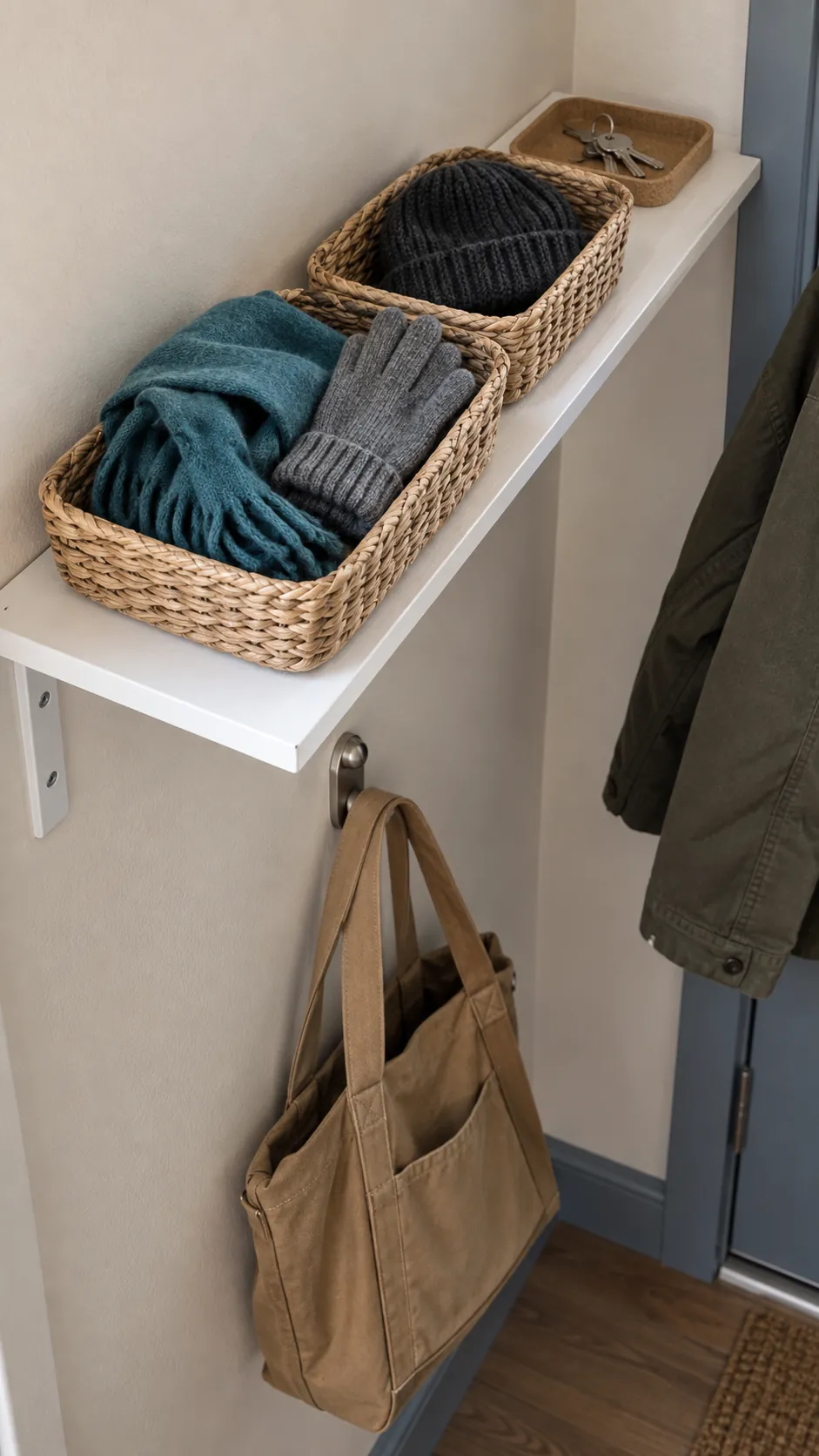
Bag and coat storage needs different contact points: a coat can use its hanging loop, while a bag needs a hook that holds the strap without forcing it into a sharp bend. Give a daily bag its own hook instead of hiding it beneath a jacket. Empty unnecessary weight from it before hanging, especially on a freestanding rack.
For hat and scarf storage, use one shallow open basket per person or one divided container where space is tight. Keep glove pairs together and fold scarves loosely so they can be lifted without digging. A small pouch for a dog lead can work, but do not fill the same basket with mail, tools, and charging cables. Place keys on a separate fixed tray or hook if they keep disappearing into pockets.
Leave breathing room for wet weather and visitors
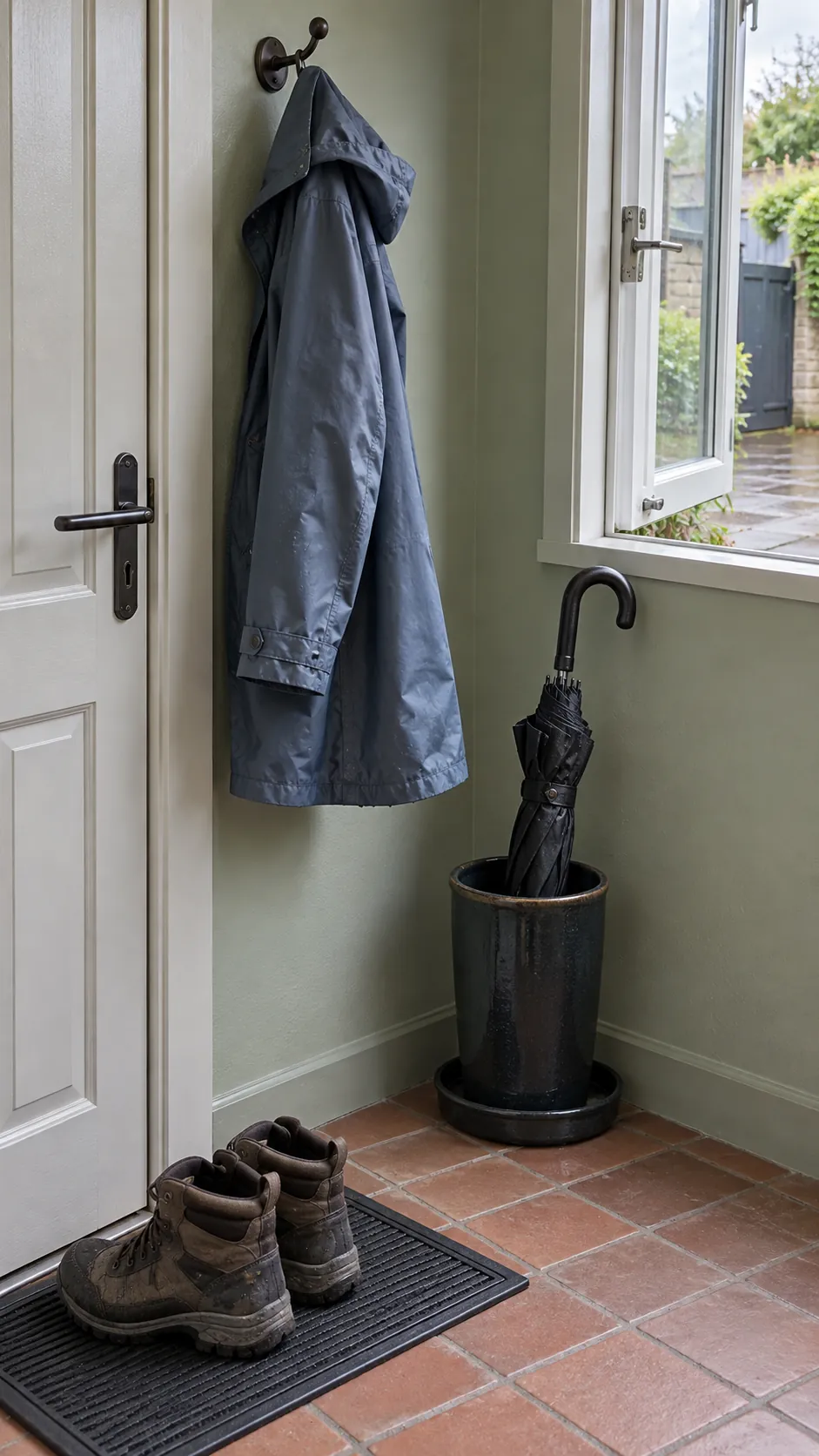
Damp coats need space to dry before they are packed into a crowded closet. Follow each garment’s care label, let the fabric air in a ventilated place, and keep wet hems away from furniture or absorbent flooring. Stand a wet umbrella in a stable drip container rather than balancing it among coat sleeves.
Leave an empty hook for a visitor when your rack has room for one. If every position is needed daily, identify a temporary guest location in advance instead of piling extra coats onto the same hook. Seasonal rotation helps more than another decorative basket: store unused outerwear clean and dry, then bring it back when the weather changes.
Use a reset that removes the cause of the pile
Choose a regular moment, such as the evening before a busy day, to return anything that does not belong on the rack. Empty bags of loose paper, reunite gloves, and move spare jackets back to their storage place. Keep this reset focused on the drop zone rather than turning it into a whole house cleaning task.
After a week, look for the items that still land on the floor. A bag may need a lower hook, a label may be hidden, or a basket may be too deep to search comfortably. Adjust that specific obstacle before adding more hardware. Minimal entryway hooks stay useful when people can put something away with the same effort it takes to drop it.