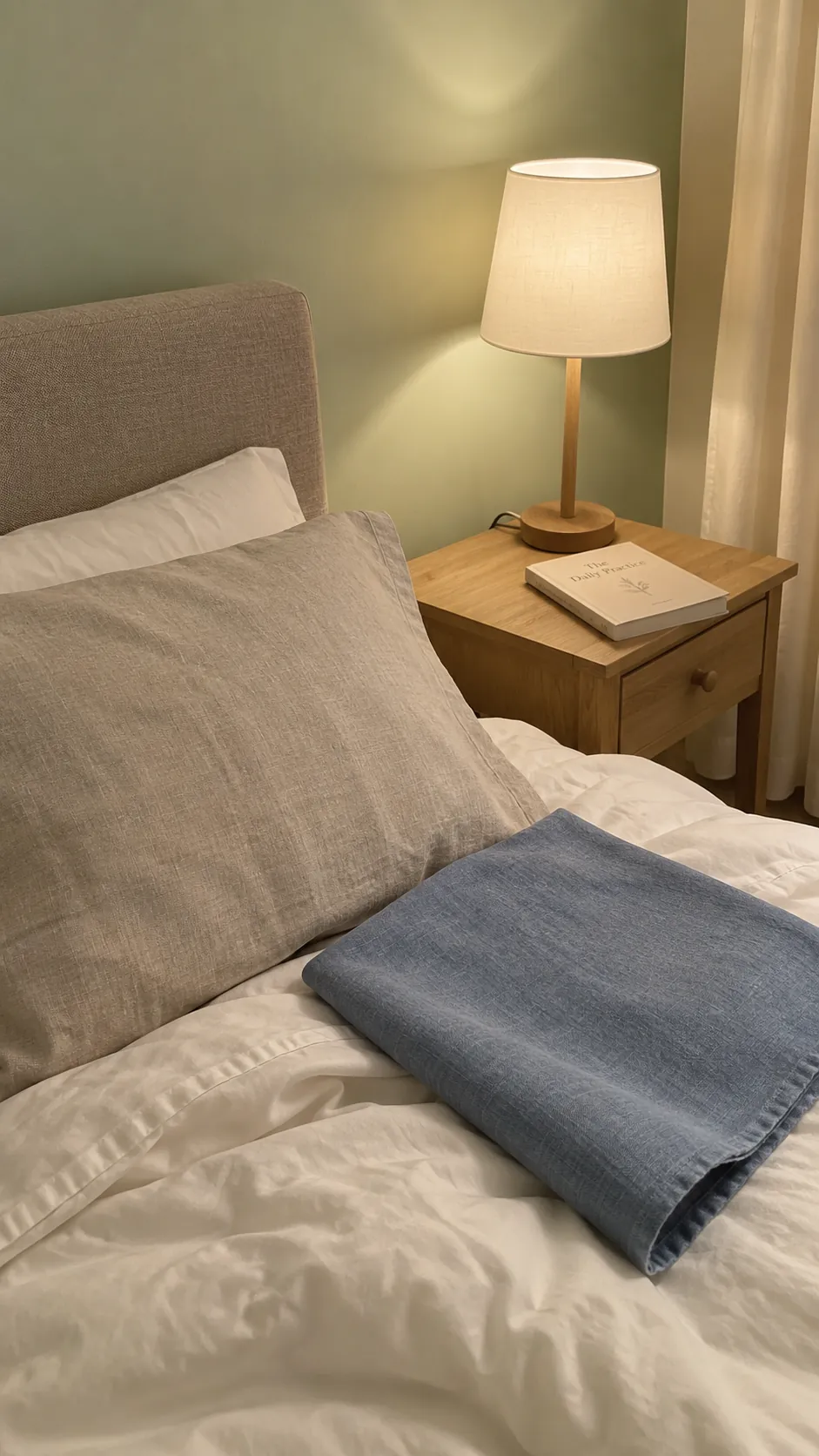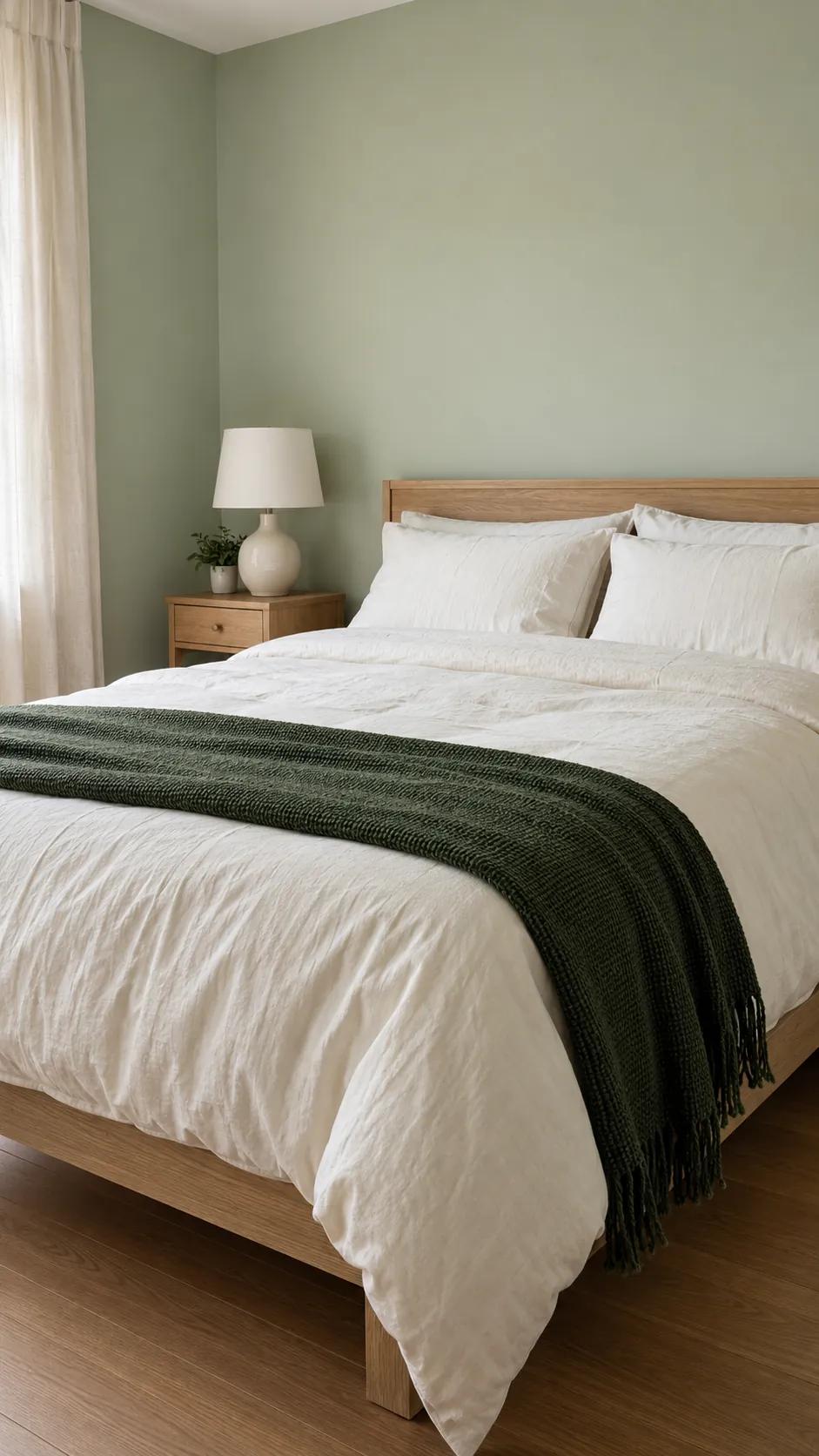
The bed is usually the largest fabric surface in the room, so a new duvet can change the balance even when the paint stays the same. Start with one main bedding color, then judge it beside the headboard and curtains. Matching every textile to the wall is optional.
Choose the base color before the accents
White, ivory, oatmeal, muted blush, dusty blue, and deeper green bedding can all suit light green walls. Begin with the duvet or quilt because it covers much more of the room than a decorative cushion. A quiet base makes it easier to add personality without buying a whole collection of coordinating pieces.
Check whether the wall color leans cool and minty or warm and sage like. Then look at the headboard, floor, and curtains, since these may influence the bedding choice as much as the paint. If the room already has a patterned rug, use one of its quieter colors as a starting point instead of introducing a separate palette.
Use white for clear contrast with the wall
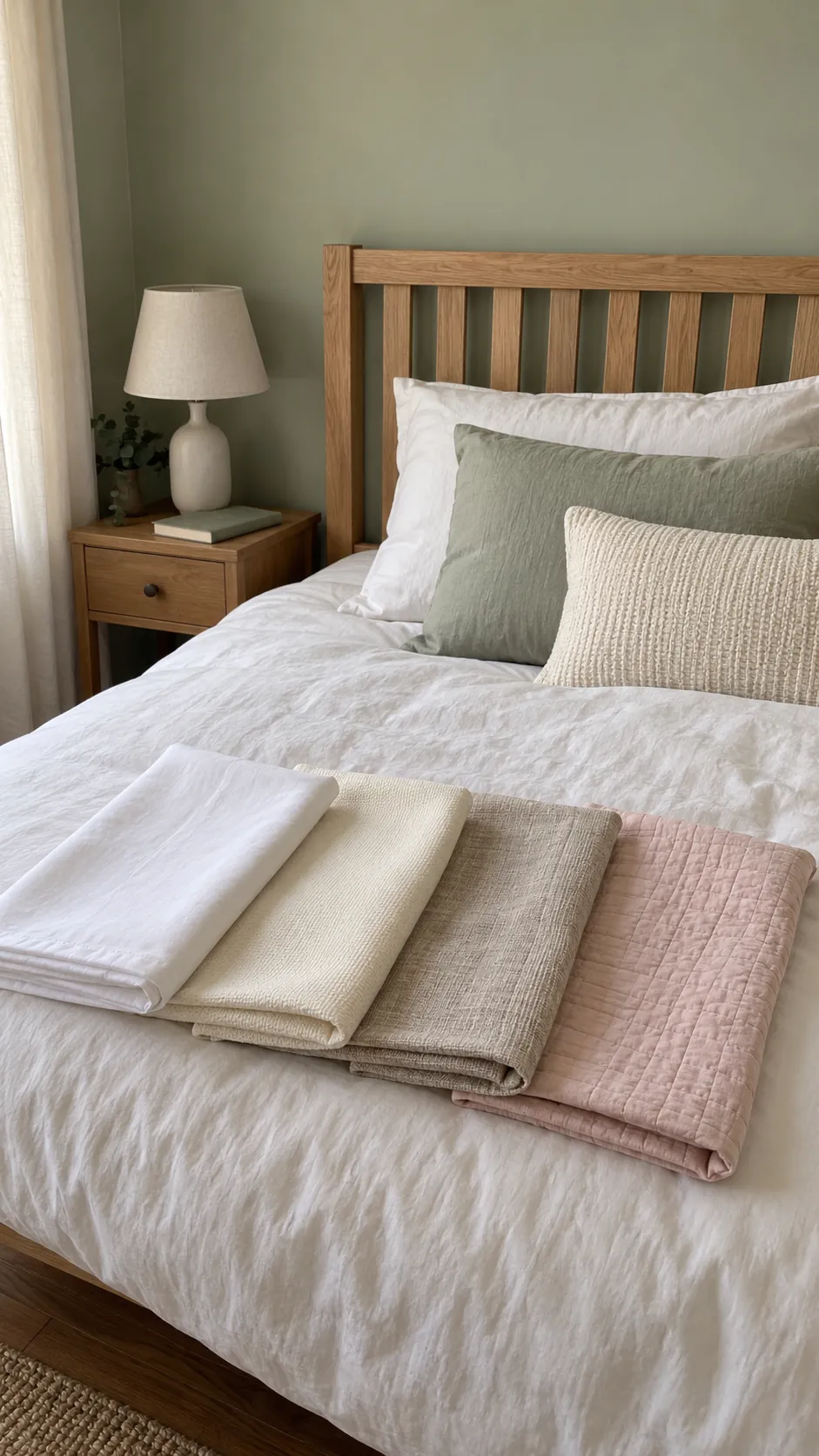
White bedding with green walls gives a distinct light surface and works well when you want the wall color to remain visible. It can be especially useful with cool mint paint or a dark wood frame. Texture in a quilt or duvet cover adds depth without changing the palette.
Compare the white with the curtains and trim so it does not make an existing cream fabric look unexpectedly yellow. Choose the material and care routine as carefully as the shade, since visible contrast does not automatically mean easy maintenance. One colored throw can be enough if the rest of the room is already busy.
Pick ivory or oatmeal for warmth beside wood
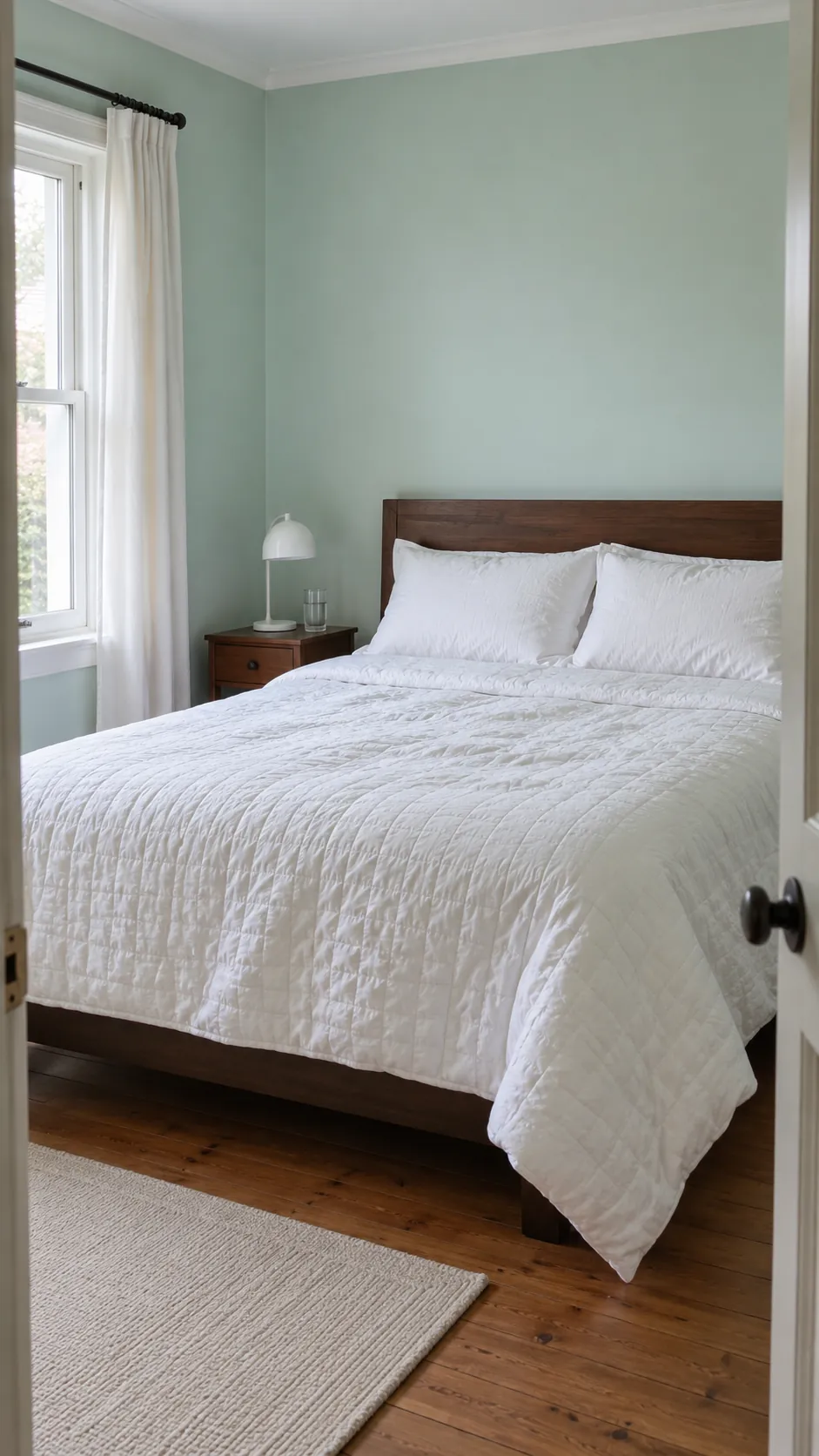
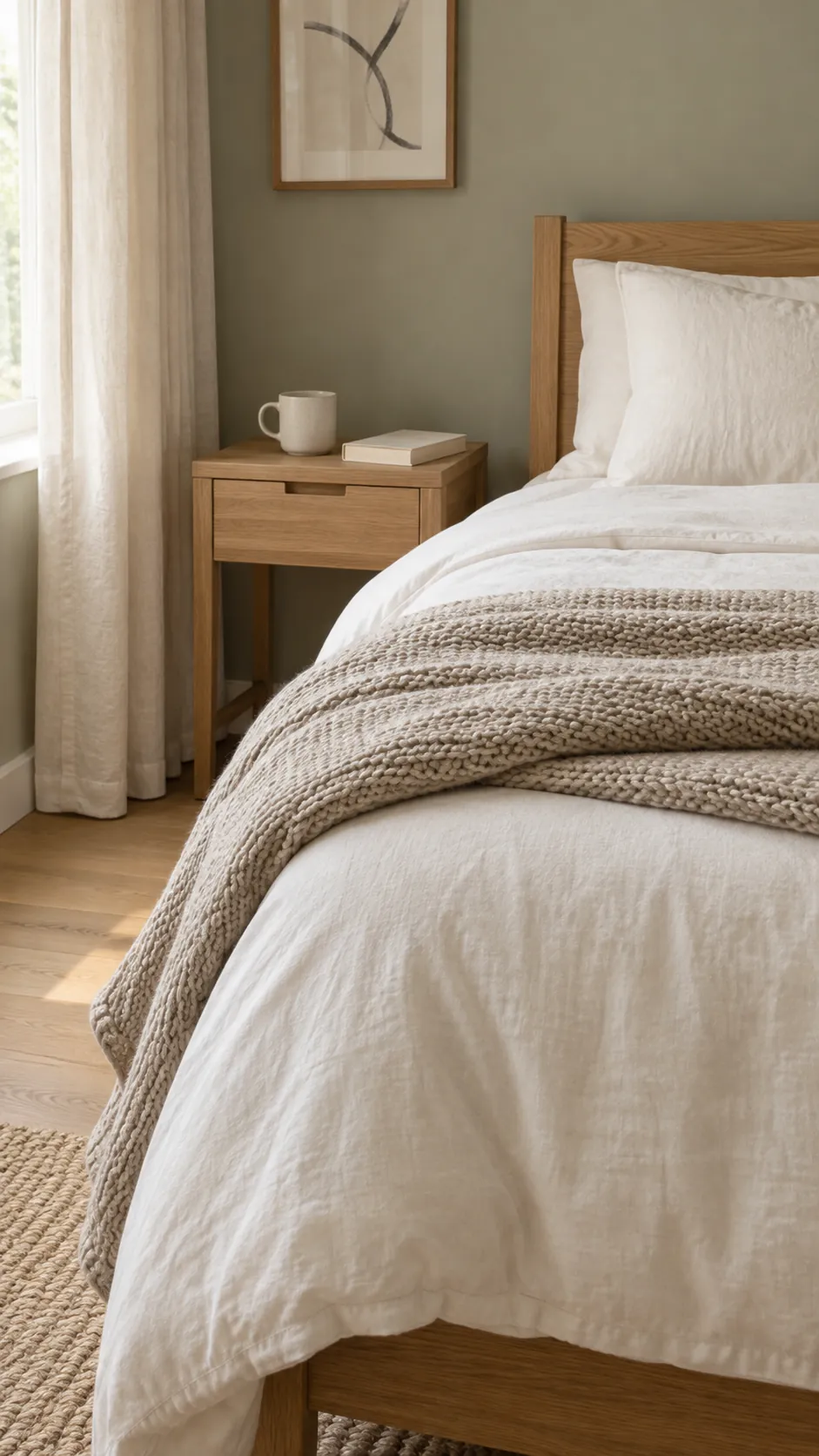
Ivory and oatmeal often sit comfortably with warm sage walls and natural wood bedroom furniture. Ivory gives a pale surface with less crisp contrast than bright white, while oatmeal adds a visible earthy layer. A cream duvet with an oatmeal throw can separate the textures without filling the bed with several colors.
Check the actual wood finish: honey oak, pale oak, and dark walnut will not create the same effect. A heavily yellow cream may compete with orange leaning wood, so compare the fabric in the room before buying. Green and cream bedding should look chosen around the existing finishes rather than like several nearly matching neutrals.
Try blush or dusty blue as a different mood
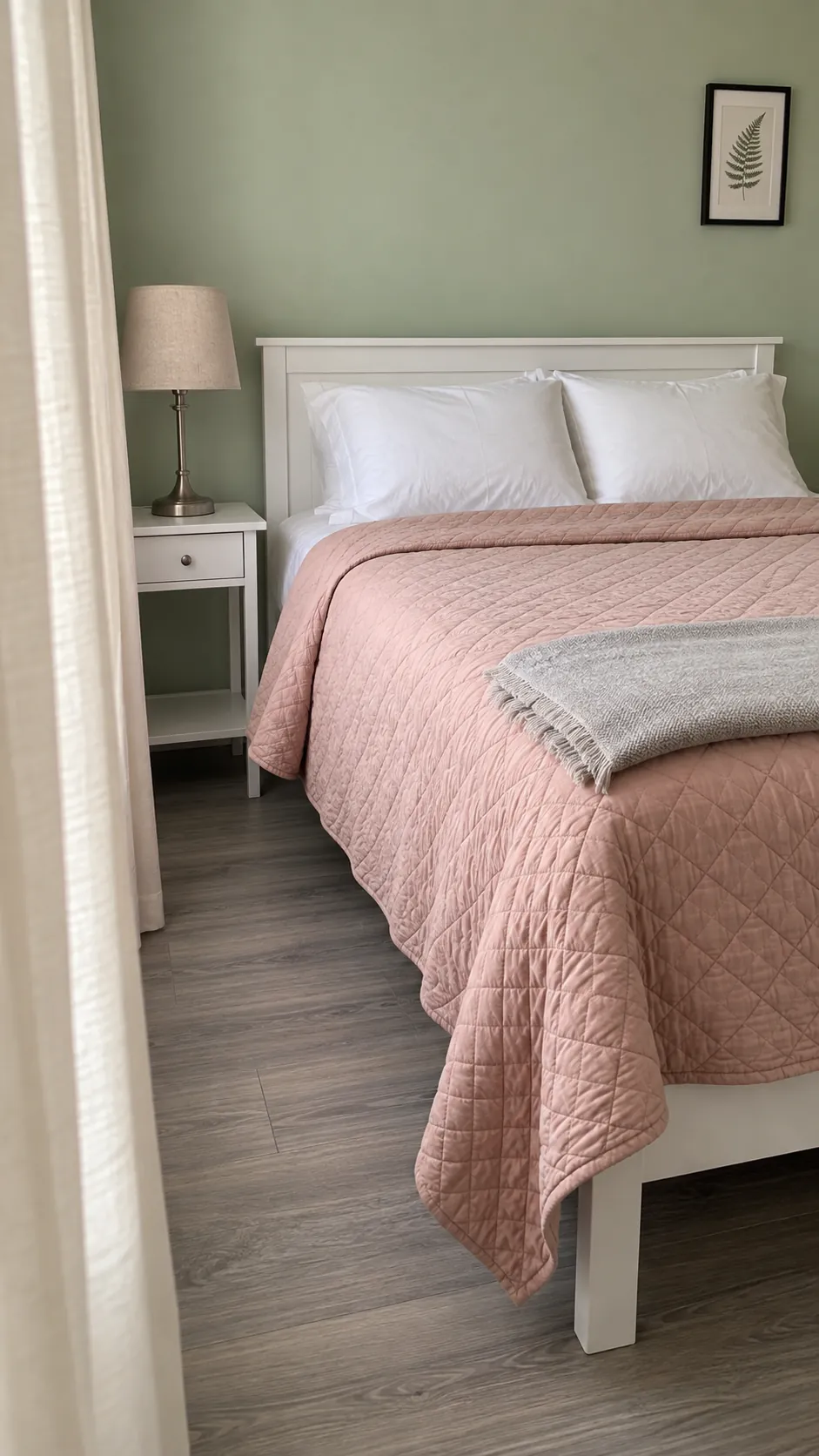
Muted blush gives light green a soft warm contrast and can work as a quilt, pillowcase, or small throw. Dusty blue makes a cooler combination, especially beside mint or a blue leaning green. Choose one of these directions first instead of adding both simply because they appear on a palette chart.
A small textile is a useful trial if you are uncertain about a fully colored duvet. Keep the background bedding plain when curtains for a green bedroom already have a pattern. Avoid judging the shade from its product name alone, because dusty blue and blush vary considerably across fabrics and sellers.
Layer deeper green or a restrained print
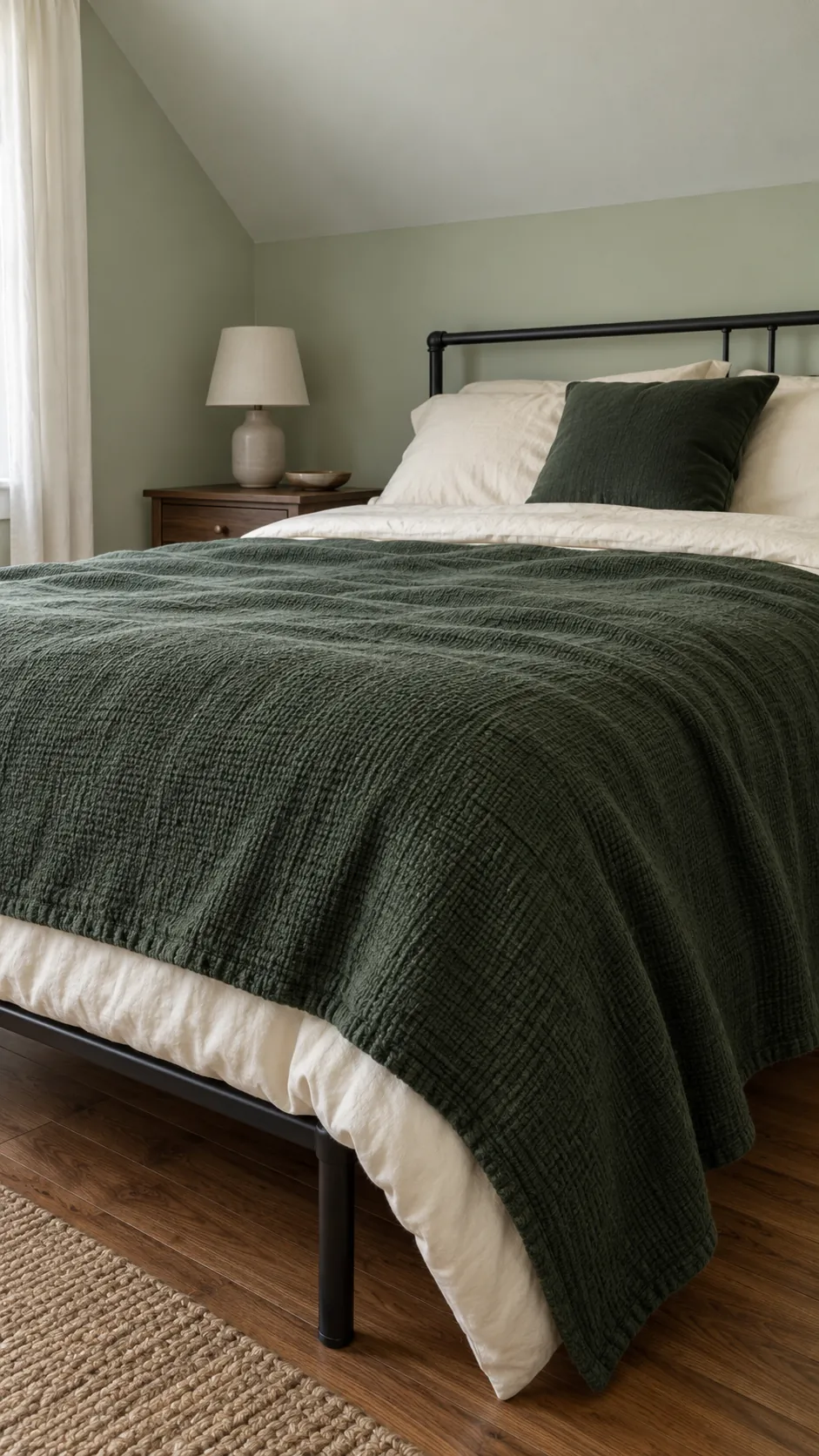
A darker green blanket can give pale walls definition without introducing a different color family. Choose a visible change in depth rather than trying to duplicate the wall exactly. A white or ivory sheet beneath it helps separate the bed from the surrounding paint.
For a print, look for a pale background with green and one supporting color already in the room. A small botanical motif or spaced stripe can connect the bed to the wall without covering every textile in matching leaves. Keep most pillows plain if the duvet carries the pattern, and let light green wall decor remain secondary to the bed.
Check the bedding under the light you actually use
Look at the fabric against the wall in daylight and with your bedside lamps on. Lay a larger piece across the bed rather than comparing only a small swatch, because the main bedding surface changes the balance of the room. Put the curtain, headboard, and any patterned rug in view during the test.
Confirm the cover size, closure, washing instructions, and texture before deciding on color alone. If you already like your duvet, try a different pillowcase or throw before replacing everything. The best green bedroom color palette is one you enjoy both when the curtains are open and when the room is lit for bedtime.