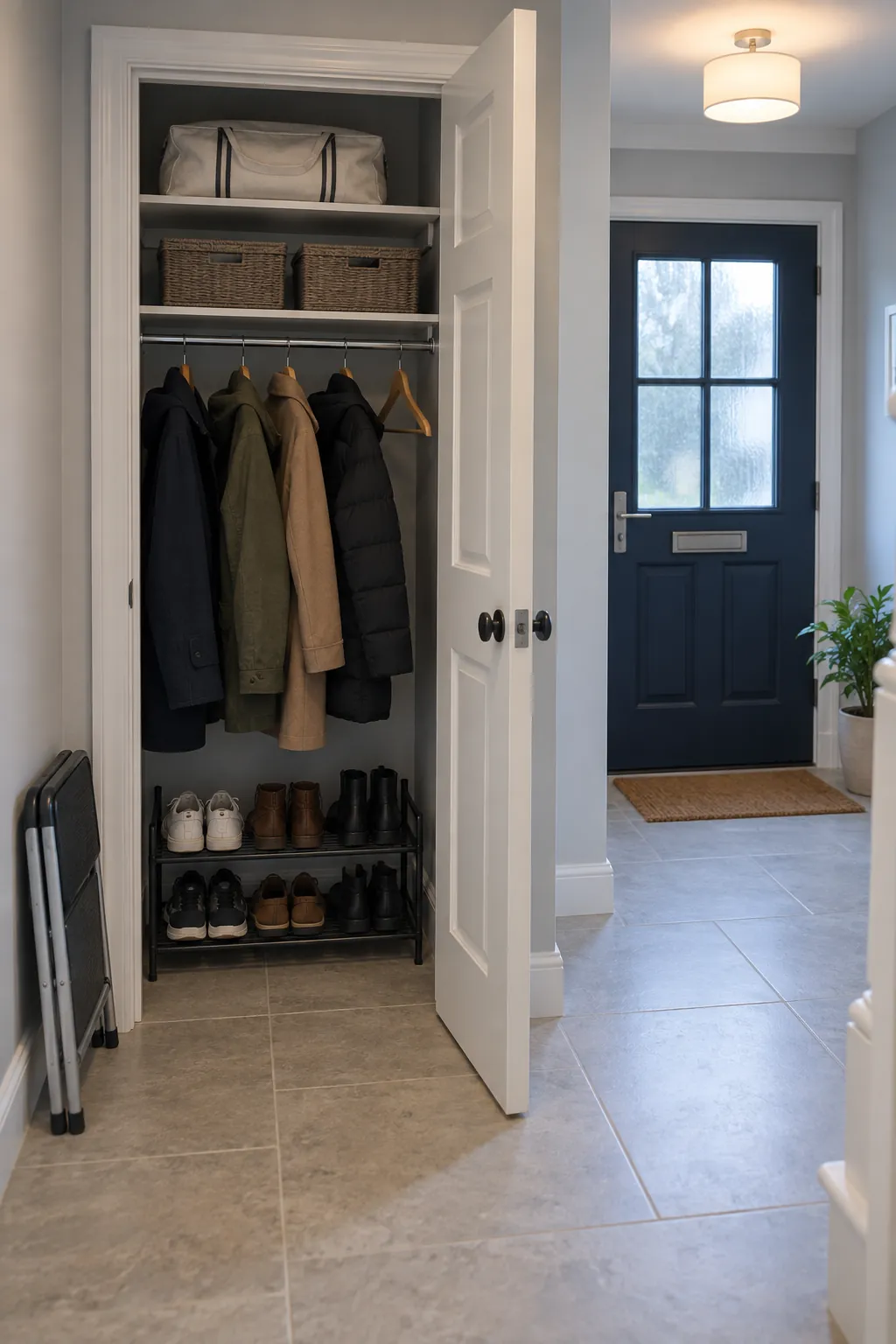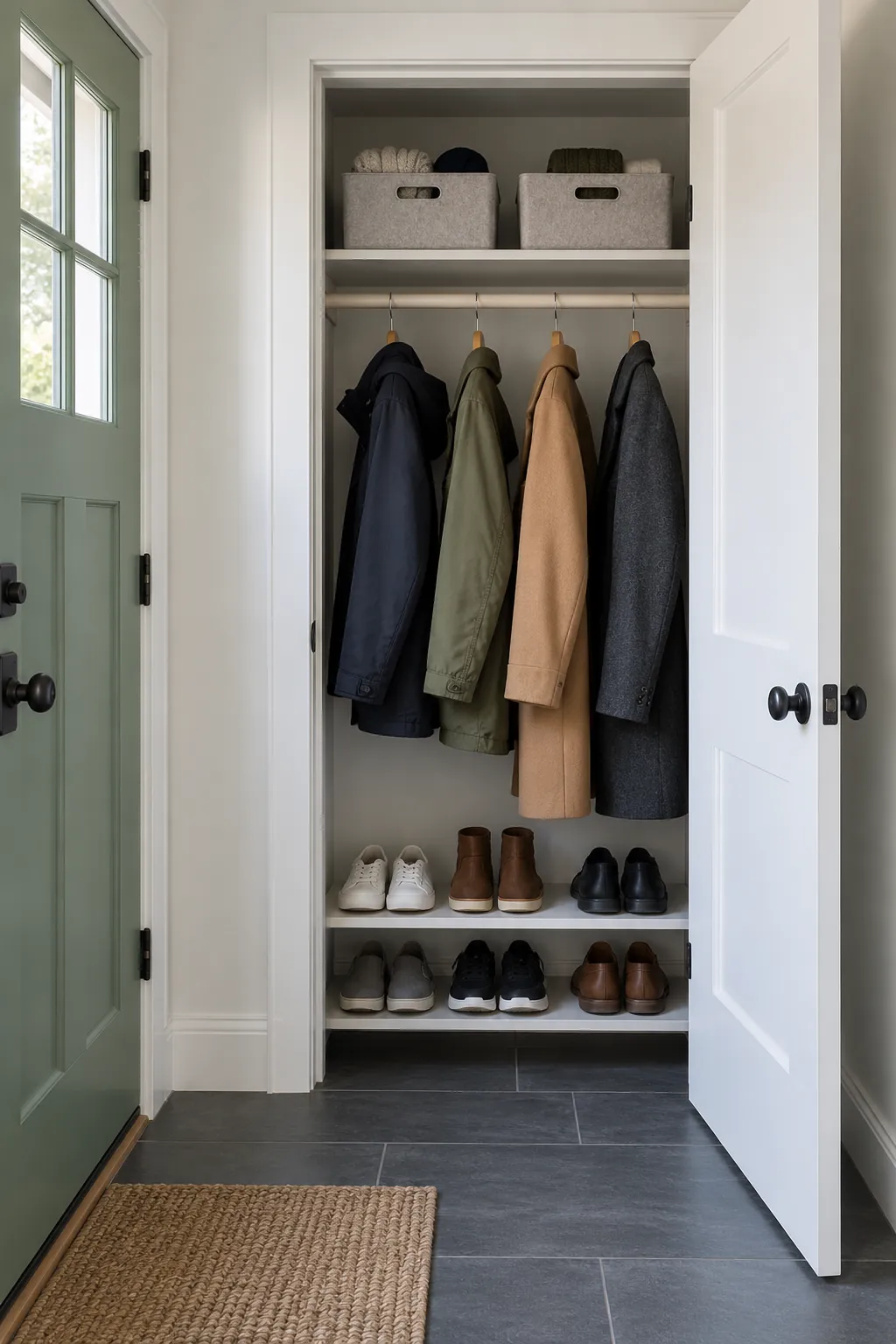
The frustrating part of a crowded closet is often the search, not the amount of storage. A coat hides the shoes, a bin fits but will not lift out, and the gloves end up behind everything else. Give the easiest space to the things you reach for on the way out.
Choose a job for the closet before choosing bins
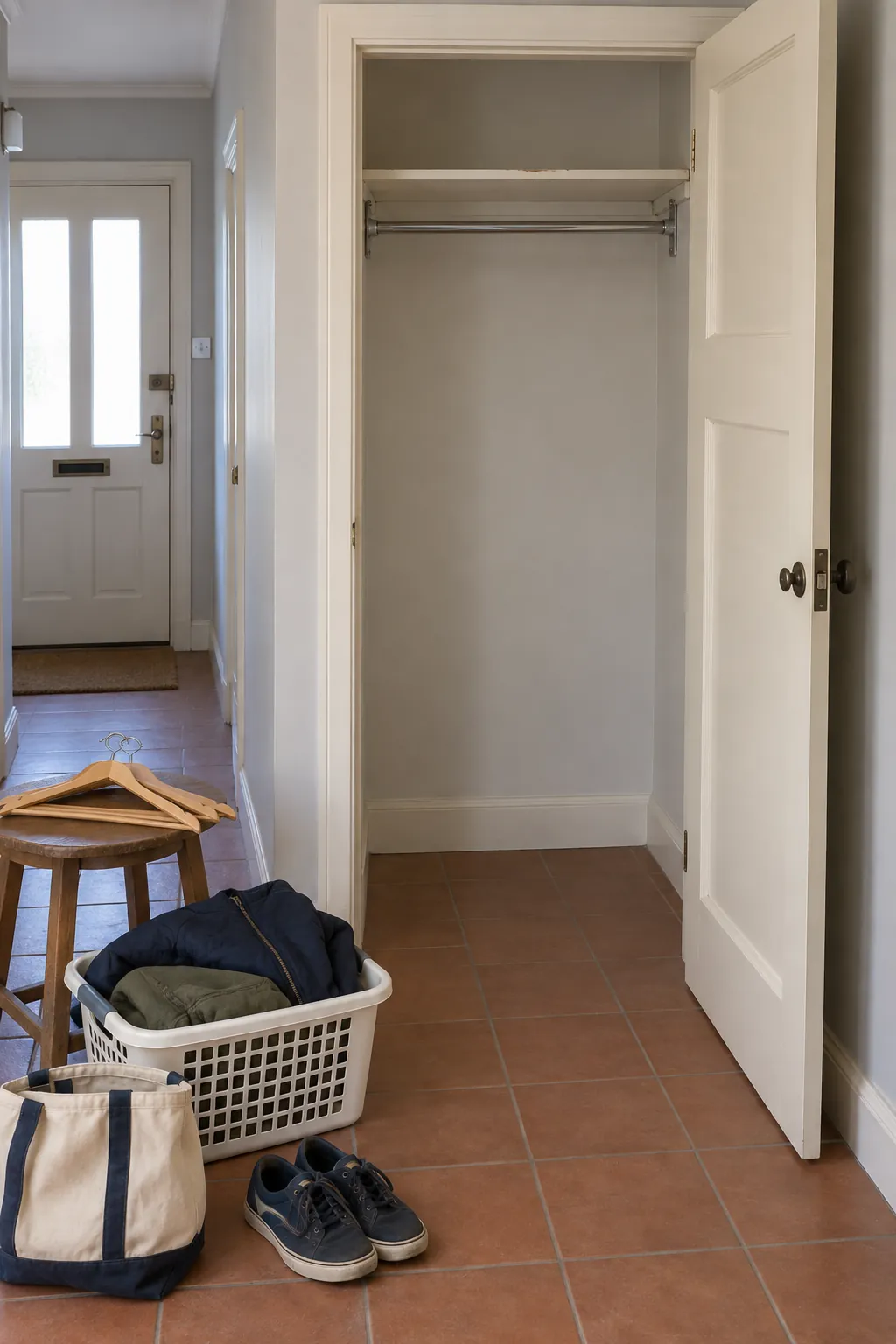
Empty the closet far enough to see its floor, corners, rail, and shelves. Keep a safe walking route while you sort, and do not leave piles in front of an exit. Separate daily coats and shoes from seasonal items, belongings that live elsewhere, and anything ready to donate or discard.
Decide what this space must do on a normal day. A small foyer closet may need to hold current outerwear, each person’s everyday shoes, and a few hats or gloves; it does not need to absorb every spare household object. Wipe shelves and check for dampness, damaged brackets, or a loose rail before putting items back. Resolve those problems first rather than hiding them behind containers.
Measure the opening as well as the shelf
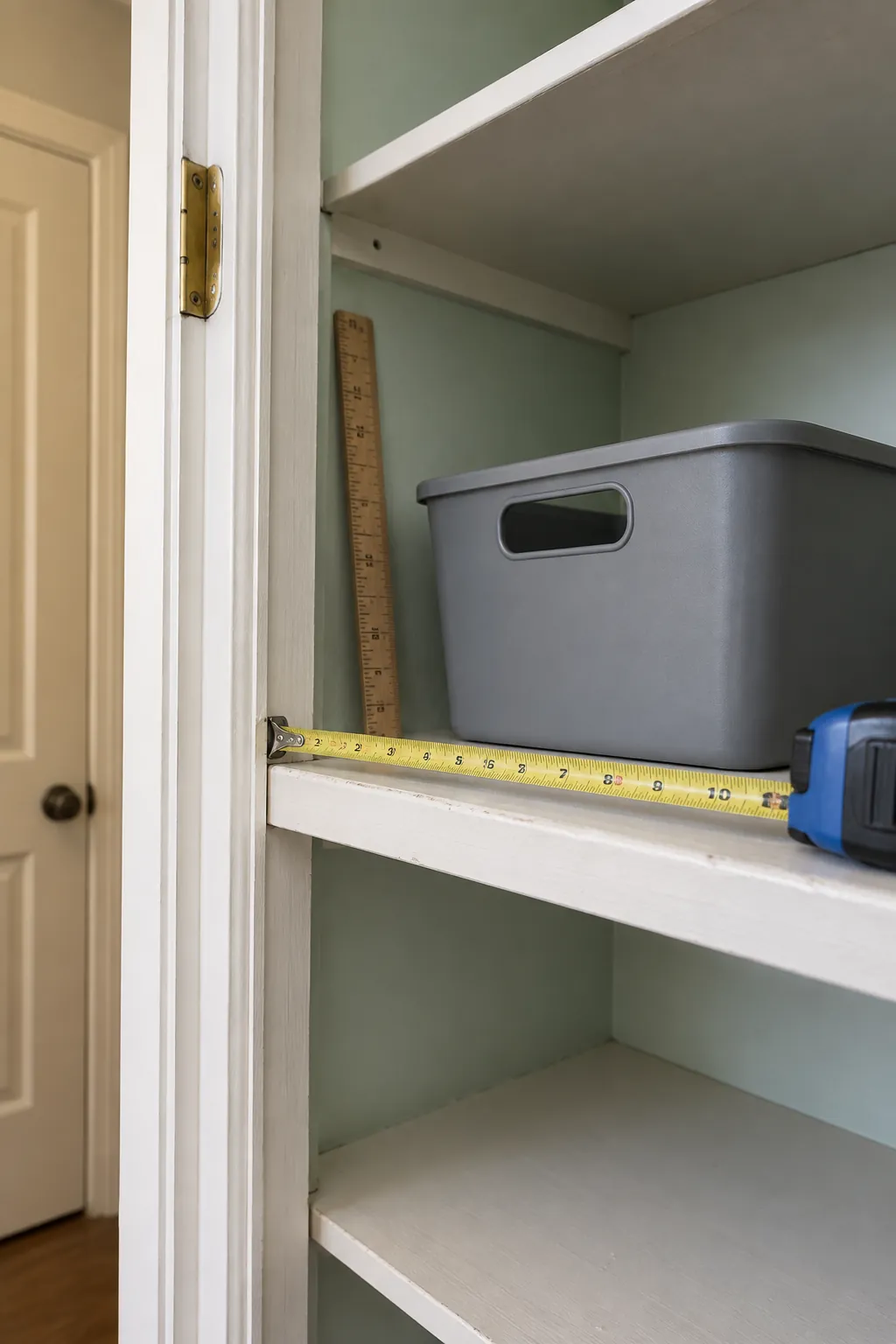
Record the usable width, depth, and height of each storage area. Include the narrowest door opening, the space above the rail, and any hinge or door hardware that could catch a bin. A container can fit on a deep shelf and still be impossible to remove through a shorter opening.
Measure your longest coat while it hangs on its actual hanger. Leave space beneath the hem before planning shoe storage in the hall closet. Check that a box can be lifted over a shelf lip and that an organizer will not prevent the door from closing. Use these clearances to rule out unsuitable products before buying them.
If you plan to change coat closet shelving or move the rail, follow the storage system’s mounting and load instructions. Use fixings suitable for the wall and seek help if you are unsure where safe structural support is located. In a rental, confirm which changes are allowed and favor removable freestanding storage when permanent alterations are not permitted.
Put daily coats where one pull can reach them
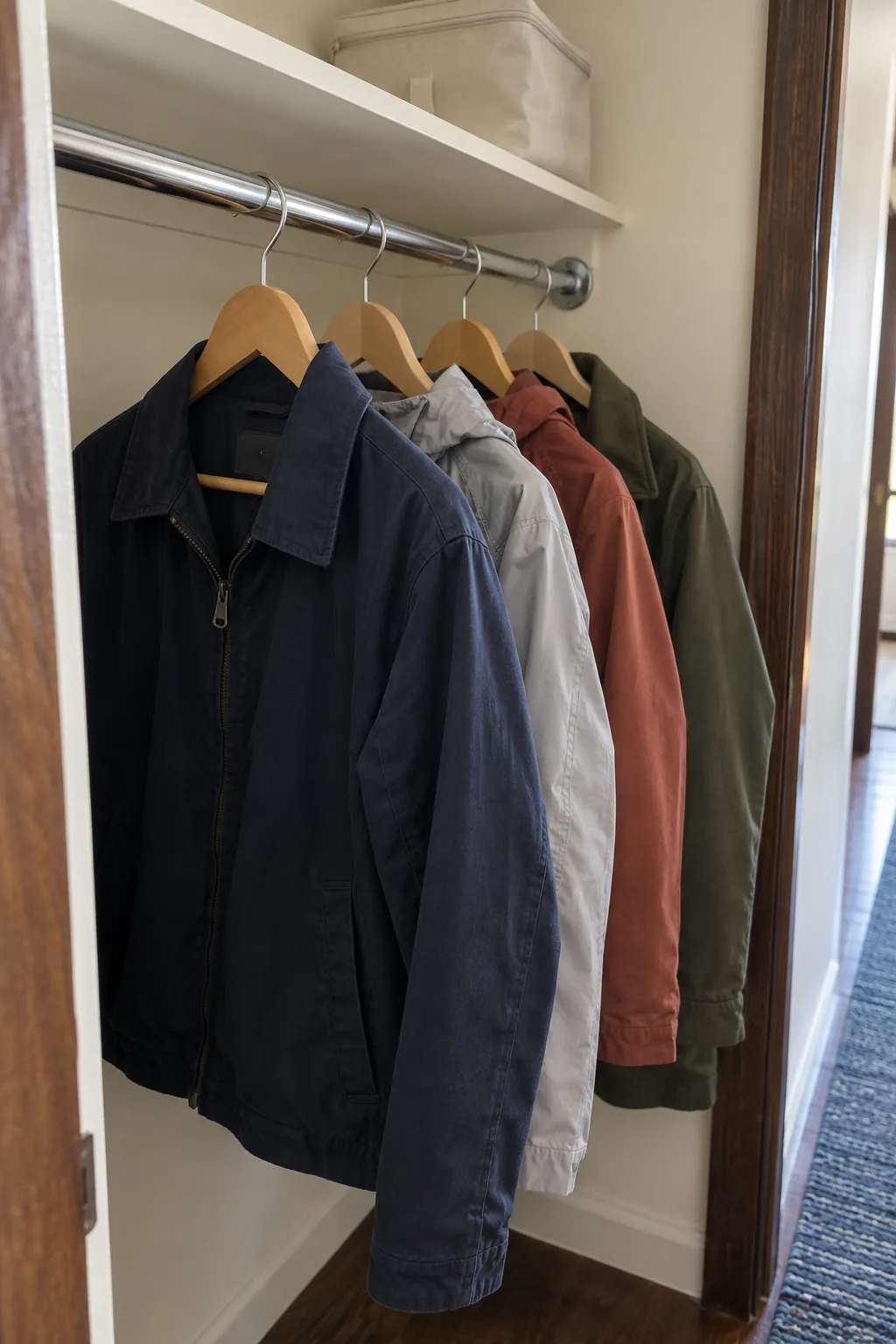
Group current coats on suitable hangers with enough room to slide them apart. Put the garments used most often toward the easiest side of the opening rather than behind a door edge. Keep each household member’s items together when shared ownership causes confusion.
Leave a small amount of rail space for a visitor or a coat returning from drying. Store seasonal coats clean and fully dry in a less convenient location, according to their care needs. A deeper closet may support separate front and rear hanging zones, but do not add a second rail unless the depth, access, and mounting system genuinely allow it.
Make deep shelves work like removable drawers
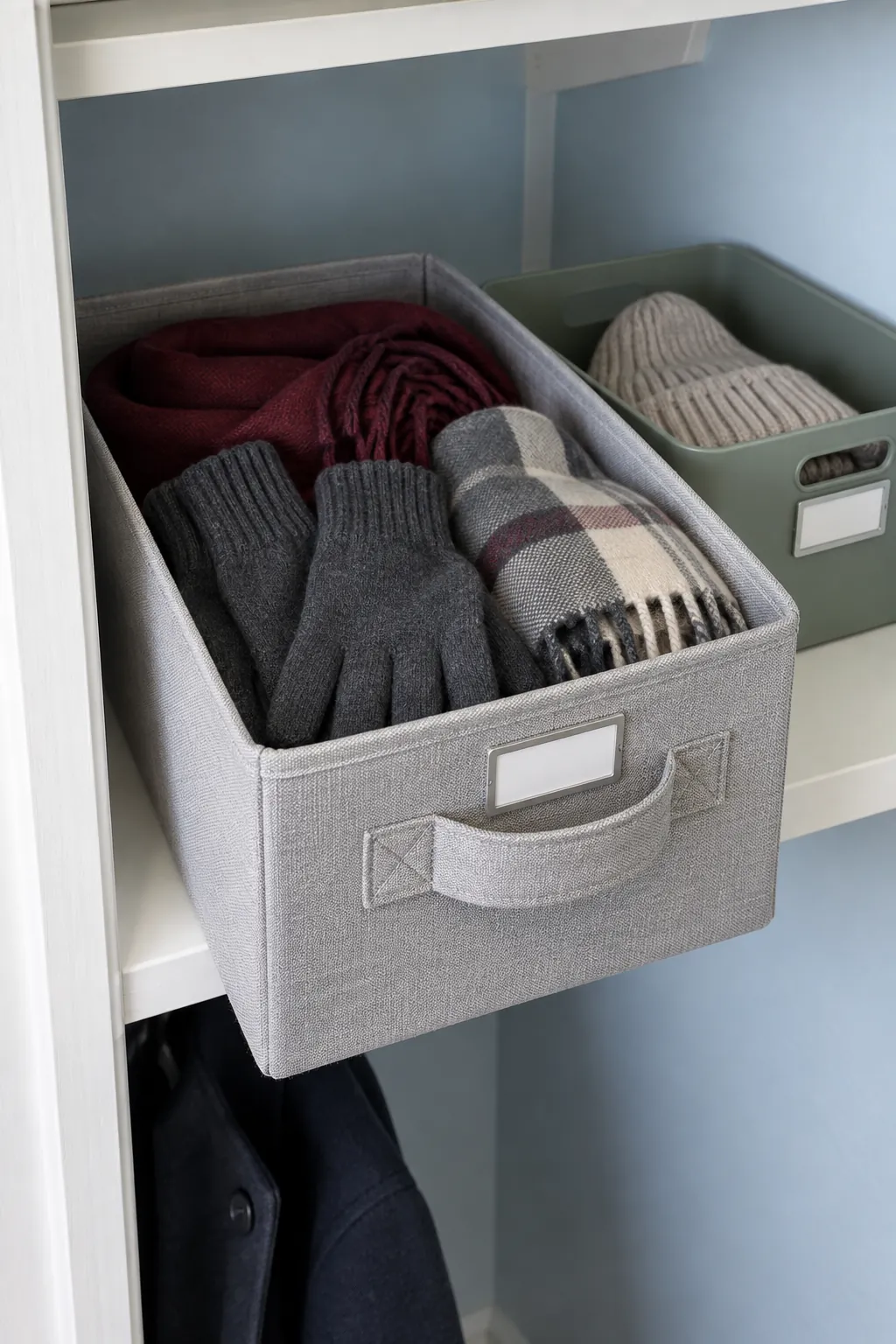
Use entryway closet bins that can come out as a whole, so you do not have to disturb the front row to find something at the back. Put one useful category in each container, such as gloves, dog walking items, or spare hats. Keep daily accessories at an easy reaching height and heavier contents low.
On a deep shelf, a handled bin can use the depth without creating a hidden pile. Leave enough clearance to lift it and avoid stacking containers that must be moved every morning. A shallow tray is better than a deep basket when small items disappear beneath one another. Label the visible front with a specific name rather than a vague word such as miscellaneous.
Upper shelves suit light, infrequently used belongings. Do not store heavy boxes overhead or stand on a chair to retrieve them. If reaching the upper shelf needs a step stool, keep a stable suitable stool available and follow its instructions.
Keep shoes visible and use the door carefully
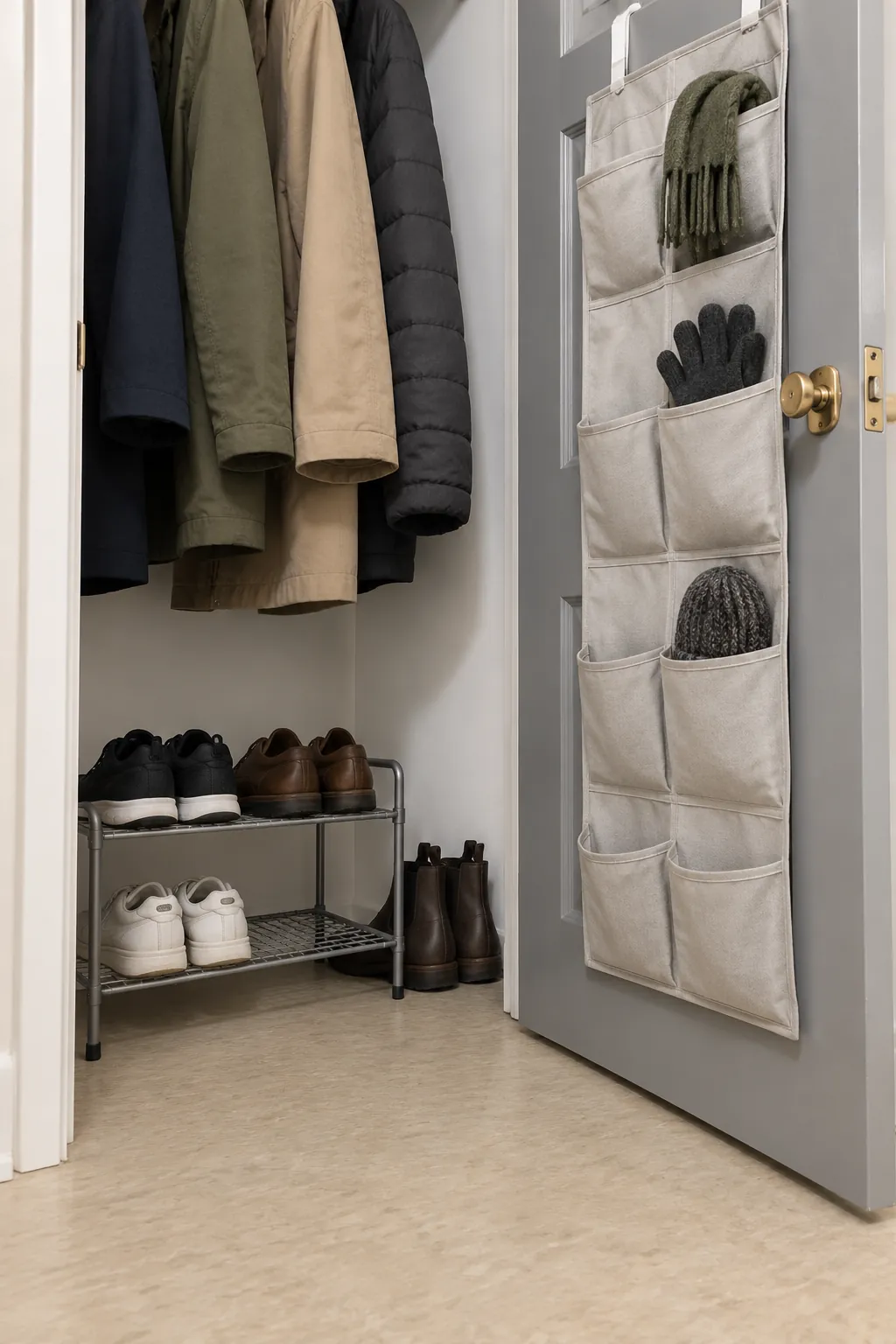
Choose a low shelf or removable tray that fits beneath the coats without touching their hems. Store pairs together and keep the shoes worn this week at the front. Tall boots need their own height clearance; forcing them under a short shelf can damage the shafts and hide what is behind them.
Let damp shoes dry in a ventilated place before returning them to enclosed storage. Use a washable tray for dry footwear that still carries grit, and lift it out for cleaning. Keep the number of pairs within what the shelf can hold without stacking.
A door organizer for a closet can hold light scarves, gloves, or other small accessories if its mounting method suits the door. Check the depth with the door closing slowly, then make sure the pockets do not hit coats, shelves, or the rail. Follow the organizer’s weight limit and protect the door surface as its instructions require. Avoid loading a door with heavy bags or using it where hooks prevent the latch from engaging.
Test the setup during a real departure
Put back the daily items first, then try getting your coat, bag, and shoes as if you were leaving. You should not need to remove a seasonal box to reach gloves or move footwear to close the door. If a container is awkward to lift, reduce its weight, change its shape, or move it to a better shelf.
Check the closet again after a week of ordinary use. A labeled hall closet stays useful only when its categories match what people actually return to it. Move anything that repeatedly lands outside its assigned place, and remove spare items before they become a second row of clutter. Keep the easiest space for the next departure rather than filling every available inch.