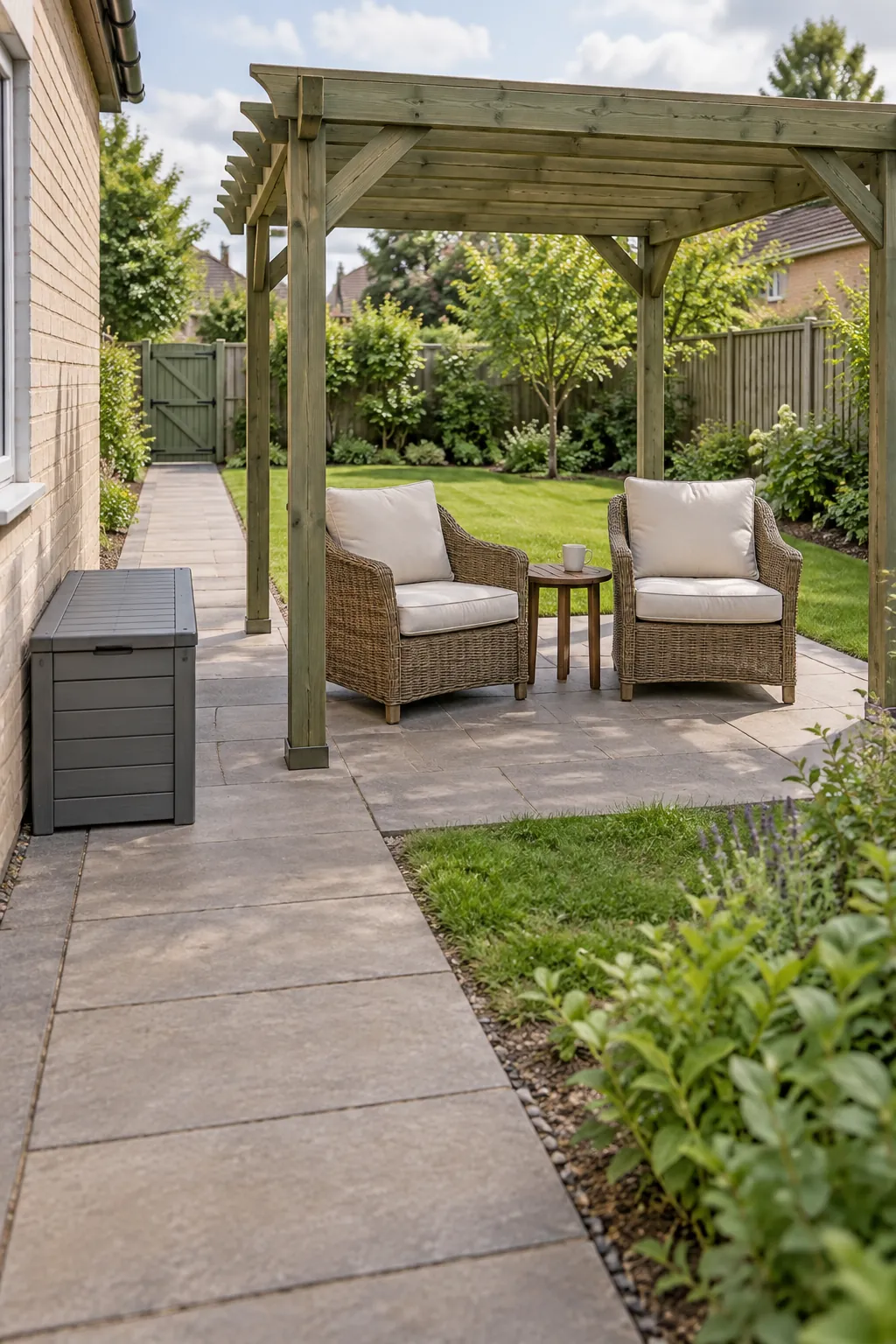
A canopy that fits on paper can still leave no room to pull out a chair. Start with the space you need to sit, walk and reach the garden, then choose the frame around it. Shade depends on the sun angle and roof coverage, so an open pergola is not automatically a cool or dry place to sit.
Before installation, check local approvals, property boundaries, underground utilities and the foundations required for your site. Treat the following as design ideas rather than structural plans, and use a qualified professional where loads or house connections need assessment.
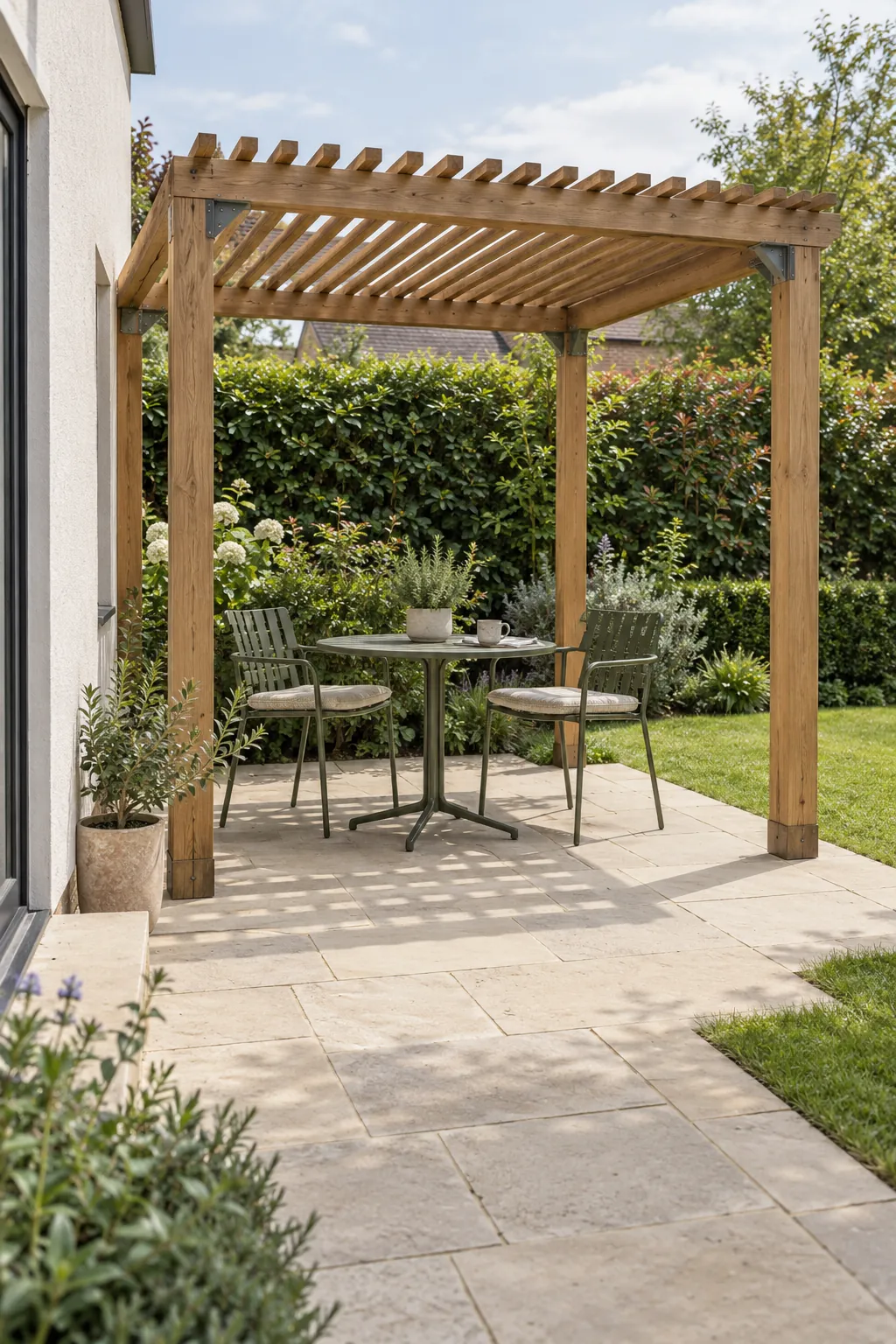
A bistro table under a compact square frame
A small square pergola works well when you only need room for morning coffee. Set out the table and pull both chairs back before marking the post positions. Keep an open route to the door so the seating does not become an obstacle. An open slat roof gives patterned shade, so check the sun at the hour you expect to sit here.
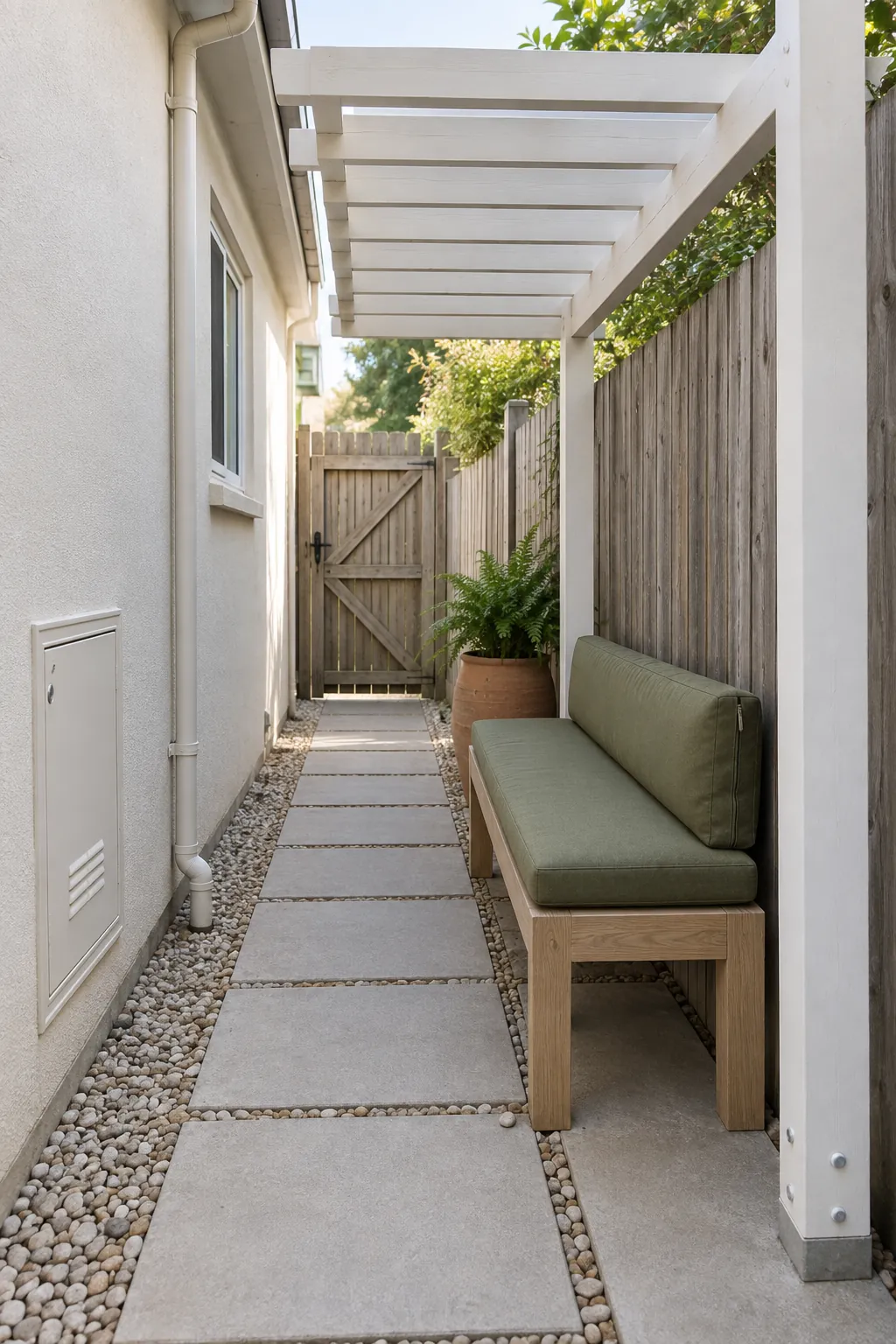
A narrow canopy along the side yard
A long, slim frame can turn a side yard into a useful pause between the house and garden. Put a bench against one edge rather than filling the passage with a dining set. Preserve access to gates, utility equipment and drains when you choose the footprint. This is a good small patio idea where the main challenge is width rather than total area.
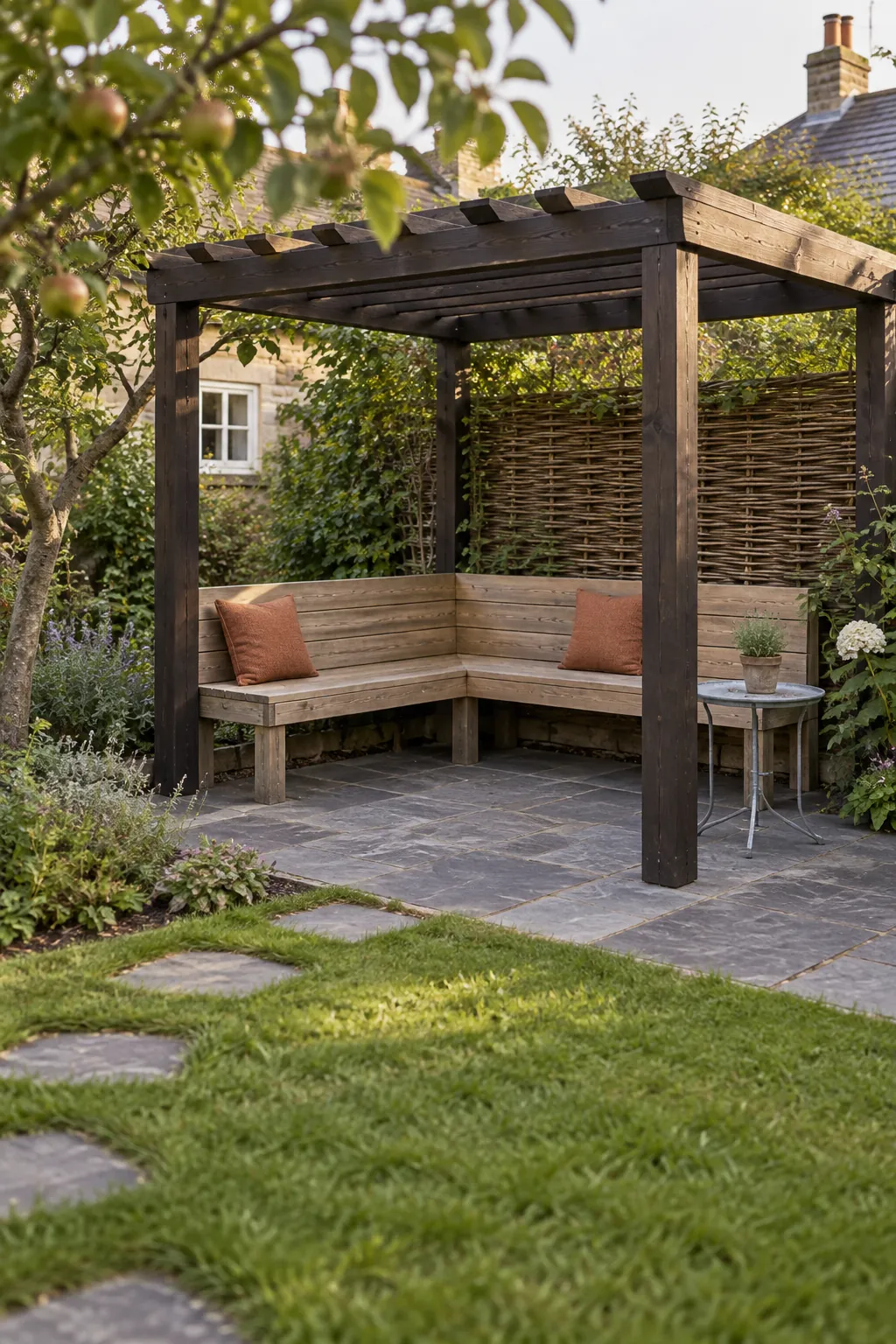
A corner bench beneath open rafters
Placing the seating in a corner leaves the middle of a small yard available for movement. A bench with a back can feel settled without the depth of a large outdoor sofa. Keep the pergola structurally independent of a boundary fence unless that fence was designed to carry it. Leave enough space behind the bench to clean the paving and retrieve fallen leaves.
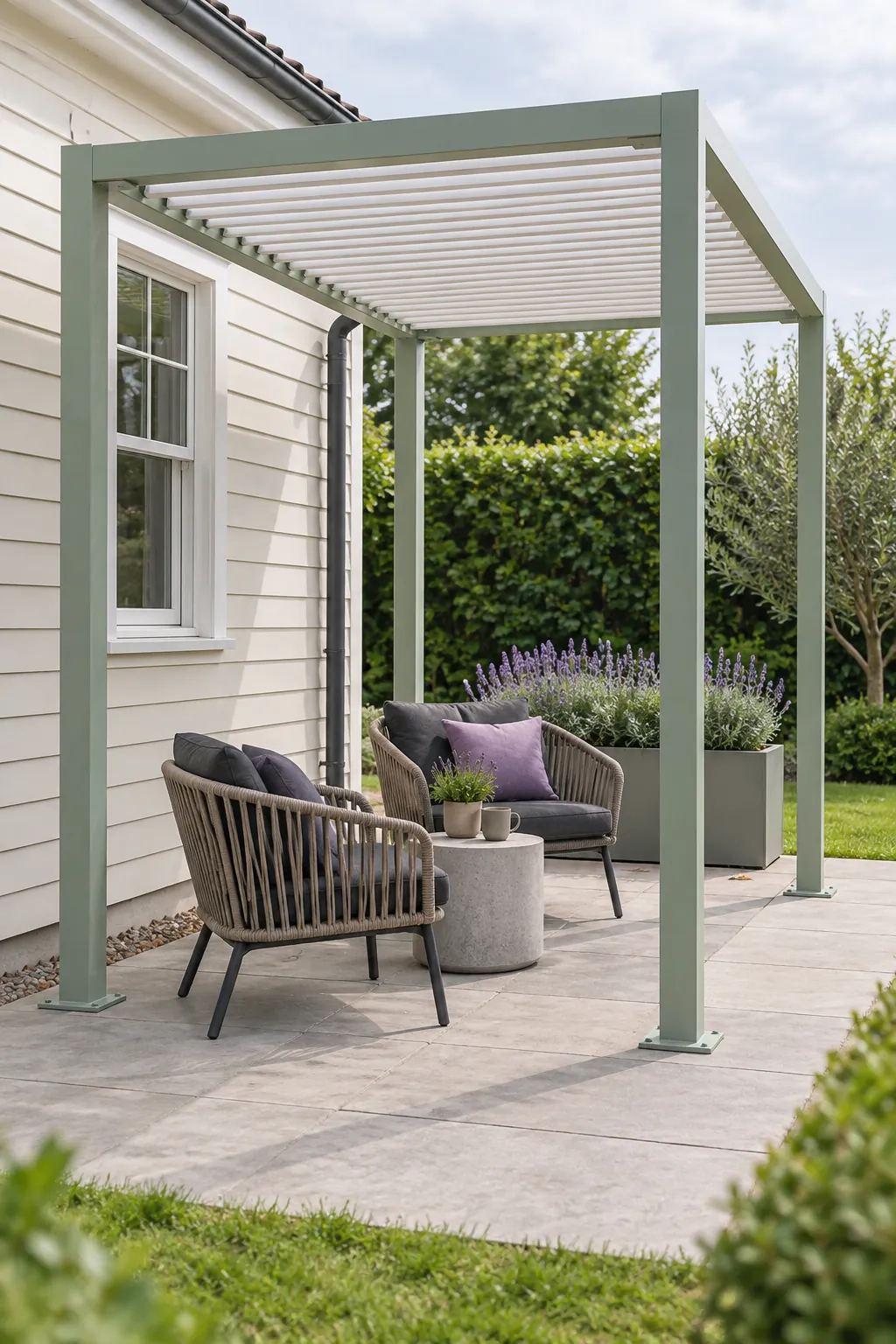
A freestanding frame beside the house
A freestanding pergola can sit near the house without connecting its beams to the wall. This avoids a house attachment, but the structure still needs suitable foundations and bracing. Leave a deliberate gap for gutter access and exterior maintenance. Match the roof height to the nearby windows so the frame does not unnecessarily reduce daylight indoors.
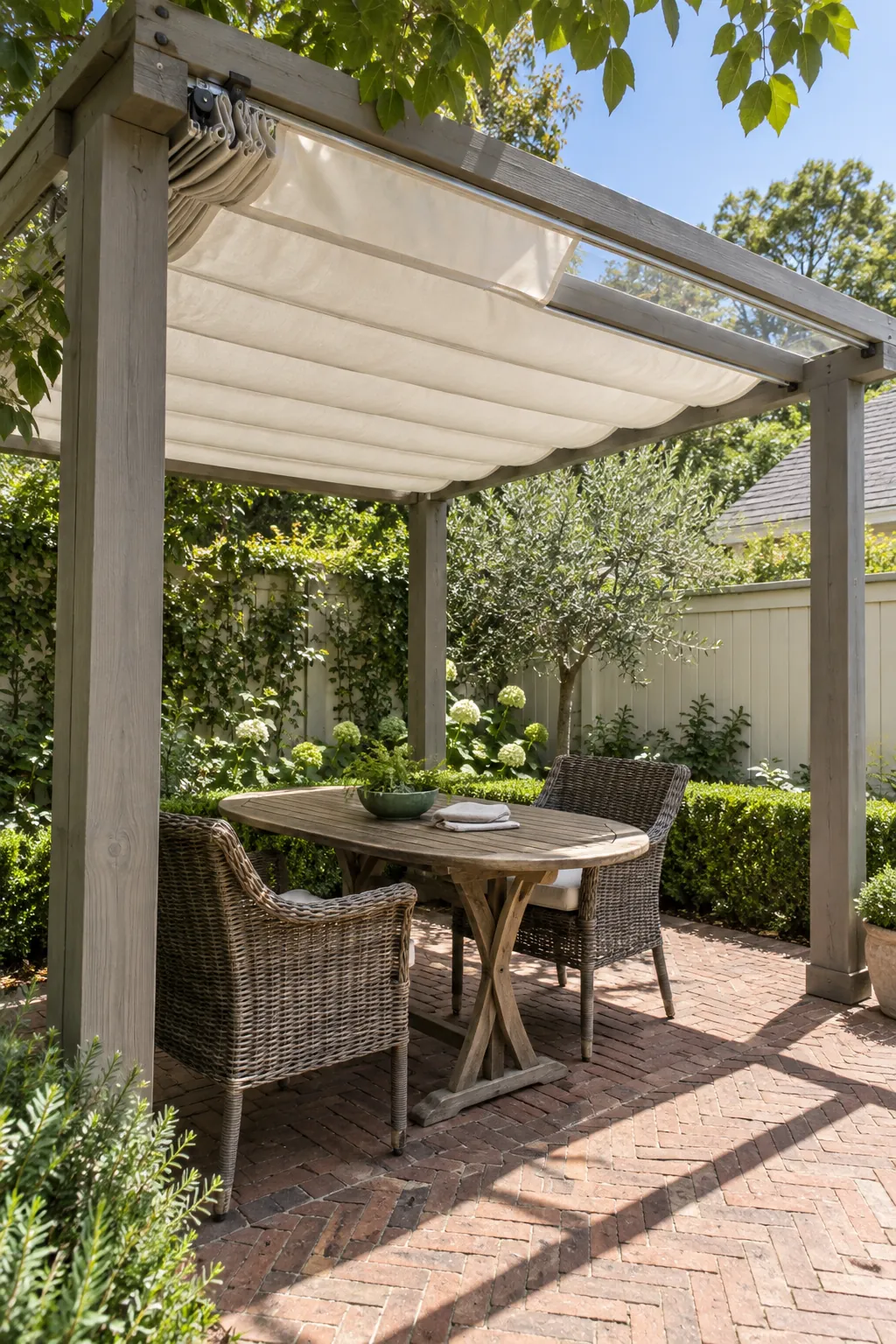
A retractable fabric shade for a sunny table
A fabric canopy gives more consistent overhead shade than widely spaced rafters. Choose an outdoor system designed for the frame, with secure tracks and clear wind instructions. Retract it when conditions exceed its rating instead of treating fabric as a permanent roof. This option lets the same small seating area feel open on mild mornings and sheltered during bright afternoons.
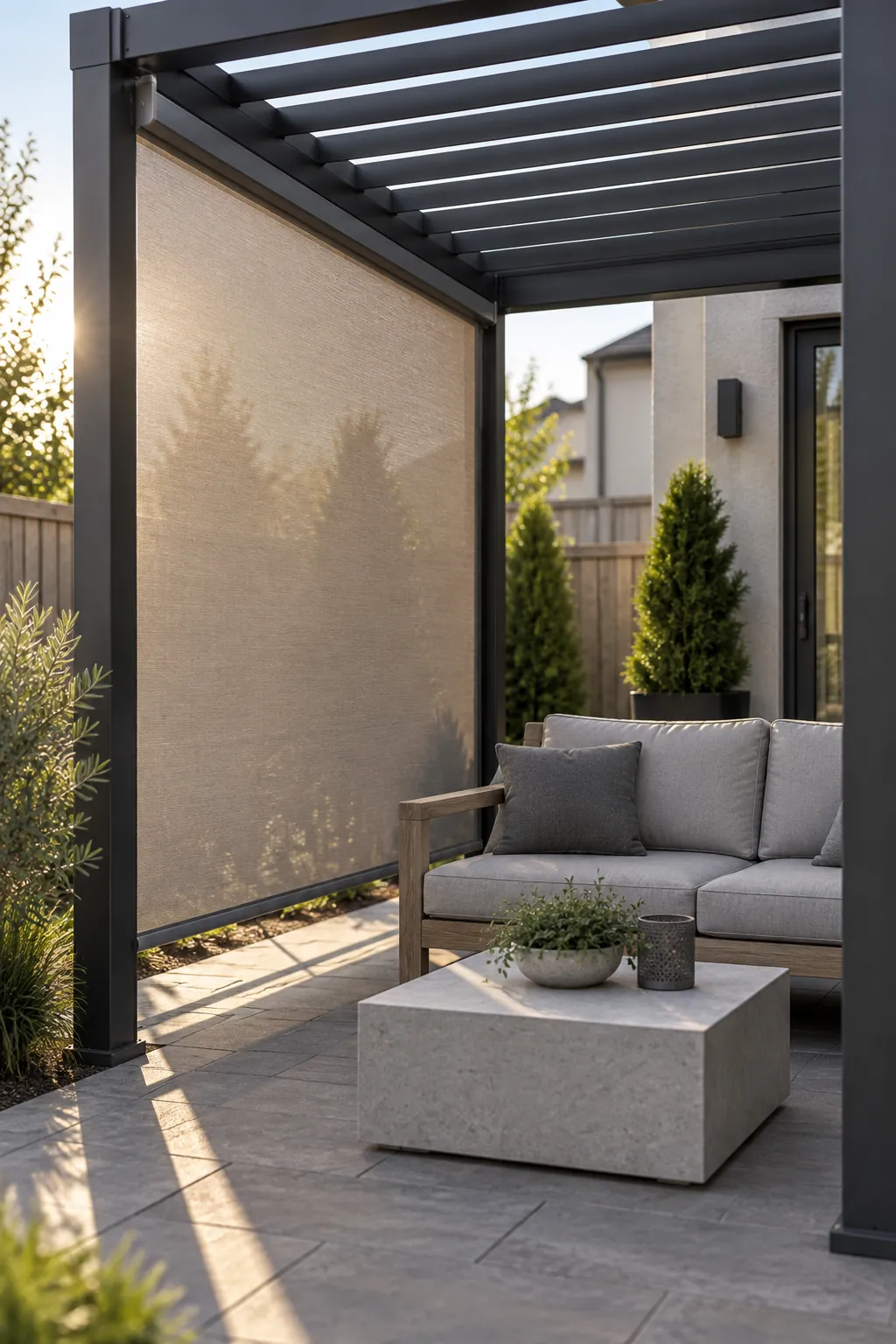
A low sun screen on the western edge
Afternoon sun can pass beneath the roof even when overhead coverage looks generous. A side screen on the sunny edge addresses that lower angle directly. Use an outdoor shade with a fastening system suitable for local wind conditions, and keep the other sides open for airflow. Watch the sunset path before deciding which edge needs screening.
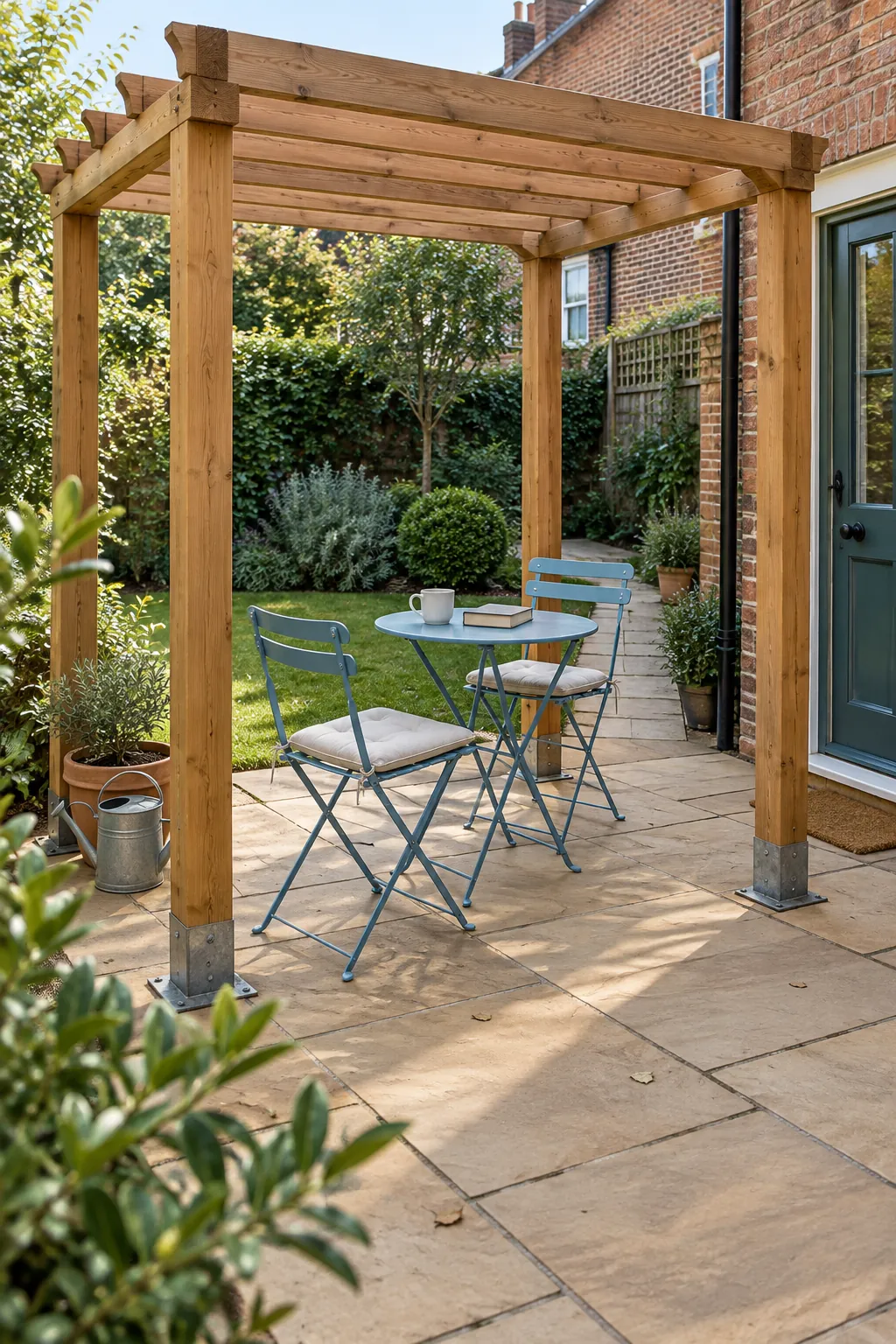
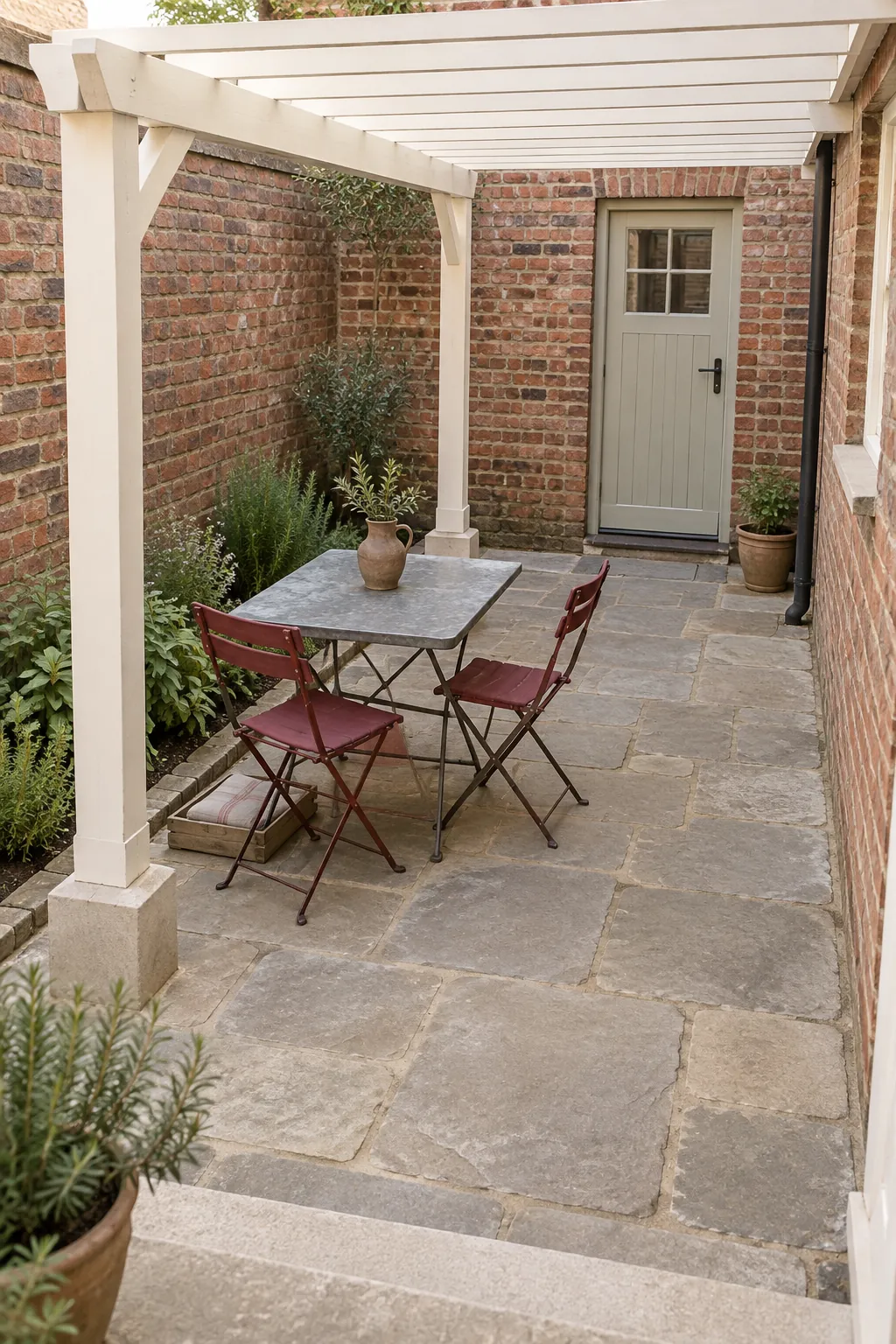
A light colored frame in a brick courtyard
A pale finish can soften the visual weight of a pergola in an enclosed courtyard. Let the existing brick provide texture rather than adding several competing decorative surfaces. A small table and folding chairs keep this setup flexible when the courtyard must serve another purpose. Choose a coating appropriate for the frame material and expect exposed finishes to need maintenance.
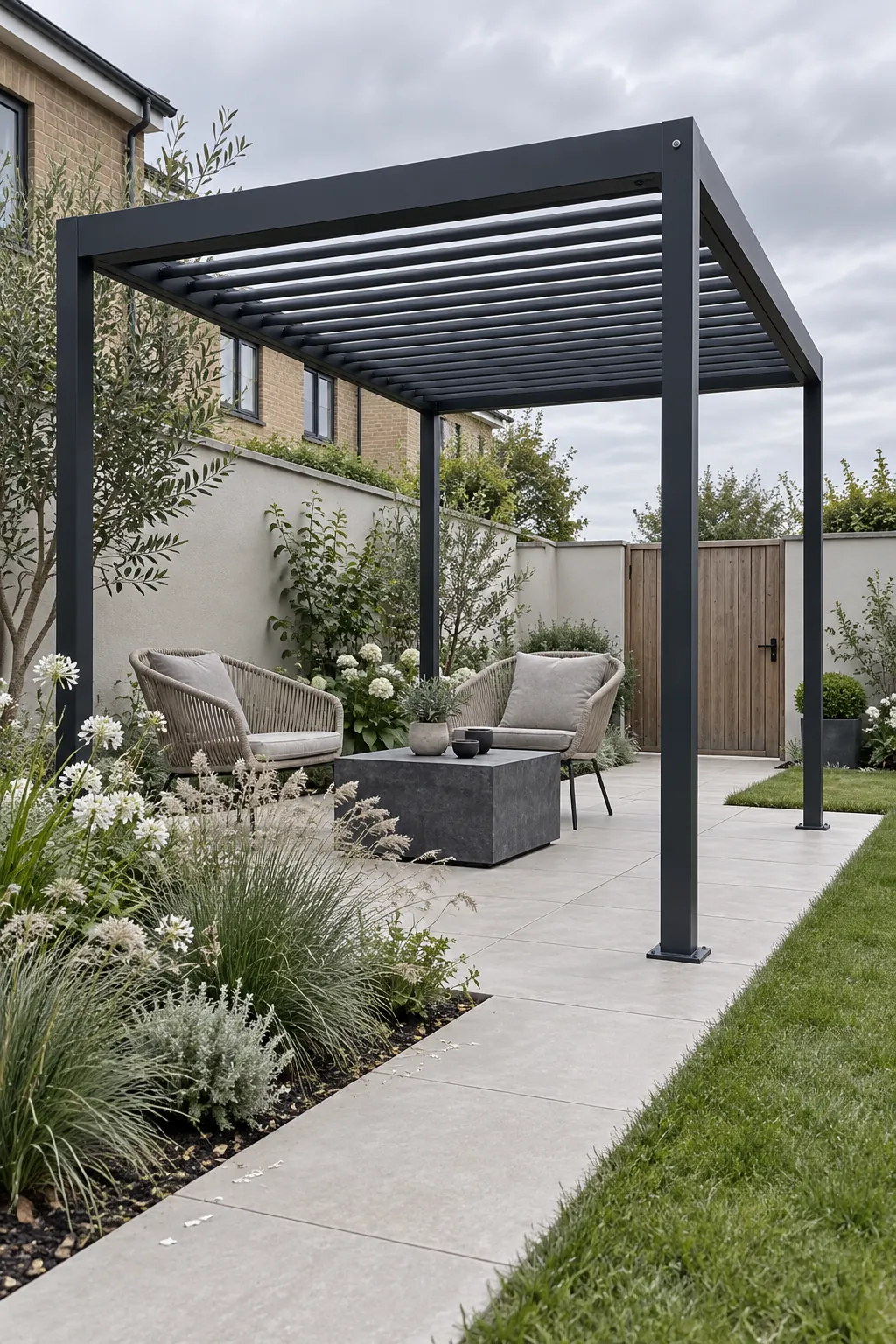
A dark metal frame with simple planting
A slim metal pergola gives a clear outline without the bulk of decorative timber brackets. Keep the planting low beside the entrance so the compact footprint stays easy to read. Check the manufacturer requirements for anchoring, corrosion protection and maintenance before comparing prices. A dark frame looks especially crisp against pale paving, but it will not create shade without adequate overhead coverage.
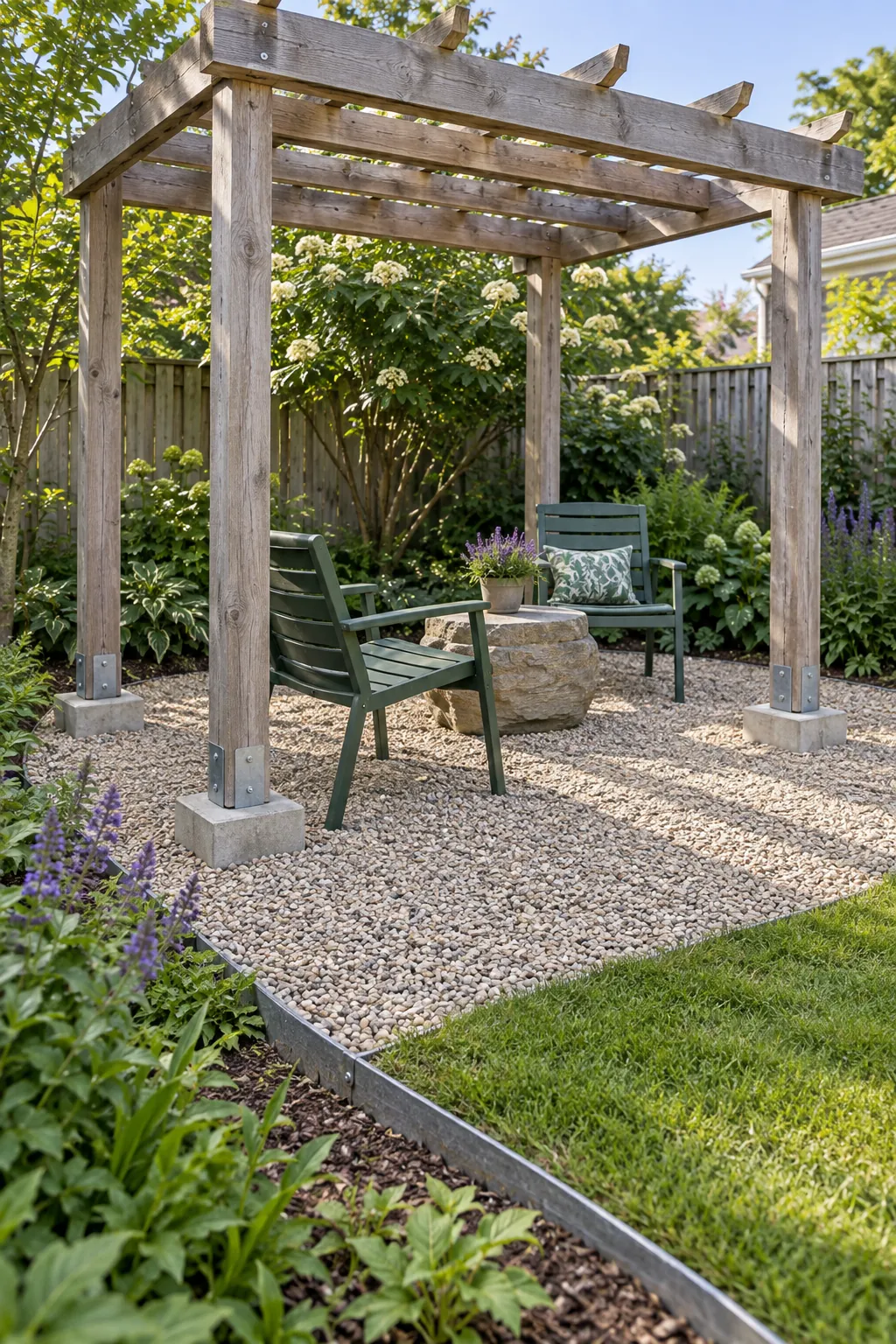
A timber frame over a gravel sitting spot
Gravel can define a sitting area without extending hard paving across the whole garden. Use a stable, contained surface that suits the chair legs and allows water to drain. The pergola posts need their own appropriate foundations rather than relying on loose gravel for support. A clear edging line helps keep stones out of adjacent planting and mowing routes.
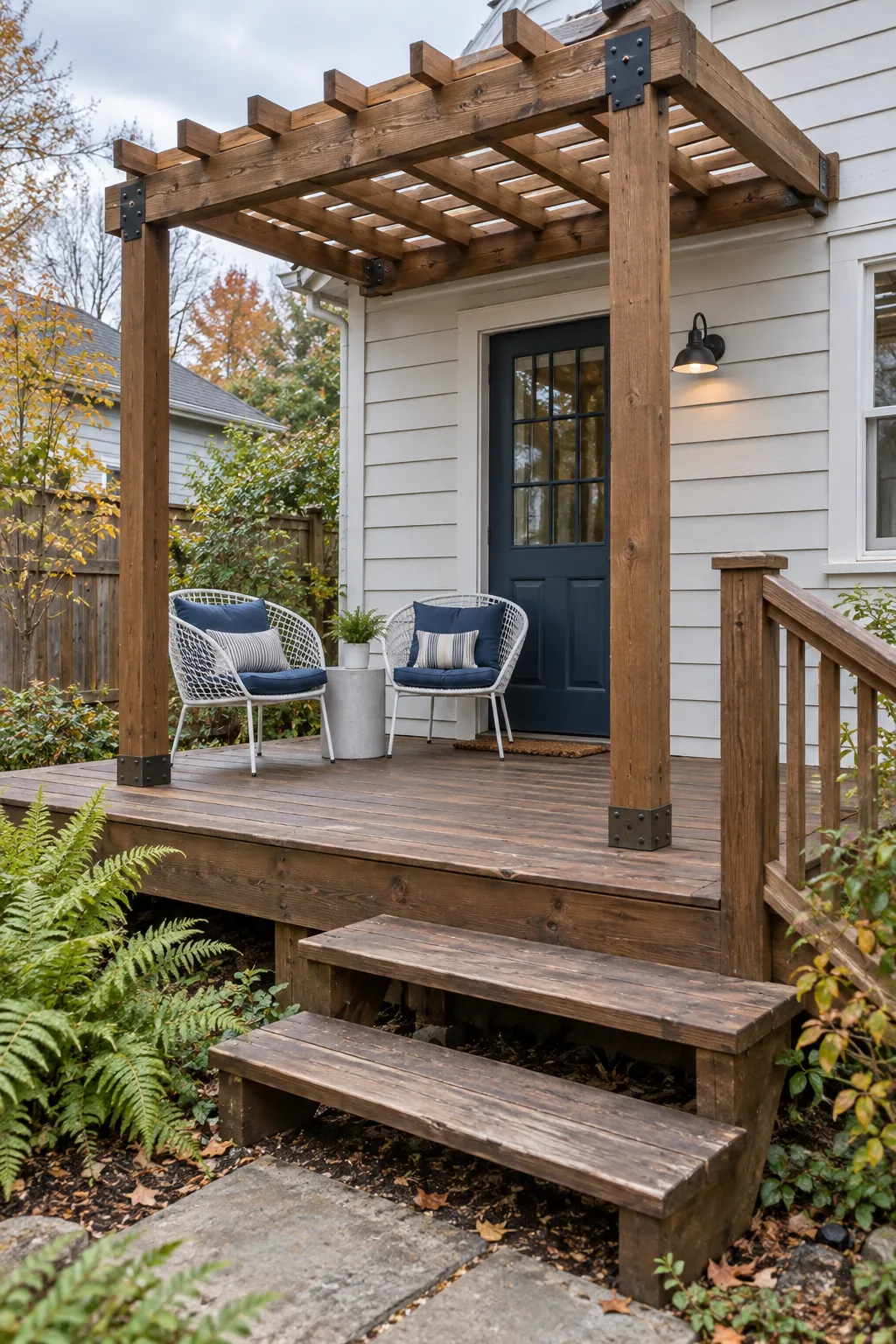
A pergola over a small deck landing
A deck landing can hold a modest seating nook if its size and structure support the added use. Do not assume deck boards can carry pergola post loads or resist wind uplift. Have the supporting structure and connections checked before installing a frame. Keep the steps fully visible from the chairs so the canopy does not make the landing feel cramped.
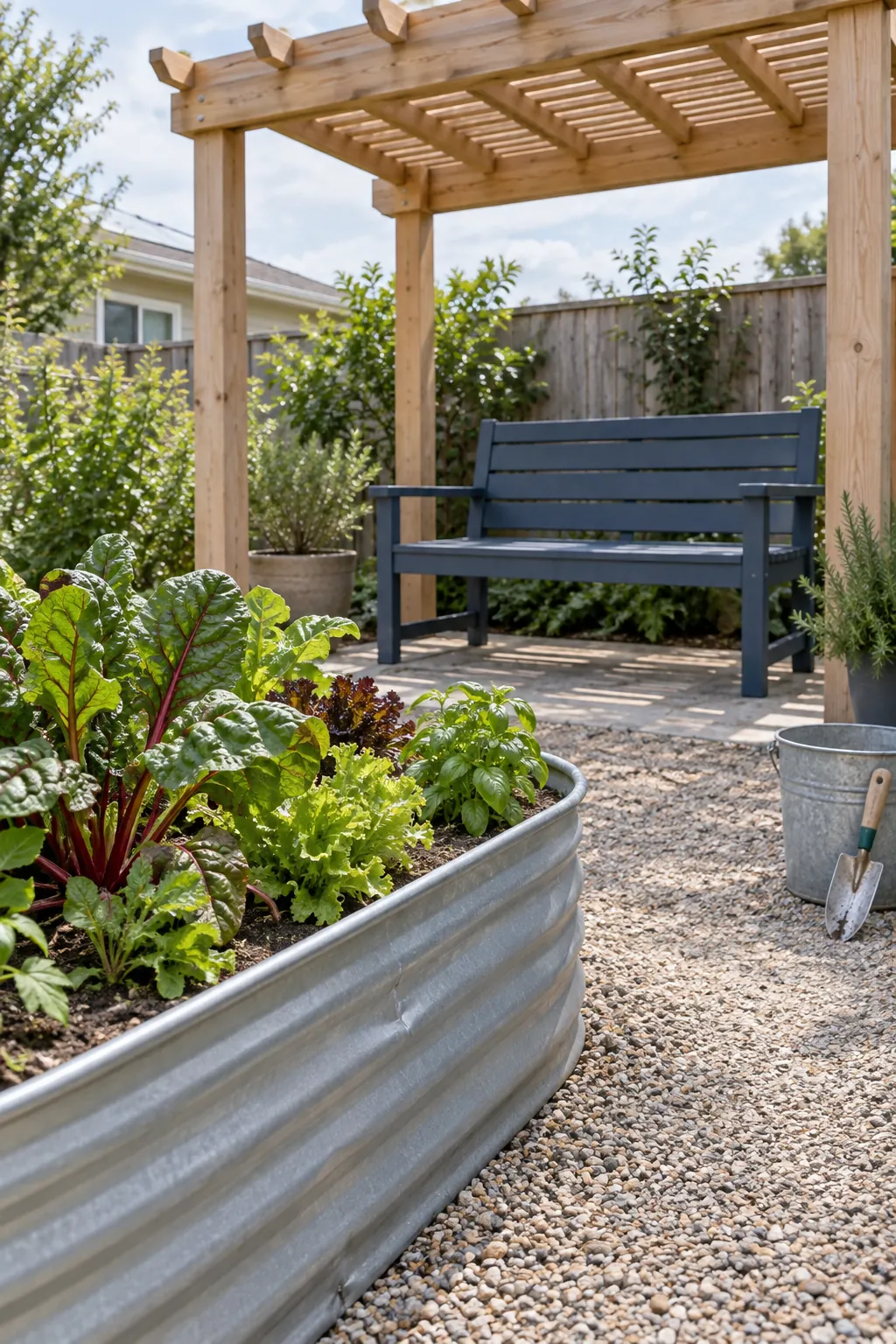
A bench facing a raised garden bed
A pergola does not need a dining table to earn its place. A bench facing a raised bed creates a reason to pause while leaving gardening space in front. Allow access to the bed from the working side rather than squeezing plants behind the seating. Keep irrigation spray away from cushions and exposed electrical fittings.
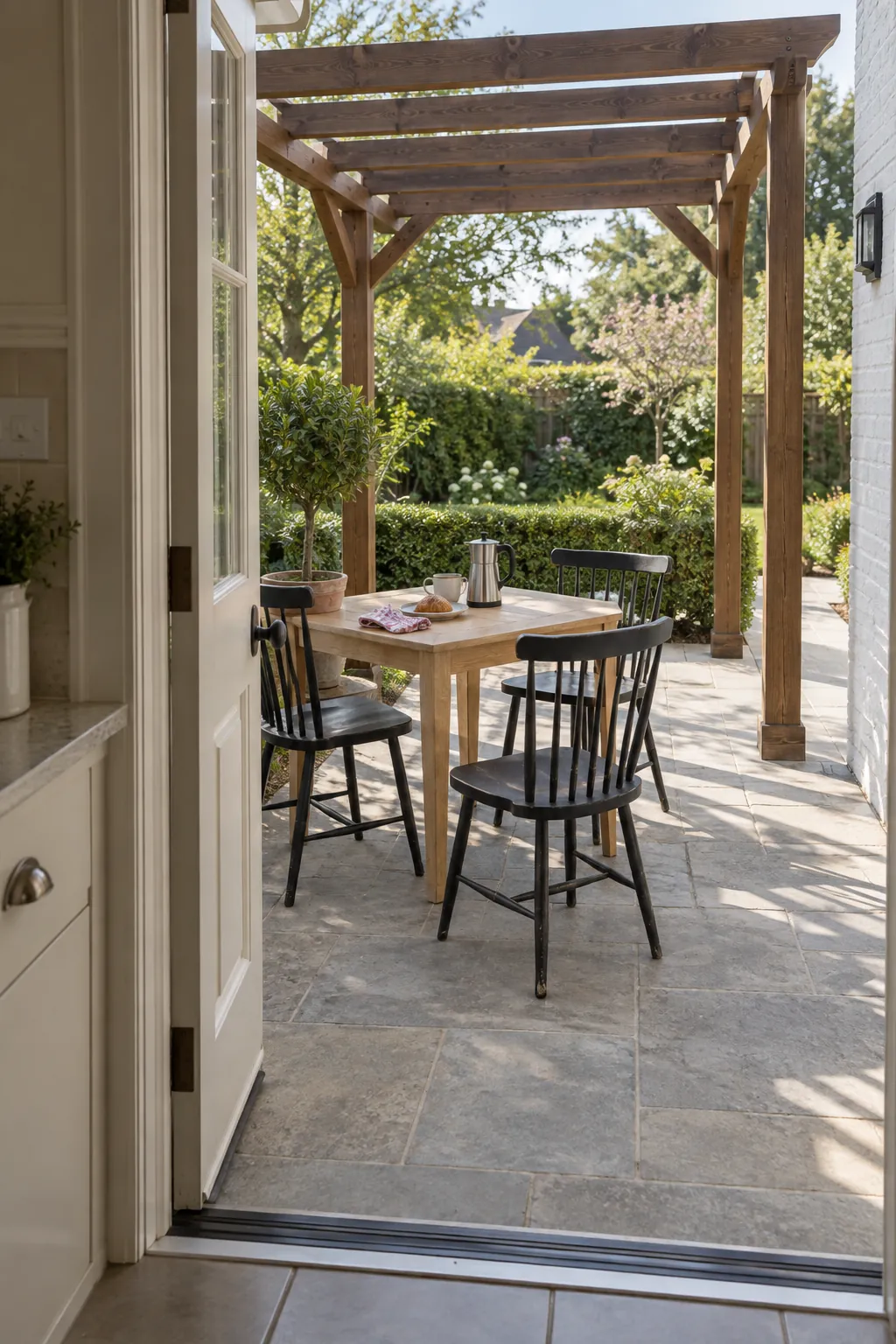
A breakfast nook just beyond the kitchen
A small eating area close to the kitchen reduces the distance needed to carry plates outdoors. Place the table beyond the door swing and leave room for someone to walk around occupied chairs. If you want a pergola off of the house, get the wall connection and water management designed correctly. A nearby freestanding model can provide a similar arrangement when attachment is unsuitable.
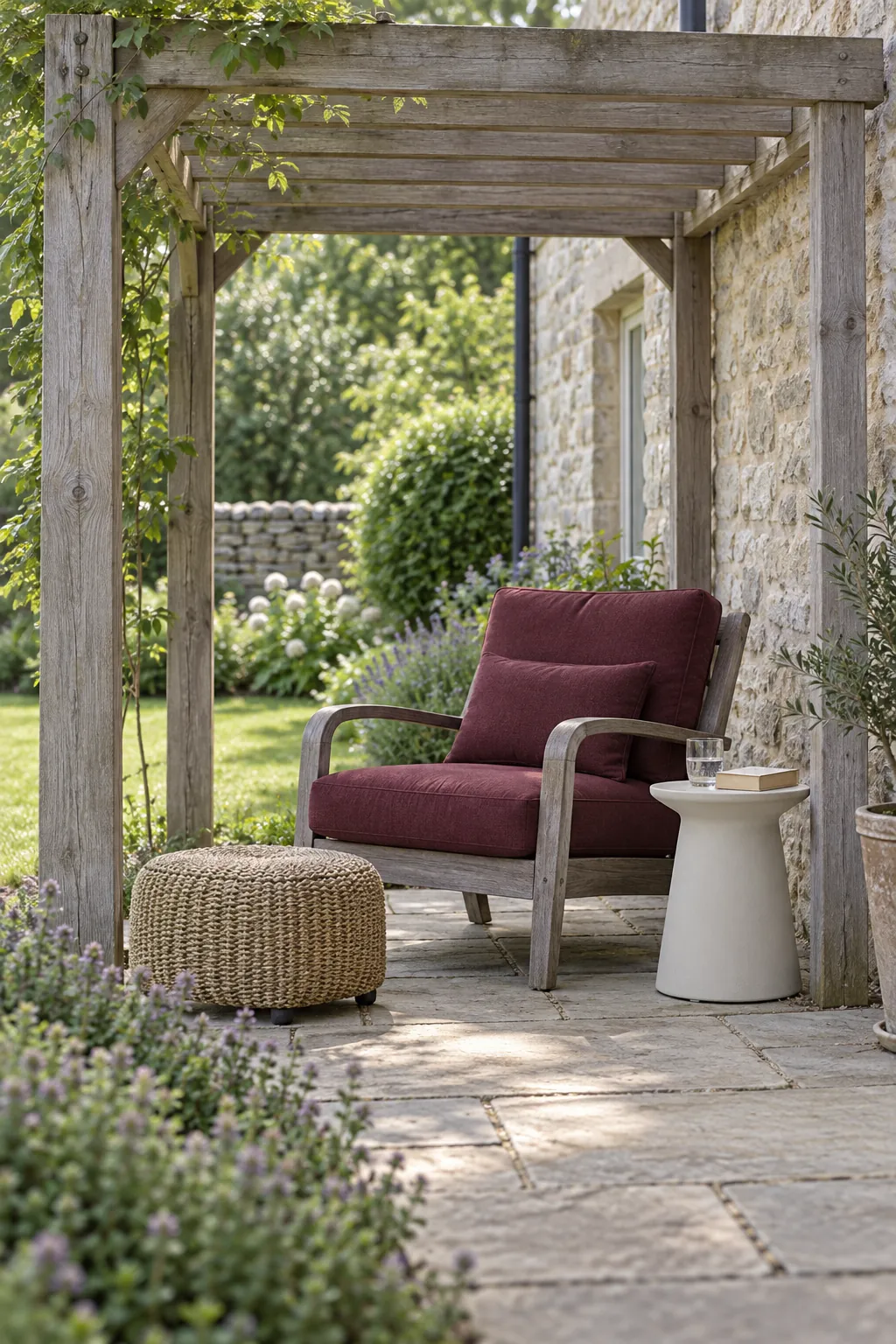
A reading chair with a movable footstool
One comfortable chair may be more useful than a crowded set of seats. A movable footstool lets you change the layout when you need a clear walkway. Test the shade at reading time and choose cushions you can store in dry conditions. Add a small side table for a book and drink instead of a deep coffee table that consumes the remaining floor space.
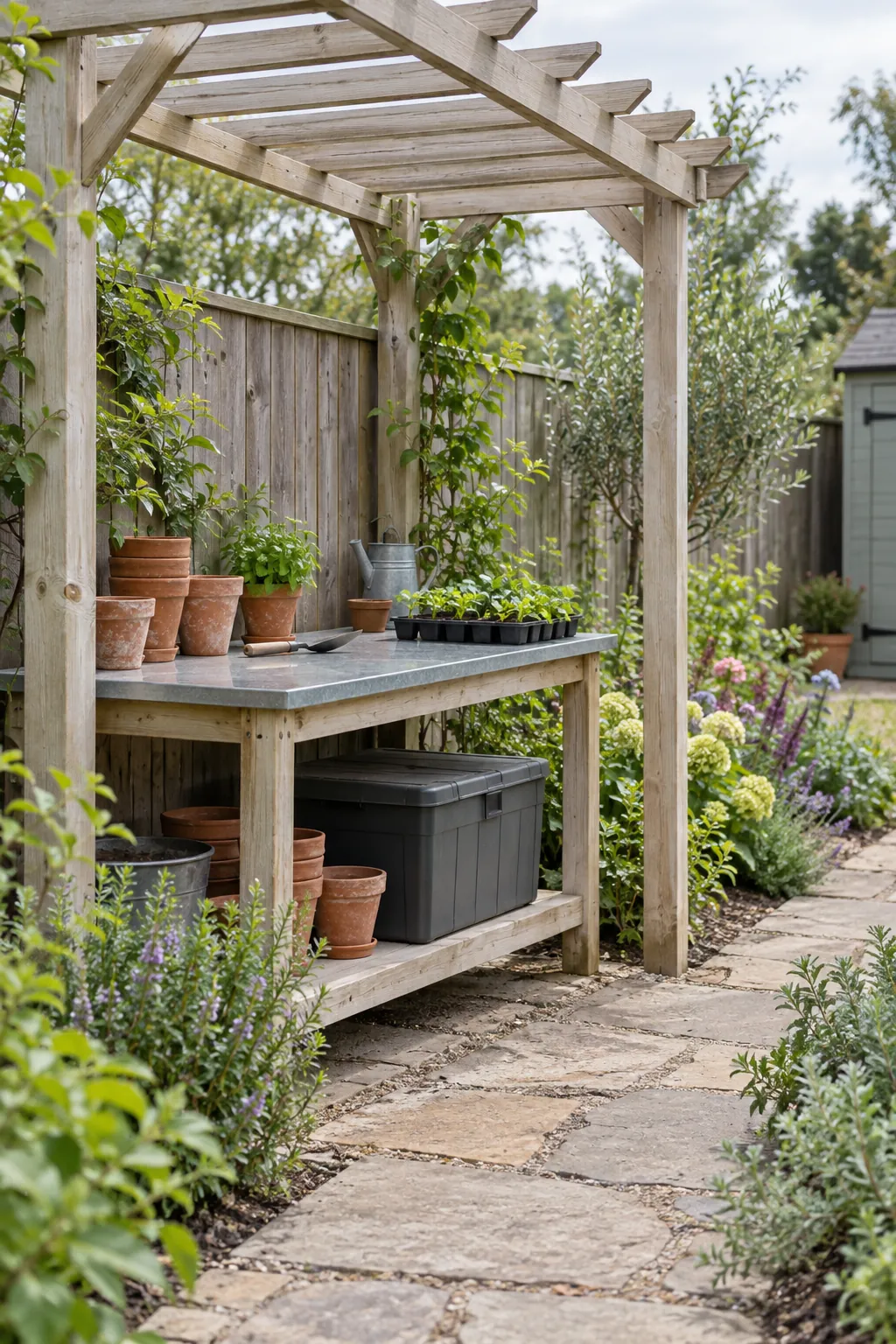
A sheltered potting corner with an open roof
An open pergola can define a potting area while allowing light to reach nearby plants. Use a washable work surface and reserve space beneath it for tools or empty pots. The slats do not protect compost or tools from rain, so keep moisture sensitive supplies in suitable storage. Leave a working gap in front of the bench that you can use without stepping into a planting bed.
A compact dining space with a built in bench
A bench along one side can reduce the space needed for loose chairs. Measure the seated reach to the table, not just the empty gap between the furniture. A removable cushion and accessible underside make everyday cleaning less awkward. Keep the opposite side open so guests can sit down without climbing past one another.
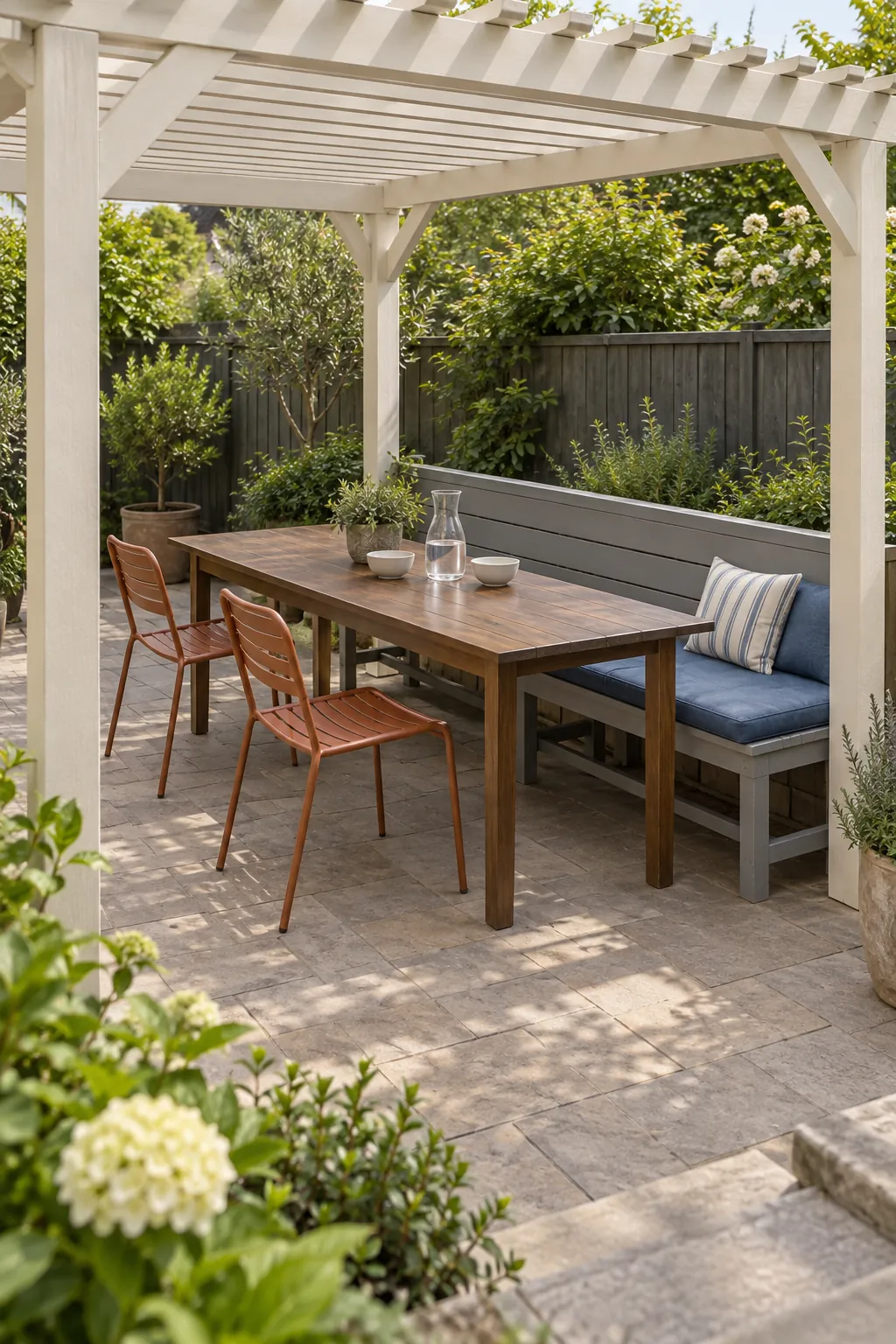
A climbing plant trained along one beam
A restrained climber can soften the frame without covering the entire canopy. Select a plant suited to the climate and check its mature weight and growth habit against the structure. Train it deliberately so shoots do not block a gate or bury the fittings. Seasonal foliage also means the amount of shade changes during the year.
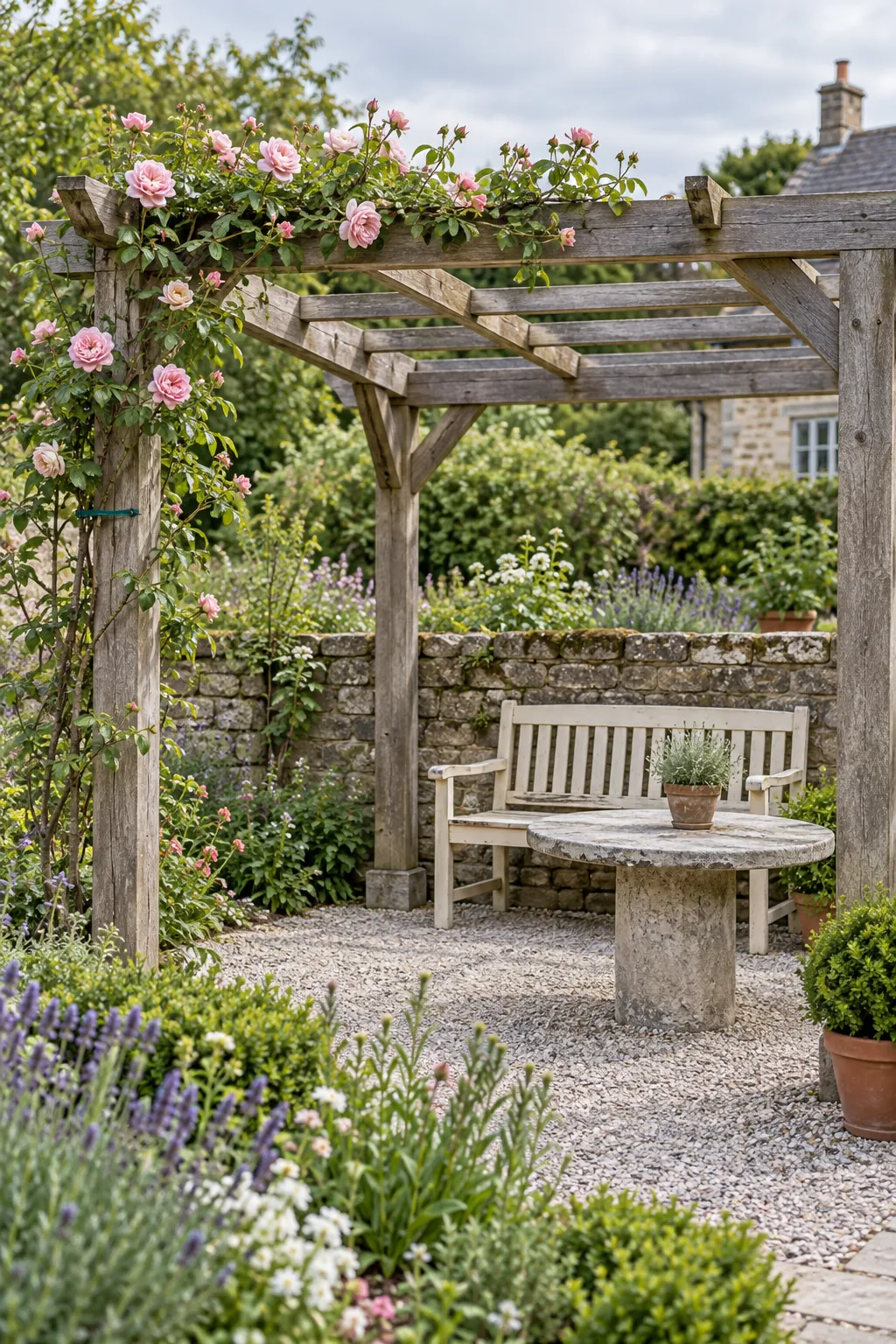
A slim pergola framing the garden gate
A small overhead frame can mark the transition into a garden rather than cover a whole patio. Keep the gate opening clear and provide enough headroom for everyday access. Avoid attaching new loads to old gate posts without checking their capacity. The strongest result comes from a simple path beneath the frame and planting that does not narrow the entrance.
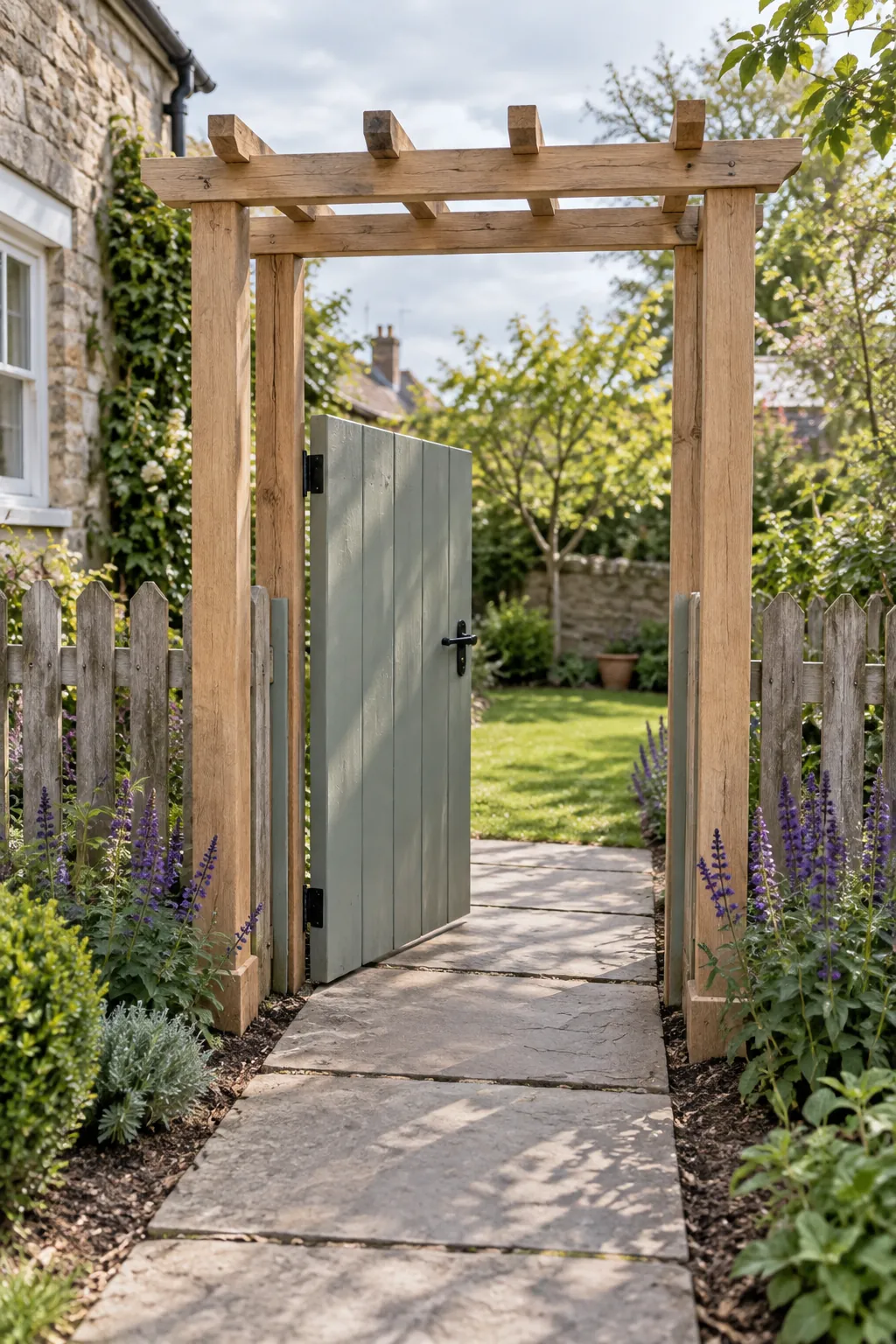
A slatted privacy side with an airy front
One slatted side can reduce direct views from a neighbor while the front remains open. Test the sightline from seated height because a tall screen may miss the actual view you want to block. Space and orient the slats for the balance of privacy and breeze that suits the site. A privacy panel adds wind load, so it belongs in the structural plan from the start.
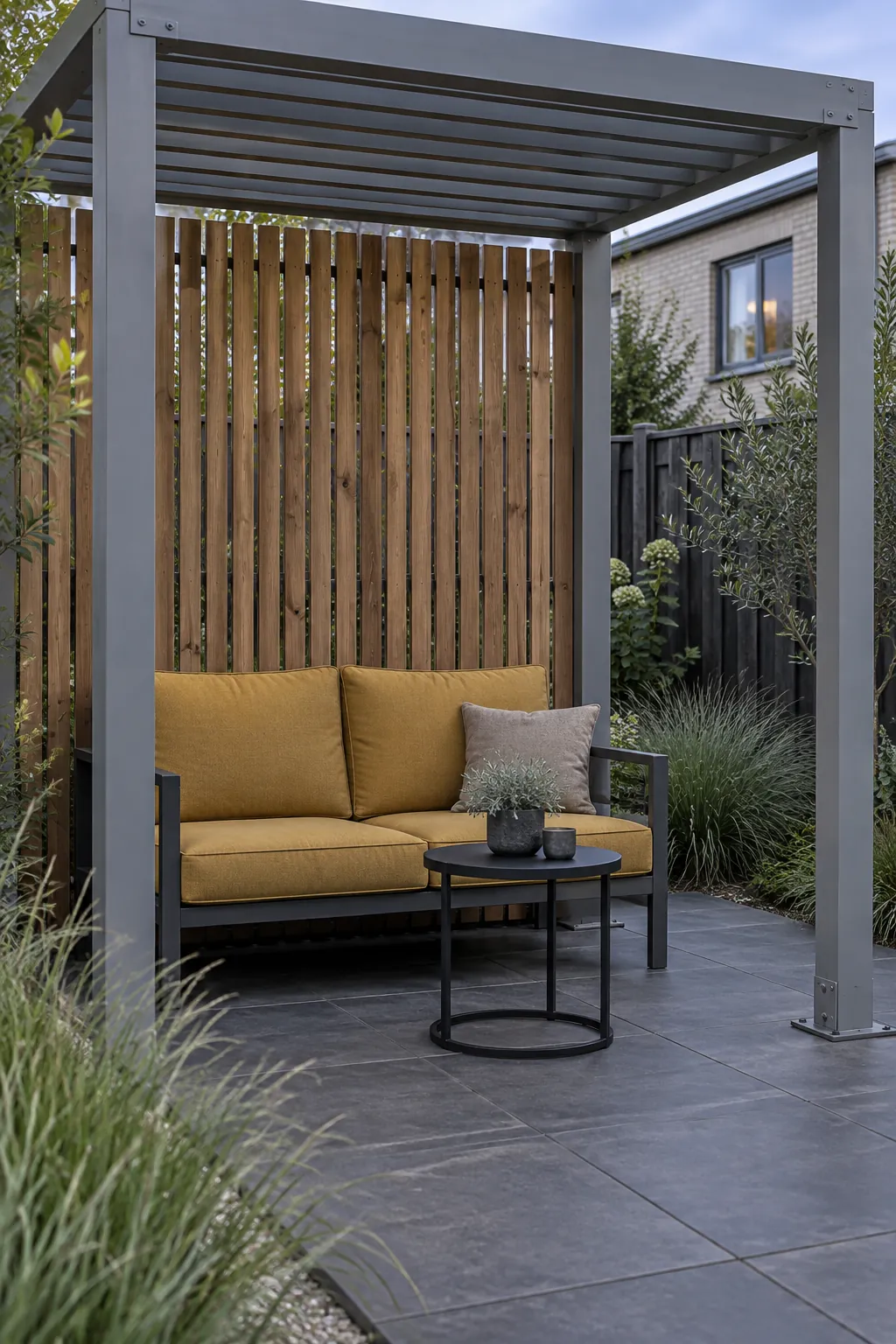
A small lounge beside a garden wall
A garden wall can provide a quiet backdrop for a compact lounge area. Position the pergola clear of the wall if the masonry is not suitable for a structural connection. Use two modest seats angled toward each other instead of pushing in a full sectional. Leave a drainage and maintenance route along the wall so the finished nook stays practical.
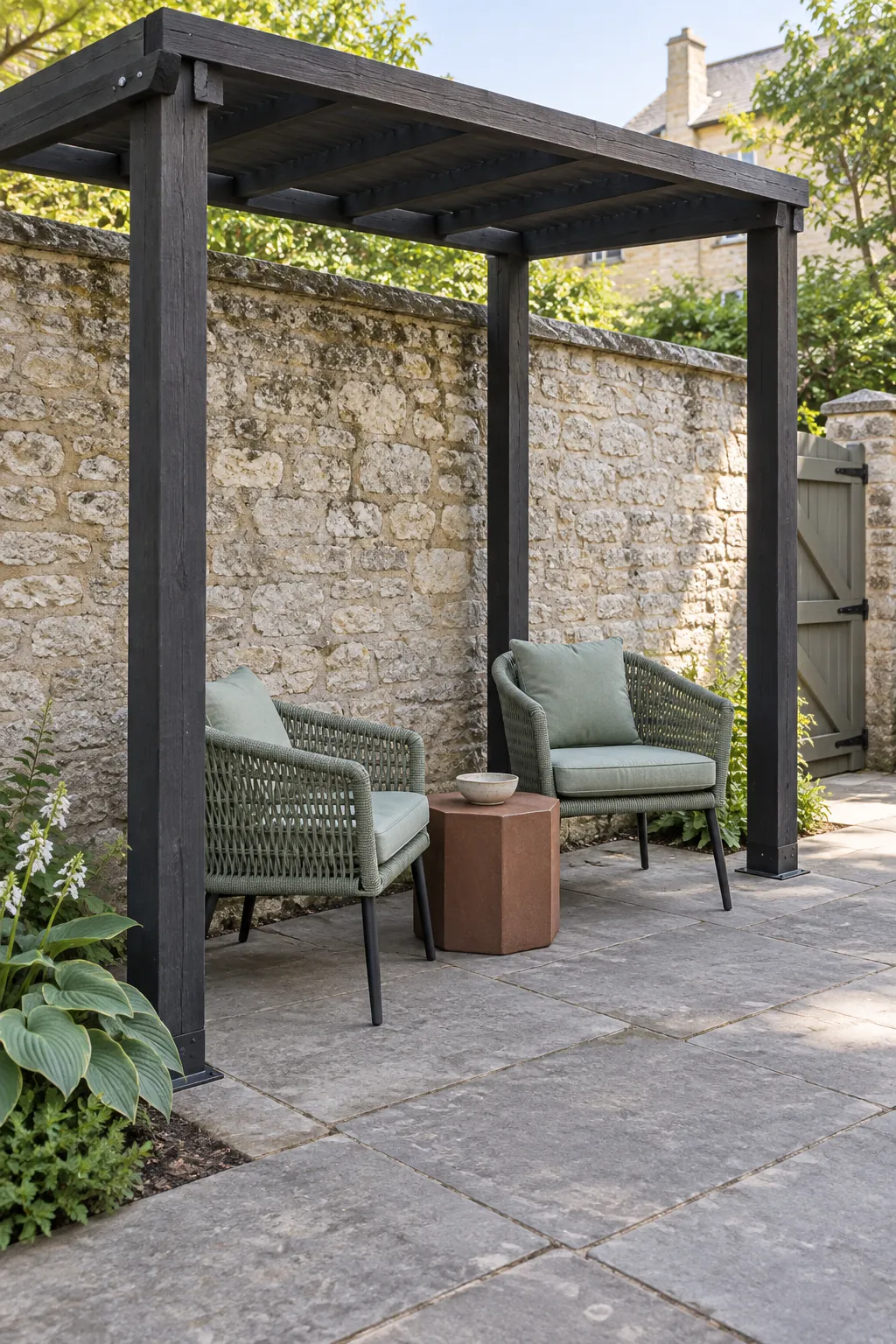
A simple kit with restrained accessories
Pergola ideas on a budget work best when the structure receives priority over decorative extras. Compare complete kit costs, including foundations, delivery, assembly and any shade accessories you actually need. Avoid buying a frame solely because the advertised footprint fits, since usable clearance between posts may be smaller. Start with existing furniture and add accessories after you know how the space performs.
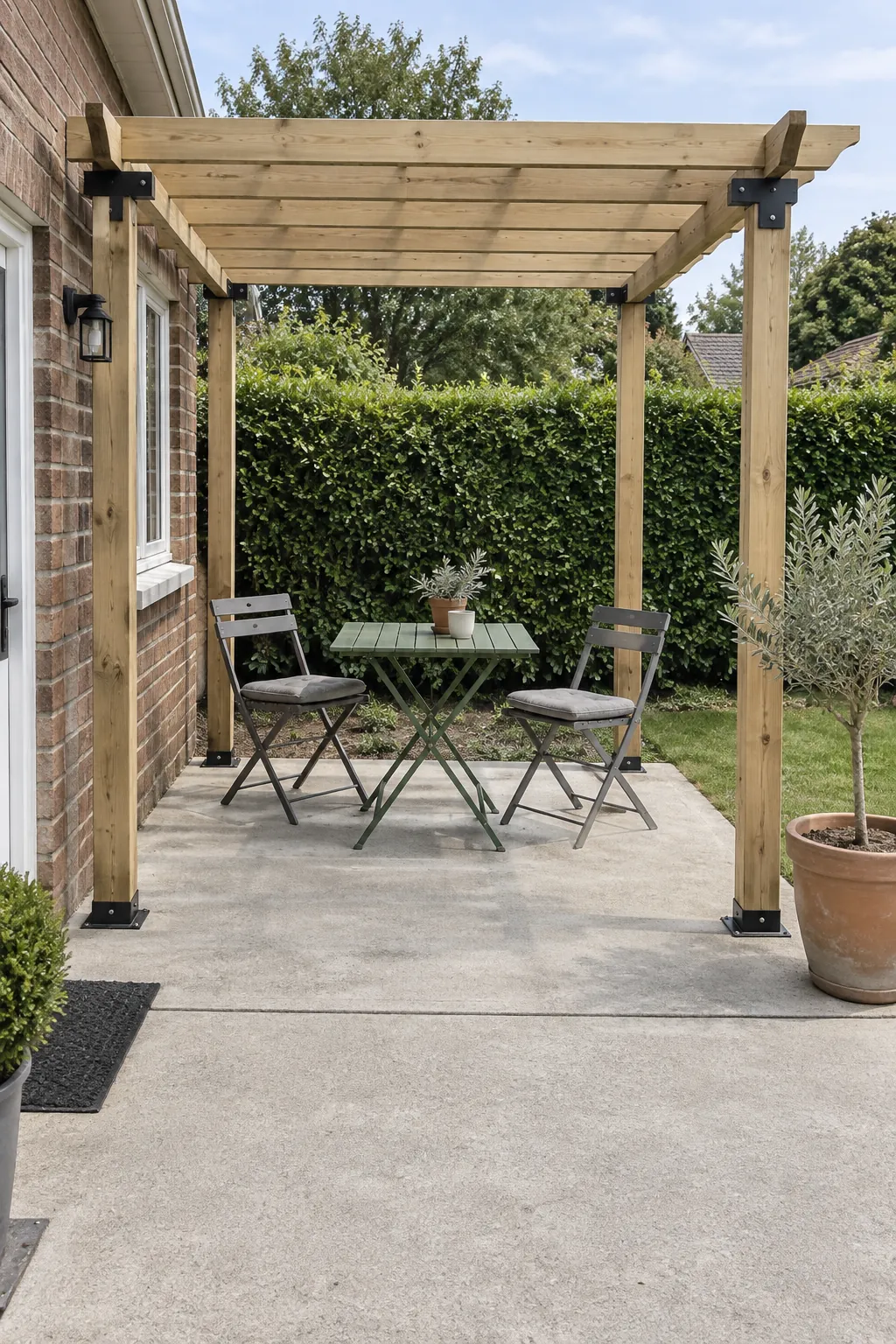
A curved path leading to a tiny retreat
A pergola at the end of a path creates a destination in a small garden. Keep the path wide and stable enough for the people who use it rather than choosing a tight curve just for appearance. Place the seats where the view opens toward planting, not into a fence corner. A compact frame feels less isolated when the planting and path connect it to the rest of the yard.
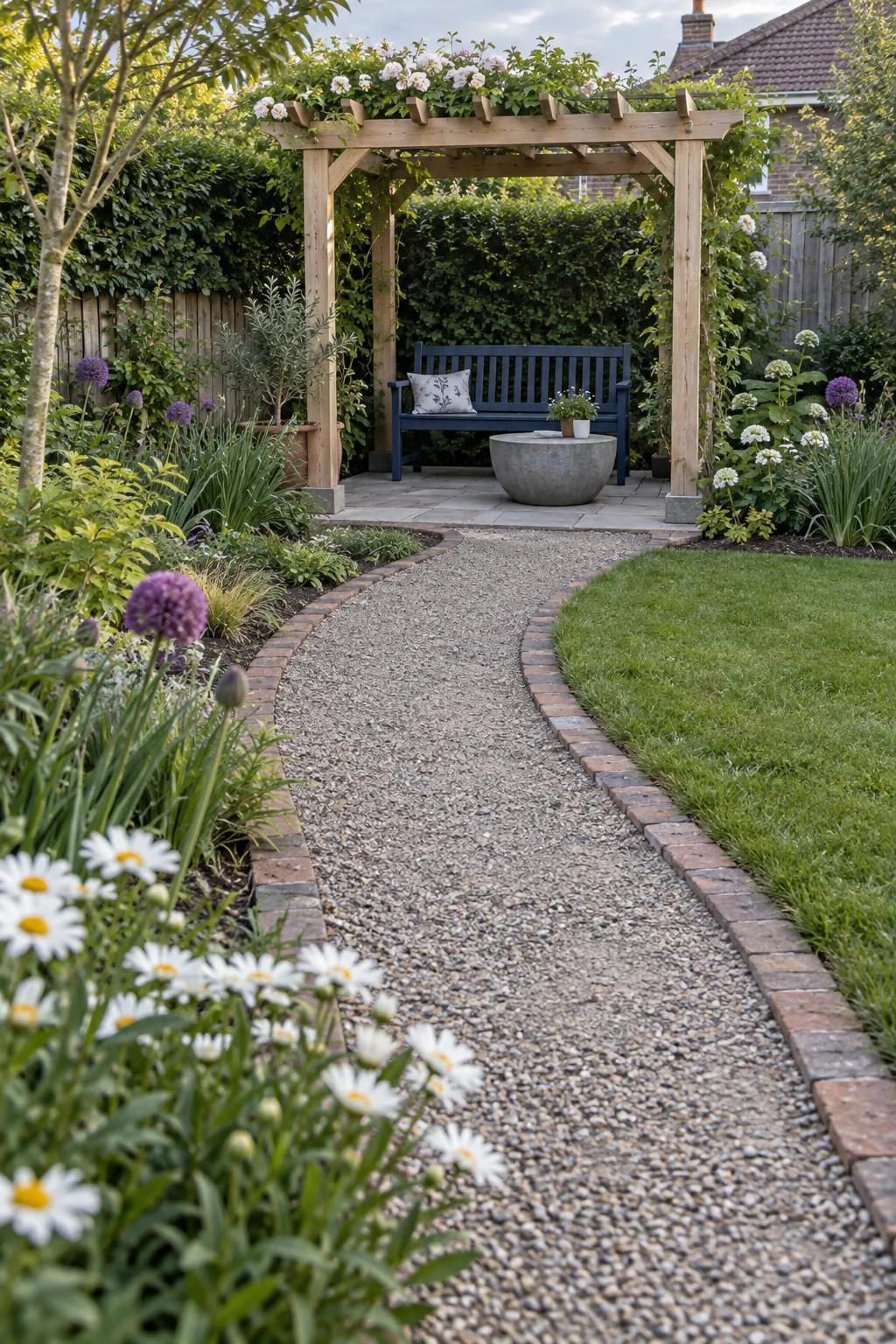
A screened nook for a windy yard
A partly screened pergola can reduce exposure at seat level while retaining an open outlook. The screen should form part of a wind rated design instead of becoming an improvised solid wall. Avoid loose curtains in an exposed site unless their system is intended for those conditions. Use the local wind direction and the furniture position to decide where protection will matter most.
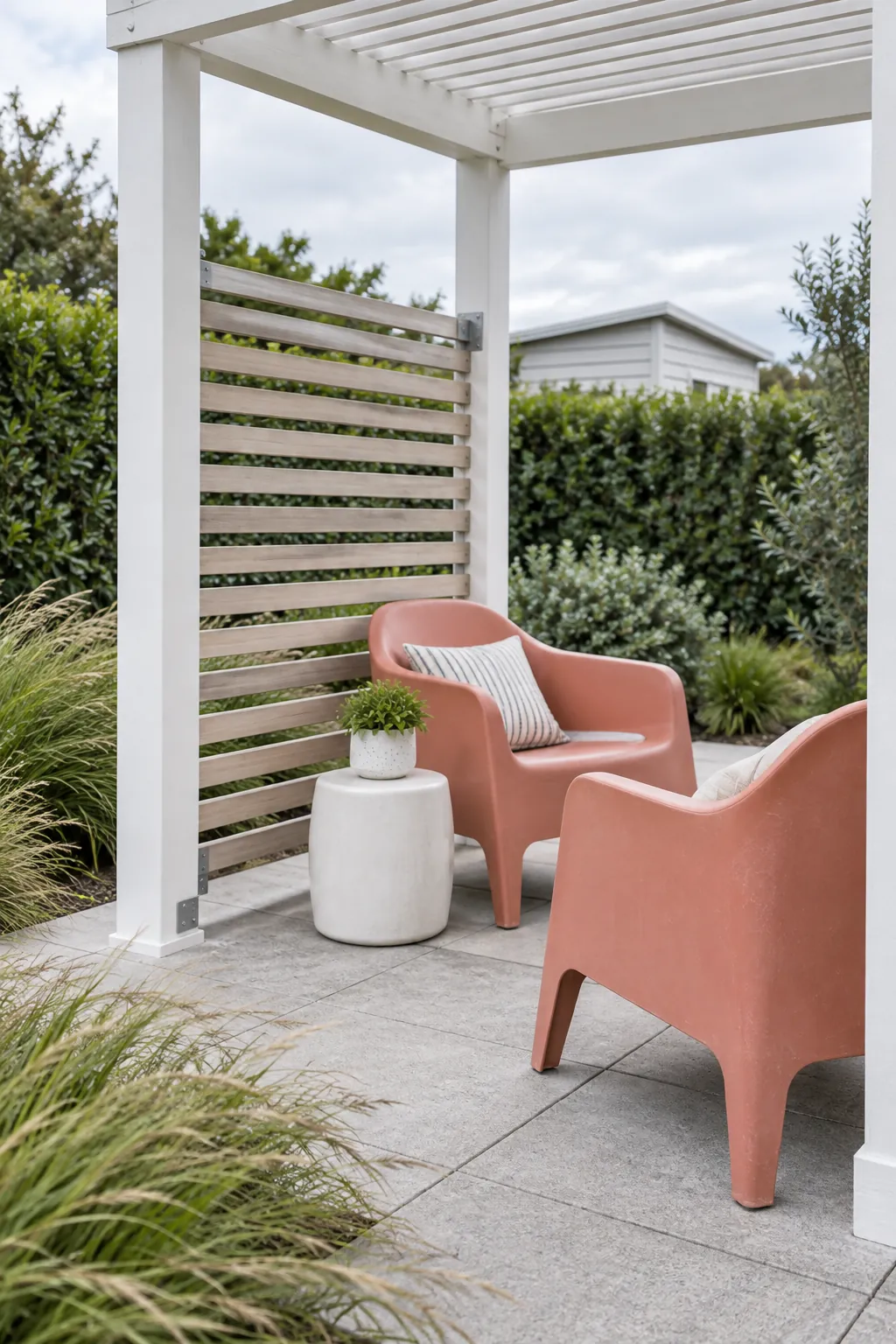
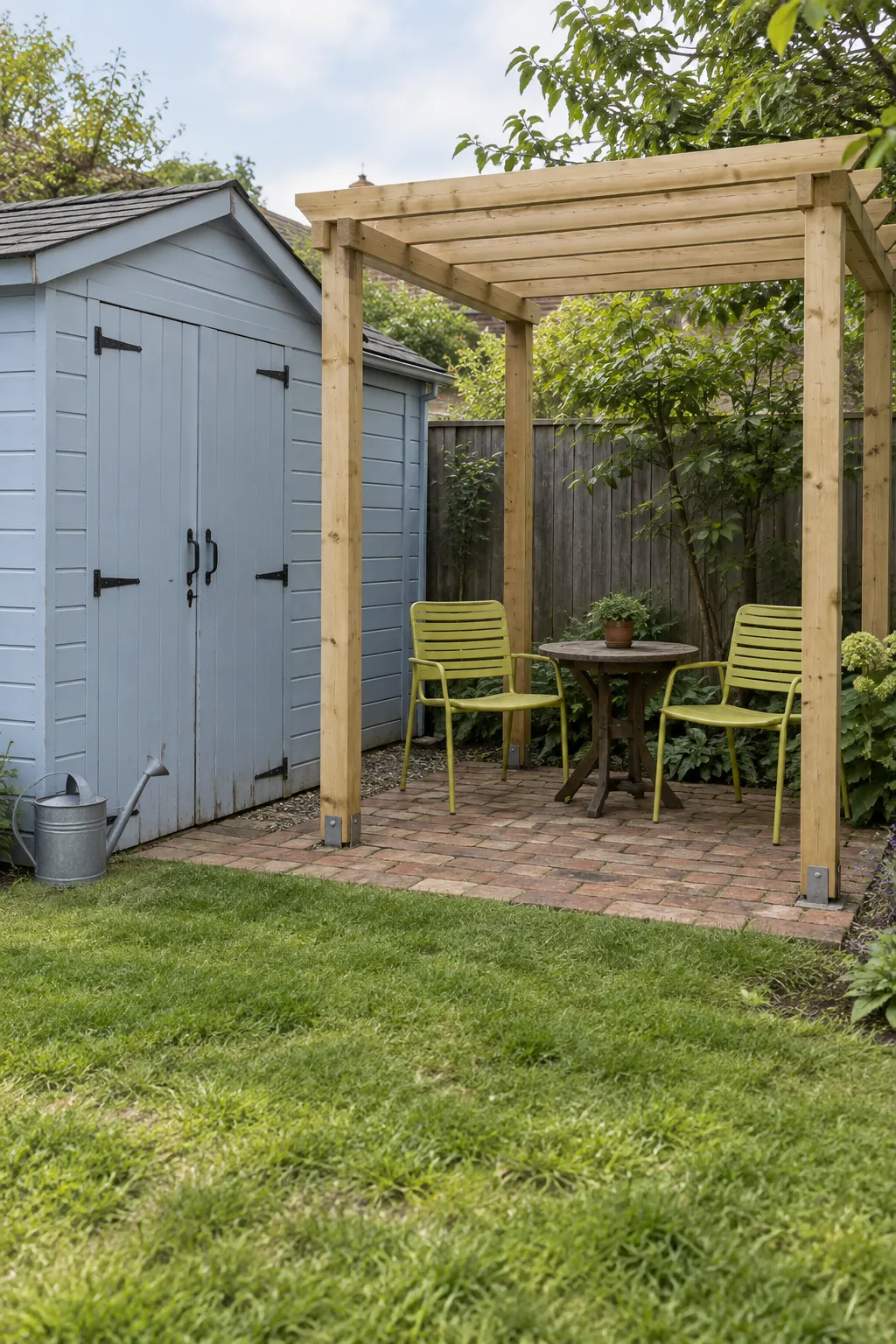
A miniature outdoor room beside a shed
A shed can supply a useful backdrop without becoming a load bearing part of the pergola. Leave room to open its doors and reach the roof edge for repairs. A small paved patch and a pair of chairs make this overlooked area usable without a large extension. Check that runoff from either roof does not collect beneath the seats.
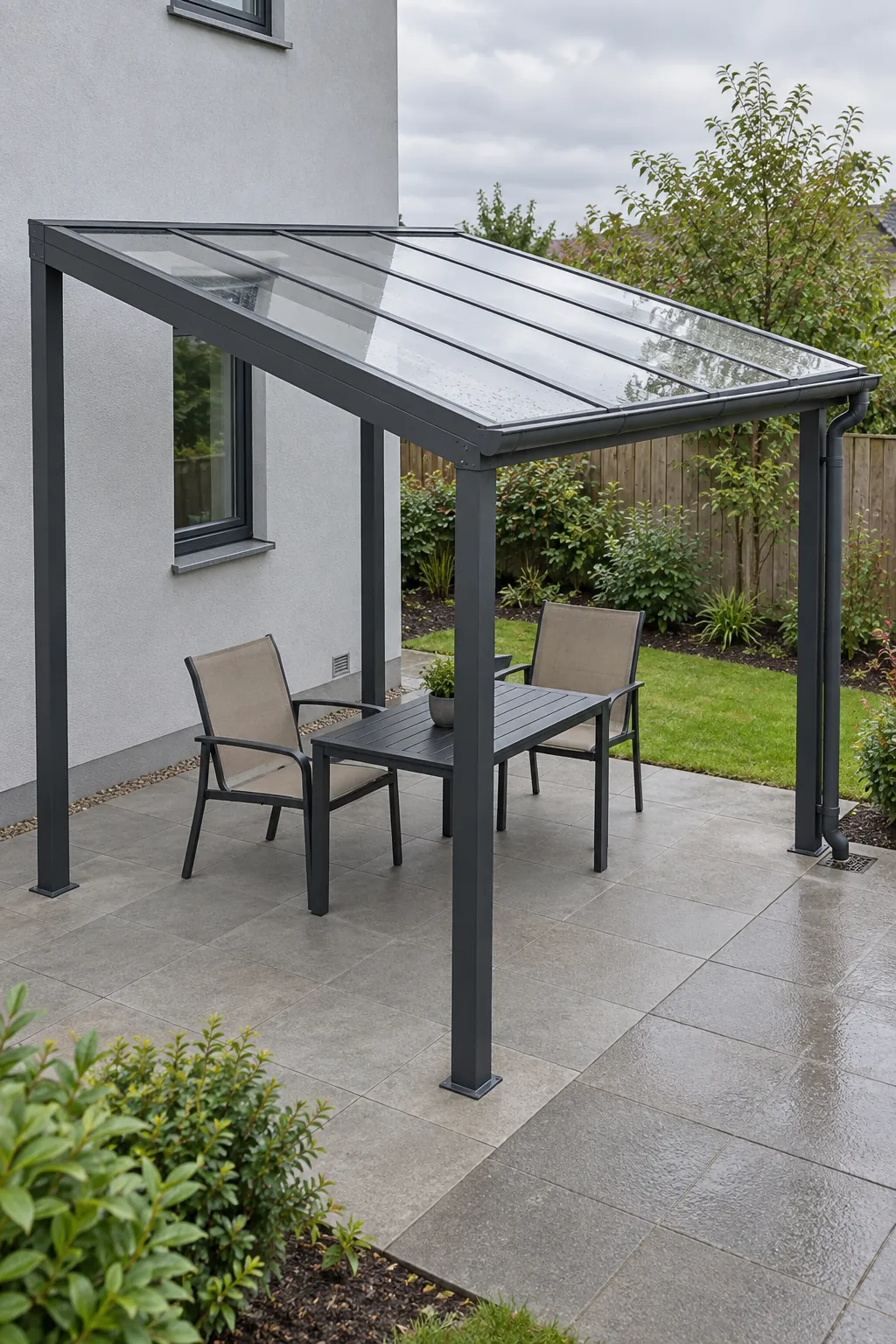
A roofed option where rain protection matters
A solid roof changes the project from patterned shade to a more substantial covered patio. Plan its slope, drainage, supports and local approval requirements before selecting a compact footprint. Clear roofing admits light but may also retain heat and need cleaning. If rain shelter is the real goal, choose a system designed for it rather than expecting open pergola slats to keep furniture dry.
A quiet nook sized around everyday use
The best footprint is the one that supports your normal routine without taking over the yard. Mark the posts on the ground and leave your furniture in that position for a few days before committing. Notice the routes you use, the hours the seats get sun and the space needed to store cushions. A mini pergola earns its place when you can use it comfortably and still move through the garden.