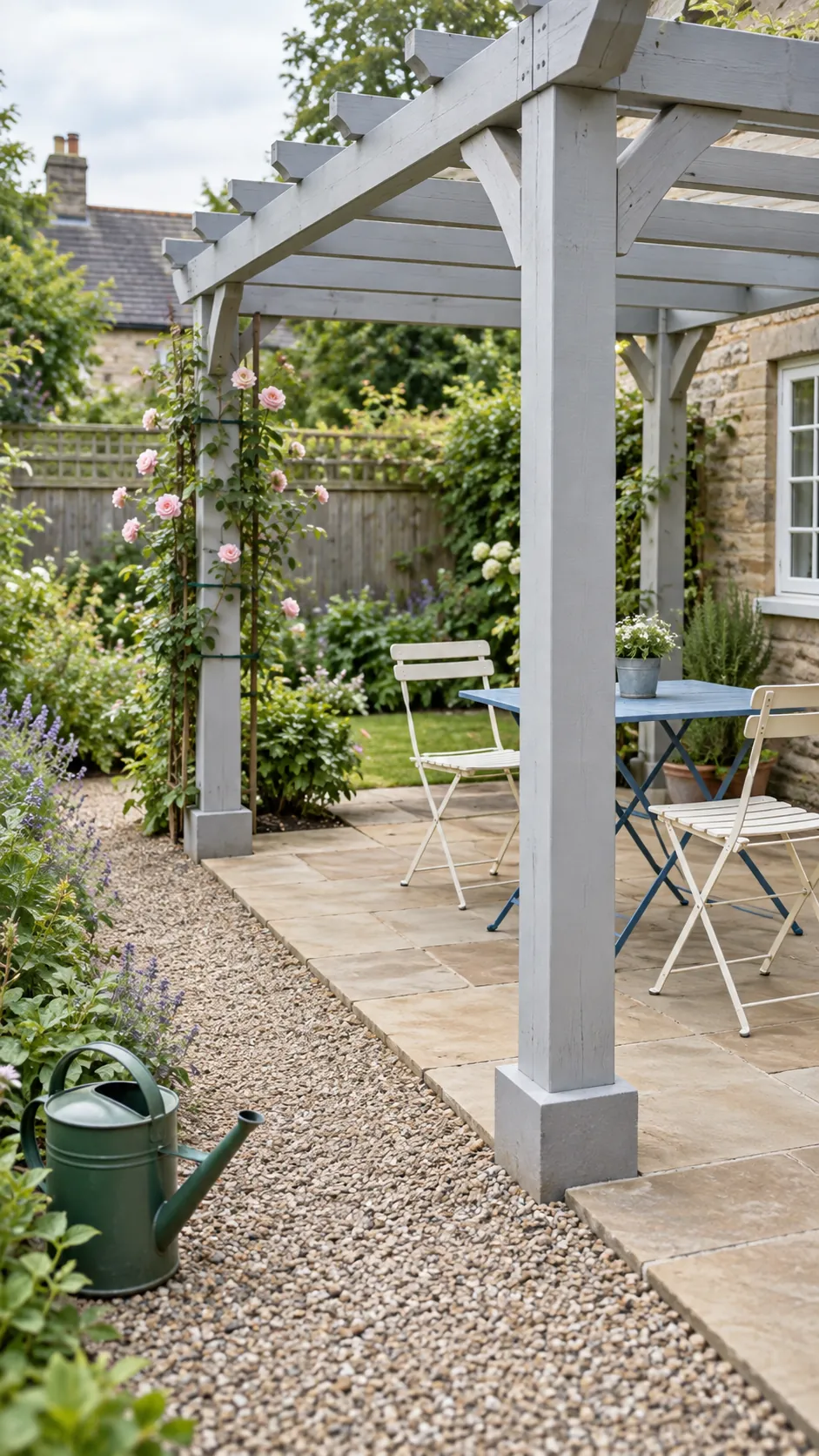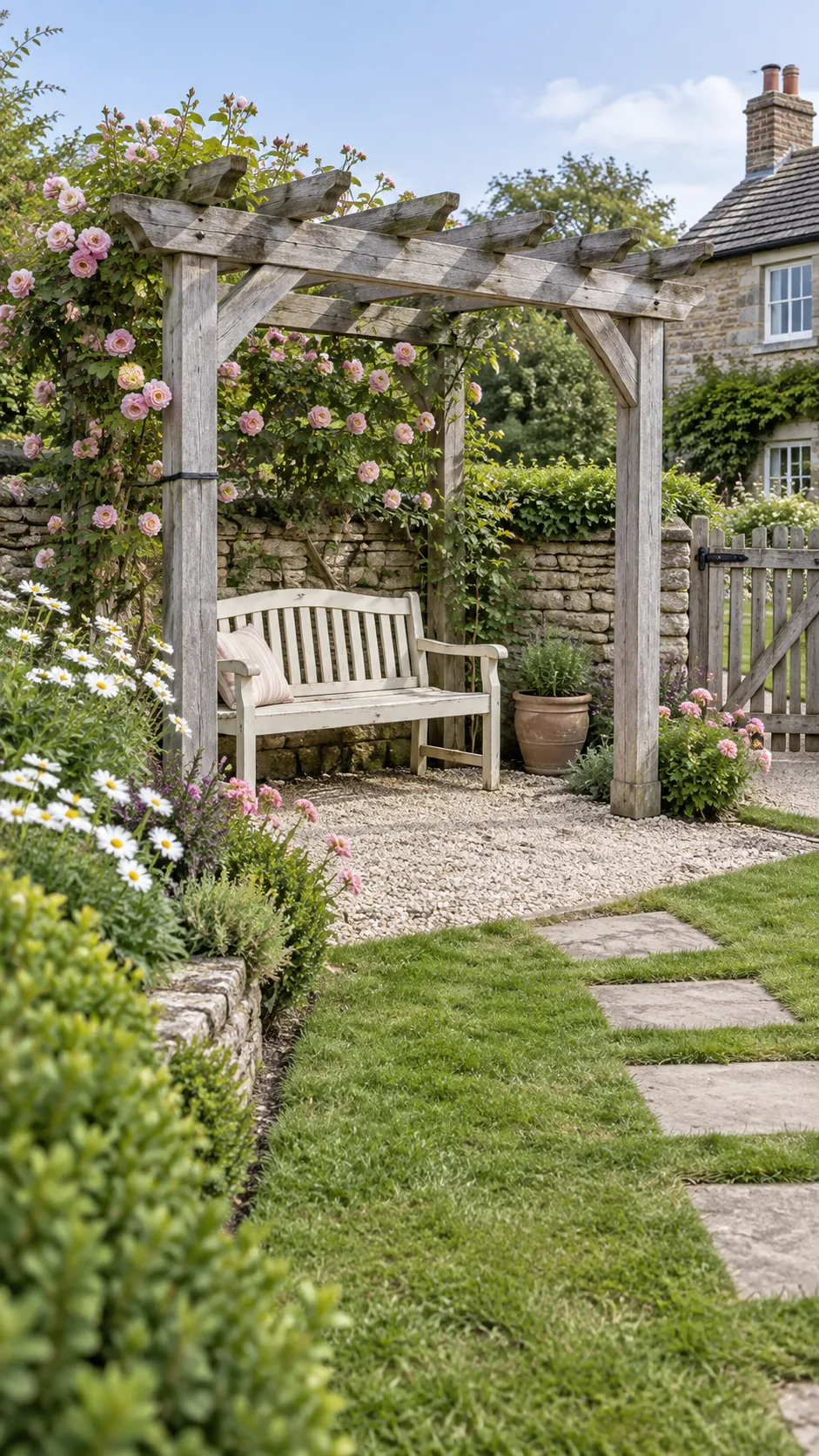
A flowering canopy looks inviting until growth catches clothing, chairs wobble or the path disappears beneath stems. Start with a comfortable seat and a clear route, then choose planting that you can maintain. The strongest cottage garden design gives the structure room to work while flowers soften its edges.
A rose covered sitting bay
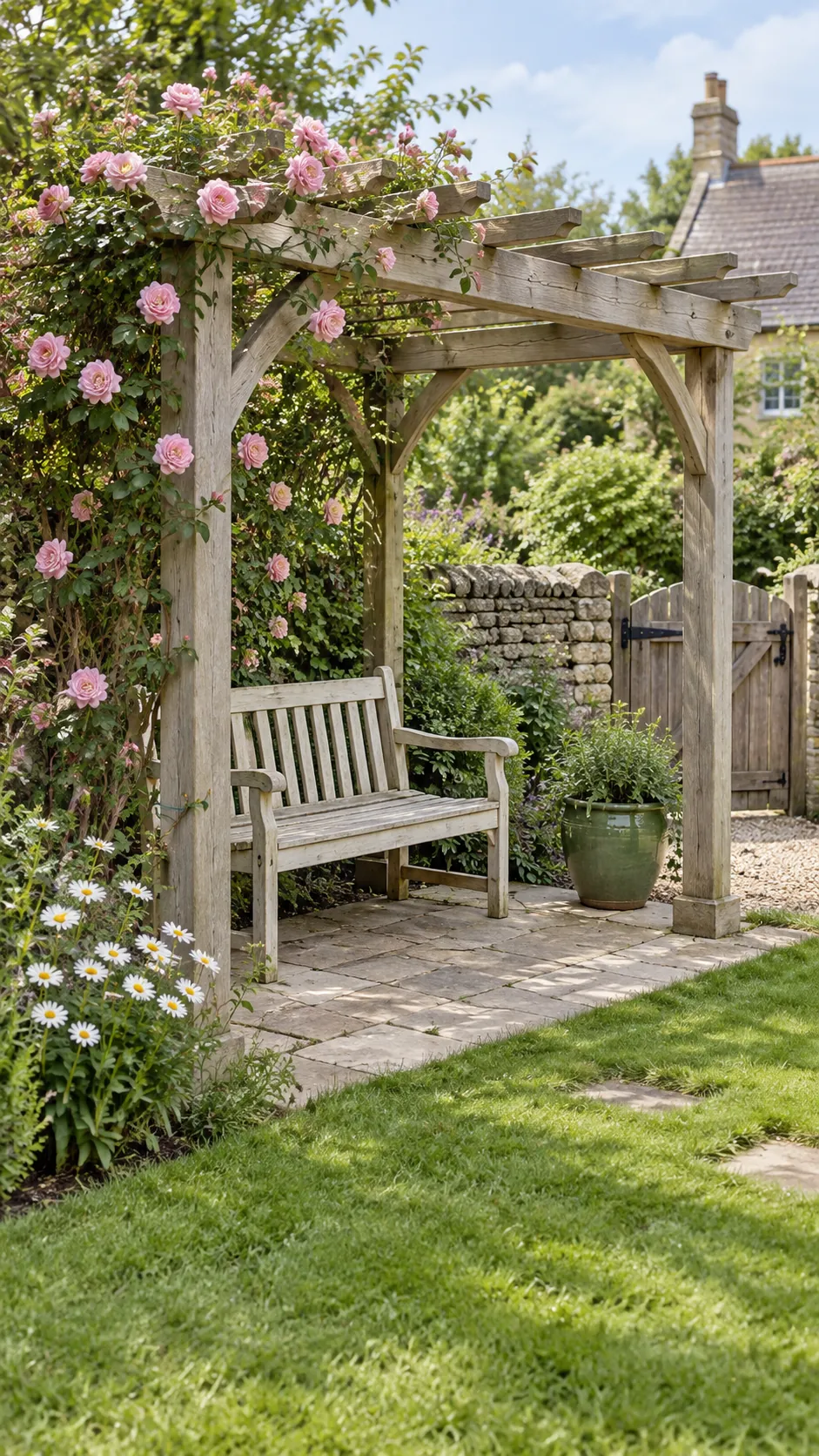
A climbing rose can soften a simple timber frame without hiding its shape. Choose a variety suited to your climate and train its stems where you can still reach them for pruning. Keep thorny growth away from the seat and entrance, especially where sleeves or hair could catch. A bench beneath only part of the canopy leaves space for flowers above and a usable place to sit below.
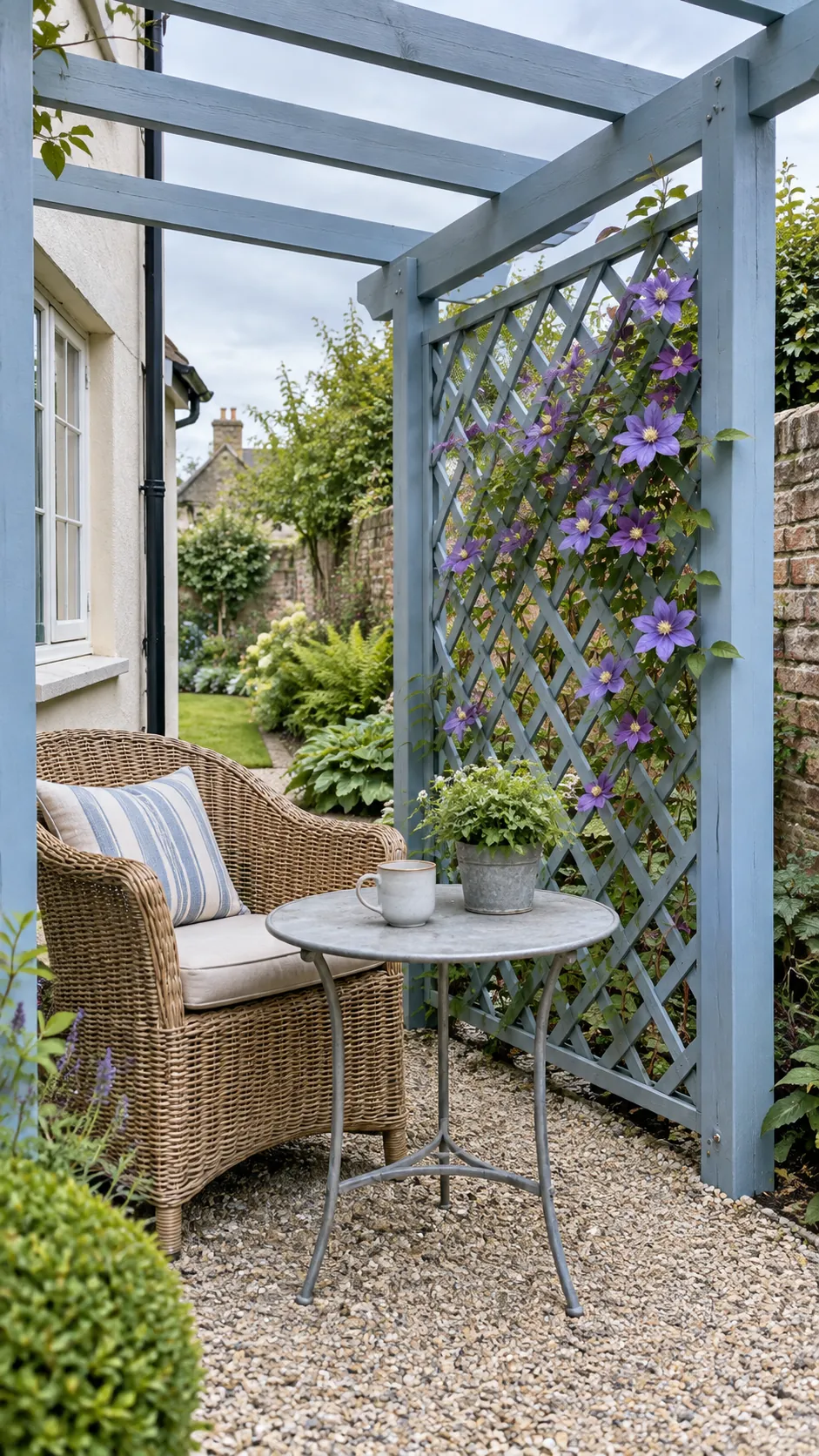
Clematis on a side trellis
A side trellis gives clematis a defined climbing surface while the roof remains open. Match the cultivar to the available sun and learn its pruning group before cutting back growth. Fine supports can help twining stems climb without wrapping around every structural joint. Position the plant beside the sitting area rather than in the middle of the entrance.
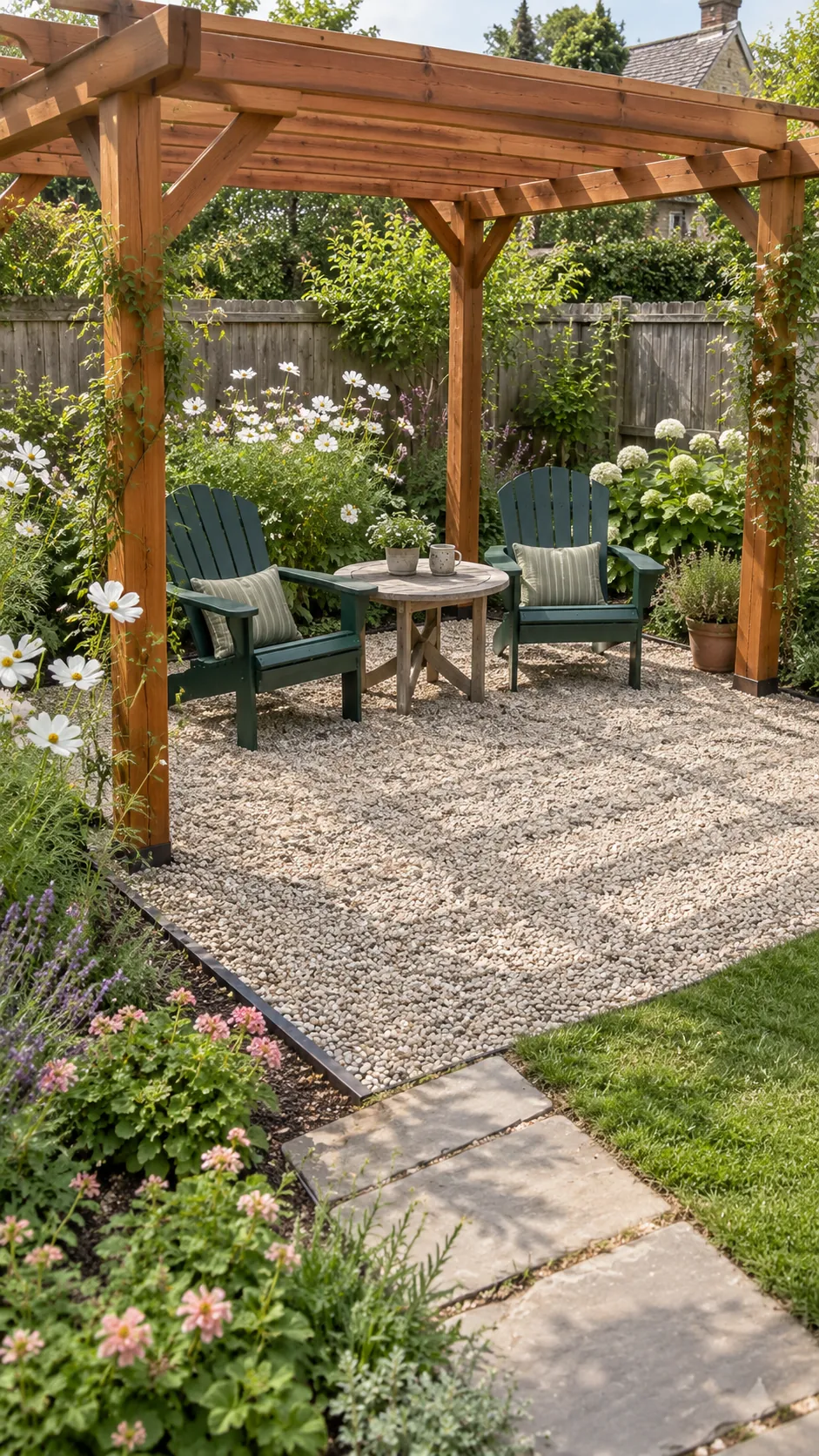
A gravel floor beside loose borders
Gravel can give a cottage pergola a simple garden floor that feels connected to nearby planting. Firm preparation and a suitable gravel size matter more than a decorative scattering over bare soil. Check that chair feet remain stable and that loose stones do not spread onto adjoining paths. A restrained edging line keeps the surface tidy while flowers soften its outer boundary.
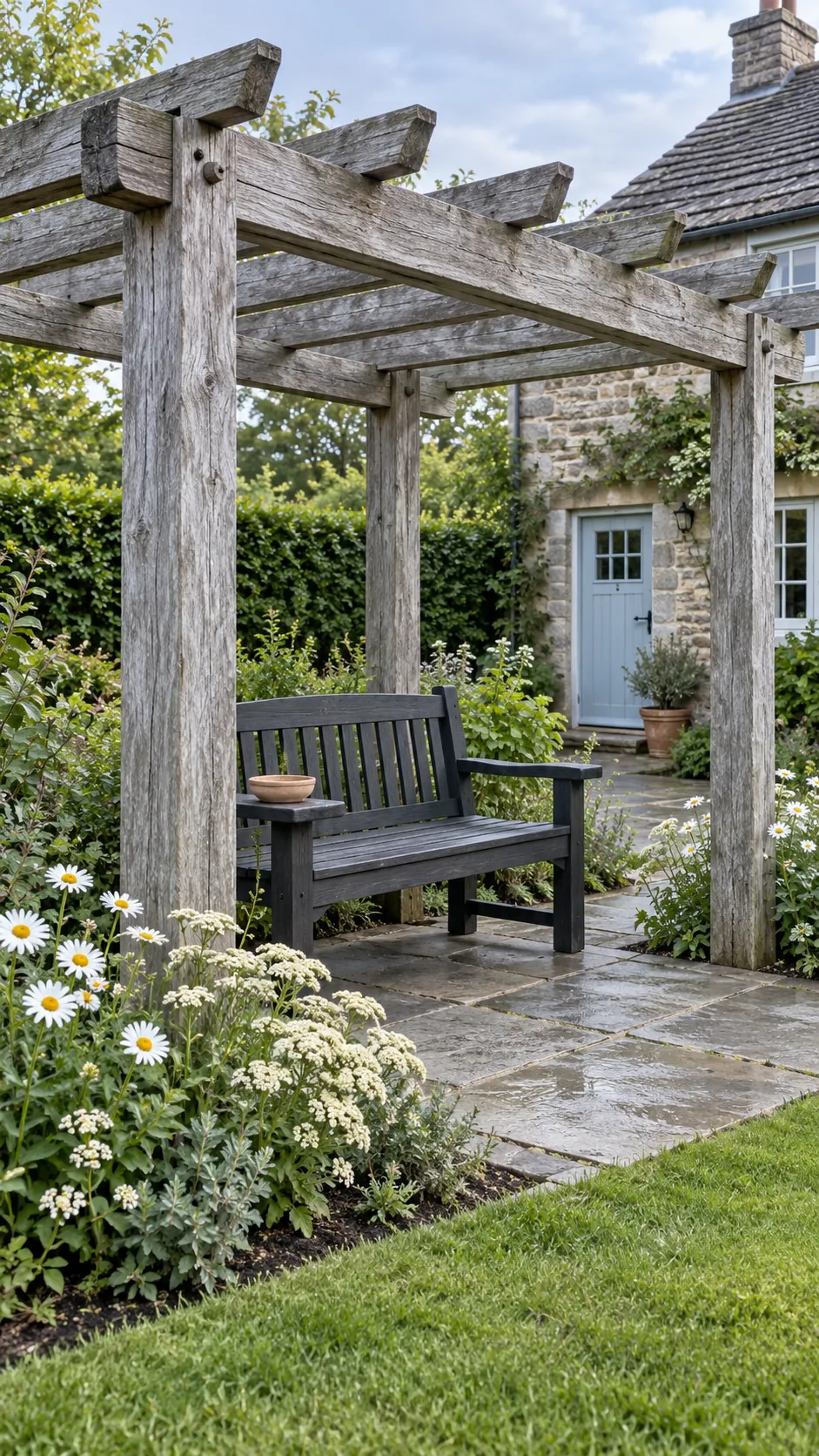
Weathered wood with pale flowers
Silvered timber works well with white flowers and varied green foliage. Let broad material contrast carry the design instead of adding many small ornaments. Inspect weathered members and joints, since an aged appearance does not prove that the structure is sound. Repeat a few pale blooms around the posts to connect the frame with the border.
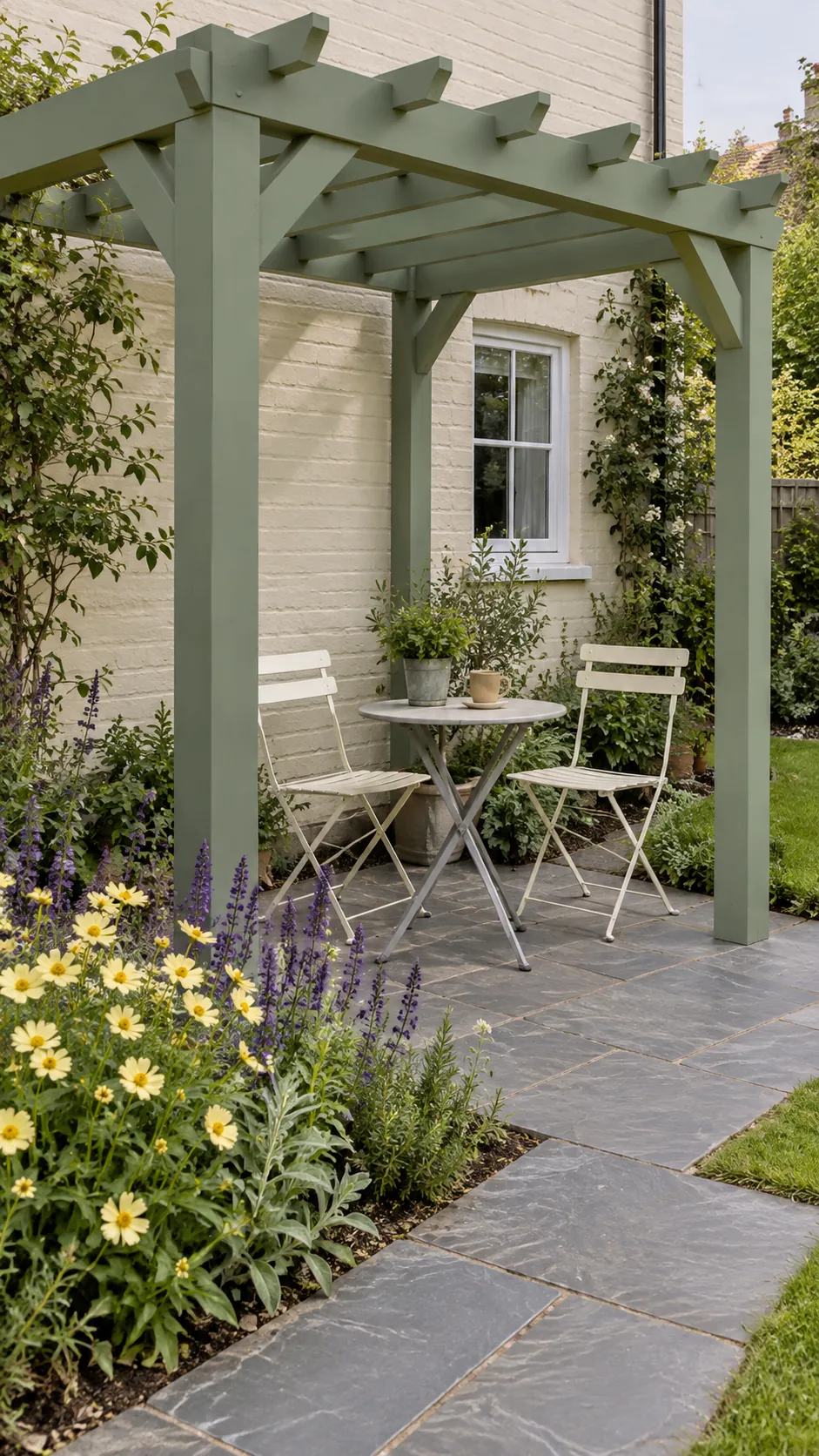
A painted frame as a garden accent
A muted painted pergola can act as a quiet focal point among loose cottage planting. Sample the color outdoors beside your house and paving before committing to the whole structure. Use an exterior finish suited to the timber and follow its preparation requirements. Sage, soft blue or cream can work, but one clear choice usually feels calmer than several competing colors.
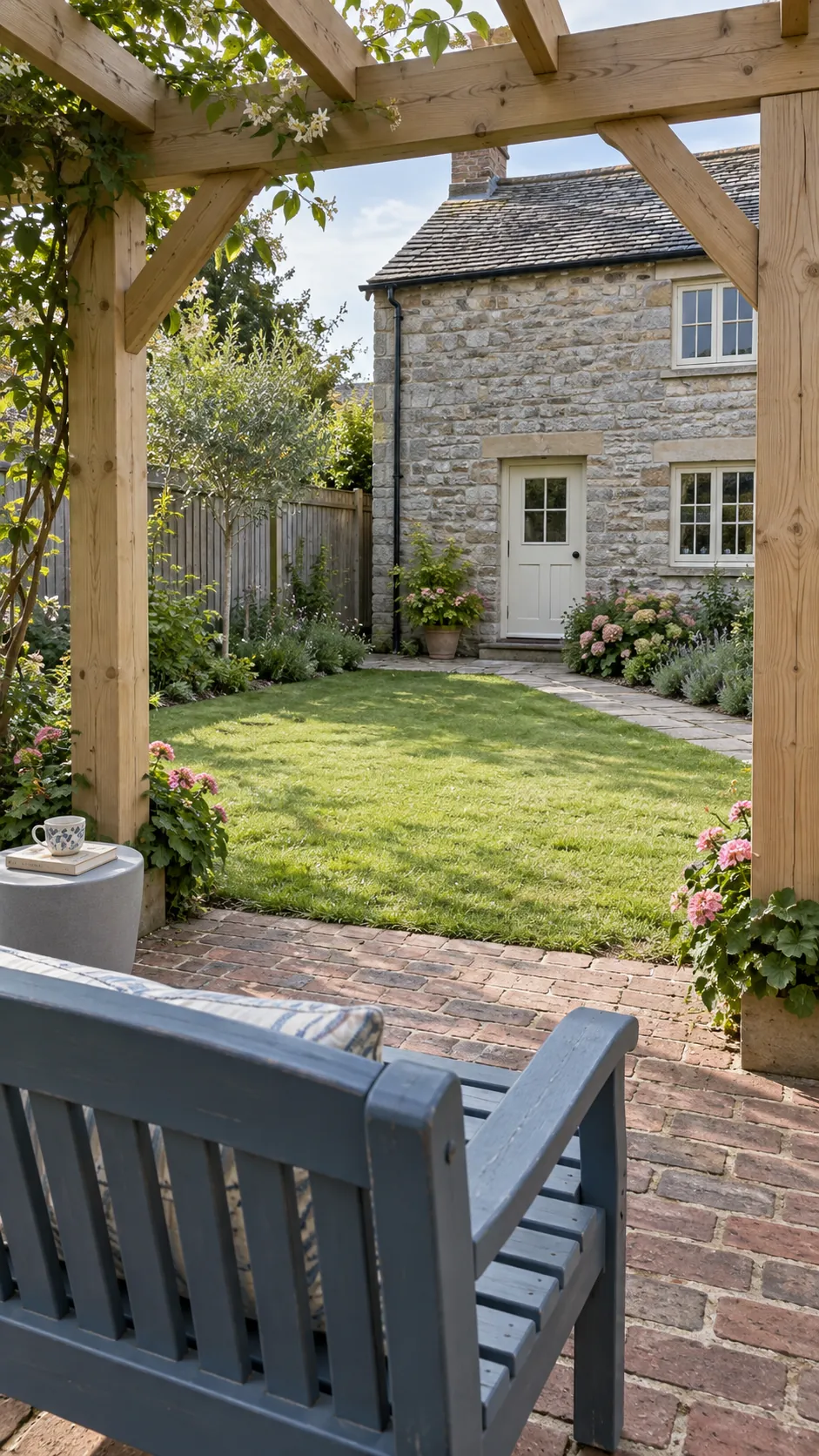
A bench looking back toward the house
A seat facing the house can make a rear garden corner feel like a destination rather than leftover space. Check the view from seated height, including doors, bins and neighboring windows. Place taller planting where it softens unwanted details without blocking the approach. Leave enough room in front of the bench for feet and for another person to pass.
A small round table for morning tea
A compact round table creates a useful pause within a flowering garden. Measure the space with chairs pulled out, since the table alone understates the footprint you need. Place it where morning light suits your routine and where the route from the kitchen remains simple. A few nearby pots can enrich the setting without occupying every place for a cup or plate.
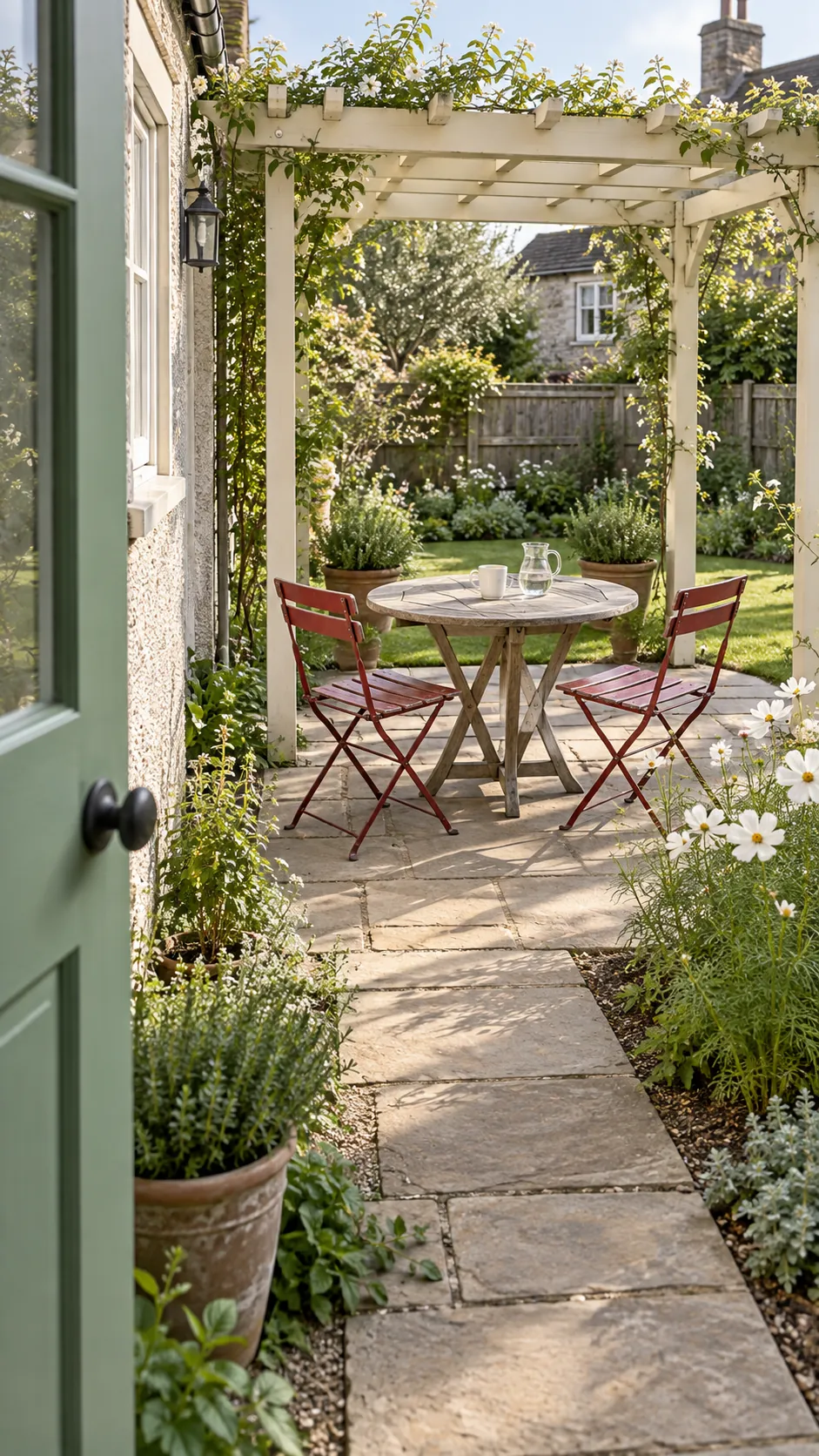
Lavender along a sunny outer edge
Lavender can define the sunny edge of a pergola with a low repeat of flowers and foliage. Choose plants suited to your soil and climate, and avoid treating them as a universal solution for damp shade. Keep their mature spread outside the walkway rather than trimming constantly to recover space. The roof and furniture can remain plain while the border supplies the seasonal detail.
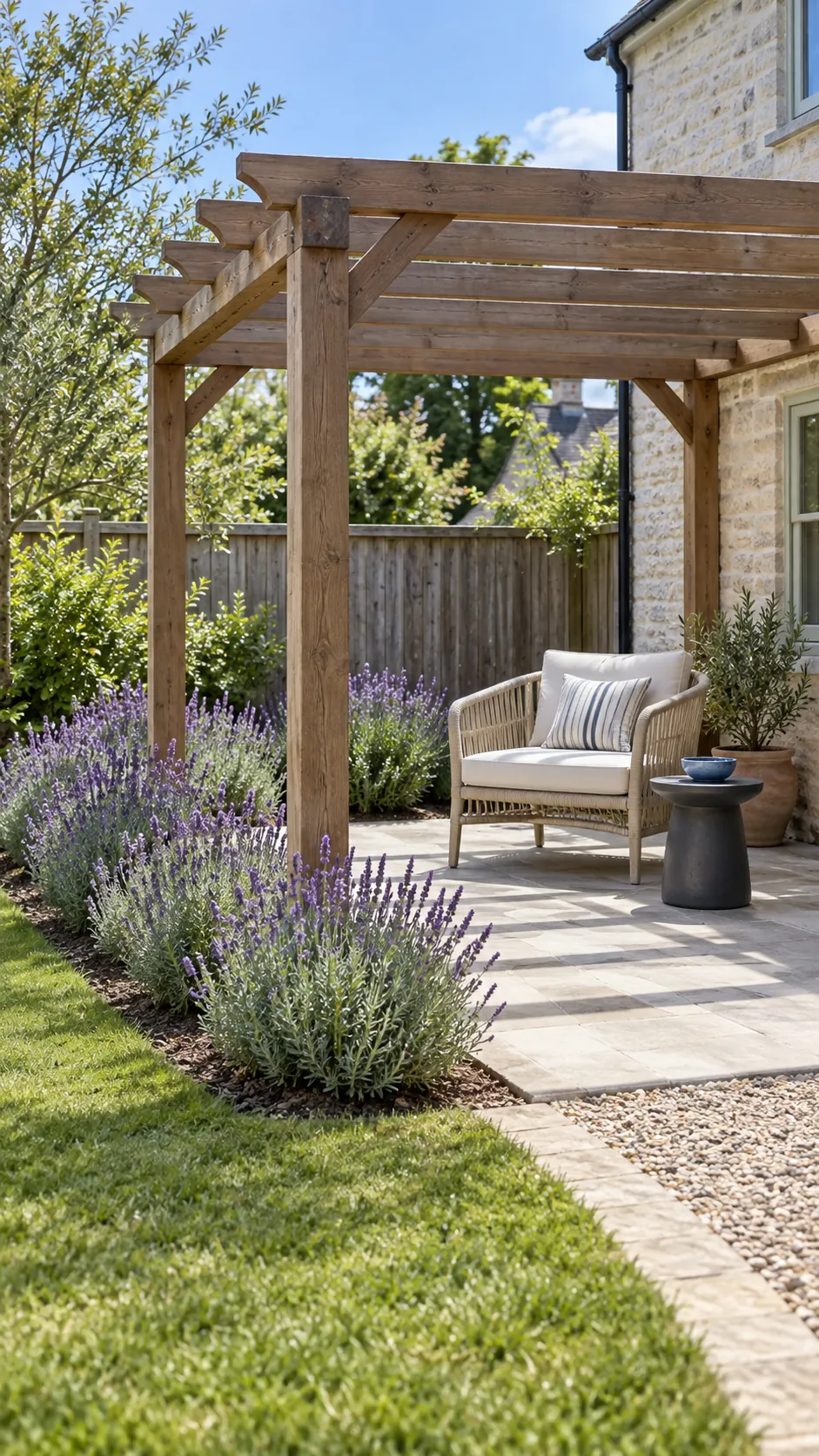
A pergola at the end of a curved path
A gently curved path can reveal a sheltered seat gradually as you move through the garden. Keep the route direct enough that reaching the pergola does not feel like a detour. Place taller flowers outside bends where they will not lean into the walking surface. A visible entrance between the posts gives the path a clear destination.
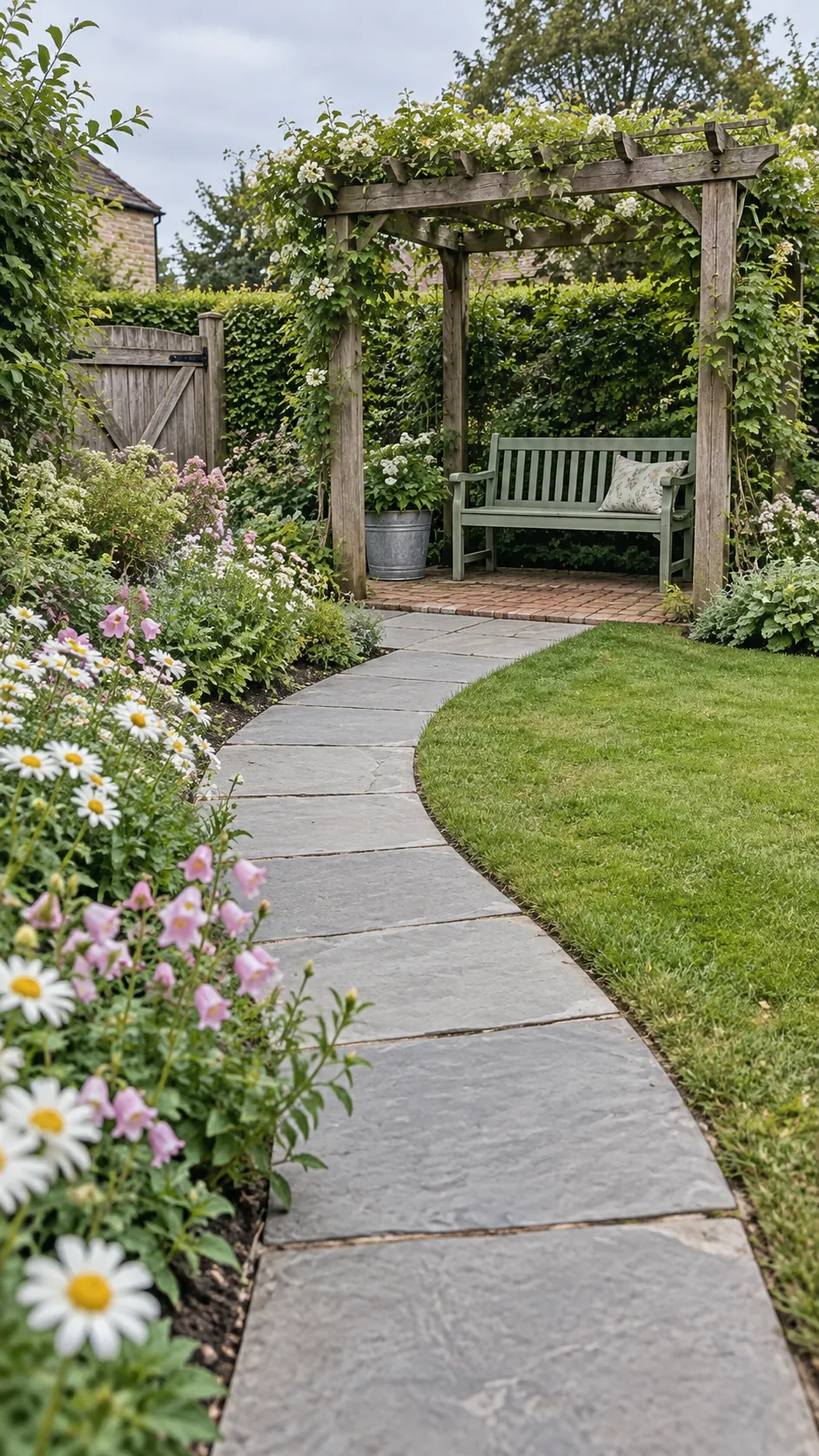
One climbing plant with room to grow
One well chosen climber often gives a small frame more character than several plants competing for the same roof. Research mature size, vigor and pruning needs before choosing it. Strong woody growth can add substantial load, so check the structure and support plan with a suitable professional. Start with a manageable plant and leave access to inspect joints as it develops.
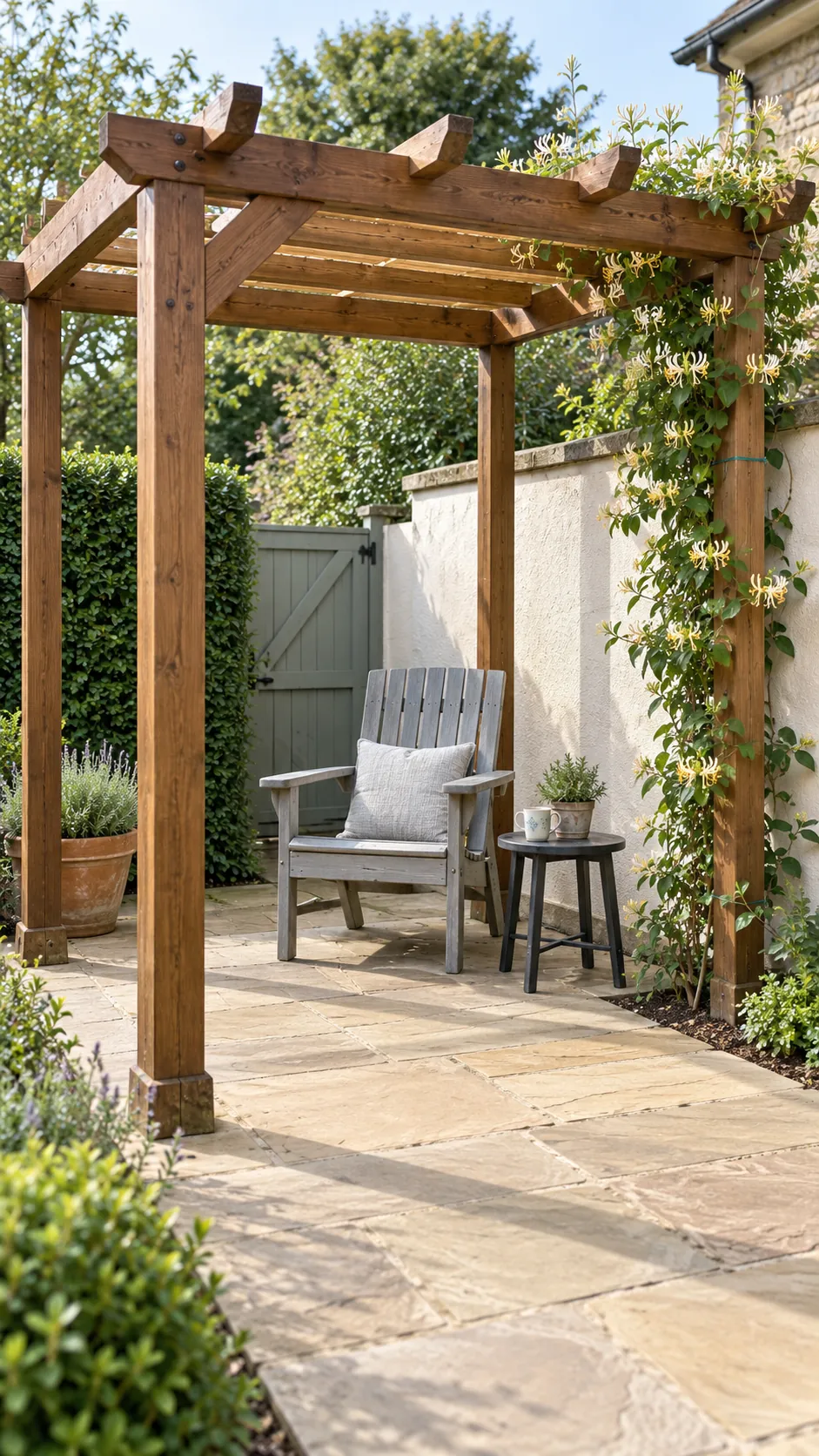
Containers around a compact frame
Containers bring a cottage backyard feel to a pergola where planting space is limited. Choose pots large enough for the intended plants, with drainage and a watering routine you can maintain. Group them beyond the main seat and route rather than lining every edge with small obstacles. Mixing foliage height adds interest while leaving the frame itself easy to see.
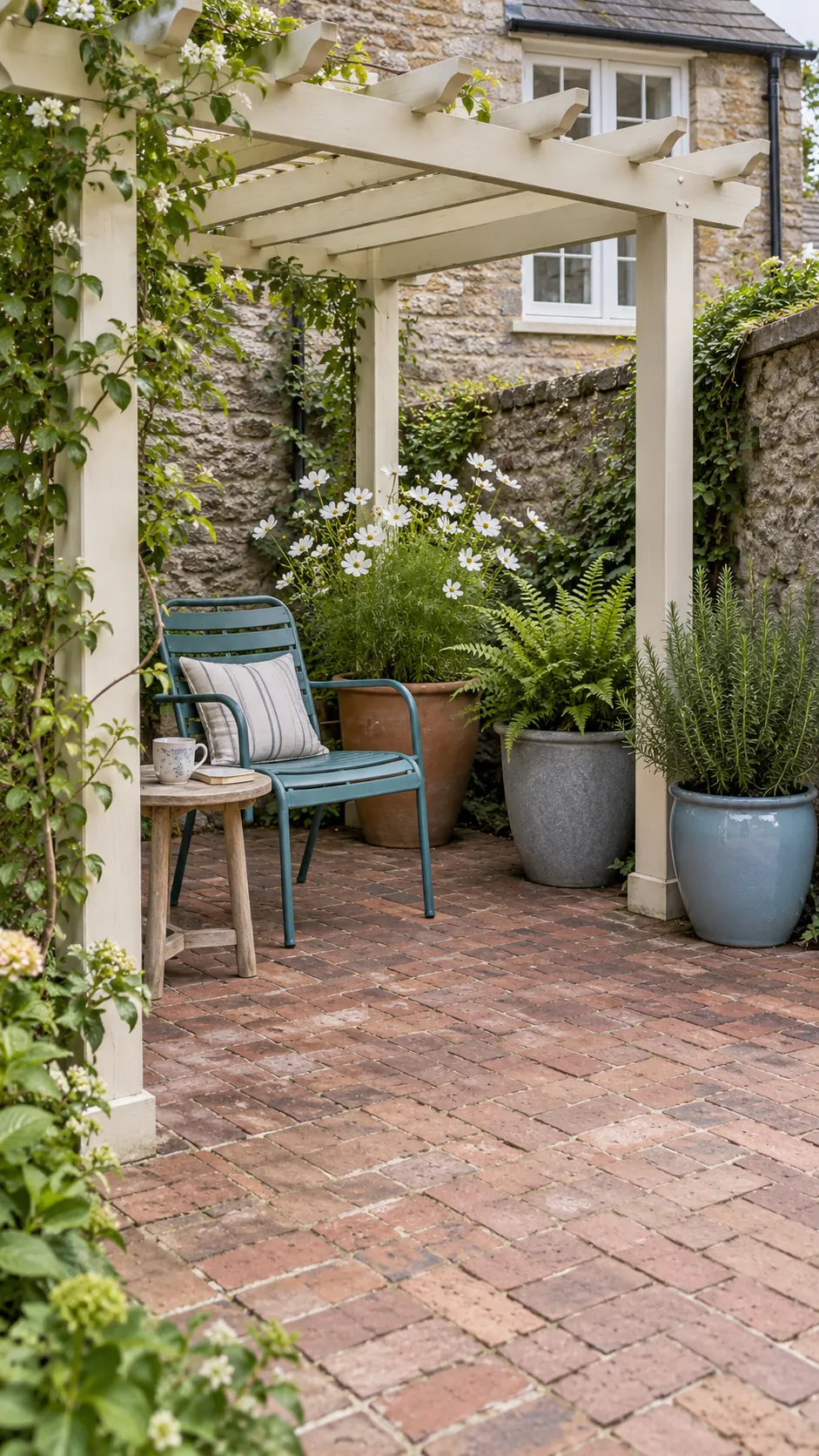
A dining space beside a kitchen garden
A pergola beside herbs or vegetable beds can connect outdoor meals with a working garden. Keep dining furniture on a stable surface separate from soil and watering overspray. Leave the bed edges accessible so harvesting does not require moving chairs each time. Low herbs nearest the table can keep the view open, with taller crops farther away.
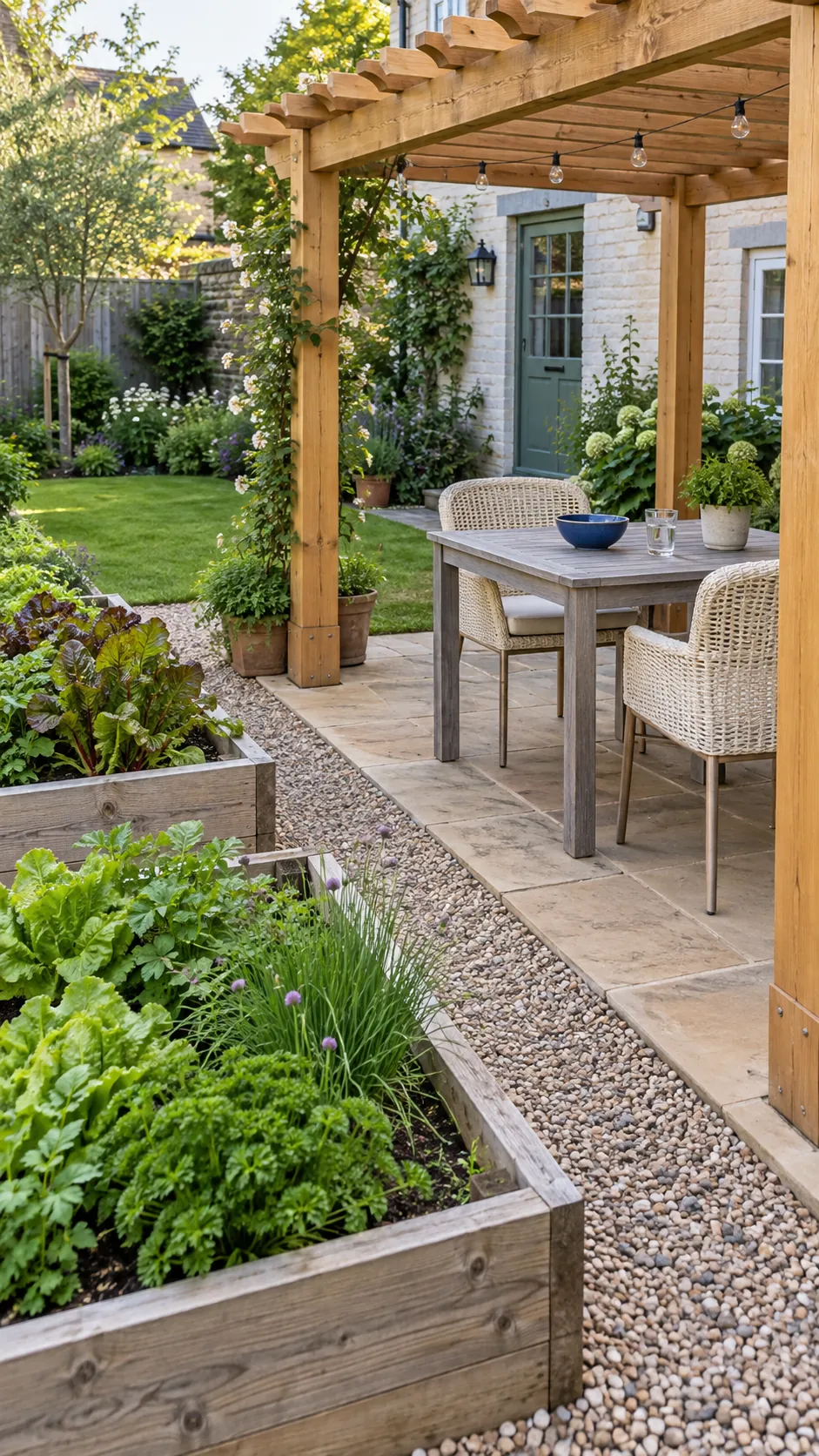
Open rafters above a flower border
Open rafters give a pergola structure without promising the protection of a solid roof. Watch how their shadows move before assuming they will make an afternoon seat cool. Flowers beside the frame can provide cottage garden character even when the roof has no climber. If reliable rain cover is essential, choose a suitable designed covering rather than expecting leaves to keep furniture dry.
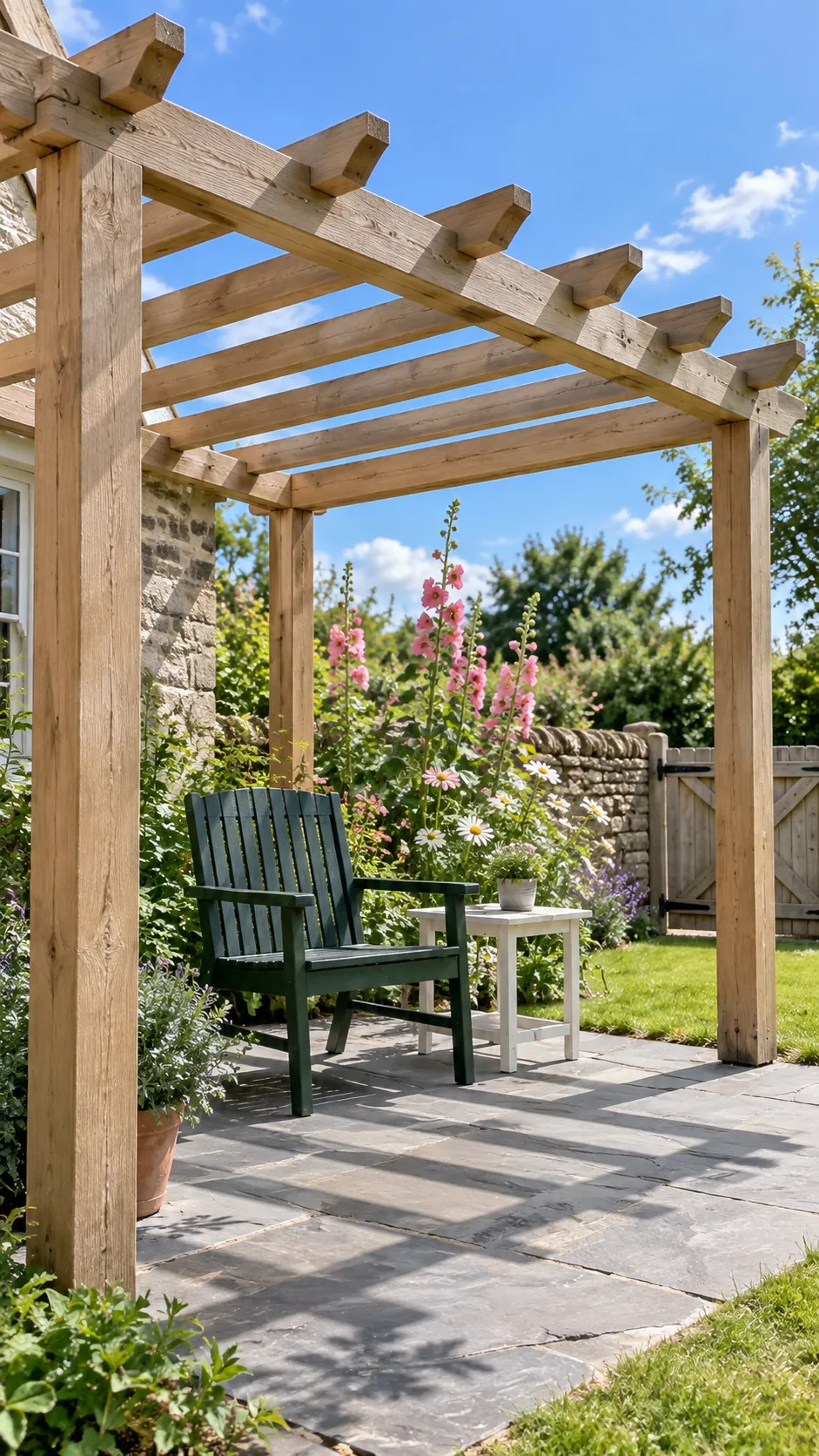
A narrow pergola along a garden boundary
A slim frame can make a boundary feel useful while preserving the center of a small garden. Check property boundaries, access needs and local requirements before building close to a fence. Keep the pergola structurally independent unless its attachment has been properly designed. A bench and one planting strip may be enough to create a settled corner without crowding the lawn.
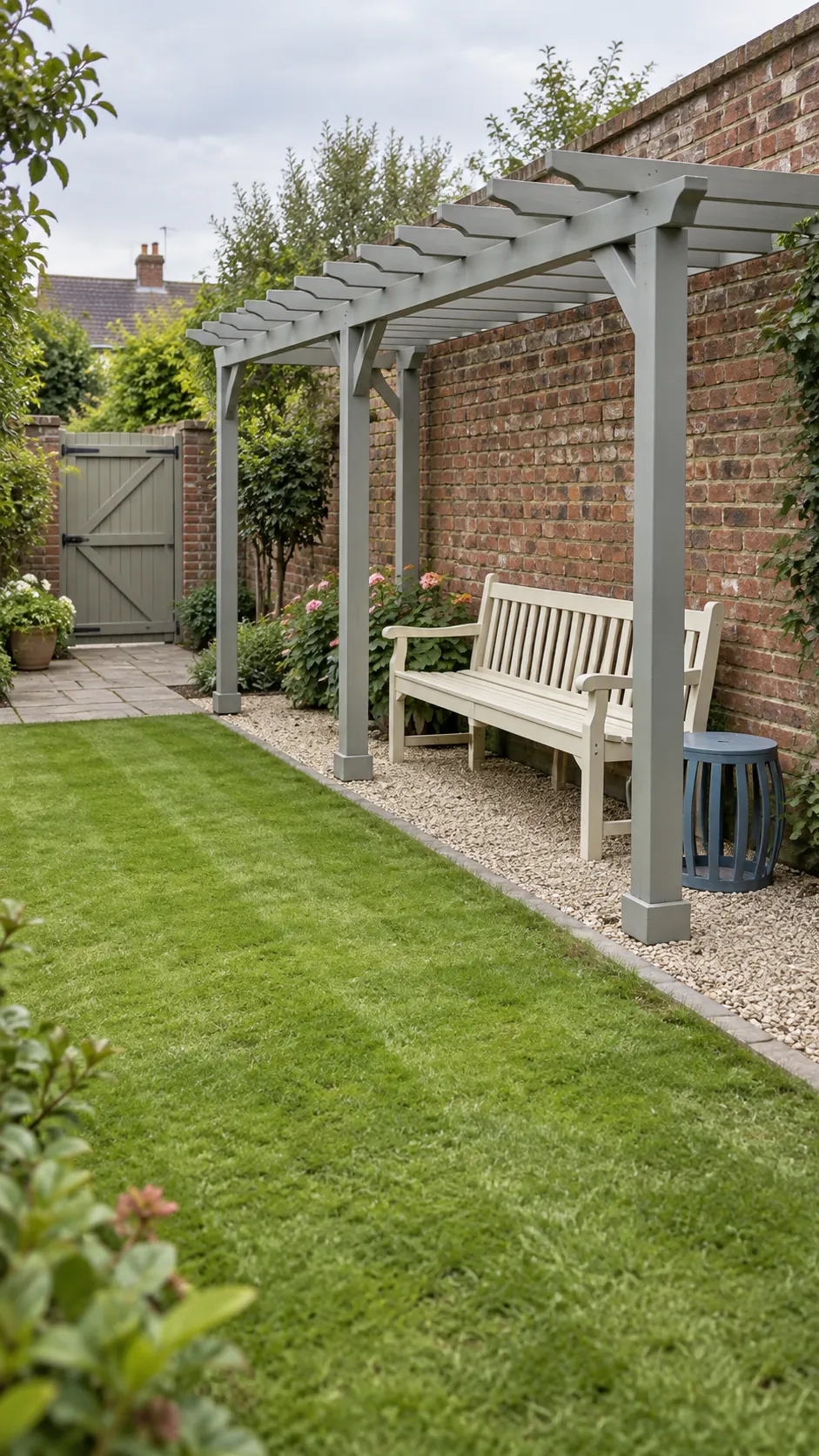
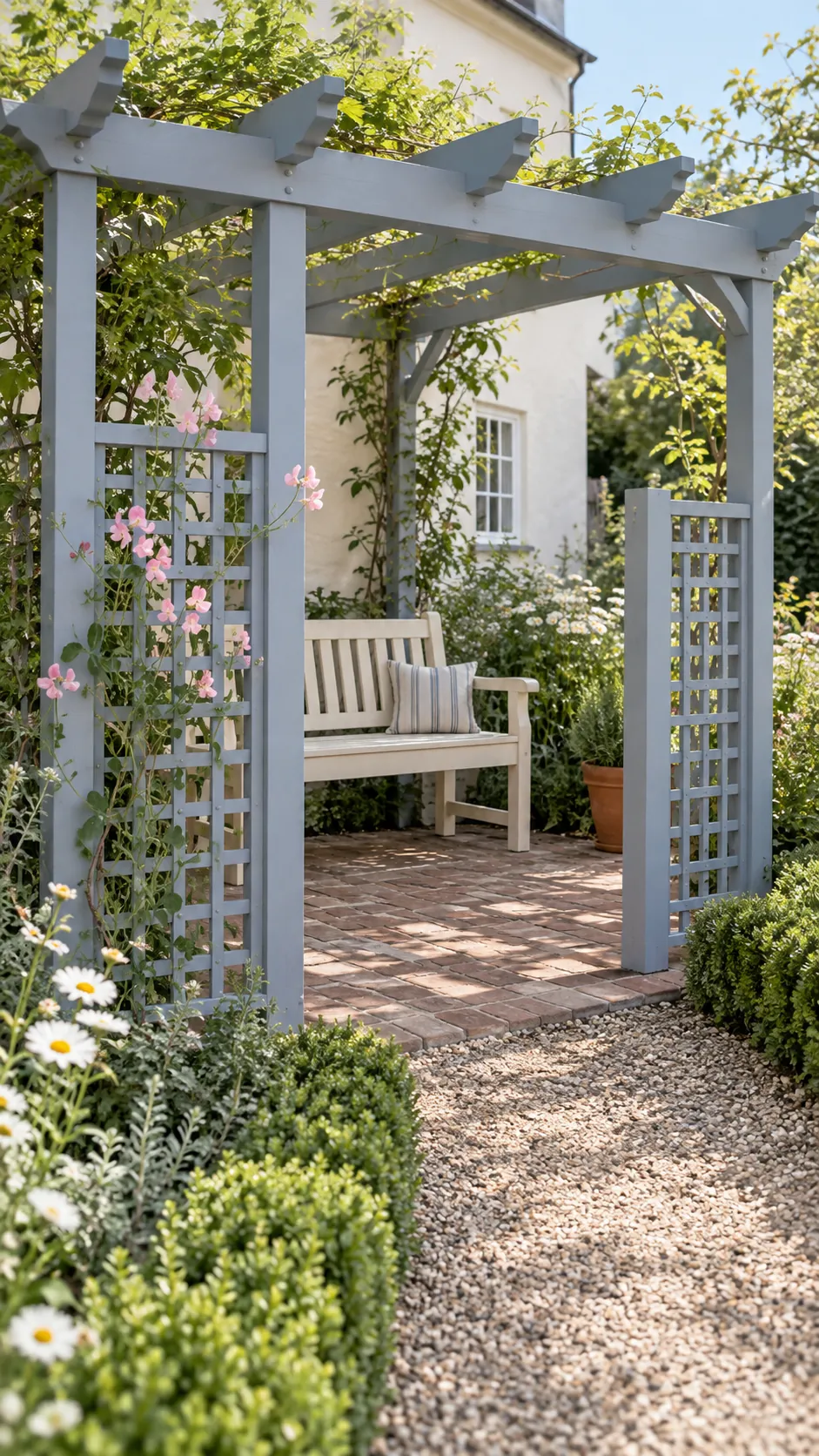
An entrance framed by simple trellis panels
Short side panels can distinguish a pergola entrance from the surrounding border. Choose an open trellis pattern that supports plants without making a small sitting area feel enclosed. Leave a generous gap between the front posts and avoid protruding growth at face height. The panels can hold modest planting while the main canopy stays visually light.
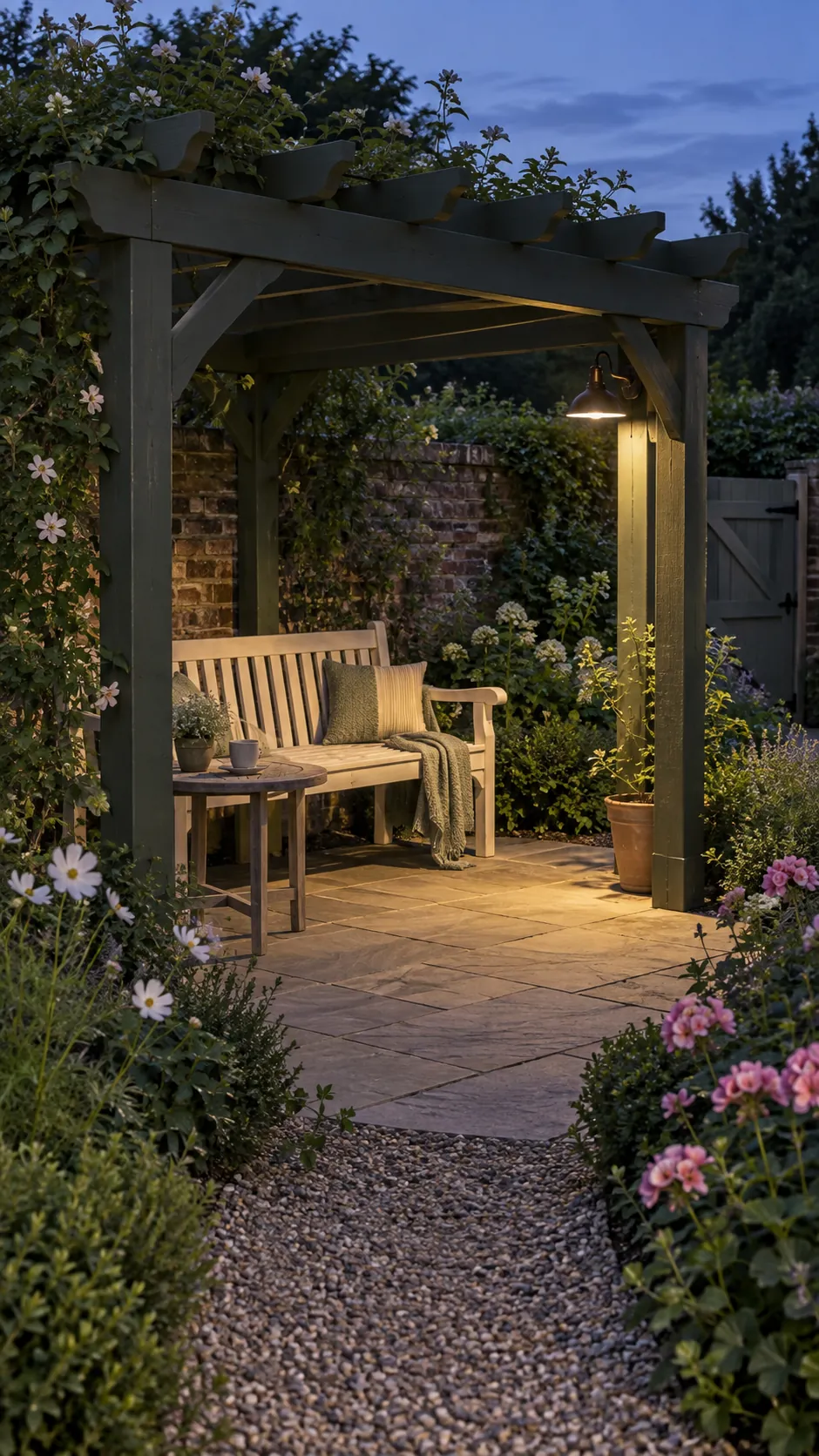
Soft evening light beside the seat
A small shielded light can extend the use of a garden seat without turning flowers into a bright backdrop. Select fixtures suitable for the actual outdoor exposure and direct light where it is useful. Permanent electrical work needs appropriate professional advice and a plan for protected cable routing. Keep the approach visible so the seat remains easy to reach after decorative lights are switched off.
A planting palette with repeated colors
Repeating two or three flower colors can give loose planting a clear relationship to the pergola. Work with plants that suit the site before narrowing the palette for appearance. Different leaf shapes and flowering seasons can provide variety without adding a new color in every gap. The frame then reads as part of the garden rather than an object surrounded by unrelated purchases.
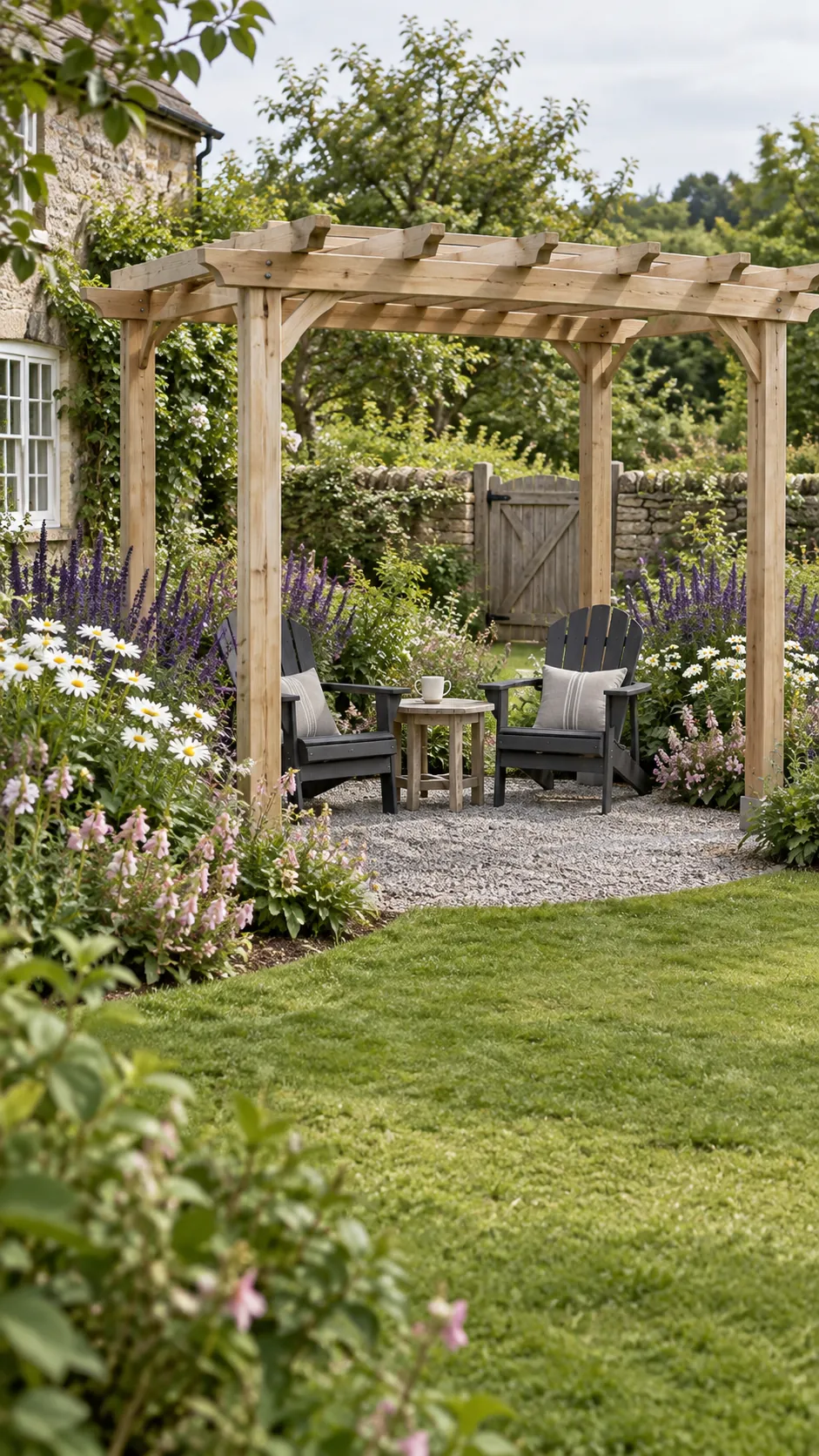
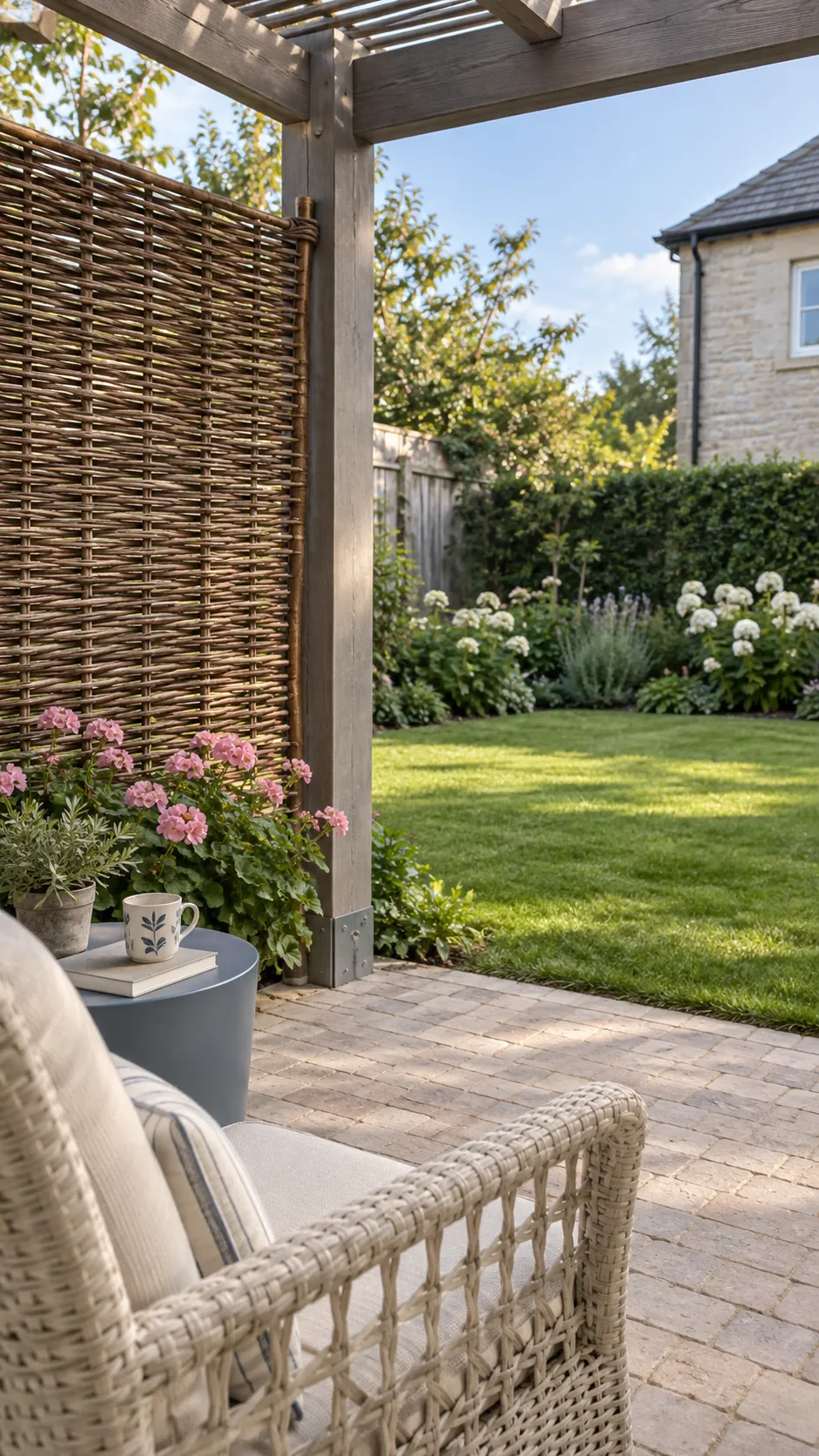
A sheltered corner with an open view
A pergola can offer a sense of enclosure while retaining a view across the garden. Place screening on the side where privacy is needed and keep the best outlook open. Test the arrangement from the intended chair position rather than only from the path. A partial planting screen often makes a small cottage garden feel more spacious than enclosing every side.
A simple frame beside existing mature planting
Existing shrubs can help a new pergola settle into the garden quickly. Plan around their mature spread and root areas instead of cutting heavily to fit a preferred frame outline. Foundation locations and construction access may need advice where established trees or large shrubs are close. Leave room for future maintenance so the new seat does not make familiar planting difficult to care for.
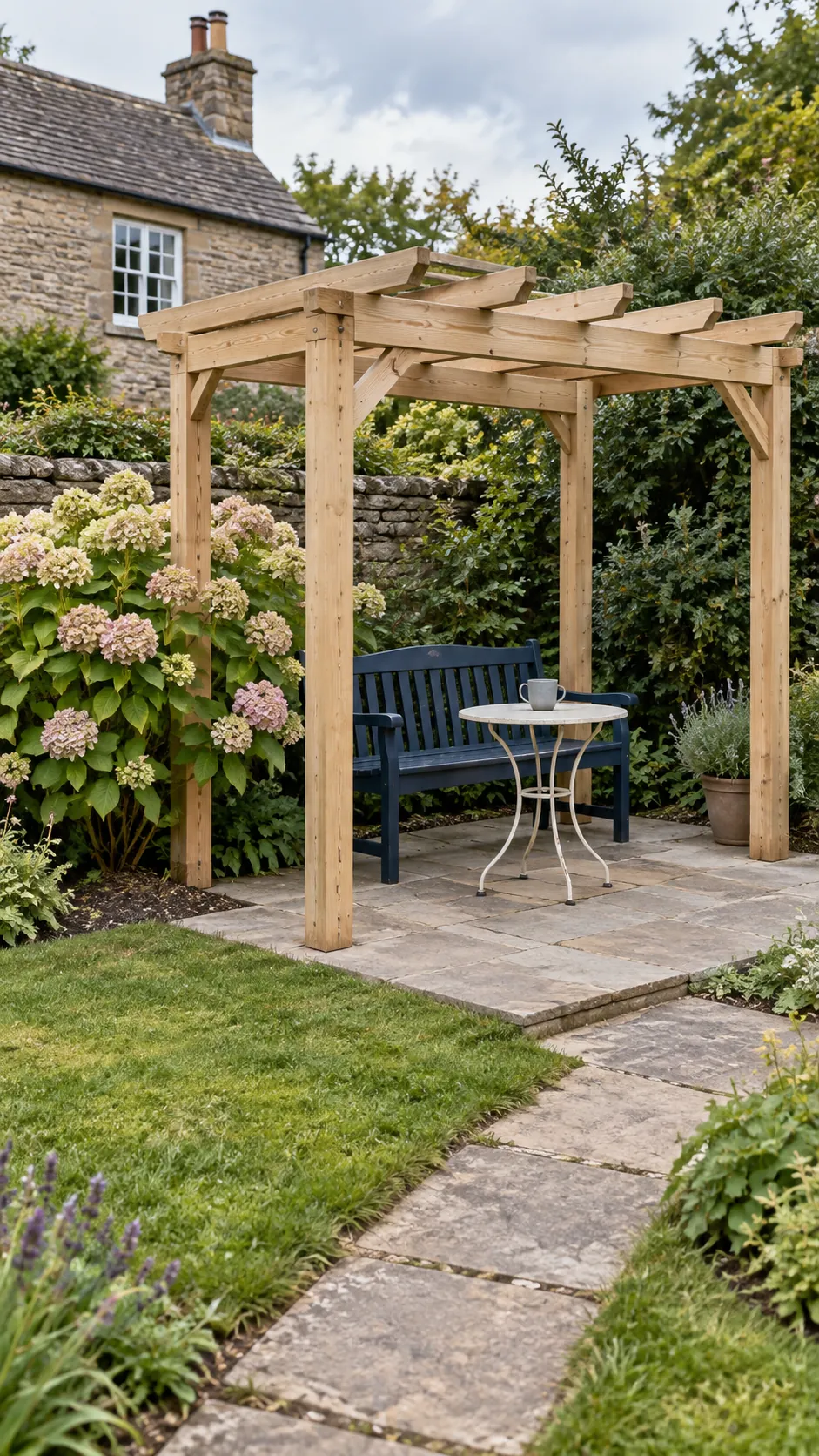
A clear maintenance route around the structure
The most useful cottage garden pergola is one you can still inspect and maintain after plants mature. Leave access around post bases, climbing supports and any nearby fence or drain. Keep furniture movable where pruning or cleaning will require temporary working room. Before buying more plants, walk the route with a watering can and check whether the garden still works as easily as it looks.