A centerpiece can look perfect on Saturday and become another chore by Tuesday. Decide how long you want the display, how much care you will give it, and where it will sit before buying stems. That choice matters more than whether a bouquet is described as fresh, dried, or preserved.
Choose fresh flowers for an occasion, dried stems for an ongoing display
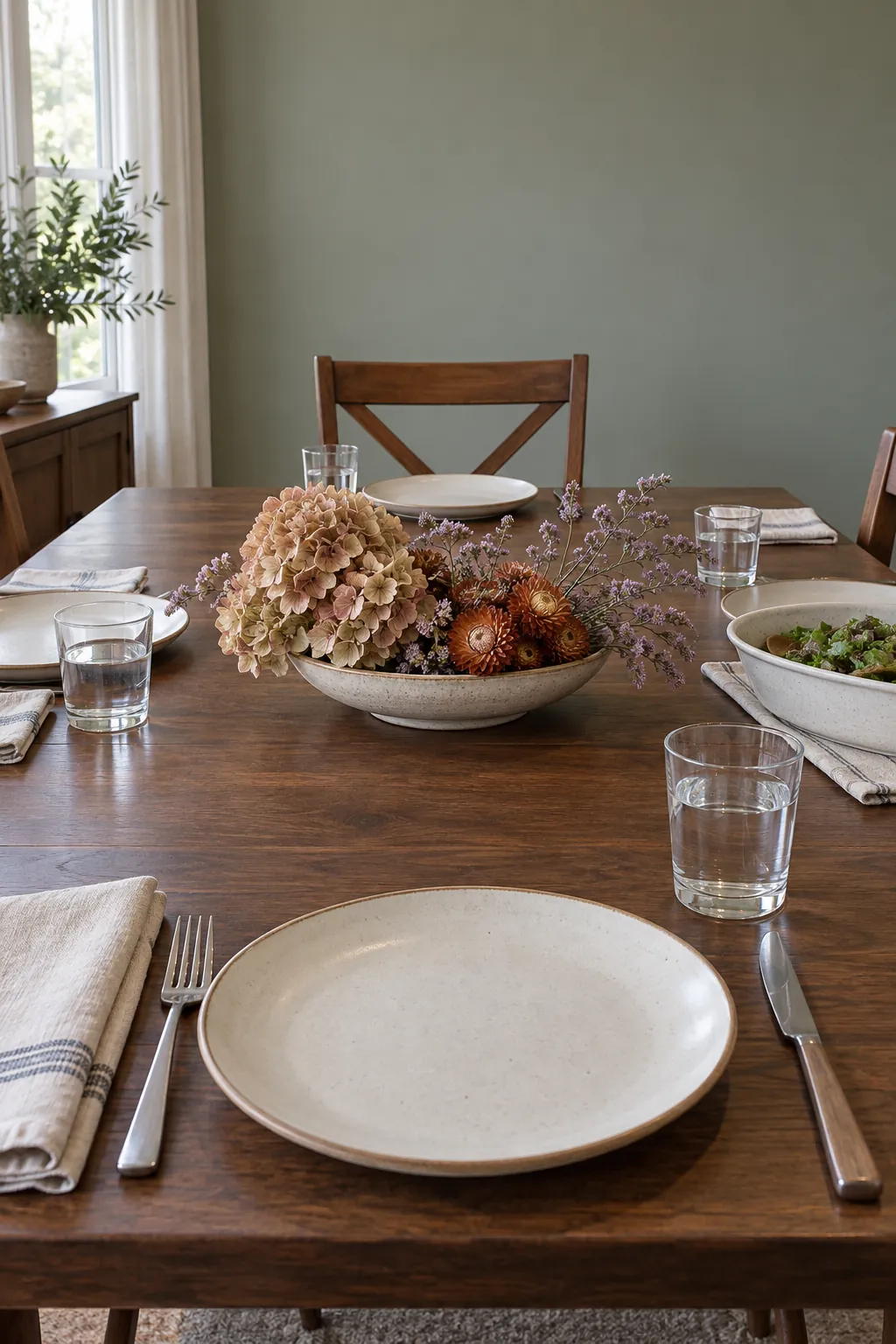
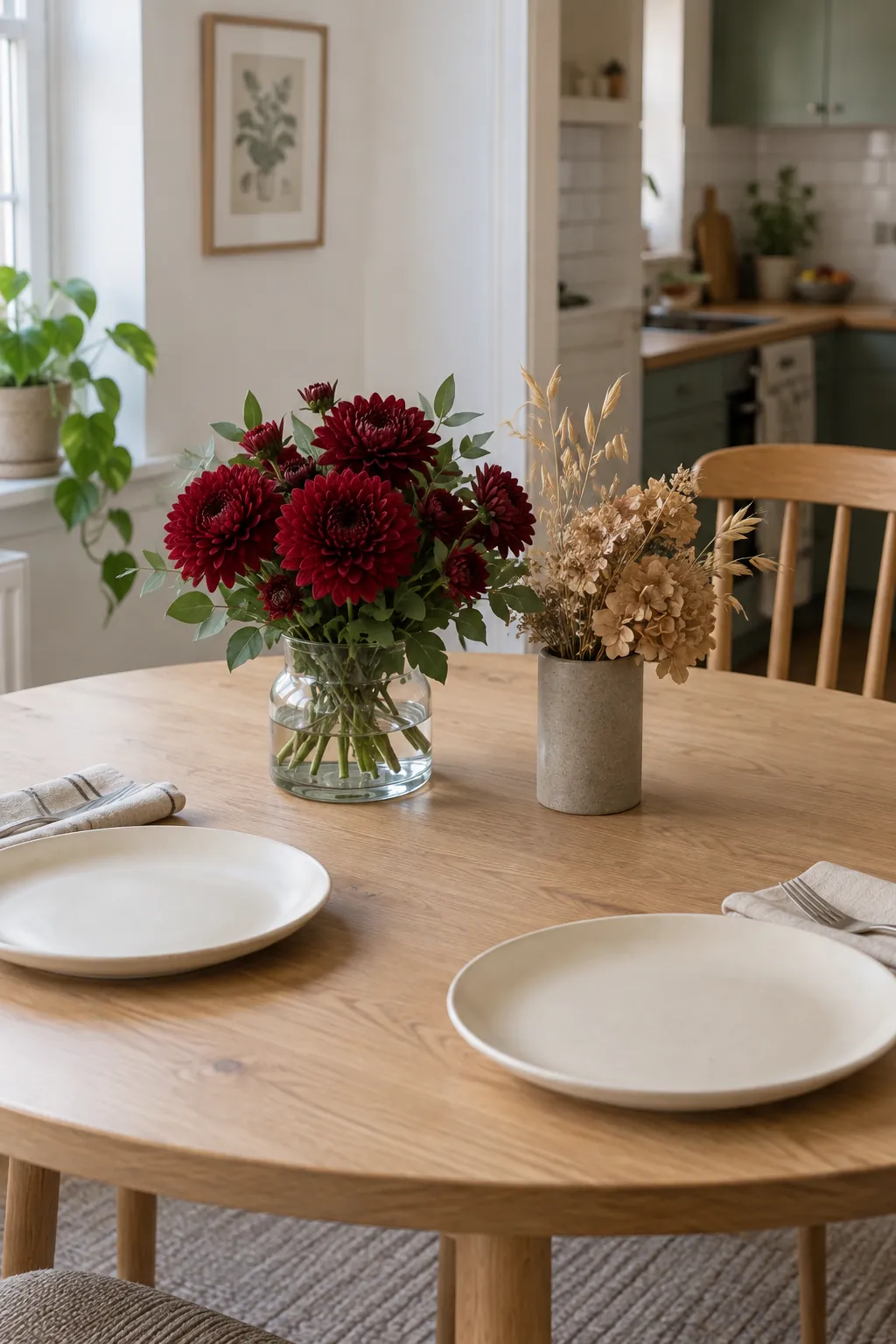
Start with the date when your arrangement must look its best. Fresh flowers suit a dinner, celebration, or weekend when you want supple petals and lively color, while a dried fall bouquet suits a display you want to leave in place through the season. Neither choice guarantees a particular lifespan: species, condition at purchase, room temperature, and care all matter.
For a dining table used every day, decide whether changing water fits your routine. A fresh autumn arrangement asks for regular attention, but it can change with whatever is available locally. Dried stems remove that water routine, although they still need protection from damp air, strong sunlight, and rough handling.
Compare volume and texture before comparing stem counts
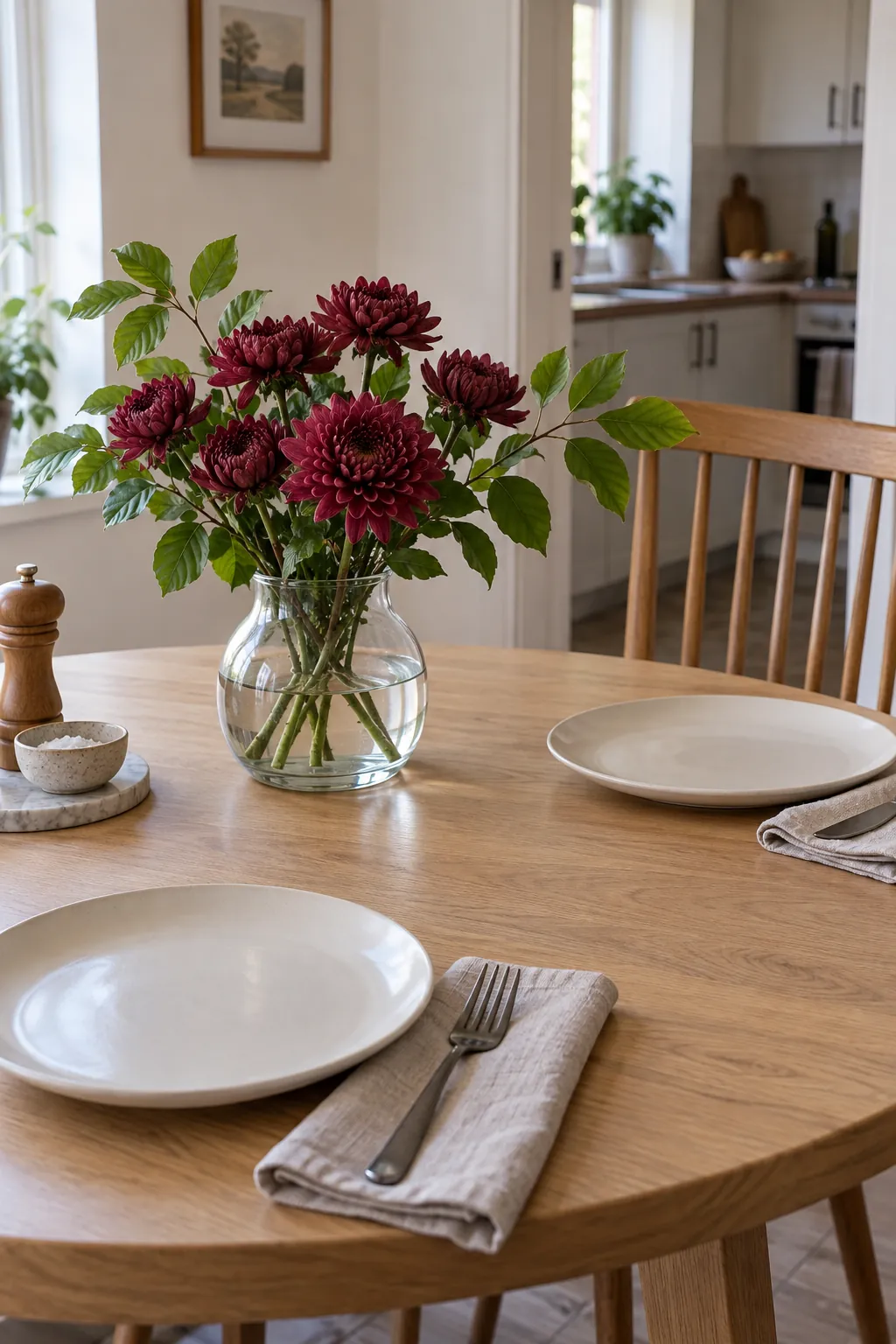
A wide fresh chrysanthemum and a narrow dried grass stem do not fill the same space. Compare the finished silhouette instead of assuming that ten fresh stems can be replaced with ten dried ones. Put a few sample stems in your actual vase and check the arrangement from the chair where someone will see it.
Fresh dahlias, chrysanthemums, and foliage can create rounded areas of color, depending on local availability. Dried hydrangeas, statice, strawflowers, and seed heads bring papery surfaces and more visible spaces between stems. Combine one substantial flower shape with a lighter branching material, then stop before the vase becomes a dense bundle.
Match the care routine to the room
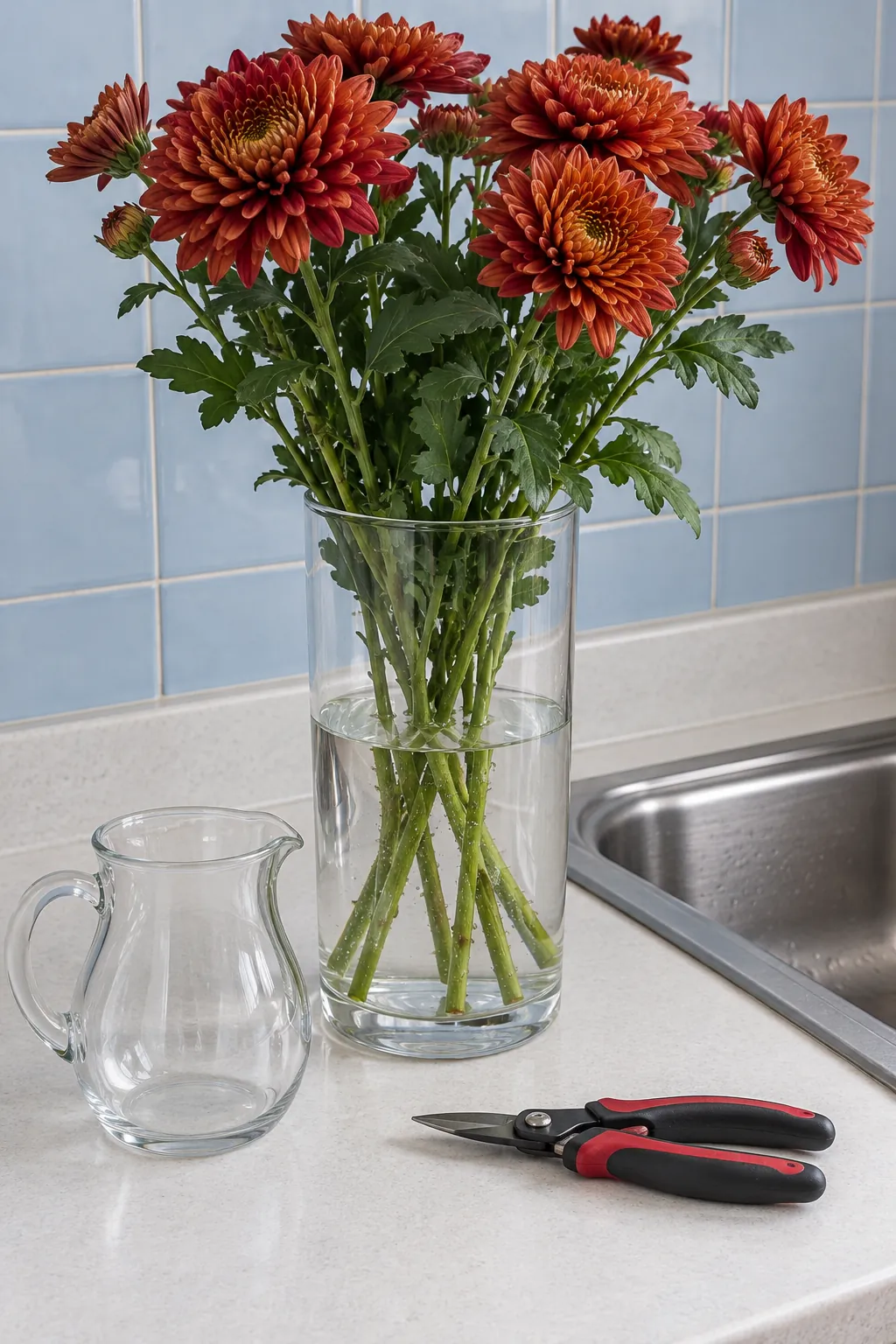
For fresh flowers, wash the vase first, remove leaves that would sit below the water, and trim stems with a clean sharp tool. Use flower food according to its packet rather than guessing a concentration. Check the water daily, replace it when cloudy, and remove stems that begin to decay.
Keep the arrangement away from heating vents and direct sun. A warm windowsill can shorten seasonal flower longevity even when the vase looks lovely there. Move the display to the table for the occasion and return it to a cooler suitable spot afterward if needed.
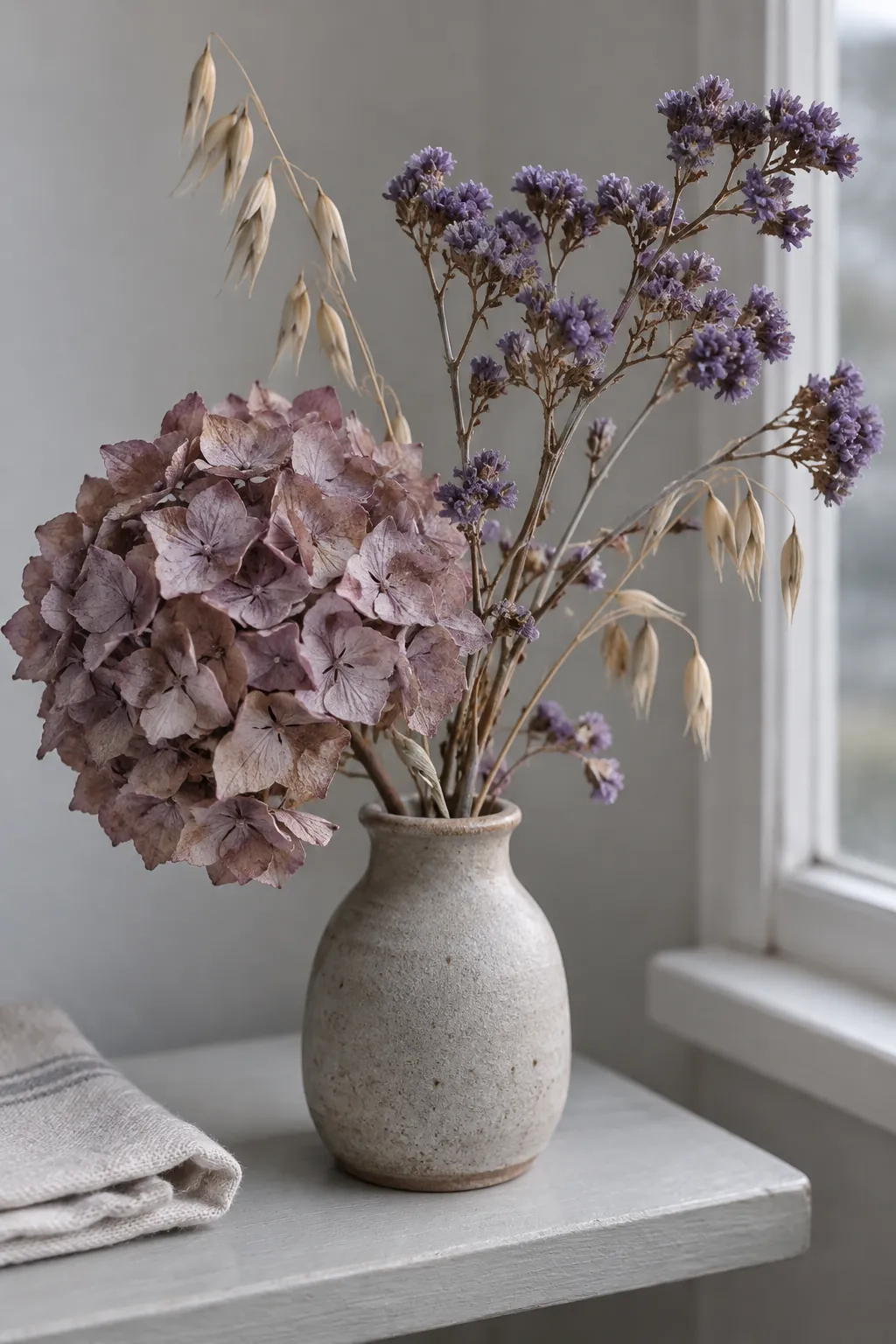
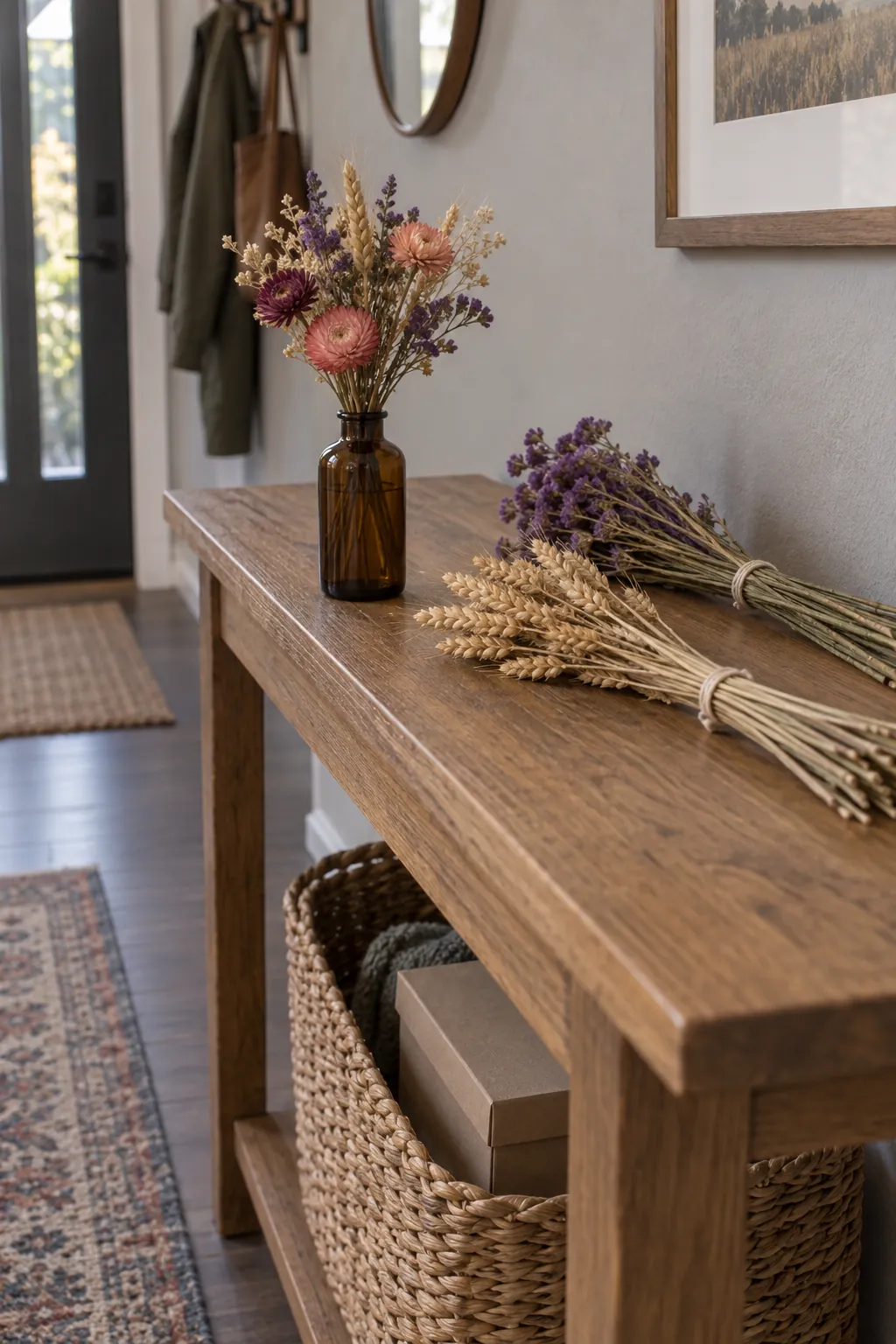
Dried flowers belong in a dry vessel without water. Keep them away from sinks, steamy bathrooms, and open flames; dried plant material is combustible. Lift the vase rather than repeatedly gripping the brittle flower heads, and use gentle dust removal that does not crush petals.
Budget for the finished arrangement and its replacements
Dried flowers are not automatically cheaper than fresh ones. A carefully prepared dried stem may cost more than a fresh bunch, and a large airy design may need more material than you expect. Compare the price of enough stems for the finished arrangement, including the vessel and any supports.
Reuse changes the calculation only if you will actually keep the arrangement. If you enjoy changing colors every week, a small fresh bunch may fit your spending better than a substantial preserved flower decor purchase. If you prefer one seasonal display, a modest dried arrangement that stores well can reduce repeat buying.
Ask whether a product is naturally dried, dyed, or chemically preserved. Preserved flowers can have care requirements different from ordinary dried flowers, so follow the supplier’s directions. Check for loose petals, staining dyes, unusual odor, and damage before buying material you cannot easily return.
Mix fresh and dried material without soaking the dry stems
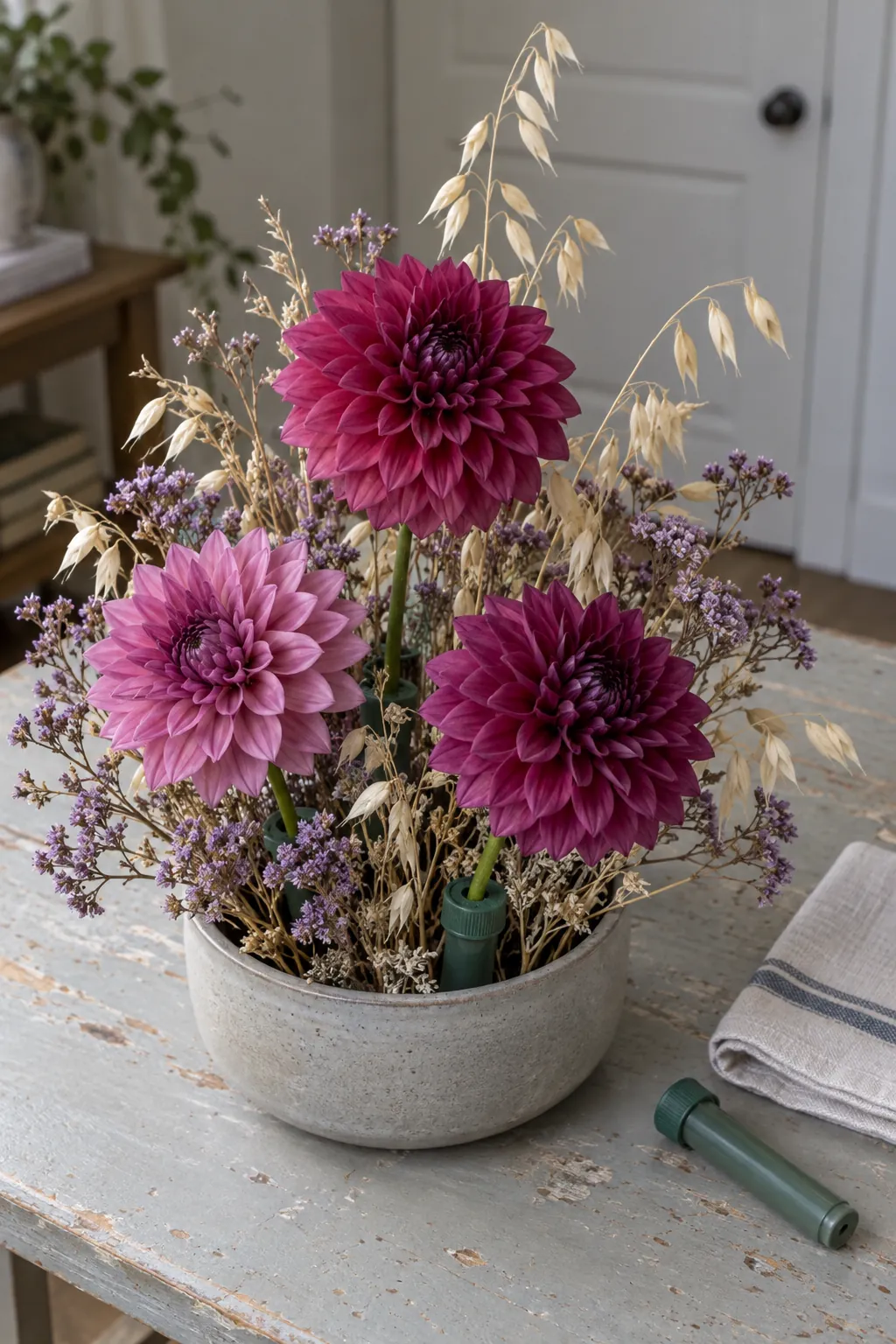
Fresh and dried floral design can give you both soft petals and sculptural texture, but the materials need different care. Keep fresh stems in water while holding dried stems above the waterline with a separate support, or use individual water tubes for the fresh flowers within a dry arrangement. Check that the tubes remain upright and accessible for refilling.
Try a small test before building a centerpiece for guests. A dried stem that bends into the water may become damp and deteriorate, while a top heavy bloom can pull a light vessel over. Choose a stable vase and leave enough space to inspect the mechanics without taking the entire arrangement apart.
Choose the vessel and test the view from a seat
A narrow vase opening can support a small dried bouquet without requiring extra filler. A wider opening suits branching fresh flowers, but it may need a reusable flower frog or another suitable support. Secure the support as intended by its maker and handle sharp pin frogs carefully.
For choosing centerpiece flowers, sit at the table before deciding the height. Keep the densest blooms below the sightline between people, or use a genuinely tall arrangement whose bulk clears it. Leave room for plates, serving dishes, and elbows rather than treating the table as an empty display surface.
Choose fresh flowers if the occasion, color, and petal softness matter most and you can provide water care. Choose dried flowers if a stable seasonal silhouette matters more and the room stays dry. If you are undecided, make one small arrangement first: the right fall bouquet materials are the ones that work in your room and your routine.