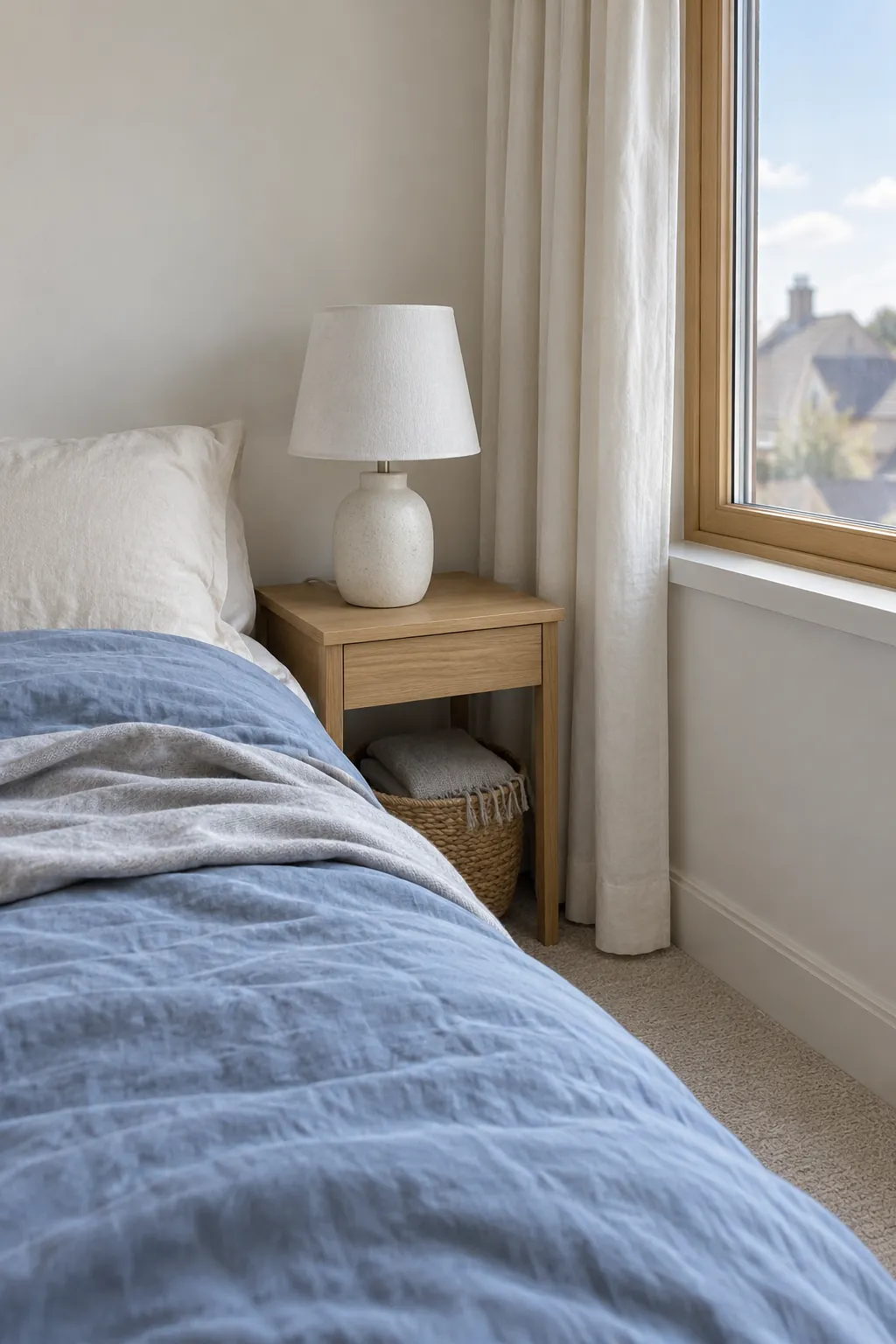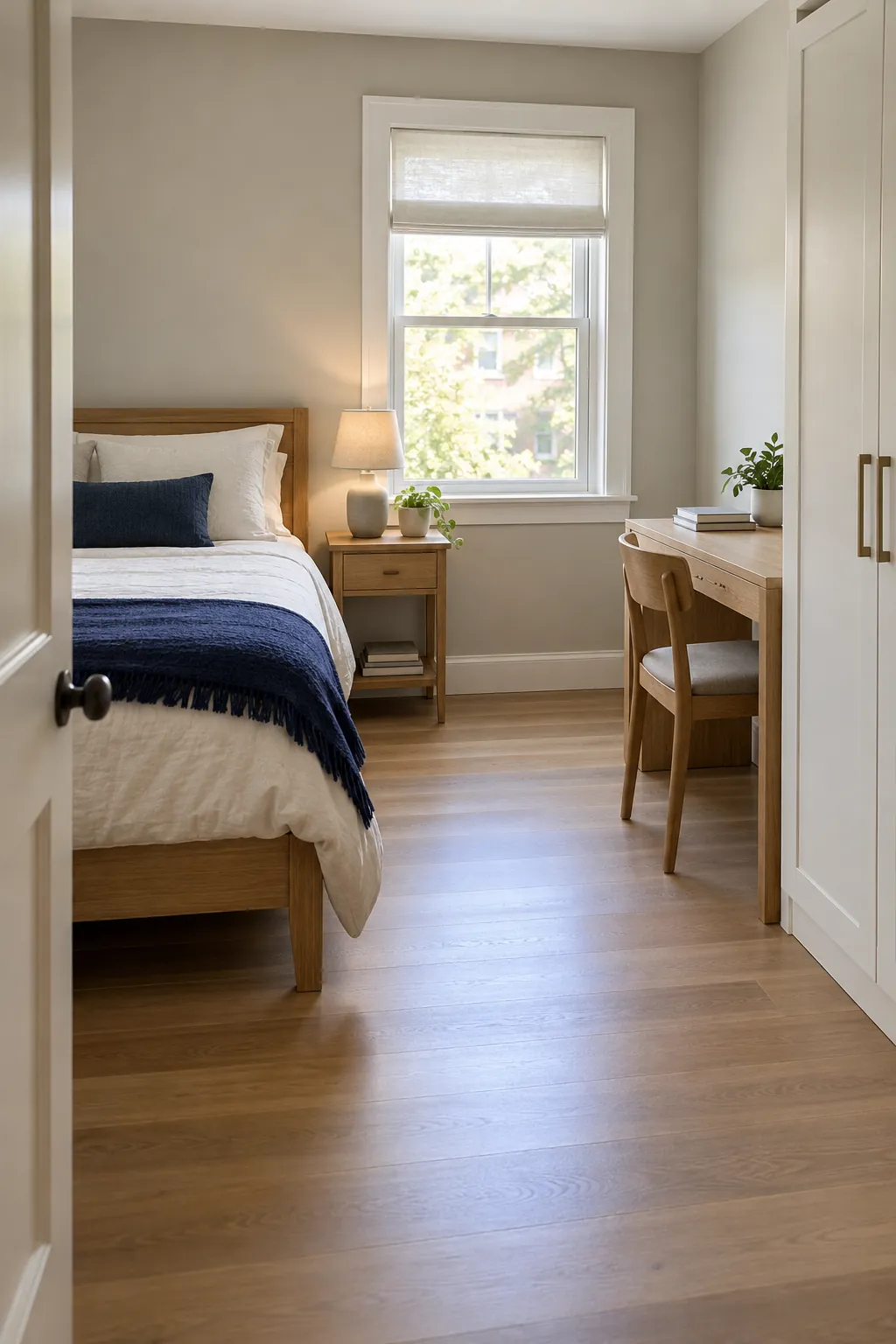
Fitting everything inside the walls is only the first test. You also need to open drawers, pull out a chair, and get into bed without moving something else. A room that passes those daily tests will feel more generous than one packed with clever furniture.
Start with the activities the room must support, then choose a bed position and storage that leave them possible. Color and decoration come after the footprint decisions. This order keeps small space bedroom design practical and helps you avoid purchases that solve one problem while creating another.
Decide what must happen in the room
A bedroom feels cramped when too many activities compete for the same patch of floor. Decide whether yours must support only sleeping and dressing, or whether a desk is essential too. Keep a daily requirement ahead of an occasional wish, such as a reading chair you rarely use.
Write down the furniture you need, then measure its actual outer dimensions. Include the bed frame, not only the mattress, and record how far the desk chair moves when you sit down. A compact bedroom layout starts with that working space, not a collection of attractive objects.
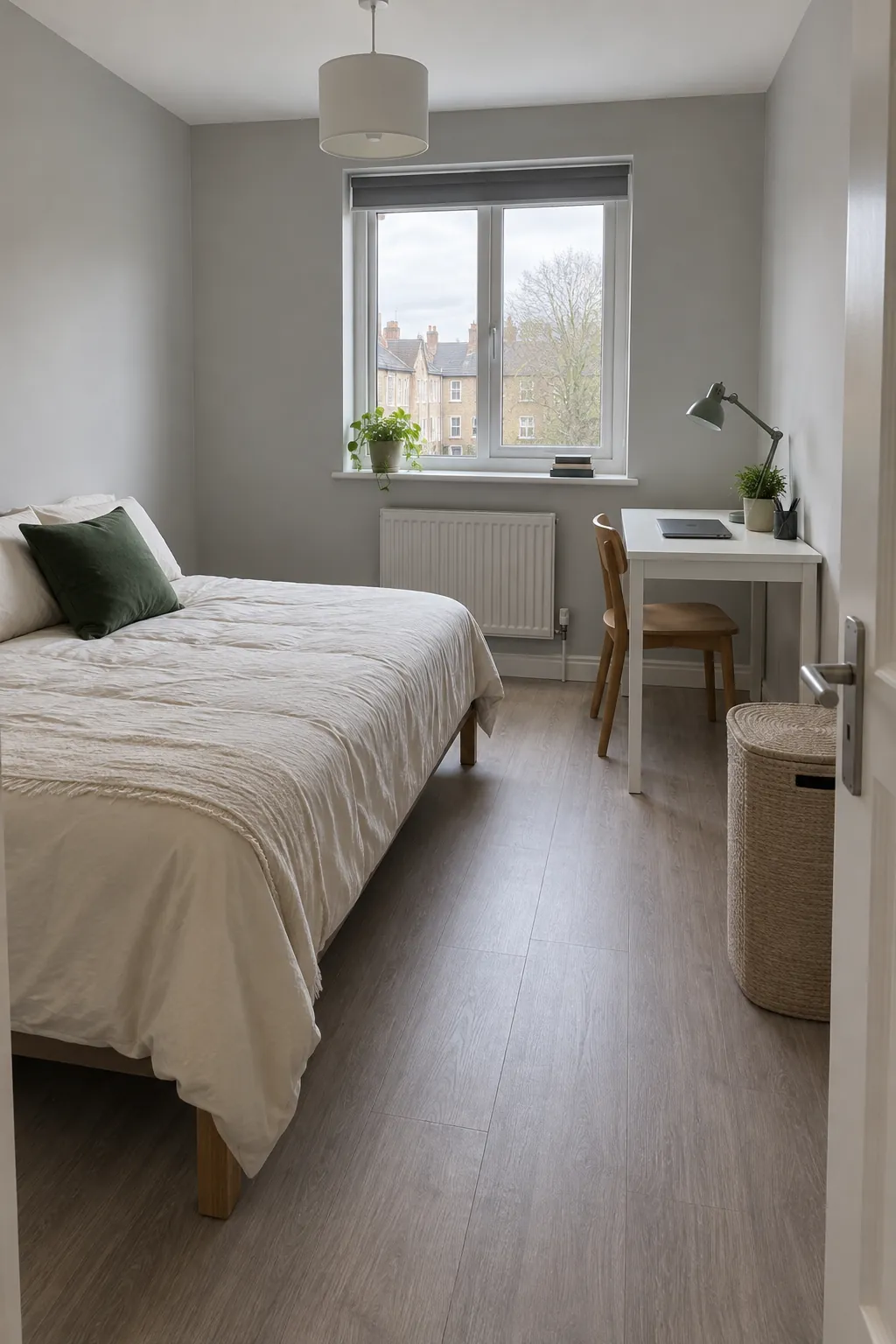
Test the bed position before you buy a frame
Mark doors, windows, radiators, sockets, and fitted storage on a simple measured sketch. Try the bed on more than one wall and protect the route from the entrance to the wardrobe. Keep window operation and any required exit route accessible. If two people share the bed, check how each will get in and out.
A corner position can free floor space for a single sleeper, but it makes shared access and changing sheets less convenient. A slim frame may fit where a broad upholstered surround does not. Compare the complete dimensions of your shortlisted frames and use tape on the floor to test them. Do not buy a smaller mattress until you know the surrounding furniture is the real problem.
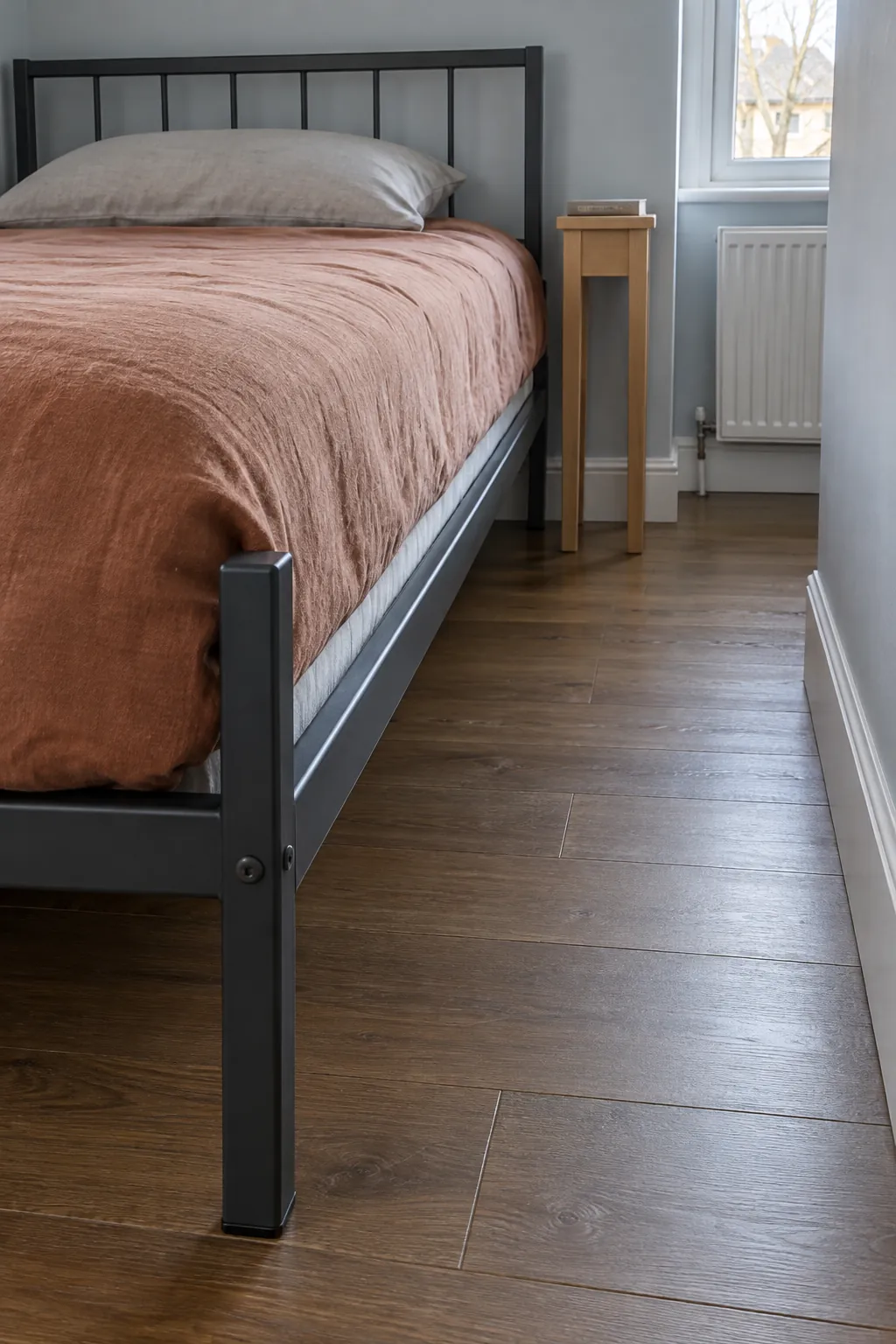
Make bedside space small but useful
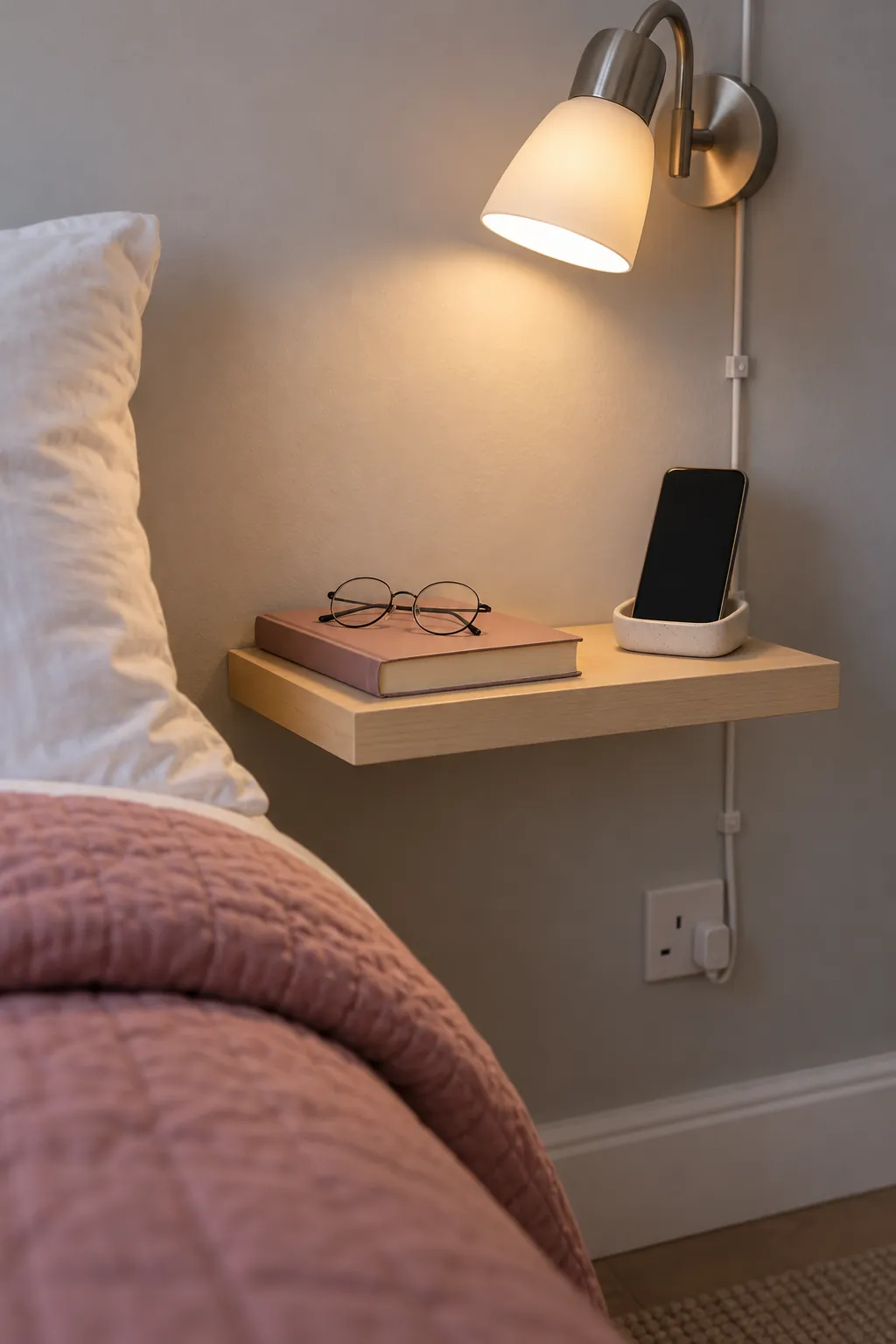
A floating nightstand can hold a phone, glasses, and a book without adding furniture legs to a tight walkway. Choose its depth from those actual items and position it where you can reach comfortably from the pillow. Follow the fixing instructions and check wall suitability, cables, pipes, and landlord permission before installation.
If drilling is unsuitable, use a narrow freestanding table that stays inside the available footprint. Put lighting on the wall only with a safe cable route; otherwise choose a compact shaded table lamp. The point is to support your bedtime routine without making the route beside the bed harder to use.
Use storage you can reach and open
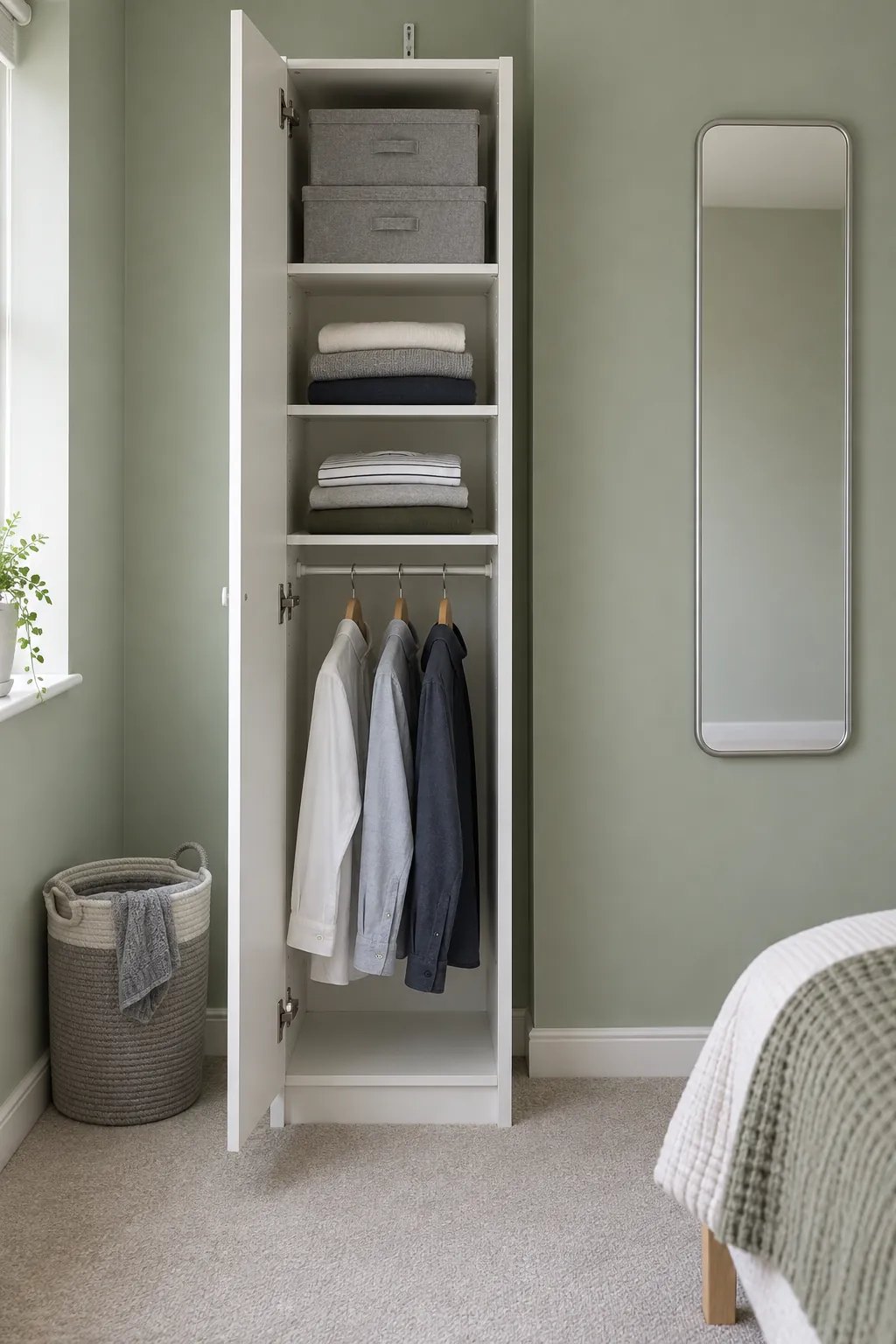
Vertical bedroom storage is useful when it replaces a bulky floor piece rather than adding another surface to fill. Put frequent use clothes at an easy reach height, and keep less used items higher. Secure tall furniture according to its instructions and the wall construction. Avoid heavy storage above the pillow.
Under bed boxes suit seasonal items if you can pull them out fully. A storage bed with drawers still needs room beside it, while a lifting base needs a suitable mattress and space to operate safely. Follow the manufacturer instructions and never treat the mechanism as a toy or an unsupported prop.
Choose closed storage for small mixed items that otherwise look untidy. Reserve open shelves for a limited number of things you can keep in order. A few extra inches of shelf capacity do little good if the door cannot open.
Let a desk earn its footprint
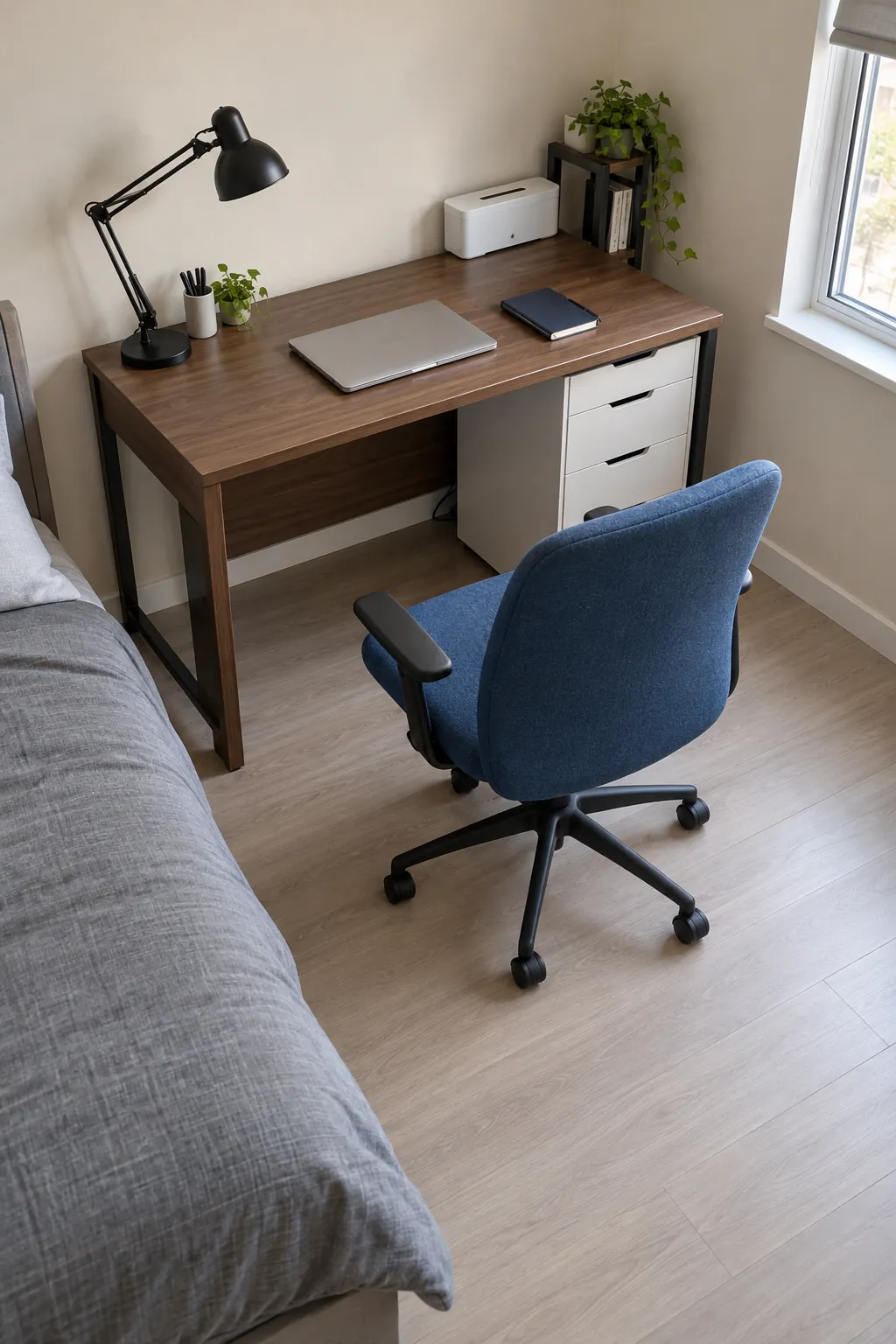
Multifunctional bedroom furniture works only when both jobs are convenient. A small desk can double as a dressing surface if you have a place to store work equipment and a usable mirror. Keep its top deep enough for your actual equipment and posture instead of choosing the shallowest option by appearance.
Measure with the chair pulled back and with nearby drawers open. Put the screen where window glare is manageable, and keep cables outside the walking route. If the desk will be used for long sessions, prioritize a comfortable chair and suitable working height over a tiny decorative stool.
When work is done, clear the surface into a drawer or box. The sleeping area should not become the overflow space for office supplies.
Keep the palette quiet and the light useful
A small bedroom color palette can begin with one wall color, one wood or metal finish, and a limited accent. Repeat the accent in bedding and one other object instead of adding a different color to every corner. Sample paint in the actual room because daylight and lamps alter its appearance.
Use curtains that open clear of the window so you can control daylight. Add a shaded reading light and a separate desk light if the room supports work. A mirror can help with dressing and reflect light, but it does not create physical space.
Live with the layout before completing your tiny bedroom inspiration shopping list. Open the door, dress, sit at the desk, and change the sheets. Buy the next piece only when you can name the problem it solves.