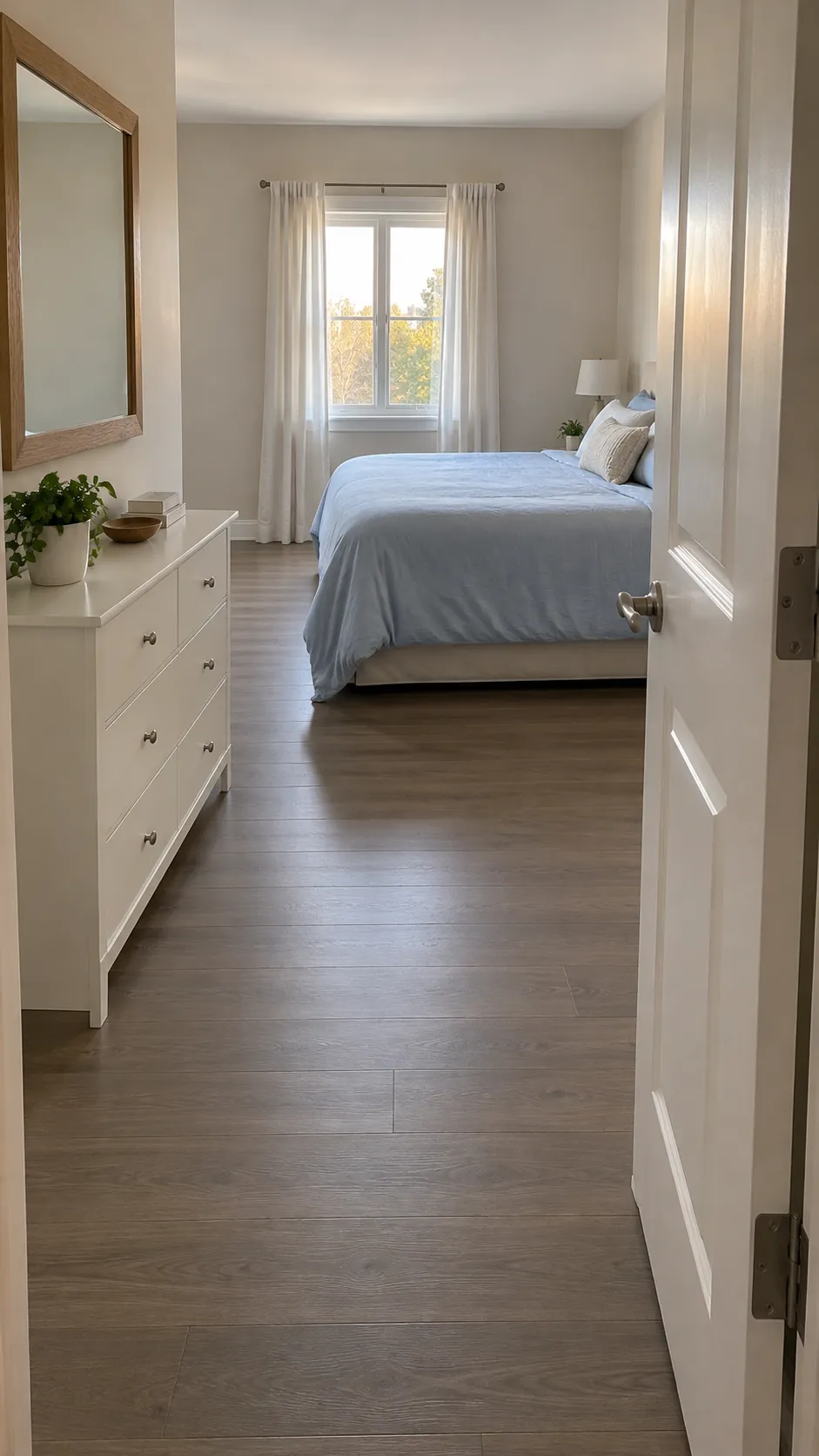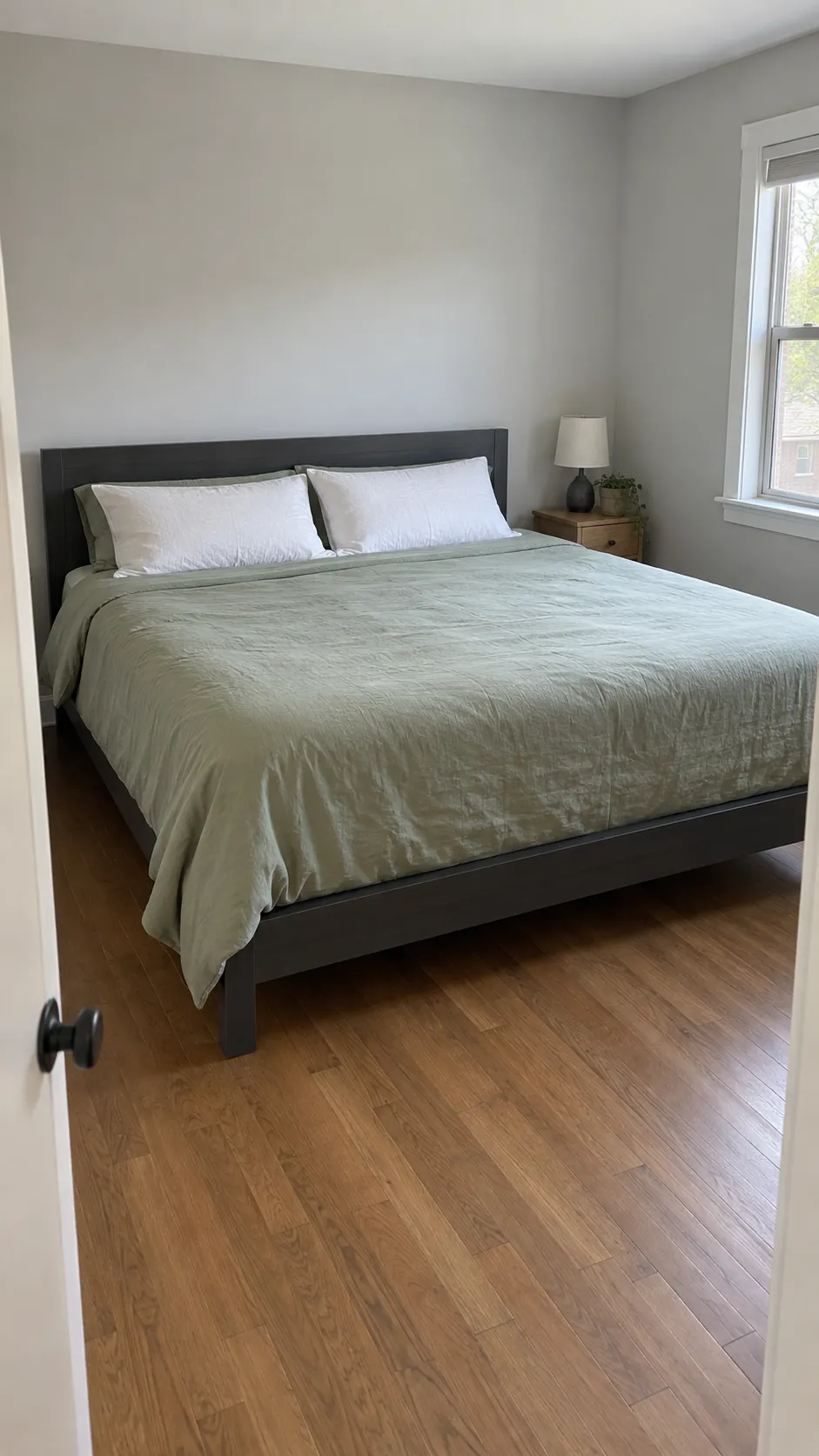
A bigger mattress can improve sleep and make getting dressed harder in the same room. Before you commit, find out what remains around the complete frame. The useful question is whether two people can reach their sides, open storage, and move through the room without shifting furniture.
There is no single room size that guarantees a comfortable fit. Doors, windows, frame thickness, and the furniture you keep all change the answer. Work through the actual footprint first, then decide which pieces deserve the remaining space.
Measure the frame rather than the mattress
A standard US king mattress is typically 76 inches wide and 80 inches long, but the frame can extend beyond it on every side. King dimensions vary by country and product, so use the actual specifications for your mattress and frame. Record the assembled width, length, headboard depth, and any projecting legs before judging the fit.
Measure the usable room width between fixed obstructions, including skirting and built in storage. Subtract the frame width to find the total remaining side space. For example, a room 132 inches wide with an 80 inch wide frame leaves 52 inches, or 26 inches per side if centered. That arithmetic is a planning example, not a comfort or accessibility standard.
Choose the wall that protects everyday access
Place the headboard on a wall where the bed does not interrupt the entrance or wardrobe. Compare a centered position with a slight offset, keeping practical access on both sides for two sleepers. A large bed small room layout can work even when the room is not perfectly symmetrical.
Check the space at the foot as carefully as the sides. Measure between the outer frame and the nearest cabinet with its doors or drawers open. Keep windows, radiators, and any required exit route usable. Pushing one side against a wall may create floor space, but it means accepting harder access and sheet changes.
Reduce the frame bulk before reducing comfort
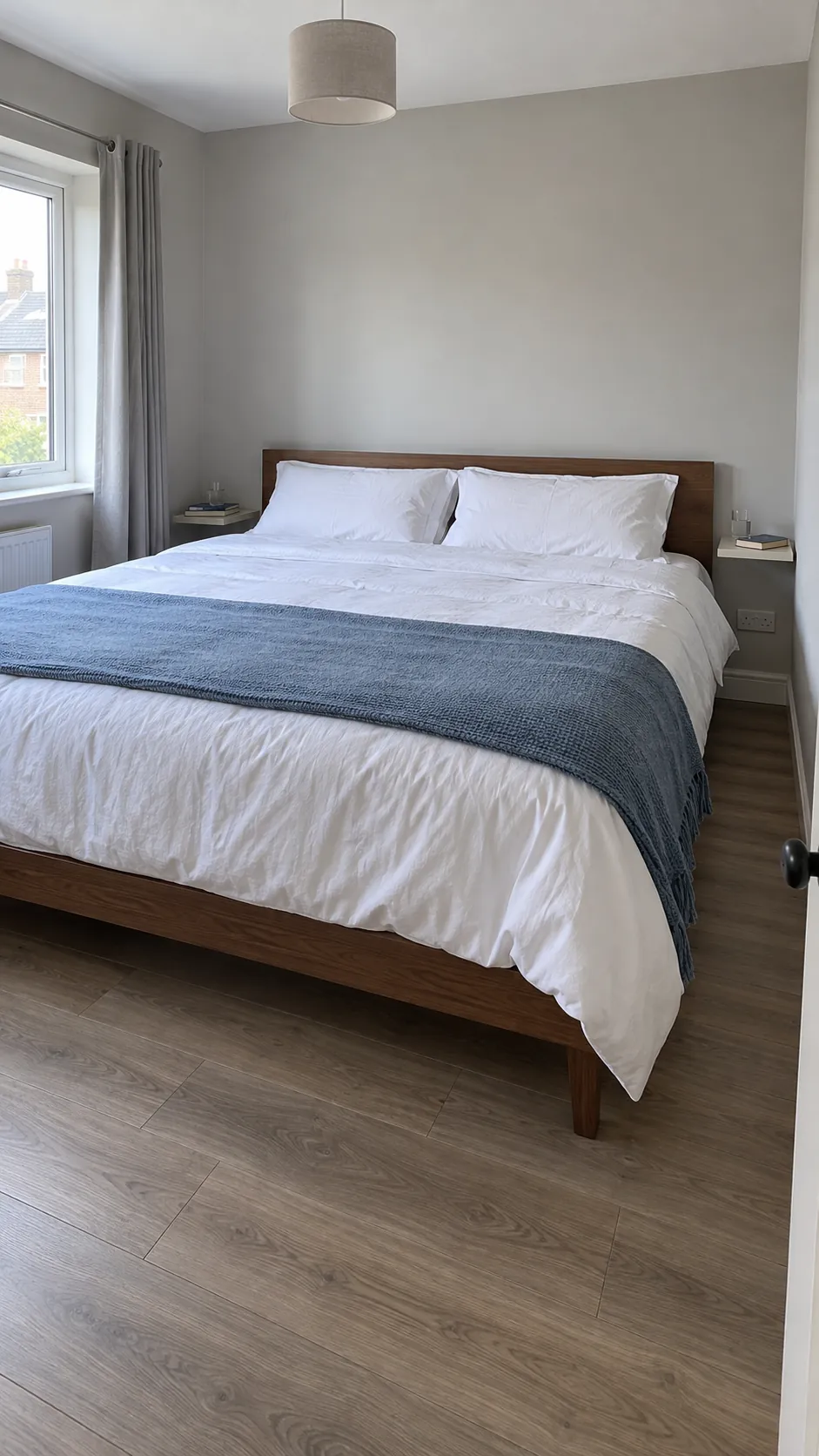
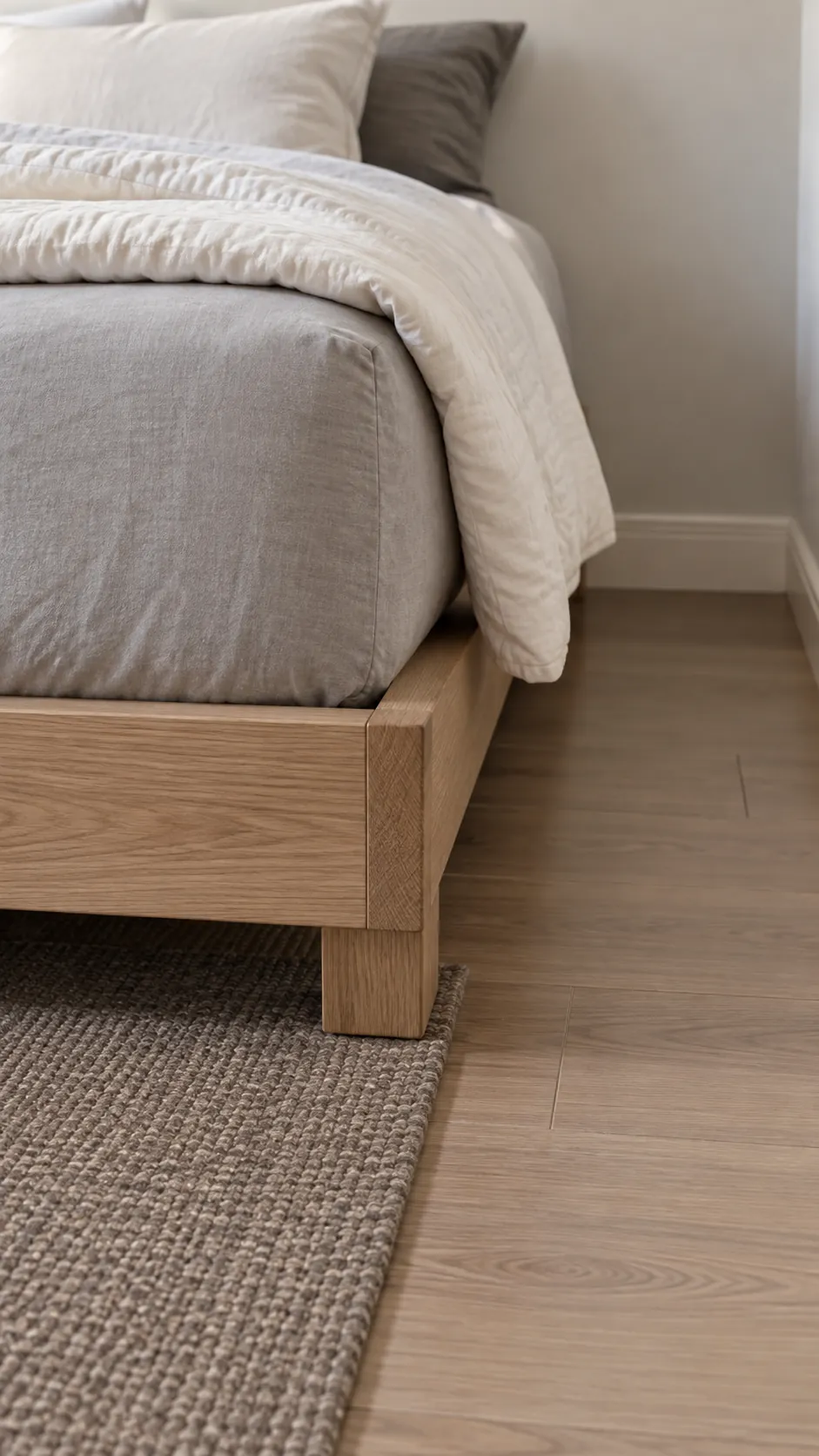
A low profile king bed with rails close to the mattress can save width compared with a deep upholstered surround. Low height alone does not make a bed smaller, so compare the outer footprint rather than relying on product photos. Avoid a projecting footboard if the route at the foot is tight.
Check the mattress support requirements and the assembled height before choosing a simpler frame. A bed that is easy to step around may still be uncomfortable to get out of if it is too low for you. Measure the delivery route, stairs, and doorway too, and confirm which frame components come apart. A split base may help delivery but does not reduce the final bed footprint.
Give each sleeper a compact bedside surface
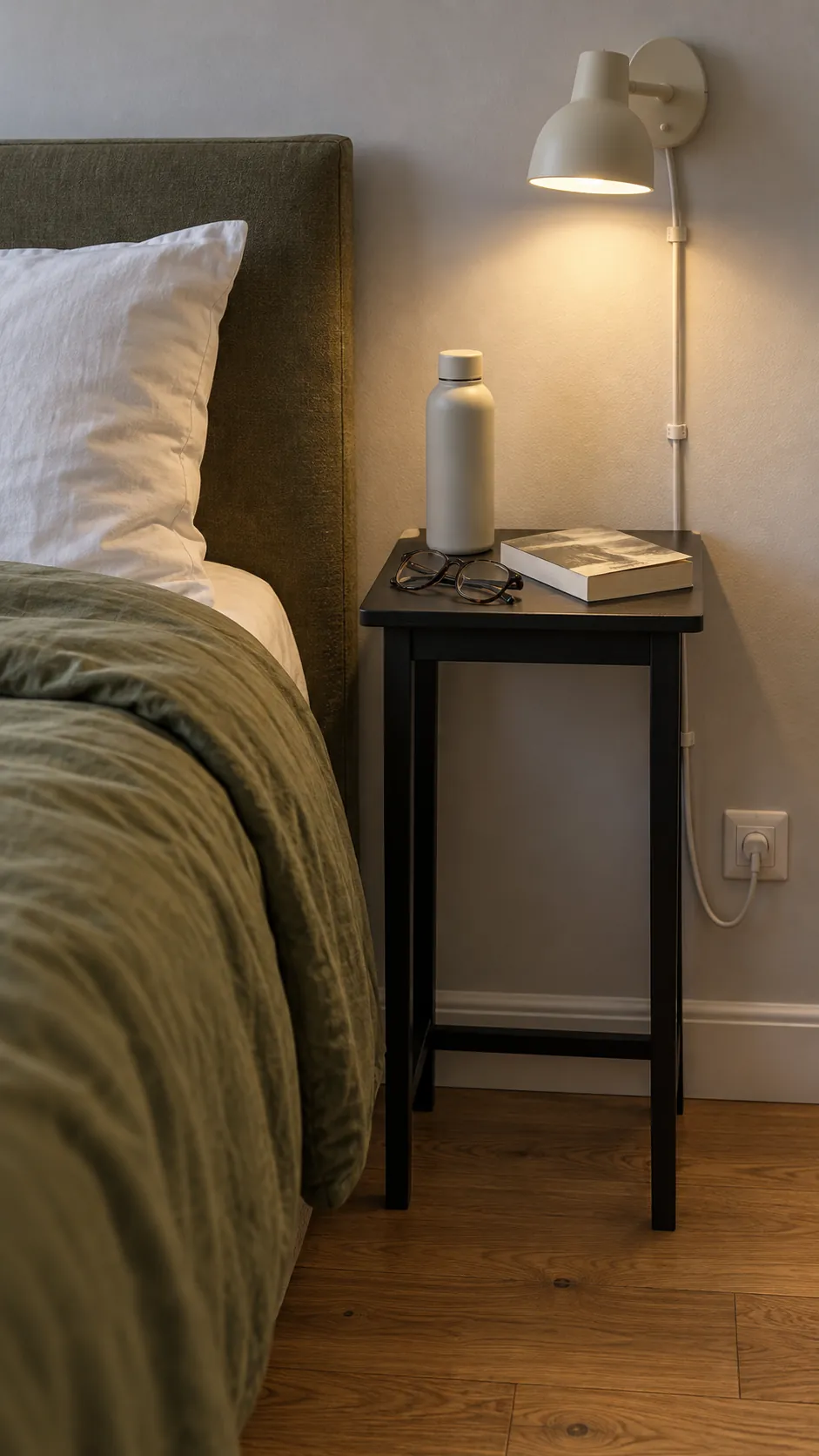
Narrow nightstand ideas should begin with what you need to set down. A phone, glasses, and one book may fit on a small shelf, while medical equipment or a water bottle may require more support. Test the surface at a comfortable reach from the pillow and keep it outside the walkway.
Wall mounted bedside lights can free tabletop space, provided they are installed correctly and their cords stay clear of the route. Check wall construction, fixing instructions, hidden services, and landlord permission before drilling. Use a narrow freestanding table and shaded lamp when wall mounting is unsuitable. Matching furniture is less important than usable access for both people.
Choose bed storage that can actually open
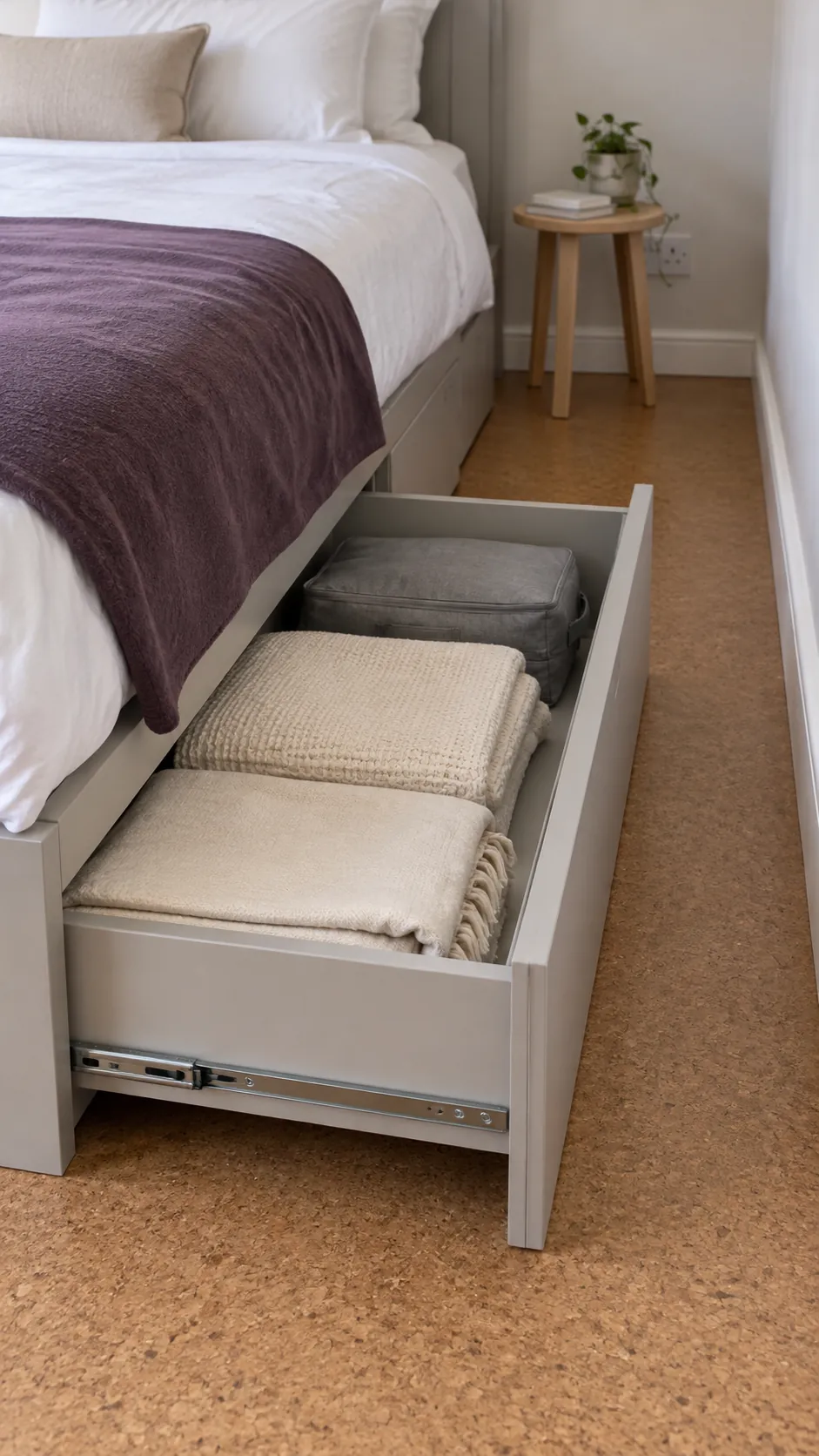
A storage king bed can replace a separate chest only when its contents are easy to reach. Side drawers need space to extend into the room, and foot drawers need clear floor beyond the frame. Measure the drawer in its open position before counting its capacity as a solution.
A lifting base uses a different access pattern. Check its mattress limits and operating instructions, keep the opening area clear, and use the supplied support mechanism as designed. Do not improvise a prop or leave children near an open mechanism.
For a regular frame, low boxes are useful only if they pass beneath the rails and can slide fully out. Store occasional bedding there and keep daily clothes in easier storage. Buying more containers will not fix a blocked retrieval route.
Test the room before making the purchase
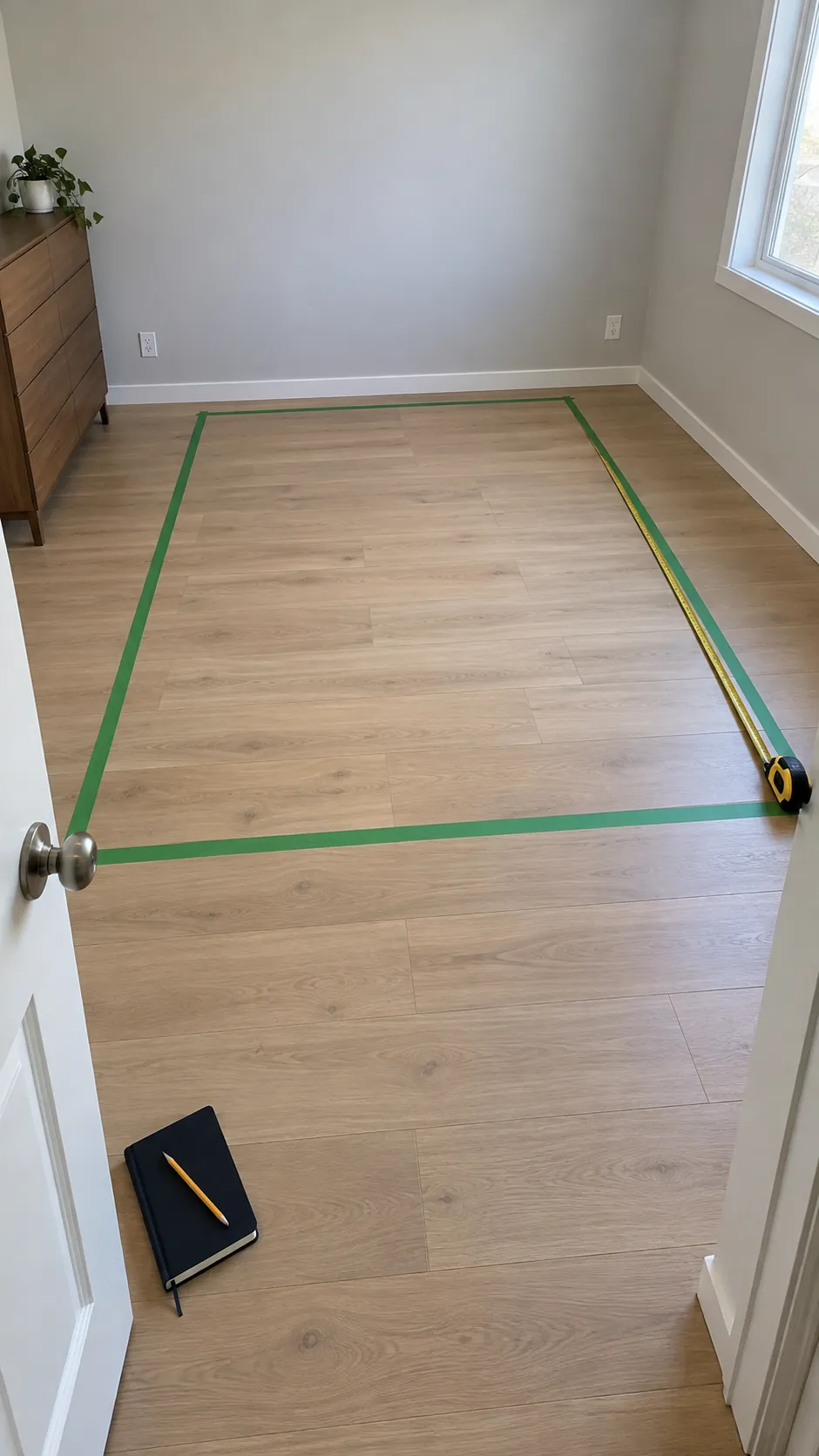
Use painter tape to mark the full frame, bedside surfaces, and other furniture on the floor. Open the door and wardrobe, walk to each side, and rehearse changing the bedding. If you use a mobility aid, test with it rather than accepting generic small bedroom walkway clearance advice.
Remove a bench, oversized dresser, or spare chair before giving up a bed size that matters to your sleep. Minimal bedroom furniture should still provide the storage and support you need. Keep a small basket or lamp only when it has a clear place outside circulation.
If the room still fails your daily test, choose a smaller bed or move the king to another room. A king bed small bedroom layout is successful when you can use the room comfortably, not when the mattress merely fits between the walls.