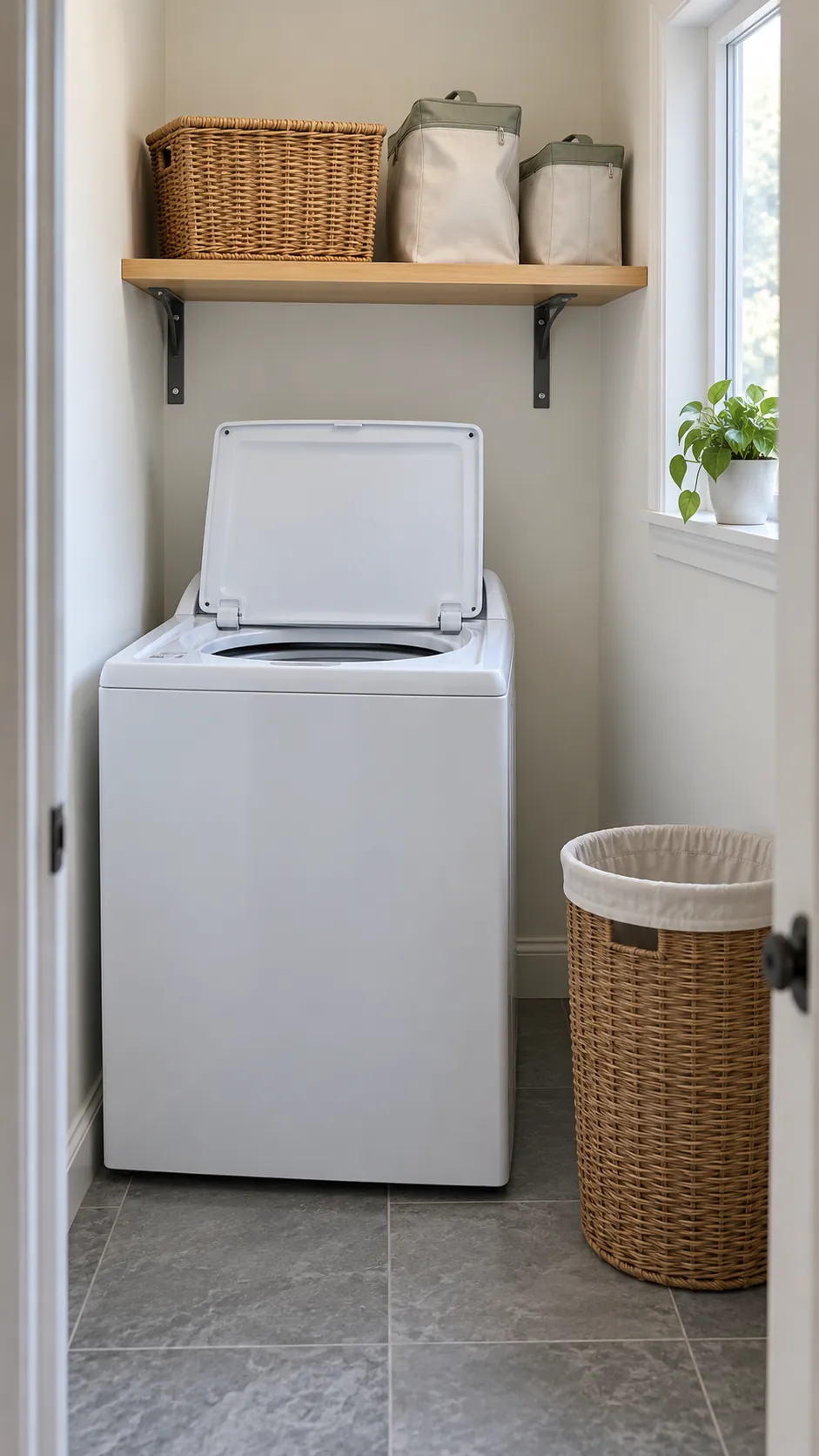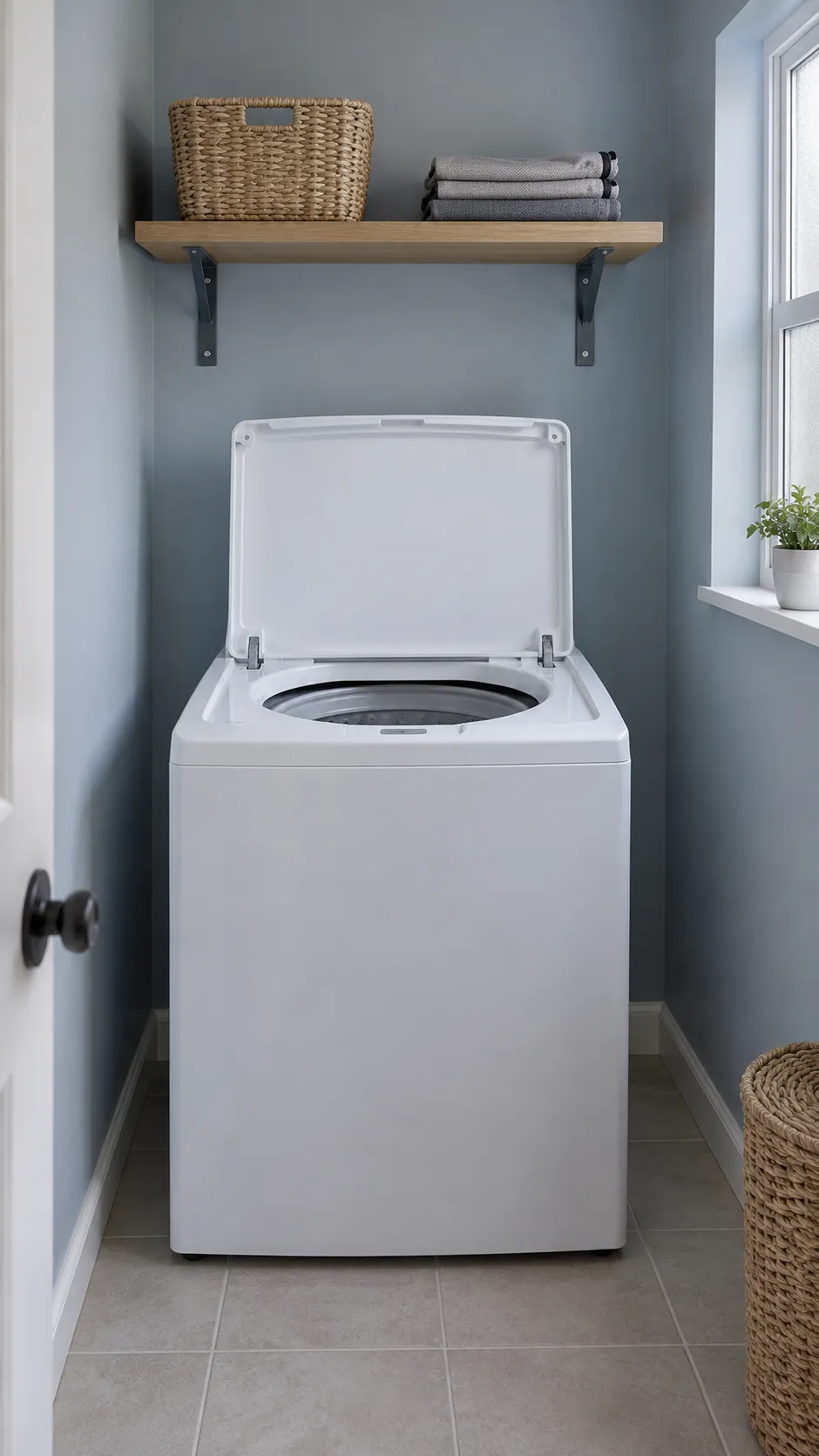
A shelf can look comfortably above a closed washer and still stop the lid halfway through opening. The measurement that matters is the space occupied by the moving lid, together with every part of the shelf assembly. Check that space before choosing the shelf height, depth, or brackets.
There is no single shelf height that suits every machine. This planning method uses your installed washer and its manual, then tests reach and everyday access as well as clearance. It can also show when storage belongs on a different wall.
Start with the installed washer and its manual
Measure the machine where it will actually run, with its feet adjusted and the required space behind it. A showroom measurement or a closed lid dimension cannot tell you where the open lid will travel. Find the installation guide for the exact model and read its clearance, ventilation, and service requirements before choosing a shelf.
Check whether the manufacturer provides a dimension for the washer with the lid fully open. Treat that as a useful cross check, then confirm the position on your own installed machine. Do not move the washer forward, alter the hinge, or change its leveling just to make a shelf fit. Any appliance relocation must preserve the installation requirements, hose routing, and access to connections.
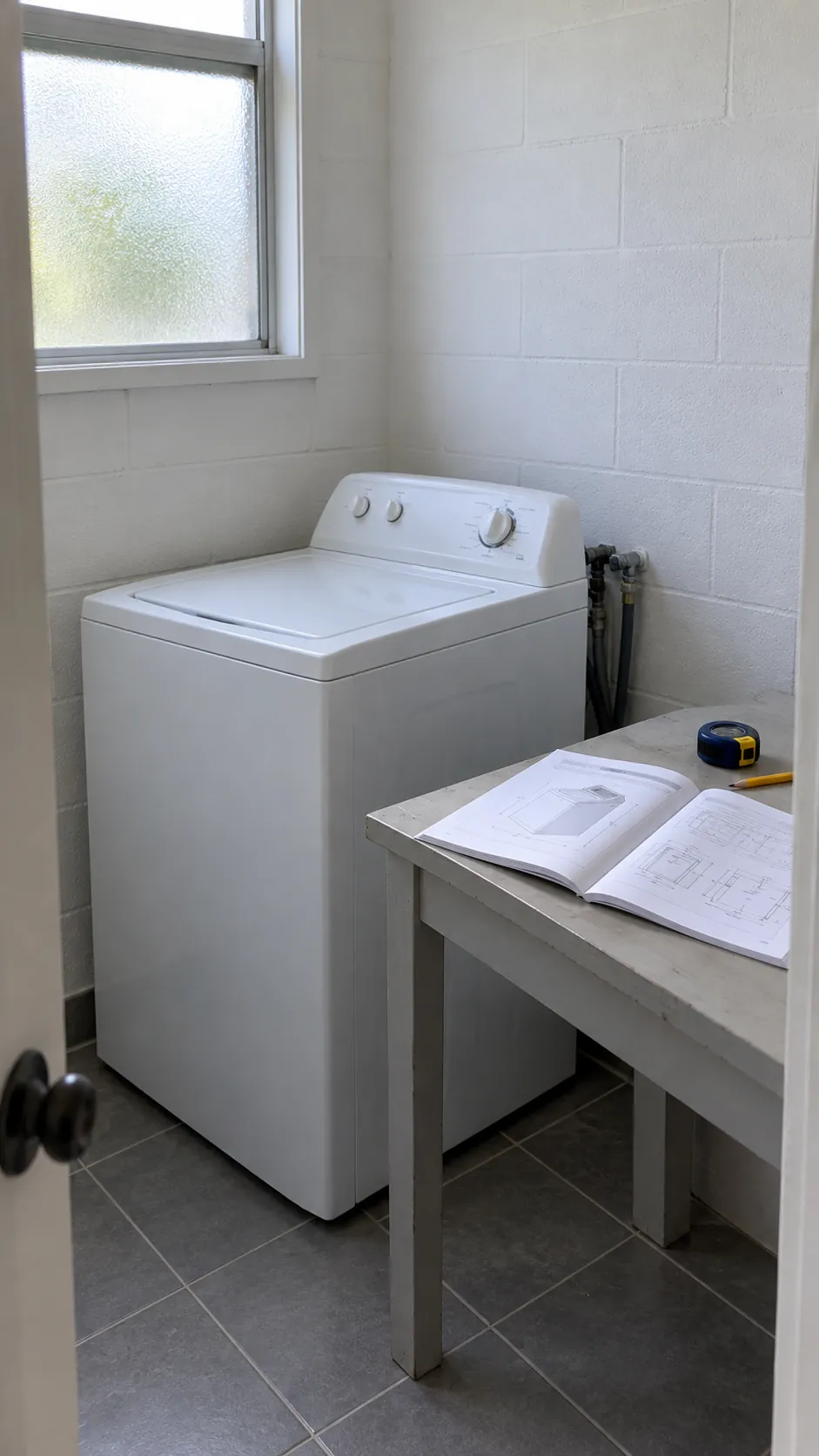
Map the whole lid path, not just its final height
Open the lid slowly through its normal travel and notice where its outer edge comes closest to the back wall. The lid can approach a shelf while it moves even if the final open position seems clear. Include a raised handle, hinge cover, or shaped edge when you judge that path.
Record the height from the finished floor to the highest point reached by the lid. Then measure the gap between the wall and the lid at several positions along its travel. Mark the proposed shelf underside on the wall with removable tape that suits the paint finish. Keep the tape on the wall, without attaching anything to the lid or interfering with the hinge.
For an illustrative calculation, suppose the highest moving lid point is 62 inches above the floor and a planned shelf underside is 66 inches above the floor. The difference is 4 inches at that measured point, not a universal clearance recommendation. That calculation does not prove a deeper shelf or projecting bracket will clear the moving lid. Your installed washer, the full shelf shape, and the manufacturer's requirements still decide whether the plan works.
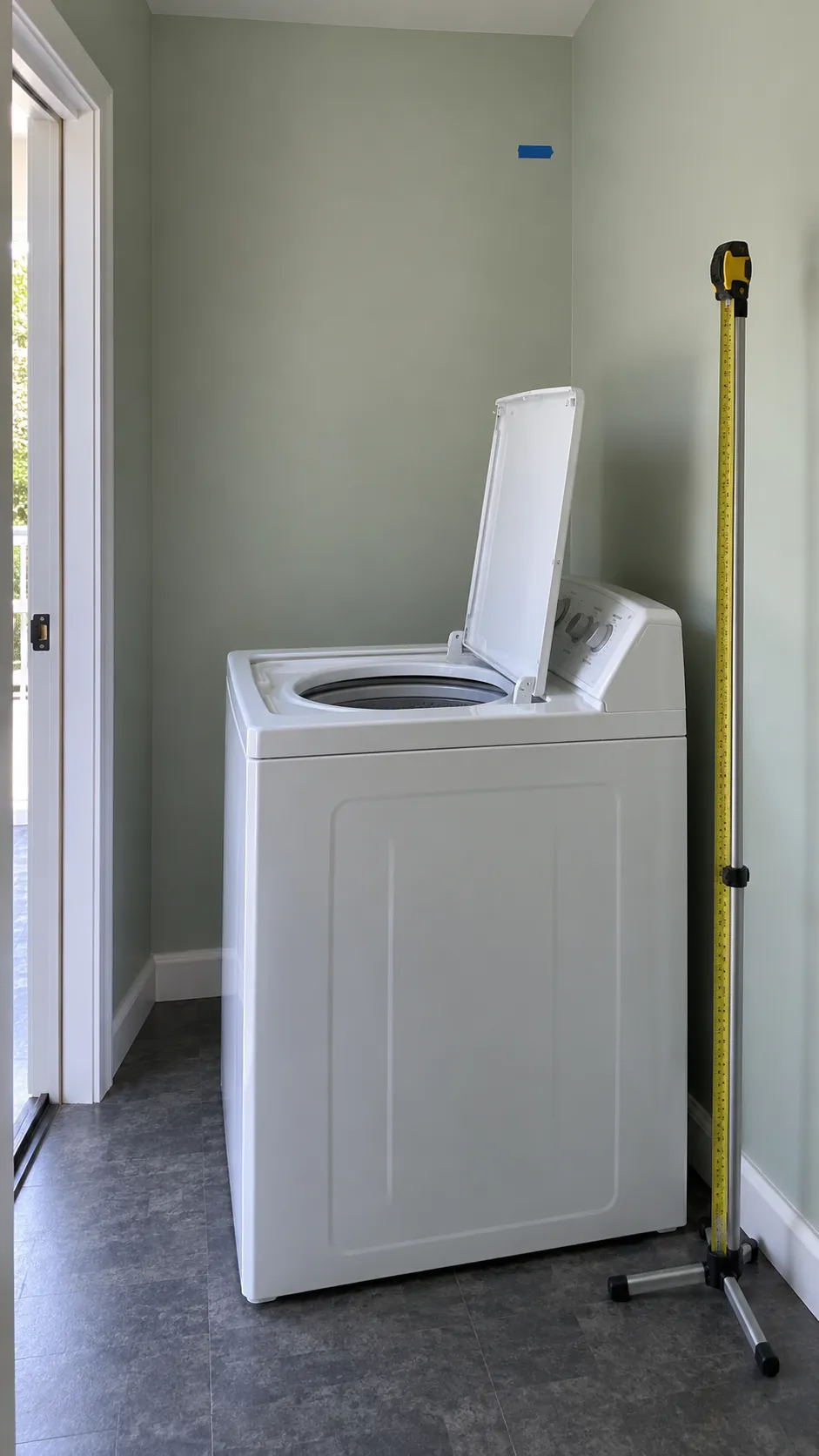
Include shelf depth, brackets, and anything hanging below
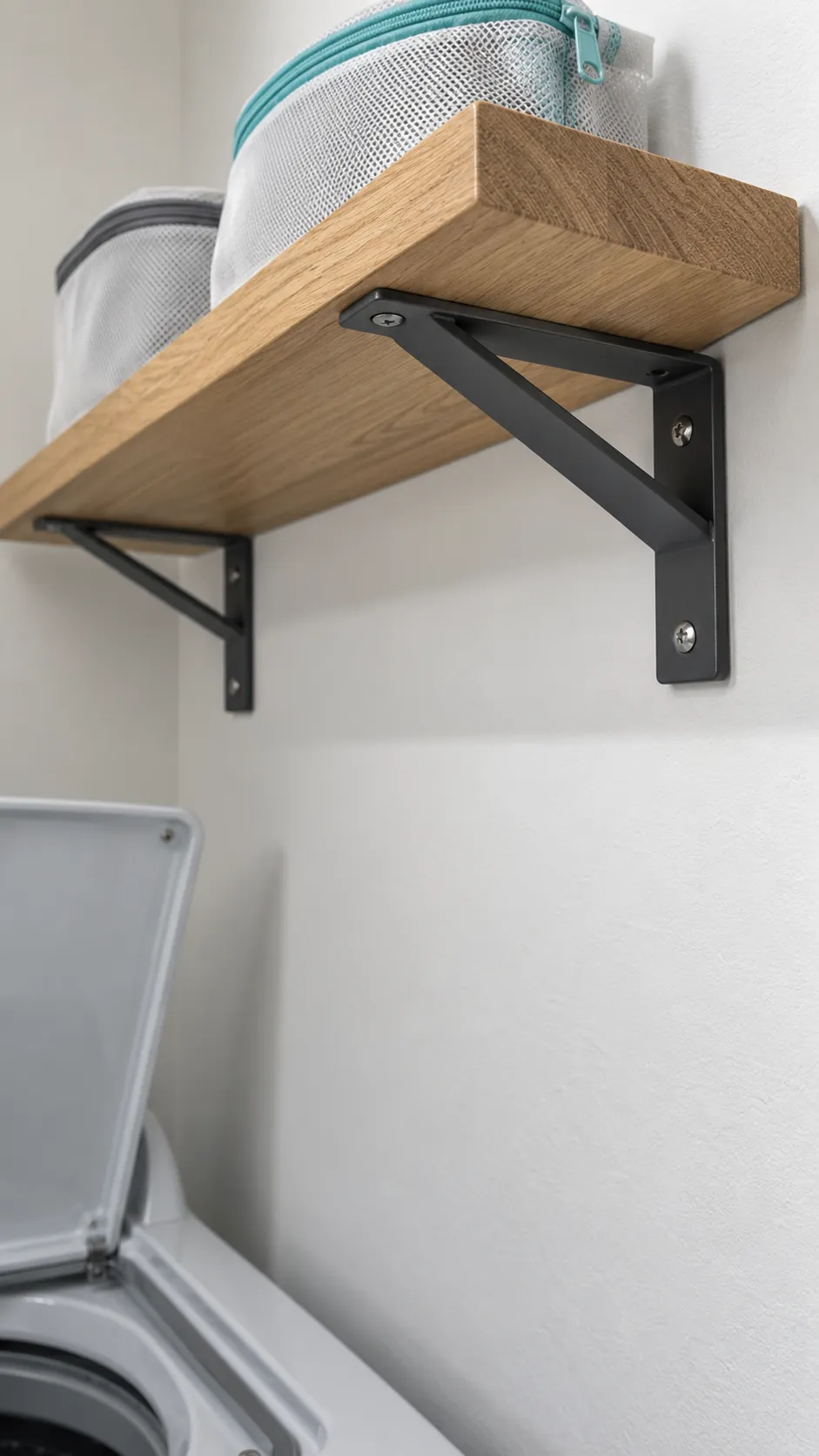
The bottom of the board is only one part of the obstruction. Brackets, trim, undershelf baskets, hooks, and a hanging towel can reach farther down or out than the shelf itself. Measure the complete installed assembly, including screw heads or supports where they could meet the lid.
A shallower shelf may fit behind a lid path that a deep shelf crosses. Use the actual wall to front edge depth rather than the board's nominal product description, and include any space added by the mounting system. Choose a depth that supports the containers you intend to store without making them overhang. If the geometry is difficult to judge, an empty wall with reachable side storage is a better outcome than a shelf that limits opening.
Separate overhead storage from daily reach
A shelf high enough to clear the lid may be too high for a heavy detergent bottle. Stand at the washer with both feet on the floor and check whether you can grasp a stored item without leaning over the open tub. If you cannot return it comfortably, it is likely to land on the appliance again.
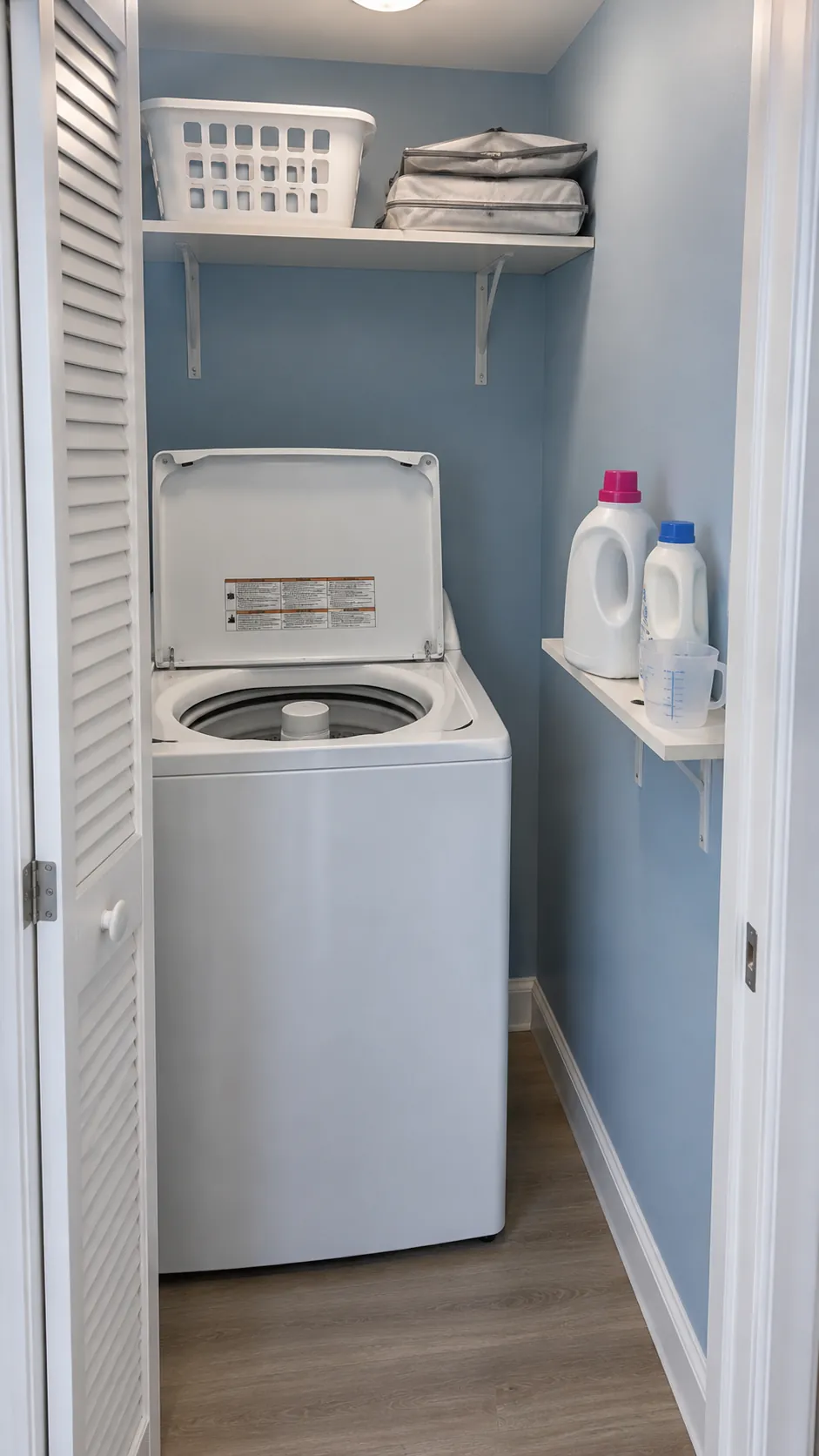
Use the overhead shelf for lightweight occasional supplies, such as empty garment bags or a spare basket. Put daily detergent in a secure cabinet or a side shelf that suits the household's access needs. Keep laundry products in their original labeled containers and follow the label's storage instructions. Where children can enter, high storage alone is not a substitute for suitable restricted access.
Side storage also needs a clearance check. Its shelf edge must not cross the lid sweep, crowd the control panel, or make a basket difficult to carry through the aisle. A small usable storage zone is more valuable than a large shelf you cannot safely reach.
Choose supports that fit the wall and preserve service access
Decide what the shelf will carry before selecting its fixings. Add the weight of the board, brackets, containers, and their contents, then follow the shelf and fixing manufacturers' load and installation requirements. A fixing suitable for one wall type is not automatically suitable for another.
Locate the intended fixing positions and check for concealed services before drilling. If you cannot establish the wall construction or a safe fixing route, use a qualified installer. Do not fasten shelving to the washer, rest shelf legs on the machine, or route screws into unknown pipework.
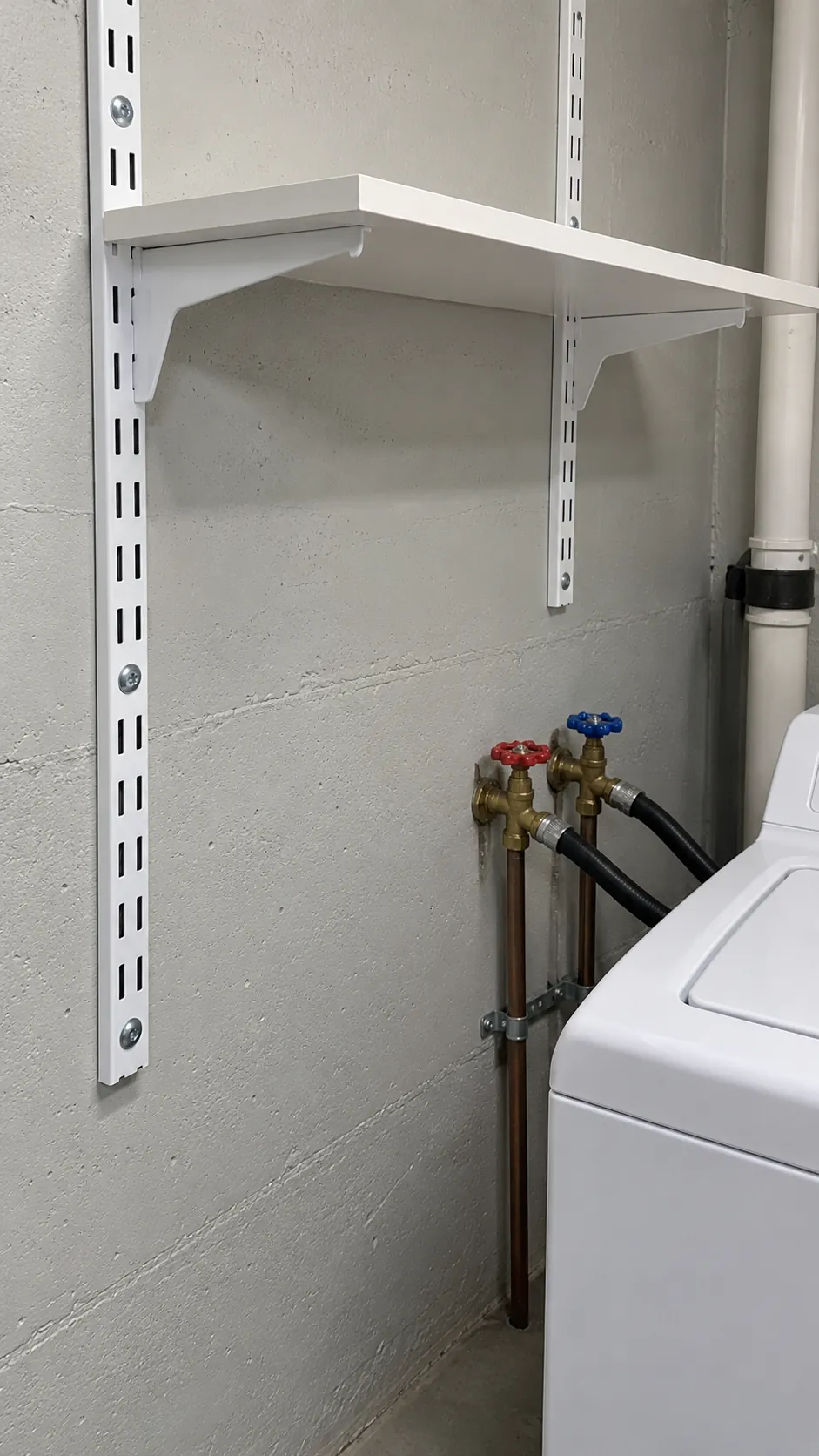
Leave shutoff valves, sockets, hoses, and other service points accessible. Consider how a technician could move or work on the appliance without dismantling an entire loaded storage system. Follow the washer's installation guide for its service and ventilation space; no general shelf measurement overrides that document.
Test the footprint before making the installation permanent
Lay out the proposed shelf and bracket positions on the wall with removable tape. Make a lightweight cardboard outline of the planned depth and bracket projection so you can compare it with the open lid, but do not balance it over the machine or let it fall into the tub. Have the mockup held securely outside the moving parts, or ask an installer to check the interference if the space is too awkward to assess safely.
With the area clear, open and close the lid through its full normal movement without forcing it. Check your usual loading position, the controls, the path of a full laundry basket, and the door swing into the room. Verify that a stored bottle can be removed and returned without contact with the lid or an overhead fitting.
After installation, repeat the check with the real shelf assembly and its intended contents. If the lid touches anything, stop using that arrangement and correct the shelf position or design; a pad does not restore full opening clearance. Choose a different wall when the only way to make overhead storage work is to compromise the washer's normal operation.