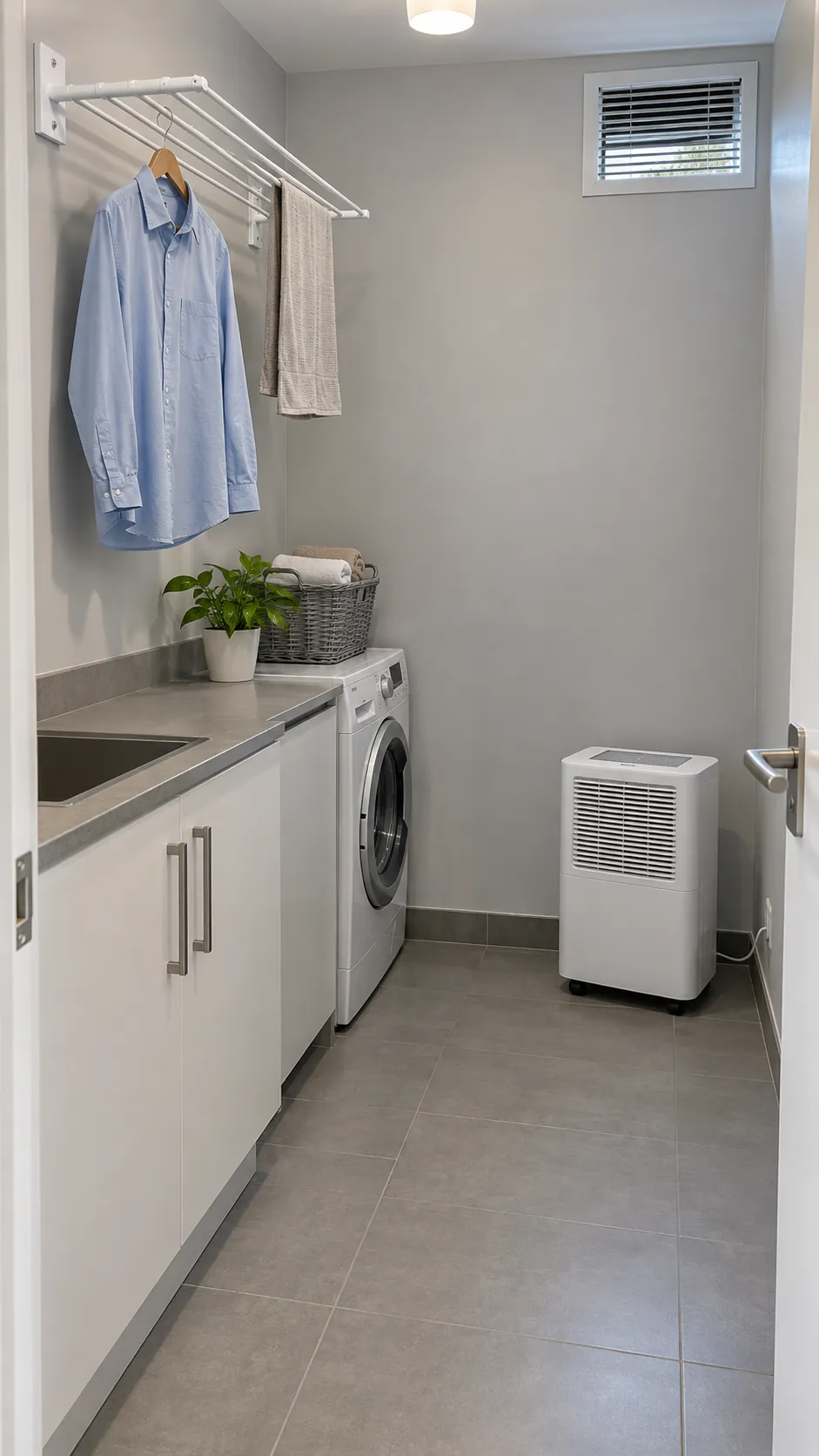
A rack can fold almost flat and still block the room as soon as a wet shirt hangs from it. Start with the space your clothes occupy during drying, then check the route to the washer, sink, and door. The best location keeps those everyday movements possible while giving moisture somewhere to go.
Measure your longest garment, the open rack, and every nearby door or appliance lid before choosing hardware. Follow the maker’s load limits and fixing instructions, check for concealed services before drilling, and keep damp fabric clear of electrical fittings and heat sources. A smaller drying batch with air around each piece is often more workable than filling every available bar.
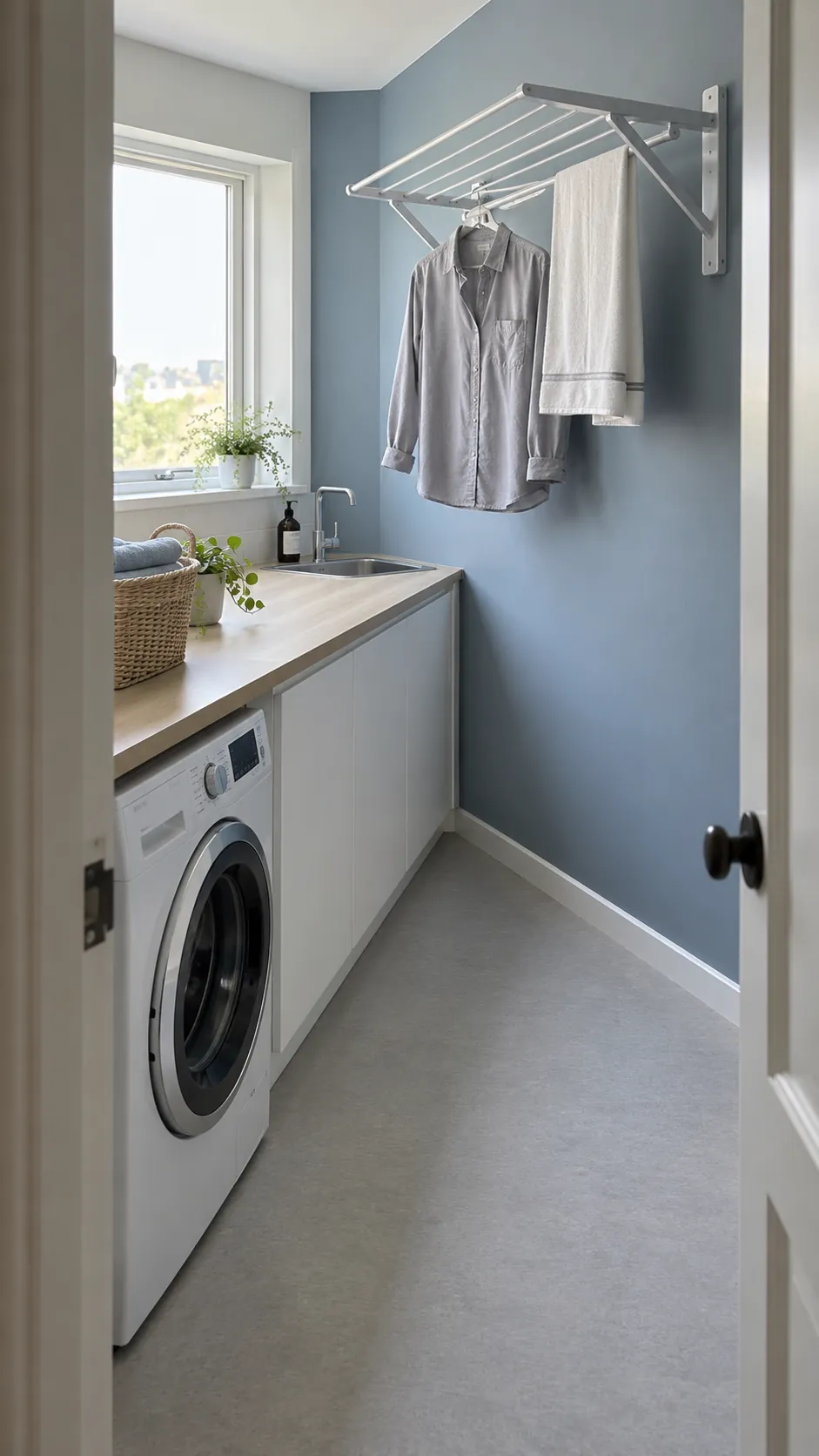
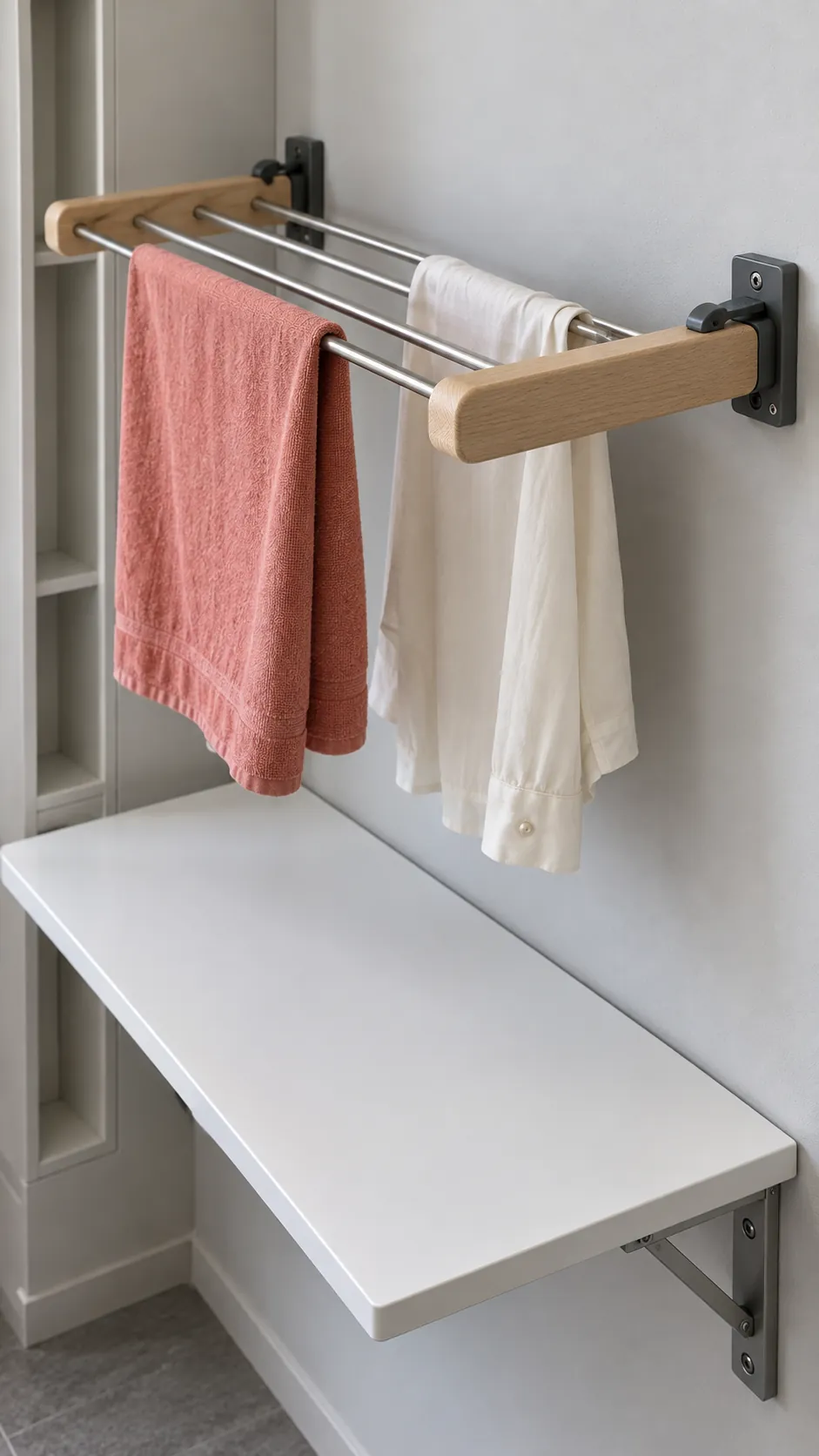
A hinged wall frame above the counter
A wall mounted drying rack that drops forward over a counter keeps wet sleeves away from the walking route. Measure the frame while it is open, including the longest garment, rather than buying by its closed depth. Fix the brackets into suitable structural support according to the maker’s instructions, since wet laundry adds weight. Leave the counter below clear until drips stop.
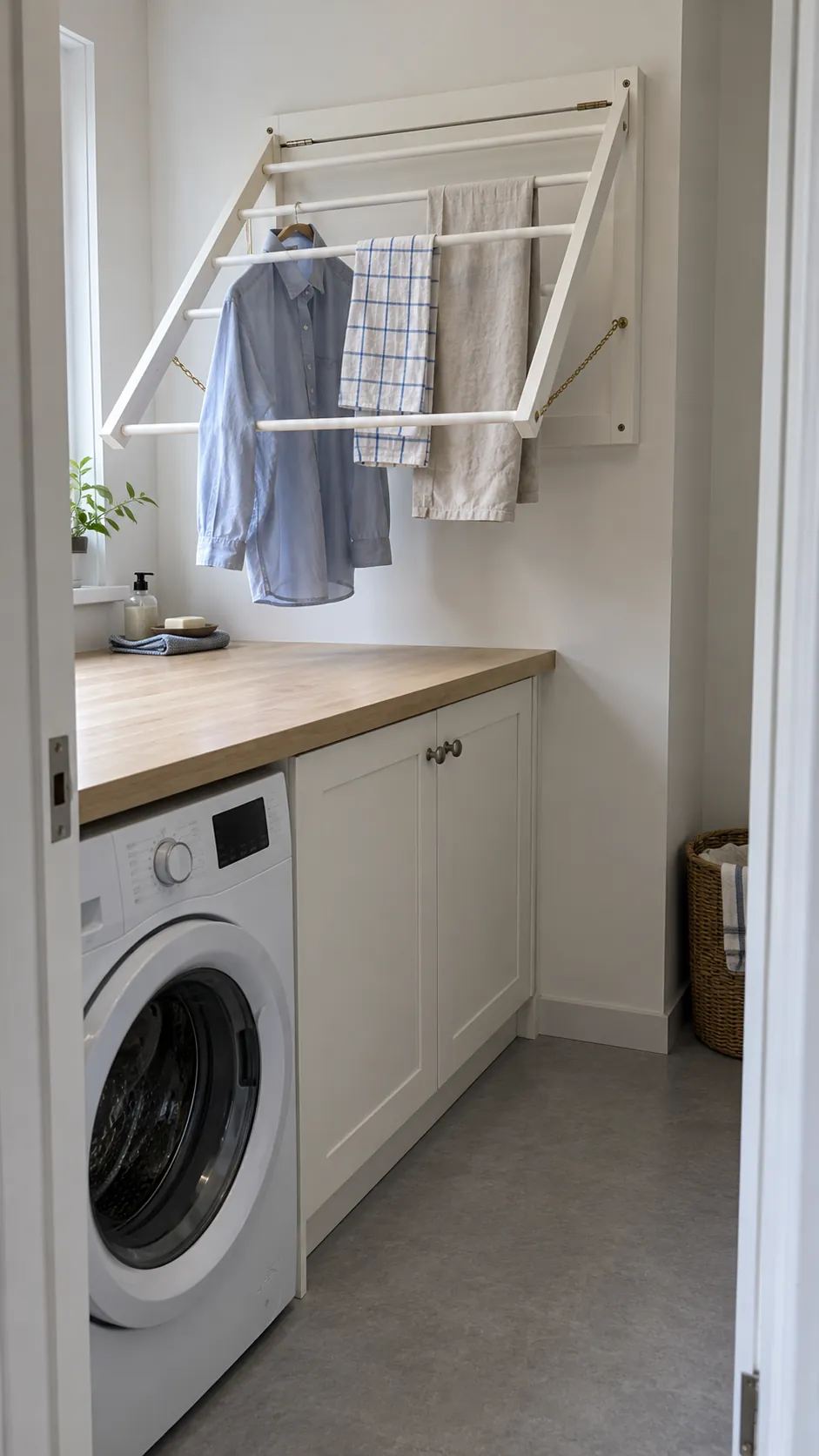
An accordion rack on the end wall
An accordion rack works best on the short wall at the end of a narrow room, where its reach does not cross the main aisle. Pull it out far enough that neighboring fabrics can hang separately. The outer bars put more leverage on the wall, so keep heavy pieces near the mounting side within the stated load limit. Fold it back only after the bars and clothes are dry.
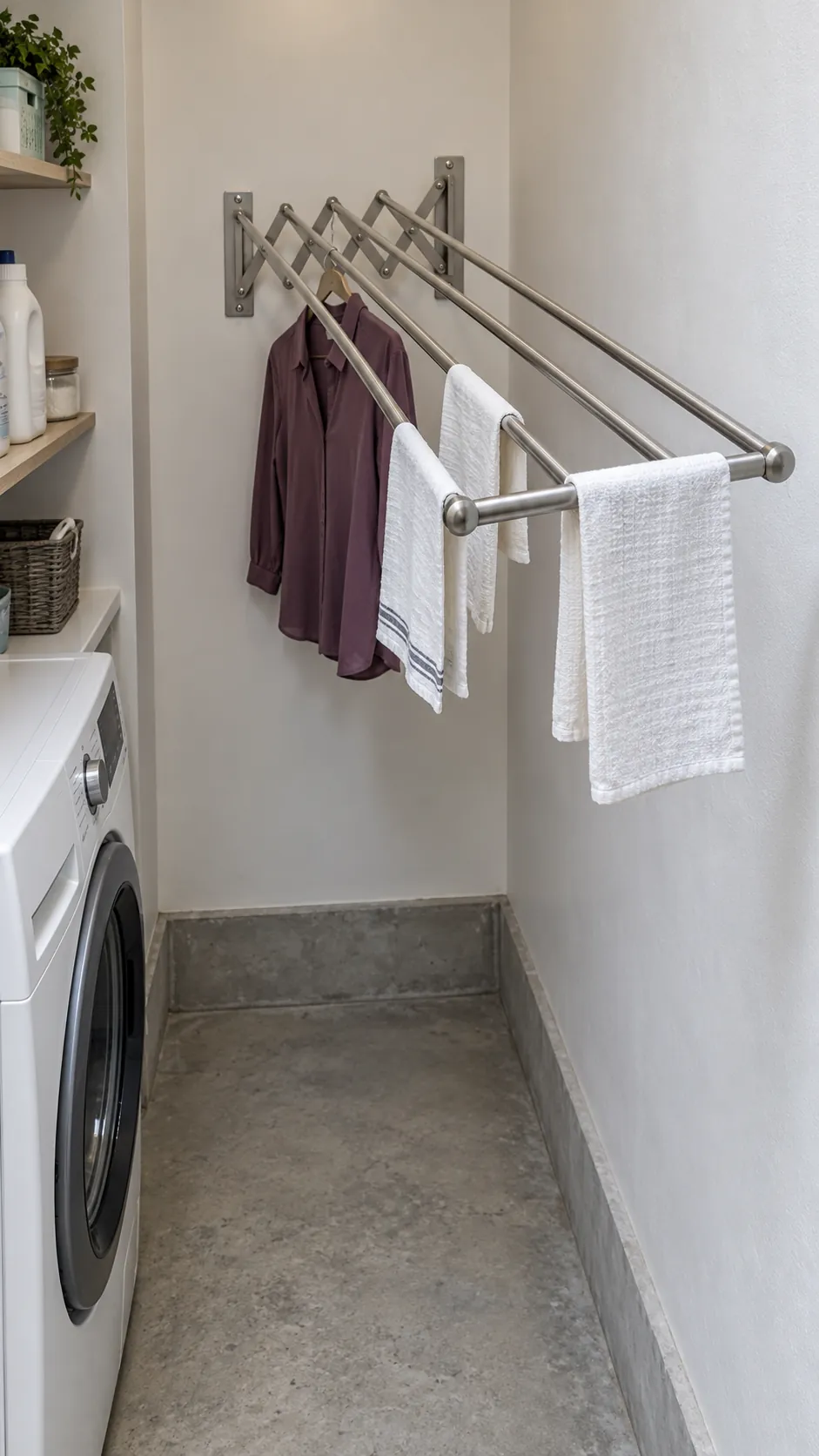
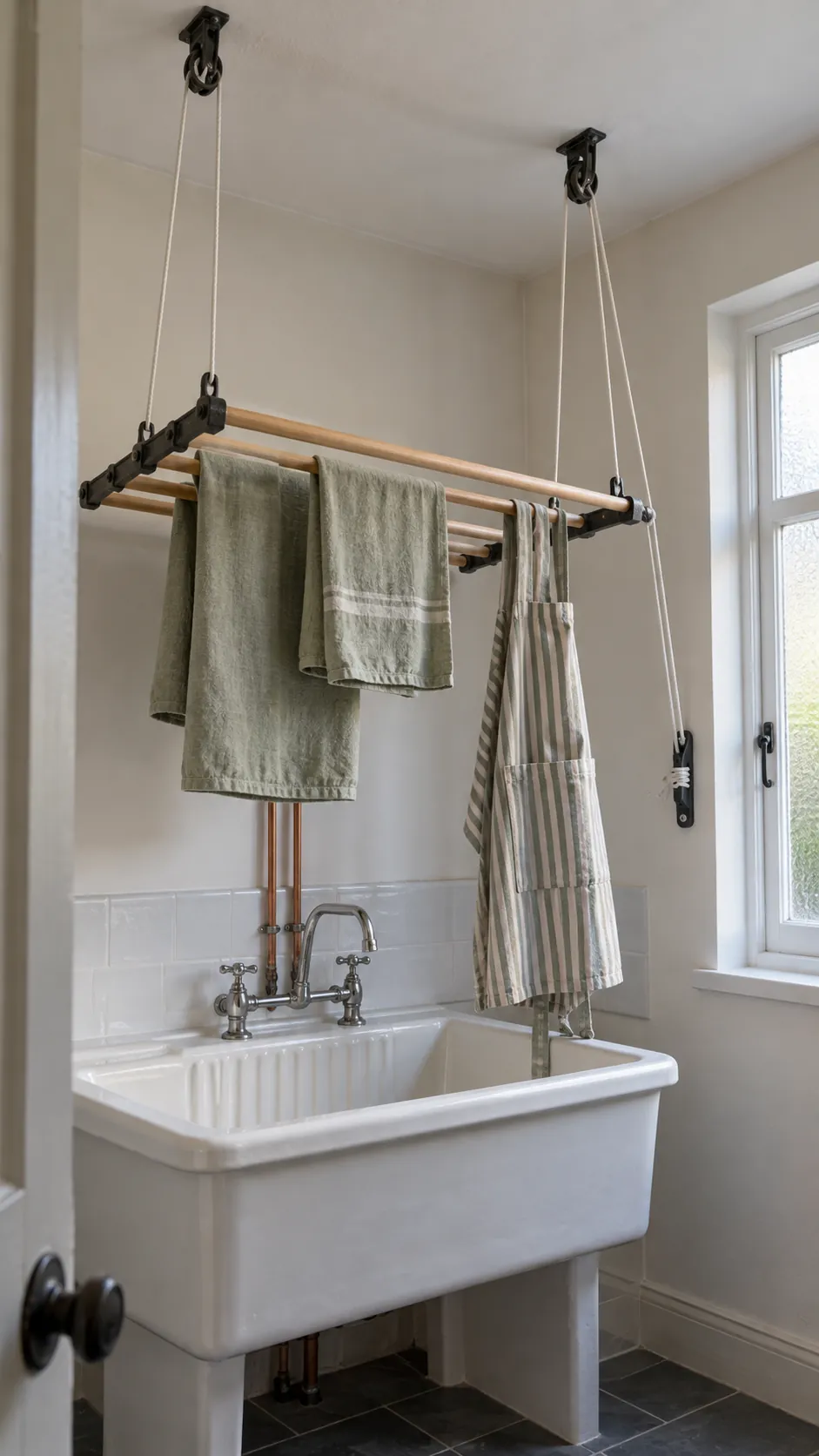
A ceiling pulley above a utility sink
A ceiling drying rack can use the volume above a utility sink instead of the floor. Choose a lowering system you can load from a stable standing position, with fixings suitable for the ceiling structure. Check the lowest hanging garment against taps, the sink rim, and your head before raising it. Secure the operating cord out of children’s reach using the supplied safety hardware.
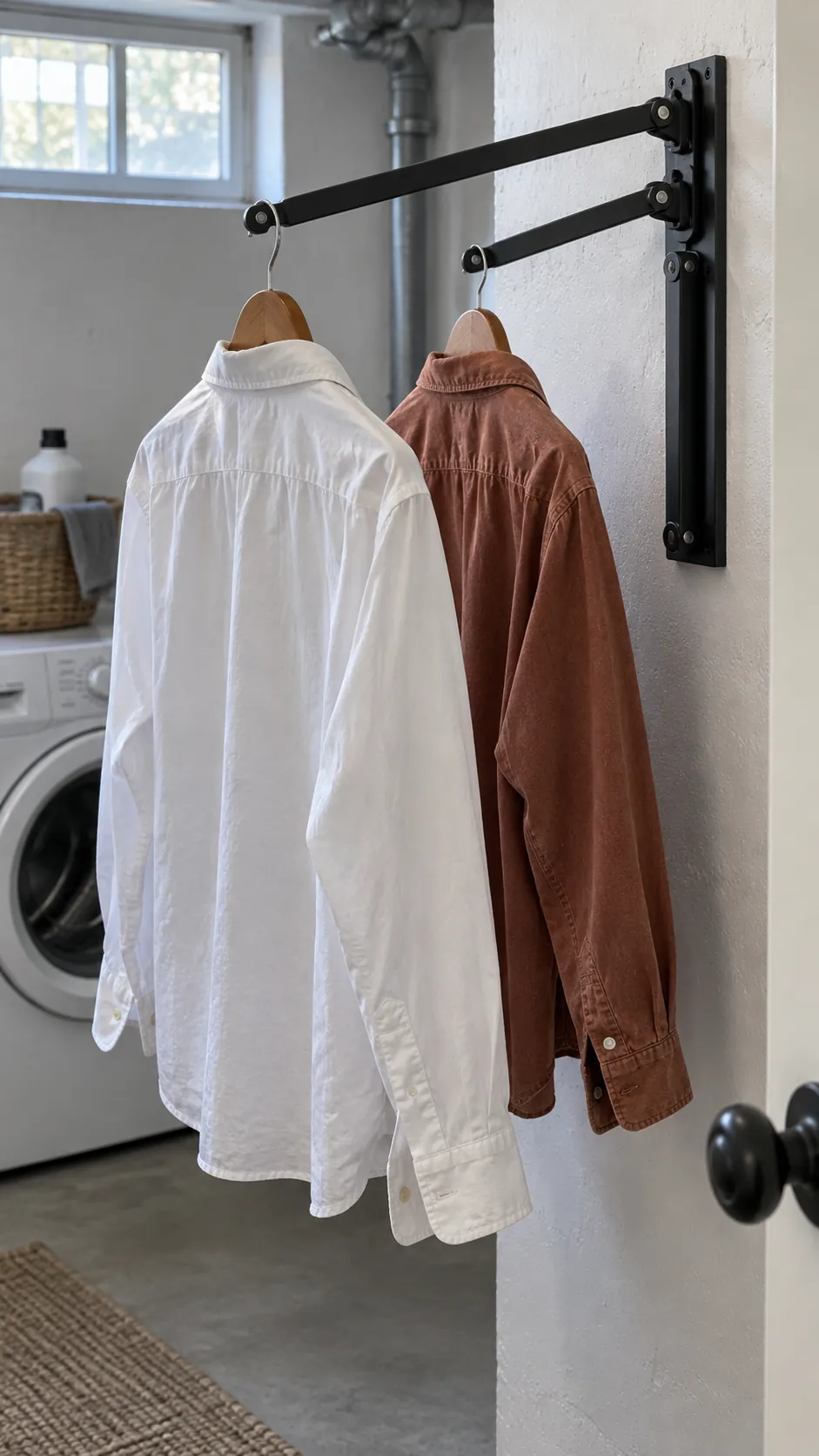
Individual arms for a few shirts
Swinging drying arms let you open only the hanging space needed for today’s shirts. Mount them where a sleeve cannot catch a passing shoulder or the edge of an appliance door. Separate the arms so hangers do not bunch at their tips. This setup suits small batches better than heavy bedding, and the folded arms should sit outside the door swing.
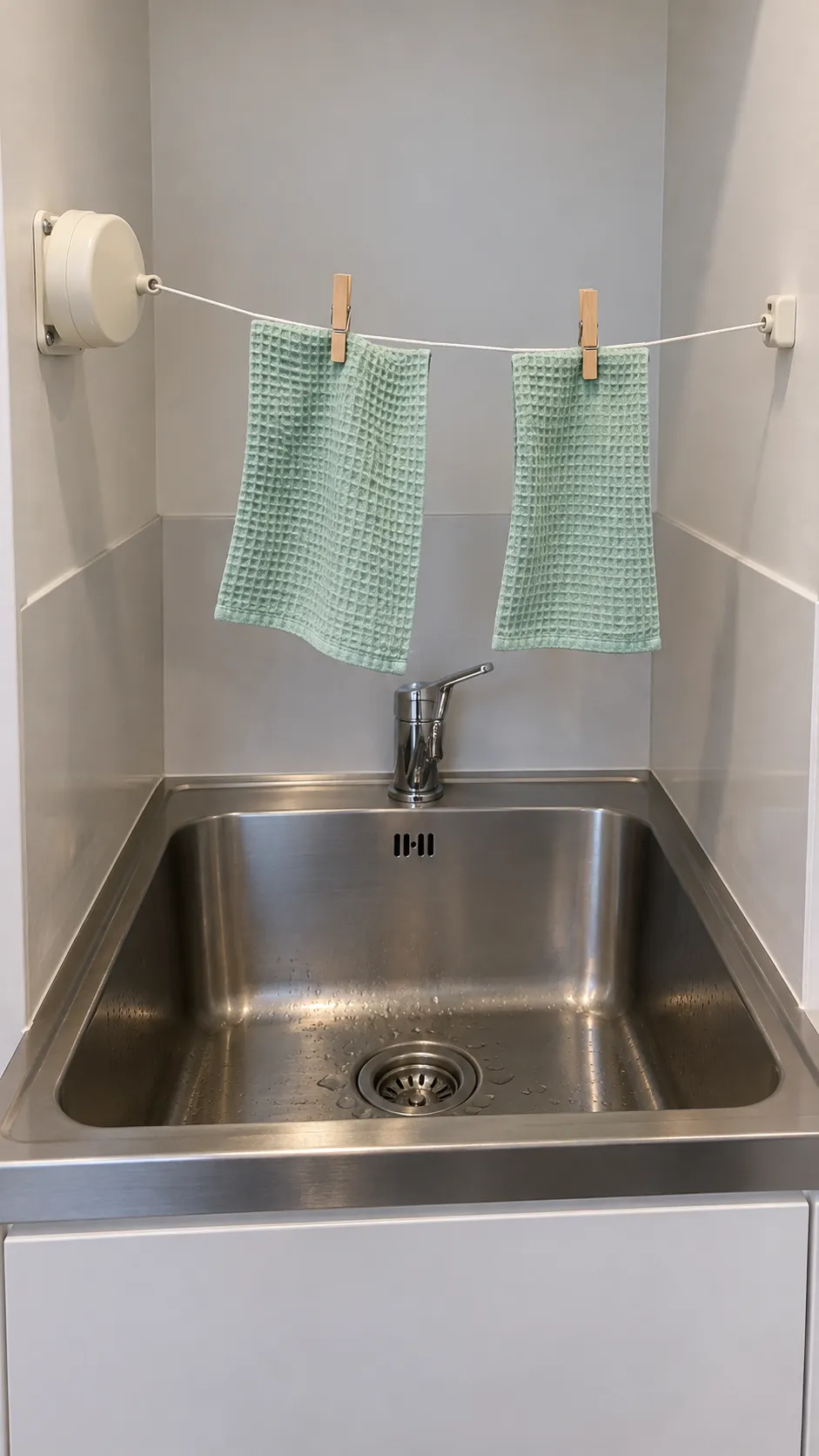
A retractable line across the sink bay
A retractable clothesline can span an otherwise unused sink bay and disappear between loads. Use the anchors and load limits specified for the line, because tension transfers force to both walls. Keep the span away from switches and electrical equipment, and position dripping garments over the sink. Release the line only after removing every garment, then guide it back rather than letting it snap.
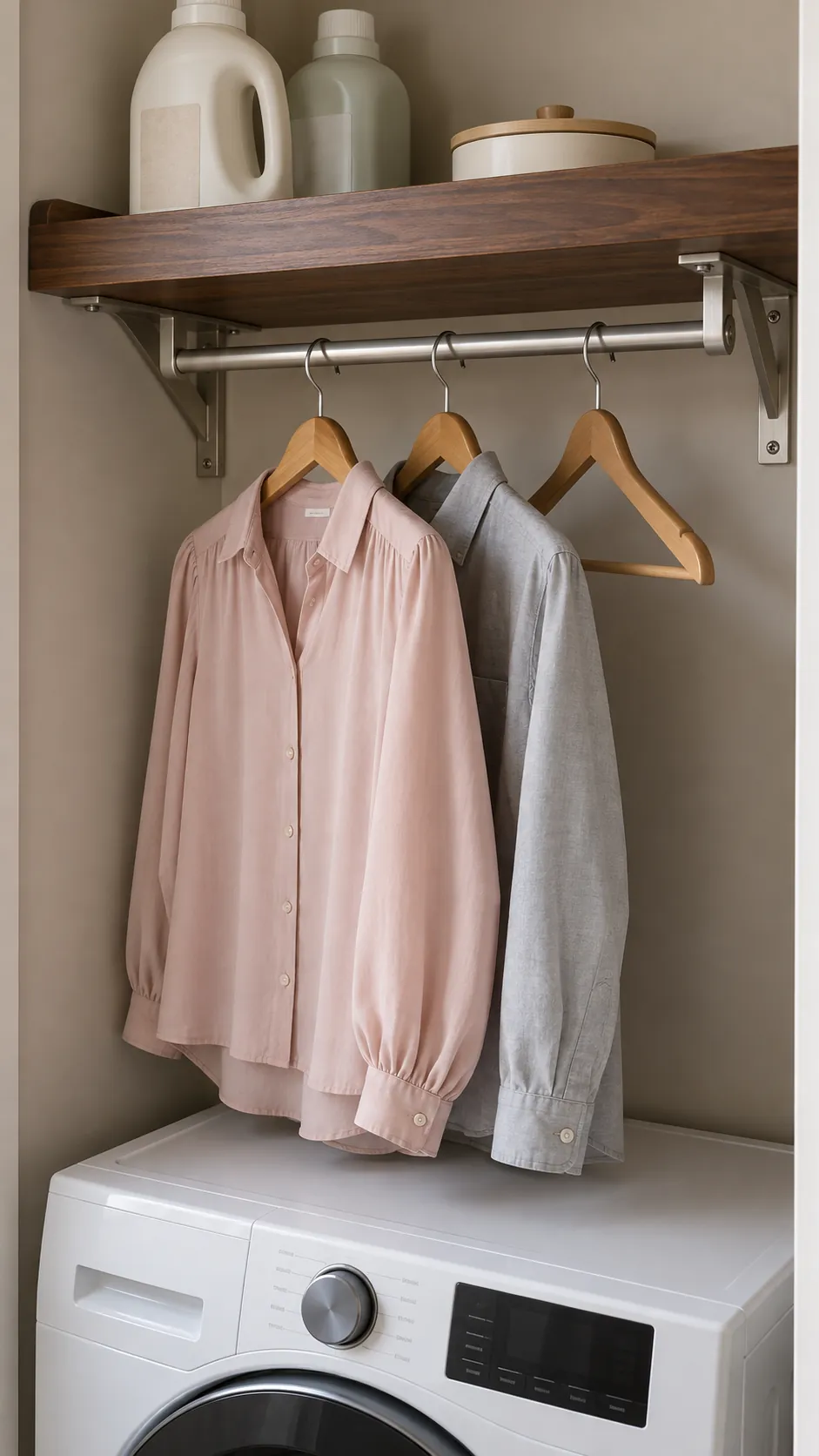
A hanger rail under a shelf
A short rail beneath a supply shelf creates compact clothes drying space for items that can hang without stretching. Allow enough distance from the shelf and wall for hanger hooks and shoulder width. Choose a shelf and rail assembly rated for the combined stored and hanging load. Keep detergent bottles behind a retaining edge so reaching for a shirt cannot knock them down.
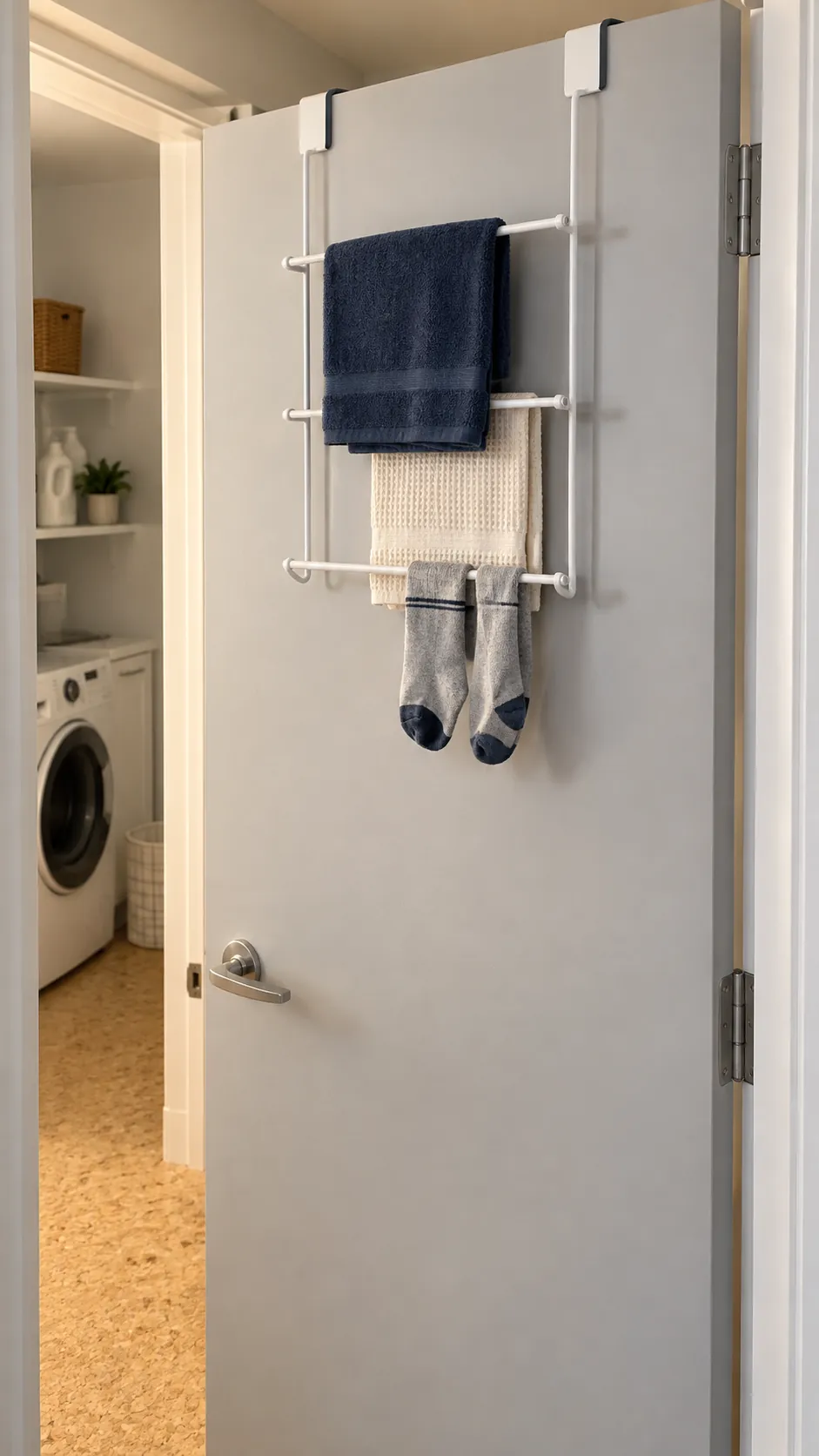
A rack on the back of the door
A purpose made overdoor drying rack can be useful when drilling is not allowed. Check the top gap, door thickness, hinge capacity, and full closing action before loading it. Small cloths are a better fit than garments that drag or get trapped against the frame. Use padded brackets and remove the rack if the door begins to bind or shift.
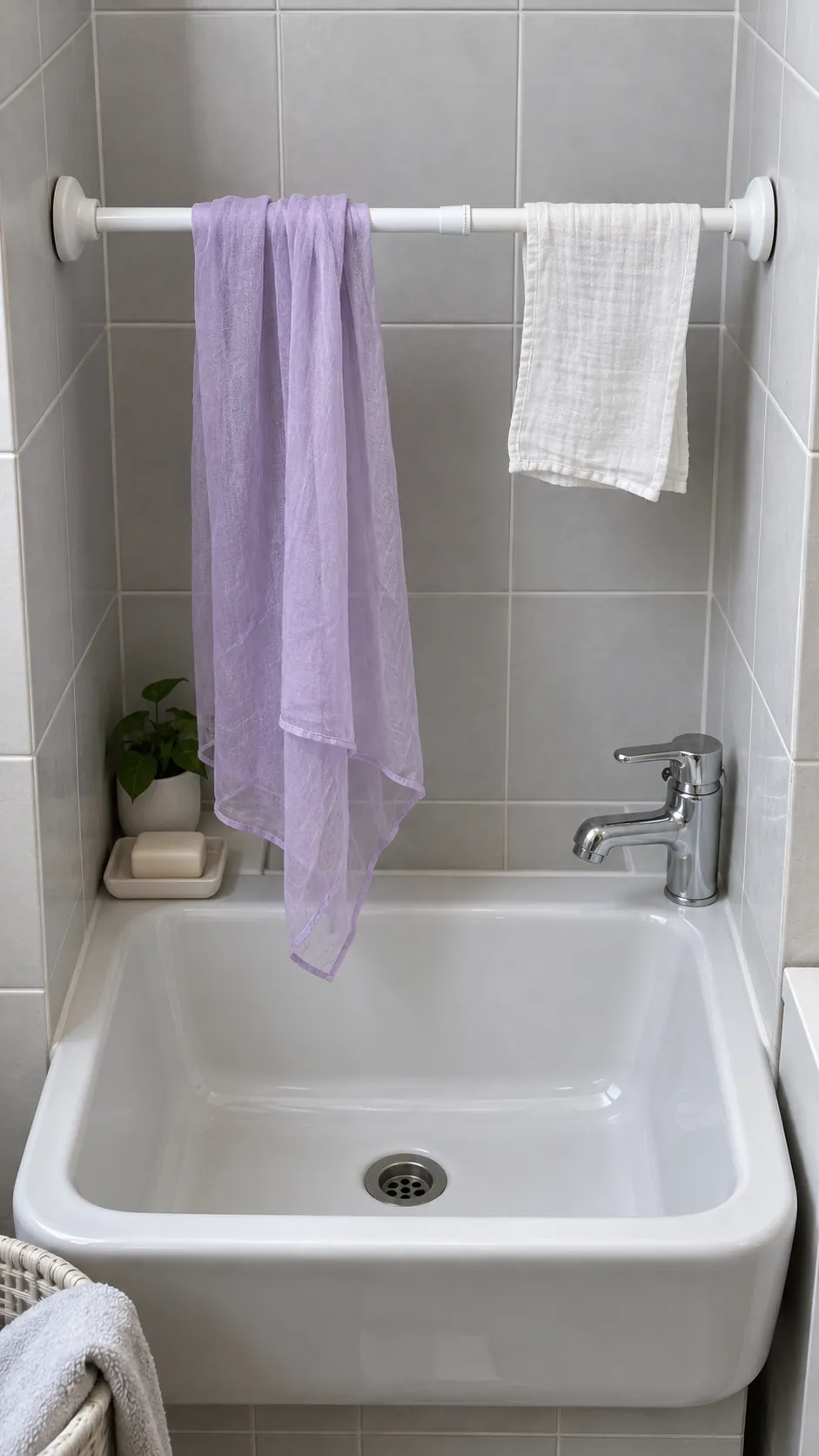
A short tension rod in a tiled recess
A manufacturer approved tension rod in a sound recess offers a removable station for a few lightweight items. The wall surfaces must be parallel, clean, and compatible with the end pads. Test its security with the planned load and keep the hanging clothes over a wet safe area. Do not treat a friction fit rod as a support for wet towels or a large wash.
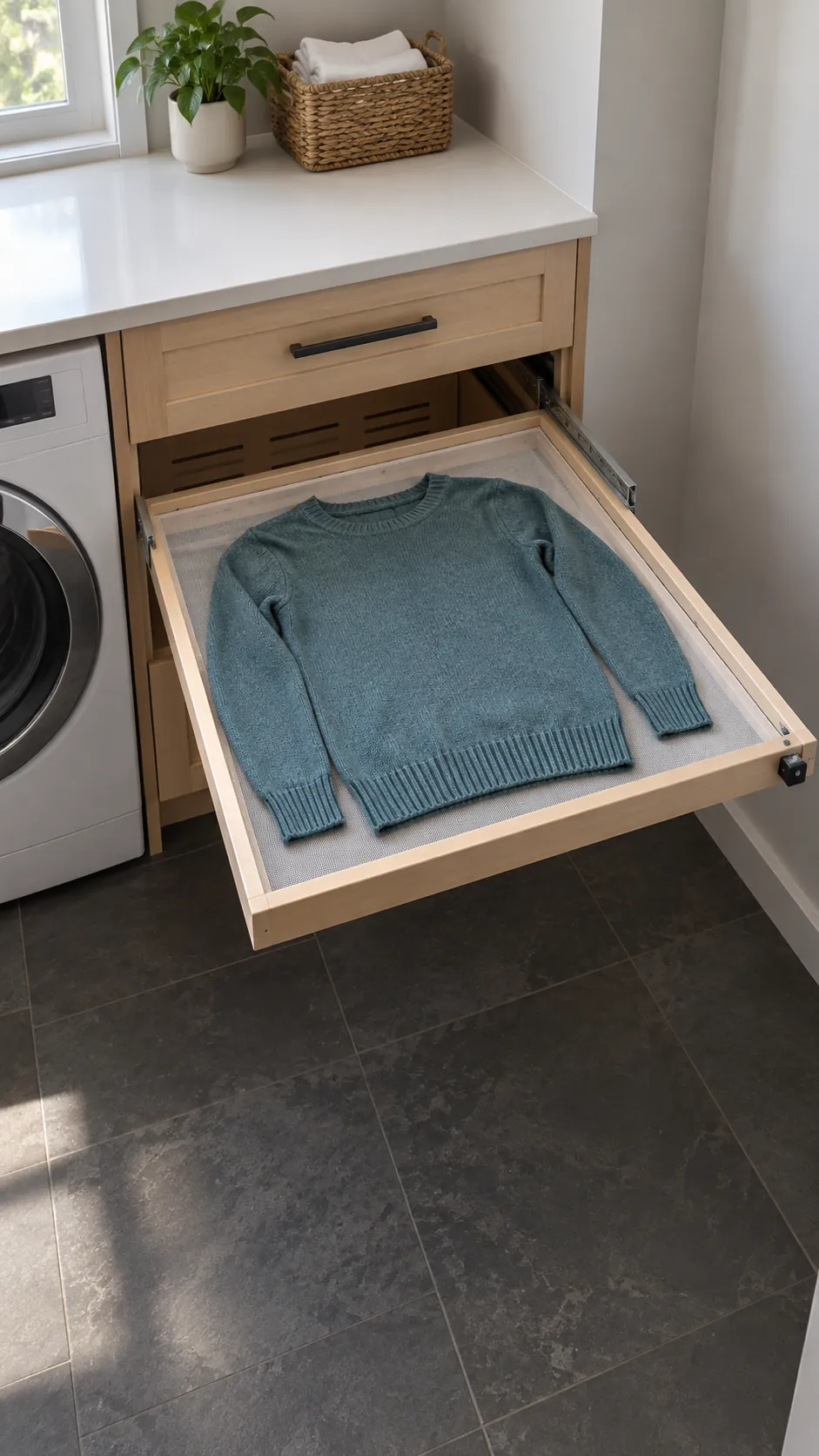
A drying drawer that stays open in use
A mesh drying drawer gives a sweater flat support without putting a standing rack in the aisle. Pull it fully into an open, ventilated position and lay the garment to its care label instructions. A closed cabinet traps moisture, so the drawer needs clearance during drying rather than merely storage space. Check that the extended drawer does not obstruct the room’s only route.
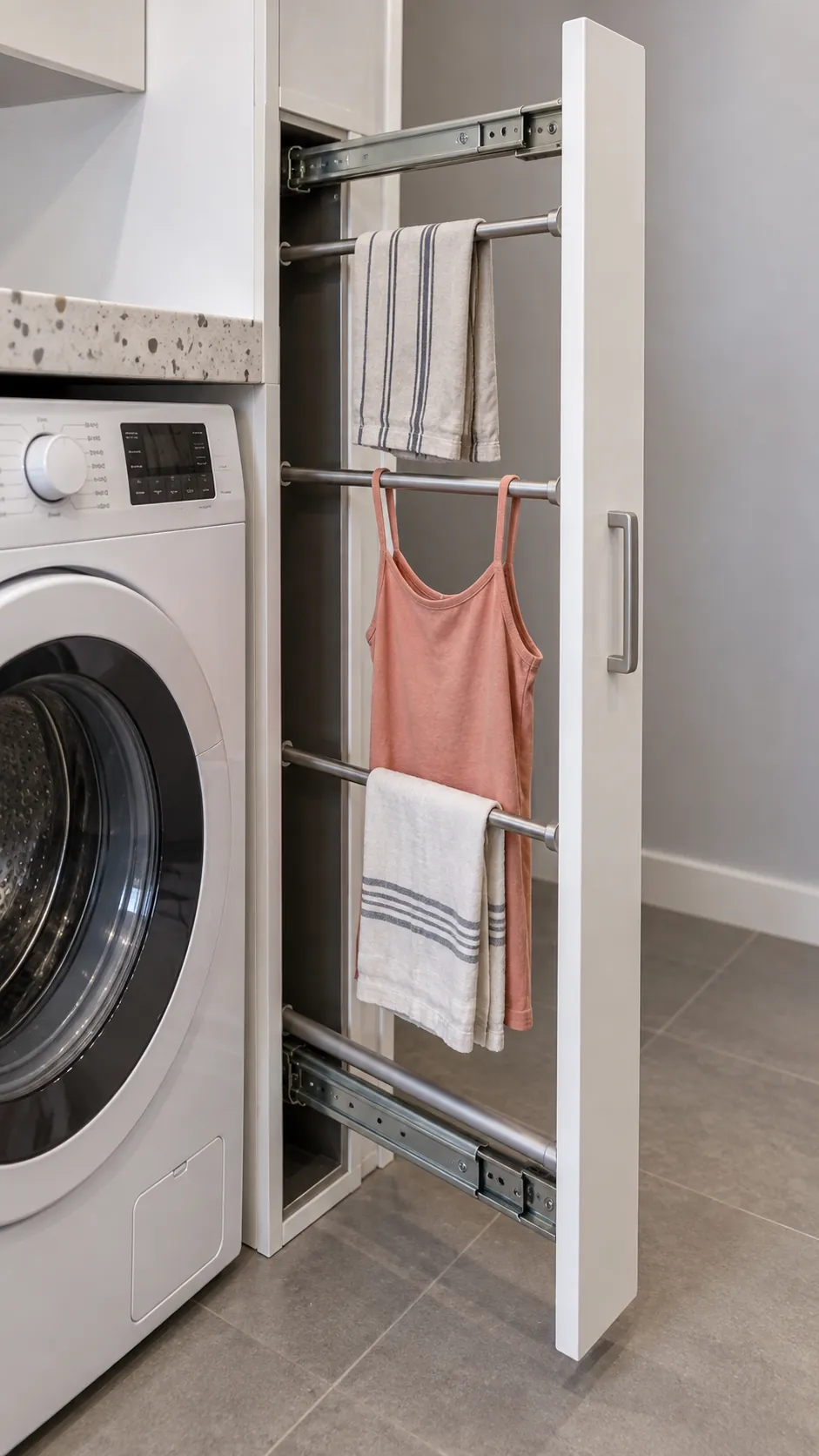
A slim pullout beside the washer
A vertical pullout rack can use a narrow cabinet bay beside a front loading washer. Measure the open rack together with the washer door so the two can operate without colliding. Leave the rack extended while clothing dries unless the cabinet has a drying system designed for closed use. Keep hoses, shutoff valves, and appliance service space accessible behind the installation.
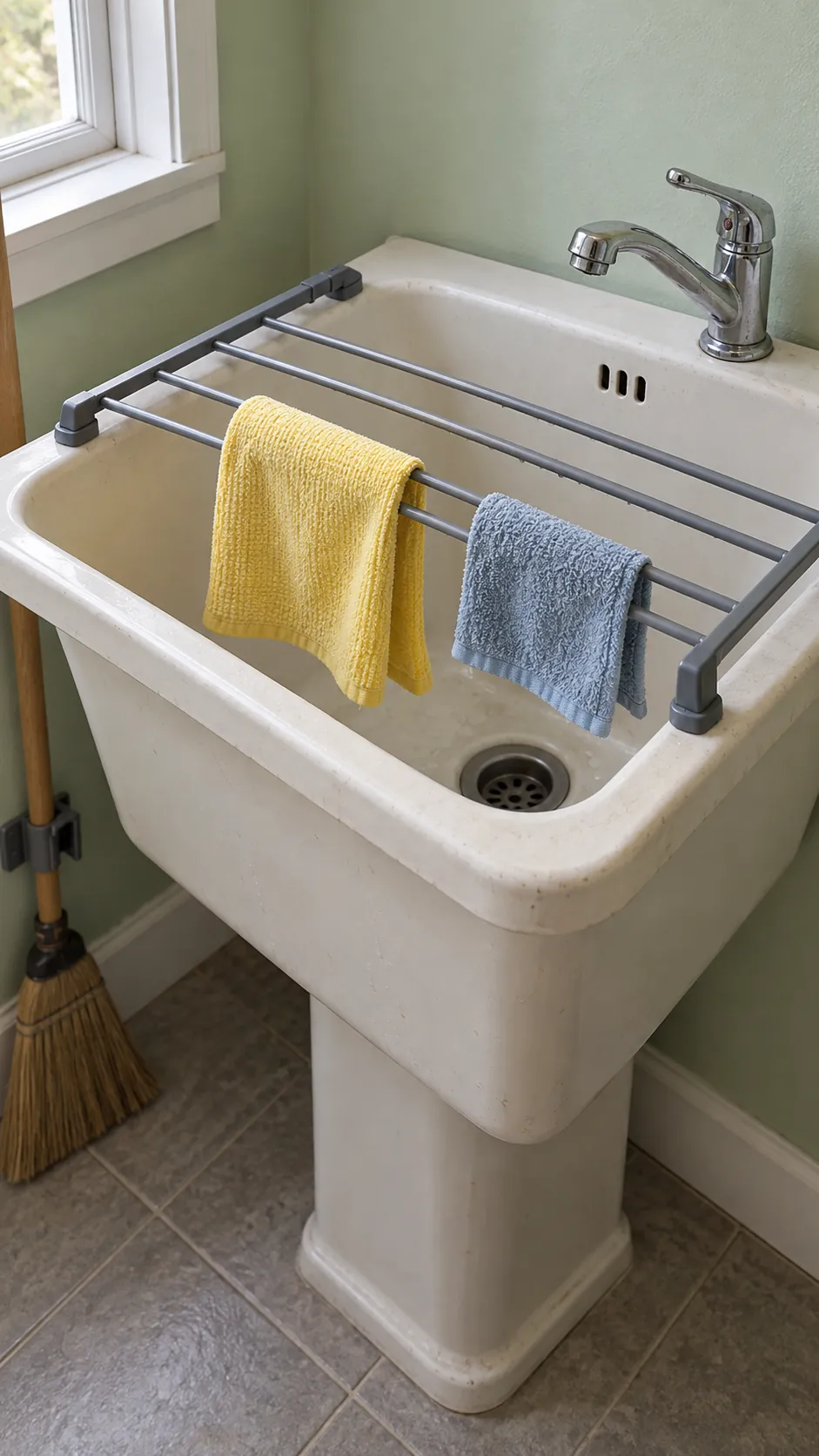
A shallow rack over the utility basin
A removable rack resting on a utility basin catches drips without using floor space. Match the rack to the basin so its supports sit securely rather than balancing on a sloped edge. This is useful for rinsed cloths and small hand washed pieces while the sink is otherwise free. Remove it before using hot water or chemicals below the clothing.
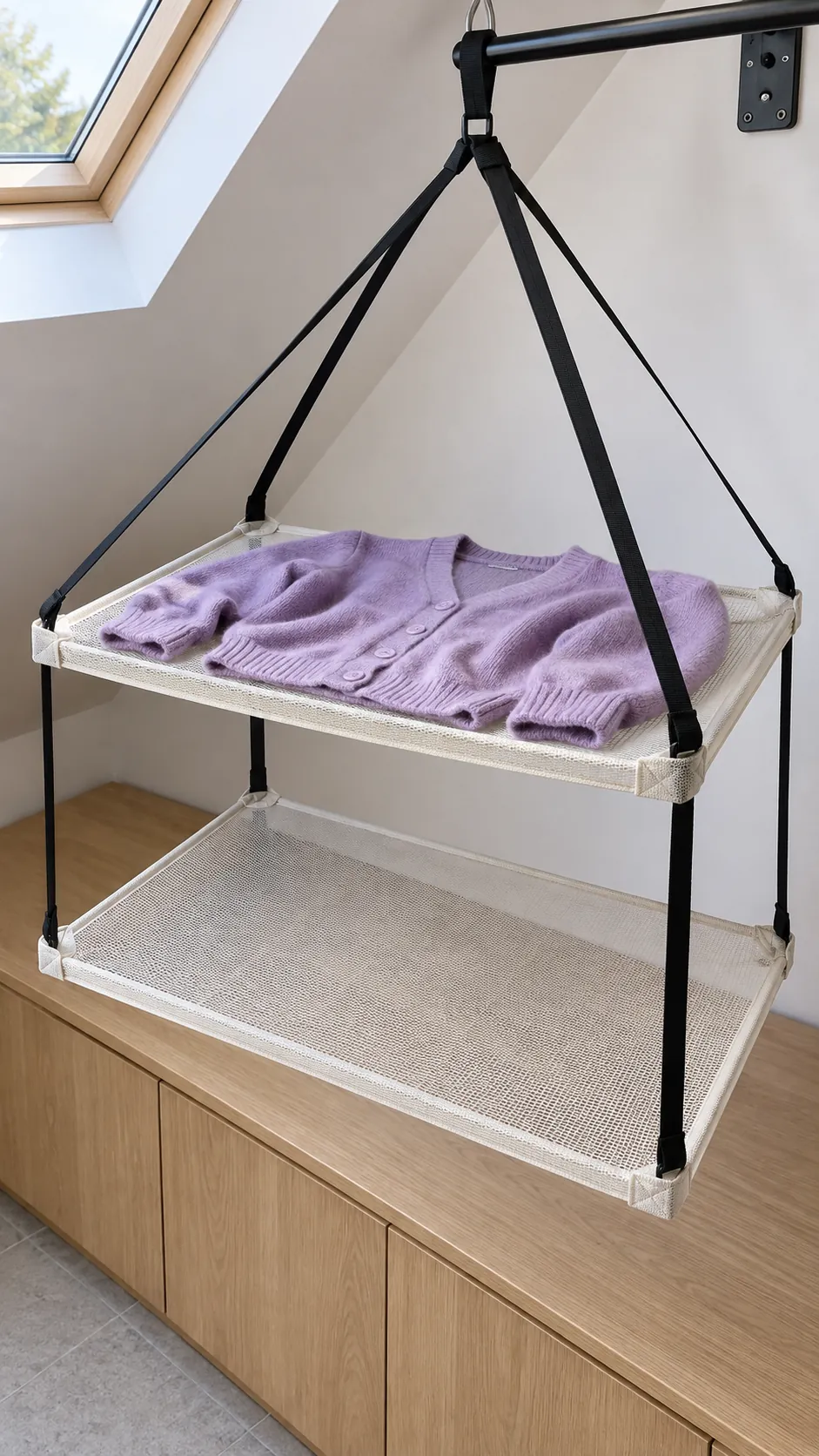
A suspended mesh shelf for knits
A hanging mesh shelf supports knitwear flat while borrowing vertical space from a secure rail. Check the shelf’s weight rating and keep the garment centered so the platform stays level. Space several tiers far enough apart for air to reach each surface. Reshape the knit according to its label and check beneath it for lingering damp patches before storing it.
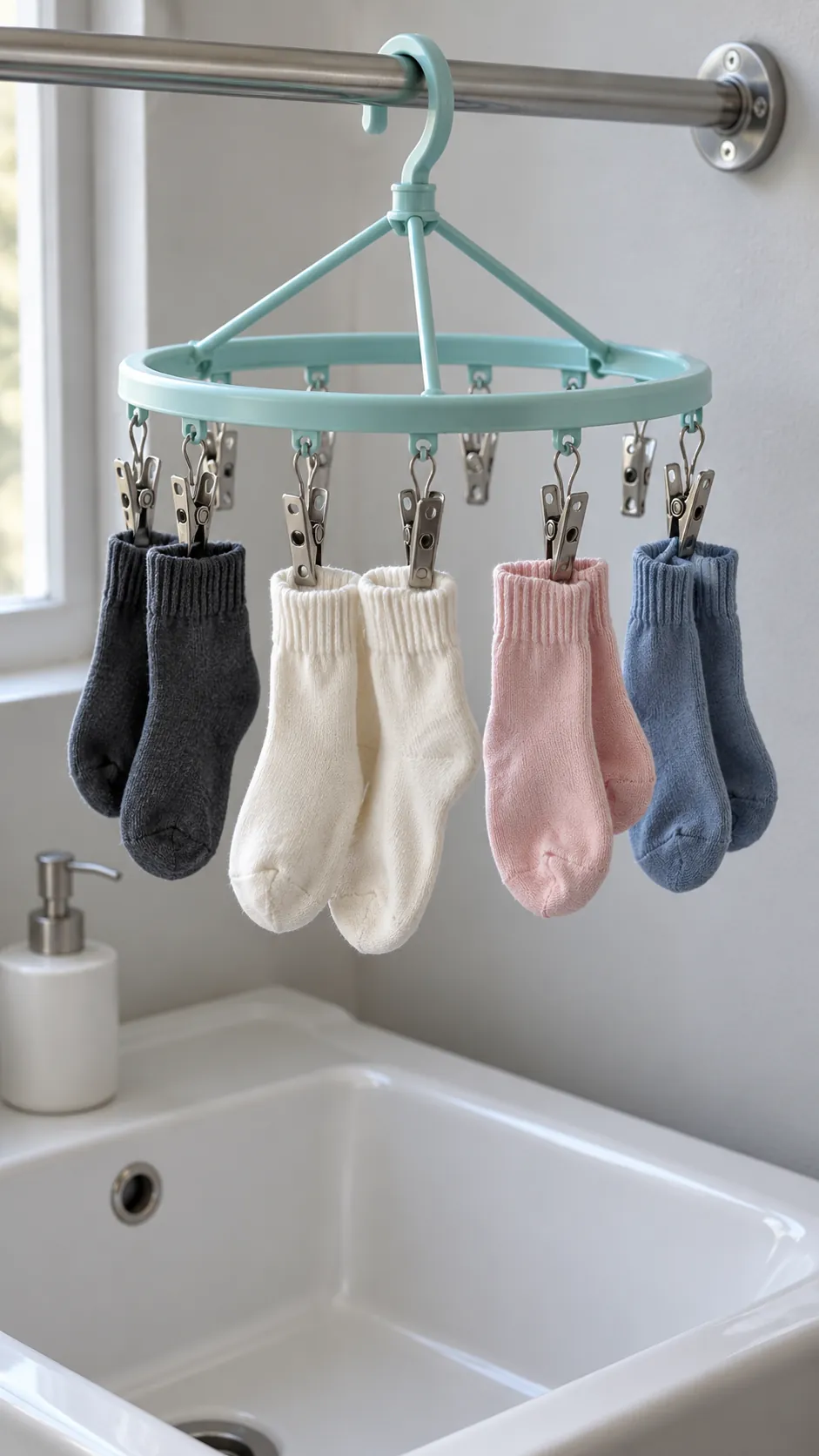
A clip hanger for socks
A compact clip hanger turns one secure hanging point into a station for socks and small cloths. Arrange items around the frame to balance the weight instead of loading one side first. Leave gaps so pairs do not lie against each other. Keep the hanger above a sink or protected counter during the initial drip period, and away from the path of an opening door.
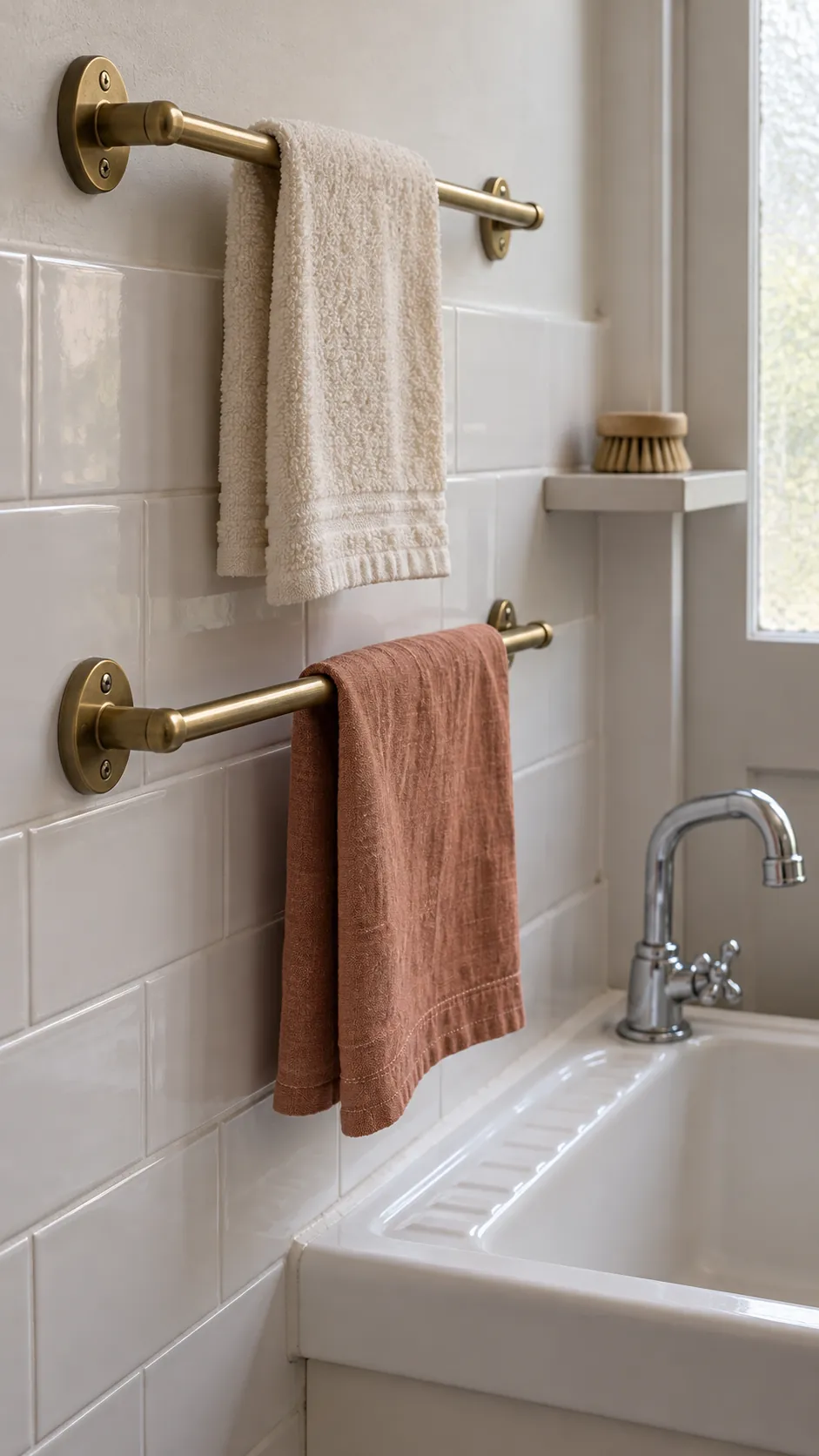
Two shallow rails above the backsplash
Two fixed drying rails above a sink backsplash can separate small towels without a deep projecting frame. Position the rails so a lower cloth does not touch the fabric on the upper one. Check the wall for concealed services before installing fixings suitable for that surface. Use this arrangement for a few pieces, since folding thick towels over narrow rails can slow drying at the fold.
A foldaway wing at the counter end
A small hinged wing attached to a properly supported counter end can provide a temporary drying zone. Keep its open position over the counter footprint or a dead end rather than the walking lane. Choose locking supports designed for the expected wet load and check that fingers cannot become trapped at the hinge. Wipe the surface dry before folding it away.
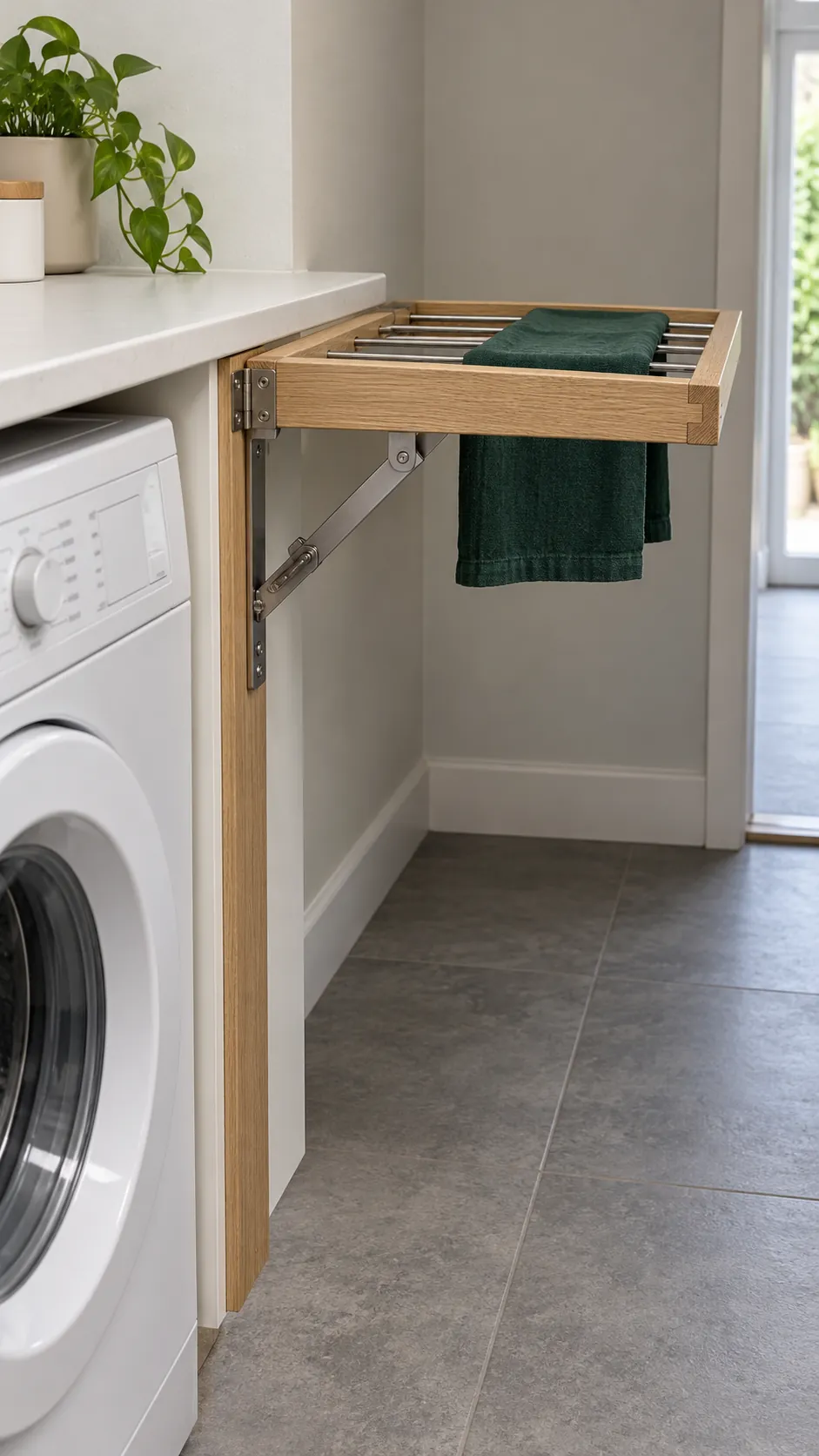
A rail across an open cabinet bay
An open cabinet bay with a hanger rod can handle shirts while keeping their outlines within the cabinetry. The bay must be tall enough that wet hems stay off the shelf below. Leave the front open and space garments apart; an ordinary closed cupboard is not a drying cabinet. Store clean towels elsewhere until the hanging clothes are fully dry.
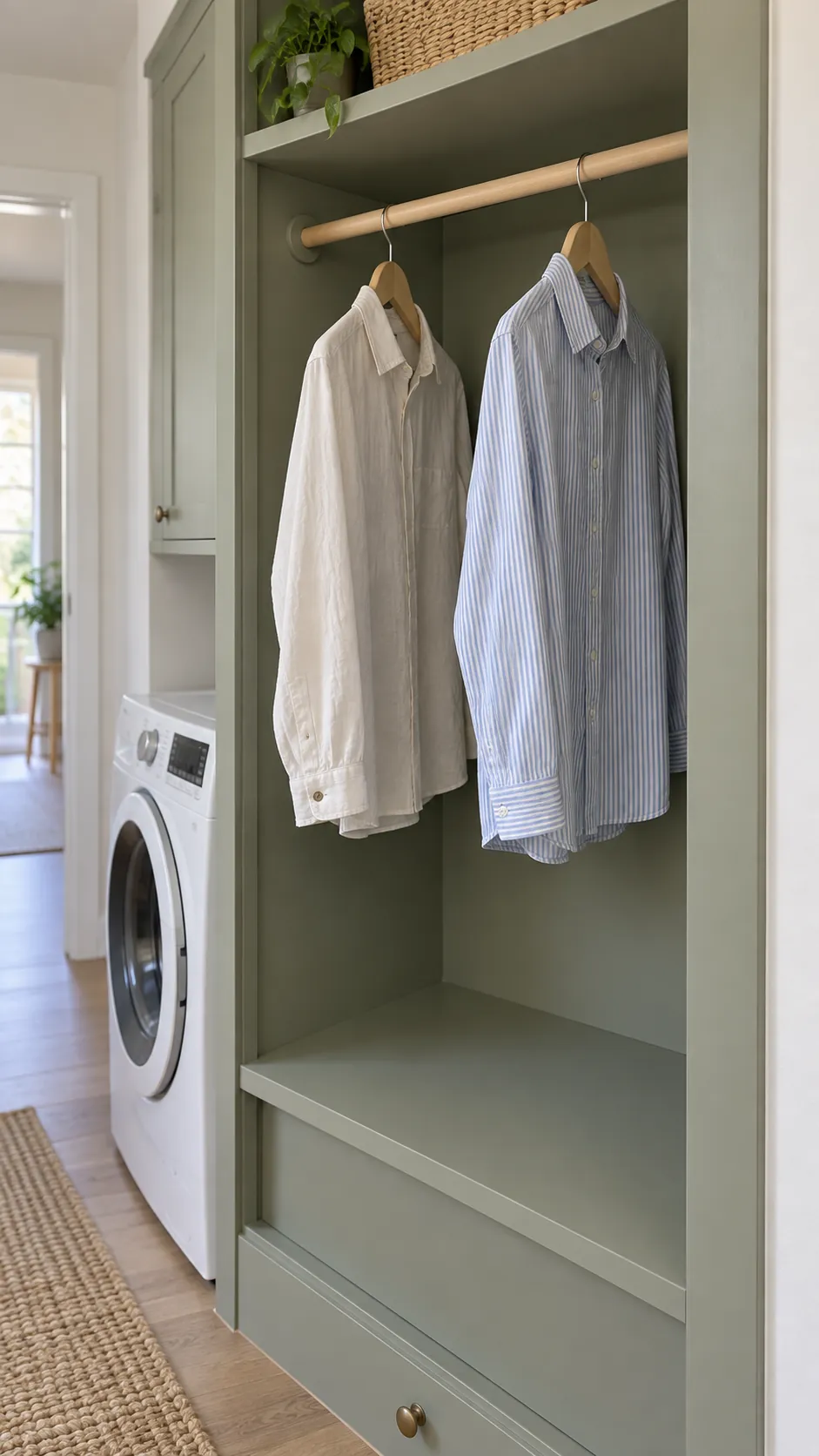
A removable bar over the bath
If the laundry opens into a bathroom, a removable bath drying bar can move the drip zone out of the utility aisle. Choose a bar designed for that use and place it clear of the shower controls. Remove clothing before bathing so the room can ventilate and the tub remains accessible. Do not improvise a support from a shower curtain rail unless it is rated for laundry.
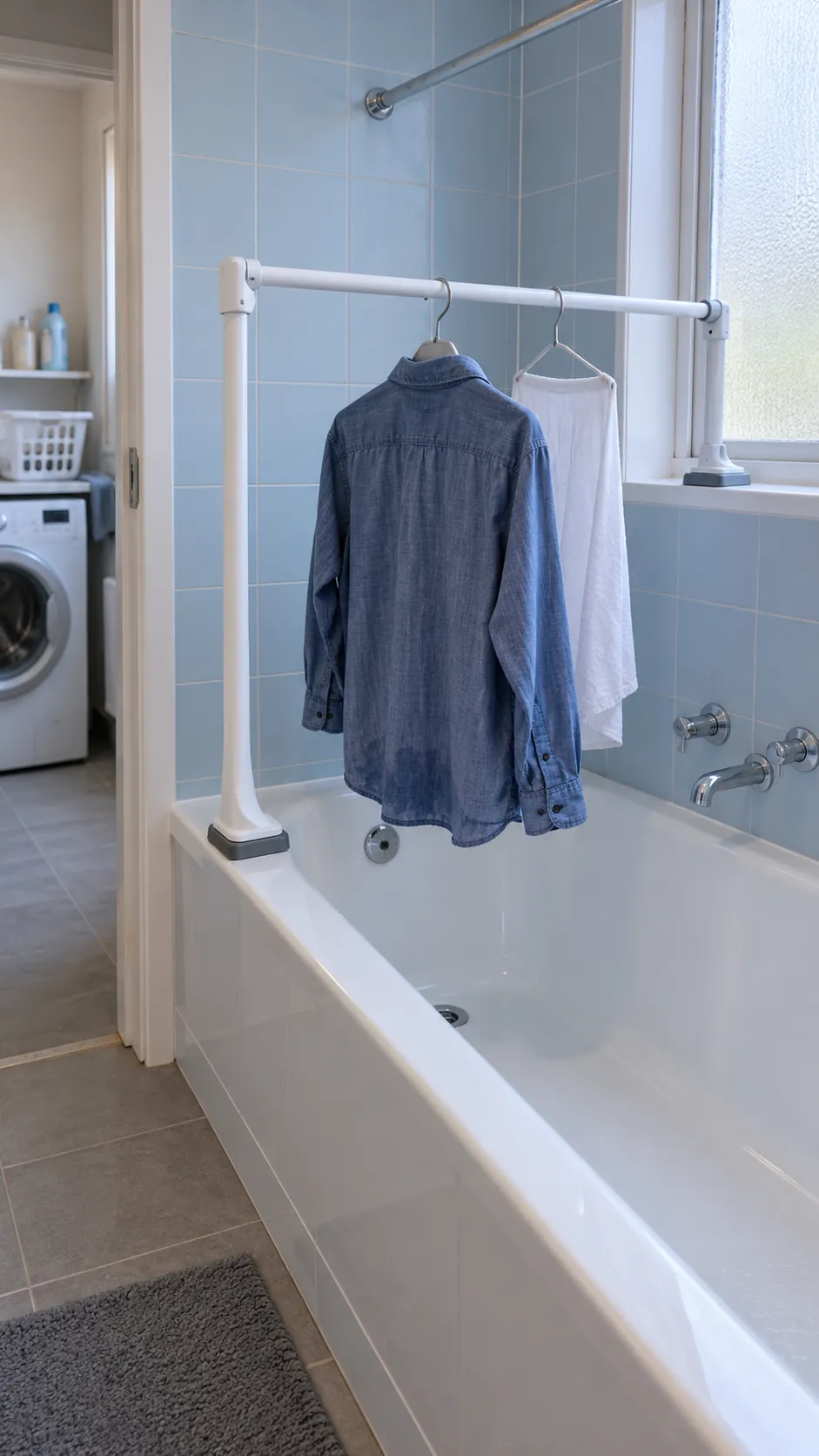
A ceiling rack along a side wall
A slim ceiling rack parallel to the side wall can hold longer pieces without spanning the center of the room. Verify the ceiling fixing positions and the hanging depth before choosing the rack length. Keep clothing clear of lights, ventilation grilles, and any heat source. Load it from a reachable lowered position and use its lock so it cannot descend unexpectedly.
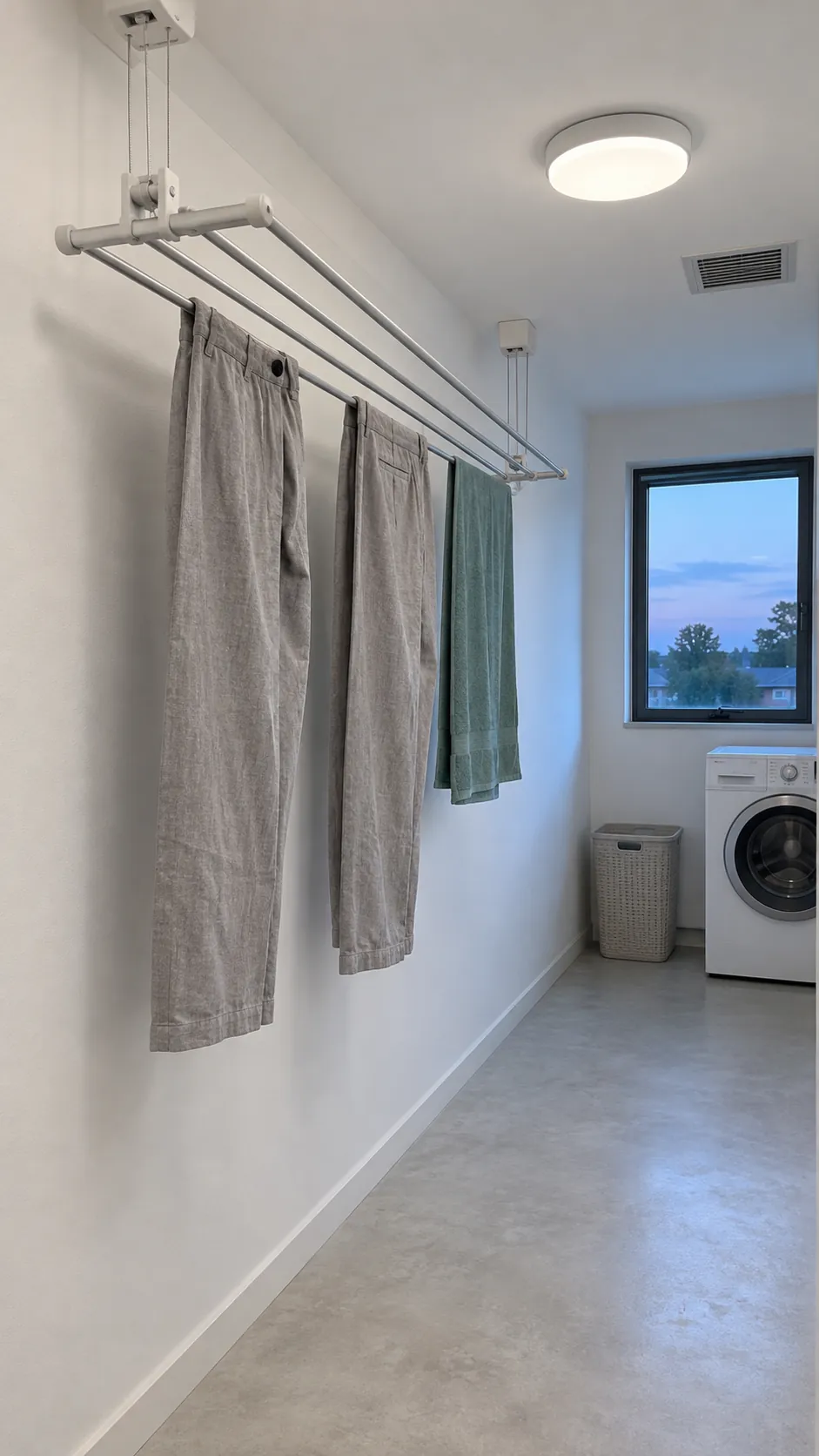
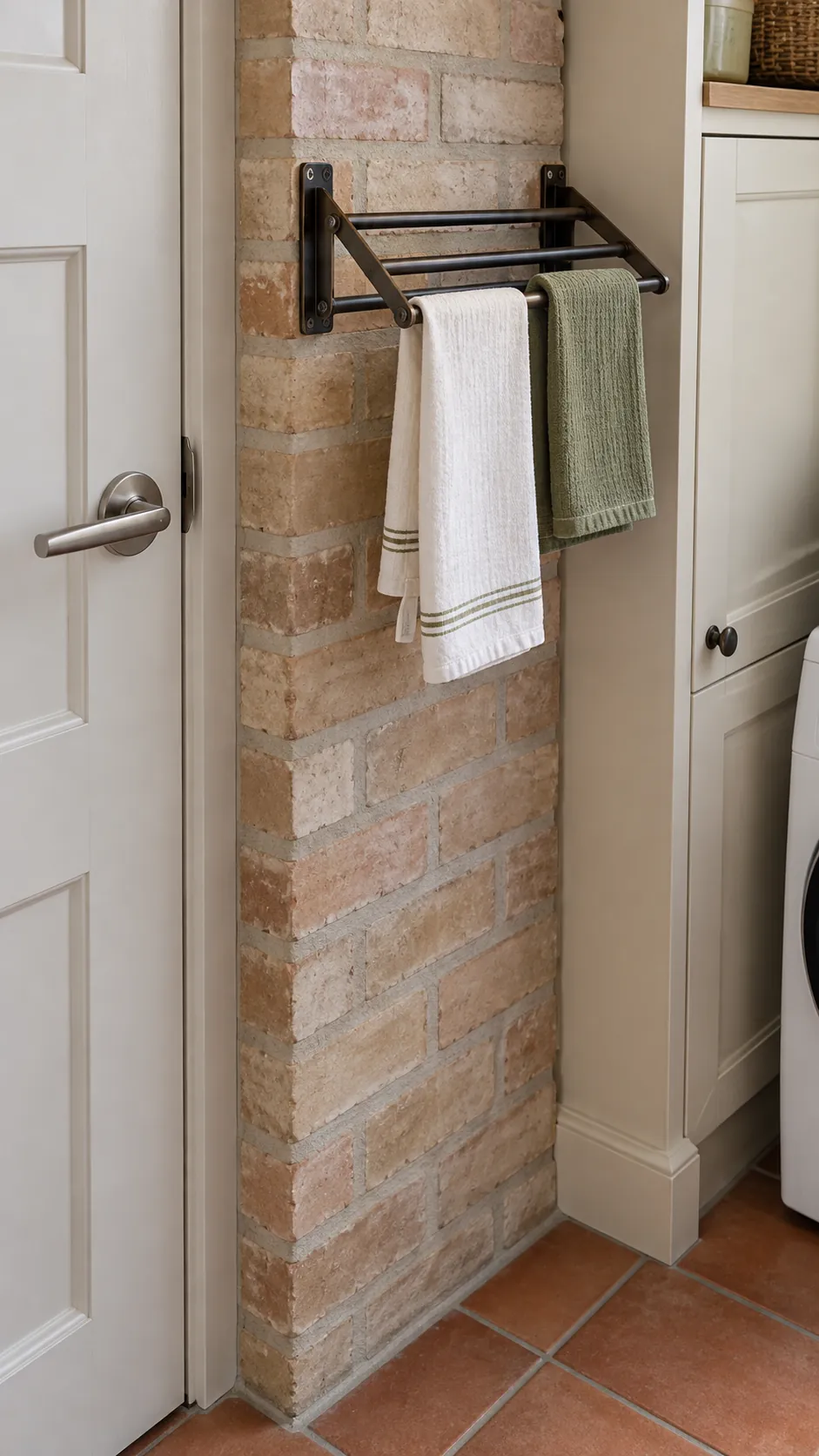
A fold flat rack on a masonry pier
A narrow masonry pier between a doorway and a cabinet can accept a small fold flat rack when the material and fixings are suitable. Check that the opened rack misses both the door handle and cabinet fronts. Reserve it for the few pieces that otherwise end up draped over handles. If the pier is hollow or contains services, get the fixing method checked before installation.
A detachable rack above a folding counter
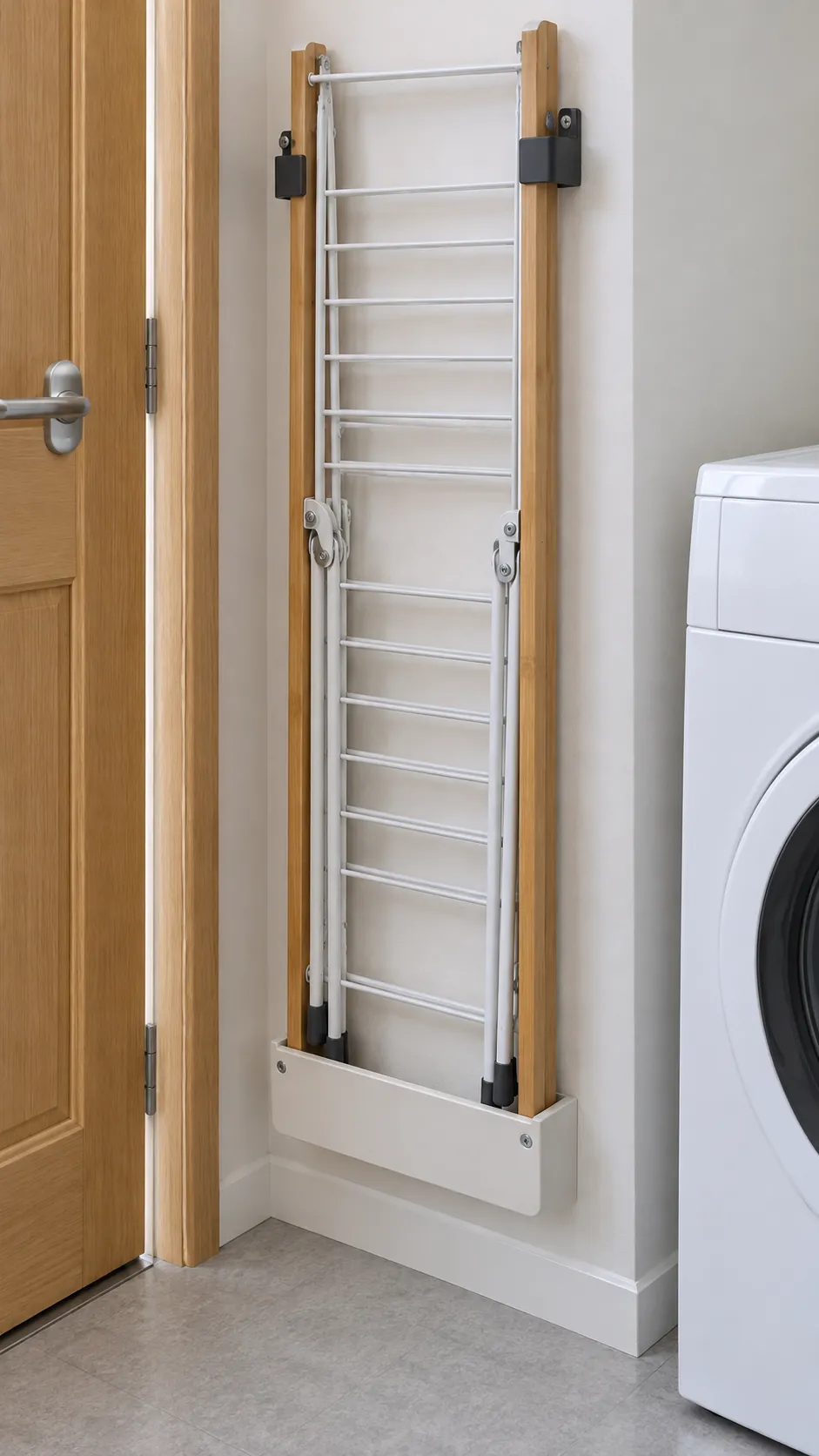
A detachable drying rack can clip into purpose made wall brackets above a folding counter. Removing the frame restores working room when you need to sort dry laundry. Check the locking mechanism each time you fit it and keep within the rated load. Store the dry frame vertically in a designated wall slot so it does not become another object leaning in the aisle.
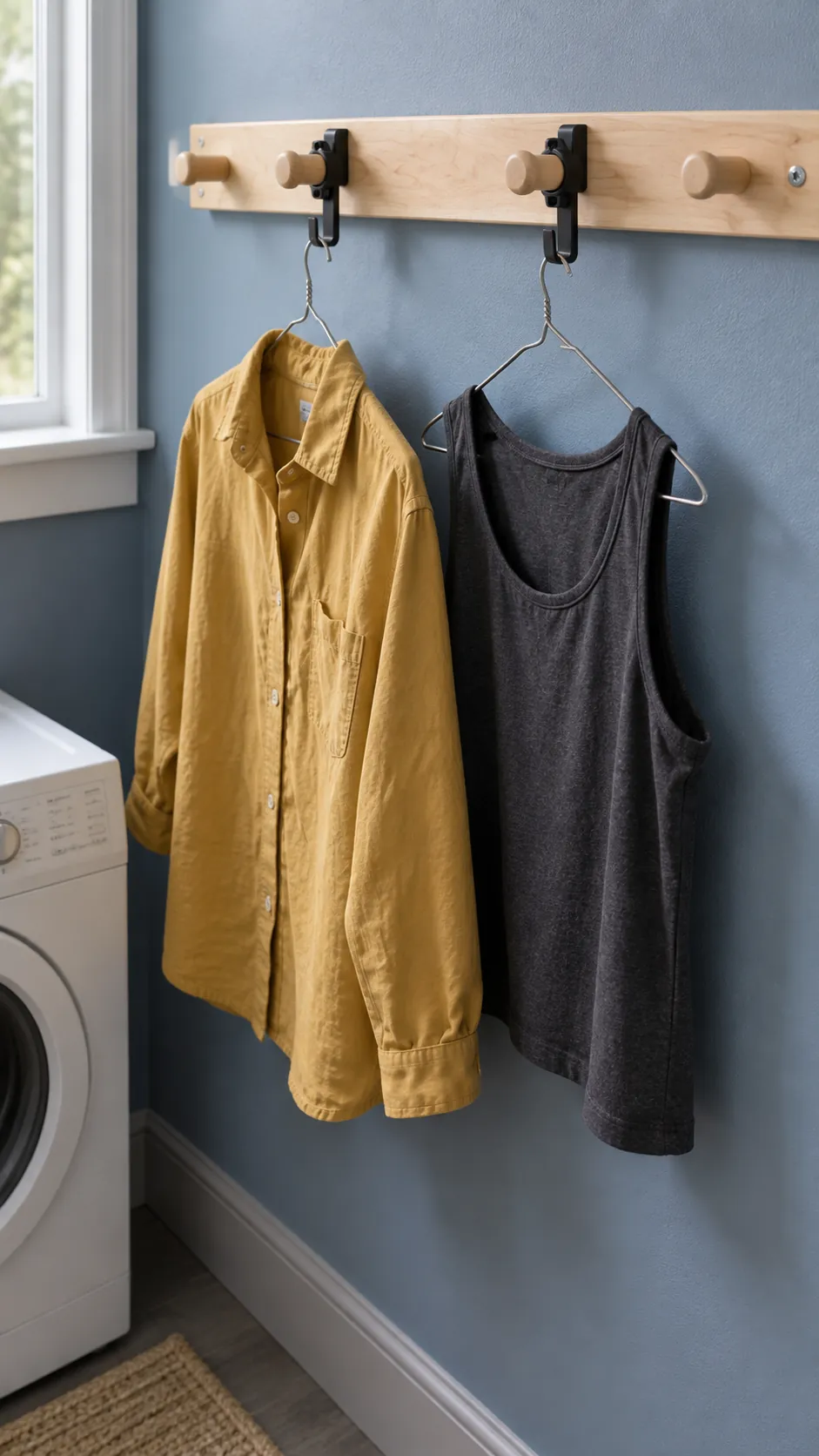
A peg rail with removable drying hooks
A peg rail fitted with hooks intended for garment hangers creates flexible indoor drying storage for a few pieces. Space the hooks for shoulder width and use compatible hardware that cannot slide off the pegs. The rail needs appropriate wall support, even if its hooks look small. Leave the neighboring pegs empty while clothes dry so bags and brushes do not press against wet fabric.
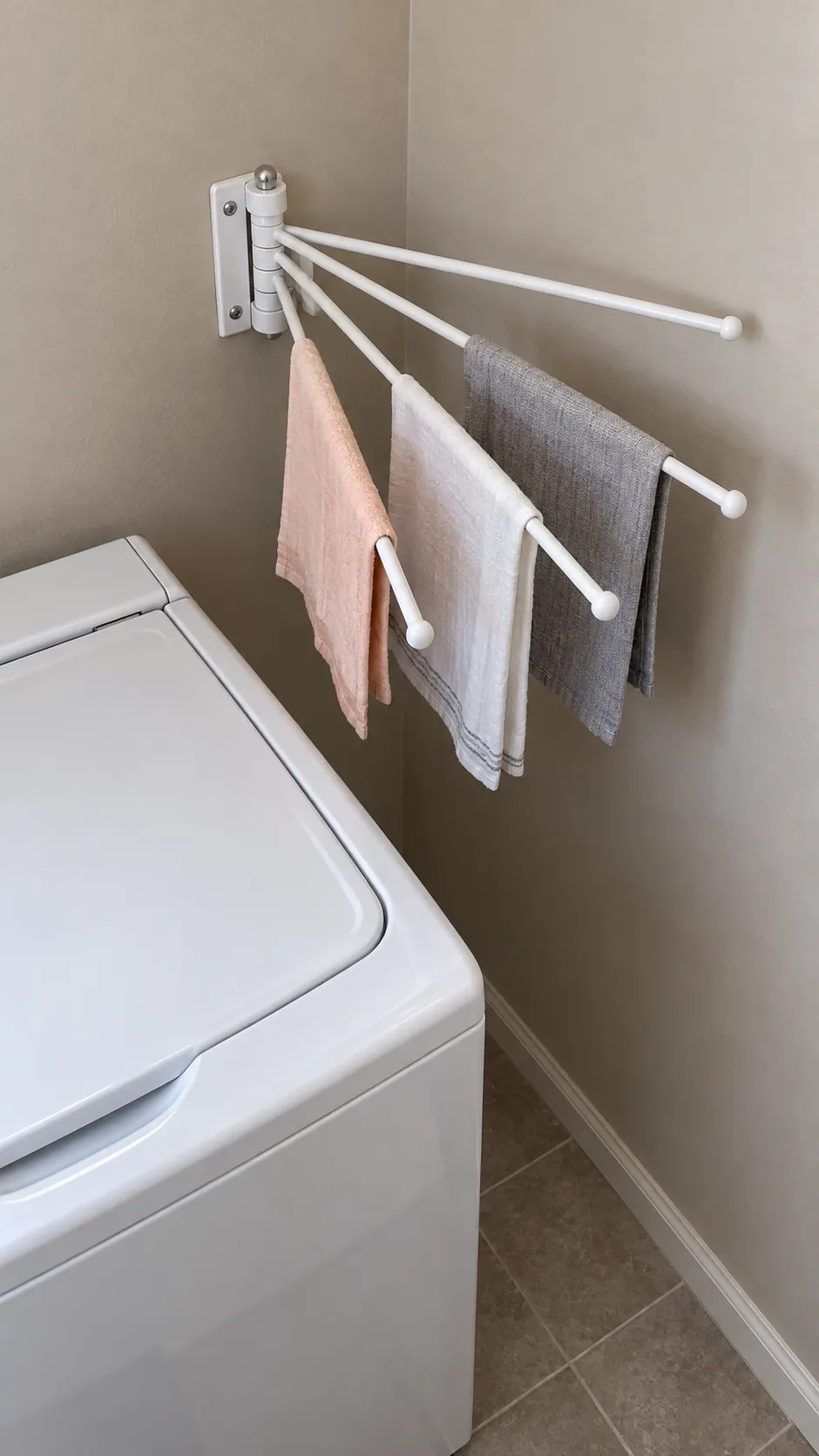
A corner mounted fan rack
A folding fan rack can open into an unused corner rather than straight across the room. Check every arm in its fully open position against cabinets, walls, and the washer lid. Distribute lightweight pieces across the arms with visible air gaps. This solves an awkward corner, but it does not make a congested circulation route safe if the garments still hang into it.
A rack beneath a high wall cabinet
A short folding rack beneath a high cabinet uses the gap above a sink without taking a whole wall. Mount it into a rated support rather than screwing into a thin cabinet bottom. Confirm that the rack leaves room to reach the tap and open the cabinet. Use small items here so hanging fabric does not trail into the basin or cover stored supplies.
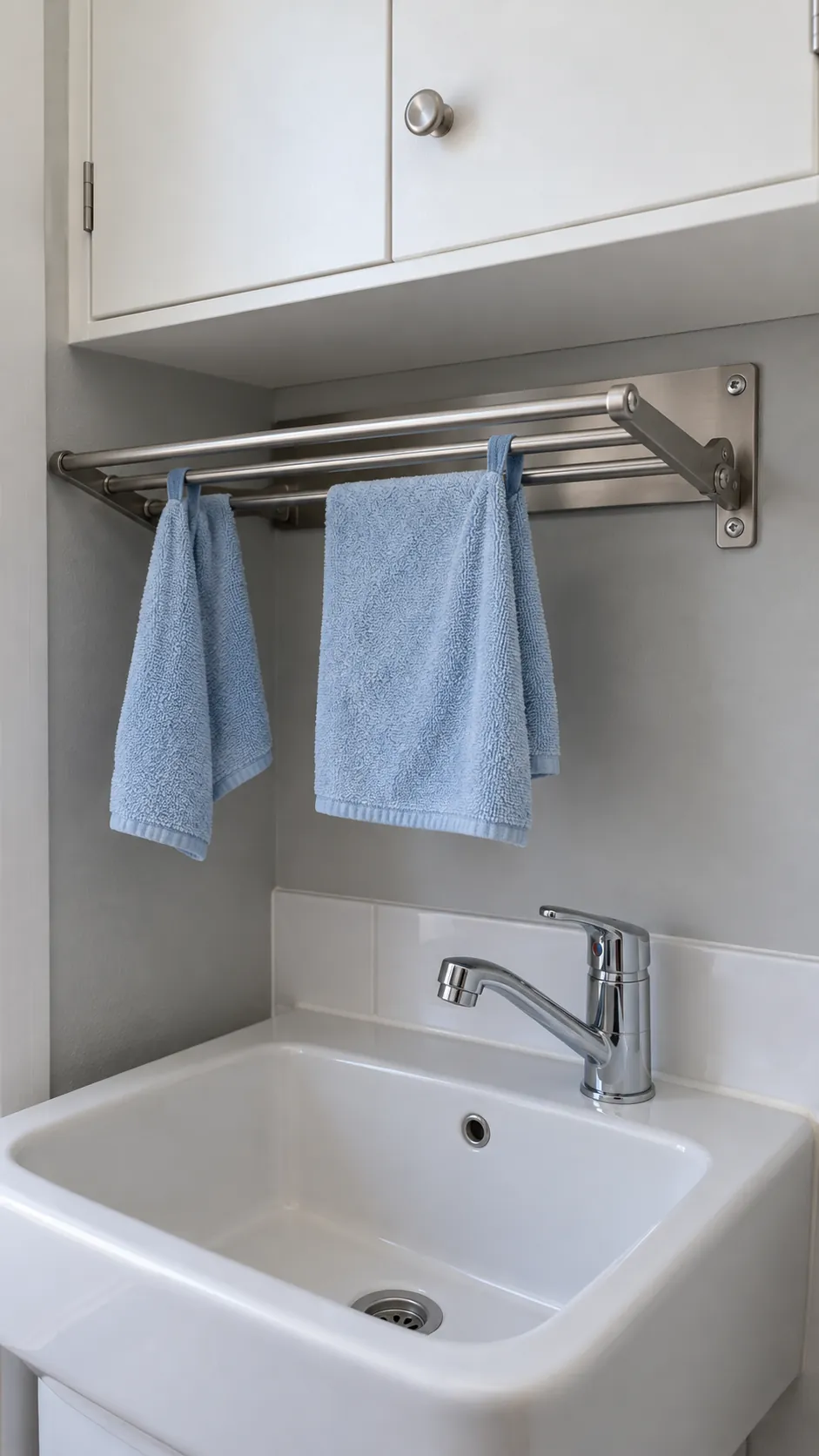
A removable rack inside a deep window recess
A deep window recess can hold a small removable drying rack if it leaves the window operable and does not block a required escape route. Keep fabric away from cold glass, where condensation can keep it damp. Choose supports that do not damage the frame or interfere with seals. Move the rack if opening the window makes it unstable, and ventilate without relying on sunlight alone.
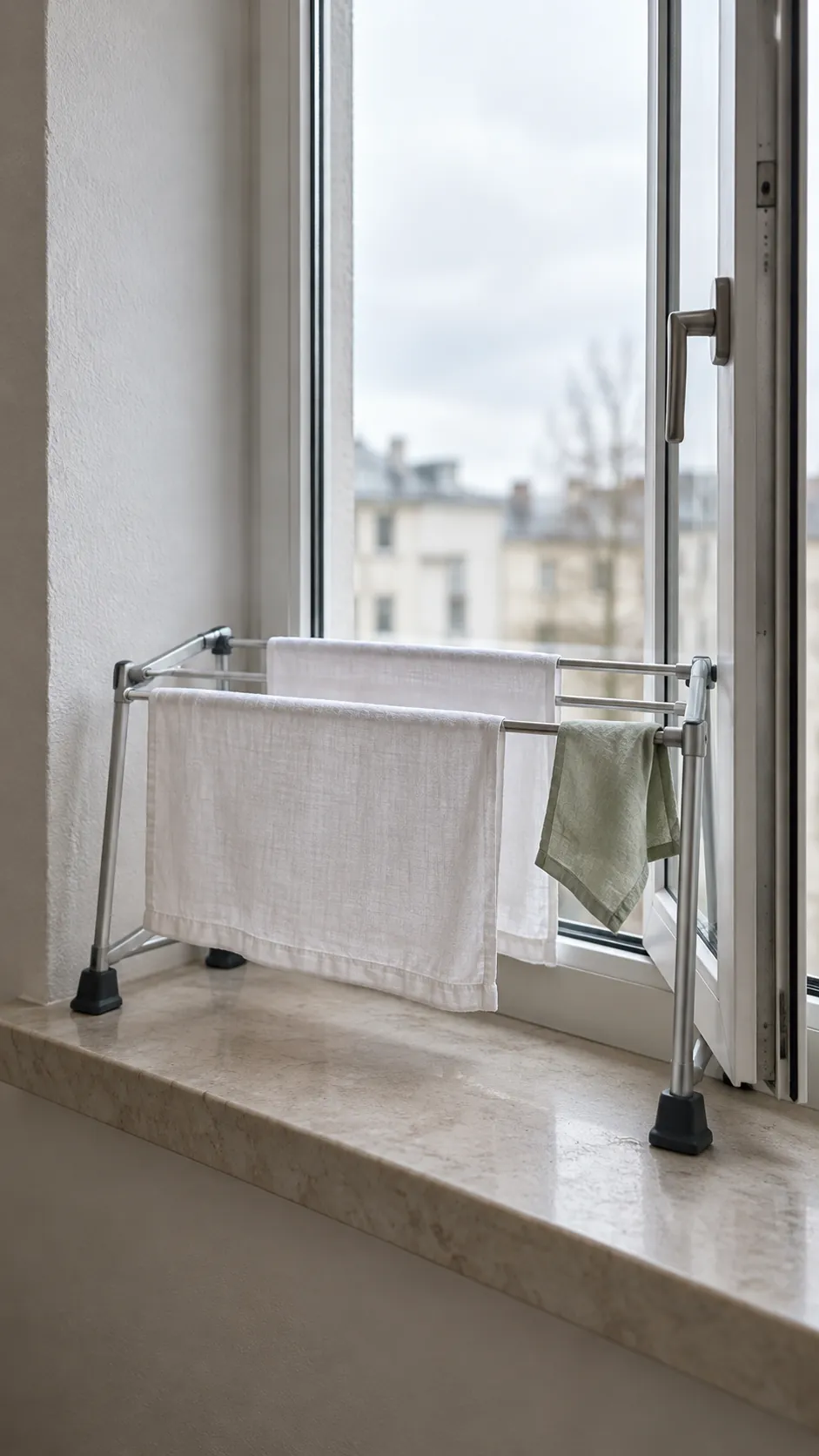
A drying shelf above a utility cart parking bay
The wall above a cart’s normal parking bay can hold a shallow drying shelf while the cart stays underneath. Separate the wet clothing from bottles, electrical tools, and anything that could be damaged by drips. Set the shelf height so you can place and retrieve garments without climbing. The cart should still roll out for access, with no hanging cords or fabric catching its handle.
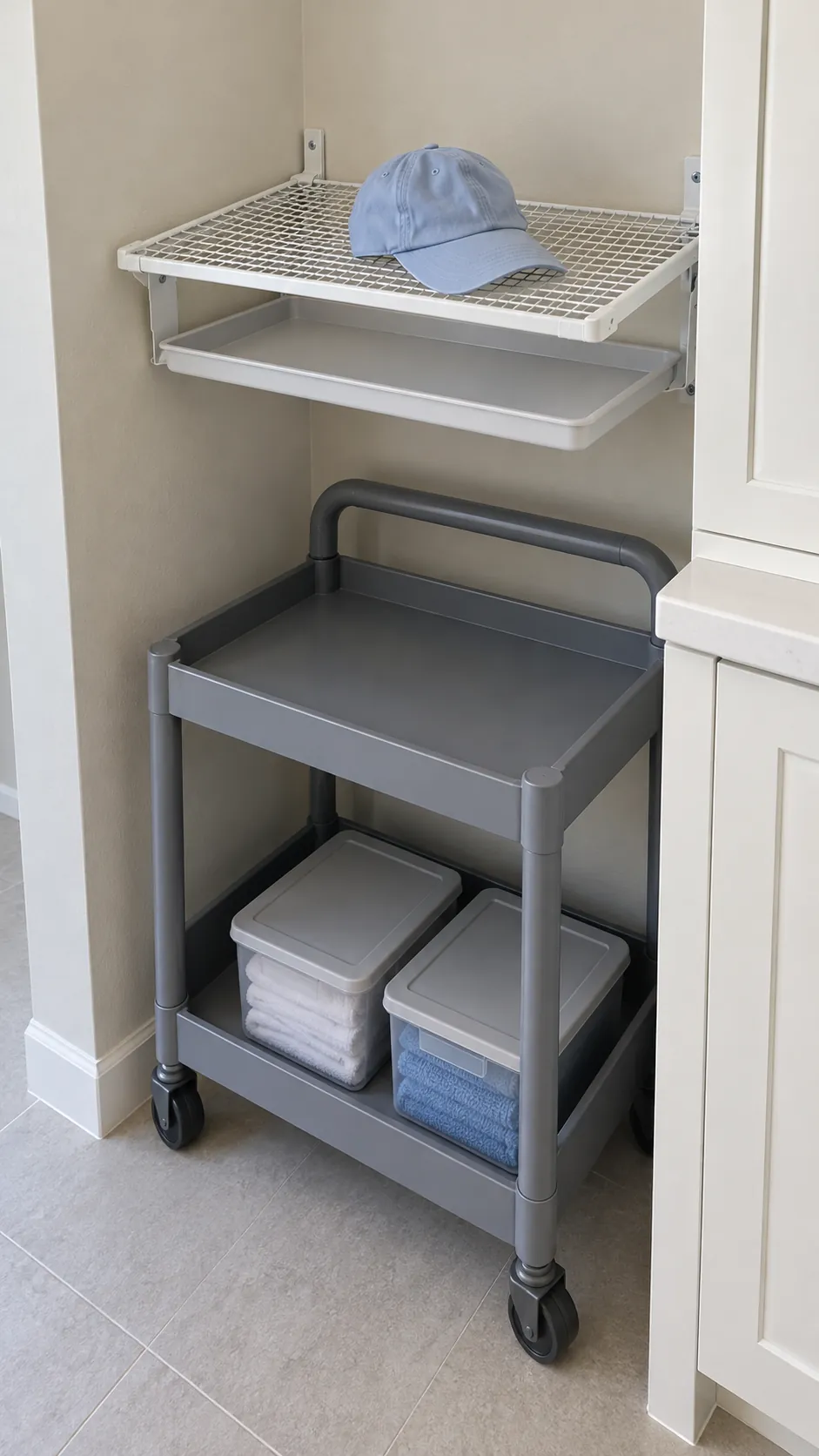
A removable frame over a front loader counter
A small removable frame over the counter above front loading appliances can be practical for a delicate item. Keep the frame on a stable, level counter that is independently supported rather than balanced on vibrating machine tops. Drying fabric should not cover controls, vents, outlets, or appliance service points. Lift the frame into a wall storage bracket when the counter is needed for folding.
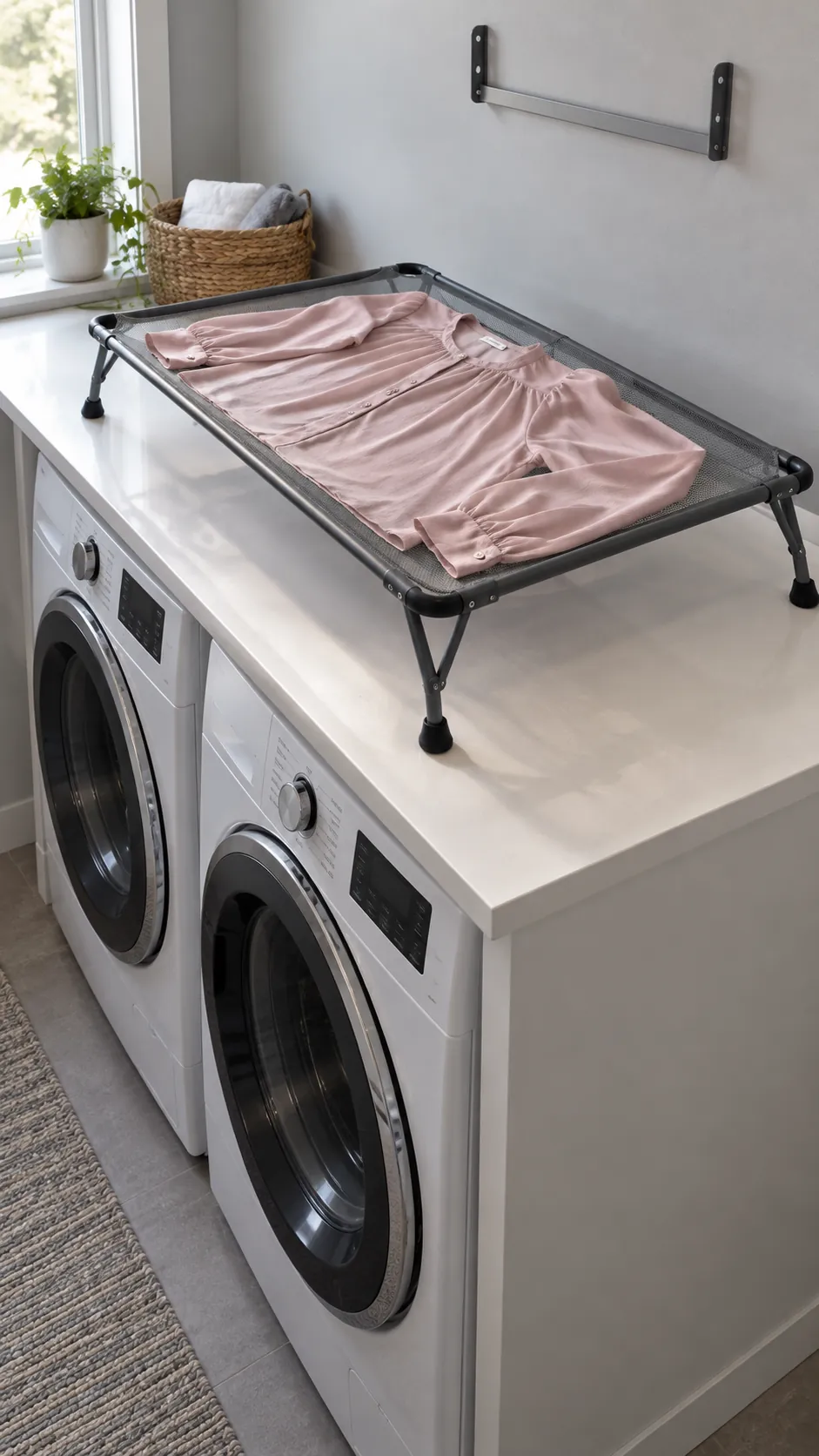
A rack with an empty storage position
A folding rack becomes easier to live with when its closed position is planned as carefully as its open one. Reserve a shallow wall pocket or secure retaining clips close to the drying zone. Measure the stored frame with its hinges and feet included so it cannot fall into the aisle. Put it away dry, since folding a damp rack against a wall can leave moisture behind.
A small rack paired with a moisture plan
A compact rack only works if moisture can leave the room as well as the clothes. Place a modest wall rack where air can pass around garments and keep the room’s intended ventilation open. If humidity or condensation persists, reduce each drying batch and consider a suitable dehumidifier following its clearance and drainage instructions. Choose the smallest arrangement that handles your routine load without turning the doorway into storage.