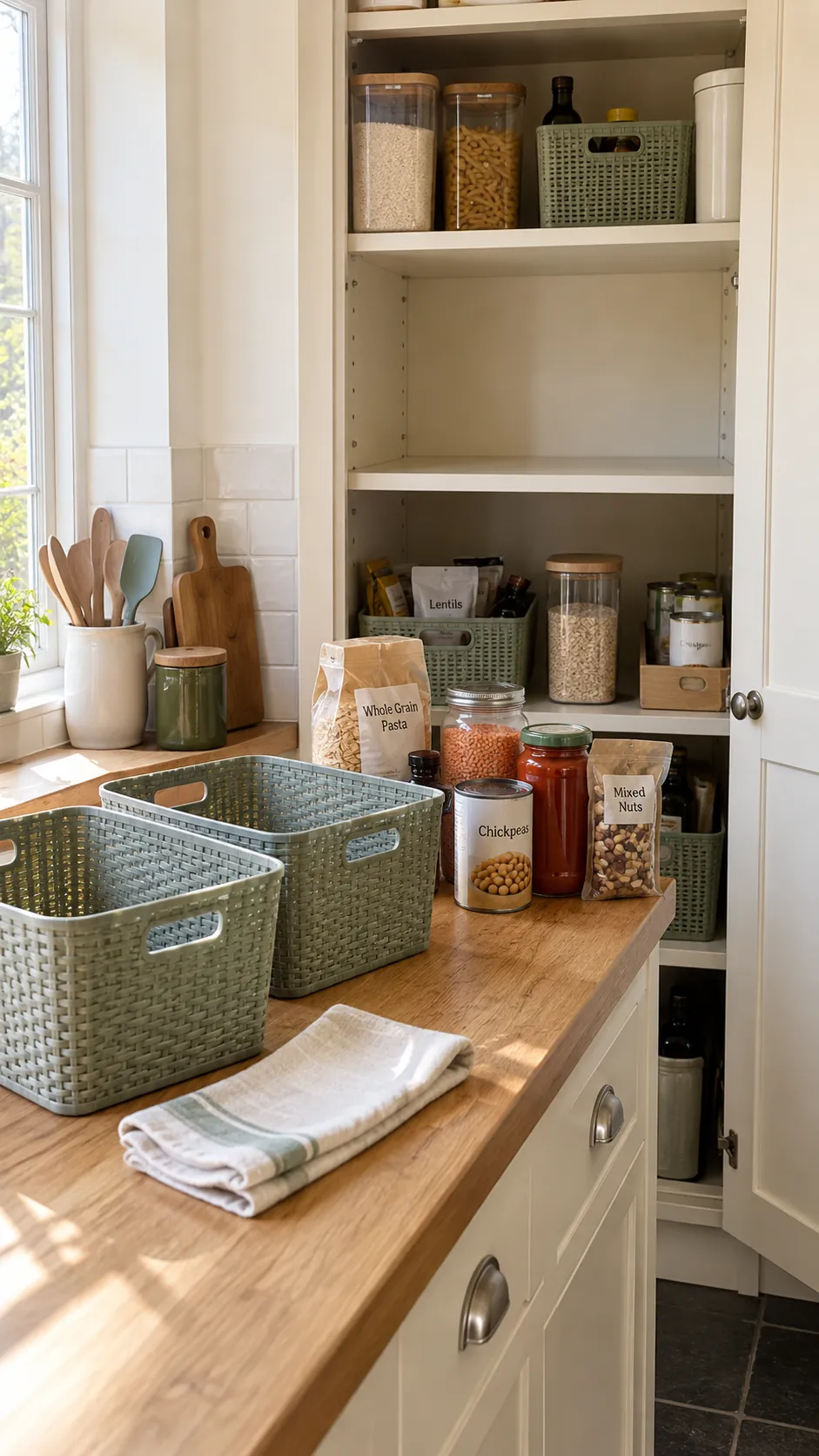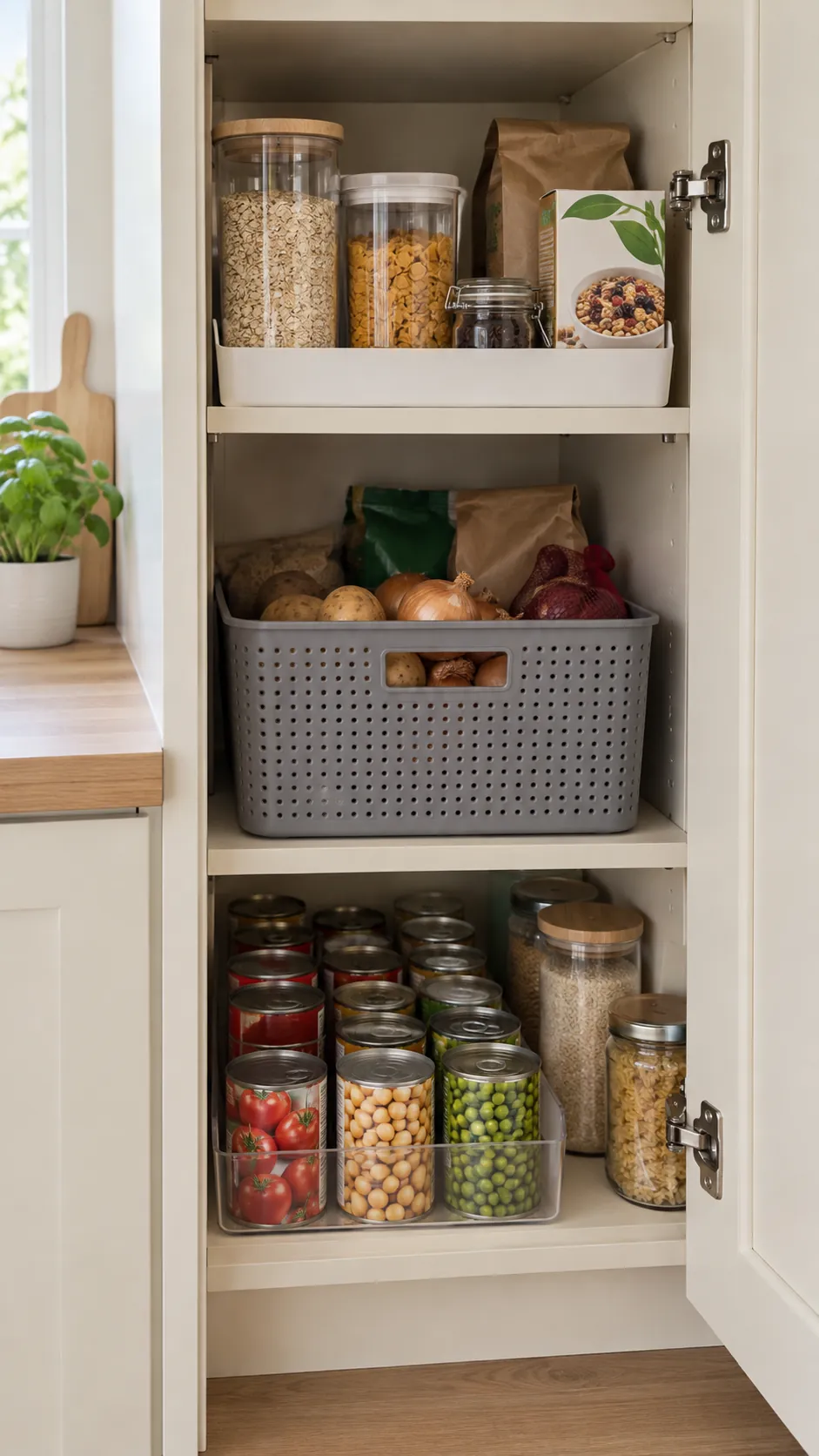
The food at the back is only useful if you can reach it without unloading the front. Deep shelves often need fewer layers, clearer categories, and containers that move as a unit. Start with the shelf that causes the most repeat purchases, then choose the changes that fit its opening and your daily meals.
Use a single full depth basket per lane
A front basket can hide a second basket just as easily as a cereal box hides a can. Give each narrow shelf lane one container that reaches toward the back and pulls out as a unit. Measure the opening between the hinges before buying, and leave finger room beside the handle. Keep the loaded basket light enough to lift without bracing it against the shelf edge.
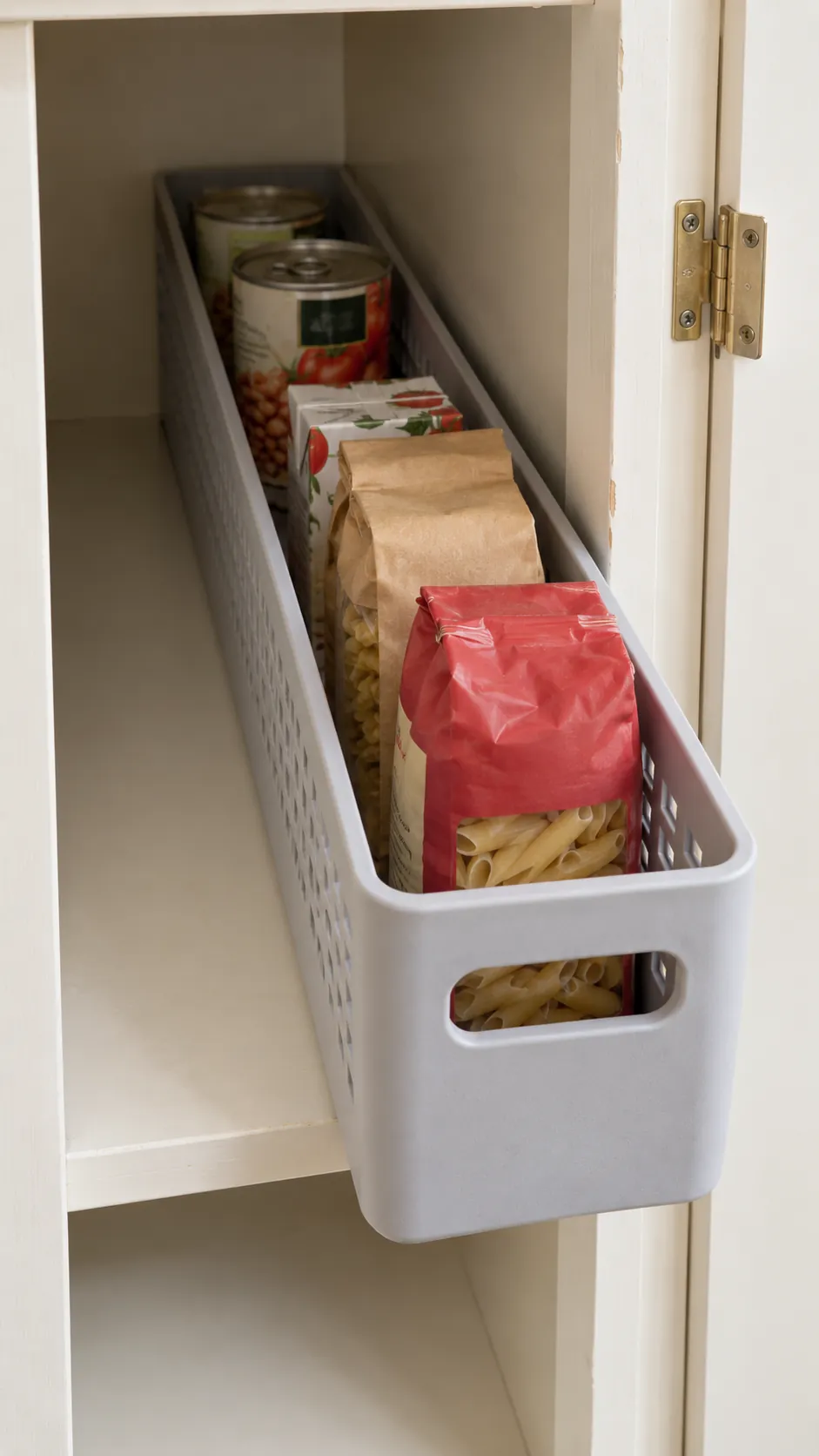
Put daily food at the front
Reserve the first few inches of your easiest shelf for the foods you reach for every day. Place oatmeal, coffee, or the current lunch supplies here rather than mixing them with unopened refills. This front strip needs a clear boundary so groceries do not gradually take it over. Try the arrangement for a week before assigning the remaining pantry shelf zones.
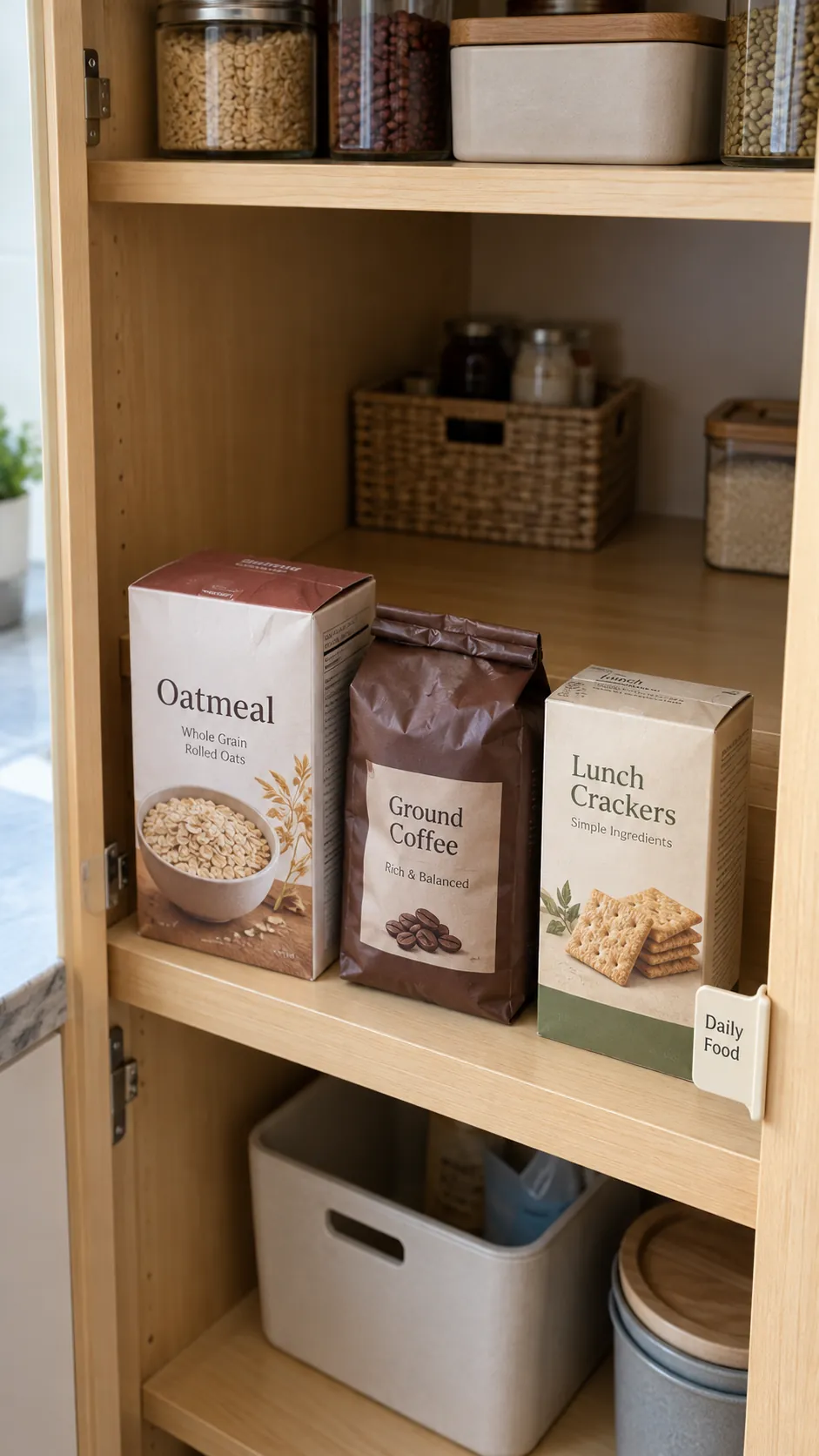
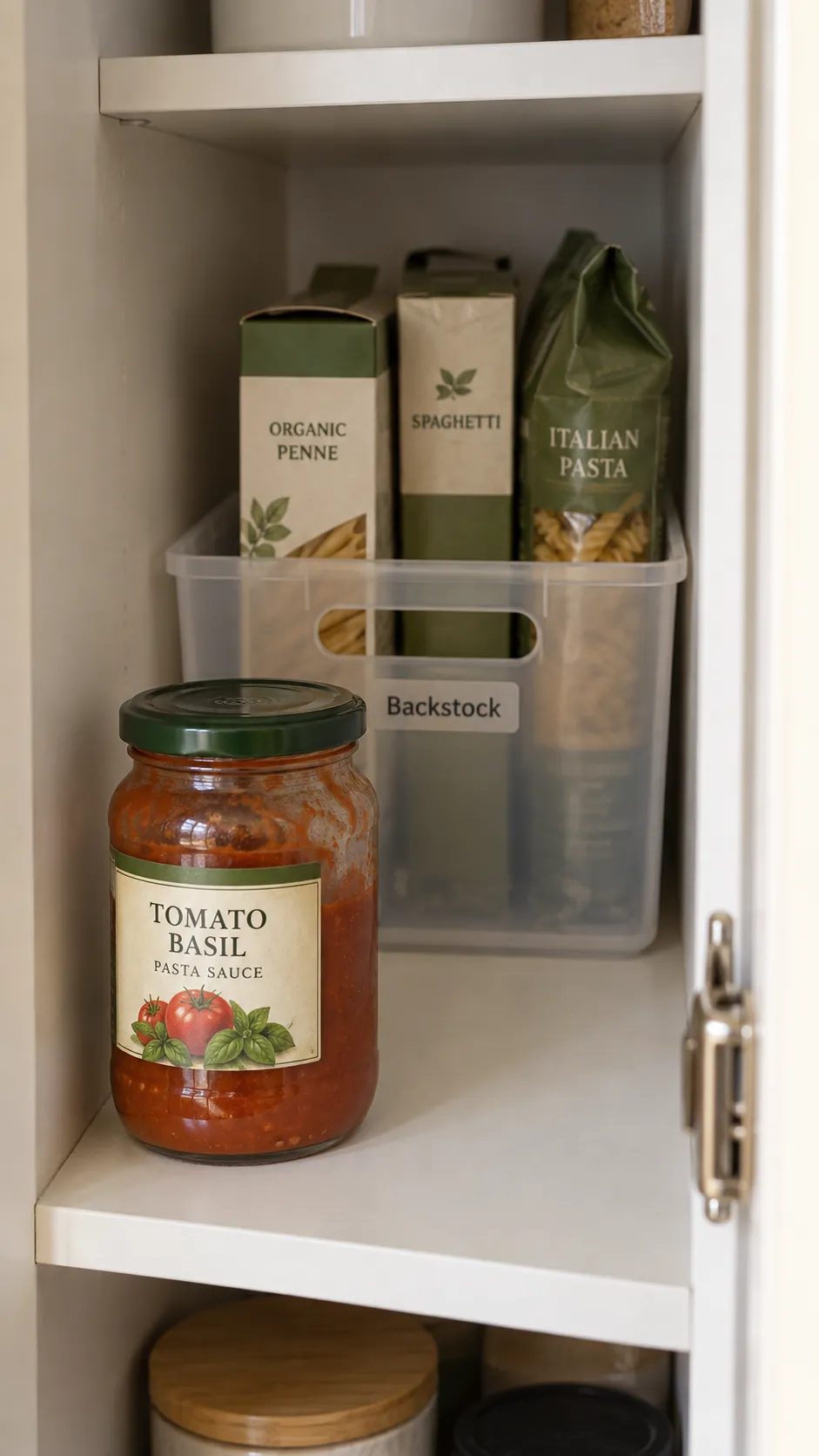
Separate unopened backstock
Keep unopened duplicates in one rear bin with a clear front label. Only move a replacement forward when the working package is empty. This makes a deep shelf useful without forcing you to search it at every meal. Check that bin before shopping so another spare jar does not disappear behind the first two.
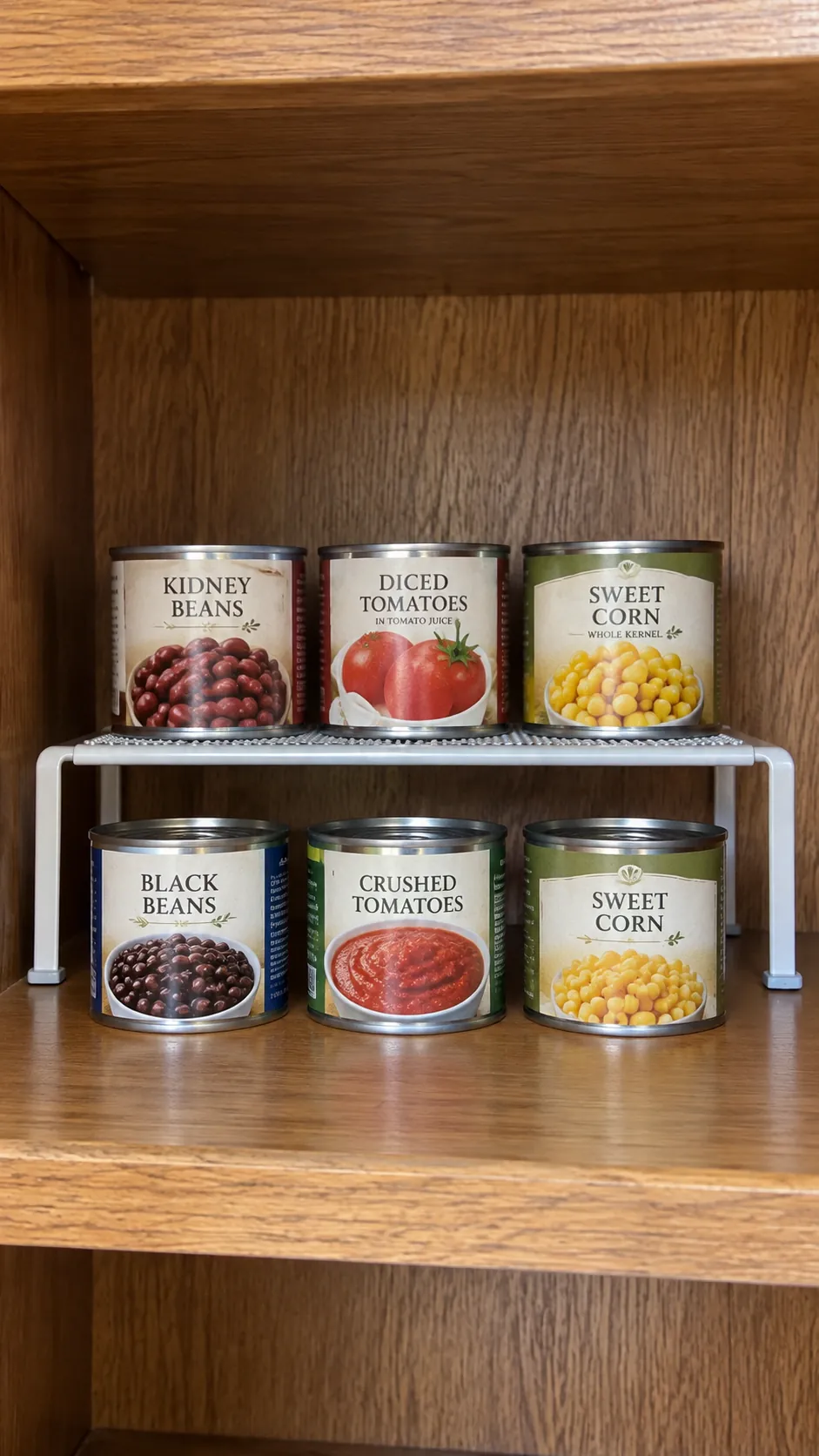
Raise short cans at the back
A sturdy shelf riser can bring the labels on rear cans above the front row. Test the view from your normal standing position before filling it. If you still cannot see the cans, the riser is not solving that shelf's problem. Use a product rated for the total load and avoid stacking loose cans on an unstable improvised platform.
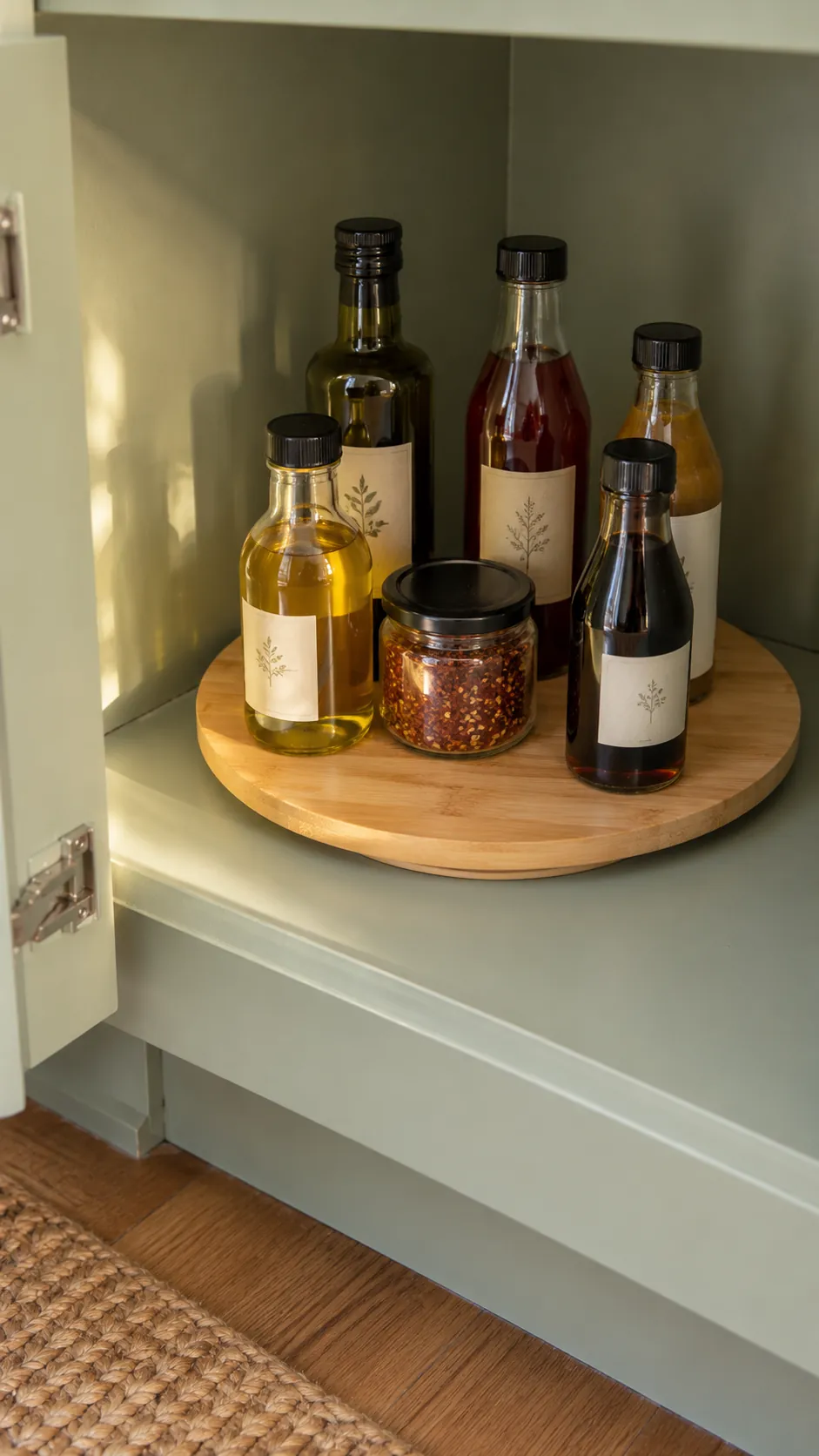
Turn bottles toward the opening
A turntable works well for a small group of upright sauces that otherwise form several hidden rows. Choose a diameter that clears the door, side wall, and nearby packages through a full rotation. Put shorter bottles around the edge and avoid crowding the center. Tall heavy glass bottles belong on a reachable shelf where you can steady them safely.
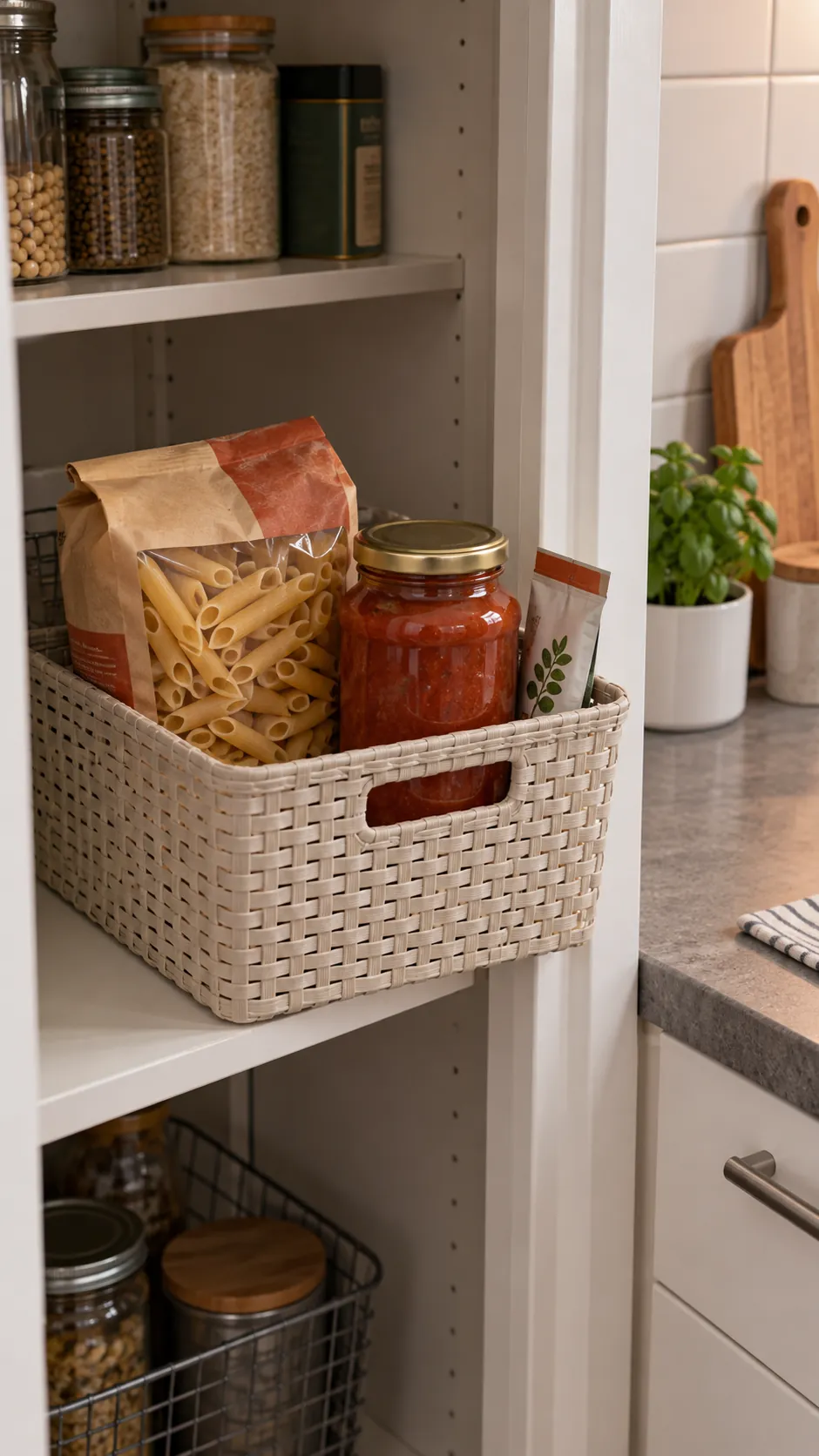
Pull dinner ingredients together
Store pasta, its unopened sauce, and a sealed packet of seasoning in one meal basket. You can bring the basket to the counter instead of making several searches through deep shelves. Keep raw ingredients in their proper packages and return unused food promptly. Change the basket's contents when your actual dinner habits change rather than preserving an attractive but unused category.
Corral small packets upright
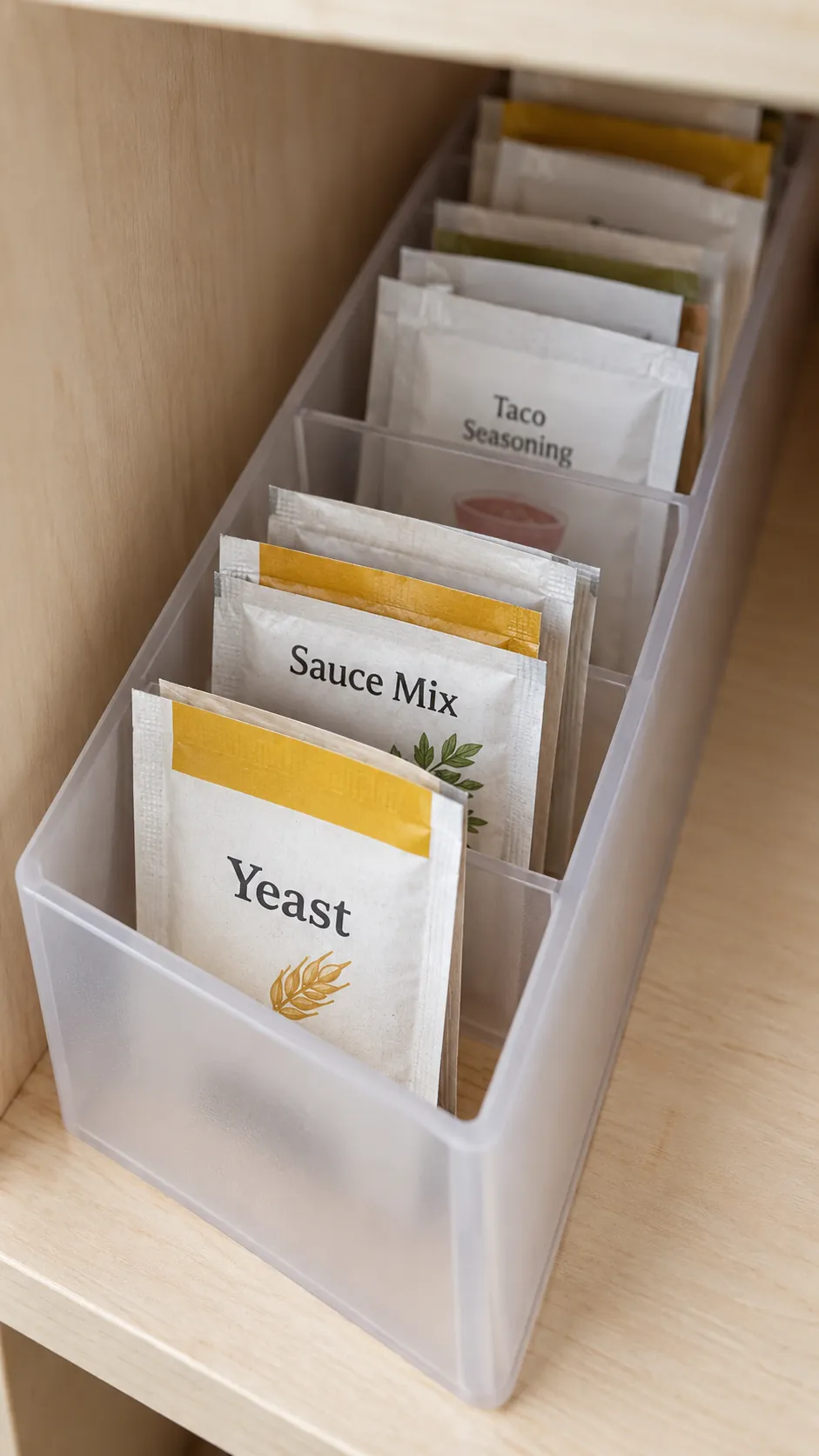
An open narrow bin keeps sauce mixes and yeast packets from slipping between larger containers. Stand packets upright with the names visible and put the oldest suitable stock at the front. Dividers help a partly empty bin stay readable. Leave original storage directions and date markings accessible, especially when a packet needs refrigeration after opening.
Keep tall cereal boxes on an outer lane
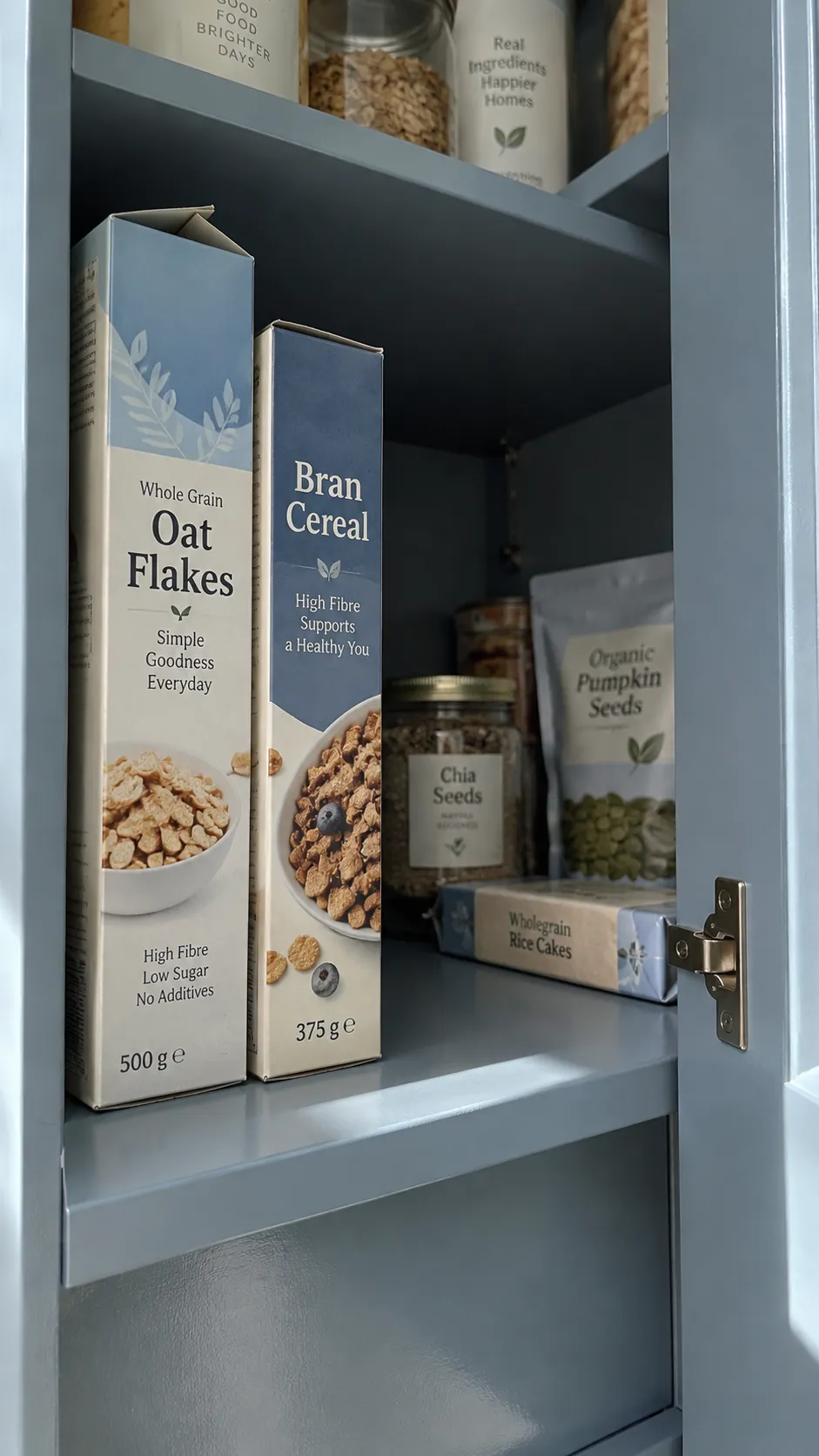
Line tall cereal boxes along one side instead of placing them across the full shelf opening. Their broad faces will otherwise hide everything behind them. A slim container for the open bags can sit beside the boxes if your household actually uses it. Preserve product information when decanting and do not keep topping up a container without emptying and cleaning it.
Make a shallow breakfast station
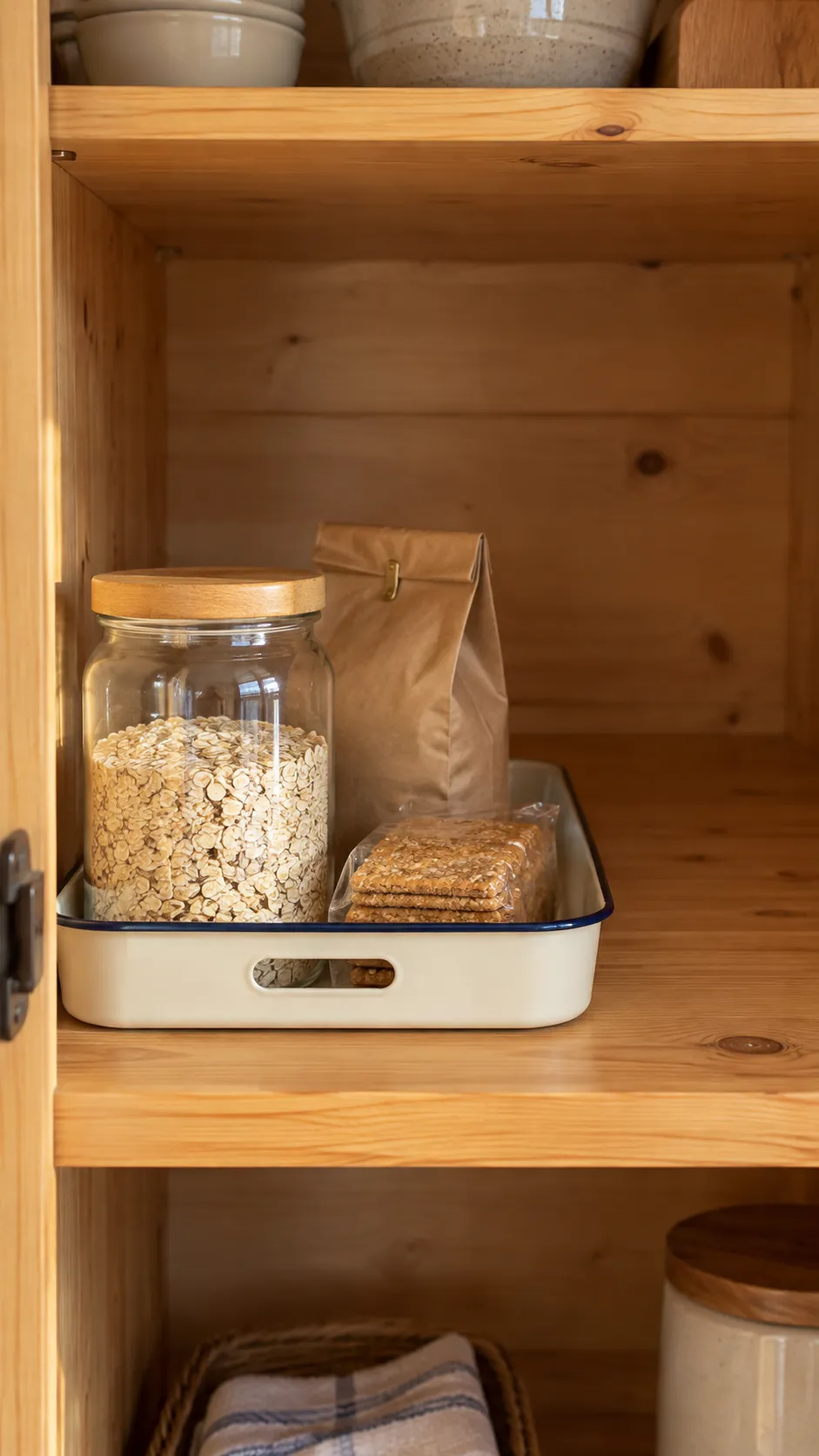
Put breakfast supplies on a shallow tray that stops well before the rear wall. The empty space behind it remains a deliberate access buffer unless you need it for clearly marked refills. A compact breakfast station is easier to reset than a shelf full of mixed jars. Include only foods used together so the tray does not become a general overflow spot.
Store heavy cans low and reachable
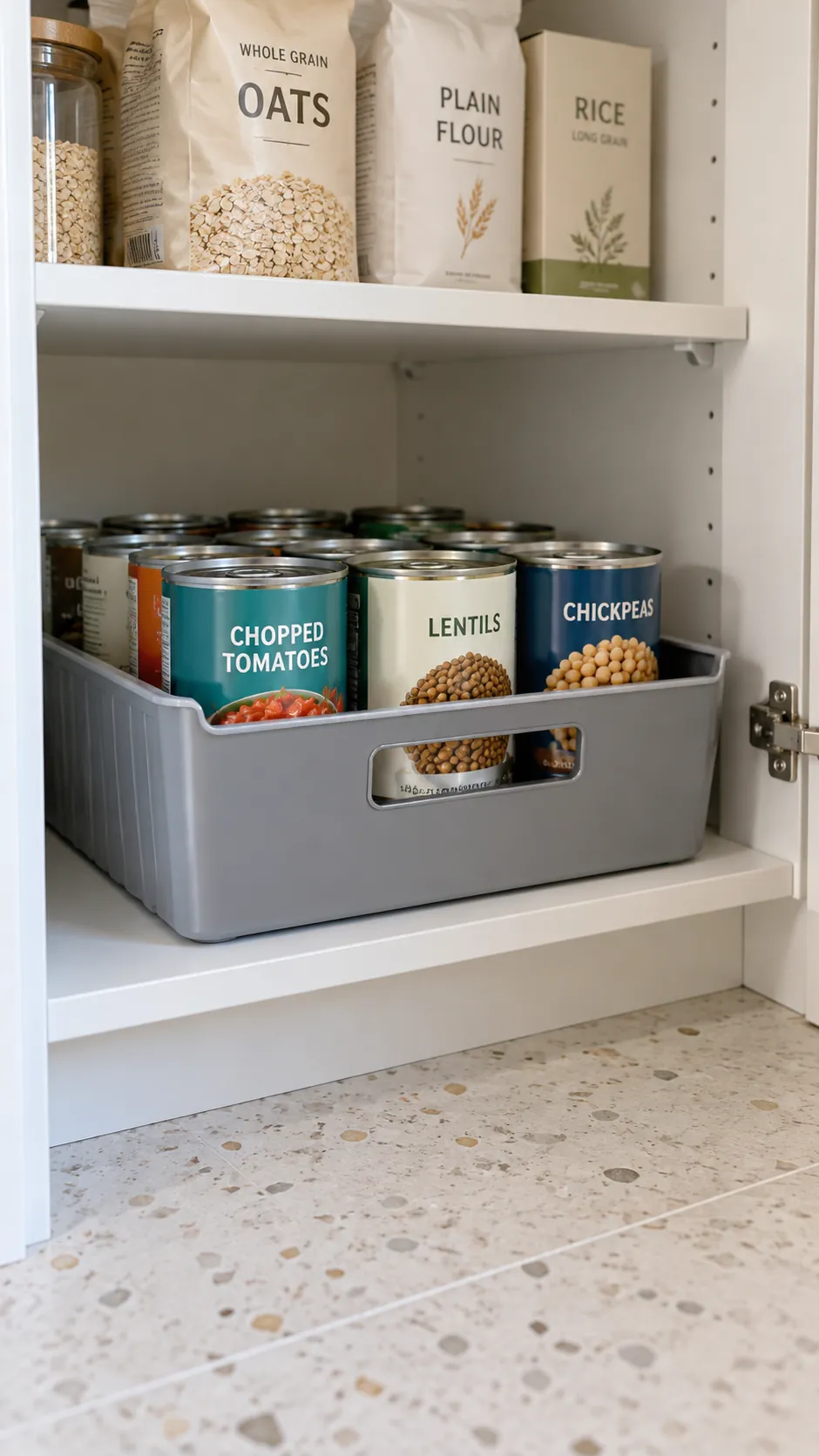
Move dense canned goods away from high shelves that require an overhead lift. A low shelf with enough clearance for your hand is more useful than a deep floor pile. Keep cans upright unless an organizer is designed for another orientation. Check the shelf and organizer load limits, including the weight of any pullout hardware.
Fit pullout drawers to the opening
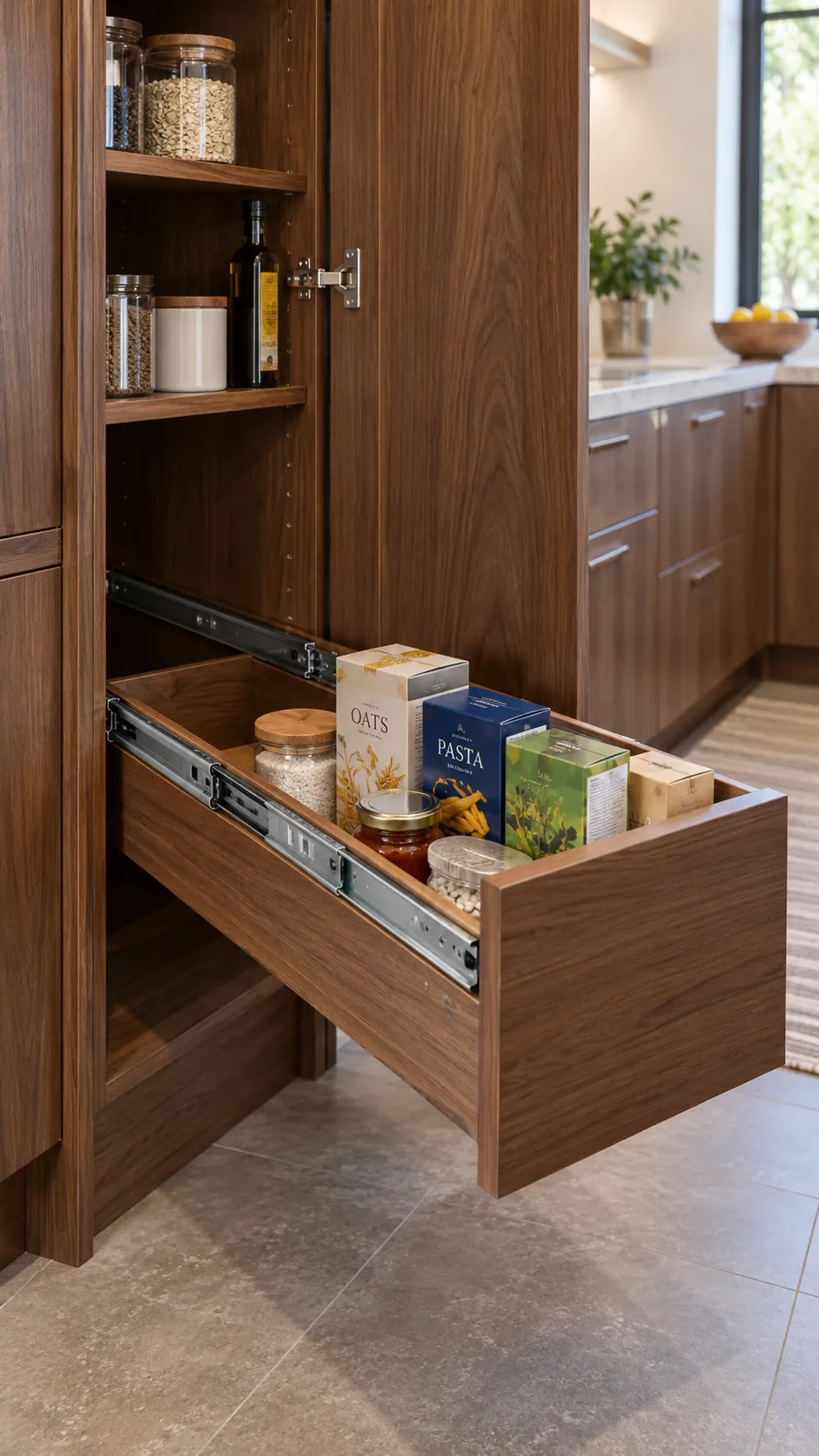
A fitted pullout drawer brings the back of a deep shelf into view without lifting a full basket. Measure the clear opening, hinge intrusion, interior depth, and mounting surface before choosing hardware. Confirm that the drawer can extend without hitting a nearby wall or door handle. Follow the manufacturer's installation and load instructions rather than attaching rails to unsupported thin panels.
Label the shelf edge by category
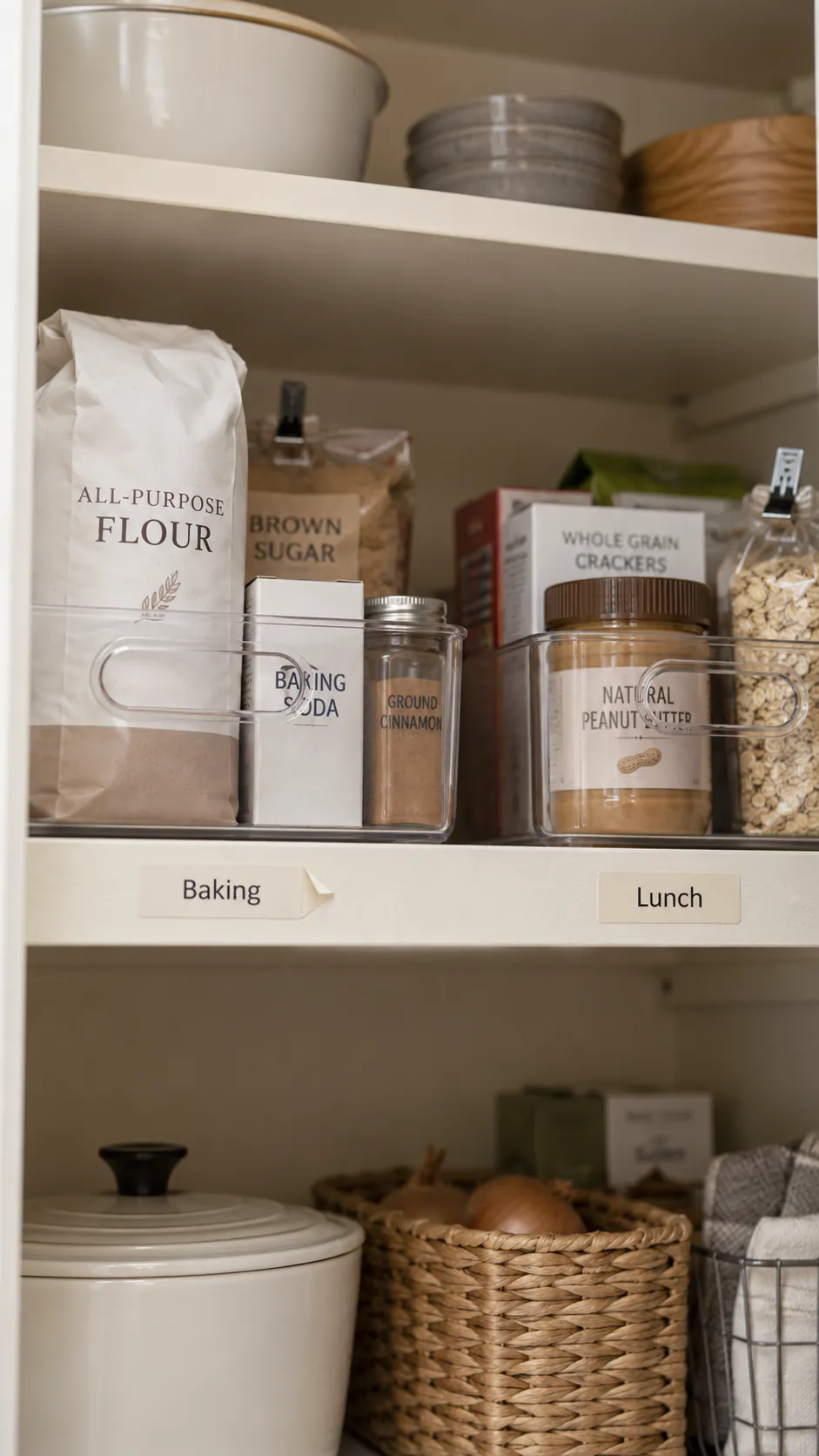
Shelf edge labels remain visible even when the container itself is at the back. Use plain category names your household understands, such as baking or lunch. Removable labels let you change the layout without leaving adhesive damage. Avoid assigning tiny categories that need a separate container for every ingredient.
Give food to use soon a front tray
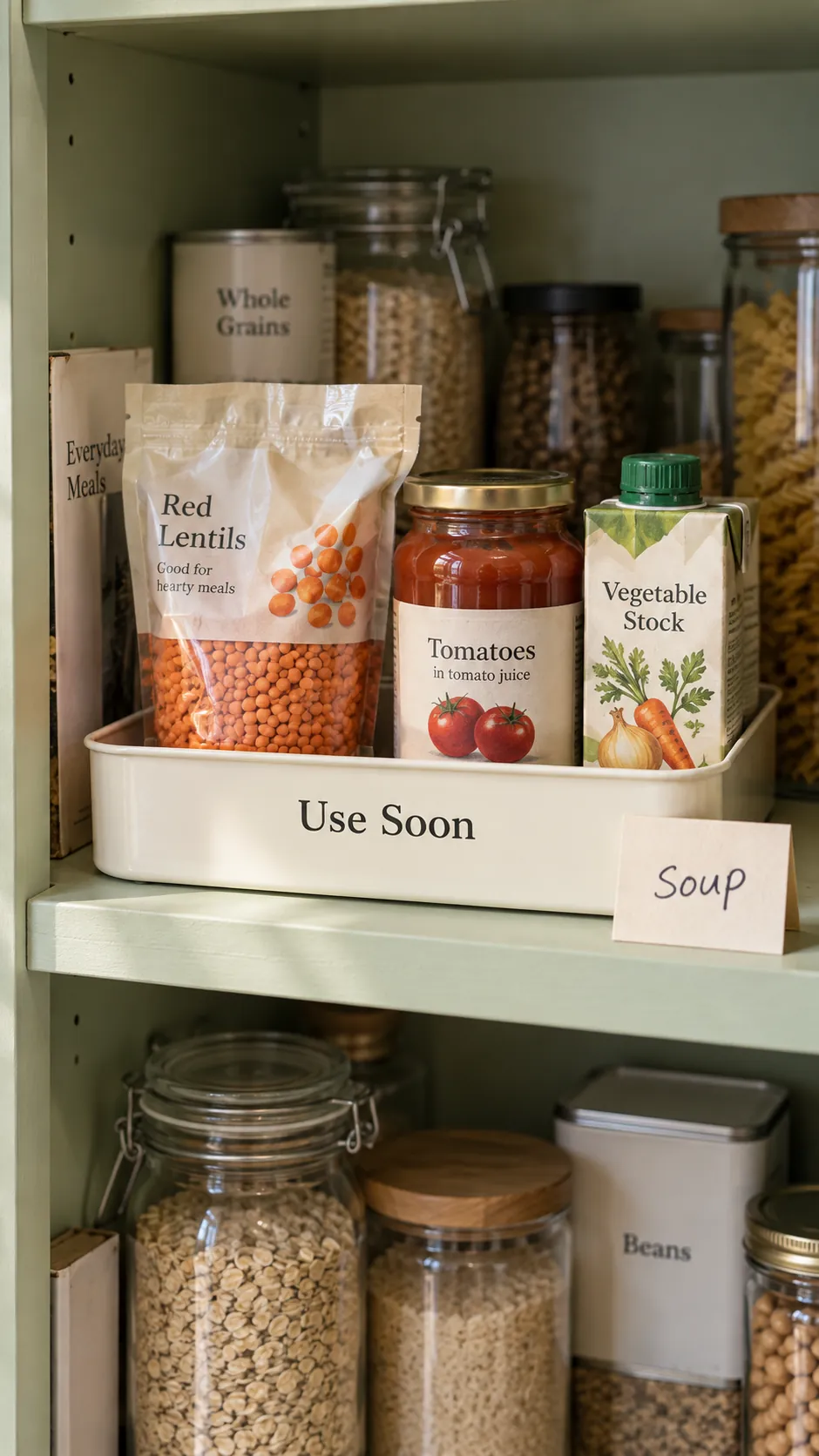
Place suitable food that you want to use next in a small tray at eye level. Check package dates and storage instructions instead of treating the tray as proof that food is safe. Write a meal idea on a nearby note if an unfamiliar ingredient keeps getting passed over. Empty the tray into actual meals before adding more items to it.
Keep snacks in low sided bins
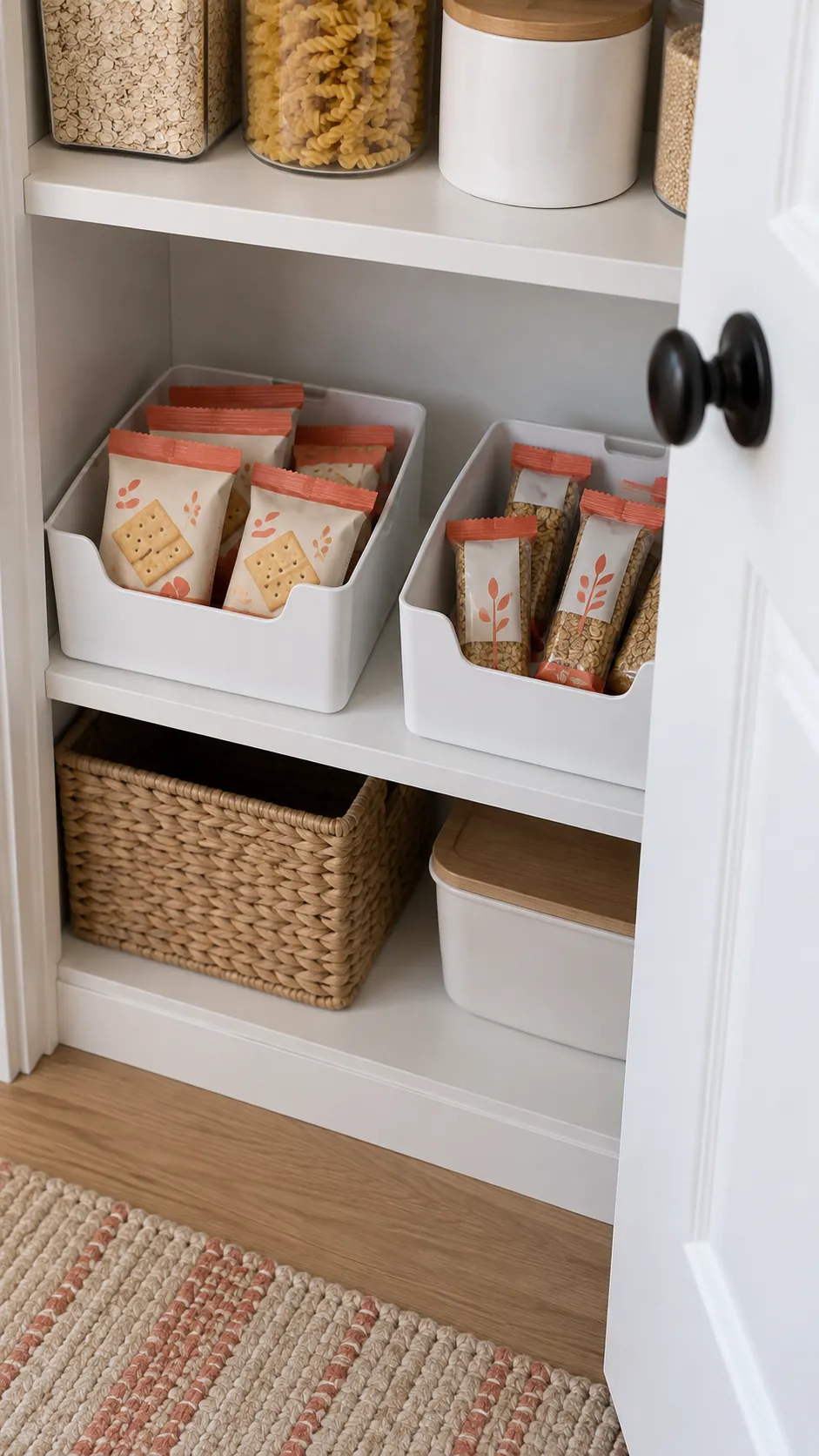
Low sides let you see snack choices without lifting the whole container. Choose bins that children can reach safely if independent snacks are part of your routine. Keep allergens and age related choking risks in mind when deciding what belongs there. A smaller daily supply is often easier to manage than putting an entire bulk pack within reach.
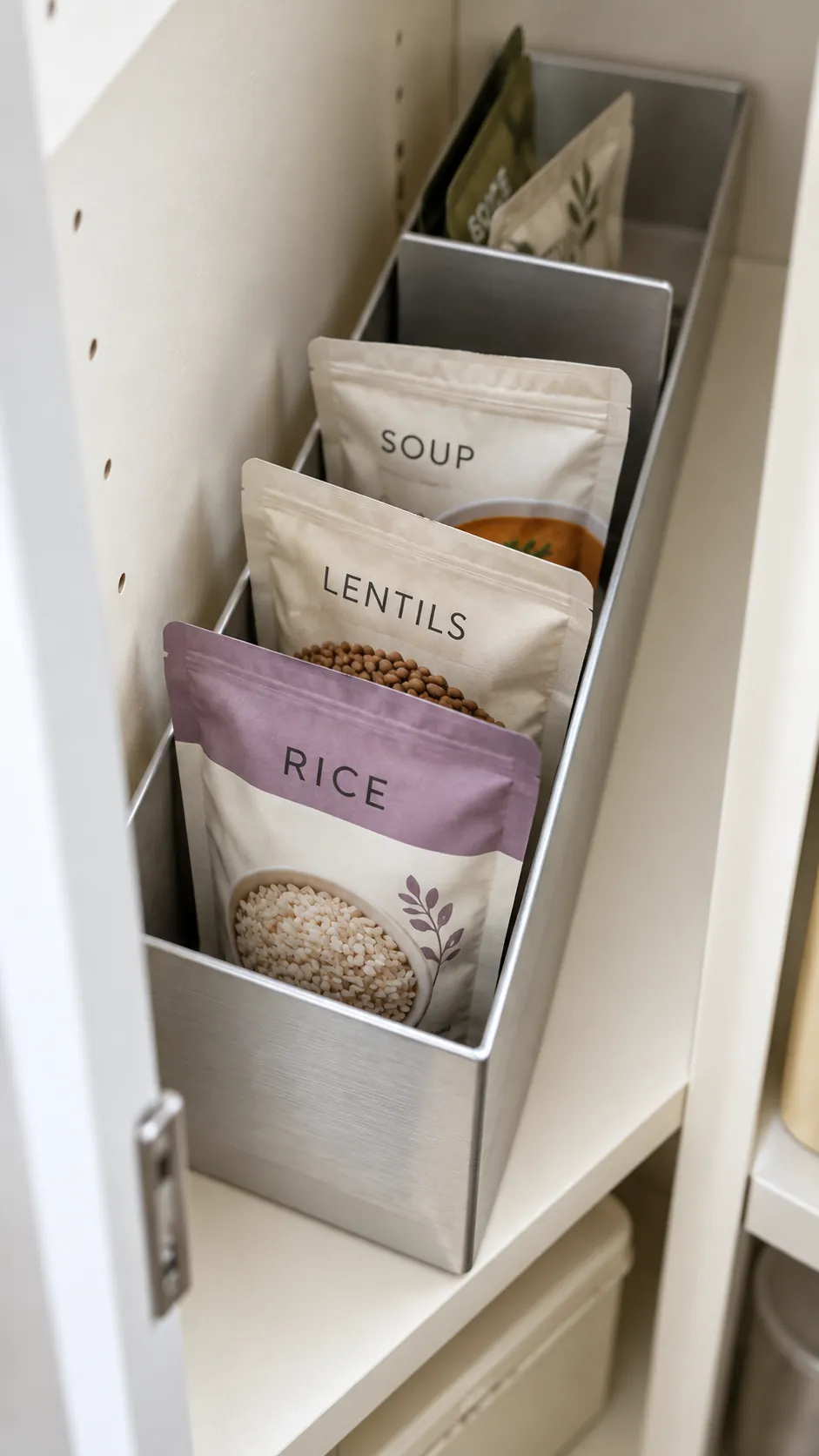
Stand flat pouches in a file bin
Flexible rice, tuna, and soup pouches can vanish when stacked flat. File them upright in a narrow open container so the tops can be scanned from the doorway. Use dividers if the pouches slump as the supply decreases. Do not fold or squeeze packages in a way that damages their seals.
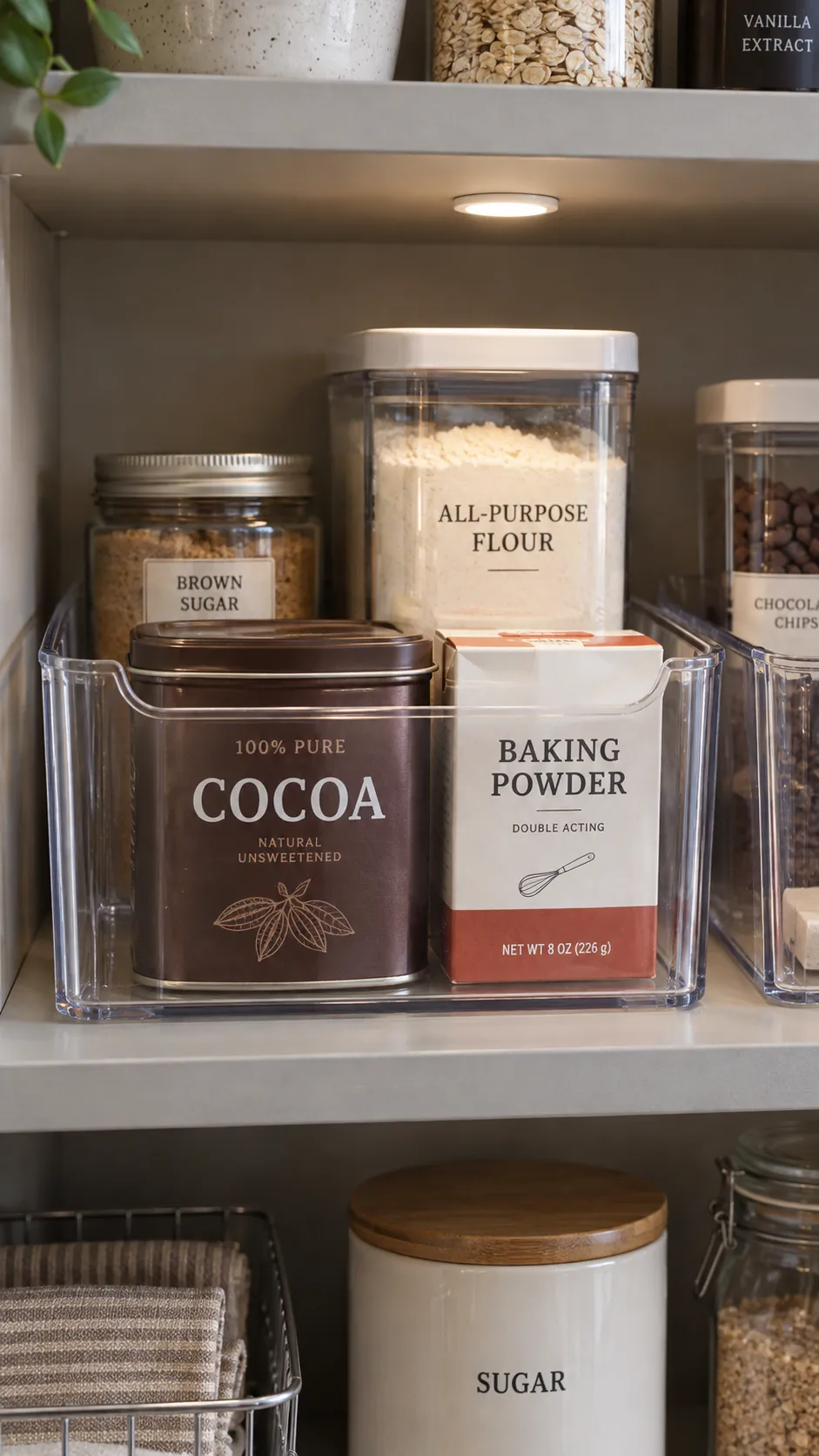
Choose clear fronts for tiny ingredients
Transparent fronts help when several small baking ingredients share one shelf. Position the labels toward the opening and keep taller containers behind shorter ones. Clear plastic does not help if the whole bin sits behind another opaque basket. Test visibility with the shelf fully loaded rather than with empty organizers.
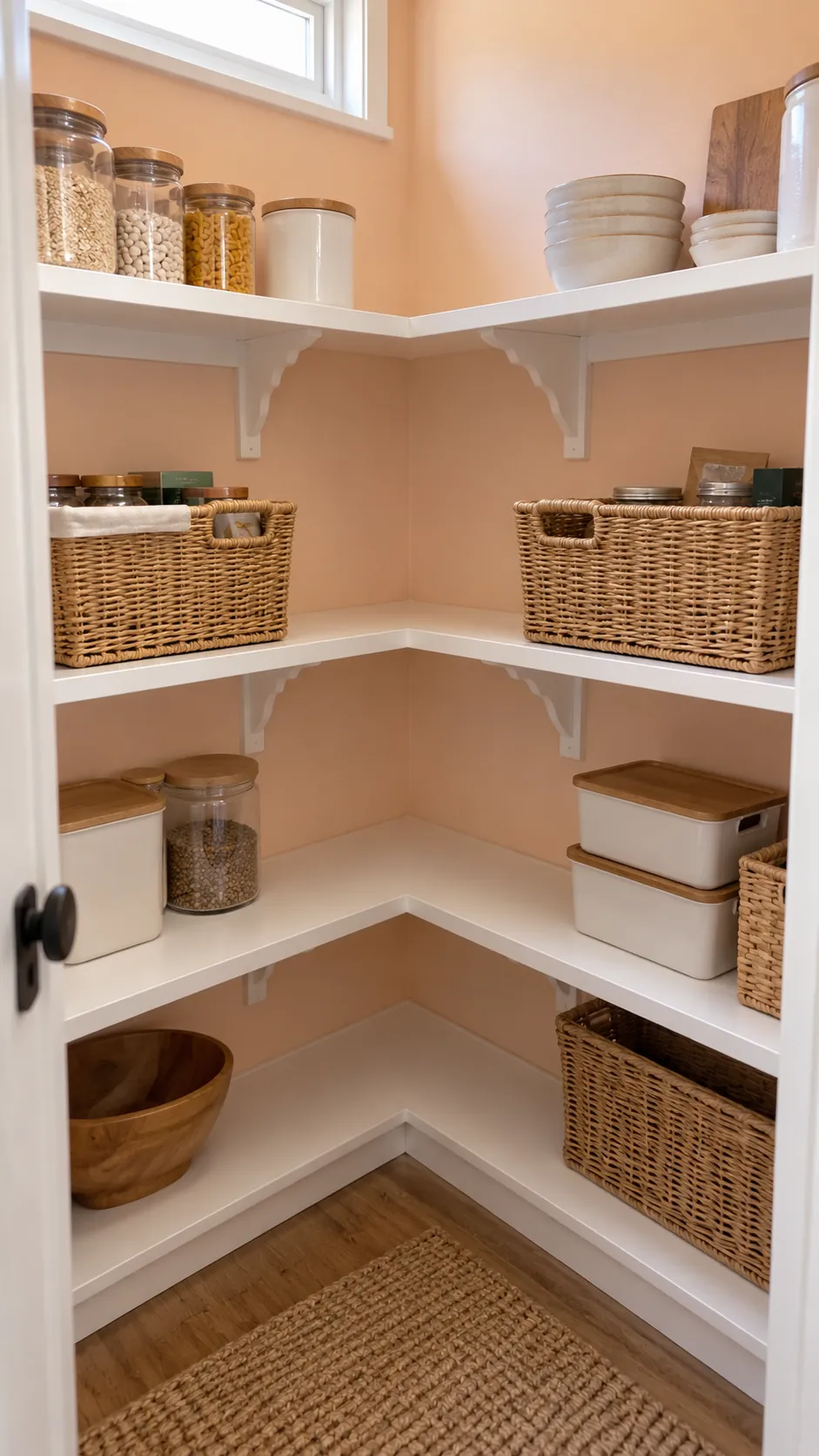
Let one corner stay open
A crowded corner can trap the handles of two neighboring baskets. Leave enough space for each container to slide out independently. In a small walk in pantry, test this while standing in the aisle with the door open. A little unused shelf area is worthwhile when it prevents unloading half the pantry to reach one item.
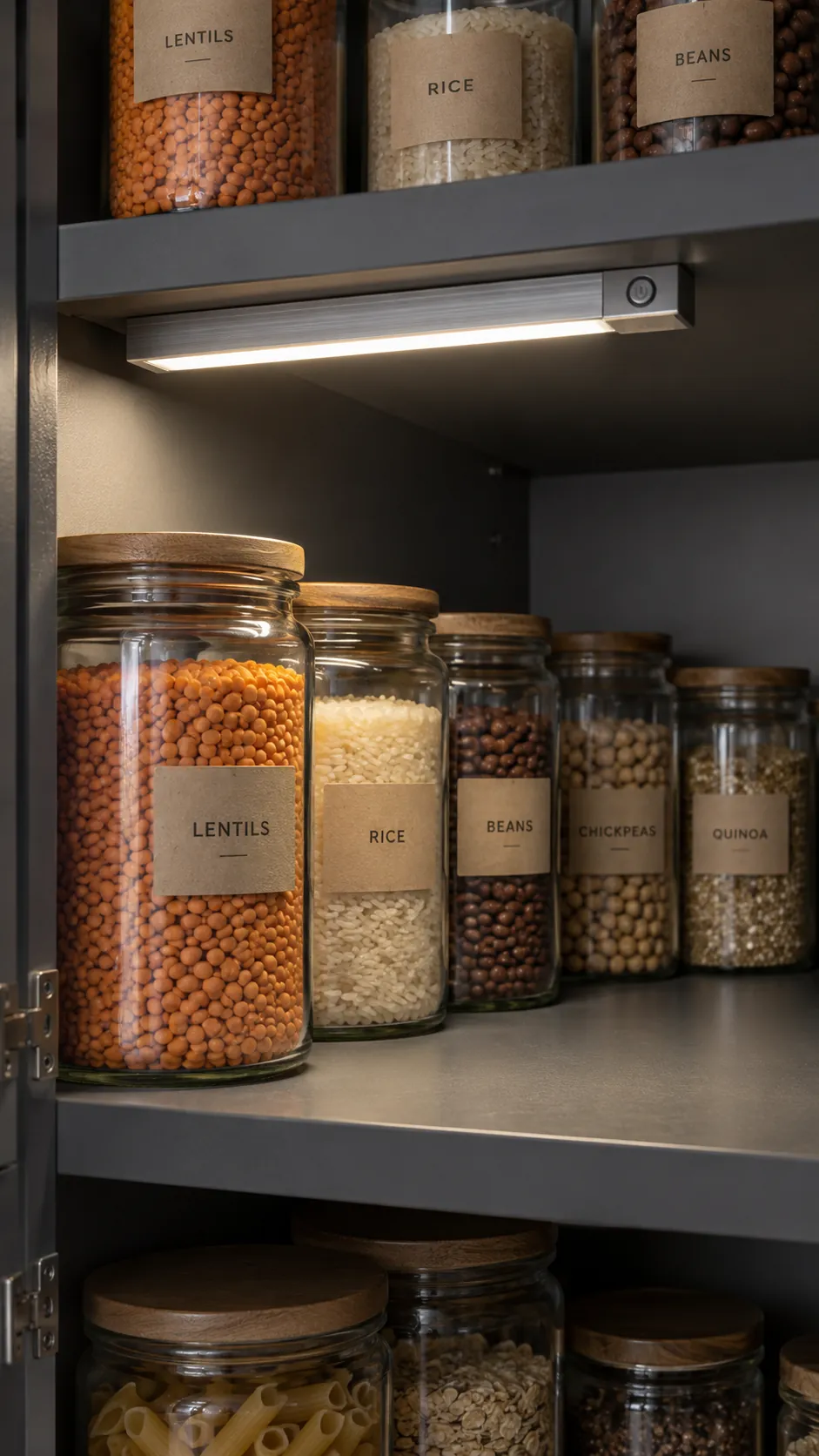
Add light where the shelf casts shadows
A light near the front underside of a shelf can make rear labels easier to read. Choose a fixture suitable for the location and mount it according to its instructions. Keep wiring, batteries, and controls accessible without routing them through food containers. If electrical work is needed, use a qualified installer and check that the light will not create heat problems near stored food.
Protect the route to the back
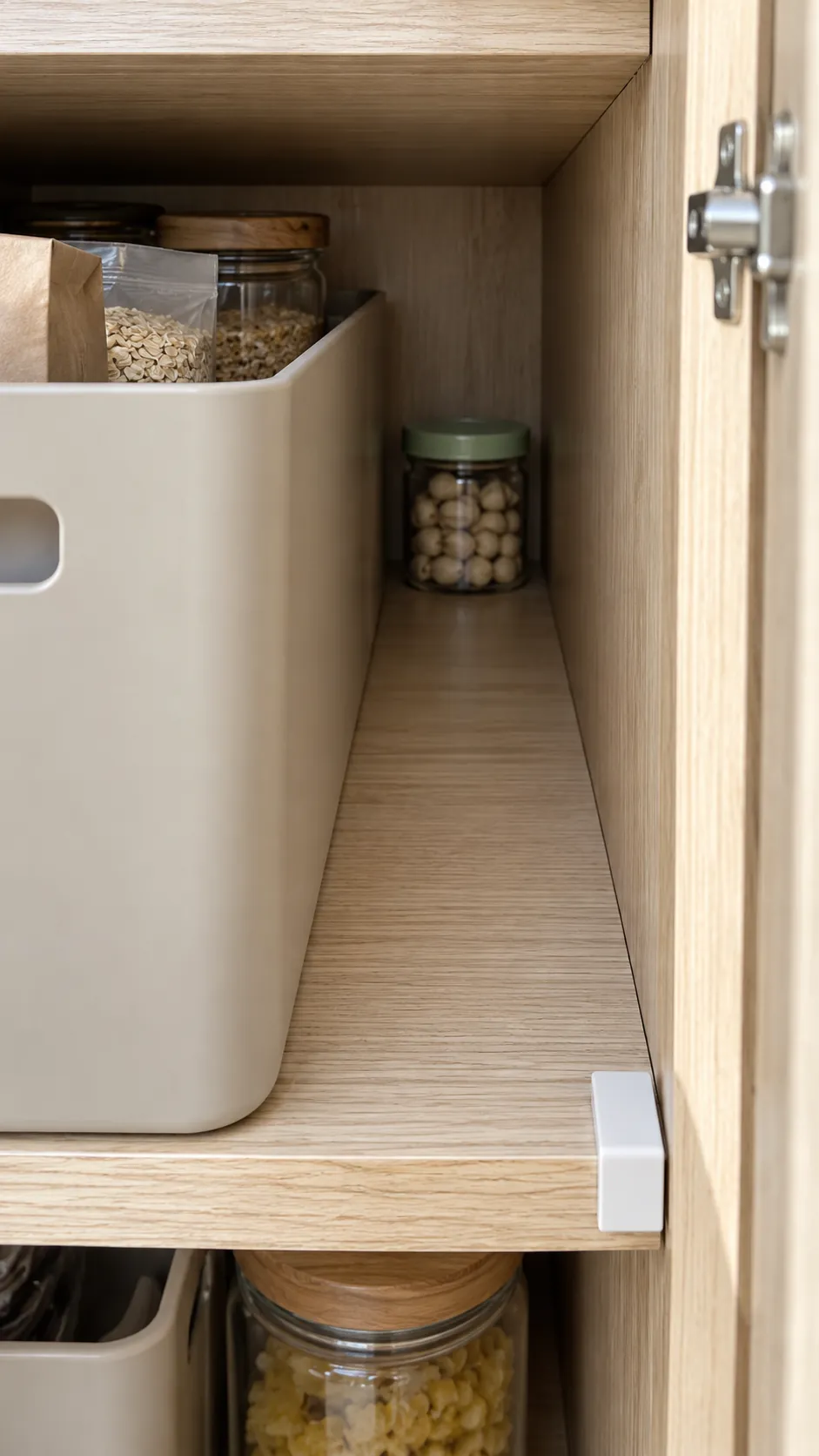
Keep a slim access lane beside a large storage bin so you can see and reach its rear neighbor. This can work better than filling every inch across the shelf. Mark the boundary with a simple shelf edge cue if new groceries repeatedly block it. The lane should be wide enough for your actual hand and the object you need to remove.
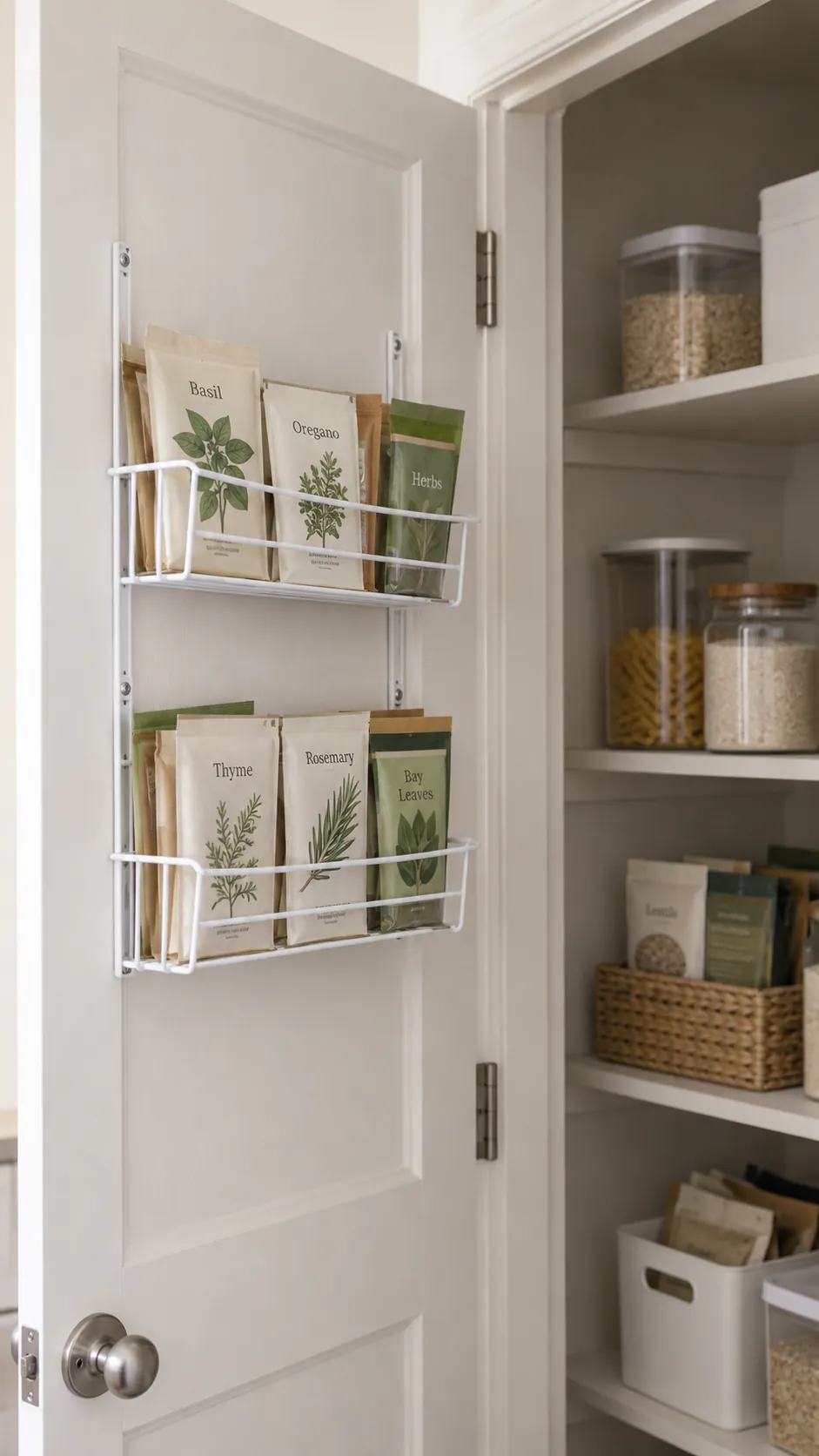
Move light packets onto the door
A shallow door rack can free the shelf front for larger food containers. Check door clearance with the rack loaded before fixing anything permanently. Keep the weight within the door and rack limits, and obtain permission before drilling in a rental. Small packets work better here than heavy bottles that make the door swing awkwardly.
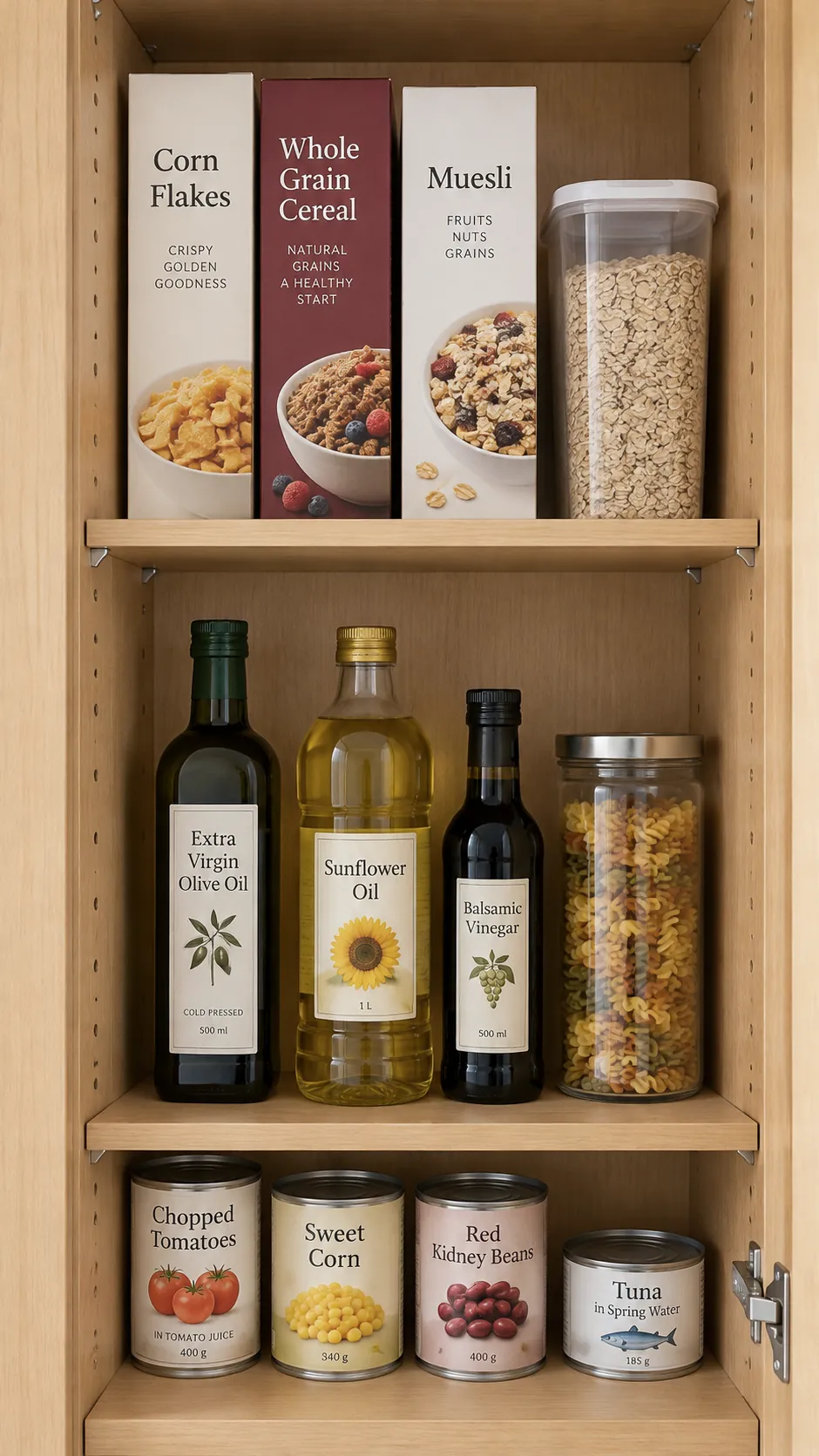
Set shelf heights around real packages
Adjustable shelves should follow the height of what you store rather than remain evenly spaced by default. Leave enough room above a basket to grip it without scraping your fingers. A short gap suits cans, while cereal and oil need taller spaces. Check that moving a shelf does not reduce required support or exceed the cabinet's design limits.
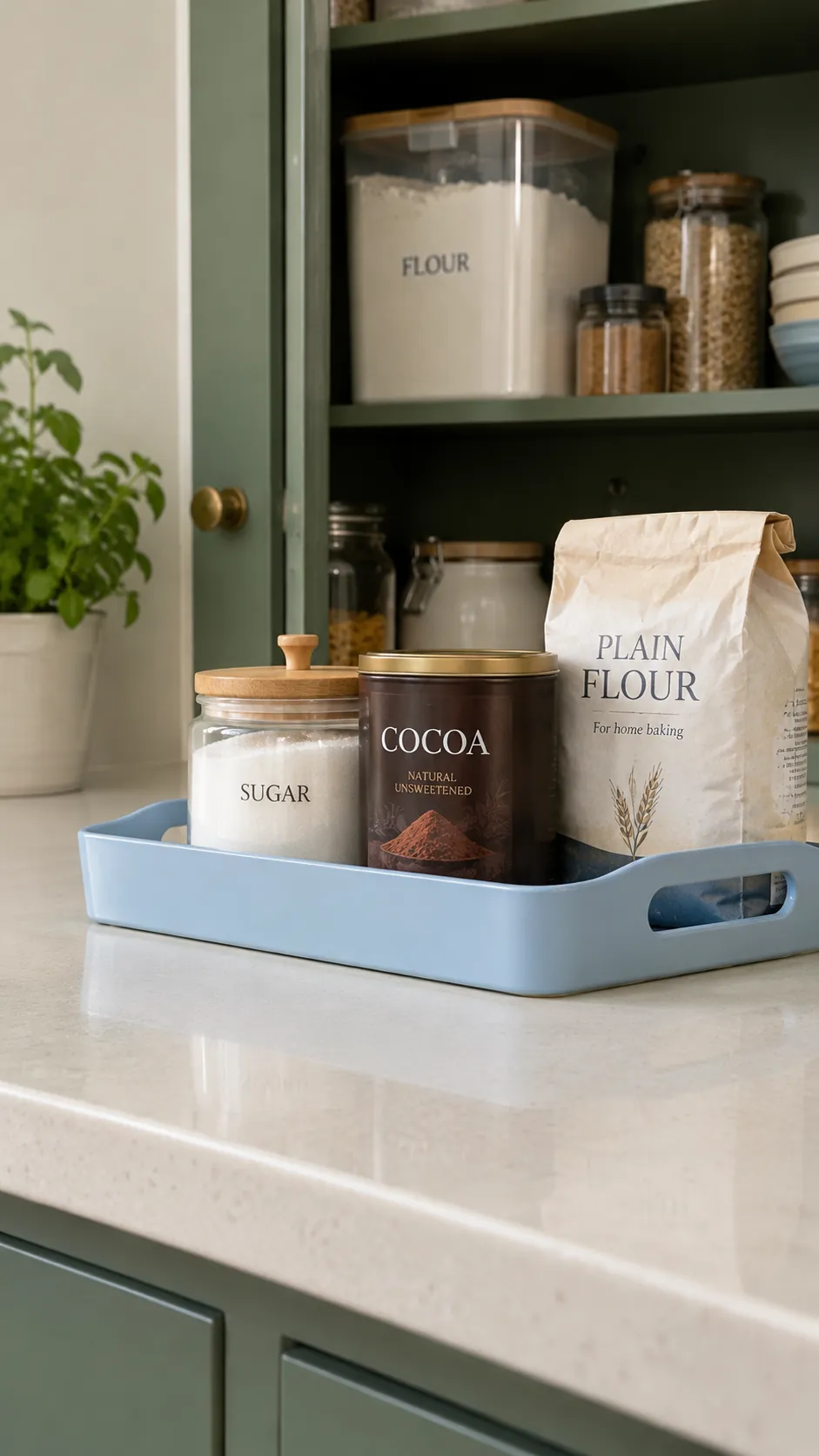
Keep baking supplies on a removable tray
A tray makes flour, sugar, and smaller baking ingredients easier to bring to a work surface. Choose a washable tray with a secure grip and avoid loading it beyond comfortable lifting weight. Keep large flour containers on the shelf if moving them would be awkward. Clean spills promptly so the tray does not conceal crumbs or attract pests.
Preserve dates when decanting
A tidy container can remove the very information you need to rotate food. Transfer the product name, date information, and any important preparation or allergen details when you discard packaging. Keep the original label nearby when copying it would be incomplete. Empty and wash the container as appropriate between batches instead of continually mixing older and newer food.
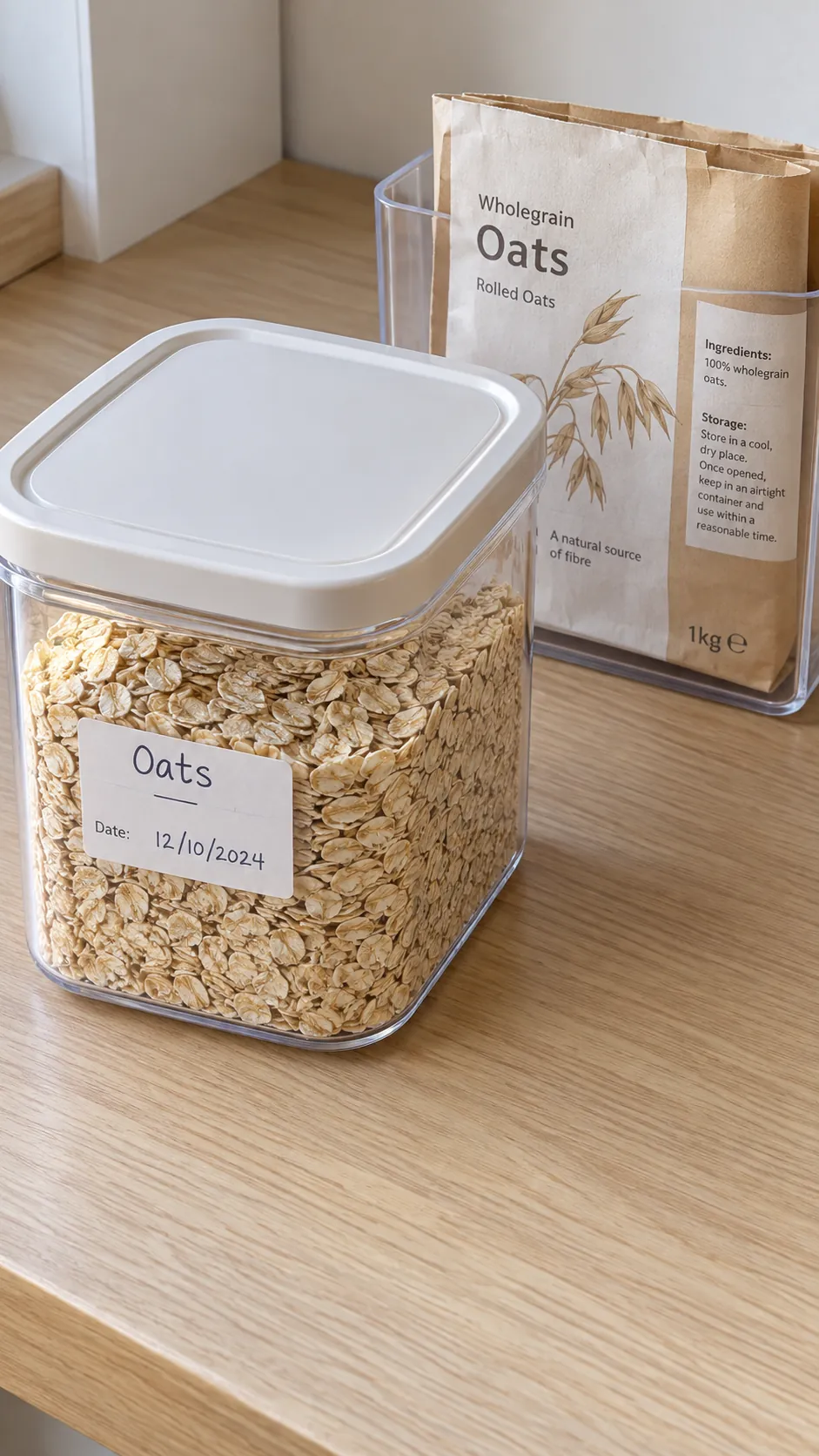
Use square containers where they fit
Square containers can use a straight shelf more efficiently than a collection of round jars. Measure both the footprint and the lid clearance before replacing existing storage. Keep foods in their original packages if decanting adds work without improving access. Matching containers are optional; a visible label and a secure food suitable lid matter more.
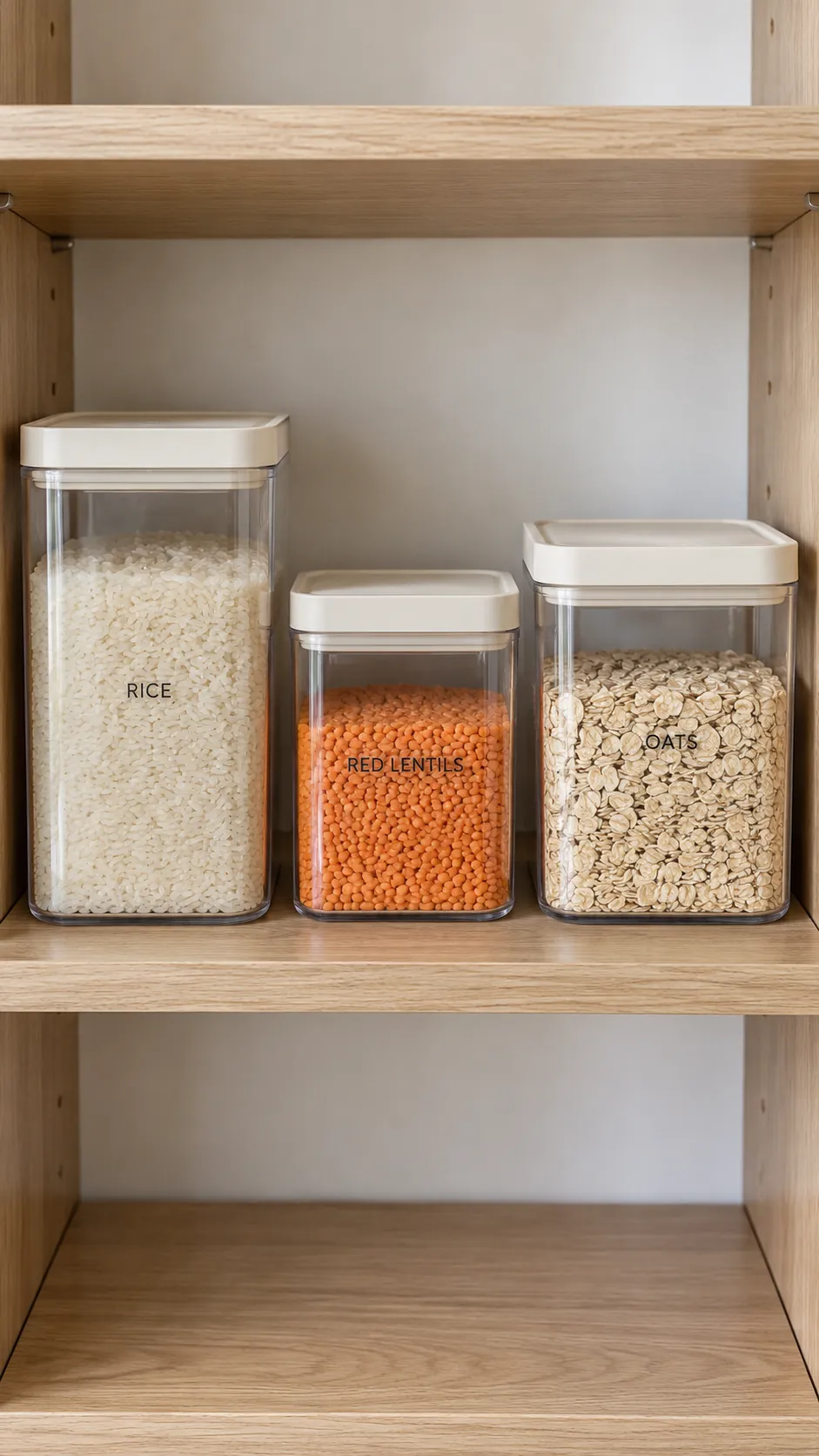
Separate breakfast refills from the working tray
Put spare oats and coffee behind or above the daily breakfast station in a distinct labeled container. This keeps the active tray small while retaining useful deep pantry storage. Make the refill container easy to remove as one unit. When it becomes full, treat that as a shopping limit rather than starting another hidden pile.
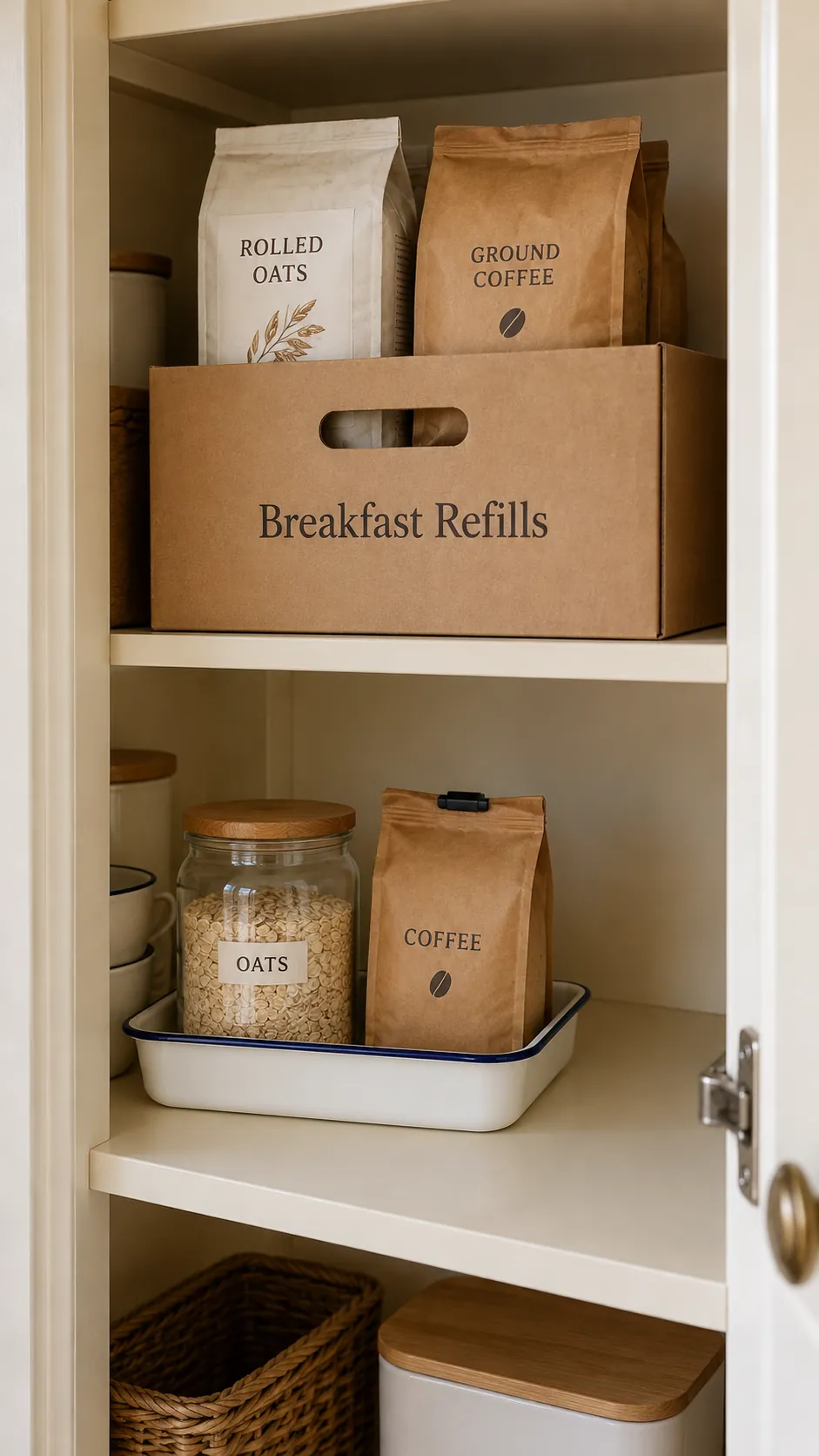
Make a narrow oil and vinegar lane
Group cooking oils and vinegar upright in a slim washable bin. A lip helps contain small drips, but the bin should not make glass bottles hard to grip. Follow label storage directions and keep food away from heat and strong light where required. Wipe bottle bases before returning them so sticky residue does not build up at the back.
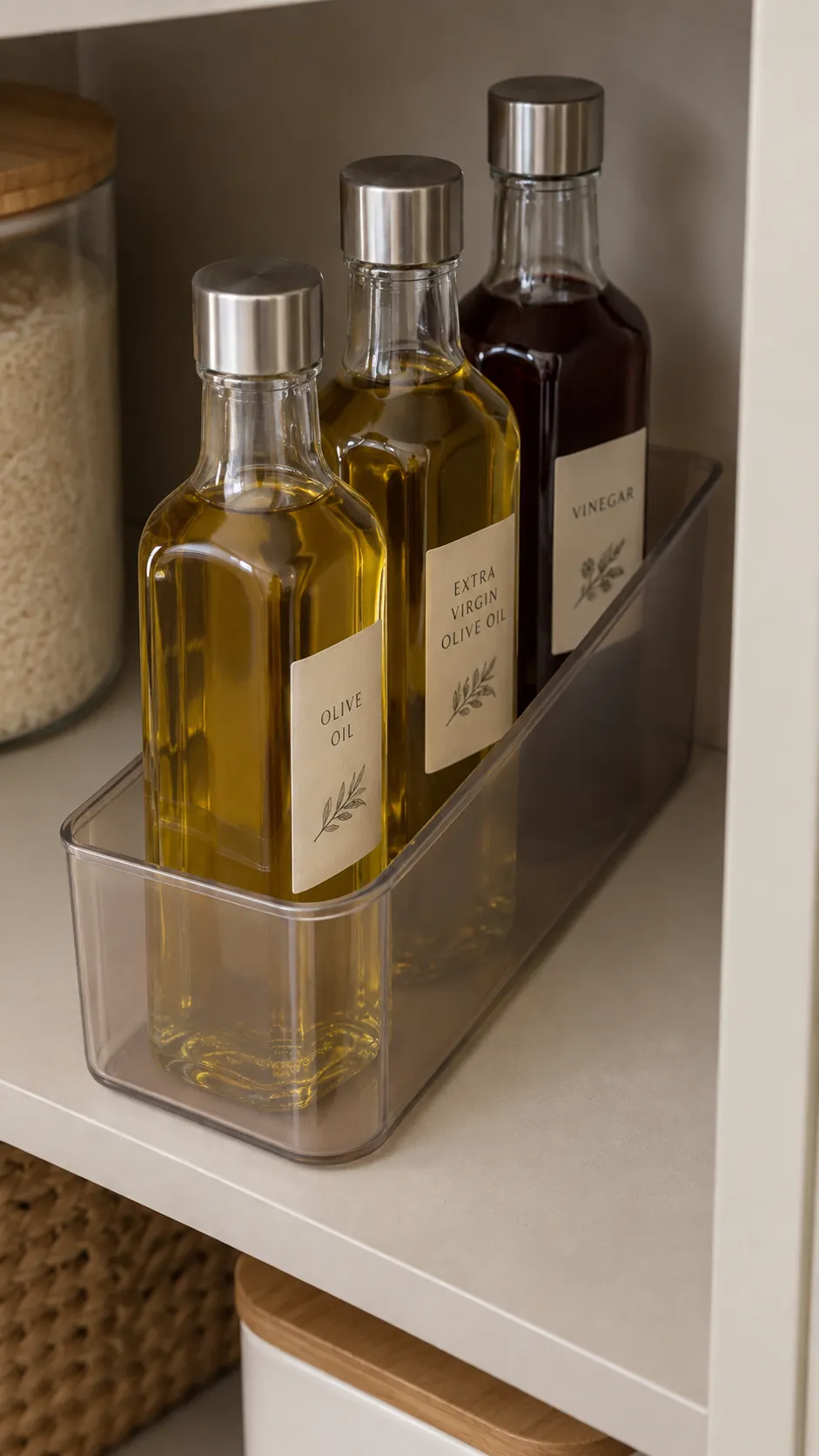
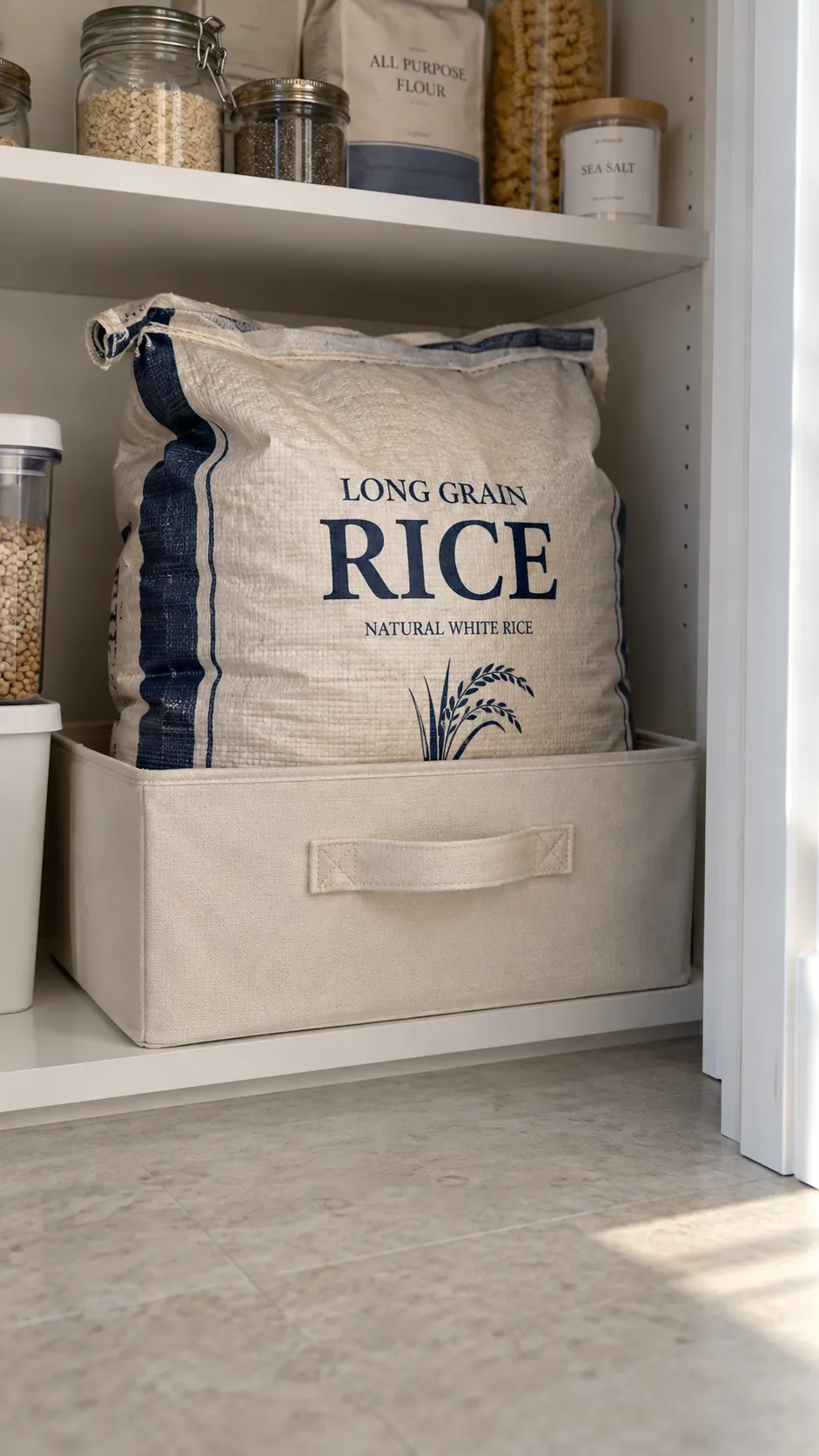
Give bulky bags a stable container
Large bags of rice or flour can slump across a shelf and cover smaller food. Keep them in a food suitable container or a sturdy bin that supports the original package. Store the load low enough to move without an overhead lift. Choose a size your household will use and can handle rather than buying a container merely because it fills the shelf depth.
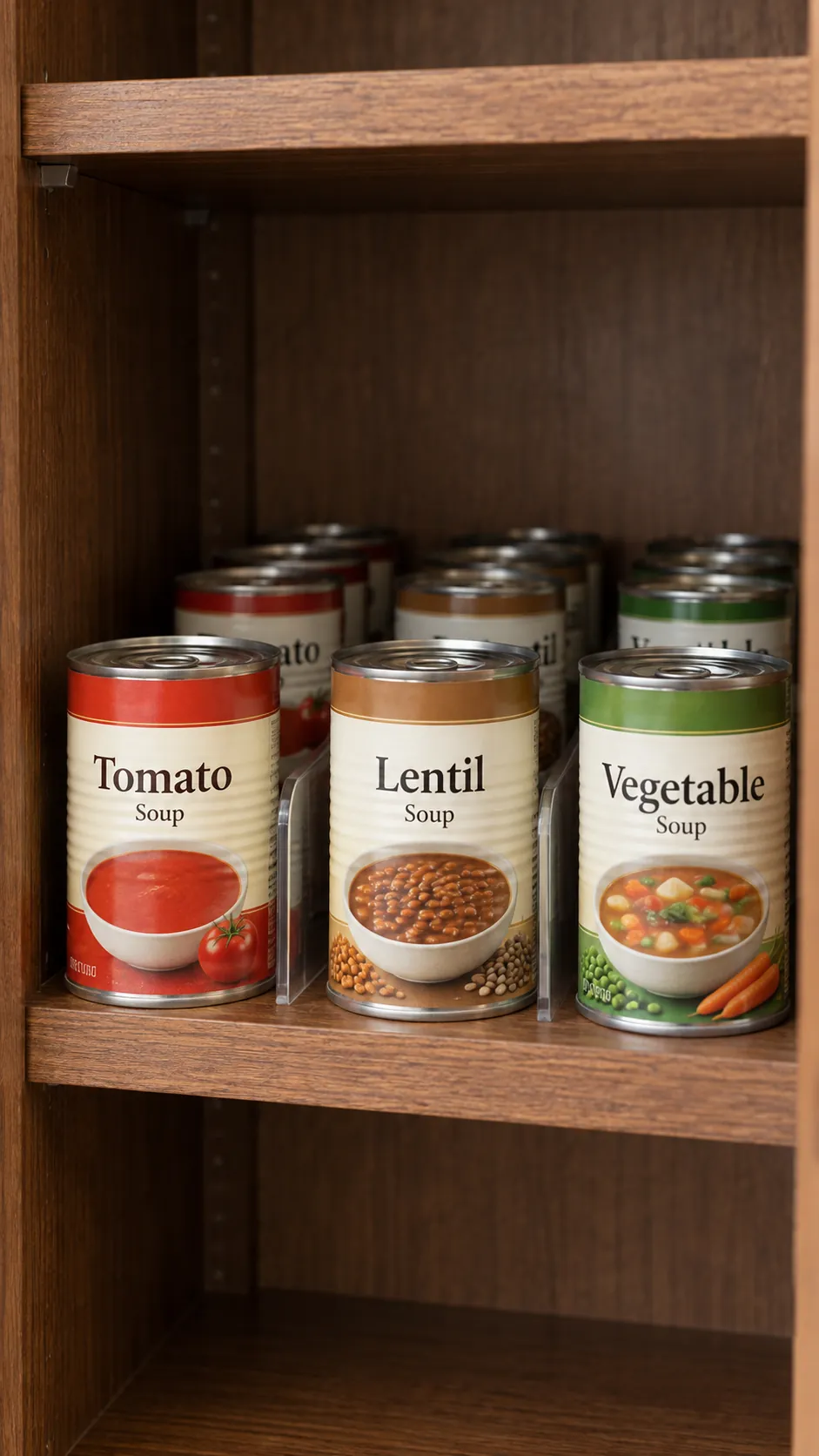
Create a visible soup row
Put frequently used soup cans in one straight row with labels facing outward. Keep duplicates of the same kind behind the front can only when the row remains easy to identify. Rotate suitable older stock forward during restocking. If the shelf is too deep to maintain that row, use a removable can bin instead of adding more hidden varieties.
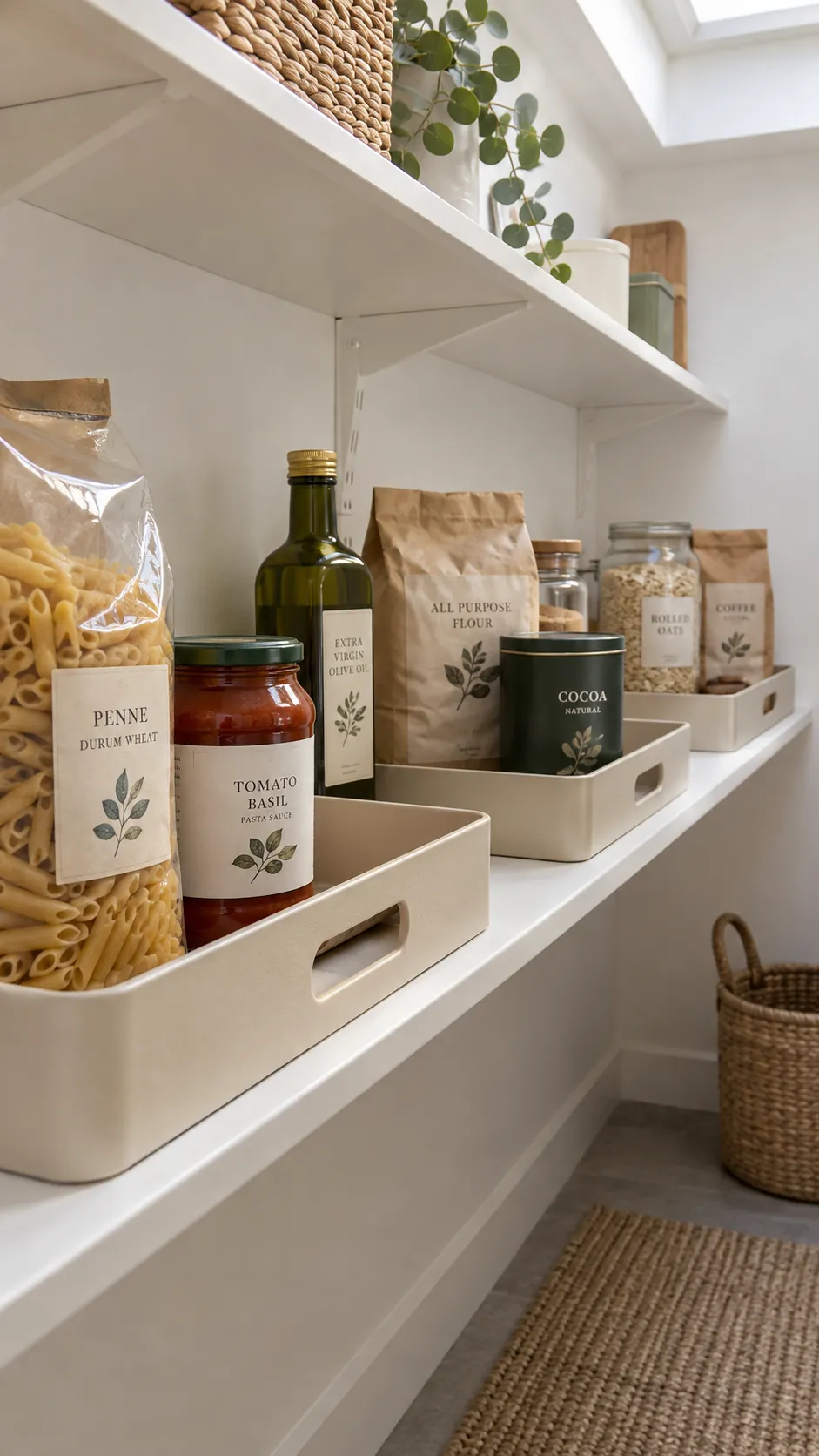
Divide the shelf by cooking task
A pantry can be easier to use when breakfast, baking, and dinner each have a clear home. Give each task a realistic amount of space based on your groceries. Separate categories with a tray edge or a removable divider rather than squeezing in more baskets. Keep mixed use staples in the most convenient shared spot instead of buying duplicates for every zone.
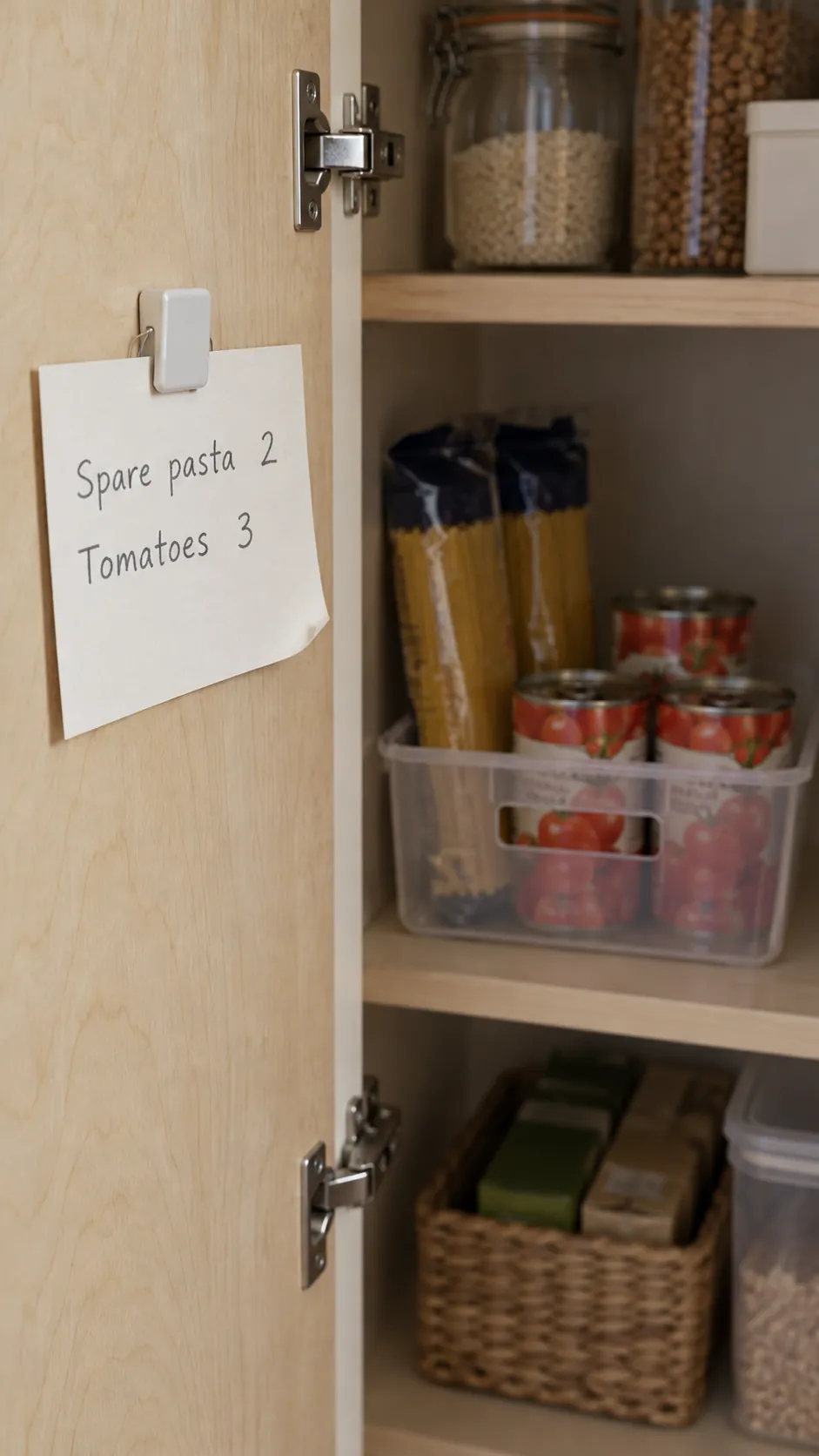
Keep an inventory on the inside door
A simple note can track rear stock that you cannot see easily. Record only the categories that cause repeat purchases, such as spare pasta or canned tomatoes. Update the note when a package moves to the working shelf. A short list that stays accurate is better than an elaborate inventory nobody maintains.
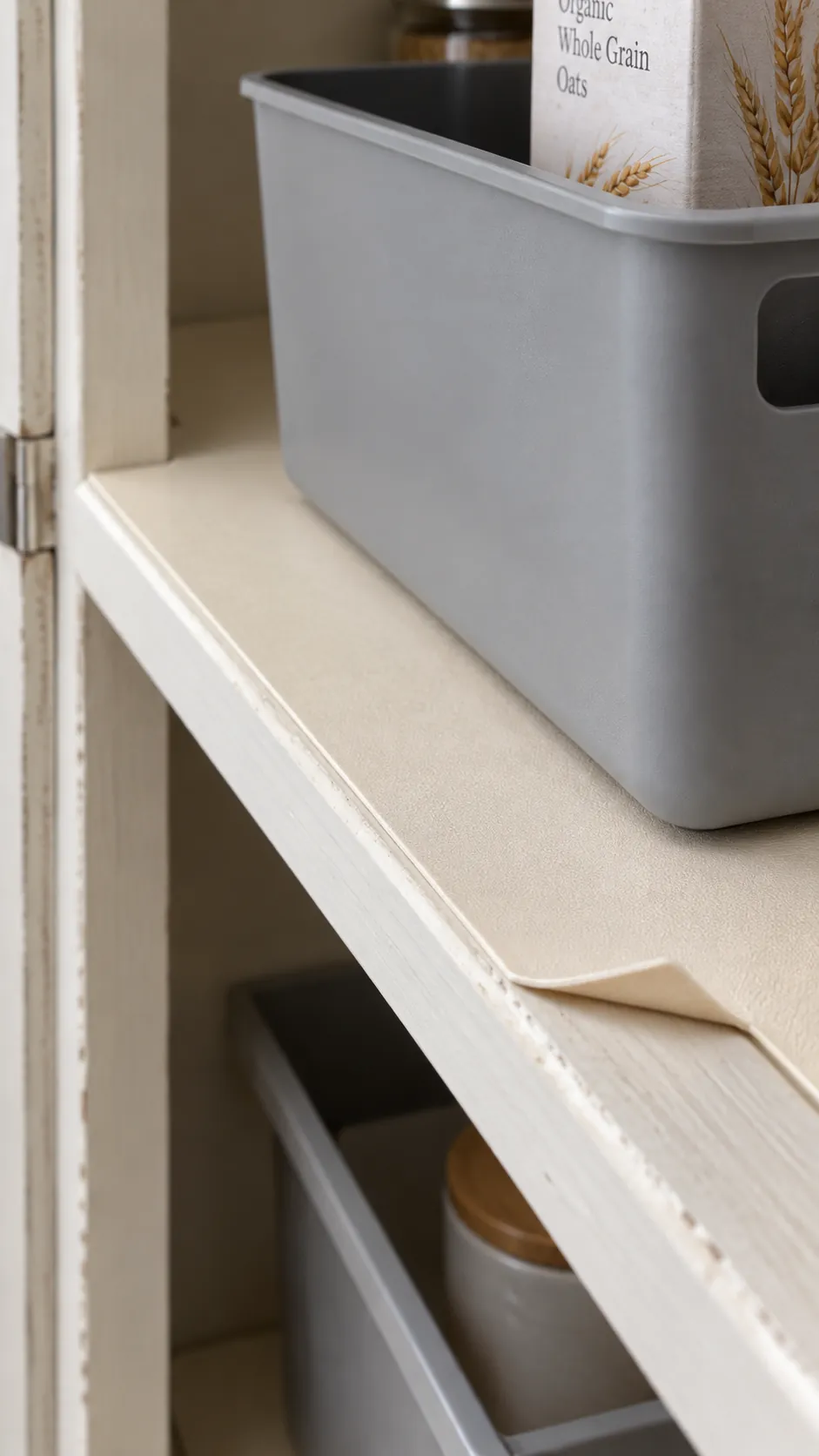
Choose washable shelf liners carefully
A smooth removable liner can make a rough shelf easier to wipe. Check that it lies flat and does not interfere with a basket or pullout mechanism. Avoid thick curling edges that catch containers as you slide them forward. Clean beneath the liner during resets so it does not hide spills.
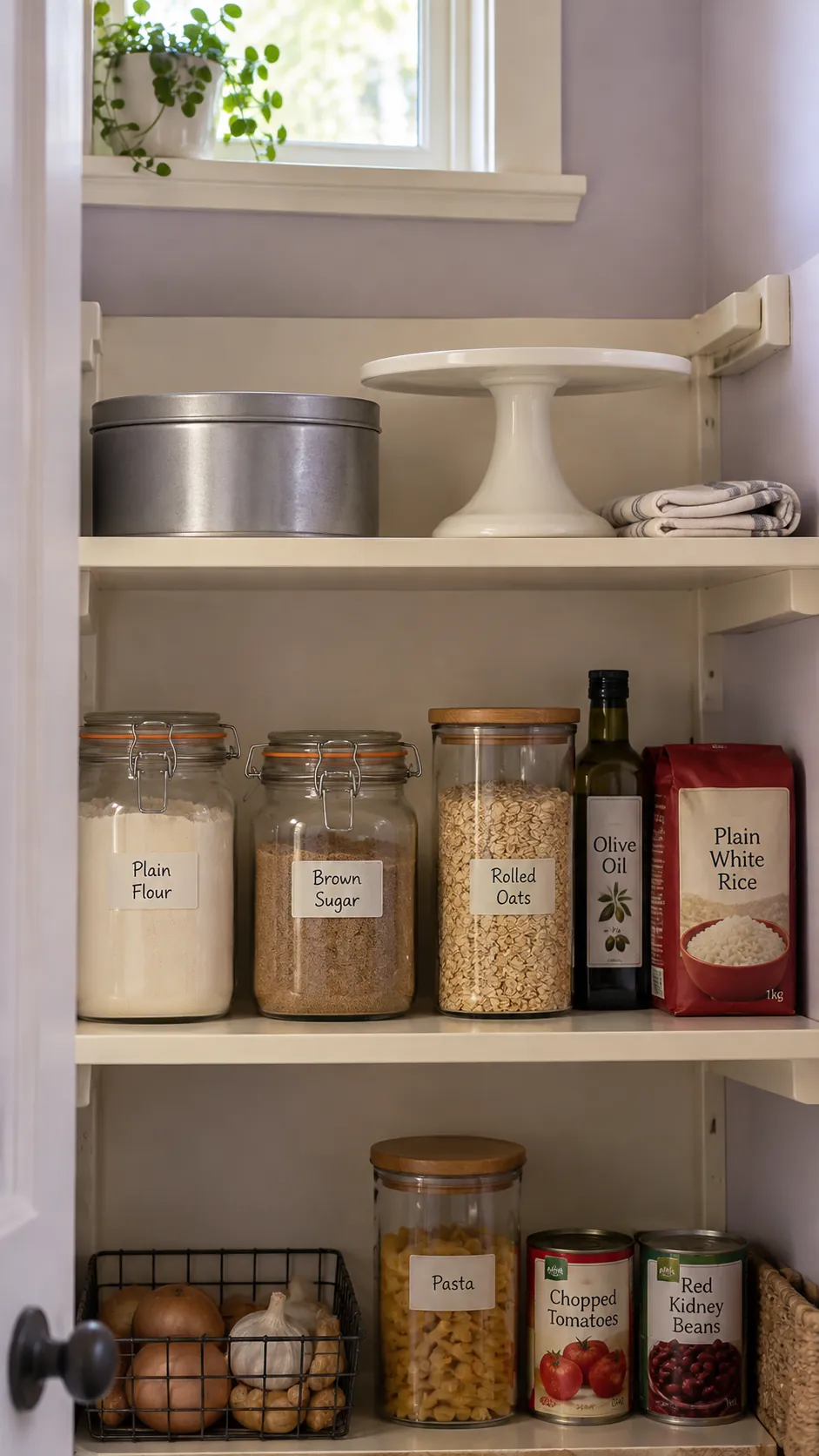
Keep occasional baking equipment elsewhere
A cake stand or large seasonal tin can occupy the most useful food access area for months. Move occasional equipment to a safe suitable storage spot if you have one. If it must stay in the pantry, keep it in a clearly separated upper zone within safe reach. Do not bury food behind equipment that needs two hands to remove.
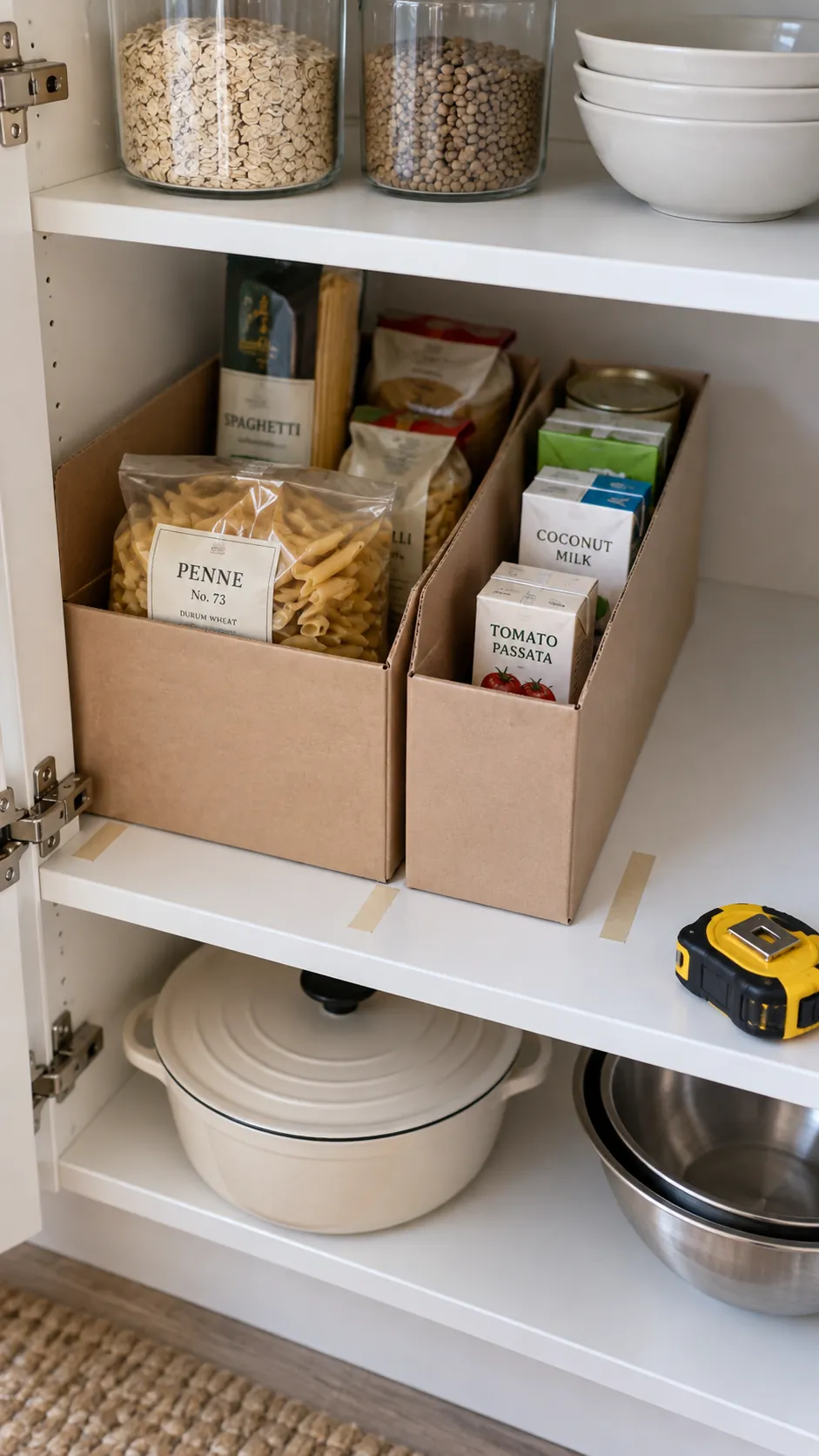
Test the layout with existing boxes
Before buying a full set of deep shelf baskets, use clean boxes to test category widths. Leave the boxes open so you can judge visibility and grip. Try the arrangement through shopping and several meals, then measure the categories that work. Replace temporary boxes if they become damp, dirty, weak, or difficult to clean.
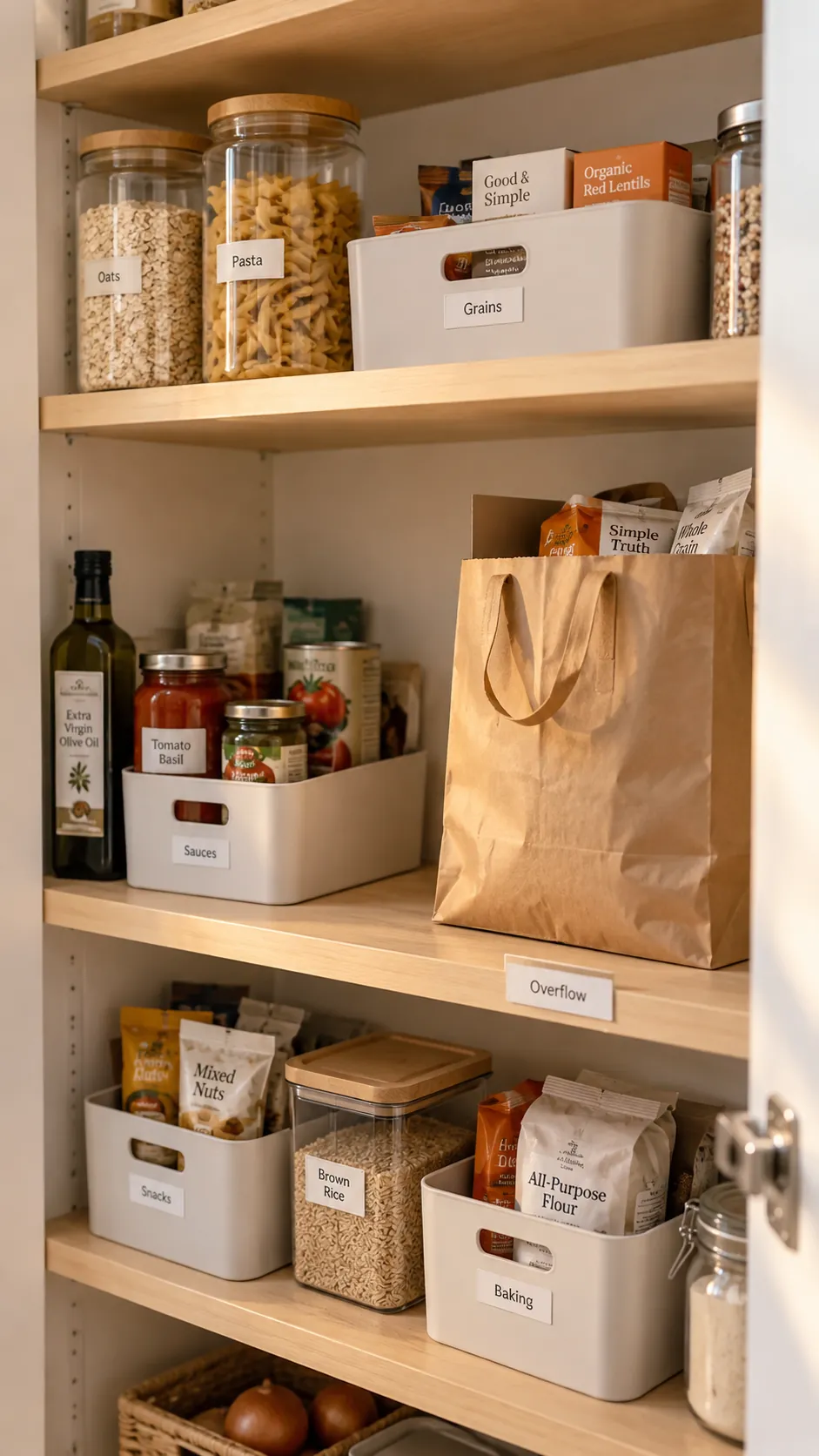
Leave space for the next grocery trip
A pantry organized only for today's half empty packages can fail as soon as you shop. Keep a modest empty area for routine grocery overflow. Sort new purchases into their proper zones promptly rather than letting that space become permanent mixed storage. If overflow repeatedly exceeds the space, review buying quantities before adding another organizer.
Reset one deep shelf before shopping
Pull out the containers on one shelf and check the rear before writing the shopping list. Remove crumbs, return misplaced items, and bring suitable older stock forward. Notice which container takes two moves to reach and change that part of the layout. The best compact food storage system lets you find dinner without discovering a forgotten duplicate behind it.