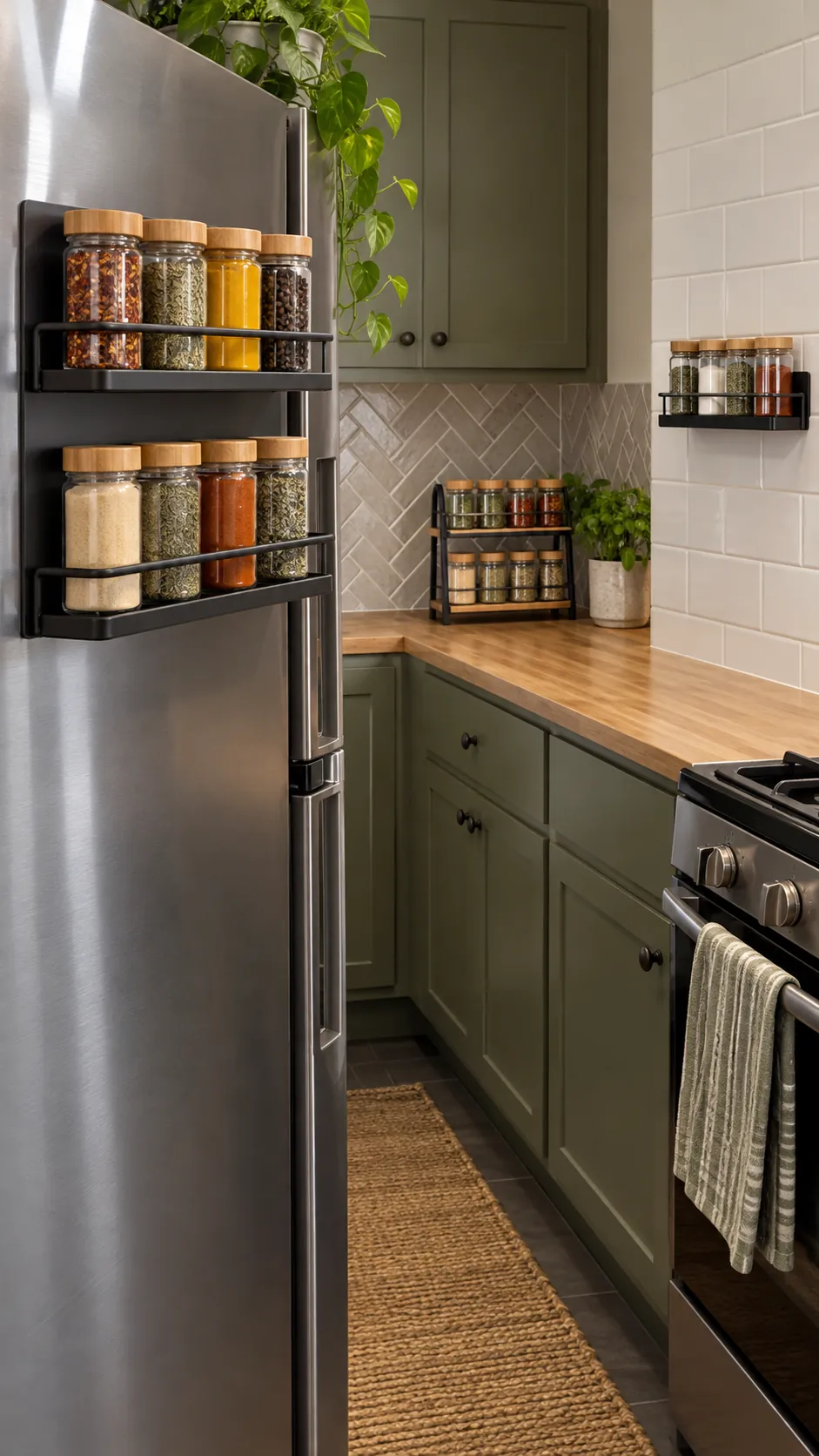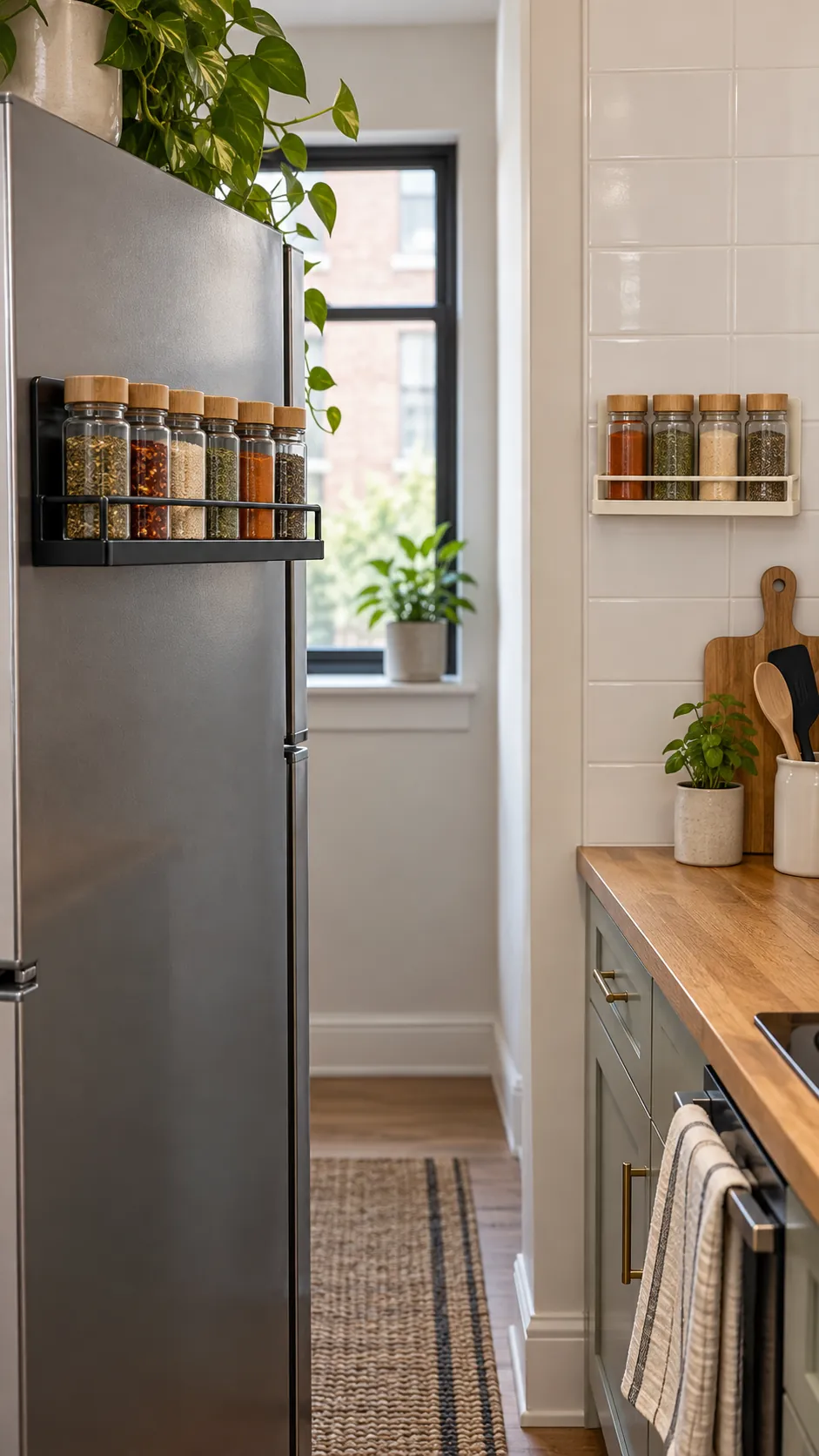
A rack that falls after several quiet weeks can break jars, chip tile, or frighten a pet. Renters need more than a weight claim on a package. The mounting surface, the loaded rack weight, heat, steam, and the way you remove a jar all change which option is safer.
Choose magnetic when the surface truly supports it
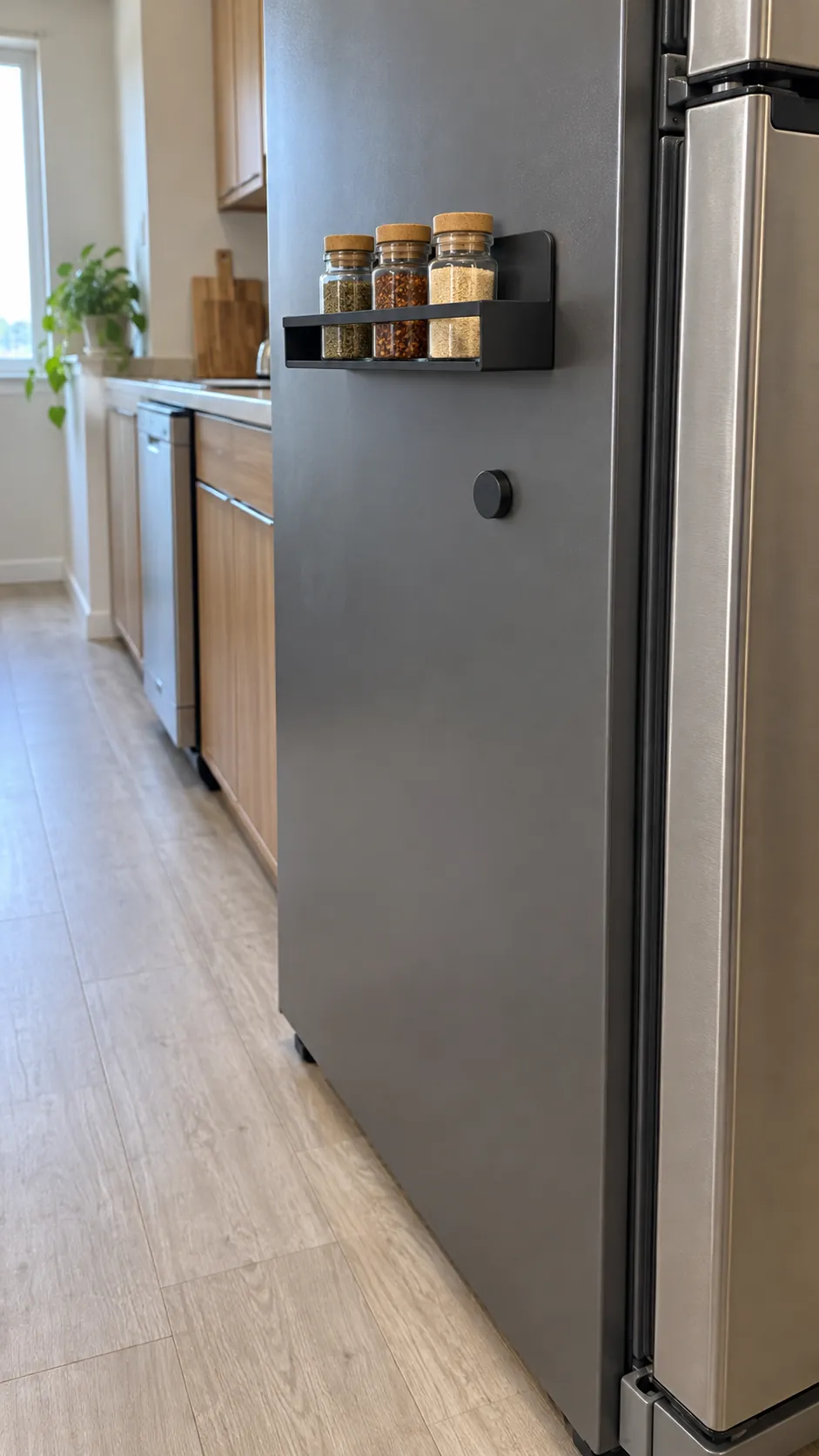
A magnetic spice rack for a fridge is usually the most reversible choice. It leaves no adhesive residue, moves in seconds, and spreads load across a broad steel surface. Test the exact location with a small magnet because stainless panels, decorative skins, and some cabinet sides may not attract a magnet at all.
Check that the rack does not block a door seal, hinge, vent, or walkway. Side mounted storage works best when jars remain above the reach of children and away from bumps. A strong magnet is still unsafe if the rack can slide on a dusty or curved panel.
Use loaded weight instead of the rack weight
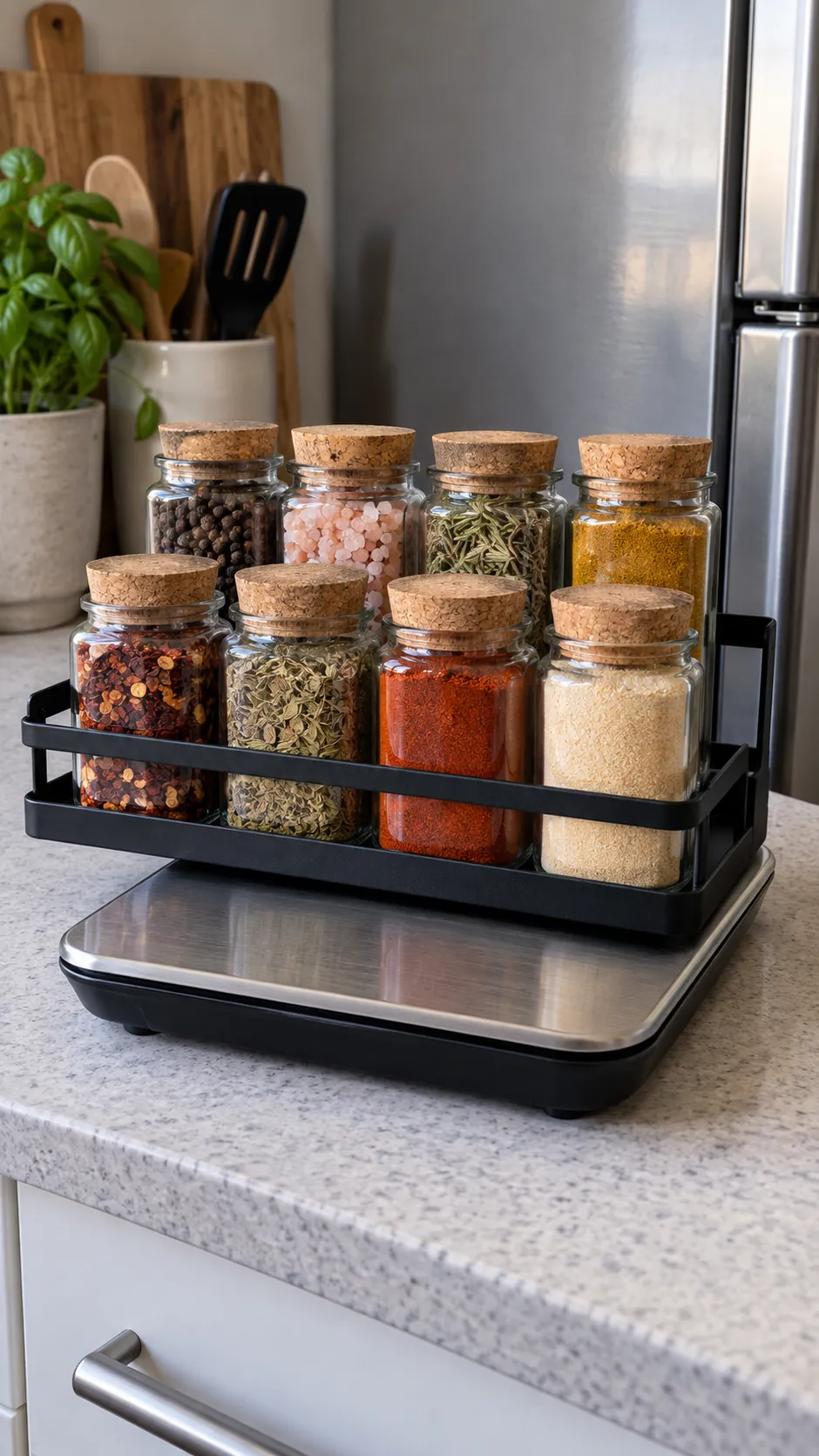
Weight capacity should include every filled jar, the rack, and the extra force created when you pull one container forward. Weigh the complete loaded shelf on a kitchen scale. Then stay comfortably below the maker limit instead of treating that number as a target.
Place heavier jars near the bottom and test the rack over a counter before moving it to an exposed side panel. Open and close the refrigerator several times. If the shelf creeps, twists, or rattles, reduce the load or choose a wider magnetic back.
Reserve adhesive racks for smooth stable surfaces
An adhesive spice rack can work on smooth sealed tile or glass when no magnetic surface is available. It performs poorly across grout lines, textured tile, peeling paint, porous stone, or greasy laminate. Small high points on uneven tile reduce contact even when the strip looks fully pressed.
Clean only with the method approved by the adhesive maker and let the surface dry fully. Follow the stated pressing and curing time before adding jars. Do not place an adhesive shelf above a cooktop, sink, pet bowl, or any place where a falling jar could cause serious harm.
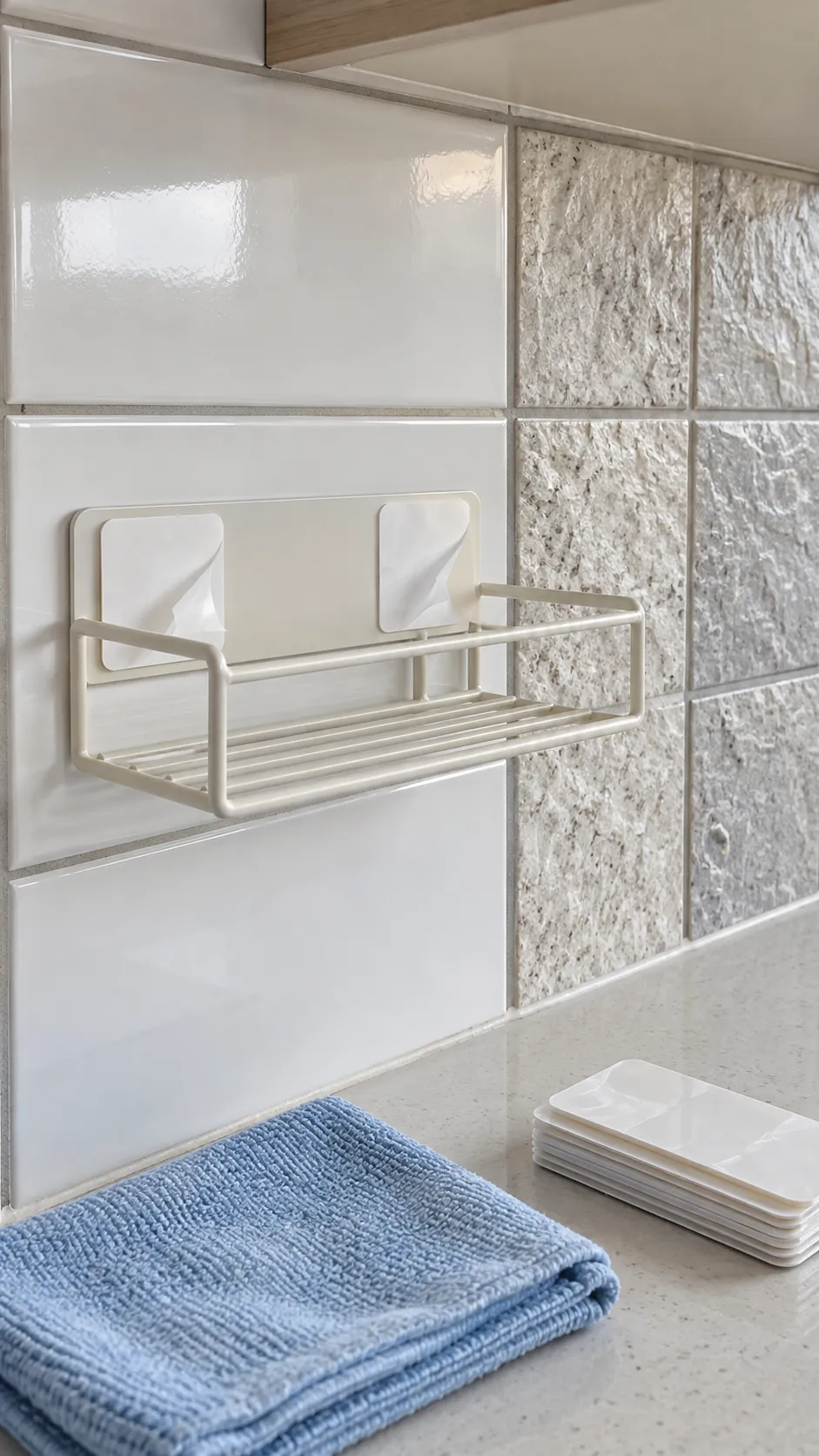
Plan removal before you attach anything
Removable does not mean harmless on every finish. Strong mounting tape can lift paint, veneer, old caulk, or a weak tile coating. Photograph the original surface, read the lease, and test one small strip in a hidden area for the full cure and removal cycle.
Keep the removal tab accessible and never bury it behind the rack frame. Pull in the direction specified by the maker rather than peeling outward. If the surface begins to lift, stop and seek the property manager’s guidance instead of forcing the strip free.
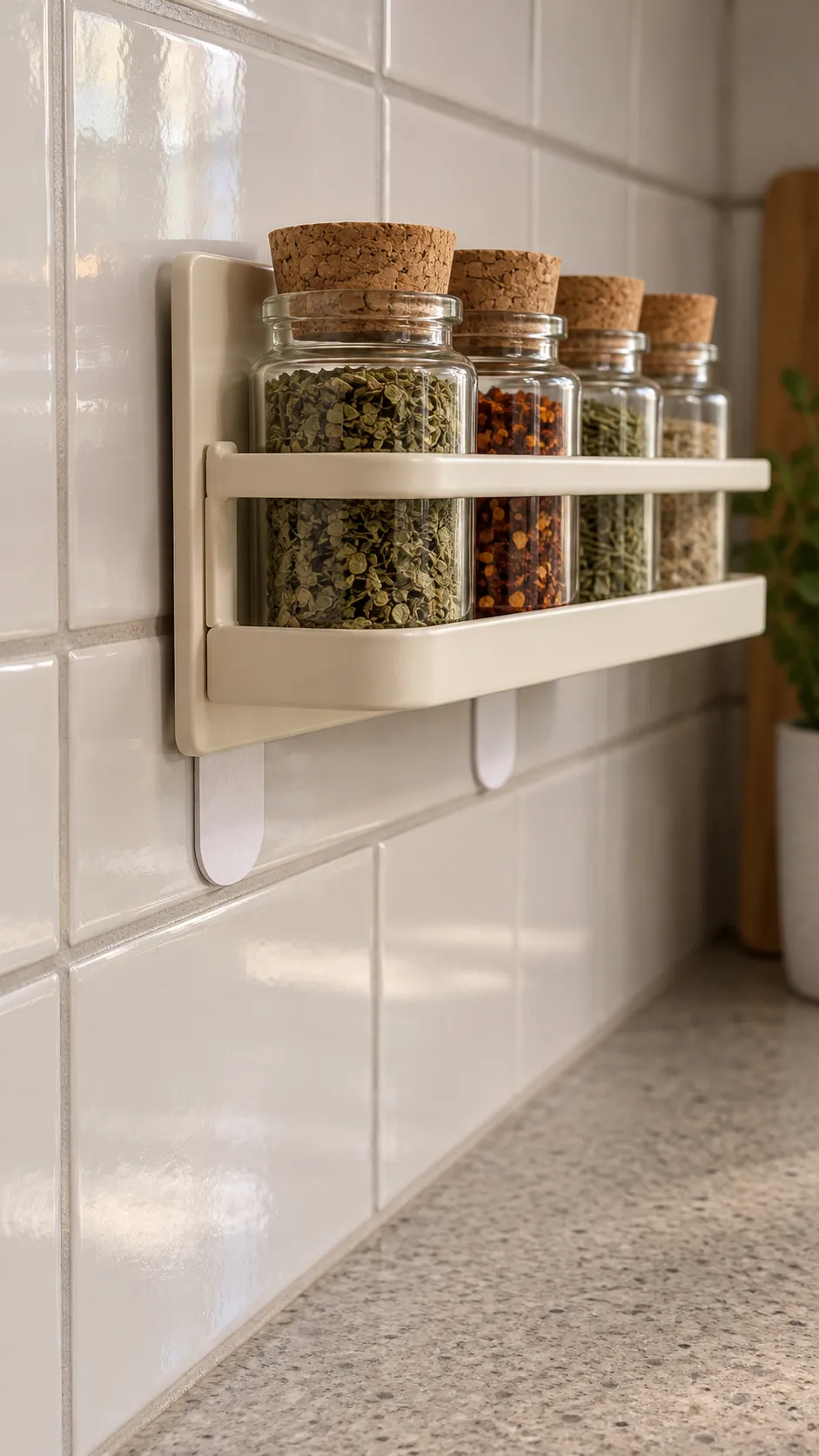
Compare everyday access and cleaning
Magnetic shelves move for wiping and can follow you to a new apartment, but they use valuable refrigerator side space. Adhesive racks can place spices closer to a preparation zone, yet the mount stays fixed and grease can collect around its edges. Both need enough rail height to keep jars from tipping.
Keep spices away from strong heat and direct steam because both shorten flavor life and can weaken some adhesives. Store the most used jars between waist and eye height. Leave enough finger space to lift one jar without pulling against the entire shelf.
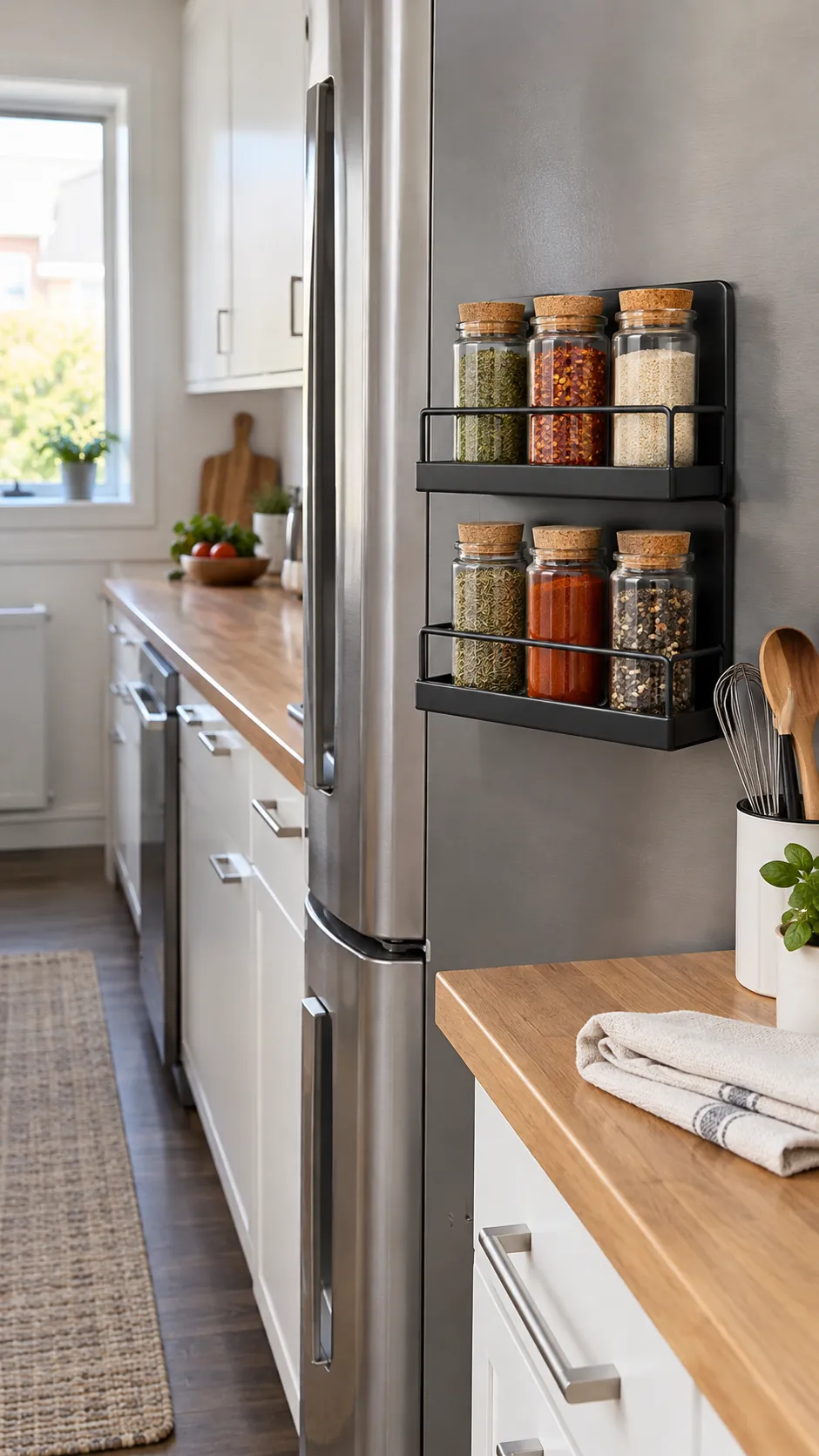
Make the final choice with a simple rule
Pick magnetic storage when a flat steel surface passes the magnet test and the loaded shelf clears doors, vents, and traffic. Consider adhesive only when the surface is smooth, sealed, clean, cool, and approved by both the property rules and the strip maker. Choose a freestanding counter or cabinet organizer when neither condition is true.
Load any mounted rack gradually, then check it after one hour, one day, and one week. Watch for sliding, stretched tabs, lifting corners, or new gaps. The best spice storage for renters is not the strongest looking shelf; it is the system you can inspect, clean, and remove without leaving a repair behind.