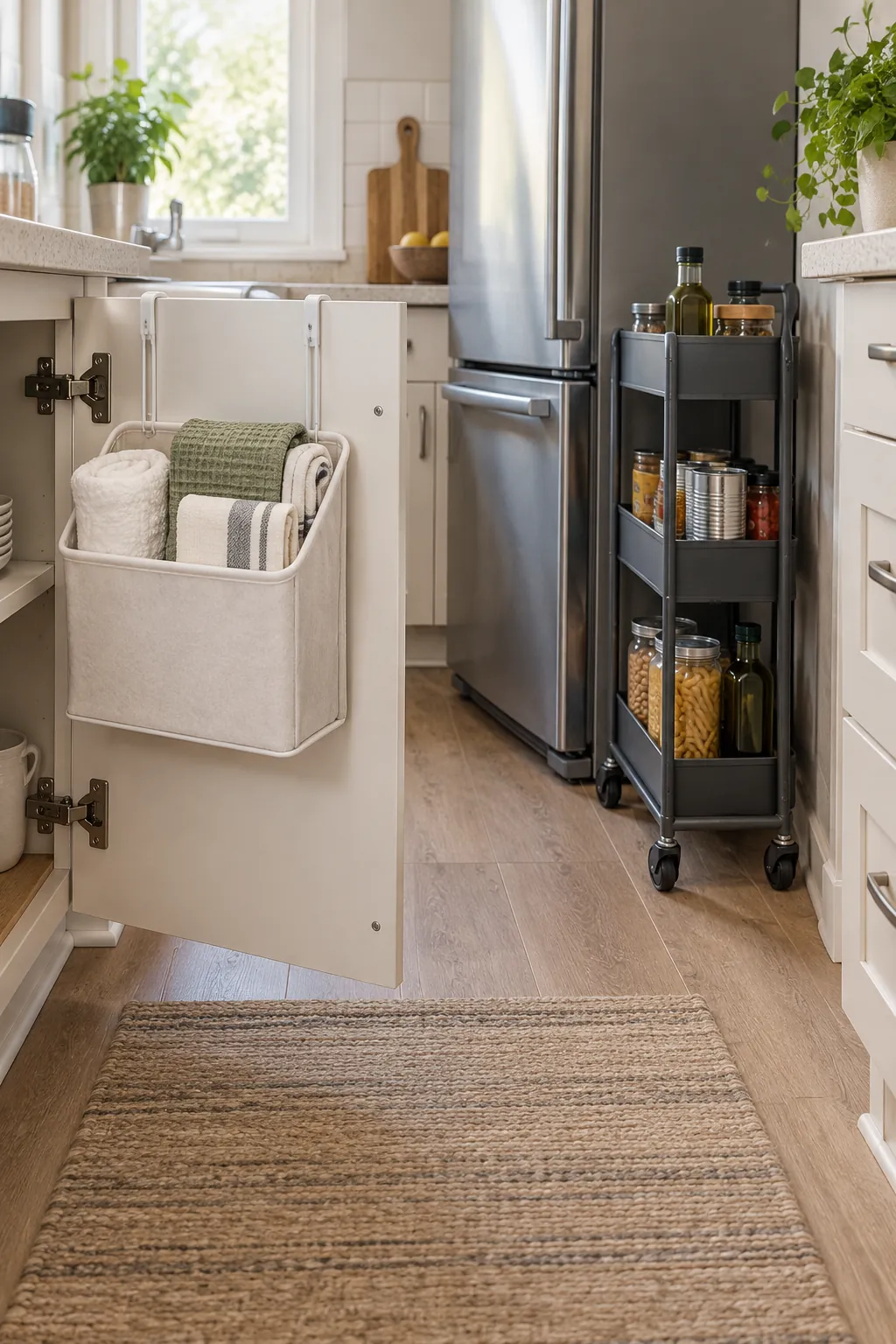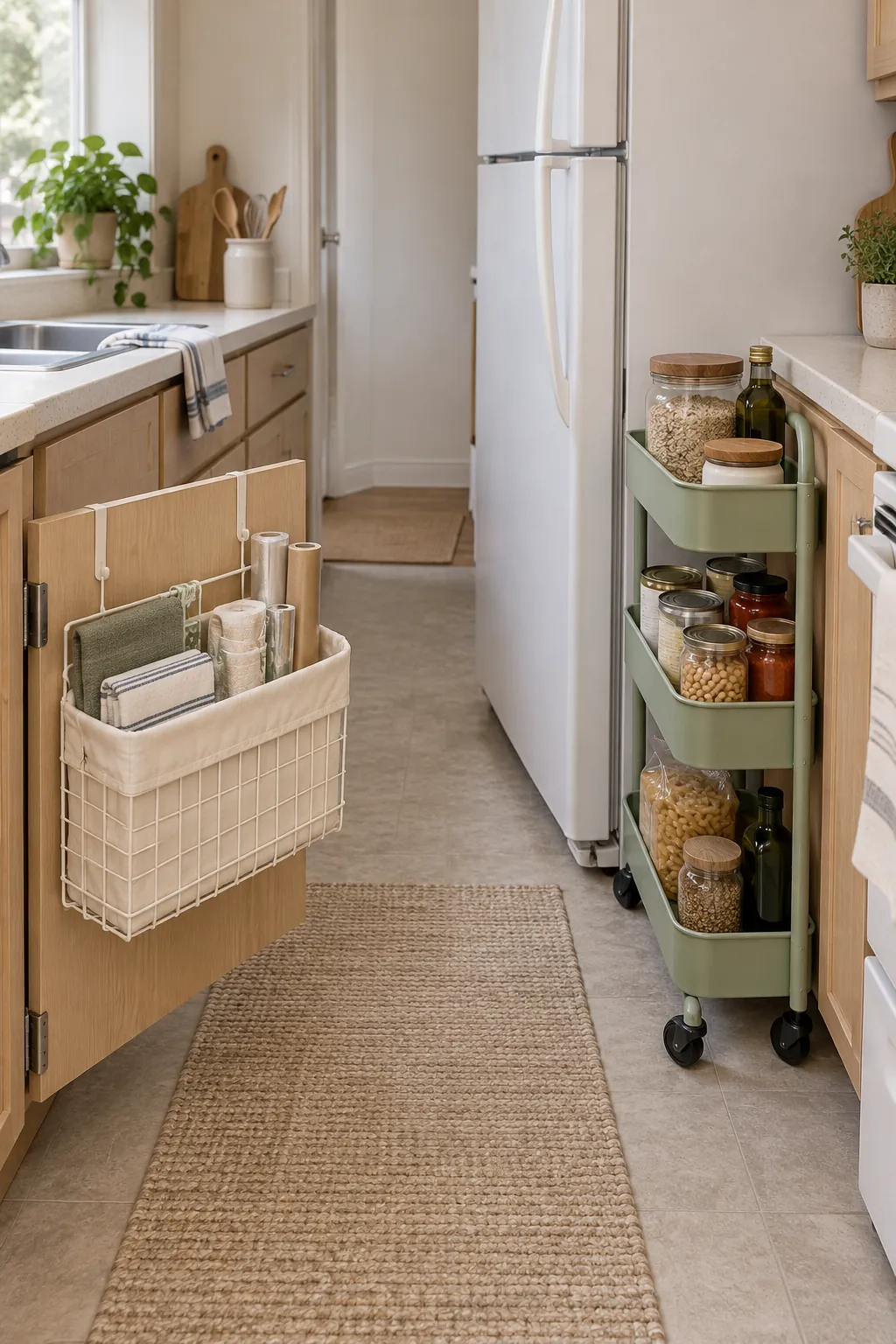
The narrowest storage product can still fail if a door cannot close or a cart cannot roll past trim. Small kitchens need storage that respects moving parts, traffic lanes, and the items you actually reach. Start with those constraints, then choose the form.
Measure the door and the gap as working spaces
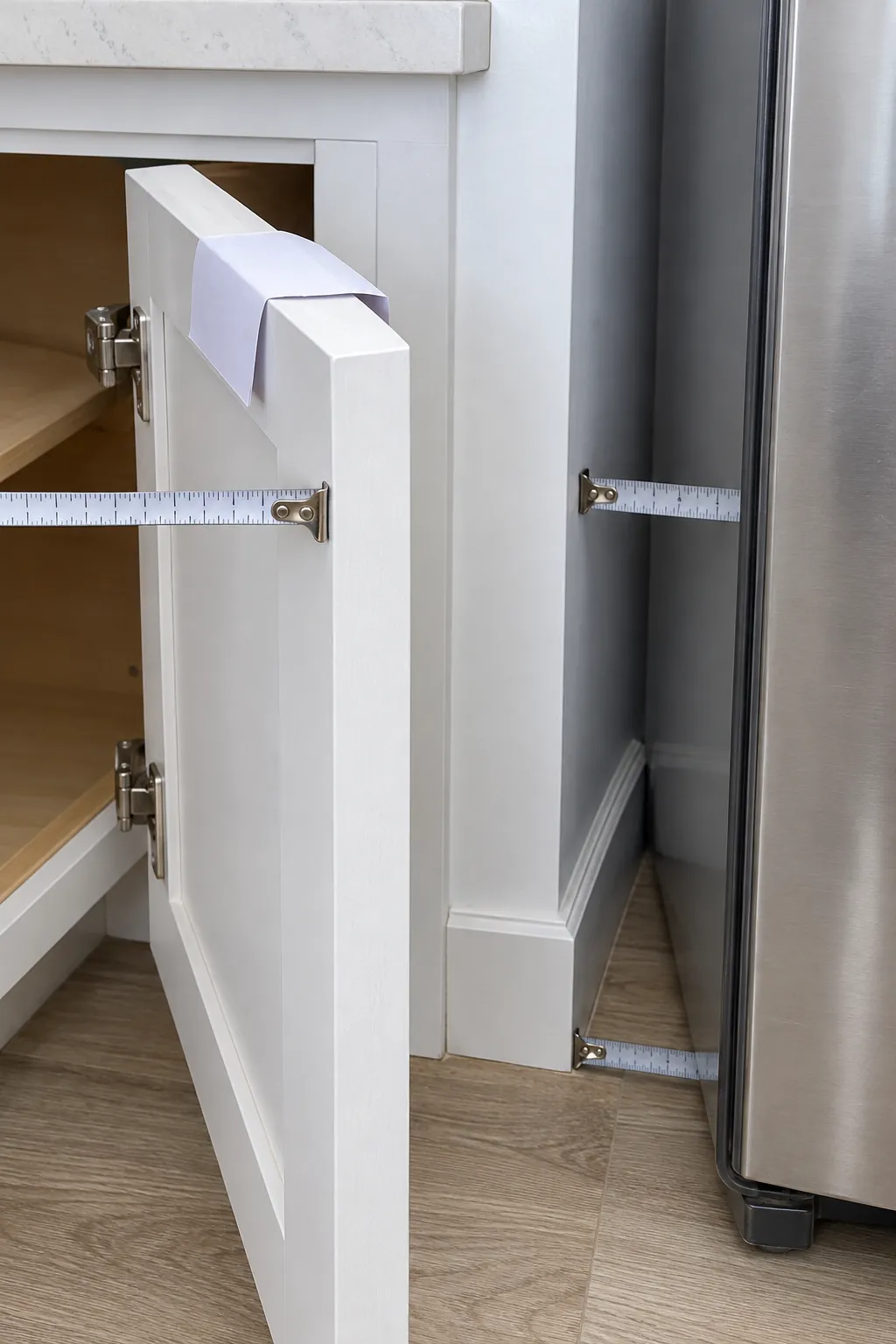
For an over cabinet door organizer, measure door thickness, rail width, hinge position, inside shelf setback, and the space between the door and the cabinet frame. Close the door with a folded paper test strip over the top edge. If the paper tears or the door springs back, a metal hook may be too thick.
For a slim rolling kitchen cart, measure the gap at the floor, middle, and counter because walls and appliances are not always parallel. Include baseboard, handle, wheel, and cord clearance. Add finger space so the cart can be pulled out without scraping either side.
Use a door basket for light daily supplies
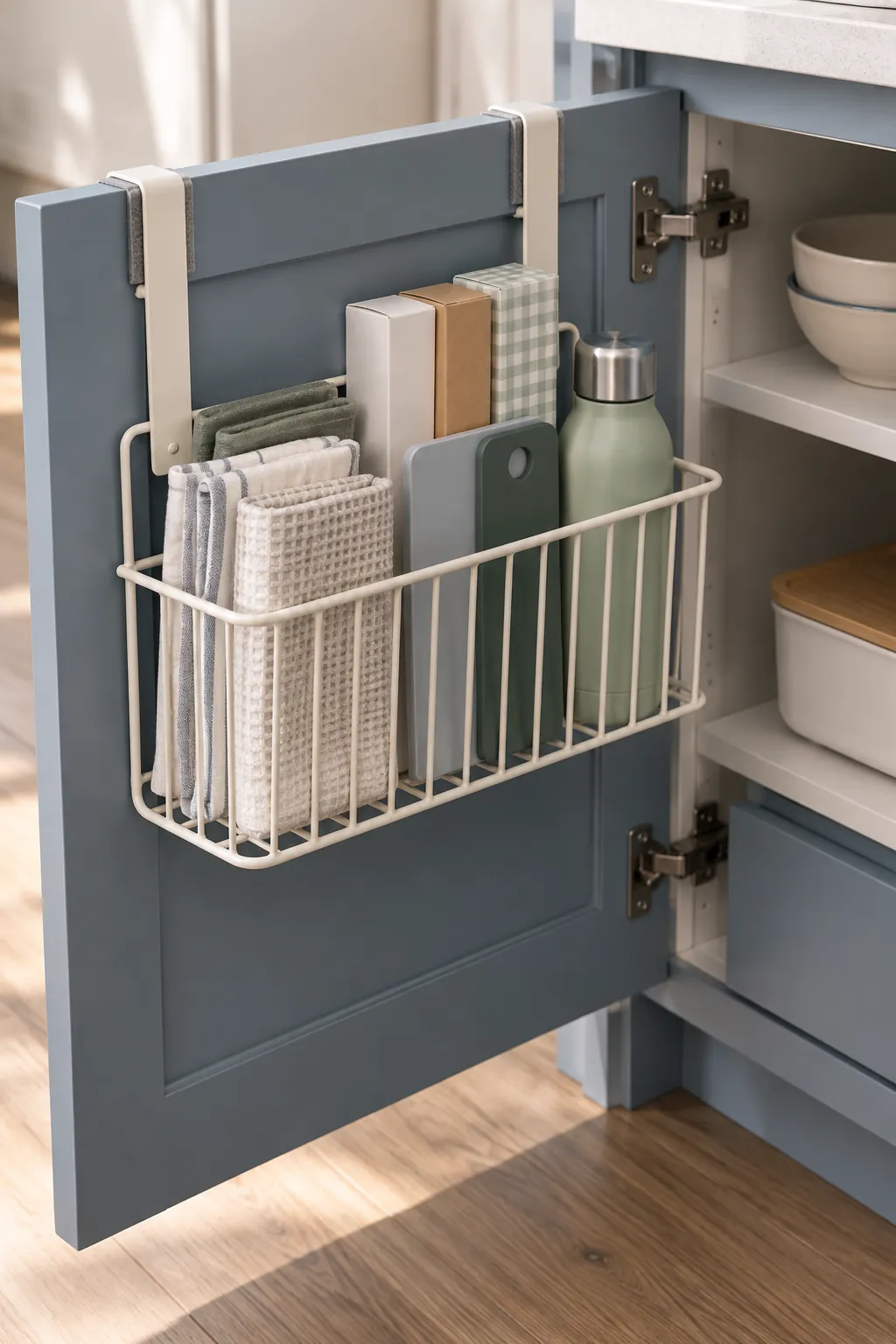
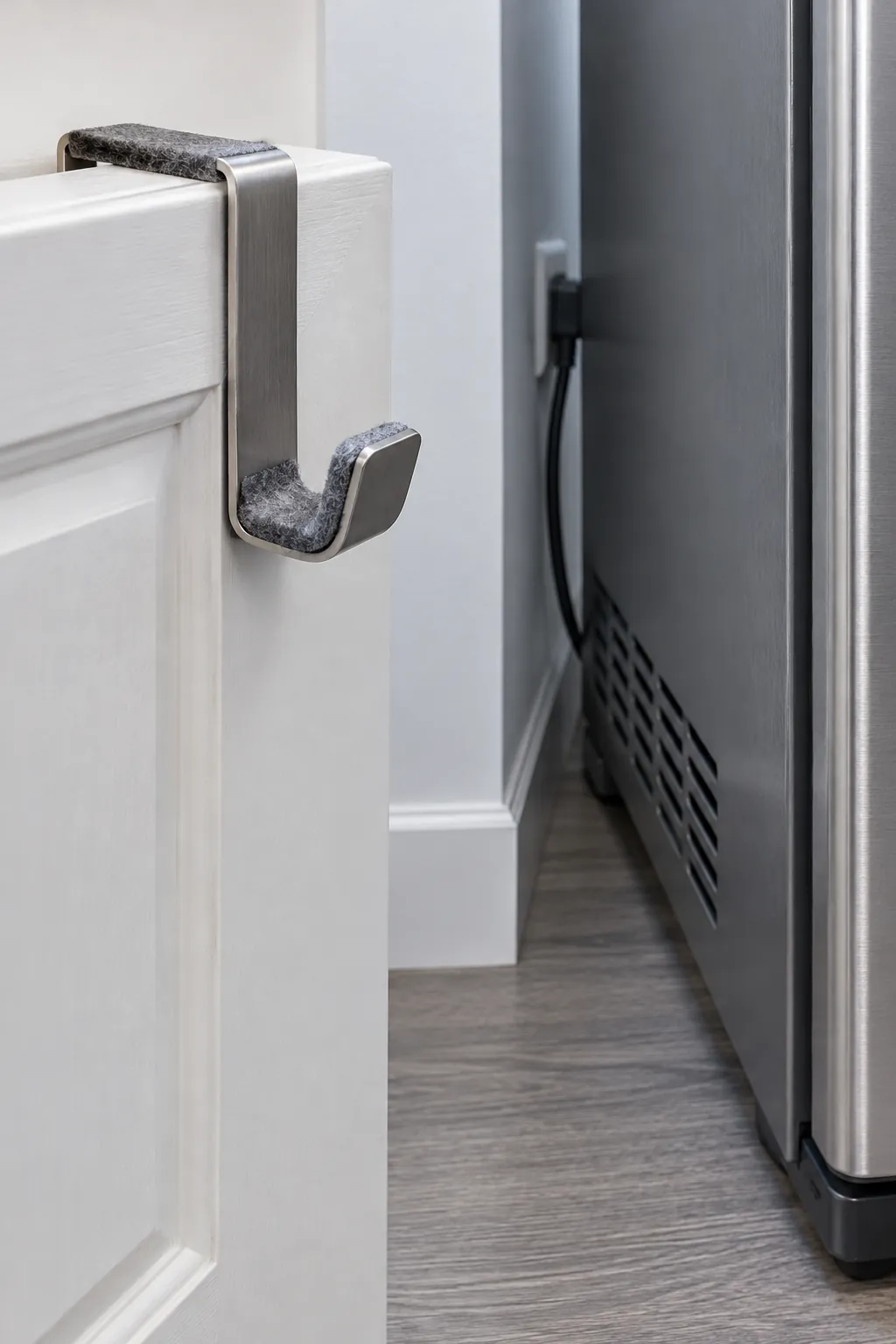
An over cabinet door organizer suits towels, wraps, cleaning cloths, cutting mats, or light bottles. It uses a surface you already have and disappears when the door closes. The best hooks fit closely and include a soft contact pad that does not shift or mark the finish.
Keep weight modest because every added item loads the hinges. Check that stored objects clear the interior shelf and plumbing. If the door sags, rubs, rattles, or needs force to latch, remove weight rather than tightening rental hardware.
Choose a rolling cart for pantry overflow
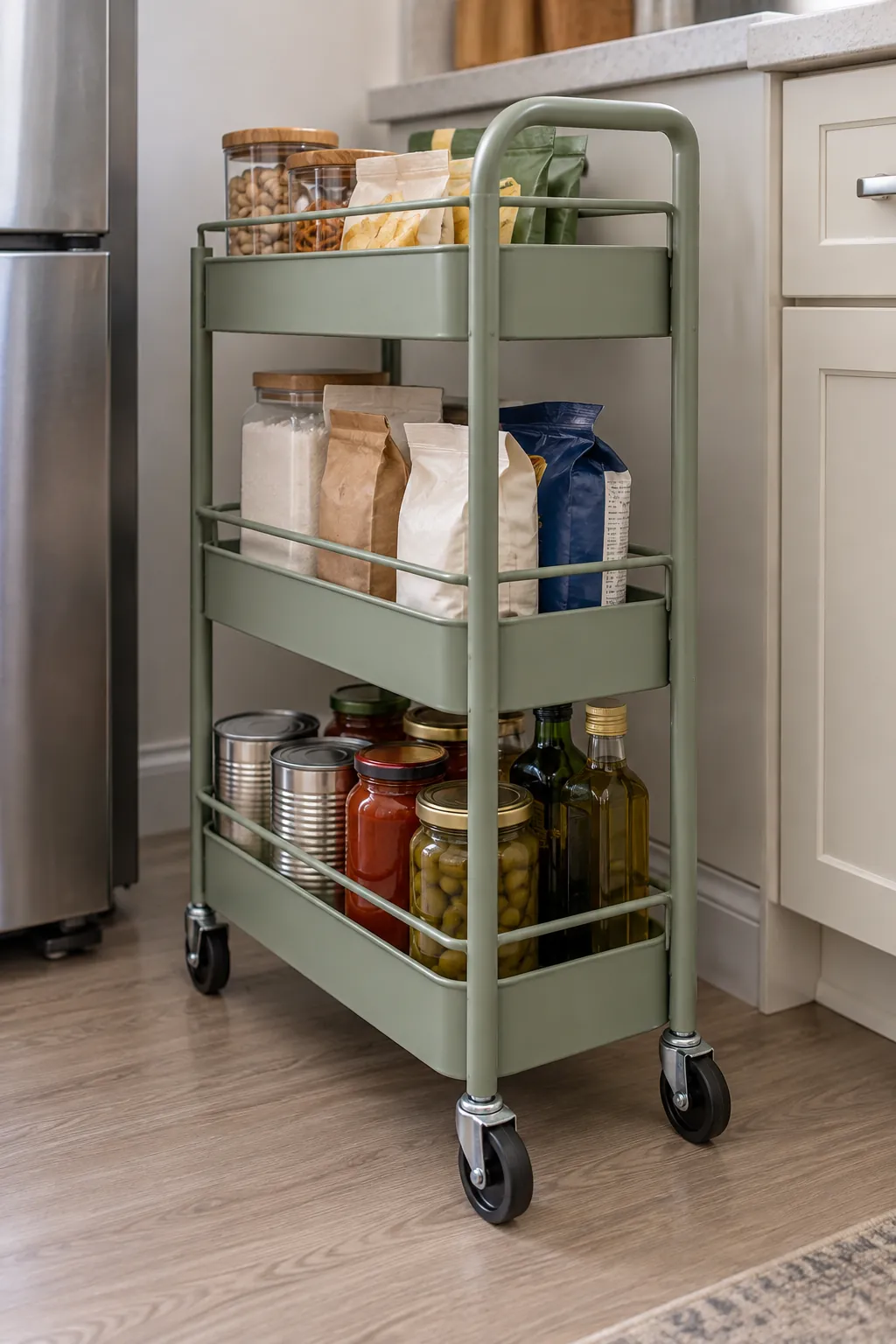
A slim rolling kitchen cart handles canned food, drink bottles, baking supplies, and other pantry overflow better than a door basket. Its load transfers to the floor instead of cabinet hinges. Raised rails keep items contained when the cart moves.
Look for a rigid frame, wheels that track straight, and shelf spacing that fits your tallest container. Put heavy goods on the lowest shelf. A cart without a stop can roll into a walkway, so use its lock or park it against a stable end surface.
Protect finishes and appliance ventilation
Thin hooks can still rub paint or veneer as a door moves. Use only the fitted protective pads supplied for the organizer, then inspect the top and back of the door after the first week. Avoid improvised tape that may harden or pull finish at move out.
A narrow gap beside a refrigerator may be part of its ventilation path. Read the appliance clearance guidance before filling it with a cart. Never pinch a power cord, block a floor vent, or store heat sensitive food beside a hot appliance panel.
Compare access in a busy kitchen lane
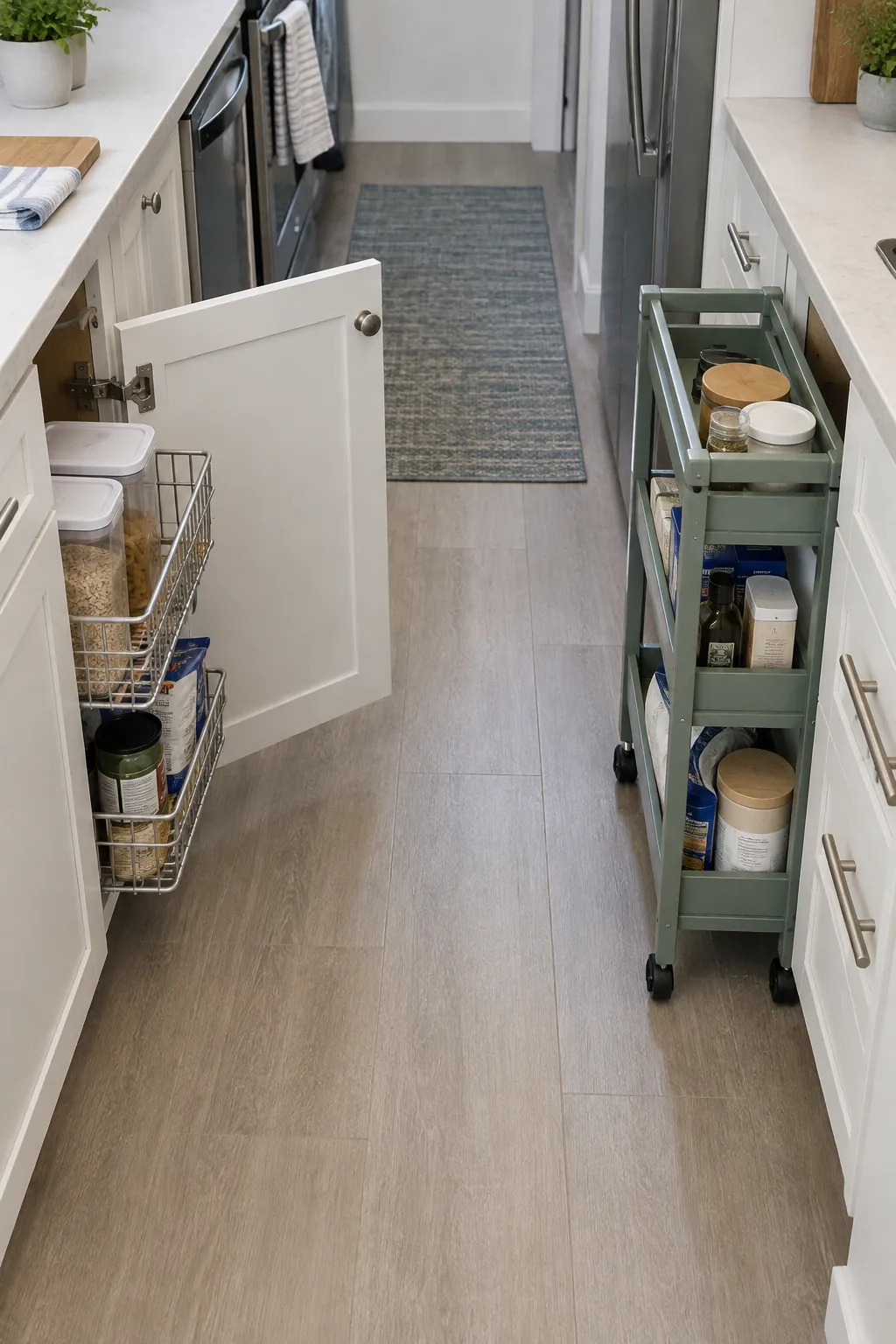
A door basket moves with the cabinet door, so it is quick for items used at that cabinet but can swing into knees. A cart needs room to pull forward, yet it can bring an entire category to the preparation area. Test both motions while another person could still pass safely.
Do not create storage so deep that products vanish again. Keep labels facing the aisle, group like items, and leave a grip point. Clean crumbs and grease beneath a cart regularly because a narrow hidden strip can attract pests.
Pick by load, location, and moving frequency
Choose an over door basket for light items near one cabinet when the hook passes the closure test. Choose a narrow rolling cart for heavier pantry goods when a true floor gap and safe pull path exist. Use neither when the product interferes with hinges, seals, ventilation, cords, or the main walkway.
Load the chosen organizer gradually and repeat every movement. Open the door fully, pull the cart completely out, and check nearby drawers. The better renter solution is the one that works quietly every day and leaves the kitchen unchanged when you move.