
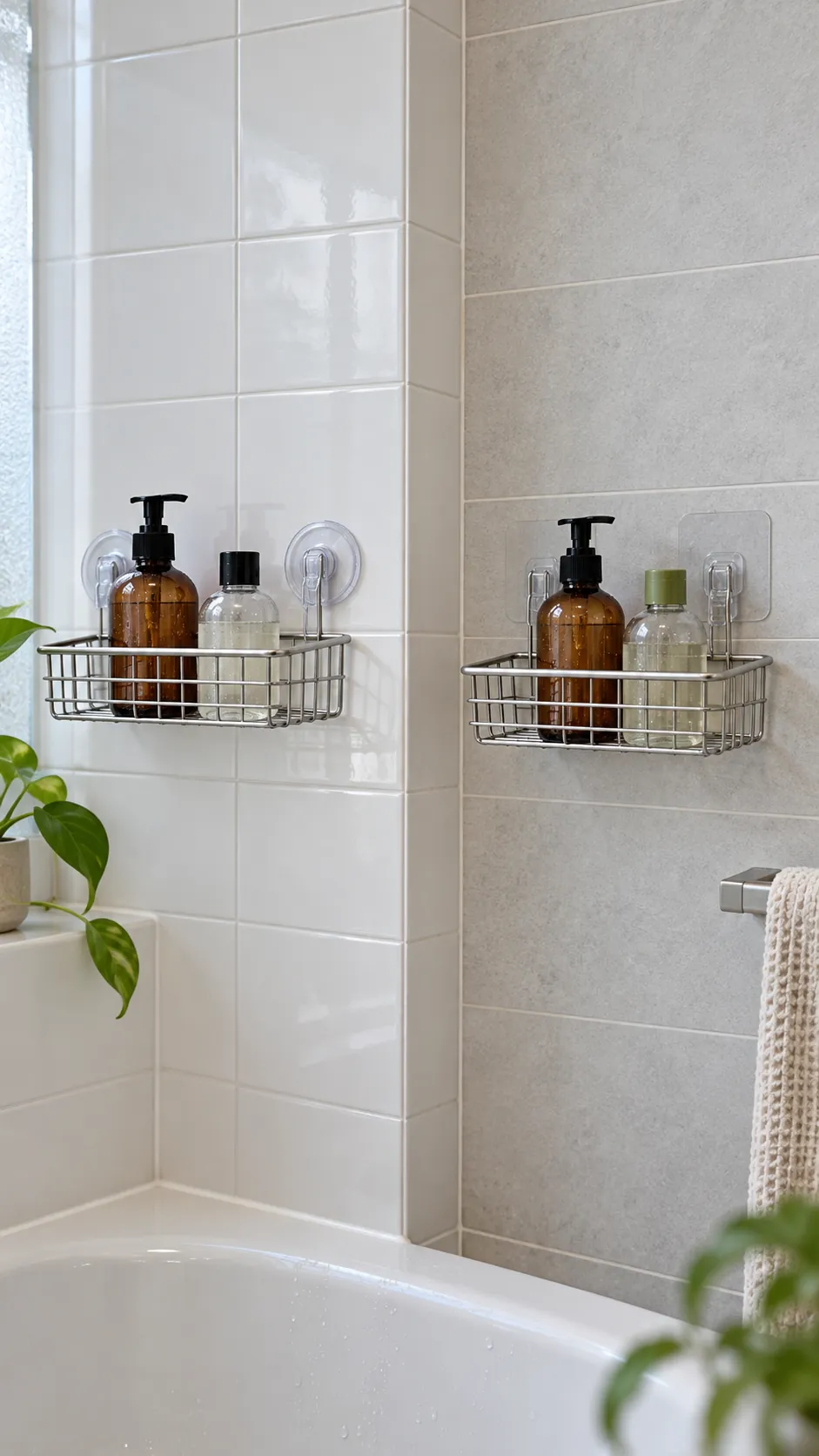
A shower shelf can look secure during installation and still land in the tub at two in the morning. The real choice is not which mounting method sounds stronger. It is which method can form a dependable bond with your exact tile, moisture level, load, and move out plan.
Indexed Reddit snippets repeatedly point to the same frustrations: textured tile defeats suction, grout lines let air under a cup, soap film weakens contact, and heavy bottles turn a small mounting mistake into a noisy failure. Adhesive shelves solve some of those problems, but they demand careful preparation and may leave residue. This guide helps you choose with fewer surprises.
Start With the Tile Surface
Run a clean fingertip across the intended mounting area. A smooth glazed tile with no raised pattern gives a suction cup the continuous seal it needs. A pebbled, matte, handmade, or heavily textured face creates tiny air channels, even when the shelf seems attached at first.
Tile size also matters because every suction cup and adhesive pad must sit fully on tile. A grout joint beneath any part of the mount can break a suction seal or reduce adhesive contact. Measure the mounting plate, then find a clear area that avoids grout, cracked glaze, loose tile, and silicone seams.
When Suction Cups Are the Better Choice
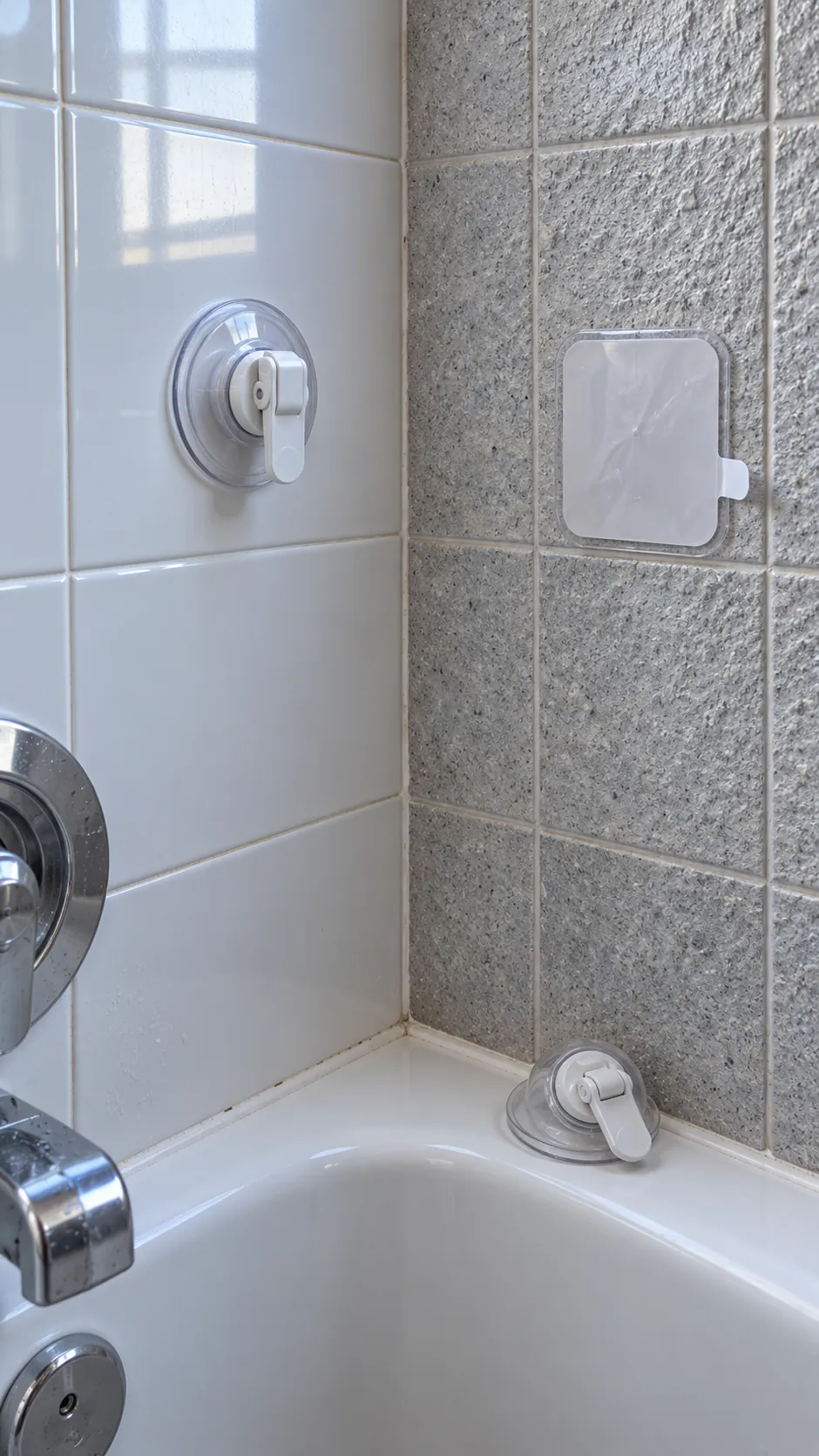
Suction is the most reversible option when the wall is truly smooth. A well designed locking cup can be released, cleaned, and moved without dissolving glue or scraping residue. That makes suction cup bathroom shelves useful for renters who expect to adjust the layout or take the organizer to another home.
The tradeoff is regular inspection. Temperature changes, shampoo residue, slow air leakage, and a sideways bump can weaken the seal. Treat the advertised shower suction shelf weight limit as a maximum under ideal conditions, not a comfortable everyday target. Keep glass containers and oversized refill bottles somewhere supported from below.
When Adhesive Pads Make More Sense
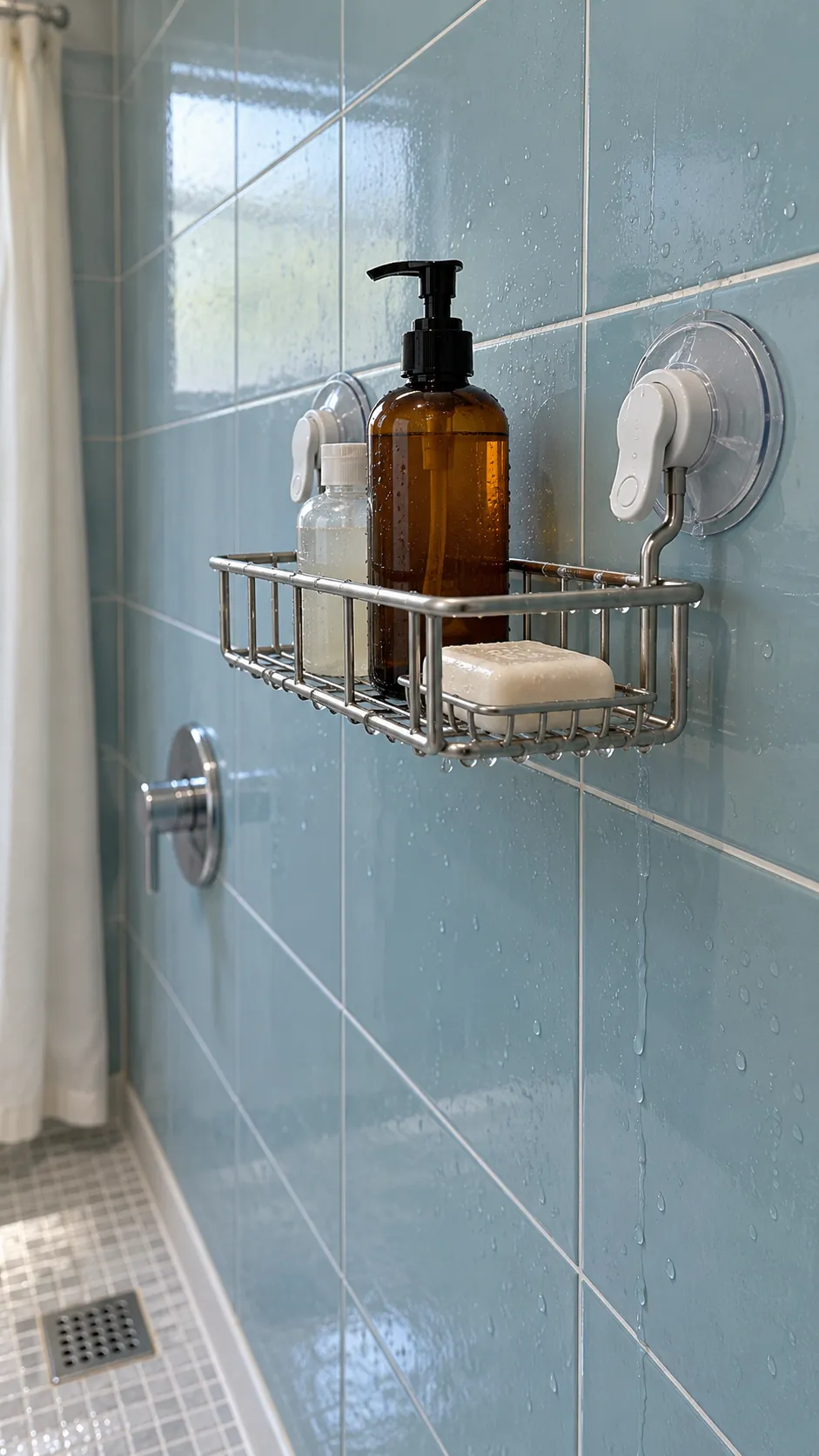
Adhesive tile wall shelves can work where a suction cup cannot maintain a seal. A broad pad spreads the load across a larger area and does not depend on trapped air. Mild surface texture may still be acceptable when the product manufacturer specifically approves that tile finish and wet area use.
Adhesive is less forgiving during setup. The pad usually needs firm pressure and an undisturbed cure period before the basket is installed or loaded. Steam, water, or a hurried bottle placement during that period can shorten its useful life. Removal also deserves thought because a strong bond may leave foam, glue, or discoloration that takes patient cleaning.
Plan for Water, Heat, and Daily Load
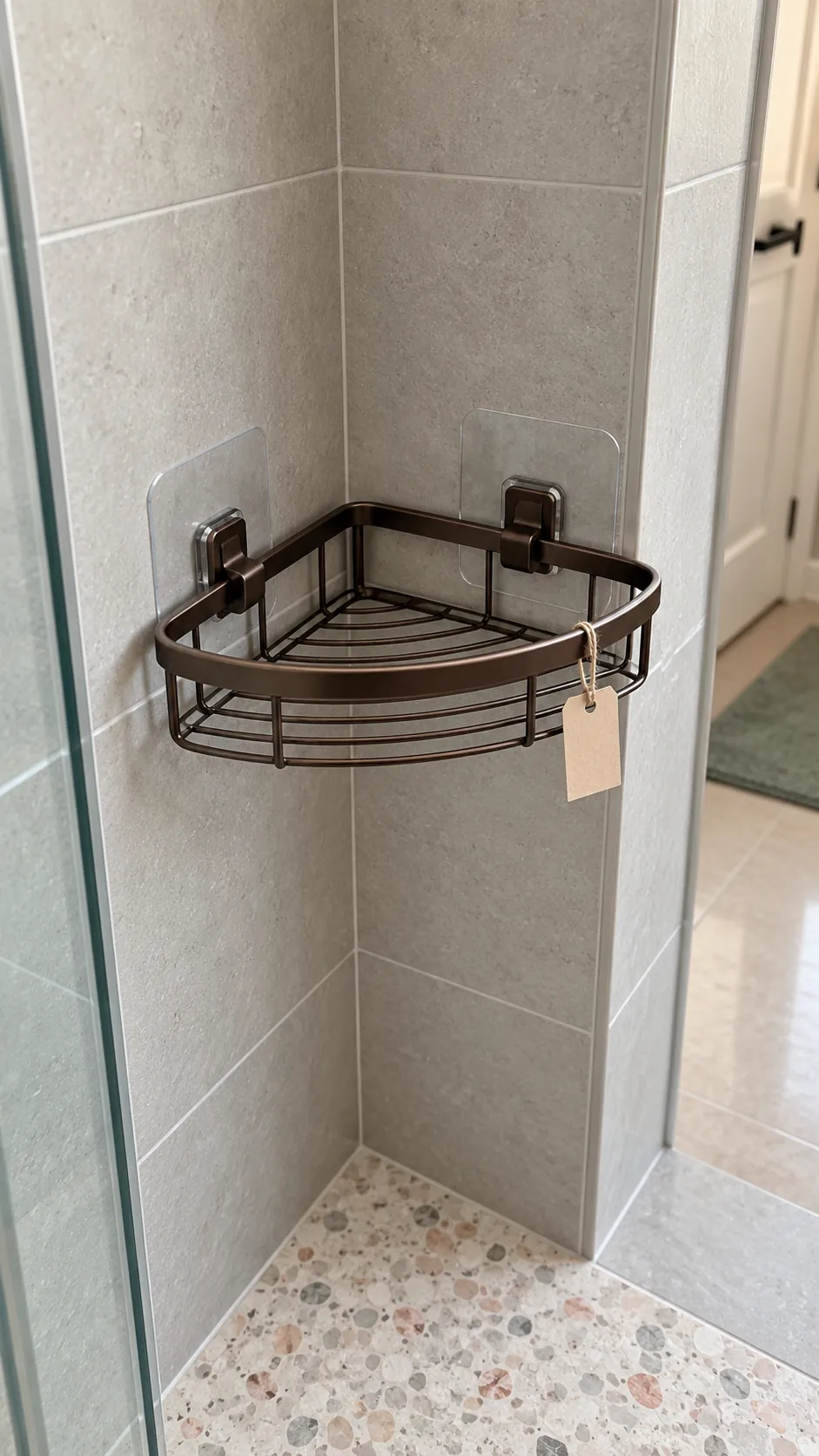
A shelf beside the vanity faces a gentler environment than one below the shower spray. Direct water can sit behind a mounting plate, while repeated warm showers expand materials and soften some adhesives. Choose hardware that is explicitly rated for the intended bathroom wet area rather than assuming any removable bathroom storage product belongs inside a shower.
Add the weight of the shelf, bottles, pumps, razors, and anything a person may press while reaching. Then leave a generous safety margin. A narrow basket with two modest bottles is easier on either mount than a deep basket packed with family size containers. Arrange taller bottles close to the wall so they create less leverage.
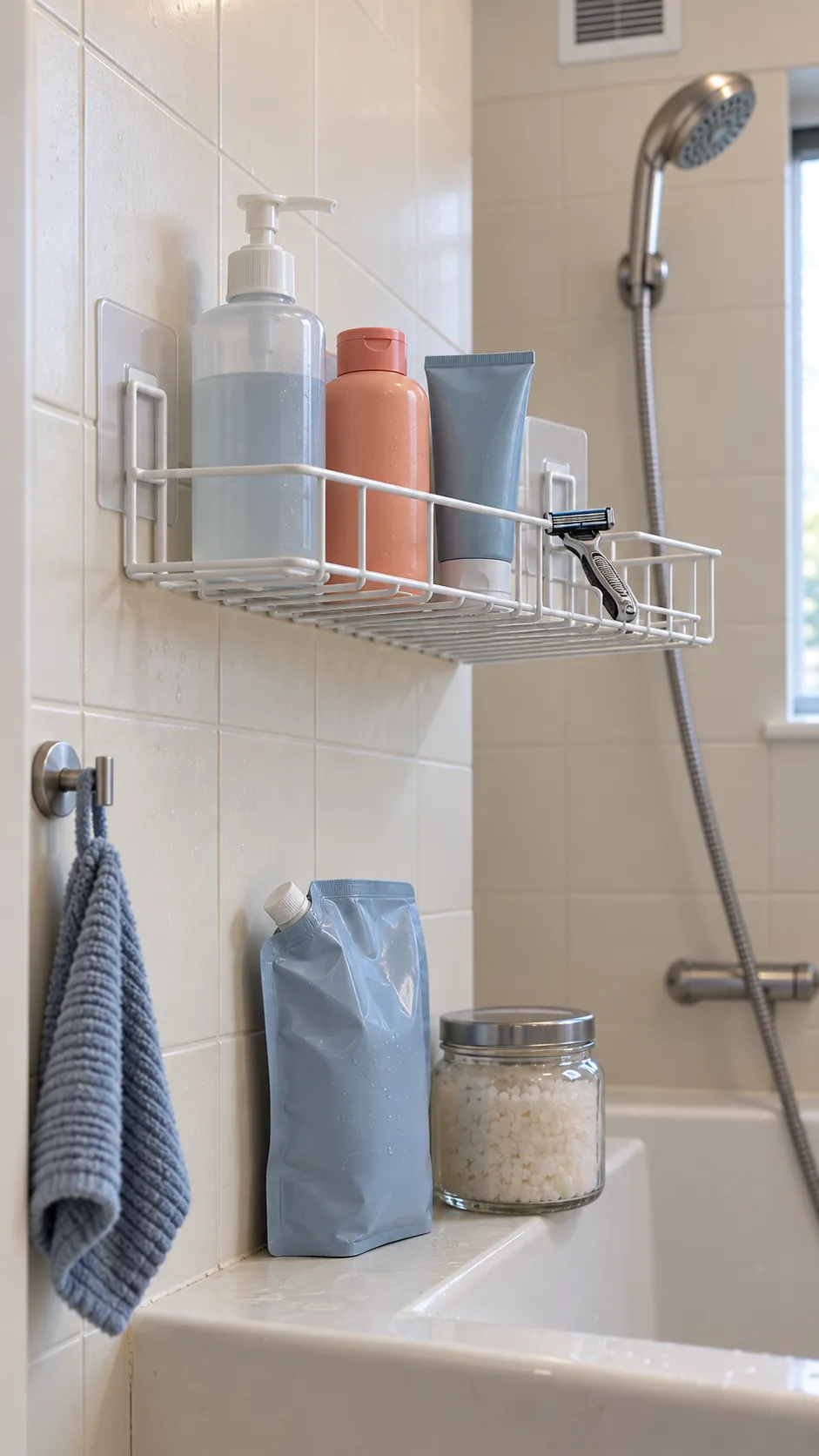
Prepare the Mounting Area Correctly
Wash away soap film with a cleaner that suits the tile, rinse thoroughly, and let the surface dry. Follow with the preparation method stated by the shelf maker. Many products call for isopropyl alcohol, but natural stone, specialty coatings, and printed finishes may need different care, so check the tile guidance first.
Dry fit the complete shelf before exposing adhesive or locking a suction lever. Confirm that every mount lands on tile, the basket sits level, bottles clear the shower controls, and the chosen position does not receive constant spray. For adhesive, respect the full cure time. For suction, press out air evenly and engage the lock without twisting the cup.
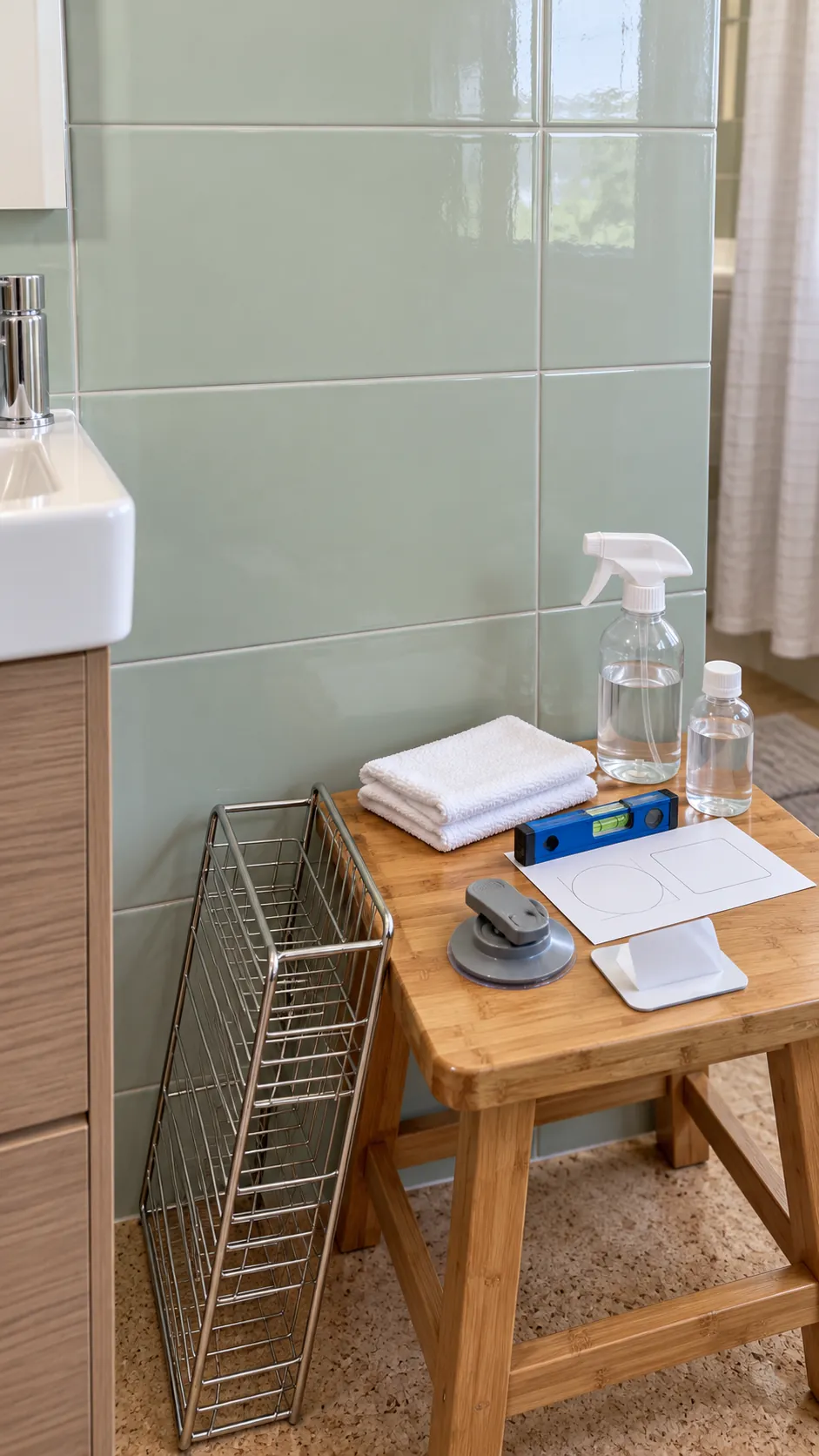
Think About Removal Before Installation
A tile safe wall organizer must be safe at removal as well as during use. Suction usually wins here because the seal can be released without a solvent. Even so, trapped mineral deposits may need gentle cleaning, and a cup should never be pried with a sharp tool.
For adhesive, save the package instructions and any supplied release tab. Test the recommended residue remover on a hidden area before applying it broadly. Pull or soften the pad in the stated direction rather than levering the tile face. Renters should photograph the wall before installation and ask the property manager when the lease restricts adhesive products.
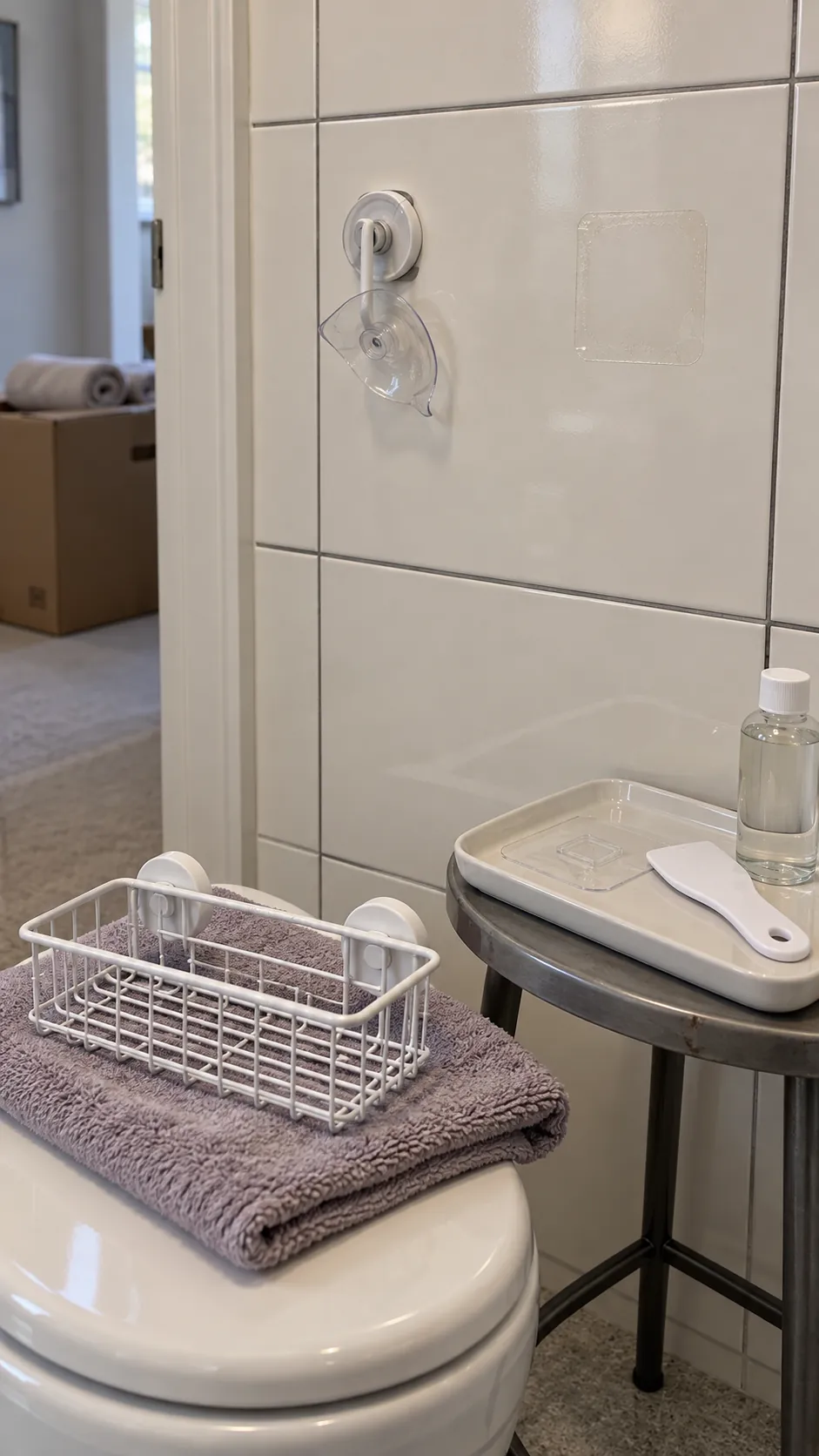
Choose the Mount That Fits Your Bathroom
Choose a locking suction shelf for smooth glazed tile, a light load, easy repositioning, and the lowest removal risk. Choose a wet area rated adhesive shelf when the tile cannot hold suction, the product approves that surface, and you can accept a fixed position plus a more involved removal process. Neither option is dependable on loose tile, failing grout, silicone joints, or a dirty surface.
If both methods conflict with the wall, use a supported alternative. A showerhead caddy, tub corner stand, tension pole, narrow rolling cart, or freestanding shelf moves the load away from the tile. The best renter bathroom shelving comparison ends with the same rule: match the storage to the surface instead of trying to force the surface to accept the storage.