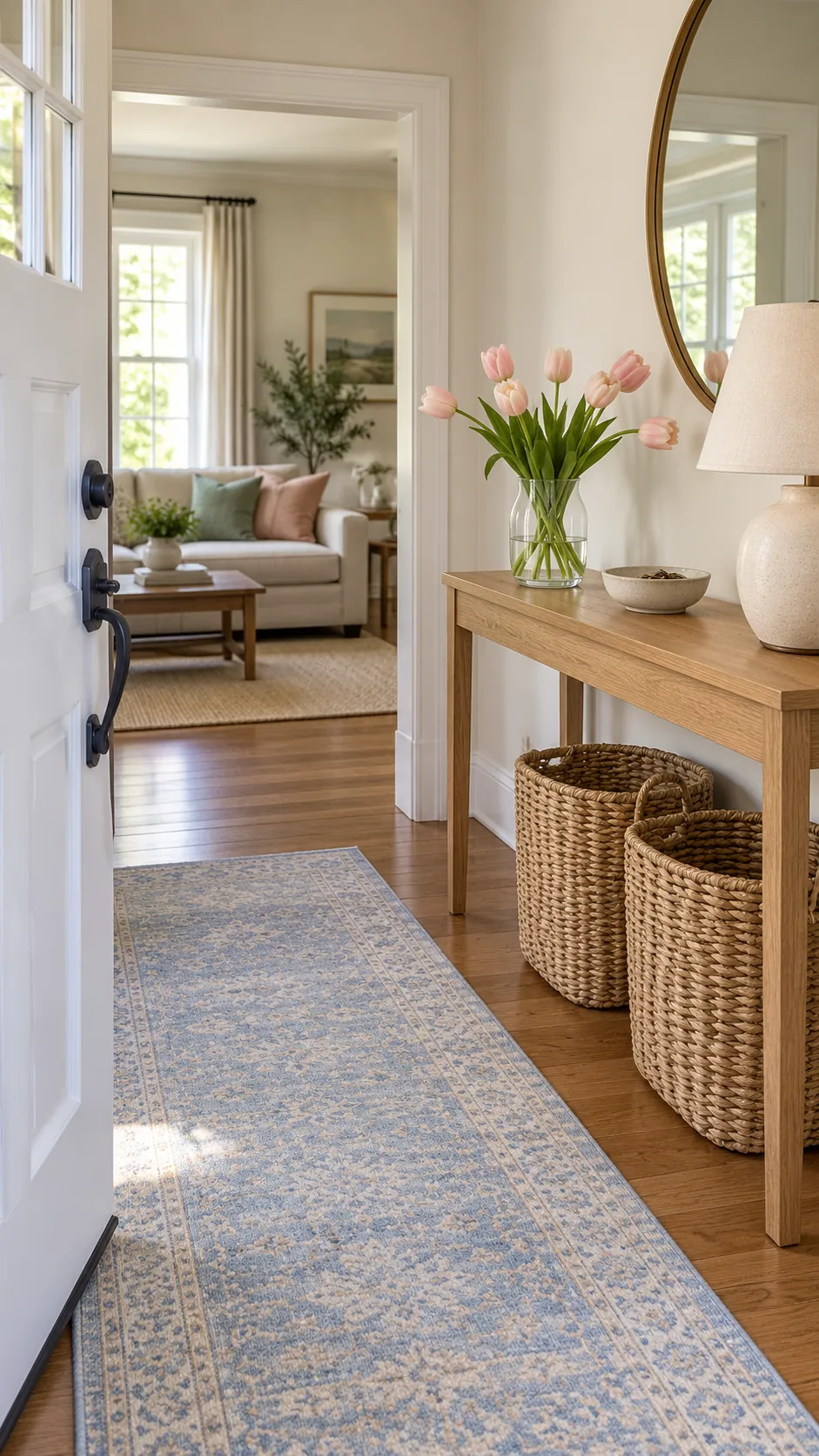
An entry feels better when it helps with the first minute at home. The most useful seasonal changes are small: a clear landing place, flowers that suit the available light, and storage that keeps shoes and loose items out of the walking path. Soft color can then make the space feel brighter without turning it into a themed display.
Begin With a Clear Landing Zone
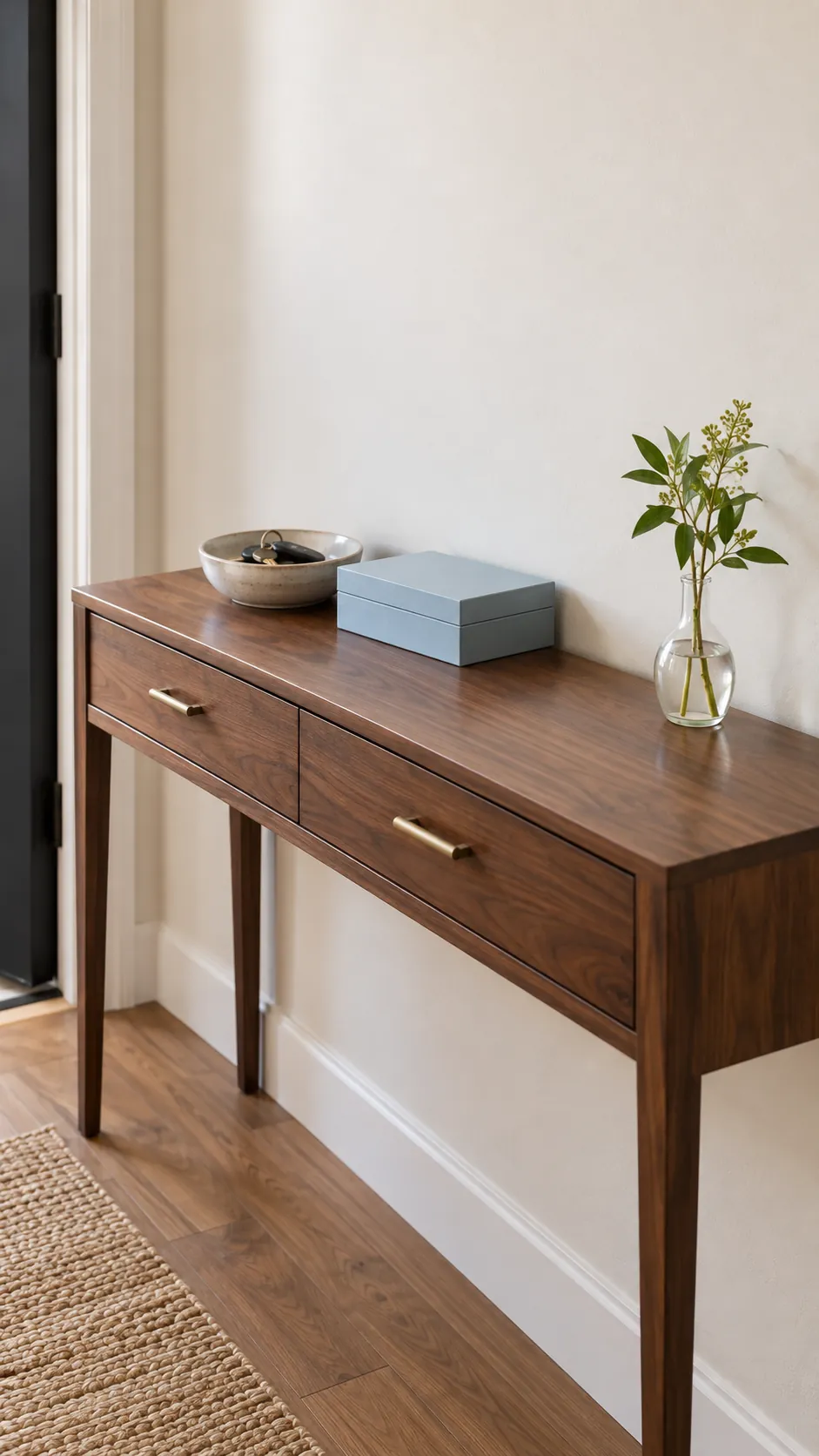
Start by deciding what must happen beside the door. Most homes need a place for keys, mail, one daily bag, and perhaps a leash. Give each item a defined spot, then remove objects that belong elsewhere. A shallow bowl and one closed box usually work better than several small trays because fewer containers create less visual noise.
Keep at least half of the console surface empty. This open space makes the seasonal entryway look intentional and leaves room to set down groceries. If the console becomes a drop zone again, the storage is probably too far from the door or too small for the real routine.
Use Baskets for the Things That Travel
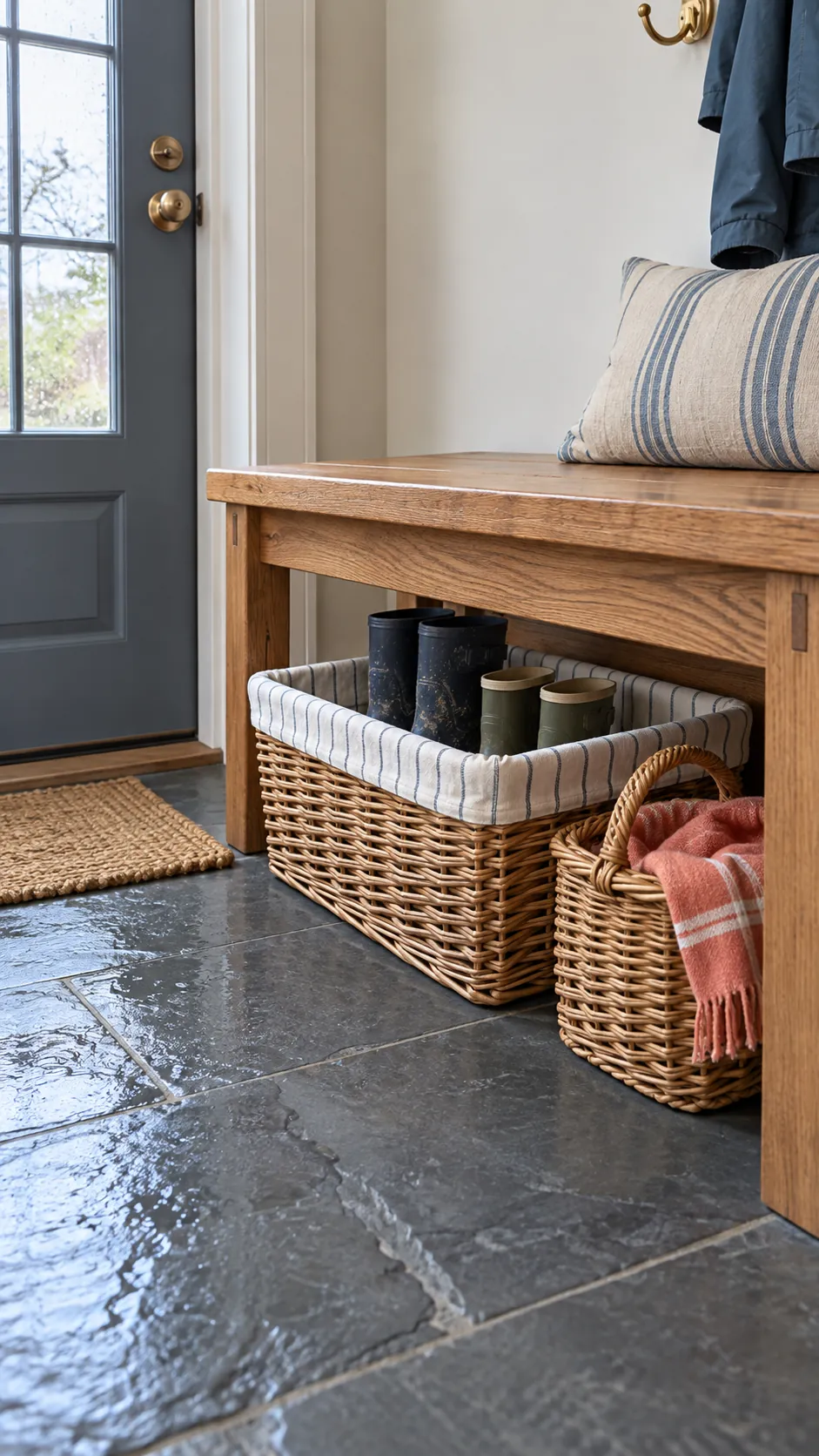
Baskets are most useful when their contents share one purpose. Place a sturdy low basket near the bench for shoes, a smaller handled basket for scarves, or a lidded basket for pet supplies. The opening should be easy to reach, but the basket must not narrow the route through the foyer.
Choose a washable liner for damp items and avoid delicate open weave where buckles can catch. In spring, store heavy winter accessories elsewhere and reserve the accessible basket for rain gear or light layers. This seasonal edit gives the entry more breathing room while keeping the system practical.
Choose Flowers for the Actual Light
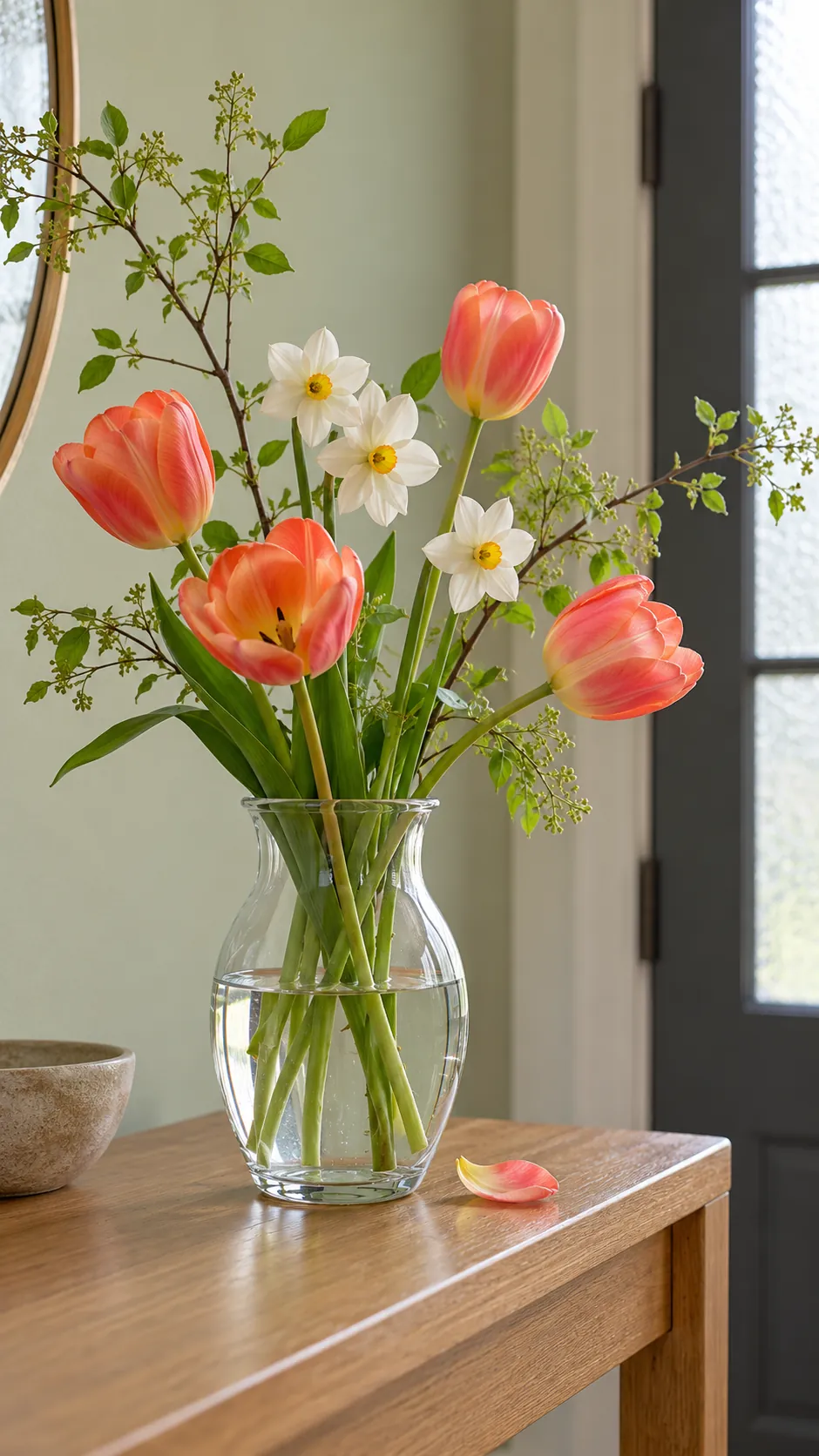
Fresh flowers bring movement and color, but the arrangement should match the conditions near the door. Cut branches and market flowers can work in a dim foyer because they do not need to grow there. A living plant needs enough natural light, stable temperature, and a pot that protects the furniture from water.
Use one loose arrangement rather than several small bouquets. Trim stems so the flowers do not block a mirror, light switch, or cabinet door. Replace cloudy water and remove fading blooms promptly, since a neglected vase makes a compact space feel stale faster than an empty one.
Build a Soft Color Palette From What Stays
Look first at permanent finishes such as the floor, door, and console. Select two gentle accents that relate to those materials instead of introducing many unrelated pastels. Dusty blue can cool warm wood, while muted blush or pale green can soften gray and cream.
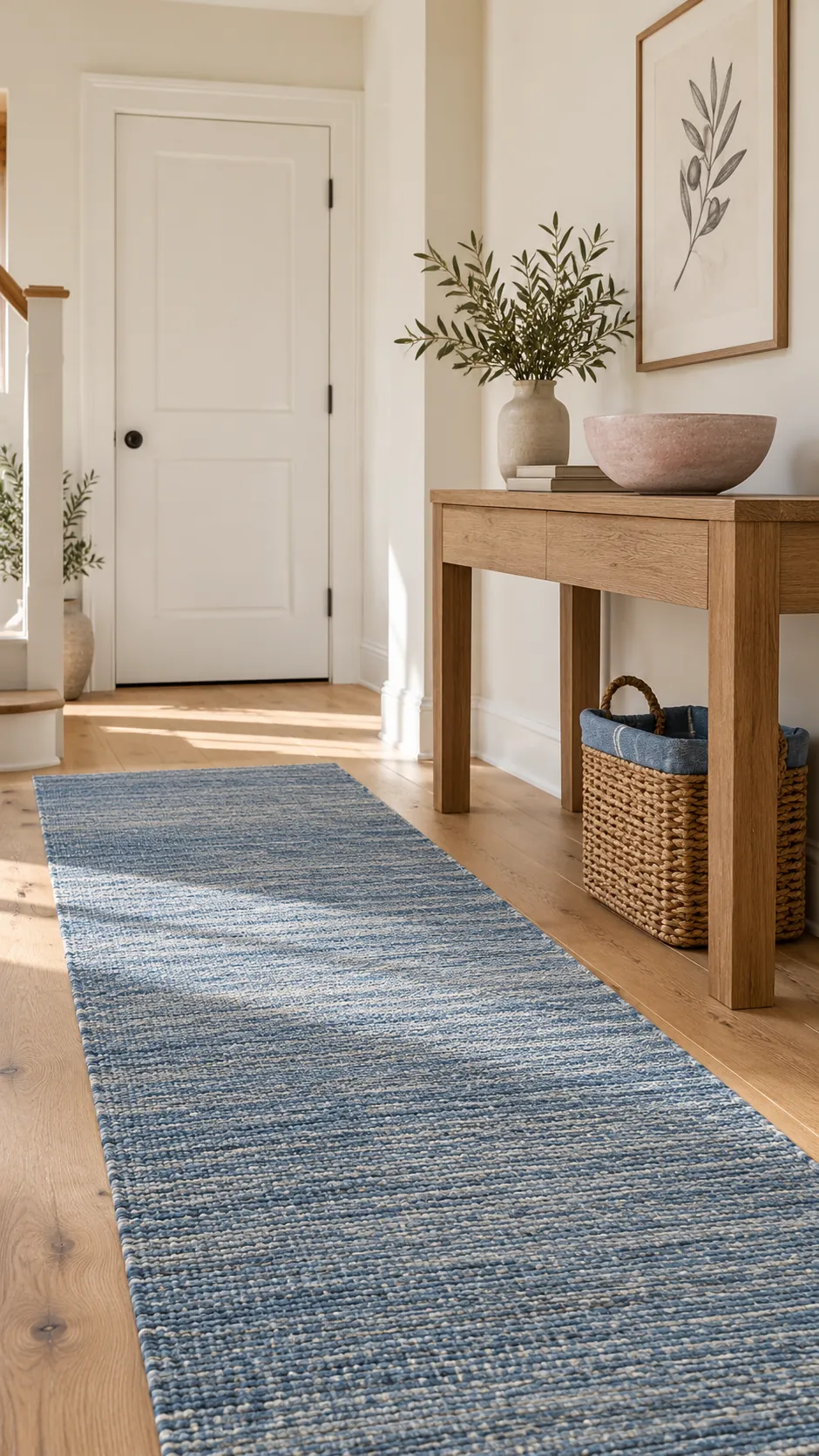
Repeat each accent once in a small way. A faded blue runner can connect to a blue edge on a basket liner, and a blush flower can echo a narrow ribbon on a stored hat. Repetition creates calm, but the neutral background should remain dominant.
Protect the Walking Path
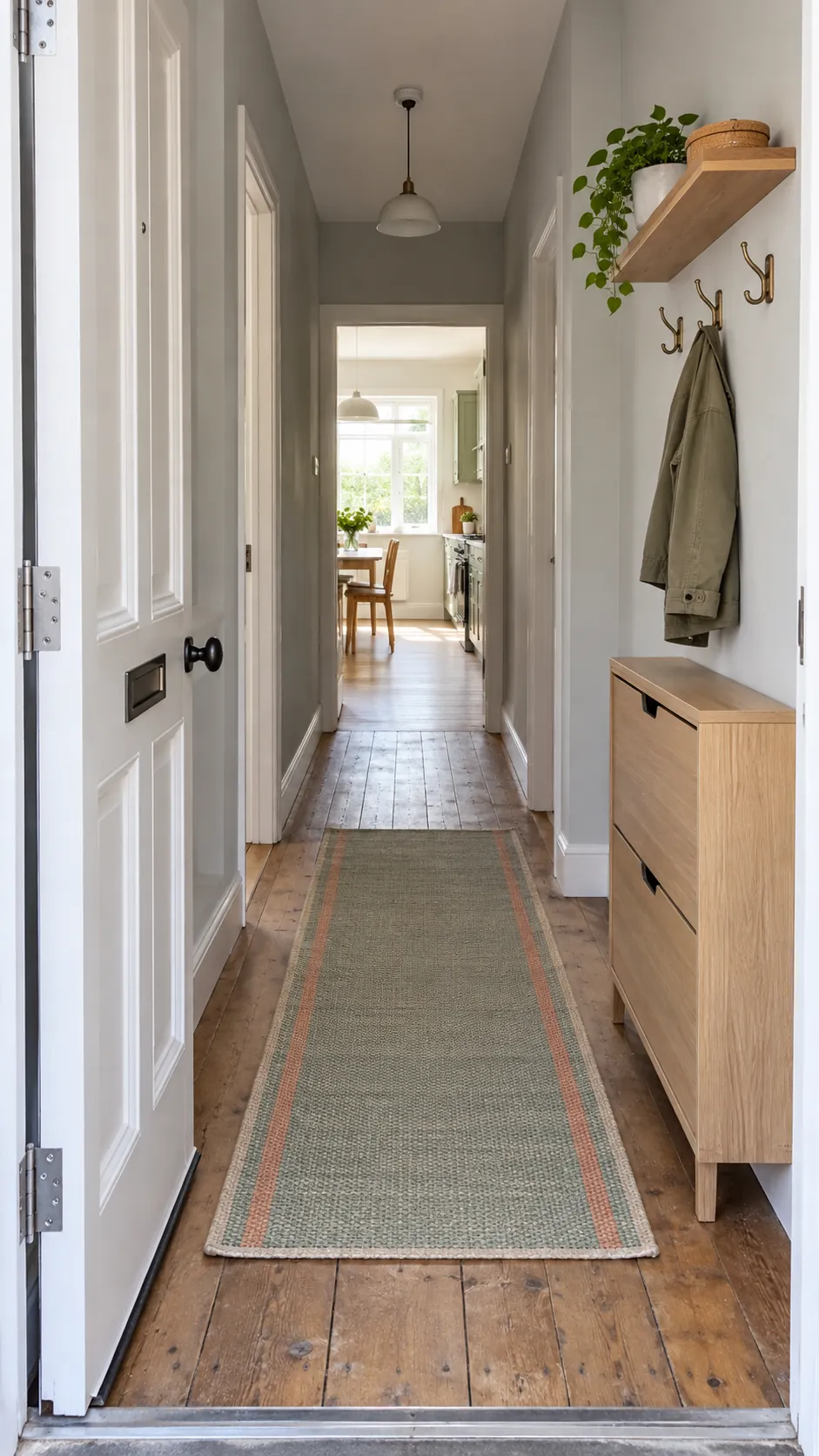
A welcoming entry must still work when several people arrive together. Open the door fully and trace the route to the next room before adding a stool, plant stand, or tall basket. Nothing should catch a coat, interrupt the door swing, or force visitors to step around a decorative object.
Use a nonslip pad under the runner and keep its edges flat. If space is narrow, wall hooks and a slim shelf preserve more floor area than a coat tree. Function is part of the visual result because an unobstructed path makes the whole foyer appear larger.
Finish With One Easy Evening Detail
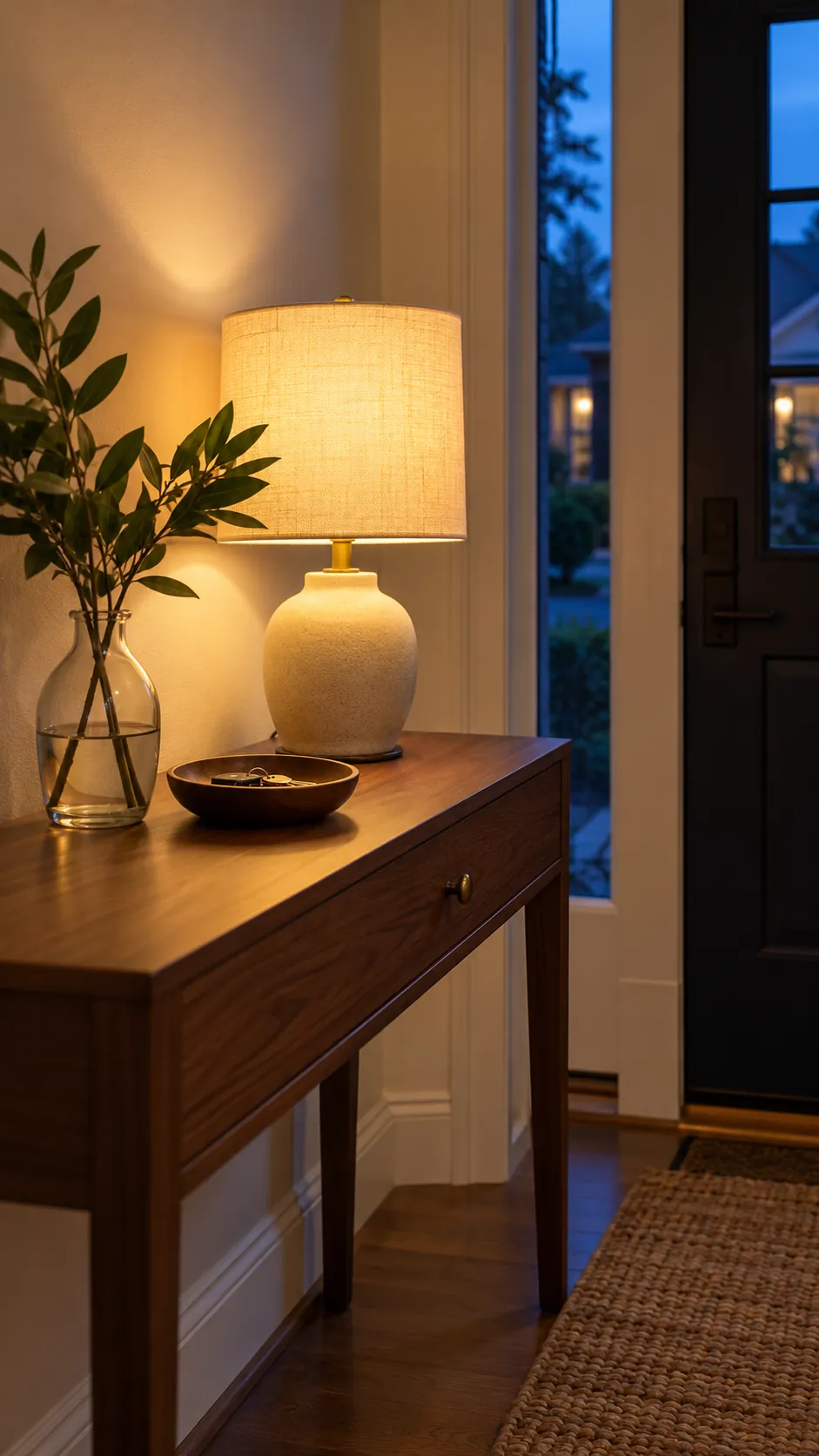
Good lighting keeps soft colors from looking muddy after sunset. Use a small shaded lamp only where the cord can reach safely and the base leaves room for daily objects. A warm white bulb usually connects comfortably with nearby living spaces while still making keys and shoe laces easy to see.
At the end of the day, return loose items to their basket, clear the console, and check the flowers. This brief reset protects the calm effect better than adding more decor. The finished entry should feel useful first, then fresh, gentle, and ready for spring.