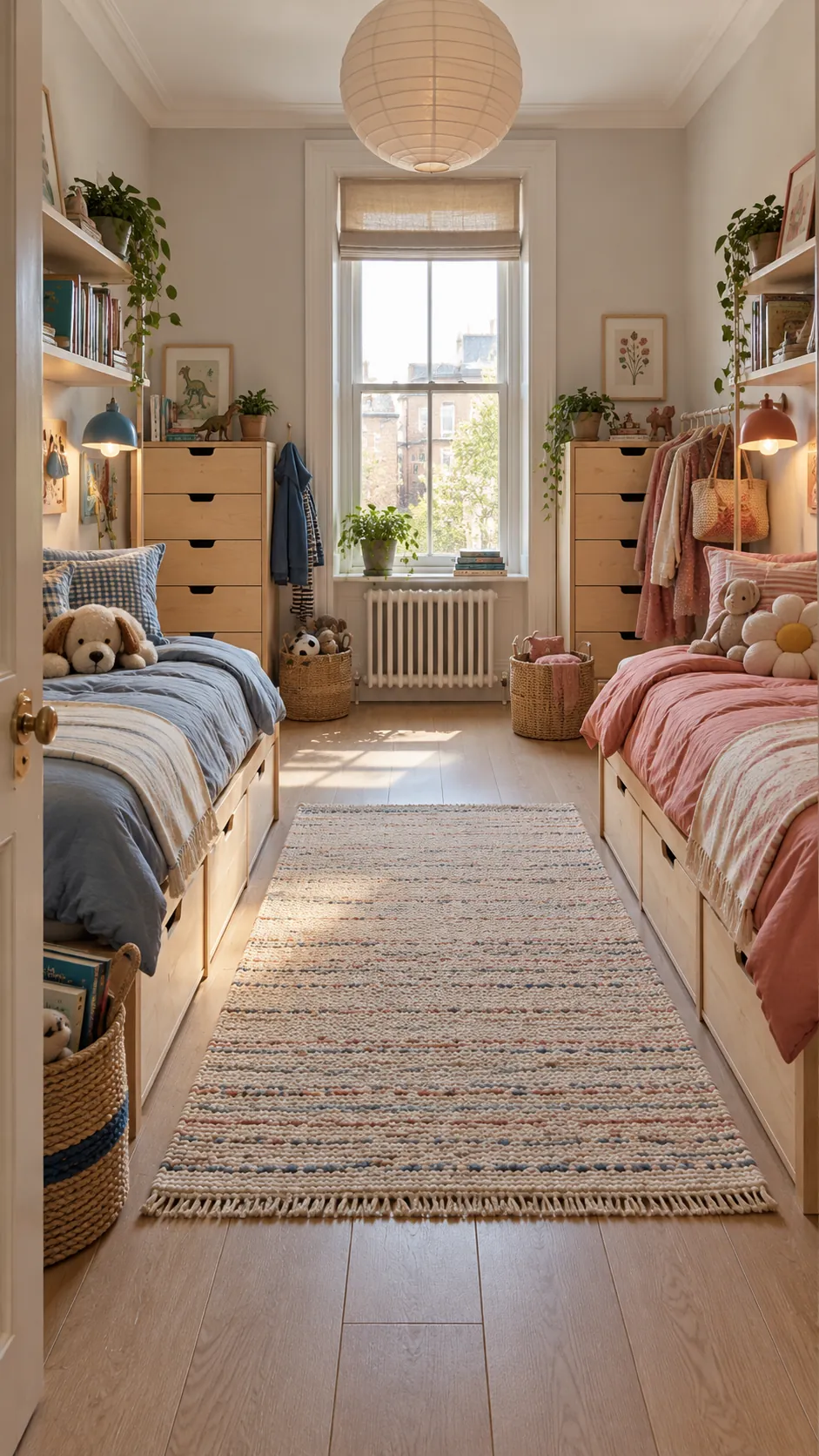
A shared room becomes difficult when every object belongs to everyone and no one knows where it should return. The useful fix is not simply adding more containers. Each child needs a storage route that is easy to recognize, reach, and maintain without moving the other child’s belongings.
Give Each Child a Bedside Drawer Tower
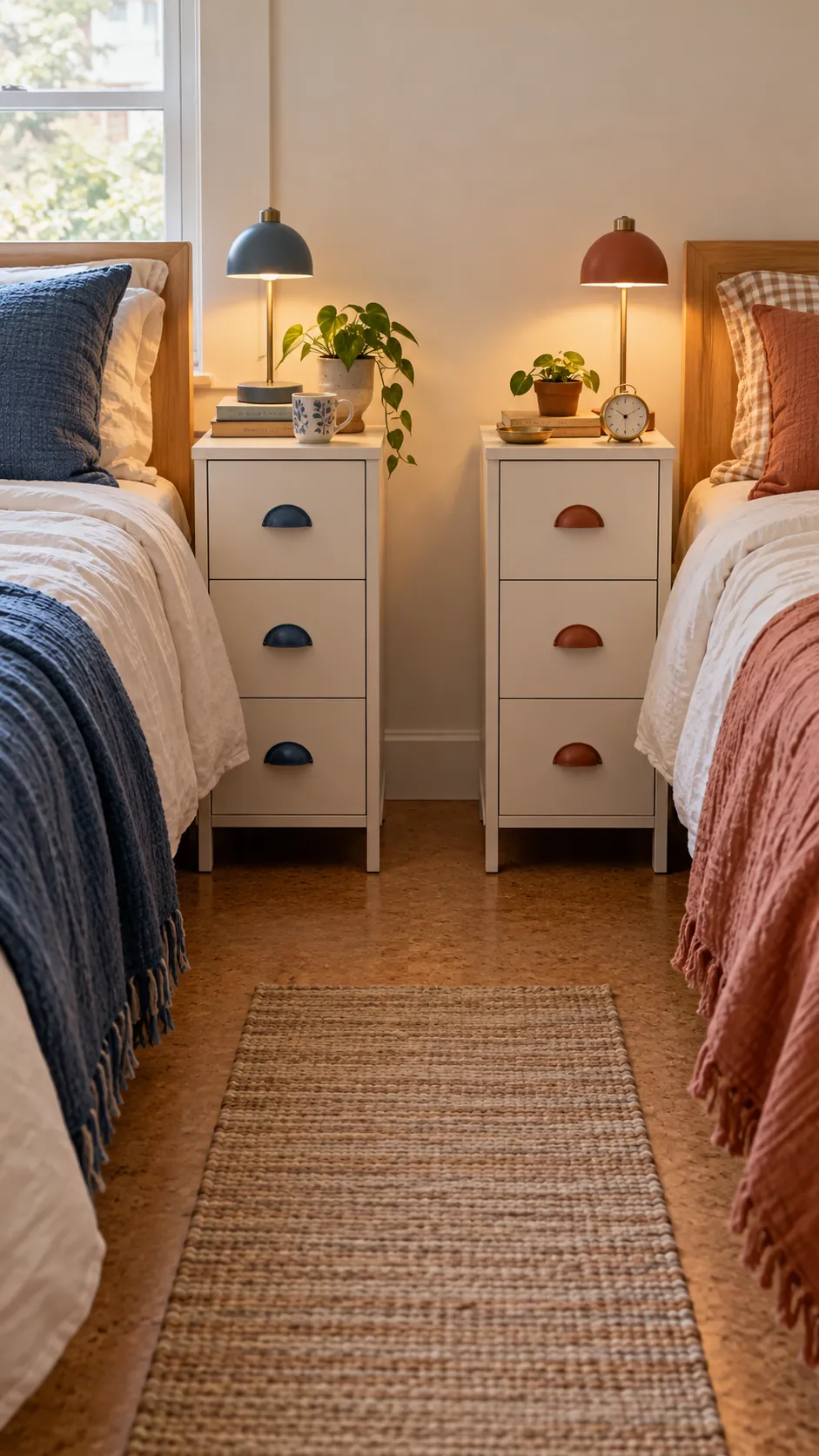
Place a slim drawer tower beside each bed so small daily items never need to cross the room. Assign the top drawer to bedtime essentials, the middle drawer to personal treasures, and the lower drawer to current books or quiet toys. Matching towers keep the room calm, while different handles or name labels show ownership. Measure the open drawer depth before buying so the walkway remains usable.
Split the Closet Down the Middle
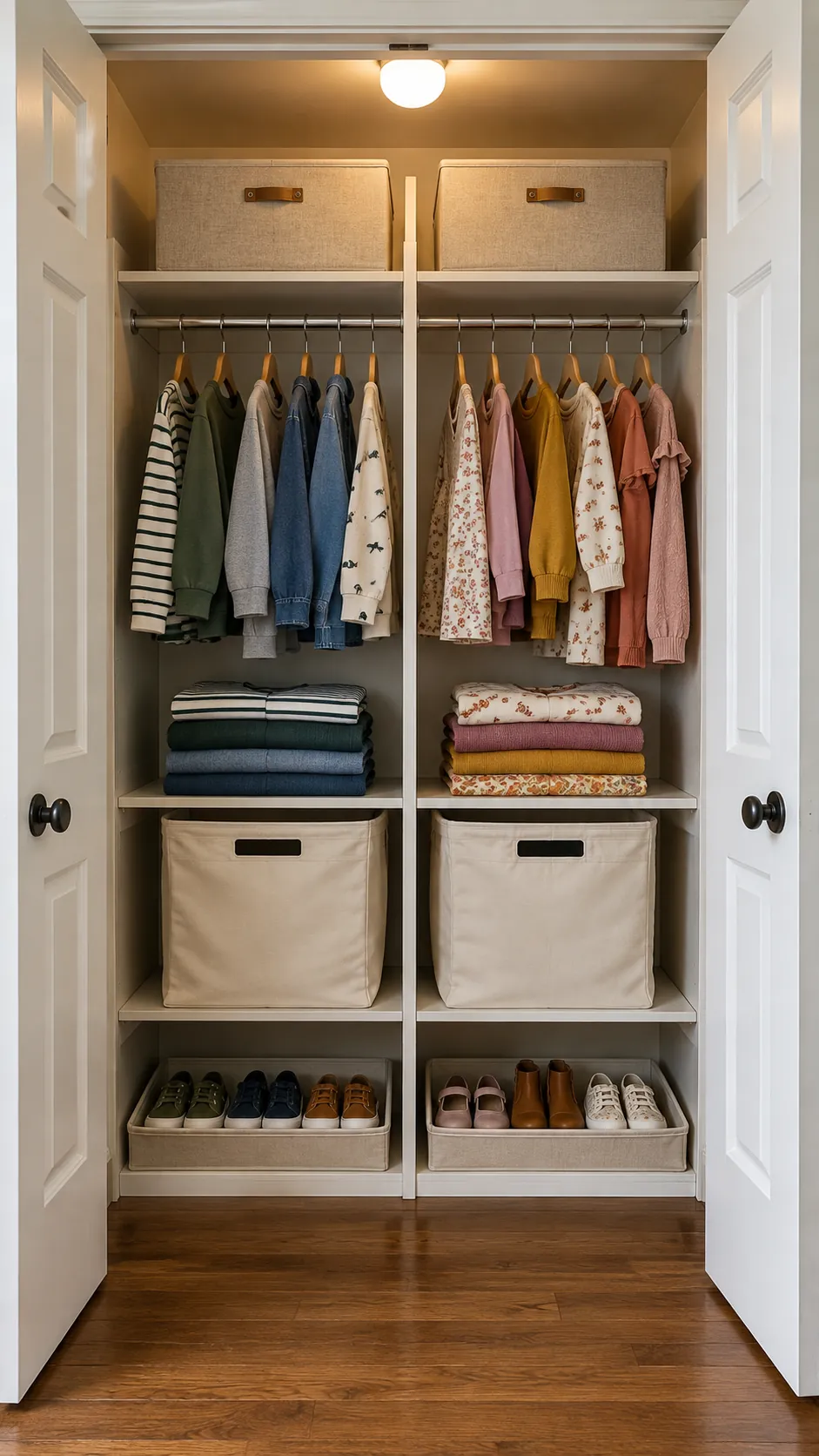
Divide one closet into two visible columns instead of mixing clothes by type across the whole width. Give each child a hanging section, shelf stack, hamper, and floor bin within the same vertical zone. A clear center boundary makes missing items easier to spot and prevents one wardrobe from spreading into the other. Keep shared seasonal gear on one high shelf that adults manage.
Use Different Colors for Matching Bins
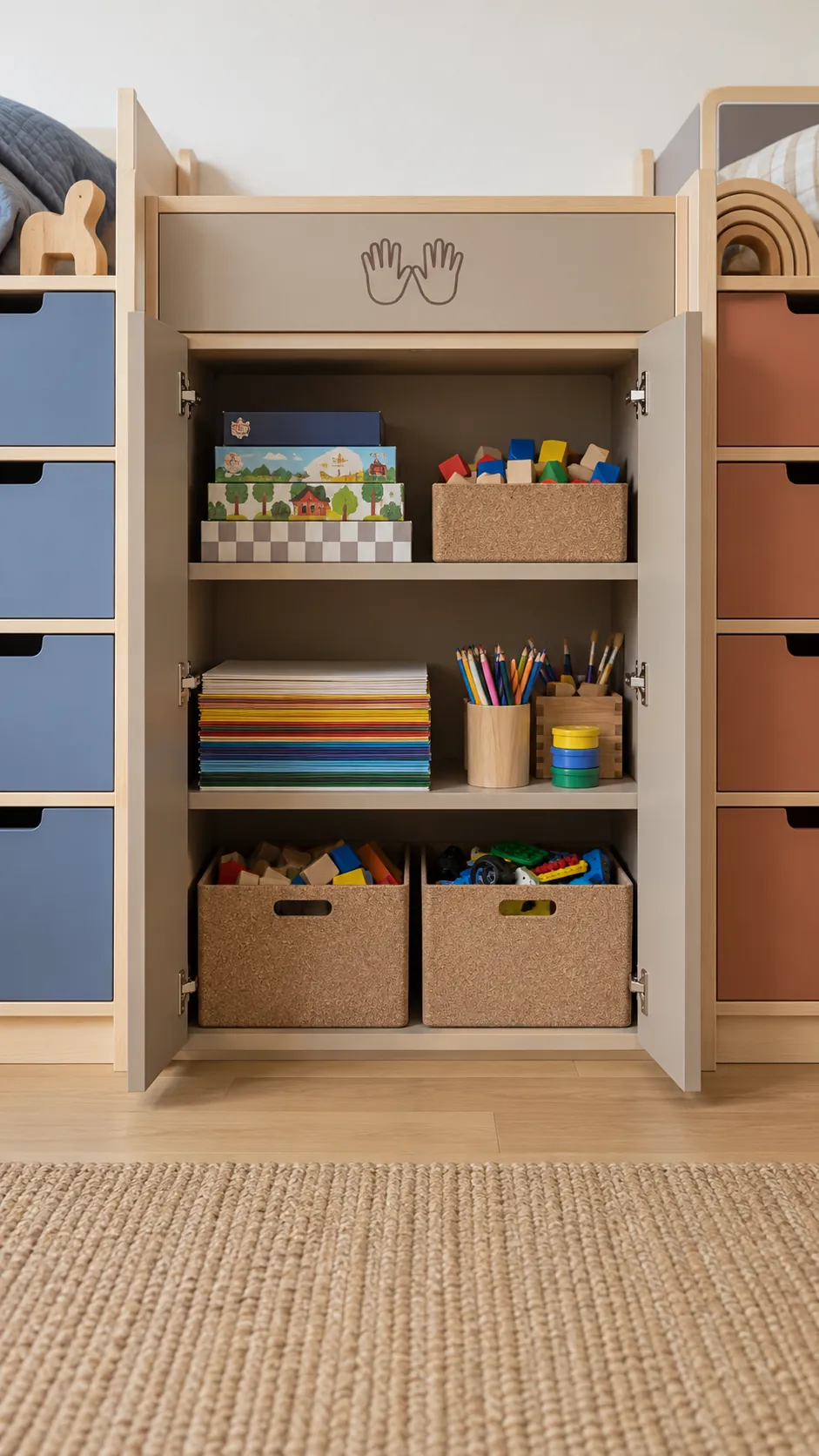
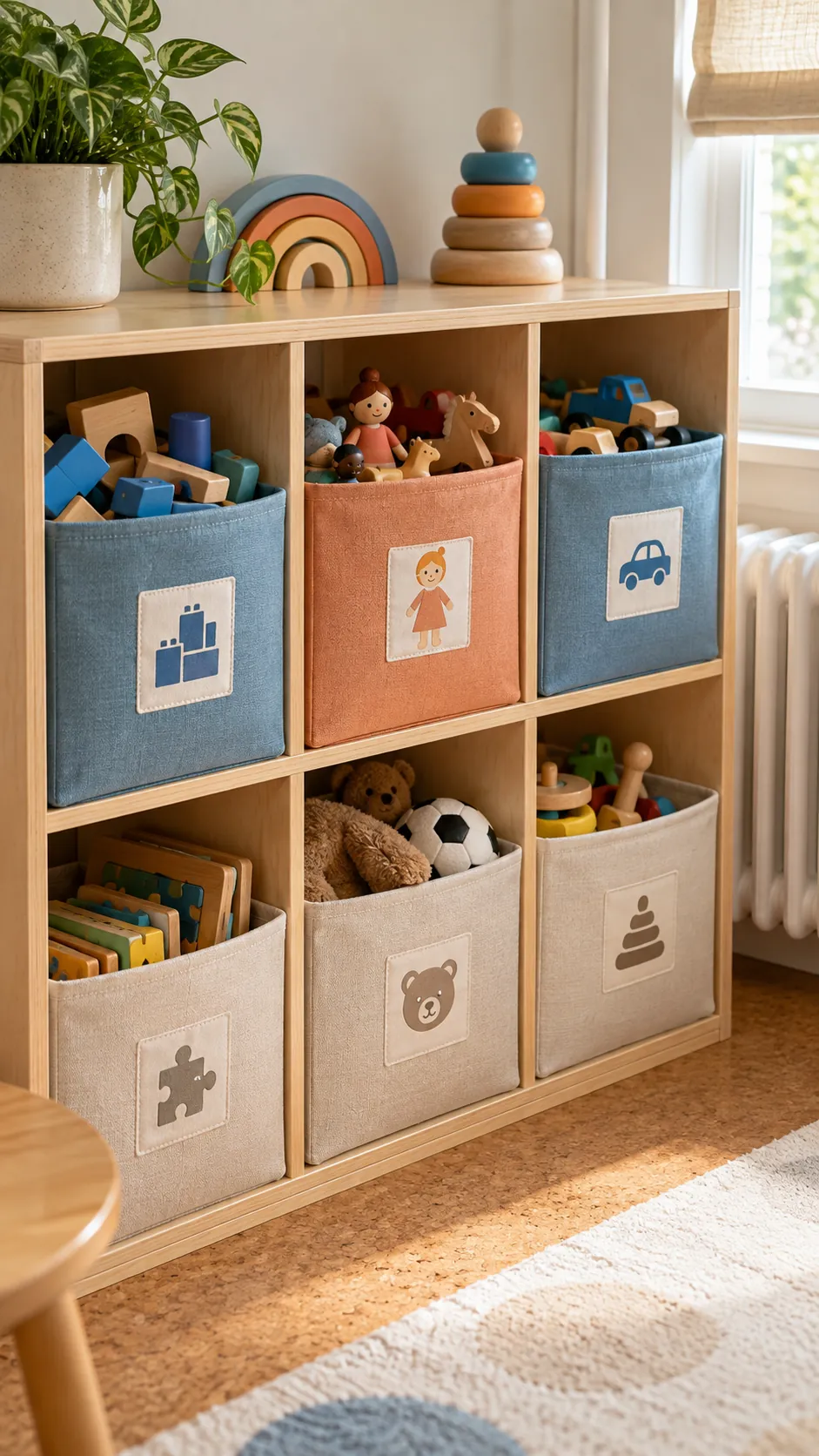
Choose one bin style so shelves stay orderly, then assign a distinct accent color to each child. Color works faster than reading when younger children are cleaning up, and it still looks cohesive when the shades are muted. Reserve a third neutral color for genuinely shared toys. Add a simple picture label to every bin so the system explains both ownership and contents.
Slide Labeled Drawers Under Each Bed
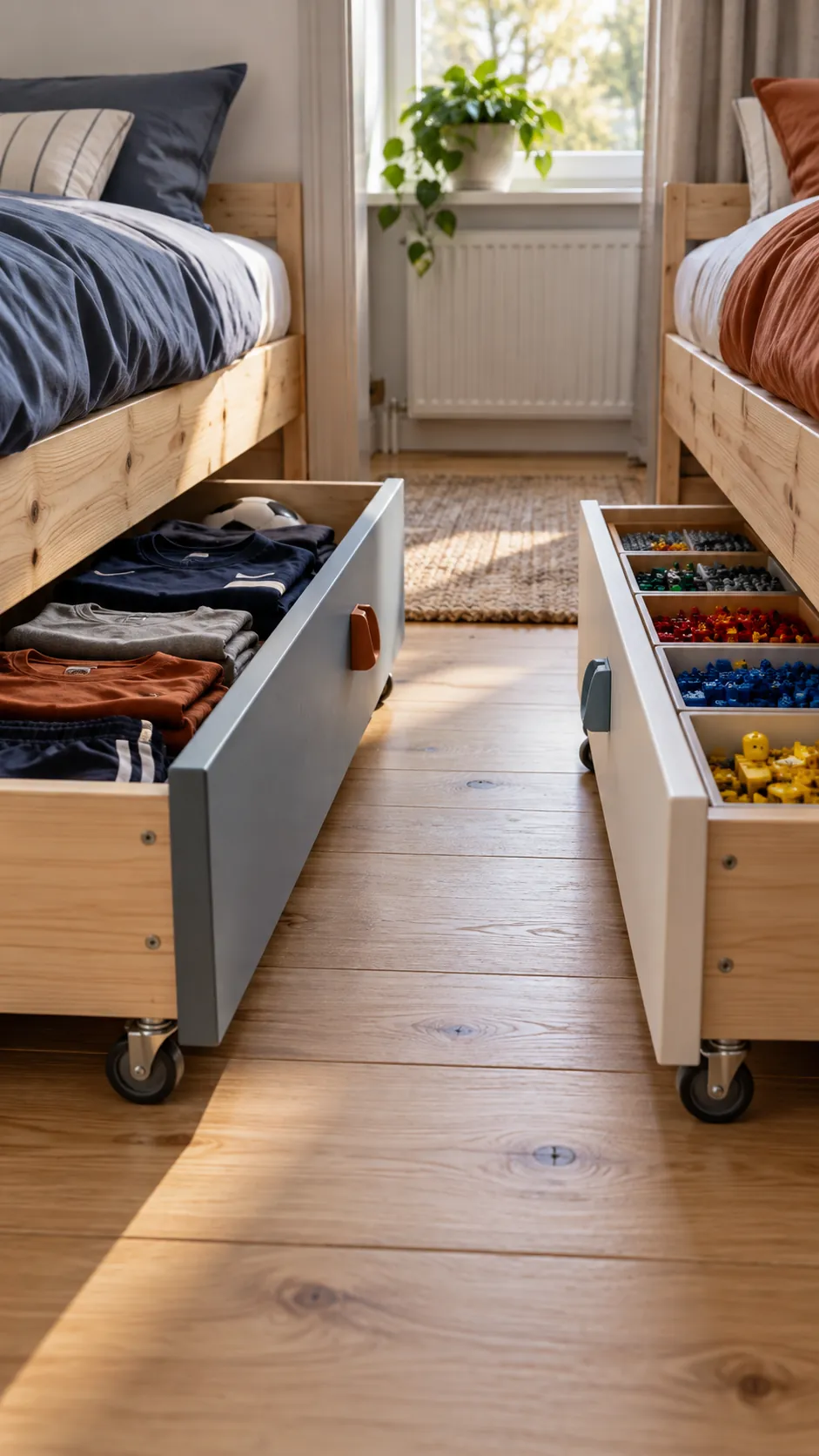
The space beneath each bed can hold a complete personal category without taking another inch of floor area. Use shallow wheeled drawers for clothing, building sets, or sports items that need frequent access. Leave enough clearance for a child to pull the drawer out without shifting the neighboring bed. A large front label stops the two storage zones from becoming one mixed pile.
Build Two Cubbies Into a Shared Nightstand
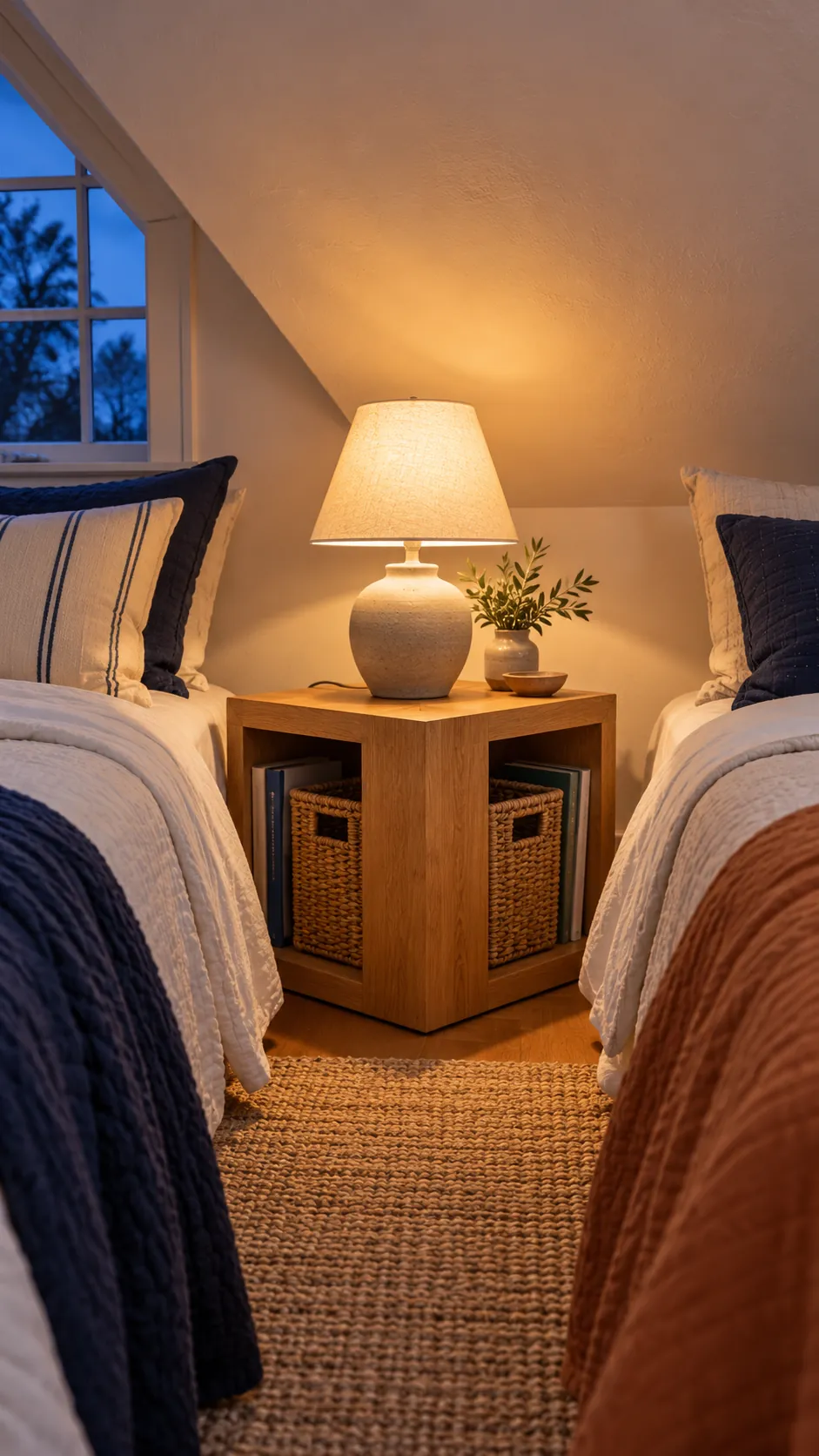
A single nightstand can serve two beds when its storage is clearly divided. Choose an open unit with one cubby facing each sleeping space and keep the top limited to a shared lamp. Give each cubby a small basket for glasses, tissues, and bedtime objects. This arrangement saves width while preserving a personal landing place for both children.
Add Personal Peg Rails Above the Beds
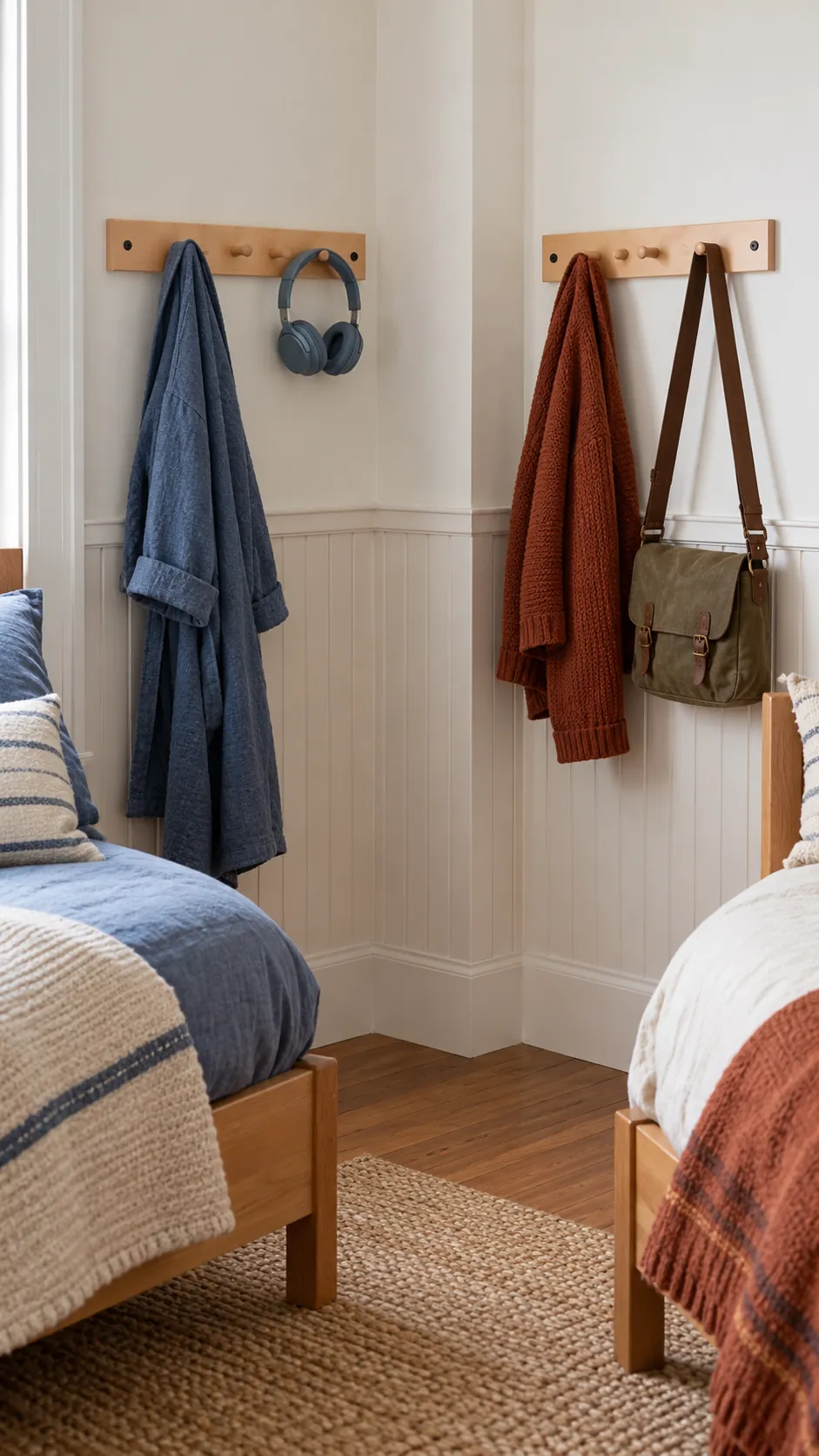
Mount one short peg rail above or beside each bed for tomorrow’s clothes, a robe, headphones, or a light bag. Keep the rails low enough for independent use but away from pillows and climbing routes. Limit each rail to a few hooks so it cannot become an overloaded wall closet. A small shelf ledge above the pegs can hold one display item per child.
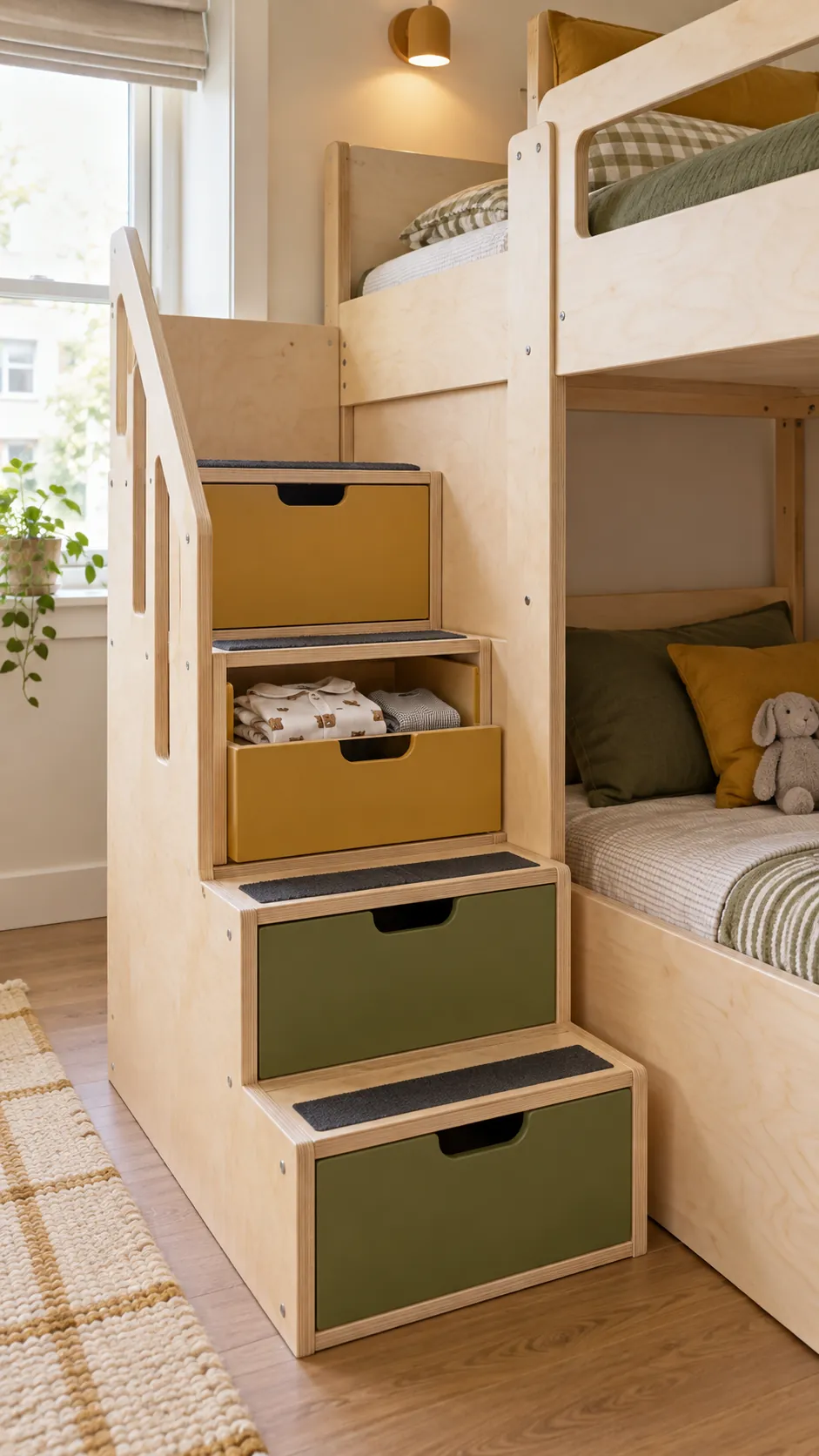
Turn the Bunk Steps Into Drawers
Drawer steps can replace both a ladder and a separate chest when bunk beds suit the room. Give the lower drawers to the child who sleeps below and the upper drawers to the child who sleeps above. Wide treads, secure rails, and furniture anchoring matter more than squeezing in one extra compartment. Keep the most frequently used items in the safest, easiest steps.
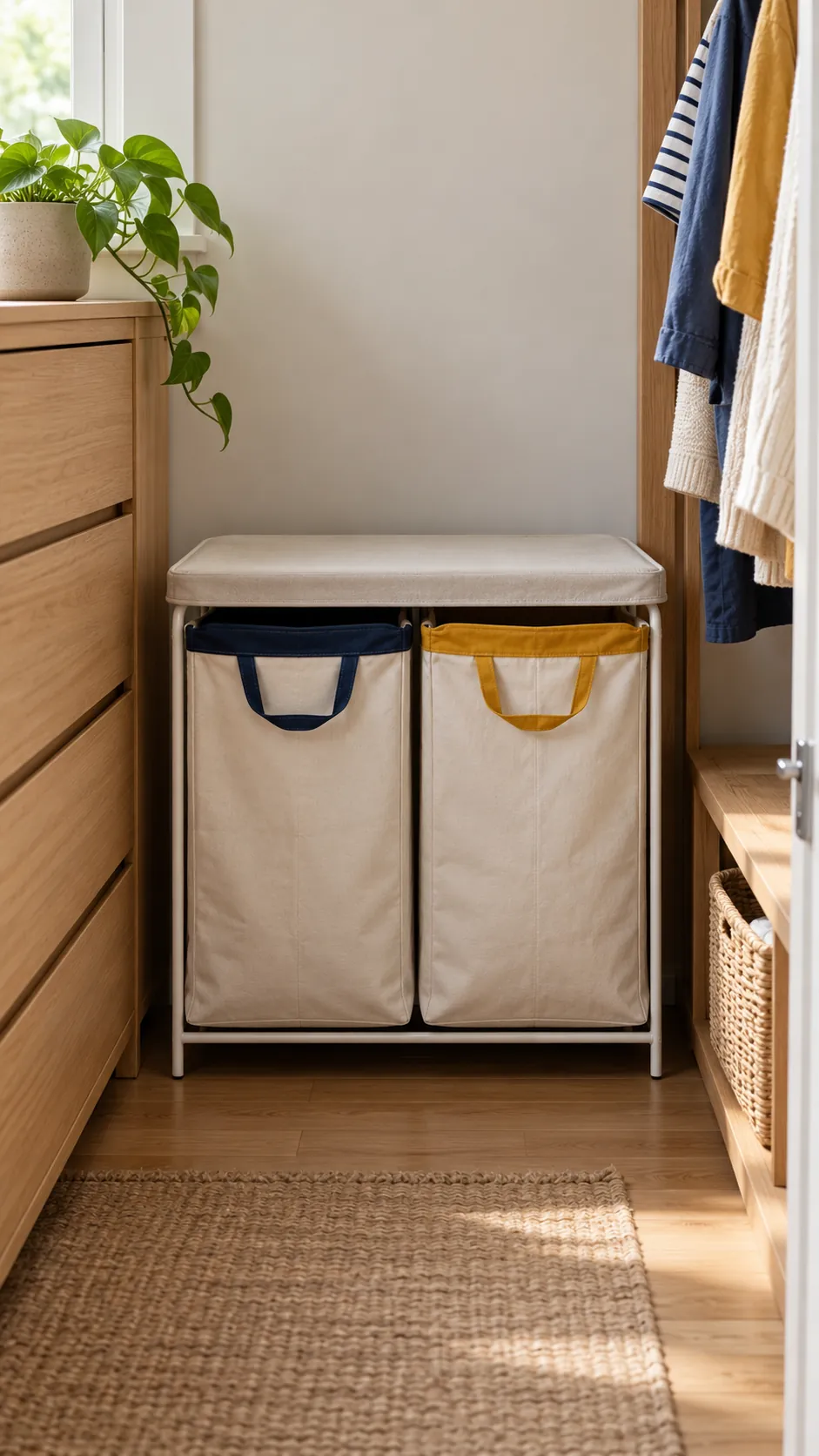
Place a Double Hamper Between Storage Zones
A divided hamper catches worn clothes before they spread across the floor. Assign one removable bag to each child, even if both loads later go into the same machine. Put the hamper where clothes naturally come off, not where an empty corner happens to exist. A lid hides visual clutter, but an open top is often easier for young children to use consistently.
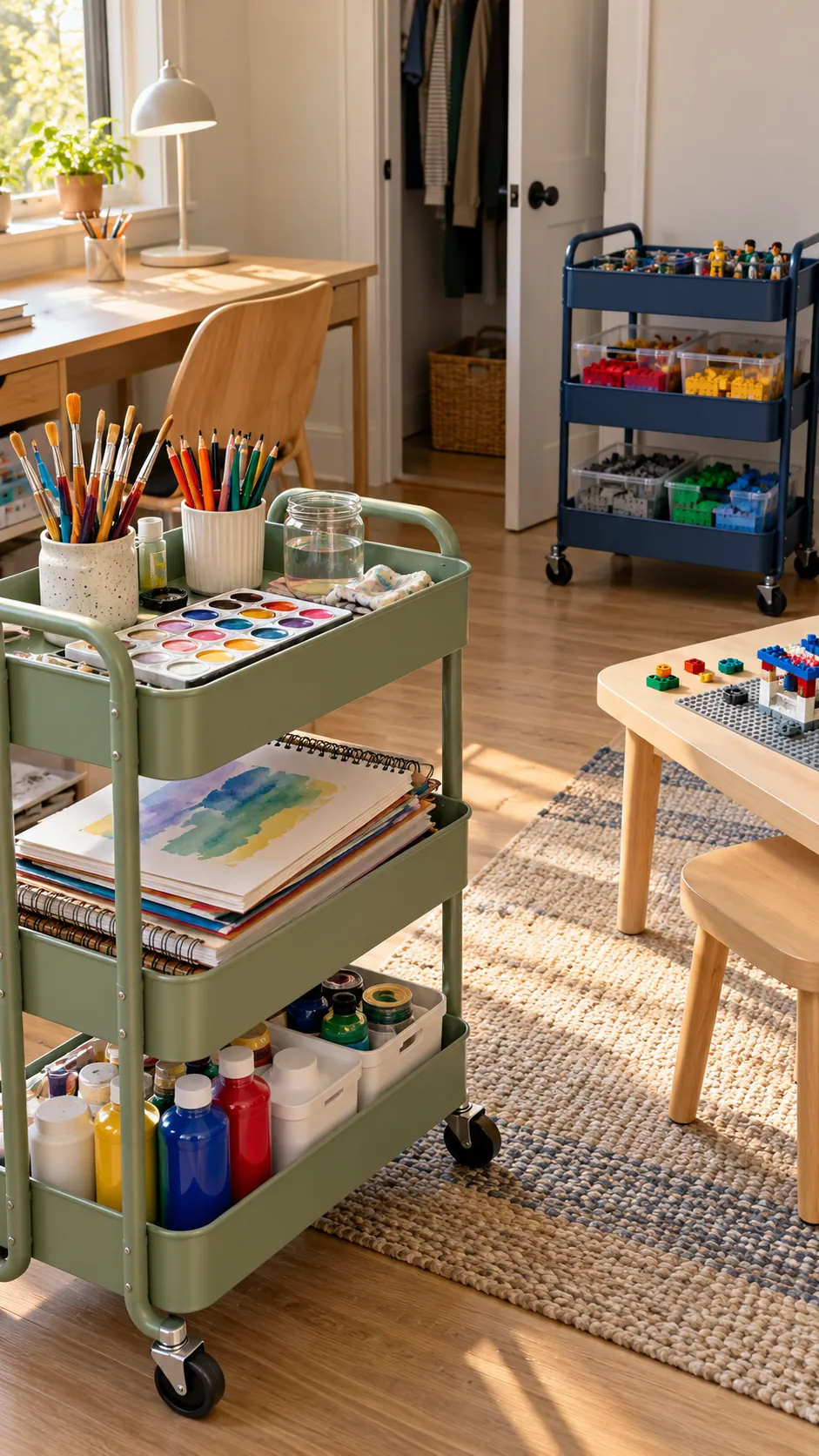
Assign One Rolling Cart to Each Child
Slim rolling carts work well when interests change faster than permanent furniture. One child might store art supplies while the other keeps construction pieces or hair accessories. Park each cart beside its owner’s desk or bed, then roll it into the closet when open floor space is needed. Use shallow trays inside each tier so tiny objects do not collect in one deep jumble.
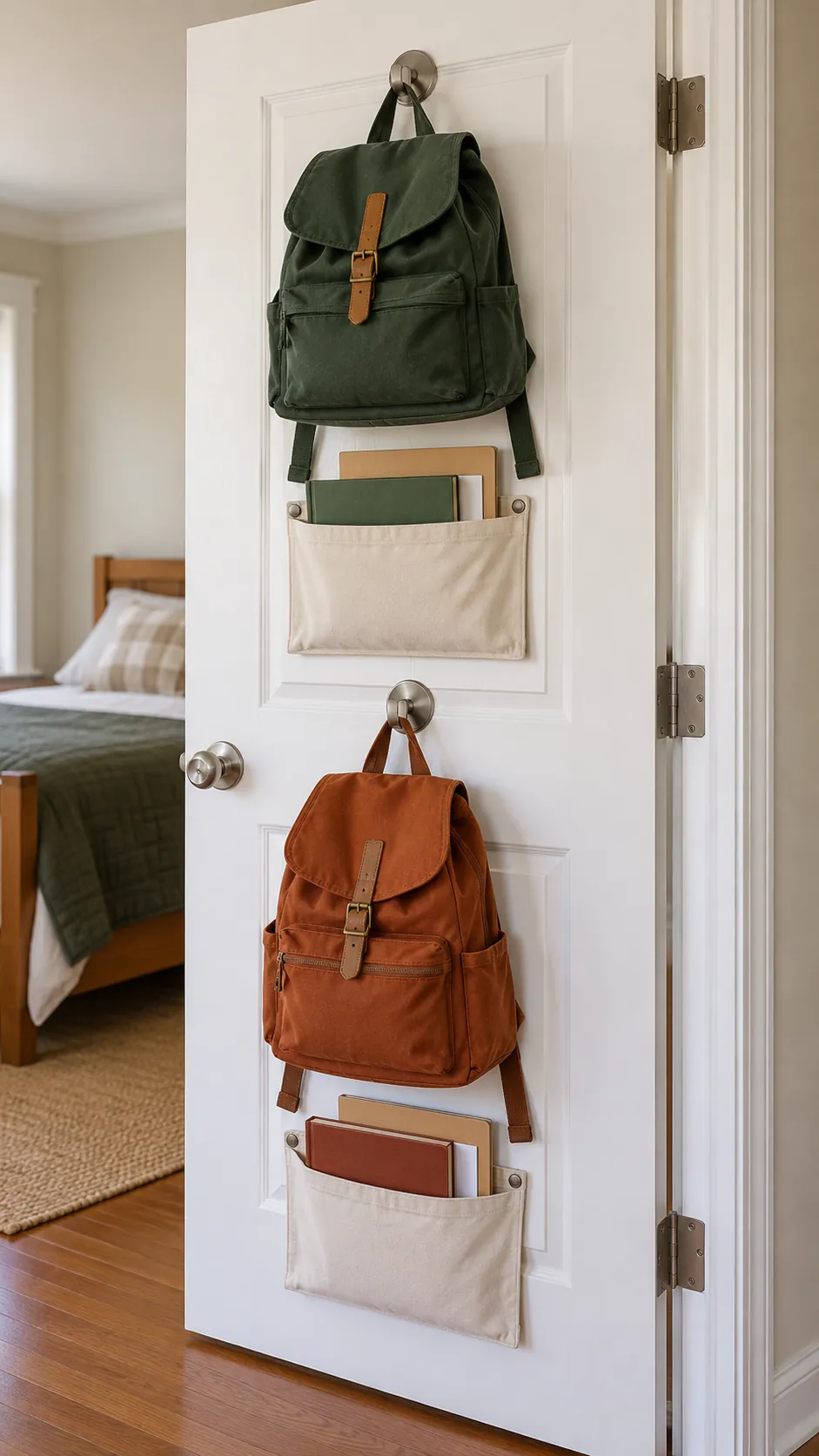
Create Separate Backpack Stations Behind the Door
The back of a door can hold school gear without consuming the room’s limited wall space. Install two sturdy hooks at different positions so each backpack has a fixed home and does not cover the other. Add a narrow pocket below each hook for library books or permission papers. Check that the loaded door still opens fully and that hardware is rated for the expected weight.
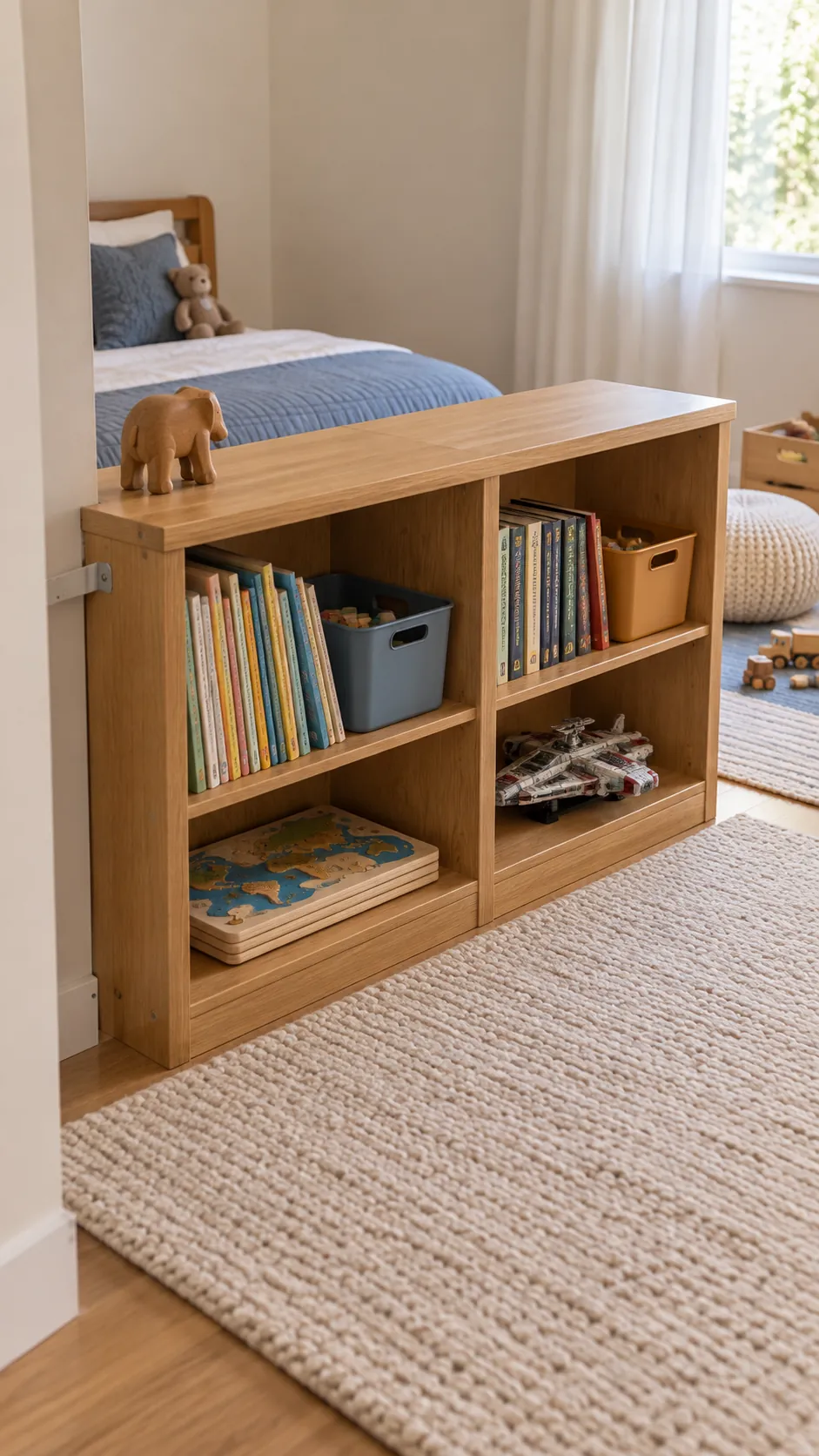
Divide a Low Bookcase Into Equal Halves
A low bookcase gives children reachable storage and can also define two sides of the room. Mark the midpoint with contrasting bins, a vertical divider, or each child’s initial. Keep heavier books and dense toys on the bottom shelves to improve stability. Anchor the case to the wall even when it looks too low to tip.
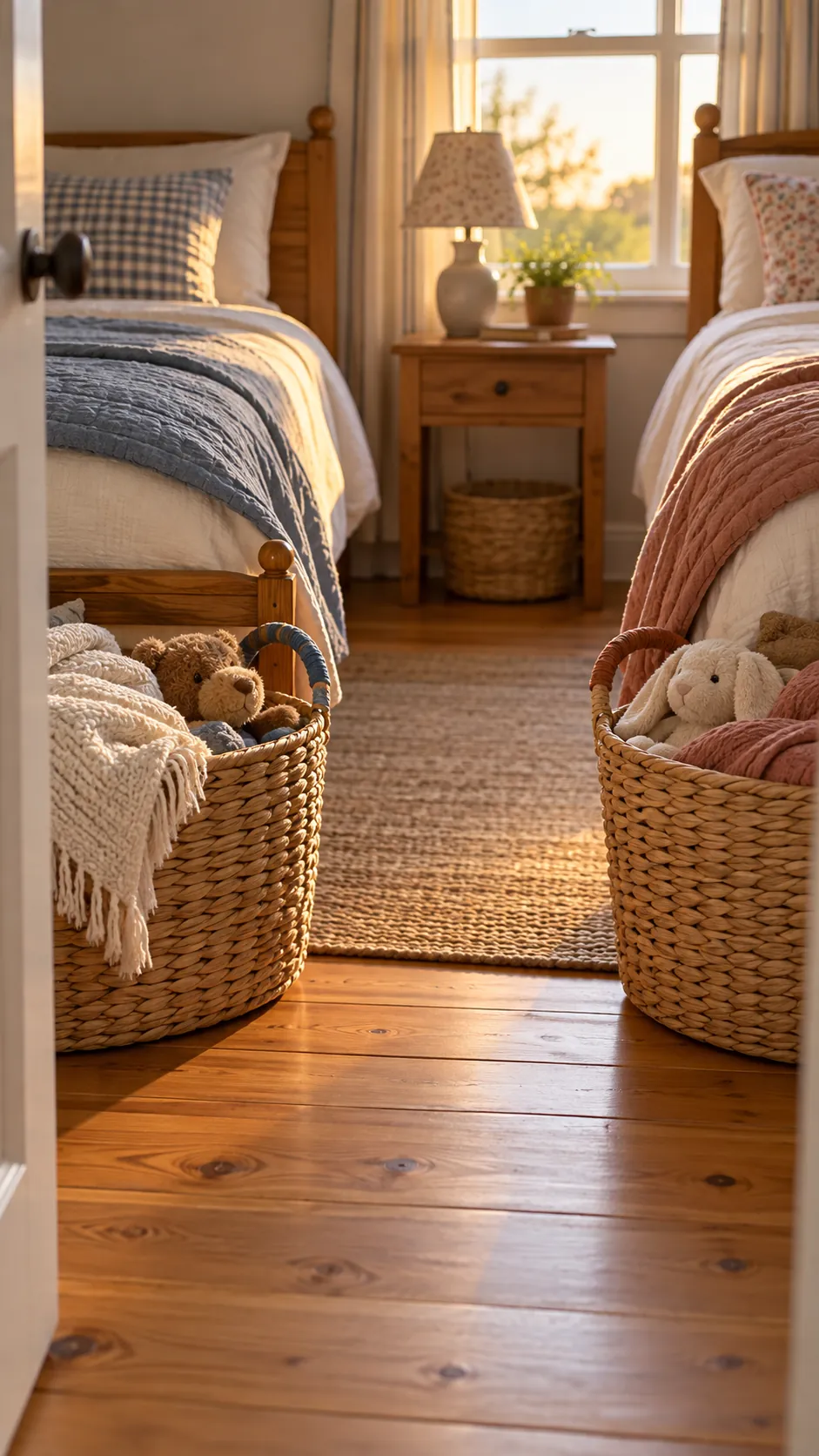
Use Bed End Baskets for Soft Items
Place one light basket at the foot of each bed for spare blankets, stuffed animals, or dress up clothes. Soft items are forgiving when the basket is pulled into a narrow aisle. Choose handles that do not snag bedding and a height that stays below the mattress edge. Edit the contents whenever the basket starts to overflow rather than buying a larger one.
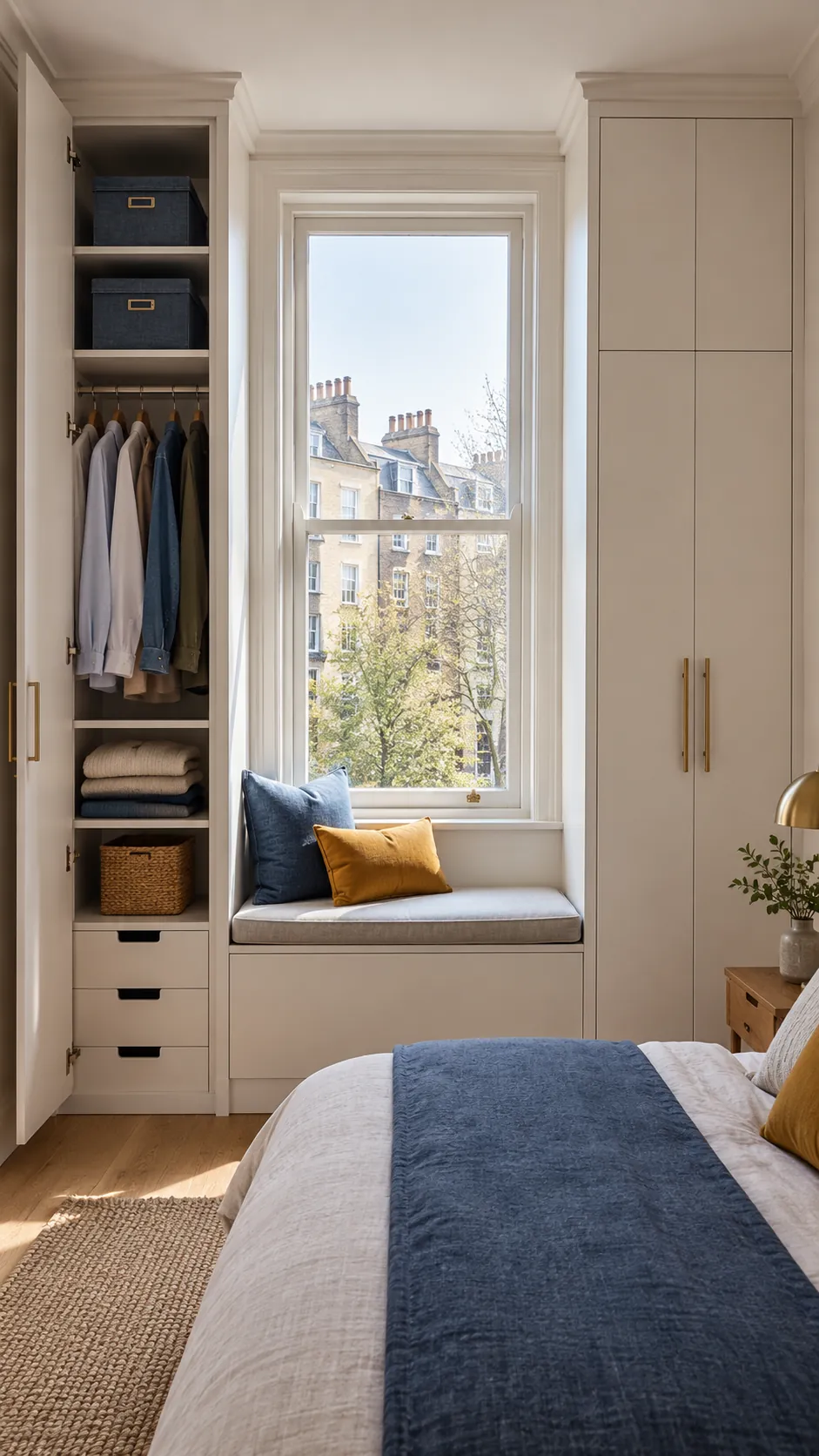
Fit Twin Wardrobes Around a Window
Two narrow wardrobes can use the wall on either side of a centered window without blocking daylight. Give one complete wardrobe to each child so hanging clothes, folded clothes, and accessories stay together. Match the cabinet depth and door swing to the room before committing to the layout. A low bench below the window can hold shared reading books without confusing the clothing zones.
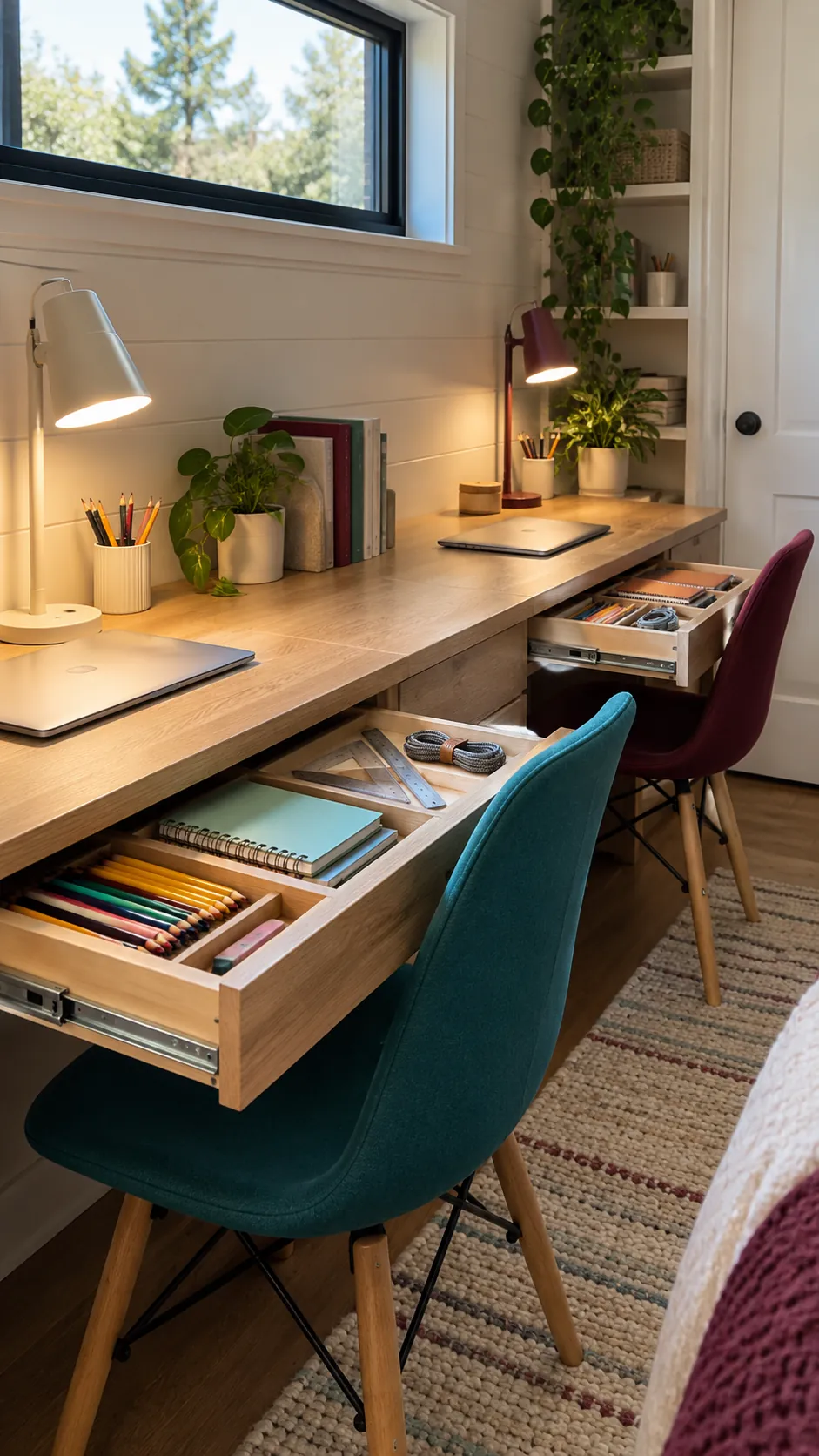
Give Each Desk Its Own Supply Drawer
A shared work surface functions better when supplies are not stored in one disputed center pile. Mount a shallow drawer beneath each seat position for pencils, notebooks, and charging cables. Keep only a lamp or pencil cup on the top so the desk can still support homework and crafts. If one child is left handed, place that child’s drawer where it will not interfere with comfortable movement.
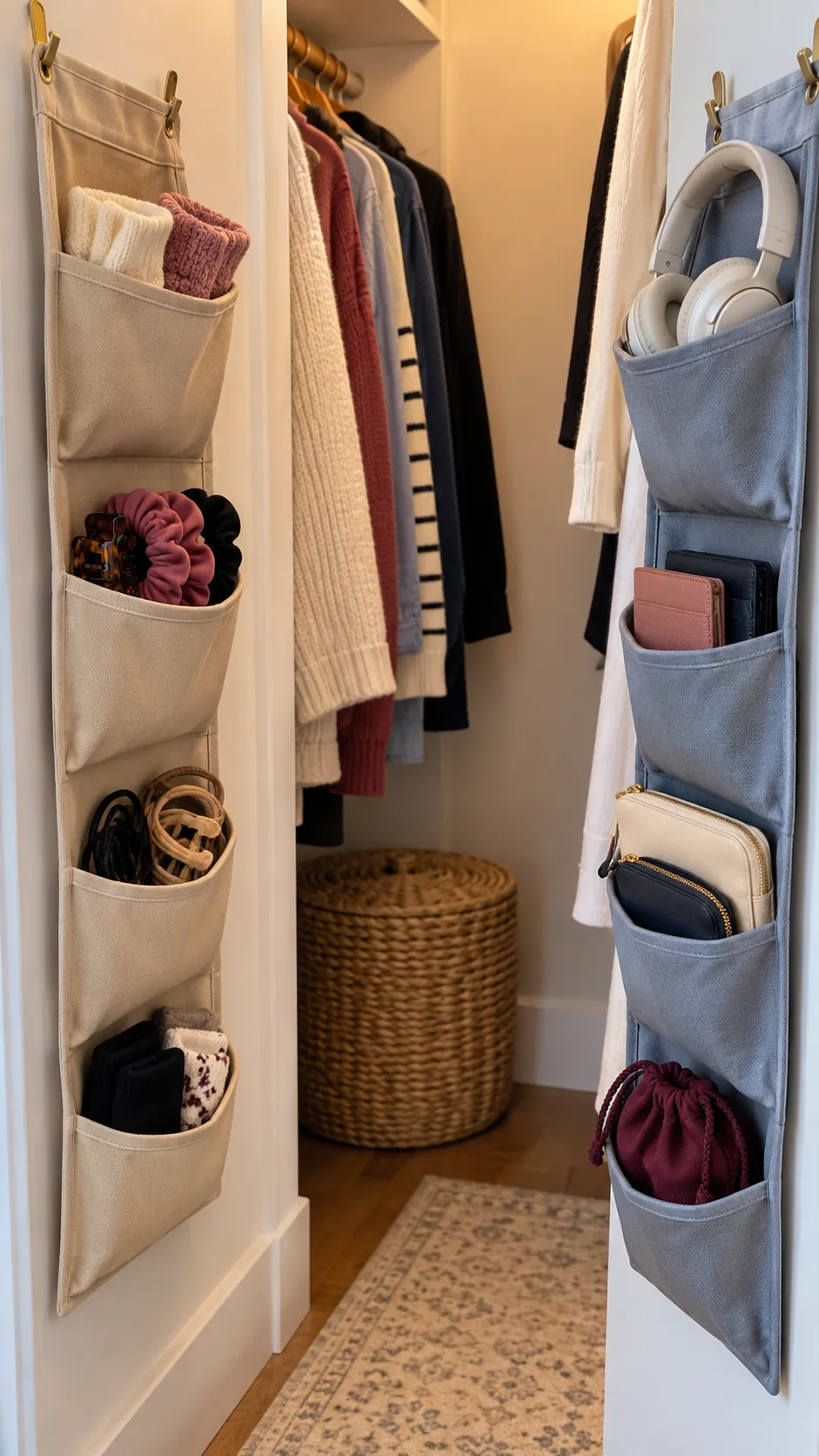
Hang Two Fabric Pocket Organizers
Fabric pocket organizers make good homes for light accessories that disappear inside drawers. Hang one beside each closet zone for socks, hair items, small toys, or electronic accessories. Transparent labels or stitched picture tags help children return objects without opening every pocket. Avoid loading the organizers with books or other weight that can strain a door or rail.
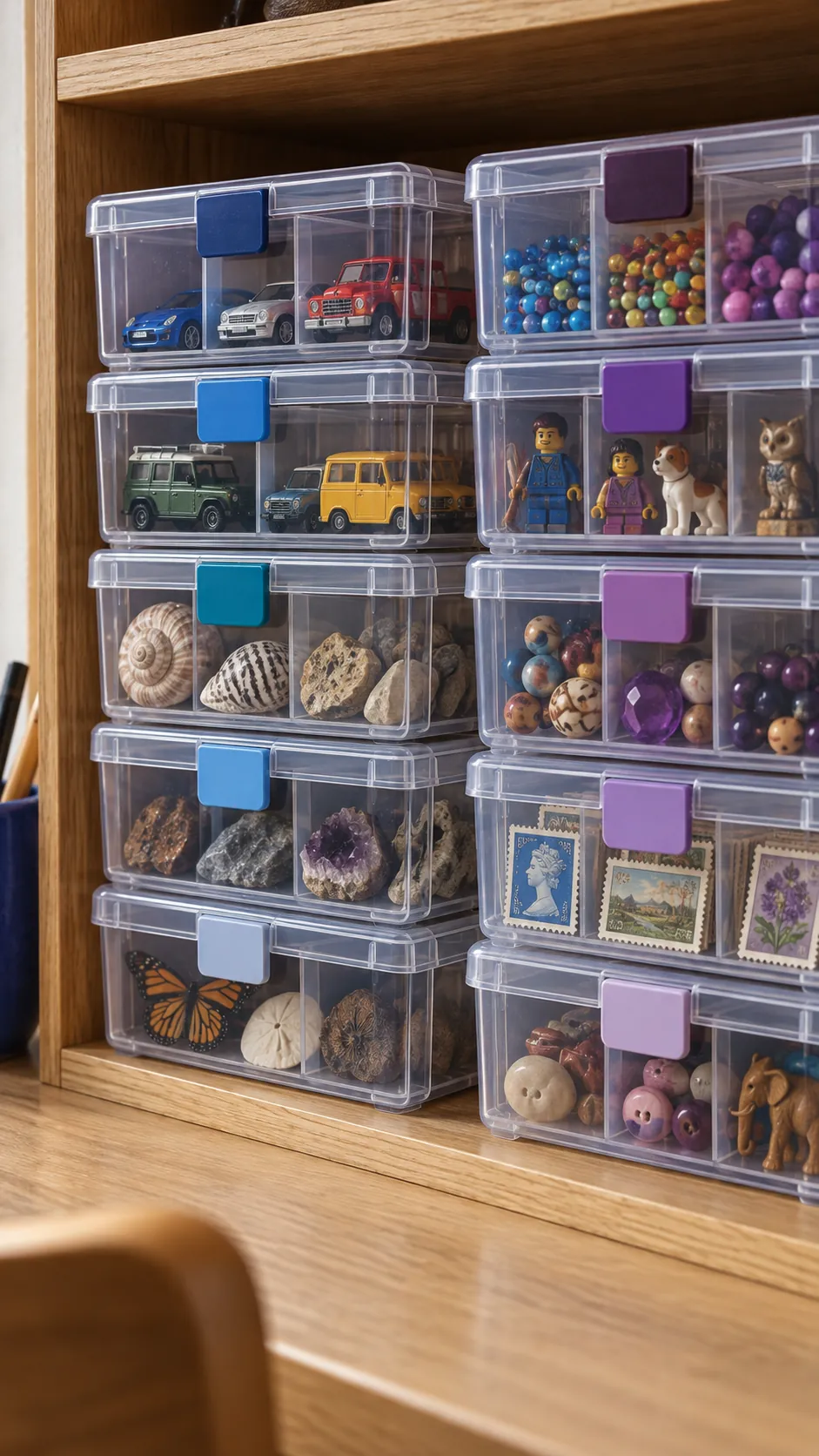
Separate Collections With Clear Lidded Boxes
Small collections stay manageable when each child has a set of shallow clear boxes. Visibility reduces forgotten duplicates, while lids keep pieces from migrating between zones. Store the boxes on separate shelves and label both the short end and the long side. Set a fixed box limit so a growing collection prompts editing instead of taking over shared space.
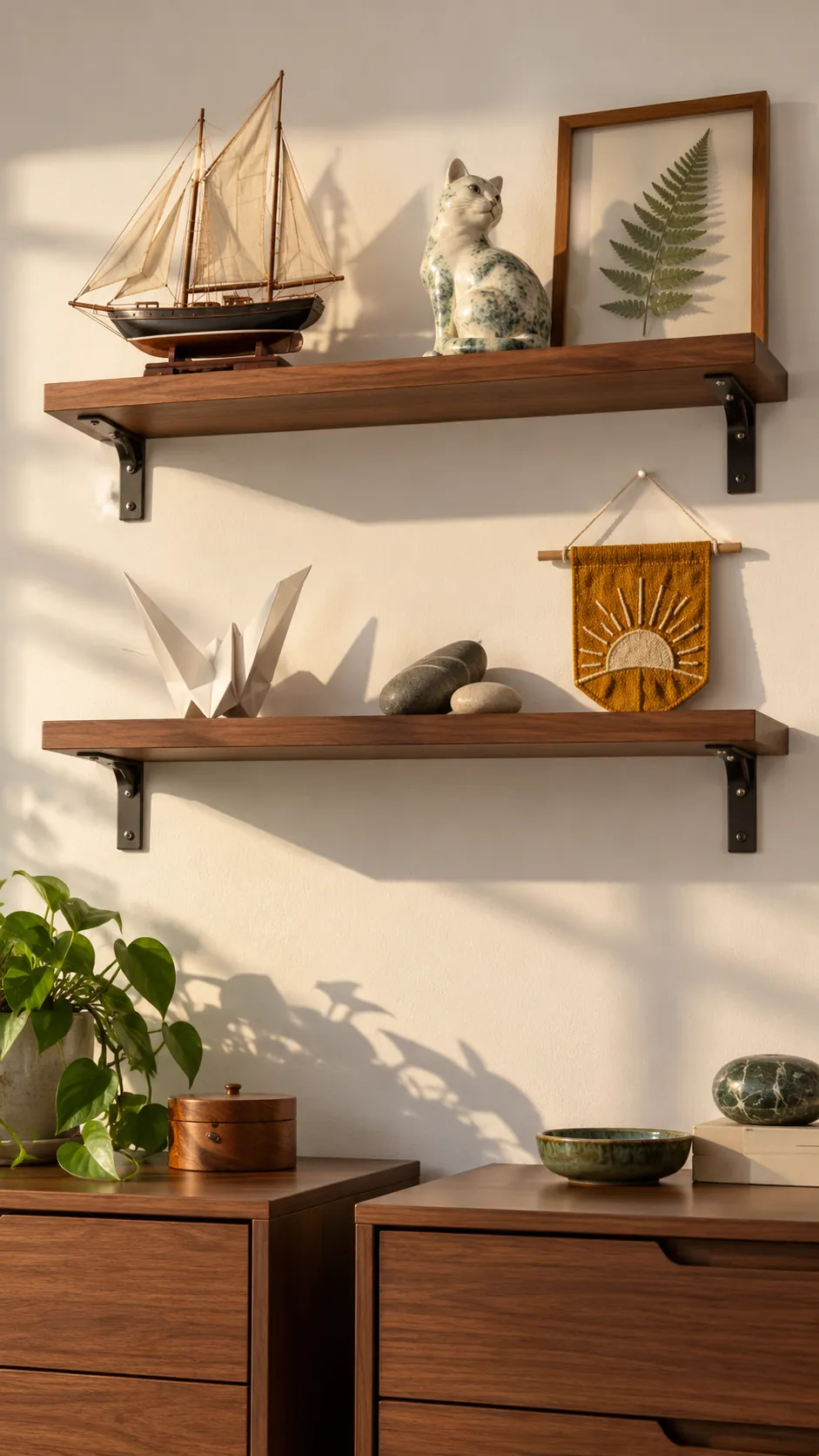
Install Two High Shelves With Display Limits
High shelves can protect special models or keepsakes from daily play without filling the floor. Give each child one defined shelf and agree on how many objects can be displayed at once. Adults should handle anything placed above safe reach, so this is display storage rather than daily storage. Use secure brackets and keep heavy objects away from beds.
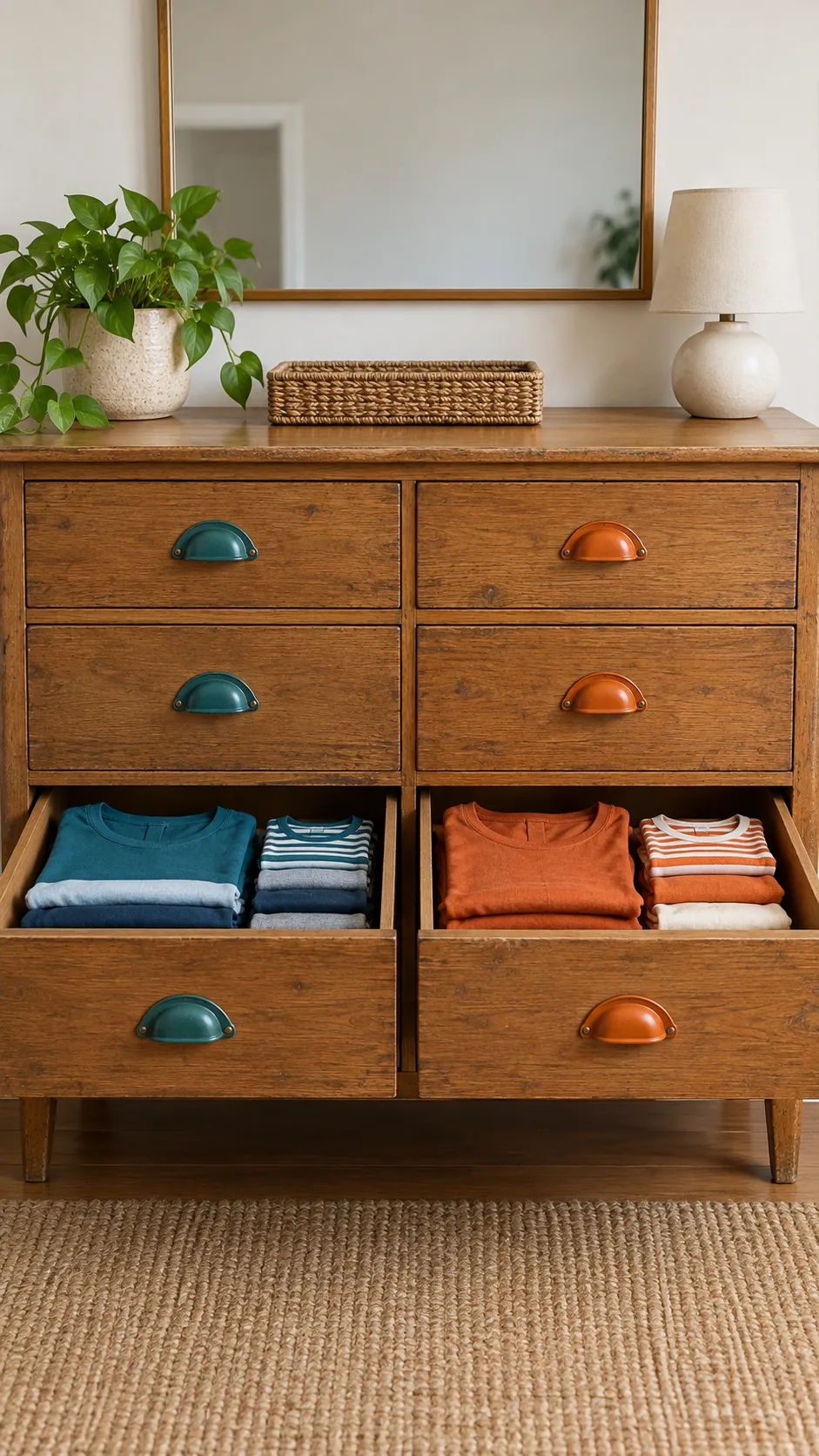
Make a Drawer Map for the Dresser
One dresser can serve two children if the drawer ownership is obvious before anyone opens it. Assign alternating drawer fronts or one vertical stack to each child, then add discreet symbols near the pulls. Keep the same clothing category in the corresponding drawer for both children when possible. That mirrored arrangement makes laundry faster without mixing sizes.
Tuck Personal Crates Beneath a Window Bench
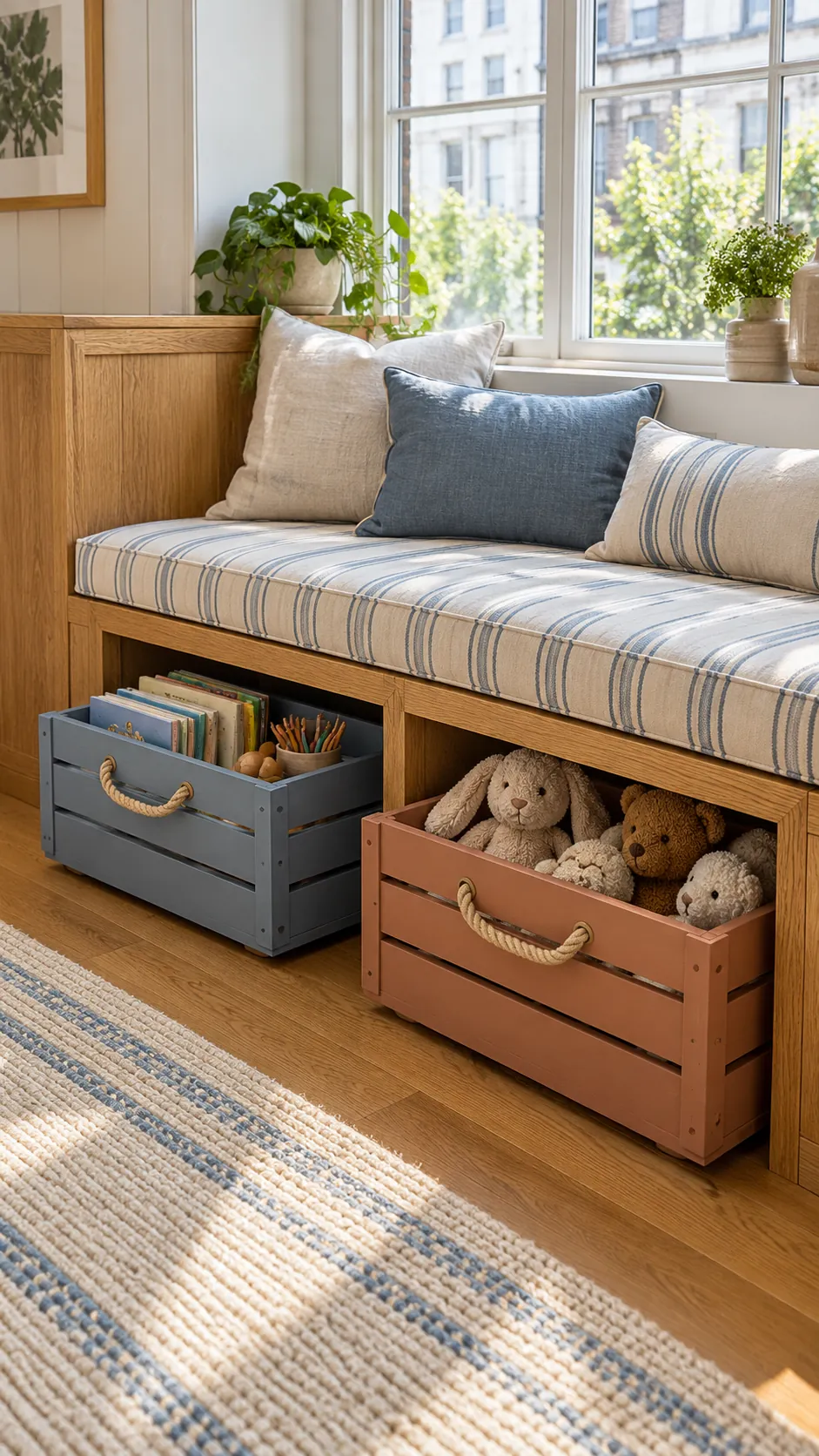
A window bench can combine seating with two independent storage bays. Slide one handled crate into each bay for toys, reading supplies, or clothing that needs a quick home. Leave a finger gap around every crate so small hands can pull it out safely. Choose a fixed cushion that cannot drift onto the floor and block access.
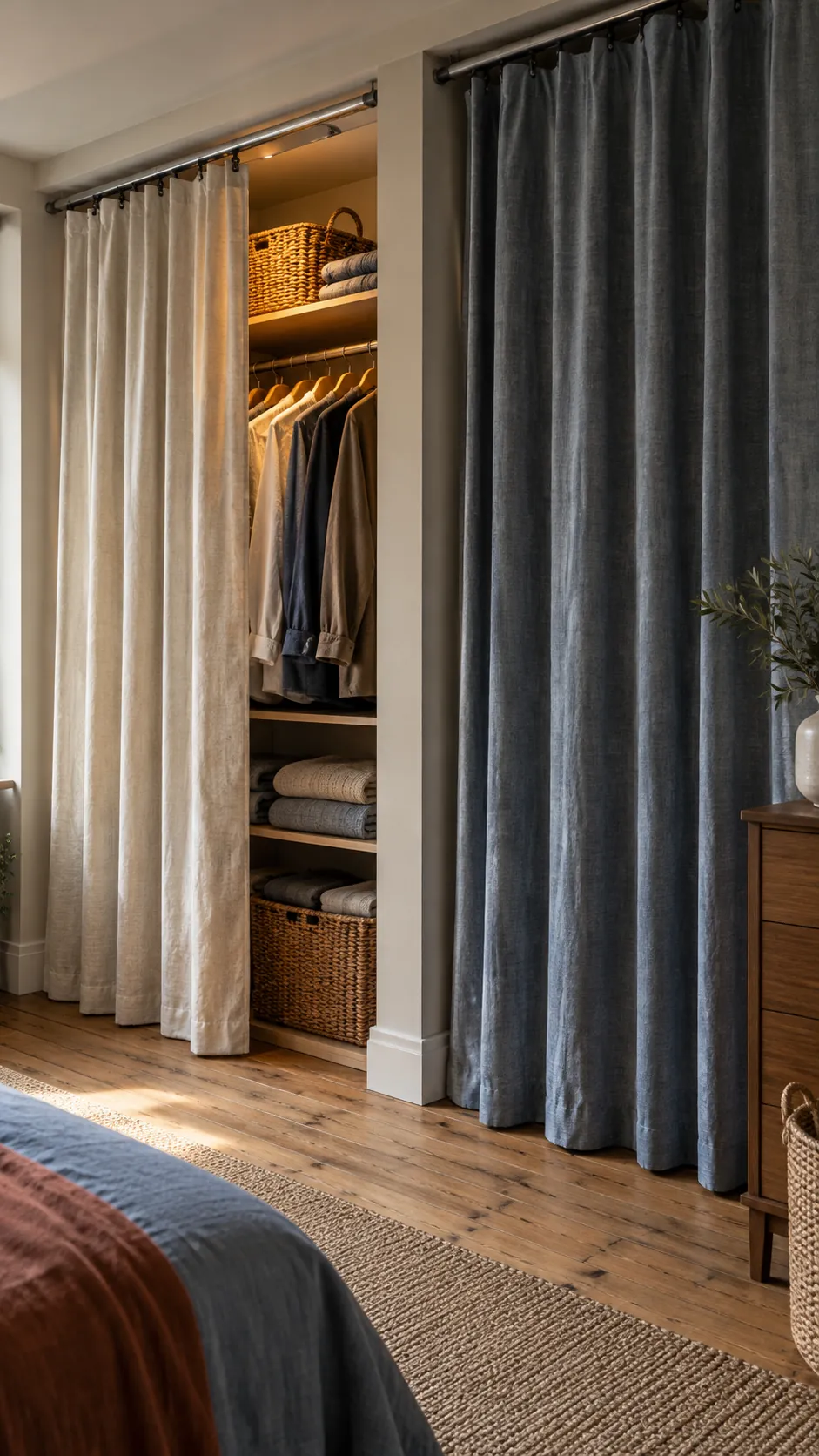
Use Curtain Panels to Hide Two Open Closets
Two narrow open closet bays can fit where a deep wardrobe would crowd the aisle. Hang a separate washable curtain over each bay so the children can access their own storage without moving one long panel. Inside, combine a short rail with shelves and a floor basket. Keep the curtain hem clear of the floor so it does not collect dust or catch on toys.
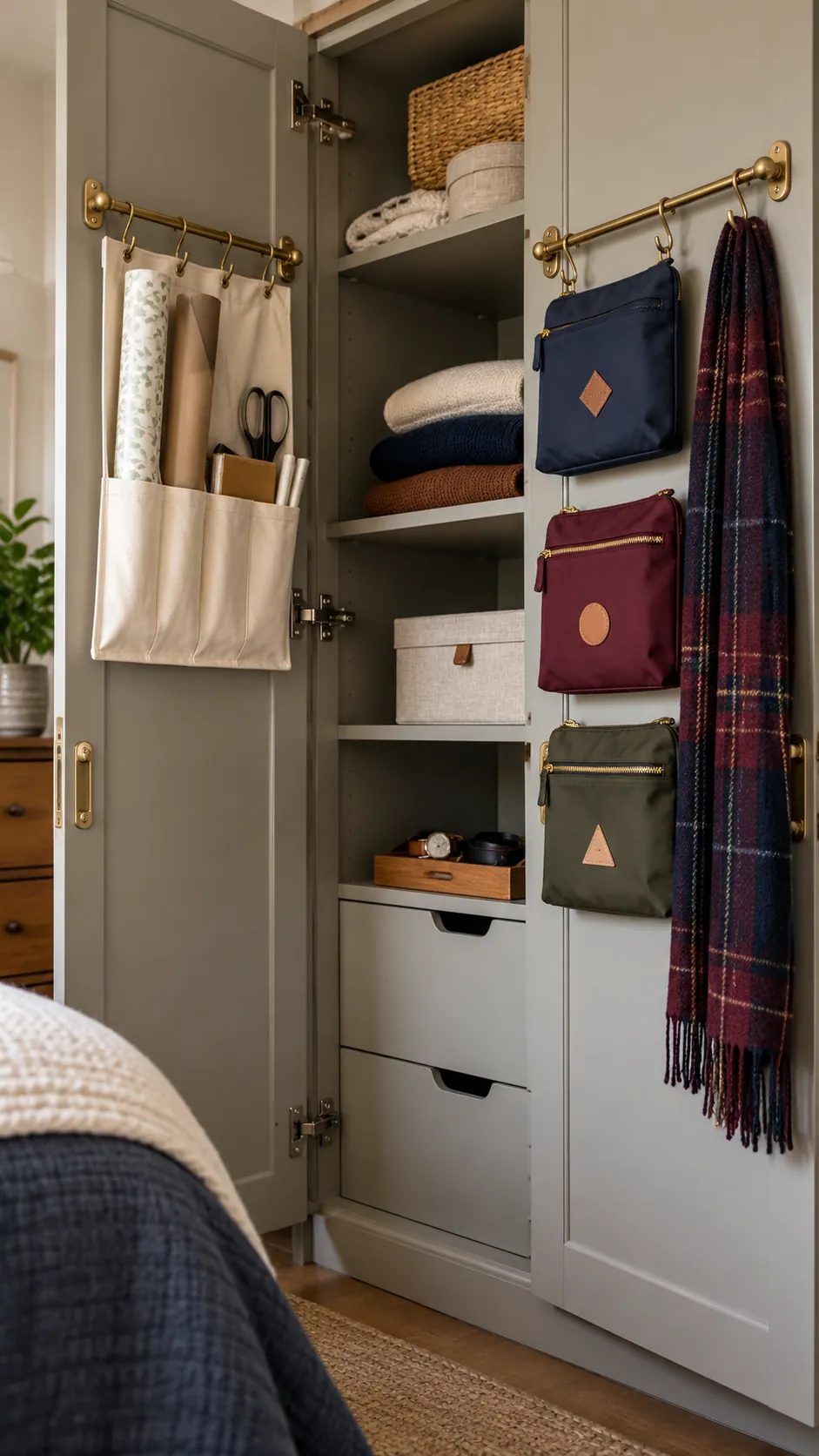
Add Name Rails Inside Cabinet Doors
The inside of a cabinet door can hold lightweight items that otherwise fill shelves. Add a shallow rail or elastic pocket to each child’s door for caps, craft paper, or small pouches. Put the child’s name or symbol inside rather than across the room’s visible surfaces. Confirm that stored items do not stop the door from closing or hit the shelves behind them.
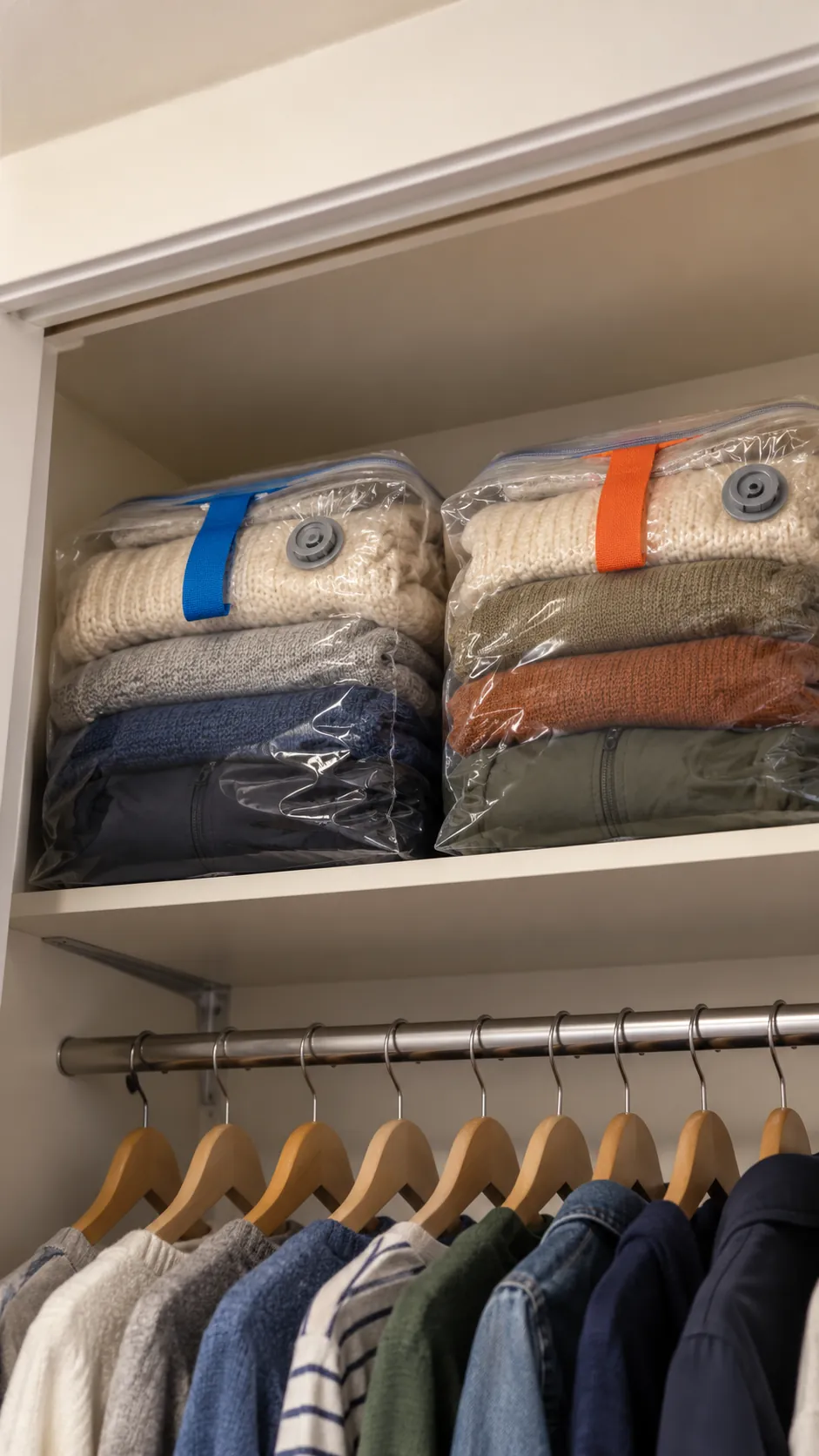
Store Seasonal Clothes in Separate Vacuum Bags
Seasonal clothing can share one high shelf without becoming mixed if each child has a separate sealed bag. Label the bag with the child, size range, and season before it leaves daily reach. Do not compress structured coats or delicate items that may lose shape. Review the contents at each seasonal change because children can outgrow stored clothing before it returns to rotation.
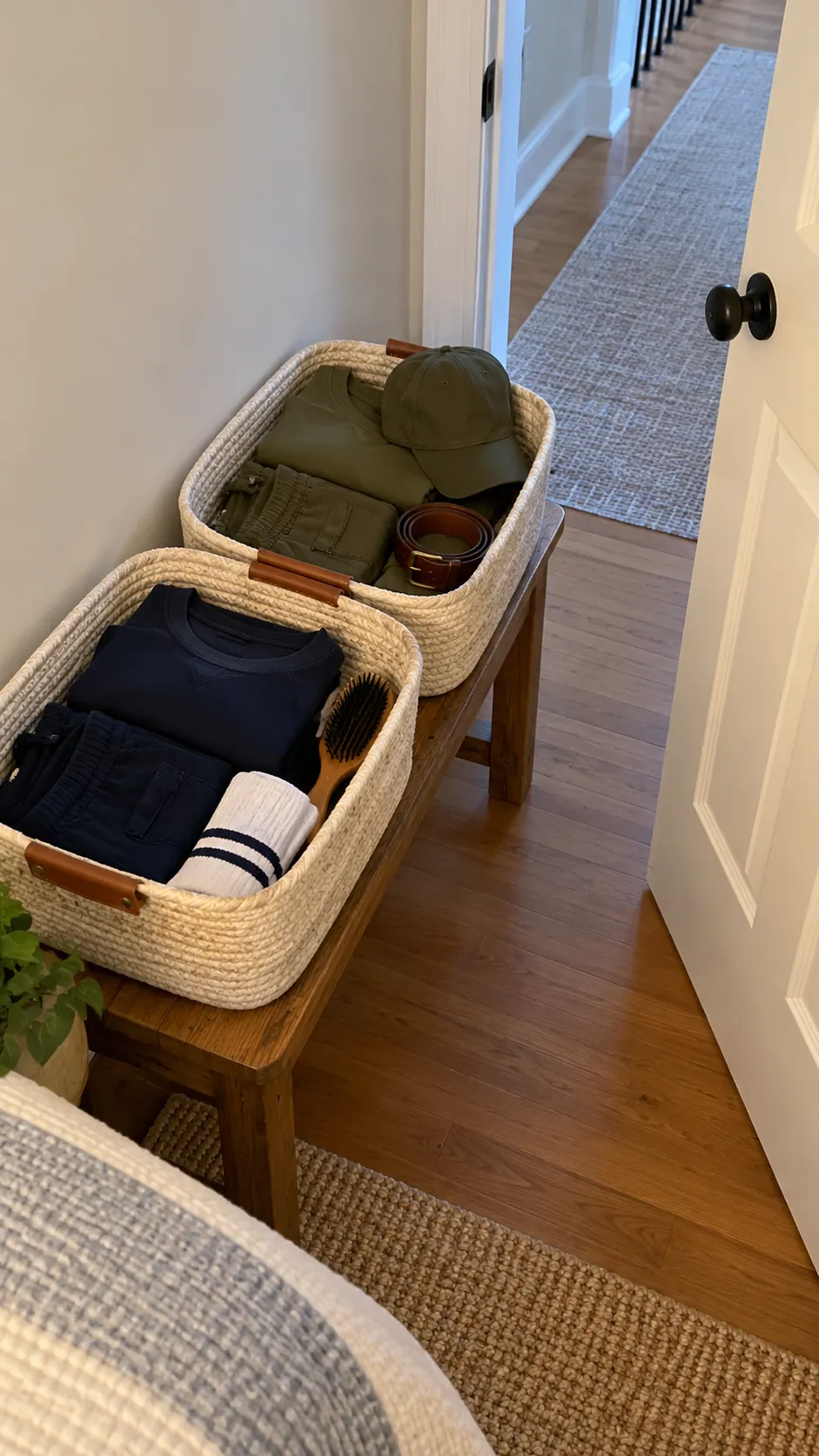
Create Two Morning Ready Baskets
A morning basket gives each child one place for the next outfit, school accessories, and anything that must leave the room. Fill it the night before and empty it as the child gets ready. Place both baskets near the exit so routines do not require crossing sleeping or play zones. Choose open baskets that show forgotten items at a glance.
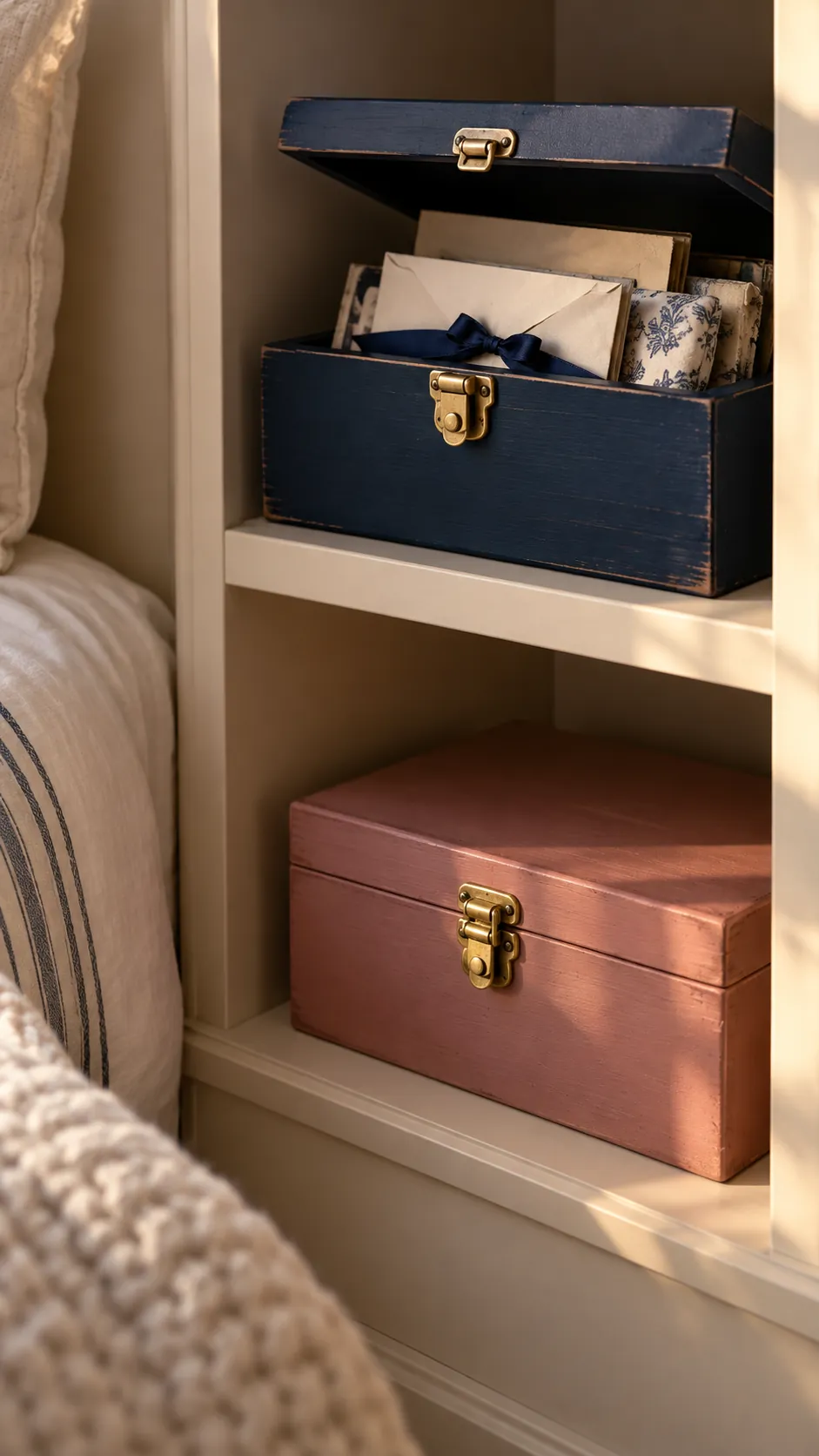
Give Each Child a Lockable Memory Box
Children who share almost every surface still need a private place for letters, keepsakes, and fragile treasures. Use one compact memory box per child and store both in equally accessible locations. A simple latch or child appropriate lock can establish a clear boundary, but adults should retain emergency access. The fixed box size also keeps sentimental storage from expanding into daily zones.
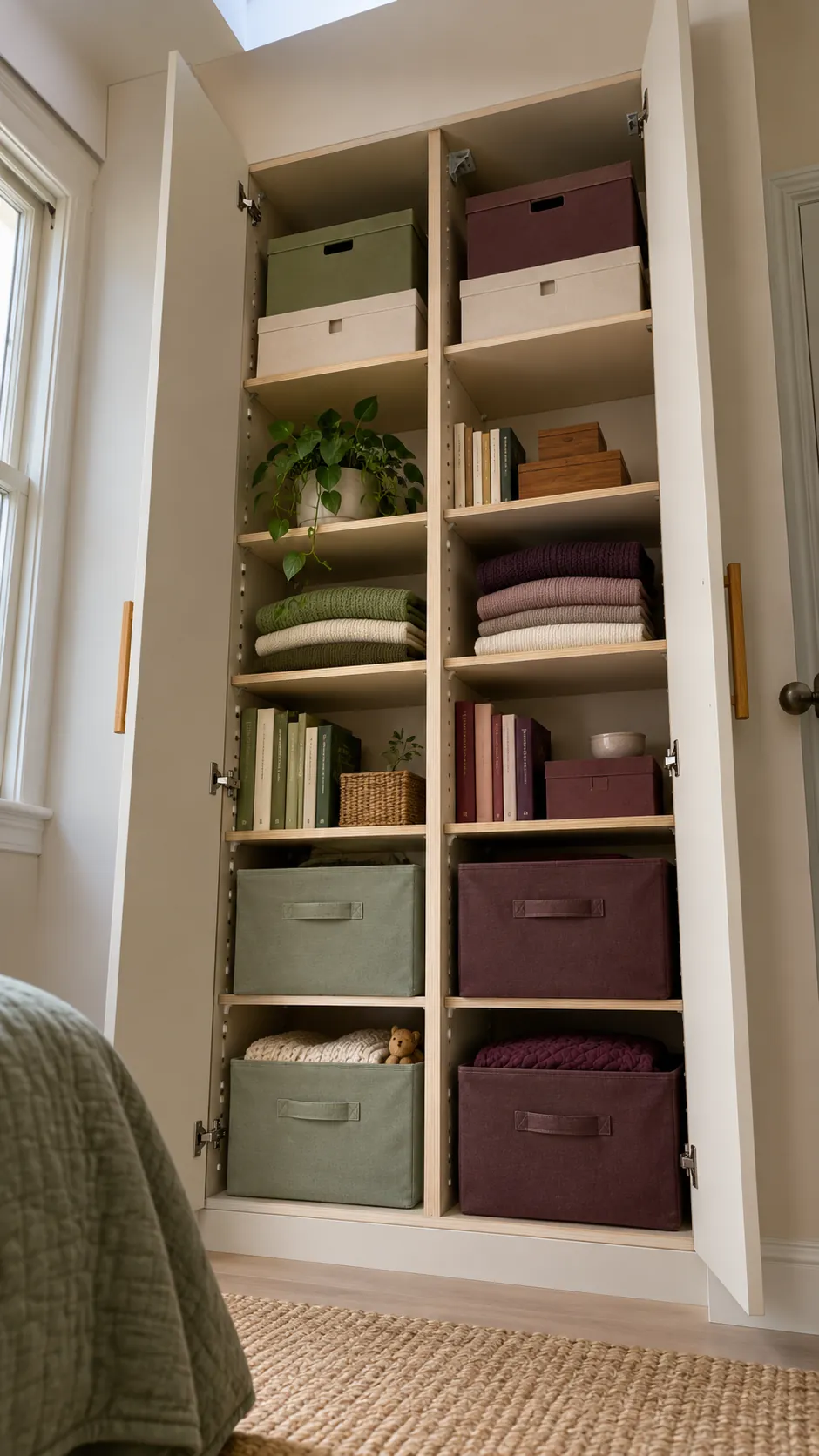
Use a Ceiling Height Cabinet With Two Columns
A tall cabinet uses vertical space that shorter furniture leaves empty. Divide the interior into two full height columns so each child has shelves from low to high. Put daily items below shoulder height and let adults manage the upper compartments. Secure the cabinet to wall studs and keep the heaviest belongings near the base.
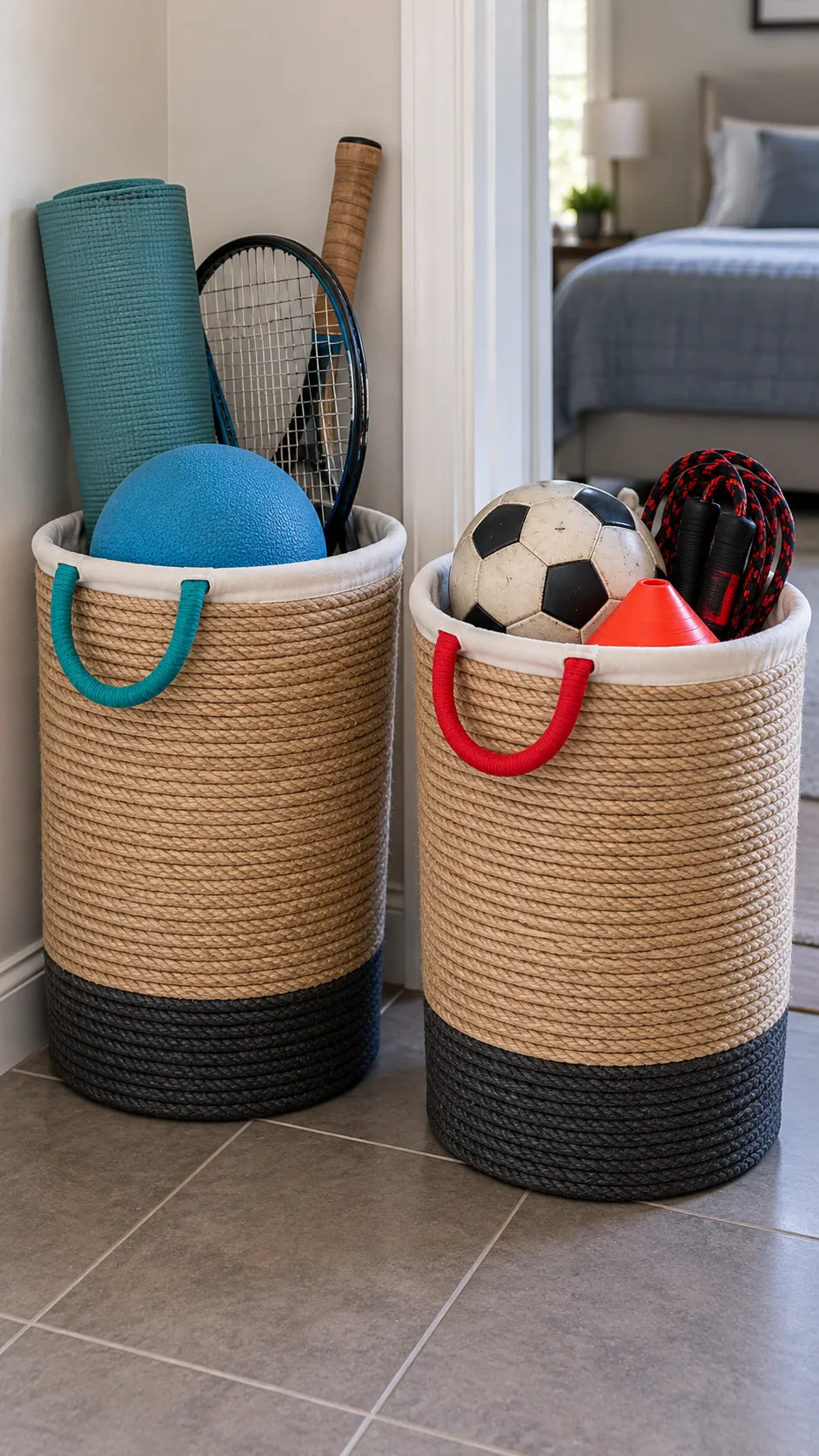
Park Sports Gear in Personal Tall Baskets
Tall baskets contain balls, rackets, rolled mats, and other awkward gear that will not sit neatly on a shelf. Assign one basket to each child and place it near the door rather than beside the beds. A washable liner catches dirt from outdoor equipment. If an item is too long or heavy to stand safely, move it to a secure shared utility area instead.
Make Separate Quiet Time Kits
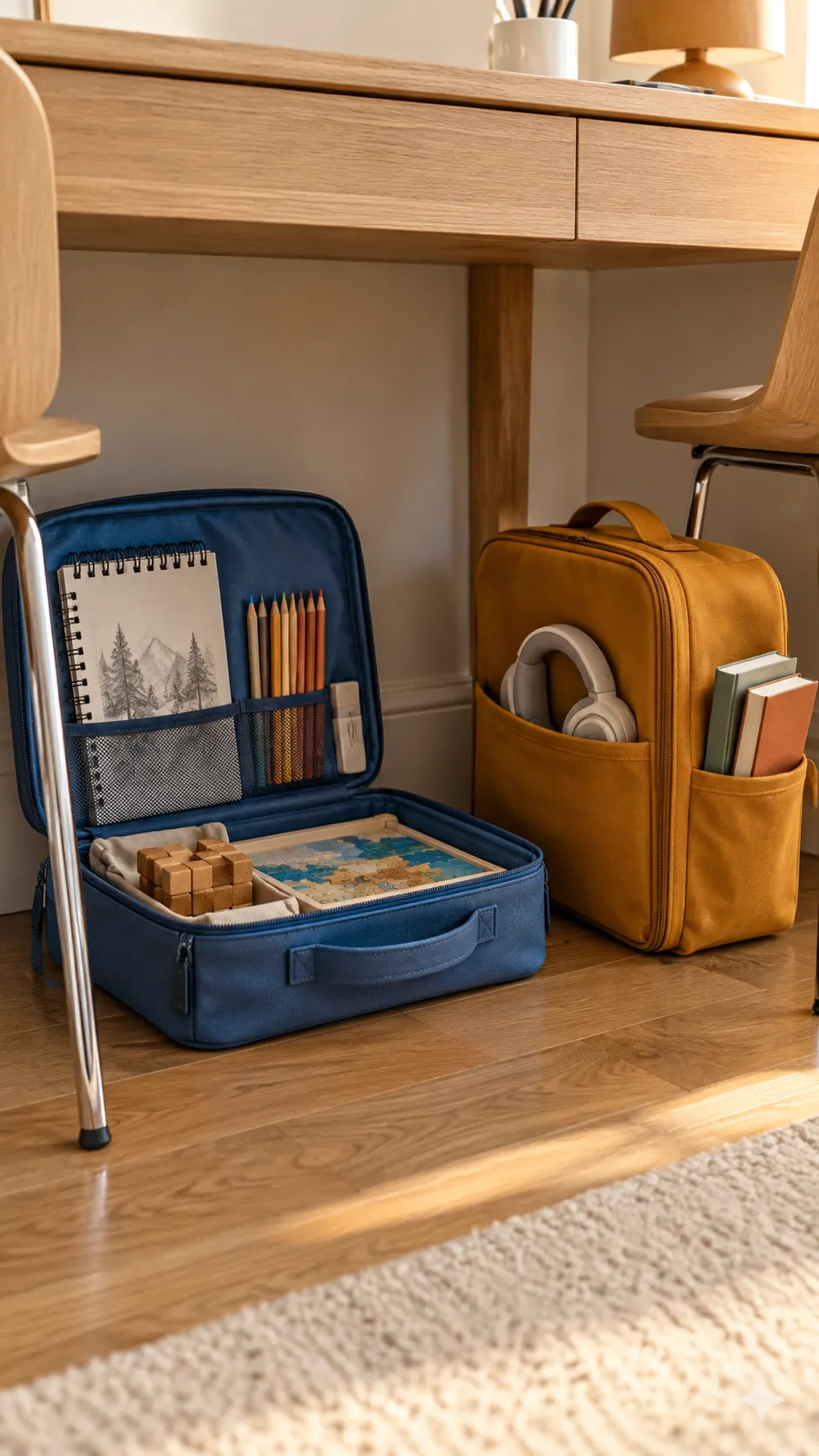
Personal quiet time kits reduce conflict when both children need the room in different ways. Fill one handled case per child with books, puzzles, drawing tools, or headphones that suit that child. Store the cases under the owner’s bed or desk and return every item after use. Rotate the contents occasionally without changing the case location.
Label the Shared Zone as Carefully as Personal Zones
A room with separate storage still needs a small, clearly defined home for things both children use. Choose one shelf or cabinet and label it as shared rather than letting shared belongings drift across personal areas. Store only agreed categories there, such as board games or art paper. When the shared zone is full, both children can decide together what leaves before anything new enters.