A kitchen floor does not fail only because the surface looks worn. Water can enter joints, chair legs can scratch the finish, grit can dull traffic lanes, and a poor installation can make strong material buckle. The best budget choice is the product whose limits match your kitchen, not the box with the boldest claim.
Use samples, installation instructions, and the written warranty together. A low price is useful only when the floor can handle your spill habits, pets, cleaning routine, subfloor, and expected traffic.
Treat waterproof claims as a boundary, not a promise
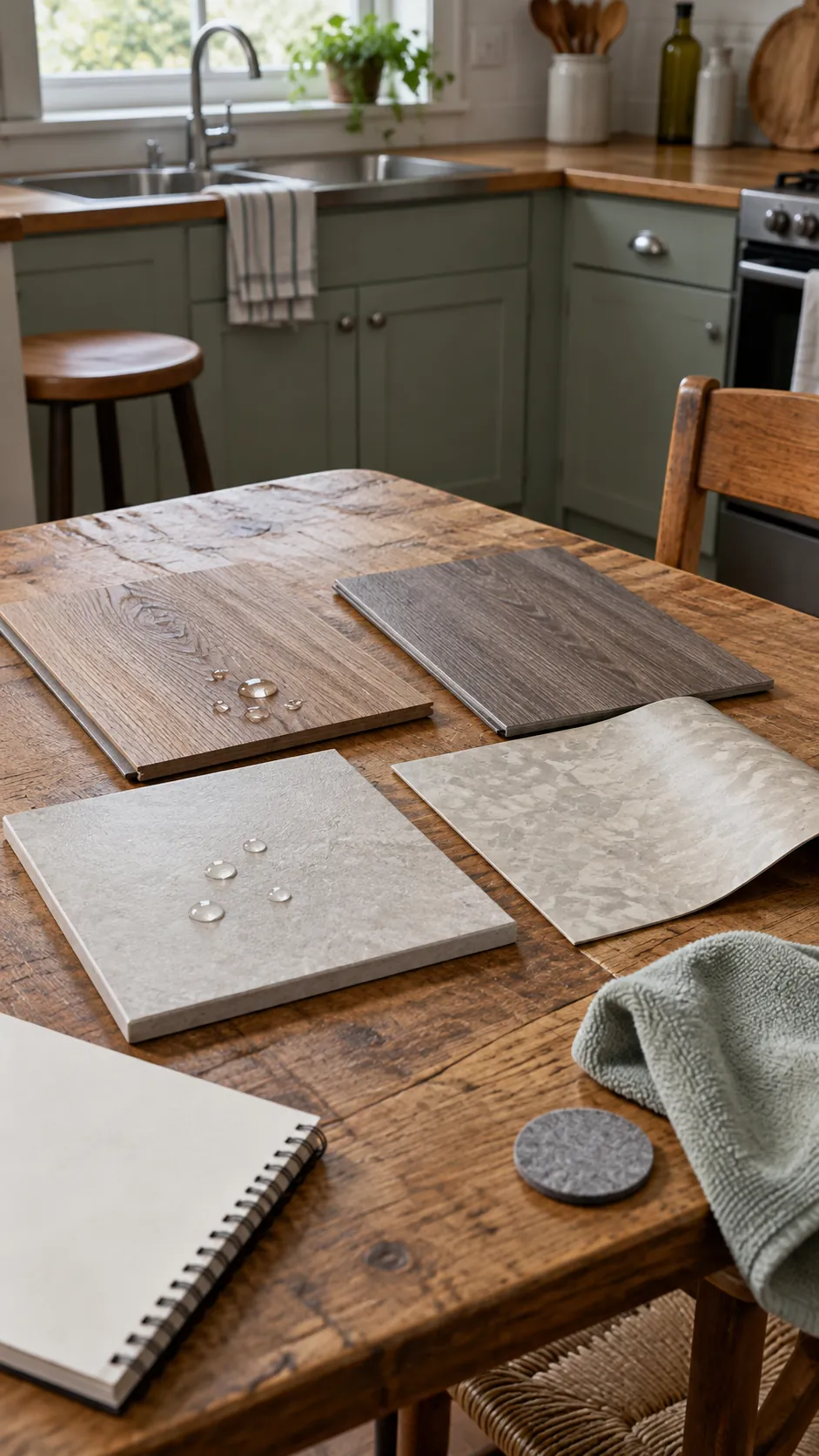
Waterproof versus water resistant flooring usually describes the product core or a tested assembly under specific conditions. It does not mean water can remain beneath a floating floor, reach the subfloor without harm, or sit around cabinet edges forever. Read the instructions for spill cleanup time, perimeter sealing, wet cleaning, and rooms that are excluded.
For everyday kitchen spills, tightly locked vinyl plank, qualified laminate, sheet vinyl, and porcelain tile can all be workable choices. A dishwasher leak is different from a dropped glass of water. Choose leak detection and prompt cleanup even when the material label uses strong language.
Read the wear layer with the rest of the construction
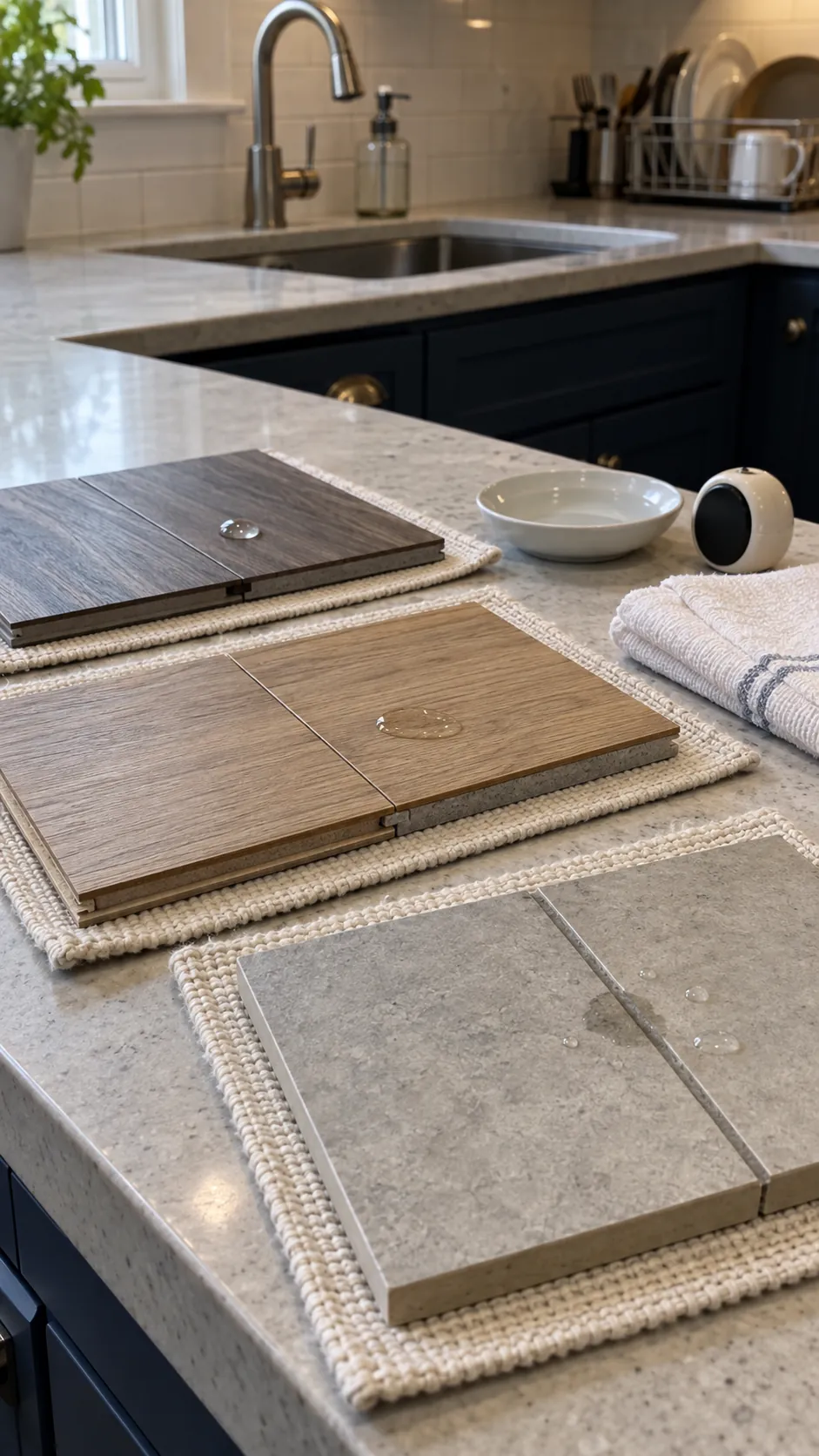
LVP wear layer thickness helps compare similar vinyl products, but it does not measure locking strength, dimensional stability, surface texture, print quality, or subfloor tolerance. A thicker wear layer can resist gradual finish loss, yet a weak joint can still open when the floor moves.
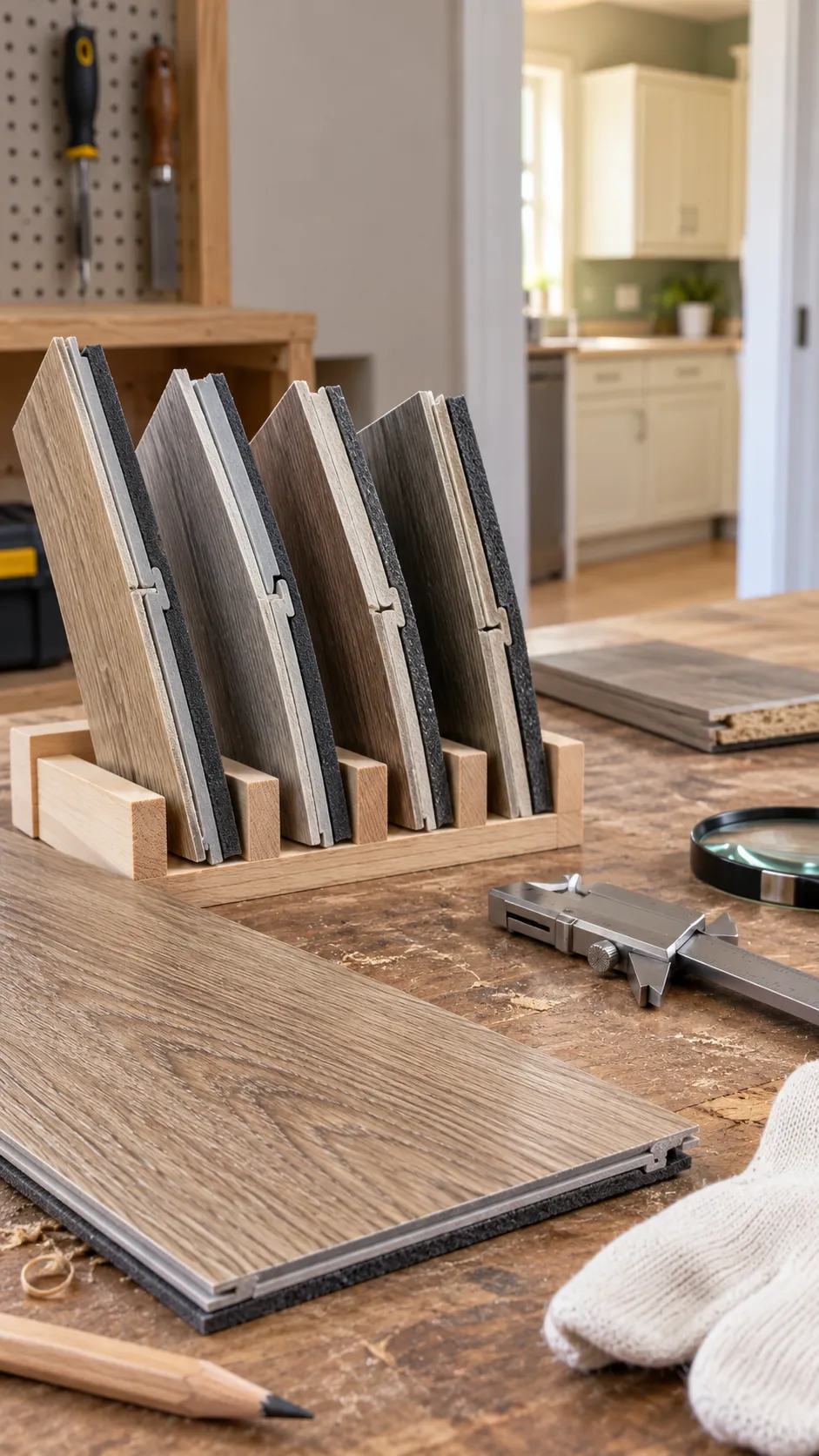
Look at total plank thickness, core type, attached pad, edge profile, surface coating, and installation requirements. For flooring in high traffic kitchens, choose a product that permits residential kitchen use and carries a realistic wear warranty. Do not pay for a commercial specification unless your household traffic needs it.
Bring a sample home and inspect it in morning and evening light. Shallow embossing often hides crumbs less than deep grooves and is usually easier to clean.
Check grip with the cleaning method you will use
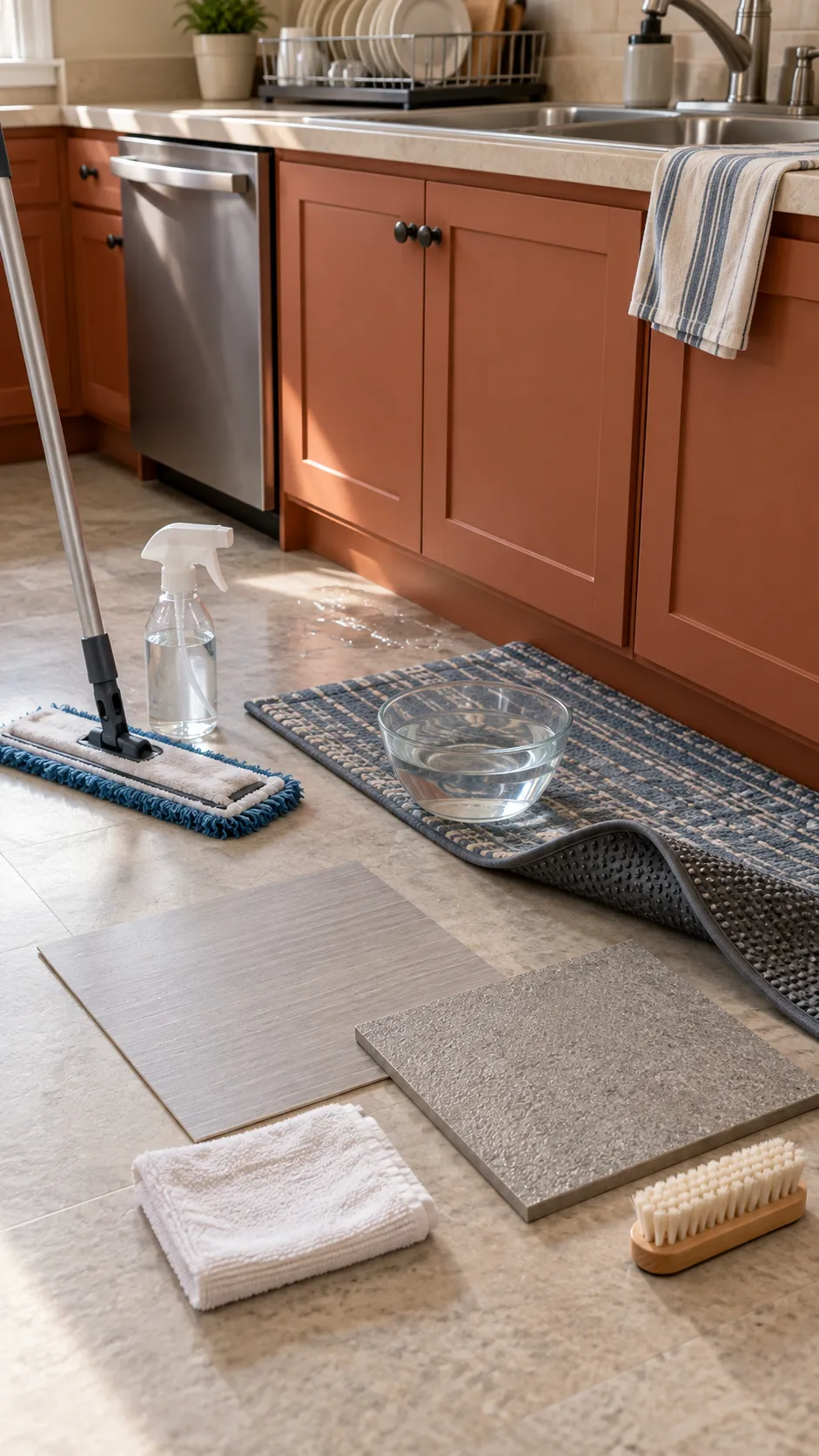
Kitchen flooring slip resistance depends on surface texture, footwear, grease, water, and cleaning residue. A heavily textured sample may grip well but trap dirt. A very smooth finish may clean quickly but feel slick when wet.
Ask for the manufacturer cleaning directions and avoid products that require a routine you will not follow. Test a sample with the approved cleaner, let it dry, then walk over it with the shoes normally worn in the kitchen. Use washable mats at the sink and food preparation zones without covering most of the new floor.
Plan for claws chairs and dropped cookware
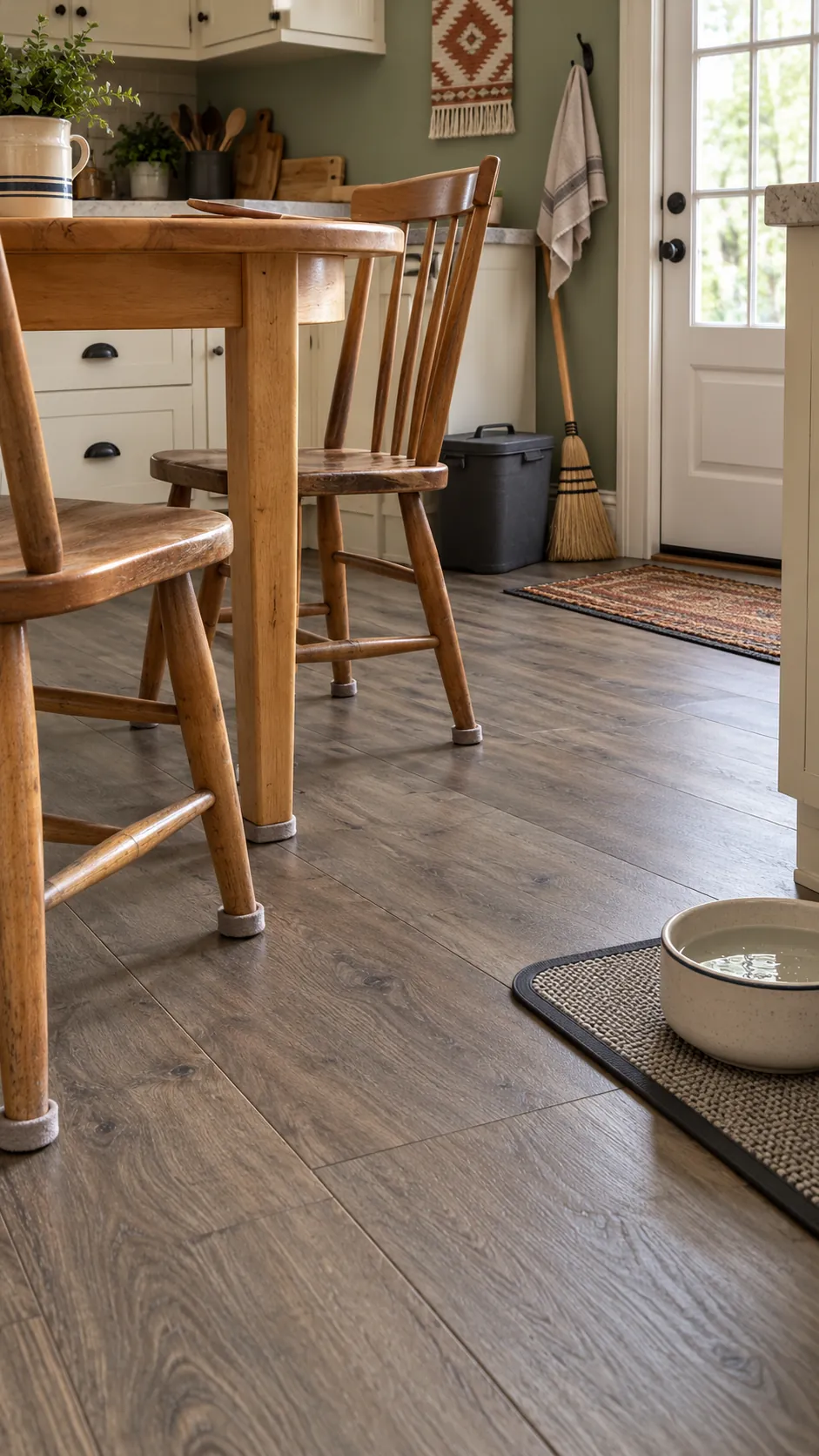
Pet friendly kitchen flooring needs more than water tolerance. Look for a matte pattern that disguises fine marks, a surface that gives paws useful grip, and joints that do not collect grit. Keep nails trimmed and place absorbent protection under water bowls.
Kitchen flooring scratch resistance is easier to preserve with felt pads, clean chair feet, and frequent grit removal. Test a spare sample with a clean chair glide and a metal spoon dropped from a modest height. Do not use a knife or destructive test on a store sample unless the retailer permits it.
Porcelain tile resists many scratches but can chip a dropped dish and feels hard during long cooking sessions. Resilient floors feel softer, though sharp objects can cut them. Match the compromise to the accidents most likely in your home.
Choose click lock or glue down for the room conditions
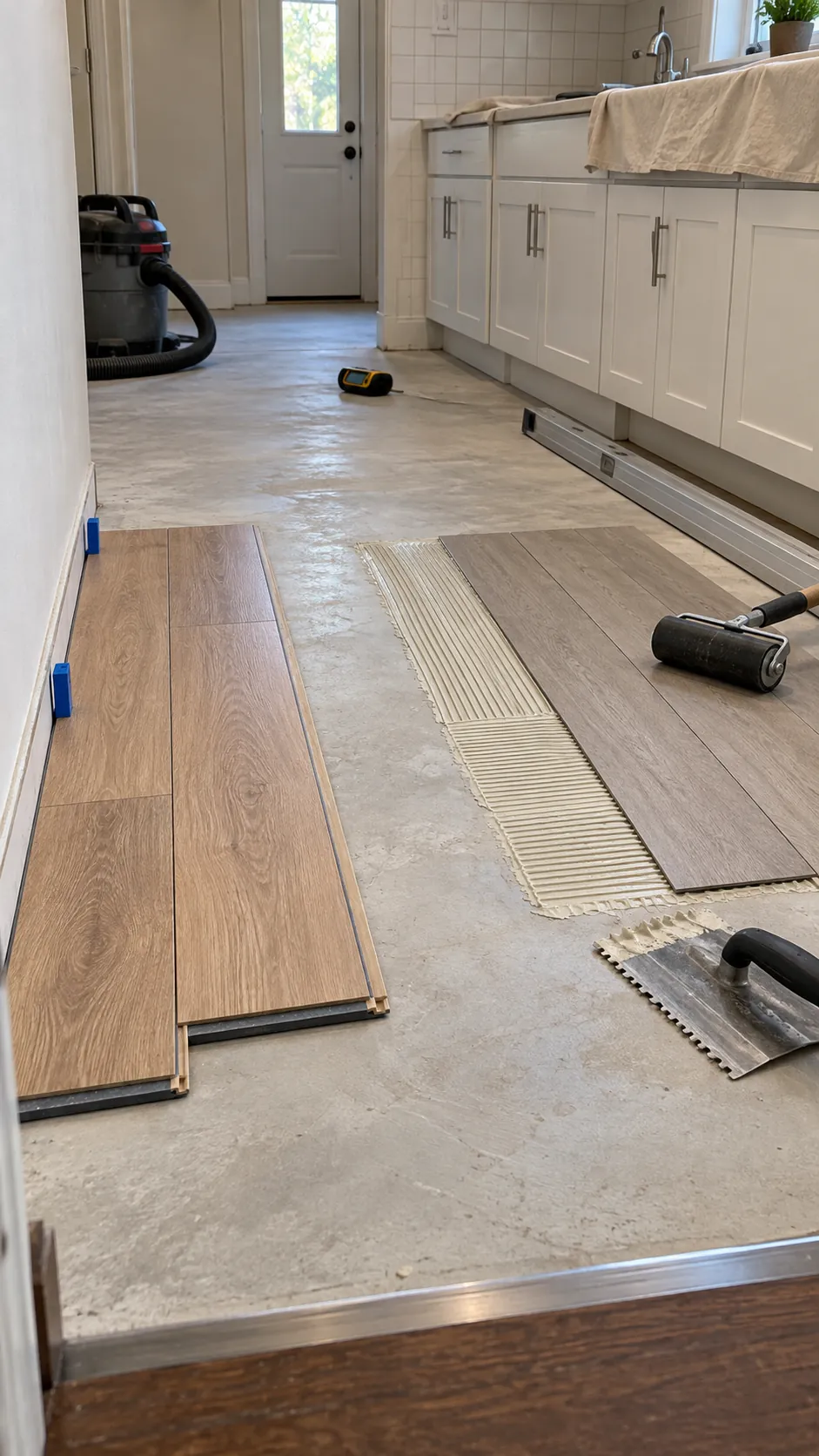
Click lock versus glue down vinyl is not a simple quality ranking. Floating click flooring can install quickly and may be easier to remove, but it needs flatness, perimeter expansion space, and careful treatment around fixed cabinets. Heavy islands and pinched edges can prevent normal movement.
Glue down vinyl keeps a lower profile and allows a damaged plank to be replaced without unlocking rows. It demands a smooth, clean base and the correct adhesive. Subfloor moisture or poor preparation can cause bond failure, so a cheap installation shortcut can erase the material savings.
Use a sample and warranty checklist before buying
A useful flooring sample checklist records the exact product, color, lot availability, total thickness, wear layer, installation type, approved rooms, subfloor limits, moisture requirements, cleaner, trim pieces, and return policy. Add the warranty exclusions that matter in your kitchen, including rolling loads, pet damage, standing water, direct sunlight, and improper installation.
Compare vinyl flooring warranty terms by what they cover and the proof required, not by the largest year number. Some warranties reduce coverage over time or exclude labor. Save the receipt, cartons, installation instructions, lot code, room photos, and installer invoice in one place.
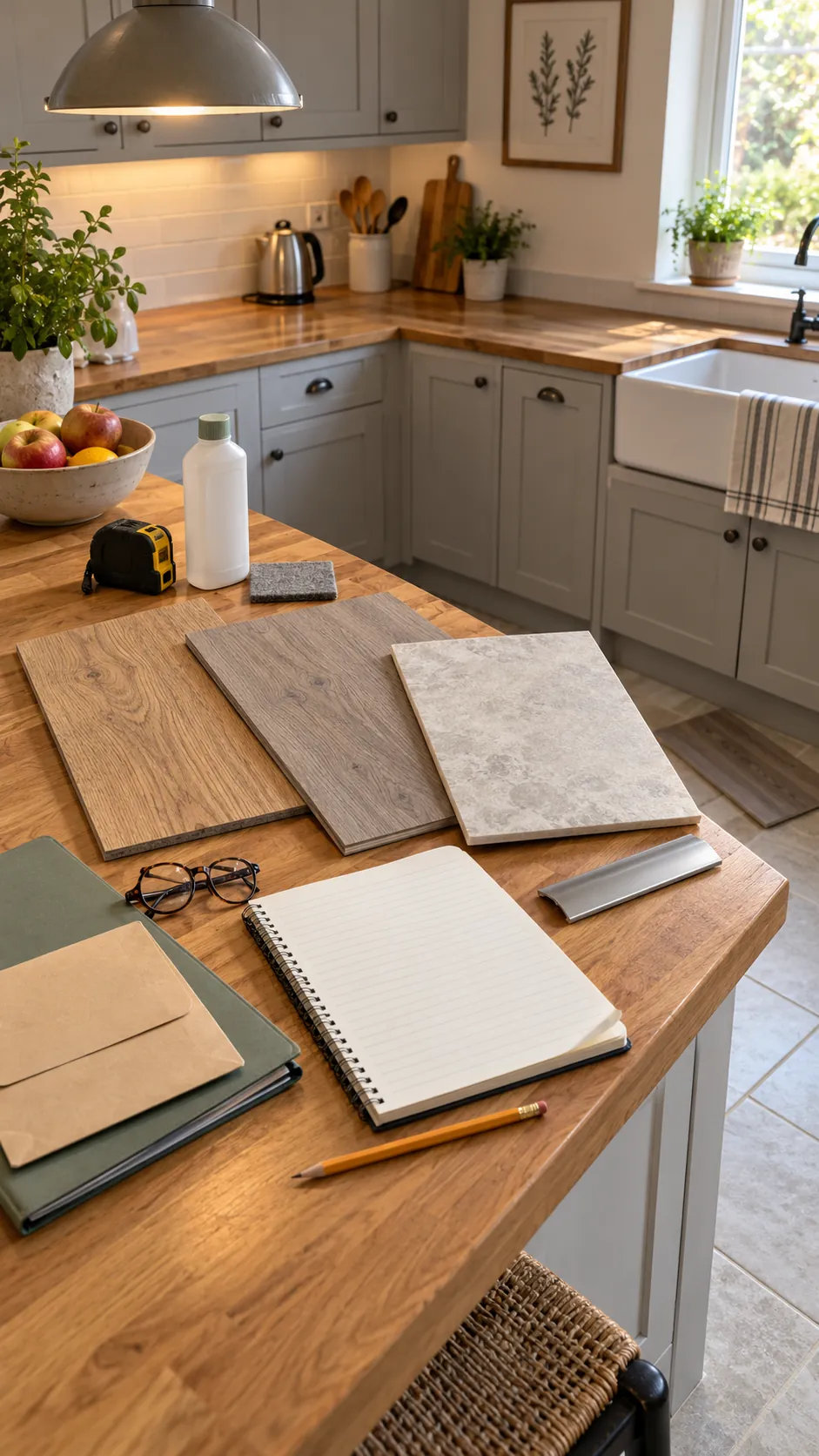
Before ordering, place the sample beside cabinets and in the busiest walkway for several days. View crumbs, dust, paw marks, and daylight on it. The floor that still looks acceptable and feels safe under those ordinary conditions is often the better budget purchase.