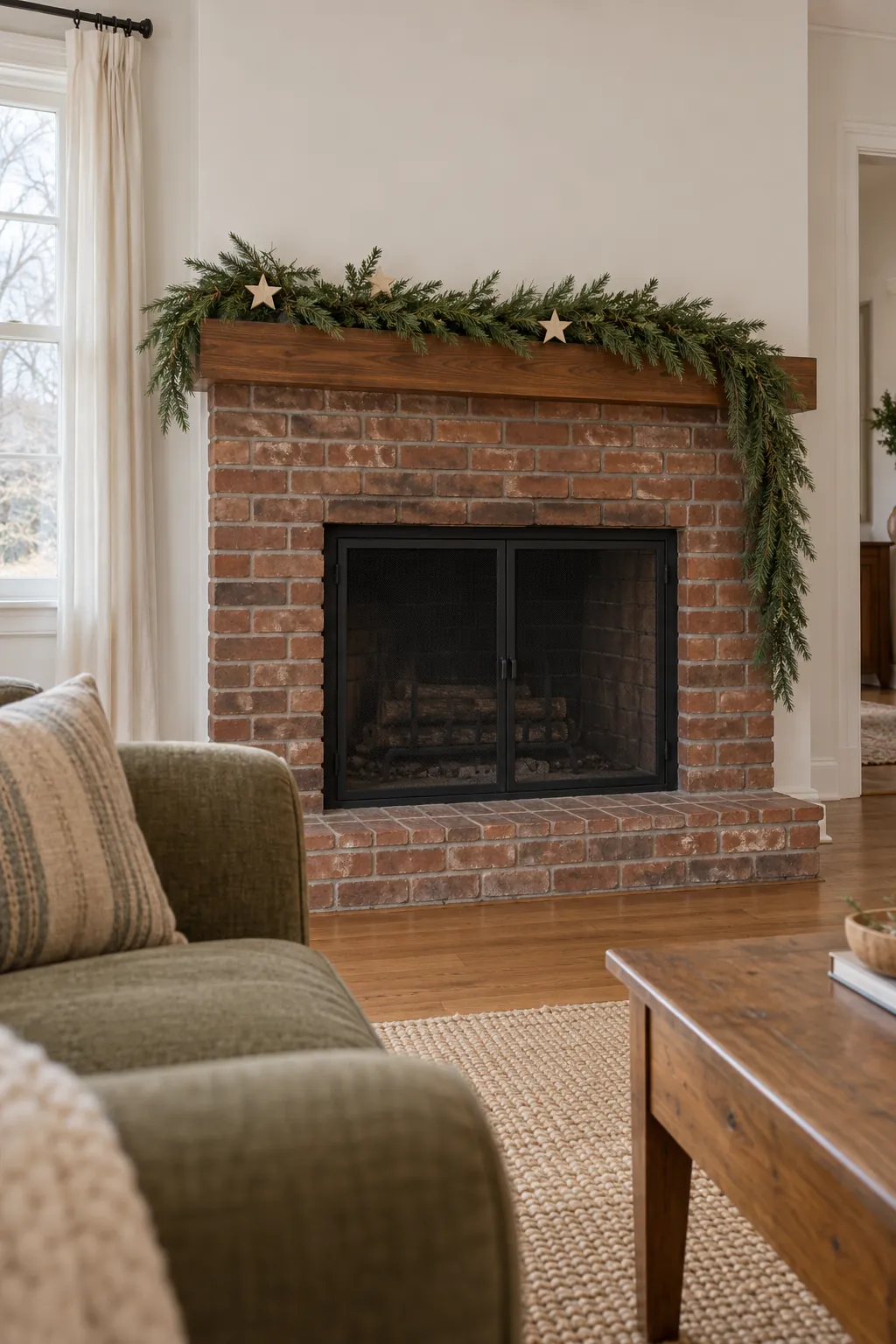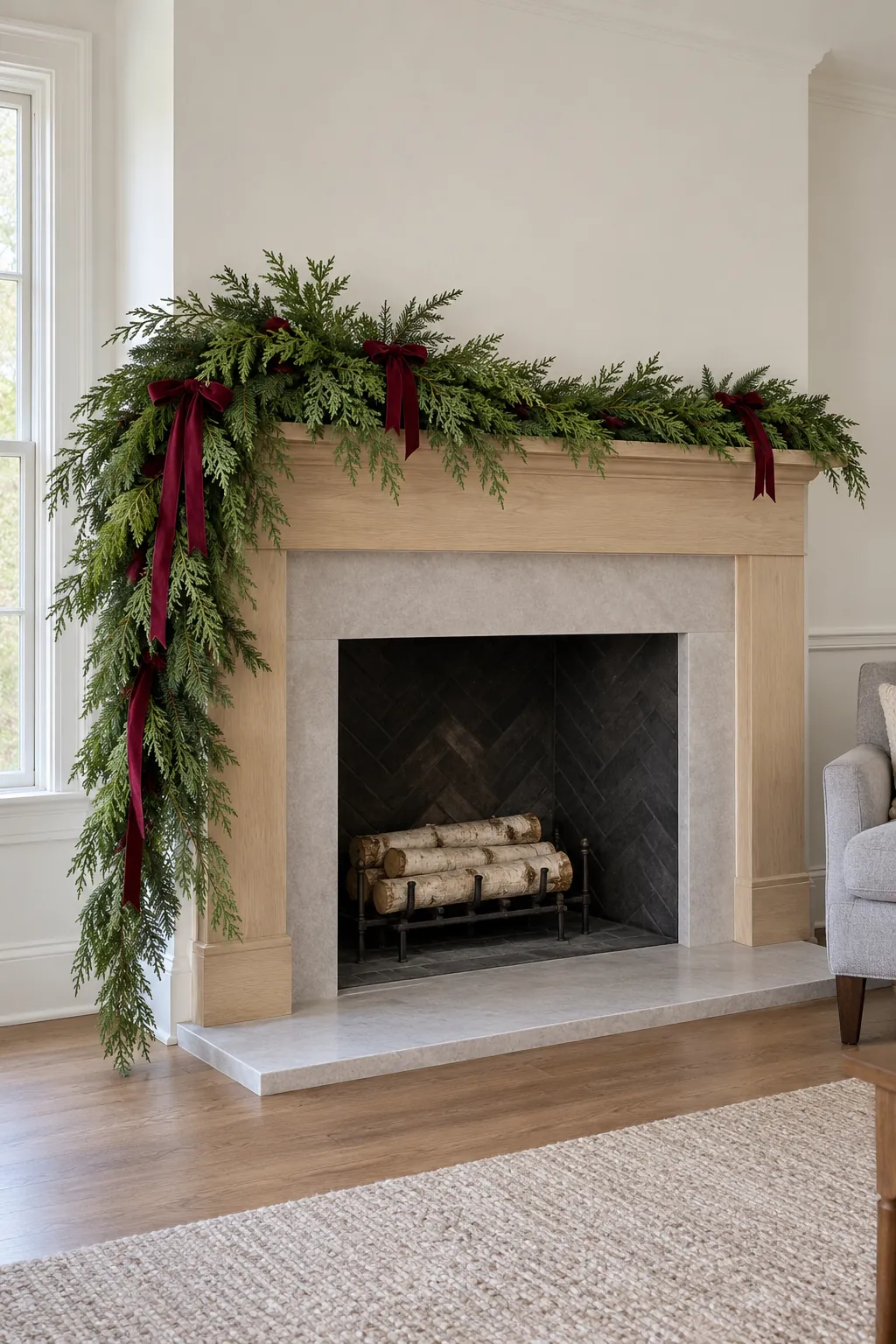
A long sweep of greenery can make a fireplace look intentional, but it can also pull the whole arrangement toward one corner. The useful distinction is between visual balance and physical support. You need both before adding ribbon, lights, or ornaments.
Choose the long side from the room
A longer end needs space beside the fireplace, not just a pleasing position in a photograph. Look for doors, a frequently used chair, pet beds, and the route people take through the room. Place the fuller drop on the side that leaves those everyday movements clear. If neither side has room, keep the asymmetry on the shelf with a thicker cluster at one end and a thinner finish at the other.
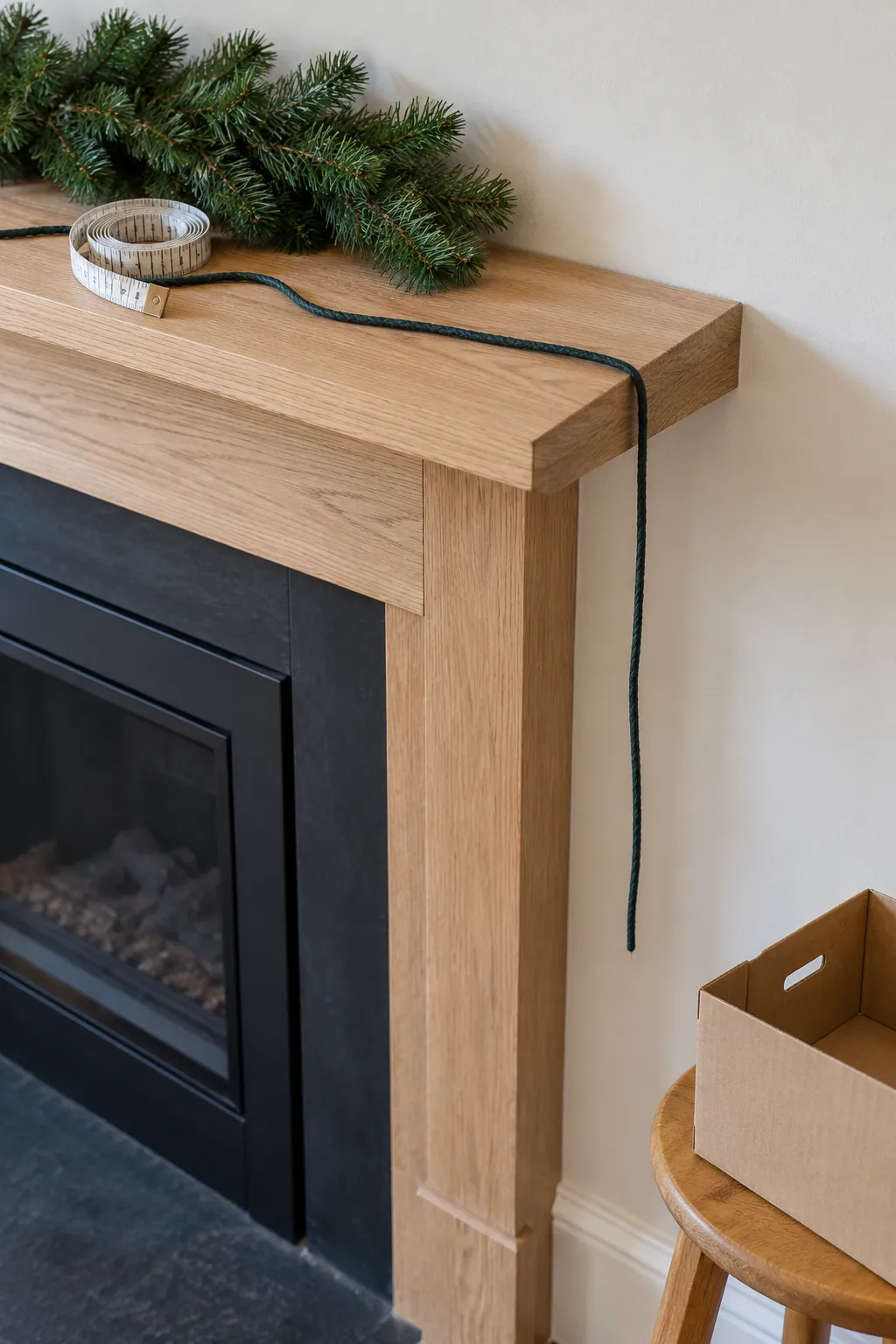
View the empty mantel from your usual seat before deciding. A large window, tall cabinet, or Christmas tree already adds visual weight to one side of the room. Your garland can respond to that weight without exactly mirroring it. Try a light temporary outline with a length of cord while you hold it, then remove the cord once you have measured the route.
Measure the route, including the turn
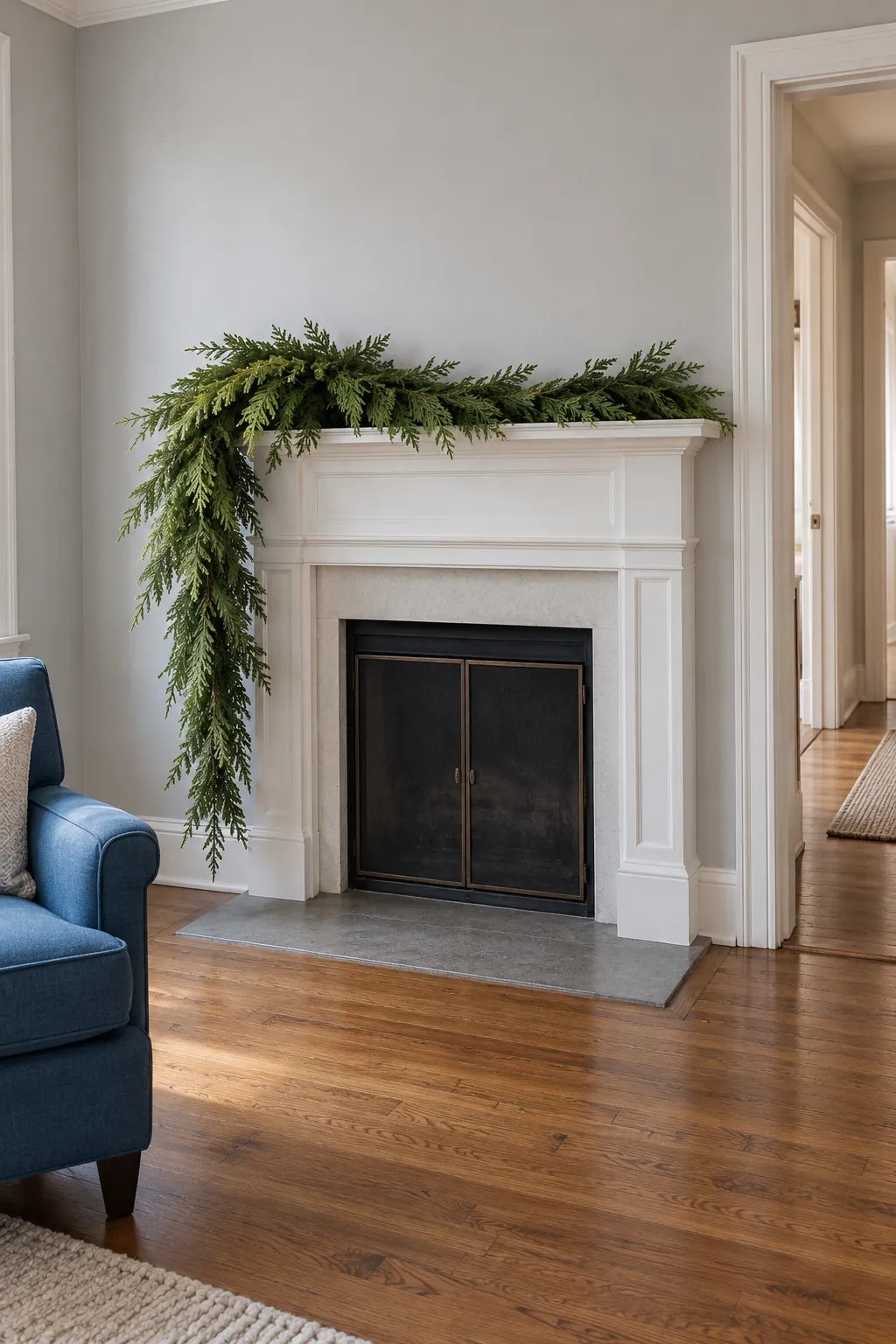
Measure along the route the garland will actually follow: across the shelf, around its chosen corner, and down the intended side. A straight measurement of mantel width misses the material used by the drop and the bend. For example, a route with a 60 inch top run and a 24 inch side drop already uses 84 inches before allowing for a soft corner or a loose curve. Compare that total with the usable decorated length of the strand, since bare end loops do not create leafy coverage. Choose a longer strand when needed, then tuck surplus back onto the shelf rather than leaving a tail on the floor. A flexible strand is easier to shape around the turn than a stiff, heavily wired one.
Support the corner before you build fullness
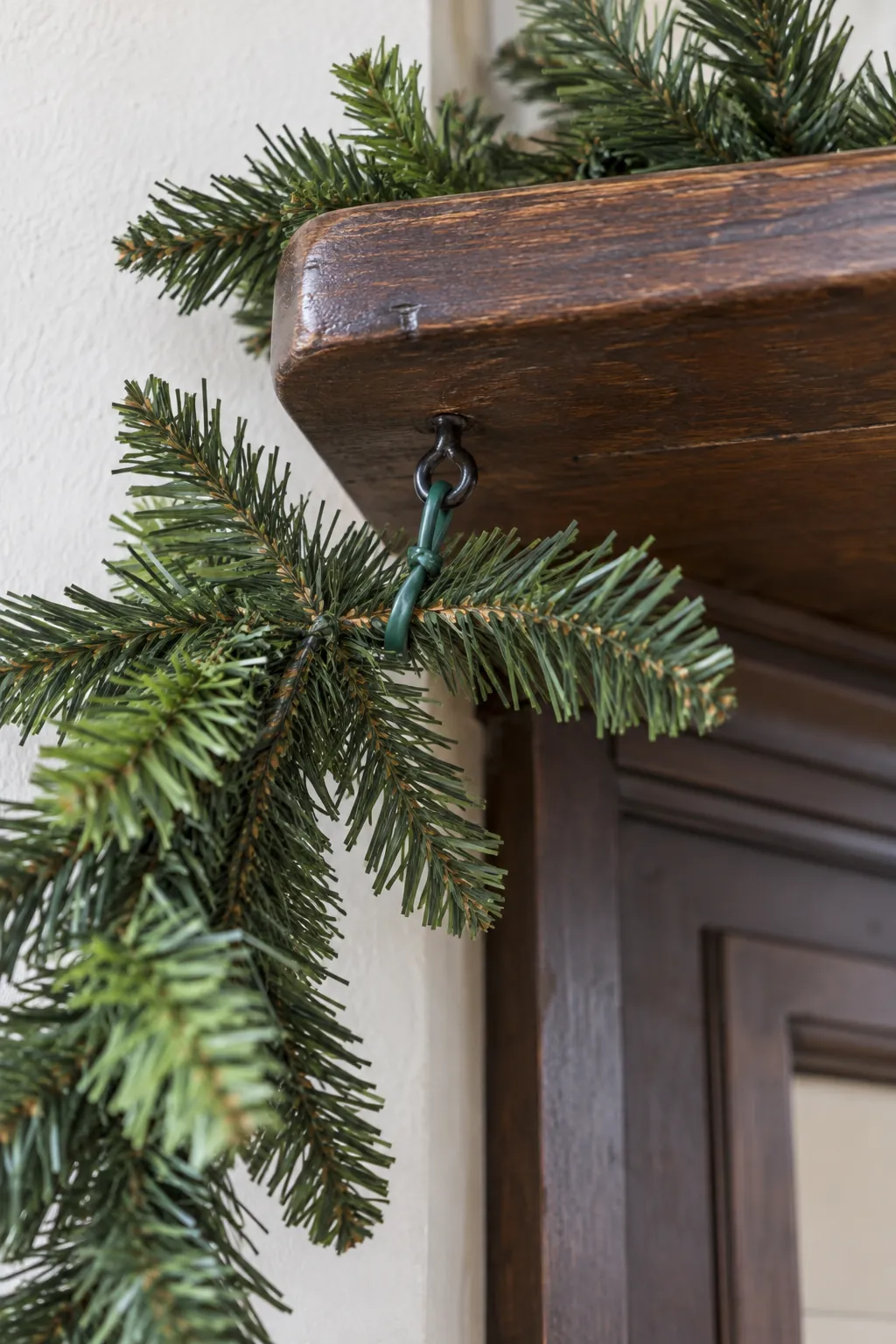
The bend is where a long hanging section can pull the top run sideways. Plan a suitable support near that change of direction and support the rest of the strand according to its weight and the fixing instructions. Attach ties to the garland’s structural spine, not to a delicate leaf tip. A decorative vase or leaning mirror must never serve as its anchor.
If you are deciding how to attach garland to a mantle, start with the actual surface. Adhesive products require a compatible finish, the specified preparation, and the full waiting period before loading. They are not a universal choice for rough masonry, fragile paint, or heavy greenery. Do not add individual hook ratings together and assume the arrangement can carry that total, because the load may concentrate on one point.
For a permanent fixing, get permission where needed and use hardware appropriate to the mantel construction. A qualified installer can assess an uncertain surface or concealed structure. If there is no suitable fixing option, switch to a lightweight arrangement supported entirely on the shelf. Secure support determines the design; extra foliage cannot solve a slipping attachment.
Build the silhouette before adding ornaments
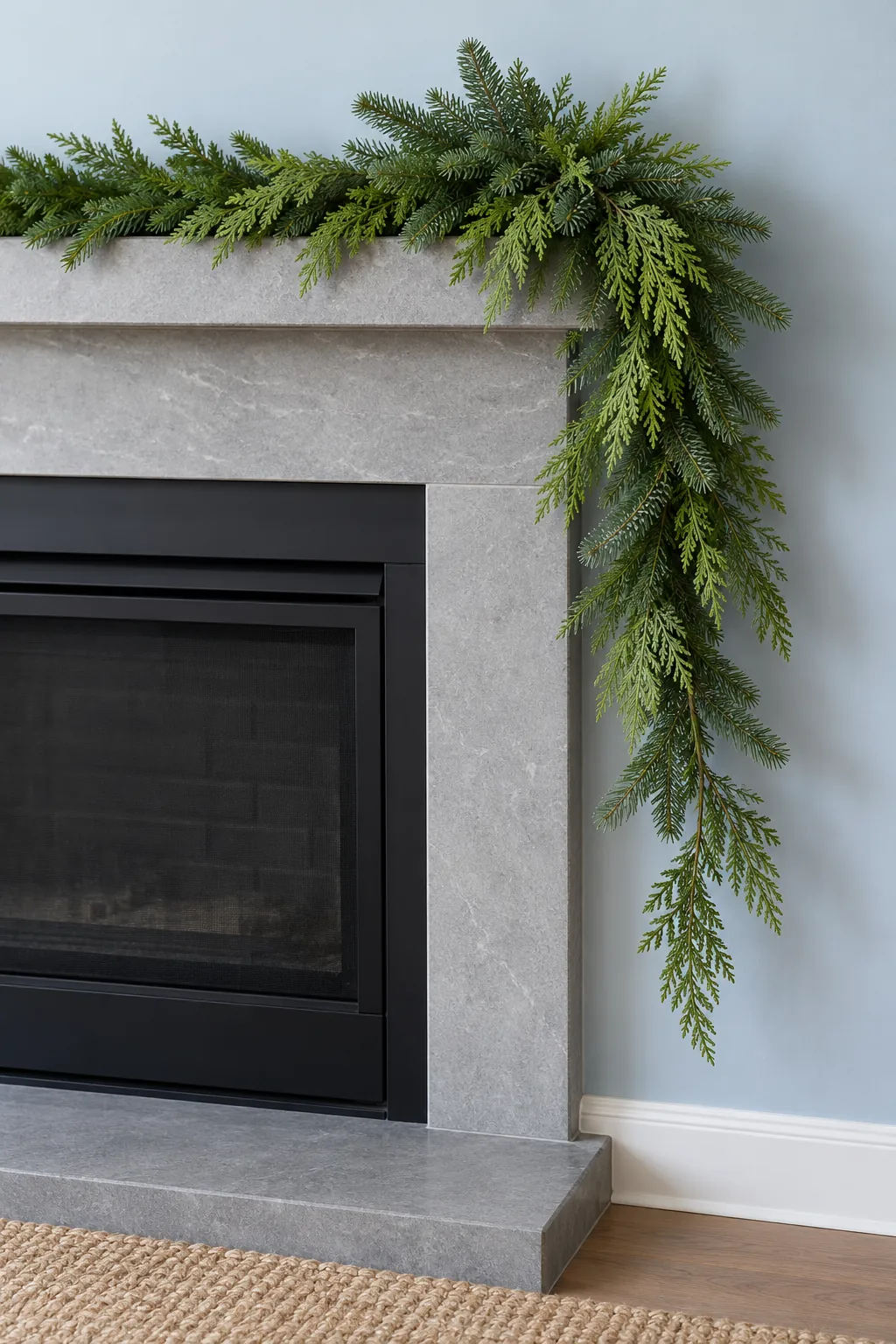
Lay the main strand in place and separate its compressed branches before adding another layer. Make the corner the fullest area, let the long side taper toward its end, and keep the opposite finish shorter. Turn several tips outward so the outline feels loose rather than like a solid green rope. You should still be able to see where the mantel ends and the greenery turns.
A second strand or a few matching picks can fill gaps, but add them only where they solve a visible thin spot. Tie each addition securely and reassess the load before leaving it in place. Keep dense material away from controls, vents, and the fire opening. All hanging examples here are decorative arrangements for a fireplace kept out of use; remove decorations that conflict with the manufacturer’s clearances before operating it.
Balance with space and one restrained accent
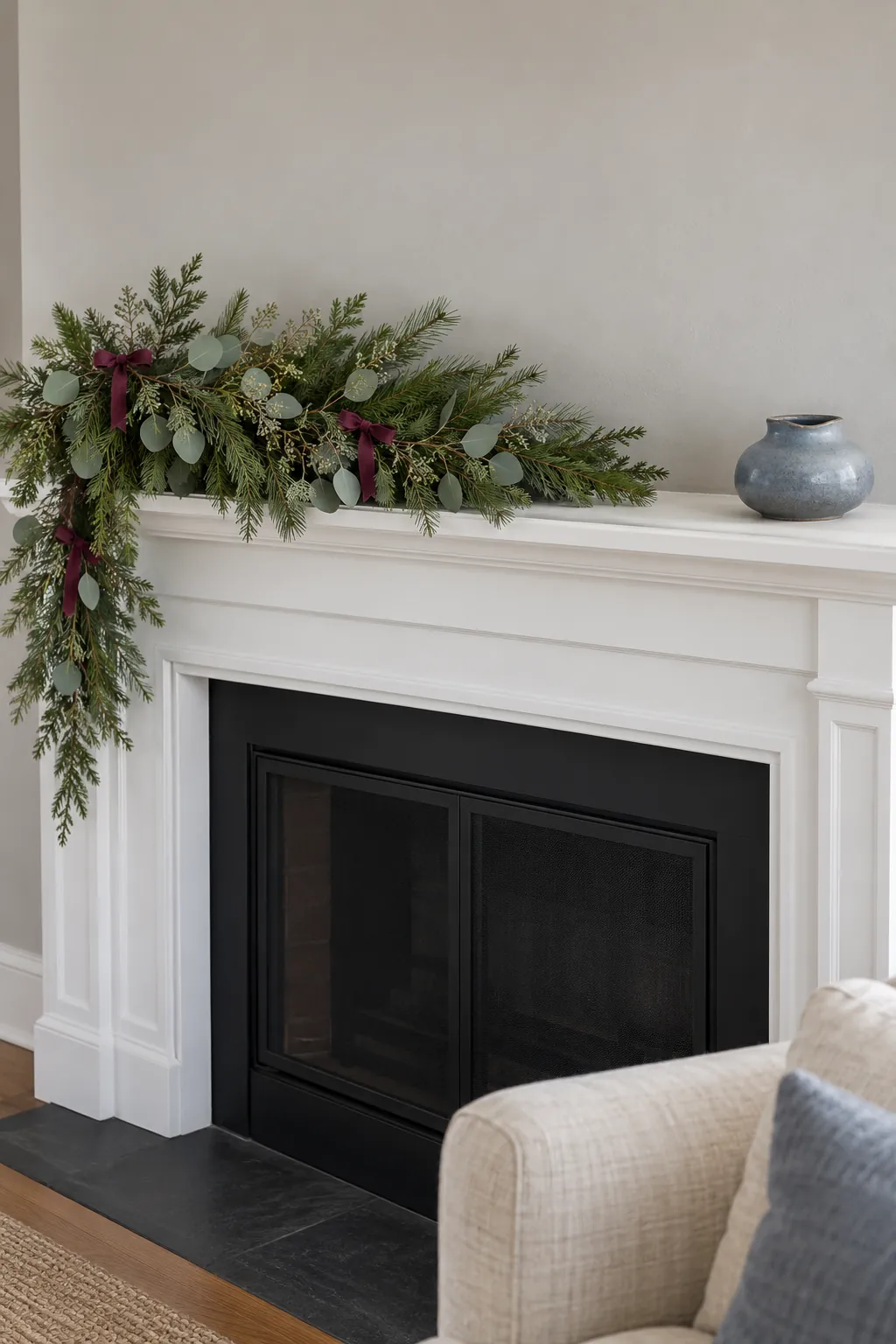
The shorter end does not need an equally large object to balance the long drop. Leave a visible stretch of shelf and try one modest accent, such as a small ceramic vessel, positioned securely away from the edge. That open area gives the dense corner somewhere to lead the eye. For Christmas, a single ribbon color or a few lightweight ornaments can repeat across the greenery without turning the top into a second focal point. For everyday mantel decorating ideas, omit the seasonal ornaments and let leaf shape carry the arrangement instead.
Check the display from more than one position
Step back to the doorway, then sit where you normally use the room. A garland that looks balanced straight on may hide its short end from an angled seat. Adjust branch direction first, because adding more material often makes a narrow mantel feel crowded. Look from the side as well to confirm that the central spine remains supported and nothing projects into a walkway.
Recheck the attachments after the arrangement has settled and whenever you add decorations. Keep dangling sections and small ornaments inaccessible to children and animals, and shorten the drop if that is not possible. Inspect fresh greenery for drying or shedding and protect finishes from sap and moisture. When taking the display down, remove added ornaments first, support the strand as you release its ties, and follow the fixing maker’s removal directions instead of pulling on the greenery.