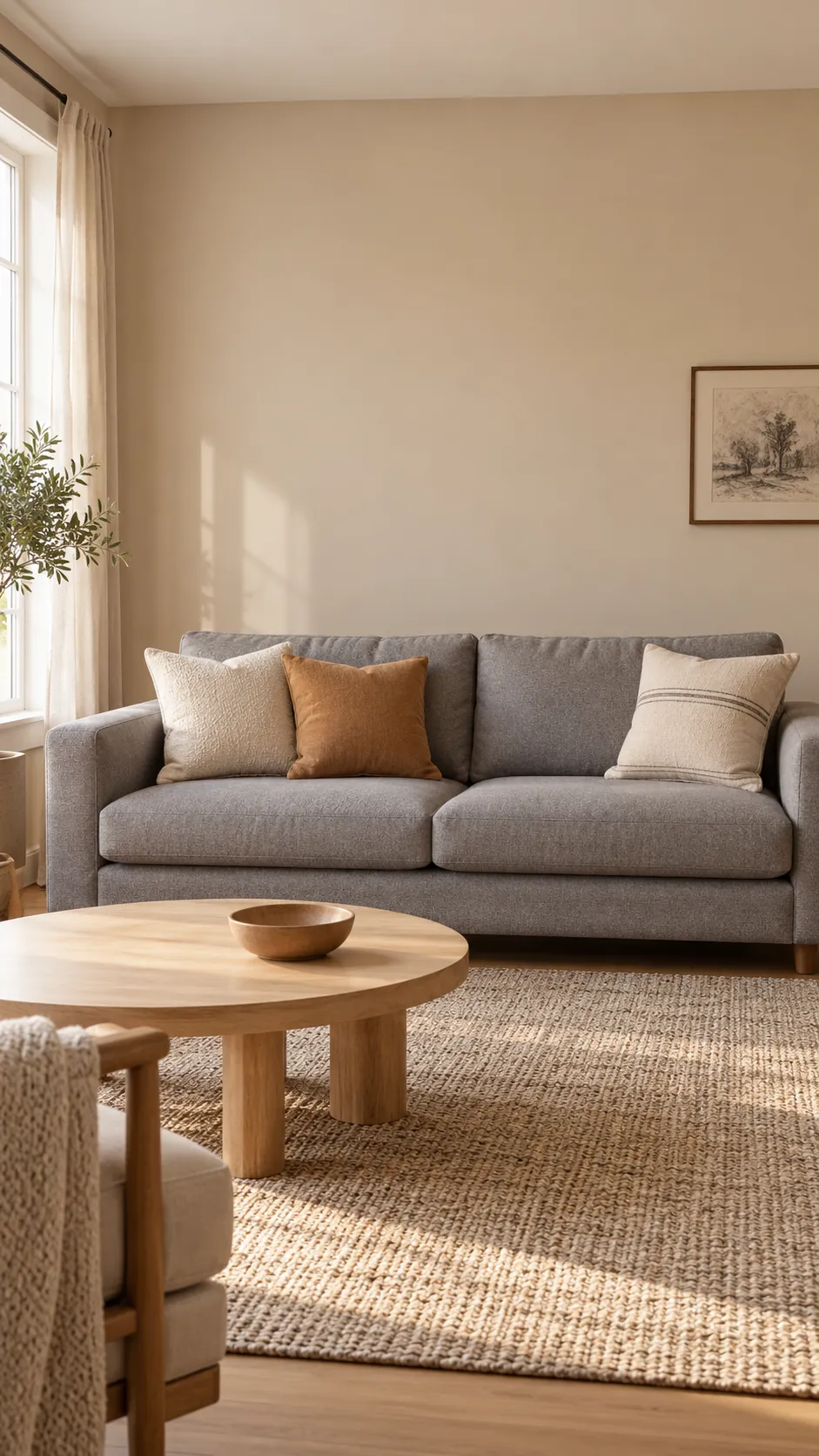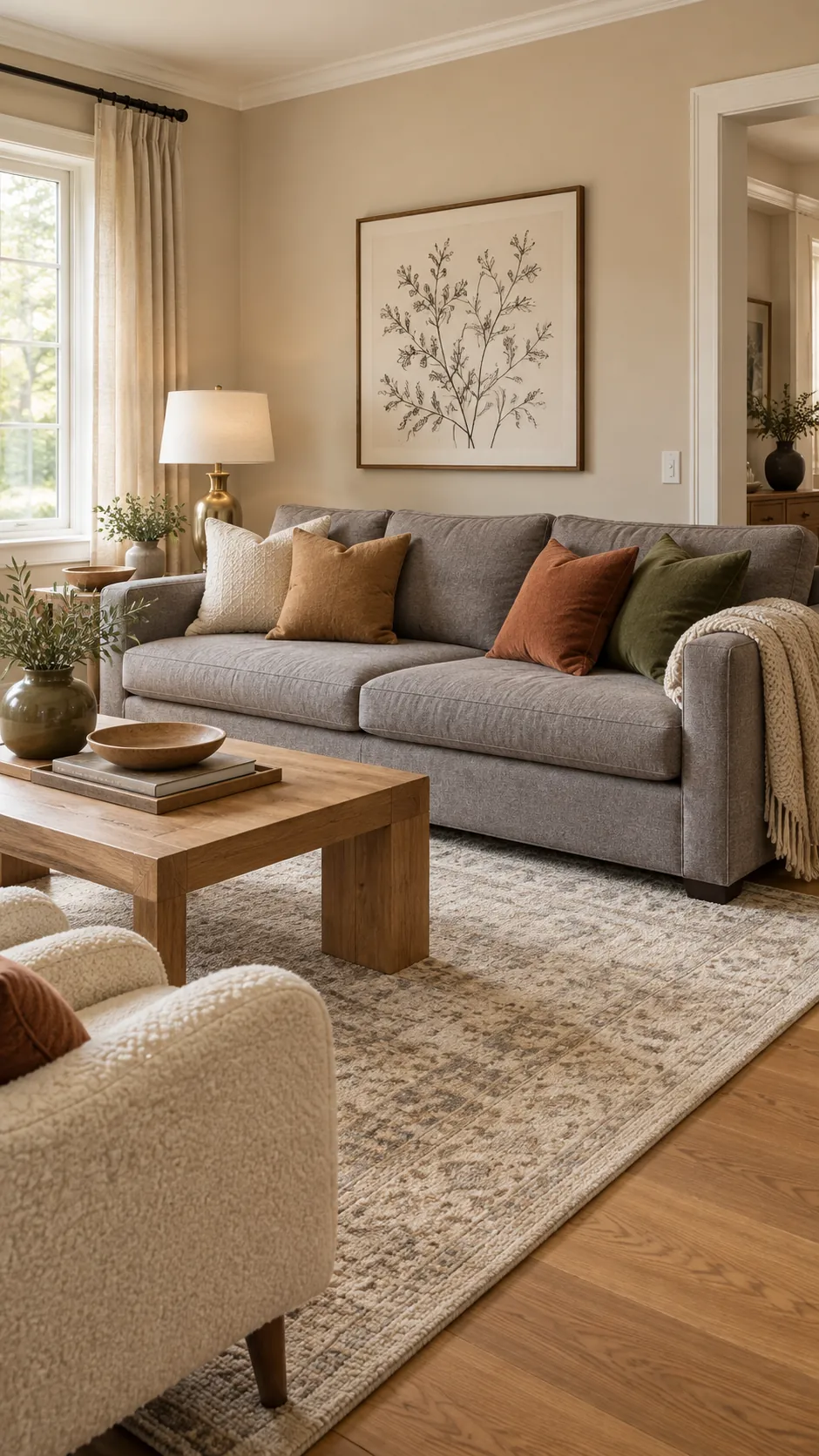
A gray sofa and warm beige walls can look disconnected when one reads distinctly cool and the other reads yellow or earthy. The solution is to create a visible bridge between them instead of adding more gray or more beige everywhere. Rugs, wood, textiles, metal, and light can repeat both temperature families until the contrast feels deliberate.
Indexed Reddit discussions show the practical frustration behind this pairing. Owners often cannot return the sofa or repaint, and some notice that gray fabric suddenly looks blue or green in the warm room. The following fixes work with those fixed surfaces and give you several ways to adjust the balance without a major renovation.
Compare Both Undertones in Daylight
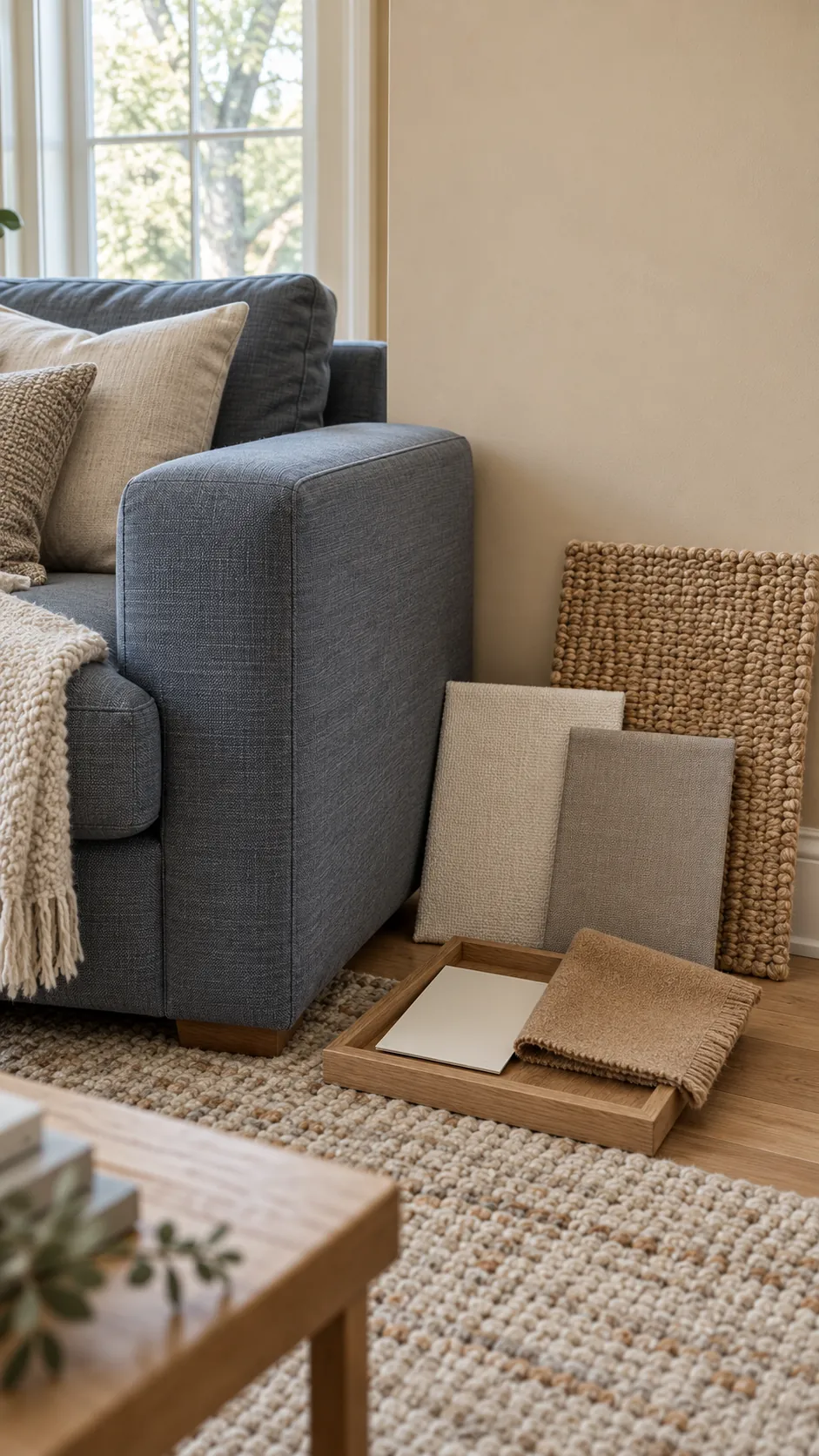
Place a warm white card beside the sofa and wall, then look at them in daylight. The sofa may reveal blue, green, violet, or brown undertones, while beige may lean yellow, peach, or taupe. Once you identify both directions, choose bridge colors that contain a little of each instead of guessing from online swatches.
Use a Greige Rug as the Bridge
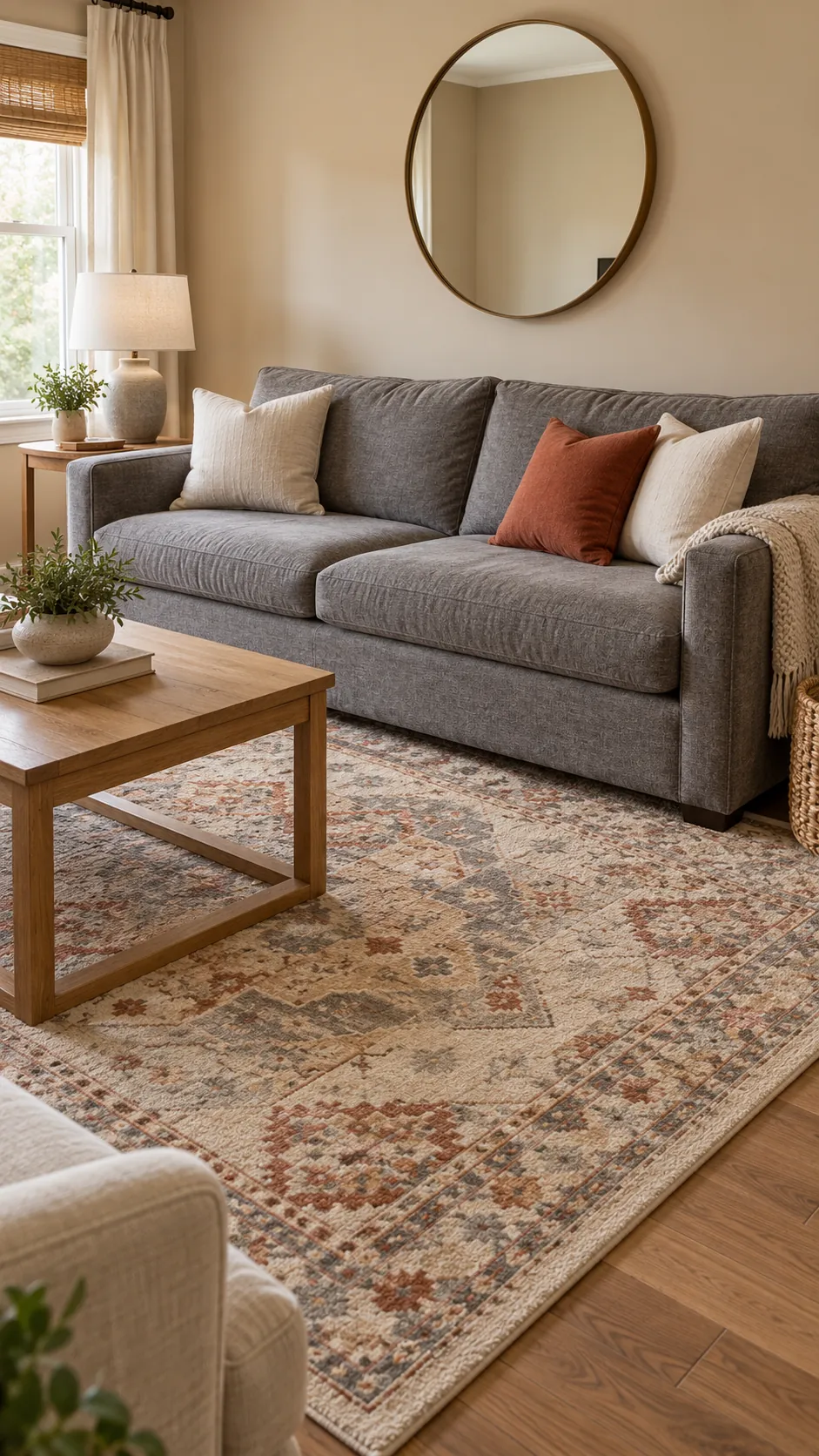
A greige rug can contain both the cool restraint of gray and the earthy warmth of beige. Choose a tone that is visibly lighter or darker than the sofa so the furniture does not disappear into the floor. Subtle cream and taupe variation will make the bridge more convincing than a flat solid rug.
Layer Warm White Pillows
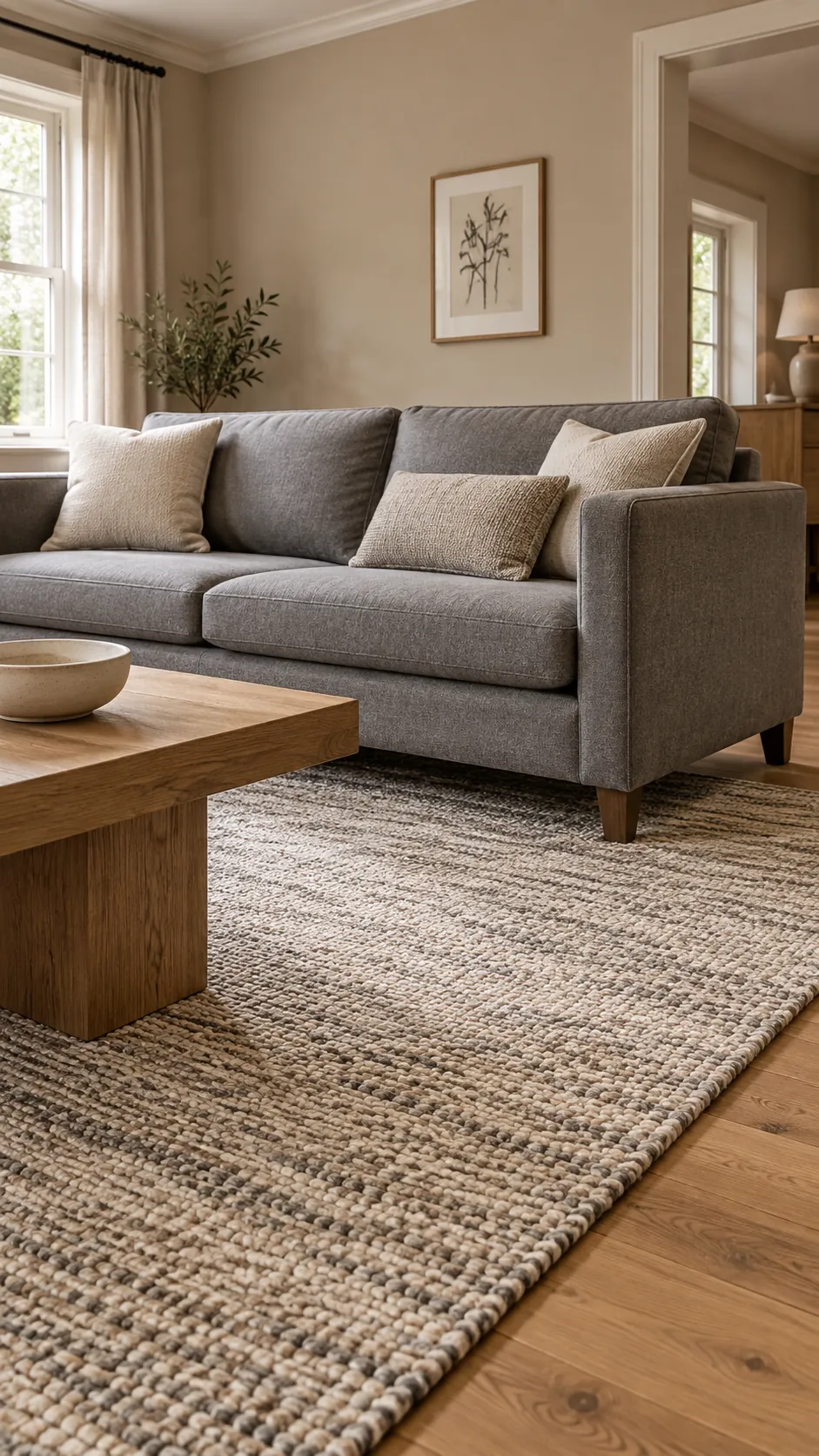
Warm white pillows create breathing room between gray upholstery and beige paint. Select ivory, cream, or ecru rather than optic white, which can make both fixed colors look muddy. Vary boucle, linen, and knit surfaces so a quiet palette still has depth.
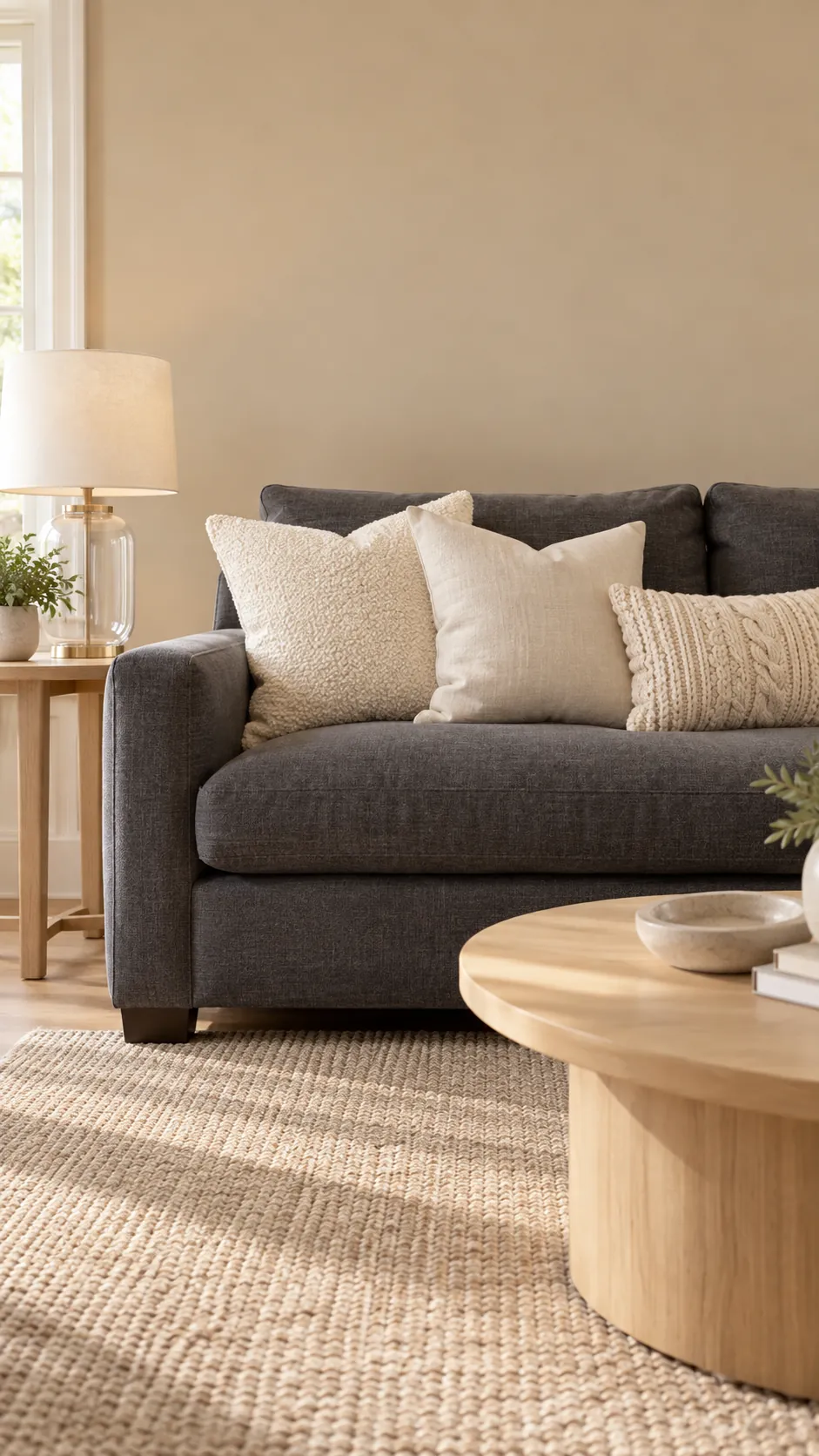
Add Camel Near the Sofa
Camel carries the wall warmth onto the sofa without copying the beige exactly. Use it in one lumbar pillow, a small throw, or a leather accent chair, then keep surrounding pieces lighter. A browned camel works better than bright tan when the sofa has a strong blue undertone.
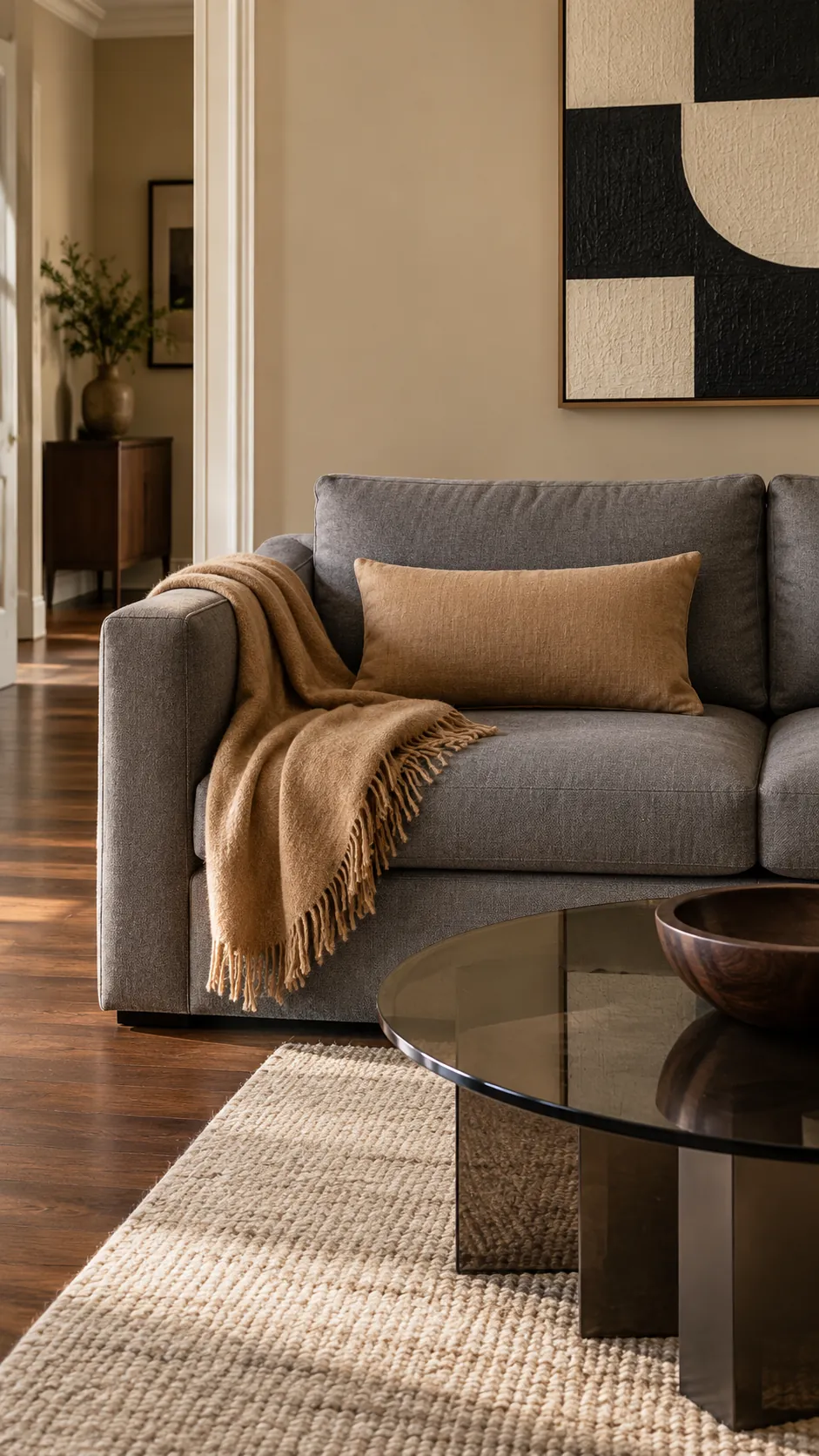
Bring In Muted Rust
Muted rust gives cool gray enough warmth to feel comfortable beside beige. Keep the rust earthy and use cream between it and the sofa if the contrast feels abrupt. One rust pillow plus a small repeated note in the rug or pottery is usually sufficient.
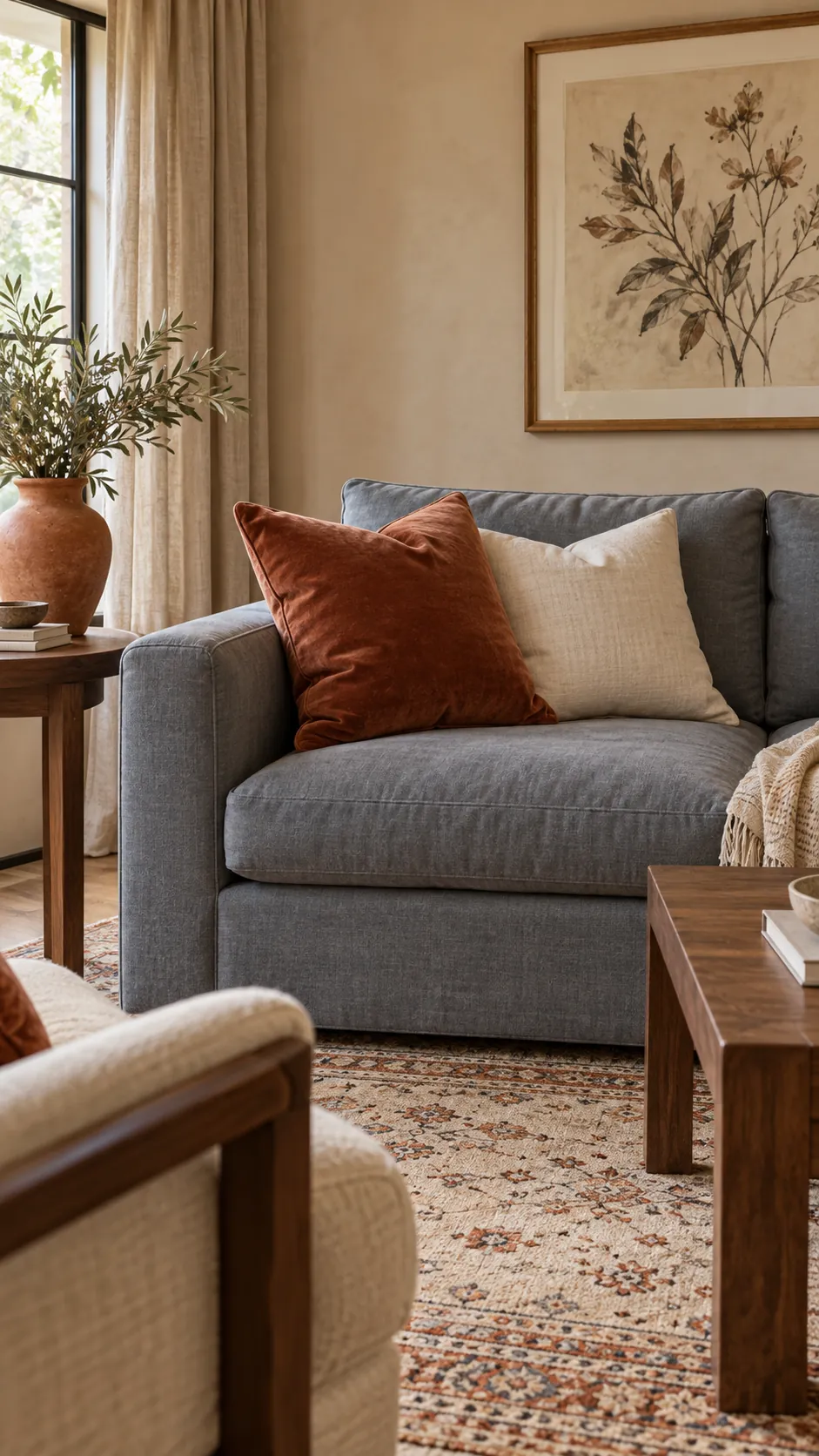
Try Olive for an Earthy Middle Note
Olive sits between the cool sofa and warm wall because it contains both gray restraint and yellow warmth. Choose dusty olive for pale gray upholstery and deeper moss for charcoal fabric. Repeat the green through a plant or ceramic piece, but leave enough cream nearby to keep the room open.
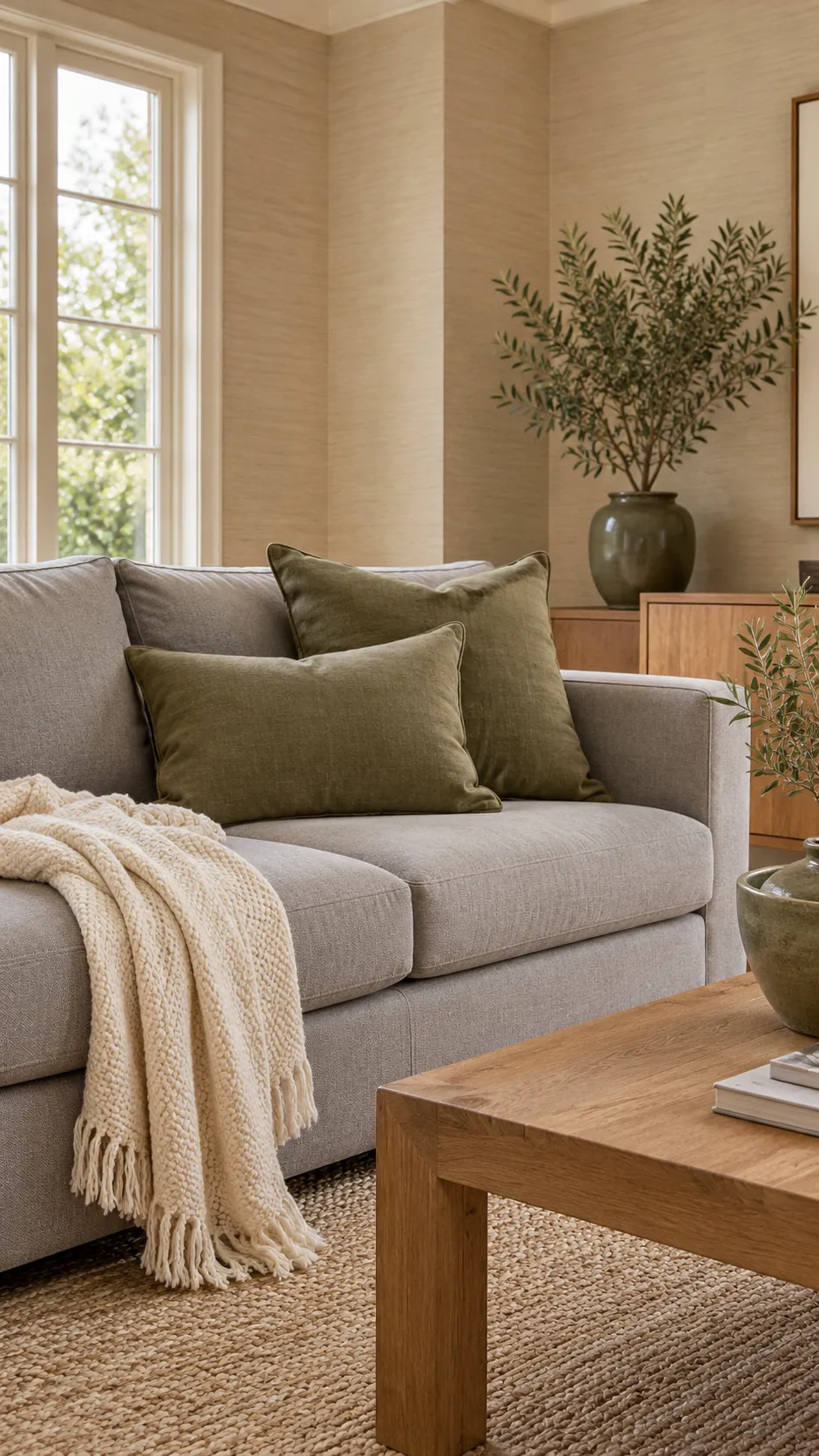
Keep Blue Soft and Dusty
A little dusty blue can acknowledge a blue gray sofa without cooling the entire room. Pair it with camel, cream, or warm wood so the blue feels integrated rather than icy. Avoid large areas of navy unless the room receives strong daylight and already has plenty of light surfaces.
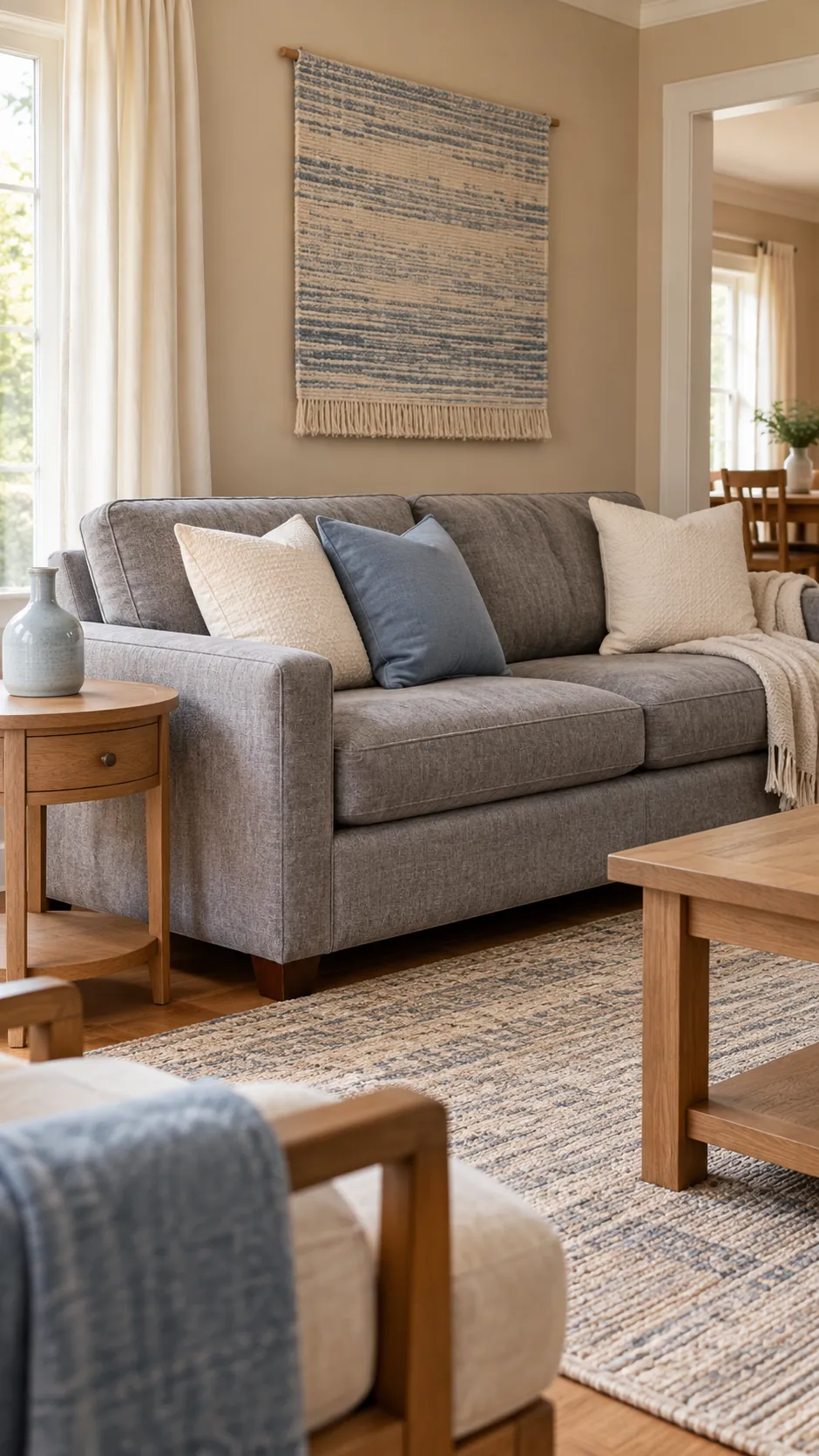
Choose a Cream Rug With Terracotta Detail
A cream rug lightens the floor while terracotta details connect with the beige wall. This is useful when the sofa is dark and the room feels divided into a cool block and a warm shell. Keep the pattern faded or small so the rug supports the pairing instead of becoming another dominant element.
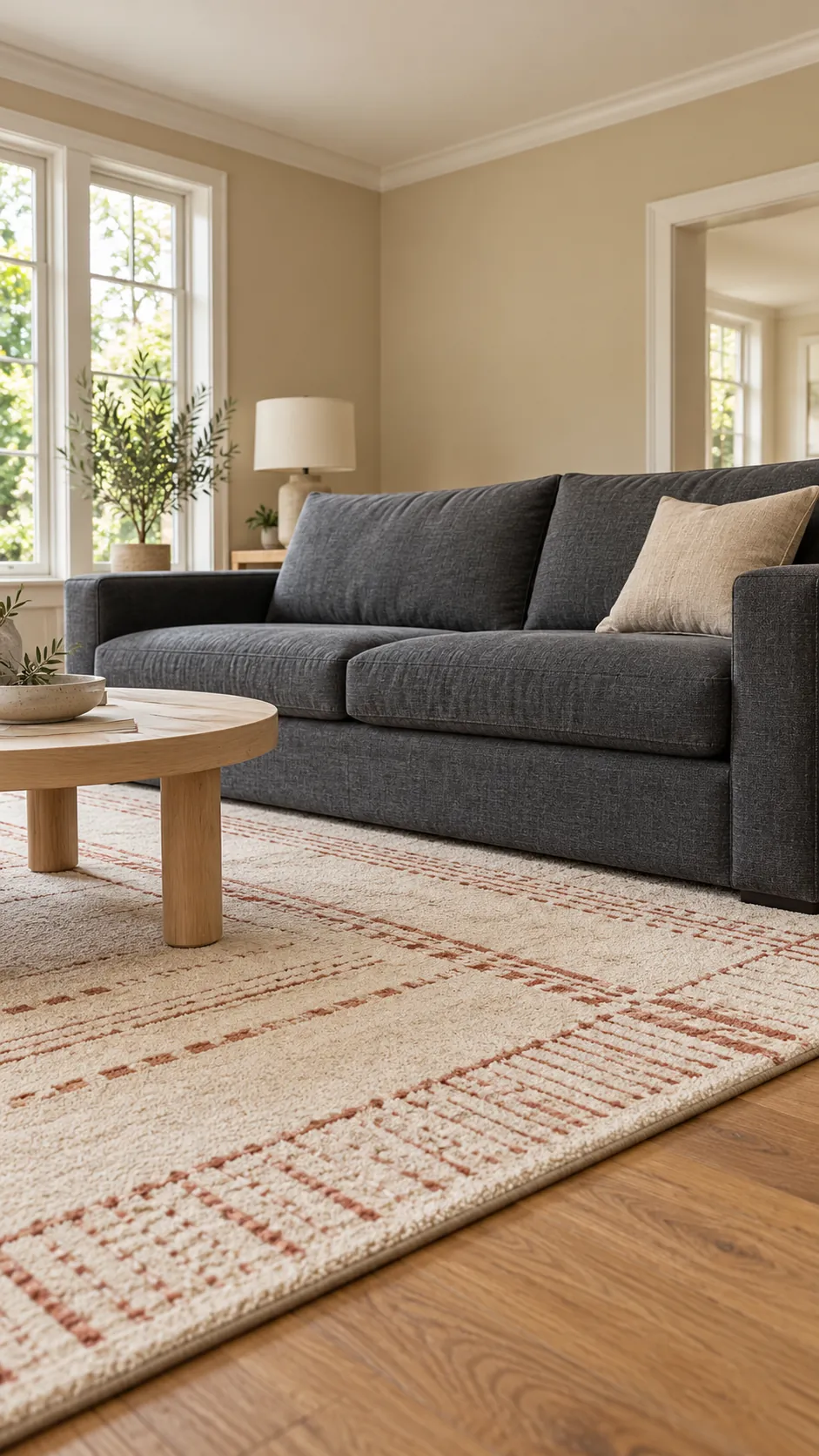
Let Pale Oak Lighten the Transition
Pale oak tables or shelving add warmth without the visual weight of dark brown furniture. The light wood also separates medium gray from yellow beige through a natural intermediate tone. Select a matte finish so the wood reads soft and calm rather than glossy and orange.
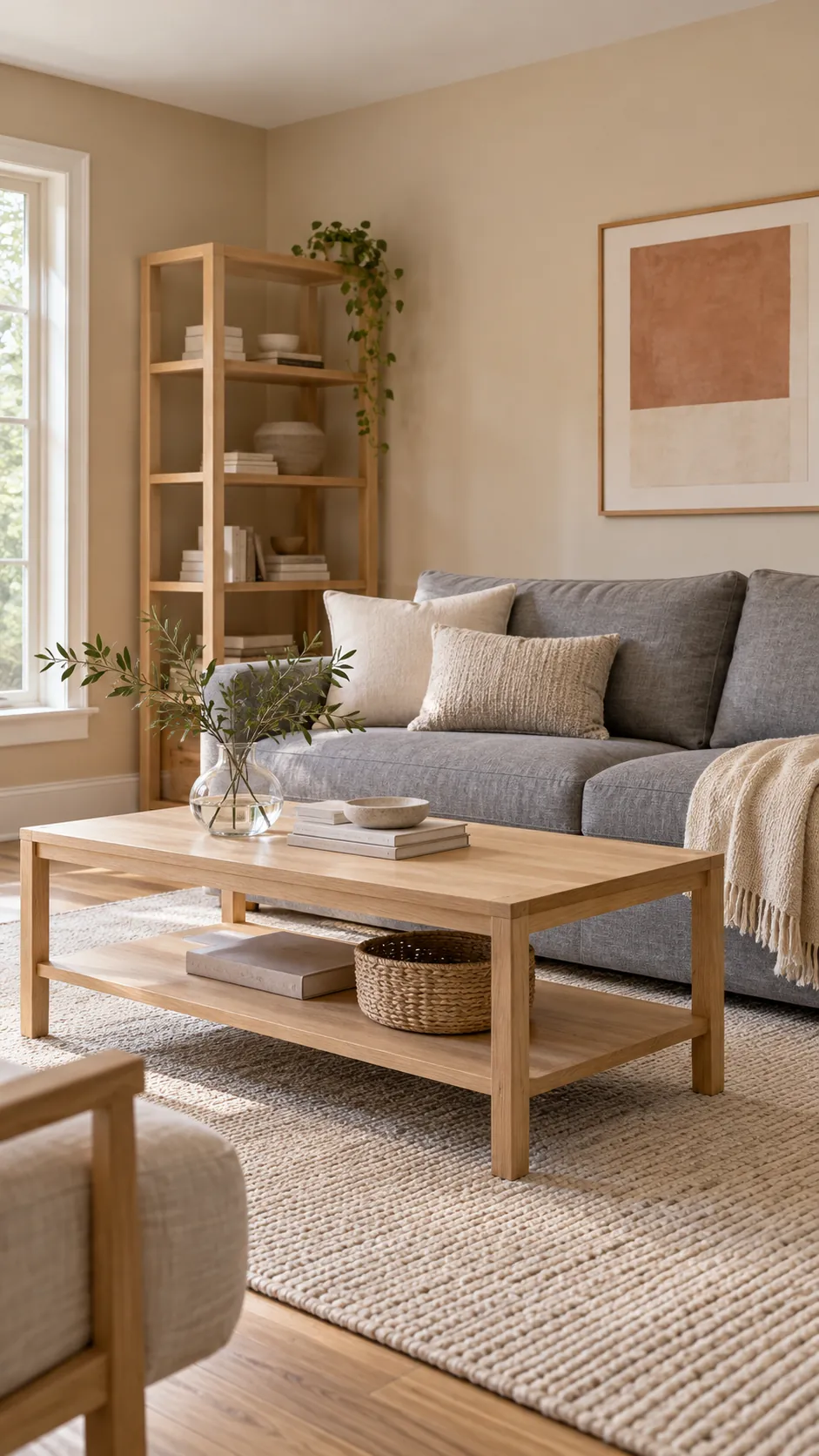
Add a Thin Black Outline
Black can clarify a gray and beige room by outlining shapes and preventing the neutrals from blending. Use it in slim legs, a lamp stem, or a narrow frame instead of a large black rug or cabinet. The small dark notes make gray look deliberate while allowing beige to remain soft.
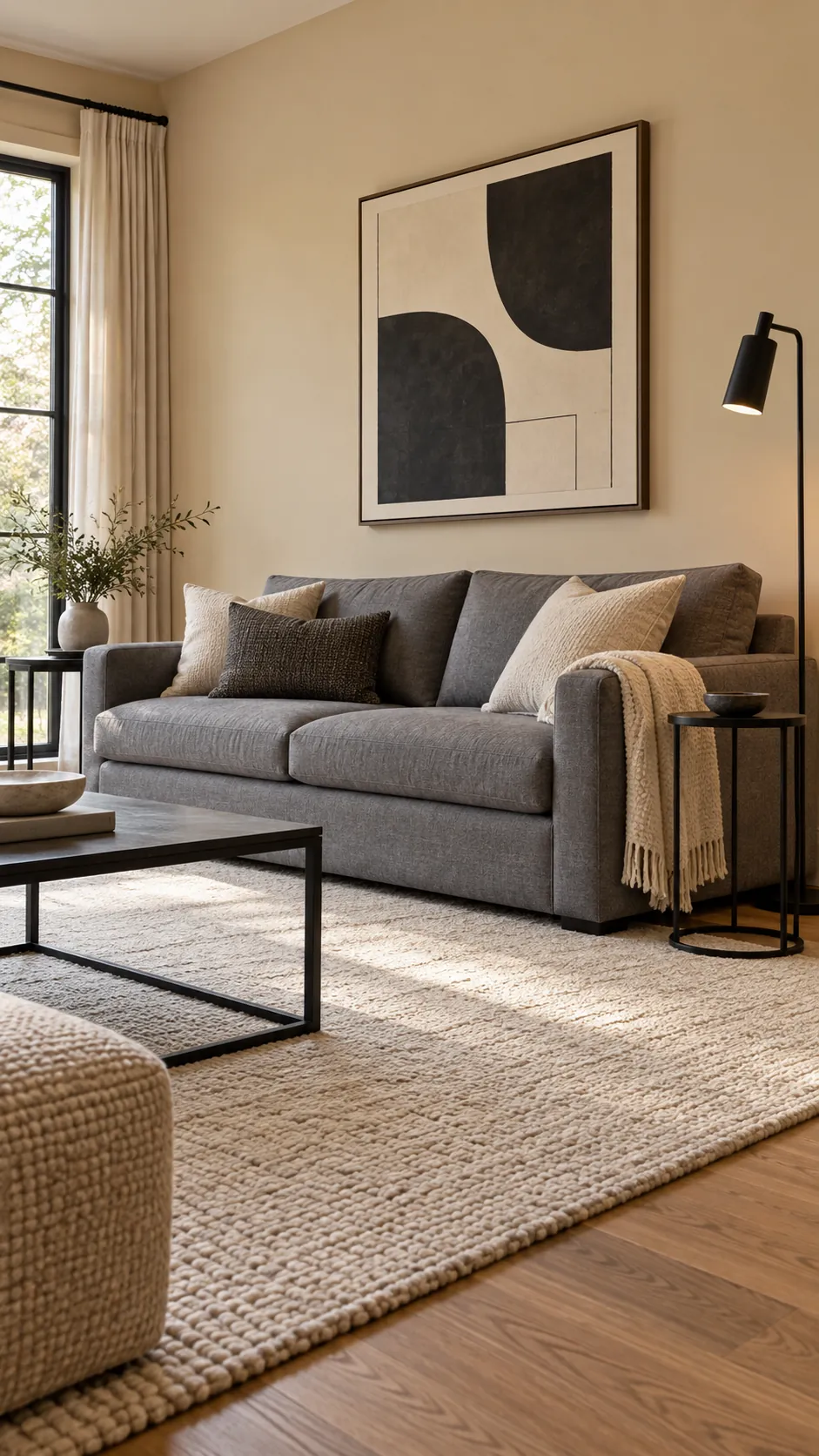
Use Aged Brass Instead of Bright Chrome
Aged brass reflects the warmth of beige without turning the room yellow. It works especially well when a gray sofa has cool blue undertones and existing chrome feels sharp. Choose a brushed or antiqued finish and repeat it only a few times for a quiet glow.
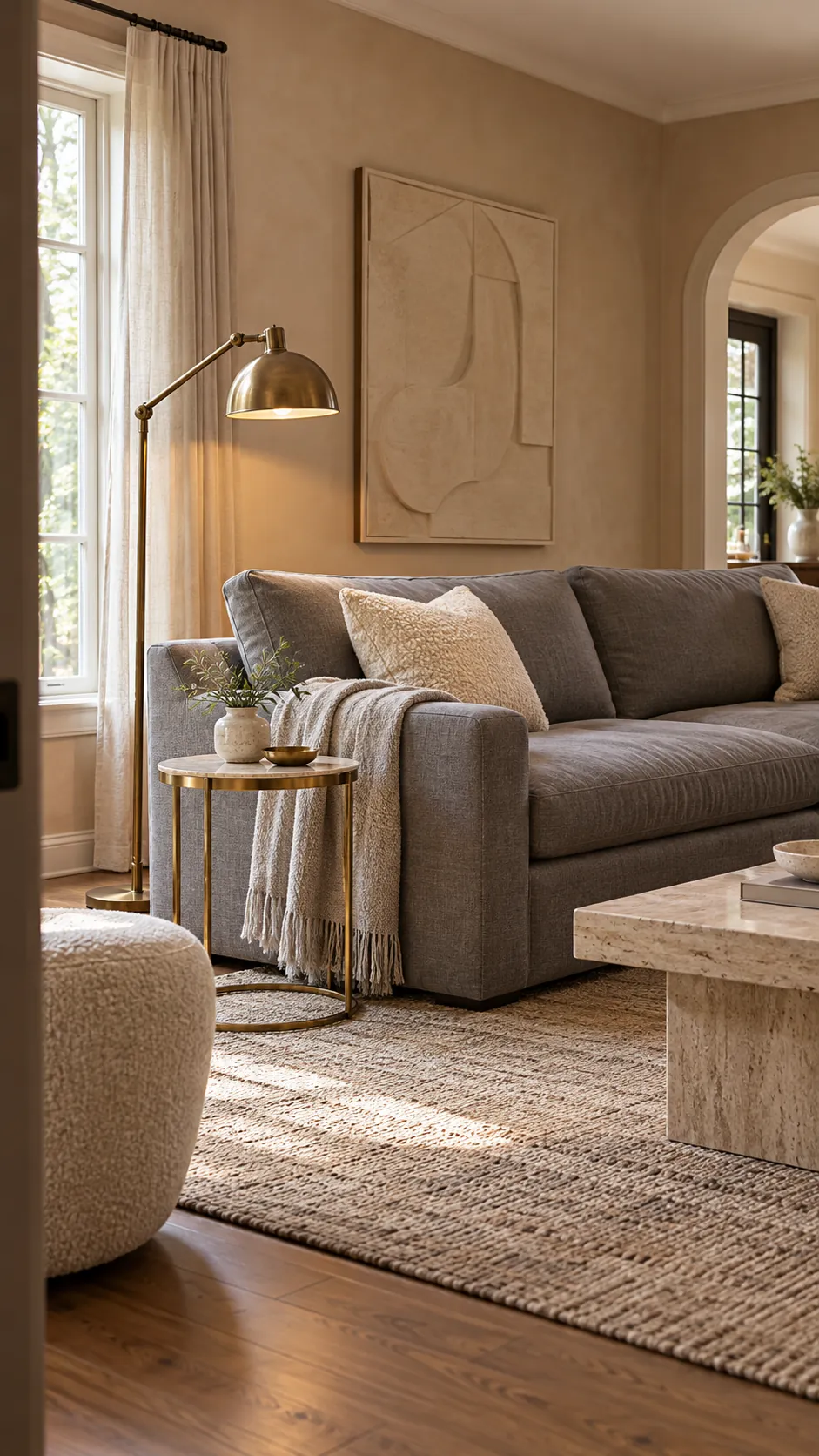
Hang Cream Linen Curtains
Cream linen curtains soften daylight before it reaches the cool sofa and warm wall. They also add a large light surface that belongs with beige without matching it exactly. Keep the fabric translucent enough to glow, but choose sufficient fullness so the panels do not look thin.
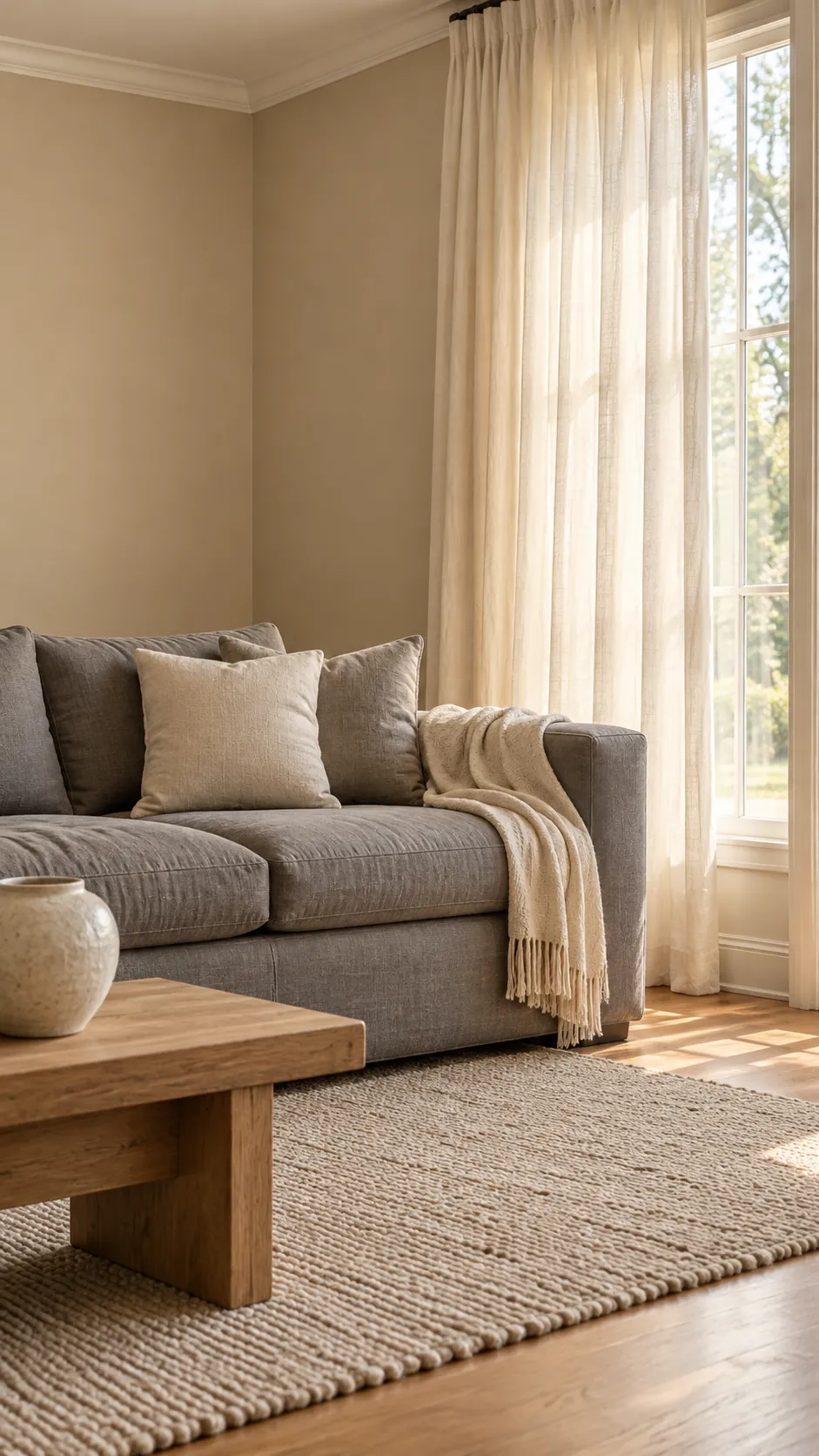
Set Lighting to a Warm Neutral
Bulbs that are extremely cool make beige look dingy, while very amber bulbs can make gray look green or muddy. Use a warm neutral lamp color and test it at night beside both surfaces. Shade material matters too, because cream fabric spreads softer light than clear glass.
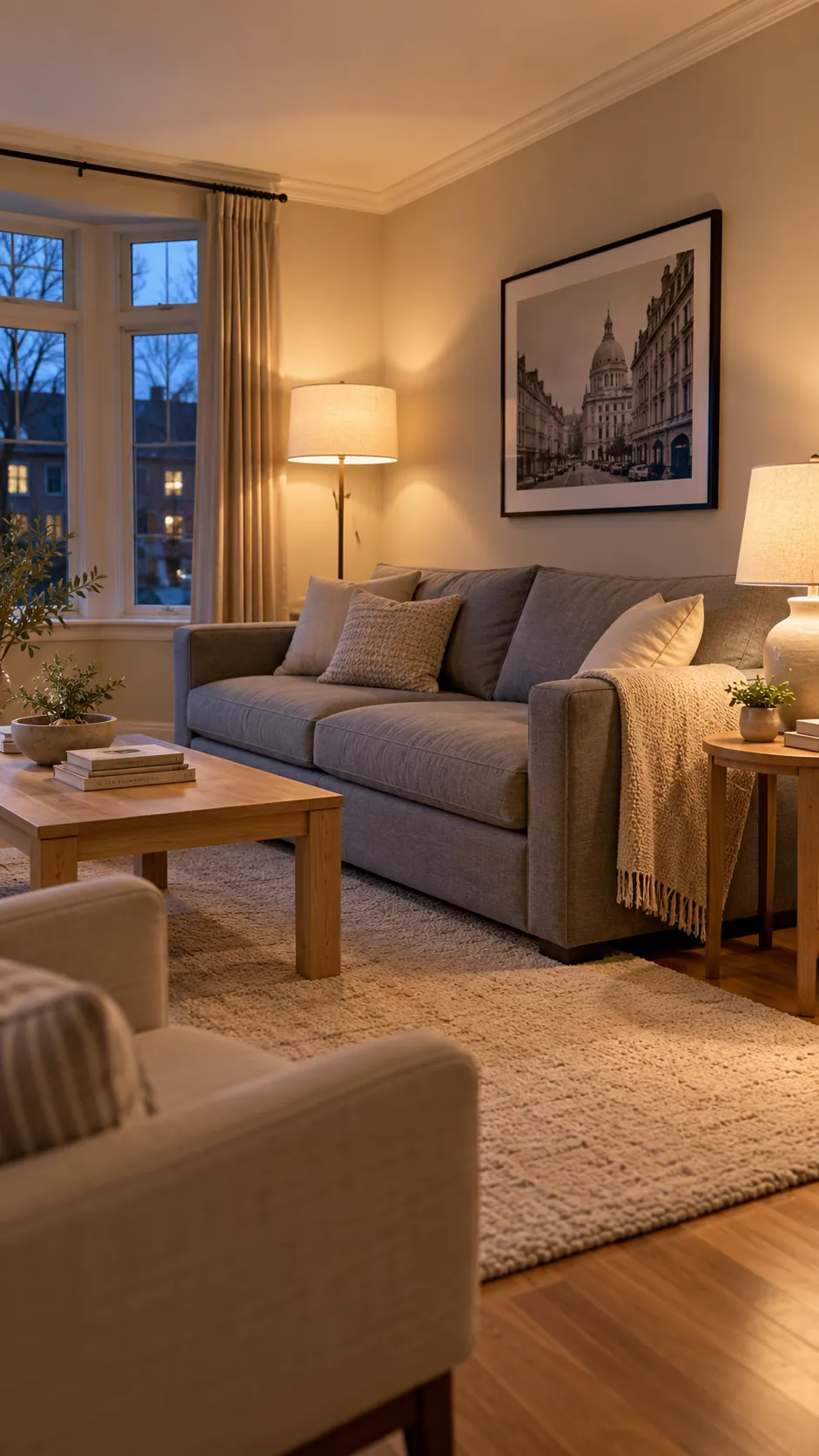
Mix Bouclé, Linen, and Wool
Texture can unite colors that do not match closely. Bouclé picks up soft light, linen introduces warm natural variation, and wool gives the floor or throw a matte foundation. Keep the palette restrained so the different surfaces do the visual work.
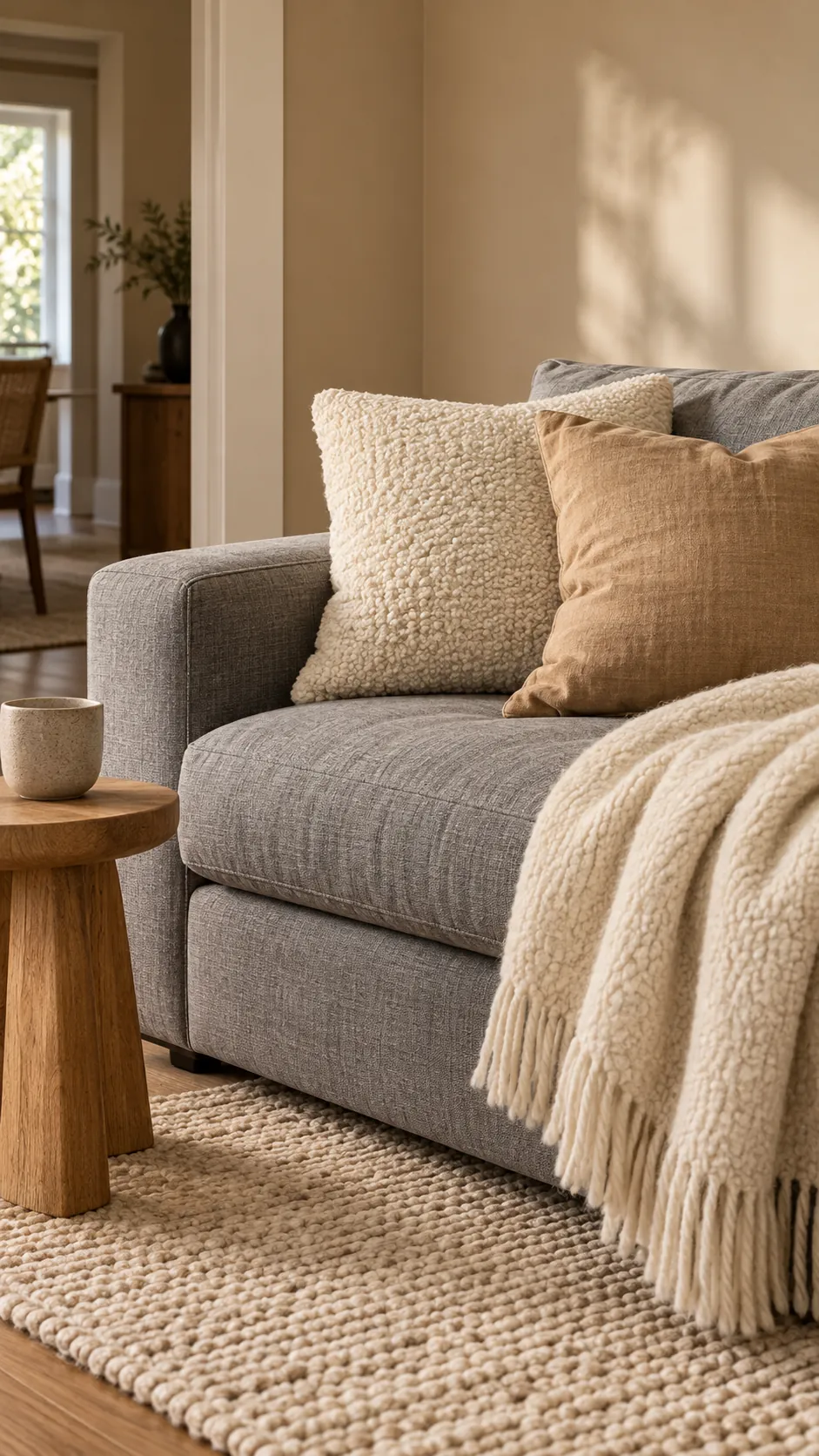
Choose One Pattern That Contains Both Neutrals
A pattern that includes gray, beige, cream, and one accent color can make the pairing look planned. Use the pattern on a rug or one main pillow, then pull solids from it for the remaining textiles. Avoid several unrelated patterns, which can expose the undertone mismatch rather than solve it.
Use Greenery as a Living Connector
Green plants can ease the jump between cool gray and warm beige because foliage contains both blue and yellow influences. Choose one healthy plant with a clear shape rather than scattering many small pots. The container can repeat camel, cream, or black to connect the plant to the rest of the scheme.
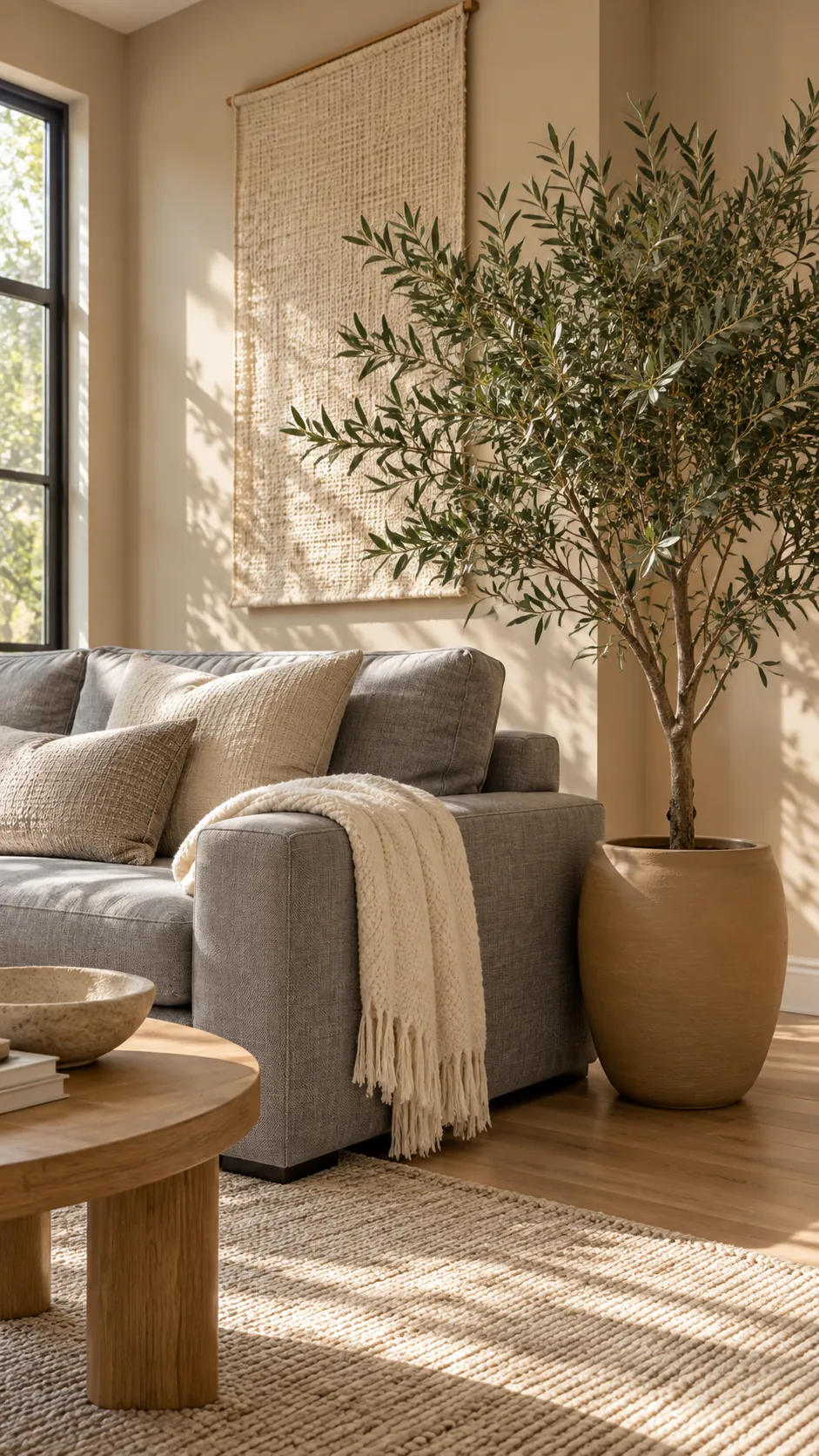
Carry the Palette Into Nearby Zones
A room feels more coherent when gray, beige, and the chosen bridge color continue into the entry or dining area. Repeat one textile color, one wood tone, and one metal finish instead of duplicating every object. This creates flow while allowing each zone to keep its own purpose.
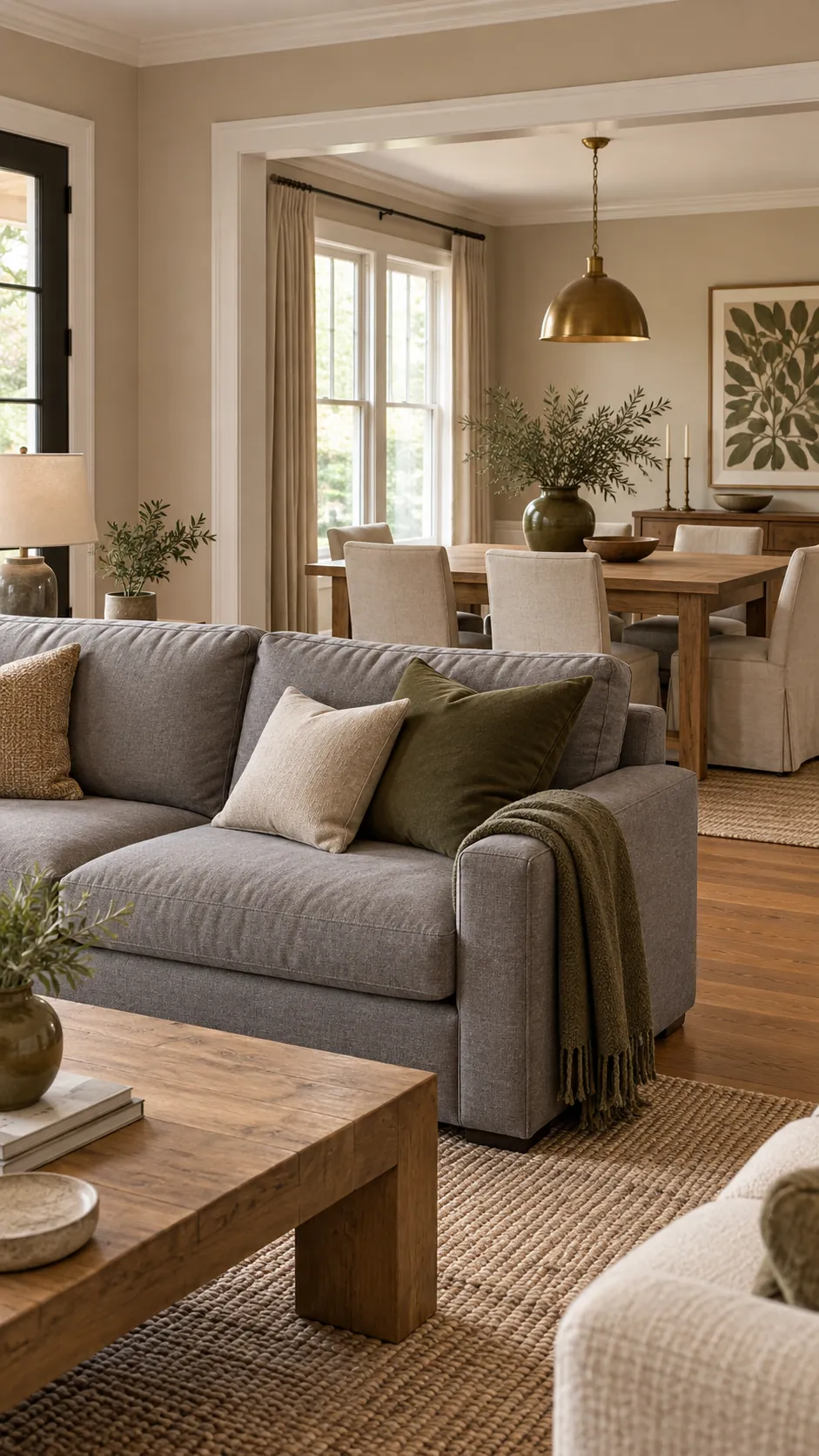
Leave Enough Plain Space
The bridge only works when the eye can still see the sofa and wall as separate surfaces. Leave some gray upholstery uncovered, keep part of the beige wall free of art, and avoid filling every table with accessories. That restraint lets a few warm accents do their job and keeps the final room comfortable for daily use.