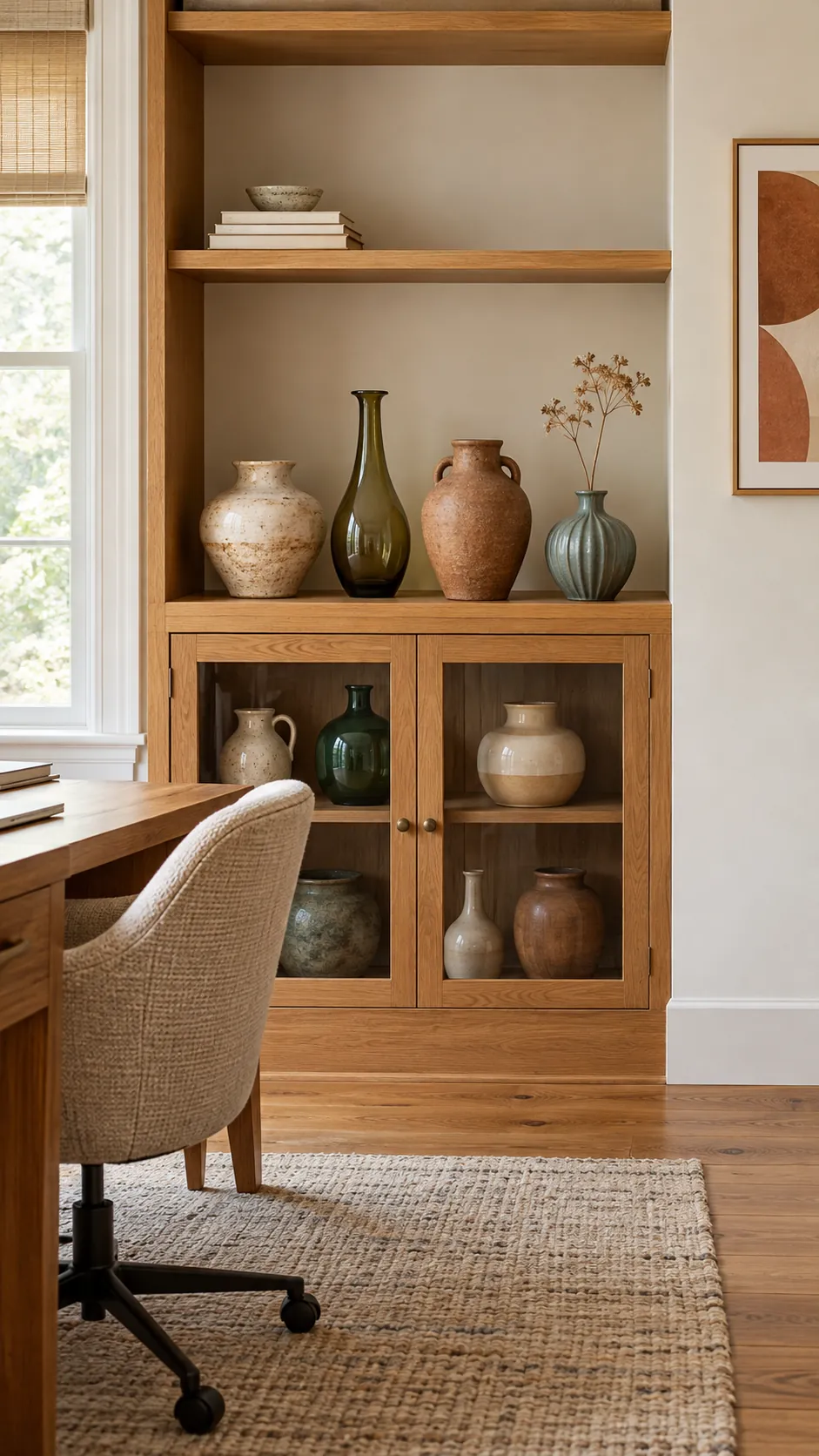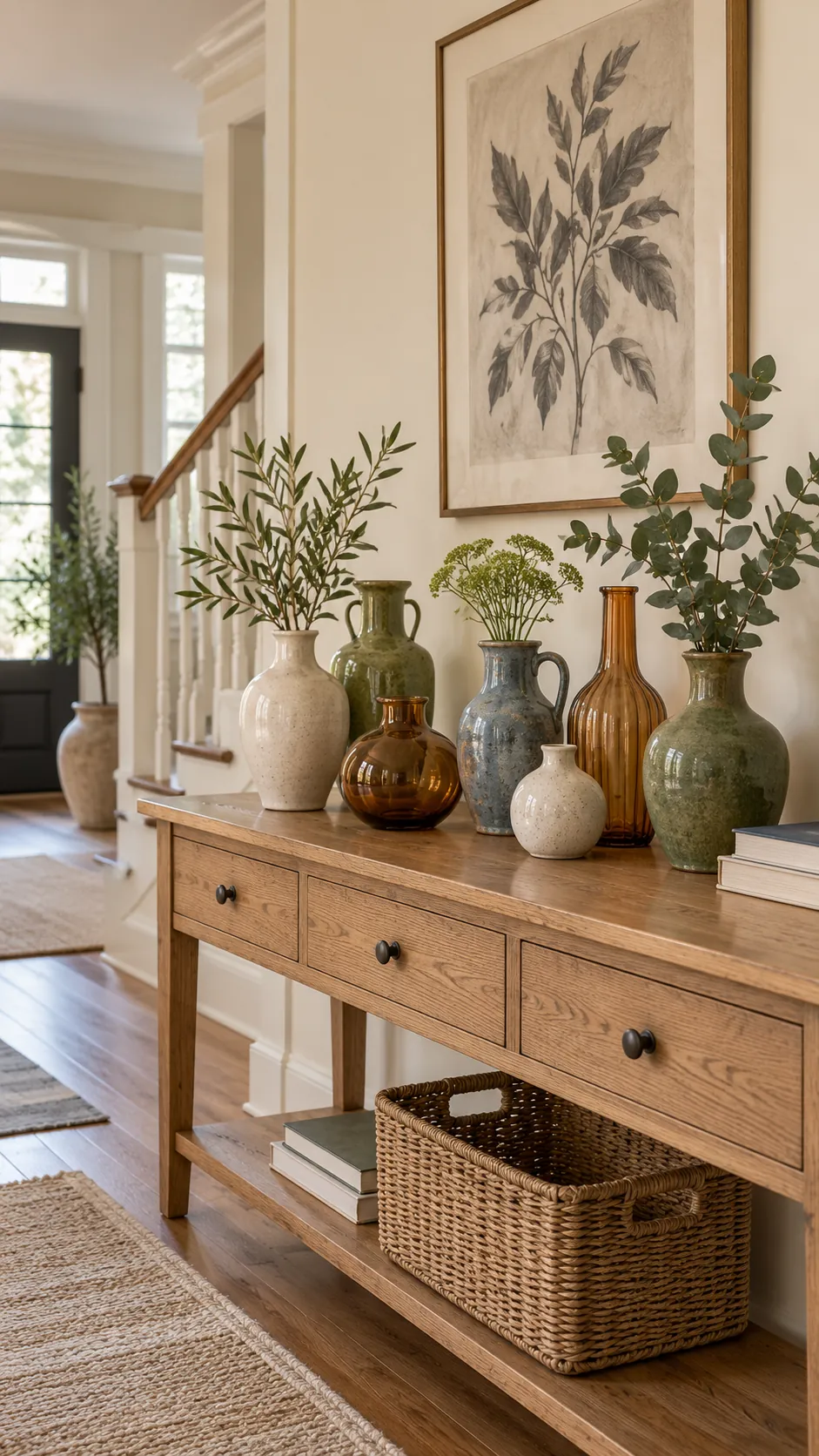
A shelf full of individually appealing vases can still look like a thrift store holding area. Cohesion comes from editing, not from making every piece match. A clear color story, varied height roles, repeated material, and visible space will turn unrelated finds into a collection with rhythm.
Indexed Reddit discussions about mismatched centerpieces and thrifted glass show that people often succeed by limiting the number of designs and grouping pieces by color. The same principle works at home. Keep the differences you enjoy, then repeat just enough shape, finish, or plant material to make those differences feel chosen.
Choose One Common Thread
Start by finding the quality that already repeats across several vases. It might be a narrow neck, glossy glaze, rounded body, clear glass, or hand thrown texture. Build the first group around that shared trait, then let one or two contrasting pieces add character rather than asking every vase to compete.
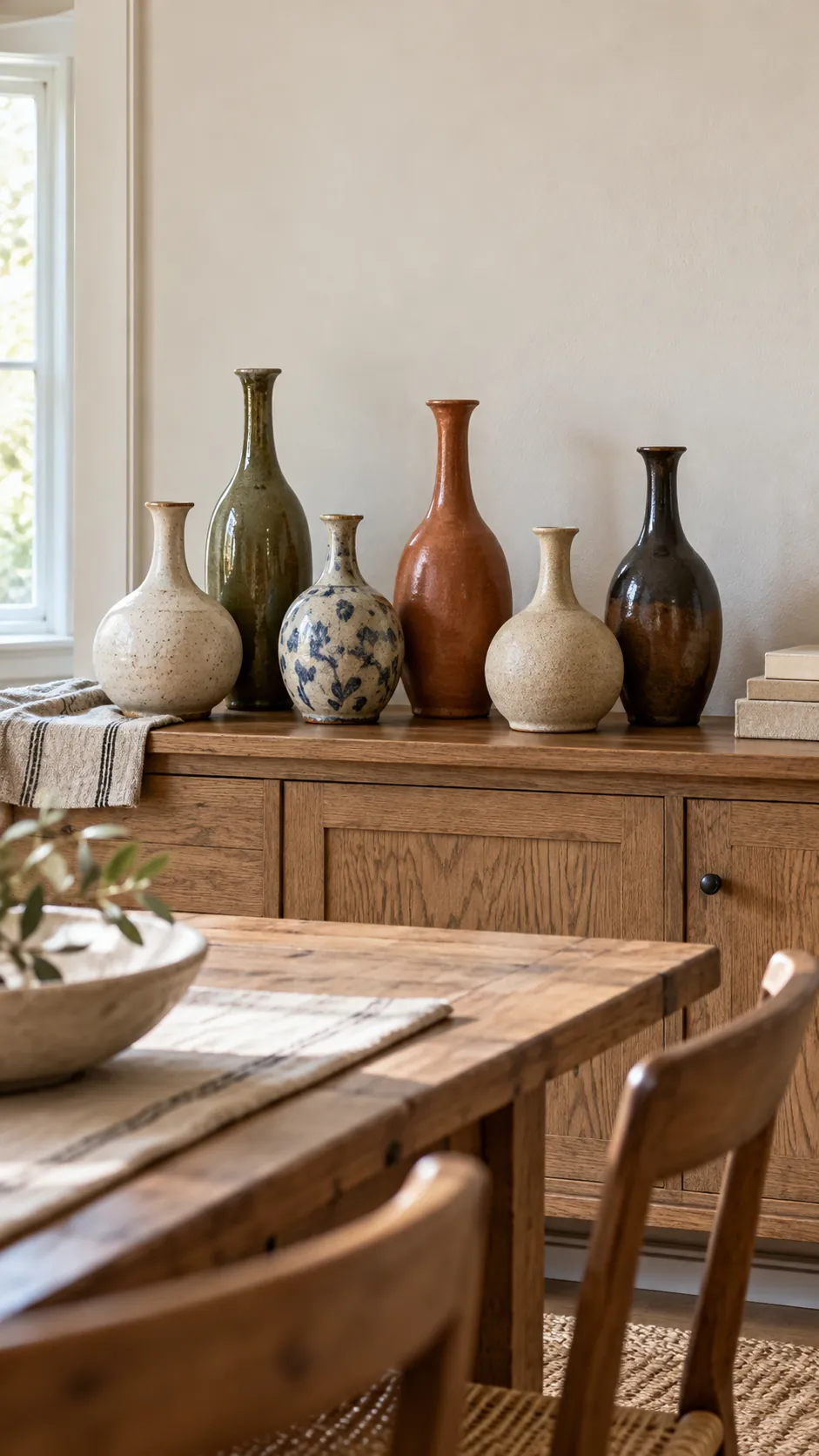
Edit the Color Range
Choose two or three main colors plus one neutral instead of displaying every find at once. Cream, amber, moss, and dusty blue create a flexible collected palette, while clear glass can act as breathing room. Store pieces outside the range and rotate them later, since editing does not mean giving them away.
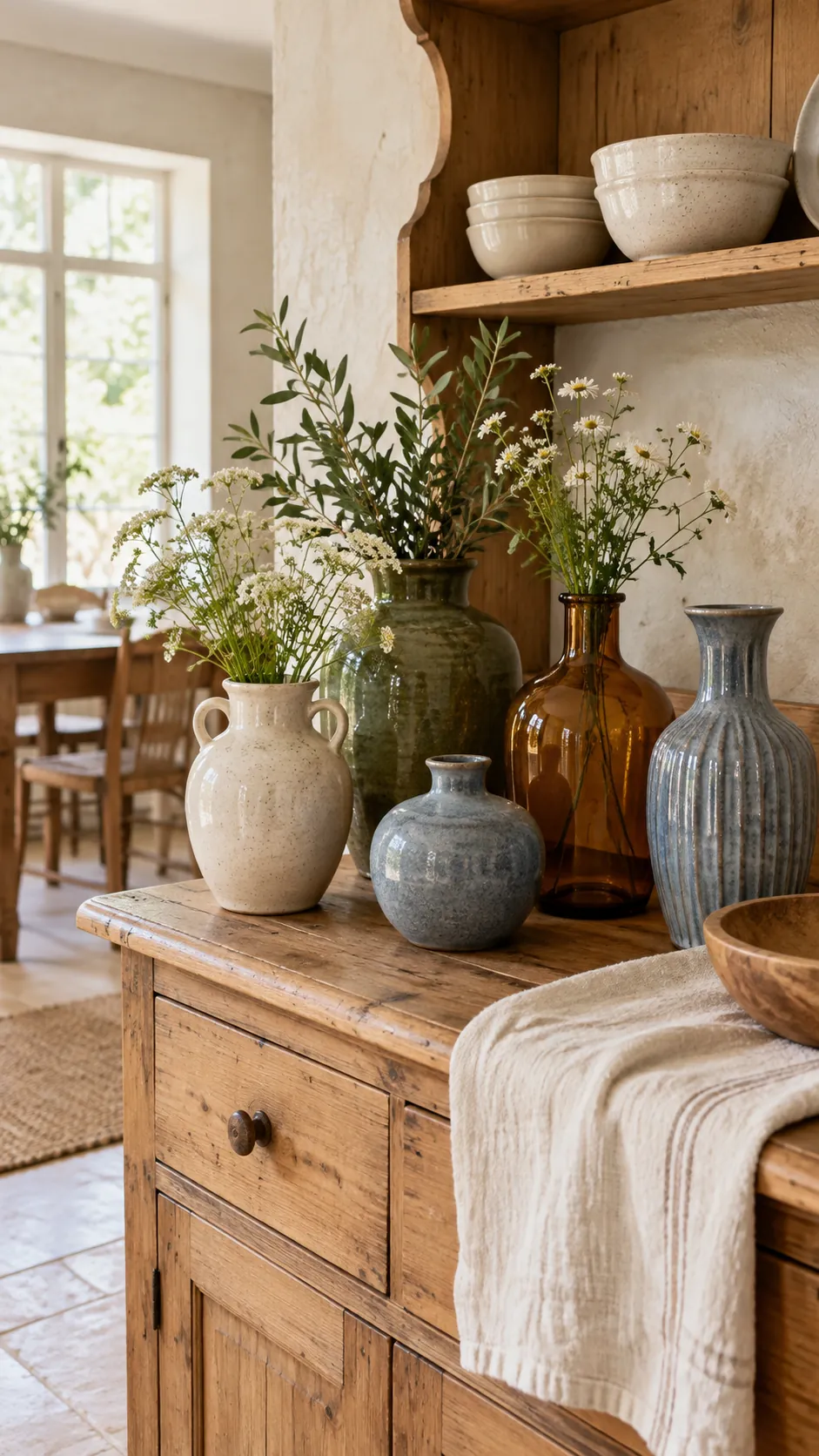
Assign Tall, Medium, and Low Roles
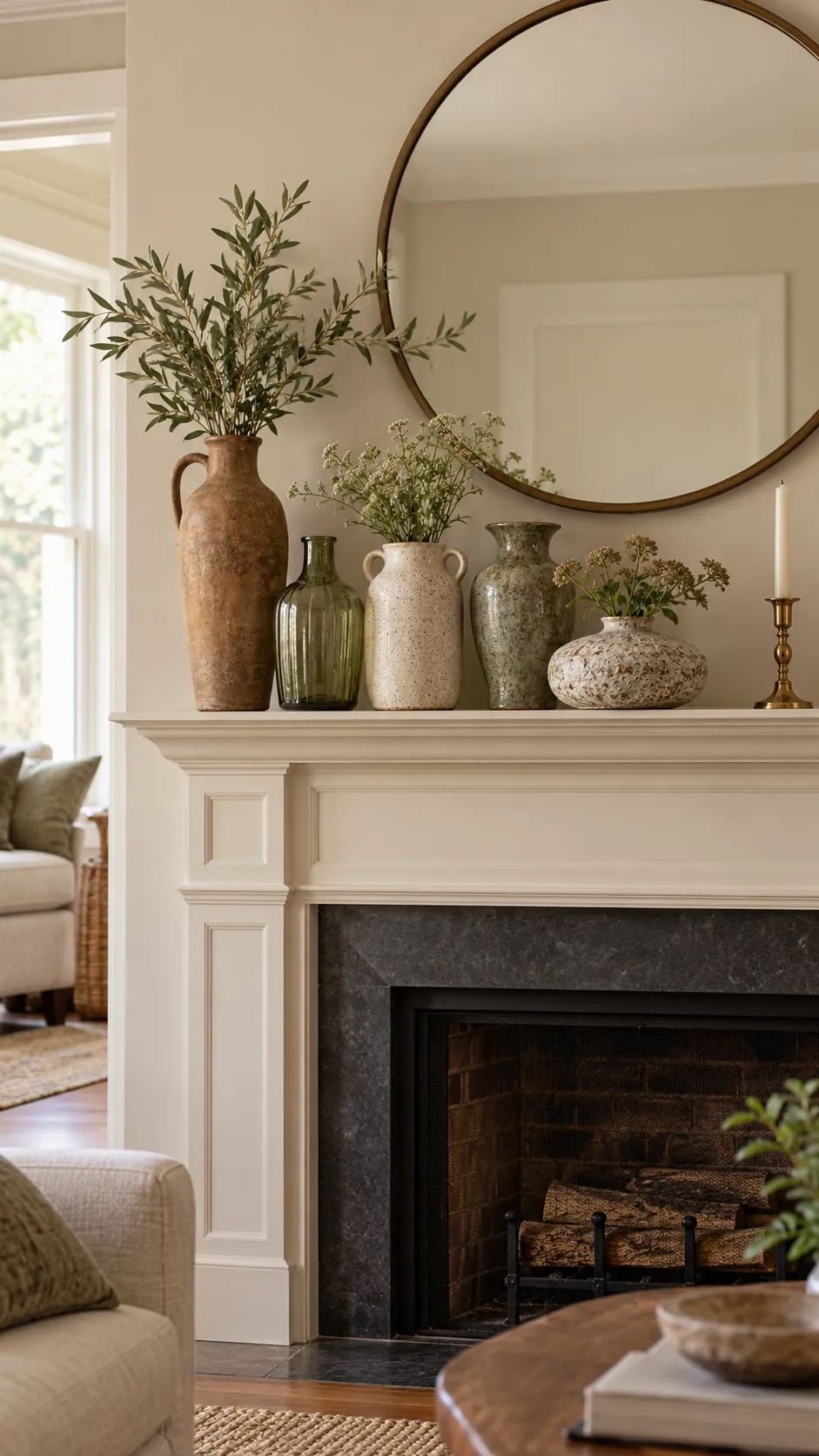
A group reads more clearly when each vase has a height role. Use one tall anchor, two or three medium forms, and one low piece that lets the eye rest. Stagger the necks and shoulders so they create a gentle rise and fall rather than a rigid staircase.
Overlap Forms Into One Silhouette
Spread out vases look like unrelated objects, while slight overlap makes them read as one composition. Place the tallest vessel toward the back, tuck a smaller piece partly in front, and leave narrow pockets of air between shapes. Check that every rim and distinctive shoulder remains visible enough to keep the individual forms interesting.
Repeat One Stem or Foliage Type
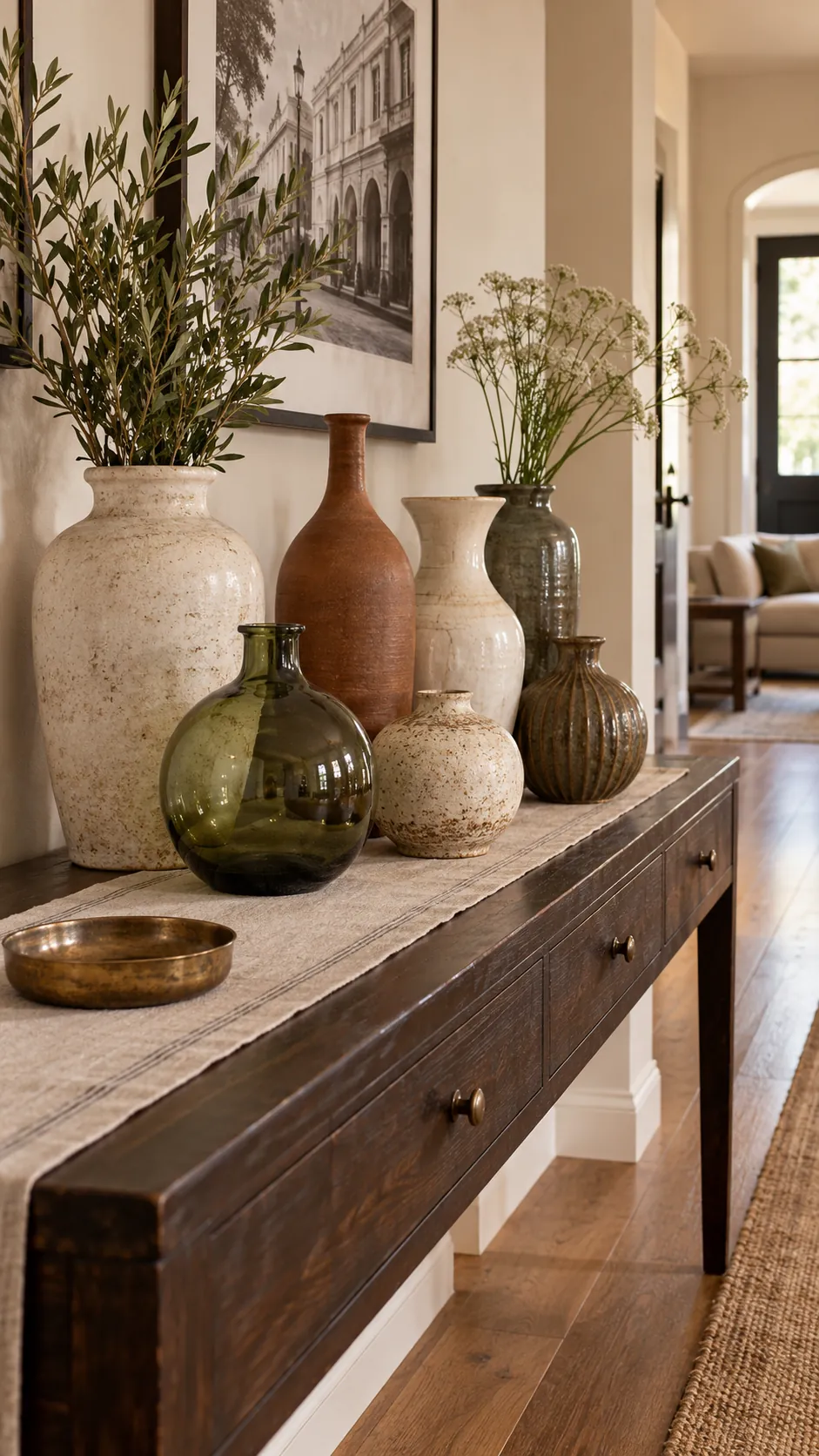
Flowers can unify containers more effectively than matching glaze. Use the same leafy branch, dried grass, or simple bloom in several vases, then leave some vessels empty so the display does not become busy. Trim stems to respect each vase height rather than forcing one identical bouquet into every opening.
Leave Space and Rotate the Display
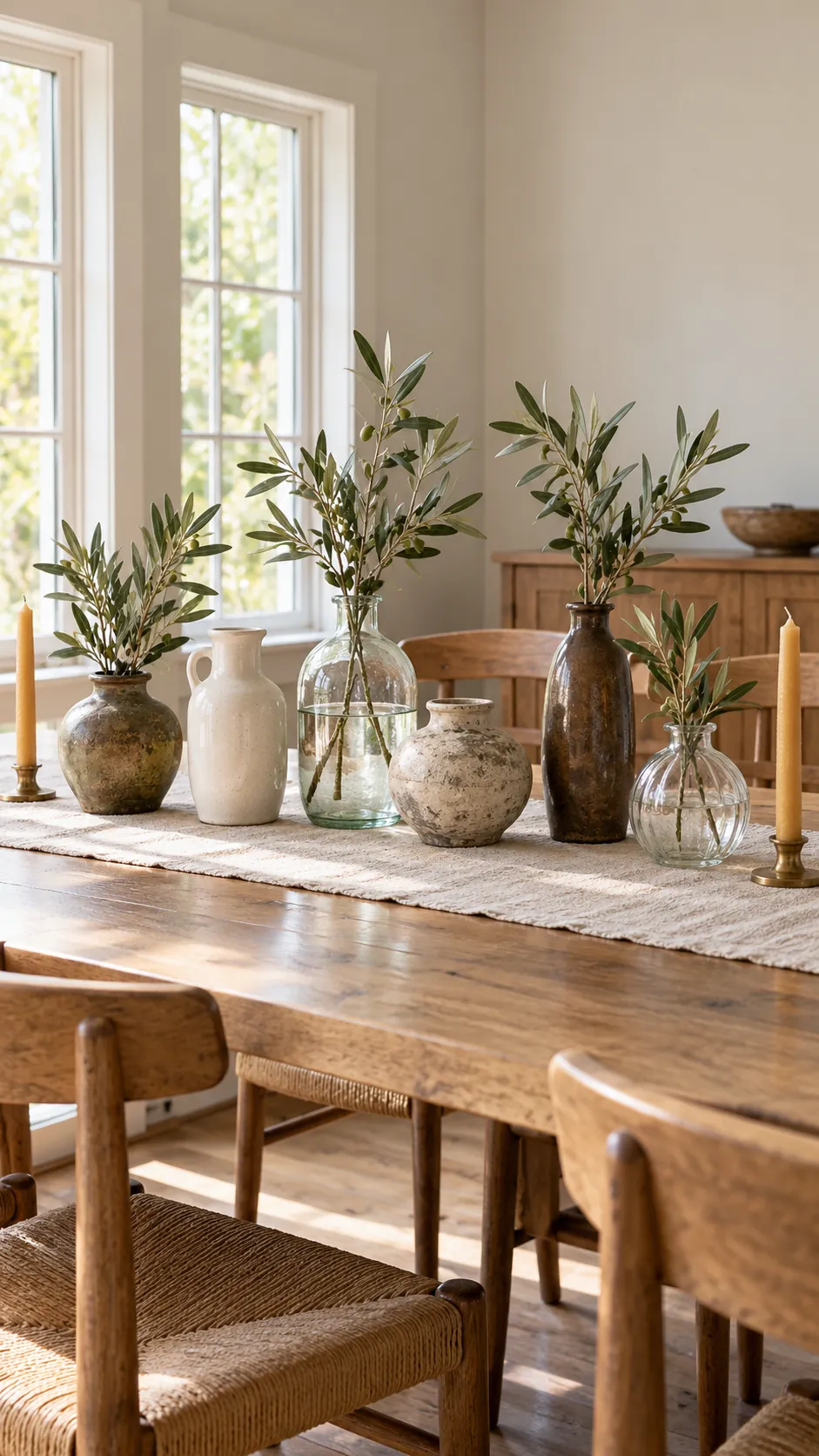
A collection needs empty space around it to keep the shapes legible. Remove one vase if the group touches every edge of the shelf, and avoid filling nearby wall space with several unrelated objects. Rotate stored pieces by season or mood, keeping the same color and height rules so each new arrangement still feels connected.