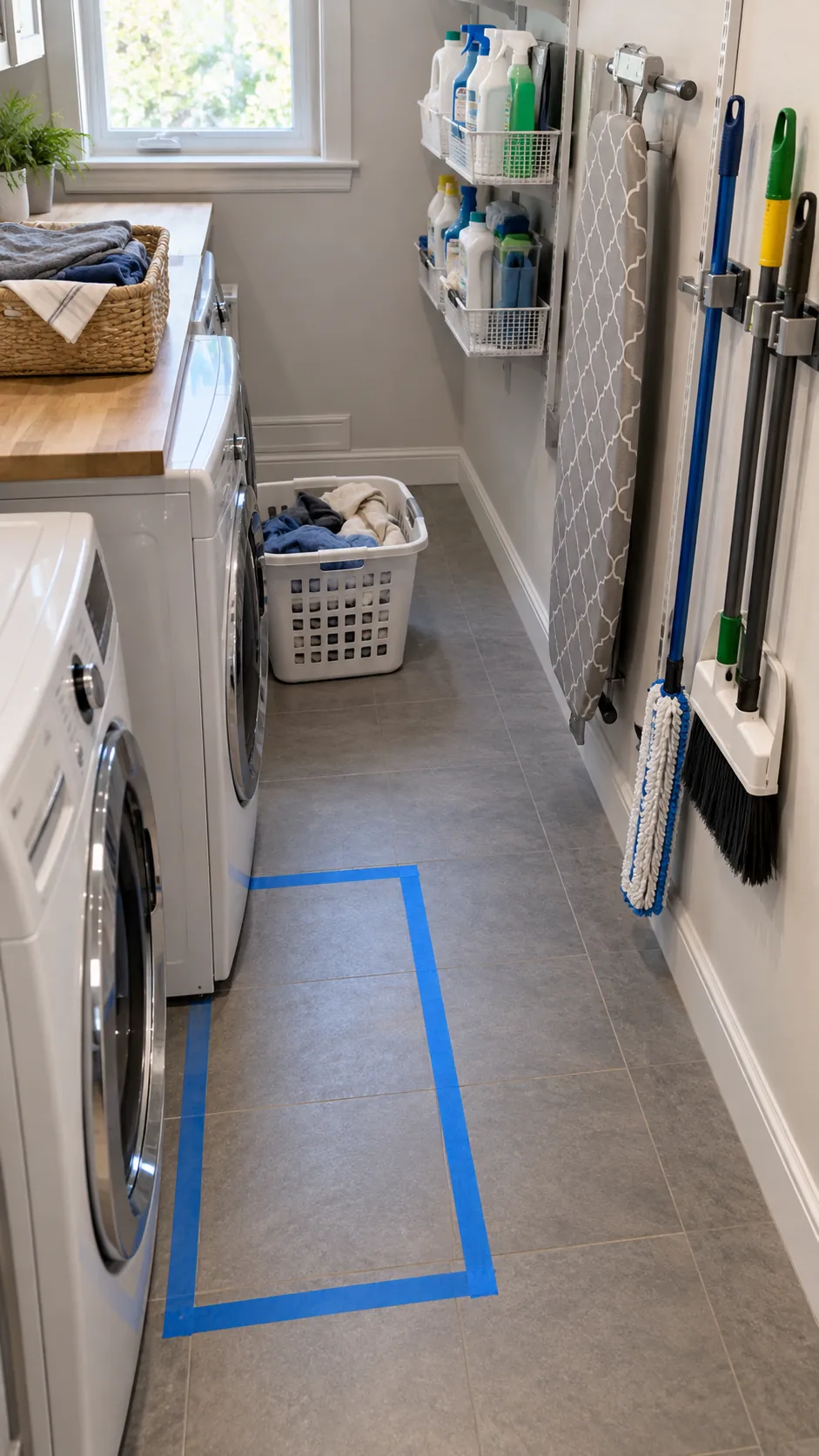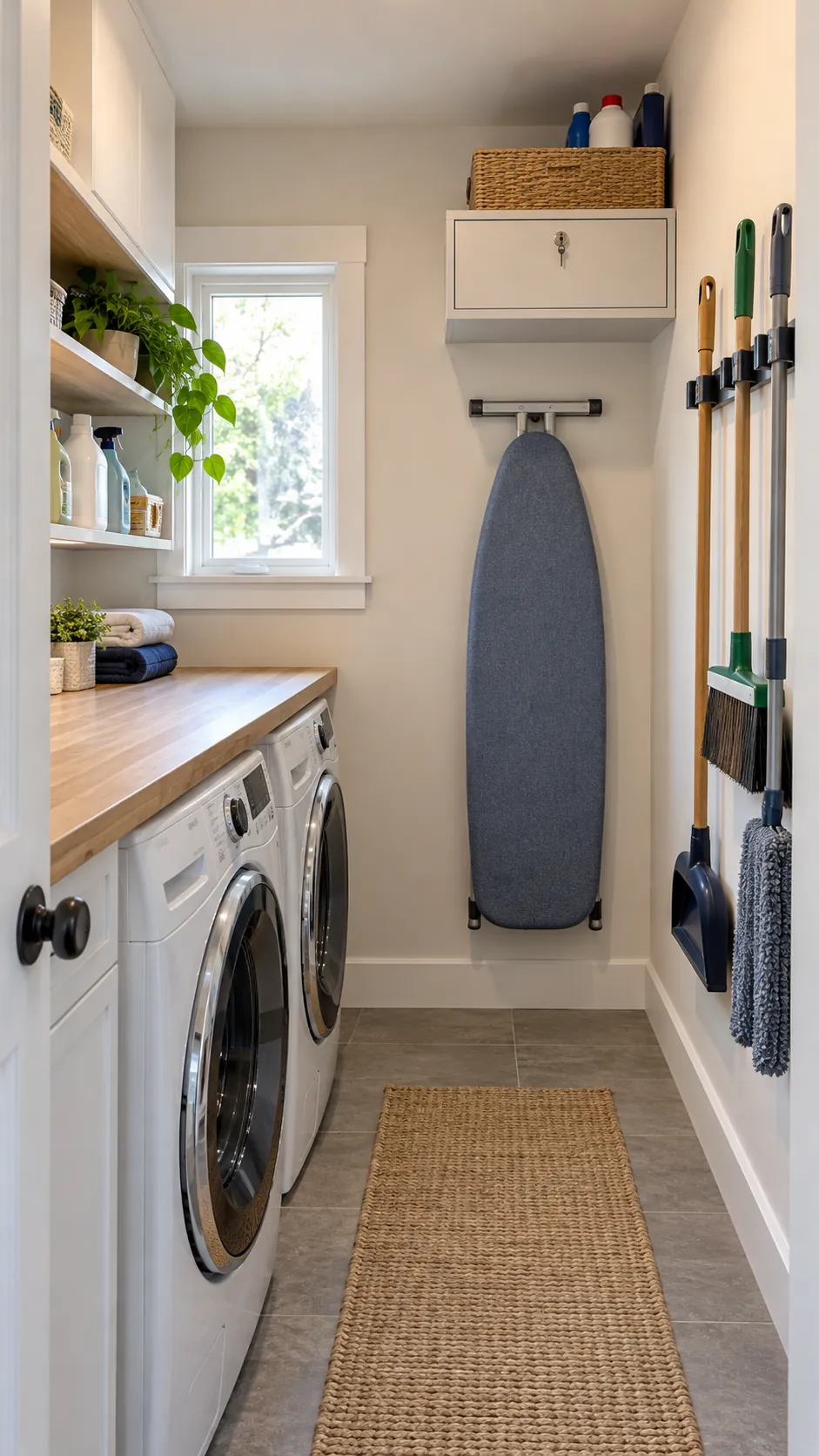
A small laundry room often becomes the default home for every cleaning tool, yet the appliances still need open doors, airflow, service access, and a place to fold clothes. Adding more containers without assigning zones usually creates a taller version of the same clutter.
Start with safety and frequency. Keep hazardous products secure, daily supplies within easy reach, damp tools ventilated, and long items attached where they cannot fall into the aisle.
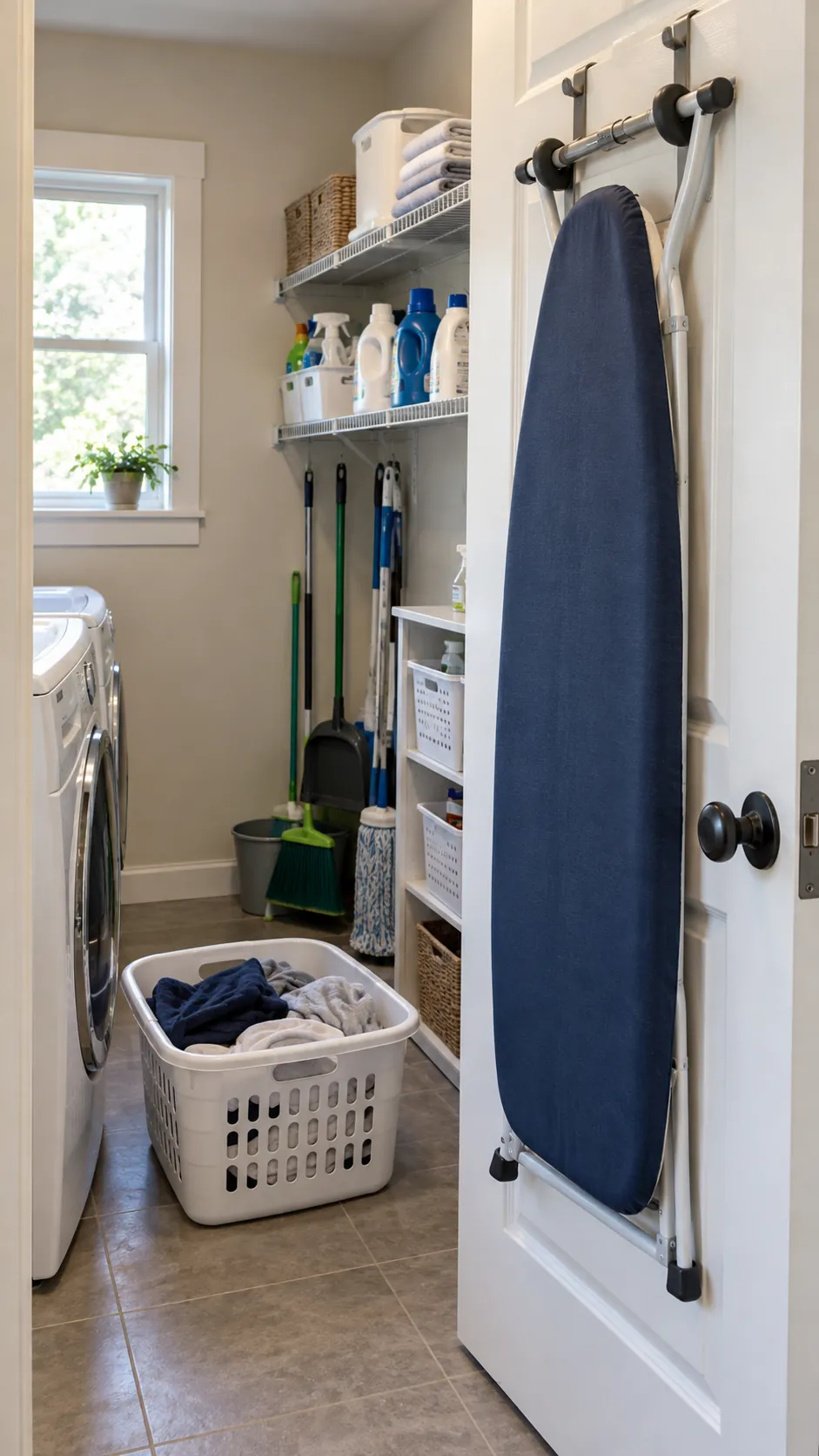
Hang the Ironing Board Behind the Door
A pair of padded over door hooks can hold a lightweight ironing board without using wall width. Check that the loaded door opens fully and that the board cannot strike the handle or wall. Secure loose legs so they do not unfold when the door moves.
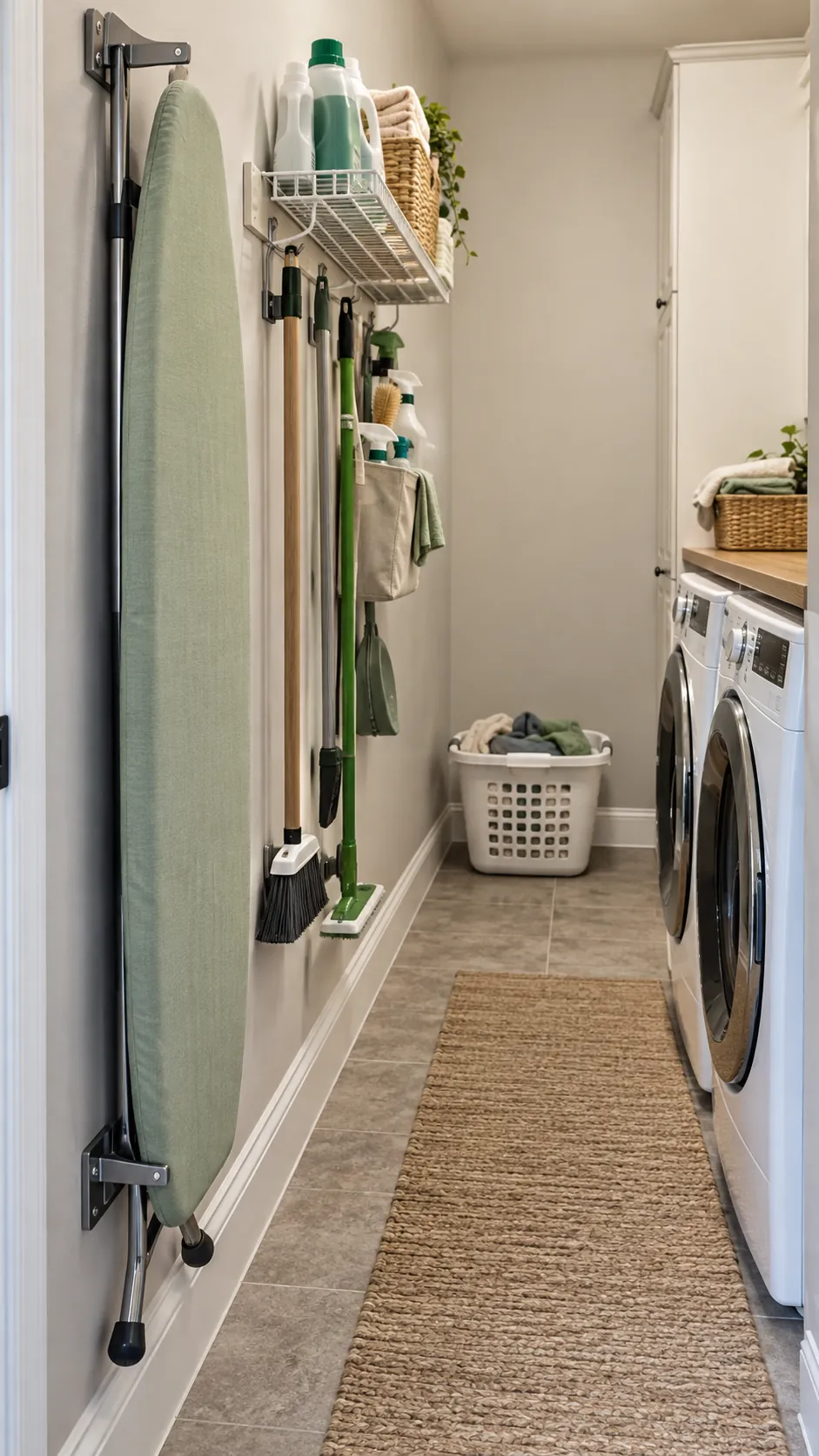
Mount the Board on a Side Wall
A purpose made wall bracket keeps the board vertical in a gap beside the appliances. Mount it into suitable structure and leave enough room to lift the board up and off. Do not use the service gap that technicians need for hoses or appliance removal.
Use a Fold Down Ironing Station
A fold down board provides a work surface without permanent floor occupation. Choose a unit with a positive latch and verify its open height before installation. Keep the hot iron on a rated rest and close the board only after everything cools.
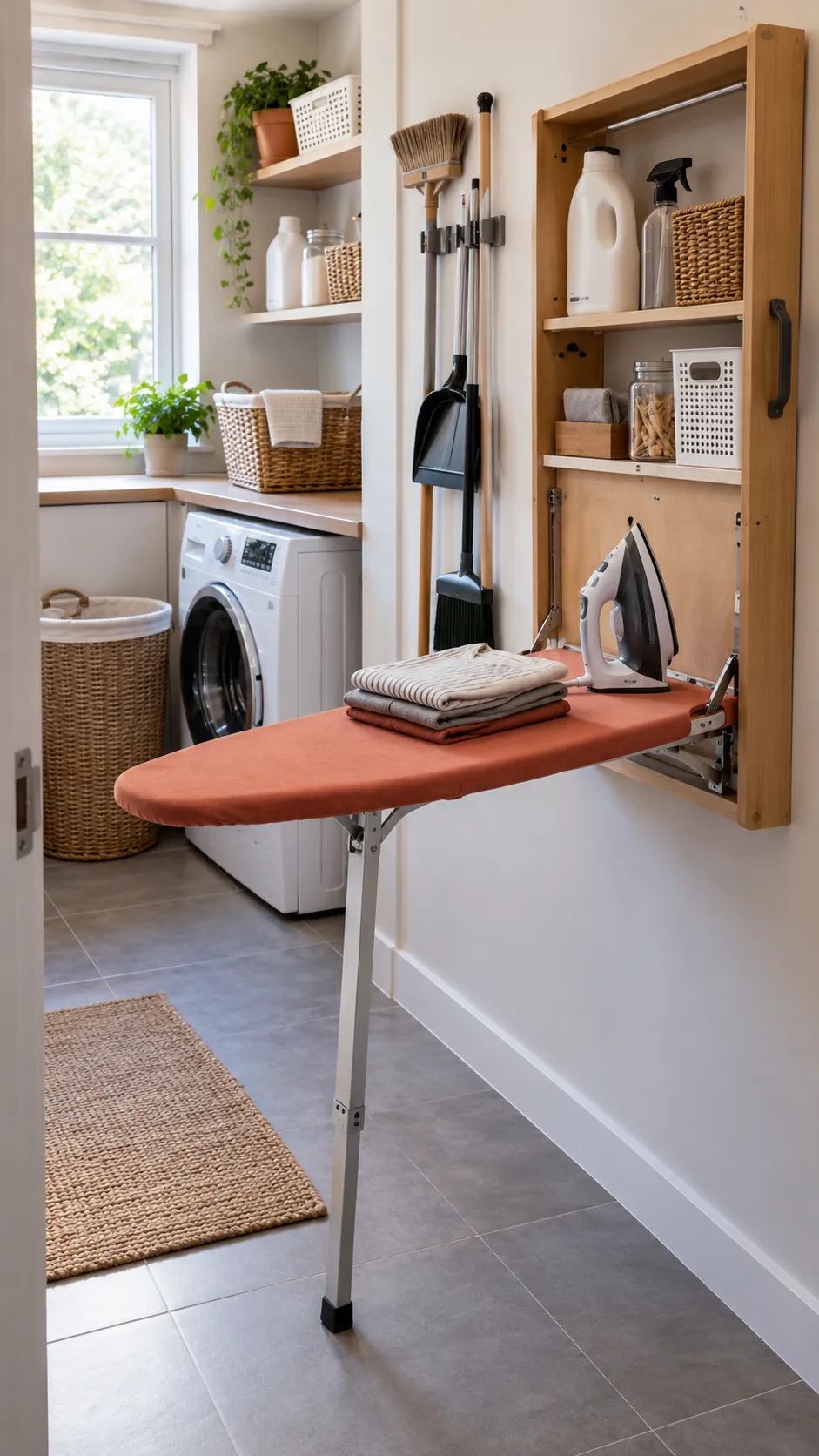
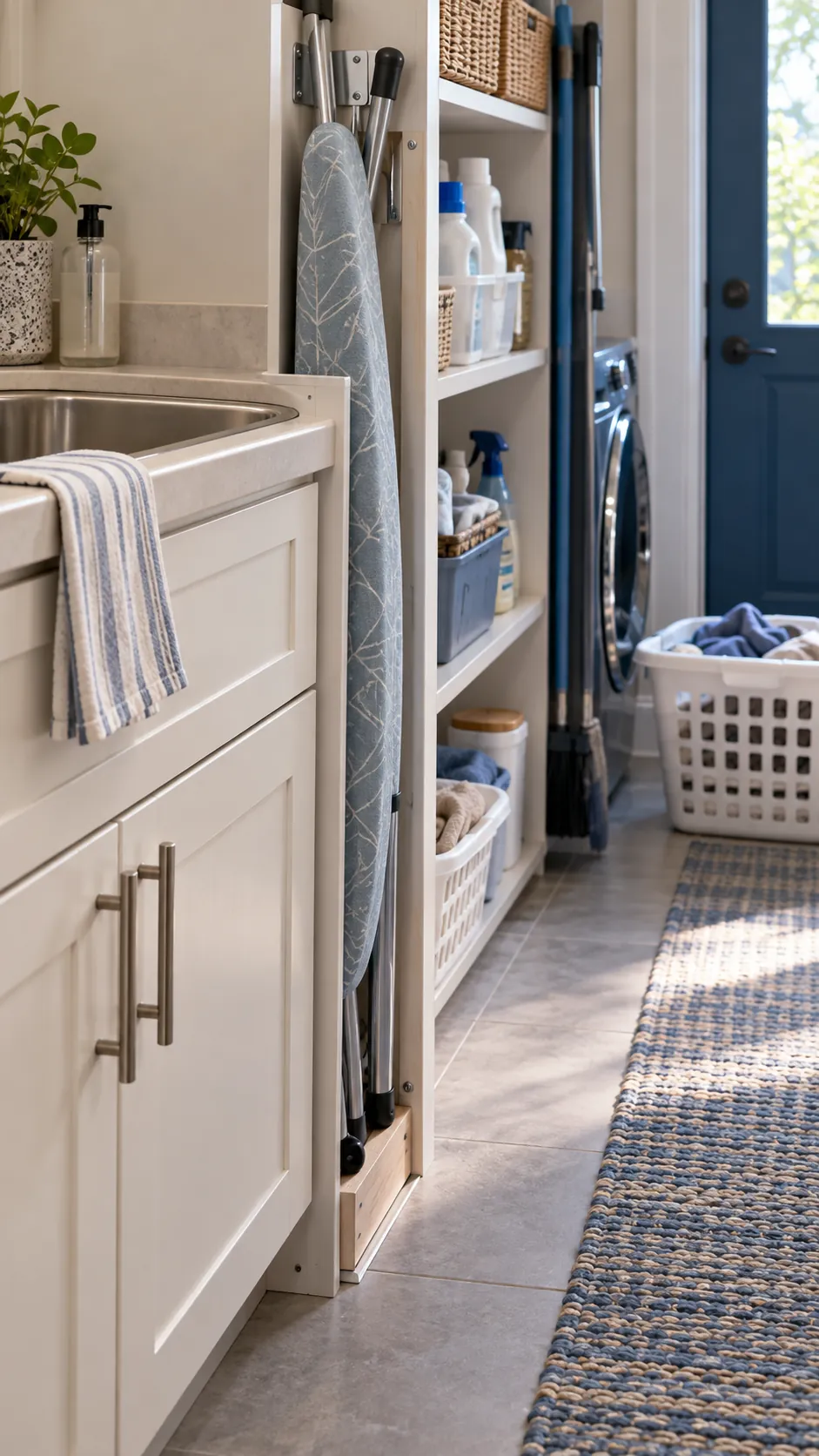
Slide the Board Beside a Cabinet
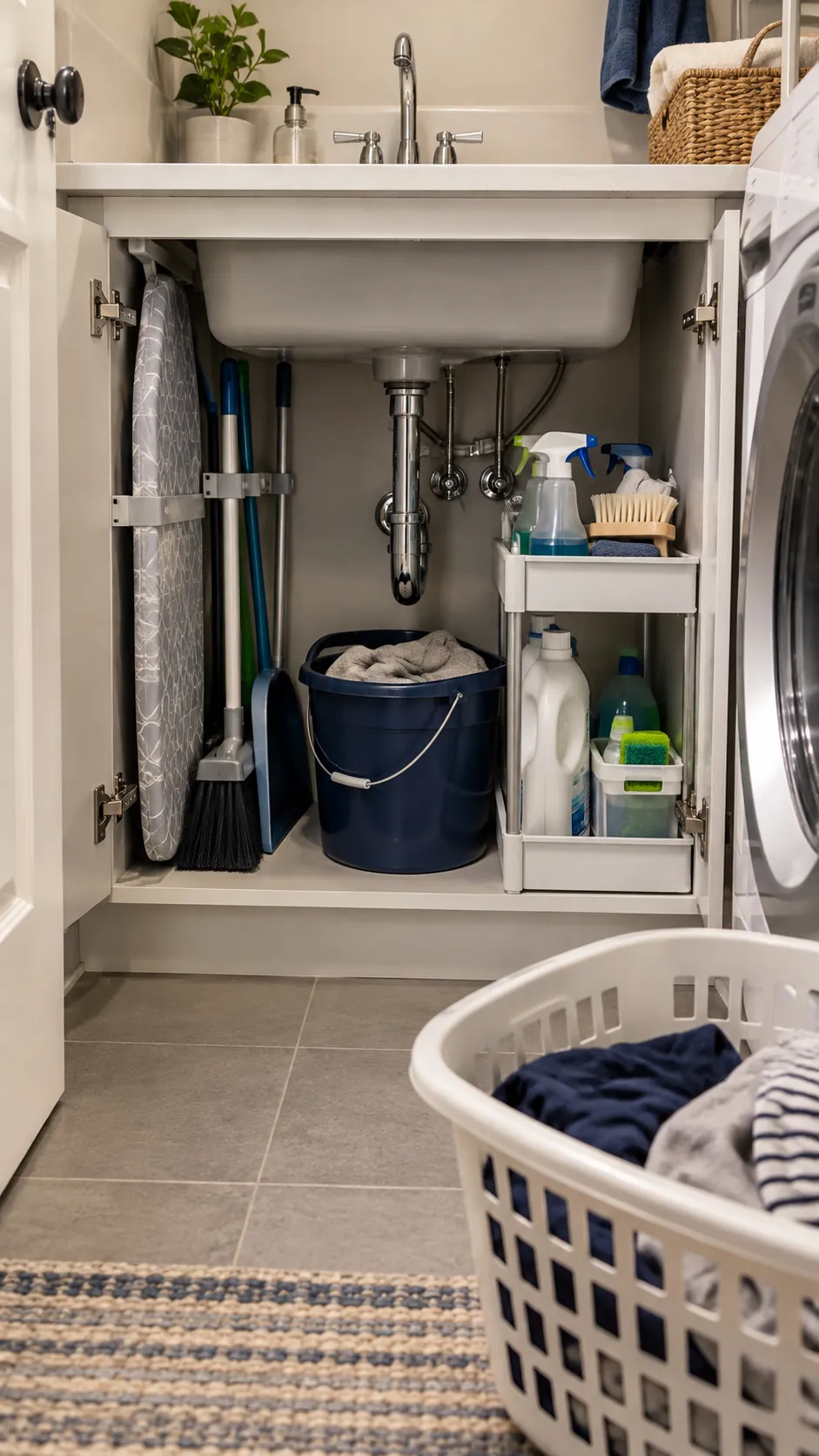
A narrow slot beside a sink base or tall storage unit can accept a folded ironing board. Add a small stop so the board stays upright and does not scrape plumbing. Measure the widest foot and handle rather than only the board top.
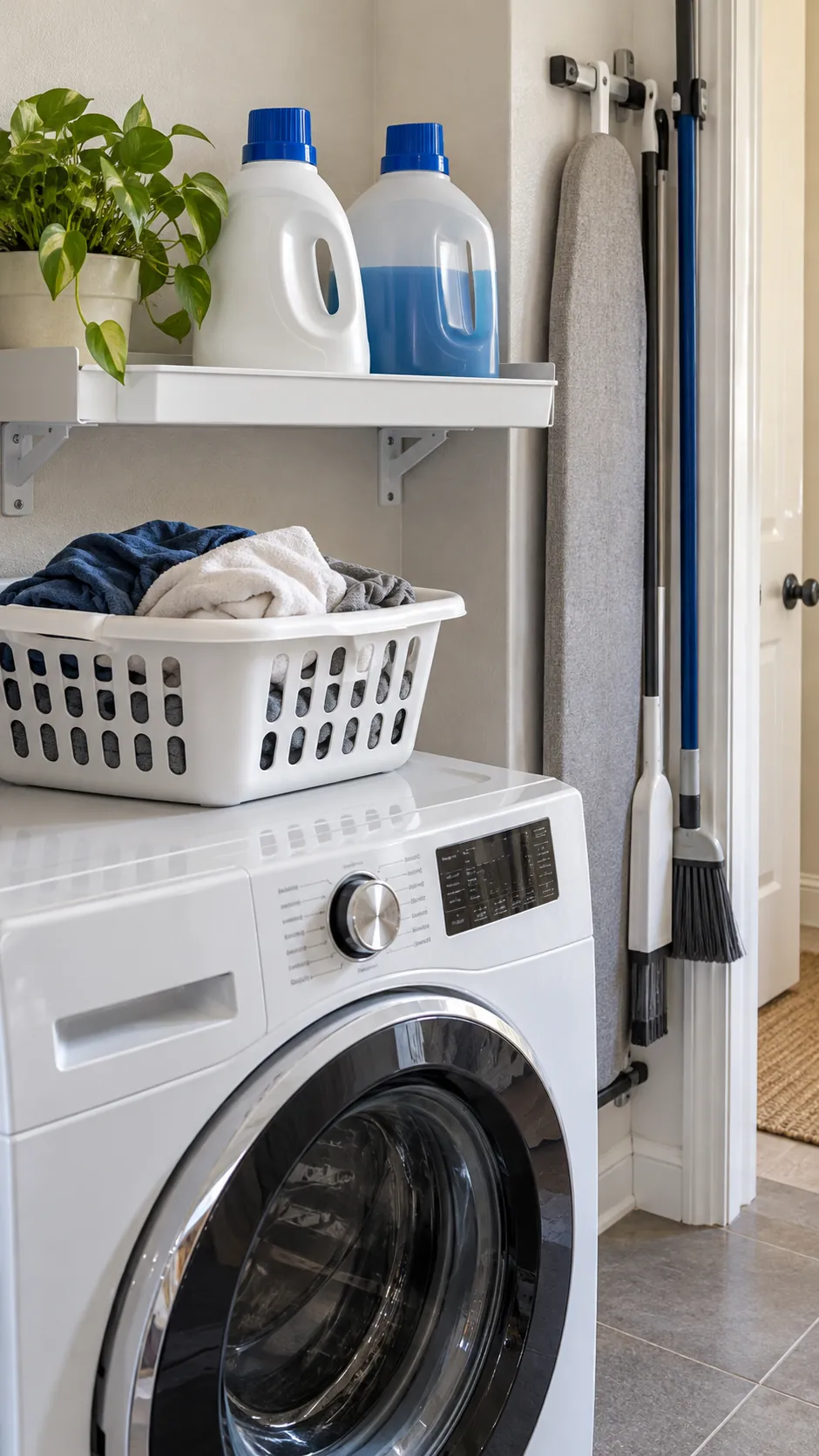
Keep Daily Detergent on a Shallow Shelf
A shallow shelf above the washer keeps daily detergent visible without creating a deep clutter ledge. Use a lipped washable tray to catch drips and keep products in their original containers. Place the shelf below comfortable reach and away from a top loading lid.
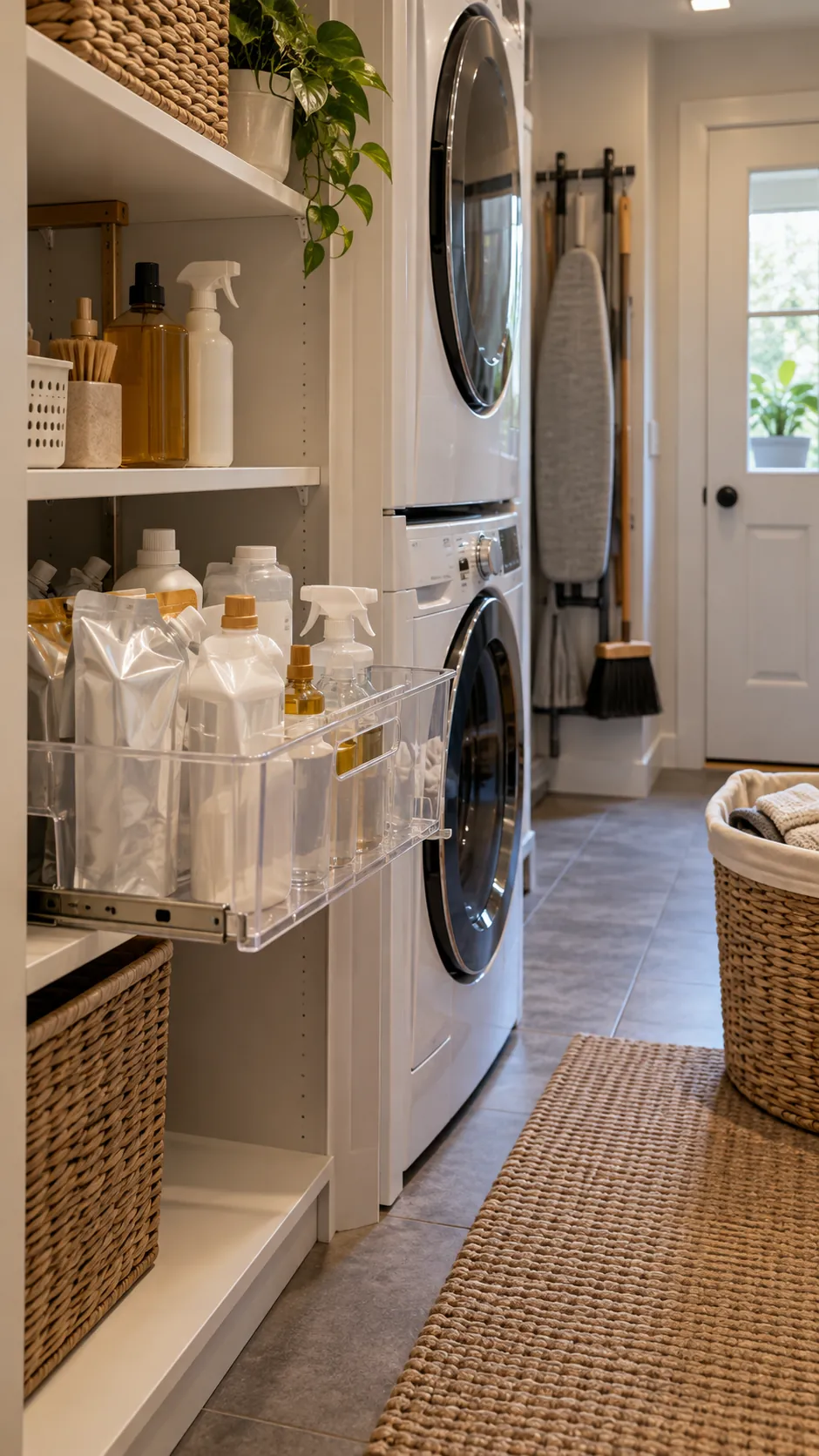
Store Refills in Pull Out Bins
Deep shelves work better when refill products sit in handled bins that pull forward as one unit. Group only compatible laundry supplies and keep labels visible. Heavy liquid belongs on a lower shelf so a full container is not lifted overhead.
Lock Hazardous Products Up High
Detergent pods, bleach, stain chemicals, and other hazardous products need secure storage away from children and pets. Use a high closed compartment with a reliable child resistant latch, not an open decorative jar. Adults should still be able to reach and read every original label safely.
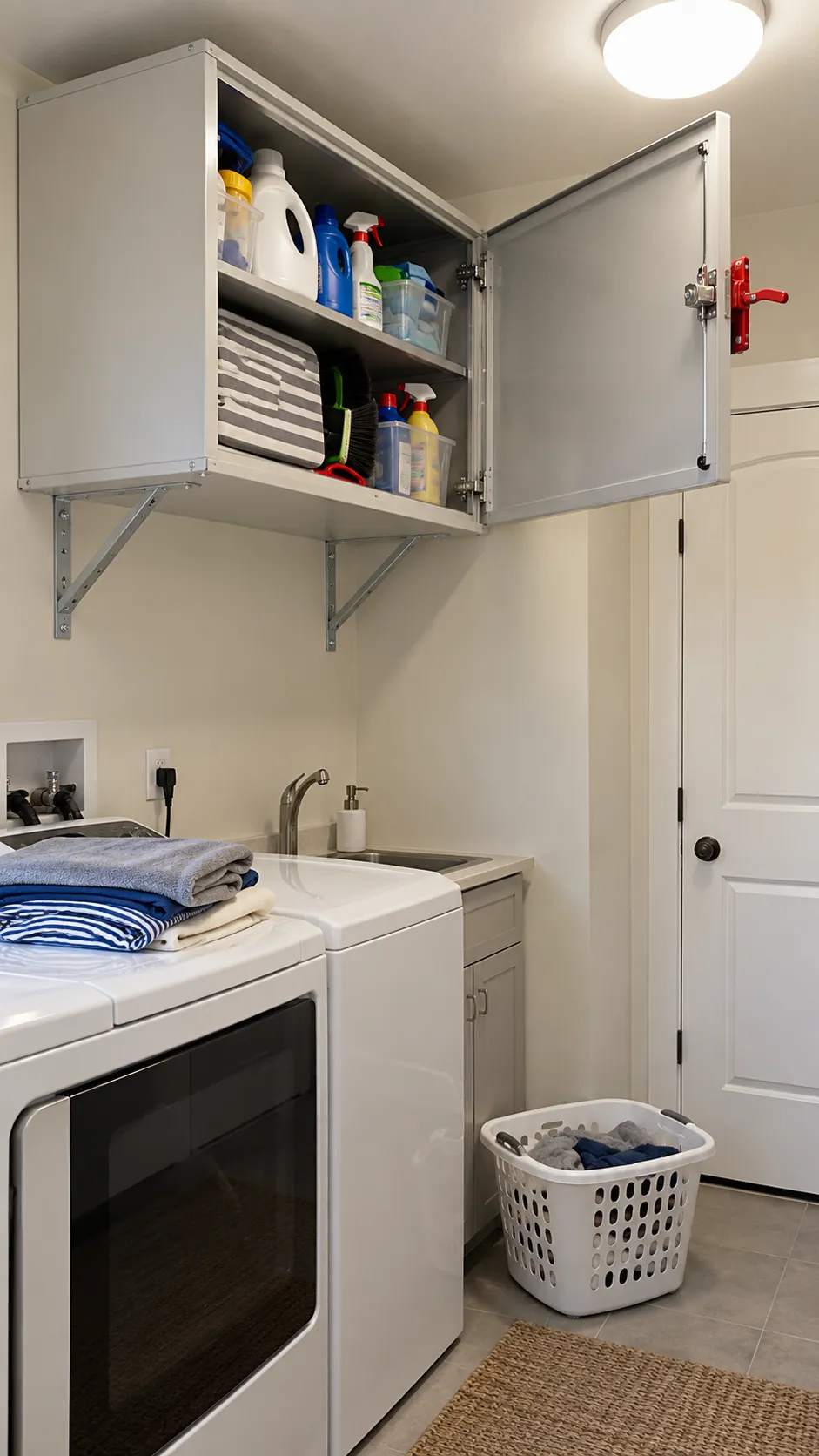
Add a Narrow Broom Gripper Rail
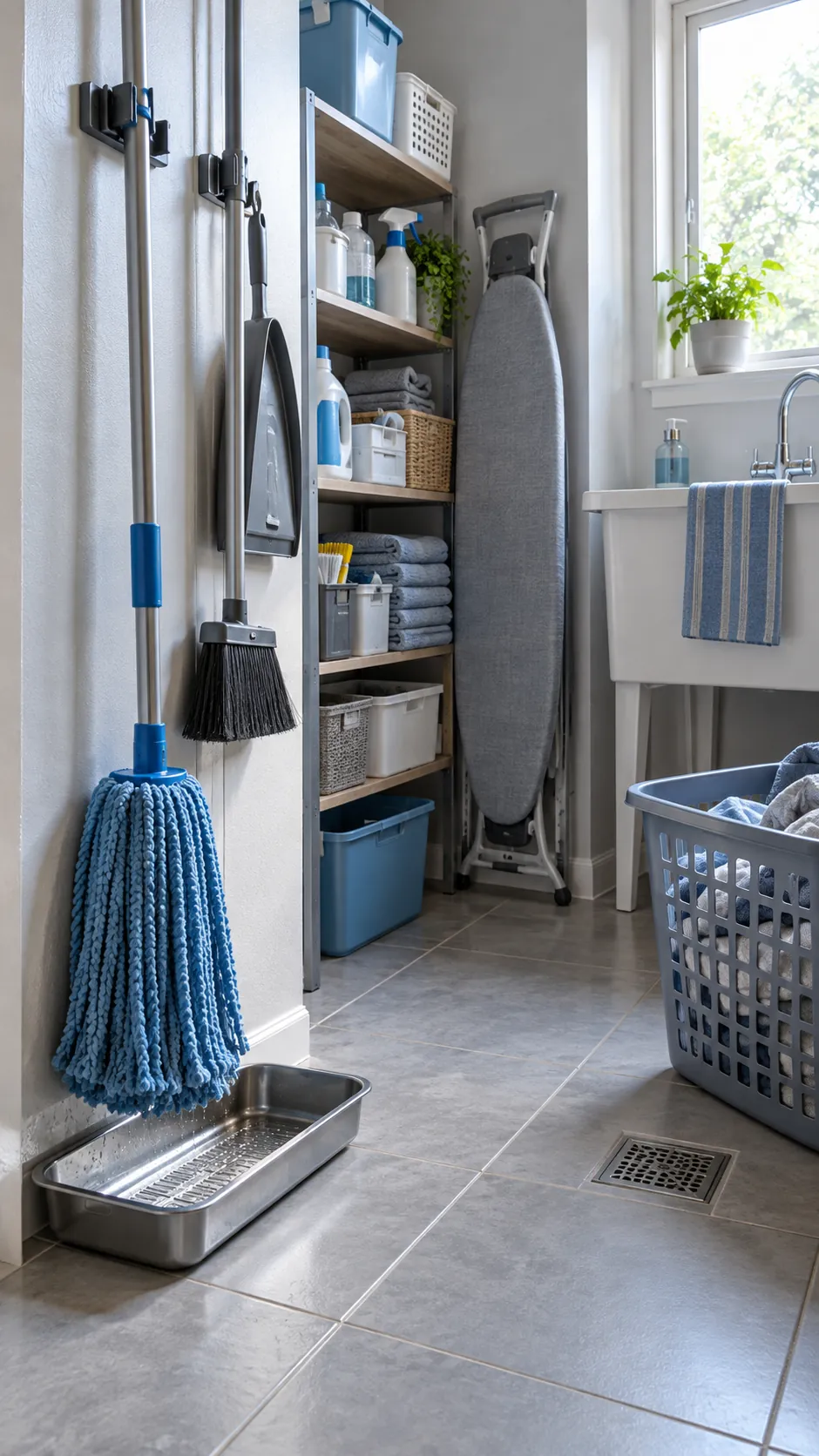
A gripper rail can hold broom and mop handles in one shallow vertical zone. Space each clip so tool heads do not overlap or fall into the walkway. Mount the rail high enough to clear the floor while keeping releases reachable.
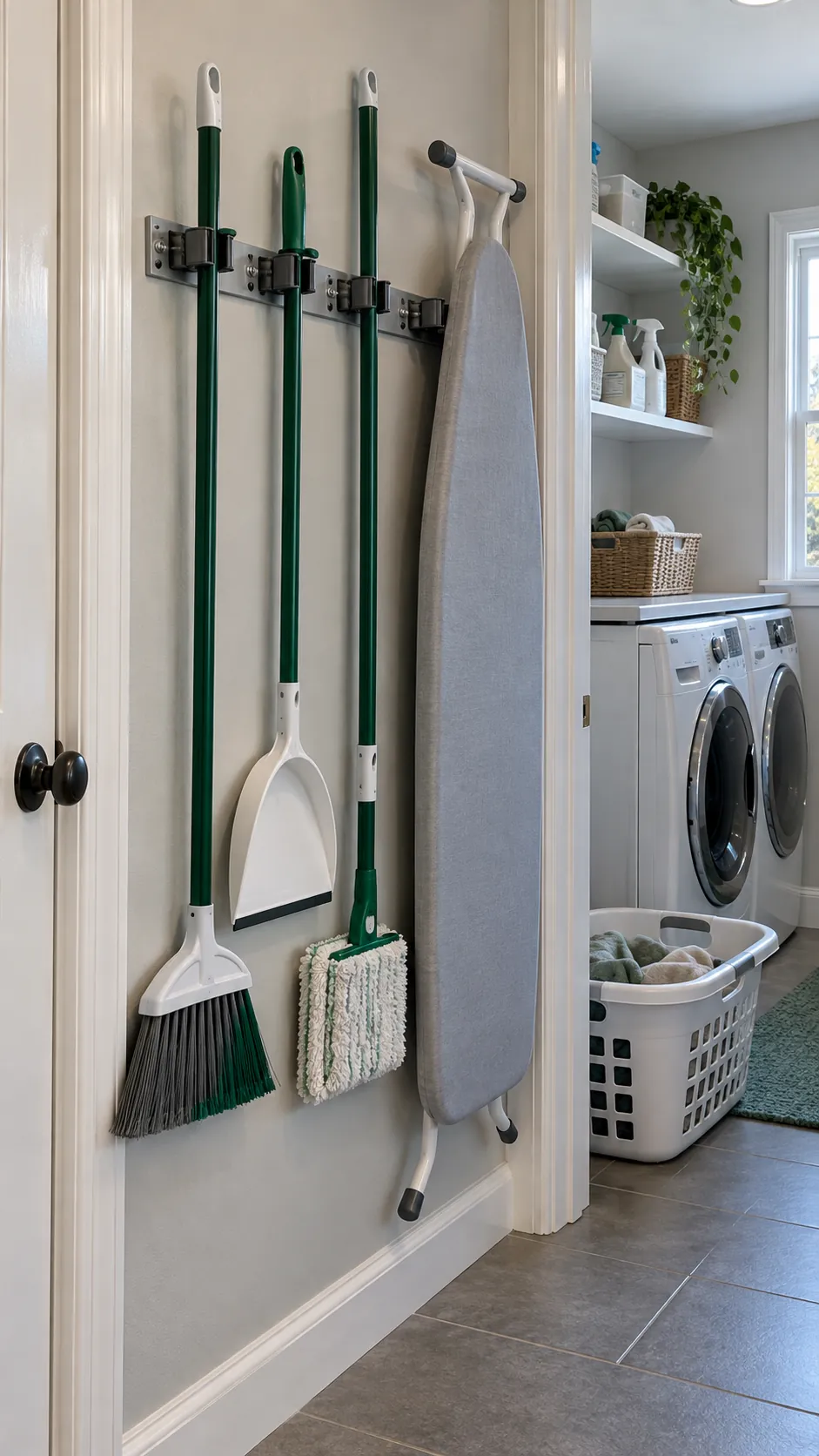
Use the Wall Beside the Machines
The side wall beside a washer can support a coordinated vertical zone for slim tools and the ironing board. Keep every item within the room boundary so nothing catches an appliance door. Leave valves, filters, and side panels accessible.
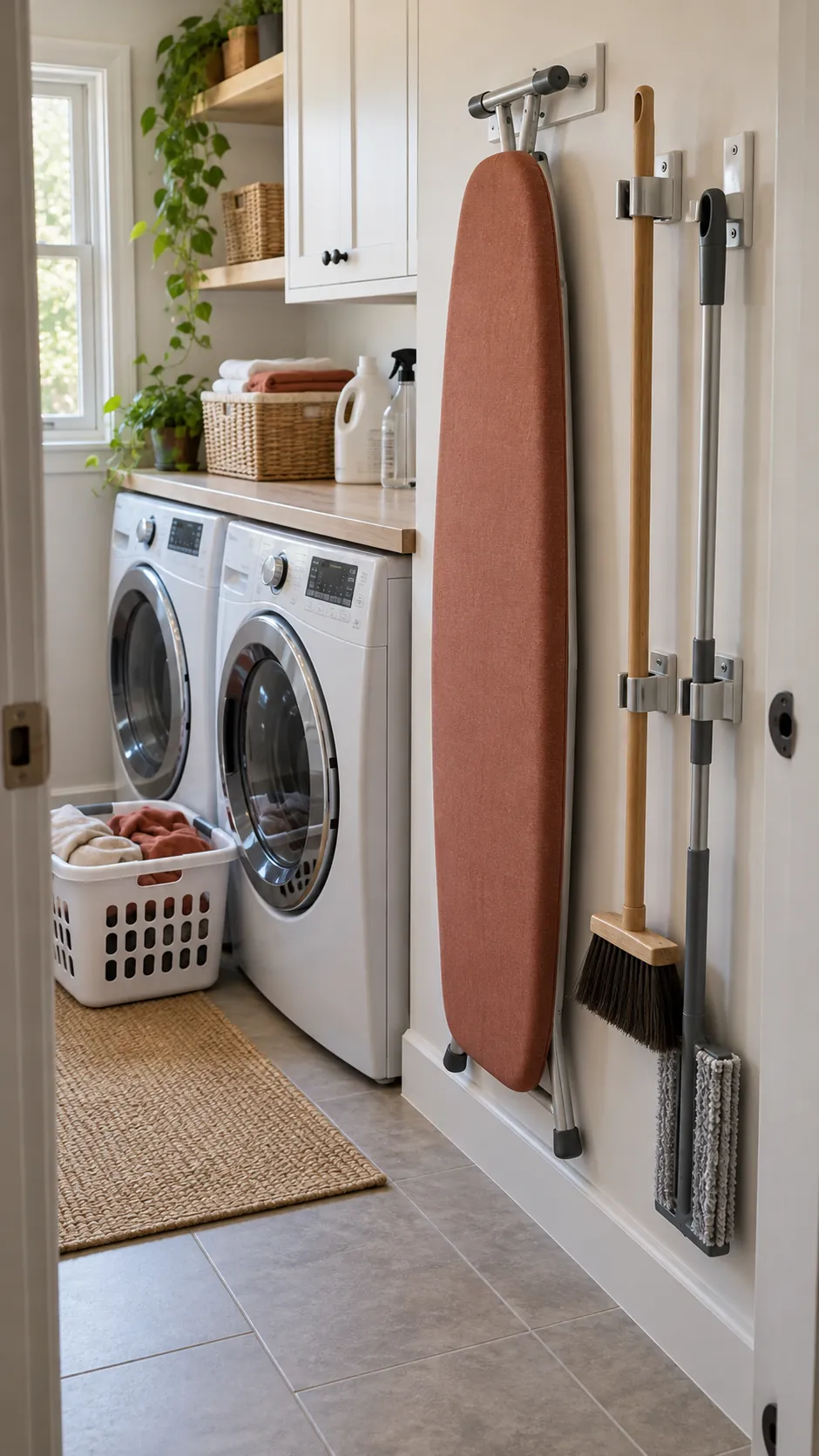
Turn a Shallow Niche Into Tool Storage
An existing shallow niche can contain long handled tools without adding cabinet depth. Fit individual clips at varied heights and keep the heaviest head closest to the floor. The recess must not contain an electrical panel, shutoff, or vent that needs access.
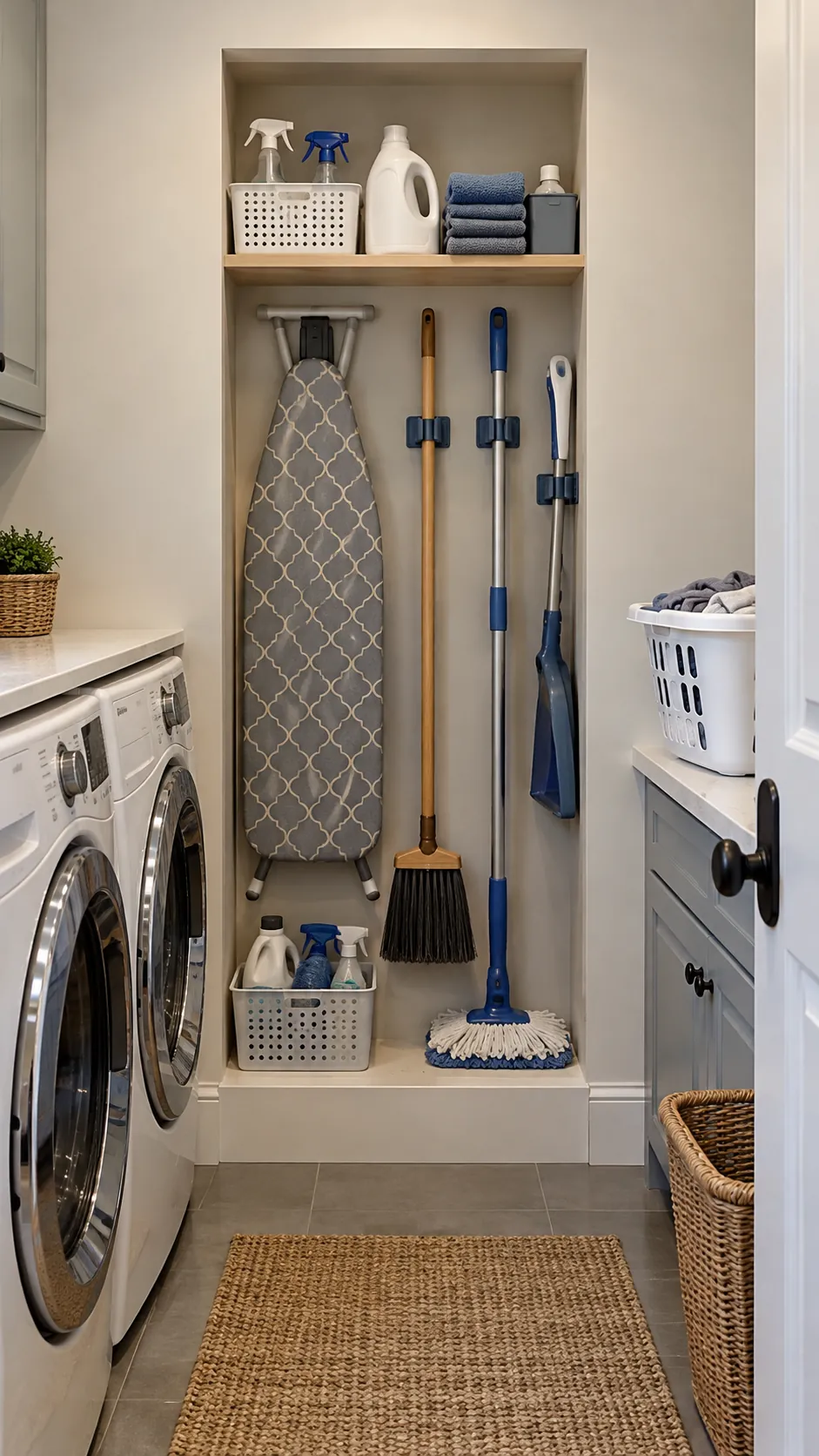
Hang Tools on a Door Mounted Rack
A sturdy door mounted rack can carry a broom and dustpan when the door and hinges are rated for the load. Use closed clips that prevent tools from swinging. Test the full door movement before adding anything else.
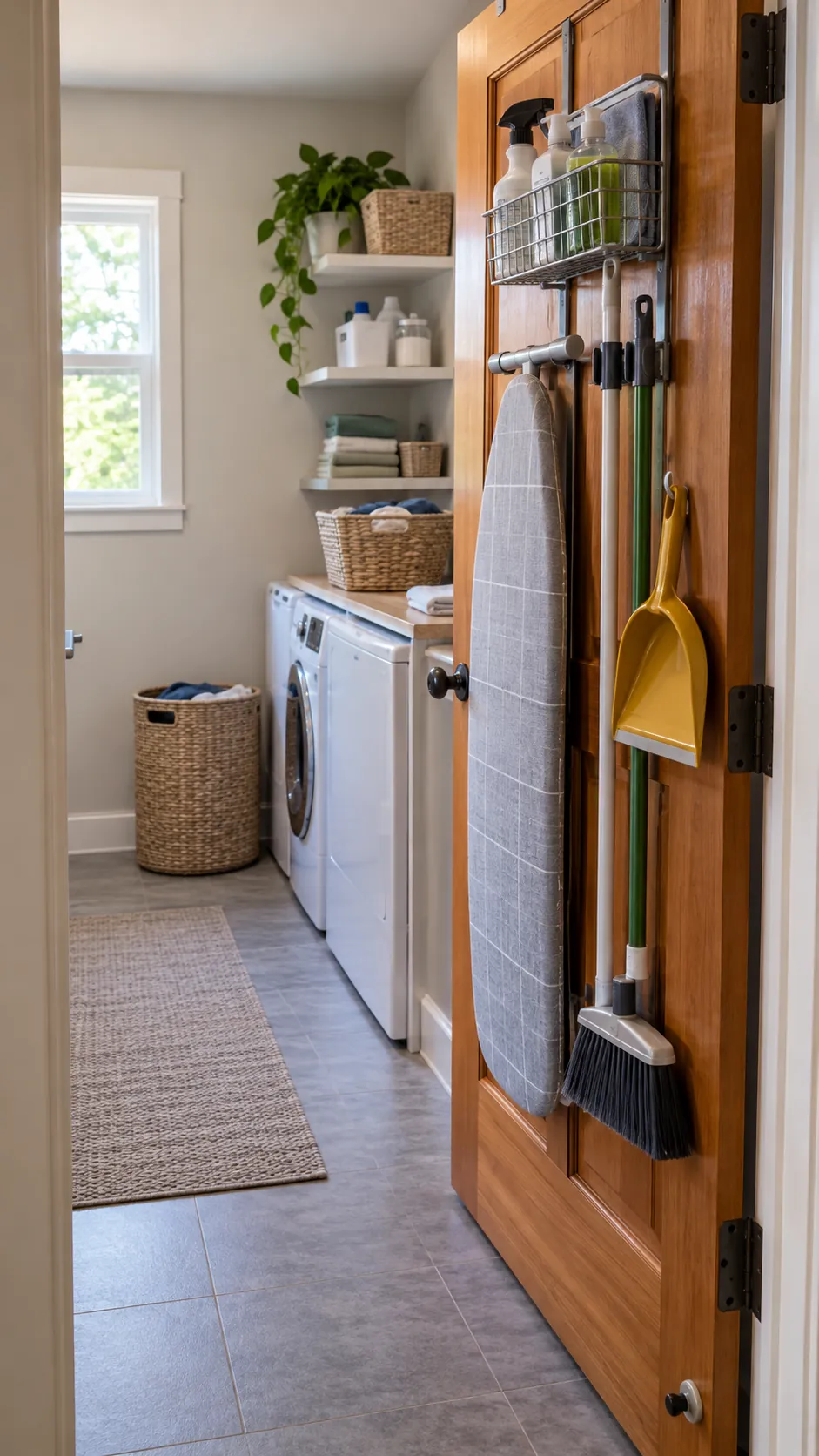
Park a Slim Rolling Cart Between Zones
A narrow rolling cart can combine detergent, cloths, and small cleaning supplies without occupying a wide shelf. Choose raised sides and locking casters, then assign each tier one purpose. The cart should roll out without disconnecting hoses or scraping appliances.
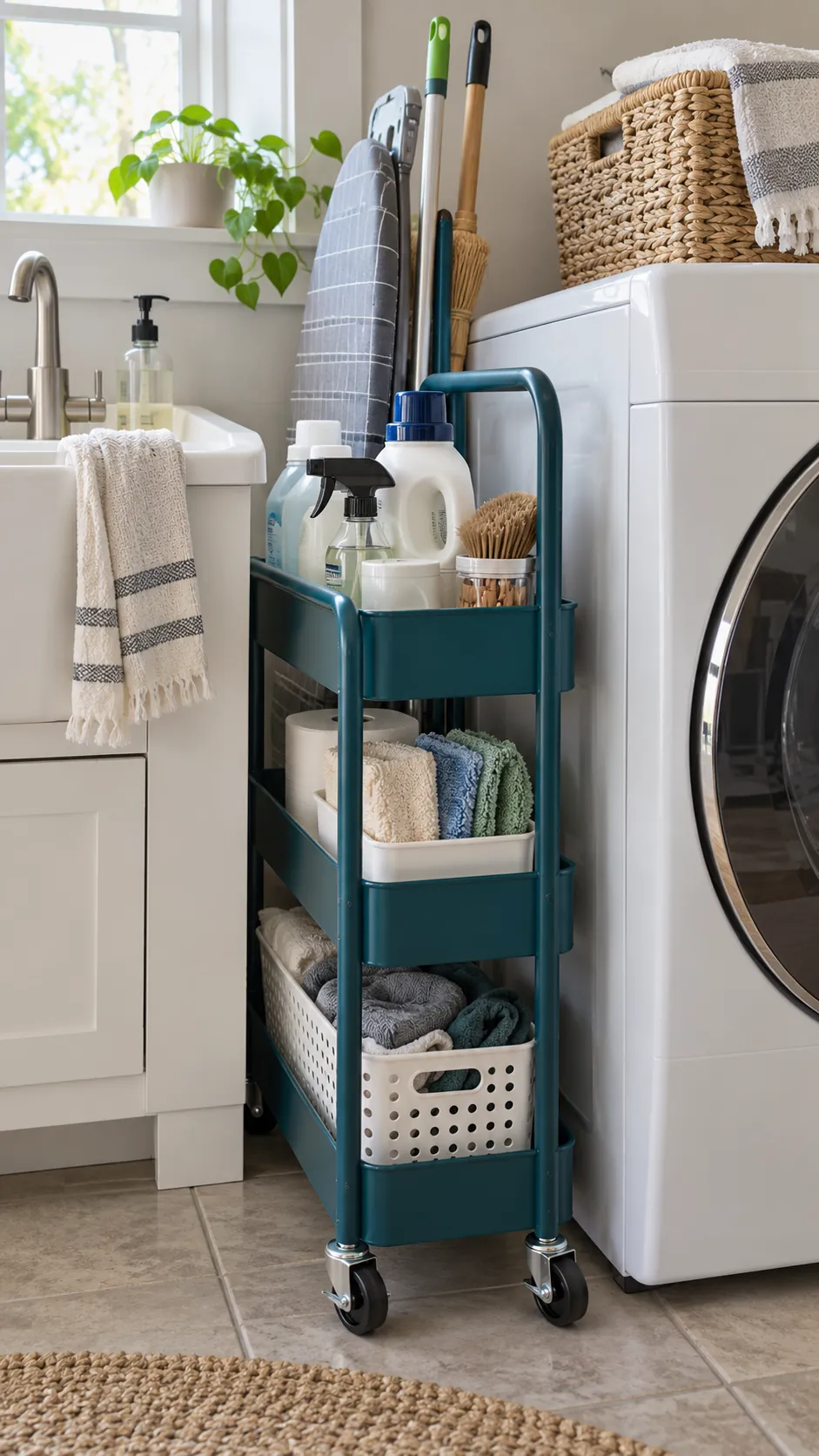
Use the Space Above Front Load Machines
A counter or strong shelf above front load machines can hold a tray of current products and preserve a folding surface. Keep liquids away from the counter edge and protect the surface from drips. Make the top removable if it covers service connections.
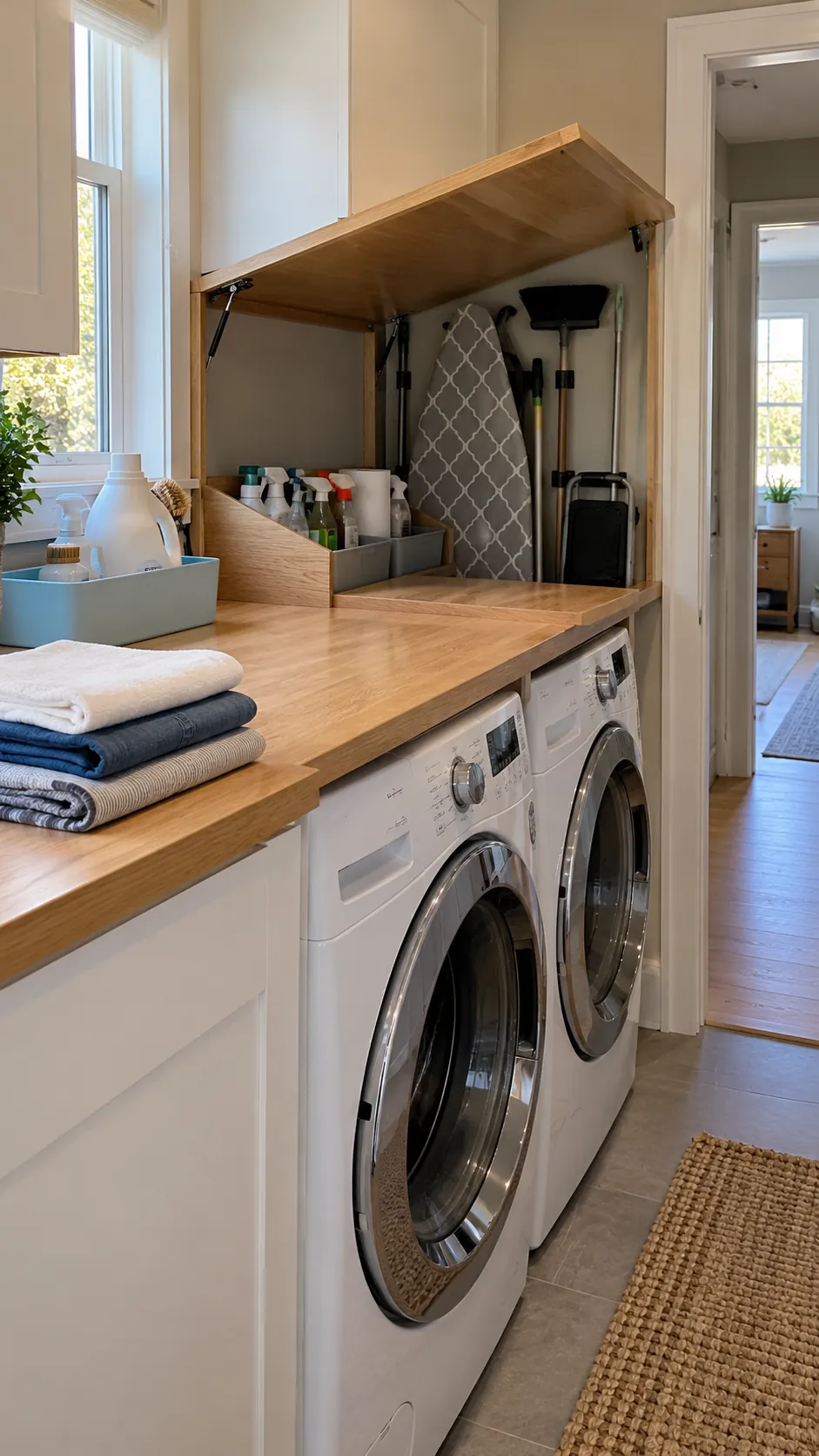
Install One High Shelf for Backups
A high shelf can hold light sealed refills that are not needed every day. Store items in handled bins so nobody reaches blindly behind the front row. Do not place heavy liquid or hazardous pods above face height.
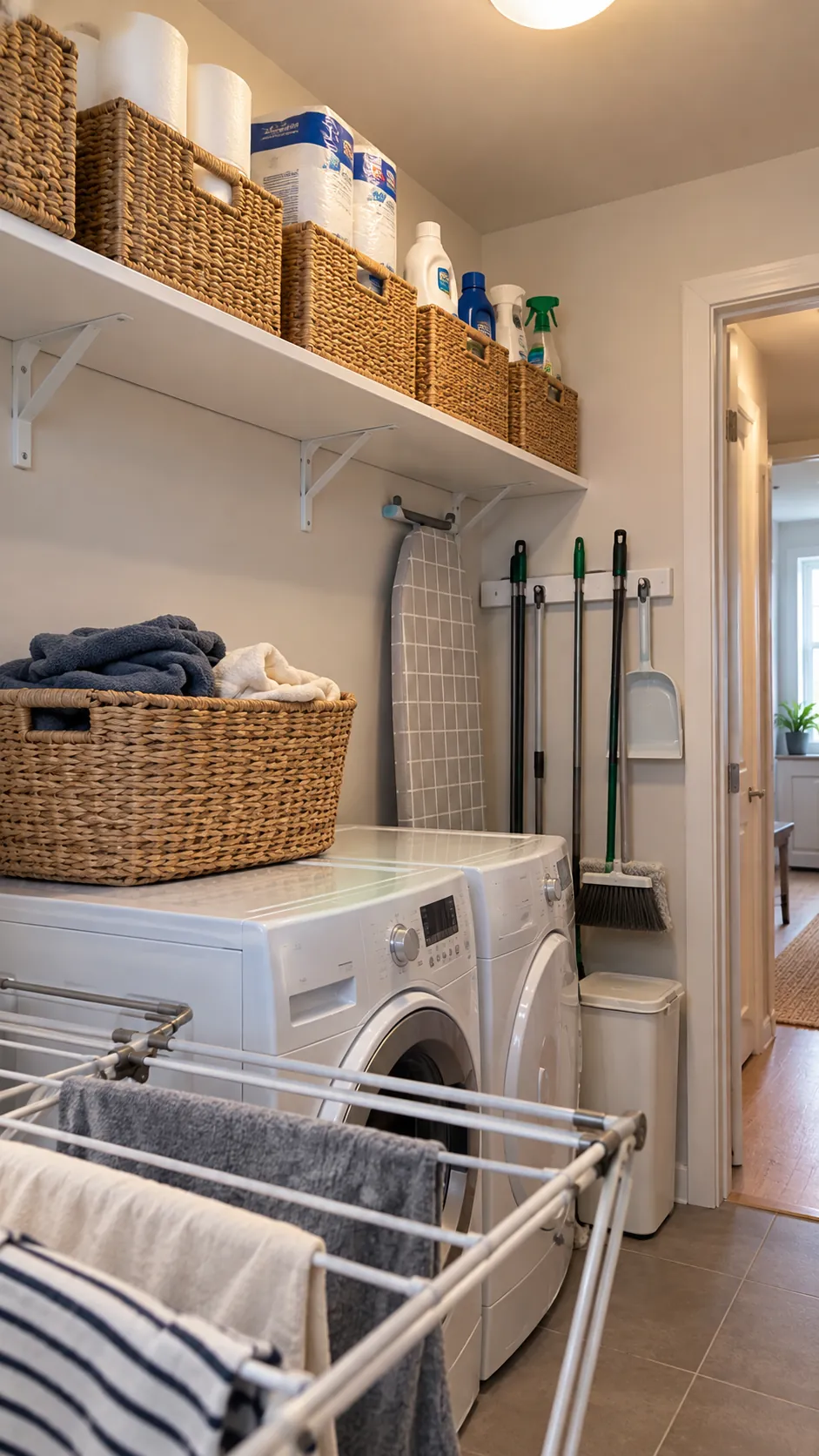
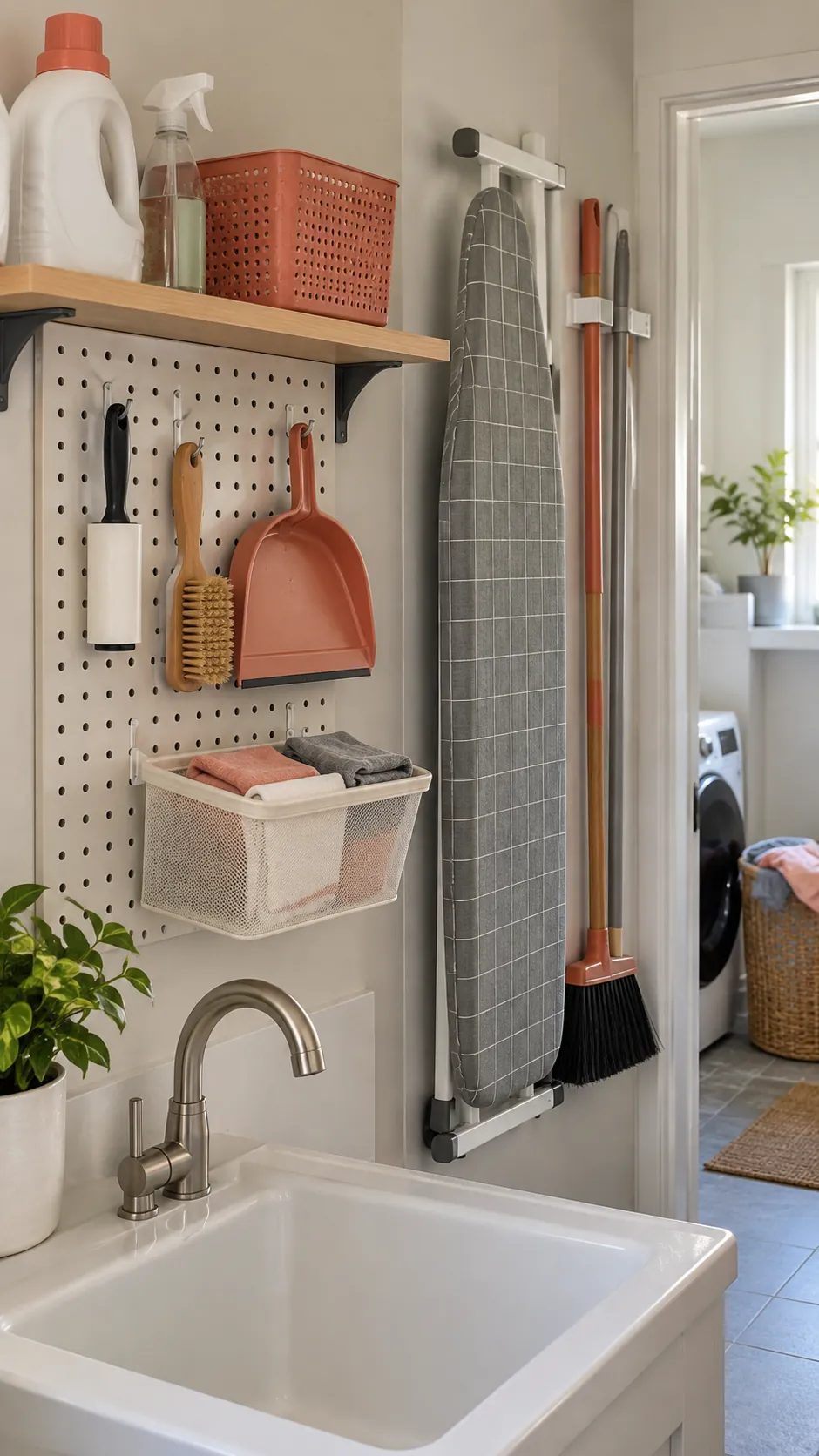
Add a Pegboard for Small Tools
A compact pegboard can organize brushes, lint rollers, measuring cups, and a dustpan without deep shelving. Outline a small zone for each object and avoid hanging liquid containers that could leak. Keep the arrangement sparse enough that every tool lifts off easily.
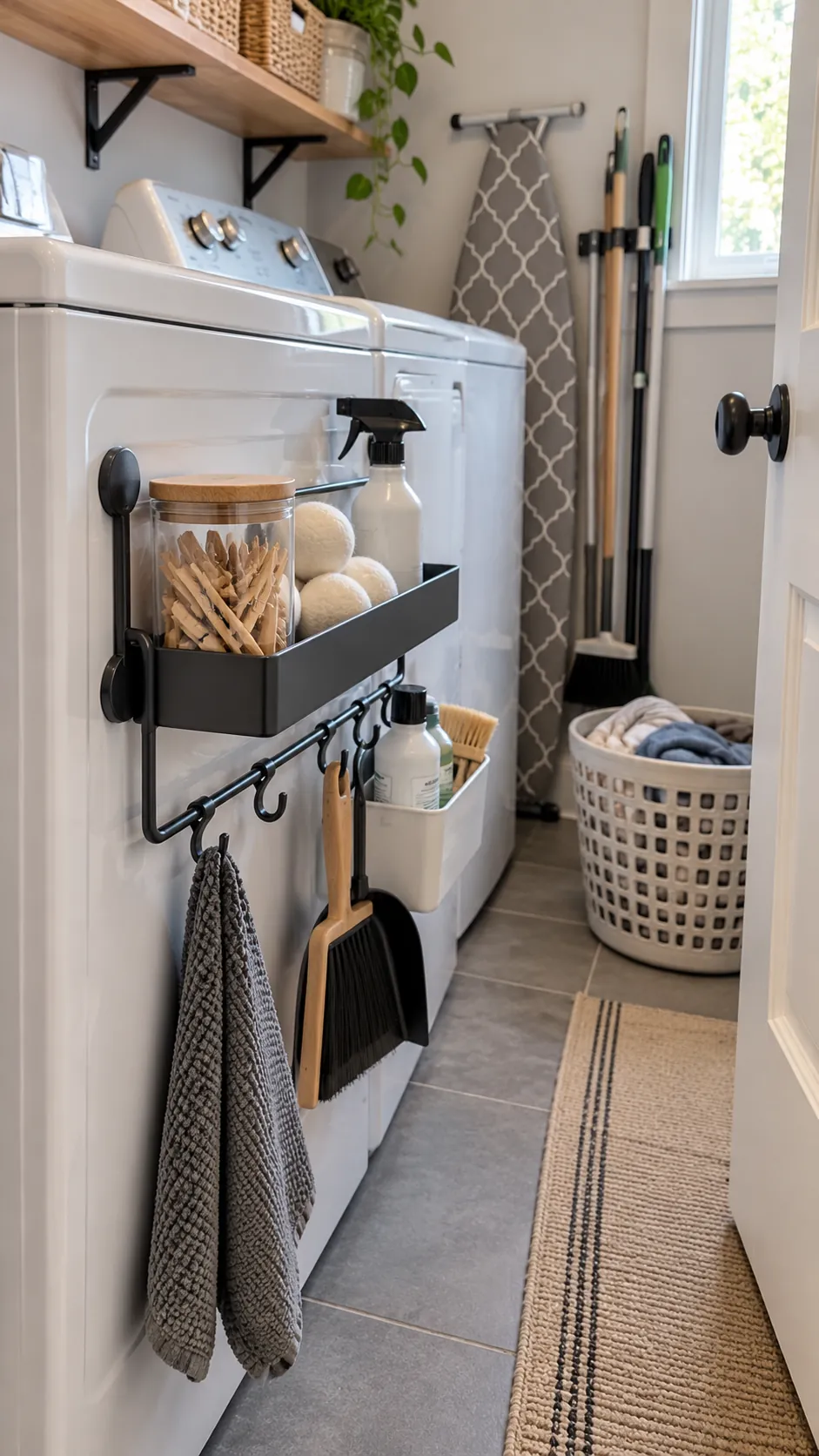
Use a Magnetic Side Rack Where Safe
A coated magnetic rack can hold light dry items on a magnetic appliance side when the manufacturer permits it. Keep magnets away from controls, vents, moving panels, and sensitive equipment. Test the loaded rack low to the ground before relying on it.
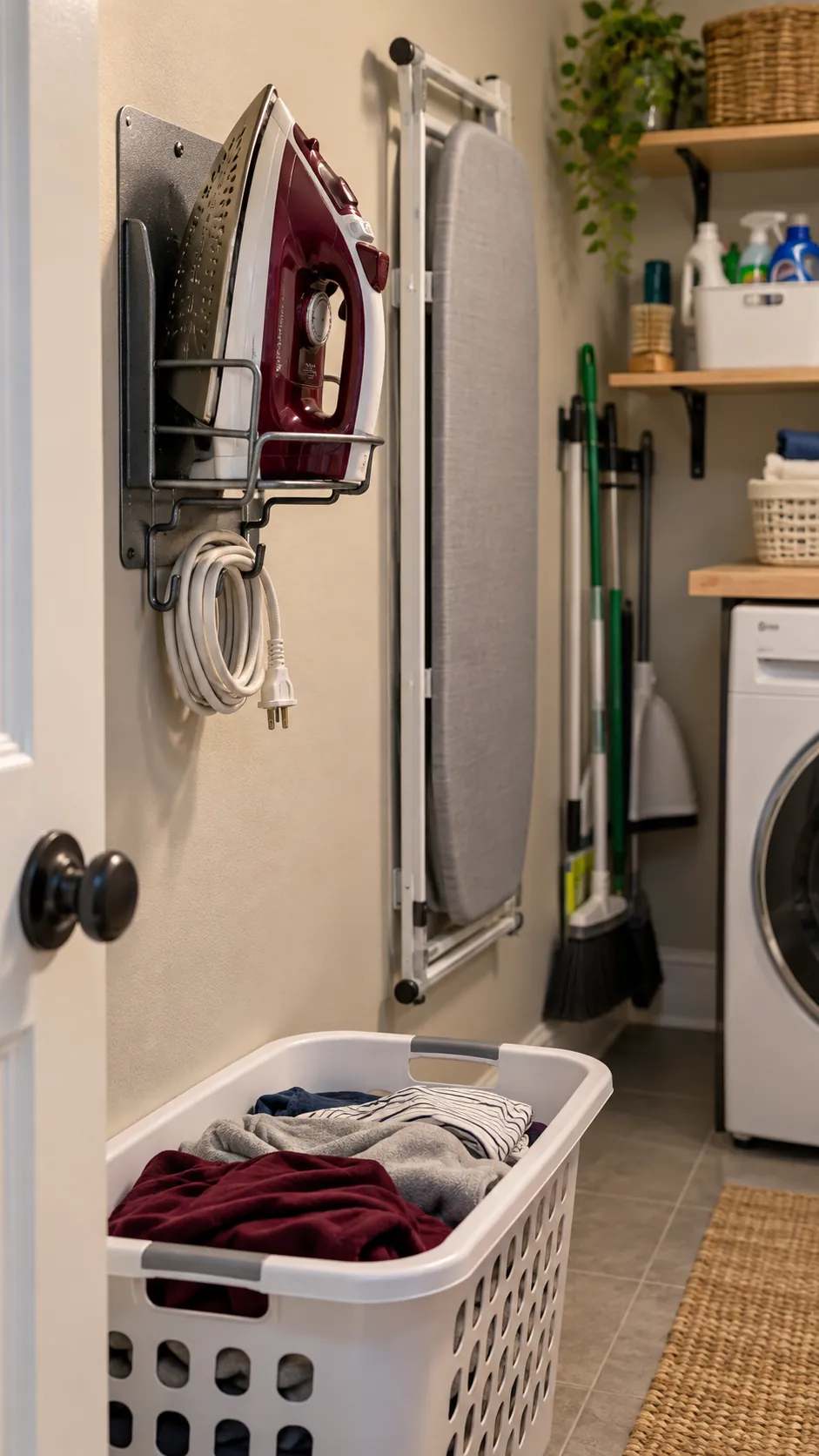
Store the Iron in a Heat Safe Holder
A wall holder with a cord wrap gives the iron a defined home after it has cooled. Match the holder to the iron shape and mount it away from water and detergent spills. Never put a hot iron into a plastic basket that is not rated for heat.
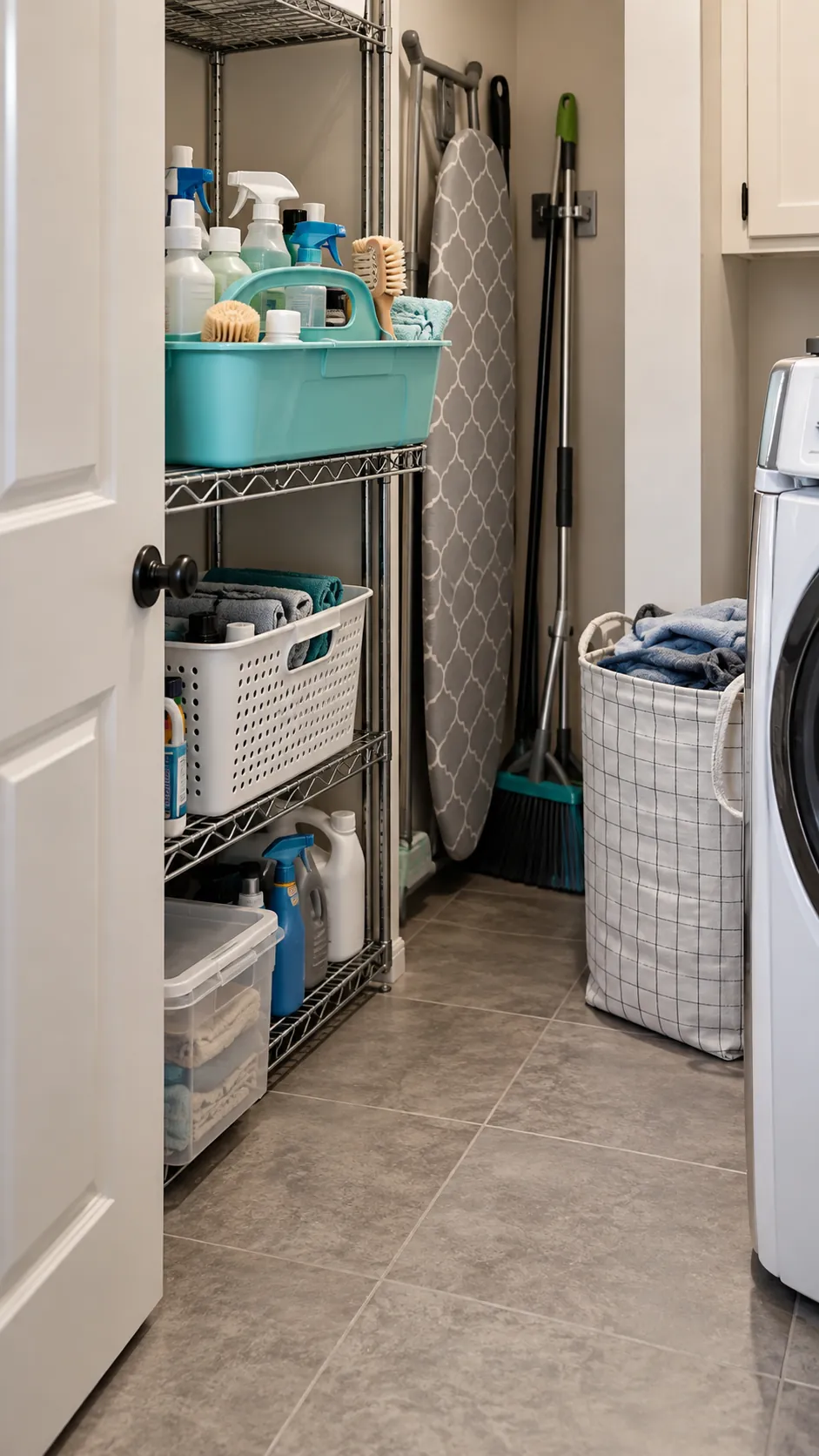
Create a Cleaning Caddy for Small Bottles
A handled caddy keeps stain products, brushes, and cloths together for quick removal. Use a waterproof base and return every bottle upright with its cap secure. Keep this caddy in locked storage when children or pets can enter the room.
Separate Wet Tools From Dry Supplies
Mops and wet cloths need air and drainage before they join a storage zone with paper products or detergent boxes. Hang damp items over a washable drip tray or move them to a ventilated drying location. Clean and dry the tray so standing water does not create odor.
Use the Utility Sink Base Carefully
A sink base can store a small bucket and dry cloths only if plumbing remains visible and leak checks stay easy. Use a removable tray and avoid packing supplies around traps or shutoffs. Hazardous cleaners still require secure storage that matches household safety needs.
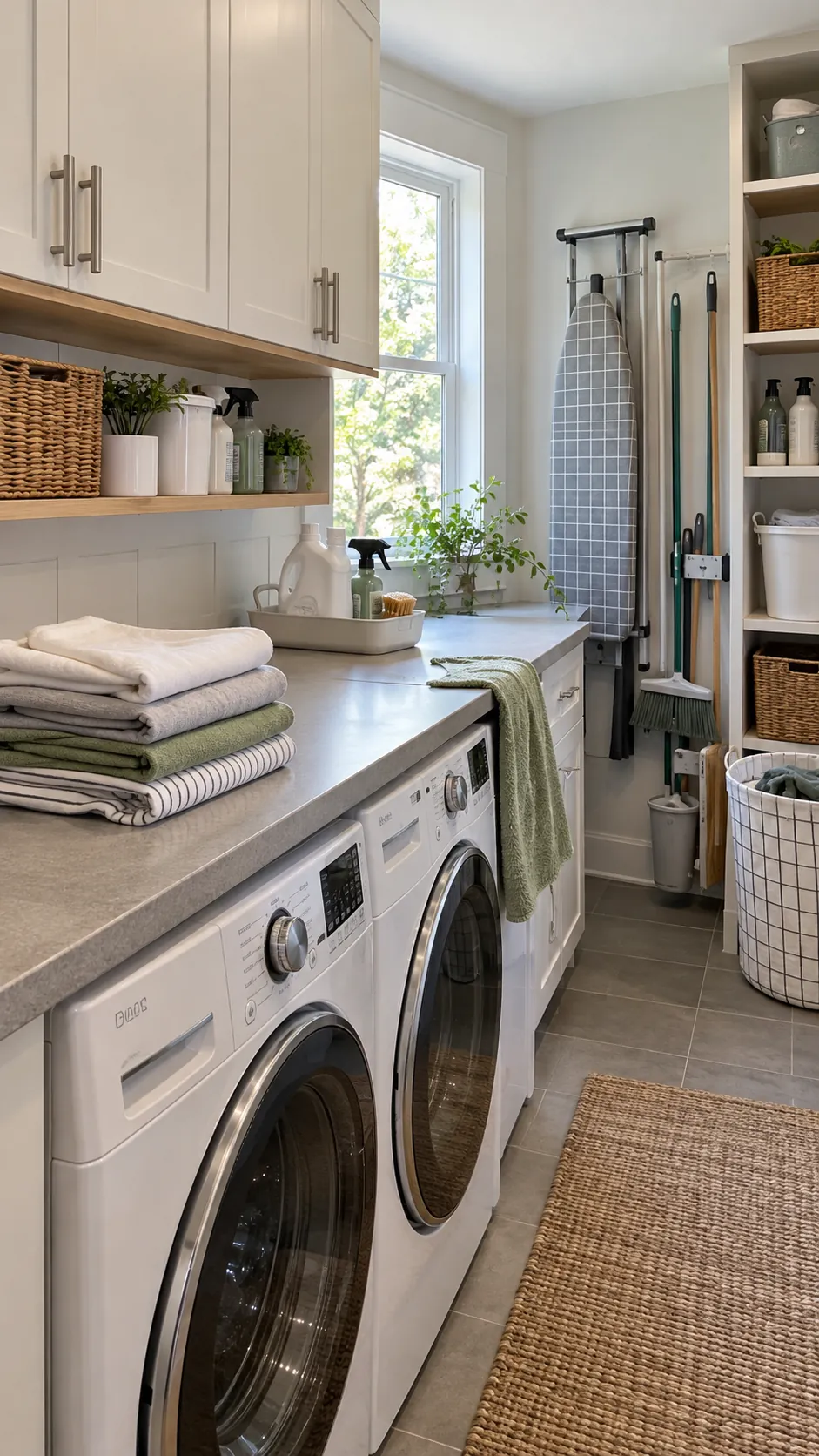
Keep a Clear Folding Surface
Storage succeeds when the washer top or counter does not become a permanent pile. Give detergent and tools their own homes, then reserve one clear surface for folding and sorting. A shallow tray may hold only the products needed for the current load.
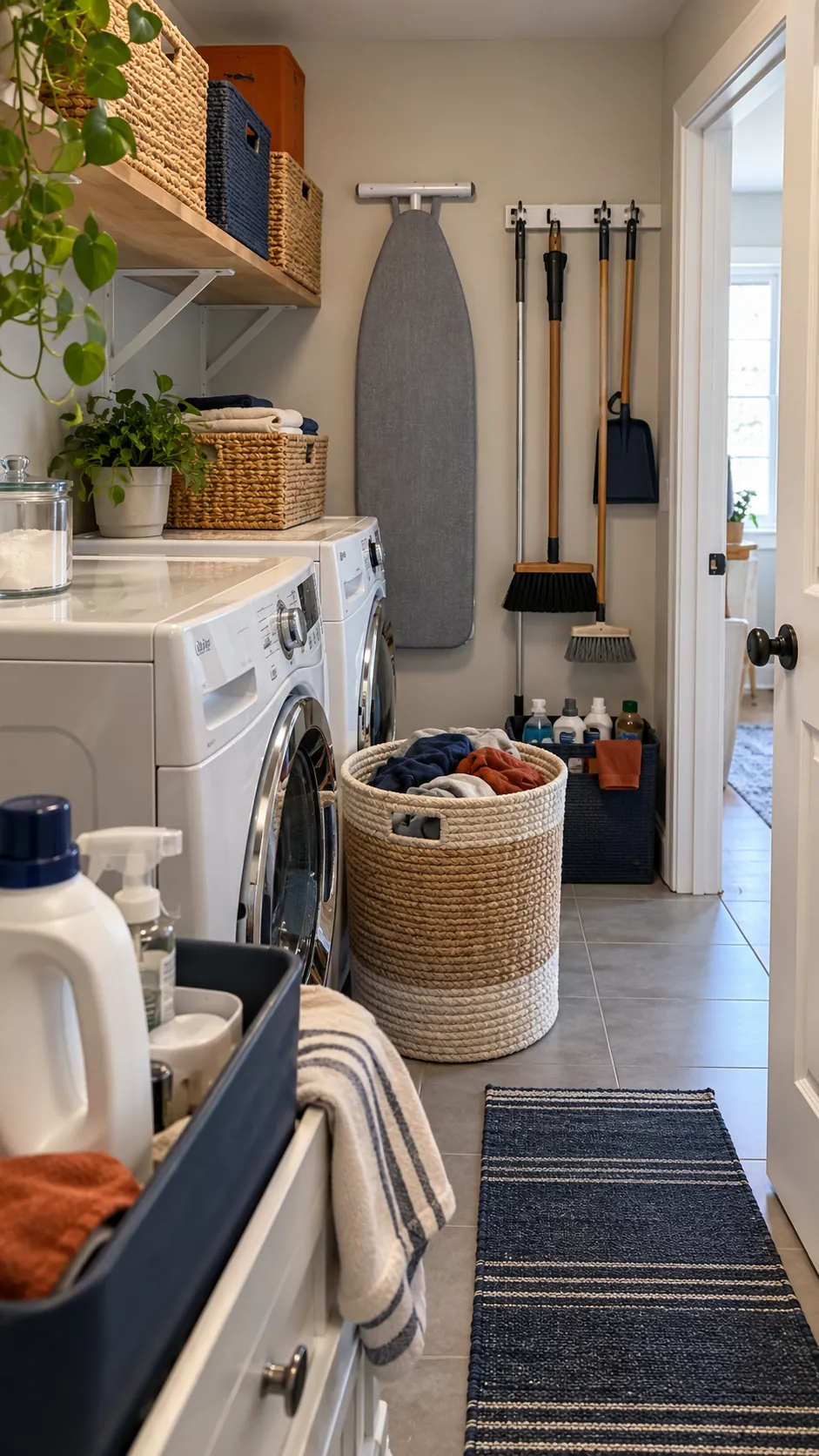
Label Zones by Task Rather Than Product
Broad zones such as wash, stain, clean, and repair are easier to maintain than a separate container for every item. Keep frequently used supplies nearest the machine and occasional tools farther away. Use simple removable labels inside bins rather than covering the room in signs.
Leave Service Gaps Empty
The narrow strip beside or behind an appliance may look like storage, but it can be essential for hoses, airflow, leveling, and repair. Do not wedge brooms, boards, bottles, or carts into a manufacturer required clearance. Mark the boundary and use a different vertical surface for storage.