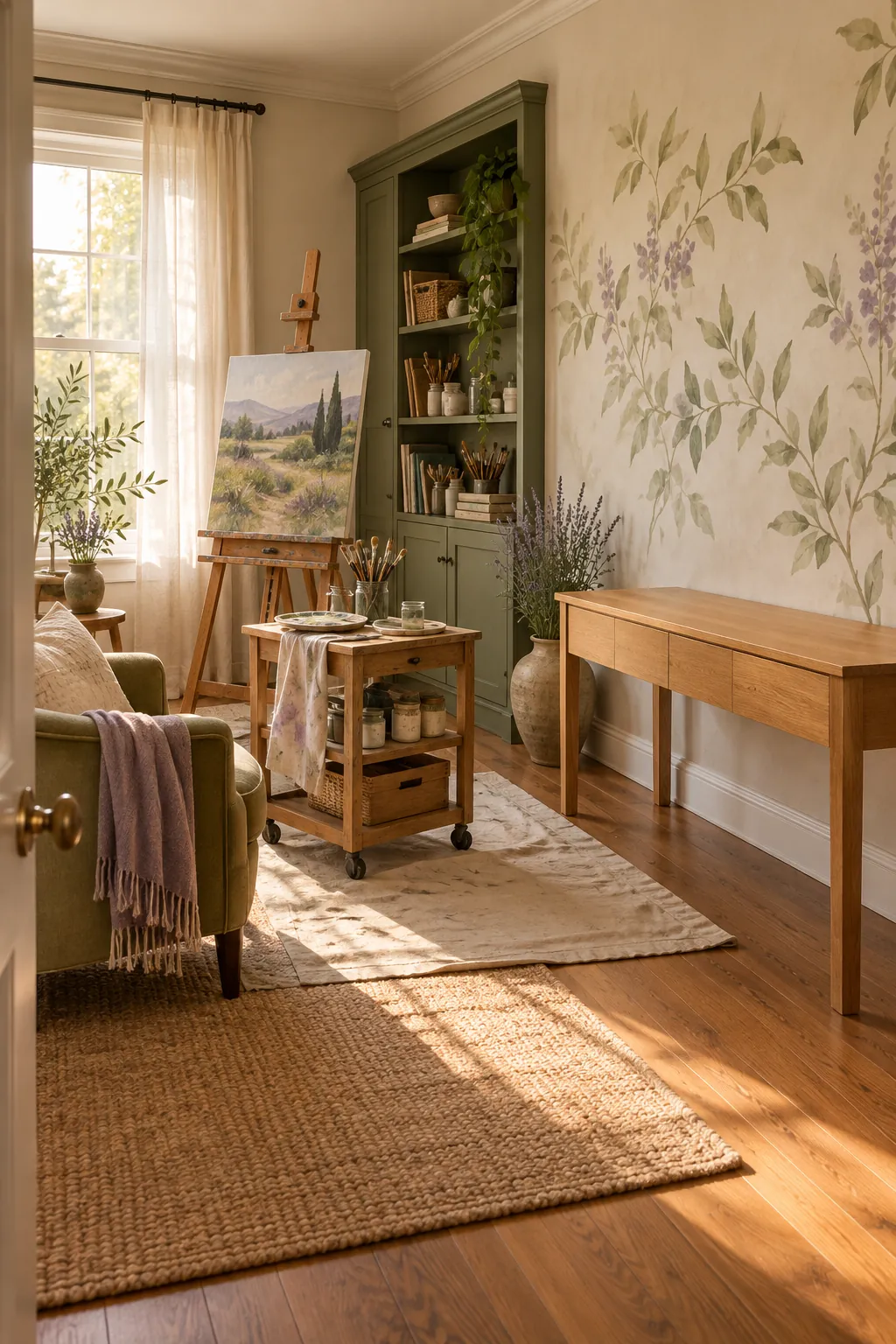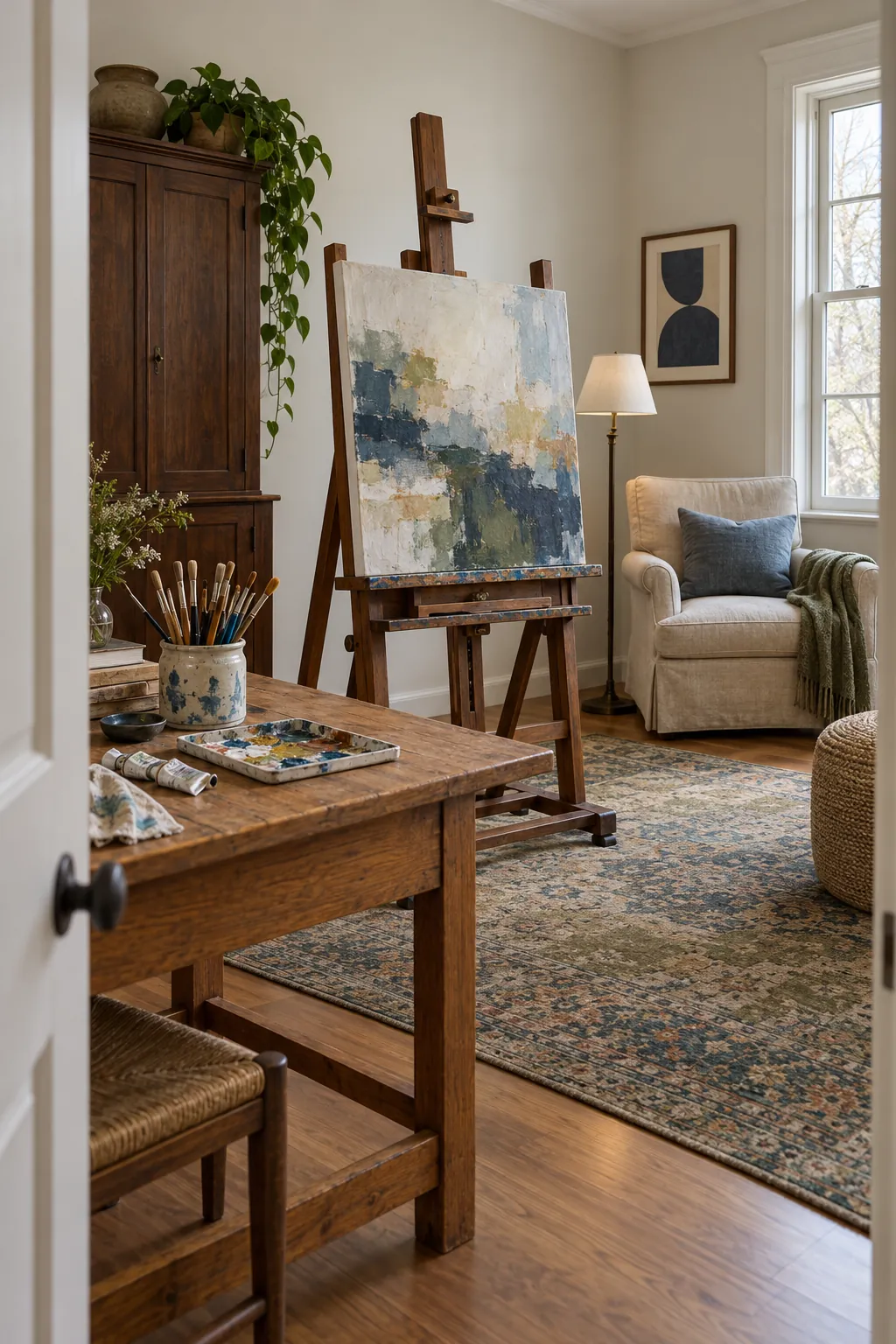
A painting space can be practical without filling the room with metal racks, harsh lights, and visible supply piles. The useful choices are the ones that shorten setup and cleanup while preserving the comfort of a normal home. Start with the way you paint most often, then give that activity the best light, the easiest reach, and one clear place to stop.
Indexed Reddit snippets from working artists repeatedly point to lighting, shallow storage, limited floor space, and the burden of packing materials away. Those concerns matter more than buying specialized studio furniture. The following rooms solve each problem with familiar furnishings, safe movement, and enough visual calm to make returning to the canvas feel inviting.
Place the Main Easel Near Side Light
A window beside the easel gives the canvas useful natural light without forcing the artist to face glare. Set the easel perpendicular to the glass, then use a soft blind when direct sun shifts across the work. This placement keeps the brightest zone practical while the rest of the room can feel calm and furnished.
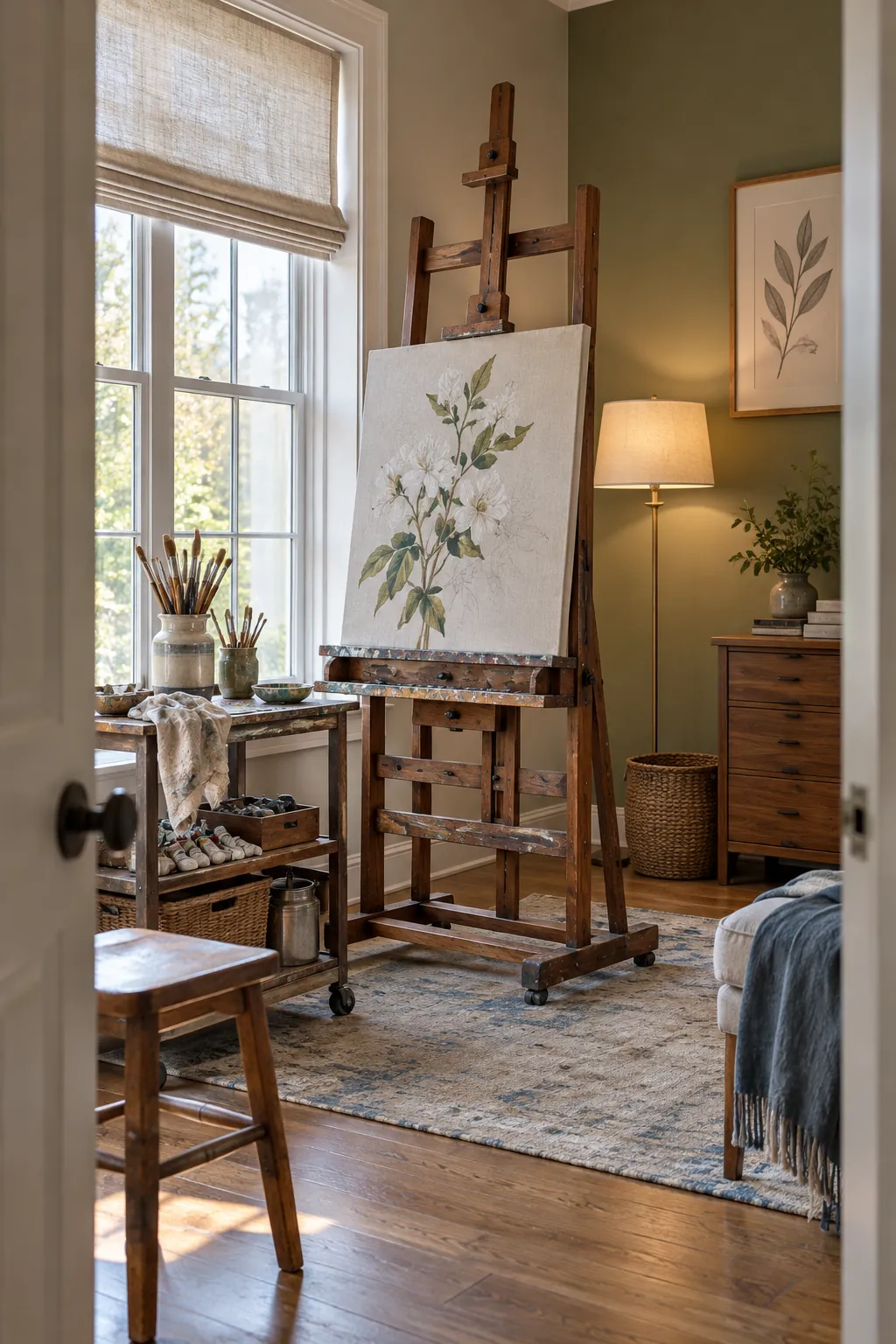
Use a Furniture Style Worktable
A solid dining table or writing desk feels more at home than a metal utility bench. Choose a surface deep enough for a palette and canvas while leaving a clear front edge for comfortable sitting. A fitted protective mat can handle wet work, then roll away when the room needs to look composed.
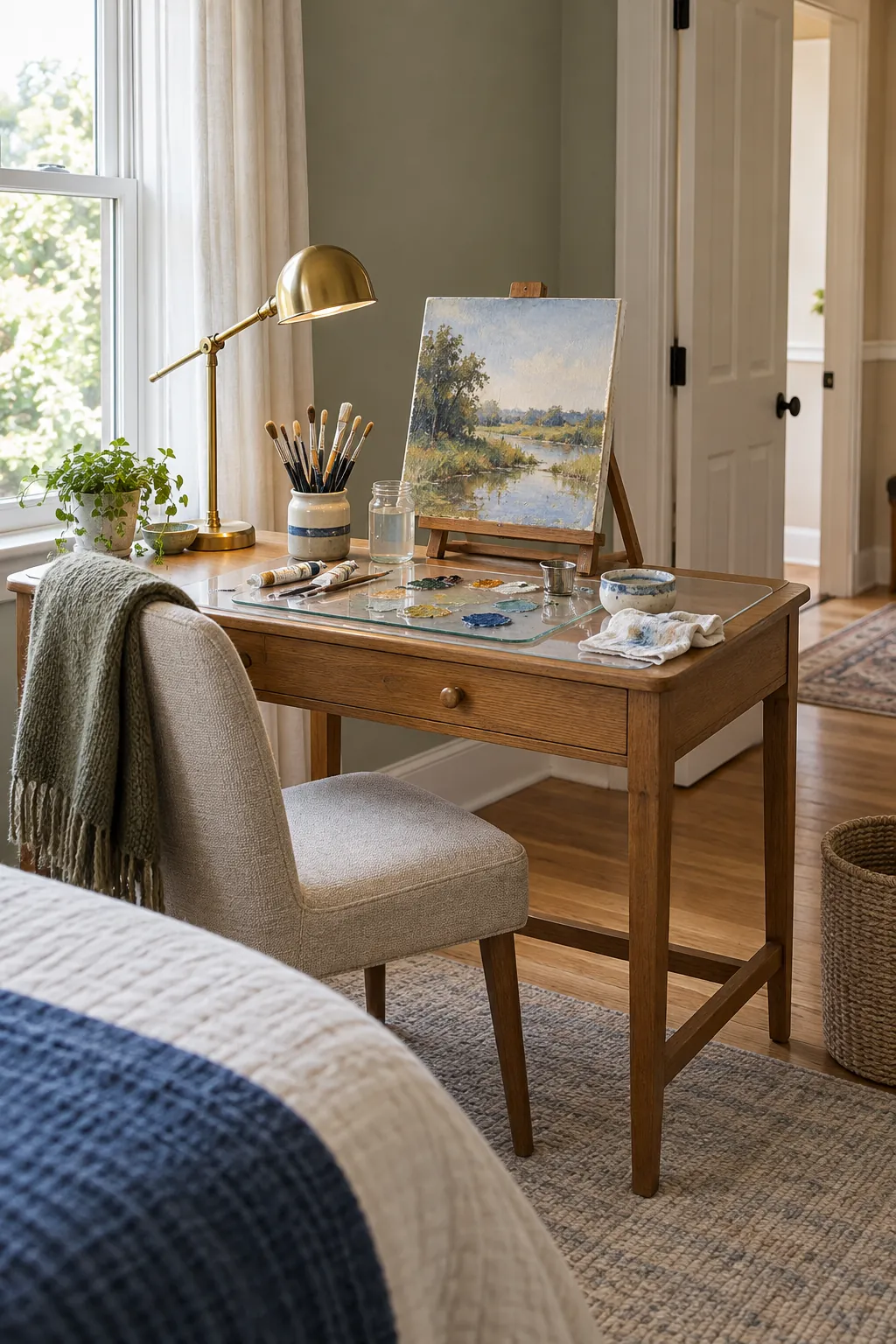
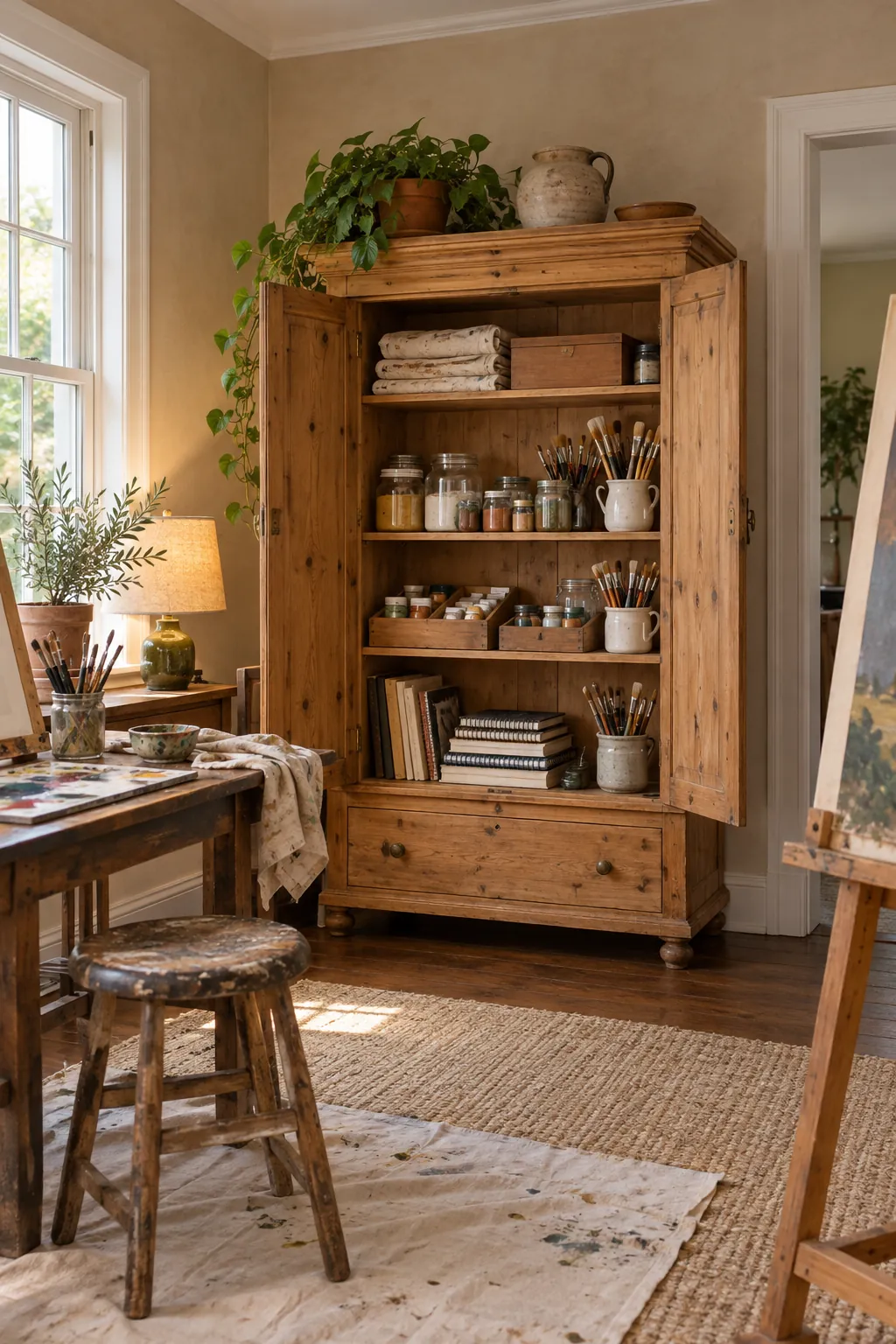
Hide Supplies in a Vintage Cabinet
Closed storage removes the visual noise that makes an art room resemble a supply closet. A vintage cabinet can hold mediums and tools in shallow bins while adding the character of ordinary home furniture. Label the inside edges rather than the visible doors so the room stays quiet when the cabinet is closed.
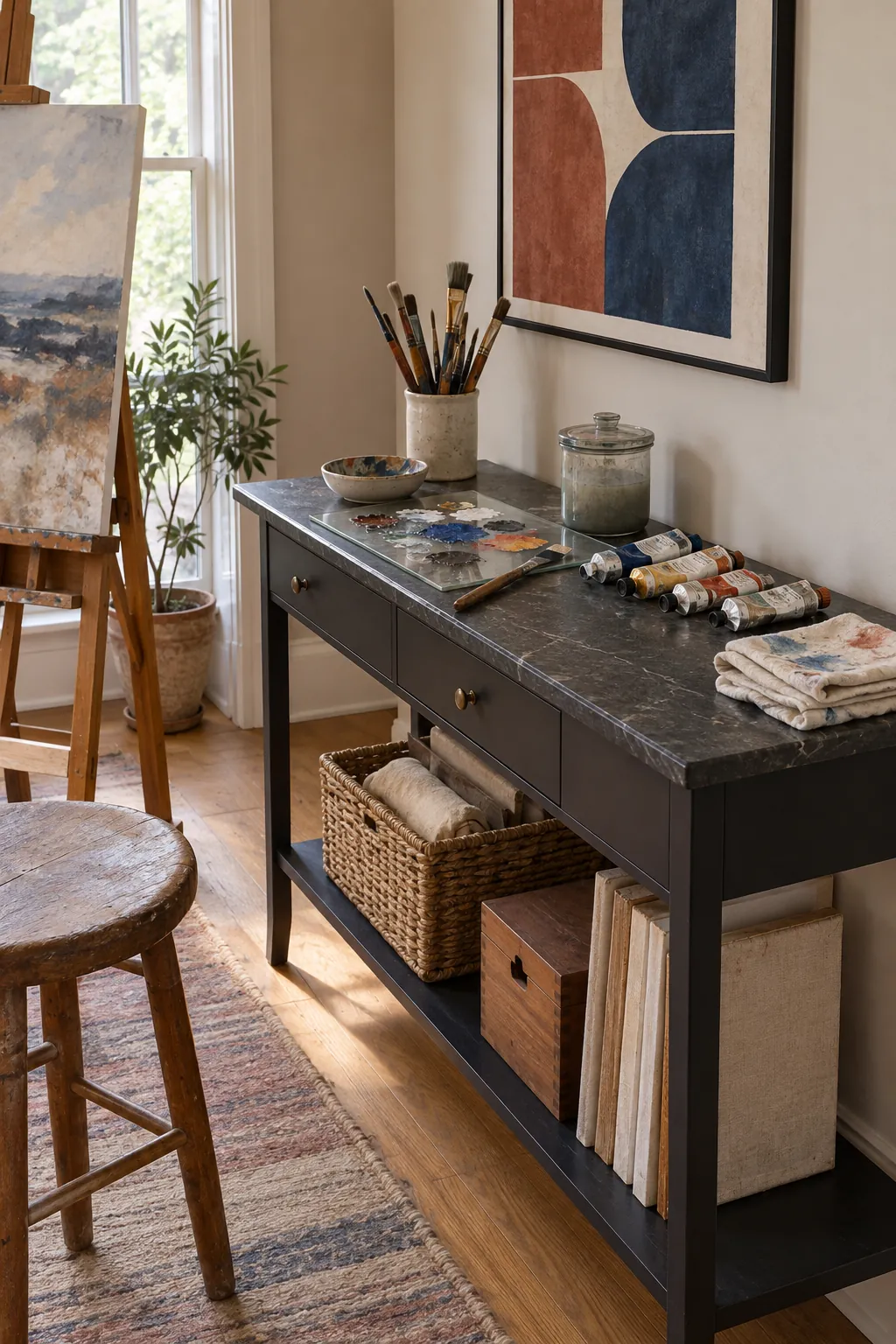
Create a Small Color Mixing Station
Keep color mixing on a narrow console so the main table stays open for painting. A wipeable top, a lidded waste jar, and a compact tray reduce spills and make cleanup obvious. The station works best within one step of the easel but away from the room entrance.
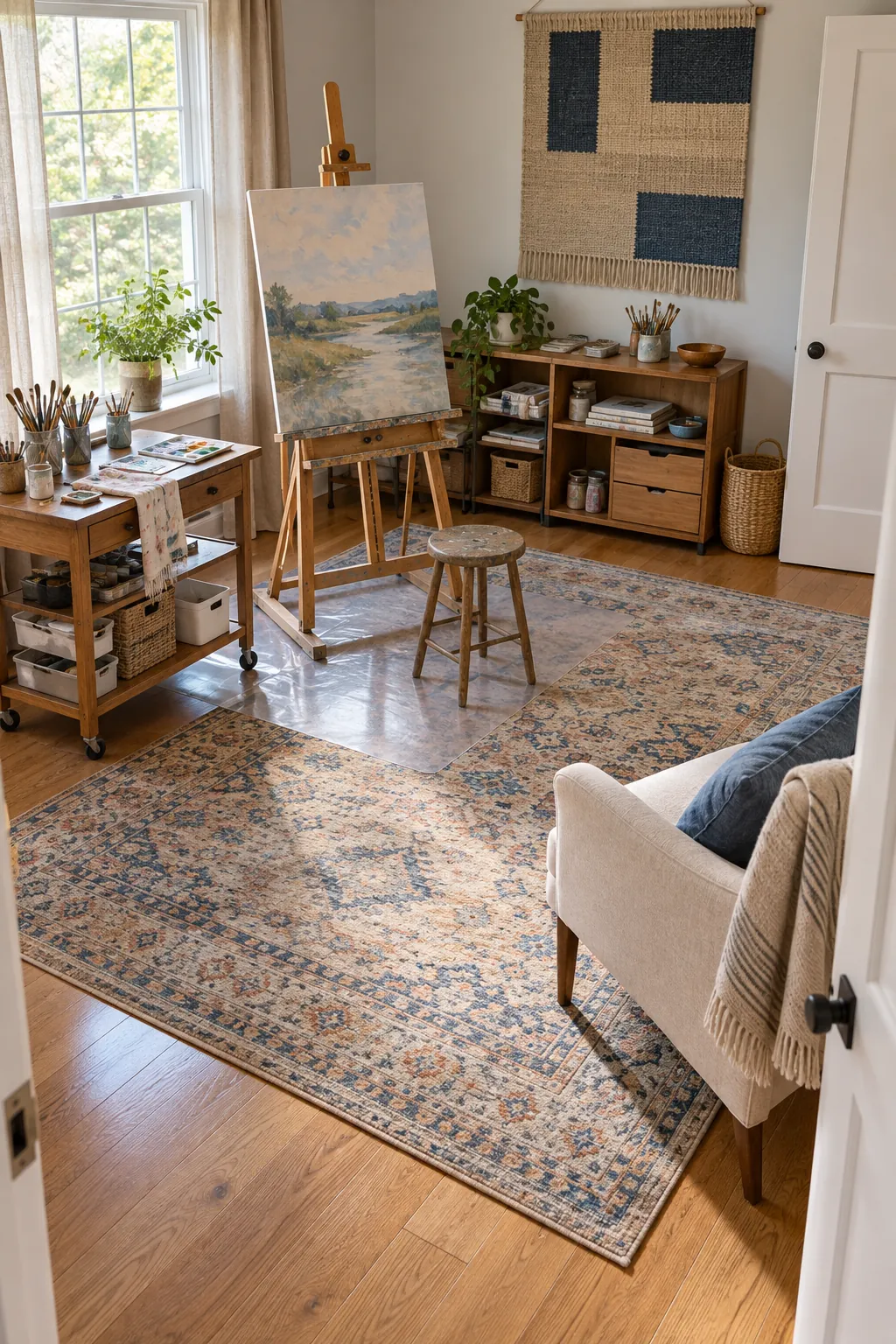
Choose a Washable Residential Rug
A low pile washable rug softens sound and makes the studio feel like a lived in room. Keep it outside the wettest working zone or protect that section with a clear mat. A subtle pattern hides minor marks better than a flat pale color without competing with the artwork.
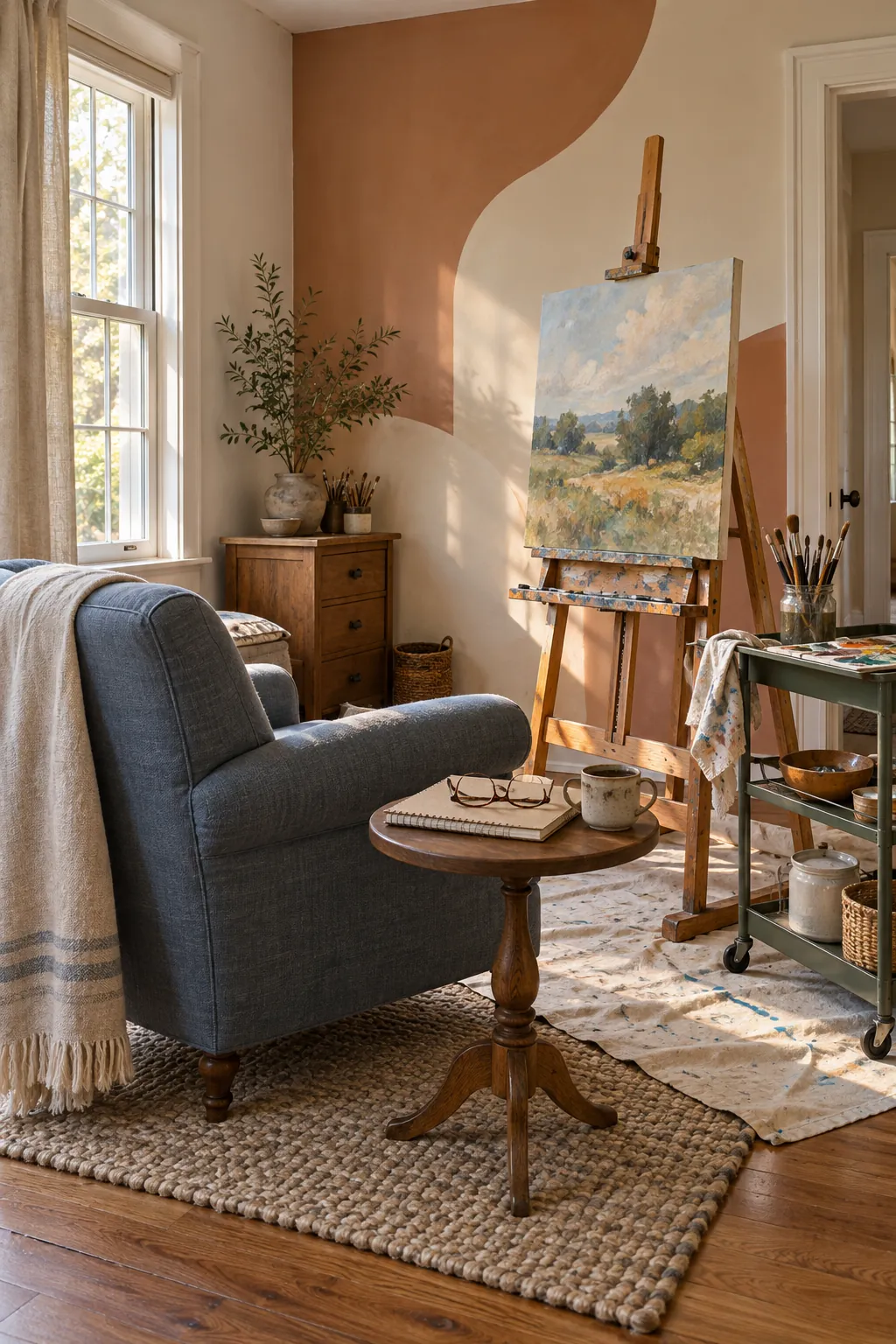
Add a Real Chair for Thinking
Painting includes long stretches of looking, so the room needs a chair that is not merely a spare stool. Place a supportive armchair far enough from the canvas to judge composition and close enough to remain part of the work zone. A washable throw protects the upholstery while preserving a relaxed residential mood.
Build Storage Around Daily Reach
The most used brushes and paints should sit between knee and shoulder height. Reserve high shelves for backup canvases and rarely used tools, then keep heavy containers close to the floor. This simple reach pattern reduces clutter on work surfaces because returning each item takes little effort.
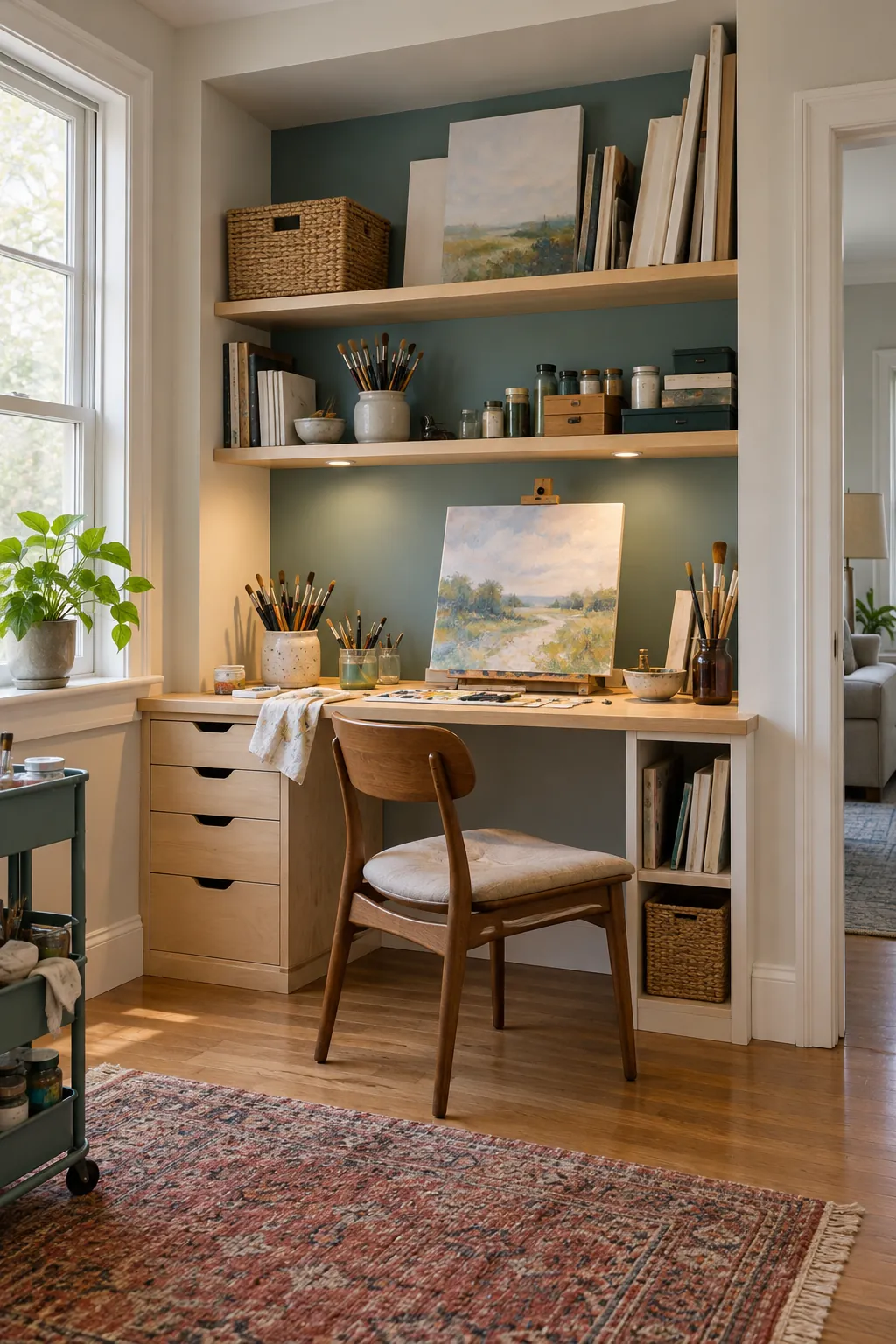
Turn One Wall Into a Drying Zone
A slim picture ledge can hold wet panels without turning the whole room into a rack system. Space the ledges so air can move around the work and keep them away from curtains or busy walkways. When no paintings are drying, the same wall reads as a simple rotating display.
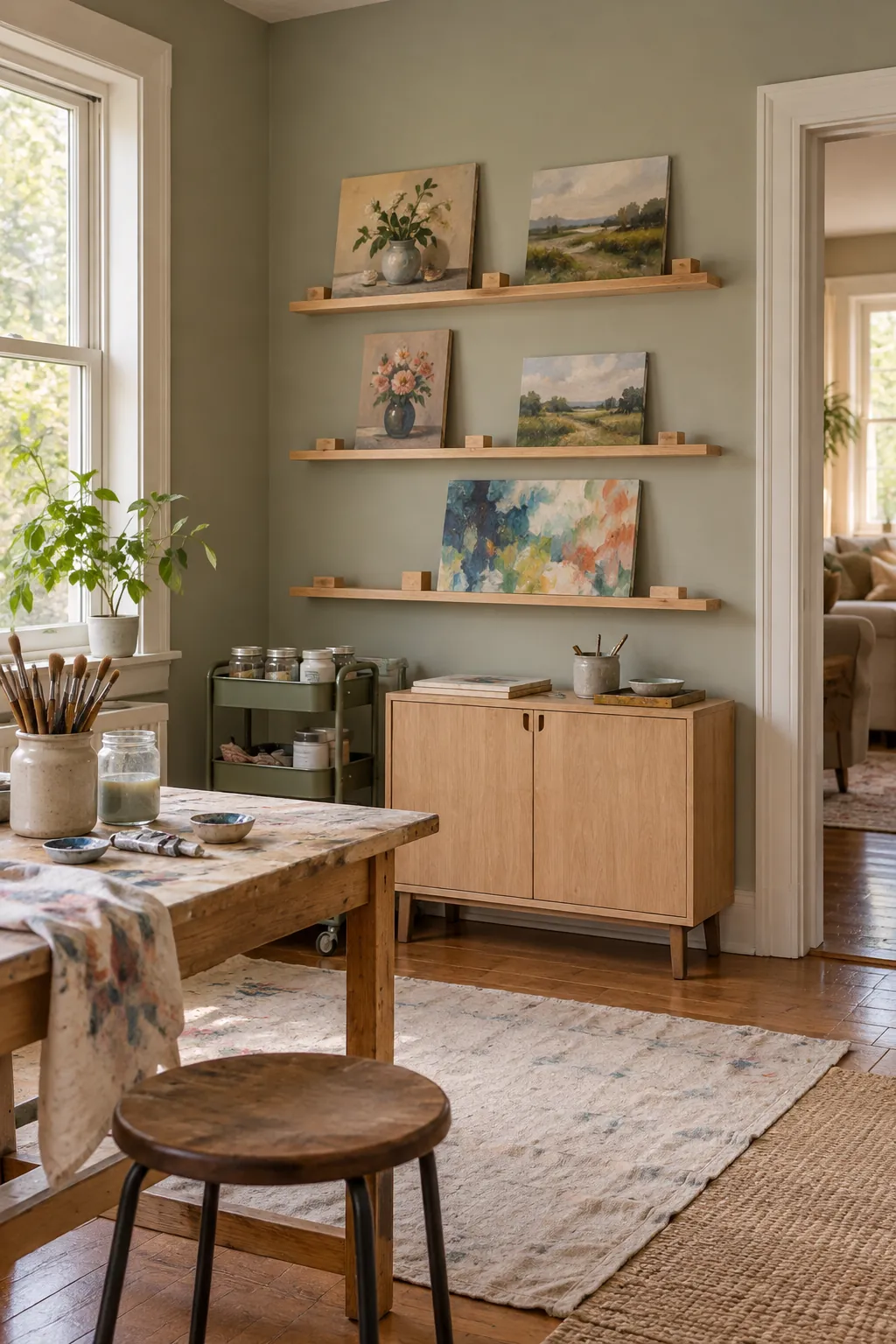
Use Curtains to Soften Storage
A fitted curtain can conceal an open shelf or sink base more gently than a bank of cabinets. Choose a sturdy washable fabric and mount it with enough fullness to hang neatly when closed. Repeating the fabric at the window makes the solution feel intentional rather than improvised.
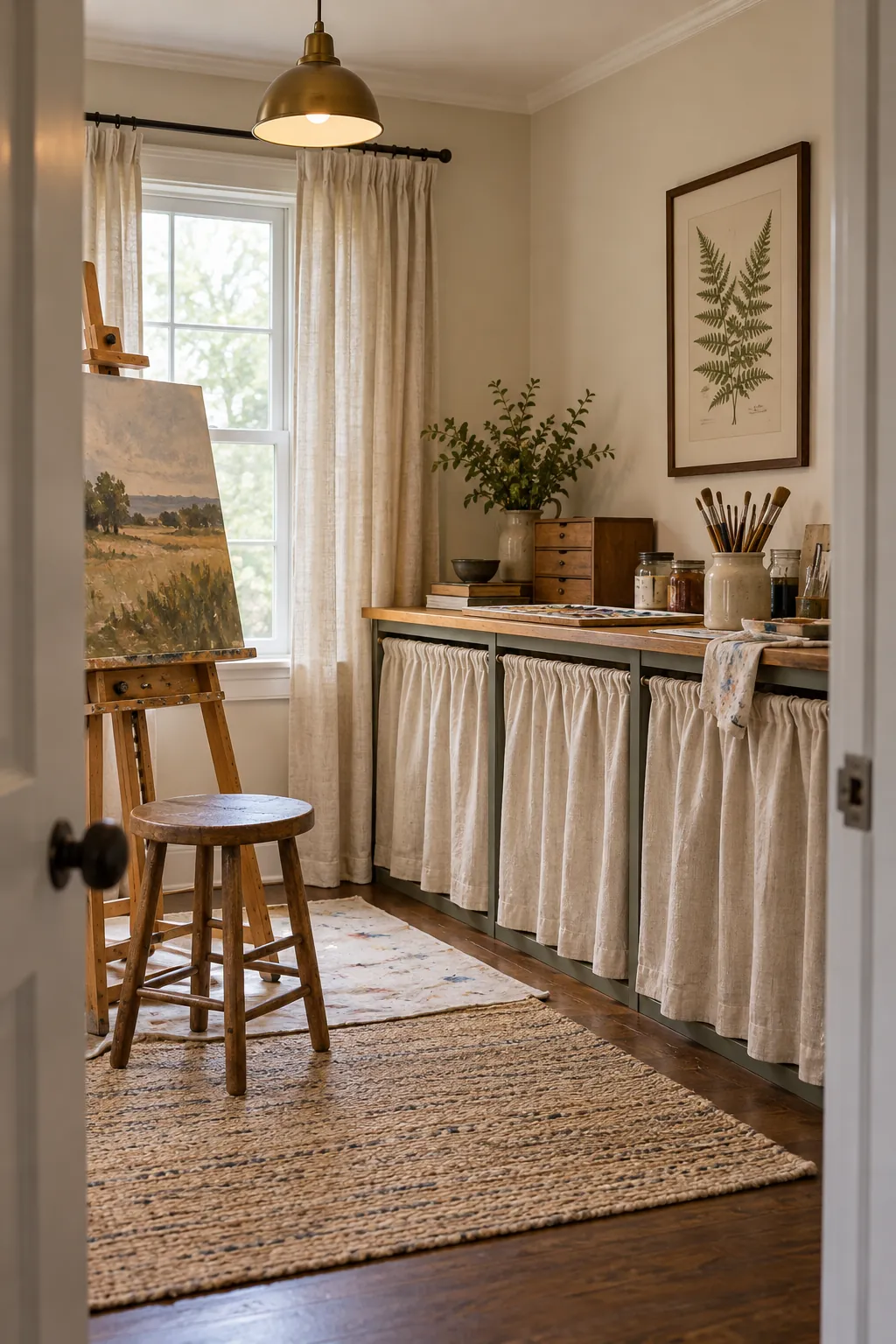
Select a Ceiling Light That Feels Domestic
A broad shaded pendant can light the room evenly without creating an institutional ceiling. Pair it with adjustable task lighting so the canvas still receives focused illumination at night. Use bulbs with consistent color quality across fixtures to prevent confusing shifts while mixing paint.
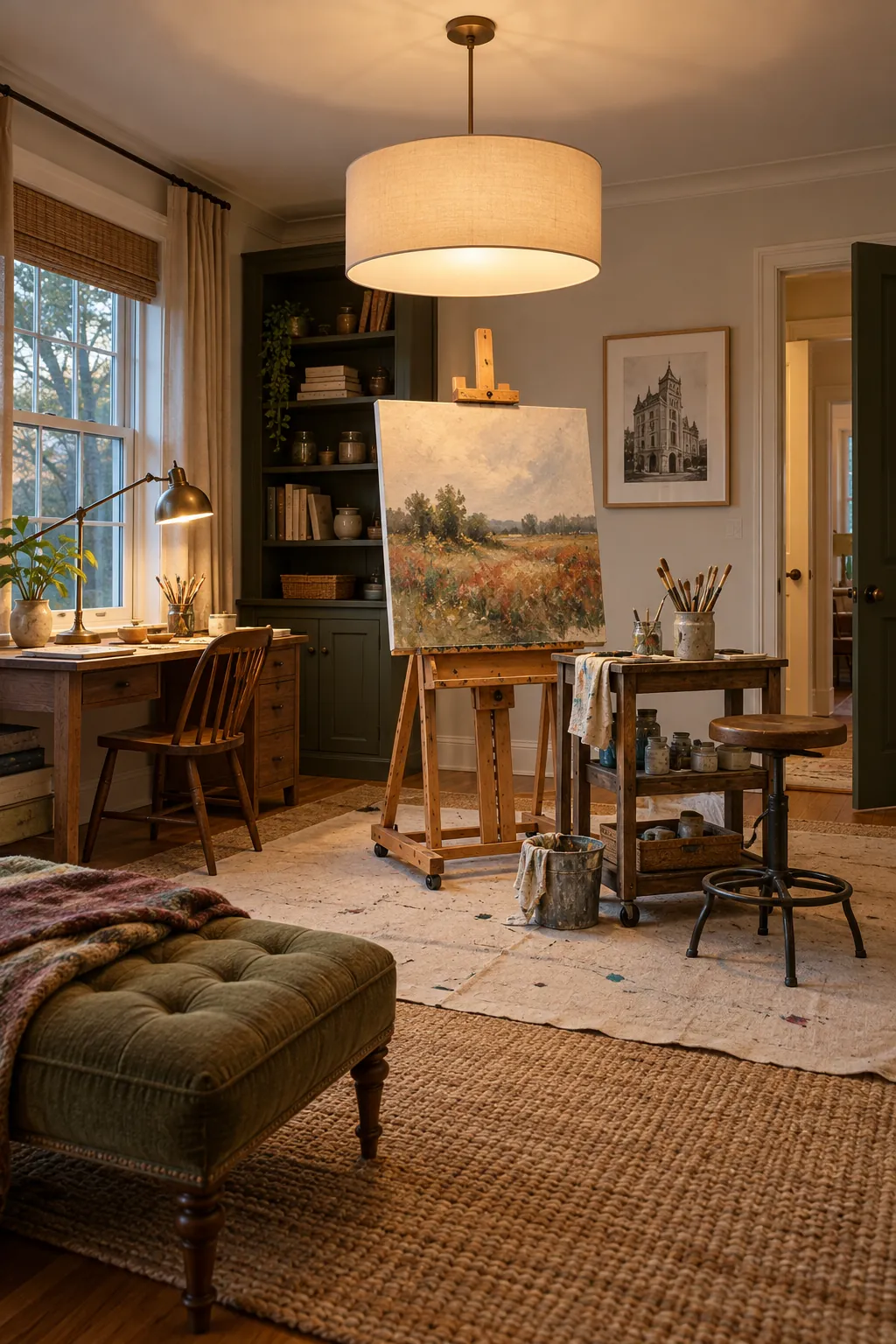
Keep a Rolling Cart Visually Quiet
A rolling cart is useful when it serves the current painting rather than becoming permanent overflow. Choose one that matches the room palette and limit each shelf to a single job such as brushes, color, or cleanup. Park it beside a cabinet when work ends so the floor plan regains breathing room.
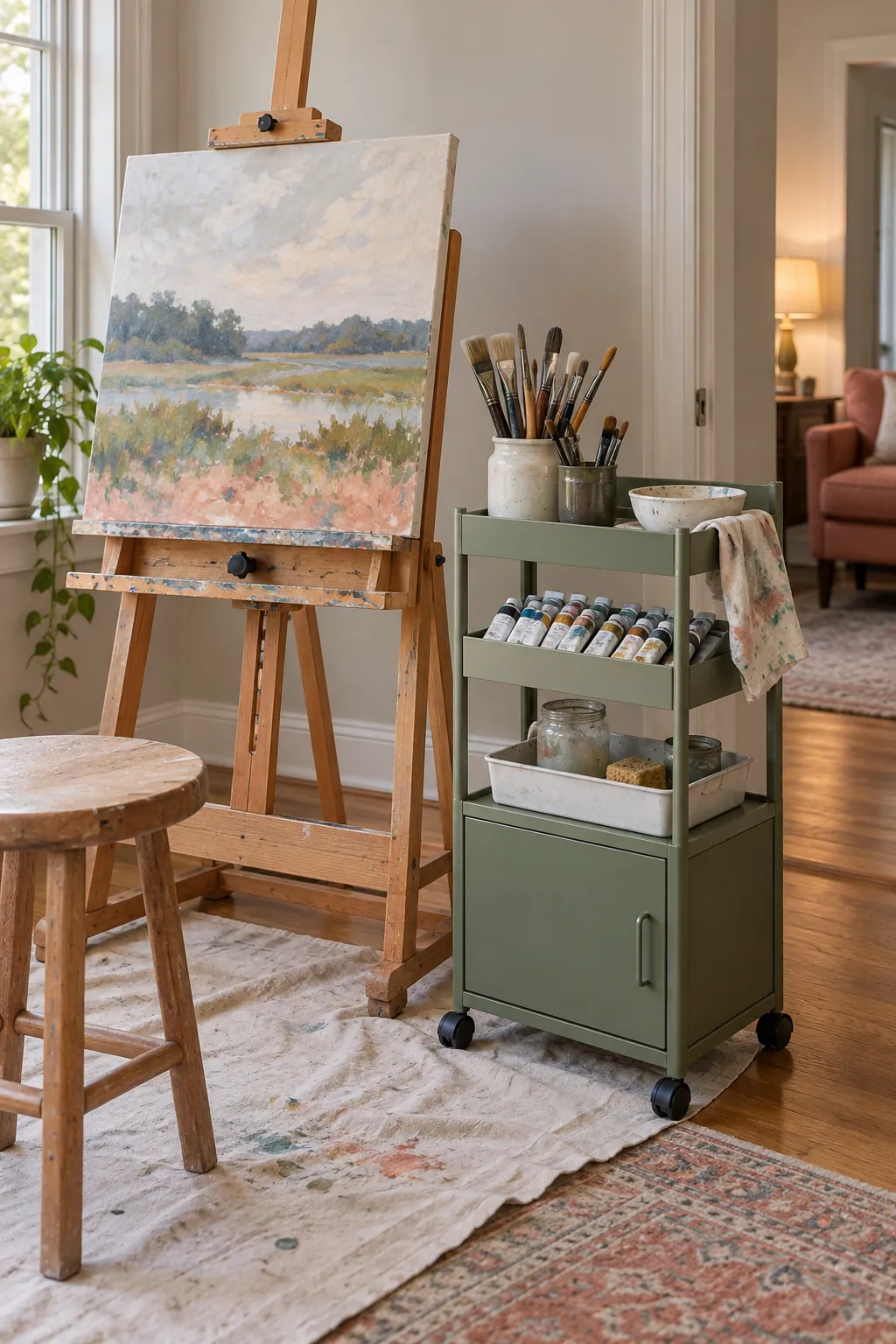
Frame the Sink as a Useful Nook
If the room has plumbing, treat the sink area like a small butler pantry rather than a workshop wash bay. A deep basin, simple backsplash, and closed lower doors contain splashes without dominating the space. Keep artist materials separate from household dishes and choose a trap that is appropriate for the medium you use.
Display Only a Few Finished Pieces
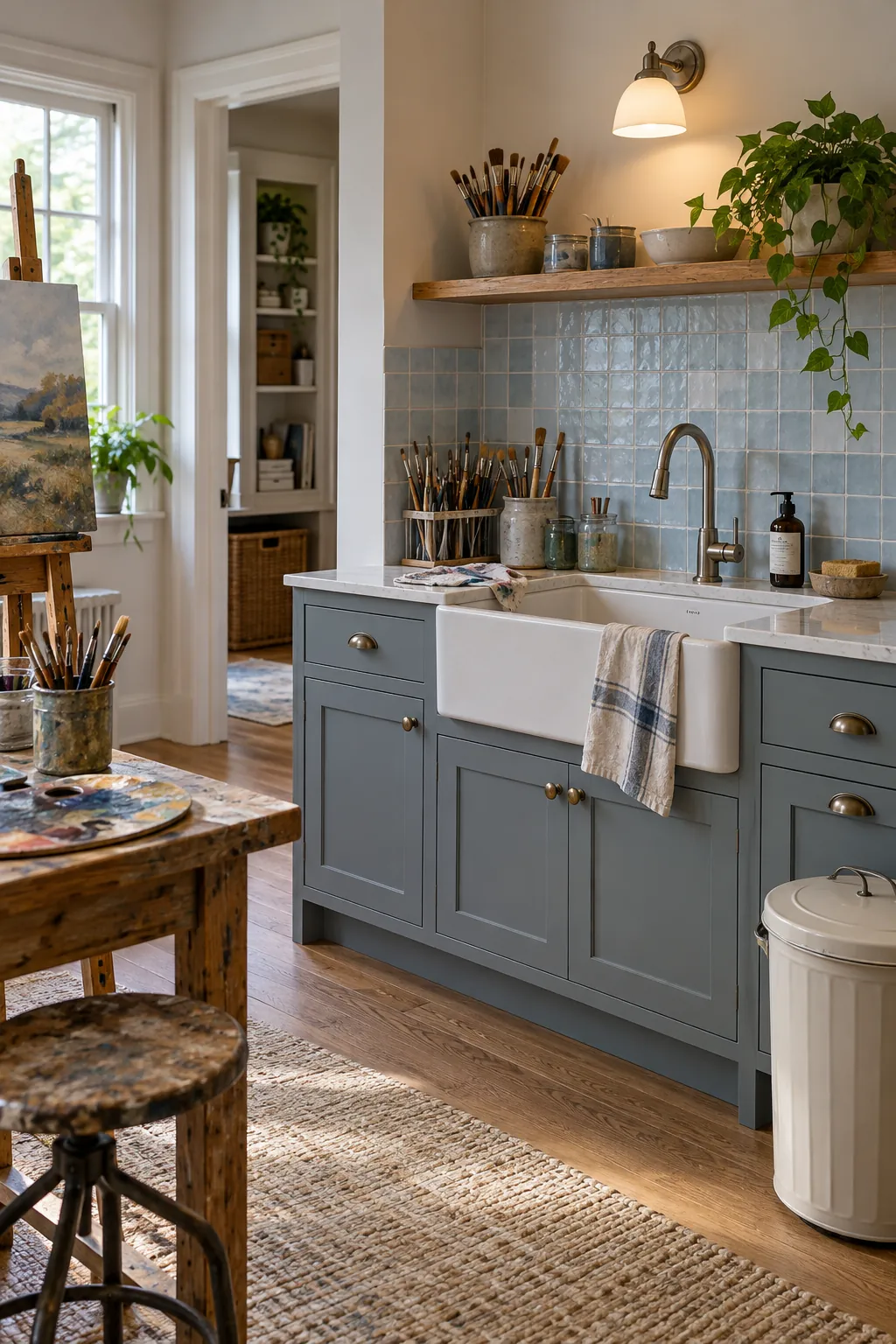
A crowded gallery wall can make a working room feel restless, especially when unfinished canvases are also visible. Hang two or three finished pieces with generous space around them and rotate the selection over time. The display supplies inspiration while leaving the active work as the true focus.
Make a Window Seat Do Double Duty
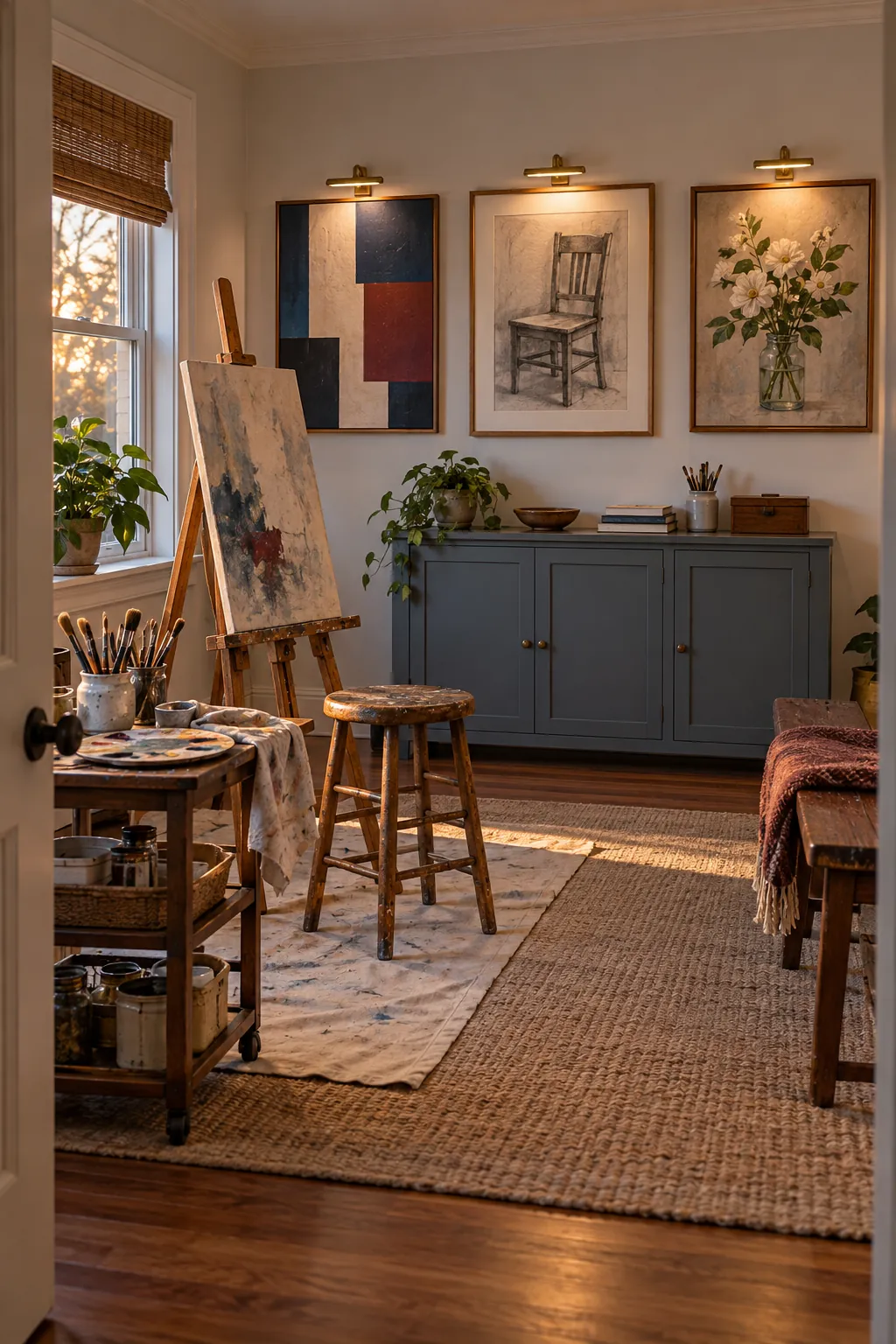
A window seat offers a place to observe work and hides bulky paper or spare cloths in deep drawers. Use firm cushions that are easy to clean, then keep the sill clear so daylight reaches the room. The seat also gives a visitor somewhere comfortable to sit without entering the wet work zone.
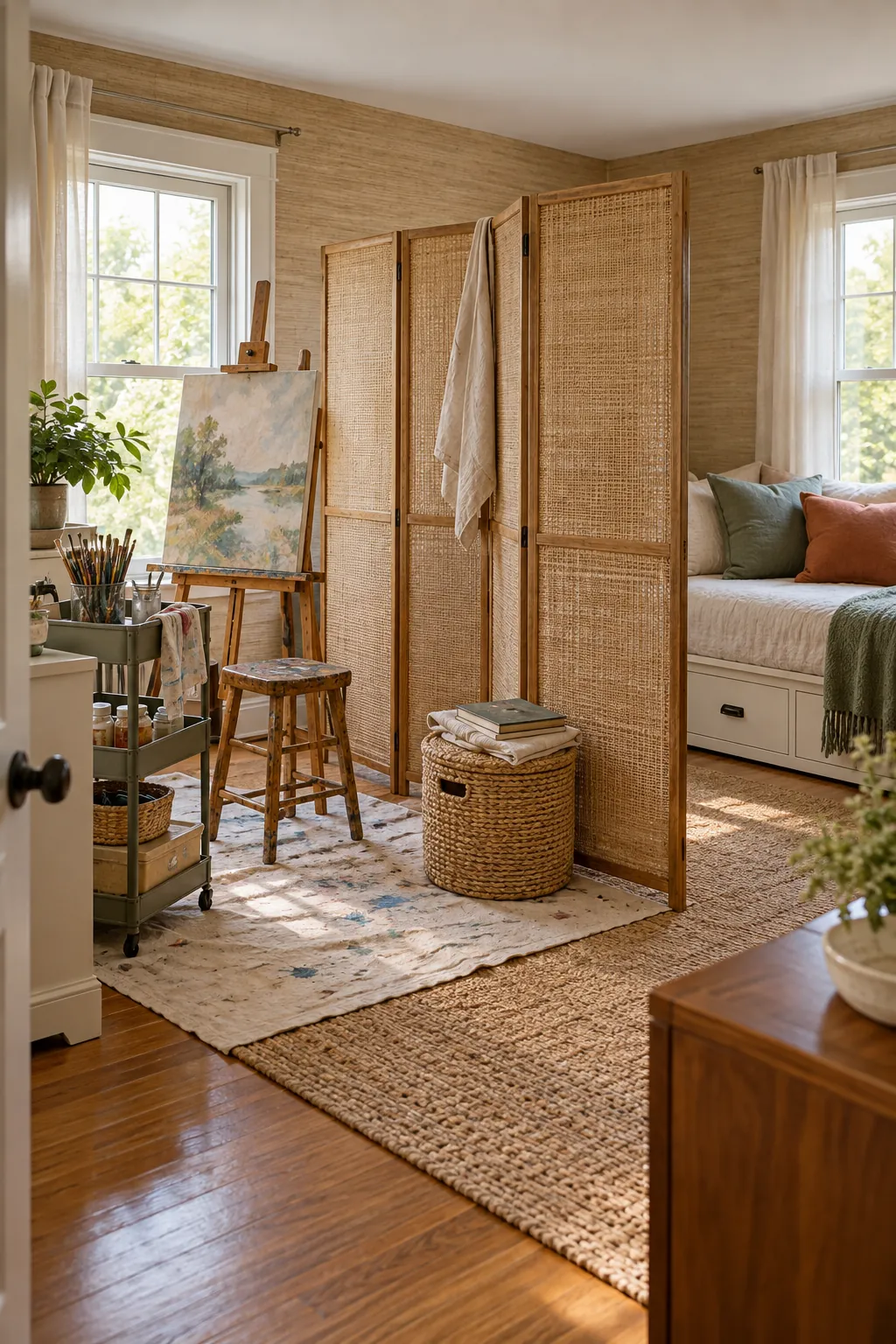
Use a Folding Screen for Flexible Separation
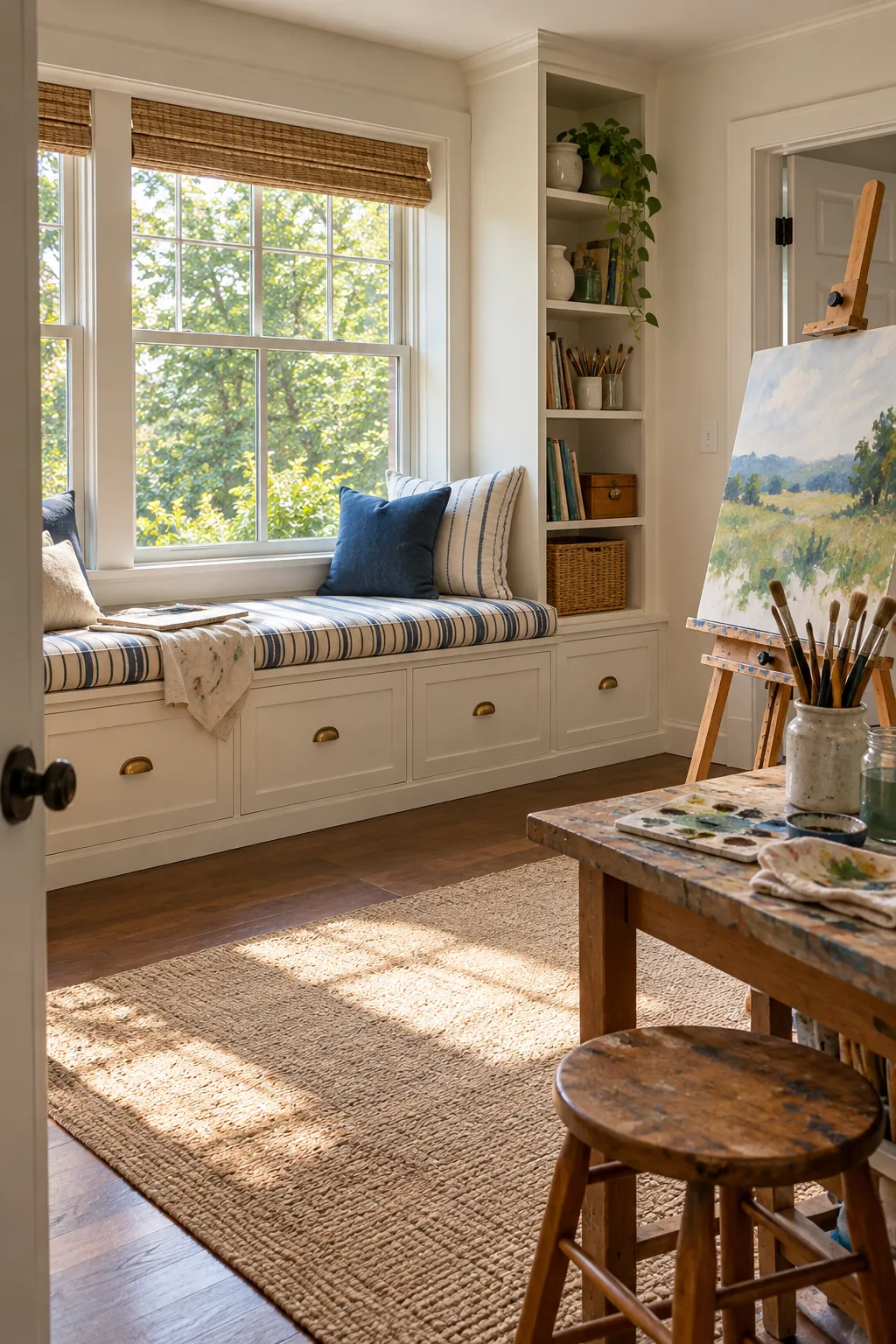
A folding screen can hide stacked canvases or protect the rest of a shared room from visual clutter. Pick a fabric or woven panel that belongs with the furnishings and is stable when opened. The screen can move as projects change, which is useful for renters who cannot build permanent storage.
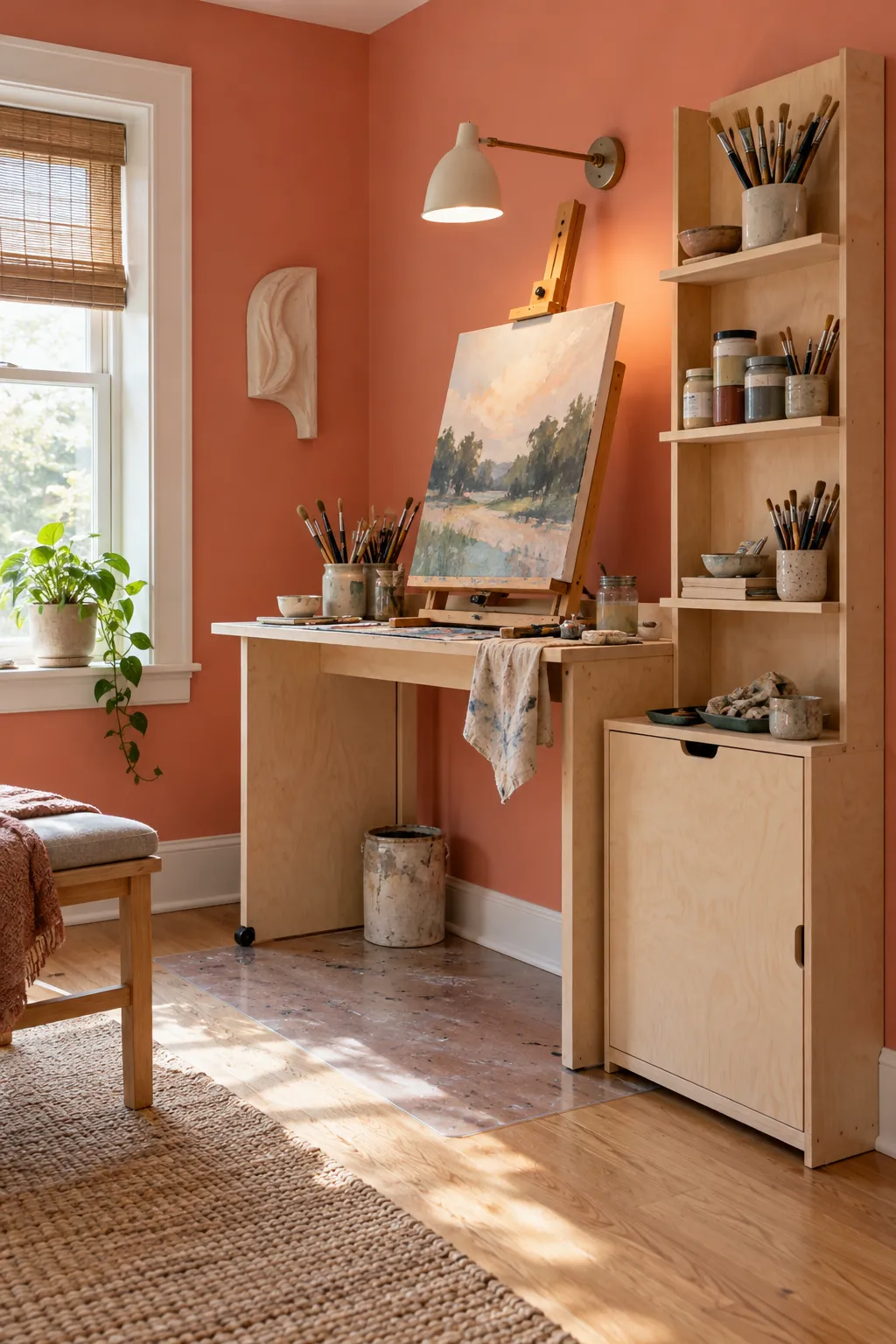
Create a Compact Standing Paint Corner
A shallow wall mounted worktop can support short painting sessions without taking over a small room. Set the height for relaxed shoulders, then add one narrow shelf for the tools used in the current session. A nearby cabinet should hold everything else so the corner never becomes a permanent pile.
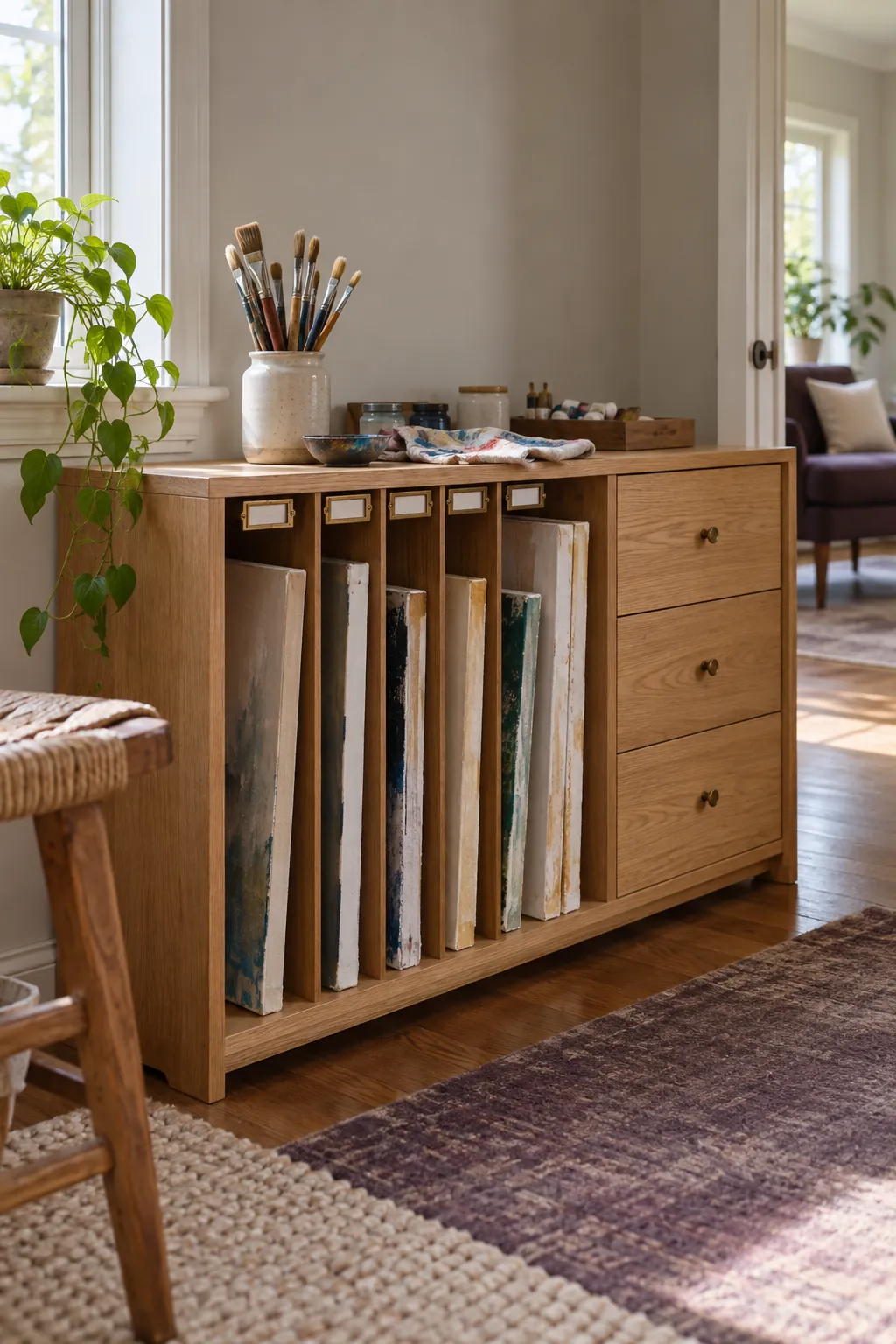
Store Canvases Like Records
Vertical dividers let canvases slide in and out without unstacking a heavy pile. Build the slots inside a low cabinet so only the clean edges are visible when the doors open. Leave enough width between dividers for fingers and label sizes on the cabinet interior.
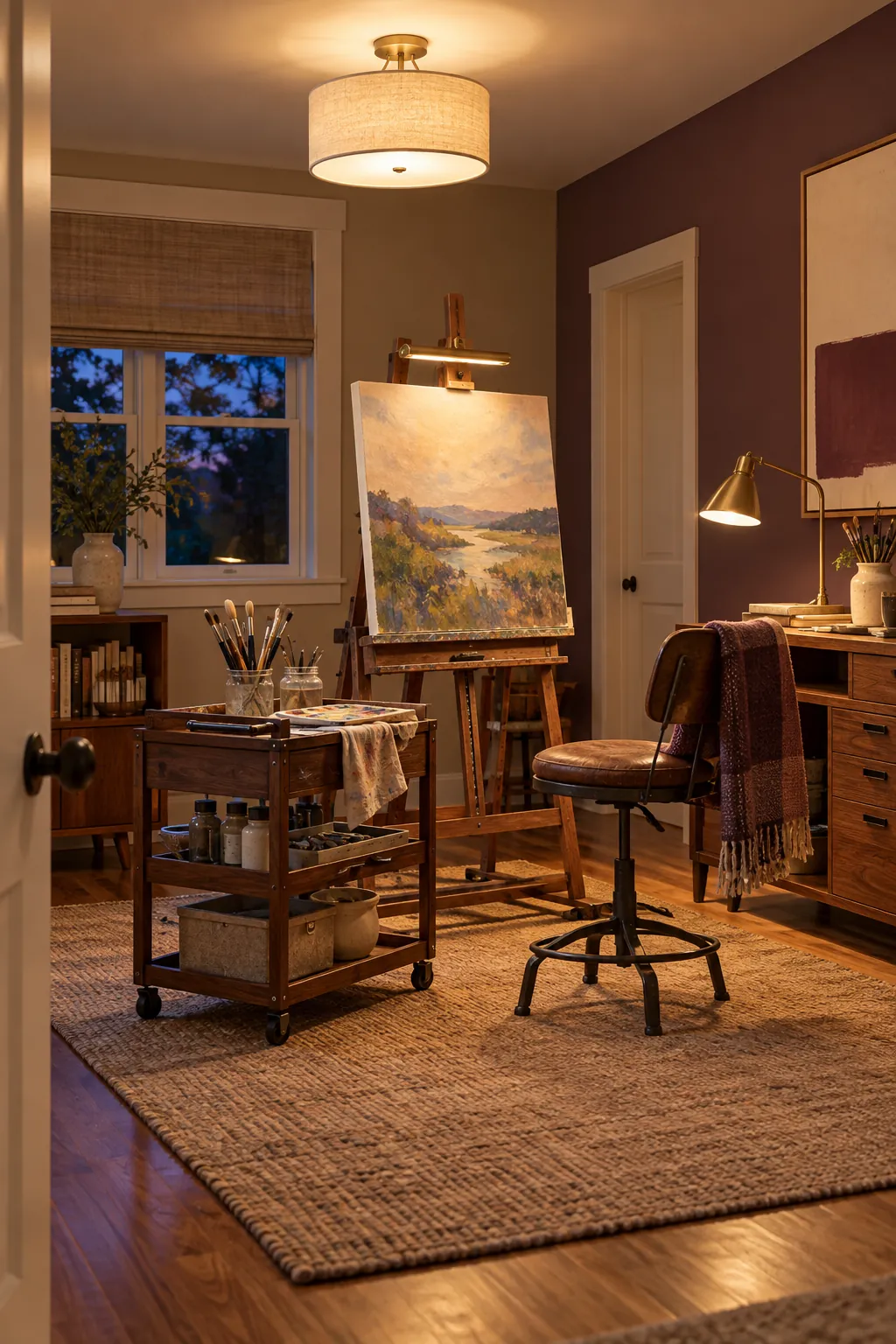
Layer Task Light Without Exposing Cords
Good painting light usually comes from more than one source, but tangled cords quickly create a workbench mood. Route lamp leads behind furniture and use a floor outlet cover or cable channel that matches the trim. Combine one broad room light with one adjustable canvas light and one softer lamp for rest periods.
Set Up a Calm Cleanup Landing
A small landing surface near the door gives brushes, rags, and aprons a clear stop before they spread through the house. Use a washable tray for damp tools and a lidded basket for cloths awaiting cleaning. The setup should be simple enough to reset after every session rather than becoming another storage zone.
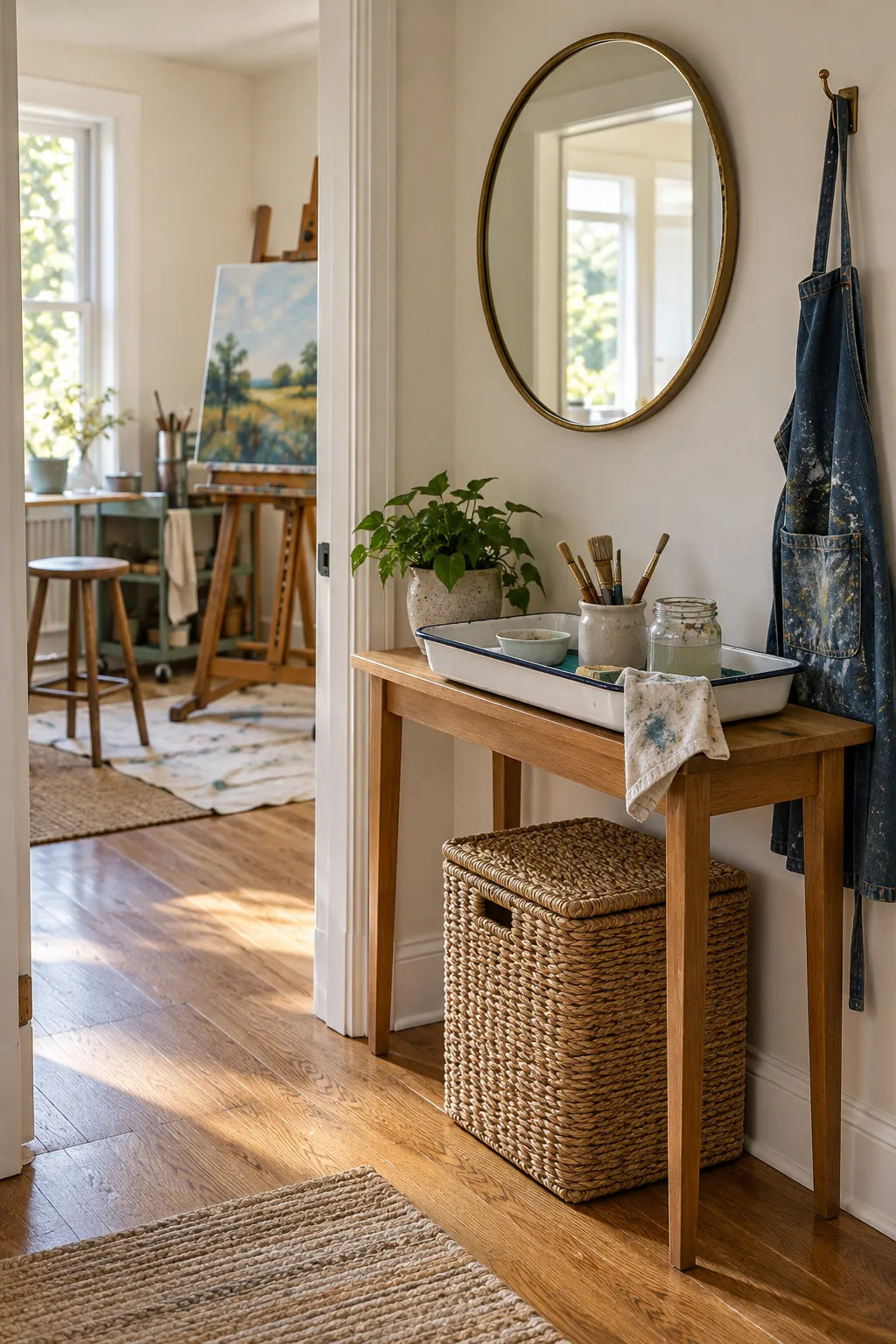
Leave One Clear Surface Empty
An empty surface is not wasted space in an art room. It provides room to open a sketchbook, prepare a frame, or sort materials without moving an active painting. Keeping one console or table deliberately clear also gives the eye a place to rest, which is what makes the room feel like part of a home.