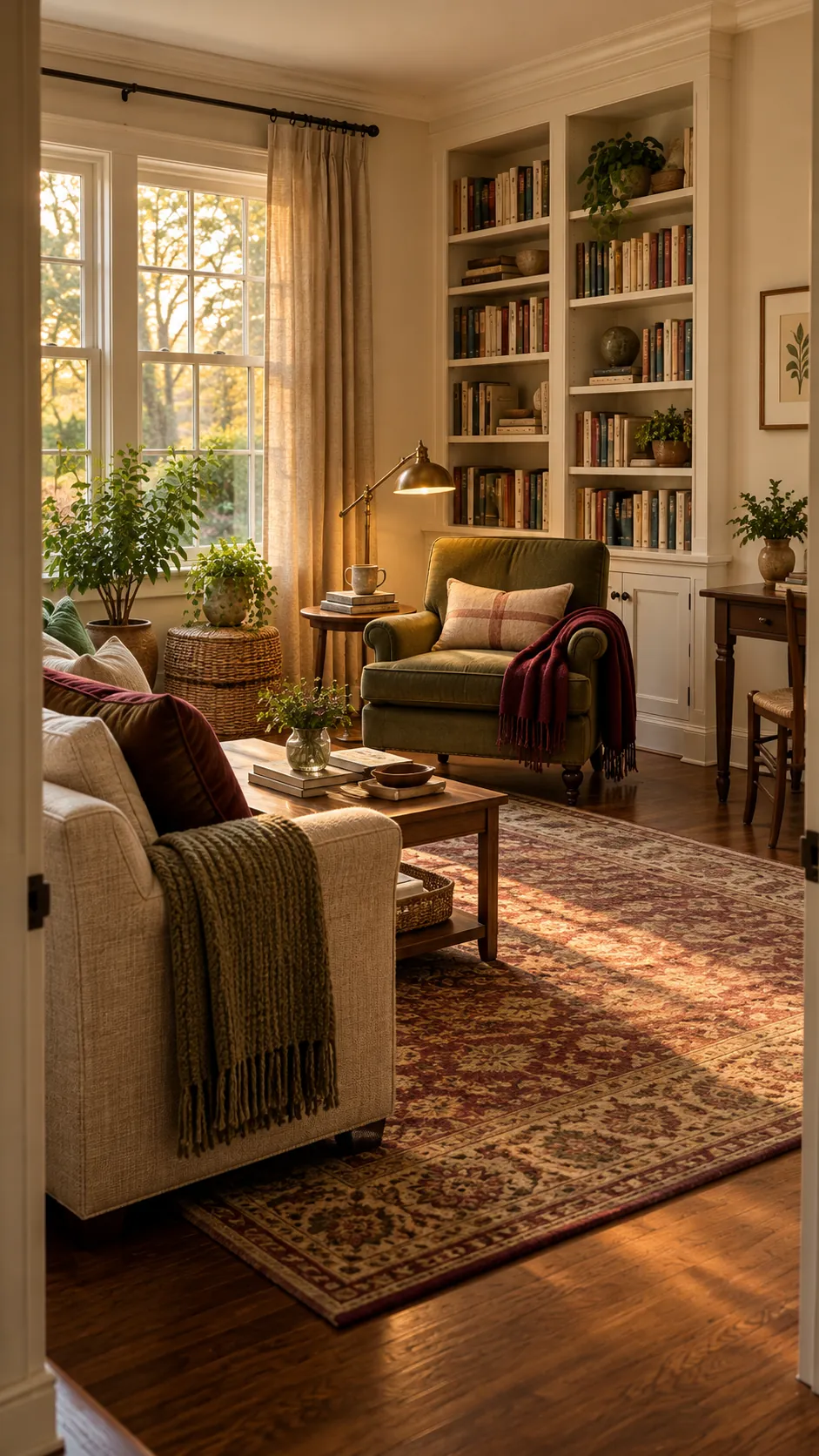
An unused formal living room often has good windows, generous proportions, and almost no reason for anyone to enter. A reading room gives that space a daily purpose without requiring a television or another conventional sofa arrangement. The conversion works best when comfort and light come before the shelves.
Indexed Reddit discussions about these rooms repeatedly mention a large rug, warmer lamps, seating pulled away from the wall, and book storage planned for real weight. Those details matter because a room does not become useful just by adding books. It becomes useful when the reader has an obvious place to settle and can reach everything needed for the next hour.
Decide How the Room Will Be Used
A reading room needs a clearer purpose than an unused formal living room, but it does not need to serve only one reader. Decide whether the space supports solitary reading, family story time, quiet conversation, or research at a small desk. That choice sets the seat count, table size, shelf capacity, and amount of open floor you should preserve.
Anchor the Layout With Comfortable Seating
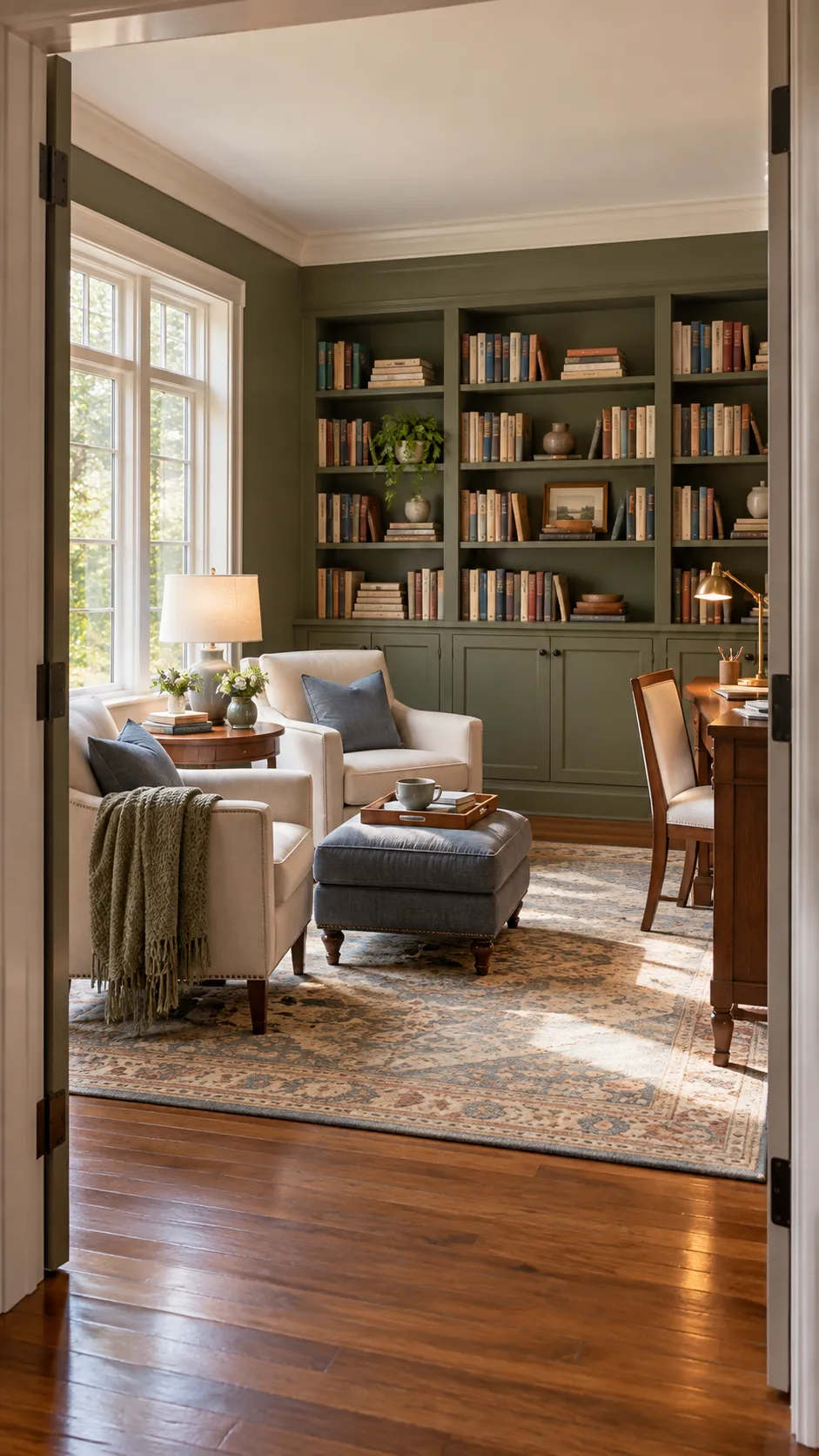
Place the most comfortable chair where daylight reaches from the side and the entry remains visible. Add a small table and a lamp within easy reach, then test the seat for long sessions rather than brief appearance. Pulling the chair away from the wall makes the room feel occupied and intentional.
Add Shelves in Stages
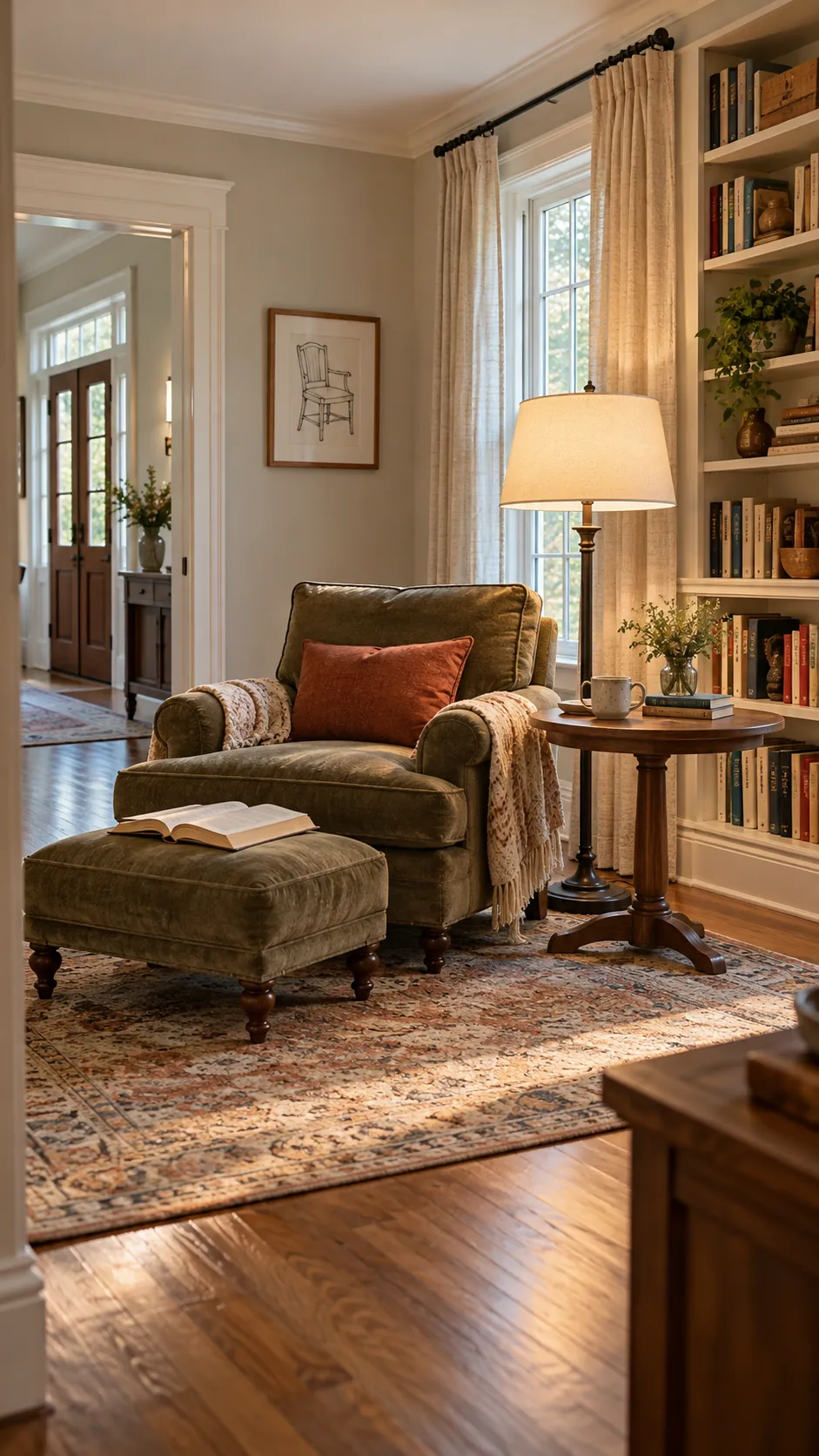
Start with the books you own and a measured plan instead of covering every wall immediately. Freestanding bookcases can prove the layout before a built in investment, while closed lower cabinets hide cables and less attractive supplies. Large collections are heavy, so confirm floor and wall support with a qualified professional when the load warrants it.
Layer General and Reading Light
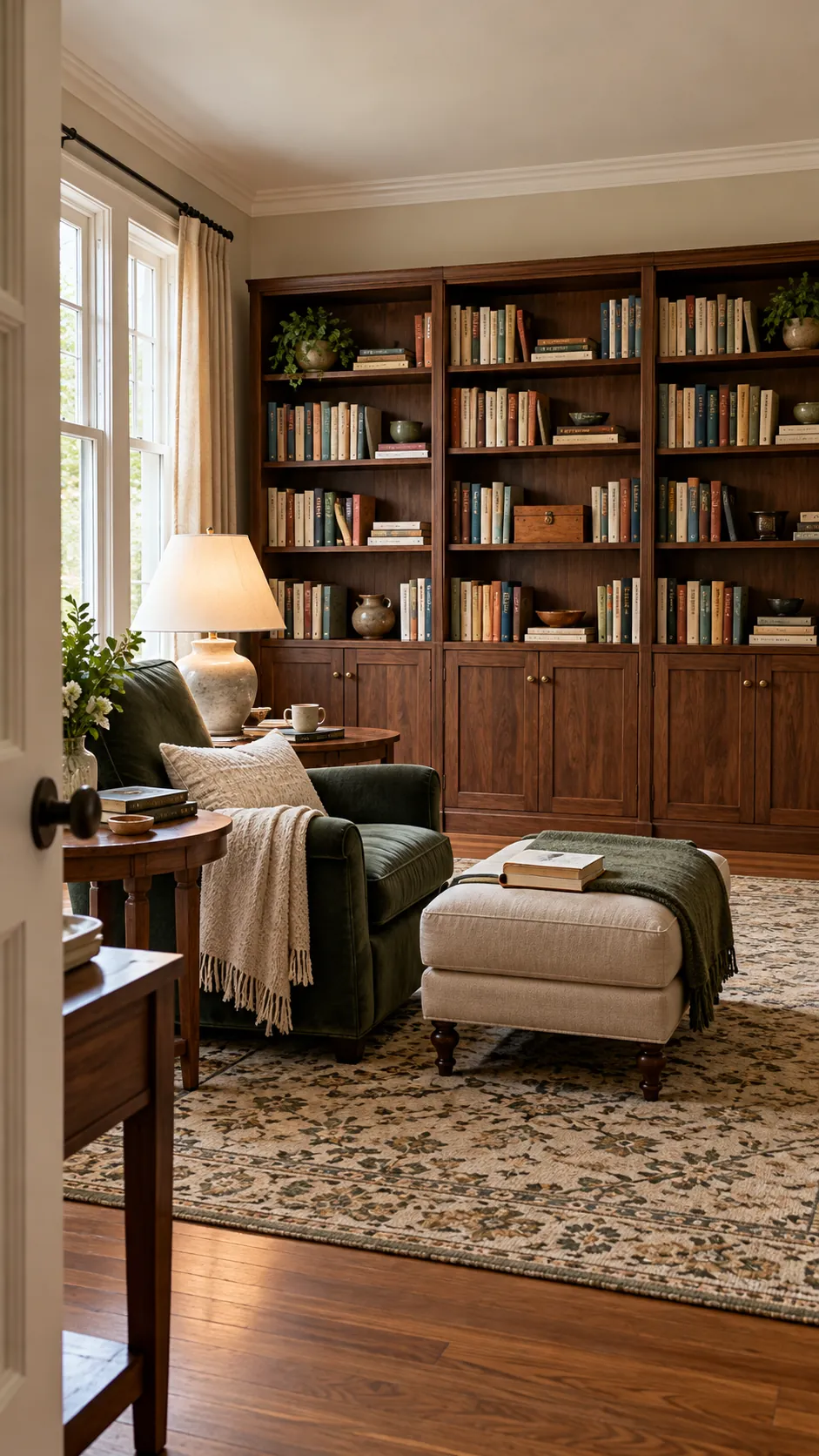
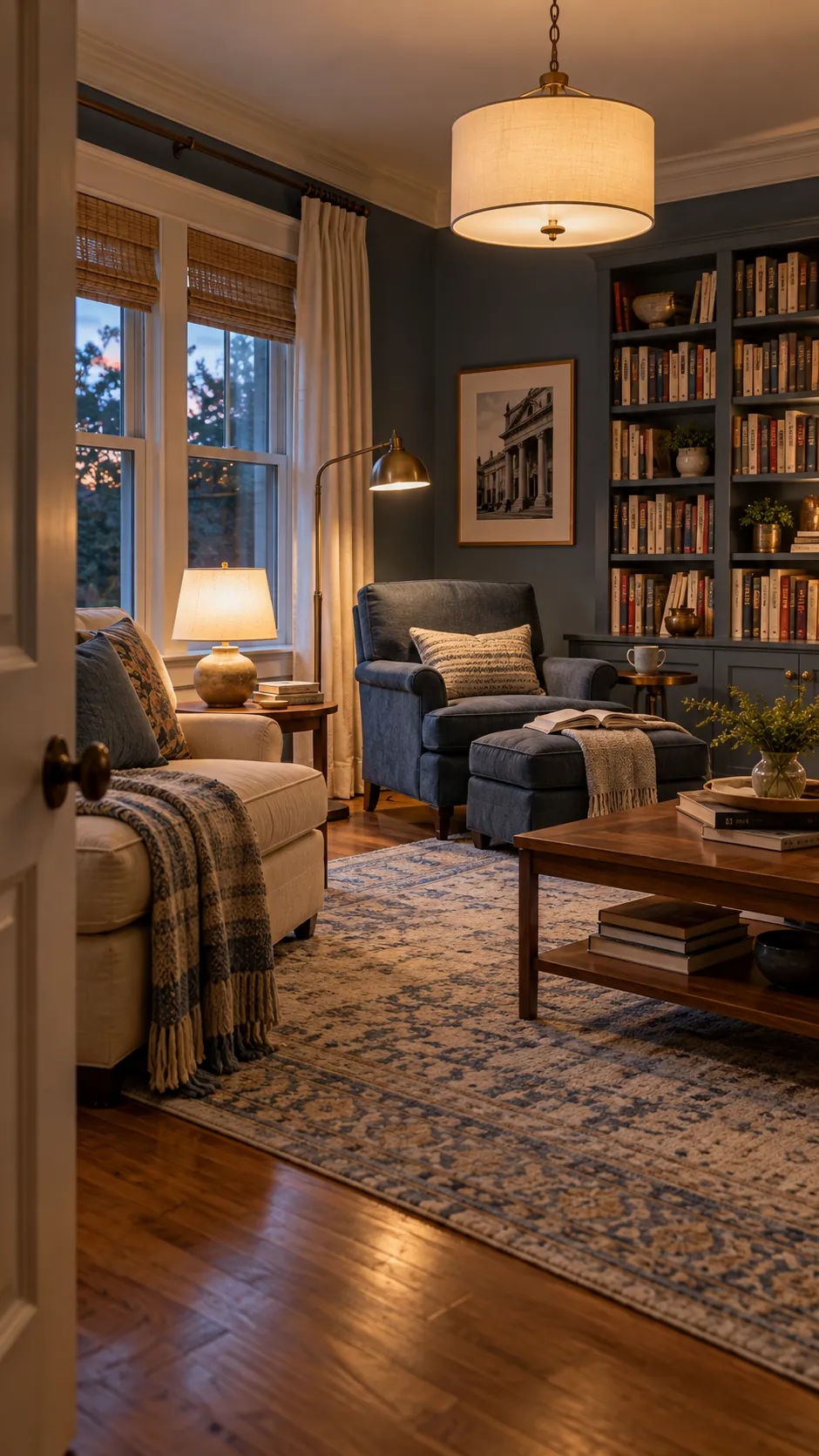
Formal rooms often have one decorative ceiling fixture that is too bright in the center and too dim at the chair. Keep it for general light, then add a focused lamp at each regular reading seat. Matching color temperature across fixtures makes paper comfortable to read and prevents the room from feeling fragmented after dark.
Use a Rug to Change the Room’s Identity
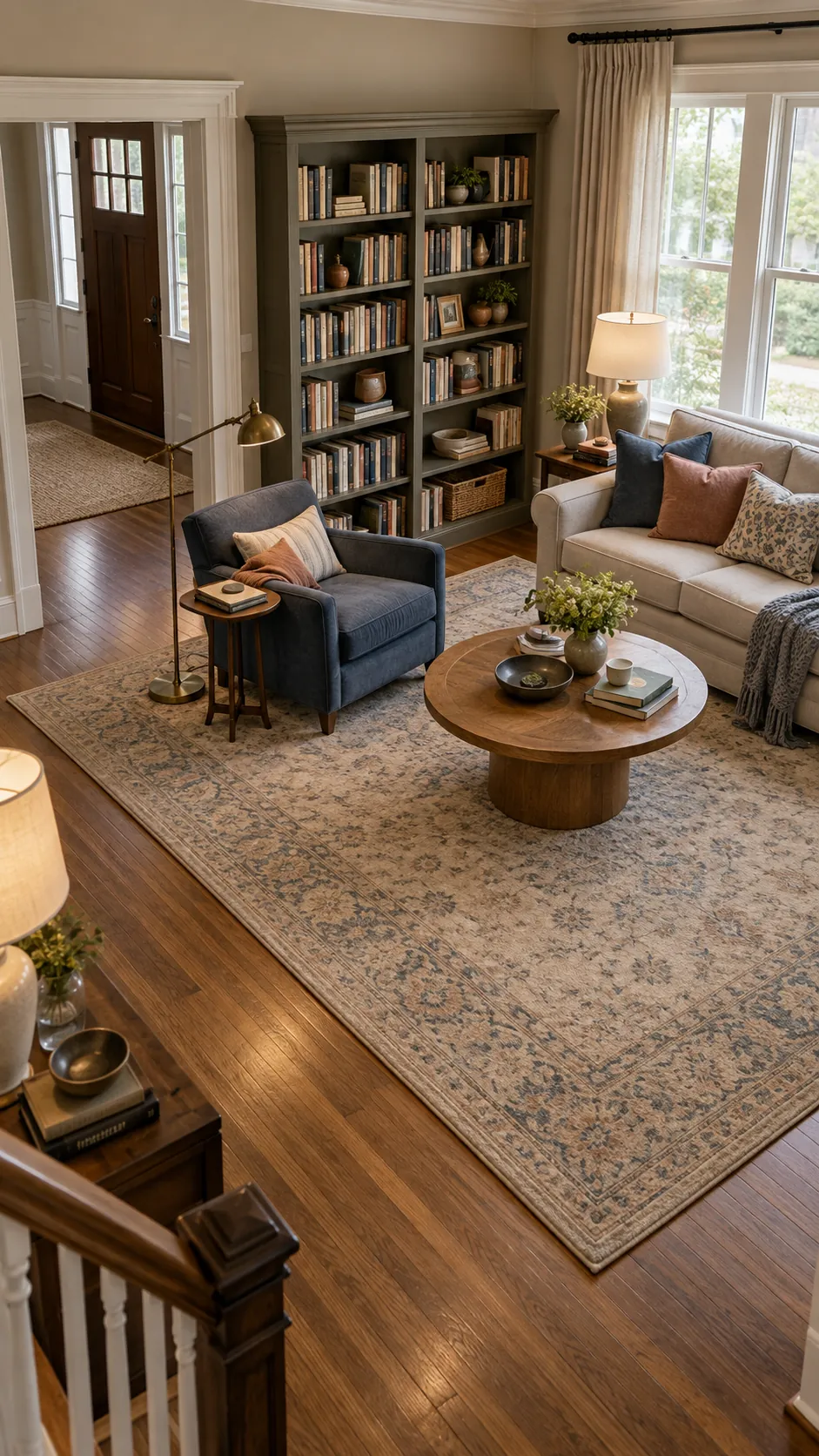
A generous rug can soften existing carpet or hard flooring and define the new reading zone without construction. Choose a size that lets the main chair legs rest on it and keeps the route from the entry clear. A low contrast pattern hides wear while adding the sound absorption that makes a quiet retreat convincing.
Finish With Habits, Not Decoration
The conversion succeeds when the room supports a repeatable reading habit. Keep current books near the seat, provide a place for glasses and a drink, and make returning finished books effortless. A few personal objects can stay, but clear surfaces and reachable light are what turn a formal room into a quiet home retreat.